Category Archives: islamic fiction

Ramadan Mubarak by Saniyasnain Khan

Standard
Ramadan Mubarak by Saniyasnain Khan

img_6800

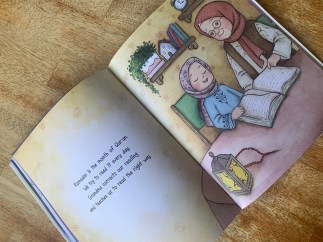
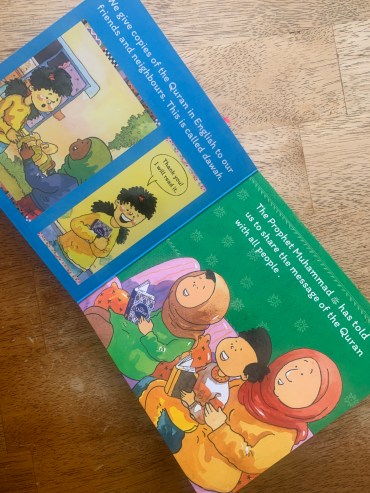
I don’t know how I missed this board book from 2020, possibly because I have the old school original Goodword one I didn’t think to acquire this one, but now that I have it, I’ll share my thoughts.  The illustrations are the same as the original, with a few placement rearranging and color changes, but the text (unfortunately) is completely different and the binding is now a small 5×5 22 page board book.  The book is all over the place with what is included about Ramadan, there is no story, and at times the vocabulary is definitely too advanced for little listeners.  Honestly, the book is great for little hands to carry around and for parents to point out important parts about Ramadan in the illustrations to talk to toddlers and preschoolers about, but the text is really hit and miss.  As my mom, a veteran preschool and ESL teacher would say, “don’t read the story, tell the story.”  I don’t regret buying it, but I doubt I’ll ever read it cover to cover as written to my three year old, he doesn’t grasp the need to hand out Qurans in English to our friends and neighbors, but he benefits from the page before saying that “Ramadan is the month of the Quran” and seeing the smiling Muslim faces praying, caring for others, and praising Allah swt.
img_6802

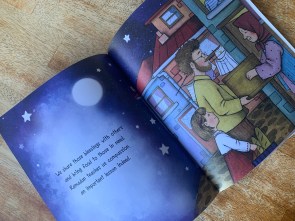
The book starts with Ramadan starting and bringing joy and happiness as it fills our hearts with peace and love for Allah.  It states we fast from dawn to dusk which makes us hungry and thirsty, but that these feelings “remind us that food and water are great blessings from Allah.”  I love this point about remembering our blessings from Allah, and that it then mentions shukr, and being thankful.  It then says that Ramadan is the month of the Quran and that we read it and need to apply it in our lives.
img_6803

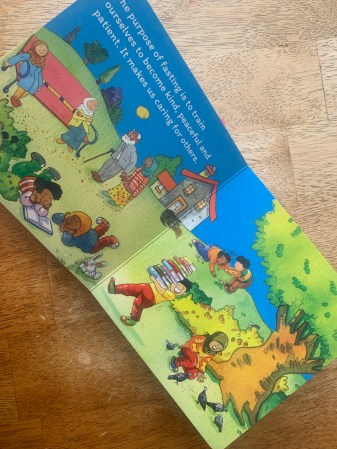
I don’t understand the dawah page, and I wish the following page with a hadith was sourced.  It then returns to the purpose of fasting, this time saying we do it to “train ourselves to be kind, peaceful, and patient.  It makes us caring for others.”  These are great lessons to come from fasting, but we fast because Allah swt prescribed it for us.

img_6804

The book stays on this theme of fasting reminding us about the poor and needy and encouraging us to feed and help them, but doesn’t mention zakat or charity by name.  It then defines taqwa and says fasting helps develop it before spending four pages on Lailatul Qadr, using phrases such as “Night of Destiny,” “innumerable angels” which might need some explanation, and taraweeh was never mentioned.

img_6801

The book concludes with Ramadan ending and Eid al Fitr being celebrated. Goodword seems to recycle and update parts of books every so often, and I hope they will tweak this book to be a better fit for toddlers and preschool aged readers.  Board books are important, the illustrations fun, but the text needs some attention to truly make the book a staple in Muslim homes.

I purchased mine here from Crescent Moon Store if you use my initials ISL (Islamic School Librarian) you can save 10%. Happy Ramadan.
Moon’s Ramadan by Natasha Khan Kazi

Standard
Moon’s Ramadan by Natasha Khan Kazi

moon

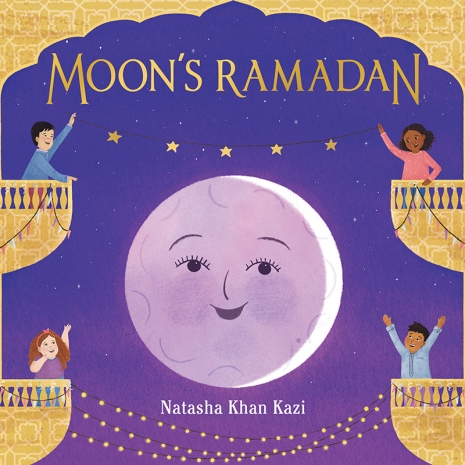
This beautiful lyrical book has a simple premise of the moon looking down on people celebrating Ramadan as it circles the Earth, but stands out as being unique thanks to the poetic language and engaging illustrations.  Each spread shows moon in a different phase over a different country, and the joy, activities and worship that Muslims are partaking in during the blessed month.  I’m embarrassed to say, I didn’t realize that the author is also the illustrator until I sat down to write this review, and honestly it makes sense, as the story text and illustrations work seamlessly together.  The tone of the book, the details in the pictures, and the rich language make this a good read for a large audience.  Little ones probably won’t fully understand the poetry, but they will be mesmerized none-the-less and feel the excitement.  My three year old calls the moon all year round, the “Ramadan Moon” and he understood that the Moon in the story is excited seeing us celebrate and worship.  He consistently would still be peeking in windows or searching the scenes, not quite ready for me to turn the page long after the text was done being read.  Older kids will appreciate the shared global bonds of Muslims and the cultural specifics too.  They will grasp the information shared and beliefs touched upon in the flowing words that do not preach.  My only criticism is that the book starts with Moon saying, “Hello.”  In an Islamic centered book I would have expected to see Assalamualaikum, especially since it appears on the page where moon is above Egypt, so I’m not sure why the English greetings is used.  The book has a glossary and notes at the end making it a great addition to Muslim and non Muslim spaces alike.  I plan to read the book for a Masjid story time as the large hardback book will work just as well for a group of kids as it does at bed time.

Told from a personified Moon’s perspective, the book begins with Moon smiling at Earth as people all over the world excitedly point and look up at her, but once they see her, they rush off to prepare for the month. Over Turkey, the Ramadan Drummer awakens sleepy people for suhoor and over Indonesia he sees families gathering for iftar. As each day passes Moon grows fuller watching the children do good deeds and people sharing their wealth.

Nights of Taraweeh and listening to the Quran over Somalia, sharing treats in the United Kingdom, and  interfaith among neighbors in the United States bring joy to Moon.  And as the waning crescent sees henna being put on hands in Dubai the month is coming to an end.  People once again look to the sky, but they cannot see Moon in Argentina, Moon is new.  It is Chaand Raat and then it is Eid.  Moon is back in Egypt watching people celebrate and then the world returns to looking up at Moon and she beams with love and gratitude.

There are diverse characters of a variety of skin tones, mobilities, ages, body size and abilities featured all throughout the book in a positive and inclusive normalizing manner.  The backmatter makes the concepts more accessible and the book work on different layers.  I really enjoyed the book and am excited to share it.  I purchased mine at Crescent Moon Store where using my initials ISL (Islamic School Librarian)  will save you 10% it is also available here at Amazon Even my local public library has it on the shelves already! Happy Ramadan!

Ramadan Nights by Jenny Molendyk Divleli illustrated by Halime Nur Sevim

Standard
Ramadan Nights by Jenny Molendyk Divleli illustrated by Halime Nur Sevim

img_6768

This rhyming softcover picture book sets the tone of the month with its large heartfelt images on cardstock thick pages.  The book mentions tarawih, reading Quran, suhoor, iftar, compassion, Laylatul Qadr, eid, but does so in a way that reflects what Muslim kids know and love about the month.  It is not overly descriptive, nor does it define the terms. It shows Muslim kids in Ramadan living their lives and draws out the emotional joy felt in acts of ibadah, not in the gifts and parties alone.  The rhyme works and isn’t terribly forced and the 8.5 by 11 size and the introductory framing of major Ramadan activities makes the book a good addition for toddlers and up. I plan to use this for a masjid story time for Muslim kids ages 4-9, but it can be used in non Muslim settings easily as well.

img_6770

The book starts out with decorating the home for Ramadan, as the city decorates outside too.  Ramadan has arrived, the moon has been seen with binoculars, and Tarawih at the mosque is where everyone is praying, and kids are playing.  Mornings start with the Ramadan drummer waking people up for suhoor, but mom is already up cooking.  The first few days of fasting are hard waiting for iftar, implying it gets easier.

img_6771

The kids and their parents make duas and thank Allah for their blessings as well as share their blessings with neighbors as they learn compassion.  The kids practice reading Qur’an every day with Grandma and before you know it, it is the last ten nights and Laylatul Qadr and then eid, alhumdulillah.  The 32 page book ends with prayers of gratitude and hope that Ramadan will be seen again.

img_6773

The book really is well done, there is no plot or story, but it introduces the month to little ones, reminds older ones what to expect and does so with accuracy and mirroring.  The book will lend itself to spark discussions about what a readers’ family can look forward to in the month, how one should behave in a masjid, perhaps some Quran goals and some appreciation for parents.  The poor mom helps decorate, stays up early to cook suhoor, cooks yummy iftar, and lays out Eid clothes all while wearing hijab.  InshaAllah a point to mention when reading how amazing moms (and dads) are in making Ramadan memories while fasting themselves.

img_6772

I purchased mine from https://crescentmoonstore.com/ if you use my initials at checkout ISL (Islamic School Librarian) you can save 10% or click this link directly to go to the book.

Ramadan Mubarak!

Amir’s Blue Jacket by Sarah Musa illustrated by Rania Hasan

Standard
Amir’s Blue Jacket by Sarah Musa illustrated by Rania Hasan

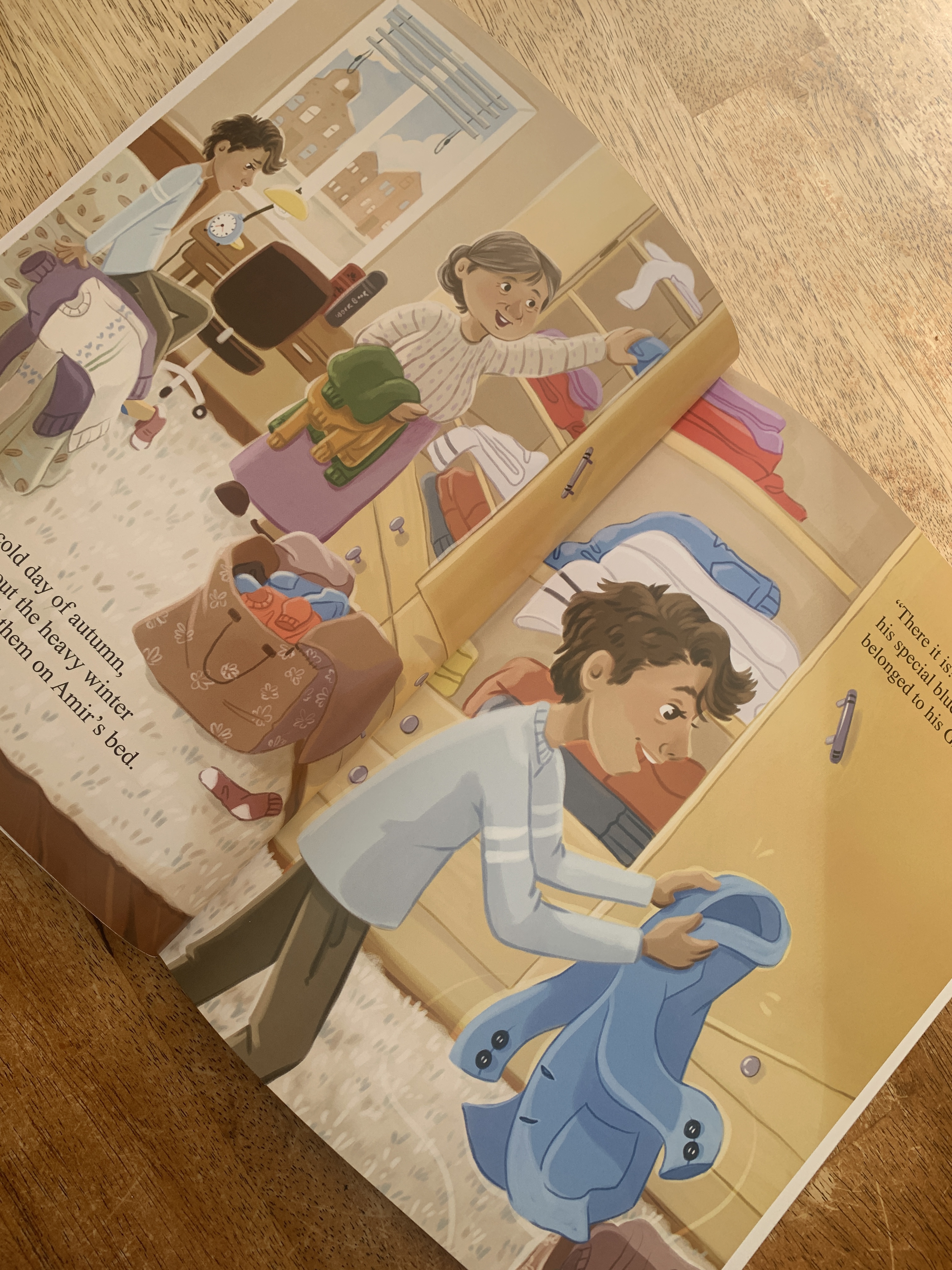
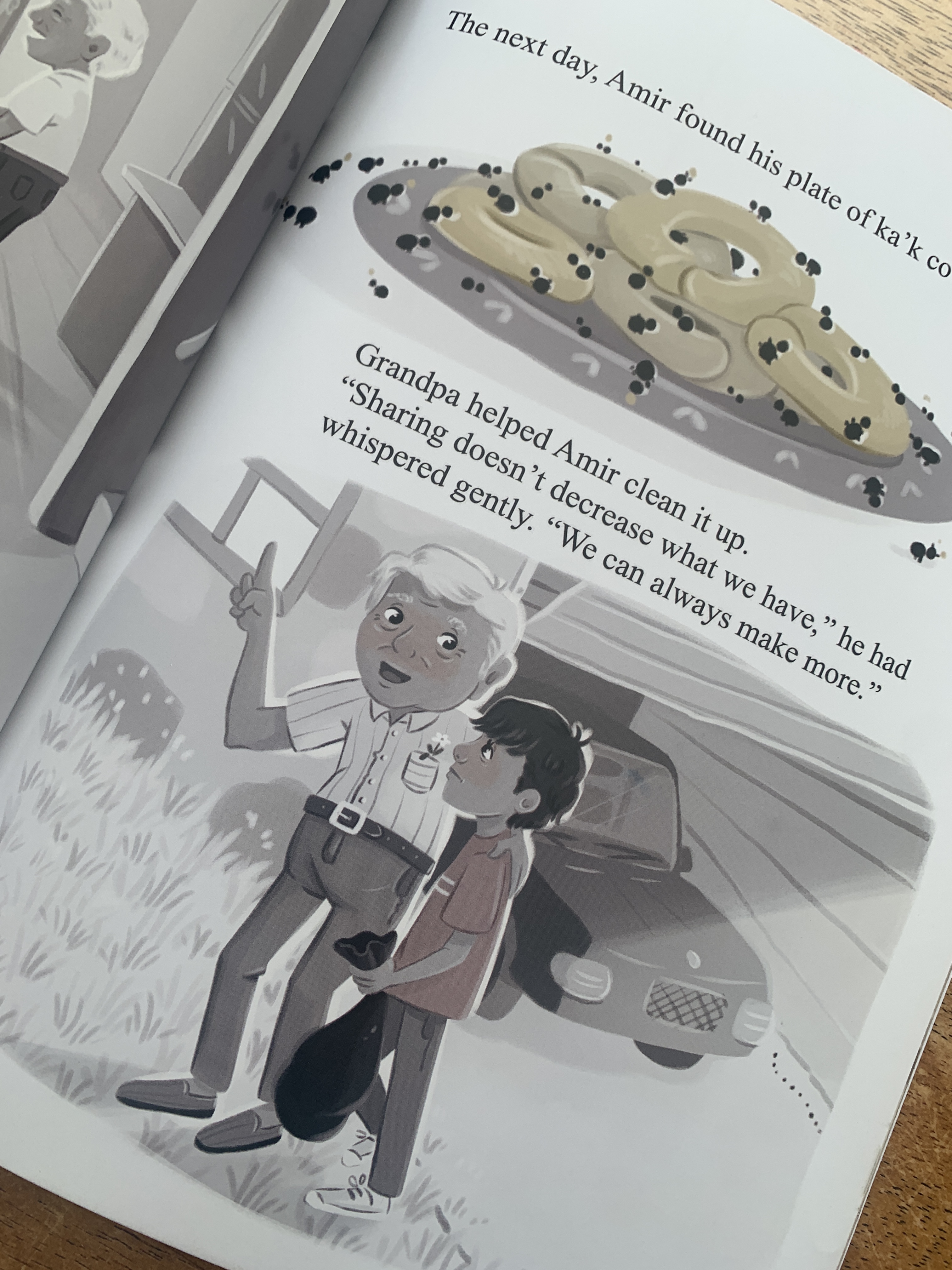
This heartfelt elementary picture book does a remarkable job of drawing the reader in to the emotions of the main character, his relationship with his grandfather, and imparting a moral message without being preachy. The illustrations are lovely on their own, but the way the muted tones convey the memories and illustrate the text really ties the book together. Whether it is for a larger story time or a one-on-one bedtime read, the book will offer discussion, comfort, guidance, and a little surprise at the end for Muslim and non Muslims alike. The slightly allegorical book does conclude with a widely known hadith (it is attributed to Prophet Muhammad saw, but is not further cited/sourced) and the family is clearly Muslim with their names mentions of Eid and God, and a hijab clad woman, but the book is universal and a lovely addition to any book shelf.

The book starts with Amir finding his Grandpa’s old blue jacket and recalling wrapping himself in it the day after his beloved Grandpa died. With it smelling like mothballs, he tosses it in the washing machine, but unfortunately when it comes out it has clearly shrunk. Amir is in denial, he says it fits fine and he has no desire for a new one. It is Grandpa’s jacket, and Amir is going to wear it, no matter how tight it is. Amir storms off to sit under the apple tree and recalls picking apples and making applesauce the year before for the whole neighborhood. Grandma shares that she used to keep grandpa’s cane but when someone needed it, she let it go.

Grandma stirs another memory in Amir when she pulls the tray of ka’k out of the oven, of him trying to sneak a whole plate for himself only to have his hiding spot taken over by ants. When he is asked this time to share a plate, every step to the neighbors house reminds him even more of making the trip with his grandfather. Slowly he starts to realize that his memories are with him, not in his grandfather’s things, and Amir makes a decision that would make his grandfather proud, and (inshaAllah) give him more good deeds, even though he is gone.

The idea of sadaqah jariyah is understood through the story, and present in the hadith at the back, but it is never mentioned outright. Just as God is used, not the term Allah (swt). As Amir feels denial, frustration, and eventually peace, nothing is really told, it is shown, which really opens the book up to be a tremendous tool in sharing it with children and asking them to discuss what they understand, what they feel, and what they took away from Amir and his Grandpa’s blue jacket story.

The book is available through the publisher Ruqaya’s Bookshelf as well as HERE at Crescent Moon Bookstore where code ISL will save you 10%.

Animals in the Qur’an Search & Find by Jenny Molendyk Divleli illustrated by Guliz Gerdan

Standard
Animals in the Qur’an Search & Find by Jenny Molendyk Divleli illustrated by Guliz Gerdan

img_6282

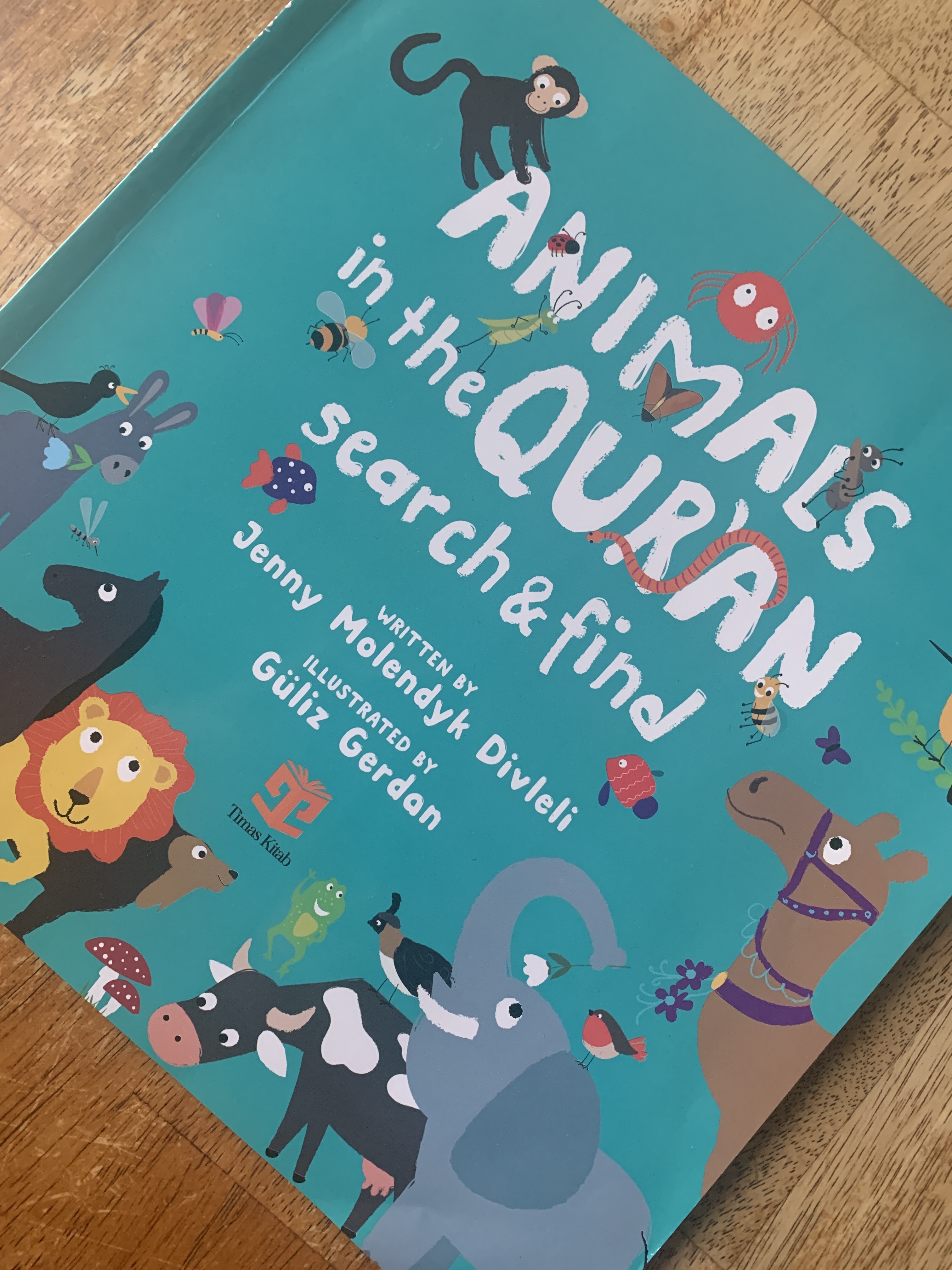
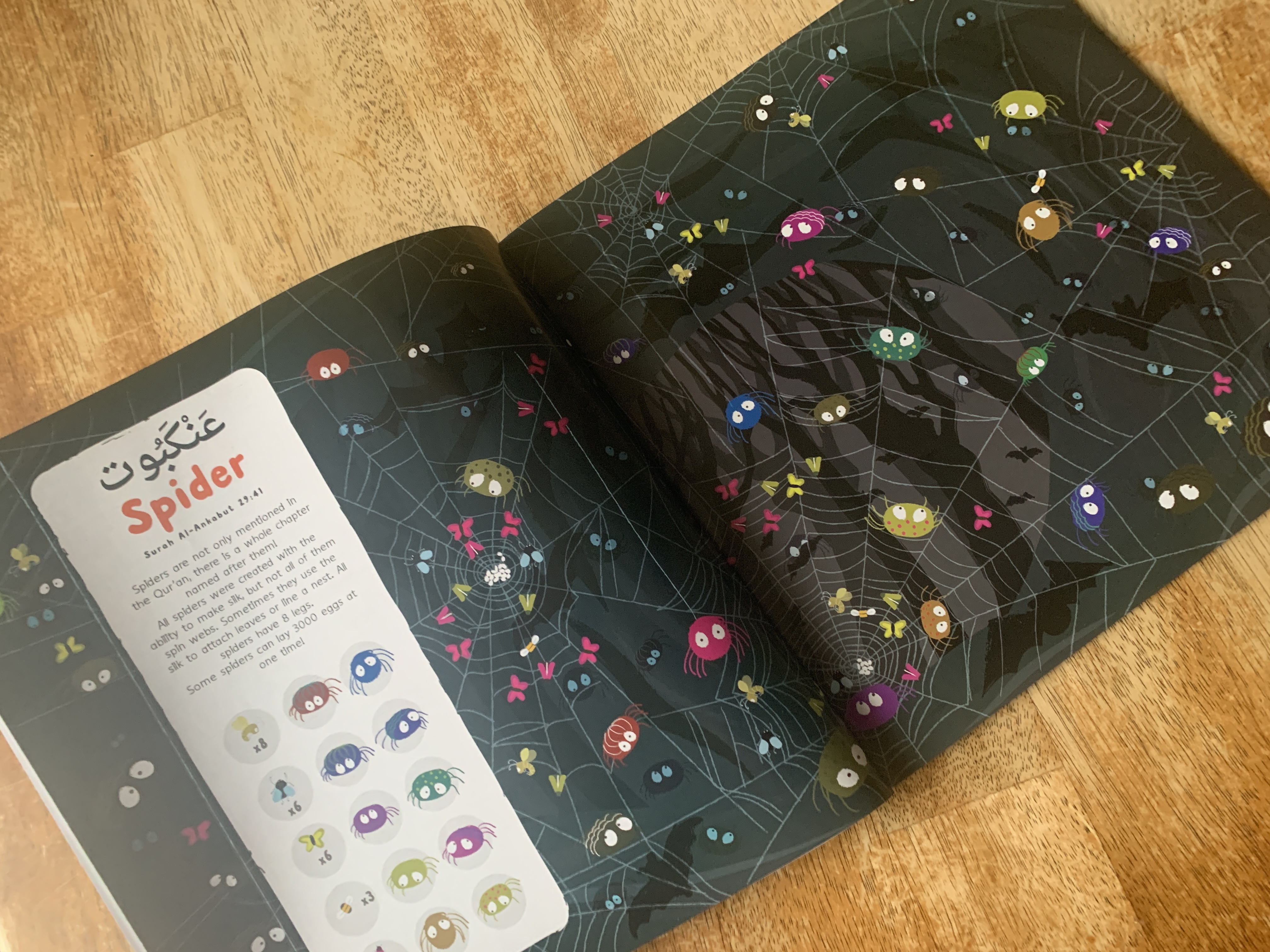
This book is targeted to preschoolers, but with the minor details the book sends readers looking for, I think children up to third grade will enjoy the mix of fun and learning that this book offers.  The book uses animals in the Qur’an as the theme for each two page spread, tells what surah the animal is mentioned in, and some Islamic context, as well as some basic facts about the animal.  Over 45 pages kids will learn about bees and snakes, donkeys and wolves, and dive in to the challenge of finding a spider with spots looking to the left or a fish with strips swimming to the right.  My three year old can not differentiate between some of the more specific markings of this cow or that, but he still loves the illustrations and benefits from the brief factual text. This book is a great addition to school, masjid, and home libraries with its Islamic foundation, beautiful large execution, and wide audience appeal.

The book starts with the Arabic ayat of verse 45 in Surah Nur and the English meaning of the translation.  It then establishes the format of the book, and then lists the 20 animals featured, where they are found in the Qur’an and on what page number, in the table of contents.

Each page offers the animals and some nature elements to be found on the large 10 x 10 pages.  The pictures are playful and colorful with the print quality glossy and a sturdy thickness.

img_6287

I enjoy the book and think most families with young elementary aged children will as well.  You can purchase a copy here from Crescent Moon Store and if you use my initials “ISL” at checkout, you will save 10%

Ahmed Goes to Friday Prayer: Ahmed se va a la oración del viernes by Wendy Díaz illustrated by Muhammad & Mariam Suhaila Guadalupe

Standard
Ahmed Goes to Friday Prayer: Ahmed se va a la oración del viernes by Wendy Díaz illustrated by Muhammad & Mariam Suhaila Guadalupe


ahmed


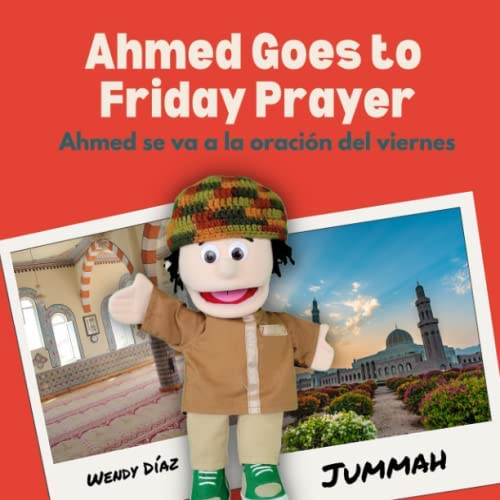
This dual lingo: English and Spanish is a linear story of Ahmed going for Jummah prayers.  The rhyming text in both languages is fairly consistent and the information framed in an upbeat, fun, positive way.  From waking up early and taking ghusl to reading Surah al-Kahf, the book shows some spiritual aspects, some sunnah reminders, and social Jummah interactions with friends as well.  The 48 pages are good for preschool to early elementary aged readers and with the minimal text on the pages, even younger listeners will enjoy the book.  I wish the religious statements were sourced, and while I didn’t initially love the aesthetics of the puppets when I first saw the cover, I definitely warmed up to Ahmed and absolutely cooed at the adorable (puppet) Imam.  The book starts with a sourced hadith and ayat from the Quran and ends with questions to test your knowledge.

The story begins in a bit of an awkward fashion with Ahmed breaking down the fourth wall, and addressing the reader, and then on the next page, the “narrator” reaching out to the readers to have them pay attention to Ahmed.  Then the story starts with asking if the reader knows what the special day of the week is called.  It then tells us that it is called Friday in English, Jummah in Arabic and that I, Ahmed, is going to tell us about it.  With all the introductions and signposting it makes the book actually start 11 pages in.  I read the first few spreads numerous times trying to see what was going on, and finally just realized it has a lot of framing and set up before diving in.  Alhumdulillah, after the repetitive first few pages, the book reads smooth and clearly.  

Ahmed wakes up, does ghusl, puts on nice clothes, and then waits until midday to go to salatul Jummah.  Muslims read Surah al-Kahf, and then get to the mosque early.  It is noted that we get rewards for every step we take, we are encouraged to praise our Lord, we greet friends with Salam, and after athan we sit calmly and quietly listening to the Imam.  The khutbah talks about our faith and then we pray foot to foot closing the gaps. The last few spreads are about the importance of Jummah.

The illustrations show Ahmed the puppet in different places with other Wendy Diaz books displayed in poster form, books on side tables, and graffitied on a wall. The only other character beside Ahmed and the Imam is Ahmed’s un named friend.  The simple illustrated backgrounds with puppets in the foreground, the minimal rhyming text and the content presentation make this book a great addition to home and school libraries as well as ideal at story time or bedtime where early elementary aged children are able to understand both the excitement and protocols of the blessed day.

img_5601

Over the years I’ve done a few Jummah themed readings and this book would be a great addition at story time.  You can purchase the book here.

Baby’s First Series: Bismillah by Marwa Ahmed illustrated by Natalia Scabuso

Standard
Baby’s First Series: Bismillah by Marwa Ahmed illustrated by Natalia Scabuso

bismillah

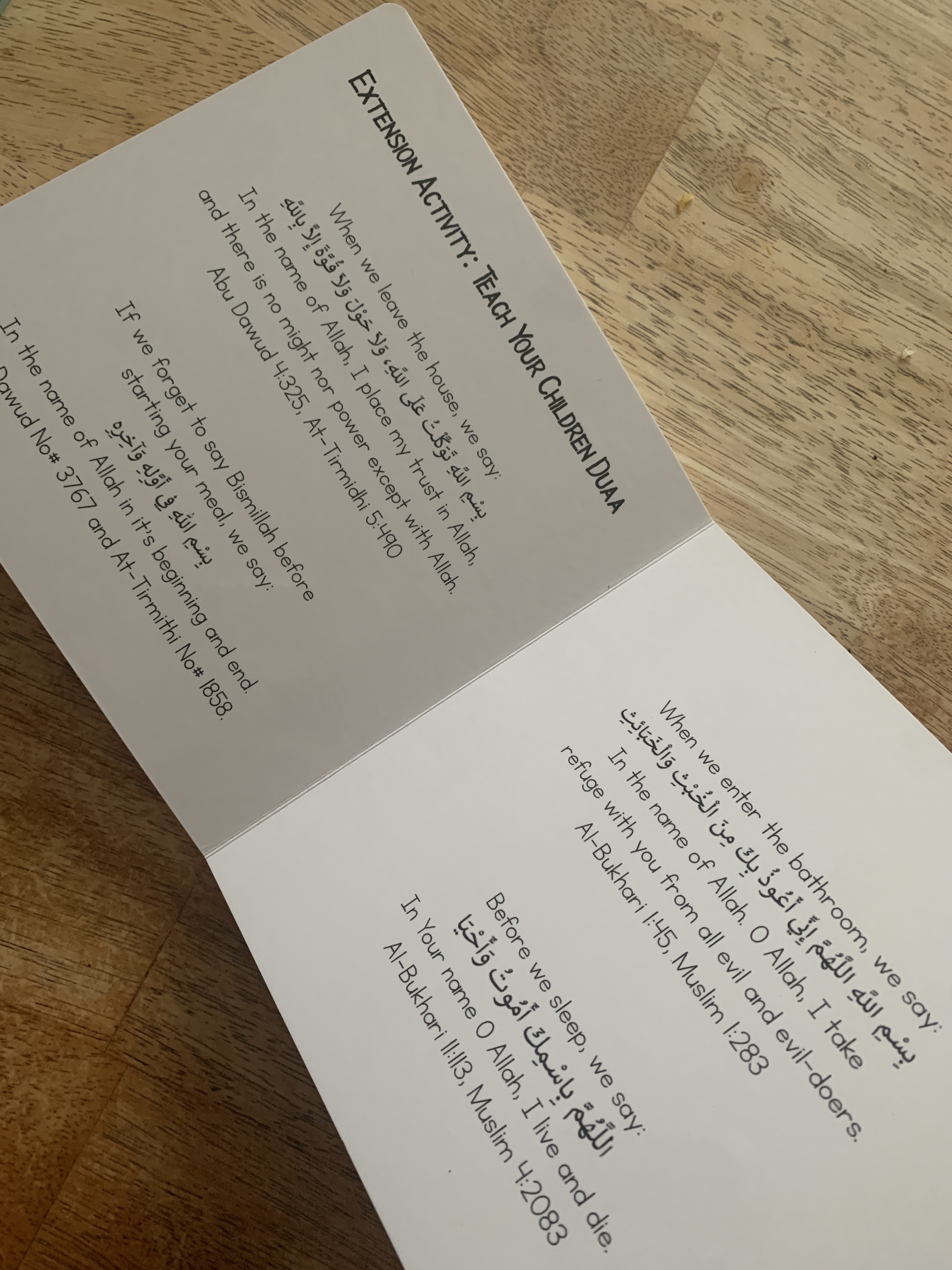
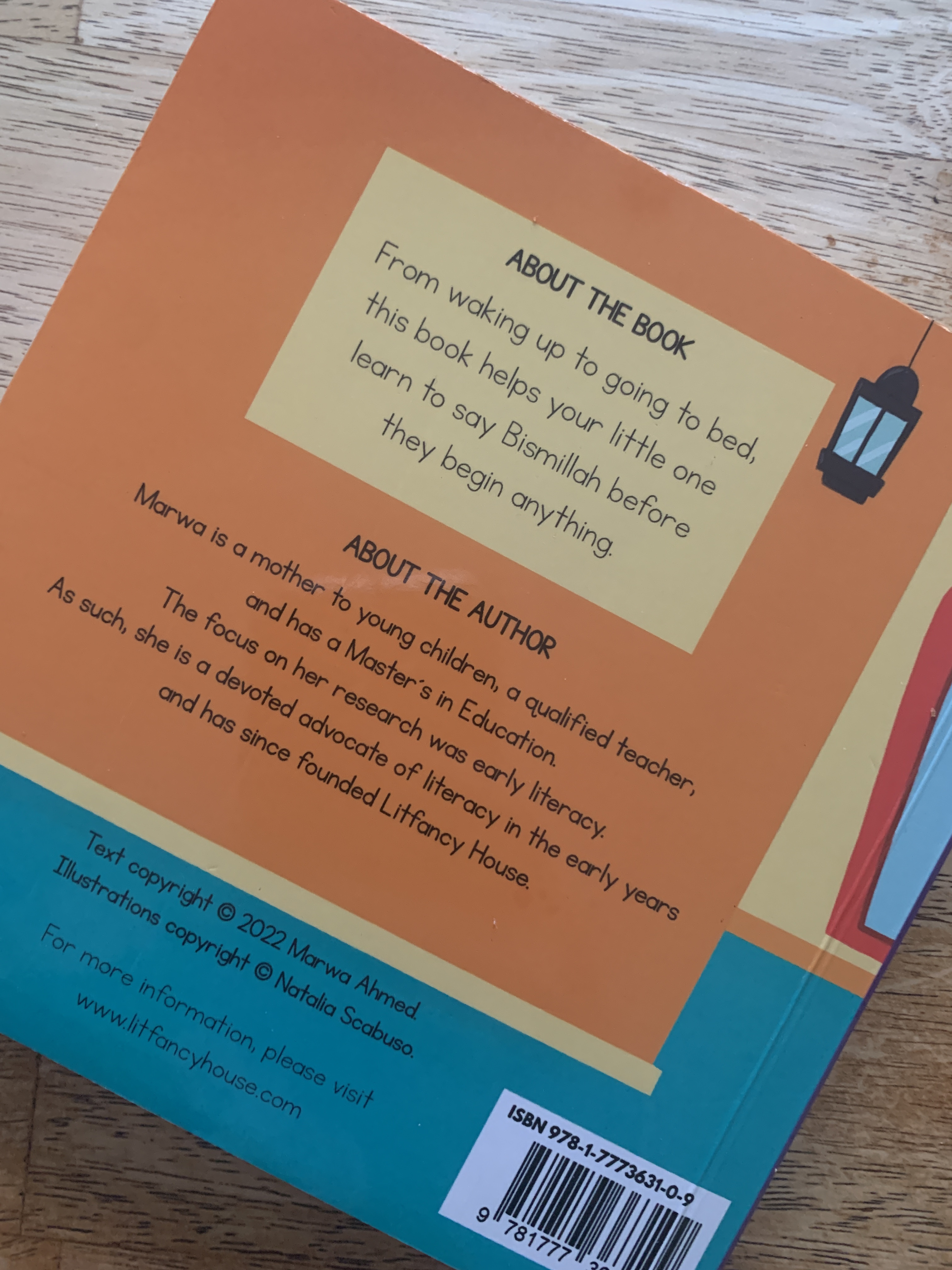
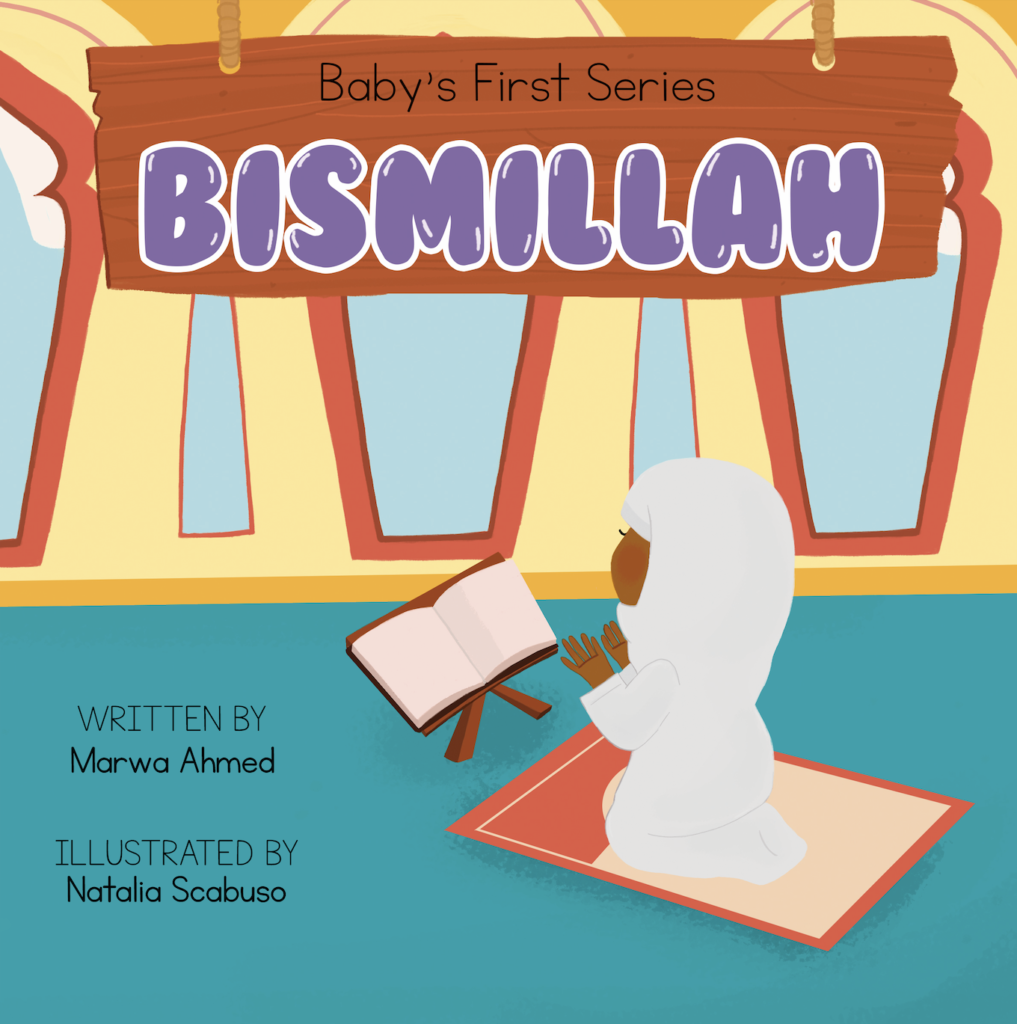
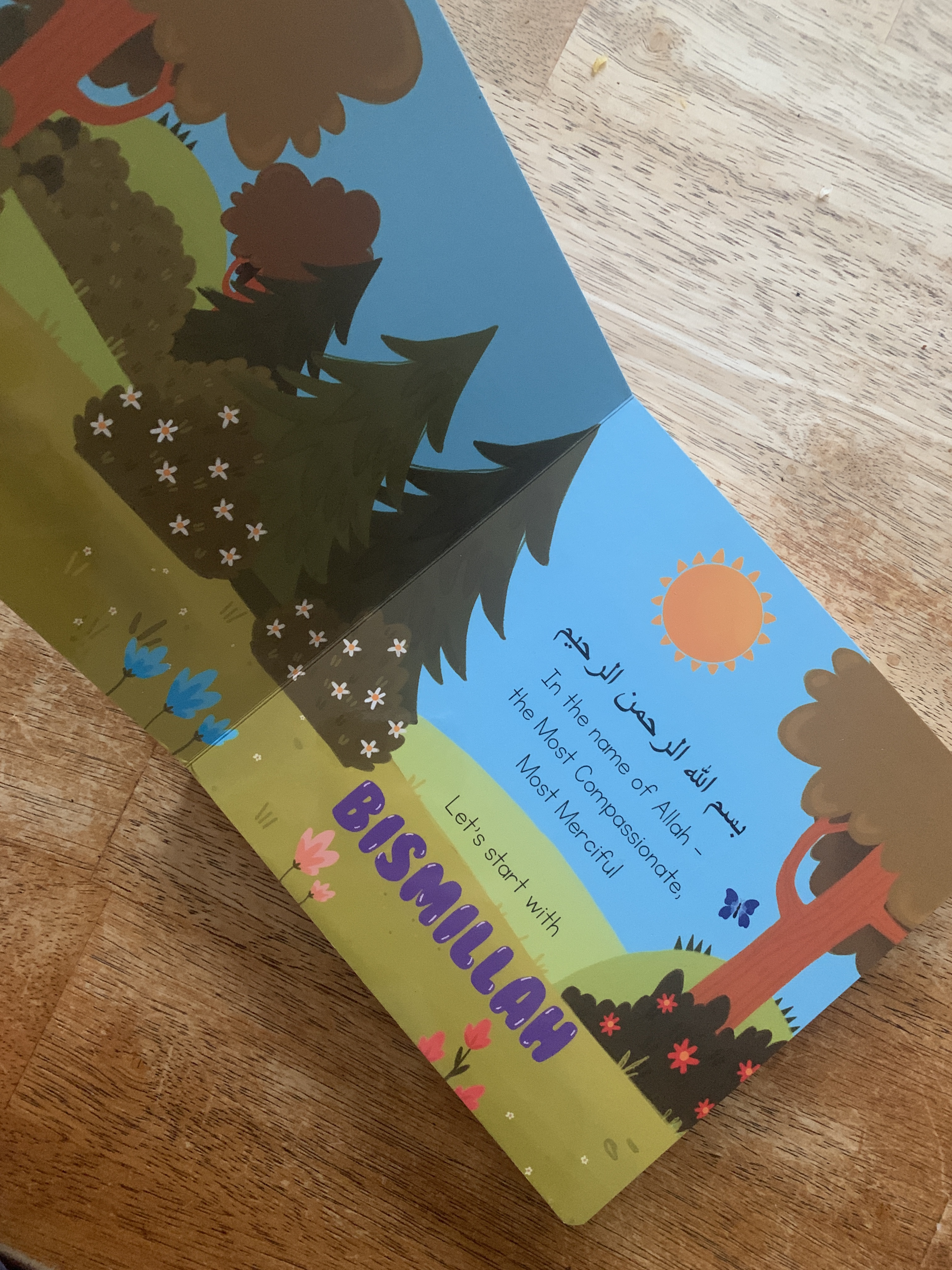
Every few years a new Bismillah board book comes out and while after a while they all blur together, this new 2022 version is bright and colorful and at 24 pages a good length to show and teach toddlers when to say Bismillah without boring them.  At this age repetition is key, so while there is no real story, the book highlights familiar activities through the character Maryam and stresses saying Bismillah before you begin them. The book concludes with sourced duas to say when leaving the house, starting a meal, entering a bathroom, and before sleeping, and every morning and evening. I do wish the book would have clearly established that you say Bismillah, before starting anything and everything.  It hints at it at the end saying, “throughout the day, remember to say Bismillah,” but I worry that some kids would take it more literal, that you only say it at the times mentioned in the book, and not that the featured scenarios are just examples.  

img_4954

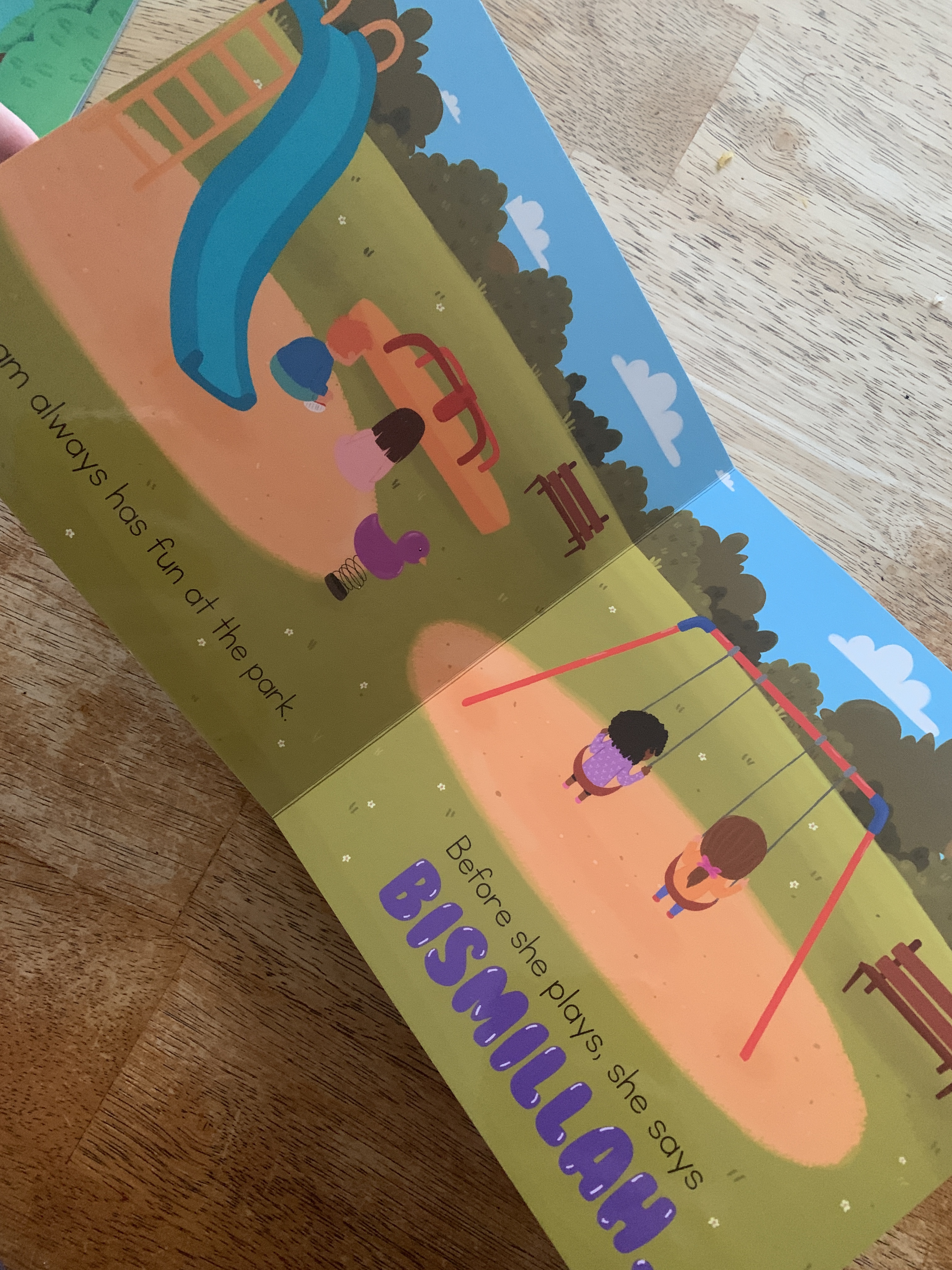
The book begins with Bismillah in Arabic text and the translation before starting the format of Maryam doing something on the left page spread and the saying of Bismillah on the right. So, “Maryam likes taking walks with her day,  When they leave, they say Bismillah.” In this manner Maryam takes the readers to play at the park, eat a meal with vegetables, drink a drink after her meal, read a book, wash before prayer, and get ready for bed.

img_4955

The faces of Maryam and other people are never shown, the stuffed animals in her room do not have eyes, although the duck bouncy seat at the park does.  The illustrations are blocky and colorful with the text clear and large.  The duas at the end tell when to say the dua, the dua in Arabic, the translation in English, and the source.

img_4956

For where to purchase the book you can visit the publisher’s website: www.litfancyhouse.com

img_4957

Hamza Attends a Janaza by Shabana Hussain illustrated by Atefeh Mohammadzadeh

Standard
Hamza Attends a Janaza by Shabana Hussain illustrated by Atefeh Mohammadzadeh

img_5141

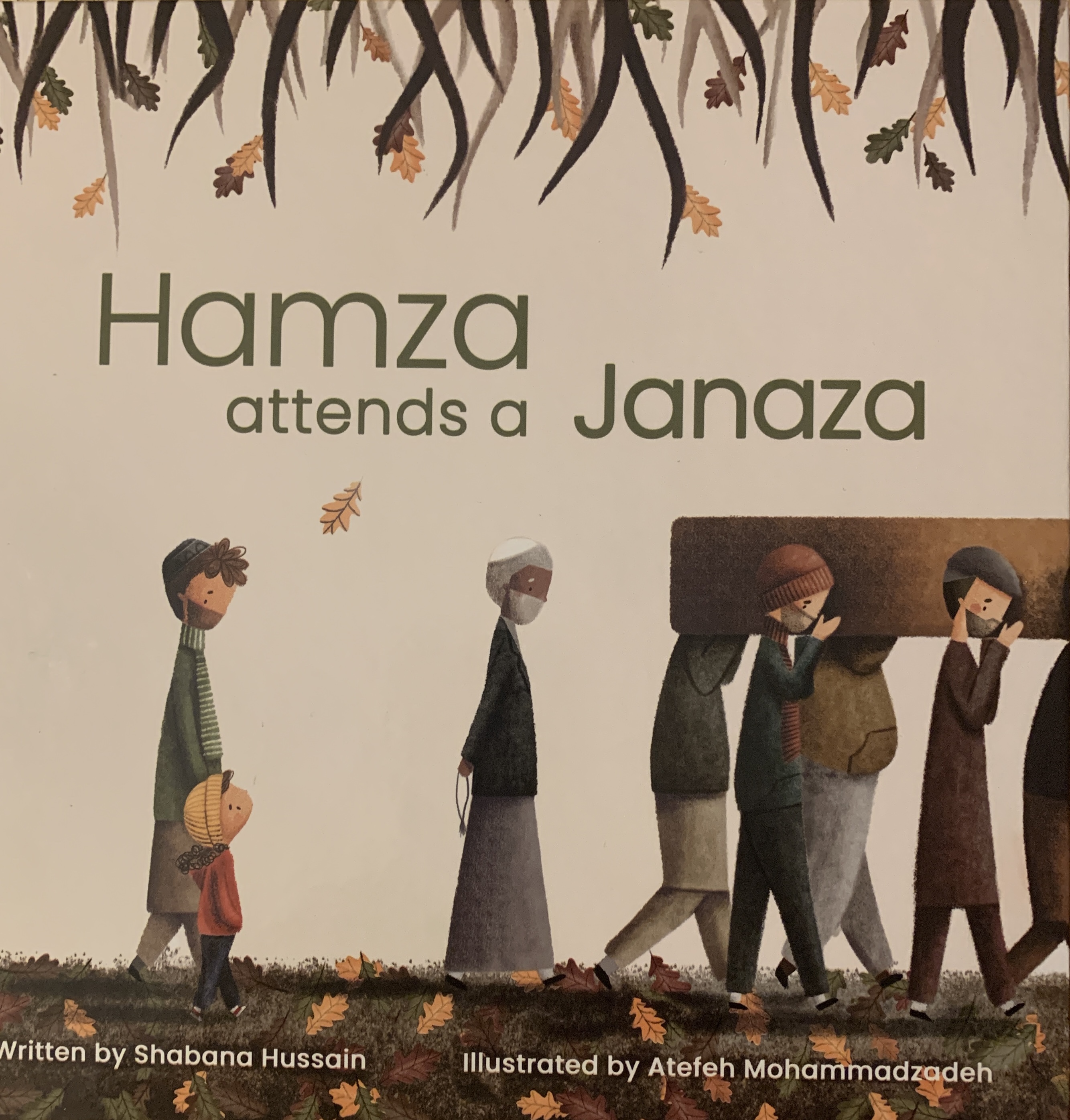
For years it has been noted how few children’s Islamic books about grief and loss are available, and while numerous titles have come out in the last few years, it wasn’t until I saw this new book, did I realize how desperately we were in need of a book on janaza.  I love that the author establishes on the first page that this book is not focused on grief, but rather about death, the burial, and preparing to meet Allah (saw) in the hereafter with our deeds.  The beauty is that while the topic is critical and needed, the story is also well done.  It may not focus on emotion, but it has a lot of heart and tenderness, thus making it a wonderful addition to all book shelves for children preschool and up as a brief introduction to how Islam views death, the rituals of burial, and the worship that surrounds it. Packaged with clear text, robust backmatter and absolutely adorable illustrations, I am very happily impressed with this book.

img_5142

The book starts with Hamza telling about his favorite day of the week, Saturday, the day he spends with his Nano-ji and cousins, but one day all that changes when his mom gets a phone call about the loss of a community Uncle.  Mom says, inna lillahi wa inna illahi rajioon quietly in to the phone and Hamza knows something is wrong, but doesn’t quite understand why the passing of Uncle Sameer, the owner of the local sweet shop, means he has to attend a janaza instead of going to his grandfather’s house.

Hamza’s parents explain the reward of going, and remind him that we all have to leave this world one day. They recall Uncle Sameer helping bandage his knee when he got hurt and gave him a lollipop.  Once in the car, Hamza wants to know what is going to happen.  His parents explain the ghusl and the body being wrapped in the kafan and the body being put in the ground.

img_5144

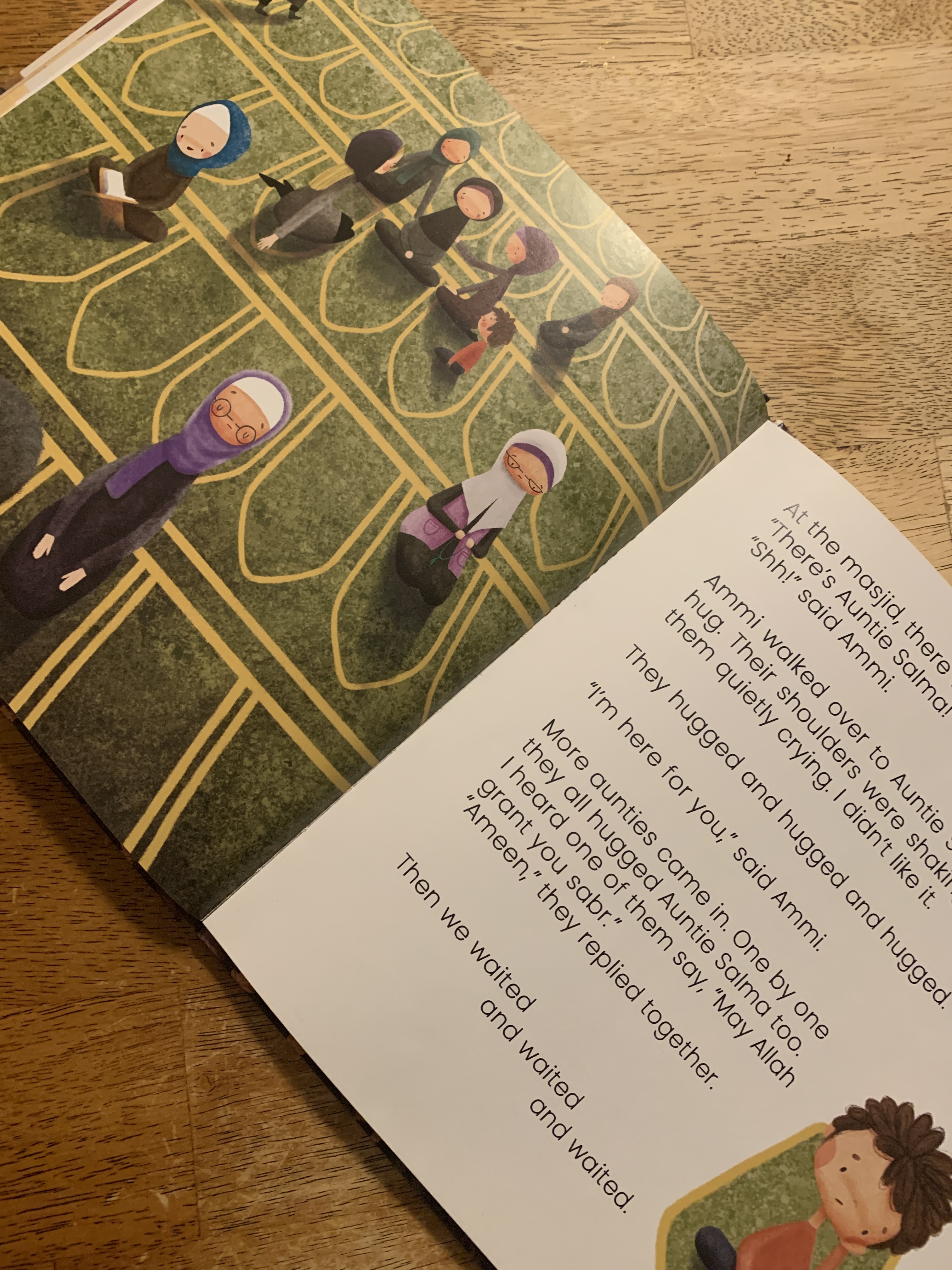
When they get to the masjid there are a lot of aunties on the women’s side, including Auntie Salma who everyone is hugging and reassuring.  After dhuhr the janaza begins, but it is a standing up namaz, and is very short, and Hamza is confused. Later outside the long box is loaded into the car, duas are made, and the body taken to the cemetery.

At the graveside, more duas are made, and Hamza worries that Uncle will be lonely.  When his father explains that his good deeds will keep him company, Hamza remembers the kindness Uncle Sameer has shown him and makes duas.

img_5146

The backmatter contains hadith about what still benefits those that have died, reward for attending a janaza, a glossary, discussion points, suggested activities, and duas.  The book is a great starting point to introducing death, rituals, and answering questions any child might have in a gentle manner.  

I bought the book from Crescent Moon Store 


What Colour is your Mosque? By Jenny Molendyk Divleli illustrated by Aybüke B. Mumcu, Damla Koçak,  Fatma Betül Akbal, Gökhan Özdemir, Gülşah Irmak, Hümeyra Yorgancı, M. Ahmet Demir, Menekşe Özdemir, Özlem Güneş, Şüheda Başer Yılgör, Zeynep Alptekin, Zeynep Begüm Şen  

Standard
What Colour is your Mosque? By Jenny Molendyk Divleli illustrated by Aybüke B. Mumcu, Damla Koçak,  Fatma Betül Akbal, Gökhan Özdemir, Gülşah Irmak, Hümeyra Yorgancı, M. Ahmet Demir, Menekşe Özdemir, Özlem Güneş, Şüheda Başer Yılgör, Zeynep Alptekin, Zeynep Begüm Şen  

img_5113

Sometimes the idea and presentation of a book make it stand out even if the writing is a bit bland and erroneous.  This book with bright colorful illustrations from 12 different illustrators highlighting the bold colors and designs of 12 masjids around the world is one such book for me.  I think young children will delight in seeing such beautiful masjids and appreciate that Muslims are found all over the world.  Adults and older children will also learn about mosques I’m sure they had never heard of before.  I kind of wish the book was a board book for little hands learning colors to enjoy, but the 8.5 x 8.5 style does suffice for story time and bedtime. 

img_5117

The book starts with an introduction to the author, Jenny and her sharing her favorite mosque in Turkey, Hagia Sophia. Each two page spread after that is a child introducing themselves, telling where they are from, and sharing their favorite mosque in their home country.  From Sri Lanka’s Jami Ul Alfar that looks like candy to the purple lights of Mohammed Al Ameen Mosque in Oman.  Some masjids stand out for their colors, others for their 99 domes, and some look like castles or are built out of mud.
img_5115

The illustrations reflect the beautiful buildings and radiate with joy from the smiling children introducing them.  I think the text is translated from Turkish to English which might account for some of the errors, but spelling Kabbah with two b’s doesn’t seem right in any language. 

img_5116

Despite it all, I’m happy with the book, I think we need to make a more intentional point to instill a sense of global community in our children and celebrate the beauty that our architecture and culture can result in for the worship of Allah swt.

The book is available from here from Crescent Moon Store.

img_5114

“Granny, Where Does Allah Live?” by Yasmin Kamal illustrated by Citra Lani

Standard
“Granny, Where Does Allah Live?” by Yasmin Kamal illustrated by Citra Lani


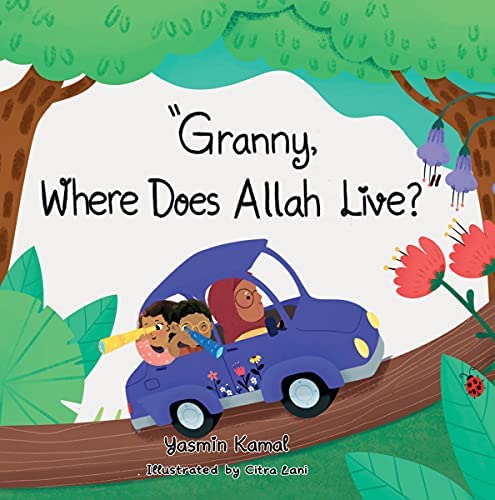
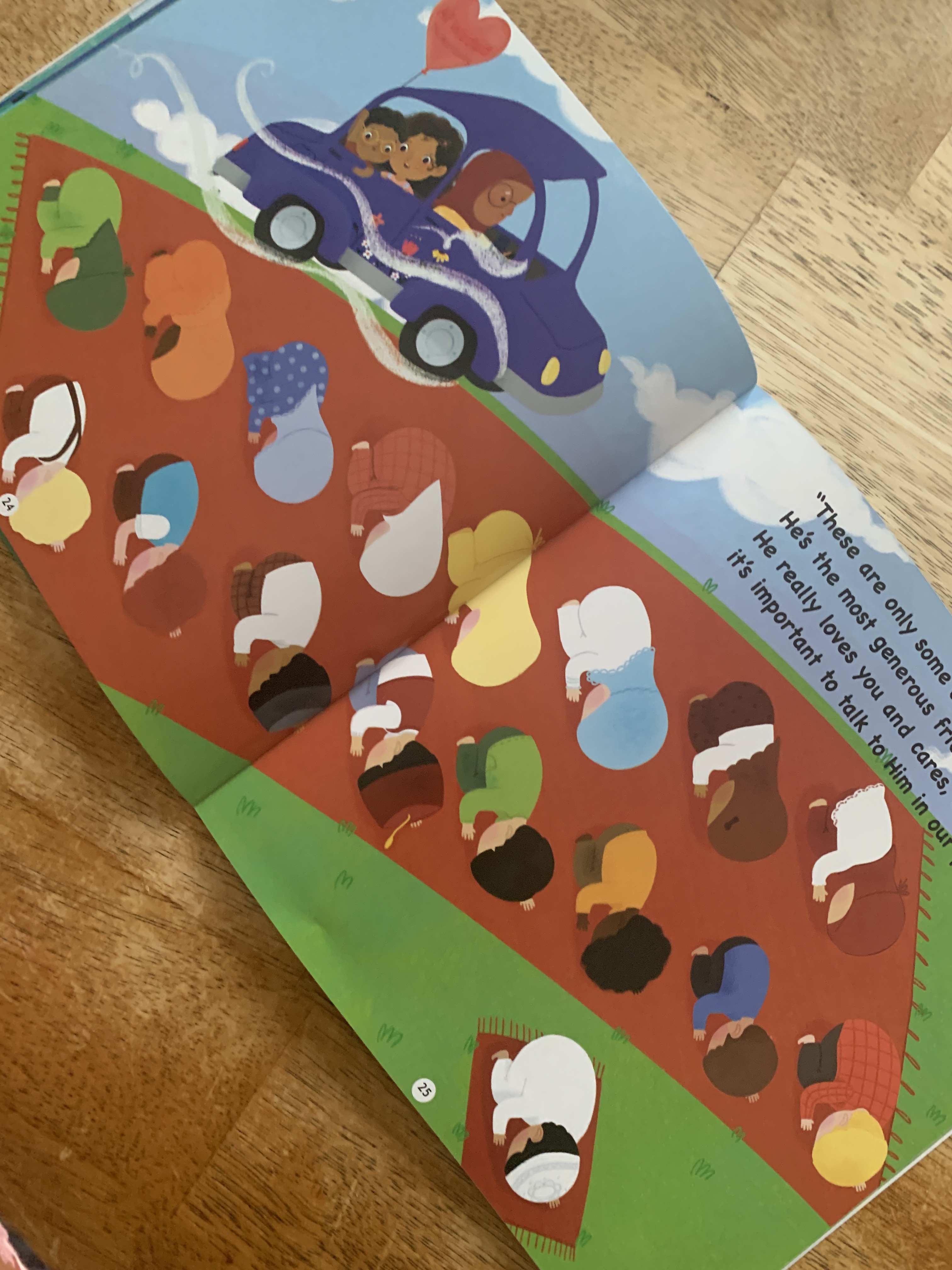
This 32 page picture book for 3-6 year olds takes readers and listeners on a car ride with Granny as questions are asked, sights are seen, and love is spread.  The rhyme is actually pretty decent, the explanation of Allah swt being on a throne above us wherever we are adhered to, and the illustrations are bright, bold, and have a lot to hold little one’s interest.  Overall, the banter between the kids and their Granny, the drive to the mosque being filled with joy and love, make me overlook a lot of little annoyances.  The book packs a lot in, but the voice and tone is easy and I think most kids will see the connection of asking where Allah is, to asking why we have to go to the mosque, to why it is important to talk to Allah swt in our prayers, etc., as a way to have their own questions touched upon.  I do wish the book was a little bigger and perhaps hardbound, to make story time sharing a possibility, the book is 7.5 x 7.5, so good for little hands and sufficient for in lap reading.  The book concludes with three activities that incorporate a few of Allah’s beautiful names.
The book starts out with a young boy and girl excited to be spending the day with their Granny and going on a ride in her special car.  No idea why it is special, but it is purple and has flowers painted on it, so lets go! The kids love to ask Granny questions when they drive.  So after saying bismillah, they wonder why people don’t have tails or shells on their backs, or where they are going, or if they can have ice creams. 

As they head to the mosque to meet Grandad  they wonder if that is where Allah (swt) lives.  Granny tells them no, so they ask if He lives in the sky, when she says no, they wonder about in the trees or in the sea.  Finally she says that they “don’t have to go anywhere to find Allah, His throne is above us where ever we are.”

She then details how we can be reminded of Allah in things around us, nature, animals, land formations and then tells the children Allah is the most generous friend and it is important to talk to Him in our prayers. The children ask what we can tell Him, and Granny shares that we can tell Him everything and anything because He always hears.

Granny then explains that when we do good, we make Allah swt happy and when we aren’t nice we make him sad.  So then the kids want to know why we have to go to the mosque, Granny replies, to be part of a community.

The book is a string of questions, so it doesn’t come across as overly preachy, even though it is Islamic fiction, and the voice is natural.  It sounds like a conversation a grandma and some kids would have, I’m guessing the book was spawned by some real life experiences.  My kids and my mom definitely have this relationship.

 All this though, isn’t too say the book is perfect.  If  you read my reviews, you know there is always going to be a little nudge to try and elevate it from my perspective for the next go round. So with that in mind, the book does read a little long, the tangents get a little away from the simple articulate answer of stressing where Allah swt is, the text runs over the pictures a few too many times, and the people praying are not foot-to-foot shoulder-to-shoulder.  There are no salutations, saw, or asterisks after Allah. The word Jummah is not used although they are going to the mosque on Friday and a lot of people are gathering in the day, and the word mosque is used, not masjid.

The pictures are fun and will appeal to kids, especially when the car goes all magic school bus and starts flying, and going underwater.  I hope this is the first book in the series as it really does have potential to present answers to kids questions in a joyful colorful way.

Book available on Amazon