Category Archives: History

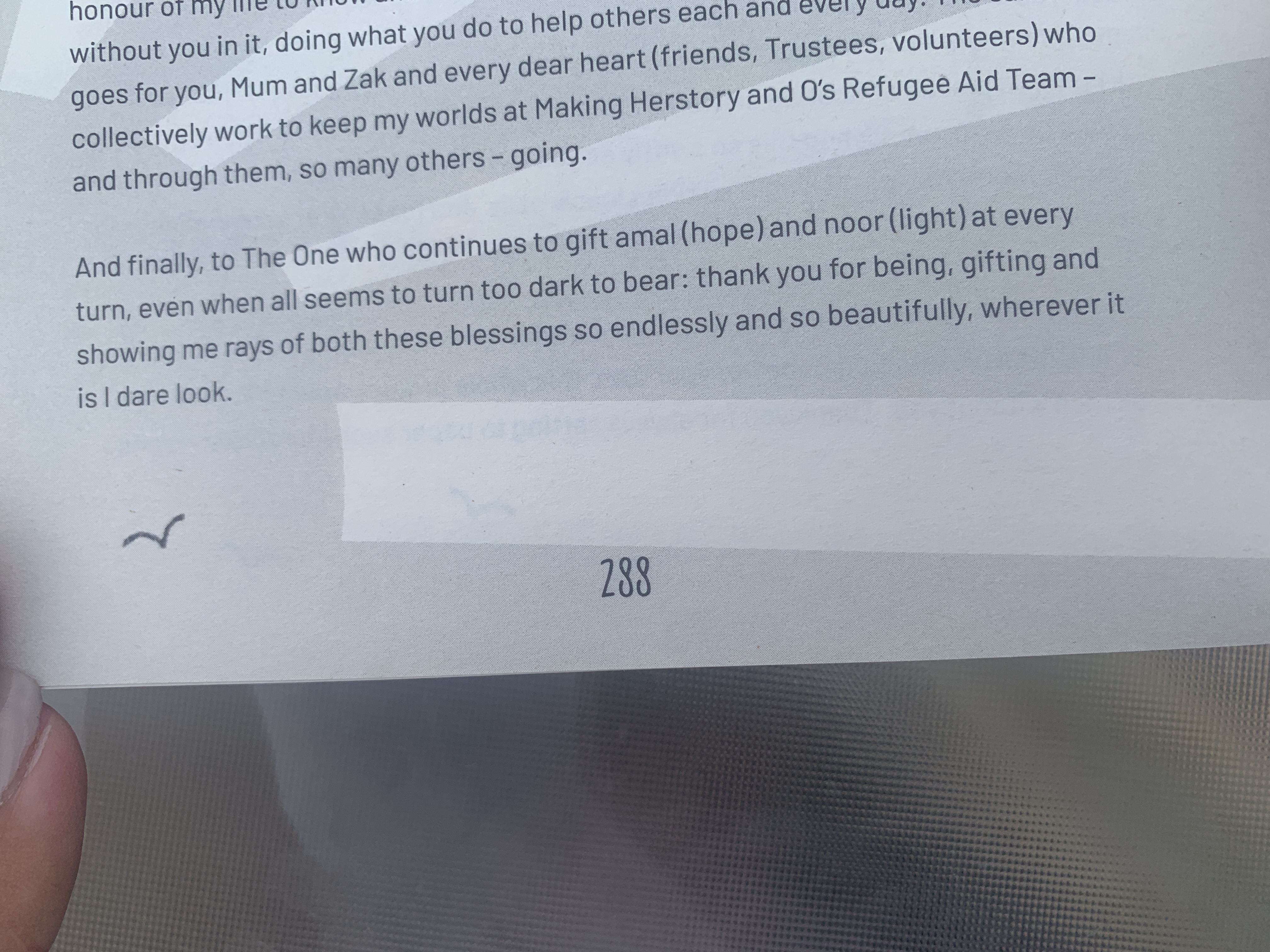
Hope on the Horizon: A Children’s Handbook on Empathy, Kindness, & Making a Better World by Onjali Q. Rauf illustrated by Isobel Lundie

Standard
Hope on the Horizon: A Children’s Handbook on Empathy, Kindness, & Making a  Better World by Onjali Q. Rauf illustrated by Isobel Lundie

This delightful 288 page handbook pulled me in, inspired me, enlightened me, and allowed me to reminisce about incredible fictional characters from iconic books, tv shows, and movies.  Concepts such as kindness, empathy, friendship, deflecting negativity, seeing beyond labels, and asking for help, are framed around the fictional character’s strengths to introduce famous real life people from the past and present, as well as not so famous people the author personally knows and works with.  Written with the author speaking directly to the reader, there are also calls to actions, questions, prompts, and resources to help mature middle grade readers and up.

SYNOPSIS:

The book starts with an introduction about who the author is and her getting to know the reader, before introducing the concepts the book will cover and how it will go about doing so.  It establishes the super power of kindness and five golden rules.  The 10 chapters of the book then follow a loose format of introducing a fictional character and why the author admires them: Charlie Bucket from Charlie and the Chocolate Factory, Tintin, She-Ra, Superman, Samwise Gamgee, etc., her connection to them and to a theme: hope, being a ripple starter, never giving up. to name a few.  The book then highlights how the character and theme tie in to a cause that the author is passionate about, refugees, education, feeding the hungry, foster care, etc., then spotlights exceptional people the author has gotten to know personally in her activism that have made an incredible difference in the world, before offering a checklist of how you too can take action.  And finally a famous person is celebrated as being the culmination of all the strengths, characteristics, and super powers mentioned.  People such as Greta Thunberg, Albert Einstein, aerospace engineer Mary Jackson, footballer activist Marcus Rashford and more.  Often there are reflections, and the easy banter and conversation between the author and the young reader never leaves the text.  The reader and the connection to the reader is always prioritized and included in the sharing of information, motivation to action, and celebration of individuals real and pretend that have made a positive difference.
WHY I LIKE IT:

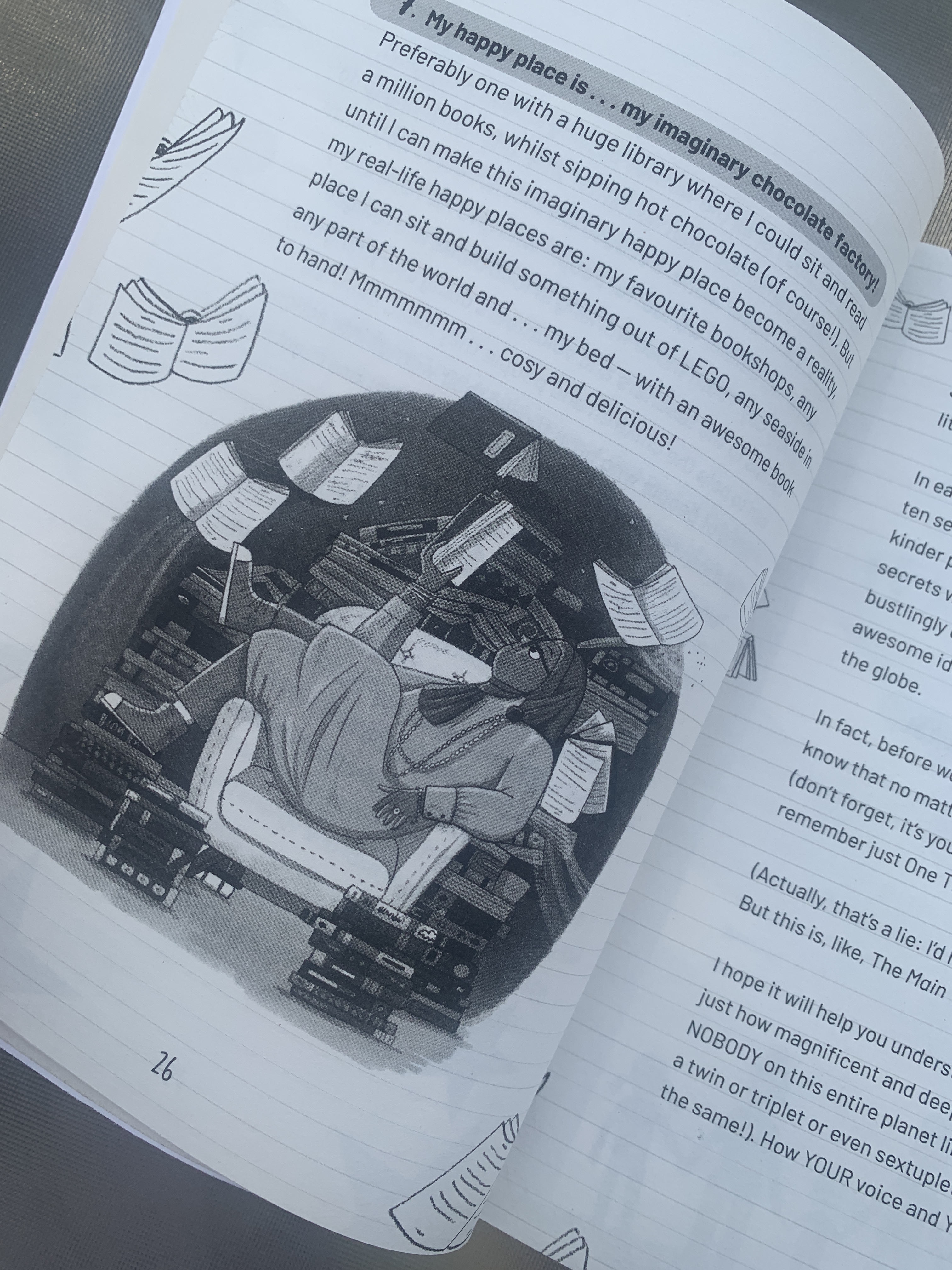
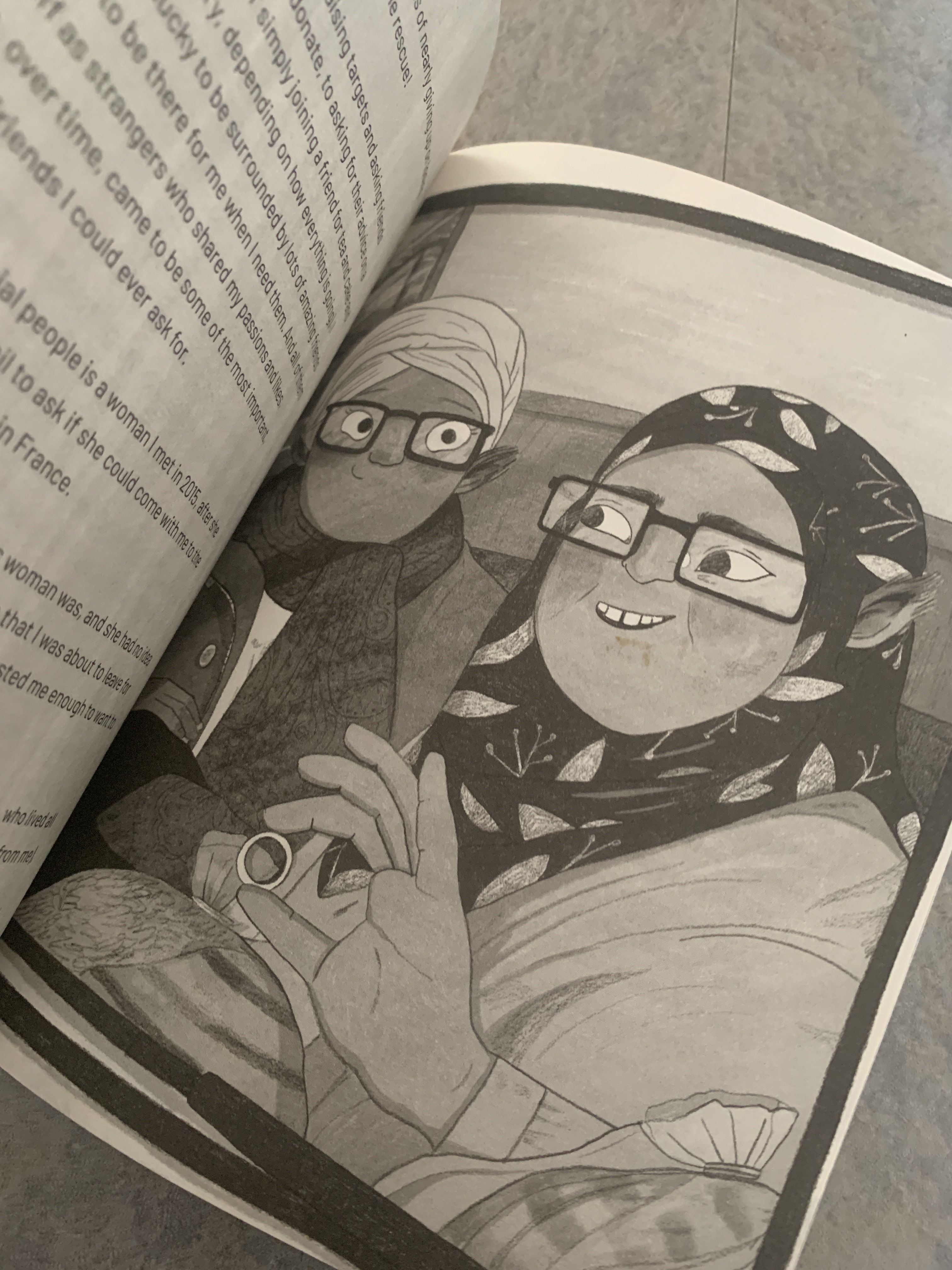
There is nothing overtly Islamic in the book, but there are Muslims featured as both famous real life examples and the author’s personal acquaintances.  Most importantly the author is unapologetically Muslim and offers glimpses of her own childhood growing up Muslim in the UK.  And as a hijab wearing Muslim, the illustrations also proudly show her smiling, eating chocolate and being an activist making the world a better place for all.

I love that the tone of the book is optimistic even when discussing difficult themes and heartbreaking realities of society.  The playfulness of the banter keeps the reader engaged and the text light.  Even if you don’t know the characters referenced, the urge to read their stories is a secondary benefit, and one that I think will further young world changers’ critical thinking skills.  Finding the good in people, even if they aren’t real, is such a lens that needs to be used more often, and the book does a tremendous job of stressing this.

FLAGS:

Talk of refugees, homelessness, food insecurities, abuse, poverty. Nothing is overly detailed, but the concepts are touched upon and explained as needed which could possibly be triggering or difficult to fully grasp to younger readers.
TOOLS FOR LEADING THE DISCUSSION:

The book can be read straight through or referenced, you can even thumb through and read sections that appeal to you.  I don’t know exactly who the book will resonate strongest with, but I’ve got my own children reading it, so I will happily report back. I think it deserves a place on every book shelf and even if only portions are shared with a class, the discussion and foundation that it could provide would be incredibly powerful.  I could see an English teacher encouraging essays about fictional character traits in the “real” world being assigned after reading, or History teachers spending time on some of the characters highlighted, it really is a great tool, a handbook, for young and old alike.

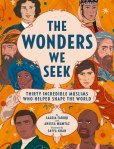
The Wonders We Seek: Thirty Incredible Muslims Who Helped Shape the World by Saadia Faruqi and Aneesa Mumtaz illustrated by Saffa Khan

Standard
The Wonders We Seek: Thirty Incredible Muslims Who Helped Shape the World by Saadia Faruqi and Aneesa Mumtaz illustrated by Saffa Khan

wonders we seek

I’ve noted over the years how much I want to love these type of collections, but ultimately I just don’t.  The reason I gave this one a try was quite simply the reassuring introduction.  The book immediately detailed the checklist required to make it into the book, the criteria required, and acknowledged the limitations that the book overall, and personalities included, would have in the presentation. There are sources at the end for each of the 30 people included as well.  Unlike most books in the genre, this book got out in front of my most common complaints: the lack of transparency for how the people were selected, where the primary source information was obtained from, how the order is organized, and the Eurocentric and pop culture framing that is both pandering and renders the book cumbersome a few years after it is published.  For the most part, this book is the best I’ve seen yet, but that isn’t to say I loved it.  While the requirements to be included were made apparent, there is still a lot of opinionated statements about how “religious” or “conservative” or “devout” or “mainstream” or “strict” a person is or was, that rubbed me the wrong way.  Also knowing that the person had to identify as Muslim to be eligible seems like a black and white issue, but a few of the personalities are very controversial (some noted and some not), and I am not an expert at all.  One of the problems with books like this is they present as non fiction, and no matter the transparency, just the mere fact of who is included and who is not is a judgement call and wrought with bias.  It is nice to thumb through, but I don’t know that it would get repeated use, or that it could really be used as a reference.  It is informative and I recognize that I went in to it very skeptical, but only a few text passages connected faith to the person’s accomplishments, and so while they identify as Muslim, it doesn’t necessarily radiate pride or admiration for Muslims as a whole.  For better or worse, if anything, it made me want to conduct my own research on many that were featured. 
img_9998

The 30 included in the book:


A few I was concerned by, which made me question the ones that I learned something new about. Clearly there are reasons that I shy away from non-fiction.  I wish the book would have had Muslim beta readers, I am willing to assume that it did not.  Take for example the section on Saladin, I absolutely get why his name is shown as both Saladin and Salah al-Din, the book is in English presumably for western readers and that is how he is known.  But why when it says that his real name is Yusuf, is Joseph in the parenthesis? No one else’s names in the book are given the English equivalents of their Arabic or Persian or other native language. Similarly so few tied back to Islam or an Islamic perspective being credited for having a role in their noteworthy accomplishments.  Even Muhammad Yunus when it discusses how interest was not a part of the micro loan process- it didn’t add even one more sentence explaining that interest is not allowed in Islam, why leave that out?  

I liked that the parameters required that the person was influential more globally than just to their own country, but Rebiya Kadeer seemed to be more localized in her work with Muslims in China even when she moved out of China, blurring the rigid standards of who was to be included and who was to be left out.  

img_9968

I do like that it mentions Rumi’s religion is often conveniently ignored as the west has made him a hero and chosen to forget his faith.  Similarly, I like that it tries to correct when Ibn Battuta is called the Marco Polo of Islam, for in reality Marco Polo was the Ibn Battuta of Europe.  And I appreciated that Benazir Bhutto was noted as being controversial and not well liked. 

If this type of book appeals to you, you can purchase it here.


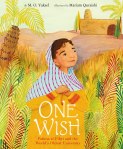
One Wish: Fatima al-Fihri and the World’s Oldest University by M.O. Yuksel illustrated by Mariam Quraishi

Standard
One Wish: Fatima al-Fihri and the World’s Oldest University by M.O. Yuksel illustrated by Mariam Quraishi

one wish

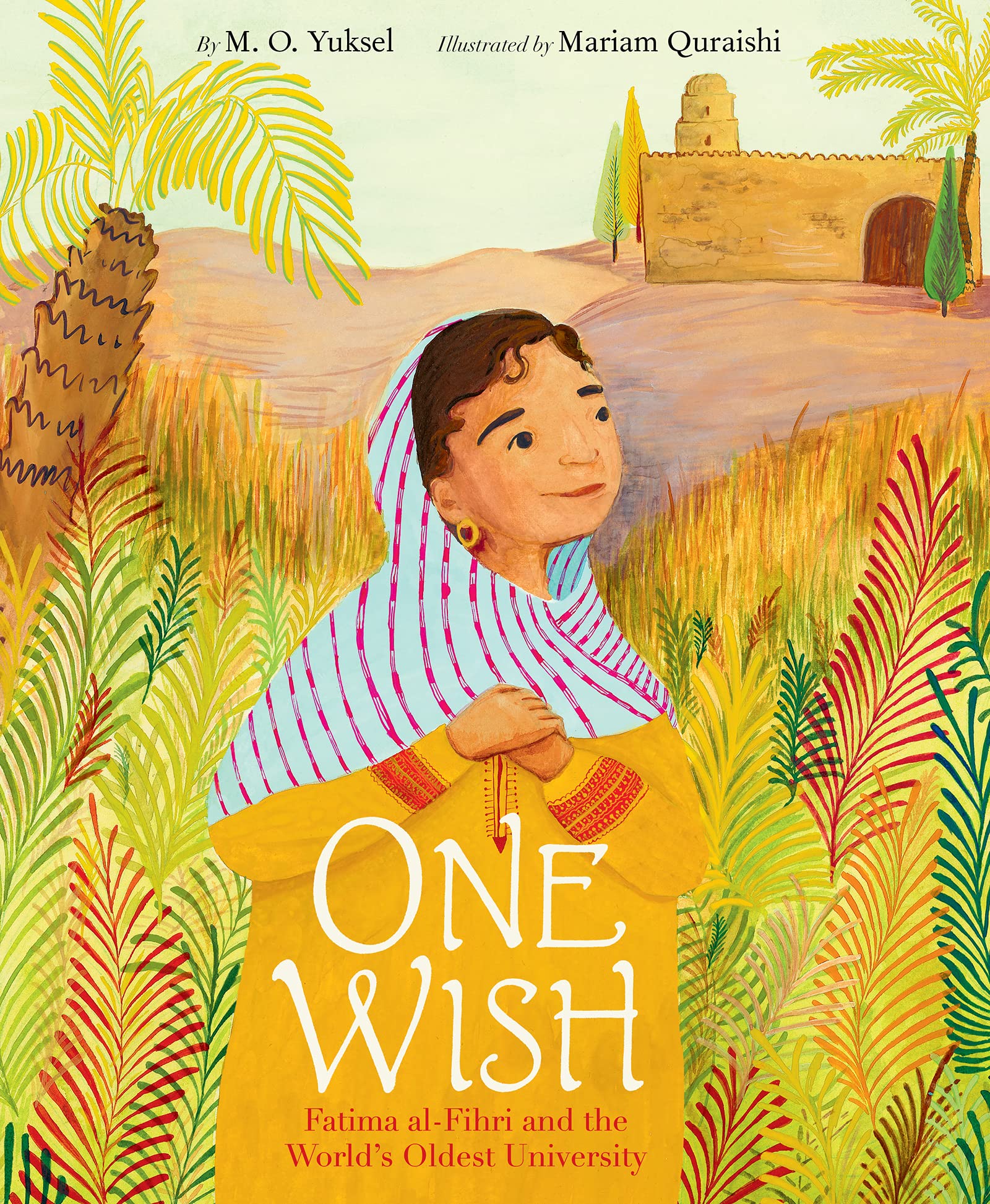
This book is so long overdue, yet at the same time it was worth the wait.  The writing is simply superb: Fatima al Fihri is celebrated, Islam is centered, there are references, and the story compelling.  We, Muslims, as a whole know so little about the beautiful impact fellow Muslims have had on the current world and our way of life, that to see this book being celebrated in public libraries, in Islamic schools, at masjids, and retail bookstores, truly makes you sit up a little straighter, and reach confidently to get this book in your hands to share with those around you.  Thank you Mindy (@moyuksel.author) for these 40 pages of absolute delight, ages 5 and up will read it to learn, read it again to enjoy, and inshaAllah read it repeatedly to be inspired.

img_7723

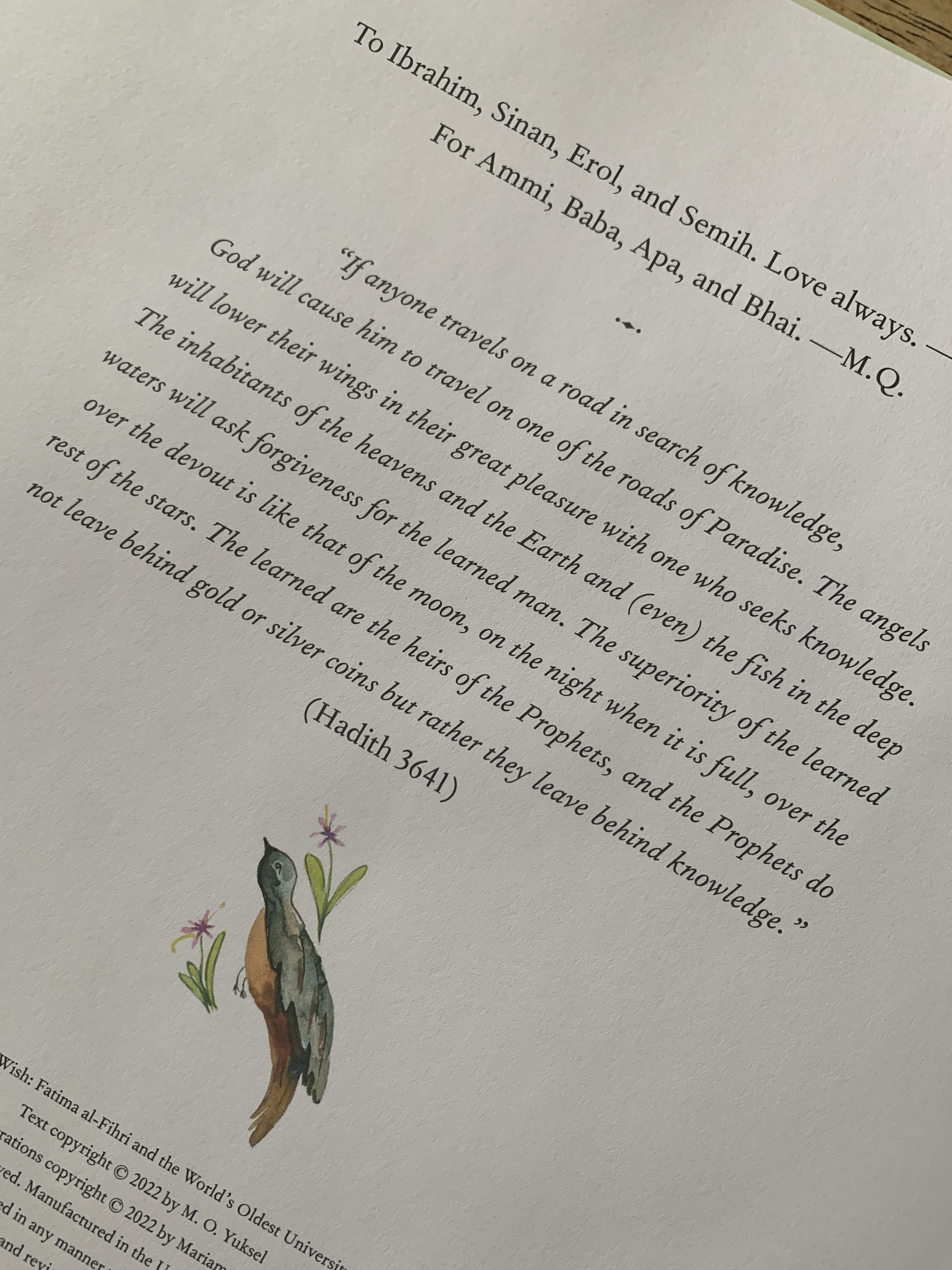
The book begins with a Hadith regarding seeking knowledge and leaving knowledge behind.  It then begins the biography of Fatima as a small girl curious about the world around her starting with the word Iqra, read, from the Qur’an.  It sets the stage of her living in the desert in the early ninth century, a time where some boys went to school and some girls learned at home. Her connection to Islam and it teaching her the value of knowledge caused her wish, to build a school, to grow stronger.

img_7726

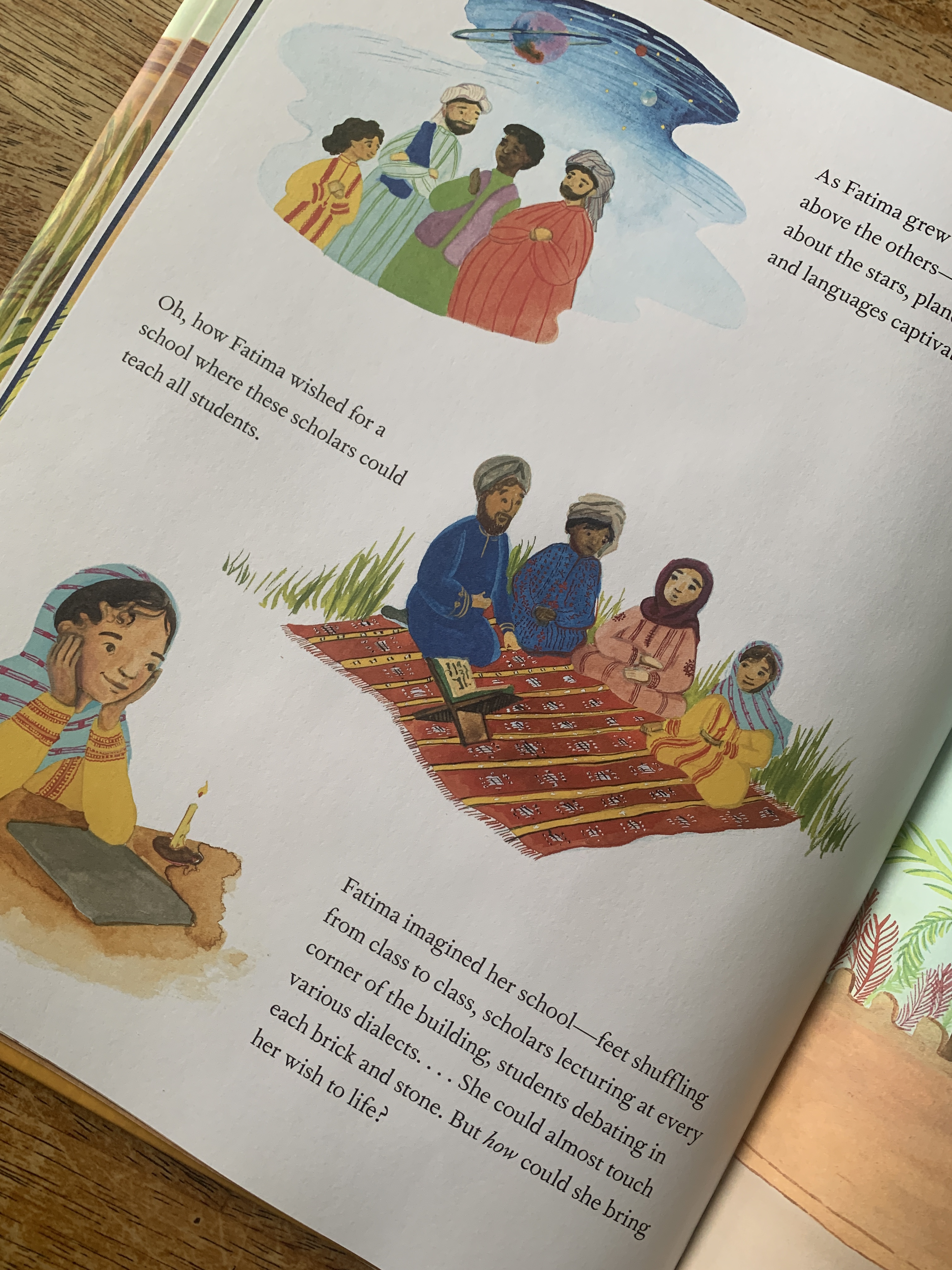
When war destroys her town her family flees to the busy city of Fez, Morocco.  She begins to accompany her father to the souk and enjoys listening to talk of planets, distant lands and different languages and wishes these scholars could educate everyone. She grows and gets married and her and her family become wealthy merchants.

img_7725

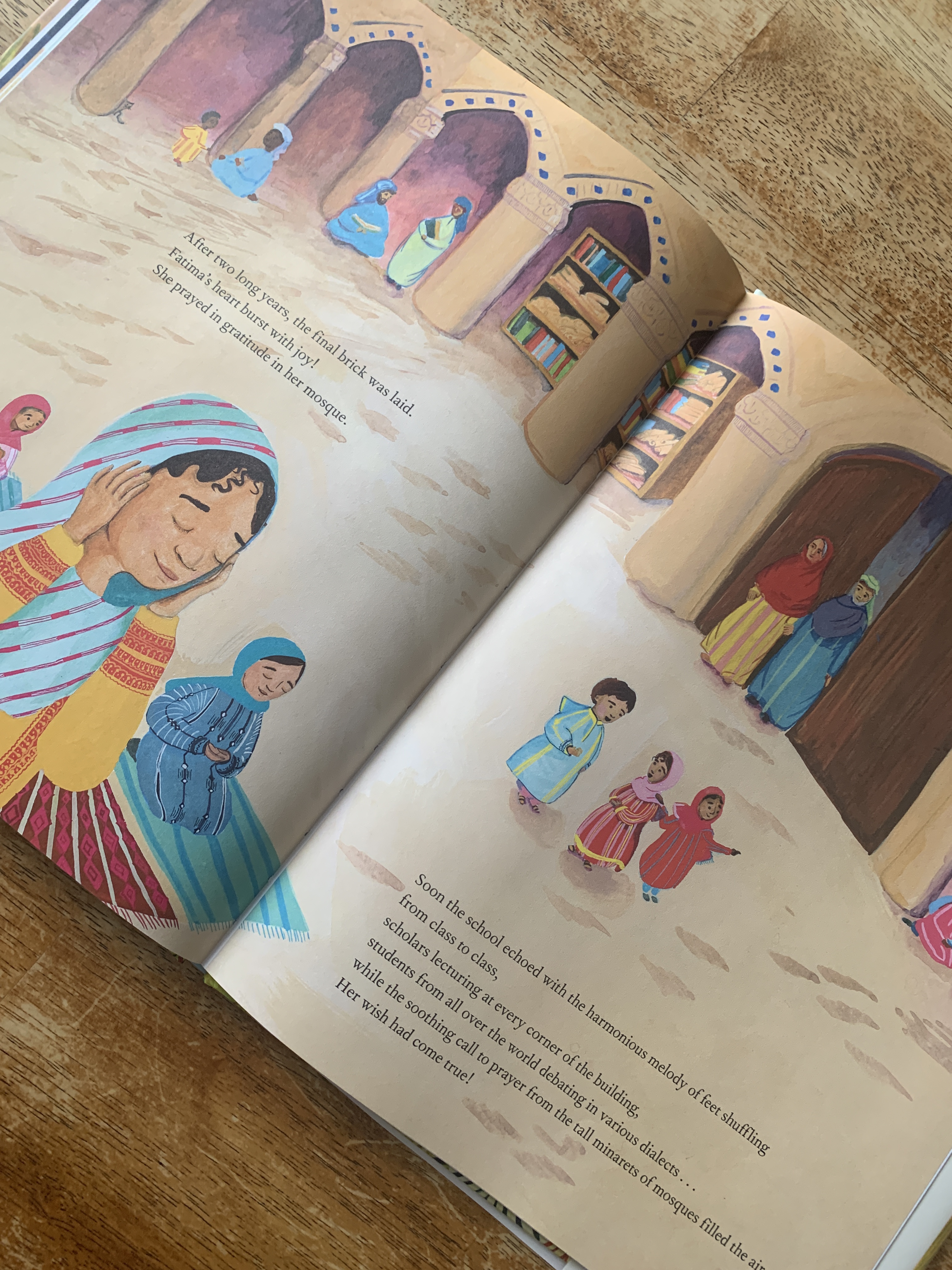
Tragically, her father and husband die, and Fatima must decide what to do next for her family.  She decides to help her community as a form of sadaqah jariyah and make her wish a reality.  She sets out to build a school where everyone can live and study for free.  She purchases land, and the building begins.  Fatima oversees each detail and names it the al-Qarawiyyin after her hometown in Tunisia.  It takes two years to build and it still functions today.

The back matter is just as compelling as the story with an Author’s Note, information on The University of Al-Qaryawiyyin, a Glossary, Bibliography, and a Timeline.  The only complaint I have about the book, are the illustrations.  I really don’t understand why half of her hair is showing when based on the time and her connection to her faith, she most likely was a niqabi.  I don’t understand the continuity of the hijab from a young child to adulthood.  I get that it shows her influence moving forward at the end, but it could have been a small print on an outfit for token representation of symbolism, I don’t get it as being a complete outfit her whole life.

img_7724

I absolutely love the role of Islam in both Fatima’s life and in this book.  It is so much a part of her and her wish, that every reader will recognize how connected her faith and the creation of the University were and I’m confident both Muslim and non Muslim readers will be in awe of her devotion and accomplishments, inshaAllah.

Nana Asma’u by Aaliyah Tar Mahomed illustrated by Winda Lee

Standard
Nana Asma’u by Aaliyah Tar Mahomed illustrated by Winda Lee

nana asmau

This book may only have 14 pages of text and be meant as an introduction for early preschool aged children and up, but I learned so much, or rather was made aware of so much that I knew nothing about, that I’m now eager to research her and the Sokoto Caliphate and the impact of Jajis.  The beautiful, bright, engaging pictures, the simple deliberate text, and the inspiring content matter make this a great book to share with little ones, and to keep on the shelf for repeated readings and reminders to learn more about this remarkable woman for older children.  My only wish was that there were some reference notes or sources included to give that extra reassurance of authenticity.

img_6076

The book tells about Nana Asma’u’s life starting from being a curious child and asking questions to the wise women in her community.  By the time she grew up she had memorized the Quran and spoke four languages amongst many other things, and Nana loved to write poetry.

img_6077

During this time, there was a lot of conflict in Western Africa, and Nana’s father, Shehu Usman resolved the issues and created the Sokoto Caliphate.  With peace, Nana wanted to help educate the people. She thought long and hard about how to do it.

img_6078

She eventually brought together women from different regions of the Caliphate and taught them through poetry, she then sent the women back to their homes to share what they had learned.  These women were known as Jajis, and this tradition still exists today.

img_6079

I didn’t love the phrasing that she had learned all about Islam, seeing as one can always learn more.  And I would have like Prophet to have been capitalized and salawat given for respect.  Overall, a great book that alhumdulillah I was able to purchase from Crescent Moon Store.

Nour’s Secret Library by Wafa’ Tarnowska illustrated by Vali Mintzi

Standard
Nour’s Secret Library by Wafa’ Tarnowska illustrated by Vali Mintzi

library

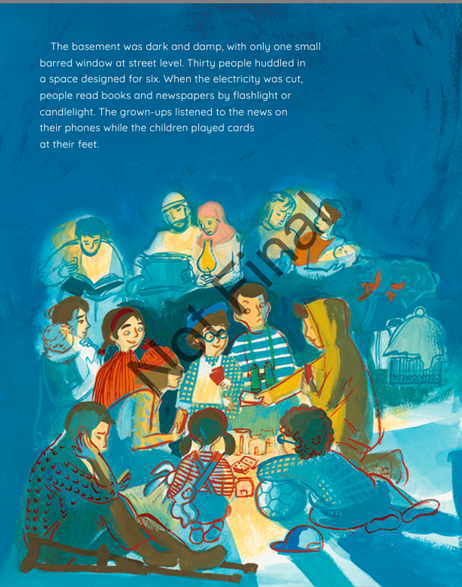
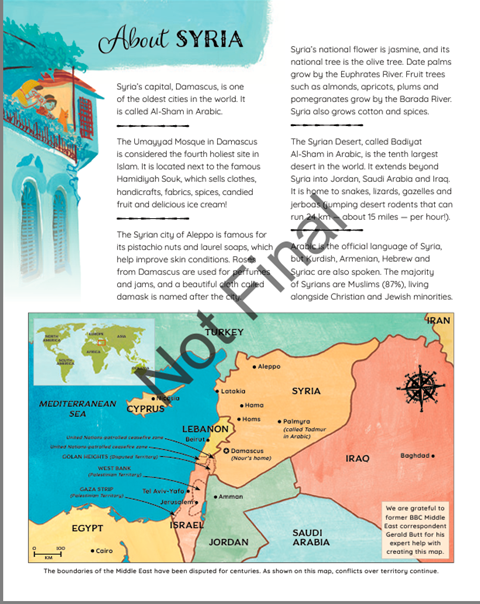
Set in Daraya, and based on a real events in Syria, as well as the author’s own life in Lebanon, this 32 page elementary and up story does an amazing job of showing relatable childhood adventures and ingenuity shining through even in the most horrific of environments.  The book is inspiring and warm, but the backdrop of war is very much present.  Some young children may be bothered by the images and text, while others will benefit from understanding the humanity that is affected by such violence.  I know the book says the pages are not final, but I wanted to put it out to help drum up interest.  I feel this story would best work in intimate settings where discussion, compassion, and gratitude can all intuitively transpire.

library1

Nour’s best friend is her cousin Amir, they love to read and imagine adventure and secret societies.  As their dream to create a secret club, complete with a secret password and handshake, for them and their friends starts to come to fruition, war arrives first. 

Families are forced to seek shelter away from the bullets at night in their basements, and only are allowed to venture out when absolutely necessary.  Every time Amir goes out, he collects any books he finds, and encourages his friends to do the same.  

library2

They begin sorting the books, and trying to decide what to do with them, when Nour has an idea to create a secret library.  Everyone pitches in when an empty, half destroyed basement is located, and the books are moved and set up on discarded planks of wood.  A boy next door is entrusted with the secret handshake and becomes the deputy librarian.

As word spreads, everyone from boys and girls to soldiers and rescuers, collect books to stock the shelves and checkout books to keep their minds busy.  The library, named Fajr, is open every day from morning to evening and closed during Jummah.  It becomes the city’s best kept secret and a source of hope for the community.

library3

There are references at the back that tell about the true story of the Secret Library in Syria, the author’s memories of hiding in the basement in Lebanon, a glossary of terms, information about Syria, the illustrator’s research, information about the war, and famous libraries in the Middle East.

library4

Journey of the Midnight Sun by Shazia Afzal illustrated by Aliya Ghare

Standard
Journey of the Midnight Sun by Shazia Afzal illustrated by Aliya Ghare

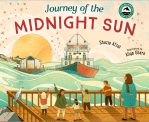
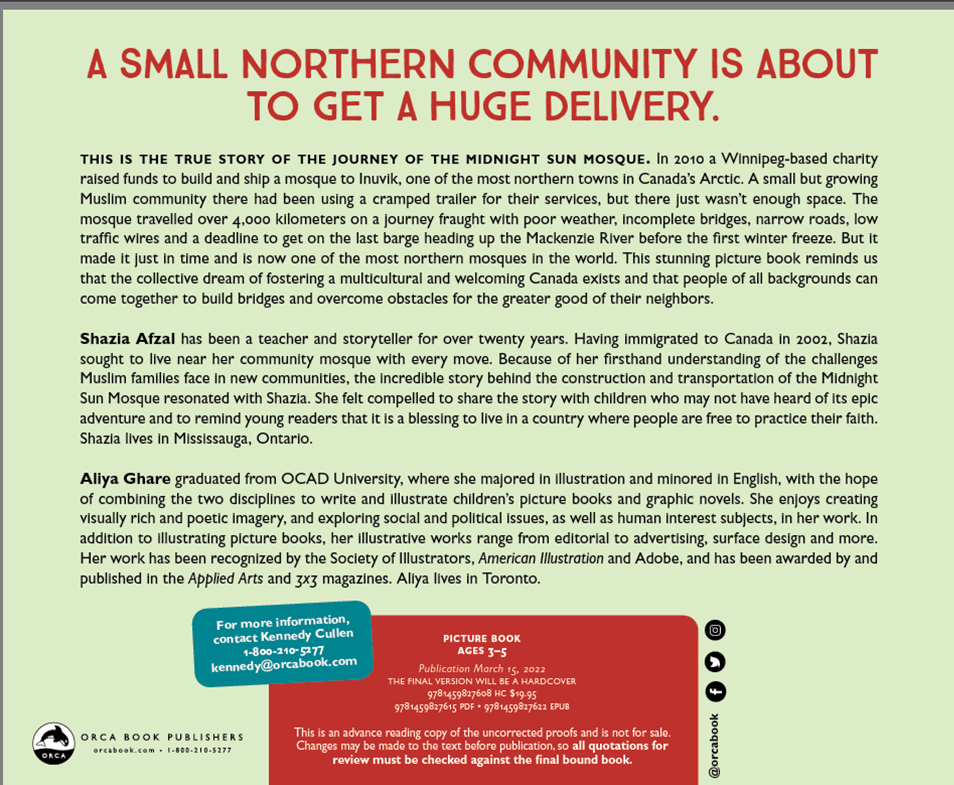
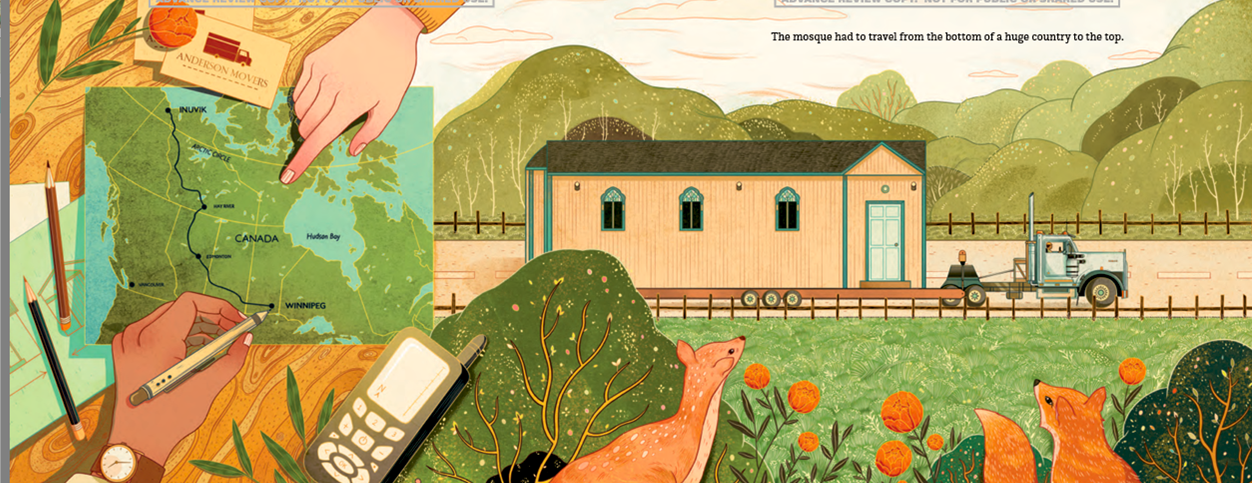
What an absolute joy to learn about something real for the first time in a children’s picture book meant for ages 3-5.  I am baffled that this story wasn’t celebrated and shared by not just Muslim’s everywhere, but Canadians as well.  It is a sweet instance of real life being harder to believe than fiction.  It warms your heart and reminds you that there are so many good people doing selfless things for the benefit of others, every single day, subhanAllah.  As for the 32 page book itself, story inspiration aside- I kind of wish it had more details of the real story in it.  The factual blurb on the back cover was a bit more awe inspiring than the totality of the book.  I think it is because it is meant for such little ones, but I don’t know for sure.  I hope that there will be more books for various ages, about this mosque’s incredible 2010 journey. 

There is a small community in Inuvik, in Northern Canada.  The growing Muslim community has outgrown their one room space and it is more expensive to build a masjid there, than to deliver a pre built masjid from Winnipeg. 

With the help of some non profit and local groups, a masjid is built and sent north, hopefully able to reach its final destination before the river freezes.  The journey is fraught with obstacles: roads are too narrow, bridges not ready, low utility wires. weather concerns, construction, the masjid tipping over, but alas it arrives, alhumdulillah.

The entire community welcomes the new masjid, and the Muslim’s have a new space to pray and gather.

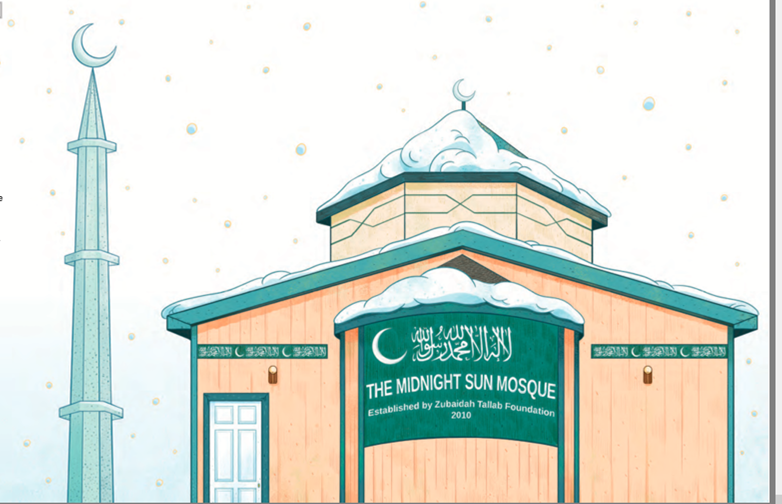
I like that there are maps and indicators of the distance.  And while I like the interfaith aspect in Inuvik being presented, it seems incredibly specific in a very vague book for small children. Why is the imam identified separately, the whole paragraph is just awkward.   Additionally, there is no explanation for why a minaret was needed or if it is critical to a mosque.  Some information other than the children wanted one, would help avoid confusion seeing as this mainstream published book is not targeting only Muslims who would know the function of a minaret, and that they aren’t required structures.

Some links about the event that inspired the story:

https://www.bbc.com/news/world-us-canada-11731017

https://www.thestar.com/news/canada/2010/11/10/north_americas_most_northerly_mosque_officially_opens_in_the_arctic.html

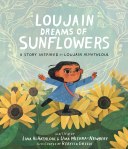
Loujain Dreams of Sunflowers by Uma Mishra-Newbery and Lina Al-Hathloul illustrated by Rebecca Green

Standard
Loujain Dreams of Sunflowers by Uma Mishra-Newbery and Lina Al-Hathloul illustrated by Rebecca Green

loujain

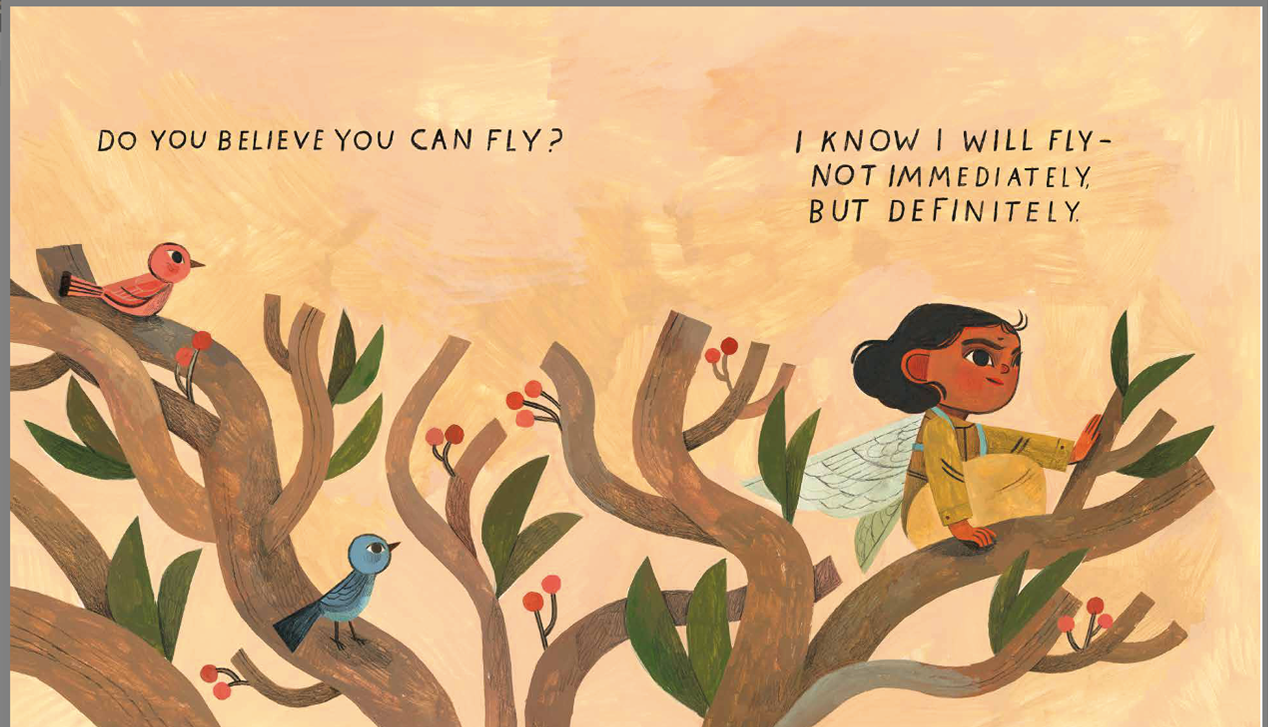
This 40 page early elementary book based on the efforts of the real life woman, Loujain AlHathloul, and her work to change the laws regarding women driving in Saudi Arabia, had a lot of promise.  Unfortunately, the symbolism connecting flying and driving, just didn’t work for me.  No one can flap their arms and fly, so to demand gender equality for an unrealistic action, is a big stretch that ultimately stretches itself too thin.  There is nothing Islamic, except women wearing a hijab in a few illustrations, or even Saudi specific in the book.  It talks of the desert, but the country is unnamed.   Overall, I just had so many questions such as: if she was flying before sunrise- how was she not seen returning from the sunflower patch, can women then never leave an area, are there ways they can fly as passengers, are there other modes of transportation, at what age are children allowed to fly, and so many more, that they prevented me from being inspired by the story.

loujain1

The book starts with Loujain believing in her self and knowing that one day she will fly.  She dreams of a place of a million sunflowers, a picture her dad has given her inspires her to seek out bright colors, capture them on film, and hang them in her room.

loujain2

In the morning her father straps on his wings, and flies off.  Loujain is not allowed to fly because she is a girl.  Her family tells her that one day she will.  When she tells the kids at school, they laugh at her.  When she pushes her dad to teach her, her mother advocates that he should.

loujain3

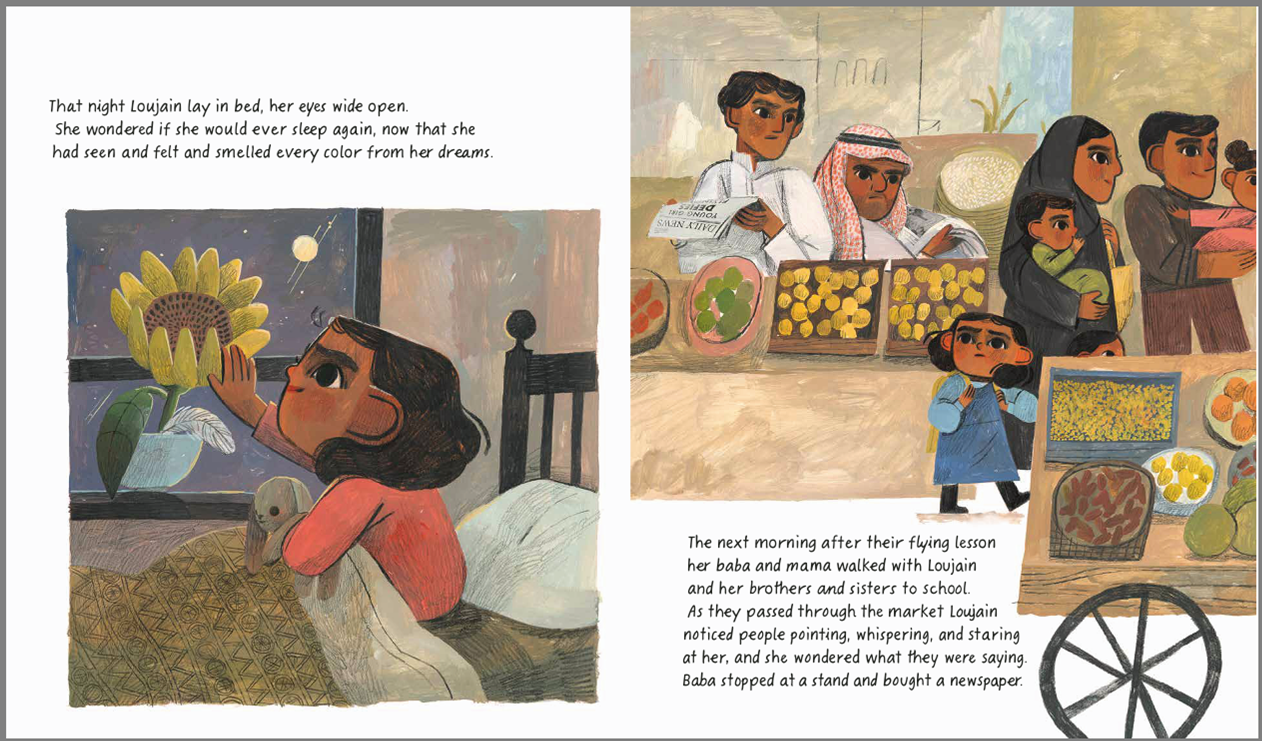
Loujain and her father practice flying before the sun rises, and finally they make the long journey to see the sunflowers.  Her father takes a picture of Loujain, and it appears the next day in the newspaper.  Other girls are inspired and begin to demand the right to fly too.

loujain4

I love the mom in the book, and her encouraging of Loujain’s dad to teach her.  She asks him, “if you don’t support her, who will?” I don’t know why the mom isn’t wearing a hijab on the last page though.  It seems like there is a subtle message there about hijab being legally required as well.

loujain5

The book is a reach, and for me it didn’t connect or leave an impression.  The information about the prison sentence and push back to achieve the legal change was far more interesting and memorable, but only a few paragraphs long at the end.

Yusuf Azeem is Not a Hero by Saadia Faruqi

Standard
Yusuf Azeem is Not a  Hero by Saadia Faruqi

yusufazeem

It is hard to believe that it has been 20 years since the tragedy of September 11, and this 368 page upper middle grades novel is very relatable to kids about to experience the anniversary and to us adults that were in high school/college when the event occurred. The book is very contemporary mentioning Covid-19 and grappling with the effects of the attacks, the war, the Patriot Act, and Islamophobia, both at the time of the terrorist attacks and now, 20 years later. The characters are unapologetically Muslim, and doctrine, practice, culture, and rebellion are all included in a book that takes a bit of time to get going, but then holds you close and makes the characters feel like old friends who sat around the table telling you their story. The middle school characters present in a lot of shades of gray as they learn about themselves, their place, and begin to understand those around them. There isn’t really a lot of resolution in the book, it is more a snap shot of life and the stresses that Muslim communities in the US feel and have felt for the last two decades. Possible concerns: a group of Muslim kids dress as Santa Clause as they sneak out to trick-or-treat, the kids discuss eating halal or not and just not telling their parents as well as discussing the requirements and purpose of hijab, an Uncle has a girlfriend and is off to meet her parents, and a Muslim boy wears an earring. All pretty tame, and really pretty judgement free, alhumdulillah.

SYNOPSIS:

Yusuf Azeem is excited to be starting middle school, but when he swings open his brand new locker and finds a note saying, “You suck,” he is rattled. Surely the note was not meant for him, he doesn’t have any enemies. He is the son of the beloved owner of the local dollar store in tiny Frey, Texas. He loves robotics and dreams of being on the middle school robotics team and winning the Texas Robotics Competition. But the next day there is a note again. Best friend Danial is convinced middle school is going to be awful, but ever optimistic Yusuf is not ready to concede, although he really doesn’t want to be a hero either. However, with the 20th anniversary of September 11th approaching, and the appearance of a group calling themselves The Patriot Sons, life is getting very tense for the Muslim families, and their friends, in this small Southern Town.

Yusuf and his friends gather at robotics club and at the Mosque the parents are building themselves. They sort through their differences, they work on their friendships and they start to find their own thoughts and opinions. Along the way Yusuf is given his uncle’s diary that was written during the 9/11 attacks and the first hand account allows Yusuf to broaden his view of this historical event, combined with him understanding his Sunday school lessons and seeing himself and others bullied, really forces Yusuf to decide who he wants to be, and if in fact he can avoid being a hero.

On the surface there is discussion of xenophobia, being a Muslim in America, and interfaith cooperation, but there is also some very frightening and real-life based inspiration of vandalism, and imprisonment of a child that play heavily on the storyline.

WHY I LIKE IT:

I love the relationship of Yusuf and his much younger sister. She is in awe of her big brother, and he is absolutely adorable with her, whether it is babysitting her dollies or programming her unicorn games, it is precious. I also love the diversity within the Muslim families in Frey. There are hijabis and non hijabis, halal only and eat outside meat folk, there are very chill and very nosey aunties, but they all stick together, there aren’t that many of them and I love it. Similarly, the non Muslim side characters also are not a monolith, they grow and change and have their own lines that need to be drawn within families. The town rallies and the robot thread is strong, but I didn’t feel like the book had a storyline and plot and resolution, it just kind of shows the characters, and gives a glimpse in to their lives, so I was left with a lot of questions: how was the little sister’s health, what happened to the Patriot Sons, did the mayor finally stand up to them, did the uncle get married, where was Cameron’s mom, did Jared’s mom stay home or did she just get a leave for Thanksgiving, did Jared’s grandma ever get involved?

The character I struggled the most with was the mom. She is an American born daughter of immigrants, she lived through the attacks in America, she is competent and articulate, but I feel like she doesn’t quite radiate the strength I wanted her to have. I wanted to love her, and I wanted to be inspired by her and her frustrations, but she seemed to just fade in most instances. The dad is a bit underdeveloped too, he has a shop, but few customers, I’m kind of worried about the financial security of the family, and then takes weird gifts to the neighboring church on Christmas Eve.

I didn’t understand why so many people didn’t want to talk about their 9/11 experience. I get that everyone deals and views things differently, but I have never really found people hesitant to talk about the attacks and the aftermath. I was at the University of Utah studying Mass Communication on that day, I’ve interviewed a lot of people over the years regarding what they experienced, and talked to my kids and had others talk to my kids, no one has ever once shown hesitancy, so I initially struggled with the premise that Yusuf didn’t know what he wasn’t supposed to forget and why his family kept trying to avoid talking about the changes of life before and life after.

The book does a good job of articulating how painful the loss of life was for all of humanity and showing that Muslims were both grieving the deaths and destruction, while also having to defend their separation from those that committed the atrocities.

I do love that Sunday school lessons, and elder advice, and khutbahs are a part of the tools given to Yusuf to sort through his world and decision making processes. I like that he pushes back and doesn’t just accept everything thrown at him. Even the nosey harsh aunties he finds connection with and tries to see their experiences, it really is impressive.

FLAGS:

It talks about the death tolls and the gut wrenching loss of life. There is also bullying, and false imprisonment, and a crime with a gun that is mentioned. There is a hijab pulled off, vandalism of a Muslim owned store, there are threats and pushing. Yusuf’s uncle is out of town and his mom and grandma are bickering that he is meeting his girlfriend’s parents, so it isn’t clear if it is all arranged, or everyone is on board or if it is something more or less than what it is. Cameron has an earring. Danial doesn’t eat outside meat, but really wants too. The kids don’t lie necessarily, but they sneak out in Santa Clause costumes to trick or treat on Halloween after commenting that they shouldn’t and don’t celebrate the holiday. Yusuf’s dad knows Christmas carols and discusses his favorites at interfaith exchanges, the highly religious, “Silent Night” is among them. A cat also goes missing, an incident from the diary, and then is placed on the doorstep dead.

TOOLS FOR LEADING THE DISCUSSION:

I think, like with other 9/11 books I’ve done as book club selections, just sharing my experience and asking any other teachers to chime in with theirs is enough to take fiction out from the pages and make it real for the kids. They then ask questions, connect it to the text and to their history lessons and the story resonates with the historical event. I think this book could work for a middle school book club and provide a lot, aside from the Islamophobia to discuss, I think it would in fact be a great book to start the school year off with to get to know the kids and how they view the world.

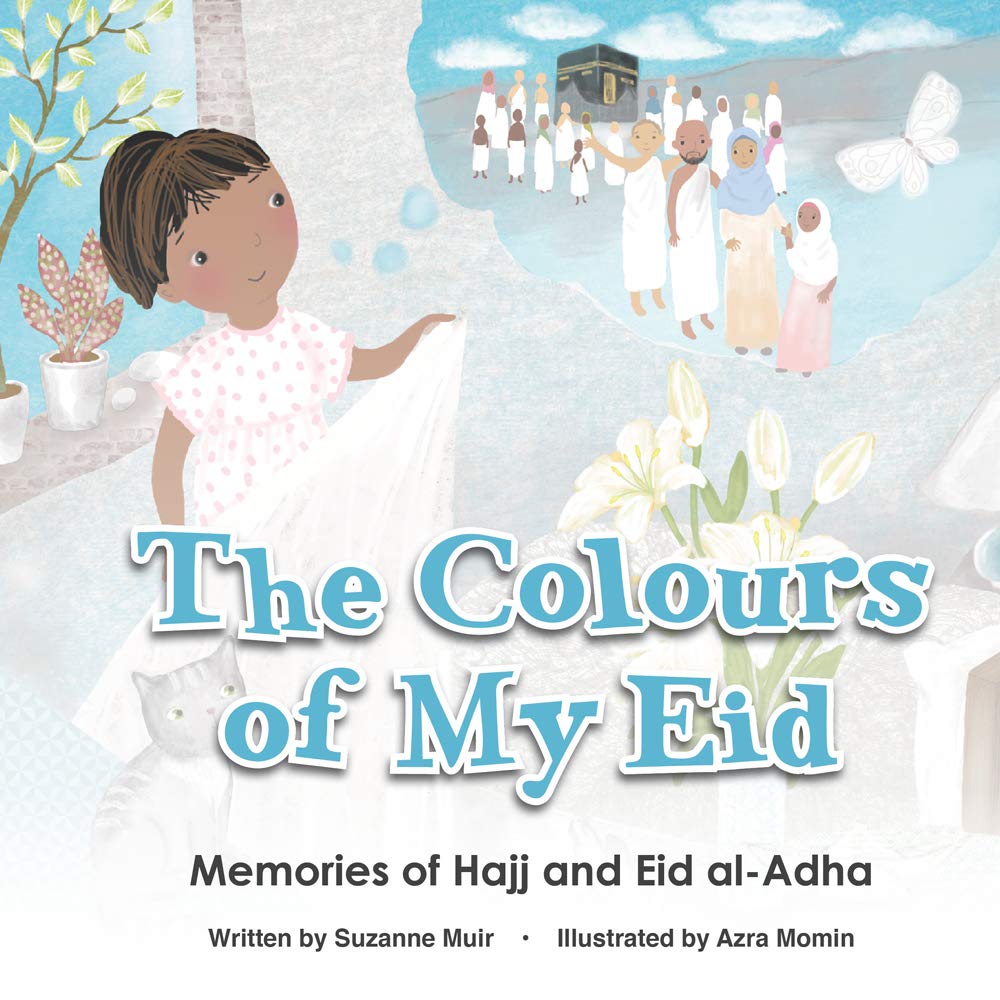
The Colours of My Eid: Memories of Hajj and Eid al-Adha by Suzanne Muir illustrated by Azra Momin

Standard
The Colours of My Eid: Memories of Hajj and Eid al-Adha by Suzanne Muir illustrated by Azra Momin


colour


At 18 pages, this 8 x 8 book focused around colors contains a lot more information than what initially meets your eyes.  The warm beautiful, full page pictures fall opposite a highlighted color and a description of that color in the child’s world that reminds the characters of their time at Hajj or celebrating Eid al-Adha.  On each of the fun text pages is a light green text box at the bottom with factual information that older children or adults will benefit from and be able to share with younger listeners.  The main text is ideal for toddlers and up, and older kids up to 3rd grade will benefit from the nonfiction highlights that can educate or remind Muslims and non Muslims alike, about the importance of Hajj and Eid al-Adha.  

The book starts with an introduction about the Islamic language and perspective used, and clarifies that the colours emphasized are to help visualize the point being made, it also gives information about Eid al-Adha.

The colors highlighted are: white, black, brown, green, grey, yellow, and purple.  The large simple text takes something relatable such as the monkey bars, or balloons, or the sky and corresponds it to a memory of Arafat, or ihram, or the hills of Safa and Marwa.

The nonfiction text gives specific dimensions of the Ka’aba, the story of Hajar and baby Ismail, the requirement of Hajj and some of the steps.  There is a lot of information conveyed which at times is incredibly detailed, and sometimes, rather vague and generic, i.e. Tawaf is when Muslim pilgrims circle the Ka’aba as part of the Hajj rituals. Overall, this little book packs a punch, and I was equally impressed at how it held my five year old’s attention with the colors, and my interest with the facts detailed below.


World in Between: Based on a True Refugee Story by Kenan Trebinčević and Susan Shapiro

Standard

world in between

I’ve read a lot of refugee stories over the years about people leaving a variety of countries, and while each one, no matter the quality of writing, is heartbreaking and important, this middle grades 384 page historical fiction/ fictionalized biography account stands out because it is written so incredibly well.  The story shows young Kenan’s life before the Balkan War in Bosnia, a year of the war, life in Vienna, and then in the USA.  The book is personable, relatable, and informative.  I had a very hard time putting it down despite knowing that the main character, the author, obviously survived; as the story is engaging and powerful and doesn’t rely on the horrific war to carry the character building and story arcs alone.  The character identifies as Muslim, but doesn’t actively practice or know much about Islam, sports and art are highlighted as universal activities that bridge cultures, language, and foster respect.  The book mentions drinking, kissing, hints at a crush, and features bullying, death, killing, and torture.  Suitable for mature fourth graders and up.

SYNOPSIS:

Kenan has a good life in Brčko, Yugoslavia, he is good at soccer, is an amazing artist, has a bunch of friends, a teacher he likes, loving extended family, his father owns a popular gym, and his mom is an office manager, sure his older brother picks on him sometimes and he gets called, “Bugs Bunny” because of his large protruding teeth, but when it all comes crashing down because of his religion, he is at a loss as to why it suddenly matters.  While neighbors and classmates start sneaking off in the night fearing that the Serbs are going to kill all the Muslims and Catholics, Kenan’s dad holds out hope that he is well loved by everyone at his gym, no matter their religion.  But the family waits too long to leave, and friends, neighbors, classmates, and teachers quickly turn in to enemies.  Kenan’s buddies threaten and abuse him, his favorite teacher holds him at gun point, and neighbors shoot holes in their water cans.  The family ultimately has to hunker down in their apartment without much water, food, and electricity.  They get to Kenan’s aunt’s house in a safe zone, but the men have to register and his father and brother are taken to a concentration camp.  Somehow they get released, but the family’s troubles are just beginning.  Along the way they will be betrayed by people they thought they could trust and helped by people that they thought hated them- no matter the country, no matter people’s religion.  The family will get to Austria and to Kenan’s uncle, but even being away from war doesn’t give them peace.  They don’t speak the language, they can’t work, they must take charity.  Eventually they find themselves in Connecticut, and while some American’s make their difficult lives even worse, some prove to be absolute angels to a family that is trying to make a life in a new country while the war wages on back home.

WHY I LIKE IT:

I love that stories about the Balkan War are becoming more and more available, it is long overdue, and I’m glad that through literature, authentic voices are keeping the memory of the horrific acts from being forgotten.  The story is compelling, a few threads I wanted resolved that weren’t (more information on his grandma, his uncle in Vienna, his aunt that they left behind), but the narrative is rich and does a great job staying relevant to its target audience and not overwhelming the reader with politics or sensationalized emotions.  The rawness of the experience being processed by the 11 year old protagonist is impactful enough and doesn’t need to be exaggerated.  The book is not depressing, in fact there is a lot of joy and hope and kindness.  

I love that Kenan acknowledges that he has been to the mosque once with his uncle, that they don’t fast in Ramadan, but they do celebrate Eid.  It hints that at times they may drink, but they are good about not eating pork, although they eat jell-o. In shop class in the United States his first project is a replica of the mosque in their neighborhood.  Their names are known to be Muslim in Bosnia, and that is enough for them to endure the ethnic cleansing, belief or adherence, is not a factor.

I love that sports and art are universal.  Math is too, but Kenan isn’t good at math.  He wins accolades in each country for his drawings, and gets respect from classmates for his athletic ability.  Not speaking the language is hard, but being able to prove yourself in other ways is a salvation for Kenan.  He is on teams, he goes to the World Cup, he gets in fights, he is honored in the newspaper.  Life in general grounds him, yet soccer and drawing give him a release to excel in.

I love the diversity of everyone in each country.  Heroes are seen in immigrants, minorities, Americans, a Methodist preacher, an Israeli bus driver, a Serb bus driver, a Serb soldier and his family, a .  There are awful immigrants, and white Americans, and Serbs- it really shows that some people are just good and kind, and some people are not, it isn’t linked to any faith or country or culture or neighborhood or skin tone.  I was surprised that at no point were their other Muslims.   We got to know so many wonderful Bosnians in the 90s as our family helped them get settled, that I was really hoping there would be some in Connecticut working with the churches that helped settle Kenan and his family.  That isn’t a critique of the book, though, just my disappointment in my fellow Muslim-Americans for not stepping up enough in real life to make the literary cut, I suppose.

FLAGS:

Violence, torture, death, bullying, killing, shooting, hints at sexual assault, physical assault, ethnic cleansing, genocide, war.  It mentions that Kenan’s brother got to kiss a girl and have a drink, but nothing more detailed than that.  Kenan has a crush on a girl, but it manifests periodically as him just wondering if she survived and is ok.

TOOLS FOR LEADING THE DISCUSSION:

This book is on a short list for me to use next year for middle school book club.  It is a little below grade level for my group, but book club is supposed to be fun and not a burden, so I think it will be perfect.  The kids are going to absolutely love Kenan.  He is so relatable and personable, that I don’t think any supplemental questions or discussion points will be needed.  Kids will have lots of thoughts about Islam in Bosnia, friends turn enemies, restarting in new countries again and again, anger at people that didn’t step up, glee when people did, jealousy when he gets to go to a World Cup game, and hopefully empathy for so many who’s world changed so quickly.  The biggest takeaways will be how it didn’t take much to help, and I hope all readers will recognize that we can be kind and we can help and we can respect and care enough to truly help others.