Category Archives: 2nd through 4th grade

The Little War Cat by Hiba Noor Khan illustrated by Laura Chamberlain

Standard
The Little War Cat by Hiba Noor Khan illustrated by Laura Chamberlain

img_0521-1

Even though the book is told from the cat’s perspective, the book never overshadows the human cost of the Syrian war.  The beautiful illustrations and clear text do not shy away from the pain and destruction, but allows for young preschool children and up to see the affects of war through the cat’s eyes, as well as the kindness and hope that prevails. Over 32 pages readers are taken to the streets of Aleppo to see the marble mosques give way to boots and destruction.  The little cat observes the changes, notes the differences and when kindness is shown to her, she finds a way to pay it forward.  I had not intended to post another book by Hiba Noor Khan so close to another book of hers, but as atrocities in Idlib increase I felt it a good time to remind us all, that the war is not “over” in Syria and the destruction and loss of life still requires our awareness, help, prayers, and attention.

The book begins with a warm scene of a little grey cat playing and lounging under the sun in a masjid courtyard. When the boots come, though, it all disappears. The cat begins to notice the changes and the fear becomes real.  

But then one day the cat sees humans that are different than the ones with boots, and she follows one. He cares for her, and she starts to feel like herself again, when she sees someone that also is afraid, the cat is determined to help.

img_0527-1
The book concludes with a note from the author telling about the inspiration for the story, The Cat Man of Aleppo,” and challenging readers to find ways to share kindness.


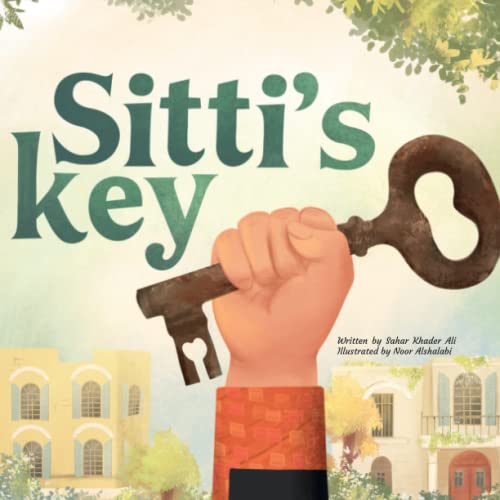
Sitti’s Key by Sahar Khader Ali illustrated by Noor Alshalabi

Standard
Sitti’s Key by Sahar Khader Ali illustrated by Noor Alshalabi

sitti key

I try and buy, read, and review every children’s book about Palestine that is published, it is the least I can do.  I also try not to compare them to each other as they present different aspects of oppression, perspectives of strength, examples of joy, and messages of hope, even among many similar themes of food, keys, traditions, and culture.  I really appreciate that this book though is incredibly blunt.  It isn’t lyrical, it isn’t poetic, and as Israel is bombing Jenin as I write this I’m glad it doesn’t mince words about the Nakba. I do think caregivers though, should probably read it first as it might be a little triggering for sensitive children.  The story is OWN voice and probably best suited for middle elementary aged children.  It is perhaps also worth noting that the book could be seen as making Jews synonymous with Zionists.  The characters are Muslim, Islamic phrases and Arabic terms are sprinkled throughout, and even despite the pain the family has endured, the book stays hopeful and proud.

Sitti is coming and Amal is excited, it has been two years since she last saw her.  She loves how excited her mom and grandma are to unpack gifts of olive oil, dates, and zataar from friends.  Amal isn’t sure what to do with the “old lady thoub” she has been gifted, but she smiles in appreciation none-the-less.  When Sitti pulls out an old key, Amal starts to ask her about it, but her mother shuffles her off to bed.

The next day at school, Amal has to work on a presentation about “culture,” but there are no Palestinian books in her school library, so she just watches the other kids.  At home they eat and listen to Sitti’s stories of long ago in Haifa, and Amal asks her why she left Palestine.  Despite her mother trying to redirect, Sitti says it is time she knew about the Nakba.

Sitti tells about living on the land for generations and how the Jews believed the land belonged to them.  In 1948 the British decided Palestine would be the homeland for the Jews.  Armed men came and arrested anyone who tried to stay in their homes. Sitti’s brother was handcuffed and never seen again.  The family grabbed what they could including the key to their home as they made their way to a refugee camp in Lebanon.  They stayed for three years, before making their way to America.

When Sitti concludes her story she hands the key to Amal and her hope that she will return to their home inshaAllah.  Feeling the pride and warmth of home, Amal has a determination to reclaim her heritage and share her “culture” with her classmates.

The illustrations are sweet, the mom and Sitti wear hijab even in the home, and the inshaAllahs and salams come naturally. The book does not stop to define zataar or marimya, which helps the flow. I also like how it shows that there aren’t books about Palestine in the school library, it is strong and important detail.  I don’t understand where Sitti is coming from though, it would seem Palestine as she is bringing gifts from friends, but in the story it says after Lebanon they made their way to America, so I’m not sure where Sitti lives, and how the logistics of the family work to be honest.  I also kind of wish there was a  recipe for zataar in the book and lyrics with translation for the song the family sings.

Book is available on Kindle or can be ordered from www.littlehibba.com

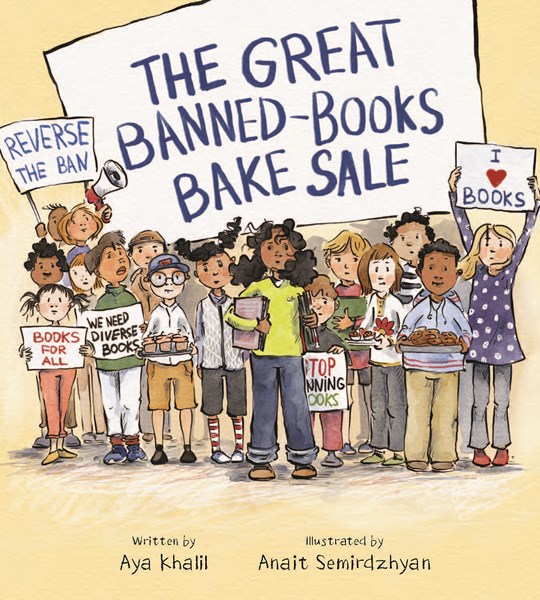
The Great Banned-Books Bake Sale by Aya Khalil illustrated by Anait Semirdzhyan

Standard
The Great Banned-Books Bake Sale by Aya Khalil illustrated by Anait Semirdzhyan

banned

This follow-up picture book to The Arabic Quilt, takes readers back to Kanzi’s school, but also works as a standalone for ages 7-10.  Addressing the hot topic of book banning, the fictional story brings the discussion down to an elementary level and shows kids speaking up and pushing back against something they don’t agree with.  The main character finds a connecting thread to events in Egypt, and with her class and family behind her, she finds her voice and takes the lead.  The story bounces around a bit and feels a little rough and underdeveloped at times, but the subject matter is important and can be used to help guide discussions, encourage peaceful protesting, and taking action.  There is nothing Islamic specific in the text, the main character’s mom and teita wear hijab and are in the illustrations (#muslimsintheillustrations), in a memory of Egypt there is a man holding a cross.  The author is Muslim and mentions it in the Author’s Note at the end.

banned1

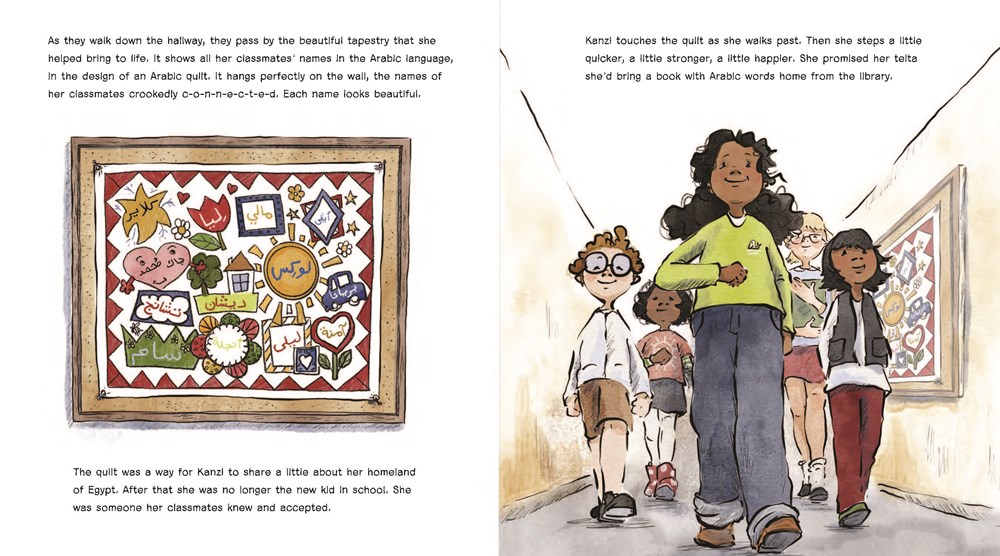
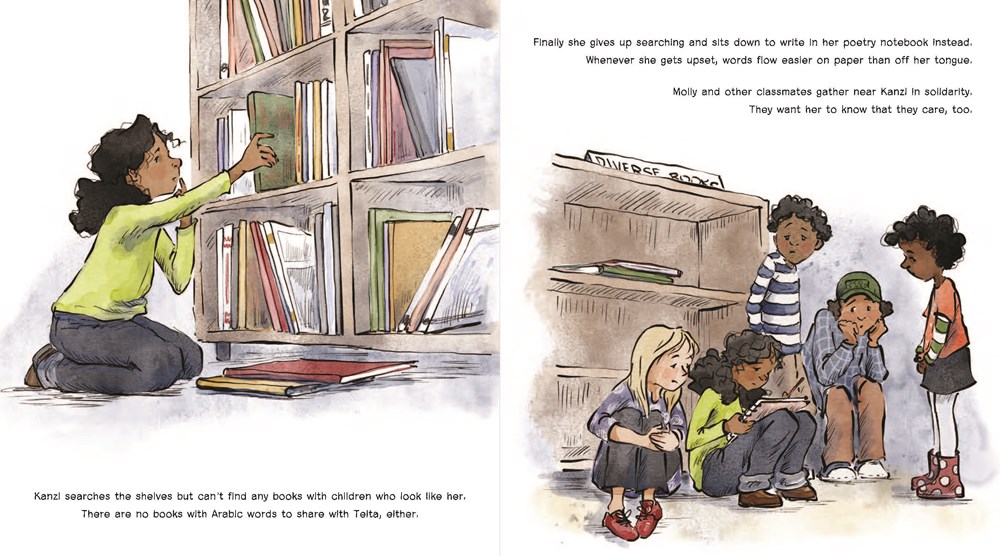
The book starts with Kanzi leading the class to the library, she passes the Arabic quilt she helped bring to life and walks a little taller.  She has promised her Teita she will bring home a book with Arabic words from the library, but when she walks in to the library, the “bookcase where the new diverse books were displayed has been emptied.”  The librarian explains that the books have been banned.  That the school district, like many others around the country, have decided certain books are not allowed. Kanzi is upset, but her classmates “gather near (her) in solidarity. They want her to know that they care, too.”

banned 2

Back in class the teacher opens up the discussion, and Kanzi can’t find her words.  Kareem says it is unfair and when the teacher explains that people are responding by protesting, writing letters, and buying more copies of banned books.  Kanzi finds her voice and suggests a bake sale.  Kareem suggests they raise money to buy books that are banned and call it “The Great Banned-Books Bake Sale and Protest.” Molly adds that they can put the books in Little Free Libraries. The class agrees that Friday will be the day, that baked foods inspired by books that are banned will be sold to raise funds to buy more banned books, and the local news station will be invited to broadcast the protest.

banned 3

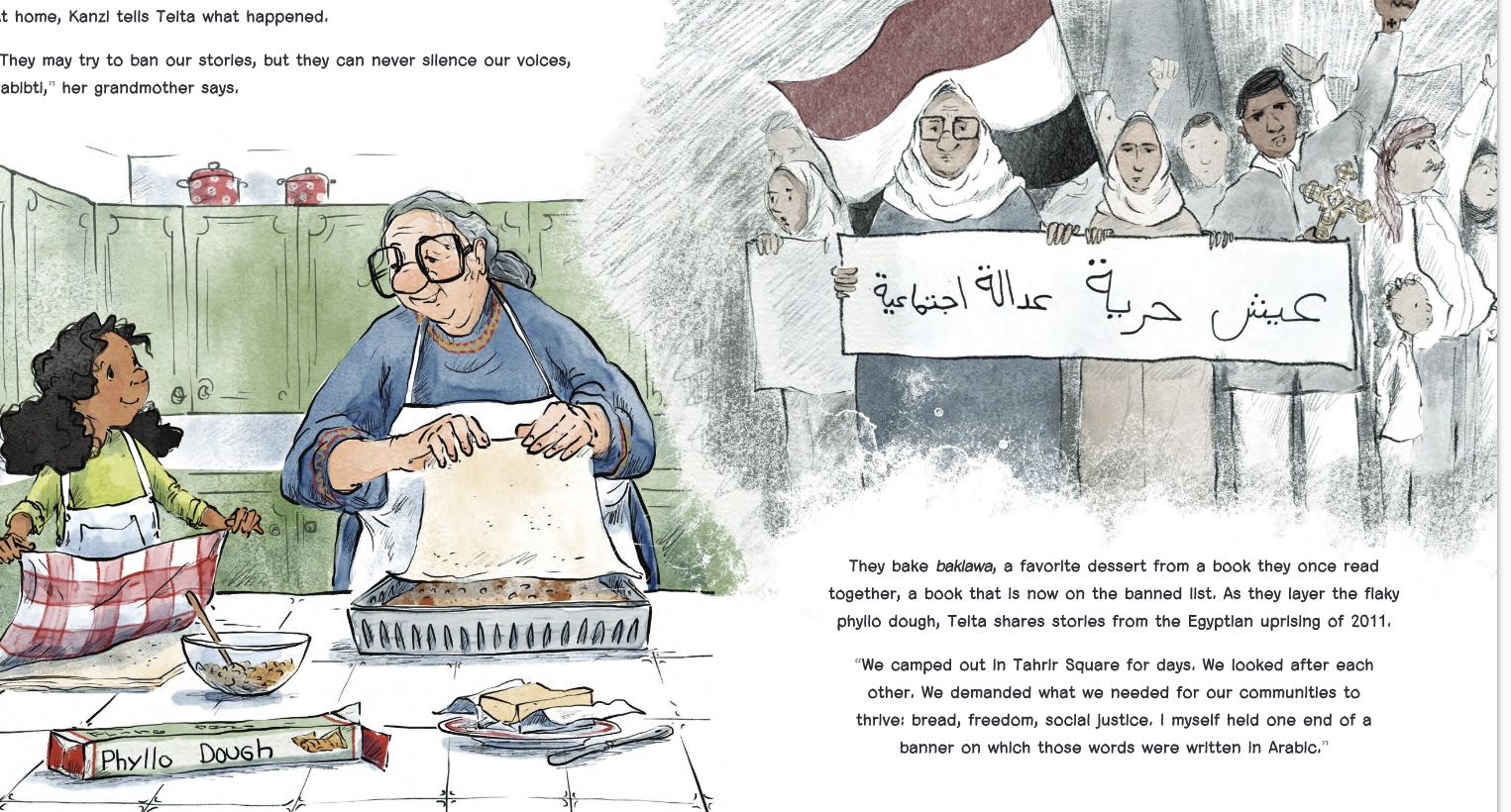
Kanzi helps Teita make baklawa from a book they once read, while her grandma tells her stories of protesting in Tahrir Square.  Teita held a banner and demanded rights for the people of Egypt. Friday comes, and the kids are determined to be heard, as the crowd grows, Kanzi’s nerves also grow, but her strength comes from those that support her and who have also spoken up to be heard.

I enjoyed the illustrations and the backmatter.  The inclusion of a baklawa recipe and insight to how this story came about with the banning of The Arabic Quilt, definitely adds to the book’s appeal.  I felt a little disconnect though from the emotions of the book, and oddly enough, little connection to the characters.

I wish it would have shown her joy when she first saw the diverse book display.  How it made her feel seen and valued and included to see books that reflected her and her classmates.  Then we, the readers,  would feel the pain too, now that they are gone.

I also was a little unsure of the scene when all the kids gather around Kanzi in solidarity, why is she the only one upset? Is it that they care about her or that they care that the books are no longer available? Sure it can be both, but again, as it is written, it isn’t particularly strong.

img_8594

I’m not sure why the three characters named in the book Kanzi, Kareem, and Molly, do not have their names shown on the Arabic quilt pictured in the illustrations, and I also don’t know why it bothered me that the book banned that had baklawa/baklava was not named.  I don’t care that it isn’t a real book, but I wanted a title to make the case of how ridiculous this ban is more articulate.  Additionally, I love Little Free Libraries, but it seemed tossed in without much fleshing out. The book doesn’t explain what Little Free Libraries are, so I’m not sure that kids will even understand the plan.

The book is a decent read, I don’t know that the climax or characters will be memorable on their own, which is unfortunate because connection with the success or failure of this fictionalized book ban really could have radiated out of the book and deeply inspired kids.  The reversal of the boards decision doesn’t directly link to the kids’ actions.  I had to provide that link to my own kid when I read the book to him (he is almost 8).  It is implied, but a line or two about how the kids protest encouraged other people to also speak up, or write letters, or that the school board attended the bake sale, would have shown that when voices amplify it is hard to ignore them.

The book has value on the shelf and can be preordered here https://amzn.to/3C5Baaj

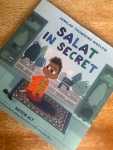
Salat in Secret by Jamilah Thompkins-Bigelow illustrated by Hatem Aly

Standard
Salat in Secret by Jamilah Thompkins-Bigelow illustrated by Hatem Aly

img_8430

It is quite remarkable in the course of 40 pages that so many themes, layers, emotions, windows, mirrors, and relevance can radiate with ease and entertainment for children four and up.  The authenticity of the text and illustrations create tangible feels in this book, that months after reading it for the first time, I am still moved to tears, both inspired by joy and as a cathartic release of being seen.  The true mastery is that even if you are not Muslim and cannot relate to the nervousness of praying publicly, you understand Muhammad’s hesitancy and feel for him as he battles not just finding a place, but watching onlookers reactions to his father, police proximity, and being brave enough to push yourself even when you are scared.  Usually when asked what my favorite book is, I stumble to narrow it down to just one, but truly this book has raised the bar of not just traditional publishing representation, but Islamic/Muslim literature across the board.  It is a gift to read, to share, to enjoy, and a blessing that such an unapologetic book is available so widely for our children to connect with, and our non Muslim friends to see us through.  Please spend time with this book and make it available to your children, your students, your community, it really is that good, alhumdulillah.
img_8431

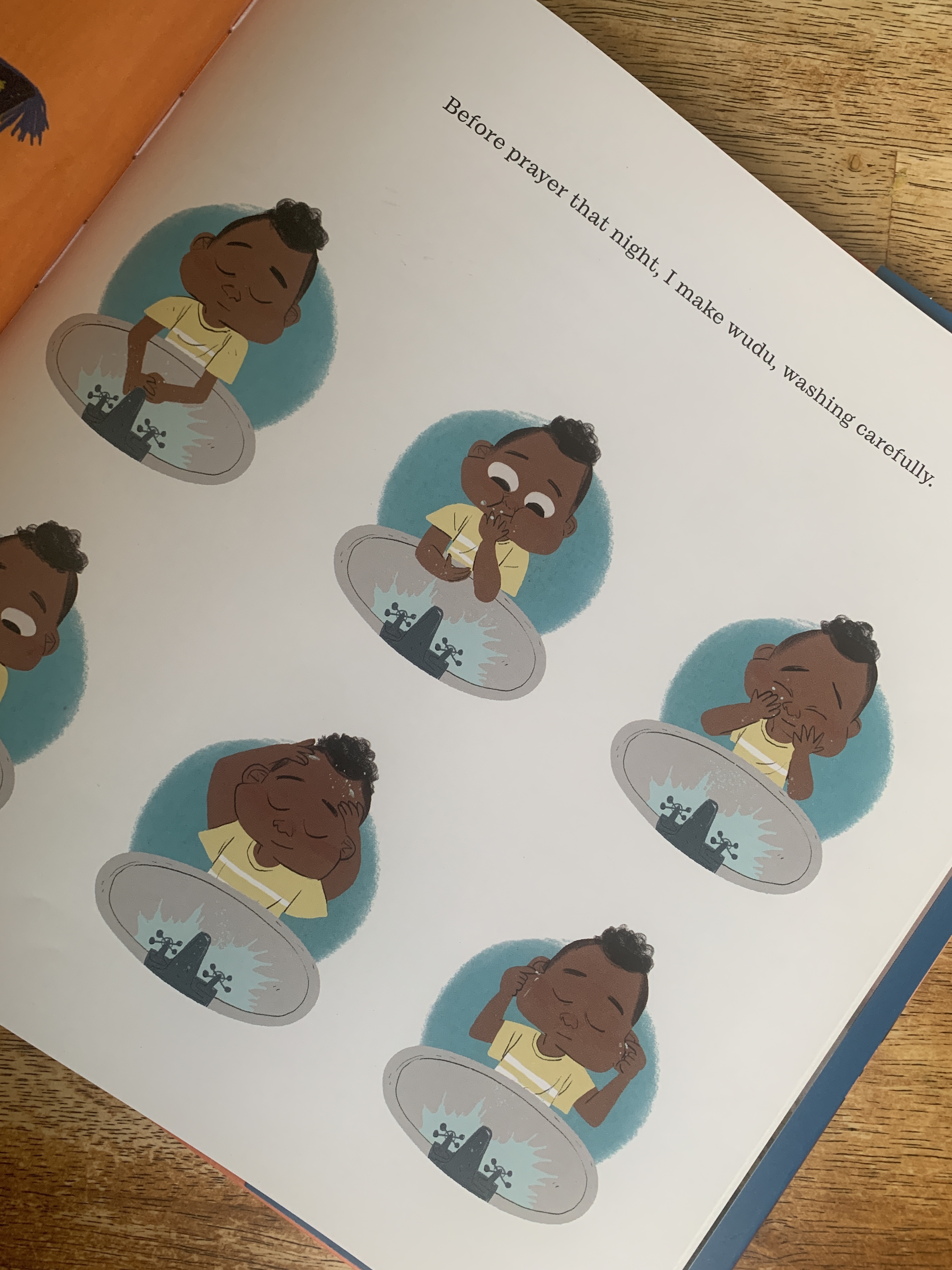
It is Muhammad’s birthday and he is seven, “Old enough to pray five times a day,” his father gifts him a prayer rug, and  Muhammad is ecstatic.  He makes wudu that night and offers salat with full attention.  He says the Sunday school words and shares his most wished for wishes to Allah swt, not even letting little sister, Maryama distract him.

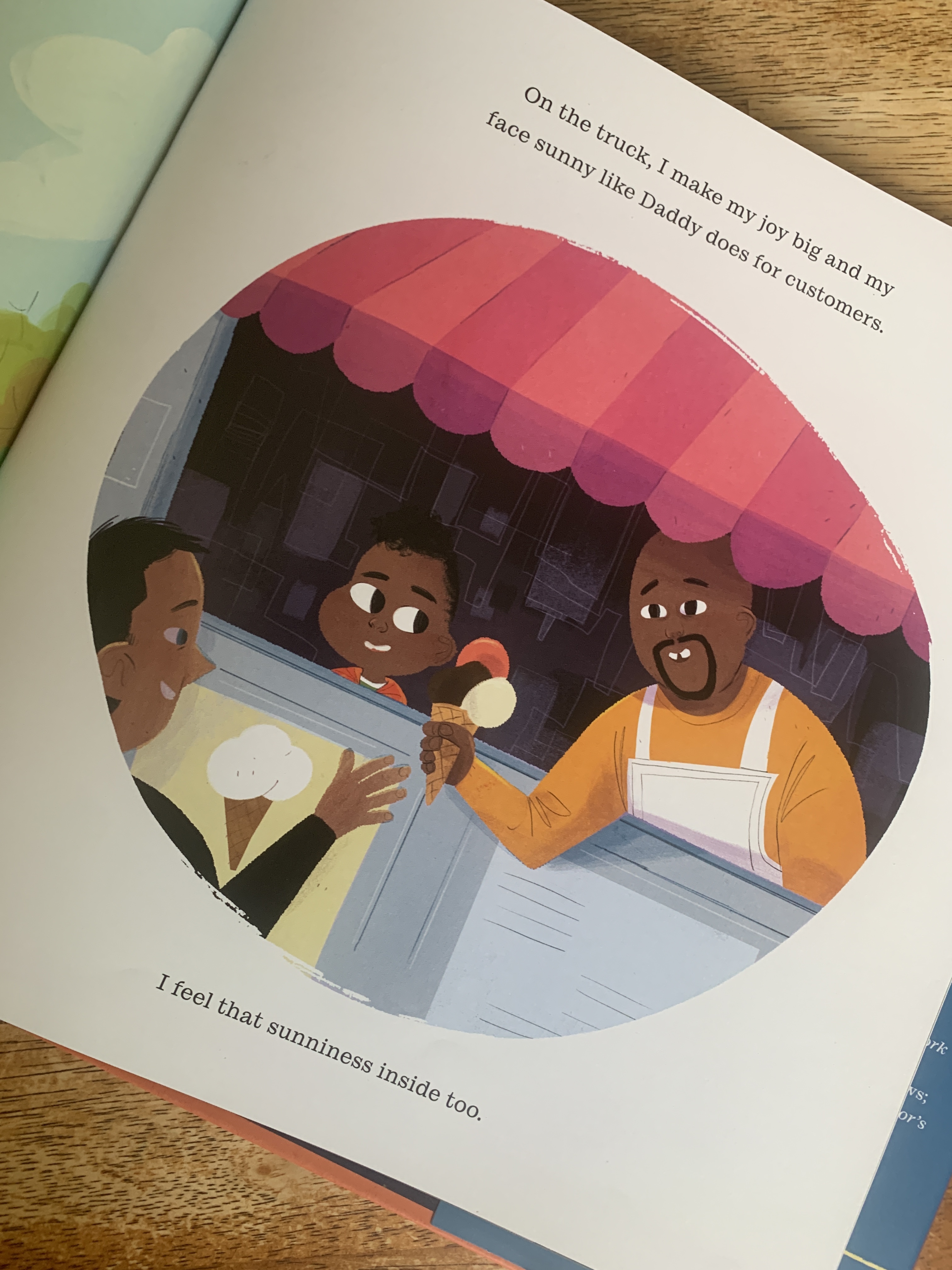
After Fajr the next morning, he is determined to find a secret place at school to pray Dhuhr. Daddy doesn’t need secret places, if prayer time comes he pulls his ice cream truck over and prays on the sidewalk, “never delay salat.”  At school, Muhammad heads to Mrs. Baker to ask for a place to pray, but his confidence waivers and he returns to his seat.

img_8432

Anxiety about where to pray has him looking for spots throughout the morning, but when recess comes he finds he can’t take the prayer rug out from under his jacket.  He lingers when everyone returns to class and rushes through the words and motions in the coat closet.

That evening he is with his daddy in the ice cream truck and the sunshine and smiles pour out of the two.  When the sun sets it is Maghrib time and Daddy heads to the sidewalk to pray, reassuring Muhammad that he can pray at home.  Muhammad watches his dad and various events spur him to make his decision.

img_8433

I love love love the way salat is approached with love and excitement and that the dad embodies safety and joy and does not pressure or force Muhammad.  The relationship is beautiful and allows for worship to be seen as both personal, as well as obligatory and merciful.  The duo also show a great parent child dynamic that warms the heart.
img_8434

I like that there really isn’t any “hate” given to anyone praying, it is hinted at, people do not understood, but the focus is not on the outside bystanders- it is what Muhammad thinks and feels.  I’m fairly certain every Muslim who has prayed in public has encountered a wide variety of responses, and this book keeps the gray to reflect and spark conversation.  It is often met with ignorance, with hate, with aggression, but it is also met with respect, apathy, and curiosity which the text and illustrations allow for.

img_8435

There is so much love and joy in the book as well as identity, that I don’t mind one bit that my littles ask me to read it over and over.  It is perfect for groups, one-on-one, and I cannot wait to share it in a story time, there is also an incredibly informative and heartfelt Author’s Note at the end.  If you haven’t preordered it yet, the book releases on June 6, 2023, please pre order it and signal the support for this book and future books that center authentic Muslim joy, Black Muslim representation, and OWN voice author and illustrator accuracy.  Request it at your library, put it on hold at your library, check it out, read it.  If you cannot preorder it, still purchase it when you can, inshaAllah it will be a beloved book in your home as well.
Girls Rock: Indonesia by Claudia Bellante illustrated by Josefina Schargorodsky

Standard
Girls Rock: Indonesia by Claudia Bellante illustrated by Josefina Schargorodsky

img_8112

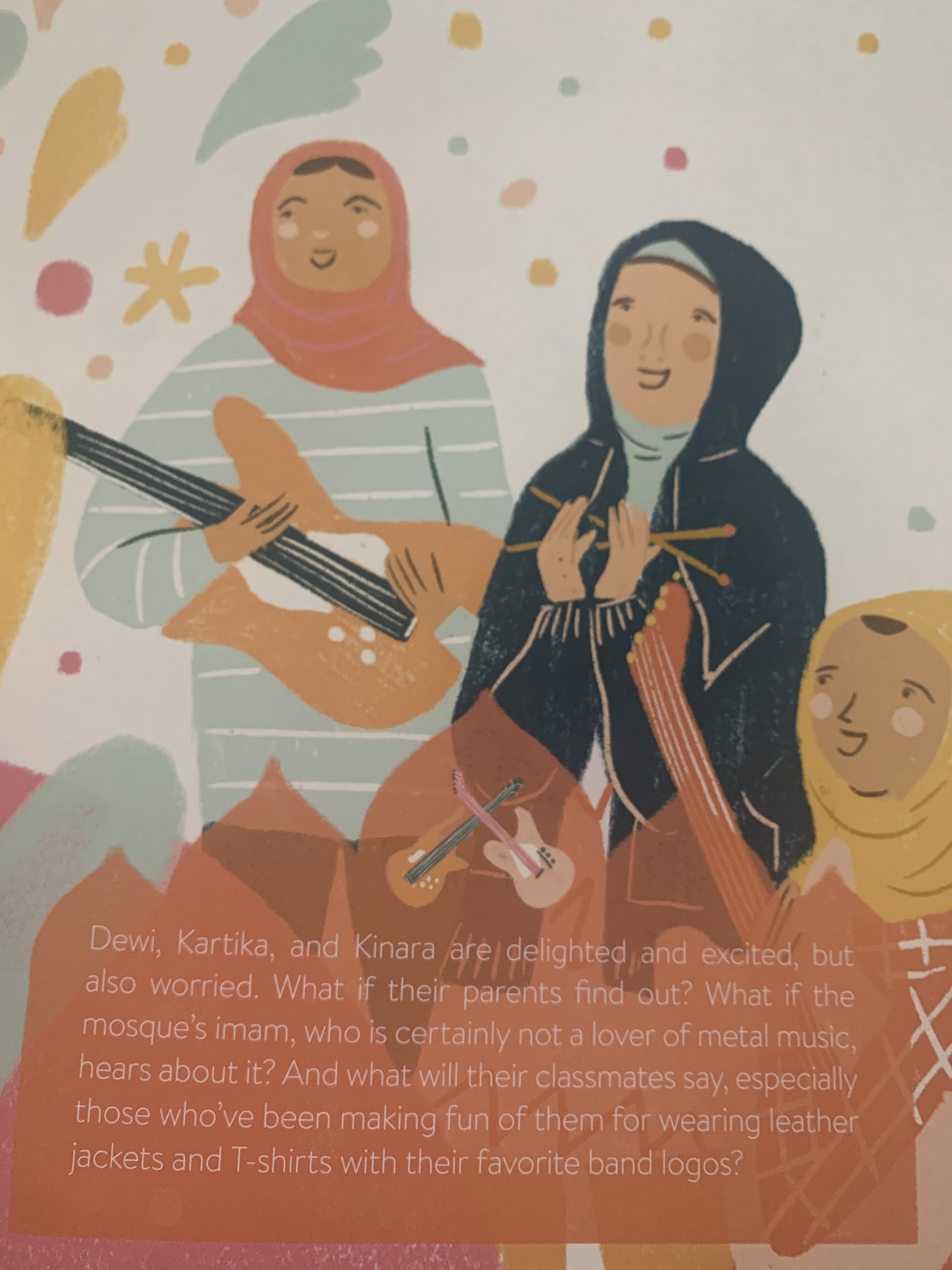
This book is part of a series that claims to want to bring the world closer to American children.  It is based on a true story, with noted liberties taken regarding the protagonists, and yet the Author’s Note says she went to Indonesia and was unable to meet with the characters whose lives the book is about.  I am not against non Muslims and non Indonesians per se writing a book about Muslims in Indonesia, nor am I naïve to the fact that music inspires many and radicalism is a real threat, but to conflate ideas without explanation, and not containing that OWN voice authenticity or biography feel, really leaves this book fighting against self made stereotypes and trying to seem woke and relevant while maintaining a very Western American paradigm of what it means to be happy and fulfilled.  The book (and series) may have had good intentions, but it just felt off to me, and with a publisher suggested reading age of 5-8, I think this book assumes too much about the readers prior understanding of hijab, Quran, Indonesia, music, heavy metal, radicalization, small village life, culture, Islam, Quran, imams, and prejudice and fails to assist in connecting the concepts, opting to use them interchangeably and ultimately making the 32 page book rather pointless.  I think if older children read it, it is one of those books that makes one feel like they are cultured and supportive of those breaking stereotypes, but I think Indonesian and Muslim readers will just be confused about why a book is supporting sneaking and lying and why music is ok, but loud metal is not, and why a Muslim teacher could have a band years before, but the current characters are receiving backlash now, amongst so many other things.

img_8105

The book starts with basic information about Indonesia: Java, Jakarta, religion, and the motto.  It also includes hijab as something some Muslims wear but does not detail why or what it entails.  It then introduces the reader to three girls that go to school and study Quran, as the pride of their parents and village. The girls feel something is missing and while they are “studying” they in reality are often secretly watch YouTube videos after learning about the heavy metal band Metallica from their teacher.

img_8106

The girls want to learn to play, but fear their parents will get mad, why they would get mad is not articulated, so they go to their teacher and whisper their passion for heavy metal “as if they are confessing a sin.” Their teacher, Pima, says she used to play in a metal band, and that they can use the instruments in her garage to learn and practice.

img_8107

So while their parents think they are studying, they are playing music.  The book says music is not against their dreams, not against Islam, they choose to wear hijab, they start to write their own lyrics, and their teacher arranges for a producer to come listen to them. The girls worry the imam will get mad and so will their parents. When a local interview airs, the teacher asks negative folks, “who says a girl in a hijab can’t play loud music? Does the Quran forbid following your dreams?”

img_8109

Pima regrets letting the naysayers deter her from her music dreams, but earlier said her band broke up when the members moved or got married.  The parents seem fine when a festival in Jakarta is about to happen and presumably they live happily ever after.

img_8108

The backmatter then throws in radicalism and Muslim feminist groups, and I’m not sure what the takeaway would be for Muslim or non Muslim children reading this book.  I admittedly haven’t read the other books in the series, but I would be skeptical of their portrayal of cultures and religion after reading this one, it isn’t so much that it is wrong, but it just seems to water the reality down to make it more “palatable” and “acceptable” to American children which results in strong themes of “othering” and dismissal.

Eliyas Explains Why Should I Pray My Salah? Bite Size Journal by Zanib Mian illustrated by Daniel Hills

Standard
Eliyas Explains Why Should I Pray My Salah? Bite Size Journal by Zanib Mian illustrated by Daniel Hills

img_7821

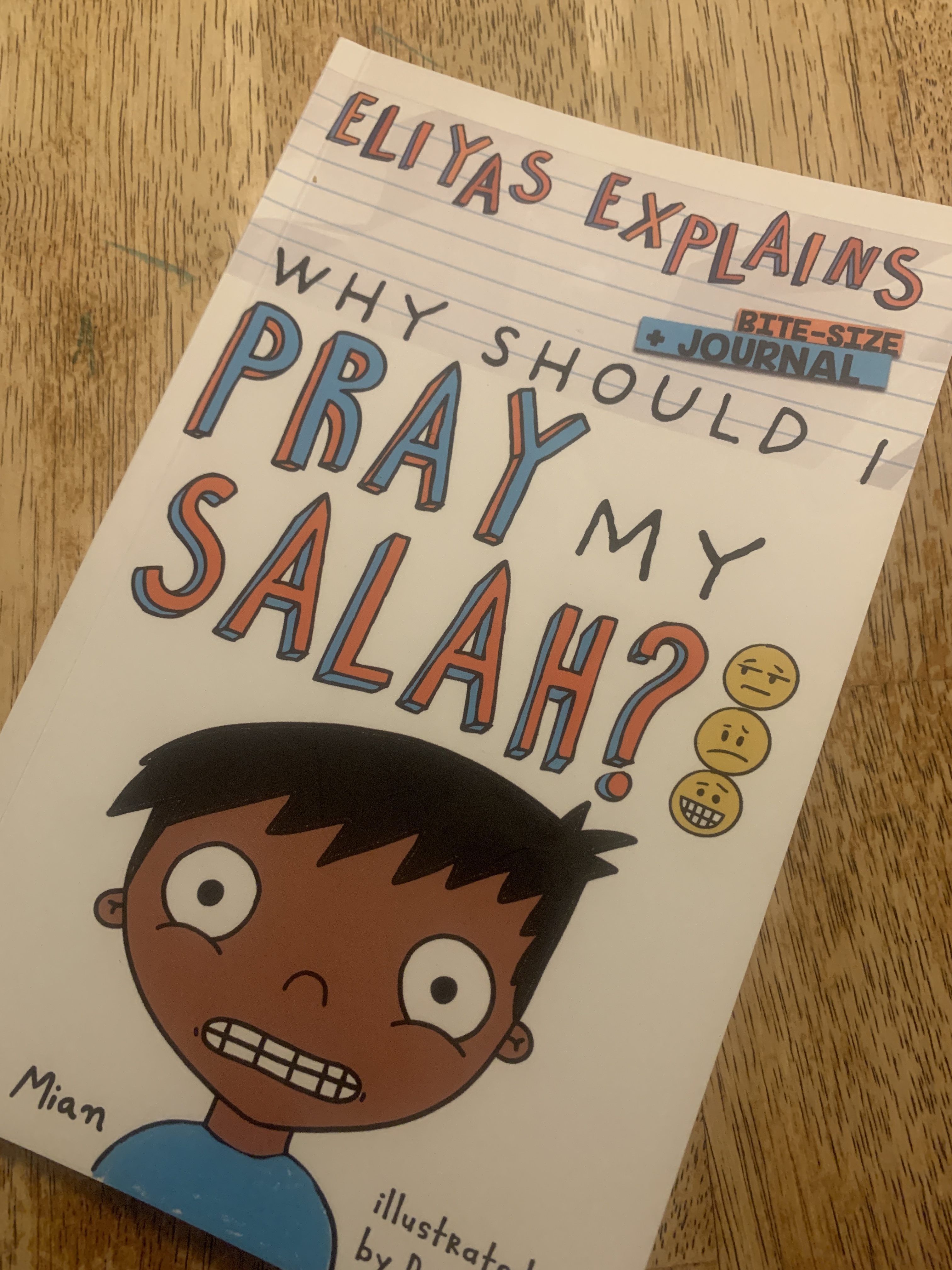
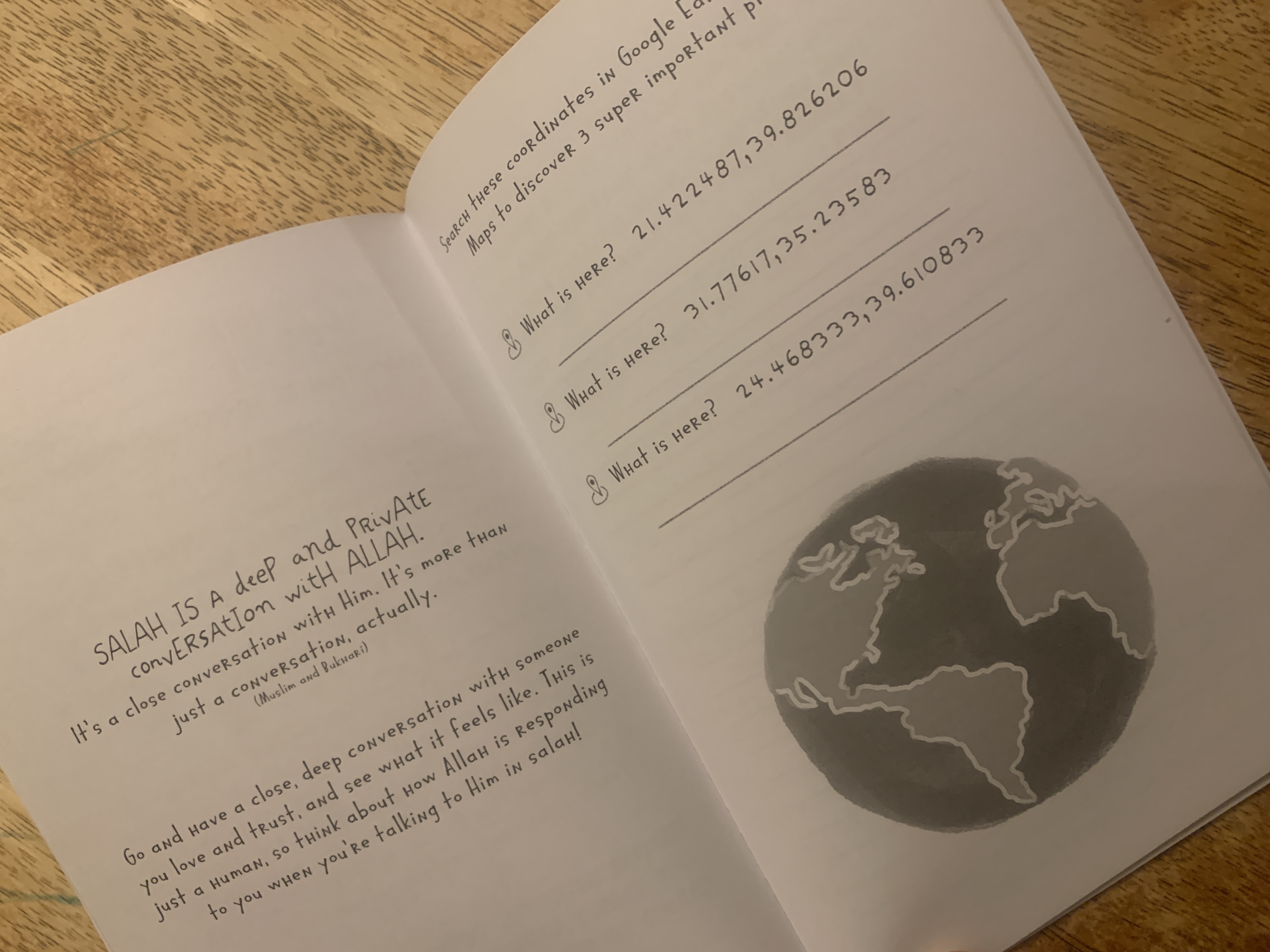
I love the Eliyas Explains books, but was a little curious what a “Bite-Size Journal” version would be, and Alhumdulillah, the silly relatable voice is the same, there just isn’t as much fictional story weaving together as the Angels and Miracles books had.  Instead it has activities and guided prompts for the reader to engage with and space for them to write.  The first 15 pages or so are Eliyas explaining about salah and what he has learned and how he has improved, and some parables through his point of view.  Then the journal pages begin, and while the first few are truly “journalistic” as it progresses to the last of the 60 pages you realize along the way there was a lot of “story” included on the activity pages as well.  The book isn’t blank pages and bound together as a book, it has text, it has hadith, it has games, it has questions, and trackers, and a lot of information.  I love that it states that it has been checked and the Shaykh’s name is included, the positive child framing, and the reasonable price point.  For first through third graders learning about salah, wudu, athan, and inshaAllah becoming more mindful of their actions and behavior, this book will be relatable, funny, and informative.

img_7823

SYNOPSIS:

The book starts with Eliyas remembering when he was too lazy to make wudu and pray his salah, he then offers a story of an orphan and a muffin and a lady who makes the muffin to try and show readers that salah benefits and nourishes us and the maker of the muffin truly loves us.  It is a little random, but it somehow all works and kids will go along with the allegory, it isn’t drawn out.  He then moves to talking about how Allah swt loves him and what his parents told him that helped him to love praying.  There are hadith and Eliyas’s explanation attempts, drawings, and some really powerful points about angels and being accountable on the day of judgement to Allah swt.  The journal pages involve decoding, timing your prayers, writing down all the places you’ve prayed, latitude and longitude decoding and a lot more.  The book also discusses the athan and Surah Fatiha.

img_7824

WHY I LIKE IT:

I love the voice of Eliyas.  It isn’t fear driven, or punishment framed, it stays positive and motivates from a place of love, but the conscience and priorities are highlighted too.  It is such a crucial part of raising young Muslims, to lead with Allah’s love, but as kids get older you want to introduce consequences, and choices, and being accountable, and this book does it seamlessly with out it being overwhelming.

I honestly don’t know if I like the journal format or the other Eliya’s Explains books more, I do like the storytelling of Miracles and Angels and the way the facts are woven in, but I think for the topic of Salah this format works.  I am happy with mine, and you can purchase yours here from Crescent Moon Store.

img_7825

FLAGS:
None

TOOLS FOR LEADING THE DISCUSSION:

I don’t think the book would work for a book club, but in small groups at an Islamic School or Weekend School the teacher could very easily and affordably have a book for each student, or read aloud the story parts and engage the students in the activities without any difficulty at all.

The Night Before Eid: A Muslim Family Story by Aya Khalil illustrated by Rashin Kheiriyeh

Standard
The Night Before Eid: A Muslim Family Story by Aya Khalil illustrated by Rashin Kheiriyeh

img_7123

This 40 page early elementary picture book is set the night before Eid and radiates with love from a boy to his Teita, traditional ka’ak, and the family’s Egyptian culture.  The robust and personal backmatter shares a glimpse into the threads from the author’s real life that the story touches upon, and makes the book extend beyond the pages.  It is worth noting that this book does not articulate if it is for Eid al Fitr or Eid al Adha and thus works for both.   There is nothing religious in the book except a reference to something happening after Eid prayer in a memory, and the shape of the cookie being round like the Ramadan moon, Eid day is not mentioned, it is simply the catalyst for this warm family story about a boy and his grandma making a special treat for the first time and sharing it at school.  The large hardback book with fun illustrations is ideal for both story time and bedtime readings alike.

img_7124

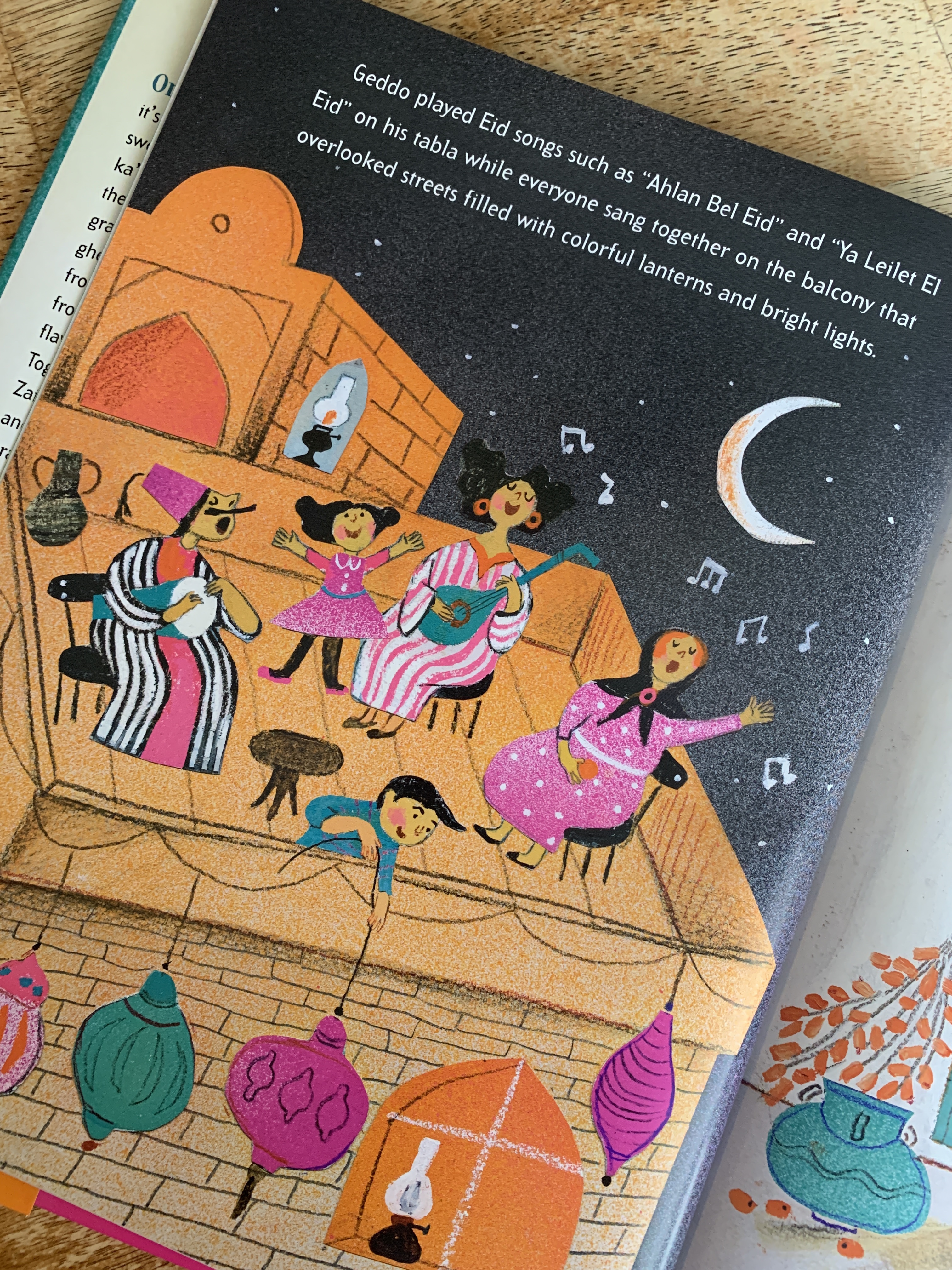
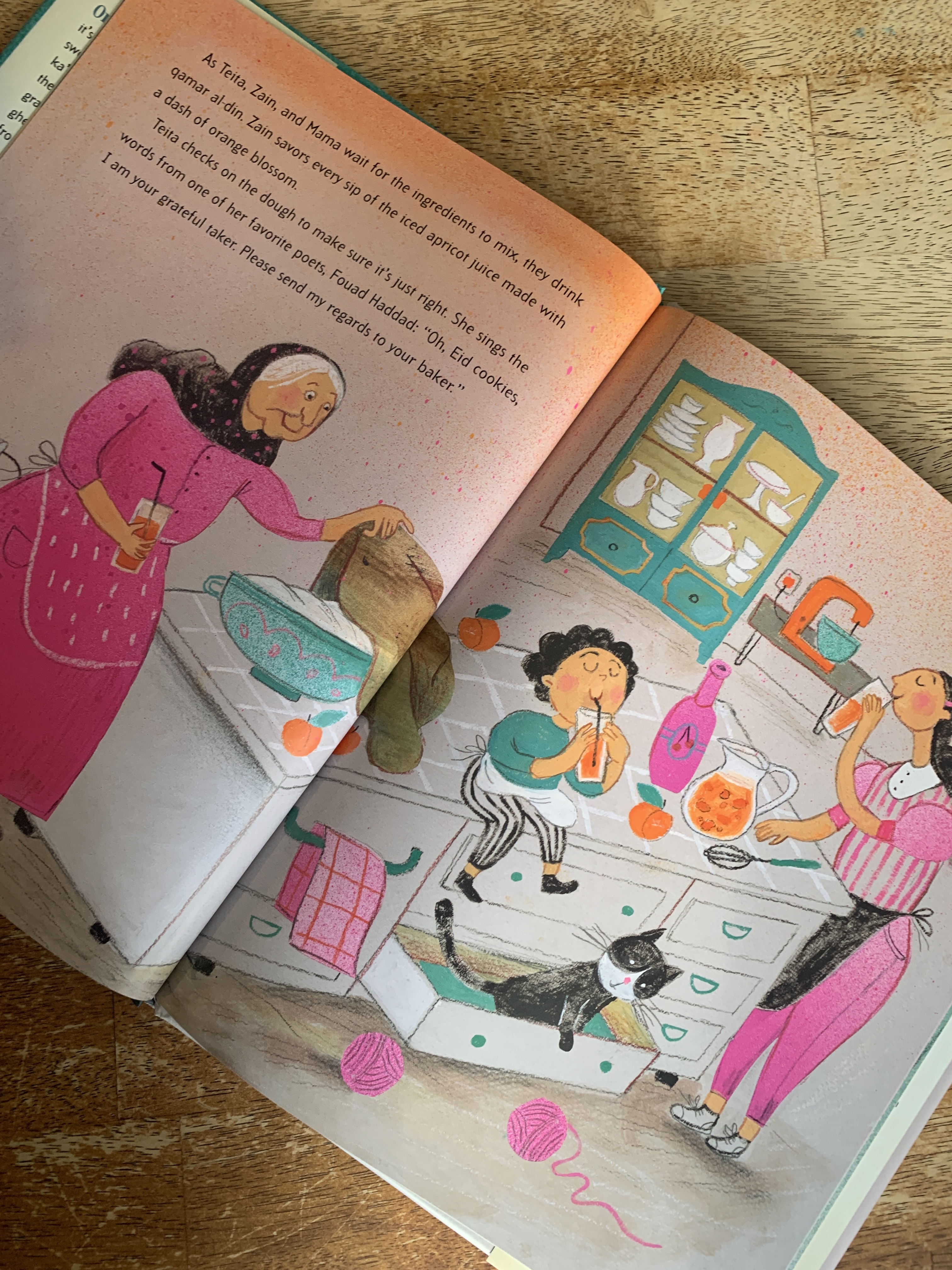
It is the night before Eid and Teita has arrived from Egypt.  Zain can’t wait to make ka’ak to take to school and share with his friends.  The beloved powdered sugar cookies are steeped in tradition, both in Zain’s family and in Egyptian history.  Once the suitcases is unpacked and the special ingredients found, Teita and Mama share memories of baking with cousins, painting henna designs on hands and putting eidiya in envelopes.  The family recalls singing together on the balcony while Geddo played the tabla and lights and lanterns filled the streets below, after Eid prayer they would hand out the ka’ak.

img_7125

Zain wants the ka’ak to turn out perfectly so his teacher and friends will like them.  Teita tells him that ka’ak is as old as the ancient pharaohs, and that recipes were found in the pyramids.  At one time rulers would even put gold coins in the cookies.  Zain and his Teita mix and add the required ingredients, and drink iced apricot juice as they wait for the dough to be just right.  Getting the cookies pressed with the molds though is harder than it looks, and Zain gets frustrated. Teita’s love and patience and Zain’s clever thinking get the treat making back on track.  The ka’ak doesn’t have a gold coin filling, but they are filled with tradition.

img_7126

The timeline is a bit off for me with the grandma coming before Eid and then the cookies going to school on Monday, and then Monday evening when Zain is writing down the recipe with Teita he is telling her Eid Mubarak and that it is the best Eid ever.  So, it seems that he went to school on Eid, not to Eid prayers, which is fine, just a little sad that there was no Eid celebration or prayers.  I don’t know that kids will be bothered by it, but the lack of mirroring and stressing how joyous Eid is does somehow get lost and mitigated, in my opinion, by skipping acknowledgement of the religious holiday.   In the backmatter the author remarks that she has “outgrown the magic of Eid,” so perhaps it is intentional that the day is not included in the text.

img_7127

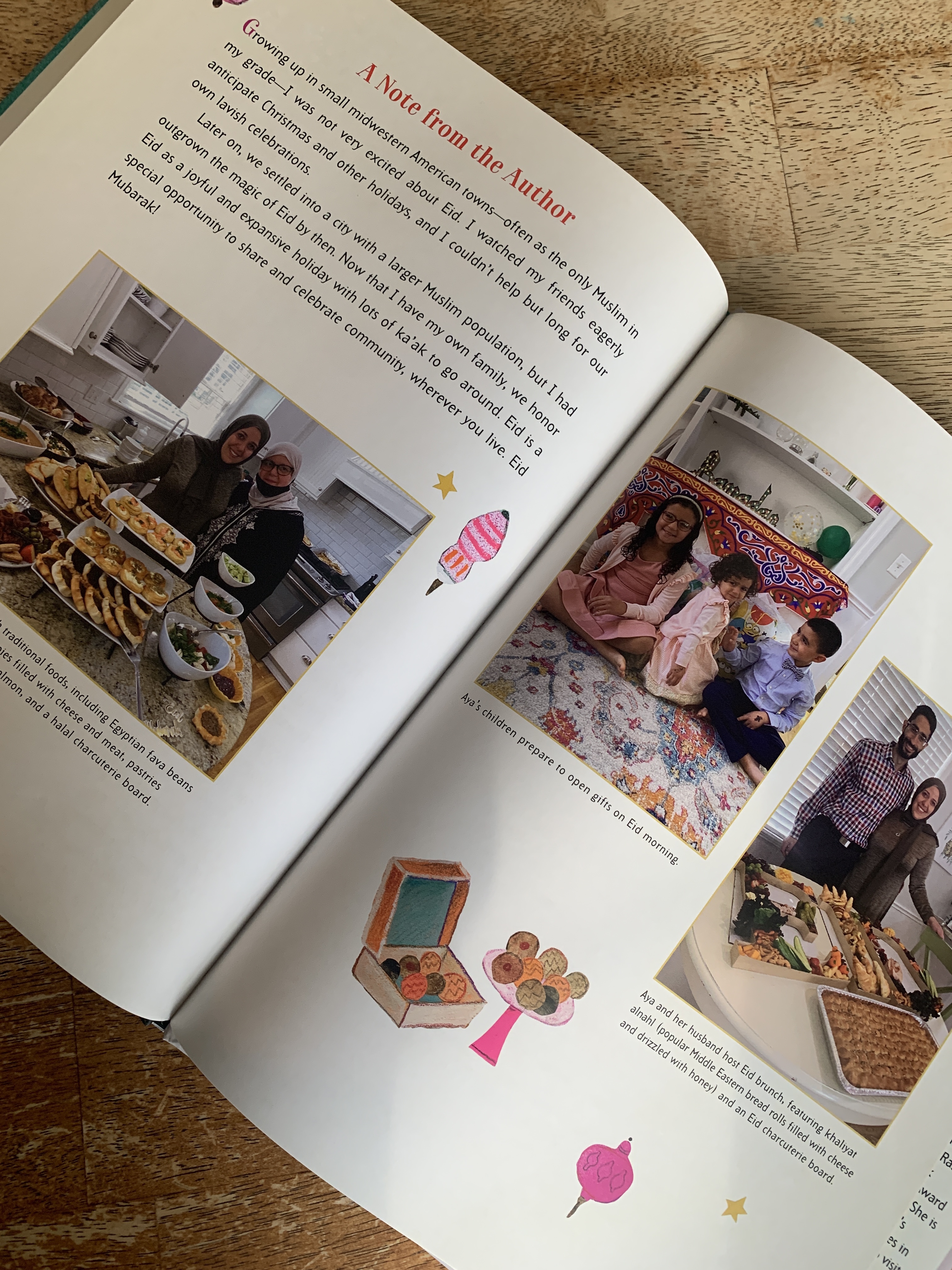
The last six pages of the book are filled with informative and engaging information about What is Eid, Ka’ak Time Line, A Note from the Author with photographs of her and her family celebrating Eid, a Simple Ka’ak Recipe and Additional Resources.

I purchased my copy from Crescent Moon Store where if you put my initials ISL (Islamic School Librarian) in at checkout you will save 10% or is available here on Amazon where the book currently has a coupon for $3.80 off.

Hunger Alert by Shazia Afzal illustrated by Sania Hussain

Standard
Hunger Alert by Shazia Afzal illustrated by Sania Hussain

img_6919

On my first read through, this book came across as a bit text heavy and the presentation didn’t quite fit with the content for the target audience, but when my seven year old read it, then reread it, and my 12 year old picked up and read it and both said, “it’s good,” I realized, the target audience is not little kids, nor is it adults, it is kids who have fasted and have felt the pangs of hunger.  The character is getting through his first day, but the relatability is for kids everywhere fasting for the first time the hundredth time and everywhere in between.  It is Islam centered, I appreciate the healthy food temptations and the unwavering that fasting needs to be done, but as an adult and an educator, so often I wanted to interject Islamic touchstone to getting through the day asking Allah for help, talking your self up and increasing your determination by knowing the Angels are recording your struggles and you will be rewarded in the akhira, and while Quran is read, and a surah loved, and Islamic phrases included, the focus of the book is a little boy in a very idyllic family trying to keep hungry thoughts away. The small 8 x 8 soft back book with 22 thick cardboard pages would be a bit hard to share at story time, but the simple concept story is fine in smaller groups and at bed time.

img_6920

The books starts with Ahmed fasting for the first time in Ramadan, he has a list of things he needs to complete his fast: 1-Keep busy, 2- Don’t think about food, and 3-Stay away from the kitchen.  I found when reading it to my younger kids I would pause here to discuss why we fast, and that we are doing it for the sake of Allah, so we need Him to be successful, not distractions.

img_6921

Ahmed starts with reading his favorite book about a charitable boy, the illustrations though had baskets full of shiny, big, read apples.  “Grr, Hunger Alert!” He runs to his brother’s room to keep busy with a soccer video game, but the prize on the screen are big, yellow bananas. “Grr, Hunger Alert!” This continues throughout the day, including while reading Surah Rahman, and the pomegranates trigger yet another Hunger Alert. When Grandpa asks him to take strawberries to his mom and his mom is in the kitchen, each of his rules will have to be broken.

img_6922

With iftaar approaching and fruit chaat waiting, Ahmed will have to persevere to complete his fast.  There is a glossary at the back and the book you can search online to find where the book is available near you http://www.compassbooks.ca

img_6923

Moon’s Ramadan by Natasha Khan Kazi

Standard
Moon’s Ramadan by Natasha Khan Kazi

moon

This beautiful lyrical book has a simple premise of the moon looking down on people celebrating Ramadan as it circles the Earth, but stands out as being unique thanks to the poetic language and engaging illustrations.  Each spread shows moon in a different phase over a different country, and the joy, activities and worship that Muslims are partaking in during the blessed month.  I’m embarrassed to say, I didn’t realize that the author is also the illustrator until I sat down to write this review, and honestly it makes sense, as the story text and illustrations work seamlessly together.  The tone of the book, the details in the pictures, and the rich language make this a good read for a large audience.  Little ones probably won’t fully understand the poetry, but they will be mesmerized none-the-less and feel the excitement.  My three year old calls the moon all year round, the “Ramadan Moon” and he understood that the Moon in the story is excited seeing us celebrate and worship.  He consistently would still be peeking in windows or searching the scenes, not quite ready for me to turn the page long after the text was done being read.  Older kids will appreciate the shared global bonds of Muslims and the cultural specifics too.  They will grasp the information shared and beliefs touched upon in the flowing words that do not preach.  My only criticism is that the book starts with Moon saying, “Hello.”  In an Islamic centered book I would have expected to see Assalamualaikum, especially since it appears on the page where moon is above Egypt, so I’m not sure why the English greetings is used.  The book has a glossary and notes at the end making it a great addition to Muslim and non Muslim spaces alike.  I plan to read the book for a Masjid story time as the large hardback book will work just as well for a group of kids as it does at bed time.

Told from a personified Moon’s perspective, the book begins with Moon smiling at Earth as people all over the world excitedly point and look up at her, but once they see her, they rush off to prepare for the month. Over Turkey, the Ramadan Drummer awakens sleepy people for suhoor and over Indonesia he sees families gathering for iftar. As each day passes Moon grows fuller watching the children do good deeds and people sharing their wealth.

Nights of Taraweeh and listening to the Quran over Somalia, sharing treats in the United Kingdom, and  interfaith among neighbors in the United States bring joy to Moon.  And as the waning crescent sees henna being put on hands in Dubai the month is coming to an end.  People once again look to the sky, but they cannot see Moon in Argentina, Moon is new.  It is Chaand Raat and then it is Eid.  Moon is back in Egypt watching people celebrate and then the world returns to looking up at Moon and she beams with love and gratitude.

There are diverse characters of a variety of skin tones, mobilities, ages, body size and abilities featured all throughout the book in a positive and inclusive normalizing manner.  The backmatter makes the concepts more accessible and the book work on different layers.  I really enjoyed the book and am excited to share it.  I purchased mine at Crescent Moon Store where using my initials ISL (Islamic School Librarian)  will save you 10% it is also available here at Amazon Even my local public library has it on the shelves already! Happy Ramadan!

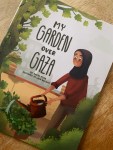
My Garden Over Gaza by Sarah Musa illustrated by Saffia Bazlamit

Standard
My Garden Over Gaza by Sarah Musa illustrated by Saffia Bazlamit

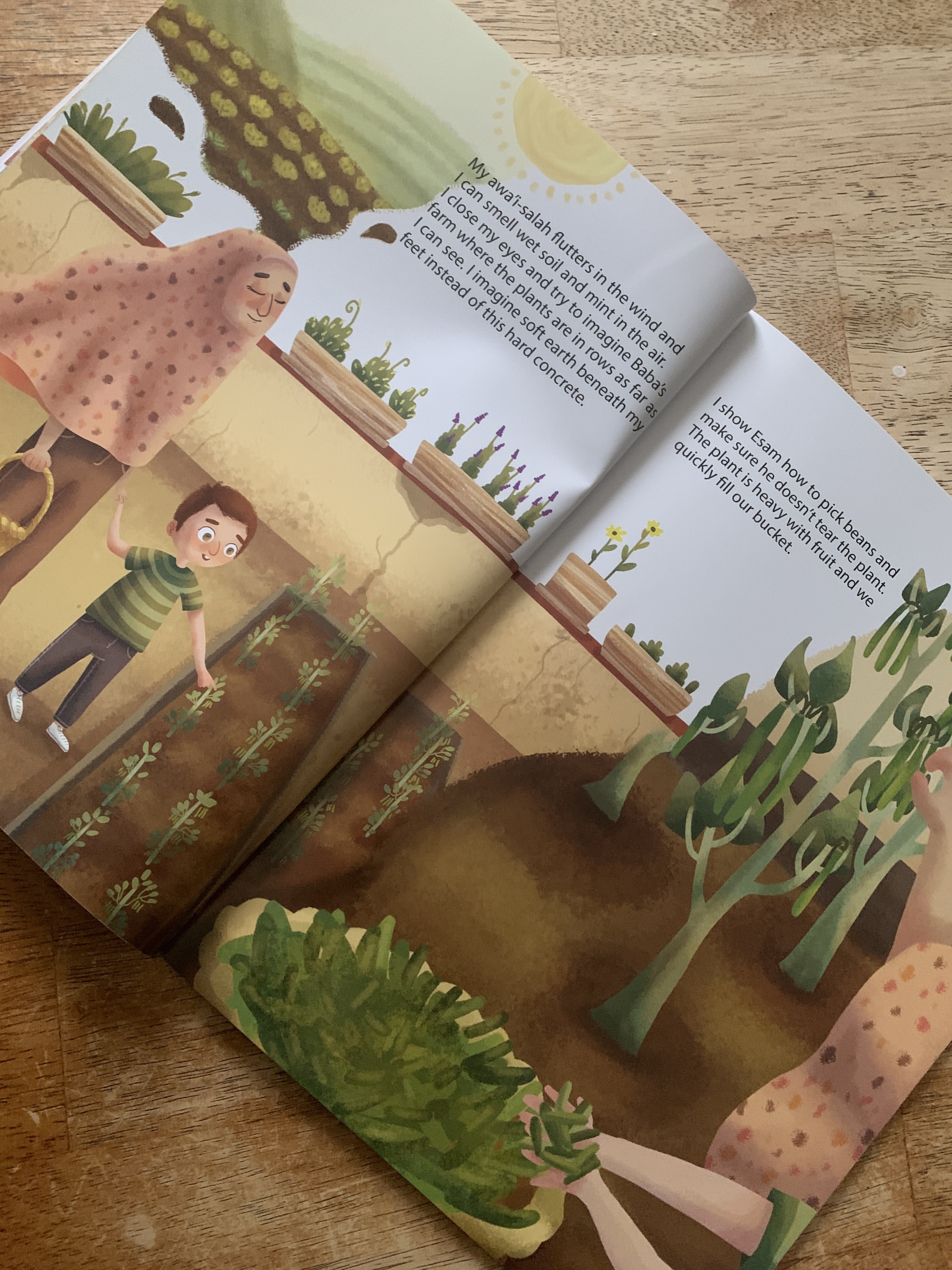
This book is hard to read, it hurts the heart, it doesn’t let you claim ignorance regarding the plight of Palestinians, and it shows cruelty,  a specific inexcusable cruelty, in a children’s book that will haunt you and infuriate you for weeks and months, if not indefinitely.  I’ve read a number of Palestine set books, but this one, in its simplicity, leaves me raw.  A child with a rooftop garden that helps feed her family is deliberately targeted by Israeli drones and destroyed.  This isn’t science fiction or dystopian, this is based on real acts.  The book itself threads in themes of hope, of not giving up, of remembering strength of a lost parent, of vowing to move forwards, but the catalyst for it all is not happenstance, and while the details of the occupation and oppression are not stressed and articulated, they are referenced and skillfully present to be discussed with children on their level with the included backmatter at the end.  This book is powerful and should be required reading. It is a difficult read and it has flags, but it is also a glimpse of the reality of our world, and the manner in which this book is told allows for the discussion to taken place with middle grade readers and up. The book is not text heavy, but the nature of the content makes me suggest it for mature children.

Noura, a young girl, is in her home in Gaza when drones are seen just out the window and she quickly pulls her little brother Esam away to safety.  To distract him she tells him about their father and his farm that he used to have in Umm An-Naser.  She explains how the wall cut them off from their land and when the drone noises fade, she takes him up to her rooftop garden to pick green beans.  Their mama works downstairs as a seamstress, and while they wish they had meat, the garden helps them have fresh vegetables.

The next day after Noura gets her little brother ready for the day they head to the roof, but drones arrive and start spraying chemicals on the growing plants, killing them, and sending Noura gasping to breathe.  She tries to cover the plants and swing a shovel at the drone, but it does little to save any of the food and Noura is devastated.

Noura’s mama reassures her daughter that the food can be regrown, but she is irreplaceable, as Noura goes to scrub the chemicals from her skin.  The frustration is real, but determination prevails as the family cleans the garden and begins again, just as their father did.

The last two page spread of the book is a basic map, general touchstones of the situation in Palestine, and the very real drones that fly in to Gaza to surveil, attack, and spray herbicides on crops. You can purchase a copy on the publisher’s website or HERE at Crescent Moon Store.