Tag Archives: Story Time

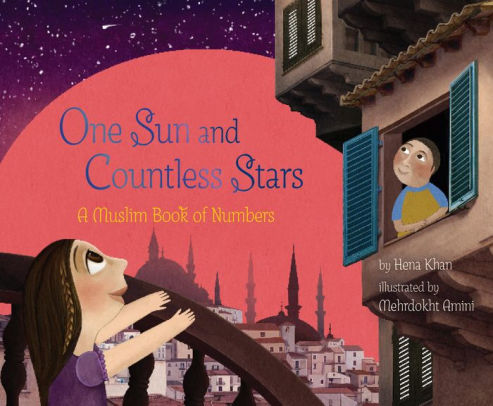
One Sun and Countless Stars by Hena Khan illustrated by Mehrdokht Amini

Standard
One Sun and Countless Stars by Hena Khan illustrated by Mehrdokht Amini

one sun

I don’t think that Hena Khan is necessarily a controversial figure, but some days her work feels very polarizing as some praise her ability to share OWN voice desi American Muslim stories while others feel like she waters down the very stories she is sharing to appease the majority.  Irregardless of our nuanced views, many of us first were made aware of her when we we were swept away in 2012 by the mainstream book, Golden Domes and Silver Lanterns.  Since then she also has published a book about shapes in the same format, and now this counting book that reminds me how beautiful and powerful it is to see Islam so unapologetically presented to all children.
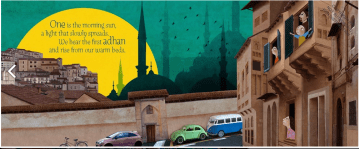
Screen Shot 2021-11-10 at 10.25.04 PM

The author’s note at the end is important:

There are many significant numbers in Islam.  They include one for God, five for the pillars of the religion and daily prayers, seven for the circles pilgrims and visitors walk around the Ka’aba during hajj and more.

Mathematics and astronomy were among the intellectual pursuits of early Muslims.  They helped to develop algebra and used geometry to create the elaborate patterns found in Islamic art.

For this book, I chose concrete and illustratable terms rather than abstract concepts.  The representations for each number focus on things we can count in the world around us.

The book counts the diverse and global parts of a practiced faith.  The unique and the mundane, all beautifully illustrated and richly conveyed.  From cups of tea and shoes taken off for prayer to two hands making dua and four lines of a surah being memorized.  The book counts up to nine and then marvels at the countless stars that we see each night.

The first page is possibly a bit problematic in accuracy.  The tone and framing of starting the day with the sun rising and the sound of the adhan is warm and beautiful, but the adhan is not called at sunrise for the first prayer of the day, fajr.  Fajr begins at dawn.  There are only 21 words on the first page, so I’m inferring a lot about the correlation of the sun and athan that may or may not be present.  It is something frequently misrepresented, so it catches my attention. And yes, the seven tawafs mentioned in the author’s note would also apply to umrah, not just hajj.

Overall, the book is lovely and will remind many of us what made us all celebrate Hena Khan and her stories so many years ago.

Room for Everyone by Naaz Khan illustrated by Merce’ Lopez

Standard
Room for Everyone by Naaz Khan illustrated by Merce’ Lopez

room for everyone

I started to read this book to myself, abruptly stopped, gathered my children around, and began again aloud.  This 40 page early elementary picture book isn’t just counting up and down with silly scenarios and outrageous details, it is familiarity with a culture often not represented with universal humor, appeal, and anticipation. This rhyming book begs to be shared: one-on-one, at story time, or in a classroom.  There is so much joy and connection that I’m ready to felt-board the story, march into my kid’s school and demand an audience.  I found mine at the library, but I think I am going to order it because it definitely deserves a place on the bookshelf to be read again and again.

Musa and Dada get in a daladala and are off to the crystal blue waters of Zanzibar.  But it is hotter than peppers out and the kind driver is offering everyone a ride.  First is the old man with his seatless bike, then it is two little goats and their herder, next is vendors with their three baskets of fruits.  Each time Musa cries and protests that there is not room for anyone else, let alone their stuff.  Yet when everyone wiggles and scoots and smooshes, there seems to be room for everyone.  This continues until there are ten scuba divers joining the smelly fish and stinky chickens, umbrellas and milk pails.

Alhumdulillah, they reach the beach.  Then one by one they all get out at Nungwi beach.  Giggles and wiggles and Musa and Dada are off the minibus and swimming in the cool waters. Alhumdulillah indeed.  The book concludes with a glossary and an author’s note.

“Find me on Twinkl’s list of best children’s books of 2021!” 

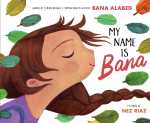
My Name is Bana by Bana Alabed illustrated by Nez Riaz

Standard
My Name is Bana by Bana Alabed illustrated by Nez Riaz

bana

OWN voice books are always important, and while we see a rise in minority voices claiming their own stories, to read a child’s story about war and hope by a child, is particularly impressive.  Bana Alabed was born in 2009, she is an activist, a Syrian refugee, and now an author.  Her clear voice doesn’t stumble and her perspective is unapologetic, yet hopeful.  Over 40 pages she tells her story in her own words with beautifully warm and complementary illustrations filling the pages.  For kindergarten and up, this book stands out in a crowded field of refugee inspired stories for its authenticity, strong author, and overall emotional connection.

img_4629

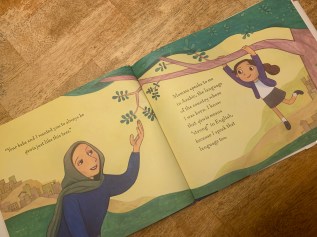
Bana begins her picture book memoir by asking her mother why she was named Bana.  Her mother explains that she was named after a tall bushy tree that grows in Syria.  Her favorite tree.  A tree that is qawai, Arabic for strong.

img_4630

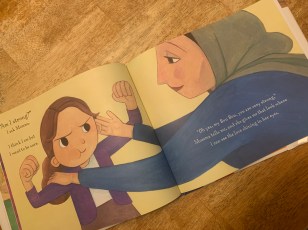
Bana then asks what it means to be strong.  And once again her mother lovingly explains, that strong is to be brave even when you are scared, and to be sturdy so others can lean on you.  It also means you use your mighty voice to speak up when something is wrong, you read, study, and exercise your body.

img_4631

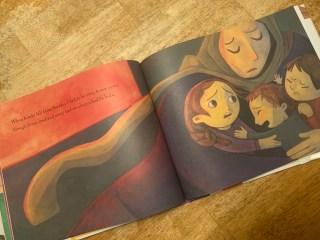
Bana appreciates her name, and being strong, because war came to her country.  When bombs fell they had to hide, when her brothers were scared, she had to keep them distracted, when they moved to a new place where they didn’t know the language or any people, she had to be strong still.

img_4632

As a young girl, Bana tweeted about the war, the book doesn’t touch on that, but it does show her being strong as she shares her story all over the world.  It then returns to her and her mother discussing amal, Arabic for hope, and Bana imagines herself strong, reaching into the sky.

img_4633

The book ends on a simpler note of acknowledging her little brothers’ names: Laith and Noor, lion and light.  The Author’s Note at the end is just as powerful as the text of the book and provides more information about Bana’s experience and outlook. The way that war is handled is not overpowering for young readers, and will provide a great starting point of discussion.  The relationship between Bana and her mother is warm and supportive and equally deserving of mention with the little people you share the book with, alhumdulillah.

“Kids shouldn’t have to always be strong.  Every child deserves to live in peace.” Bana Alabed

What’s The Matter Habibi? written and illustrated by Betsy Lewin

Standard
What’s The Matter Habibi? written and illustrated by Betsy Lewin

matter habibi

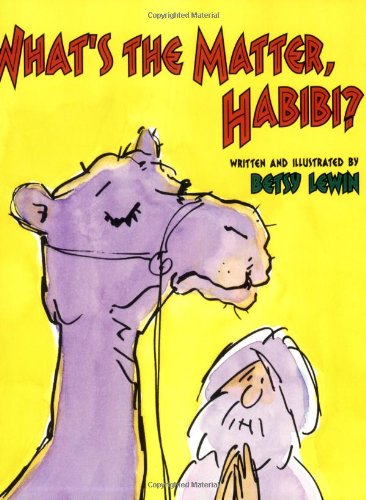
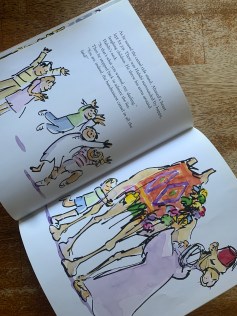
This short silly 32 page AR 2.7 book by the illustrator of the famous Click, Clack, Moo books tells a tale of an unhappy camel in Egypt and his caring owner Ahmed’s attempt to understand what is wrong.  There is nothing religious in the book, save a few visible hijab wearing women in the bazaar illustrations, and the main human character’s name.  The cultural backdrop though,  does introduce and encourage familiarity for young readers who may not have exposure to Arabic words and people.  The author is clearly not Arab, but the book thanks the Cairo NESA delegates for their help in developing the story.  Before reading it I was nervous that because the presentation would be coming from an outside perspective,  that the messaging would be condescending and/or stereotypical.  I think I was perhaps giving the book way too much thought, because ultimately the story isn’t that deep.  The illustrations and tone are warm and focus on a camel wanting a fez and the efforts it takes for Habibi to acquire one and for Ahmed to track him down.  It is surface level silliness for younger kids, the camel and owner are kind to each other and the setting just ties it all together.  I am not Arab, and could definitely argue that the camel and his silly owner do perpetuate stereotypes, so feel free to offer up your thoughts if you have read the book.  Irregardless of where you side, the fact that I’m sure had I read this book in 1997 when it was published, I would have been gushing to see the name Ahmed in a widely available book, but here we are nearly 25 years later and I’m questioning if these are stories that are better left to be told by OWN voice perspectives.

img_4356

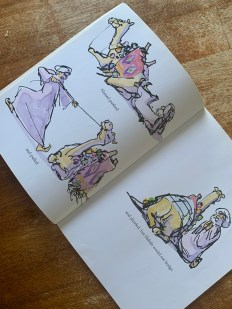
Ahmed and Habibi give rides to children every day, but one day Habibi refuses to get up.  Ahmed asks if it is a toothache, a tummy ache, and no response.  When he asks if his feet hurt, Habibi stands up, and Ahmed gives the camel his babouches (that magically fit).

img_4357

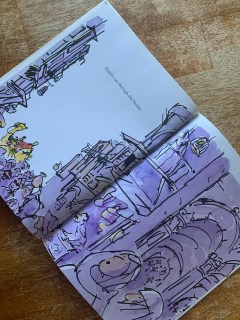
Habibi then takes off running through the bazaar.  He approaches the man selling fezzes and a trade is made: the slippers for a hat.  Ahmed trailing behind barefoot, then has to purchase his own shoes back.  As Habibi passes different shops and hears how handsome he is, Ahmed is able to follow him.  When they finally reunite, Habibi is surrounded by happy children, and Ahmed admits, he really is a handsome camel.  Happily Habibi gives the children extra long rides and then let’s Ahmed ride him home.

img_4358

This book would work well for story times to ages four and up.  It would lend itself to themes about silly animals, hats, Egypt and Arab culture.  The crowds of people including the children are dressed in both thobes and pants and t-shirts.  You see traditional headgear on some and none on others.  It seems clear that the camel is not the normal mode of transportation, as there are no other camels, or even cars, only people walking in the book.  Habibi is a novelty for the children and adults he passes, so one could possibly safely assume he is a tourist attraction of sorts.

img_4360

My First Book About Allah: Teachings for Toddlers and Young Children by Sara Khan illustrated by Ali Lodge

Standard
My First Book About Allah: Teachings for Toddlers and Young Children by Sara Khan illustrated by Ali Lodge

img_8046

This 26 page non fiction sturdy board book packs in a lot of information in a really simple way that will keep little one’s attention and hopefully encourage them to ask deeper questions as they grow.  The illustrations are soft and alternate between detailed familiar scenes and simple background style scenes that draw attention to the text on the page. It covers the Shahadah, who Allah (swt) is, it mentions that He has 99 names,  that He sent us the Quran and the final messenger is Prophet Muhammad (saw).  The book at times is wordy, and perhaps the vocabulary a bit above a toddlers level, but the flow is smooth and the tone is warm, inviting, and is requested often by my little ones. (It is reasonably priced by at small bookstores, and double the price on Amazon).

img_8047

The book starts off by stating that Muslims believe that there is only one God and His name is Allah.  It shows it in Arabic as well on a very muted background.  The next page is much more lively with illustrations showing someone pray, a picture of the ka’aba, a family eating, and a mother reading Quran and making dua.

img_8048

The family is then depicted gathered together with the little children asking “WHO is Allah?” and the book dedicating the next few pages to explaining that Allah swt, is the One who made everything and has power over all. He makes the sun rise and set and everything in the heavens and the earth belong to Him.

img_8049

The book explains that Allah even loves us more than our own parents before explaining that Allah has 99 names and Ar-Rahman and Ar-Rahim are the ones we hear the most.  The background has many of the names of Allah written in Arabic.

img_8050

The family prays knowing Allah is All Hearing and All Seeing.  An illustration of a cave with a bird and spiderweb accompany the page that tells us that He sent us the Qur’an and Prophet Muhammad (saw) to show us how to live. InshaAllah if we do as we are supposed to, we are promised paradise and Allah never breaks His promise.

img_8051

The book concludes with Facts about Allah and Questions about Allah (swt). The pages are glossy and 6 x 8 in size.

img_8053

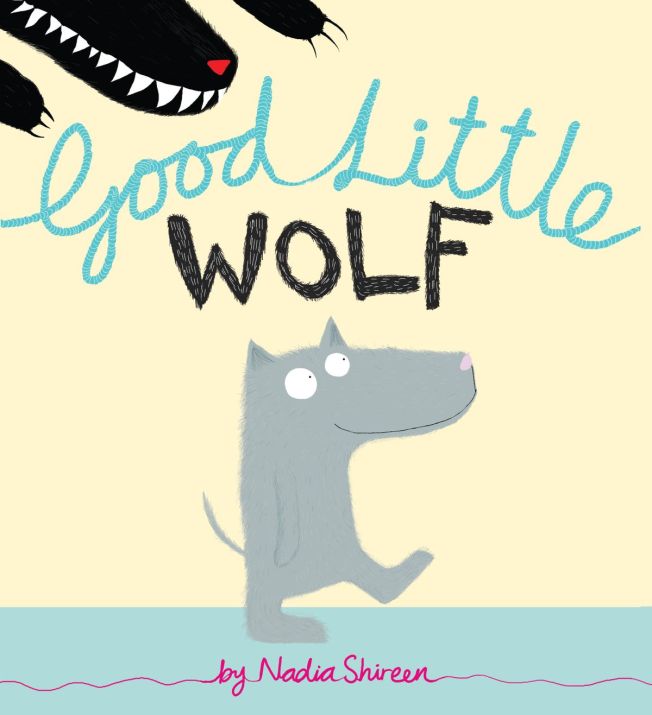
Good Little Wolf by Nadia Shireen

Standard
Good Little Wolf by Nadia Shireen

wolf

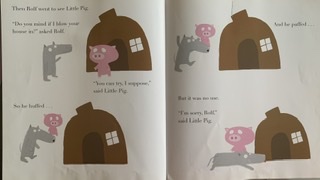
I have way too many conflicting thoughts for this 32 page AR 2.1 Muslim authored picture book.  The good little wolf, with a cast of familiar story book characters getting cameos, is choppy in its simple story telling to the point I thought pages had been skipped more than once, funny in asking the three little pigs permission to blow their houses down, slightly moral in elevating good behavior and having the courage to hold to your goodness, and ultimately, possibly really dark, as the end gives reason to believe that wolves will be wolves and the good little wolf is no more, as in he has been killed along with an old granny too.  

245BE710-2A53-41AF-A01A-6EA9596D3370

Rolf is a good little wolf that likes to bake, eat his vegetable and be nice to his friend.  His best friend Mrs. Boggins has warned him that not all wolves are as nice as he is and Rolf hopes he will never meet a big bad wolf.

D48EE32F-8952-4A52-9F30-F0EC5AF408D5

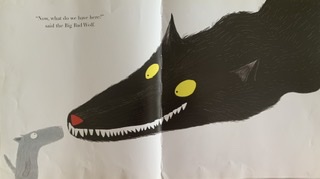
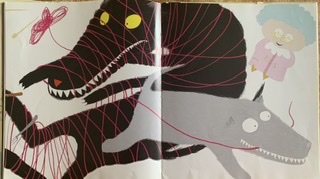
Alas, he does meet the Big Bad Wolf, and he questions if Rolf is a wolf at all.  To prove that he is a wolf he accepts the big bad wolf’s challenges:  He howls or rather whistles at the moon and he tries to blow his friend pig’s house in.  Eventually he resolves that he isn’t mean enough to be a wolf, then the Big Bad Wolf gives him one more chance as he holds out a fork and knife to the wolf while restraining Mrs. Boggins. D31DC212-C85D-439B-BBCF-2A1CEA6F1FF8

Rolf feels something deeply and ties up the Big Bad Wolf feeling more wolf like than ever.  He just happens to be a good little wolf.  To celebrate they all sit down for a snack and the Big Bad Wolf decides to stop eating people…tomorrow.

FE2D38B5-AA49-4AEE-B111-61FACD9D9436

Yeah, it isn’t clear and could be up for debate, but Rolf and Mrs. Boggins are no longer at the table, and the Big Bad Wolf looks pretty happy.

42DAF30D-66BD-4FA9-A871-F7AC1717DC0F

There is nothing religious in the book, it could be debated if the book is dark or just silly and aside from the choppiness of the transitions, overall the book is a fun turn on classic characters and concepts.

6DDCE0AB-FFBF-471C-9DBB-35B7320425EB

Spell it Like S-A-M-A-R by Shifa Saltagi Safadi illustrated by Saliha Caliskan

Standard
Spell it Like S-A-M-A-R by Shifa Saltagi Safadi illustrated by Saliha Caliskan

img_7225

This 36 page book for kindergarten and up shows the role perseverance, confidence, and believing in yourself can play in conquering bullies, carving out a space for yourself and finding success.  While the book is a little predictable on the surface, older kids will understand that by winning the spelling bee, Samar didn’t just benefit by standing up to the bully, but in proving to herself what she is capable of and ultimately being more confident of her place in a new country.  The book is presented on large 8.5 by 11 full color glossy pages and features discussion questions at the end.

img_7227

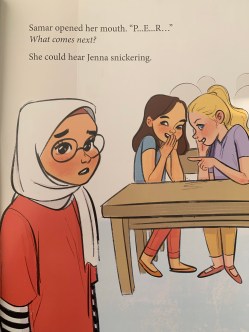
Samar is in 3rd grade after recently moving to America from Syria, where she was the best student in her class.  ESL wasn’t difficult, but mainstream class is proving to be a challenge, mostly because of Jenna, the class bully.

img_7228

Jenna, snickers when it is Samar’s turn to spell words in front of the class, she teased her about her jump rope songs not being in English, and she makes fun of her for her accent.  With the help of a kind friend, Angela, the two girls decide the school spelling bee will be the best chance to prove how smart Samar is, by winning.

img_7229

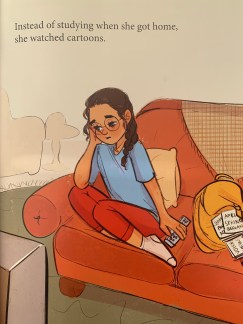
The first step Samar must do is convince her teacher, Ms. Bryan to help her study.  To  show her commitment she offers to give up her recess to study.  The teacher agrees, but on the way home Jenna teases her saying she’ll never win when she can’t even speak English properly.  Deflated, when Samar gets home, she doesn’t study the flashcards and opts to watch cartoons instead.

img_7230

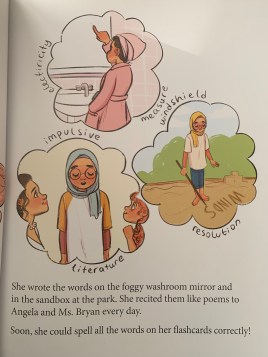
When later in the week her teacher quizzes her, Samar admits she didn’t study.  Ms. Bryan encourages her by sharing her own story of coming to America and having to learn English.  When Samar gets home she sees her mother, a former dentist in Syria, studying for the exams to be a dentist in America. This is the spark she needs and she studies hard, everywhere, and with anyone who will help.

On the day of the bee, Samar spells word after words correctly and after saying bismillah before spelling the final word, wins the competition and beats Jenna. The audience cheers and the next day Samar and Angela are jumping rope and Samar is singing in Arabic.

img_7231

I love that Samar and her mom wear hijab while out, but not at home, that they speaks Arabic, and Samar says bismillah.   Samar’s mom is clearly highly educated and determined and mom and dad are supportive.  I love that Samar’s drive, however, comes from her own determination, no one forces her or guilts her, it is her leading the way and understanding what her mother is going through and her teacher has gone through, and using that as inspiration.  I love that at the end she doesn’t rub it in Jenna’s face that she won, and the symbolism of Jenna just disappearing from the story makes this clear as Samar steps in to her own.  I truly love that for every Jenna in the wold there is also an Angela.  Be kind, be supportive, be a good friend!

I got this book from http://www.Ruqayasbookshelf.com and it can also be found at my favorite book store http://www.crescentmoonstore.com as well.  Happy Reading!

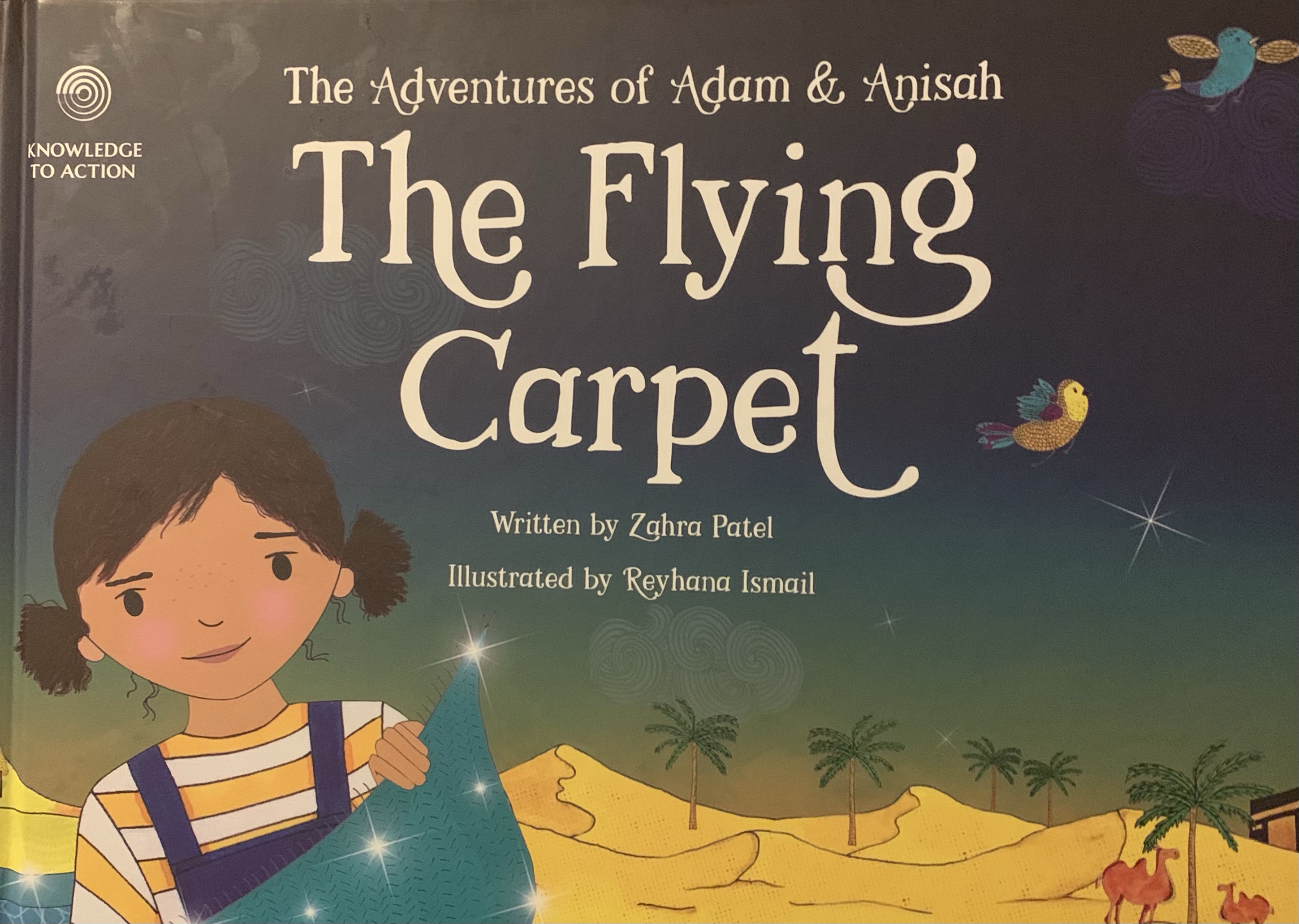
The Adventures of Adam and Anisah: The Flying Carpet by Zahra Patel illustrated by Reyhana Ismail

Standard
The Adventures of Adam and Anisah: The Flying Carpet by Zahra Patel illustrated by Reyhana Ismail


img_6995I am confident that every Muslim child has imagined their prayer rug at one time or another to be a flying carpet, so how absolutely heart filling as an adult to find a book that embraces this idea, roots it in Islamic fact and presents it so beautifully for our littlest Muslim believers.

img_6996

The occasionally rhyming and constantly cadence filled picture book features a big brother preparing for and performing salat as his enamored little sister puts imagination and celebration to the act of worship.

img_6997

I absolutely love the admiration that Anisah has for her big brother and am delighted how prayer is presented not as an obligation but as an opportunity to soar and marvel in amazement.

img_7002

The book concludes with a section that provides context to the story, questions to discuss, and ways to extend the learning.  The hardback binding, 8.5 x 13 horizontal orientation and high glossy illustrations make the book a joy in small groups and at bedtime.

img_6998

This book is really, really well done in its simplicity, and I need to order the other book in the series, My Brother’s Shield from Crescent Moon Book Store, as soon as possible.  

Let it Go: Learning the Lesson of Forgiveness by Na’ima B. Robert and Mufti Menk illustrated by Samantha Chaffey

Standard
Let it Go: Learning the Lesson of Forgiveness by Na’ima B. Robert and Mufti Menk illustrated by Samantha Chaffey

let it go

1AA90D6C-5528-4766-B486-219F31FF7AEC

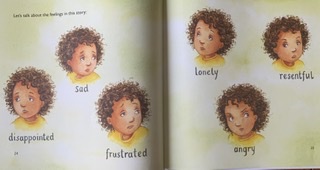
This 32 page rhyming book follows a little boy around as he is weighed down by a lot of things not going his way.  He doesn’t want to forgive until he is the one that hurts someone else and realizes we all make mistakes, forgiveness is not a weakness, and we all feel angry at times.  The book breaks from the story to ask the reader to think about their emotions in various situations, and encourages the reader to talk about their feelings.  The framework is Islamic and the repenting to Allah swt is part of the message. I found it awkward to read independently, but I read it to a small group of my own kids and their cousins, seven in all, ages four to thirteen, and it worked very well to discuss what the boy was feeling and how they would react.  I think this book would be great in a classroom or as a book an adult reads to a child at bedtime to encourage conversation.  I had to point out to the little ones, that the knapsack was getting bigger with the little boys anger, and explain what it was, but as a tool to foster dialogue it was incredibly powerful.

AF3C685C-9745-42B2-96C3-53F2B28B50B7


The book starts out with a poem/du’a by Mufti Menk that sets the tone for the book.  It makes clear that we are all human and feel things and that this book is a tool to understand and emotionally grow from.  No one is going to get in trouble or be reprimanded.

997B392B-E053-4EB3-AAAE-B40023247F90

The story stats with the little boy waking up happy and ready to have a wonderful day.  But then when he comes down for breakfast, his sister has eaten the last piece of toast.  The book asks the reader, “how do you feel when things don’t go your way?” and asks the little boy to let sorry make it better so that he can let it go.  But the little boy doesn’t want to let it go, he wants to hold on, and as a result it makes his heart feel heavy.
71B6DCC3-5B85-423E-A3F7-6F1F3DC80136

This pattern is followed throughout the book giving examples when the boy doesn’t get included in a game at school with his friends, when his friend kicks his football (soccer ball) in to the road and it gets popped by a passing car, and at dinner when his older brother laughs at him.

5BAA4271-891B-4D25-8451-B1A787D4C1F9

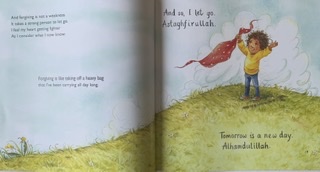
He then picks on his sister at bedtime, and doesn’t even know why he is doing it, and realizes that he too has made a mistake.  He learns that “it takes a strong person to let it go,” and that “forgiving is like taking off a heavy bag that I’ve been carrying all day long.”

4D498CEE-6886-40ED-925B-6D230205CB6C

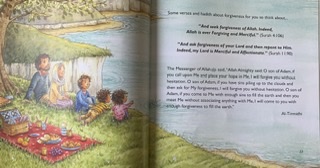
The book ends with some verses and hadith about forgiveness.  Has some facial expressions with emotions to discuss, and space to write down things that make you feel angry, hurt, or sad as well as a place to share what makes you happy, grateful, and safe.  There is also a glossary of Islamic Arabic terms on the inside back cover.

D5E111E7-2791-466B-9343-B362E7D4EB23


Poe Won’t Go by Kelly DiPucchio illustrated by Zachariah Ohora

Standard
Poe Won’t Go by Kelly DiPucchio illustrated by Zachariah Ohora

poe

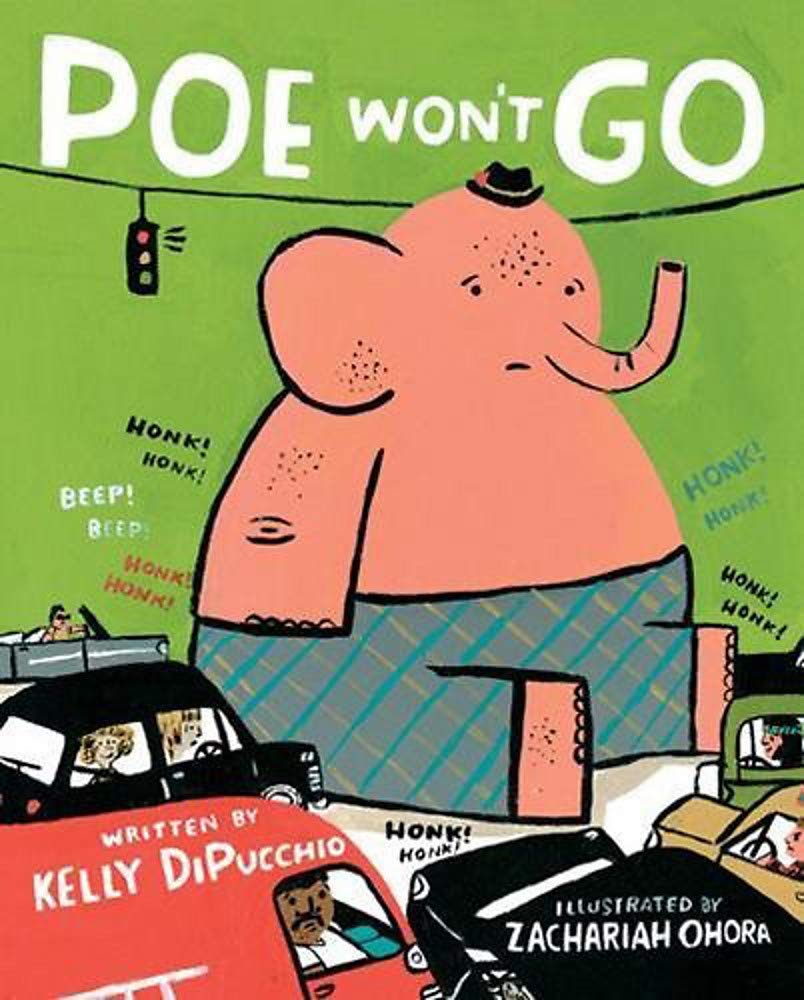
This silly book has an abrupt ending, but plenty of giggles along the way that make you forgive the sudden conclusion.  Additionally there is a lot of diversity in the illustrations, a little hijabi girl of color that steals the show, and a lesson about asking and listening that children 4-7 will find sweet and enjoyable.  It is an AR 2.5 and has 36 pages.  Some are text heavy, but my 4 year old had no problem sitting through it with the silly pictures and large 9 x 11.5 size.

383F79FA-EB31-4C0B-B305-BF7F3CDE9759

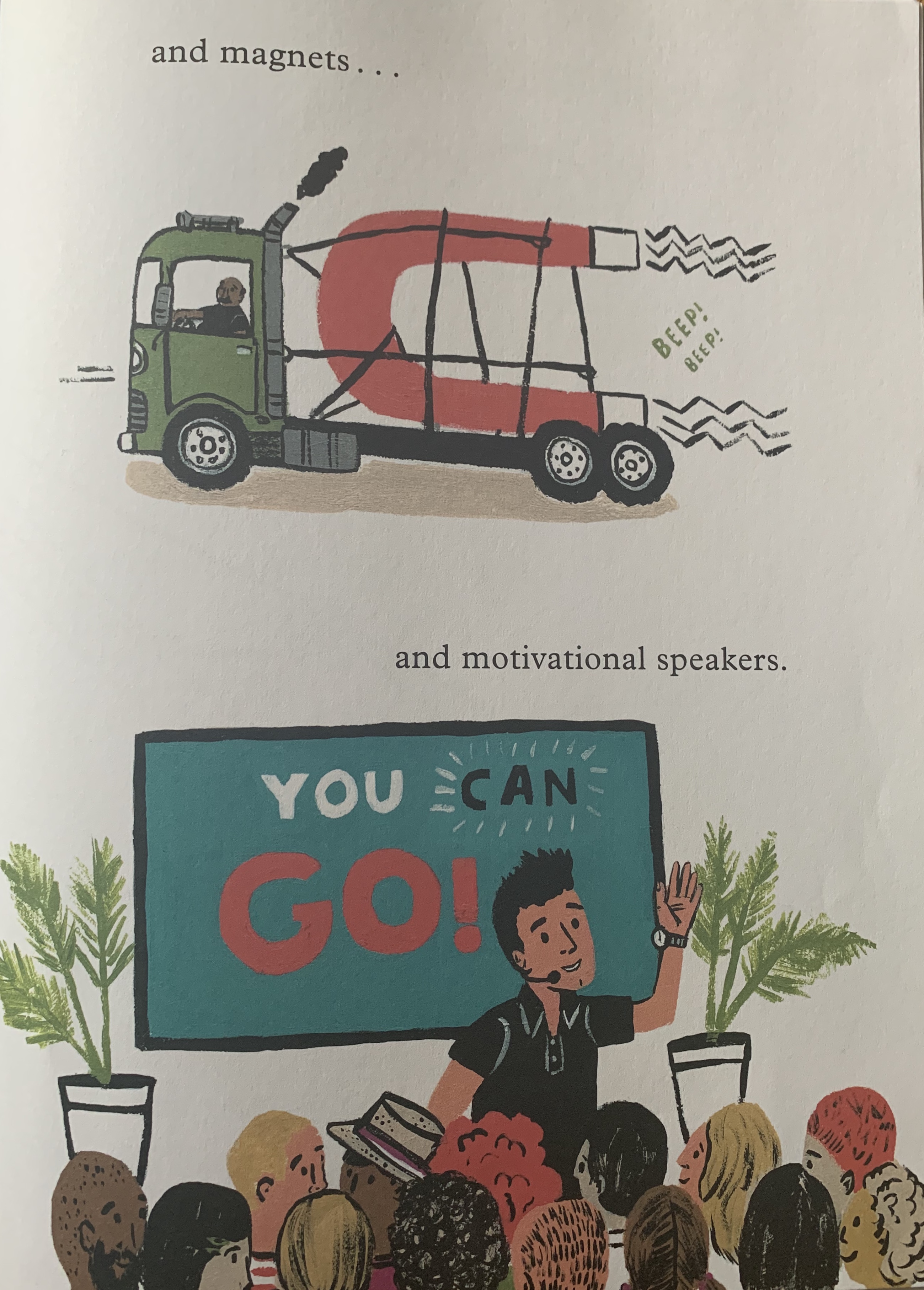
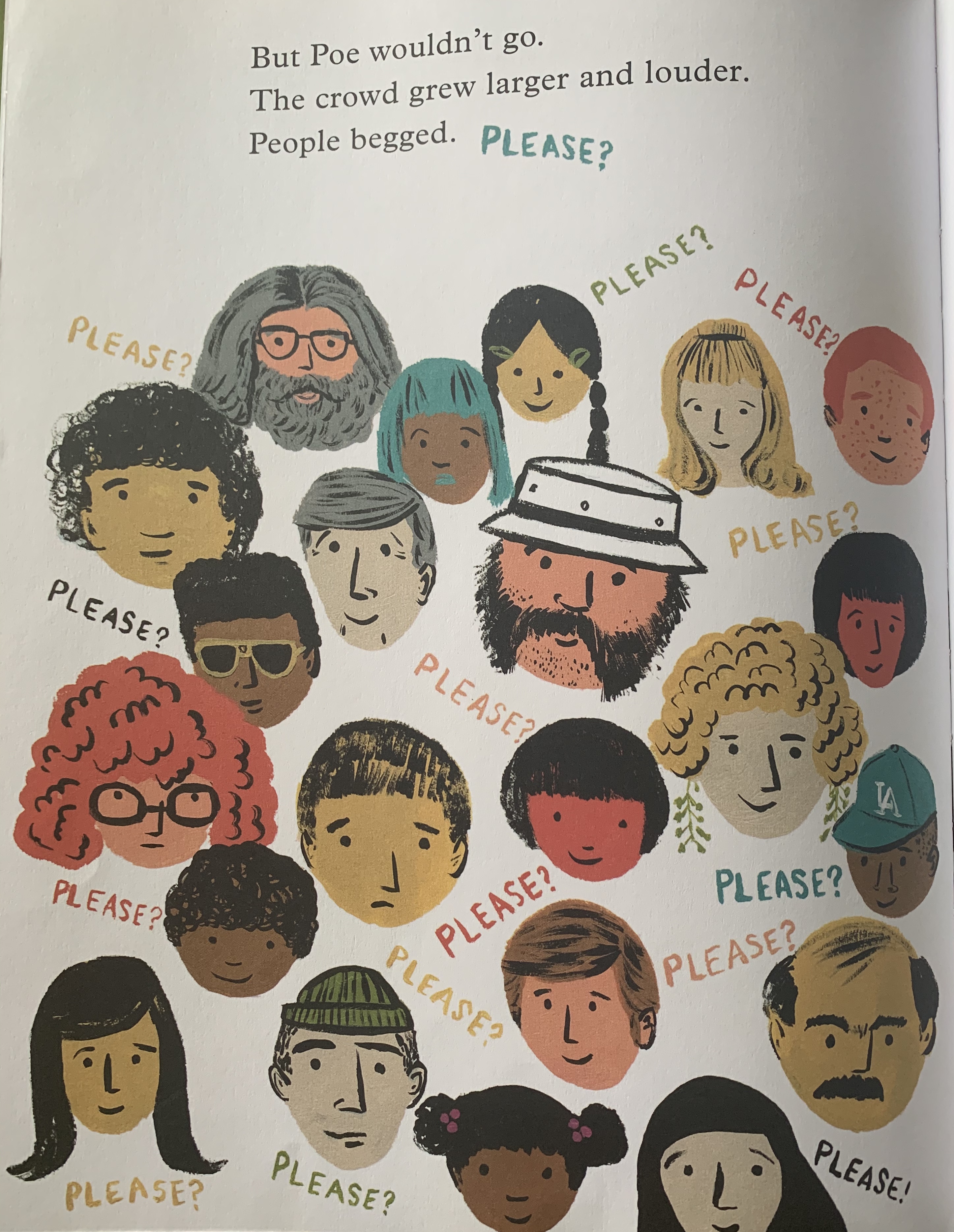
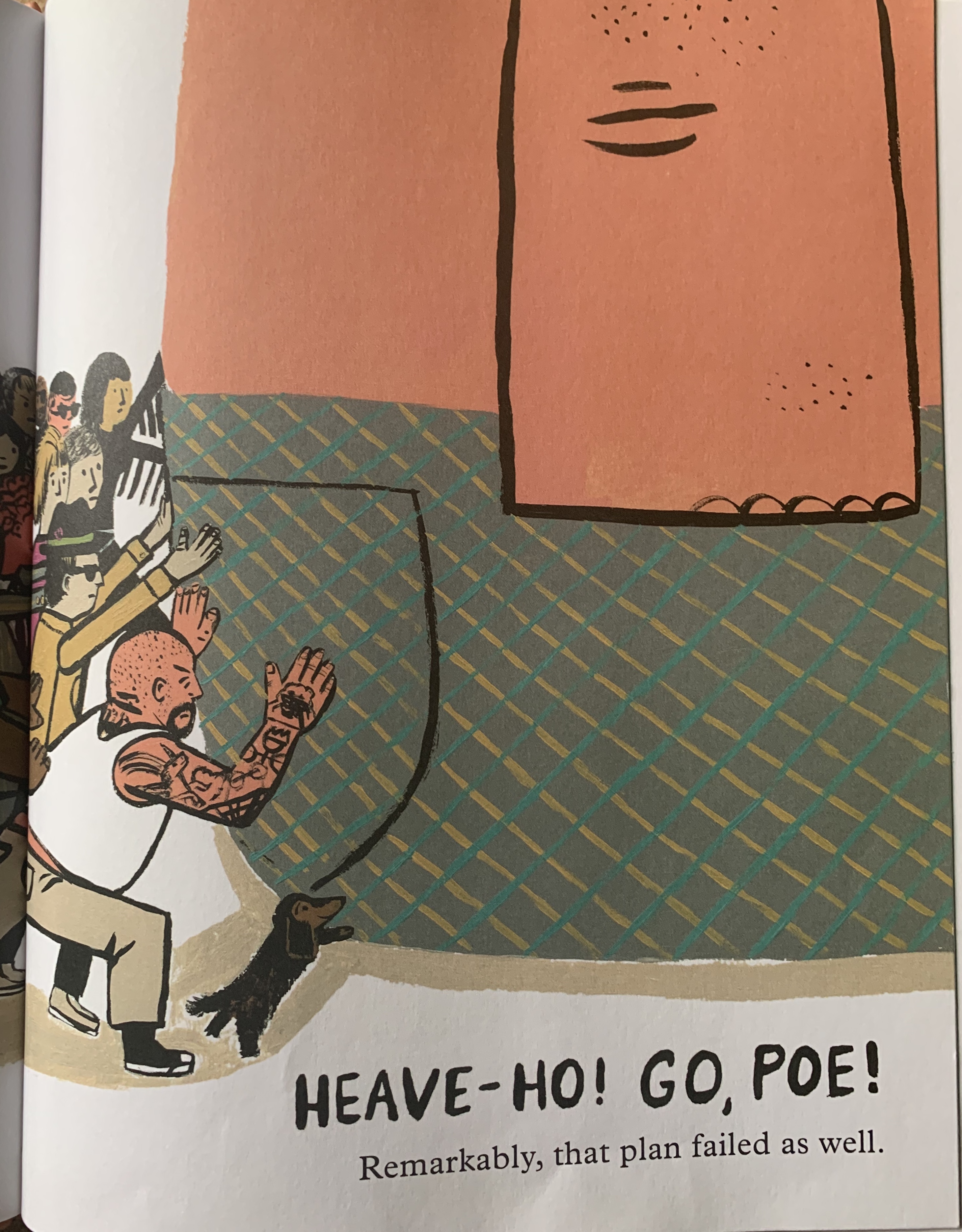
Poe is an elephant that has planted himself in the middle of the only road in Prickly Valley.  The citizens do everything they can think of to get him to move.  They honk, write him a ticket, bang pots and pans, play trombones, blast megaphones, tickle, beg, and bribe.  They even bring in mice, and magnets, and motivational speakers.  Clowns and copters, cranes and pastors, magicians and the mayor, no one can get him to move.

5376BF1C-4727-4160-8C52-6F360EE19055

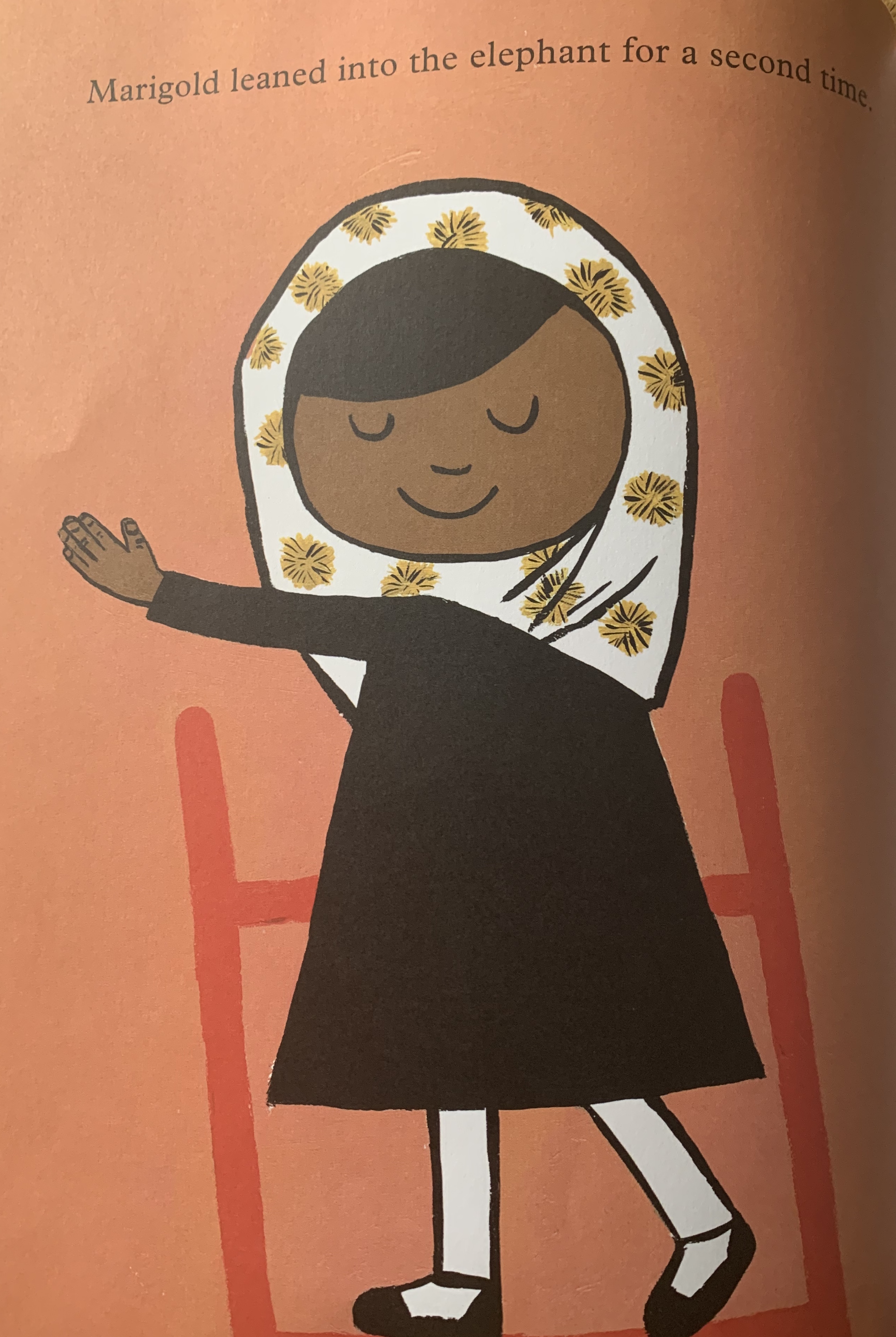
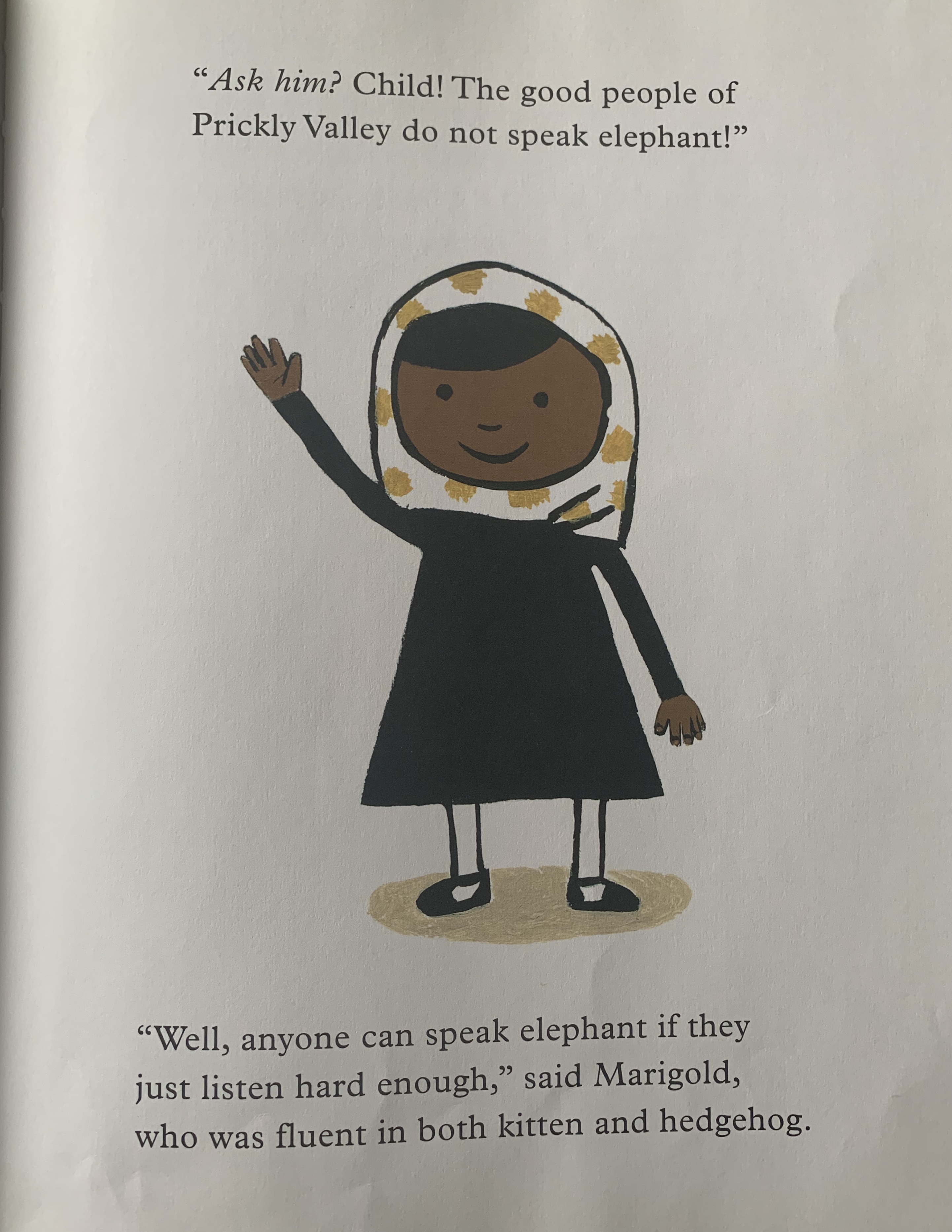
After lots of discussions involving coffee in stryrofoam cups, a little girl named Marigold, asks the mayor if anyone has asked Poe.  Such an obvious suggestion, the Mayor laughs and says she doesn’t speak elephant.  Little hijabi Marigold says, “anyone can speak elephant if they just listen hard enough.”  She is also fluent in kitten and hedgehog.

C34B829A-CA57-4C1F-94B8-ACD7258CE1F0

Marigold discovers that Poe is waiting for a friend that is very late.  A reporter asks if the friend could be wearing a polka-dot-tie, it is determined that it is possible and that also perhaps he is sitting on his friend. At that Poe stands up, finds his friend Mo and the two walk off.

The randomness of Poe sitting on his friend made me have to read the story a few times checking to see if a page was missing or stuck together, but alas no, it just suddenly is resolved and ends with no clues indicating that the elephant is sitting on a monkey.

6FDD18F5-94B3-45FA-9A15-C1299B318EEF

I love that the name in the text for the little girl is Marigold, and that the illustrator chose to depict her as a little Muslim girl of color.  On many of the other pages with the town folk trying to move the elephant, there are people of all colors, body shapes, hairstyles, head gear, eye wear, facial hair, body art, etc shown.  Marigold seems to be at work with her father at their flower shop, and the mayor is a female.

397E7902-B48D-4C1F-982E-F090955F9258

There is nothing religious in the book, save a pastor trying to persuade the elephant to get behind him, and it doesn’t appear that the author or illustrator are Muslim (it is published by Disney Hyperion) which in someways makes the normalizing of a girl in hijab all the more sweeter.  Sure, someone her age wouldn’t be required to cover, but the message and representation is deliberate and appreciated.