Tag Archives: moral

An Eid Story: Husna and the Eid Party by Fawzia Gilani-Williams illustrated by Kulthum Burgess

Standard
An Eid Story: Husna and the Eid Party by Fawzia Gilani-Williams illustrated by Kulthum Burgess

img_3309-1

This 27 page book is old, published in 2007, and one that I kept an eye out for on occasion since reviewing a similar early chapter book by the same author, The Lost Ring, that I found in a public library in 2016.  Somehow it found its way to me in 2024, and I’m reviewing it because it has been a while since I’ve indulged in older books that shaped the foundation of Muslim literary representation so many years ago.  It is the epitome of Islamic fiction and what Islamic fiction looked like when I started teaching.  It has a Muslim protagonist, with a universal stress, framed in Islamic acts, perspectives, information, and morals.  It is unapologetic, it is at time preachy, and while the writing isn’t remarkable, an engaging story is laid out with numerous lessons along the way.  You may not want to rush out and purchase this book, but if you have it on your shelf, it would be worth pulling out, dusting off, and sharing with a child. At times the details feel a little dated, but there is a timelessness to stresses with friends, being left out, assuming the worst, and wanting to be included.  This book will offer a chance to be seen in the text and illustrations as Husna waits to be invited to her friend’s Eid party.  The book does not specify if it is Eid al-Fitr of Eid al-Adha, but it really isn’t impactful on the story, as it simply sets the time, mood, and draws all the threads together.

SYNOPSIS:
It is the week after Eid and students are back at their Islamic school, Husna has lots of friends, but Maryam is her favorite.  While on the playground, someone asks Maryam where the party is going to be, and she responds, “probably at the house.”  Excited Husna waits for her invitation, that unfortunately never comes.

WHY I LIKE IT:
Even though the book has a happy ending and is based on a misunderstanding, the feelings are very real.  I remember feeling left out, I’ve seen my own kids and students feel it, and that the book is a snapshot of that feeling from a Muslim perspective, really makes it hit home.  Husna makes dua in sujud at Maghrib and Fajr that she will be invited, conversations begin with As-Salamu ‘Alaikum and end with Barak Allahfi-ki, homework is learning Hadith and memorizing ayats, jumah is prayed, and every page is filled with Islam.

FLAGS:

None

TOOLS FOR LEADING THE DISCUSSION:
The book is an early reader, a text heavy one at that, but none-the-less meant for ages seven and up. I can see it being read today in small groups in an Islamic school or if you have a young one who is perhaps feeling something similar.  You might have to explain invitations in the mail, or calling on a house phone, but it still has relevance.

Yusuf and Yusra’s Spooky Dilemma by A. Dawood illustrated by Fatimah Farooqi

Standard
Yusuf and Yusra’s Spooky Dilemma by A. Dawood illustrated by Fatimah Farooqi

This 54 page early chapter book about a Muslim kid being tempted by Halloween somehow didn’t really center Islam much, it didn’t explain the origins of Halloween, and it meant well, but I didn’t get the messaging, it actually felt othering.  Young Yusra lies to her parents, gets a costume, attends a school Halloween party, and then once caught goes out to lunch and taken to a museum with her brother and friend Fatima. At the museum the vibrant room is the “From Around the World” exhibit, and the depressing room is “The World Around Me.” the dichotomy is stereotypical and presumptuous without sufficient insight.  The book’s concluding lesson being, don’t give in to peer pressure and feel like you have to celebrate something that isn’t right, “think of all the millions of Muslims in the world not celebrating.”  Wait? What? That is the exact same thing- do or not do something because other people are doing or not doing it! Literary wise there were numerous paragraphs and pages I had to reread to know who was talking, the side characters were underdeveloped as they would get mad and storm off and then be chatting shortly after, and at the end, Umar completely ceased to exist.  Having already reviewed the other title in the series Merry Dilemma, I’m going to allow myself a little forgiveness in comparing the two books, as I would imagine many consumers will buy both, and I found the messaging and presentation in the Christmas book, a lot stronger in facilitating conversation and reflecting Muslim kids’ stresses, than this Halloween book was able to do.  The discussion of Isa (A.S.) and the messaging of what Christmas means and why it is problematic for Muslims was more clear and allowed me to overlook some of the literary inconsistencies and weaknesses; I’m glad I read it first.  If you read this with your kids plan to supplement and discuss because the book does not leave you feeling like you really know why Yusra, or Muslims, don’t celebrate Halloween.

SYNOPSIS:

Halloween is here and Cedarcrest Elementary is throwing a huge party.  Yusuf isn’t going, he knows Halloween isn’t for him as a Muslim.  Family friends, Fatima and Umar, aren’t going either.  But Yusra’s best friend Amanda is really excited, and Yusra thinks she can just help Amanda celebrate, it is just for fun any way right? It isn’t like she is celebrating, she will just be there.  She tells her parents she can’t miss school, her dad buys her a costume, not for Halloween, just for dress-up, and now she is at the school party with glitter and candy and a whole lot of guilt.

WHY I LIKE IT:

I like that the parents try and meet the kids where they are.  I think a lot of Muslim parents buy candy and costumes on clearance the day after Halloween so their kids can still have treats without partaking in trick or treating and enjoy imaginative play after the holiday.  The book having the costume being purchased before the holiday, thus is a relatable occurrence.  Yusra wanting to go is also believable.  But, the parent’s letting it play out to their fourth grade daughter actually lying about a quiz and going to school is a bit of a stretch.

I struggled with the lack of explaining why Muslims don’t celebrate Halloween and what the origins of Halloween are.  It said I don’t do it because I’m Muslim, I don’t celebrate because my parents told me not to, and thank you for explaining it aunty- but in fact, there was no explanation.

The writing wasn’t great.  At one point it says, “Let’s go to the frozen food section we need milk and cereal.”  There were multiple places I didn’t know if Yusra or Yusuf were talking, they sound the same age and I don’t think they are twins, but maybe they are, they are family friends with a brother sister: Umar and Fatima at their school, but Fatima is not in Yusra’s class either, the school vibes feel more junior high than elementary. Back to Fatima though, she gets mad when Yusra doesn’t take a firm “Muslim’s don’t celebrate Halloween position” with Amanda and she walks off being labeled a party pooper, but after school everything seems fine. The plan is all four Muslim kids will hang out instead of going to school for the party, but Umar is not with Yusuf and Fatima when they bust Yusra, or at the museum, so where did he go?

The messaging hinges on Yusra’s guilt.  I don’t know that the book explores it enough, doesn’t have her struggling with it a lot, so it comes across that it is more the getting caught that caused the realization.  She remembers Allah swt when caught, she apologizes to her mom, which is good, but not celebrating Halloween then seems more a family expectation not a religious no-no.  Ultimately the book felt a bit like a missed opportunity to explain the origins of Halloween and let the child decide what to do based on their understanding of Islam and the holiday.

FLAGS:

Lying, going to a Halloween party.

TOOLS FOR LEADING THE DISCUSSION:

I have a few teenagers and a 3rd grader and a toddler, I don’t think this book will do much to foster communication and deepen their understanding about Muslims and Halloween.  For my oldest three when they were in early elementary, we would listen to a NoorArt CD Qu’an for Little Muslims it had a track about Halloween that seemed to work when they were young: you can listen to it here.

If you think this book will work for your needsthough, you can order it here.

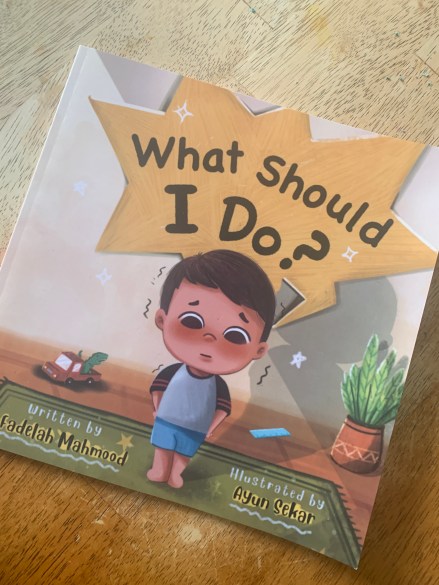
What Should I Do? By Fadelah Mahmood illustrated by Ayun Sekar

Standard
What Should I Do? By Fadelah Mahmood illustrated by Ayun Sekar

img_7640

Most rhyming children’s books are absolutely terrible, but this one made me smile as the format compliments the tone of the book.  Every child has done something they regret and every parent desperate to raise truthful children; what very easily could have been a heavy handed story, stays positive as little Yousuf breaks something and seeks advice from his siblings about what to do.  The book provides a lot of teachable moments and allows discussion and reflective referencing.  It also is a reminder to us parents to praise the honesty, and forgive the transgression.  The book is 24 pages and while text heavy at times, the fairly smooth rhyme and relatable story will be great for mature toddlers to kindergarteners.  Some of the vocabulary will possibly need some explanation, but the cute pictures provide clues and the messaging will come through.

img_7641

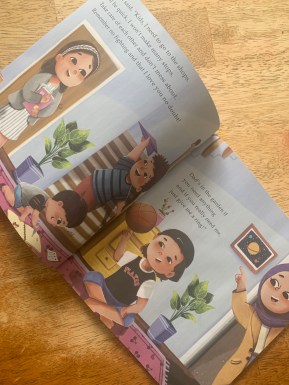
The book starts with Mum heading out to run errands and the kids being reminded to be nice, not to fight, not to make a mess, and that dad is in the garden and call if they absolutely need her.  Did I say it is relatable? Yeah, I say this at least once a week, but dad isn’t in the garden, and I don’t rhyme.

Yousuf amuses himself and one thing leads to another and a ceramic plate gets broken.  Not just any ceramic plate, his Mum’s favorite. He heads to his brother playing playstation for advice, and then to his other brother, and then finally to his sister before his mom comes home.

img_7642

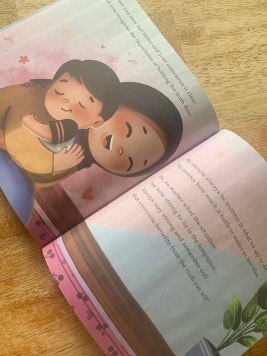
I’m sure for adults the story is predictable, but the solutions the siblings provide are similarly relatable and mom being grateful that honesty won out are conveyed on a child’s level that makes the book enjoyable at bedtime or in small groups.  It provides an entertaining and  clear reminder of how important telling the truth is.

There is nothing clearly Islamic in the text except the children’s names and the mother wearing hijab.  No hadith or ayats are mentioned in conveying the universal character trait of honesty.  The author and illustrator are Muslim and I do wish that there was a tie back to Islam either before or after the story, but alas there is not.

img_7643

I purchased my copy here at Crescent Moon where my initials ISL (Islamic School Librarian) will save you 10% and it is also available here at Amazon.

Amir’s Blue Jacket by Sarah Musa illustrated by Rania Hasan

Standard
Amir’s Blue Jacket by Sarah Musa illustrated by Rania Hasan

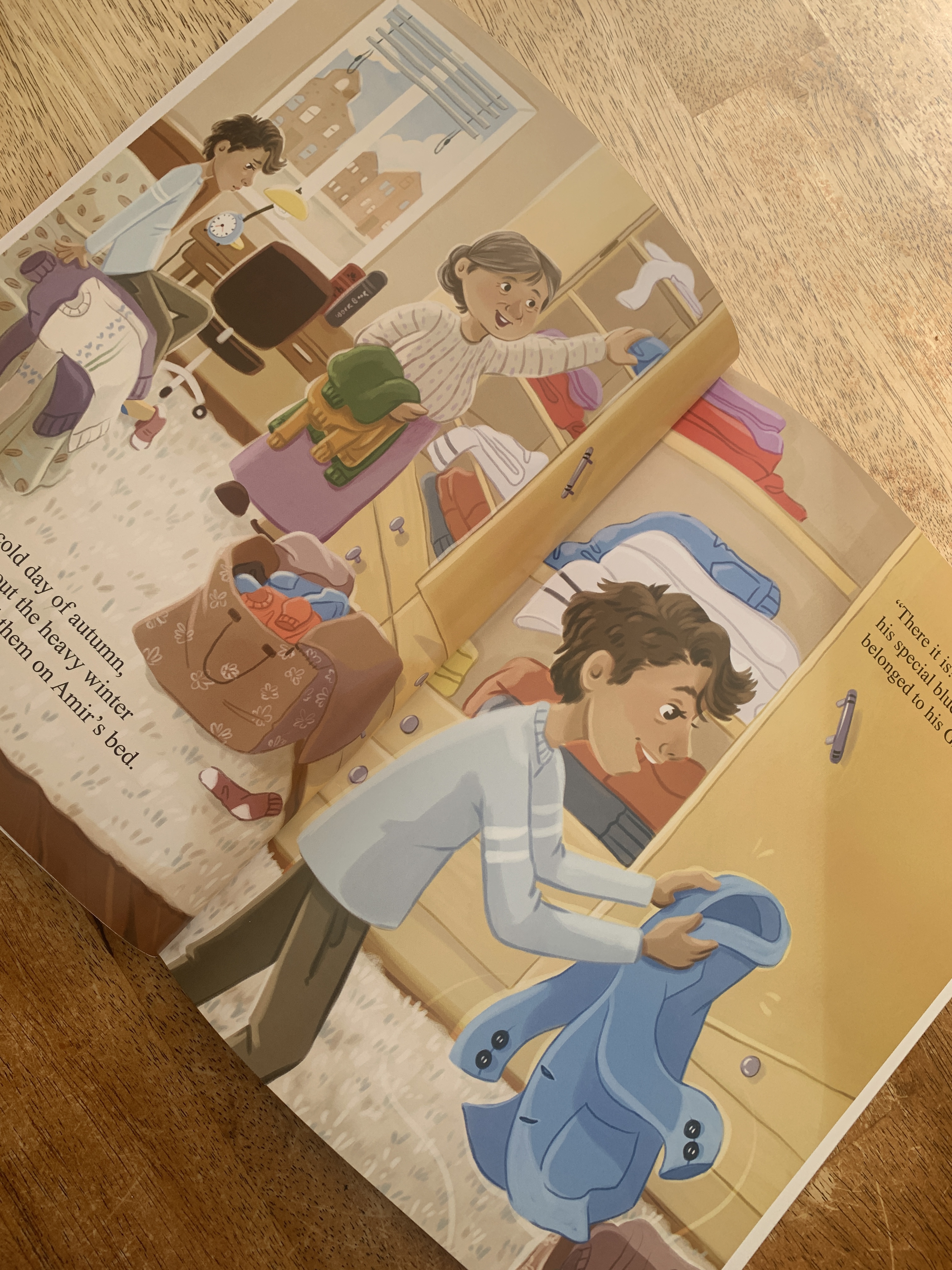
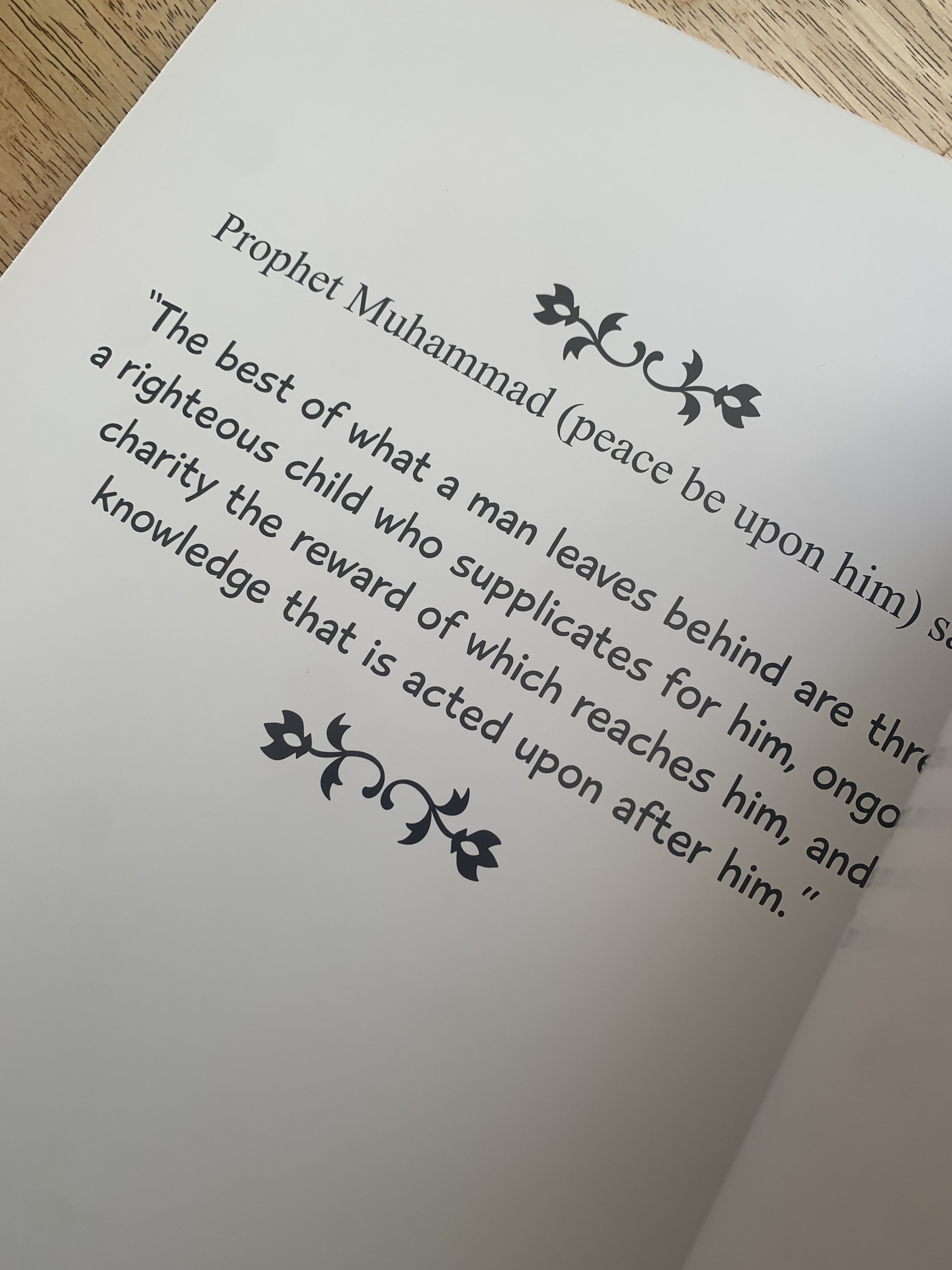
This heartfelt elementary picture book does a remarkable job of drawing the reader in to the emotions of the main character, his relationship with his grandfather, and imparting a moral message without being preachy. The illustrations are lovely on their own, but the way the muted tones convey the memories and illustrate the text really ties the book together. Whether it is for a larger story time or a one-on-one bedtime read, the book will offer discussion, comfort, guidance, and a little surprise at the end for Muslim and non Muslims alike. The slightly allegorical book does conclude with a widely known hadith (it is attributed to Prophet Muhammad saw, but is not further cited/sourced) and the family is clearly Muslim with their names mentions of Eid and God, and a hijab clad woman, but the book is universal and a lovely addition to any book shelf.

The book starts with Amir finding his Grandpa’s old blue jacket and recalling wrapping himself in it the day after his beloved Grandpa died. With it smelling like mothballs, he tosses it in the washing machine, but unfortunately when it comes out it has clearly shrunk. Amir is in denial, he says it fits fine and he has no desire for a new one. It is Grandpa’s jacket, and Amir is going to wear it, no matter how tight it is. Amir storms off to sit under the apple tree and recalls picking apples and making applesauce the year before for the whole neighborhood. Grandma shares that she used to keep grandpa’s cane but when someone needed it, she let it go.

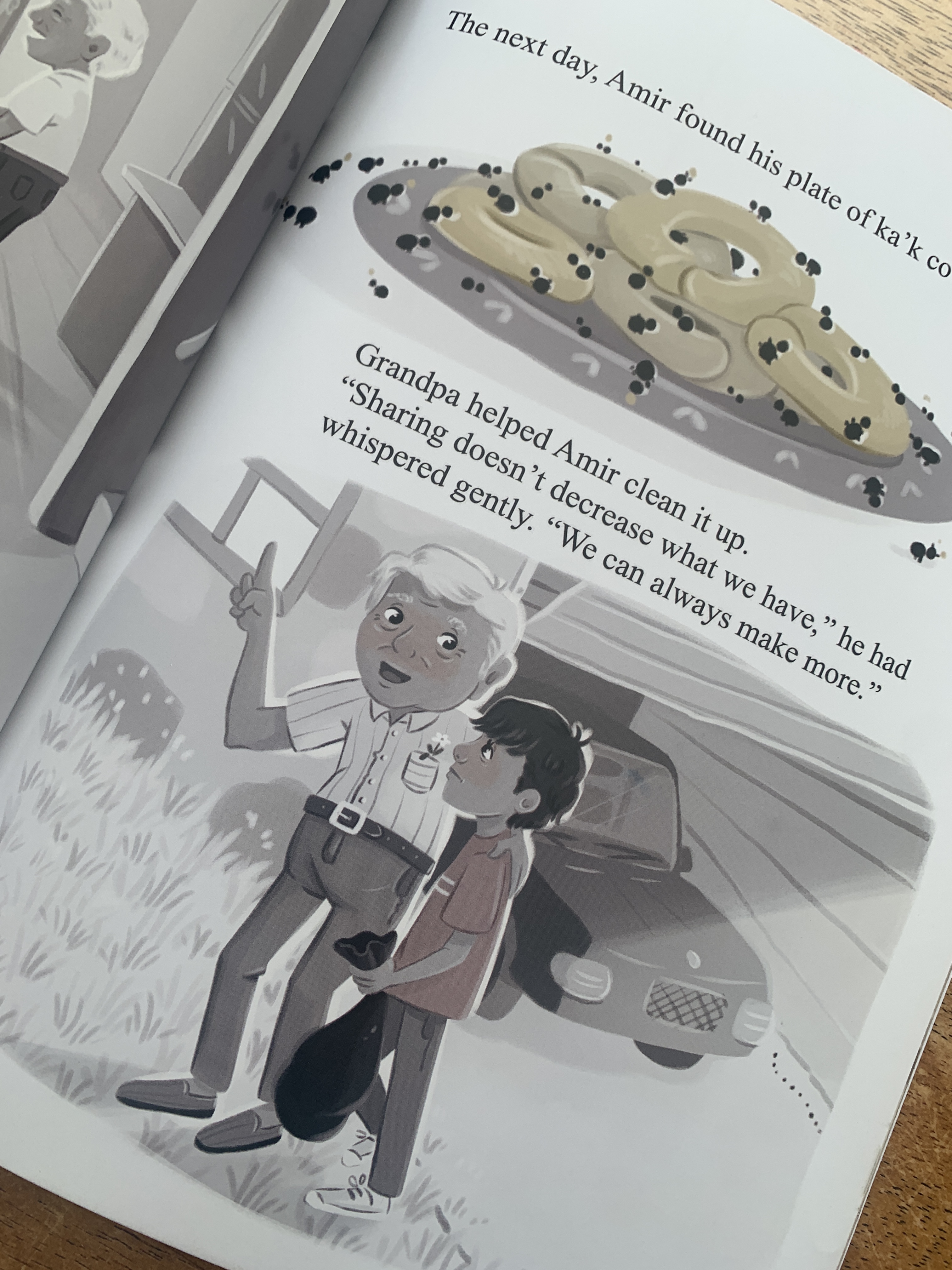
Grandma stirs another memory in Amir when she pulls the tray of ka’k out of the oven, of him trying to sneak a whole plate for himself only to have his hiding spot taken over by ants. When he is asked this time to share a plate, every step to the neighbors house reminds him even more of making the trip with his grandfather. Slowly he starts to realize that his memories are with him, not in his grandfather’s things, and Amir makes a decision that would make his grandfather proud, and (inshaAllah) give him more good deeds, even though he is gone.

The idea of sadaqah jariyah is understood through the story, and present in the hadith at the back, but it is never mentioned outright. Just as God is used, not the term Allah (swt). As Amir feels denial, frustration, and eventually peace, nothing is really told, it is shown, which really opens the book up to be a tremendous tool in sharing it with children and asking them to discuss what they understand, what they feel, and what they took away from Amir and his Grandpa’s blue jacket story.

The book is available through the publisher Ruqaya’s Bookshelf as well as HERE at Crescent Moon Bookstore where code ISL will save you 10%.

Tittle Tattle Talia: A Story about Gossiping by Salwah Isaacs-Johaadien illustrated by Zeyneb Yildirim

Standard
Tittle Tattle Talia: A Story about Gossiping by Salwah Isaacs-Johaadien illustrated by Zeyneb Yildirim

tattle

I really enjoyed this Islamic moral book about gossiping.  Over the years I’ve taught a few Sunday school lessons, class lessons, and even hosted story times on the Islamic cautions regarding backbiting, and honestly I don’t think kids really grasp how easy it is to commit the act and be a part of it.  They understand they shouldn’t do it, what the punishment is, and that it is bad, but I don’t know that the materials I’ve used and seen, have really connected with younger kids without a lot of supplementing; and this book highlighted that we really can be messaging better on a child’s level.  The pages are incredibly text heavy, but neither I nor my audience seemed to mind until close to the end, because of the comedy and relatability of the story up to that point.  I think the coach getting overly involved took it back to being a lesson from adults and broke the child perspective tone.  I do love that the kids that listen to the gossip are also held accountable, the importance of the coach’s message clearly is important, but the story telling quality would have benefitted from a few tweaks.  The illustrations are cute, unfortunately the font is not very appealing.  I do like that the salwat is given in Arabic, and that Hadith are mentioned in the text as well as in the backmatter with an author’s note.

img_2774

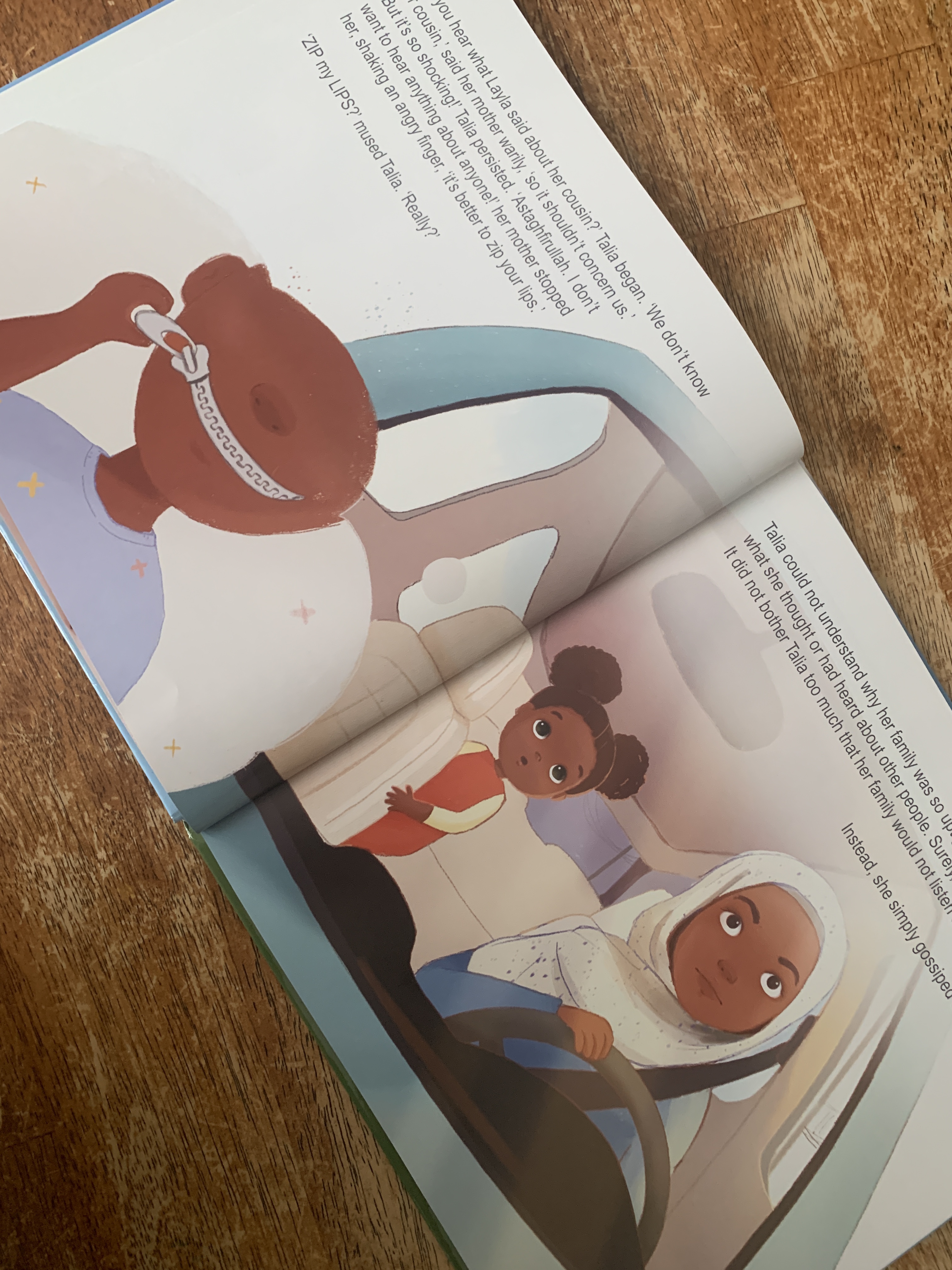
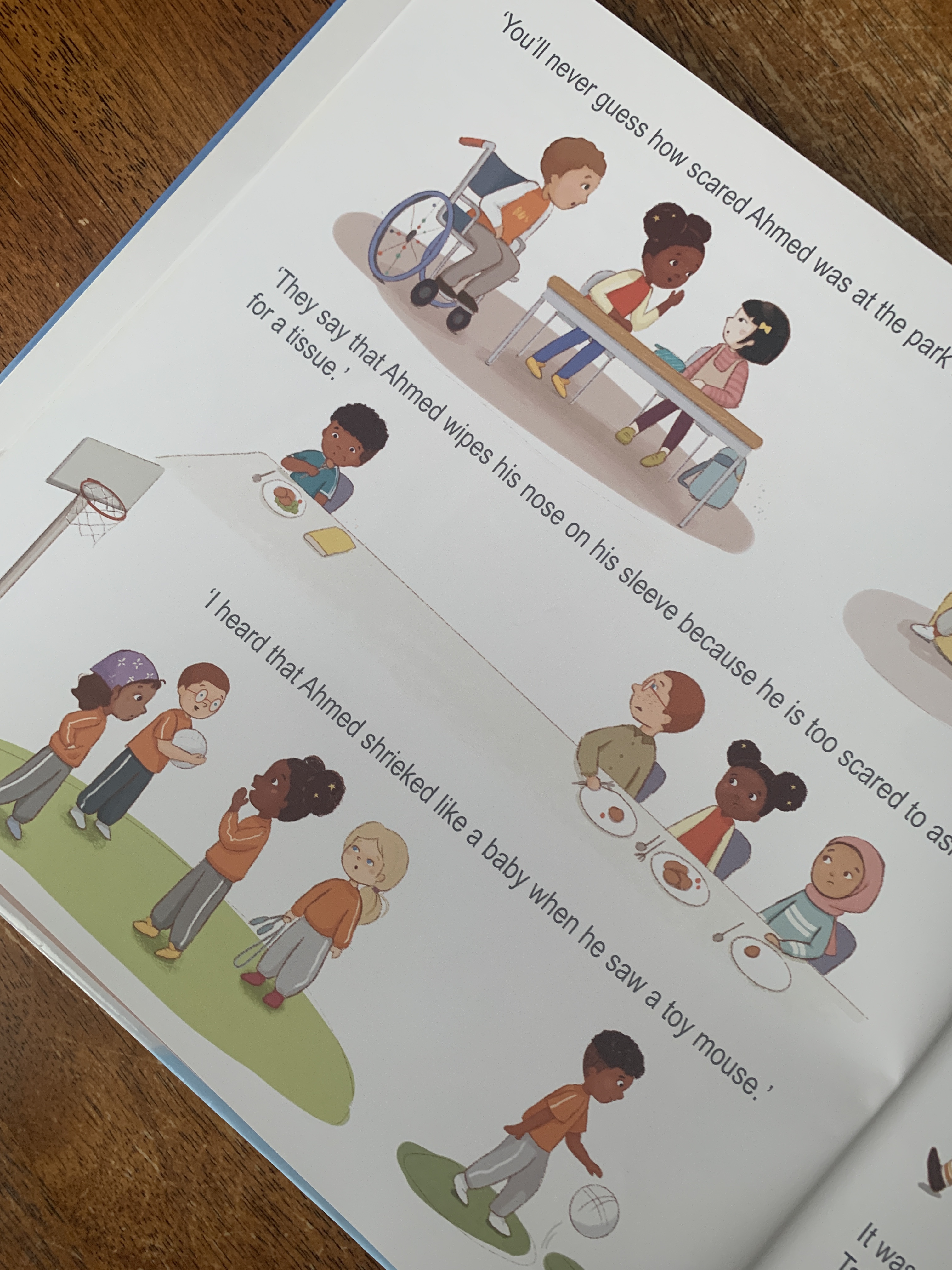
The story starts with Talia owning that she loves to share tales about the people around her, before telling one to her older sister.  Her sister tries to stop her and tells her that she needs to watch what she says or she might one day have to eat her words.  Talia wonders what eating your words means.  Similar situations occur between Talia and her brother, her mother, as well as her father.  Each time the story is reprimanded and a funny euphuism remarked upon and then giggled about by Talia.

img_2775

At school she does the same, telling stories, often at the expense of a boy named Ahmed, and the more interest the other kids show, the more outrages her tales become.  She soon starts telling them about everyone, and her classmates and friends grow weary and fearful that they might be next.

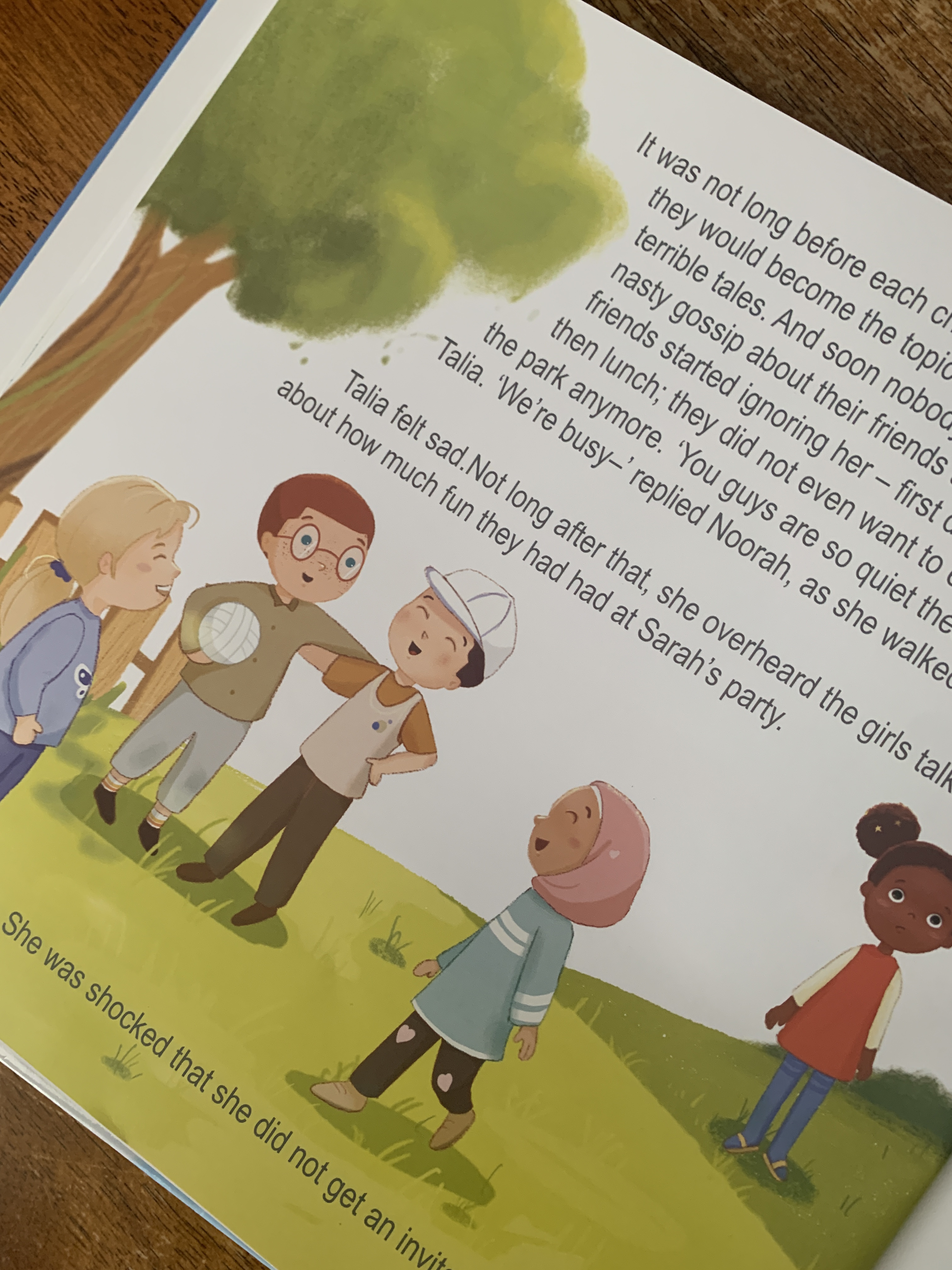
It all comes to a climax when Talia’s classmates say enough is enough and stop talking to her, and go as far as refusing to pick her when picking teams, and playing with her at all.  The coach concludes then that the match should be cancelled and Talia should apologize.  The cancellations seems extreme, and the forcing to apologize almost takes away from the emotional realization that her “tales” have become bullying.

img_2776

As Talia leaves, her classmates gather up and she sees Ahmed not joining them.  When she gets to her front gate, her friends catch up to her and apologize and acknowledge their roles in perpetuating the gossip.  Talia then goes to find Ahmed and get him some ice cream to apologize.

I don’t quite think the friends needed to apologize, I think they should have just realized their role, I think with discussion it might be clarified, but I worry that it defers Talia’s ownership of wrong doing, and could send some mixed messages.

img_2777

It is also a little pausing that Talia makes up a story about why a girl wears hijab, when her own mother wears hijab and she is clearly Muslim.  On the one hand, I like that it shows how ridiculous her tales have gotten, but it also could seem like she is falling for a stereotype as well.  There is good rep in the illustrations of those that cover and those that don’t, there is a child in a wheelchair and lots of shades of skin colors and hair types.  The text also contains traditional Islamic names and some that are not.

img_2779

The book helps our children to be better and the story engaging enough to be memorable, that while I wish it was cleaned up a better to strengthen the writing, I do find it a benefit on a shelf to be shared at bedtime, in classrooms, in story times and as a reminder to not participate in gossip or listen to it.

img_2778

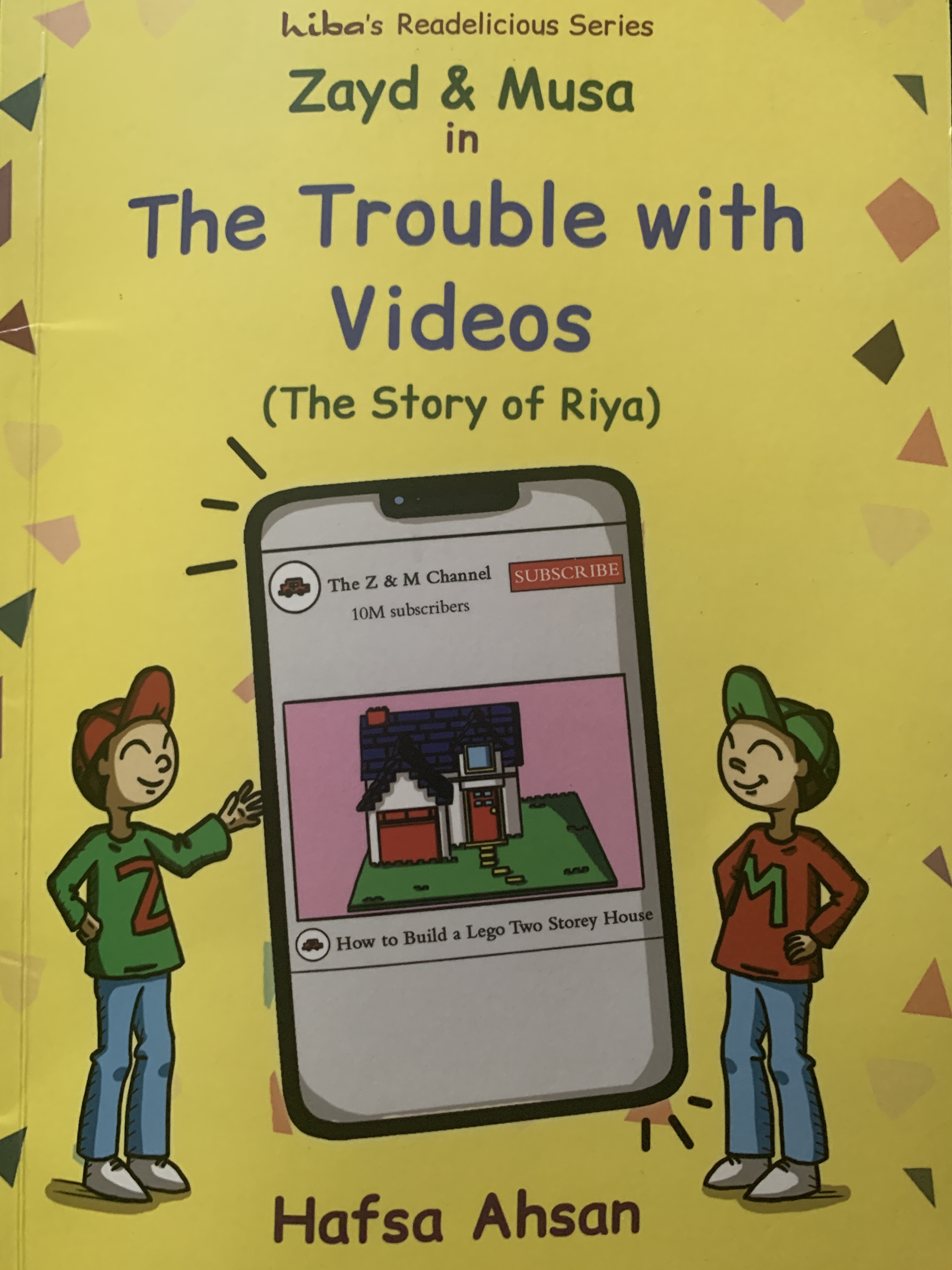
Zayd & Musa in The Trouble with Videos (The Story of Riya) by Hafsa Ahsan illustrated by Yusra binte Absar Kazmi

Standard
Zayd & Musa in The Trouble with Videos (The Story of Riya) by Hafsa Ahsan illustrated by Yusra binte Absar Kazmi

img_2466

This illustrated 64 page Islamic fiction chapter book is meant for early readers, but it was a good reminder for me as well.  Tackling the rarely covered topic of Riya (to do good deeds only to be seen by others), the book has been checked by a religious scholar (and his name included), features Quranic references at the end of the story, and the book is entertaining, relatable, funny, and adorably, albeit simply illustrated, by a child no less.  Like the first book in the Hiba’s Readalicious Series, there are a few grammar errors, and the Mommy/Daddy references read childish, but the story has interest, heart, humor, and both myself and my children found the book engaging on its own while also lending itself to worthwhile discussion around the dinner table.

SYNOPSIS:

Twins Zayd and Musa don’t have a smart phone and their friend Isa not only has one, but also has a YouTube channel.  Isa’s desire for likes and followers gives Zayd and Musa a variety of feelings, and with the context of their involved parents, friendly neighbor, and their own conscious, they learn about riya, and that often things in life are not just good or bad, but one’s intention that matters.

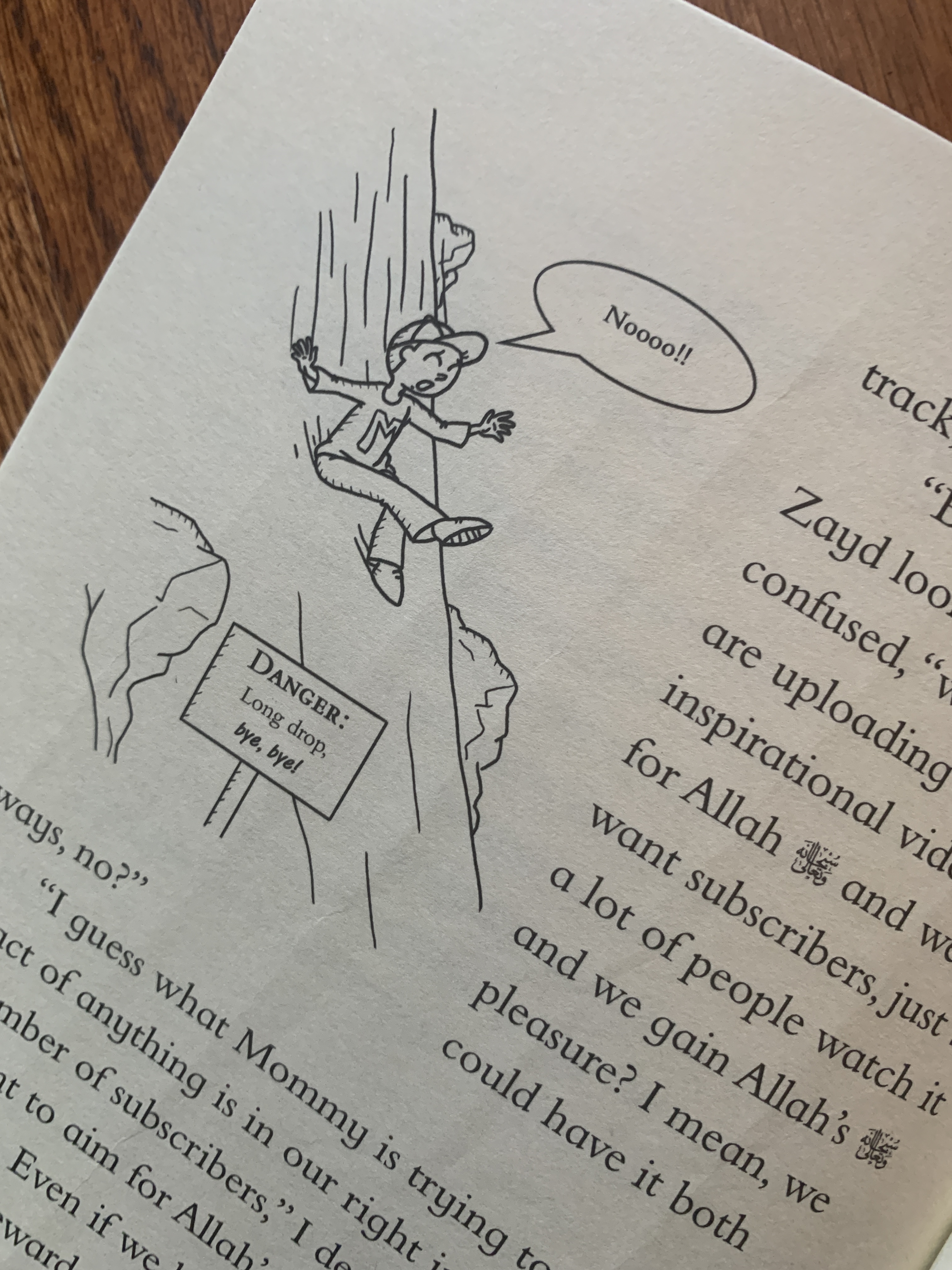
The illustrations not only illustrate the text, but also include talking bubbles with additional comedy or facts about screen usage, internet availability and study results as pertaining to the topics raised.

WHY I LIKE IT:

I love that the topic isn’t just handed down from the adults in the story, the boys and their point of view flesh it out and make it so the reader will actually understand the concept and hopefully recall it later in life.  The humor makes it relatable and the lessons while preachy, it is that type of book, are not presented as good/bad, right/wrong, it shows different scenarios, and how we all must constantly check our intentions, not just the “antagonist” of the story.

FLAGS:

None

img_2462

TOOLS FOR LEADING THE DISCUSSION:

The book lends itself to discussion with older children than the intended audience.  While the book is meant for say a six year old, the discussion using the examples in the book, at least for my children, was much more relevant to the middle schoolers.  Naturally, teaching early readers about intention is still a valuable lesson, but I’d encourage 10 and up to also read the story, so that discussion from their perspective can occur.  It is an easy read for older kids, but a beneficial one- just give them a heads up that the kid parent relationship is notably cringe and babyish, the lessons however are food for though.

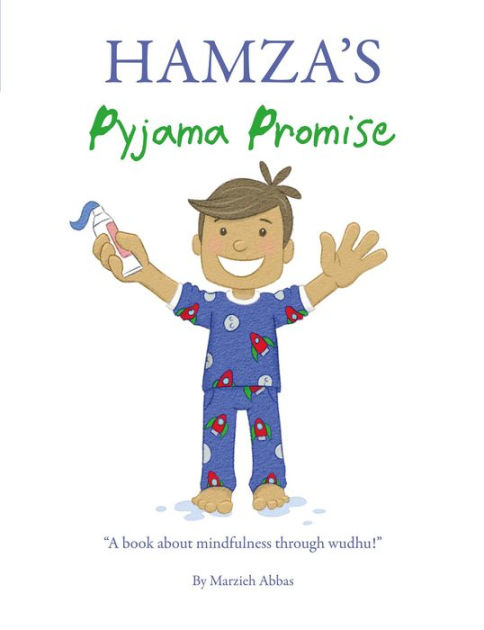
Hamza’s Pyjama Promise by Marzieh Abbas

Standard
Hamza’s Pyjama Promise by Marzieh Abbas

hamza

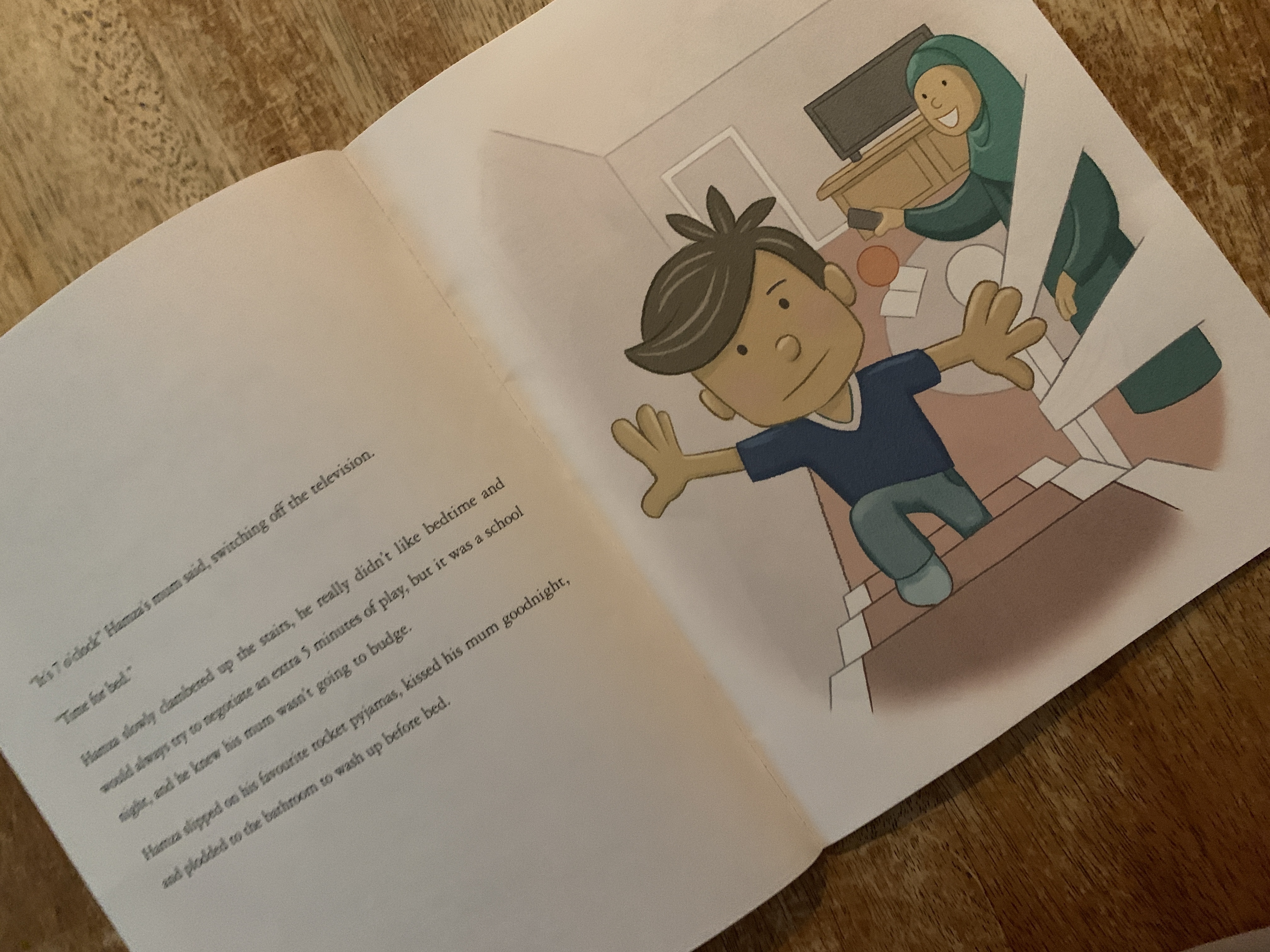
When I flipped through the book standing on my porch as the delivery truck drove away, I groaned a little internally at the simple illustrations, terrible font, large amount of text on each page, and the four fingered boy at the center of it all.  Alhumdulillah, I gave it a chance and ended up really liking it.  The book stayed with me, then I read it to my kids and it stayed with them.  Then I mentally made a checklist of all the teachable ways this book could be used in an Islamic school classroom, story time presentation, bedtime reading, and even just as a regular reference point.  This Islamic fiction book packs a lot of information in while connecting to religious concepts kids are most likely familiar with and silly points that will make five to eight year olds giggle.
img_2180

The book opens with verse 65 from Surah Yasin in English meaning of the translation and the Quranic Arabic.  The story then begins with it being bedtime for young Hamza and him running up the stairs to put on his rocket pyjamas.

img_2181

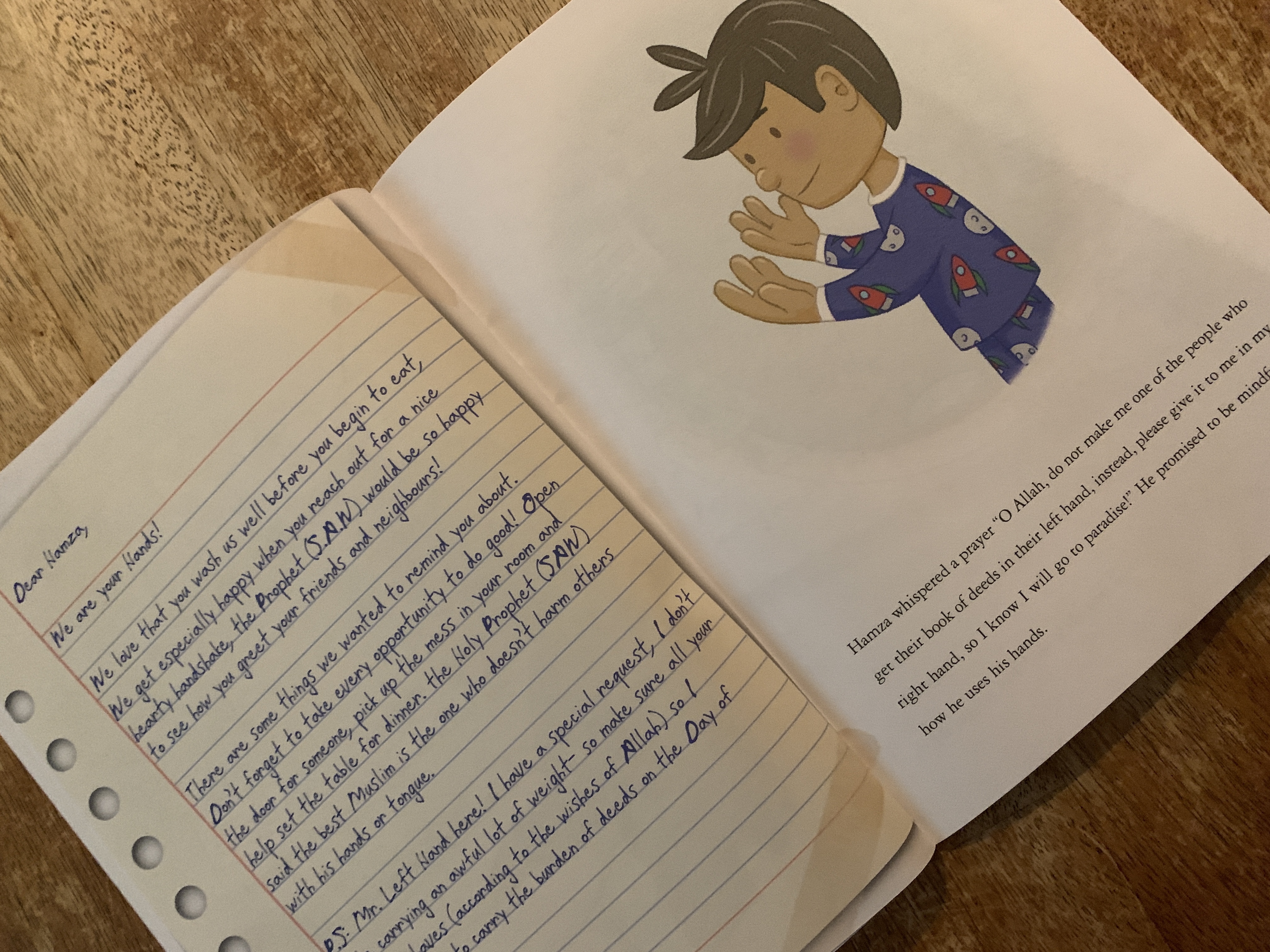
When he brushes his teeth he looks in the mirror and finds notes hanging all over addressed to him.  The first letter he reads is from his hands reminding him to wash them before he does anything and reminds him Prophet Muhammad (SAW) “said the best Muslim is the one who doesn’t harm others with his hands or tongue.”  It then mentions that the left hand doesn’t like carrying weight so use your body to ensure you get your book of deeds on the Day of Judgement in your right hand.

img_2182

The book continues with eyes, ears, tongue, nose, and feet writing messages urging Hamza to cover his eyes when something inappropriate pops up on the screen, or protecting his ears from listening in on other people’s conversations.  Every point of how to act is connected to an ayat in the Quran or Hadith of Rasullallah.

img_2183

After reading the letters, Hamza makes wudhu, says a dua before bed which is shared in English, promises to take care of the body Allah swt has blessed him with and then asks the readers what their pyjama promise is.

The book concludes with pictures and captions of Hamza’s bedtime routine of brushing his teeth, reflecting on his day, making wudhu, reciting tasbih (SubhanAllah 33 times, Alhumdulillah 33 times, and Allahu Akbar 34 times), reciting Ayat ul Kursi, and sleeping on  your right side.

img_2184

There are no sources in the book, but most seems “general knowledge” so to speak.  And for as preachy as the book may sound in my review, it really isn’t.  The character’s voice or rather the body parts’ voices are relatable and light.  I think young ones enjoy that they are hearing things they have probably heard before and making a connection to them being repeated in a new way.  Having your body parts talk is both silly and sobering as the target age group can imagine it happening.  It really reminds kids that their actions are seen and recorded, in a non scary or overwhelming way.

I look forward to sharing this book in library story times, masjid story times, and regularly with my own children.  The publisher is a Shia press, but I don’t think any Muslim would find anything controversial in the book (please note though I am not highly educated in these things). And while American’s may find the spelling of pyjama hard on the eyes, with the exception of that one word the book is not region specific or difficult to connect to for global readers of any age.

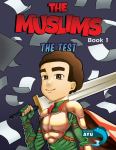
The Muslims: Book 1: The Test by Ahmad Philips

Standard
The Muslims: Book 1: The Test by Ahmad Philips

the muslims

This is the first anime comic book in an eight book series aimed at early elementary readers.  Often books have lessons, this however, simply presents as an illustrated moral.  There is a situation that contains the lesson that one should always try their best for the sake of Allah swt and that is about it.  The knowledge isn’t tested a few additional times or in different situations, it is just 22 pages to illustrate the concept of doing things for the right reason, in this case studying after a failed test.  There isn’t anything wrong with the bright colorful book, the brother sister duo read authentic as they try and recall Islamic teachings, and get each other in trouble by accident, the diverse family is supportive and understanding, it just seems that it would apply to a specific lesson in a home or classroom and then sit on a shelf unasked for and not very memorable.

img_2858

The book starts with seven year old Hani trying his best on a multiple choice test that he didn’t study for.  He battles the personified Quiz Monster to no avail and on the way home from school confesses all to his little sister, Huda.  She reassures him that Allah swt doesn’t give us more than we can handle and agrees to not tell their parents.  Hani plans to tell them himself, inshaAllah.

img_2859

When they get home though, she slips, and spills the news to their mom.  Their dad comes home soon after and everyone knows.  The parents he imagines will turn into evil monsters themselves, but rather they laugh and remind him that he should have the intention of pleasing Allah swt in all things, so that he will assuredly never fail.  That if he makes that his goal, then he will inshaAllah find success.  Hani decides that he isn’t going to be careless in his studying and keeps focused.  He has a nightmare that he studies the wrong material, but alhumdulillah it is just a dream and he is ready, inshaAllah.

img_2860

The Islamic lesson and the situational allegory isn’t super clear, and I feel some discussion will need to take place to connect all the dots and convey the lesson in a way to be succinct and memorable.  Had he maybe made dua or intention before he studied, then the message would have been put in to practice, not just something the father talked to him about.  It is admirable that Hani was honest, that he didn’t try and hide is score, which I wish would have been praised.  Additionally, a little resolution between the siblings to show all was forgiven would have been nice.  The mom wears hijab even in the home, and there is a glossary at the end as well.

The Olive Tree by Elsa Marston illustrated by Claire Ewart

Standard
The Olive Tree by Elsa Marston illustrated by Claire Ewart

olive tree


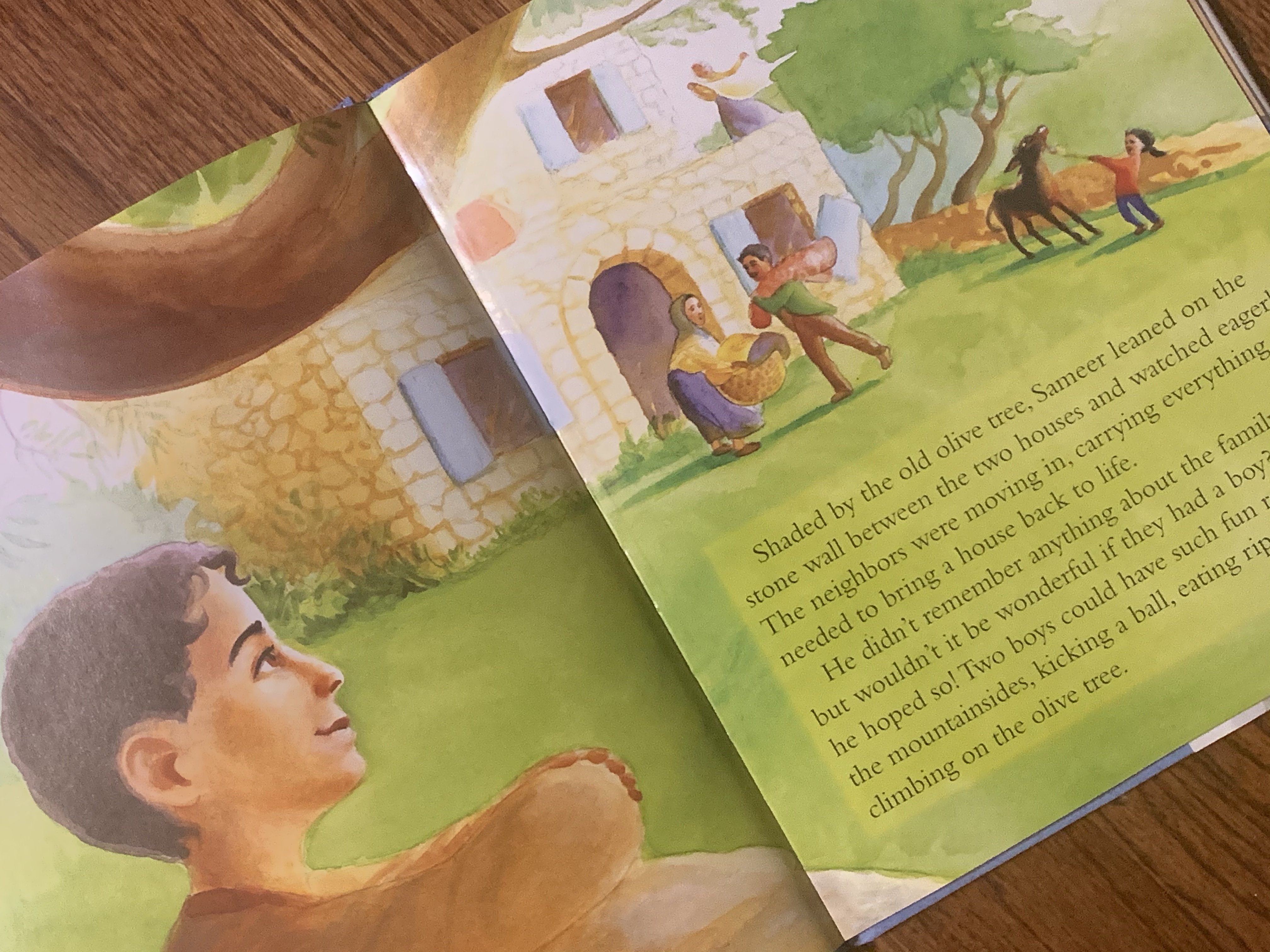
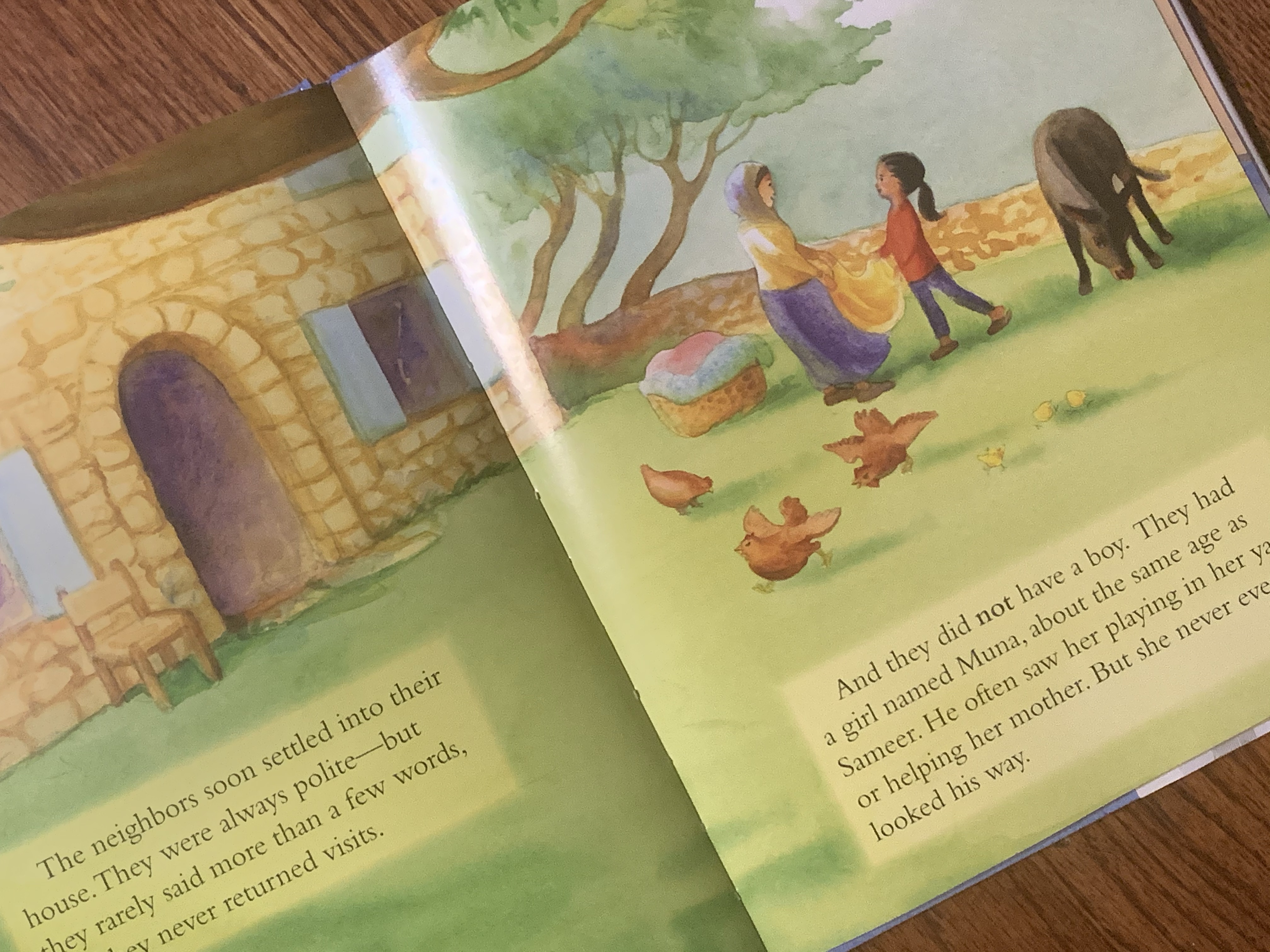
Set in Lebanon, this 32 page book for kindergarten to second graders uses the ever important olive tree as a point of contention between two neighbors. Muna’s family moved away during the conflict because they were not like the others in the village, and while they were gone, Sameer’s family cared for the olive tree on their neighbor’s property, and collected the olives that fell on their side of the wall. But now that the neighbors have returned, Sameer is not only disappointed that they don’t have a boy his age to play with, but also clashes with Muna when she says that he shouldn’t take their olives. By the end of the book, olive branches of peace will be referenced and hope hinted at in this brightly illustrated book with a lesson.

img_1647

I like that why Muna’s family left is not abundantly clear, saying that “For many years the house next to Sameer’s had stood empty. . . that the family who lived there had gone away during the troubles because they were different from most of the people int he village.”  Lebanon is a diverse place and the illustrations seem to show both Mom’s wearing head scarves, the text does not detail if they are unlike each other because of religion, or culture, or some other reason, and I kind of like that it is left vague so that children learn in the end perhaps, it doesn’t matter.  

img_1648

When the family moves back home, Sameer watches them and recalls the ways his mom prepares the best olives in Lebanon.  The neighbors are polite, but not friendly.  They don’t ever say much and they don’t return visits.  One day when the ripe olives have fallen on the ground, Sameer heads out with his basket to collect them.   Muna, who has never looked over at Sameer, watches him and tells him that they are her olives, and that the tree has been in her family for a hundred years.

The two bicker about who has rights to the olives on Sameer’s side of the wall and in anger, Sameer dumps his basket of olives on Muna’s side and walks off.  After that, no one on Sameer’s side collects the olives on the ground.  One night there is a storm and the olive tree and part of the stone wall are destroyed.  The adults gather to survey the damage, but walk off without saying anything.  The two children are left to decide what to do next about their beloved tree, and their relationship with one another.

img_1649

I like that the resolution is subtle, but thought provoking and that the adults don’t seem to interfere too much.  I can’t imagine that they don’t have opinions about their neighbors and the olives, but the book stays on the children and the assumptions, stubbornness, and unsaid words that have created such a divide, and must ultimately be resolved as a result.


Zayan Unlocks the Quran by Najia Syed illustrated by Rizky Dewi

Standard
Zayan Unlocks the Quran by Najia Syed illustrated by Rizky Dewi

img_8703

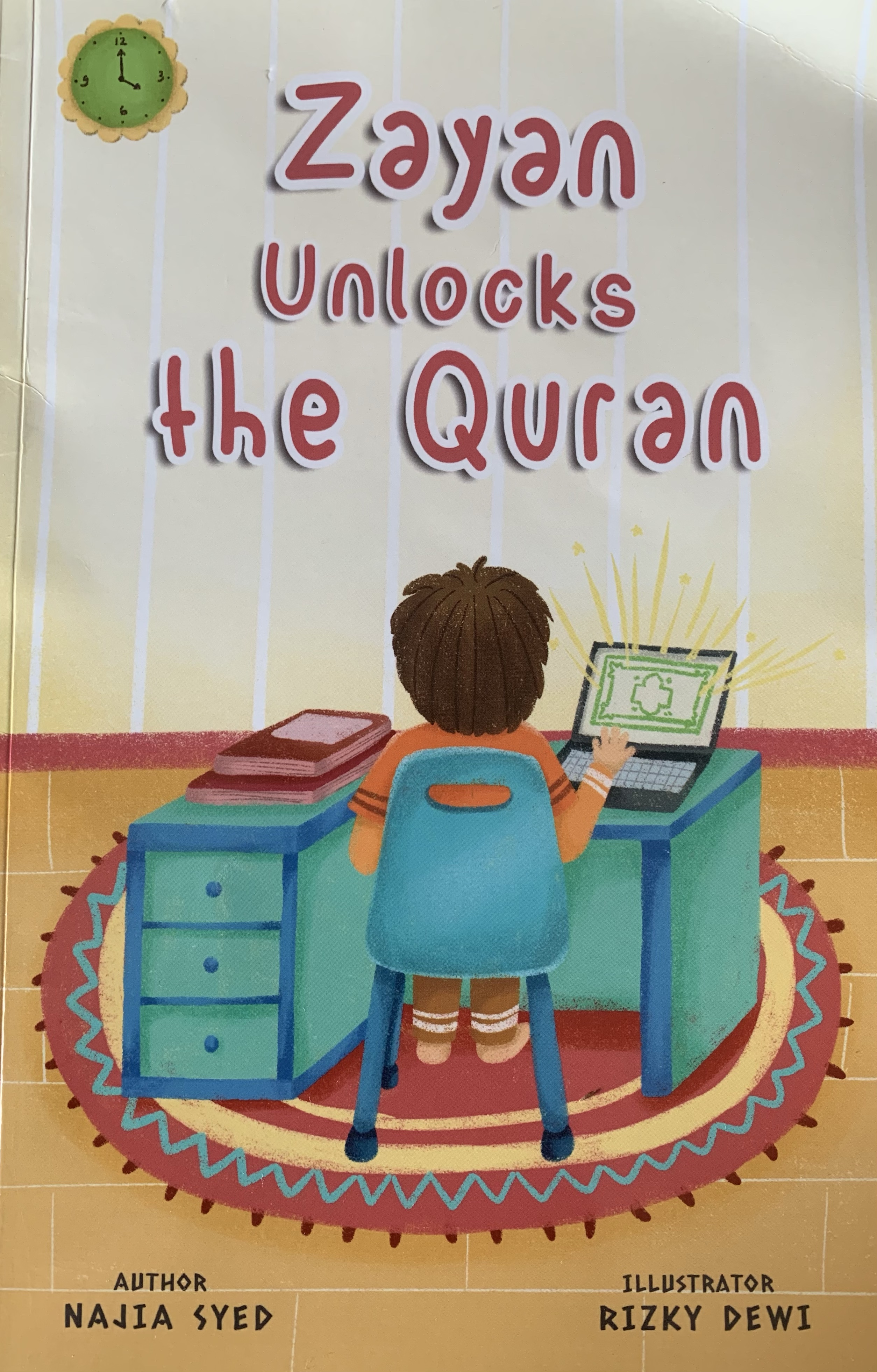
There is a lot of good information and relatable lessons in this 45 page didactic book encouraging children to get to know the Quran, and to not just recite and memorize it, but the presentation just doesn’t do it any favors.   I can’t imagine that seven and eight year olds are going to identify with the five year old protagonist learning how to add and getting in fights over crayons at school, nor that five year olds are going to have the patience for the explanations and understand the story.  The word story in and of itself is a stretch, it is a bunch of ayats from the Quran that are explained to teach young Zayan lessons that reflect his daily life and how he can succeed and inshaAllah earn jannah in the akhira.  The intention is really good, I just wish there was a bit more plot and that the book’s appearance made more sense.  Having the book look and feel like a leveled reader on the outside, but be completely tiny text filled, save a few entire page generic full-color pictures and green bannered meaning of the Quran’s translation, the book and its seven chapters are intimidating.  Space it out, make it an early chapter book in look and feel, revise the premise that a child has no idea what the Quran is, and is completely shook by learning from the kind and patient Qari Sahib that the Quran has lessons and rules to make us better.  It is a stretch to get the book going, it has some wonderful points along the way, and leaves a warm feeling when completed, but I can’t figure out the intended readers age, nor can I imagine many kids will willingly picking it up.  Like the character in the book dreading Quran class, I’m afraid getting kids to read this would similarly be met with dread, which is a shame, because the lessons are strong, the story and presentation just need a bit of polishing.

img_8704

SYNOPSIS:

Zayan does not want to leave his toys for Quran class which he attends one-on-one on the computer with his teacher, Qari Sahib.  Reading the Arabic is hard and confusing, he doesn’t understand what he is reading and he would rather be playing.  He has just built a fort and is afraid if he leaves it for class, his sister will destroy it, (over the first few pages I was convinced his sister was younger than him, and a little confused to learn that both are older).  When he begrudgingly logs on, Qari Sahib can tell he is upset and tells him that being kind to his siblings is a good deed and that many good deeds are in the Quran.  Zayan is shocked.  Qari Sahib offers to read some ayats to him and he can just listen before they resume reading Surah Fatiha.  Zayan is blown away at how pretty the Quran sounds when recited and his eyes sparkle when he learns that the Quran contains directions to get to jannah.

Chapter two explores how the ayats in the Quran about kindness can relate to Zayan’s life.  Being kind to your parents, speaking in a low voice, and not making fun of each other.  Ayats are pulled and connections made so that Zayan can inshaAllah implement his new knowledge in his life.  Zayan returns to playing after class and tests out what he has learned.

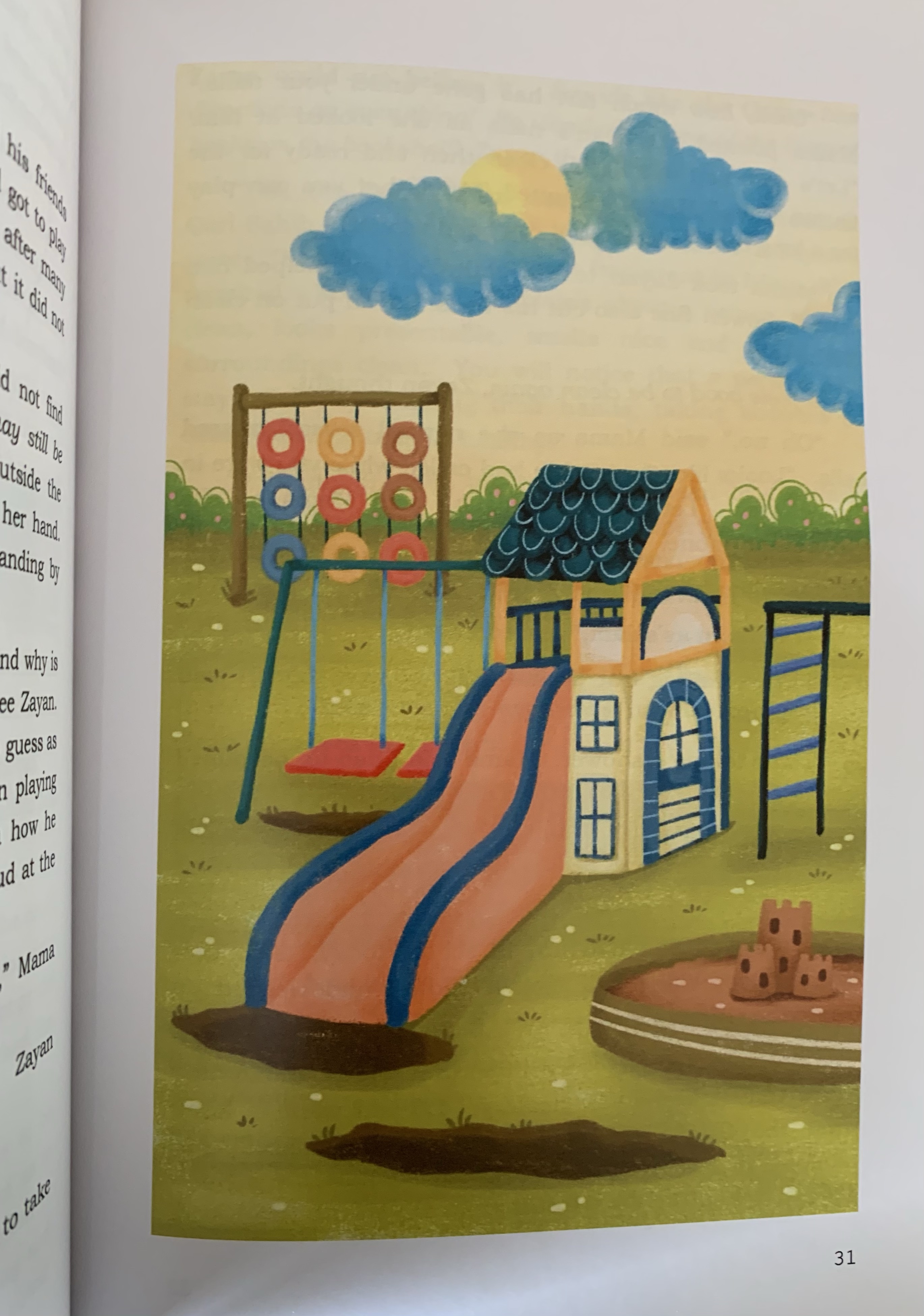
This pattern continues with chapter three discussing respect, then anger and forgiveness, cleanliness, and honesty.  The parables come when he doesn’t listen to his mother about finishing his grapes, a fight at school involving crayons, playing in the mud and lying about feeding his pet cat. At one point he remarks that much of what his teacher explains to him from the Quran are things that his mother also tells him, almost like she has read the Quran.

img_8705

WHY I LIKE IT:

The first few lines are so relatable.  The dread of the child putting the entire family on edge, it is real.  I love that Qari Sahib is kind and gentle and patient.  When the mom mentions things to him about Zayan he finds ways to talk to him about it, without lecturing or reprimanding.  I think the Qari Sahim is the real hero in the book.  I particularly like when he went in to detail about our responsibility to care for animals.  I’m glad Zayan has him to guide him because clearly his parents have failed.  Yes, I’m being judgey.  The kid doesn’t know what the Quran sounds like, doesn’t know why he is being forced to read it in Arabic, doesn’t know what it even is about? I’m not so much judging the fictitious parents, more the inconsistent writing.  If Zayan doesn’t know that his mom has read the Quran how does he know what jannah is and who shaytaan is?

FLAGS:

none

TOOLS FOR LEADING THE DISCUSSION:

Obviously not for a book club selection, but I’ve been trying to figure out if maybe my five year old and I could discuss some of the chapters together.  I wouldn’t want to read the whole book because my child loves the Quran and doesn’t dread reciting, I have five children, I know tomorrow it can change, I’m not naive, I’m just saying for him particularly right now, it isn’t a chore and I think if I presented it as a boring thing, he will start to mimic that frame of mind (my older kids know not to ever bash certain teachers, concepts, spiciness of food etc. in front of their younger siblings for this very reason).  But, while some of the lessons are really well thought out, they are just too much for a five year old.  The pictures don’t engage and the text overbearing.  I asked my 10 year old to read it and he found it really childish and didn’t finish.  If the book works for you, alhumudillah, I’m glad, it is a benefit, I wish it worked for me too.