Tag Archives: Marzieh Abbas

Our Neighborhood: Radiant Ramadan by Marzieh Abbas illustrated by Anoosha Syed

Standard
Our Neighborhood: Radiant Ramadan by Marzieh Abbas illustrated by Anoosha Syed

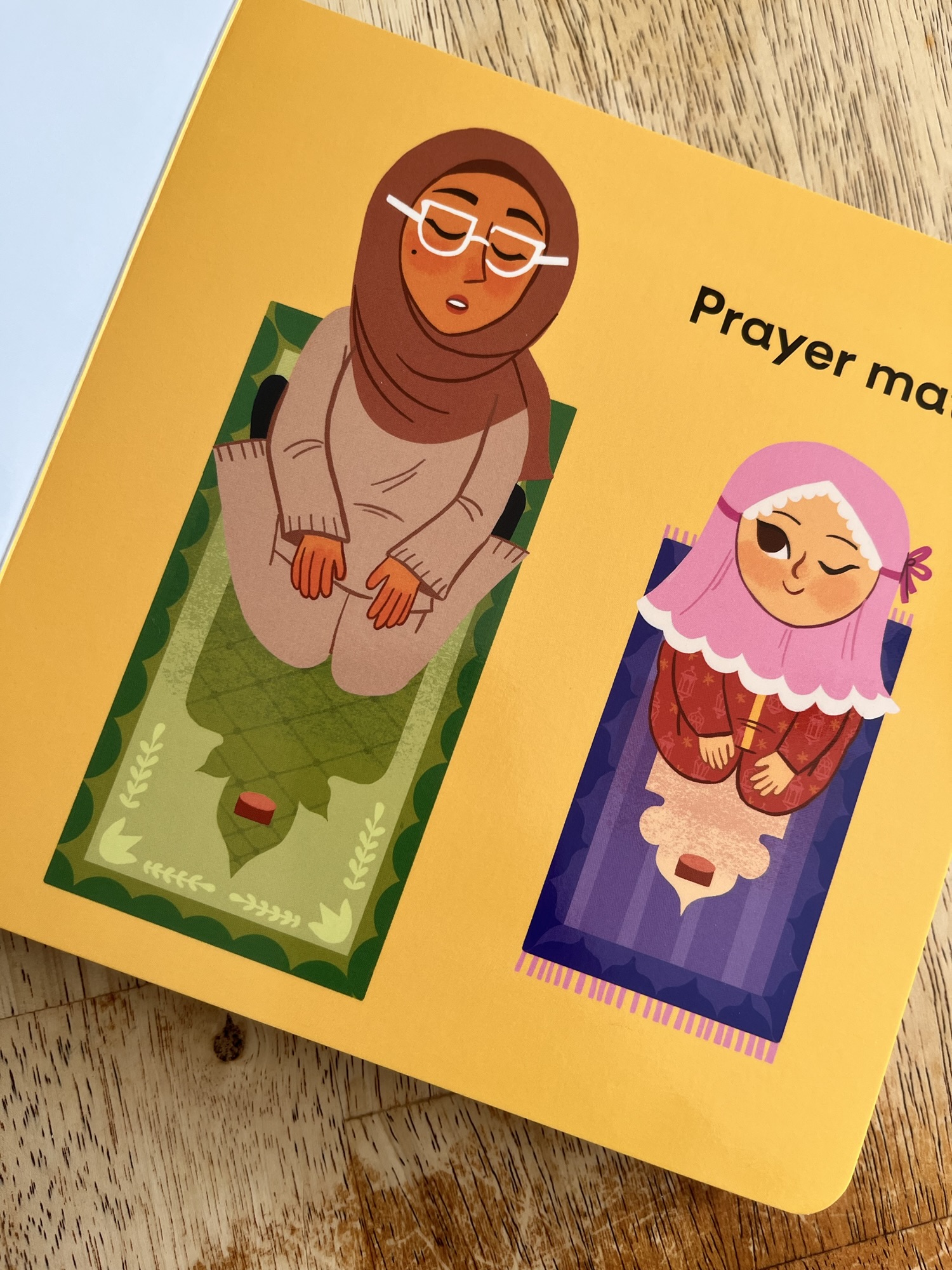
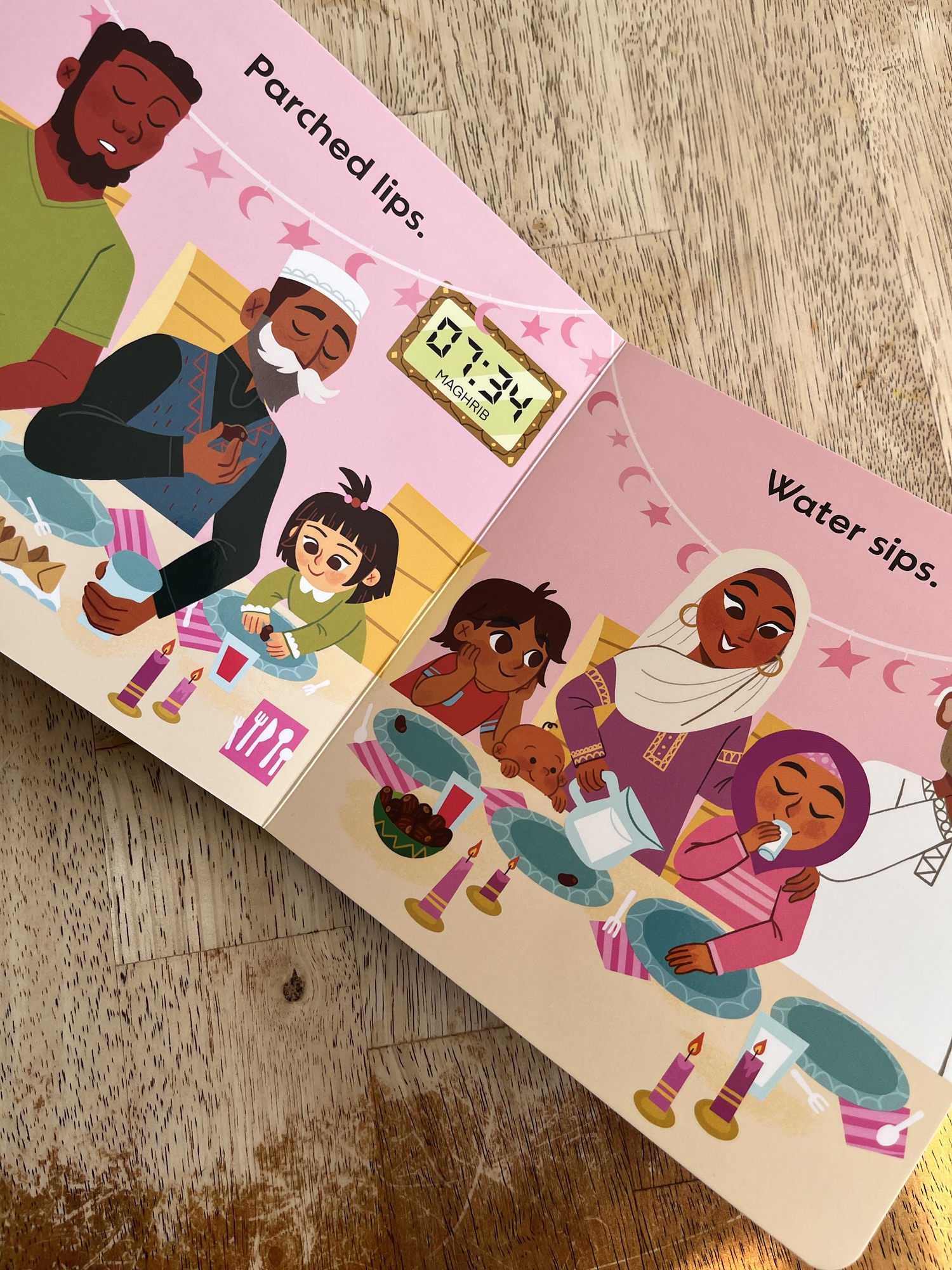
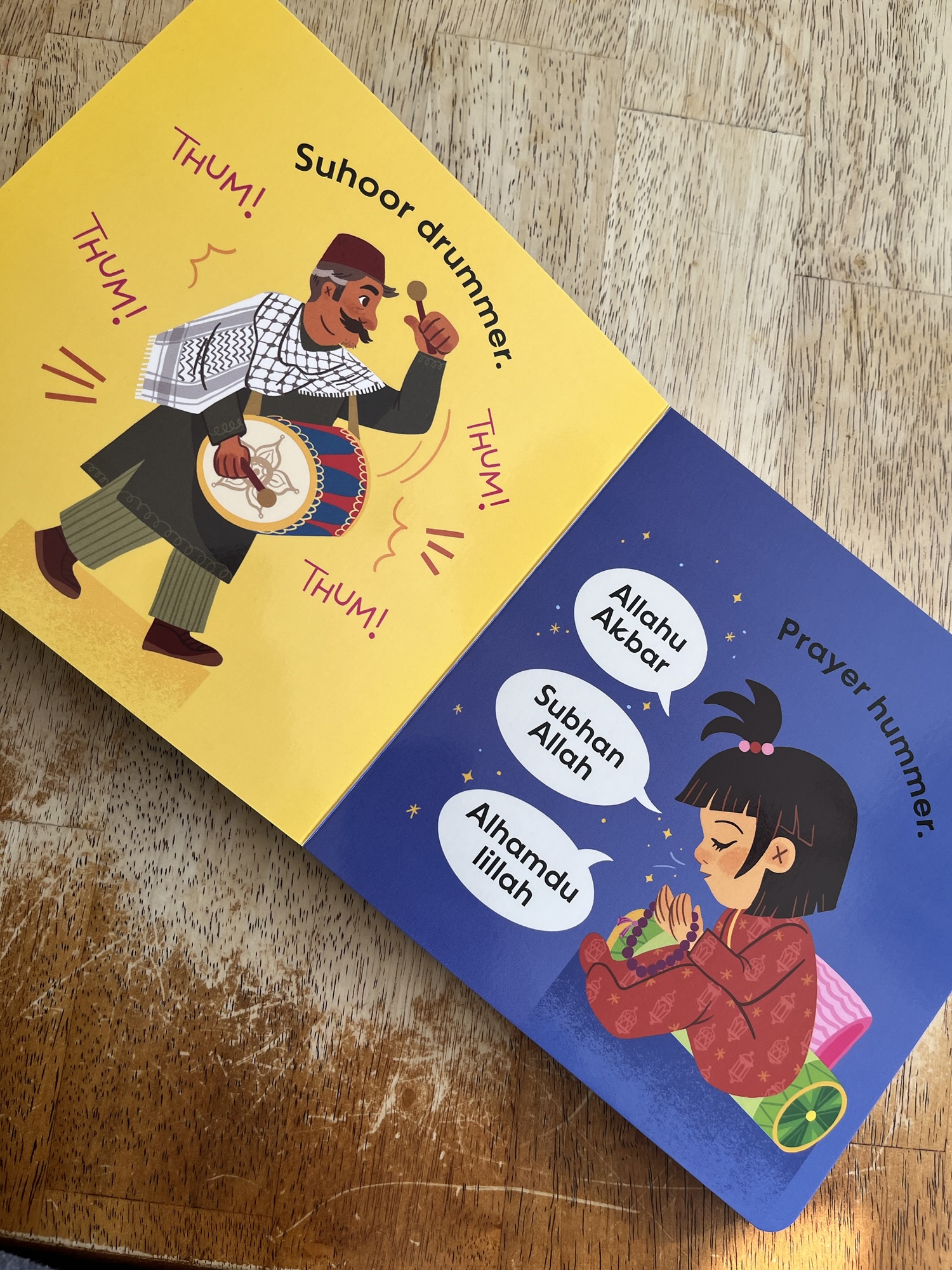
This adorable 26 page board book rounds out the Celebrating Islam representation in the Our Neighborhood Series and the simply rhyming words do an excellent job of conveying the joy, worship, togetherness, and daily aspects of the glorious month. Some of the lines feel a bit forced, but I really enjoyed the size and tone of the book. The illustrations are equally well done with a keffiyeh shown on a drummer, different skin tones on the characters, and smiles throughout. It is perhaps worth noting that the prayer page does seem to have the Shia rock that is used, I missed it initially thinking it was just a design on the prayer mat, but it is hard to unsee once it is pointed out. The other Islamic books in the series by the same author and illustrator are Friday Fun and Excited for Eid.

Aarzu All Around by Marzieh Abbas

Standard
Aarzu All Around by Marzieh Abbas

I was hesitant starting this 384 page middle grade novel in verse, because the stereotype of having to disguise yourself as a boy to make things happen, seems like a western performative troupe that reinforces stereotypes, and has been done a fair amount in literature.  Pushing down my disdain, I opened the book to numerous pages of cricket terminology and rules, which further served as a barrier.  I do not understand the info dumping, literally, at the start of the book, and to top it all off it is not needed.  The book is blurbed as being a cricket loving, girl dressing as a boy in a patriarchal society, but really those are the most forced aspects of the all over the place narrative.  Cricket is underdeveloped and her actually playing is very minimal and lacking. Aarzu disguising herself as a boy is a blip that she admits to a few pages after she gets the job, and thus the story that remains is an orphaned girl with a mean uncle trying to find a way to help pay for her younger sister’s medical bills. Which isn’t a bad story it is all just so very disjointed.  And the verse is not written well, there are no beats or flow, it just seems to be a few decent poems in a sea of jumbled ones.  About 40% when the Islam starts to shine, I felt a brief connection to the book and the characters, but the loose threads and telling over showing, found skimming the pages to find out if the sister survived, if Aarzu got in trouble, and how cricket fit into it all.  The weak climax and sloppy resolution, combined with the premise, marketing, and info dumping, makes me recognize that I am not the target audience as a cynical Pakistani American reader, but truly makes me wonder who is.  I don’t know that the words on the page or the story at hand are going to resonate with middle graders.  I appreciate that Islam and culture are separated, that the mean uncle is confined to him and him alone, not a label on Pakistani men, but it feels like the editor took a day off or didn’t want to help the author make the story cohesive, which is unfortunate.

SYNOPSIS:

Aarzu and her younger sister have come to live with her poor maternal aunt’s family in Karachi after her parents are killed in an earthquake.  She is treated like a servant by the family, not allowed to watch cricket let alone play, and her government public school is hardly a challenge.  When Sukoon’s kidney failure worsens and dialysis is needed, as they wait for a kidney transplant match, Aarzu decides to find a way to make money.  She starts frying onions and selling them at the local market, the labor intensive and odorous job helps, but not enough.  When a nearby bungalow preparing for a wedding, needs laborers, her friend Nazia encourages her to cut her hair to look like a boy and apply.  Lying to her aunt about where she is, she spends her time after school getting to know the kids that live at the bungalow, confessing that she is a girl, and playing cricket.  The money helps her sister and things are starting to look up, until the truth comes out, Sakoons health worsens, finances at home hit rock bottom, and friendships frazzle.  Luckily though SPOILER the wealthy family likes her and solves all her problems and bribes the right people for her to make the cricket team.

WHY I LIKED IT:

Some parts, mostly the Islam, really spoke to me. I love that distinctions were made between religion and culture, that she taught the wealthy girl how to pray, that Aarzu is Muslim and loves her faith and relies on her relationship to Allah swt in handling every aspect of her life. The rep feels real and sincere and while it made me force a friend to read the book, it also highlighted how weak the other aspects were.  We, the reader, see so little of what Aarzu’s world is, we are just told. There are no flashbacks to her life with her parents juxtaposing her current situation that would have connected us to her.  The poverty, the mean uncle, the cricket, the sick sibling, they all just seem like plot points, not pieces to this girl. She compartmentalizes them in a way that make it hard for the reader to see the overlap, or that she is keeping all of these parts close to her heart at all times.

The resolution was disappointing, it felt half hearted. Why have wealthy saviorism? Dreams coming true from bribery? It took the grit out, and made the messaging fall less on hard work and perseverance, and more on, don’t be poor.

I did appreciate the kidney disease representation, having seen a loved one endure failure and daily dialysis, I appreciated the mention of dietary changes, and swelling, and lethargy, it was well done.  I wish the emotional impact, though not just the sibling love, but the fear of demise, could have come through stronger.

FLAGS:
Lying, physical abuse, theft, fear, illness

TOOLS FOR LEADING THE DISCUSSION:
I don’t know of a kid I would recommend the book to, but I would shelve it, let nine and up read it, and happily discuss with whoever wants to chat about it.

Our Neighborhood: Excited for Eid by Marzieh Abbas illustrated by Anoosha Syed

Standard
Our Neighborhood: Excited for Eid by Marzieh Abbas illustrated by Anoosha Syed

img_8357-1

Like the first book in the Celebrating Islam from the Our Neighborhood series, Friday Fun, this 26 page 7 x 7 board book is delightfully done in capturing the joy, sentiments, and traditions of the day. The mix of specifics and generalized parts of an Eid day experience offer both a window and mirror for toddler to early preschool kids. My concerns is that while maybe families will sense that henna/mendhi is cultural fun, and balloons and ice cream are not a religious requirement of the holiday, the two page spread dedicated to gathering at graves is a lot of space given to a cultural practice, not an Islamic one. I’m not a scholar and the book with its minimal words does not indicate if these families are visiting all graves, if they visit on days other than Eid, if they are grieving recent deaths and acknowledging that holidays can be hard. It shows multiple families at multiple graves some with flowers, some bare, some placing flowers, under the words, “gather together” and “love forever.” It is uncomfortable to me because of the space it takes up and the implication that it is a major part, or perhaps that it is a requirement of the religious holiday, when it is not.

img_8360-1

Similarly, the absence of going to the masjid or even praying is also glaringly missing. The family goes past the “lit up mosque” to get to the “fun kiosk” later at night for fun and games, but again no Eid prayers, five daily prayers, or really any worship is shown to take place on Eid other than in the illustrations reading Quran and making dua at graves. Hijab is shown on numerous women and mentioned in the text. For a book about a religious holiday, positioned to celebrate Islam, I would have hoped for some clear religious acts to be shown and articulated as being joyous parts shared by a global faith.

I enjoyed the little baby’s desire for ice cream that stretches through the story. It will add a layer of joy to even the youngest audience members. The gathering to eat and share and have fun is beautifully illustrated under the simple rhyming text, but Eid is a religious holiday, and that point seemed unfortunately absent.

Our Neighborhood: Friday Fun by Marzieh Abbas illustrated by Anoosha Syed

Standard
Our Neighborhood: Friday Fun by Marzieh Abbas illustrated by Anoosha Syed

img_8215-1

At 26 pages and 55 words, this adorable board book conveys Jumu’ah sunnahs, joy, Islam, and community.  The simple rhyming words and bright engaging illustrations are meant for babies to three year olds, but I have a house full of older kids and this book made them all smile.  The book is part of a larger non fiction series, “Our Neighborhood,” that focuses on different communities, and the first of two that celebrate Islam.  “Excited for Eid” will be released before the end of the year.  The 7 x 7 size and thick pages can work in small groups in addition to bedtime.  Whether your audience is Muslim kids learning about Jumu’ah, or non Muslims learning about what Muslims do on Fridays, the book will have a large appeal and be a joy to read over and over.

The book establishes it is Friday and then the characters get ready for Jumu’ah at the masjid.  They shower and groom, and trim, and head to the mosque for a talk before the adhan signals the time to pray.  After duas they give charity, hug their friends, and share a meal.

The little kids, male and female, pray together, but I took it to be realistic as often little kids are with one parent and are not segregated like the adults.  The illustrations show some of the kids in hijabs, others not, some of the adults in duputta style head coverings, others in hijab, and some in niqab.  “Allah” is written in Arabic above the mimbar, and the word “sadaqah” is on a box under donations and above mosque.  All the other words are the English versions of the word, except Adhan is in the text and not defined as the call to prayer.  There is no glossary.  The book really is for Muslims, by Muslim, but as a mainstream published book, it also is an easy window to open for non Muslims to see us in our element on Jumu’ah, alhumdulillah.

img_8222-1

Awe-Samosas! by Marzieh Abbas illustrated by Bhagya Madanasighe

Standard
Awe-Samosas! by Marzieh Abbas illustrated by Bhagya Madanasighe

img_4196-1

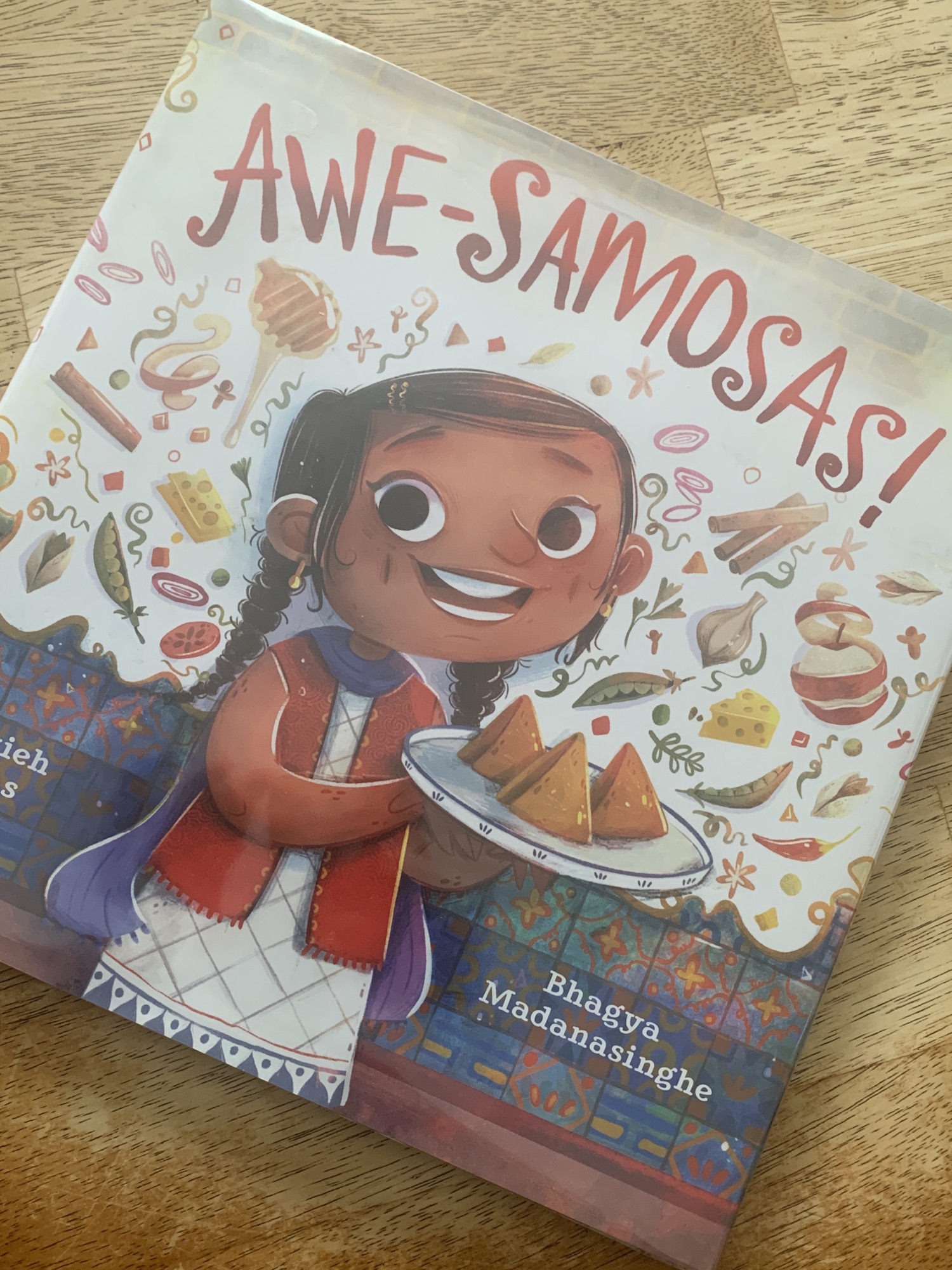
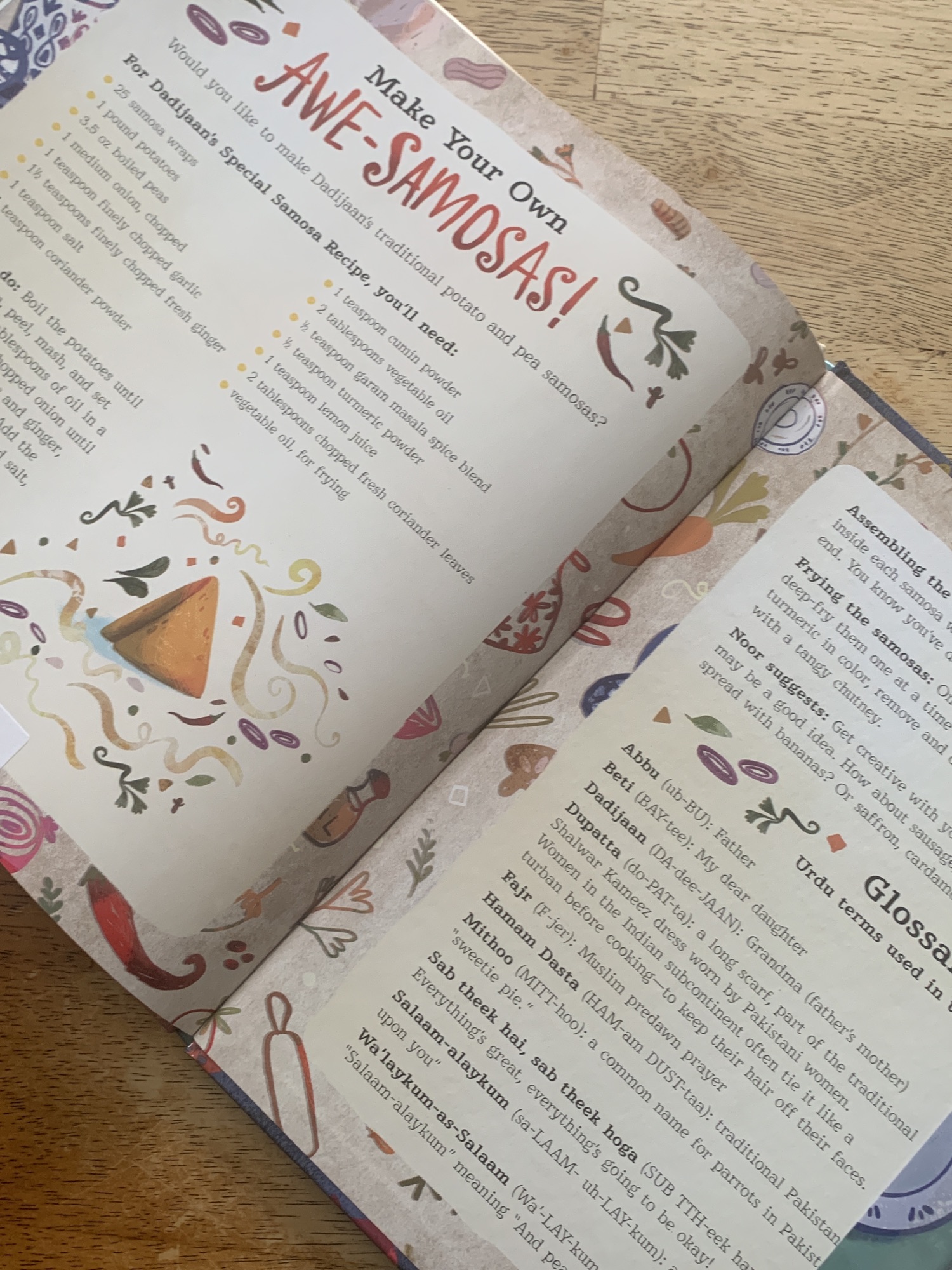
I was really enjoying this book about a determined young girl and her dad making samosas for friends, missing Dadijan, adapting and problem solving, an encouraging Urdu speaking parrot, a reference to Ramadan, and incredible illustrations… and then I froze.  On page 32 of the 40 page book it says the word “pepperoni” clearly affirming that the Muslim girl who’s dupatta wearing Dadijan wakes up at fajr to call her, has made pepperoni pizza samosas for her friends.  Perhaps I’m over reacting, it is one word, but I truly cannot get past it.  The first time I recall asserting myself as Muslim was in preschool making pizzas and me telling my teacher at three and half years old that I cannot eat pepperoni.  Sure as a middle aged adult, I know you can get beef or turkey or faux pepperoni, but the standard is pork, and this book does not clarify that it is not pork.  The word is intentional, the story would be exactly the same if it were just a cheesy pizza samosa, yet it articulates it as a peperoni pizza samosa. And I truly cannot fathom why.  Classrooms and libraries will shelve this book, teachers and librarians will read this book, little Muslim kids that look like Noor, are going to shrink when they get to that line: either they will question if we can have pepperoni (why else was it in Noor’s home), or have to now convince adults and classmates that the book is wrong in addition to explaining that Muslims do not eat pork, a big task for the intended audience of preschool to third grade.  If you omit that one word, the book is wonderful, layered, joyful, and a lot of fun.

Noor’s friends are coming over, two girls and a boy, for the first time and Noor wants to make samosas to eat with them.  It is too early to call Dadijaan in Pakistan, and Noor thinks she remembers how to make them.  Abbu offers to order pizza, but Noor is determined, even when she discovers they don’t have the necessary ingredients.  She puts on Dadijaan’s kitchen dupatta, and with her parrot, Mithoo, encouraging her every time she gets stuck with “Sab theek hai. Sab theek Hoga! Everything’s great, everything’s going to be okay!” Noor heads to plan B, Awe-Samosas, samosas with unique fillings.

img_4197-1

Noor gets Abbu onboard and helping and when her friends arrive, the turmeric colored pastries are ready for eating.  Some are apple-cinnamon filled, and remind Kaitlin of her grandma’s Fourth of July apple-pie, some are stuffed with honey and pistachio like baklava according to Layla, and Jonathan finds the cheesy peperoni samosa genius.  When Dadijaan sees the pictures Abbu has sent at fajr, she calls and praises Noor with the friends hoping to have another samosa party when she is visiting next.

The book concludes with Dadijaan’s Special Samosa Recipe, and a Glossary.  The book is widely available, including here on Amazon.

img_4200-1

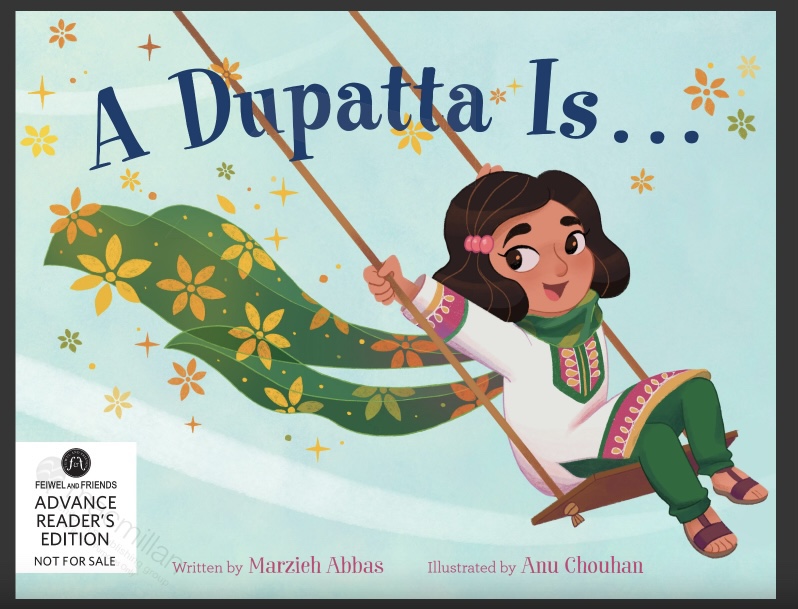
A Dupatta Is…by Marzieh Abbas illustrated by Anu Chouhan

Standard
A Dupatta Is…by Marzieh Abbas illustrated by Anu Chouhan

img_6073

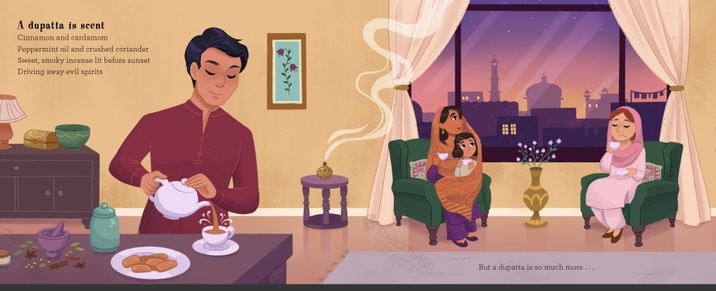
I read this 30 page early elementary book a few times before writing this review and honestly my cheeks hurt because I cannot stop smiling.  The lyrical writing radiates warmth and pride, culture and tradition, legacy and identity, while acknowledging both the playfulness and solemnness of a piece of fabric.  My heart breathed with the clarity and articulation that is felt and contained within the fabric that perhaps all Pakistanis feel, but cannot convey so poetically.  The book may be meant for children four to eight years old, but all readers will appreciate the text and illustrations that seamlessly flow like a favorite dupatta grabbed while running out the door. I struggled with picking only a few images to share, as every page became my new favorite as the book progressed.  Admittedly though, one page did give me pause as it conflated incense burning with getting rid of evil spirits which comes across as a religious belief, but is a cultural practice.

img_6074

The book starts out with the actual physical description of what a dupatta is and how it is adorned.  It then moves on to describing the color, the sound, the smell, the place, the function, the art, the beauty, the fun, the faith, the legacy, and the identity.  Each spread ends with the words, “but a dupatta is so much more…” seamlessly weaving so many facets of what a dupatta is together to create a true understanding of it from a tangible, to cultural, to practical perspective.

img_6076

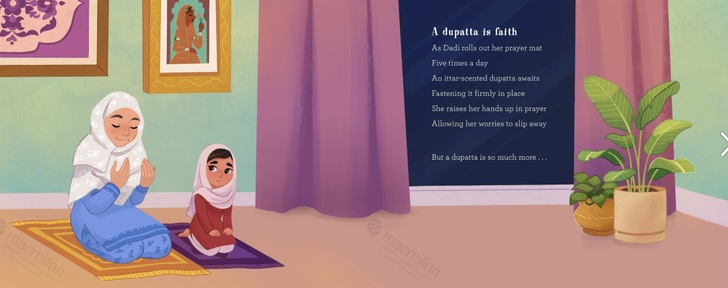
I love that there is a page about faith, and praying five times a day with a dupatta being worn, it is a little odd that there is a portrait decorating the wall behind the two characters making dua, but at least it is clearly behind them.  I absolutely loved that so often the wearer of the dupatta was also wearing a hijab, particularly the bride picture- which is absolutely gorgeous.  It signals without words that a dupatta can be worn to cover a Muslim woman’s head, but it is also often not.  The backmatter further details that it was once worn as part of the national dress and as a form of modesty, but now is often worn as an accessory.

img_6077

One summer in Pakistan, a friend and some cousins and I started trying to formulate 101 Things to do with a dupatta (wipe noses, pull things out of the oven, catch fish), it was the year of net dupattas so clearly covering your head was not one of them.  Sure we were being silly, but to see the book also highlight wiping sticky hands, and wrapping it up like a sari, and using it as a cradle to rock a baby was very, very accurate and heartwarming.

img_6079

Please pre order this book, it signals to publishers that these books are in demand and is a way to show what type of books we want to see.  I preordered  mine here.

Hamza’s Pyjama Promise by Marzieh Abbas

Standard
Hamza’s Pyjama Promise by Marzieh Abbas

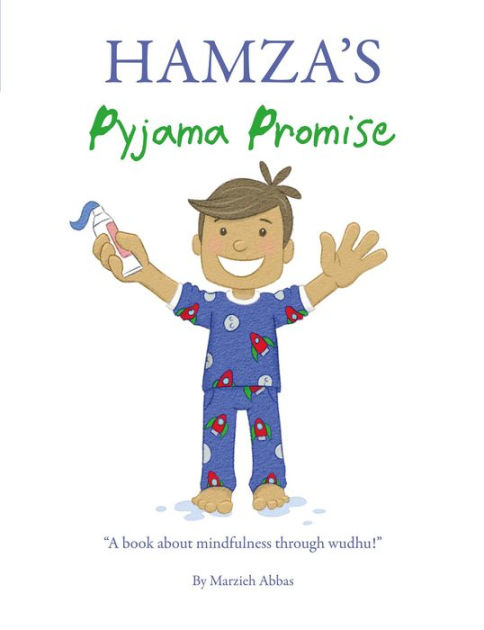
hamza

When I flipped through the book standing on my porch as the delivery truck drove away, I groaned a little internally at the simple illustrations, terrible font, large amount of text on each page, and the four fingered boy at the center of it all.  Alhumdulillah, I gave it a chance and ended up really liking it.  The book stayed with me, then I read it to my kids and it stayed with them.  Then I mentally made a checklist of all the teachable ways this book could be used in an Islamic school classroom, story time presentation, bedtime reading, and even just as a regular reference point.  This Islamic fiction book packs a lot of information in while connecting to religious concepts kids are most likely familiar with and silly points that will make five to eight year olds giggle.

img_2180

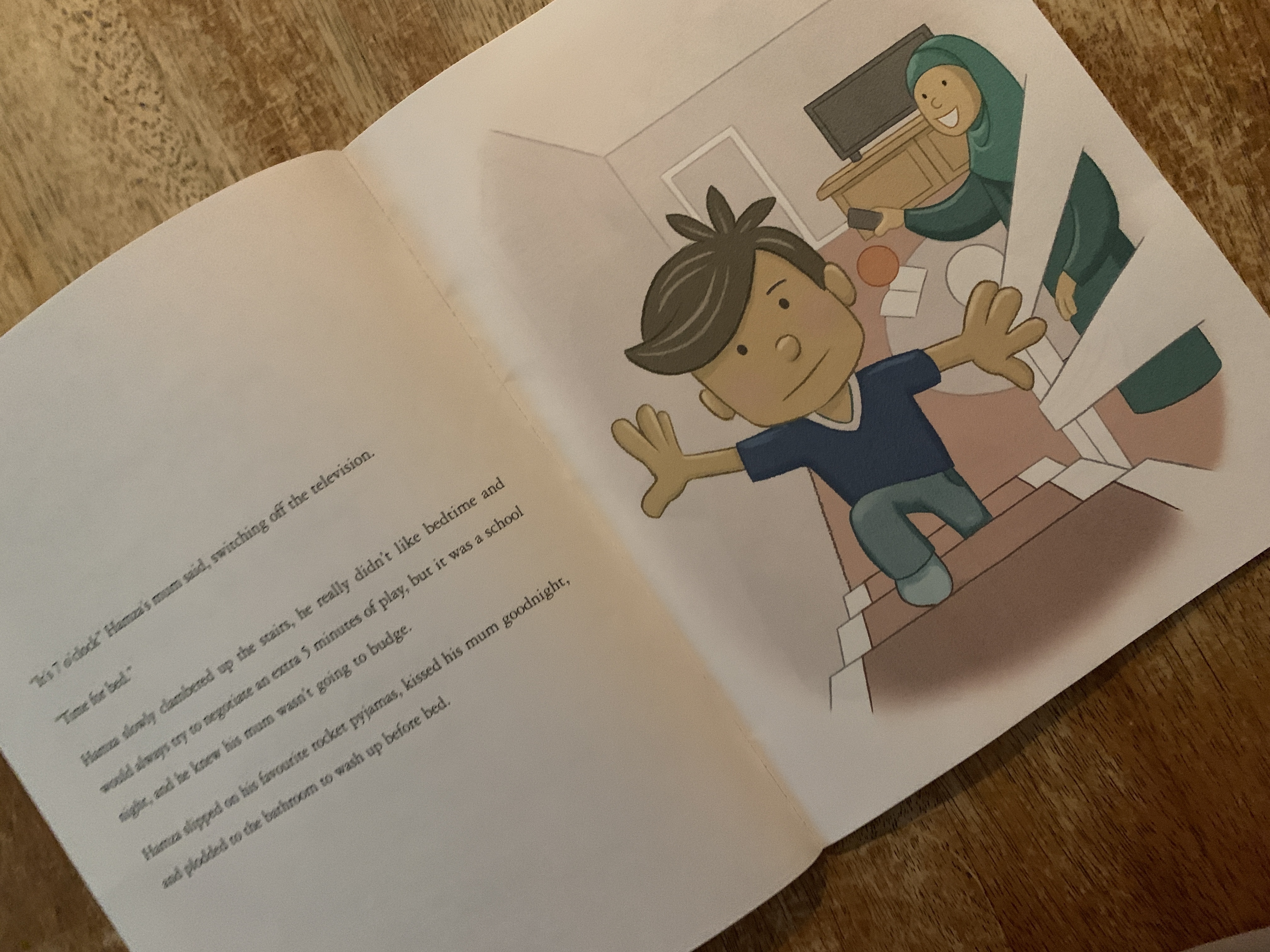
The book opens with verse 65 from Surah Yasin in English meaning of the translation and the Quranic Arabic.  The story then begins with it being bedtime for young Hamza and him running up the stairs to put on his rocket pyjamas.

img_2181

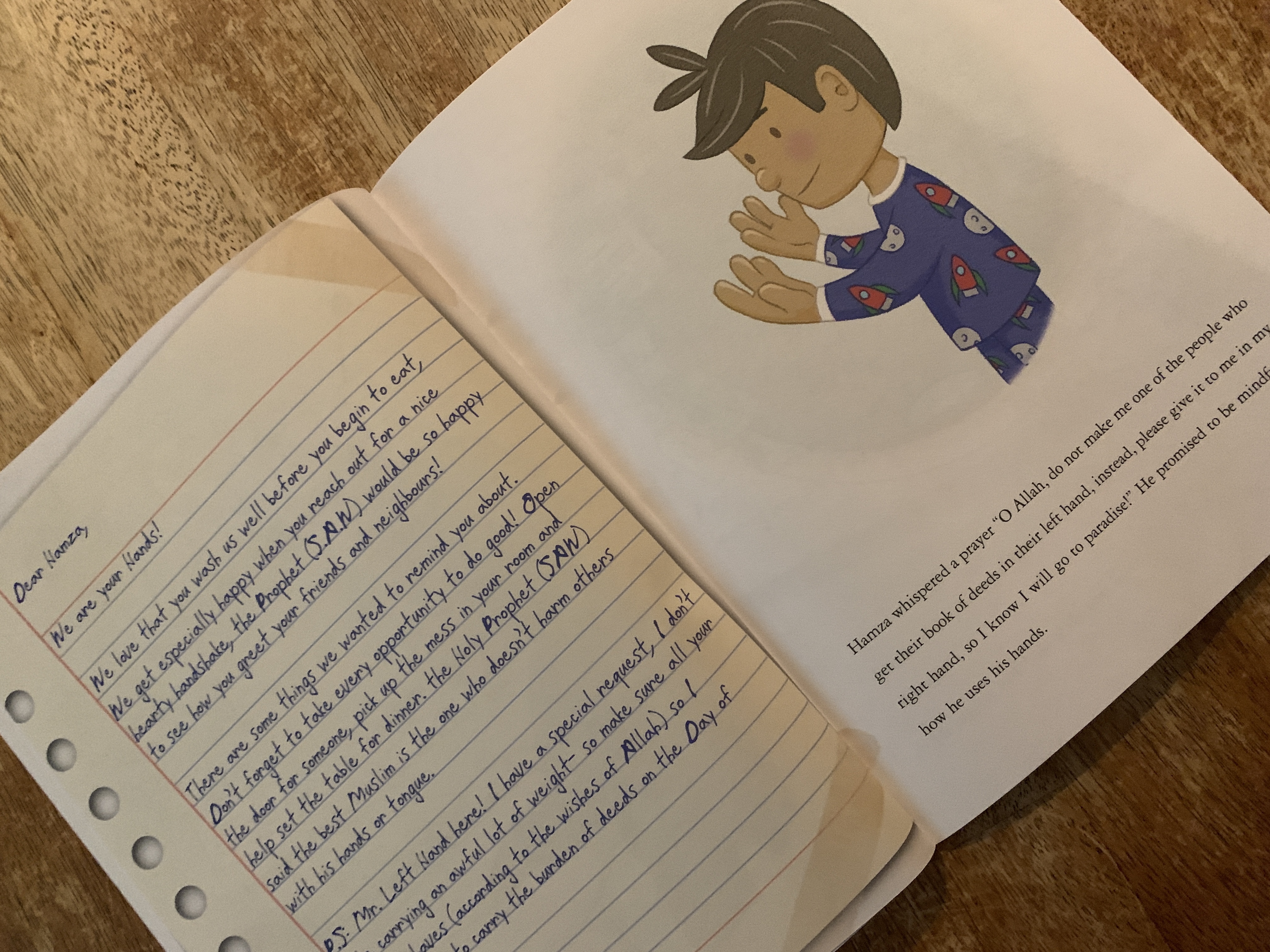
When he brushes his teeth he looks in the mirror and finds notes hanging all over addressed to him.  The first letter he reads is from his hands reminding him to wash them before he does anything and reminds him Prophet Muhammad (SAW) “said the best Muslim is the one who doesn’t harm others with his hands or tongue.”  It then mentions that the left hand doesn’t like carrying weight so use your body to ensure you get your book of deeds on the Day of Judgement in your right hand.

img_2182

The book continues with eyes, ears, tongue, nose, and feet writing messages urging Hamza to cover his eyes when something inappropriate pops up on the screen, or protecting his ears from listening in on other people’s conversations.  Every point of how to act is connected to an ayat in the Quran or Hadith of Rasullallah.

img_2183

After reading the letters, Hamza makes wudhu, says a dua before bed which is shared in English, promises to take care of the body Allah swt has blessed him with and then asks the readers what their pyjama promise is.

The book concludes with pictures and captions of Hamza’s bedtime routine of brushing his teeth, reflecting on his day, making wudhu, reciting tasbih (SubhanAllah 33 times, Alhumdulillah 33 times, and Allahu Akbar 34 times), reciting Ayat ul Kursi, and sleeping on  your right side.

img_2184

There are no sources in the book, but most seems “general knowledge” so to speak.  And for as preachy as the book may sound in my review, it really isn’t.  The character’s voice or rather the body parts’ voices are relatable and light.  I think young ones enjoy that they are hearing things they have probably heard before and making a connection to them being repeated in a new way.  Having your body parts talk is both silly and sobering as the target age group can imagine it happening.  It really reminds kids that their actions are seen and recorded, in a non scary or overwhelming way.

I look forward to sharing this book in library story times, masjid story times, and regularly with my own children.  The publisher is a Shia press, but I don’t think any Muslim would find anything controversial in the book (please note though I am not highly educated in these things). And while American’s may find the spelling of pyjama hard on the eyes, with the exception of that one word the book is not region specific or difficult to connect to for global readers of any age.

ABC’s of Pakistan by Marzieh Abbas illustrated by Michile Khan

Standard
ABC’s of Pakistan by Marzieh Abbas illustrated by Michile Khan

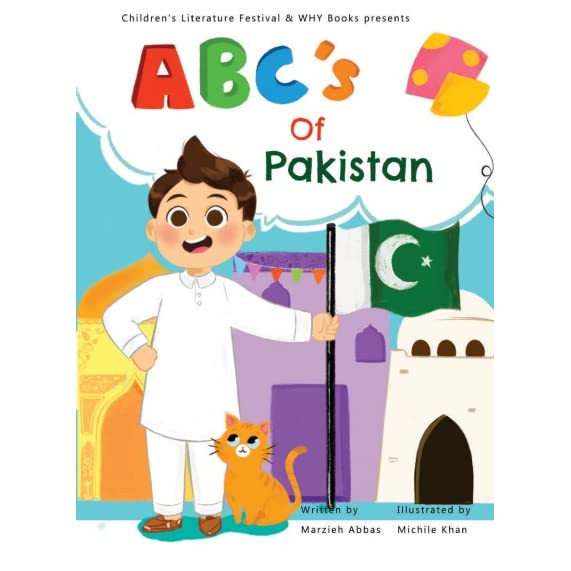
abcs of Pakistan

I absolutely love this ABC book, it truly does Pakistan proud and I’m thrilled that I could obtain it, it wasn’t easy, sorry not sure where you can get it in the USA, and it isn’t available even at Liberty Books in Karachi, but if you can find it, grab a copy, or two because it really is a well done tour of the country.  My only suggestions would be thicker pages, the hardback 8.5 x 11 binding is nice, but the pages seem to have curled in the transporting from overseas.  Also, some pages have a large A or E, but others such as the words for B, C, D, are just all flowing story style over a two page spread.  I don’t mind one way or another, but I do side with consistency, either have the letter on all pages singled out, or on none.  The effort to string the pages together makes it read very much like a story, and I appreciate that it features little snippets of fact and history in talking bubbles throughout.

img_7514

Little Hassan and his cat Makhan introduce themselves and then take you on a tourney of Pakistan.  Included are landmarks, handicrafts, foods, famous people, festivals, sports, and more.  It concludes with a reminder to carry facemasks and hand sanitizers, which might date the book a little in the future, it was published in 2020.

img_7517

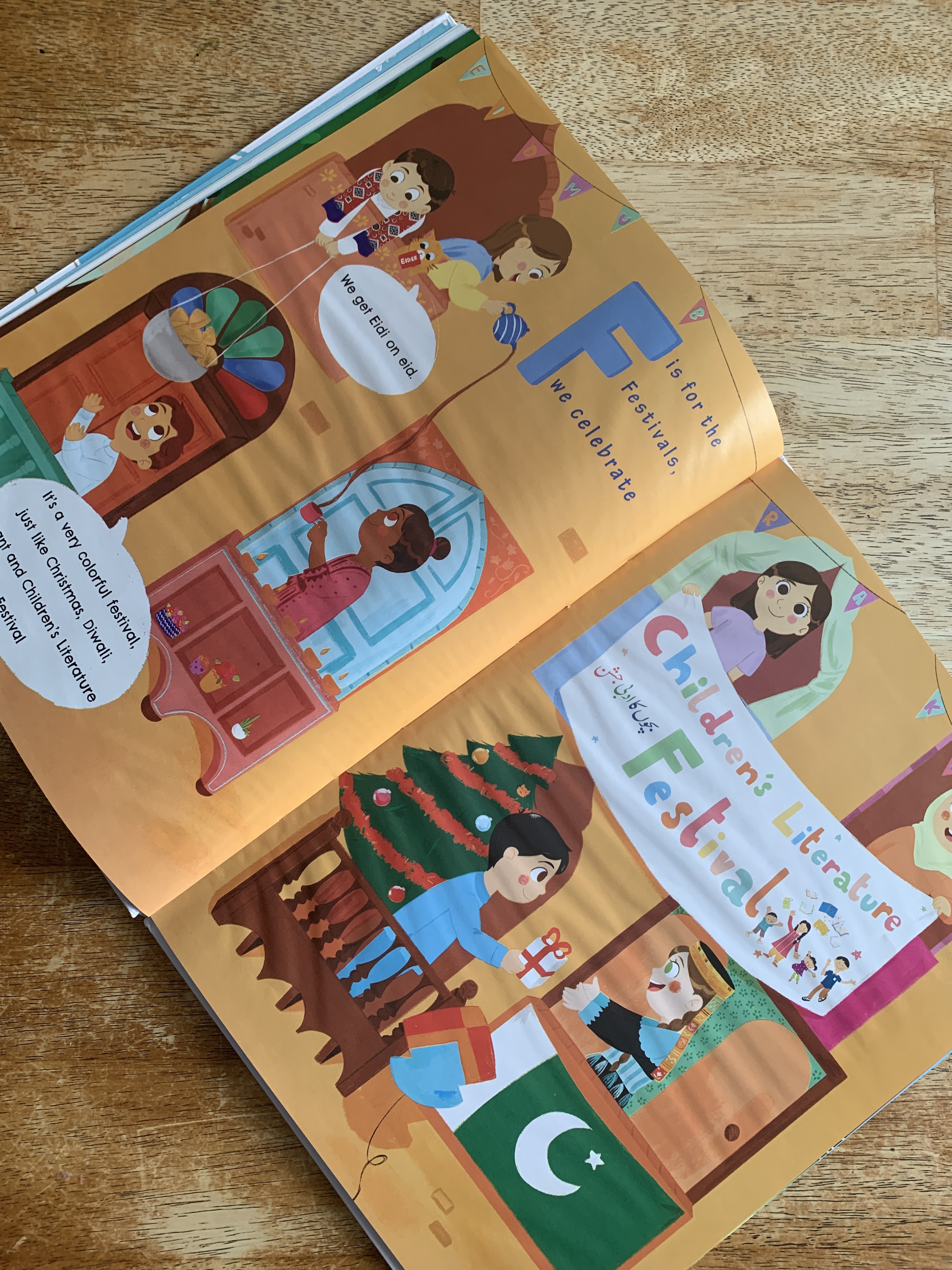
The book works for non Pakistani’s to learn, especially those of us with children that have not been to the “homeland,” as well as for Pakistanis in Pakistan to feel proud of their culture, history, tradition, and landmarks.  There are beautiful masjids and the azaan mentioned and hijab wearing and non wearing women, as well as famous men and women included.  It is inclusive on the F for festivals page where it mentions Eid, Basant, Christmas, Diwali, and Children’s Literature Festival.

img_7516

Enjoyable text and illustrations alike. InshaAllah, will be more readily available if we can convince the author and illustrator and publisher that there is demand, I hope, hint hint.  Happy Reading!