Tag Archives: College

Huda F Wants to Know? by Huda Fahmy

Standard
Huda F Wants to Know? by Huda Fahmy

Huda Fahmy books always make me laugh, but this is the first one that made me cry. Centering mental health and her parents divorce, we see Huda grappling with change, loss, anger, and resolve in a raw vulnerable way. While ever hopeful, and at times comical, the book is also incredibly moving and insightful.  Whether as part of the Huda F series or her two graphic novels prior, her autobiographic books always tackle heavy topics in a joyful, hilarious, honest way that appeal to girls and boys from middle school and up.  I know at 263 pages, this book is a YA read, but in my house my kids (daughter and sons) have loved reading her perspective about hijab, arranged marriages, identity, and sibling relationships. The unapologetic Muslim authenticity is unparalleled, and that non Muslims champion her books as well, truly shows the value of good story telling, and gives me hope in an often bleak world. Huda’s books are staples: new books are anxiously awaited, previous books are regularly reread, and Huda F Wants to Know? continues in that tradition.  This book isn’t just fun, it is important- it normalizes mental health, empowers families shaken up by change, and makes us all feel seen and less alone. SubhanAllah.

The book starts with Huda’s plan for her junior year in high school, her friend Nabz and her are determined to buckle down and get scholarships.  When Huda’s parents call a family meeting, she thinks she just might be getting a car, but instead she and her sisters learn, their parents are getting a divorce. The book then rewinds to show a little lead up before Huda’s world shatters, and junior year’s blue print is tossed aside.  We see her going to the masjid for weekly halaqas where Sr Amal discusses topics like societal pressures, family expectations, gender bias in education, and other relevant topics.  At one such gathering, Dr Haifa came to talk about mental health.  We also see her crushing on a boy at school, fighting with her mom and sisters, and the girls going on a road trip to a Muslim convention.

Every storyline, every twist, every page really, has Islam woven in.  It is the way the characters see themselves, see their world, handle stresses, find peace.  Mental health is not separate from the hadith and sunnah, it is blended and approached in a holistic manner.  Divorce is understood Islamically, and the clarity in which it is articulated will, I imagine, be so reassuring for Muslims who have gone through it, and seen others go through it.  Just as my boys years ago read That Can Be Arranged, and became incredibly curious about marriage in Islam, I have no doubt that this book, will also be a powerful conversation starter for so many.  I don’t know if that is part of why Huda write, but it definitely is a result of her books.  I wish I could ask her, I’d also want to know how she decides what to share of her own life, where the line of reality and fiction for her is and how she sets and maintains those boundaries? I also desperately would like to ask her if she plans to write forever, because the world benefits from her books, needs her books, I know I do.  No pressure or anything.

 There are resources for mental health at the back of the book, some even specifically for Muslims. Please preorder this book and/or request it at your local public library as a show of support, it releases in April.

If You’re Not the One by Farah Naz Rishi

Standard
If You’re Not the One by Farah Naz Rishi

I suggest one reads my ENTIRE review of this book before deciding if it is right for you, because just the first few lines might signal that I liked this book, and honestly it was just ok, but I really liked parts of it. The protagonist is Muslim, it isn’t something that guides her view of the world or dictates her actions, but she is unapologetic, and it is not something she is grappling with. She prays, makes duas, it mentions a hadith, so I appreciate that it is there and always just below the surface. The “romance” might not be halal, halal, but it definitely isn’t raunchy and stays close to the line even when it crosses it. The male and female character are very close friends, and spend a lot of time alone together even before SPOILER there is hugging and a kiss, it is a rom-com after all. I loved the annotations, especially reading an e-version flipping to the protagonists commentary of her thoughts and then flipping back was easy and fun. I think my favorite line in a long time in the book is her translating rice to chawal (see images). My biggest frustration though, with the book is how close it mirrors the author’s biography, Sorry for the Inconvenience, which I read just over a month ago. Truly, it was like the biography was the book and this was the movie adaptation. Sure the younger brother was switched out for a younger sister, and this wasn’t as gritty or traumatic, but the romantic literary beats were all more or less the same: childhood betrothed, falling for a friend who made a bad first impression, dad being sick, parents and their on again off again divorce, medical diagnosis, it really is two versions of the same story, which meant I was never invested in the fictionalized characters, or on the edge of my seat to see what would happen next. When you have seen the behind the scenes inside scoop so to speak, it is hard to get on board with the faded carbon copy. Add in the consistent lack of communication, telling instead of showing, unlikability of the protagonist, and the non existent foundation of any of the relationships, and it made it hard to get lost in the fluff of the moment.


Side note: I had a whole paragraph rant about the cover, but when I went to post my review on Goodreads (still banned from Amazon) I saw that there is a newer cover with Marlow wearing yellow crocs. I have no idea why the illustrator and publisher would have arcs with the male lead in flip flops, but I think by now it is common knowledge there is often a lack of communication between authors and illustrators. sigh.


SYNOPSIS:
Anisa is in college, she has worked hard to get in to the all girl’s school near where her almost fiancé Isaac is already enrolled. When she takes a class on Isaac’s campus she meets Marlow, who makes a poor first impression on the very “perfect” Anisa. When Marlow and Anisa get paired up for a class paper, Marlow also offers his services as a “love coach” to help Anisa reconnect with a drifting away Isaac. The more time Anisa and Marlow spend together, and the more Anisa learns about Isaac , the more she ultimately learns about herself and what she wants out of a partner.


WHY I LIKE IT: (SPOILERS)
I’ve read a few of the author’s books, so I know she can write, which irritated me even more that this book felt so flat. Anisa and Isaac have been “together” for over six years, but know nothing about each other, don’t talk or text, and as much as the book wants to make it seem like it is an all of the sudden thing, it provides no real tangible suggestion that they have ever had any sort of connection. So why did they decide to be potentially engaged???? All the parents are on board, but how did the two of them set this into motion? With the exception of Isaac visiting her one late night before he went to school, there is so little for the reader to be emotionally invested in. Anisa has terrible communication with every character in the book, not just Isaac, even with Marlow and her family, the side characters all keep in touch just fine, and it is never addressed as a quirk, it just is accepted. If your dad was sick, or your parents divorcing, wouldn’t you be texting them periodically, or non stop? And text between characters are shown on the page, so how is Anisa texting Marlow throughout the 352 pages, but then goes MIA the last 20? It didn’t work for me clearly.

Additionally, I was so tired about hearing how perfect Anisa is, when it never seemed to show it, sure the duplicity with her outward appearance and home appearance was well done, but it never really shows up in any other facet of her life. She is unorganized, has few friends, doesn’t seem to be a very present daughter and sister, the repetitive telling and lack of showing, gave the book no foundation. I know romance-y type books often have to fudge common sense at times, but with no foundation at all, it was hard to be invested in any twists or swooning gestures. I think I just didn’t really like Anisa, and I weirdly feel guilty about it, because she so closes mirrors the author, and I liked the author’s self portrayal in her earlier memoir.


FLAGS:
Close male/female friendships, hugging, kissing, lying, “cheating,” talk of titillating role playing video games (otome) not details so much as shaming and teasing about Anisa playing them (the word porn is tossed in a few times).

TOOLS FOR LEADING THE DISCUSSION:
I think I’d shelve this book in an Islamic school library for high school students. I don’t think I would promote it, but I think those romance loving high school girls will enjoy and be able to handle this story. It won’t work for a book club, but it does make clear that Anisa “dates” with intent to marry, there is reassurance that she wants to marry a Muslim, that Marlow has been reading about Islam, but that Anisa isn’t going to force him, and that societal expectations and appearances aren’t impossible to push back on- which I think are good considerations for 16 and up readers to see fleshed out.

Lion on the Inside: How One Girl Changed Basketball by Bilqis Abdul-Qaadir with Judith Henderson illustrated by Katherine Ahmed

Standard
Lion on the Inside: How One Girl Changed Basketball by Bilqis Abdul-Qaadir with Judith Henderson illustrated by Katherine Ahmed

This nonfiction picture book memoir is about Bilqis Abdul-Qaadir’s love of basketball, accomplishments, and ultimate decision to choose her hijab over her career.  For elementary readers the 40 page book reads like a story, and shows what it means to work hard, be talented, stay true to yourself, and be willing to fight for what you believe in.  As the Massachusetts State high school basketball scoring record holder and the first NCAA hijab wearing Muslim basketball player, she was forced to leave the fight on the court and instead fight to change the rules regarding headgear for women playing international professional basketball.  She won the fight, but unfortunately it was too late for her, she now advocates for Muslim girls in sports to not have to choose to cover or play.

The book has a flow as it starts from her being born into a basketball family, and shooting hoops at three.  She plays with her brothers with her grandma, Mudgie, always cheering her on.  Her mother’s strength grounds her and at age 12 she puts on her mother’s hijab and heads out to play ball.

At 14 she is wearing her own hijab and playing on the high school team, her hijab is her super power, and reminder to be fierce, faithful, and kind. When the ref halts the game and says she can’t wear her hijab, her team stands with her, until the game resumes.

She gets a full scholarship to the University of Memphis and plays her final season at Indiana State.  She meets President Obama and beats him in a game.  When she decides to play international though, again she gets told she can’t unless she removes her hijab. She chooses her faith, and when she finally gets the ban overturned, it is too late for her, but not for other Muslim girls.

The book concludes with some photographs, additional information, discussion questions, and places to discover more.  I appreciate that it shows her praying, but I wish it gave just a little insight as to why Muslim women cover, why it is part of our faith.

I found my copy at the library, it is available to purchase here.

All You Have To Do by Autumn Allen

Standard
All You Have To Do by Autumn Allen

all you have

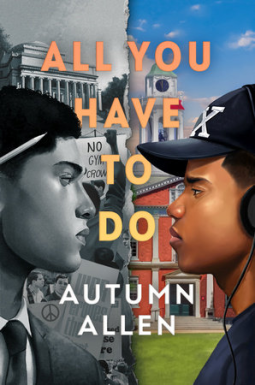
This historical fiction YA book was hard to put down.  While being invested in the characters and learning about the historical climate from an intimate account, I could feel my mind growing and my understanding deepening. The phenomenal writing quality, and the connection between the two fictional characters from two different times rooted in reality, allowed this thought provoking book to burrow into my mind, and makes me suggest it to high school English teachers to read with their students for a novel study.  Add in that the author is Muslim and that there is inclusion of side Muslim characters, makes me really really love this 432 page book.

SYNOPSIS:

Told from two perspectives: Gibran is a high school senior in 1995 at a prestigious New England, majority white prep school.  Being aware of the efforts his mother has made for him to have the opportunities he does, the incredibly bright boy isn’t content to sit back and let injustices go unchecked.  As he understands his position in his school, and perhaps in the world, he pushes to change how the system views him and on the cusp of the Million Man March he starts to get restless when others don’t support his efforts.

Kevin is at Columbia University in New York City in the wake of the Martin Luther King, Jr.’s assassination.  While the country pays service to the civil rights leader Kevin is witnessing the injustices at Columbia, and begins to question what his enrollment at the institution means and the hypocrisy it supports.  He also reflects back on choices his own family has made and what he would like his future to look like when opportunities to protest arise.

Kevin is Gibran’s uncle and their parallels show how little has changed in America.  The fears of the family, the institutionalized racism, the helplessness of a broken system.  The desire for two young men coming of age to decide for themselves where they belong, who they are, and what they are capable of in a world that wants to take that freedom away from them.

WHY I LIKE IT:

The power of this book is incredible, truly.  I really don’t have words.  I do have words about the side Muslim characters though.  Gibran’s sister is a hijab wearing convert and is respected and accepted by the family.  Kevin’s cousin and activist is also a convert and a powerful influence on the main character.  There are mentions of Muslims praying, and salams are given.  The book was beneficial to read, the Muslim characters and knowing that the author is Muslim, and reading the phrase, “In the Name of God the Most Gracious, the Most Merciful” before the dedication was just extra amplification of voices that this story brought to light.

FLAGS:

Racism, violence, police violence, incarceration, hatred, drugs, alcohol, sneaking out, partying, lying, stealing, segregation, oppression, language.  The reality of the situations discussed is not PG, but the book does not sensationalize anything for the sake of shock, it is rooted in reality and a YA audience will grasp that.

TOOLS FOR LEADING THE DISCUSSION:

Teachers, librarians, parents, teens: read this book.  Think about what you are reading, discuss what happened, what you understand, and how it makes you feel.  Preorder/order here

Much Ado About Nada by Uzma Jalaluddin

Standard
Much Ado About Nada by Uzma Jalaluddin

much

I get teased a lot by my Lit Sisters for enjoying Hana Khan Carries On so much, so I’m writing this review to convince them why I think this is Uzma Jalaluddin’s best book yet, and why they should preorder here and dive in ASAP! First note that is an adult read, it is not targeted to teens, the protagonist for the majority of the book is nearly 30 years old. It is a romance, it is not a hundred percent halal, but it is definitely halal-ish, and if you feel like you reach a point where it absolutely isn’t, please keep reading (you might be surprised).  The book for being what I thought would be an empty calorie rom-com guilty pleasure snack, tells the story of Nada in spiraling layers that keep the reader hooked.  Just when you think it is predictable and tropey, the next layer peels back a twist and depth that kept me ignoring my kids and glued to the pages for two days straight.  I furiously scribbled notes writing down “haram” deal breakers and most by the end where crossed off, so no this is not Islamic fiction, but there is no internalized Islamophobia, there is no liberal agenda, the author knows the lines and is abiding by them and occasionally breaking them in a fictional entertainment world for Muslim and non Muslim readers alike.  I hate to compare, but in many ways it reads like an adult S.K. Ali book.  There is social commentary on Islamic communities from a place of love and practice from the inside, there are relatable characters, there is humor, there is love, laughter, and warmth. On occasion there is skirting of the halal/haram line a bit here and there, and sure males and females are a little too friendly at times, but it isn’t the oppressive parents and identity crisis, it is joy. Muslim reality and stress, with true mirroring joy as well.

So why am I reviewing this book here? Simple so you can enjoy it.  So often I feel like reviewers particularly, but casual readers as well, become nervous while reading, that the book is going to take a turn and become haram or preachy that we can’t just get lost in the story.  So my gift to you, is that if you enjoy rom-coms and don’t usually go for “Muslamic” ones because of apprehension, you can dive in and enjoy this.  You can laugh when they ask for a doctor at an Islamic convention, you can roll your eyes when hijabi’s bring extra scarves to throw on the stage of the band (there is a guitar player, but mostly daf and vocals), you can be upset at the slight physical touching (keep reading), and you can nod along with the commentary on divorce, misogyny, wheelchair access, and mental health, but you can also just cheer for the protagonist to find her way to happiness and love too.

SYNOPSIS: (Will be brief because other wise there will be too many spoilers, and because of how the book is told, you don’t want spoilers, trust me, you want to enjoy)

The book opens with Nada trying to hide from both her mom who wants discuss her future and her best friend Haleema who is determined to have a girls weekend with her bestie at the Deen & Duniya Islamic conference in Toronto.  Cornered she finds herself at the conference organized by Haleema’s soon to be inlaws and face to face with a variety of characters from her past including past victims of her bullying, past love interest, past business partners, past camp roommates, college friends, startup mentors, and others- it is a very popular and large conference

Yep, that is all you are getting.

WHY I LIKE IT:

Again, to avoid spoilers I’m going to simply point out a few plot concerns I had with the book, because it is who I am, and I need to get them off my chest.

In some of the flashback scenes Nada’s voice reads the same as it does in the present.  Her articulation of Baz’s potential as a daf player at 11 years old is very mature and insightful and not realistic at all that she can opine on his skill and the role his hand size have on his mastery at that moment of the instrument.  She would probably just think, yeah he is good, or wow, he isn’t bad.

I found it odd that Marya’s husband had opinions on Nada’s makeup, it seemed a bit forward.  Also they were in line, then they left, the pacing of the scene was a little off, I read an arc, but I’m hoping it is cleaned up a bit, because it is an important scene.

Haleema is Nada’s college friend, but toward the end in college flashbacks she really disappears, and it was noticeable, because the reader is constantly told Haleema and Nada were good college friends, but never shown.  So in those scenes to not have her there, without note, is suspect.  Nada really isn’t a good friend to here either, at any stage of life save the conclusion, I’m not sure why Haleema does so much for her honestly.

There is a wedding scene without a wali, and there should be a comment as to why the wedding is performed without the religiously mandated staple or how they are getting around it.  It reads off for a book that gets so many details correct.  I am hoping that the final has it corrected! PLEASE!!!!!!

Also for a different wedding Sufyan is noted to have got an invite to help serve chai, but he is the groom’s cousin’s son, introduced earlier as a nephew, before the cultural chain of relation is given, so why wouldn’t he be at the wedding?

FLAGS:

Music, female and male close friendships, sneaking around, bullying, talk of sex, sex, kissing, talk of pregnancy, lying, stealing, theft, there might be a curse word or two, sorry, not sure.  For an adult book it is clean, these days for a YA book it would be considered remarkably clean.

TOOLS FOR LEADING THE DISCUSSION:

I wouldn’t suggest it for a school library or high school book club, but I wouldn’t put up much of a fight if it was on the shelf or schedule.

Fatima Tate Takes the Cake by Khadijah VanBrakle 

Standard
Fatima Tate Takes the Cake by Khadijah VanBrakle 

fatimatate

I really want to be raging furious and upset by the lying, premarital hetero sex, normalized/celebrated lesbian Muslim, internalized Islamophobia, gaslighting, abuse, and labeling of Muslims as “conservative” and Islamic principles as “ancient and ridiculous” (keep in mind the characters and author are all Muslim). But honestly, the writing is so terrible that to feel that much emotion is just not that warranted for what the story is. I’m so disappointed in the entire writing quality of the book, that I couldn’t appreciate the characters or story as written.  I know elements of the story probably ring true, my privilege and arrogance don’t blind me to recognizing that, and whether I agree or relate or identify with the Islamic representation is subjective, but it is not a good sign when reading- that screen shots are not enough, and I have to break out paper and pens to note the contradictions, plot holes, and inconsistencies.  The cover is the best part, with its beautiful Black Muslim inviting YA readers to crack open the book and spend time with Fatima who dreams of following her culinary dreams despite family and toxic relationship obstacles.  Sadly though, the text does not live up to the expectations the cover sets forth.  It reads like a very early draft where the plot points, the climax, and the conclusion are laid out, but the dialogue, backstories, and relationships are yet to come in this very mature 304 page book.

SYNOPSIS:

Fatima Tate dreams of culinary school, but her mother demands a more practical degree of nursing.  The only child of a nurse and mechanic, Fatima goes to a virtual charter school and has a best friend since 5th grade, Zaynab. who goes to a private school, yet constantly chauffeurs her around, covers for her, and whose relationship with Amber is a major thread in the story.  One day, when Zaynab fails to pick Fatima up from her shift at the soup kitchen, Raheem, her crush who she has never really spoken to, offers to drop her off, he uses the excuse of not wanting to miss Asr salat to get in her house, and by the time the prayer rug is put away the two are kissing and holding hands.  It has been a busy day for Fatima, she was also invited to join a teen cooking competition, and with that, all in the first chapter, the direction of the story is set.  Add in the twist that her parents don’t know about her joining the cooking competition, Raheem being revealed as a narcissistic, controlling, wealthy, manipulator who has his mom properly meet Fatima’s parents resulting in the two quickly become engaged, and Fatima at some point having to finalize her college plans and you have most of the plot and spoilers of the book.

WHY I LIKE IT:

I wish there was more OWN voice Black Muslim culture inclusions.  As with all the potential themes of the book, the writing just feels so superficial.  The only thing quicker than the instant romance, is the reader’s (my) instant disdain for the creep that Raheem is: from his arrogance to his ghosting, his hypocrisy to his gaslighting.  There is no angst, attraction, sympathy, intrigue, nothing in his character makeup or in the relationship he and Fatima have.

The cooking thread is equally lackluster, I think most bakers have heard of refrigerating cookie dough, and where I should have been hungry or had my senses tingling, I found myself annoyed by the almost childish portrayal of the food scenes.  If it was meant to show passion or a divide with her parents, it was all talk and no show.  At times the text says how close Fatima is with her parents, how much she respects her mother’s strength and her father’s kindness, but lie after lie to them and their distance from the heart of the book, definitely do not show a complicated relationship, it once again, yep you guessed it, reads really flat and one dimensional.

Islamically there are concerns with the premarital relations, but even before that with the male and female being alone, the lying, the lgbtq+ relationships.  I never understood why Fatima refuses to pray in congregation and attend Jummah it just says she doesn’t join the community prayer, but she also doesn’t pray with Raheem, which might have actually been sweet.  She is noted to pray fajr late and it is a point of contention, she wears hijab, and says a lot of inshaAllahs, but while the text sprinkles in these touchstones, they don’t seem to shape her identity, it feels like it is just the paradigm that she knows.  She finds the mahr concept to be “ancient” and “ridiculous.” The one character that speaks out against same sex relationships wears abayas, black abayas to be exact. She is also labeled the “haram police.”  Zaynab doesn’t pray, doesn’t cover, but presumably identifies as Muslim.  Raheem says he is fine with her lesbian identity, but fears Fatima’s relationship with her will ruin his future political career.  The book never has any substantial commentary on the Islamic view of queer relationships and labels any one that has a problem with them as being “strict” and “conservative.”  The book says “love is love” and leaves it at that.

Constantly the reader is told that Fatima and Zaynab are best friends since 5th grade, no backstory as to why Fatima left for virtual school and Zaynab for private.  We never see Fatima add anything to the friendship, Zaynab drives Fatima, feeds Fatima, consoles Fatima, it is all very one sided.  So many story lines just fall off the page without resolution or insight.  At one point Fatima is angry at Zaynab and doesn’t want to share her with Amber, but then is mad that Raheem is wanting to take her away but nothing is ever done or explained or internally pondered over, it is just forgotten.  I really despise how we are also told that Zaynab and Amber are the ideal couple, but nothing ever shows it. NOTHING. They are always fighting, Fatima is always on edge to even ask Zaynab about Amber.  Zaynab and Amber fight about their graduation party and it magically all works out.  Amber is shocked to know that Muslims won’t accept them, and they seem to break up, but then they are together at the end so how did that get resolved?

Major plot holes: When Fatima’s mom asks Fatima if she knows Raheem, she says no and four pages later her dad asks her what she thinks about Raheem and she answers him.  This inconsistency mitigates the “reveal” at the end that they knew each other at the soup kitchen.  Speaking of soup kitchen, the reader sees she goes once and then stops for finals and never resumes going, so how is it such and important part of her or Raheem’s life? Does he return? Fatima gets driving lessons and a car, and is then driving alone, time line doesn’t work, nor does what she is driving get articulated if she returned the Lexus.  Extravagant gifts aside, it never fully explains where Raheem’s grandfather made his wealth, it seems lacking because he doesn’t want Fatima to work, but his mother does, in managing her father’s inherited wealth.  At the walimah it is very awkward between Zaynab and Fatima’s mom, almost to the point I thought they might not know each other, or might have issues with her lifestyle, but by the end it is clear they know each other well, so I think the scene is just written poorly.  I went back and read it and the familiarity of the families is definitely unclear and not consistent throughout.  For Fatima’s graduation Raheem gets permission to take her to dinner alone, for someone who is constantly watching money and loves cooking, it felt like it would be a big deal to be able to go out alone with her finance, to a fancy restaurant and savor all the flavors and ambiance.  Nope, the scene is skipped, no details, no nothing.  Lots of little details are skipped quite often, for example five people are qualified for the finals, only three names are given, just throw two more names in there, nope we get dot dot dot- it reads unfinished.  At one point when Zaynab once again saves the day and picks up Fatima, they come back to Zaynab’s house with Starbucks and meet at the fridge to get Pepsi’s out, like three sentences later, Starbucks on the table forgotten.

Zaynab does have a slight character arc, but throughout needs someone to constantly side with her, and I don’t know that she is very independent at the end.   I don’t think there is a decent relationship in the book between any of the characters, which is unfortunate, and religion and the masjid (labeled “patriarchal”) are often portrayed in a negative light. The internalized Islamophobia was hard to swallow.  At one point Fatima shakes a man’s hand and says that she isn’t one of those Muslims that has issues with that.  It seems like this book checked a lot of boxes and for whatever reason didn’t get the polishing it needed.  It is unfortunate because OWN voice Black Muslim books with authentic rep and joy and complexities and nuances are so desperately needed, and this one just felt underdeveloped and raw.

FLAGS:

Language, closed door premarital sex, talk of sex, talk of condoms, child out of wedlock, cheating, lying, hetero and same sex couples, dancing, music, physical abuse, verbal abuse, gaslighting, controlling, stereotypes, internalized Islamophobia, male and female friendships, manipulation, blackmail, judging, deceit, hypocrisy.

TOOLS FOR LEADING THE DISCUSSION:

The cover will tempt younger readers to pick up the book, my only hope is the poor writing will cause it to be abandoned before the haram is glorified, normalized, and celebrated.

The Love Match by Priyanka Taslim

Standard
The Love Match by Priyanka Taslim

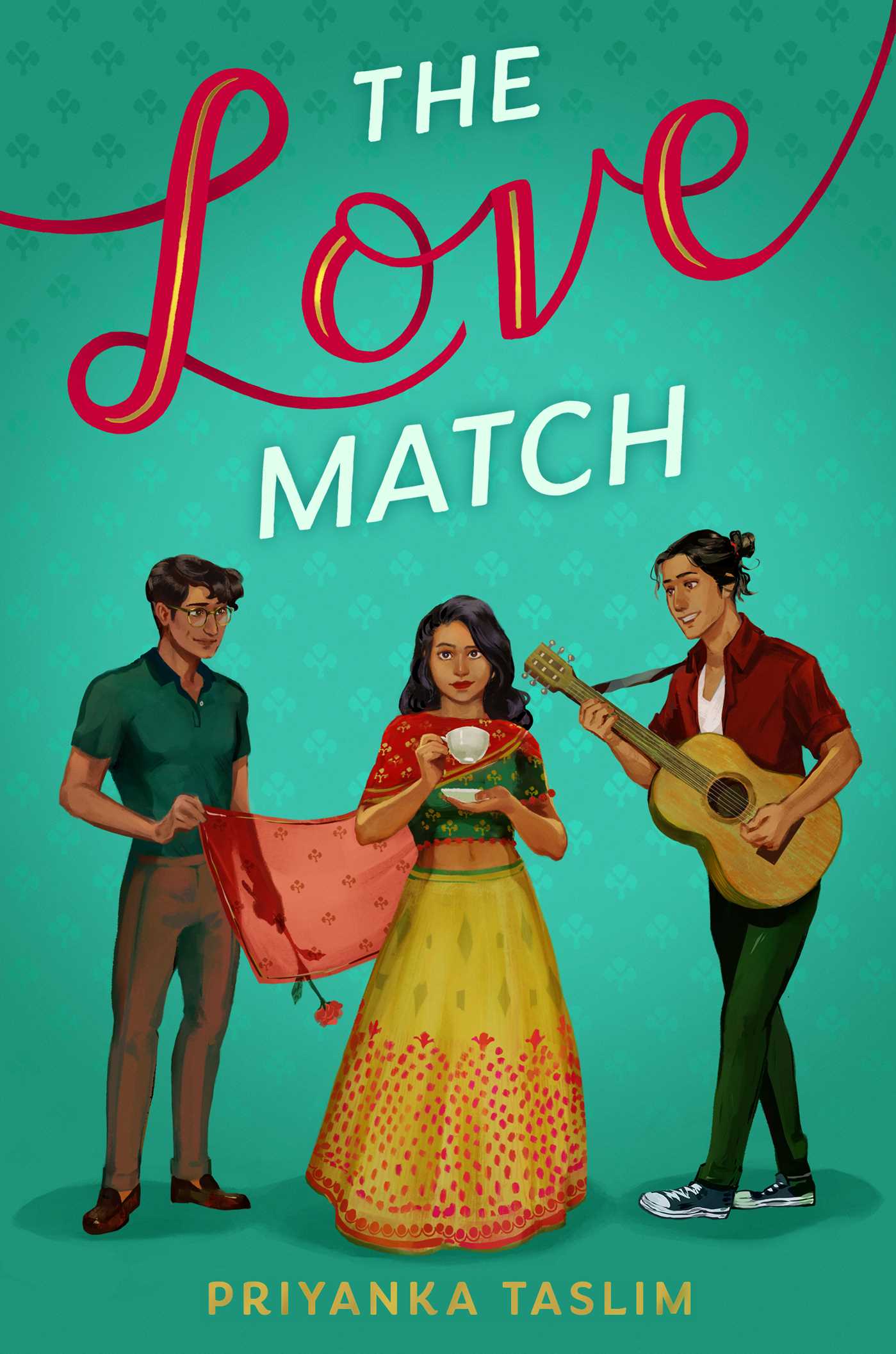
This new YA book features Muslim characters, but is not a religious conscious read that fits in the halal category.  There is a lot of Islam: waking up for fajr, celebrating Eid, a hijabi, mention of jummah, but the OWN voice rom com sets boundaries based on Bangladeshi culture and American perspectives.  The book does not other, or have internalized Islamophobia, or fall in to tropes of oppression and rebelling- quite the contrary- it normalizes everything: LGBTQ+ relationships, dating, music, etc.  The book is well written from a literary perspective: easy read, fleshed out characters, resolved plot lines, I wish there would have been more slow burn and heightened emotion, and cathartic release, but it happily held my attention for 388 pages, so I can’t really complain about plot holes or development.  The problem I have as an Islamic School Librarian is the non issue dating and romance is for the characters with their parents knowledge, both lesbian and heterosexual.  The book doesn’t get graphic, in fact there is only a handful of kisses, but there is a lot of hand holding and pdas in front of parents and even a sleepover with a lesbian couple in a Muslim family’s home, again, nothing “racy” occurs, but the normalization is worth noting for those thinking a Salaam Reads book is going to be a more Islamically centered publication.

SYNOPSIS:

Zahra Khan has graduated high school, and while she’d love to be heading to Columbia to study writing with her best friends, she is stuck deferring her admission and scholarships, and hiding her dream to be an author.  Two years earlier her father has passed away and Zahra works in a tea shop to help keep a roof over the heads of her mother, grandmother, and siblings.  In the Bangladeshi community in Patterson, New Jersey Zahra’s mom imagines arranging a marriage to a wealthy family for Zahra to ease their financial stresses.  When a potential match comes a possible reality, Zahra takes control to try and keep the peace and keep her dreams within reach.  In Jane Austin-y feels, a love triangle emerges, friends step up, culture and family touchstones shared and appreciated, and decisions about the future will have to be figured out at 18 years old.

WHY I LIKE IT:

I loved how easy a read the book is, the cultural framing was warm and rich and never overly explained or apologized for.  It is what it is, it is who the characters are, and while at times they push back on the negatives, it doesn’t disregard the love that exists at the core.  Unfortunately, I really struggled though with the ease in which the characters date with their parents’ knowledge, hold hands, cuddle.  I really couldn’t imagine a practicing Muslim family being so supportive of a lesbian daughter in the way that the Tahir family is and allowing a sleepover, nor could I see a hafiz attending musical concerts and Bollywood movies or an imam passing on “love” notes, even side comments about a loan between mother and daughter being paid back with interest felt off.  I know I know, there are lots of shades of Muslims, but the normalcy of haram I feel in a review of this book should be noted. It isn’t side mentions, they are central to the story and large portions of the book.  The reason I also feel they are worthy of note, is because the book includes a lot of Islam as well.  The characters pray and fast and eat halal.  They are conscious of chaperones in some settings and keeping things appropriate.  There is no doubt that the characters are Muslim, but I think intentionally, to avoid perhaps critiques such as mine, Islam is not used as a reason to do or not do anything, Islam is not used in the thought process or conscience of the characters, culture is.  There is no haram police setting boundaries, it just isn’t what “good Deshi girls do.” To be fair, I don’t think the author has ever claimed that this is a halal love story, or that the characters are exploring their Muslim identities, it is a love story that features Muslims is all.

FLAGS:

Straight and sapphic relationships, secret relationships, kissing, hand holding, hugging, lying, music, loss, bullying, interest.

TOOLS FOR LEADING THE DISCUSSION:

I would not be able to use this book, it would be very damaging to be given to a Muslim child from a Muslim teacher in an Islamic school.  It normalizes a lot of haram in a familiar Islamic framing that I think would really confuse YA readers who see themselves and see no push back or consequences for actions they know to be against Islamic ideology.

Good Intentions by Kasim Ali

Standard
Good Intentions by Kasim Ali

good intentions

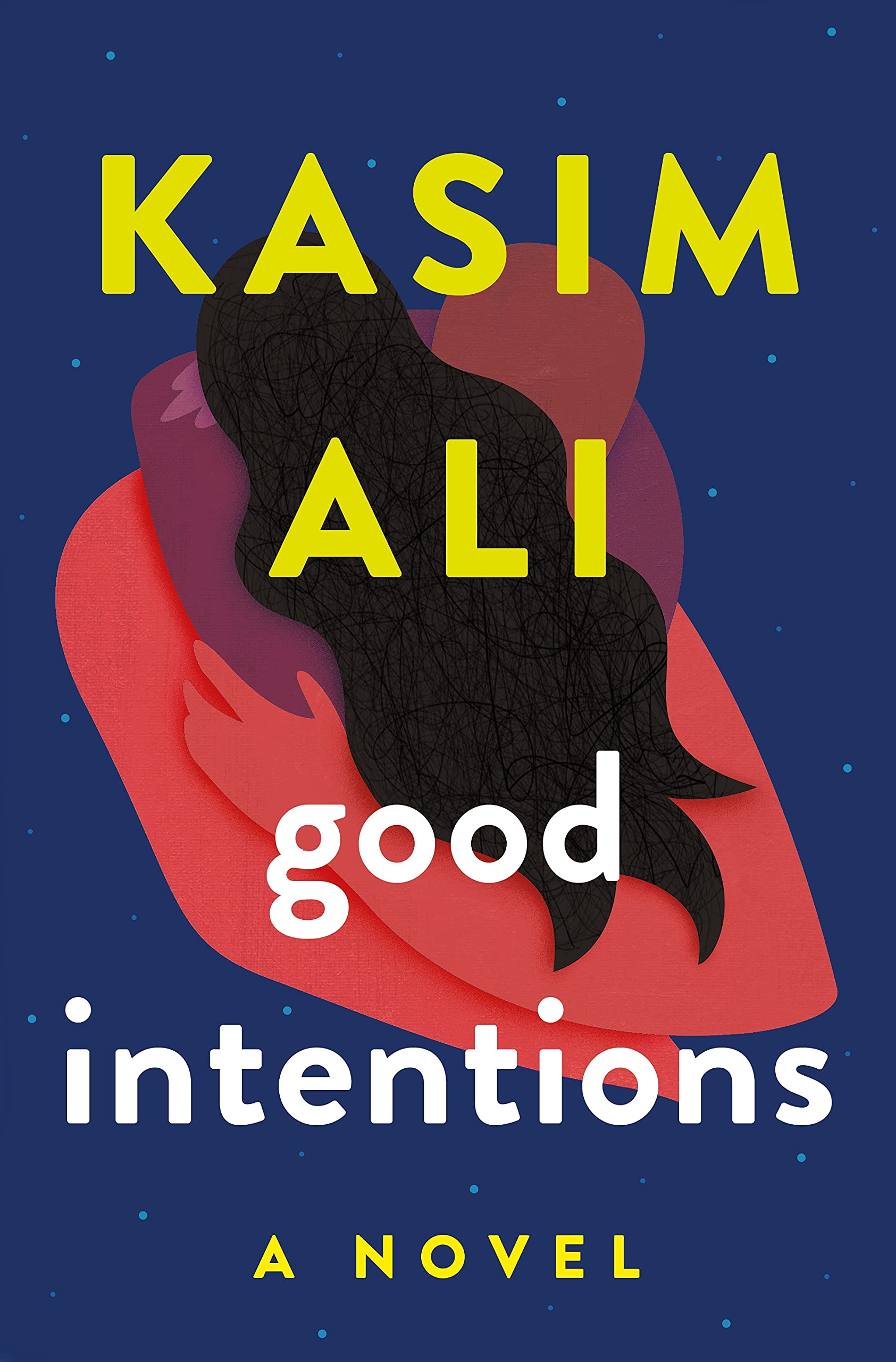
There is a reason that I read juvenile fiction: from board books to YA, but lately the “New Adult” category has really been tempting me.  Muslamic romance novels, often really need the protagonist to be looking to get married to make the plot work with some authenticity,  which means the main character usually needs to be a bit older than in their teens.  I decided to start my tiptoeing into the genre with this book, because I was intrigued at the racial and mental health themes that the blurb teased.  Sadly after reading the 288 page story, I still was waiting for more racial and mental health insight or enlightenment or perspective or deeper appreciation or anything really.  I kept reading hoping for more character growth, and to find out if the relationship worked.  I understand after finishing, that the book was intentionally more subtle and nuanced, and part of me appreciates it, but I still felt the book ultimately provided too little in either regard for me to feel satisfied or content that I had spent time with the characters.  The abruptness and harshness of the first few chapters, seemed disjointed from the dialogue filled introspective remainder of the book that showed so much potential, but left me feeling strung along for no real purpose.  The book covers mature themes of sexuality, drug use, racism, co-habitation, relationships, culture, mental health, and more.  The characters’ identify as Muslim, but aside from Eid prayers, iftar, and mentioning once that they should pray more, there is nothing religious practiced, mentioned, or contained in the story.

SYNOPSIS:

Told in a variety of timelines that all follow the relationship of Nur and Yasmina, the story begins with Nur finally after four years getting up the nerve to tell his desi parents that he has a Black girlfriend, and wants to marry her.  He leaves out that they have been living together for years, and the book then flips back to how they met and bounces around filling in the gaps that bring them back to the big reveal.

While in college, Nur had just broken up with Saara, but still goes to her fairly regular house parties.  At one such party he meets Yasmina, as a small group at the party sneak off to smoke pot, and he is immediately crushing.  His hungover broken-hearted gay friend Imran calls him out on it immediately, and his roommate Rahat chastises him for going to his ex’s parties.  Nearly all the main characters are met early on, and the rest of the book focuses on Nur and Yasmina growing closer through college, after school, through their early years of jobs and grad school, and the overshadowing of the fact that Nur has yet to tell his family about Yasmina, while Yasmina’s family is fully aware and fully supportive that they are living together.

All the characters are Muslim, but practice is pretty minimally detailed.  Yasmina tells Nur at their first meeting that she wishes she prayed more, and later it is mentioned that her parents were raised strict so they have raised their own children less so.  It is possible that Nur’s mom wears a scarf, but not clear either way, and they don’t seem to be bothered that she is living with her boyfriend.  Nur on one of his visits home goes for Eid prayers with his father, his mother and sister do not go, and it mentions that they are fasting.  Rahat does not find dating is for him, and wants to have a traditional arranged marriage, but it does not disclose if this is because of religious or cultural views.  Imran discusses his family praying and that he had to square away his sexuality with Allah swt more or less.

Nur and Yasmina’s younger sister have mental health afflictions.  Nur has anxiety attacks, and Hawa severe depression.  It does not label or identify or diagnose, this is my assumption, it does detail their experiences though, and how they affect those around them.

WHY I LIKE IT:

I actually enjoyed the writing style and the ease in which it flowed-save the beginning of the book. The beginning was a little crass, almost like the author was trying too hard to get the characters’ environment to read that they were in college.  The crude talking about sex and them talking about their parents’ intimacy and smoking and drinking and being vulgar, was in such contrast to the very subtle nuanced rest of the book that tried to show the layers of Nur and Yasmina’s relationships and lives.  Once I got through it, I genuinely wanted to know if they could make the relationship work.  No I’m not going to spoil it, but that really is why I kept reading.

I was disappointed that the book didn’t draw mental health out in the open.   I also wanted some religious based push back on racism.  It is a big thing in our communities and the book really could have had the characters argue it and make their points, right or wrong, for the disconnect between faith and culture.  It didn’t have to be preachy, or even mean that anyone changed their opinions, but it mentions numerous times, something to the effect of Nur’s parents being racist, but doesn’t detail why that is the suffocating presence in disclosing his relationship.  In four years I would imagine the opportunity to correct his parents way of thinking would have arisen, and he could have challenged it.  I get that might negate Yasmina’s point that Nur is racist, but I think it should have been made more clear then that he didn’t speak up when opportunities presented, otherwise it just seems unexplored and we, the reader, are expected to just accept the characters on face value, when the book really very easily could have nudged us, to self reflect and look inward.

FLAGS:

There is sex, and drugs, and lying, and racism, and all the other flags that adult books often have.  There is one “steamy scene” between Nur and Yasmina, but the rest of the relationship is very mild.  Nothing else is graphic in detailing their day-to-day living, or the day-to-day relationships of the other characters in the book: gay or straight.

TOOLS FOR LEADING THE DISCUSSION:

No. Would never, could never encourage unmarried Muslims living together, fictionally or otherwise.

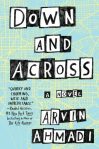
Down and Across: A Novel by Arvin Ahmadi

Standard
Down and Across: A Novel by Arvin Ahmadi

down and across

This 320 page book featuring an Iranian American lead written by an Iranian American is a coming of age story written on an AR 5.2 level, that I don’t think most reading this blog would want their child to identify with.  It is an OWN voice book from what I can gather in the author’s interviews online, and sure many Muslims definitely receive the label of “Muslim” more from others than from their own self identity, but I don’t know that many would want their children seeing themselves in the main character who runs away from home, hangs out in bars getting drunk, picks up girls as a challenge, and basically tells one lie after another, especially while being completely endearing and quirky and someone you really find charming.

SYNOPSIS:

Sakeet Ferdowsi aka Scott, is an only child of Iranian immigrants who really love him and want him to do well in life.  The story opens with 16 year old Scott chatting with his dad at McDonalds about his lack of direction, his lack of interest in his summer internship, and his parents leaving him alone for the summer as they journey to Iran.  Sakeet’s dad tells him of a professor at Georgetown University who writes about “grit” and how grit, not wealth or IQ is the greatest predictor of success.  With a track record of not seeing things through, Scott is told he needs to find some grit and some direction in life.  Drawn to this idea, Sakeet lasts a few days at his mouse poop research internship before become obsessed with grit, jumping on a greyhound bus and heading from Philadelphia to Washington, D.C. to get help face-to-face with Professor Cecily Mallard.

On the bus, he tries to position his backpack to prevent having a seatmate, but a college girl, calls his bluff and forces him to chat with her.  Fiona is not like most people with her free spirited ways and her love of crossword puzzles, and with her now in his life, Scott’s four week DC adventure is set to be memorable.

While in DC Scott learns a lot about himself from the people he meets, the situations he finds himself in, and in general the freedom from his parents.  He is mistaken as a college student and keeps the ruse running to everyone he meets outside of Fiona, Professor Mallard, and Trent.  Trent saves Scott after he crashes a stolen bike (he didn’t know it was stolen) and is being chased by its owner.  They quickly discover they both know Fiona and the big hearted southern helps Scott get a fake ID to get in to bars, and a job working behind the bar to pay for his time in DC.   Trent dreams about working with his favorite senator, which is a big part of the climax, as is the fact that he has been cut off by his well-to-do family because he is gay.  Throw in an ultra conservative “girlfriend” who Sakeet picks up on a dare at the National Zoo and Sakeet to discover if in fact he has grit.

WHY I LIKE IT:

The book reads really easy and smooth, hence the middle grade AR level, but I don’t think any elementary kids should read it, or even middle school for that matter.  As a coming of age book, early high school would probably be the best fit, but with such a focus on drinking and bars, and sex I kind of feel like the rave reviews are coming from adults who find the antics quaint and idyllic as a way for Scott to grow, not as something they would want their own child to identify with.  Online reviews praise the person of color protagonist and the Muslim representation, but really I don’t find either of them overtly influential in the story.  Yes, Scott is straddling two worlds as a child of immigrants and must balance parental expectation with his own mysterious wants (he doesn’t know what he wants), but I don’t know that culture or religion shape him other than his parents not letting him go to overnight camps growing up.

When he is called a terrorist by a drunk guy, or dumped by a girl for being Muslim, he takes it, he doesn’t deny it, but he doesn’t let it really rile him either.  At one point Scott amends Fiona’s statement of calling him a Muslim.  “‘ish,’ I said.  ‘A long time ago I asked my parents what religion I was, and accepted what they told me.  Haven’t gotten around to reevaluating it or whatever.'”  Other’s call him a Muslim, but I don’t know that he every really says it himself, which ironically I kind of appreciate.  In a few phone conversations with his parents he says “Salam” or “inshaAllah,” but there is no Islamic practice or conscious or even expectation in the book.  I think for readers they will respond to Sakeet and his faith based on where they are in life.  For Muslims, they may find such a careless label frustrating and belittling, or possibly relatable.  Non Muslims may understand Sakeet’s practice means Islamic rules are not followed, and those that do follow them more “extreme.”   Islam is fluid and we are all flawed, so I don’t expect a fictional or real character to be perfect, I’m just pointing out what my concerns would be to have this book in an Islamic school library.  As a reader, I appreciated that the author had the character articulate that he is Muslim-ish only, and have other people call him Muslim and have him not constantly use his faith and culture to set himself apart.  He is fallible and growing and he has a lot of parts to his persona not just these markers.  Incidentally the parts he is exploring and questioning and learning about himself as he looks to his future don’t involve Persian culture or Islam.

FLAGS:

Alcohol, getting drunk and hungover, cursing, some violence, theft, nudity, kissing, talk of sex, sexting, talk of making out, a gay character, lying, drug addiction, getting high.

TOOLS FOR LEADING THE DISCUSSION:

I wouldn’t use this book as a book club selection because of the themes and inconsistency of values, also because of the inconsistency of topics and writing style.

Author’s website: https://www.arvinahmadi.com/

Interviews with author:

https://mashable.com/article/mashreads-podcast-down-and-across-arvin-Ahmadi/

https://ew.com/books/2017/08/03/the-hate-u-give-author-angie-thomas-interviews-arvin-ahmadi/

https://www.npr.org/2018/01/27/580837850/a-puzzled-teen-seeks-answers-and-finds-crosswords-in-down-and-across


Love from A to Z by S.K. Ali

Standard
Love from A to Z by S.K. Ali

love from a to z.jpg

Now that there is legitimately a genre of YA Islamic Romance out there told in Own Voice, the expectations are high that a book is compelling, realistic, and unique somehow.  While the author’s first book, Saints and Misfits was pretty ground breaking, this 342 page was a great read, but not nearly as remarkable or memorable.  Granted it is not fair to compare the two books, and each day I do age out of the target demographic, but while the story reads authentic and true, albeit a bit serendipitous, it doesn’t have the teeth or grit I was kind of hoping for, and with a mother who suffers from multiple sclerosis my emotions were pretty invested.

SYNOPSIS:

Told from both Adam and Zayneb’s perspectives by way of their individual “Oddities and Marvels” journals, our two characters are presented by a narrator who keeps their story on track and interjects when their versions of an event differ. 

Zayneb is a high schooler and activist who has recently been expelled for threatening a teacher who consistently lets his Islamaphobic beliefs take over the days lessons.  In an environment filled with micro aggressions against Muslims, Zeynab’s parents are at a loss at how to keep their daughter from making waves, and thus allow her to leave her Indiana home a week before spring break to visit her aunt in Doha, Qatar.

Adam is at University in London where he has recently been diagnosed with MS and as a result has stopped going to classes, and is literally “making” the most of the time he has by making things.  As the term ends and he officially withdraws from school, he heads home to Doha to tell his dad and sister that he has the same disease that took his mother’s life years early.

The two characters meet at the airport briefly and then again on the plane and then at Adam’s house and the needless to say  their accidental meetings allow for friendship to grow, attraction to be built upon and a relationship to develop. Both characters have their own lives and own obstacles and own maturity that needs to occur in order for a happy ending to take place, and thus the book keeps you interested, invested and cheering them on.

WHY I LIKE IT:

I love the dynamic of how the book and characters are set up.  Both are practicing Muslims, both characters don’t cross a line, both characters have diverse mixed cultural backgrounds, and one is a convert and the other the daughter of a convert.  She is fiery and impulsive and emotional, he is pragmatic and calm and quiet.  While they have some background in common, their life experiences are rather different and it is very much a story about opposites attracting.  

I’ve been waiting for this book to come out, and so I knew my expectations would be too high.  That being said the book warns it is a love story and in some ways, that was what I kind of felt was lacking.  There was the physical attraction that was mentioned fairly often, but the deep connection of ideas or growing seemed a bit lacking.  

I really liked Adam, and his internal stresses and struggles and coming to grips with his disease seemed pretty developed.  Somehow though, and I’m probably in the minority, I didn’t love Zayneb.  She is impulsive and definitely learned and grew from the start of the book to the end, but I didn’t love her nuances with dealing with the Emmas and her friends back home and unraveling her teacher, it felt kind of forced and I can’t articulate why.  I’m glad she matured and she got answers about her grandmother, but maybe I should have felt so much in common with her and when I didn’t, I felt a little irritated.  Clearly I get too invested in fictional characters, I’ll admit that.

I like that Islam is presented in a non defensive way.  The parents aren’t evil, there is no rebelling, even the awful teacher spawns backlash and allies to Zayneb and her cause. There is no apologizing or overly explaining if the characters are pushing boundaries established by Islam or if they are establishing their own boundaries based on their understanding of Islam.  I like this, because it shows that Muslims are not a monolith, we are not one way good or bad.  Zayneb covers and prays and has friends that are boys and her family is kept in the loop of what she does, which alone breaks so many of the predominate stereotypes about Muslims.  Adam himself converted at age nine and plays the guitar and has friends that are girls, and is close to his sister, and likes dogs.  A side character is noted to be incredibly religious, but doesn’t cover.  The story takes place in an Islamic majority country, but attitudes at the swimming pool don’t allow Zayneb to dress modestly while she swims.  

Overall, the book is a delightful read that manages to keep the religious integrity in the characters and show their personalities as they come of age.  It may not be memorable years after reading, but what you do remember will be positive, and while you are reading it, you will have a hard time putting it down.

FLAGS:

There is angsty romance, and talk of sex.  The two main characters keep it pretty clean, but the side characters joke about hooking up, being horny, and sneaking off to hotel rooms.  The non Muslim aunt has a secret alcohol and cigarette stash that she gets called out on, but nothing more is mentioned about it. I think 9th or 10th grade and up will be perfectly ok to read.

TOOLS FOR LEADING THE DISCUSSION:

There is a lot to unpack in this book and I think if one just listens, teens will naturally add their own opinions and perspectives on EVERYTHING the characters experience, feel, question, and cope with.  The book just came out, but I would imagine that over time discussion questions will appear.

Author’s website: https://skalibooks.com/books/

Interview with the author: https://www.barnesandnoble.com/blog/teen/an-interview-with-s-k-ali-author-of-love-from-a-to-z/