Tag Archives: Arabic

Kareem Between By Shifa Saltagi Safadi

Standard
Kareem Between By Shifa Saltagi Safadi

img_3395-1

It doesn’t matter how many Word documents you read, Goggle docs you add comments to, and screen shots you revise; to hold a physical book in your hands that you have been blessed to observe from the sidelines through numerous revisions, is mind blowing.  Reading the final version from page 1 to page 324, plus the backmatter, has left me at a loss for words with tears streaming down my cheeks. I truly cannot imagine the book any other way. All past drafts and storylines, were just stepping stones to get the book to this version, and as a fan of literature my whole life, to see this metamorphosis in real time has added to my respect and admiration of authors.  Enough about me though, this review is of the middle grade novel in verse that tells the story of Syrian American Kareem, a loveable boy caught in between choices, siblings, friends, labels, and global acts beyond his control.  He makes mistakes, he tries to make things right, and at the center of it all is his Islamic identity, love of football, and genuinely good heart.  I am biased in that I have self appointed Kareem as my nephew, but even after dozens of readings, I was moved to tears three times during the course of this reading.  I made my teens read the book and they loved it, and like them, we hope we get more Kareem in the future.
img_3541-1

SYNOPSIS:

Kareem loves football, particularly the Bears, and dreams of seeing his Arabic name on an American jersey one day in the NFL.  Unfortunately, he hasn’t made the school team, his best and only friend Adam has moved away, and the coach’s son is offering to talk to his dad for Kareem in exchange for some school help.  Add in a new Syrian kid at school, his mom going to Syria to take care of his grandfather, and the fruition of Executive Order 13769 aka the Muslim Ban, and seventh grade has Kareem scrambling on every down to say the least.

img_3543-1

WHY I LOVE IT:

The football framing, the literary inclusions, the Arabic, the Islam, all combine with such tangible heart to create a seamless read both as a compelling story and as an example of literary craft.  The language is on point and intentional, that even if you don’t know the character or novel referenced, the Arabic words included, or football terminology used, you will be invested in the characters and plot, and find yourself cheering for Kareem.  Often debut authors show promise, but their stories have plot holes, or pacing issues, or inconsistencies, that is not the case with this book.  The crumbs are there that tie everything together, the depth of the characters’ personalities reveal how developed they are, and the timeline keeps the book moving forward.  There are no dry or slow spots in the entire novel, it is easily read in one sitting as you find yourself nervous for Kareem, and curious how it will resolve.

Boys and girls, Muslims and non Muslims, Arabs and non Arabs, all will find themselves drawn to this book, and thinking about the characters, particularly Kareem, long after the final page is read.

img_3544-1

FLAGS:

Some stress and anxiety with missing parents.  Death, bullying, cheating, fighting, lying, racism.

img_3540-1

TOOLS FOR LEADING THE DISCUSSION:

The book is a solid middle grade, but the quality of writing and engaging plot makes it work for a middle school book club read as well.  I cannot wait to share this book widely.

Preorders speak volumes and I truly hope if you are able that you will preorder a copy, you can do so here.  Requesting your local public library to shelve the book is also a tremendous help to signal to publishers what type of stories and OWN voice authentic representation consumers will support.
Insha’Allah, No, Maybe So by Rhonda Roumani, Nadia Roumani illustrated by Olivia Aserr

Standard
Insha’Allah, No, Maybe So by Rhonda Roumani, Nadia Roumani illustrated by Olivia Aserr

img_2711-1

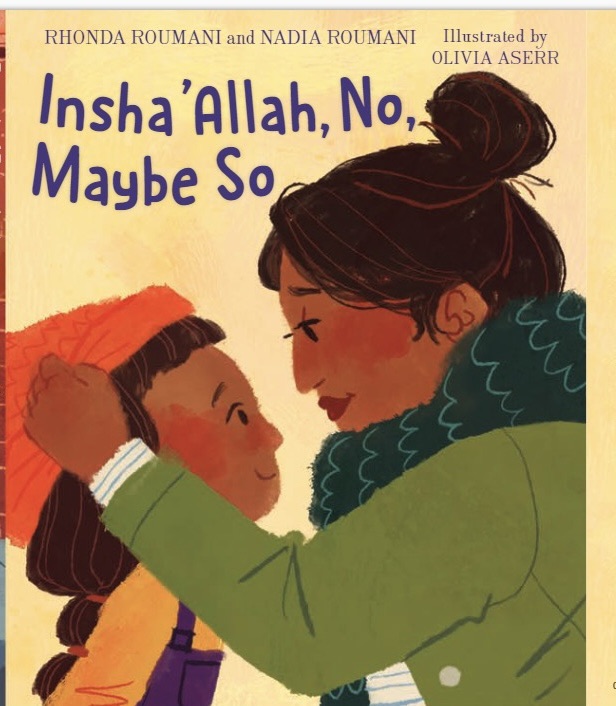
Not every funny thing a child says can be copied and pasted into a children’s book.  And while I have no doubt that this book was edited and revised numerous times, it sure feels like a conversation or 20 that I’ve had as a mom, a teacher and a librarian over the years.  Well, I take that back, the mom in this book, is very articulate, and not nearly as exasperated as I’m sure I always am.  It is so on point that it makes me truly wonder, are you even a Muslim parent if you haven’t been asked what Insha’Allah means? The backmatter articulates that Muslims and Arabs of all faiths use Insha’Allah. The text and illustrations themselves are not Islam specific, but the authors are Muslim, and the term always on the tip of our tongues. It is very relatable and impossible to read without smiling, I can’t wait to share it, insha’Allah. (See what I did there? ya.)

img_2715-1

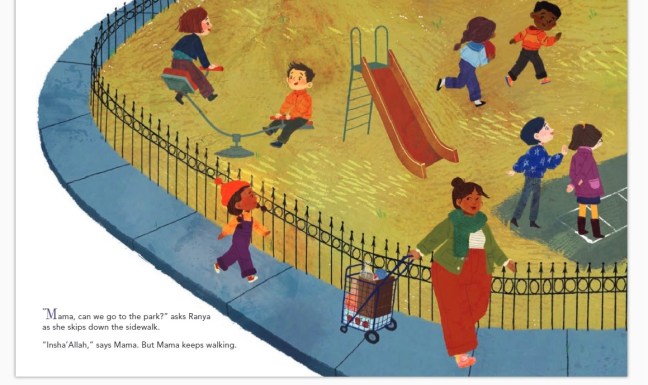
The book starts simple enough, a little girl asks her mom if they can go to the park as they walk near one, and mom says, “Insha’Allah,” and keeps on walking.  Ranya gets upset asking why she said no, and the mom explains that insha’Allah doesn’t mean no, it means God willing.

img_2712-1

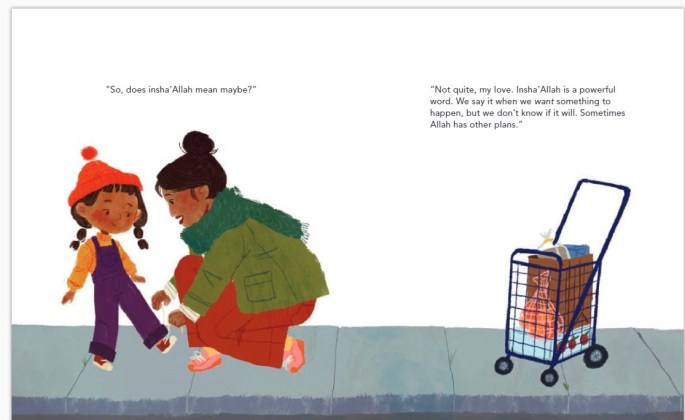
Ranya doesn’t just accept the answer and move on, she tells her mom it always feels like no, until her mother explains that we can want something to happen, but sometimes Allah has other plans.  Ranya presses her mother a little more trying to understand if insha’Allah means, maybe.  A few more examples are shared, and the definition is expanded to also mean, hopes and dreams.

img_2713-1

Ranya wants to pin down her mom on some of the insha’Allahs, making cookies, a sleepover, a trip to Disneyland.  Mom does her best, but Ranya is spunky and makes sure she gets the last word in.

I love the note at the end that ties it all together and shows the universal appeal of the word.

You can preorder your copy here

img_2714-1

Daughters of the Lamp by Nedda Lewers

Standard
Daughters of the Lamp by Nedda Lewers

img_2600-1

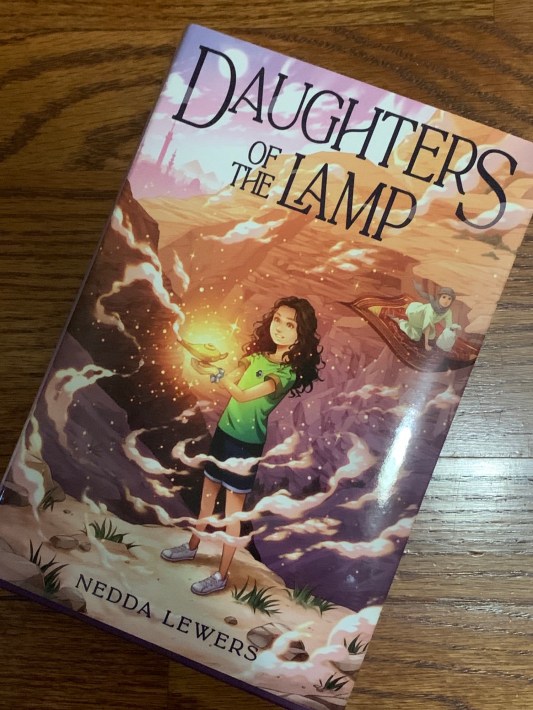
This 352 page middle grade fantasy grounded in Egypt and America didn’t initially impress me.  In fact the first few chapters felt a little forced, the voice a little off, and the threads of Islam were making me a little bit nervous, but I was advised to keep reading by a trusted friend (@muslimmommyblog), and so I did.  And I really don’t know when it happened, perhaps when Sahara finally got to Egypt, but truly the slow quiet book won me over.  It has a lot of heart and I found myself throughout the day thinking about the story, trying to sneak a few minutes here and there to read just a little bit more, and staying up past my bedtime to finish.  That isn’t to say the book is perfect, but it is a solid read despite some plot holes, and a 12-year-old protagonist who seems to not really practice Islam even though her dad and family do. If you do not feel that Islam allows for fantasy books with magic, then steer clear of this.  If you are fine with it or on the fence, know that the book quite often articulates that Allah swt is always the creator in charge of everything, but there are magical elements, fortunes told, and evil deception.  I’ve never seen anyone read tea leaves or coffee grounds, let alone believe in them, if it is something that culturally you have seen and find reflect sihr, know that it is present in the story, but it absolutely clarifies, that Allah swt is the one who controls the future.  I don’t think any reader of any age would think this story is or could be real.  I would be comfortable with middle graders reading this book.  It is long, and a bit dense for early middle graders, but it is clean, and really centers family, being a good friend, and working together to save the day.

SYNOPSIS:

Sahara Rashid is tired of being teased as being the only kid who hasn’t gone to Merlin’s Crossing, when 6th grade comes to an end, she is hoping the surprise her dad has for her is a trip to the amusement park.  Instead they are going to Egypt, her first trip there ever.  Her maternal uncle is unexpectedly getting married and her dad and her haven’t been back since her mother died giving birth to Sahara.  Shocked by the news and desperately disappointed, Sahara goes to bed and dreams of her mother. When she awakes, her aunt, her father’s sister and mom’s friend, has a necklace for her and a message that matches her dream.  Interspersed with Sahara’s story is Morgana’s.  A girl long ago who is a servant to a mawlay, Ali Baba, who has been tasked to guard treasures: lamps, apples, flying carpets, and the like.

When Sahara gets to Egypt her adventures begin, she meets her cousins, Fanta and Naima, and Sittu, her grandma, who she has always feared blames her for her mother’s death, but finds instead a loving matriarch who welcomes her wholeheartedly.  She also meets the bride-to-be a woman named Magda, a woman the cousins call, El Ghoula, the witch.  When someone tries to break into the family’s grocery store, Sahara’s necklace goes missing, and El Ghoula starts to act suspicious, Sahara and Naima formulate a plan that backfires tremendously and will test their trust, determination, and ability to save the day.

WHY I LIKE IT:
I love that Islam is woven in, but I truly do not understand how Sahara’s dad prays five times a day, her aunt in the USA who lives with them prays, but not regularly, but Sahara doesn’t pray.  Her mom wore hijab, but she doesn’t know much about hijab, yet is incredible self-conscious that she doesn’t wear it, while simultaneously being comfortable in shorts.  She also questions her dad why she needs to cover her head in front of the imam, and she brings it up a lot with her cousin Naima, who does cover.  It feels like it comes from a place of love and respect, and probably real conversations, but it seems stilted and vague which I feel like some sensitivity reading perhaps would have helped with.

The beginning of the book really sounds outdated, but I’m not sure why.  It reads like an older person trying to write a young protagonist contemporary voice and it doesn’t work, it is even cringey at times.  Once the action picks up, the voice and tone and pacing is fine, but truly the first few chapters of Sahara are cumbersome.  I do not understand why Sahara is constantly homesick.  She is on vacation and is not going to be in Egypt for two weeks, and the regular insertion that she is missing home and counting down days, is very odd.  If she was suddenly living there, or staying months, perhaps it would make sense, but truly it initially really makes liking Sahara yet another obstacle in the early chapters, that has to be overcome.  By the end, she is very likeable, but those early chapters don’t connect her to the reader which is unfortunate.

The story and action are fun, the relationship building with the family is very tender and sweet.  Her helping her cousin in a street dance battle and feeling the love from her grandma are cathartic and memorable.  Plot wise there are some holes, like how did all the sleeping victims get home, where is the dad’s family, why didn’t the mom know the family secret, why did the family let Sahara’s mom leave, how did Sahara’s mom and her paternal aunt know each other, and why doesn’t Sahara pray and why hasn’t she ever heard the fajr athan before?

FLAGS:
Magic, lying, music, dancing, evil, plotting, scheming, killing, murder, dying, theft, poisoning, attempted kidnapping, slander.

TOOLS FOR LEADING THE DISCUSSION:

This would be a fun book to read aloud in a classroom setting during lunch when it is too cold to go outside.  I think it would be fun for an upper elementary book club as well.  I think kids will reach for it, and with a recommendation will get through the first few chapters to be swept away on a magic carpet,  enjoying the story.

Tagging Freedom by Rhonda Roumani

Standard
Tagging Freedom by Rhonda Roumani

20801TaggingFreedom

This 282 page OWN voice middle grade book weaves together two points of view that shed light on the recent events in Syria and life as a Syrian American without self-othering or over-explaining.  The characters are Muslim and while yes, I wish there was more Islam woven in,  when it did present itself in more than just a passing “inshaAllah” or “ya rab” it was heartfelt and sincere.  The book has a few plot holes, a plethora of underdeveloped characters, and the religion and cultural components take a backseat to the tropey MG themes of finding your voice, friendships, crushes, fitting in, and having hope. Despite my critiques though, I still found the book focused around graffiti and spirit squad, engaging and hard to put down.  The pacing makes for an easy read, and while the adult reviewer in me wishes there was more depth, insight, consequences, and Islamic references, I definitely appreciated the emotion and framing of this story.  The book does contain a lot of lying, crushes, sneaking out, “vandalism,” breaking laws, and mentions bombings, disappearing, and fear.  The connection though of what has been left behind and experienced in Syria is moving, and I’m glad that a book so relatable to western kids is widely available to be shared with them.

SYNOPSIS:

The chapters alternate between Kareem and his cousin Samira, aka Sam. At the beginning of the book Kareem is in Syria, spending time with his friends graffitiing in protest of Bashar al-Assad and in support of the boys from Dara’a.  They are covering their tracks, sneaking out to join rallies and finding their strength in their art, common goals, and the change that is taking over the country.  Unfortunately, his parents don’t see it that way and decide he needs to be sent to live with his uncle’s family in Massachusetts for his own safety.

Sam is Kareem’s cousin, she is great at reciting Quran, she has a best friend Eleanor who lives across the street, and is an amazing artist.  She sees people as fonts, and dreams of being a part of the school spirit squad.  Her only real problem is Cat, a girl that has bullied her for years and spread rumors about her in the past.  It is never quite articulated what was done and how bad it was, but the fact that Cat is the head of spirit squad, the daughter of influential parents, and the twin sister of Sam’s crush Dylan, has Sam trying desperately to fit in.

When Kareem arrives, he is not happy to be in America.  He calls Sam out for her inability to speak up and with Sam and her bff Ellie on the outs, Sam heads off to her new friends that have allowed her into spirit squad, and Kareem and Ellie start sharing their art around town.

Kareem’s character arc is more subtle, but Sam/Samira, finds herself with the help of her cousin as she channels the yearning of Syrians to set her free in America.

WHY I LIKE IT:
I love that it is Syrian American OWN voice MG, the news cycle has moved on, but stories are so critical to reminding the privileged outsiders what has occurred and continues to endure, so just that this book exists, is a positive for me.  I like that the code switching of being Samira and speaking Arabic at home is so clearly contrasted with Sam at school.  I struggle with the idea of dating not being a religious, but rather a cultural no-no, and her being so obsessed in the beginning with Dylan and then Amari is a bit of flag. By the end they feel like friends, but it is definitely a big part of the first half of the book that could have used some context, same with when she goes out in a tank top.  I wish there was a Muslim conscience that enters the story, to see Sam grappling with who she is from a faith perspective would have been nice.

I love that Kareem comes to America and starts school, it doesn’t have him being meek, or struggling to transition, it really is empowering that he breaks that stereotype just by allowing him to be seen from the very first day as strong and fully fleshed out.  Yes, in real life and in some books the adjustment is a plot point, but in this book it is not, and the author seems to not indulge in it deliberately.

I struggled with a few plot holes. I get that Kareem was frustrated and wanted to educate and be heard, and when Sam can’t stick up for herself and he calls her out, they are both annoyed, but to go from that to graffitiing is a big step.  A few instances of maybe trying to talk about Syria being shut down by teachers, or friends, would have made it a more logical leap.  I worry a little that there wasn’t enough hand holding regarding graffiti as a whole seeing as it is an MG book.  I understand it is expression and art, but there is some element of vandalism to it as well, and because it didn’t connect the dots that street art was the only way to be heard, I bring it up for awareness.

I needed closure on Cat, I didn’t like that we didn’t know more specifics about her torment or her thoughts at the end.  I know the story is not about her, but she was important for much of the story and to have her fade seemed a little short sighted.  I liked Ellie, but her wanting to sticker everything seemed in contradiction to her environmental activism.  Sam’s parents are barely a blip on the radar, and even some details about the supporting cast, really would have made the story that much better.

FLAGS:

Crushes, immodest clothing, lying, sneaking out, boy/girl friendships, boy/girl hugging, vandalism, breaking the law. Hearing about bombings, being taken away by the police, death.

TOOLS FOR LEADING THE DISCUSSION:

I don’t think I would use this for book club, but I would have it on the library and classroom shelf.

Under the Sana’a Skyline by Salwa Mawari illustrated by Mary Charara

Standard
Under the Sana’a Skyline by Salwa Mawari illustrated by Mary Charara

img_2034-1

For the last 100 days it seems the only time I truly smile is when I see images of Yemen standing with Palestine.  It is impressive, so very inspiring, and equally humbling as well.  Sadly, there are not many children’s books celebrating Yemeni culture, heritage and joy available to us in the west.  This book published in 2022 is set in the war, with memories of easier times peeking through.  When Belquis is assigned to write an inspirational story about Yemen for a global contest, she is at a loss of what to write about as she is surrounded by “bombings, fighting, blockades, loss, and poverty.” This 38 page picture book is text heavy, admittedly it isn’t particularly literary or memorable, but it shows a culture and traditions that need to be shared with our children.  The media and talking points dismiss the rich history of the countries we are attacking in attempts to dehumanize those affected.  This book does not get political or even name the sides in the conflict, it simple shows a girl and her sister rediscovering their city, their history, and their peoples’ kindness and generosity.  I hope more books about Yemen will enter the marketplace, and I pray for the bombings to stop.

img_2035-1

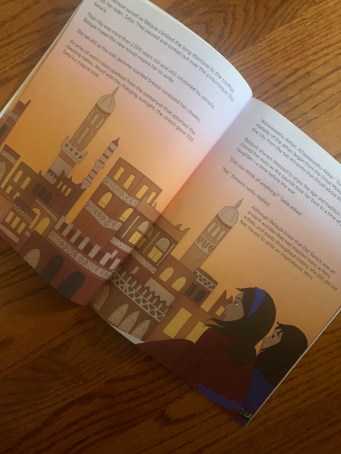
Set in Old Sana’a Belquis dreams of being a writer, but when assigned to write about something “inspirational” she is at a loss. Her geddah encourages her saying that “Some of the most inspirational stories arise from hardship.” Her father encourages her, and her younger sister Saba, to go to the roof and look out from a “bird’s-eye-view.” At maghrib time as they listen to the athan from the Great Mosque they look out at the 2,500 year old city and the qamariyat sparkling in the changing sunlight, but don’t feel inspired.

img_2036-1

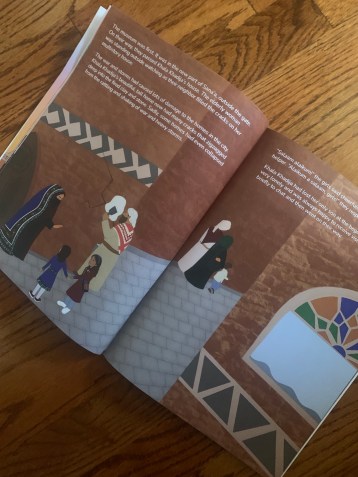
Beliquis briefly laments the looming deadline and the lack of sabaya to eat, but decides to go story hunting by taking Saba and rediscovering their ancient city.  They pass Khala Khadija’s crumbling house as they head to the museum where they are reminded about the Queen of Sheba, Yemen’s original name Arabia Felix, and Queen Arwa.

img_2037-1

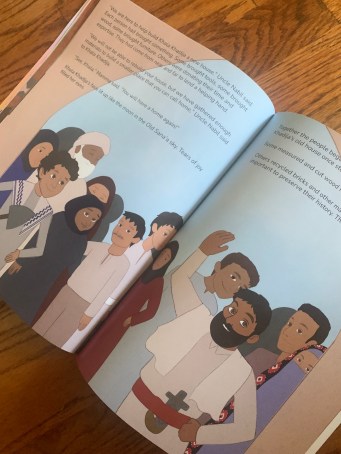
As they leave the museum and head to Souk al-Milh they pass lines of people looking for handouts of food and waiting in line for fuel. When the war started, the tourists stopped coming, so the girls are free to browse, and end up using their pocket money to buy bakhoor for their mother before heading back home.  Heavy hearts make them wish they had instead given that money to a hungry family, and when the cracks from the weather and bombs destroy Khala Khadija’s house completely, the girls, their family, and their entire neighborhood will show the inspiring generosity and spirit of the Yemeni people.

img_2038-1

As always, with most every book I read,  I wish there was a map, and while there is a glossary, I wish there was a more robust backmatter section with actual photographs of the many places, foods, items mentioned in the story. This book is important, seek it out, urge your libraries to shelve it. Learn about Yemen, make duas for the people suffering, hurting, and standing up for the oppressed, ameen.

From Here and There by Larissa Olinda illustrated by Herry Prihamdani

Standard
From Here and There by Larissa Olinda illustrated by Herry Prihamdani

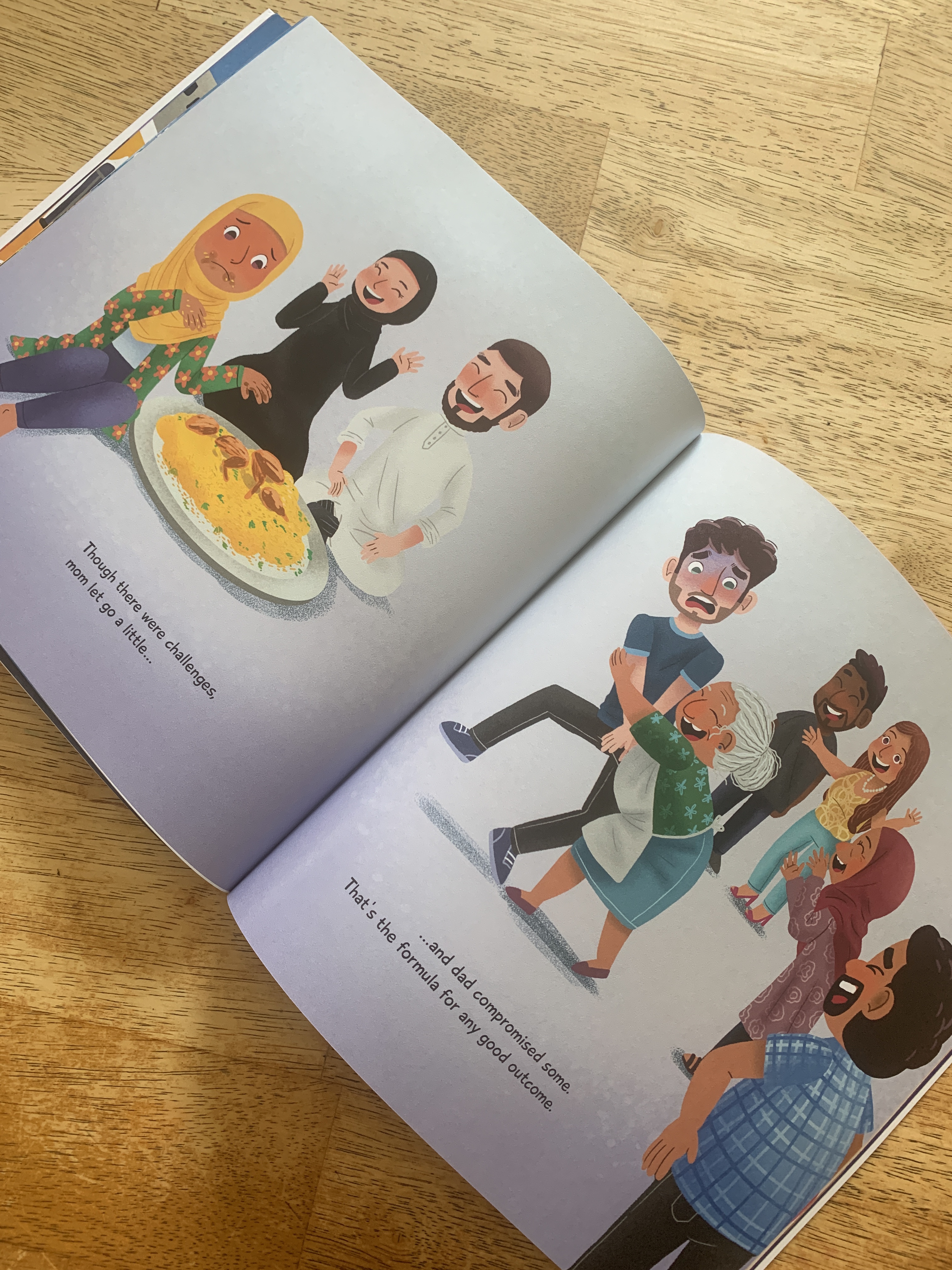
This sweet rhyming picture books discusses, focuses, and celebrates being a multicultural child.  Not the often seen child of an immigrant living in a society that is different than their parents, this story doesn’t even discuss where the child in the story resides, it just joyfully explores having a Brazilian mom and a Saudi father, while centering Allah swt in bringing them together.  The book highlights each culture, notes some differences, and acknowledges compromise, making this a reflective book for kids with parents from different cultures, but also a window of coming together that all readers can enjoy. Toddlers to early elementary will enjoy the 31 pages with bright engaging pictures and introduction to cultures and a topic not often seen in Islamic fiction, or any books for that matter.

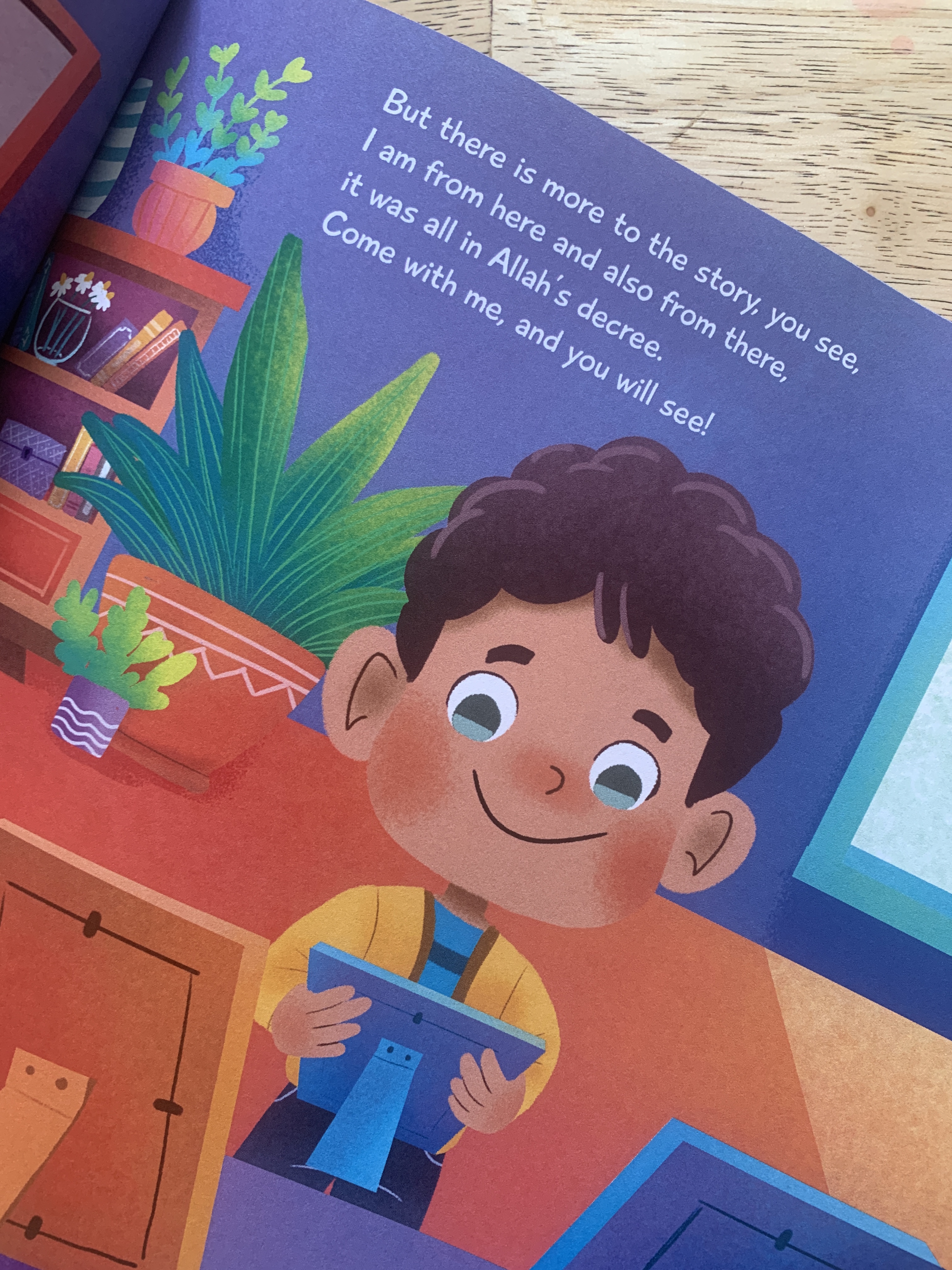
The book is told from the child’s perspective as he breaks down his appearance and him being half his mom and half his dad.  He discuss the different sounds of Arabic and Portuguese, how meals are eaten, time is spent, people dress, and handwriting looks, without belittling or othering either culture.

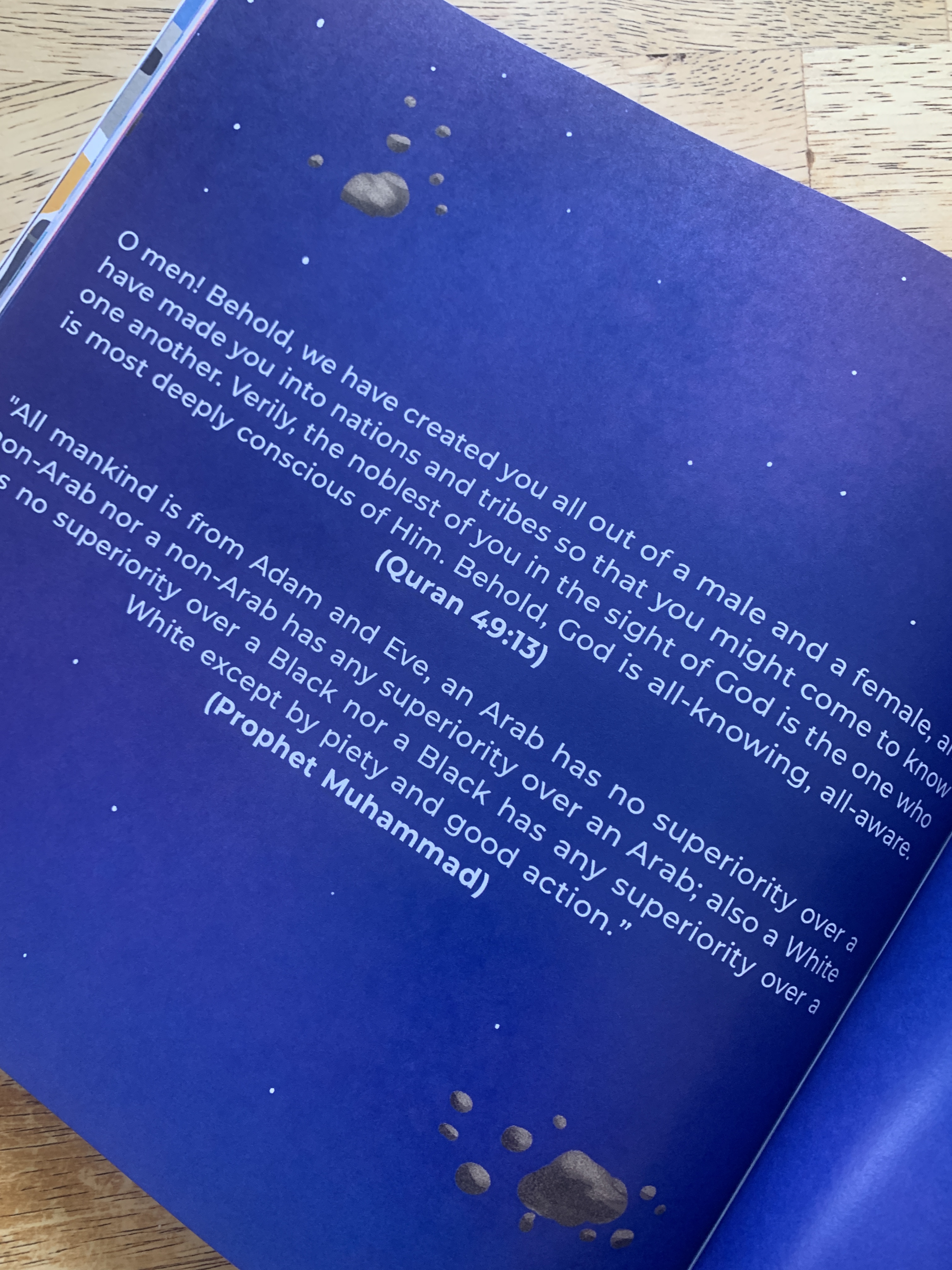
The little boy circles back numerous times that this is all Allah’s decree, that brought his parents from different parts of the world together.  It shows challenges and compromise at time, and ultimately love and smiles.  The book concludes with helping readers like him to feel seen and articulates Prophet Muhammad (saw) saying that no person is better than another based on where they are from.

The book concludes with an ayat from the Quran and a hadith, and is based on the author’s life. I can really see this book being used in a class as an introduction to a lesson asking kids to write their own family traditions coming together. It also works well at bedtime, or anytime.

You can order the book here

Sitti’s Key by Sahar Khader Ali illustrated by Noor Alshalabi

Standard
Sitti’s Key by Sahar Khader Ali illustrated by Noor Alshalabi

sitti key

I try and buy, read, and review every children’s book about Palestine that is published, it is the least I can do.  I also try not to compare them to each other as they present different aspects of oppression, perspectives of strength, examples of joy, and messages of hope, even among many similar themes of food, keys, traditions, and culture.  I really appreciate that this book though is incredibly blunt.  It isn’t lyrical, it isn’t poetic, and as Israel is bombing Jenin as I write this I’m glad it doesn’t mince words about the Nakba. I do think caregivers though, should probably read it first as it might be a little triggering for sensitive children.  The story is OWN voice and probably best suited for middle elementary aged children.  It is perhaps also worth noting that the book could be seen as making Jews synonymous with Zionists.  The characters are Muslim, Islamic phrases and Arabic terms are sprinkled throughout, and even despite the pain the family has endured, the book stays hopeful and proud.

Sitti is coming and Amal is excited, it has been two years since she last saw her.  She loves how excited her mom and grandma are to unpack gifts of olive oil, dates, and zataar from friends.  Amal isn’t sure what to do with the “old lady thoub” she has been gifted, but she smiles in appreciation none-the-less.  When Sitti pulls out an old key, Amal starts to ask her about it, but her mother shuffles her off to bed.

The next day at school, Amal has to work on a presentation about “culture,” but there are no Palestinian books in her school library, so she just watches the other kids.  At home they eat and listen to Sitti’s stories of long ago in Haifa, and Amal asks her why she left Palestine.  Despite her mother trying to redirect, Sitti says it is time she knew about the Nakba.

Sitti tells about living on the land for generations and how the Jews believed the land belonged to them.  In 1948 the British decided Palestine would be the homeland for the Jews.  Armed men came and arrested anyone who tried to stay in their homes. Sitti’s brother was handcuffed and never seen again.  The family grabbed what they could including the key to their home as they made their way to a refugee camp in Lebanon.  They stayed for three years, before making their way to America.

When Sitti concludes her story she hands the key to Amal and her hope that she will return to their home inshaAllah.  Feeling the pride and warmth of home, Amal has a determination to reclaim her heritage and share her “culture” with her classmates.

The illustrations are sweet, the mom and Sitti wear hijab even in the home, and the inshaAllahs and salams come naturally. The book does not stop to define zataar or marimya, which helps the flow. I also like how it shows that there aren’t books about Palestine in the school library, it is strong and important detail.  I don’t understand where Sitti is coming from though, it would seem Palestine as she is bringing gifts from friends, but in the story it says after Lebanon they made their way to America, so I’m not sure where Sitti lives, and how the logistics of the family work to be honest.  I also kind of wish there was a  recipe for zataar in the book and lyrics with translation for the song the family sings.

Book is available on Kindle or can be ordered from www.littlehibba.com

I Was Their American Dream: A Graphic Memoir by Malaka Gharib

Standard
I Was Their American Dream: A Graphic Memoir by Malaka Gharib

img_7800

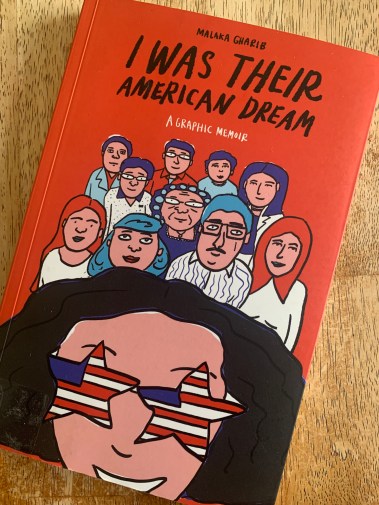
I was hesitant to read the book, afraid it would pit the author’s two cultures (Egyptian and Filipino) and faiths (Catholic and Muslim) that her parents identified with against each other.  Raised as the daughter of immigrants from very different backgrounds in California I was very pleasantly surprised that the book leads with heart and positivity for the unique, yet universal feelings she experienced in her life.  The short 156 page red, white, and blue filled pages are funny, poignant, and reflective, that I think high school readers and up will enjoy spending time in Cerritos and Egypt through the eyes of Malaka.  It is easy to say that you can’t be Muslim and Catholic, but she doesn’t opine on the right or wrong of it in large terms, she discusses her life and her own situation.  As a teacher I would see students that would attend Islamic school five days a week and then go to church on Sundays, whether you agree with the choices this author/character makes is not what I intend to review, it is her life, but rather the manner in which it is shared.  There are many kids out there from “conflicting” backgrounds, and to see someone take the love and benefits offered to forge their own path in creating their own American dream, was a nice twist on the immigrant identity finding narrative.

SYNOPSIS:

The book starts with introductions to the characters, her family members that influence her, and then begins the tales of what brought her Filipino mother and Egyptian father to America, how they met, married, started a family, and divorced. Malaka exists outside her family in school, balancing her heritage and coming of age.  Raised during the school year by her mother and extended Filipino family, she spends summers in Egypt where her father resides with his new wife and children.  Coming of age as an immigrant, balancing cultures, religions, school, and dreams, the book concludes with her marrying a white Southerner and adding to the mix.

WHY I LIKE IT:

Even though she identifies more as Filipino American and goes to Catholic school, there is a fair amount of Islam and Egyptian culture included in the book.  I love that she loves her step mom and step siblings and finds beauty in Islam, learns to pray, read Quran, and mentions her love of Prophet Muhammad saw.  Sure as an Islamic school librarian, I wish she chose Islam, lived it and centered it in her life, but this is not a character, this is a real person, and to see her lovingly showing the goodness in Islam and how it has positively influenced her, is nice to see nonetheless.  There are a few storylines I didn’t quite understand, the skateboarding in Egypt a big one, but the quick pace of her narrative life-story flows well and is easily consumable.  Often stories like this are overly dragged down by dated pop cultural references and over criticizing “othering” paradigms, but this book contains enough to keep it grounded without it alienating contemporary readers.

FLAGS:

Stereotypes, lying, relationships, periods, music, dancing, nothing really stands out, there might have been some language, I read it a few days ago and honestly don’t recall anything overly problematic, but content wise it is a mature teenage read with retrospection and marriage being a part of the narrative.

TOOLS FOR LEADING THE DISCUSSION:
I don’t know that I would shelve or teach this book, but I think it is one to file away in my head for people I might encounter looking for a book about blended faiths and cultures benefitting from the many worlds they have one foot in and one foot out of, and those ultimately looking for a place to see their experiences mirrored.

I found my copy of this book at my local public library and it is also available here from Amazon.

Egyptian Lullaby by Zeena M. Pliska illustrated by Hatem Aly

Standard
Egyptian Lullaby by Zeena M. Pliska illustrated by Hatem Aly

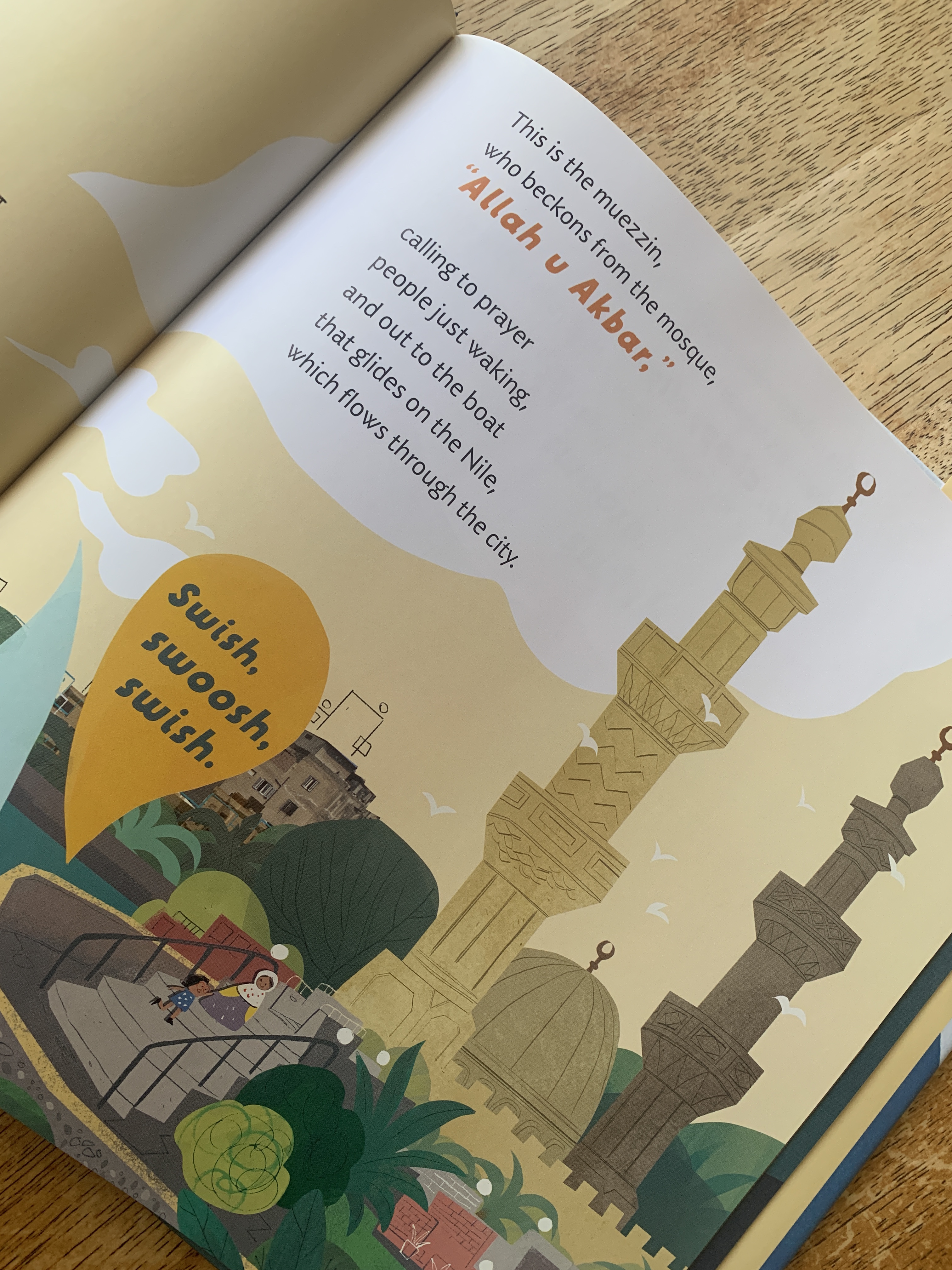
There was a time in college when my friends and I would gift each other Cinderella retellings and versions from all over the world, that was nearly 20 years ago, and I haven’t thought much of it, until this book reminded again of “This is the House that Jack Built.” Having just read and reviewed “The Masjid that Kamal Loves” which is structed similarly, I can confidently say forget Cinderella, I’m loving this new trend, of a repetitive layered story conveying love and excitement and joy to little readers in such an engaging way. This book has more of a story than the original and shows relationships and longing, even though it is primarily a love letter to Cairo.  The swapping out in some verses for Arabic words and English translations, the sound affects and the connections really elevate the OWN voice details in the text and make the book an absolute treat to read and share even for those of us who are not Egyptian and have never visited.  The Auntie who visits wears hijab, the muezzin calling Allah u Akbar is a repeated refrain, their are numerous illustrations of women in hijab and a masjid is shown repeatedly throughout allowing Muslims everywhere to feel seen with this culturally specific story.  The Glossary with the Arabic script and pronunciation guides and Notes from the Author and Illustrator really radiate with love and invite the reader to participate in the celebration on the pages.  I have no doubt children (and their parents) three and up everywhere will fall in love with the 40 page story and delightful illustrations.

Auntie Fatma comes to visit a little girl’s family from Egypt and brings sahlab and changes for two weeks to the home.  Arabic is spoken, and a nightly lullaby of the sounds of Cairo are among the beloved additions to connect the little girl to her Auntie and her culture.

The lullaby begins with the sound of the Nile, the boats floating through the city, the athan calling to prayer, the carts on the streets, the traffic.  The halawa ya battekh, swish, swoosh, swish, Allah u Akbar, beep honk toot, all add layers to the bustle of the city as the little girls memories of the sights and sounds of Egypt soothe her to sleep.  When it is time for Auntie to return the little girl’s sadness is palpable, but Auntie finds a way to reassure her and all those that have drunk from the Nile and long to return.

It is hard to say if the text adds to the illustrations or the illustrations to the story, both combine to make this book impossible to read without smiling.  I love that the mosque is shown in the daytime and at night implying that the call to prayer is not a one time thing without articulating that Muslims pray five times a day. I don’t know if the author identifies as Muslim or if the inclusion of the athan and Allah u Akbar is just an environmental reality of Egyptian daily life and thus featured.  The illustrator could have very well added the hijabs on his own as there is nothing religious or explanatory in the text.  Perhaps it is worth noting that there is a dog in the family’s home that seems to sleep with the little girl.  The book is a cultural heartfelt portrayal, and that Islam is prominently featured so beautifully made for a lovely surprise.

I hope you will consider preordering the book here, requesting it at your library, and sharing it on classroom and home bookshelves.  Happy Reading!

Eleven Words for Love: A Journey Through Arabic Expressions of Love by Randa Abdel-Fatteh illustrated by Maxine Beneba Clarke

Standard
Eleven Words for Love: A Journey Through Arabic Expressions of Love by Randa Abdel-Fatteh illustrated by Maxine Beneba Clarke

img_7491

It has been a long time since I took Arabic in college, so I read the book, then read it again, then wrote down all the Arabic words and realized that there are 11 words in addition to “al Hob” the word for love, and that al Hob is mentioned three times in the manner of a poetic refrain.  I also didn’t grasp the first time that the book is a journey of a refugee family and the types of love are them in different phases of their journey.  Once I got it, I’m not sure how I missed it, but I think the layers that the book allows for actually widens the appeal to a larger audience.  I know for many Muslims seeing a 40 page picture book about love will raise some eye brows and wonder about what relationships are shown.  There are a few phrases that imply romantic love most illustrated abstractly, one shows a bride and groom on their wedding day (al-Ishq), there are also an elderly hetero couple in front of the Dome of the Rock (Showq). The story follows one family and their suitcase is rainbow colored and when depicting loving one’s neighbors (al-Mahabba), there are rainbow stripes on the fence, if a rainbow means or doesn’t mean something to you I simply share what is there. There is friendship love (al-Wud) and familial relationship love, and love from pets (al- Walaa’) and love felt for those gone too soon (al-Haneen).  The Arabic script for each word of love and the lyrical English string together the concept of different forms of love with the illustrations telling the story.  There is nothing particularly Islamic in the book, but there are visible Muslims in the illustrations and the masjid in Palestine.

I’m obviously not an Arab speaker, so if I misunderstood a term, forgive me, I don’t want to list all the terms, because that would give away too much of the book, but as a non Arab the book is heartfelt and moving and I’m sure for Arab speakers the feelings would be amplified.

The book was released in Australia in 2022 you can purchase it from Book Depository and will be released in America in 2023, you can preorder it here.