Category Archives: strong women

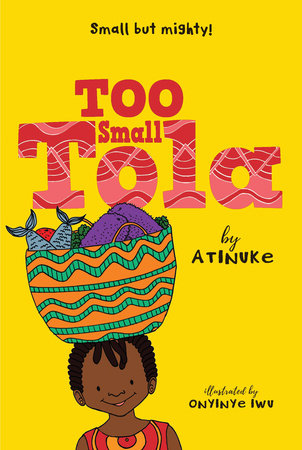
Too Small Tola by Atinuke illustrated by Onyinye Iwu

Standard
Too Small Tola by Atinuke illustrated by Onyinye Iwu

9781536211276

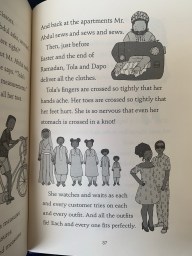
This AR 3.6, 89 page early chapter book features three stories set in Lagos, Nigeria.  The main character and her family are Christian, but many of the neighbors are Muslim, and the third story is set in Ramadan with Easter and Eid falling at the same time.  The sense of community throughout the book, the OWN voice detail and charm make this book silly, warm, and delightful for first through third grade readers.

img_9777

SYNOPSIS:

In the first story Tola heads to the market with her Grandmommy.  Not the fancy mall, but the muddy market further away.  Her older brother Dapo is too busy playing soccer to help, her older sister Moji is busy with homework, that leaves little Tola to carry the items on her head with her tough as nails little grandmother.  Everyone says she is too small, but Grandmommy knows she can do it.  As they purchase the items, and neighbors call to have them pick up items for them too, the duo have to take lots of breaks on their way home, but Too Small Tola does it and proves to herself and others that she might be small, but she is strong.

The second story once again focuses on life in Lagos and the one bedroom apartment the family shares.  One morning both the power and the water are out and the jerry bottles need to be filled at the pump.  When some bullies trip Tola and the water spills, an elderly neighbor lady patiently waits for the right time to get her revenge on Tola’s behalf, and when the bully challenges the woman, the entire line stands together.  Tola may be small, but she stood for something and made a difference.

The final story involves the neighbor, Mr. Abdul, the tailor who lives downstairs, coming to measure Tola and her family for their new Easter clothes.  He let Tola measure everyone last year and praises her as the best measurer in Lagos, and Tola is eager to take the measurements this year.  When the tailor breaks his leg, he is worried he will not be able to ride his bicycle to his clients and will not be able to prepare the Eid feast and pay rent.  Tola knows they have been fasting all Ramadan and between her, Grandmommy, and Dapo they come up with a plan to help.  Dapo will peddle the bike and take Tola to measure everyone for their orders.  Tola may be small, but she can save the day for the Abdul family.

WHY I LIKE IT:

I love little Tola and her sassy grandma.  The book would lend itself so wonderfully to be read aloud as it bursts with personality and dialogue.  I love the sense of community in such a day-to-day life that would seem to stark and hard to most western readers.  Tola’s draws on those around her to find her strength, from her Grandmommy, to her neighbors, they may tease her that she is too little, but they also build her back up and stand with her.  I love the diversity in Tola’s world.  She seems so excited that Eid and Easter will be aligned and that after her services they will be joining the Abdul’s feast, such a great lesson of tolerance and respect without being preachy about tolerance and respect.  Young readers will enjoy Tola and the insight into Nigeria.

FLAGS:

Grandmommy lies when a neighbor calls her in the market to ask her to pick up his TV, she pretends the battery dies as she and Tola laugh at how ridiculous them carrying a TV would be in addition to everything else they are carrying.  There is bullying when Tola is tripped and then when Mrs. Shaky-Shaky trips the bully.

img_9781

TOOLS FOR LEADING THE DISCUSSION:

This wouldn’t work for a book club, but would be ideal in small groups, or to be read aloud.  There would be a lot to discuss as children would relate to Tola and find themselves cheering her on.

Misfits in Love by S.K. Ali

Standard
Misfits in Love by S.K. Ali

misfit

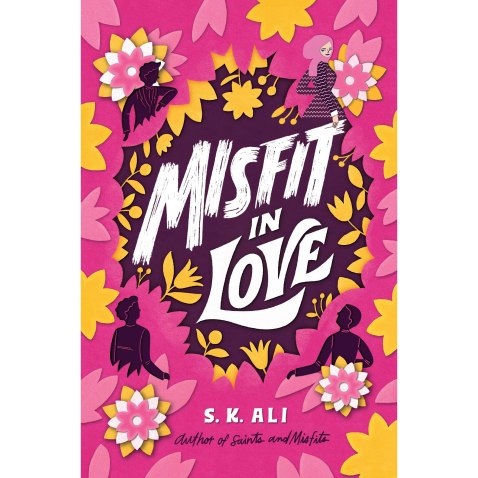
I reread my review of Saints and Misfits before diving in to this sequel that can also work as a stand alone, and imagine my absolute delight when all the things I wanted more of: Muhammed and Sarah, the mom, Jeremy, etc., were explored in this wonderful high school and up, 320 page, romantic comedy story.  The romance stays halal and the comedy light, but seamlessly interwoven into a weekend wedding are very serious notions of racism and prejudice within the Muslim community.  The writing is flawless as I tried to tell the summary to my daughter I realized just how many characters there are in the book, yet while reading, I never once was confused about who someone was or how they fit in to the family, it really is quite remarkable how real and personal the characters all become.  In many ways the story is uniquely an American-Muslim (arguably) one with characters that are half this culture, a quarter that, wearing cultural clothes to coordinate with friends, mutli lingual, multi ethnic, and yet all coming together as friends and family.  We, nor are the characters perfect, but that our weakness is explored in fiction so that we all might benefit in reality, is truly remarkable.  I honestly couldn’t put it down, and my teen and tween children may or may not have had to figure out their own meals, as I hid in the corner to devour this book in a single day. I regret nothing.

SYNOPSIS:

Janna Yusuf has just graduated high school and has been spending the last few weeks at her father’s sprawling house on a lake to help with wedding preparations for her beloved older brother.  What started out with plans to be a small nikkah between Muhammad and Sara, has quickly snowballed into a “wedding” with a few hundred guests and an ever evolving color scheme.  With extended family and friends pouring in over the three days, Janna is anxious to see Nuah and finally tell him that she is ready to return his feelings, reunite with her mom after being apart for weeks, and see who her best friend Tats is bringing as her plus one.  But, Nuah is acting weird, her mom seems to be considering remarrying, and her father is revealing himself to be racist.  There is a lot going on, and in between wedding preparations, possible crushes, family drama, prejudice overtones, and a curious ice cream man, Janna is having an unforgettable weekend.

Janna and Muhammad are close, they are the children of an Indian American non practicing father and an Egyptian American religious mother.  Their parents have been divorced for a while, and their dad and his Greek wife Linda have two little boys and are hosting everyone and the wedding.  The heart of the story is Janna as she thinks she is ready to pursue something halal with Nuah, but is slightly intrigued by Sara’s cousin Haytham and very perplexed by her mother’s potential future new husband’s nephew Layth. Being it is a wedding, and many people are staying at her father’s house and many more at the hotel in town with their own families.  Jana is trying to figure stuff out about Nuah while hanging out with Nuah’s older pregnant sister.  She is constantly thrown together with Layth as she meets his Uncle Bilal, her mom’s college friend that has proposed to her, and who’s own daughters are friends of Sarahs.  Yeah, there is a lot of overlap, a lot.  It’s like real life. As attractions wax and wane in such a short time, it is the relationship Janna has with her own family and the contentment she must find within herself that ultimately matter most.

WHY I LIKE IT:

I love how authentic the story and its characters are.  I come from a small family, but a very close friend has a huge family, and this just reminded me of going to her family events and finding how interconnected and small the world really is.  I absolutely love Janna, she is Muslim by choice through-and-through and is genuine in her understanding and actions that, while the book is meant for Muslims and nonMuslims, she really sets the standard of how fictitious characters can positively affect their readers.  The only slightly forced thread for me was Janna suddenly loving animals and being ready to head to Peru.  I get that she was crushing, but it seemed a little too over the top for an otherwise very plausible plot.

The best part of the book, in my opinion is that it isn’t all fluff and fun, there are some very real issues that get spotlighted.  Like in Saints and Misfits where Janna is sexually assaulted by a seemingly devout, religious, well liked male, this story addresses racism and prejudice within the Islamic community.  Janna’s dad always felt treated as less than by Janna’s mom’s family for not being Arab.  He flat out warns Janna about her feelings for Nuah because he is Black.  Sarah’s Aunt is offended that the mendhi is more Desi than Arab.  The issues aren’t just pointed out, they require active acknowledgement and action.  The author’s note at the end, even discusses the significance and weight of such views at the end.

FLAGS:

There are mentions of the sexual assault that happened to Janna in the first book.  There is mention of periods, a possible affair, racism, and a character who drove while drunk and killed his son as a result.

TOOLS FOR LEADING THE DISCUSSION:

I don’t know that this book would be a great fit for a school book club, but I think a group of high school or college aged girls would thoroughly enjoy reading this and discussing it, and I would totally invite myself to their gathering to do so.

Accused: My Story of Injustice (I, Witness Series Book 1) by Adama Bah

Standard
Accused: My Story of Injustice (I, Witness Series Book 1) by Adama Bah

adama

This is the first book in a new middle grades nonfiction series and is Adama Bah telling her own story about being detained as a 16 year old and falsely accused of being a suicide bomber.  A story that sounds like a movie plot is painfully real and terrifying and hearing it in her own words is powerful and impactful.  The writing is very basic in its linear format and straightforward presentation of the experience through her eyes.  It is not sensationalized or overly explanatory about how this situation came to be, how she got out of it, or what the family had to go to to find lawyers and pay for them, for example.  It is how she felt, what she understood at the time, and how the experience shaped her.  While the writing style is sufficient for middle grades, her story is intense.  A big part of her experience is being strip searched, exposed, and seeking asylum to avoid female circumcision.  The 128 page book is a great way to show the realities of our world.  It took place in the 2000, the recent past, to a New York teenager that enjoyed different colored sneakers, chatting with her friends, and spending time with her family, no different than the readers picking up her story to read.

SYNOPSIS:

Adama was born in Conakry, Guinea in 1988 and moved to America as a child.  She attended public school until high school when she was then sent to an Islamic boarding School in Buffalo, New York.  Her family was not particularly religious, but Adama become more visibly Muslim returning home after the attacks on September 11, wearing niqab and wondering why she was being treated with such hostility at the airport.  As she resumes her education in public school, she slowly makes the choice to take off her niqab, while maintaining her hijab and modest clothing.  In 2005 she and her father are taken in to custody early in the morning from their home and detained.  During the questioning at 16 years old, Adama learns that she is not a legal US citizen.  Her father is separated from her, to be deported, and she is moved to Pennsylvania as the youngest person swept up in a terrorist roundup.  She is being accused of being a potential suicide bomber and is detained for six weeks before a plea deal is brokered.  She will wear an ankle monitor for three years and have a nightly curfew.  During this time she is responsible to care for her family as her father has been returned to Guinea, her mother speaks very little english and she has four younger siblings.  Even after the bracelet is removed she finds herself still on no-fly lists and finally after one more time being denied and detained at the airport, she sues the Attorney General, FBI Director, and the Director of the Terrorist Screening Center. When they learn of this they offer to remove her from the no-fly list if she withdraws her case. She is granted asylum and while she had to drop out of school, she dreams of going back.  She has since married, her dad has been able to return to America, and she continues to study Islam and believe that things could have been worse.

WHY I LIKE IT:

I love that it is her story, from her eyes and perspective, but I worry that some of the details are misplaced.  She details enjoying talking bad about the government with a friend after she is released knowing that they are listening in, but maintains that she is constantly in fear of being returned to jail and that she considers America her home.  I’m not saying all of those things can’t be true and co exist, but some additional context would help the choppiness in this example and others.  I appreciated that the genital mutilation was clearly attributed to culture and not religion, I think when others tell stories about cultural and religious practices they often conflate the two.  I wish there was more information about where this mysterious list came from, what happened to the Bengali girl that was taken, how the Islamic community reacted.  The story is powerful and moving, and readers will be drawn in as they see themselves in her.  There are also questions at the end that help connect readers to her situation, and the reality that this is the unjust world we live in and can easily be consumed by as she nearly was.

FLAGS:

Detailing a strip search, detailing taking off her clothes, having orifices checked, and using the bathroom in the open.  There is talk of female circumcision although it doesn’t define it explicitly.

TOOLS FOR LEADING THE DISCUSSION:

I think in a high school Social Studies class or current events discussion this book would be a great topic to explore and voice to highlight.  The book is short and can be read very quickly.  It is an important story to know, to learn from, to sympathize with, and be acutely aware of for people of all ages.

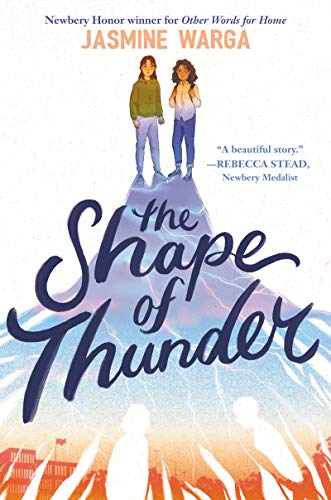
The Shape of Thunder by Jasmine Warga

Standard
The Shape of Thunder by Jasmine Warga

shape of thunder

Usually when a book leaves me with a lot of questions, it is because the author’s writing was incomplete or flawed, this book however, left me with a lot of questions and I’m certain the author did this deliberately. Hence, I don’t know to be irritated or impressed that I care enough about the characters to want to know more. Considering I’m still emotionally attached to the two alternating voices in the book, I’m going to claim the latter, and just be grateful that I was privy to follow the two girls for 288 pages and let the impression the book left me with overpower the curiosity I have to know everything about their past and their futures. This middle grades read is absolutely wonderful and emotionally gripping. I think all kids will have a hard time forgetting the story and characters, and more importantly I think over time they will recall and re evaluate their own thoughts regarding the personal weight of school shootings, gun ownership, sibling loss, responsibility, and maybe even the possibility of time travel. I know this book will stay with me for a long time. This amazing, half-Middle-Eastern half-American author in her OWN voice book somehow manages to discuss a school shooting without being political or preachy and the result is memorable, heartbreaking, and powerful.

SYNOPSIS:

Told in alternating 12 year old voices: Quinn and Cora are neighbor girls that used to be best friends until Quinn’s brother stole his father’s guns and shot and killed students at his school before committing suicide. One of the classmates he killed was Cora’s older sister Mabel. It has been nearly a year since the incident, and since the girls last spoke, but on Cora’s 12 birthday, Quinn leaves a box on her door.

Cora is whip smart and grieving. She lives with her dad, a professor and immigrant from Lebanon who speaks little about his culture or religion to his kids, even though the kids want to know about their heritage and do identify as Arab American Muslims. She also lives with her grandma, her mom’s mom, despite the fact that her mom has left them. It never tells where she went or what happened, which I desperately wanted to know, but Cora doesn’t miss her, because Cora doesn’t remember her, and the family dynamic seemed to be working until Mabel is gunned down. The loss of Mabel is palpable as Cora recalls that she will one day be older than her older sister, and refuses to pack up or touch anything on her side of the room. Cora is in counseling and seems to have a supportive network of friends in her Junior Quiz bowl team, but she misses Quinn even though she can’t forgive her.

Quinn’s chapters begin with a small letter to her brother Parker: what she wants to say, what she feels, questions, memories, anger, disappointment, despair. They are short, but haunting and heartbreaking. Quinn’s home life is fraught with guilt and blame. Her mother has quit work and her father is always working. Her parents fight, a lot. Her mom blames her dad for owning the guns, her dad wants to move to give them all a fresh start, it isn’t pretty. Quinn often has a hard time getting her words out at the speed she wants, she calls it freezing. As a kid, Cora would help, but without Cora and with no one in the house willing or ready to listen to Quinn, Quinn is often left alone. At school Quinn is largely ignored as no one wants to be around the sister of the mass shooter, so she doesn’t try out for soccer, she has no friends, and no one to talk to get the help she so desperately needs.

Quinn has an idea about how to fix everything, and that is what is in the box. She is convinced that if she can go back in time, she can make everything right. The only problem is, she doesn’t understand all the science and needs Cora’s help. Together the two girls work to figure out a way to find a wormhole and fix the damage that occurred. Along the way the girls realize how much they need each other to heal, and the role forgiving yourself has in the process as well.

WHY I LIKE IT:

I am shocked at how deftly the book talks about a school shooting without talking about a school shooting. It is how the families feel in the day to day acts that follow a year later and how the girls are trying to carry on with the limited tools that exist for individuals dealing with the aftermath of such an act of terror. It doesn’t go in to the 2nd Amendment rights or detail the lack of legislation to curb such acts, it really stays on the two girls. The hope of finding a wormhole is really farfetched and perhaps unrealistic, but they are so desperate to believe, to find a way to make things right, that you hope for their sake that they are successful.

It is amazing to see from the sister of a shooter the isolation and pain she endures. I don’t know that I’ve really ever considered the larger families of the shooter when your heart is so devastated for the families of the victims. Occasionally you hear about the parents, but what about the siblings, cousins, distant relatives?

I desperately wanted to know where Cora and Mabel’s mom went. I was tempted to contact the author since it really was gnawing at me. I also wanted some answers as to why Parker did what he did, what hate he was spewing online, what were the signs, did he single out Mabel for being Muslim, while also appreciating that there is no satisfactory answers for any violence of this magnitude in fiction or real life.

Cora knows nothing of Islam and kind of wants to, I felt like this could have been explored a tiny bit more. Not in that she has to be religious, but I feel like after such a life altering event such as death, religion and what happens when one dies usually comes up and a person decides they are satisfied with an answer or not. The story isn’t in the immediate aftermath of dealing with the shock, but rather is a little after the event to presumably not have to deal with the raw emotion, and can focus on the pain and strength that comes with finding a new normal. I’d like to imagine at some point perhaps Cora and her dad talked about what happens after death, but the text doesn’t suggest that it was an issue of concern. She does wonder if Mabel was killed for being Muslim and asks Quinn about it. Quinn never defends or justifies what her brother does, nor does she pretend to know, she is grieving too. She is irritated that people try and define her religiosity to make themselves feel better and she does say the family occasionally fasts, makes duas, and they always celebrate Eid.

She talks a bit more about wanting to know more Arabic, saying that if you are 50% Arab you should at least know 50 words, and she only knows five. She wants to hear about her father’s life growing up, and know that side of her. It mentions that he wanted her to feel like she belonged in America, but I’d love to know more. Maybe what happened to his family, what brought him to America, why they opted not to give them more cultural names, etc..

I also enjoyed the slight science thread. It seems the author used to teach science and I love that the scientific method and various random facts find their way into the story.

POSSIBLE FLAGS:

The book talks about death, killing, suicide, and gun violence, but doesn’t relive the chain of events or detail what happened exactly. Quinn and another friend have crushes on boys in their class. There is a Fall Festival that the kids dress up for, but it isn’t called Halloween, and there is no mention of it. The book opens with Quinn’s birthday.

TOOLS FOR LEADING THE DISCUSSION:

I would definitely read this as a middle school book club selection. It is engaging and gripping and a great book to have as an introduction to hard conversations with children. The author has a note at the beginning about her own children doing active shooter drills and having to face this real fear, and I think kids talking about it through fiction is a powerful tool to get them thinking and talking.

Hana Khan Carries On by Uzma Jalaluddin

Standard
Hana Khan Carries On by Uzma Jalaluddin

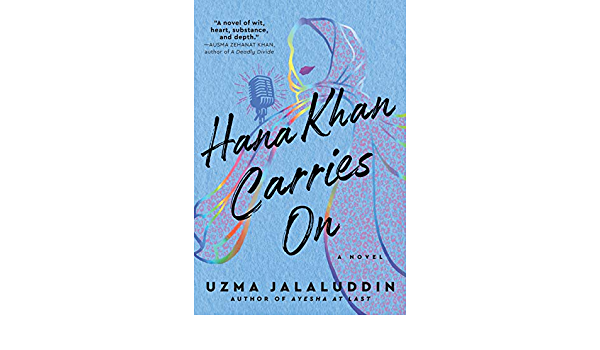
hana khanTechnically this book is adult fiction because the protagonist is 24 years old, but the halal rom-com is so sweet and considering the YA options that exist in the same genre, I think high school juniors and senior would do better to dive in to this light, enjoyable, albeit predictable, read over so many of the other options out there.  I read the 368 page book in two days, I was hooked and impressed with the strength of all the female characters, the step away from all the stereotypical tropes and the smooth writing style.  The book is for everyone and while packaged as a light read, there are some themes of immigration, family, choice, and OWN voice realizations that are presented and explored in a thoughtful and impactful manner.
SYNOPSIS:

Hana Khan’s mother owns and operates Three Sisters Biriyani Poutine in Toronto, there are not three sisters, biriyani poutine is not on the menu and business is bad, really bad.  The 15 year old restaurant that Hana named when she was nine is struggling even though it is the only halal option in the close-knit, diverse, golden crescent community.  When news hits that a new upscale halal restaurant is opening a few doors down, Hana chooses to ignore that the business was struggling and instead blames the new proprietors.  They are wealthy, corporate and insufferable.  Well, the dad is anyway, the son Aydin, he isn’t so easily defined.

Hana balances shifts at the restaurant, her internship at Radio Toronto and her own anonymous brown girl podcast.  Hana, real name Hanaan, comes from a supportive and close family.  Her dad was injured in a serious car accident, her older sister is pregnant, and her cousin from India along with a cousin-aunt have just arrived under suspicious circumstances.

As the new restaurant gets closer to opening, Hana finds herself stooping to all new lows to sabotage their success.  Encouraged by an anonymous podcast listener who she has been chatting with for quite a while, and inspired by her rebel cousin-aunt, Hana is determined to secure a permanent job in radio, save her family restaurant, and destroy the competition.  But, an attack downtown draws attention to growing Islamophobia and forces Aydin and Hana to work together.

In a fictional story where everyone knows everyone both in India and Toronto, crazy family members are endearing and loyal, it is no surprise that the main characters are more connected than they think.  As Hana finds her strength to carry on amidst change, she also figures out what direction to focus her energy, her talents, and voice.

WHY I LIKE IT:

I absolutely love the writing.  I was invested in many of the characters, not just the protagonist, and absolutely cheered as she gave a nod to so many assumptions so that she could move past them: forced marriage, hijab, acceptable professions, inclusion, etc.. The family is all about choice and not getting hung up on stereotypes show the power that OWN voices have in telling stories that resonate with everyone.  The book is full of religion, from waking up for fajr, to listening to the khutbah at jumah, going to the masjid to find peace, and believing in destiny.  It is not a preachy book by any means, but the characters are Muslim inside and out.  The traditional family does not pressure Hana to get married, her sister’s marriage was a love one.  She is often alone with her male cousin or brother in law, or best friend Yusuf.  She knows who she is and her family trusts her.

I love the food, the insight of immigrants and family.  I was particularly moved by her articulation of being told by outsiders what it means to be Muslim in Canada, or an immigrant and then not being listened to when pushed back upon. Her challenging a teacher on what the fourth pillar of Islam is and not being heard, resonated profoundly.

Within the first 100 pages or so the reader figures out who everyone is and how they are connected, save one surprise, but it is like watching a favorite movie, you keep going because it is fun, and enjoyable and the point isn’t to figure it out, but to enjoy the ride.

FLAGS:

There are relationship threads, but nothing more detailed than a hand touch after a funeral.  Her best friend Yusuf marries their best friend Lily an Agnostic, knowing that both families are against it.  There is music and racist talk and vandalism.

TOOLS FOR LEADING THE DISCUSSION:

The high school book club usually tries to include a halal romance novel for the loyal participants that clamor for it in the group and I plan to suggest this one to them.  For as light and straightforward as the book is, there is a lot to discuss when the surface is peeled back.  There would be lot to explore from her podcast, internship experience, and her hate crime experience, that the romance part will be seen as simply a vessel to more profound issues to explore.

Amazing Muslims Who Changed the World: Extraordinary Stories of Incredible People by Burhana Islam illustrated by Reya Ahmed, Deema Alawa, Nabi H. Ali, Saffa Khan, Aaliya Jaleel and Aghnia Mardiyah

Standard
Amazing Muslims Who Changed the World: Extraordinary Stories of Incredible People by Burhana Islam illustrated by Reya Ahmed, Deema Alawa, Nabi H. Ali, Saffa Khan, Aaliya Jaleel and Aghnia Mardiyah

img_8359

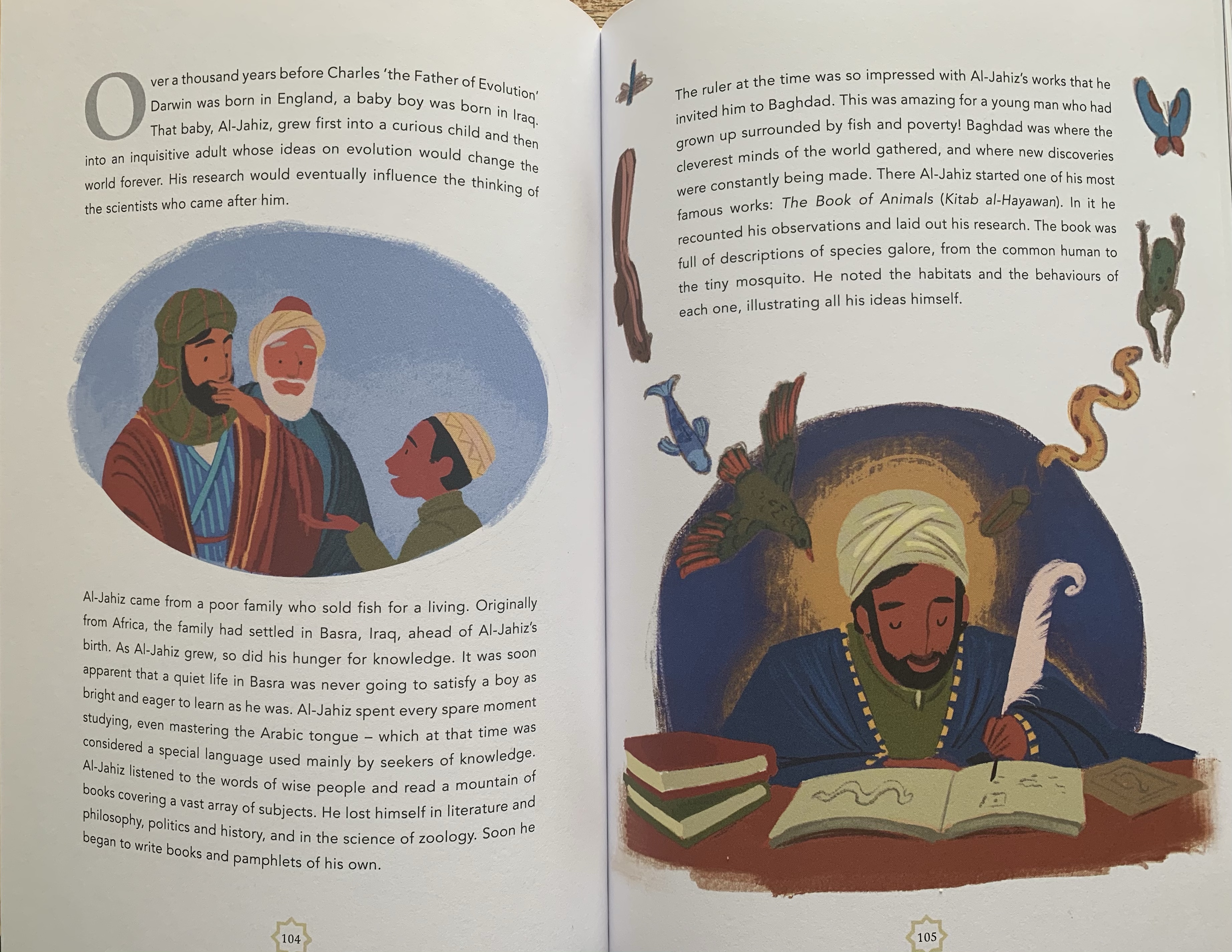
The 30 stories presented over 197 pages are inspiring, and this compilation so desperately overdue. The book is not chronological it is completely random, and at first I was confused, but as I made my way through the book, I actually grew to love not knowing who I would be reading about next.  Yes, there is a table of contents, but the point being that you don’t have to be born into royalty, or be a warrior, or have lived a long time ago to be amazing, you just have to follow your passion.  I learned so much about people I thought I knew about, and was tickled to learn about people I have never heard of: bakers, athletes, actors, educated slaves, architects, spies, singers, scientists and politicians.

img_8360

At the end of each six page illustrated blurb is an “Interesting Fact” and at the end of the entire book are some activities in the “Amazing Extras” section.  Readers can crack a code like Noor Inayat Khan who helped the Allies decode and send secret messages from France to Britain or write a poem like Rumi, a song like Yusuf Islam (Cat Stevens), draw a superhero like G. Willow Wilson, make a camera following the science of Hasan Ibn Al-Haytham, or color a picture of Muhammad Al-Idrisi.

img_8361

My favorite biographies were those that I knew little or nothing about before hand.  If I had to pick two favorite among all of those sections, I’d pick Khawlah bint Al-Azwar and Ayuba Suleiman Diallo.

img_8362

In 600 CE Arabia, Khawah, the masked knight, learned how to fight along side her brother and eventually served with Khalid ibn Waleed in battle.  It is said that she killed the Byzantine leader that captured her and then asked for her hand in marriage.

img_8365

Ayuba Suleiman Diallo in the 1700s in modern day Senegal was a highly educated man who was captured and forced in to slavery in Maryland, USA, interacted with James Oglethorpe, found himself being sent to England and with the help of a Thomas Bluett was able to be freed and eventually return home a free man. SubhanAllah!

img_8363

This book has it all: famous Muslim men, famous Muslim women, Black Muslims, Arab Muslims, European Muslims, American Muslims, Asian Muslims, African Muslims, Muslims who lived a long time ago, Muslims who are still alive all jumbled up and beautifully presented by a Muslim author and a handful of Muslim illustrators. This book is wonderful for 3rd graders to adults and would be a benefit on any book shelf.  It is worth noting there are no sources given, and doesn’t explain how the people were chosen to be included in the book.

When Mom’s Away by Layla Ahmad illustrated by Farida Zaman

Standard
When Mom’s Away by Layla Ahmad illustrated by Farida Zaman

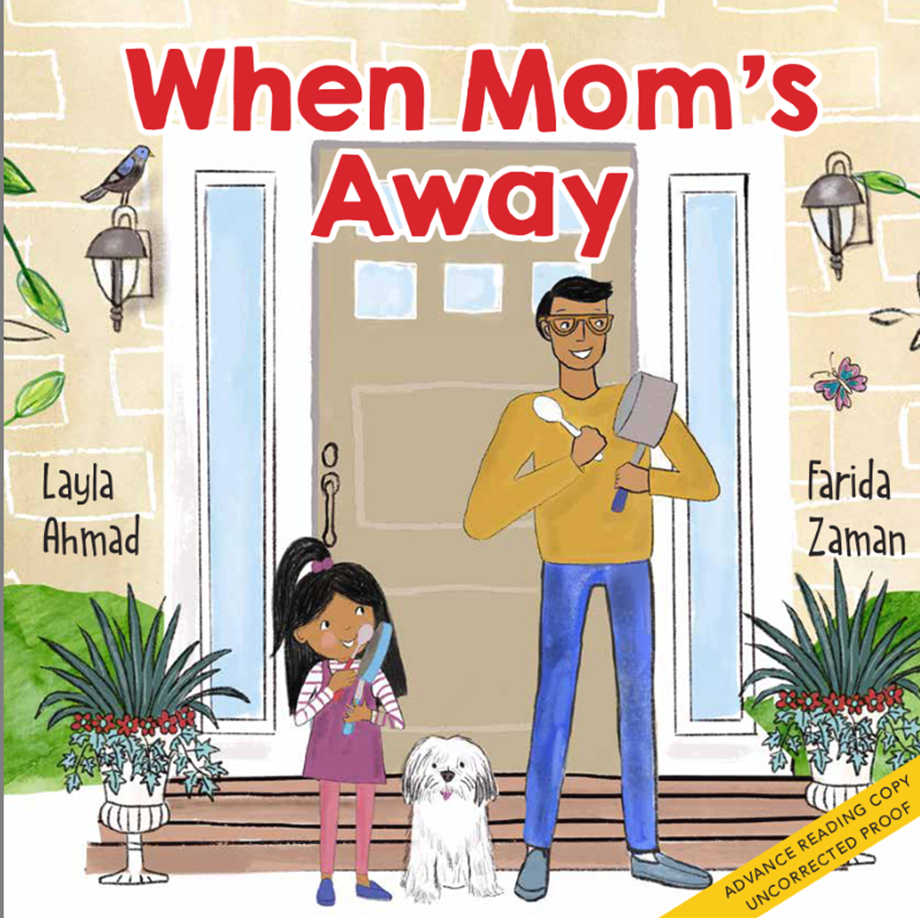
This 24 page, timely children’s book focuses on life with Covid-19 from the point of view of a little girl whose mom is a doctor and must quarantine in the garage to keep her family safe. The reassurance of such a book to remind our children that they are not the only ones going through such disruptions with virtual learning, staying away from grandparents, wearing a mask and not seeing a parent for a few days, is a powerful one. I couldn’t find anything stating if the author or illustrator identify as Muslim (I know, I know, assumptions based on names is rather pathetic), and there is nothing religious in the story, but the book shows a diverse family and as this pandemic rages on, kids and parents will benefit from feeling less alone and sharing this resource I hope is a benefit.

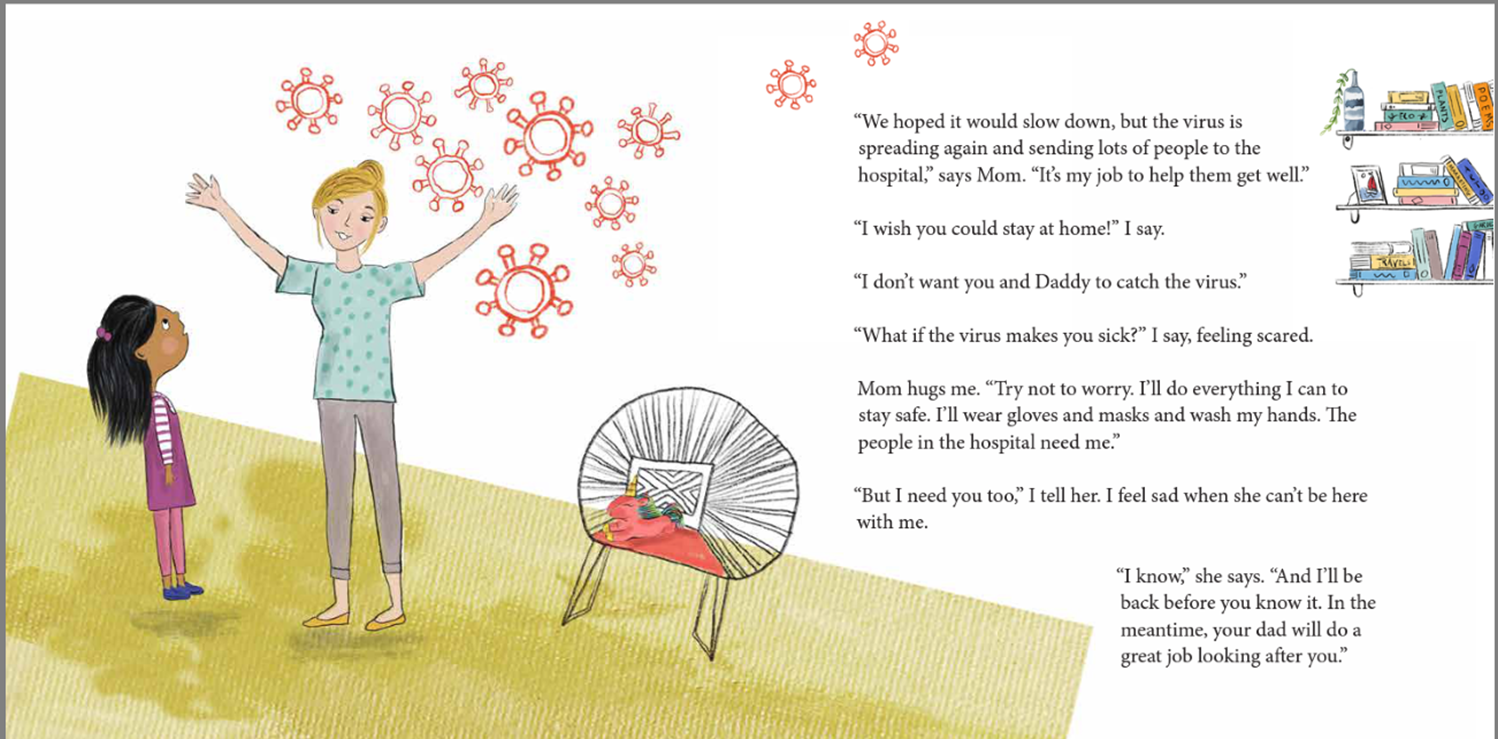
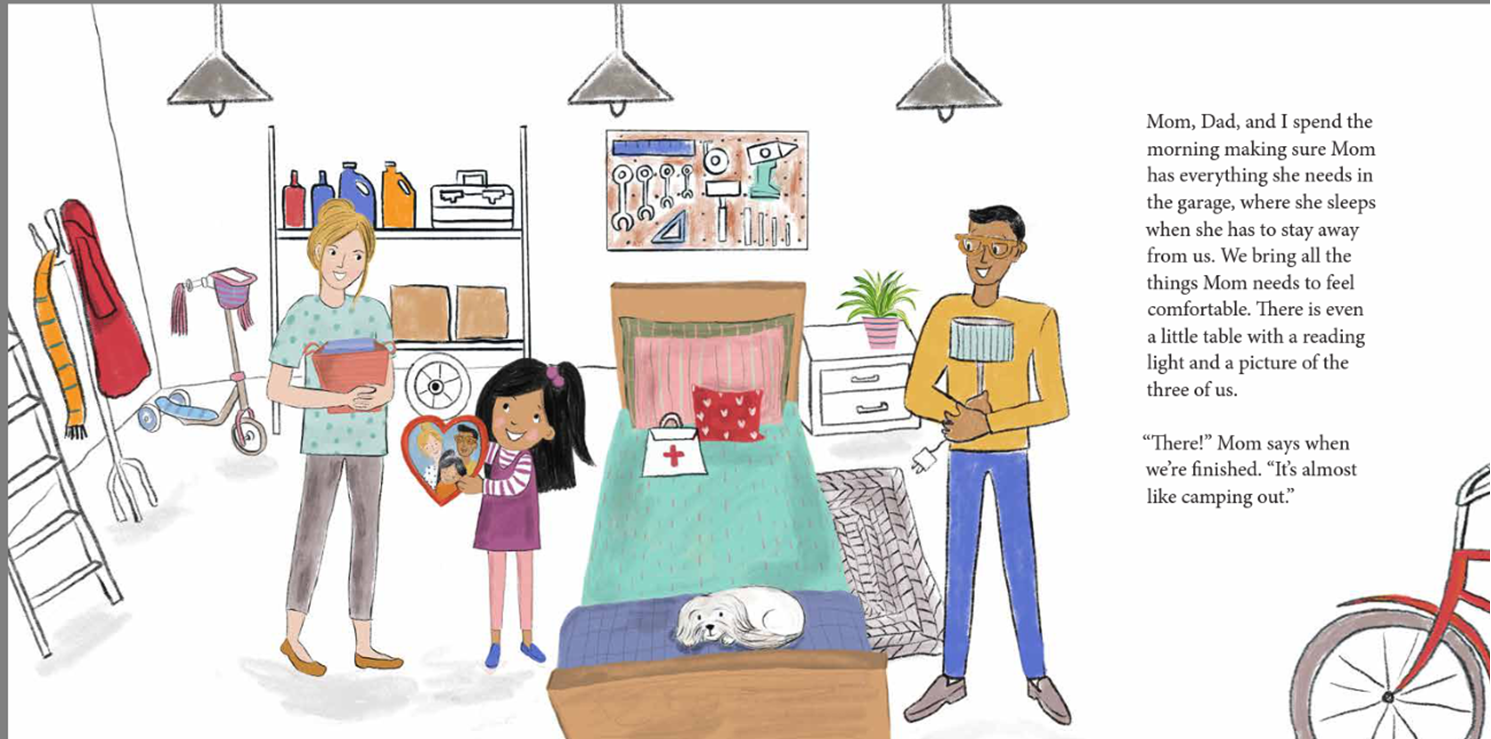
The book starts out with the little girl learning that her mom is going away, well not really away, but will not be in the house with her and her dad. That the virus isn’t slowing down and her mom has to go help people. The family of three then sets up the garage to make sure mom has everything she will need when she comes home from work. A bed, a little table, even a picture of the three of them.

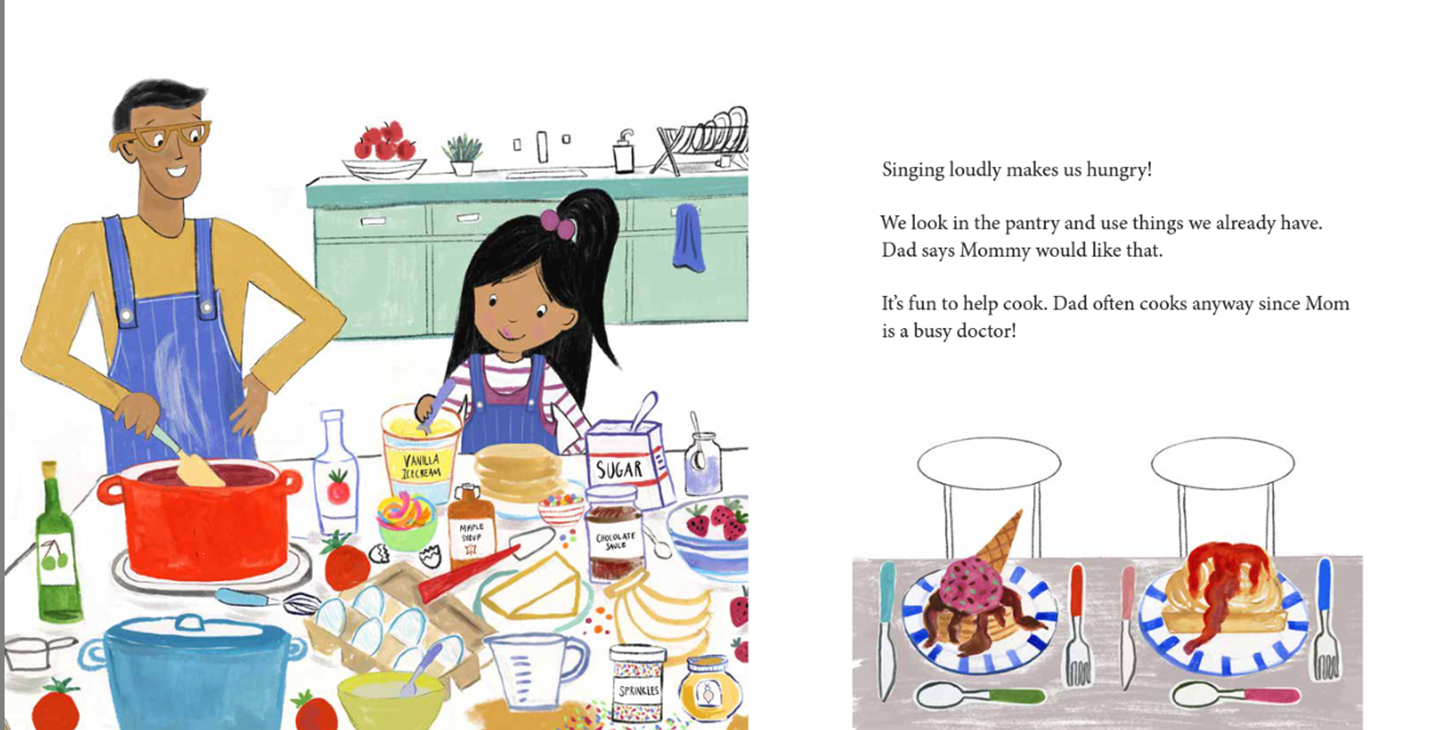
The dad calls the mom a superhero and gets the little girl on board with helping mom as she helps others. They wash their hands to a special song, they wear masks when they go out, they shop for a neighbor, and try to use things to make dinner that they already have.

The book then articulates that mom is a busy doctor and dad cooks often. The little girl plays games with her dad and video chats with her mom feeling proud that she is making her mom’s job easier. Every morning the dad does the little girls hair before virtual learning begins, and every evening she waits by the window to wave to her mom. The little girl misses her teacher, friends, and mom.

The little girl and her dad go grocery shopping for Grandma and Grandpa and deliver the groceries to them outside with masks on as they wave from afar. Sometimes before dinner the neighbors all stand outside banging pots and pans cheering for all the heroes coming home.

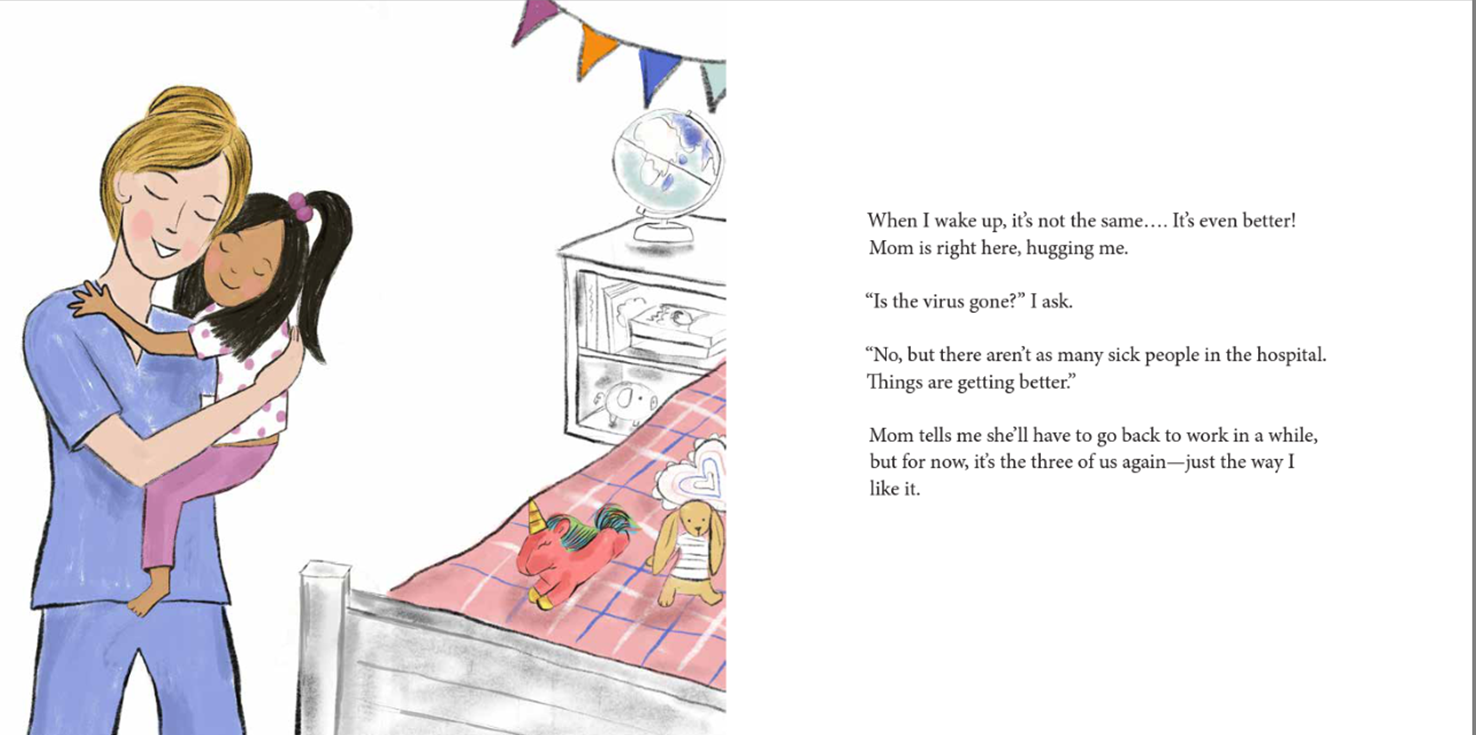
When her mom returns from quarantine, the little girl asks if the virus is gone, and the mother says no, but that things are getting better. When her mom thanks her for doing such a good job while she was away, the little girl says, “No problem, Mom. That’s what superheroes do!”

I love that the concept of super heroes is presented as real people on the front line doing their jobs even when it requires tremendous sacrifice. I also like that all of us working together to curb the pandemic is also heroic work.

I love that it shows a mom capable and professional and loving, as well as a father loving and capable and supportive. Yes, she likes how mom does her hair better, but it shows competency from both parents, which sometimes in books is lost when it makes one parent the brunt of misguided humor.

I don’t know if years from now the book will be as relevant, but certainly children today are living this story and will relate to the characters. I think children in preschool and up will enjoy the illustrations and storyline.

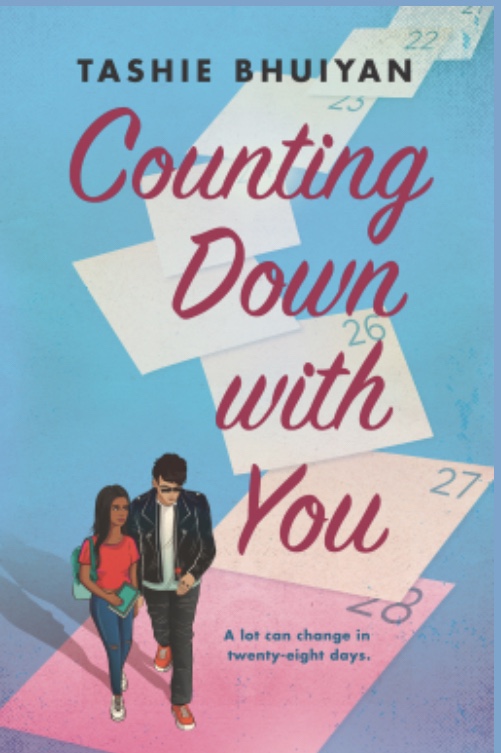
Counting Down with You by Tashie Bhuiyan

Standard
Counting Down with You by Tashie Bhuiyan

img_7940

I have to be honest that this book really held my attention and was hard to put down for about two-thirds of the 416 pages.  I was genuinely invested in the characters and wanted to see how it all resolved.  Sadly, by the end, I was disappointed with the conclusion, the predictability, the stereotypes, and the cliche’ of it all.  The author mentions in the forward that she is representing her story, not a representation of all Bangladeshi- Muslim American girls, but for an OWN voice book with such a clever premise, I really wanted to be shown more than I was told, I wanted to feel the protagonists strength, and cheer her on as she found her happiness on her terms.  But alas I felt that she let other’s fight her battles and she really only threw her religion and culture around as weighted plot oppressors, not as strands of her life that she had to decide to embrace or understand in the process of growing into herself.  There was a lot of potential to discuss mental health and family expectation, but the end unraveled all that the book could have been.  Undoubtedly the author is a good writer, and brown Muslims are not a monolith, but I feel like sometimes we need to square away who we are before we just clamor for what we want.  This book has relationships, it is a romance novel afterall, but whether the characters are straight or LGBTQ+, there isn’t more than kissing and hand holding and would probably be fine for 9th grade and up if you are ok with a Muslim lead lying to her parents and having a boyfriend.

SYNOPSIS:

Karina Ahmed is 16 and expected to be a doctor when she grows up.  Her conservative Muslim parents are immigrants from Bangladesh and very over protective of their oldest child.  Samir her younger brother, a freshman, is a robotics nerd and the pride of their family.  Karina loves English and wants nothing more to major in English in college, but her parents are insistent and despite her struggles with math and science she is determined she has no choice in the matter and must make them proud by being a doctor.  This inability to be what her parents want has caused tremendous anxiety within Karina and when her parents leave for a vacation to Bangladesh for a month, she is hoping to be able to relax and enjoy life for 28 days with her Dadu, paternal grandma, and her friends, Cora and Nandini.

The only extracurricular activities Karina is allowed are Pre-Med Society and tutoring, where she helps others with English.  Her teacher asks her to tutor a classmate one on one to prepare for the end of the year exams, and reluctantly she agrees.  Very reluctantly.  The classmate is brooding resident bad boy Ace Clyde, a beautiful slacker that seems to not care about much.  In Karina’s efforts to get Ace to study and taking advantage of limited parental supervision, Karina goes with Ace to a sweetshop and even ends up at his house where she meets his family.  Ace is not ready to admit to his incredibly wealthy family that he is seeking help from a tutor and instead introduces Karina as his girlfriend.  Ace’s older brother Xander, the Student Body Class President, isn’t buying it, so Ace announces it on social media and shows up the next day with coffee for Karina as he walks her to class determined to convince everyone that they are indeed a couple. Karina is not ok with this, but he does promise her a dozen books a week and he is aware that the “relationship” can only last 28 days, so she is in.   Karina’s friends predict that they will fall hopelessly in love and they are pretty correct.  Over the course of the next three and half weeks the two grow closer, he even comes over and spends time with Dadu and Samir.  She encourages him to fix his relationship with his family, and he encourages her to fix hers.  And somewhere in the midst of pretending they decide to make it real and then Karina’s parents return.  She at this point has been cheered on to stand her ground on confronting them about not wanting to be a doctor by Ace, Cora, Nandini, Dadu and Samir.  The conversation does not go well and Karina goes into a two week slump pushing everyone out before she *spoiler alert* resolves to date Ace in secret as long as he respects her lines, and Dadu stands up to her parents for her.  The story concludes with her going to Jr. Prom and her resolved to just stay strong for a little while longer until she is “free.”

WHY I LIKE IT:

I like that I really didn’t know if the book would turn cliche until it ultimately did.  I really liked the realness and rawness of Karina coping with her anxiety and her friends supporting her in Googling coping mechanisms and helping her test them out.  I feel like it was a missed opportunity for Karina’s parents to not reach out to her, or for Karina to even mention that they were missing it.  I think readers that see themselves in Karina would have hoped to see that story thread play out and give them hope of getting help and support or at least getting it out in the open to normalize it.  I love the growth of Samir once Karina make him aware of the double standard, but I feel like he doesn’t read with a consistent persona.  He has a job, he has friends, he likes a girl, but he reads like he is clueless and maybe 10 years old at best, not in high school.  A bit off for me.  And of course you have to love Dadu, a wise old woman who supports her grandchildren and sticks up for them.  I wish Karina would have taken her cues from her beloved grandmother and stood up to her parents with Dadu in the room rather than let Dadu fight the fight and just stand there.  I thought the big climax would be Karina standing up to her parents, so I felt let down when she let someone else fight her fight.  Yes Karina tried and failed, but I think her grandmother should have backed her up in round two, not taken over.

Karina throughout says she is Bangladeshi-Muslim and uses it as a reason to fear her parents and feel obligated to not date or study English.  She does say she isn’t against religion, and actually likes being a Muslim and praying and knows Allah loves her, but that it is the tradition that blindly is followed that gives her trouble.  Her maternal grandfather is an Imam and her mom is much stricter than her father, but he follows her lead in raising the kids.  My critique isn’t so much to argue with the author’s perspective about religious standards, but more a literary one, when the character says she is Muslim and uses that to reason why she has lines, but yet is never seen praying or wresting with what she wants and what she believes.  Never asking Allah for help with her anxiety or confronting her parents or anything for that matter.  As soon as her parents leave she is in a crop top, so where is the religious line and where is the cultural one?  Where is her understanding of her culture and where it fits in her life and where she wants it to fit in her future? Is she Muslim because her parents are or because she believes it? She won’t eat ham, and eats halal, but later eats meat at Ace’s house? Everyone, even fictional characters, get agency, but in a book where the premise is a fake relationship turned real turned rebellious because of religion and culture, a little introspection seems warranted.

The conclusion after hundreds of pages of being called lionhearted and brave and strong seemed diminished when going to prom and lying to parents and having grandma fight your battle is the happy ending.

FLAGS:

Relationships: The main couple hold hands and kiss. There is a supporting character that is bisexual as is a cousin, one is gay, they hold hands and kiss as well. Nothing more than that or detailed. There is lying and deception.

TOOLS FOR LEADING THE DISCUSSION:

I don’t think I would do this as an Islamic School book club selection because it would imply agreement with lying and going behind your parents backs.  Granted her parents are difficult and her grandma is aware and ok with the situation, but I still think it would send the wrong message to endorse such behavior from a religious school perspective.

Amina’s Song by Hena Khan

Standard
Amina’s Song by Hena Khan

img_7581

This middle grades companion book to Amina’s Voice, reads in much of the same way as a lot of Hena Khan books in that I feel she is presenting Pakistani Muslims in America to non Pakistani non Muslims in the west.  In the first quarter or so of this 288 page book that takes place in Lahore,  I felt a different tone than really spoke to me. Granted I am (half) Pakistani and Muslim, but when Amina says good-bye to her family, I was in tears.  It was relatable and powerful and so real to me that I got emotional, the rest of the book, sadly, not so much.  It’s not to say that it isn’t well written, I just feel like the majority of the book are borderline issues for many Muslims looking to see themselves in literature: music, school dances, boy/girl friendships, and when presented that a religious family is permitting and celebrating of these issues, it seems to be trying to make us fit in, rather than support us for holding to a different perspective.  There is a lot of good in the book about finding your voice, sibling and family relationships, friends, and challenging stereotypes, that I think the book would be great for some 3rd graders and up.  However, if your family is against the aforementioned potential flags you may find the book that talks about reading Quran and praying makes the characters harder to separate from your own kids, you may want to hold back in recommending it to them.  Don’t get me wrong the book is clean and well done, I just know from personal experience that sometimes when characters do things that you family doesn’t agree with it is easier to say that those things are for them, not us, but when the family doing them looks a lot like your family, you have to be ready to explain the differences.  

SYNOPSIS:

Amina is in Lahore exploring the city with her brother and cousins.  She is visiting her uncle who had come to visit in Amina’s Voice and as the trip comes to an end, she doesn’t feel like she is the same person that came to Pakistan a month ago.  She is closer to her older brother Mustafa, she feels connected to her extended family, and she is growing more comfortable with pieces of her self she didn’t know existed before.  Excited to go back to America and tell her friends about her summer, she finds they really aren’t interested, and she is unsure how to keep her promise to her uncle to show the world the beauty of Pakistan.  

Once school starts, Amina is assigned a wax museum project in Social Studies that requires her to research and present a person that has changed the world.  She picks Malala, but when she explains to her class at a midway check how Malala was shot for going to school, rather than feel inspired, her classmates feel sorrow that Pakistan is so backward and oppressive, the complete opposite of what Amina felt surrounded by such vibrancy and strength while in Pakistan.  Determined to set things right, she reaches out to her cousins and uncle in Pakistan, except her uncle is back in the hospital and worry consumes Amina and her family, who are torn with being so far away from their loved ones. 

At the same time Amina is feeling like her best friends Emily and Soojin are drifting apart.  Emily is in chess club, Soojin is running for class president, and Amina just wants to write music, produce songs and sing.  There is a new kid Nico, who is half Egyptian, and has music computer software that when he offers to help Amina produce music she says yes, and he starts spending a lot of time at Amina’s house.   

Friends new and old along with immediate and extended family, love and support Amina and cheer her on as she finds her voice to share the beauty of Pakistan, fight for her friendships, and be content with all her pieces that make her unique.

WHY I LIKE IT:

I love that Amina realizes her culture is more important than following rules and her grade.  She breaks from the assignment to spread light on more strong, brave Pakistani women than just the one, and is ok with her grade suffering as a result.  I love that she realizes the headlines don’t reveal reality and that you have to see more than one side to the story.  I love that she is religious and that the imam is cool and that her whole family is service oriented and compassionate.  I love that her friends are diverse and their families are close friends as well.  The sense of community established is carried over from the first book, and I think it gives the book a level of comfort that is pure and honest.

I have issues with Amina’s family being ok with her going to the school dance.  She goes with her female friends, but to me it seems like a conversation is missing or she shouldn’t be going.  It is mentioned that Mustafa went alone to a high school dance, but never explains why.  Similarly, Amina is nervous about having Nico over and her family at times is bothered by it, but again it never specifies why.  I feel like if there was a conversation about why her family would be weird about it or why she is nervous to tell her mom that the friend coming over is a boy then when Amina reminds her mom that her best friend in kindergarten was a boy and everyone was fine with it, or that when her mom asks if there is anything more than friendship going on, the reader would know why it is such a big deal.  It seems to skip the explanation part and jumps from the nervous to have a boy who is a friend, to defending the friend being a boy, and skip the why part.

I didn’t get why Nico identifies as Muslim and Christian but never says salam, and I especially didn’t get why Amina’s mom was more relaxed when she thought he might be Muslim.

I also wish that after the whole emphasis on music, that the lyrics would have at least been shared. I was looking forward to it and was let down by it not being shared.

FLAGS:
Nothing blatant.

TOOLS FOR LEADING THE DISCUSSION: 

I don’t think that this would work level wise or content wise for a middle school Islamic school book club.  

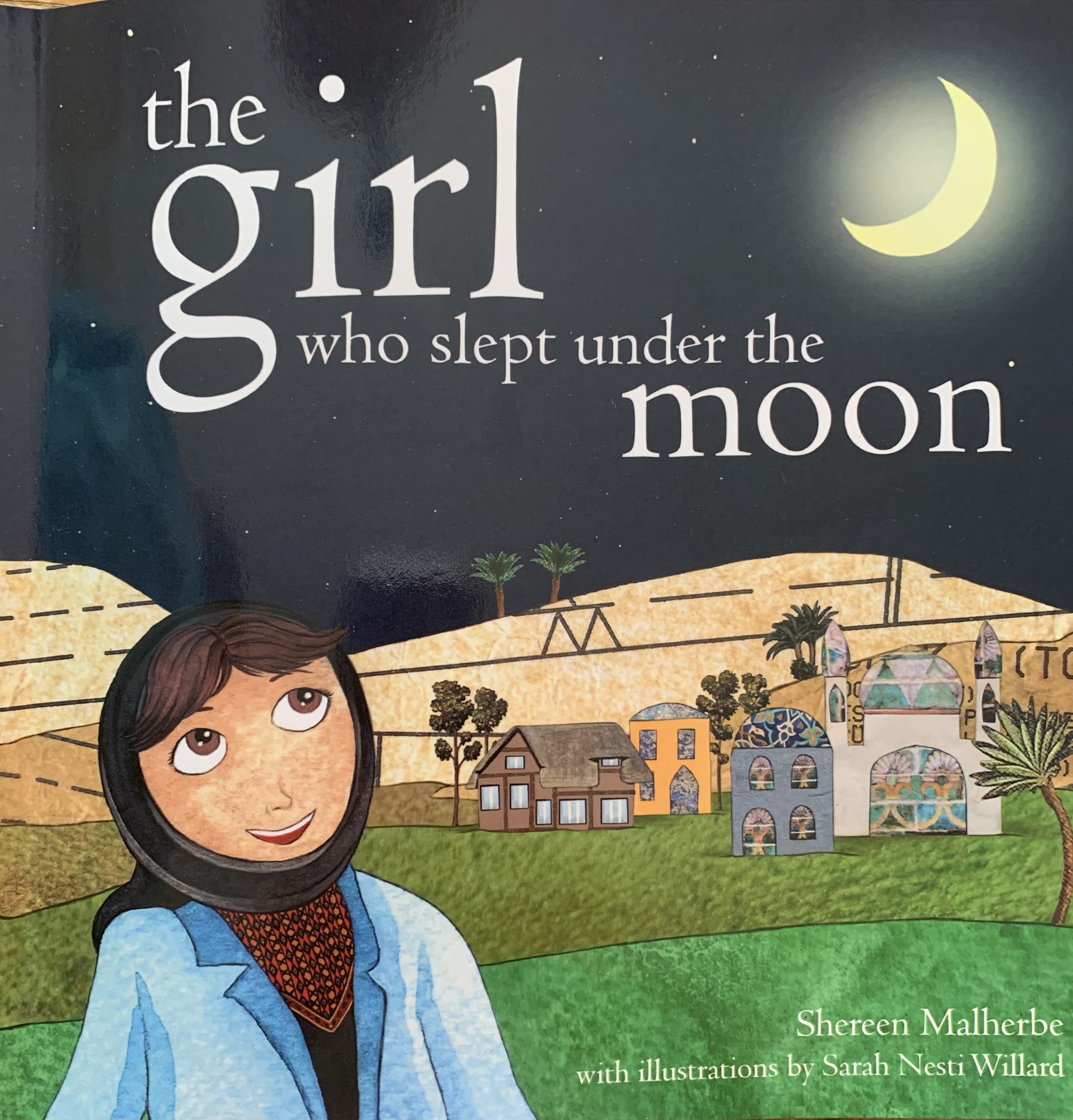
The Girl Who Slept Under the Moon by Shereen Malherbe illustrated by Sarah Nesti Willard

Standard
The Girl Who Slept Under the Moon by Shereen Malherbe illustrated by Sarah Nesti Willard

img_8044

I was really surprised by the number of gaps in this 46 page story that is so adorably illustrated and seemingly planned out. I thought perhaps I was being overly critical, so as always I tested it on my kids, and they too were confused by the main character’s rational and choice of words, the holes in the narrative, and the inconsistency of the characters. The book is wordy, so conciseness cannot be the reason for the holes, and it is published by a publishing company, so I would assume it has been proofed. Really the point of stories connecting us and giving us comfort when we need it, is sadly lost. I had hoped to love this fictional story of a Palestinian girl using prayer to give her comfort in her new home, but alas it seemed to be trying to weave in too much, and as a result the story isn’t fabulous for me unfortunately.

img_8038

Noor is new at school and stands out. She finds comfort in remembering the things that are the same. 1-Allah could still see and hear her. 2- The Angels were still by her side, and 3-She still slept under the same moon. She also wears clothes that remind her of home and provide an unspoken clue as to where home is for her.

img_8039

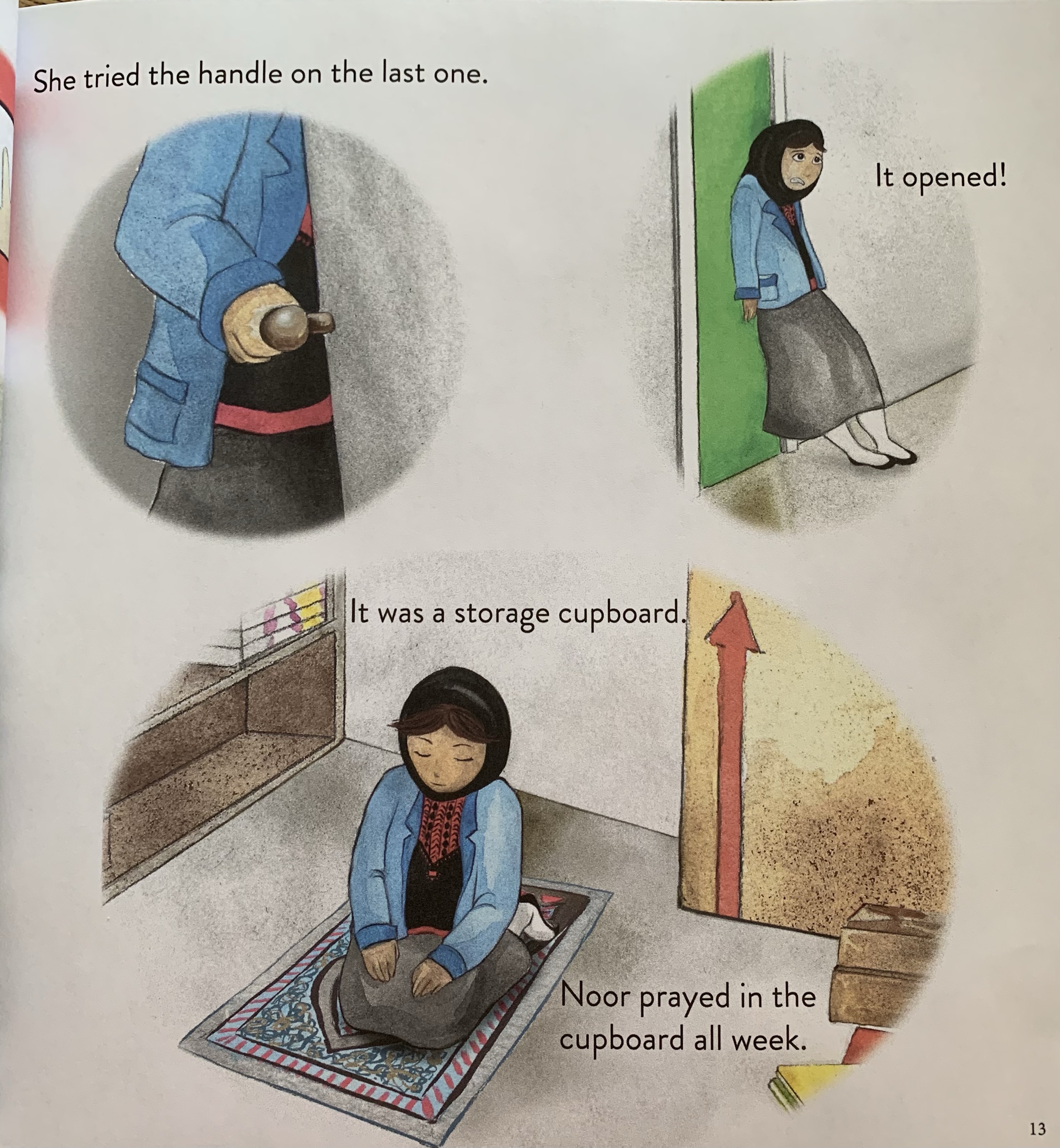
At school Noor has a problem, she needs a place to pray, but at lunch time the kids are not allowed to go inside and the dinner lady guards the door. Noor needs a distraction to sneak in the building and it isn’t clear if she provides the distractions, or just benefits from a baby bird falling out of a nest, a snake being in the grass, and a classmate getting hurt. Either way, when the teacher is occupied, Noor enters the building and finds a closet to pray in.

img_8040

On one such visit to the closet she finds someone already in there, Hannah. Hannah is there because she doesn’t like being on the playground because she is different. Noor never asks why Hannah feels different, so the reader isn’t made aware either. Hannah asks her why she is there and Noor says she comes “to pray because it reminds me of where I’m from.”

img_8041

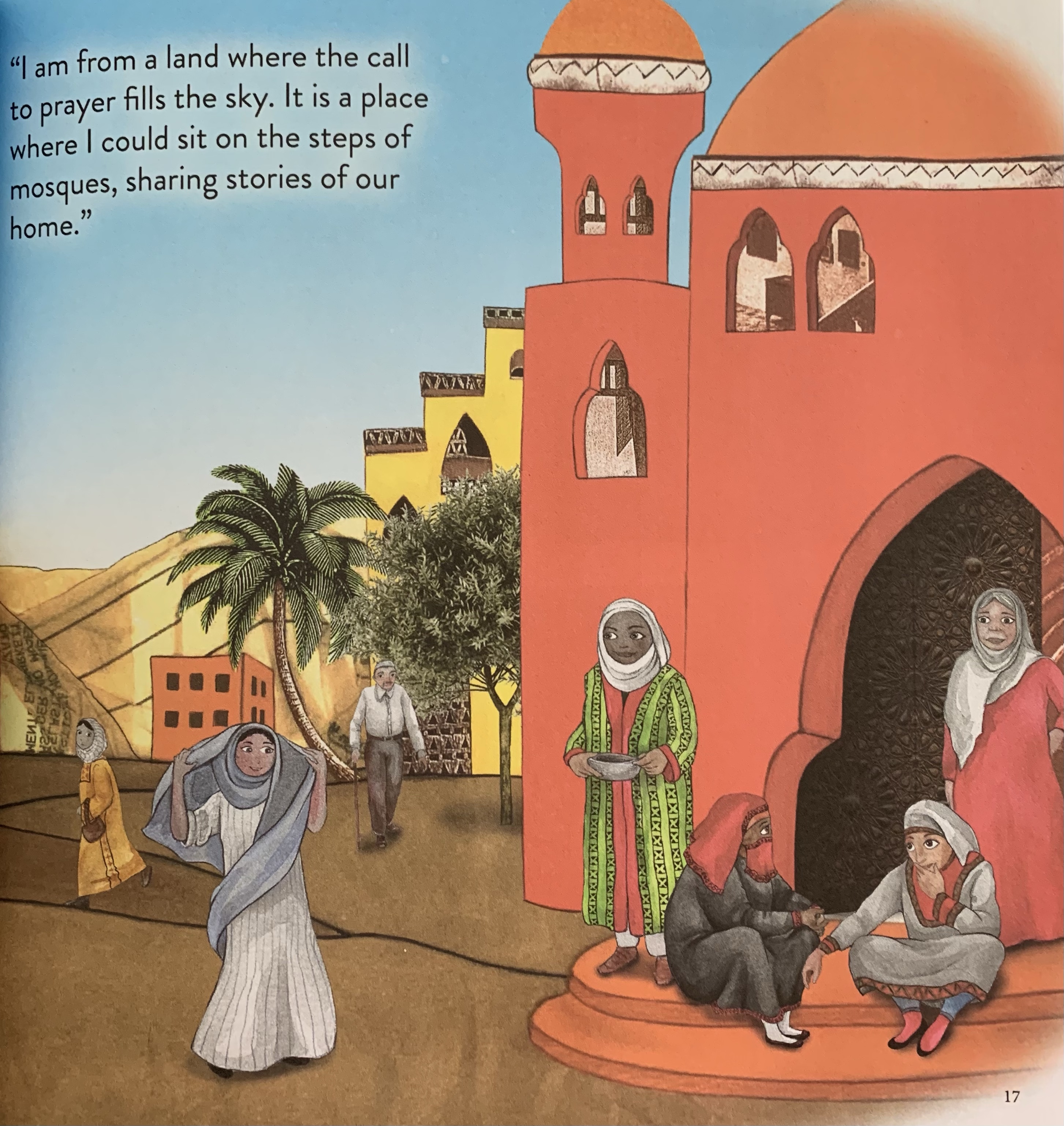
When Hannah asks where she is from, Noor doesn’t just simply answer, she tells her stories about her homeland, the mountains, olive trees, where the athan floats in the air and fisherman return to the shore with their catch. The next day Hannah is there again, and Noor tells her more stories and legends about her culture and lessons of the Prophets. Noor learns that through her stories she feels connected to her old home.

img_8042

Weeks pass, and one day when she sneaks in to the school, she finds the door locked. With no where to go she heads back to the playground and starts to cry that she won’t be able to pray. She then sees Hannah disappear and she follows her in to the drama studio. When she enters she sees sets built that look like the setting of her stories, of her home. Hannah knew she missed home and built her sets to look like Palestine.

img_8043

Other kids miraculously enter, and Noor begins telling them her stories, without praying first. The other kids seem to enjoy her stories and Noor learns that she can pray anywhere while holding on to her three reassuring thoughts.

The illustrations are engaging, although I’m not sure where the prayer rug seems to magically come from for Noor to pray on in the closet the first time. Had the book just been about prayer and finding a way to pray, or just about the stories connecting us to our past I think it would have been more powerful. I’m glad that Noor loves salat and that Hannah is a good friend, but I feel like by trying to do too much, the poignancy of the little things was lost.

And as for my questions: Can’t Noor ask for a place to pray? Can’t she pray outside? How is Hannah making the sets all by herself? Noor says she prays because it reminds her of home, she doesn’t pray for the sake of Allah or because it is required of her? Why did Hanna feel different, and why didn’t Noor bother to ask? It says that she needed to distract the dinner lady, isn’t that dishonest even for a good cause? Did she harm the baby bird so that it would need rescuing? Put the snake in the grass? Hurt the little girl so that she could get by the teacher? How was Hanna getting inside at lunch time? How is the school ok with a kid coming inside to build a whole set with school materials, but can’t let another child inside to pray for less than 5 minutes? And if Noor didn’t feel comfortable asking for a space to pray, clearly Hannah had connections to get permission to create a huge scene, couldn’t she have asked, or helped Noor ask?