Category Archives: Story Time

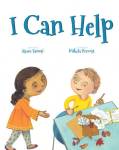
I Can Help by Reem Faruqi illustrated by Mikela Prevost

Standard
I Can Help by Reem Faruqi illustrated by Mikela Prevost

i can help cover

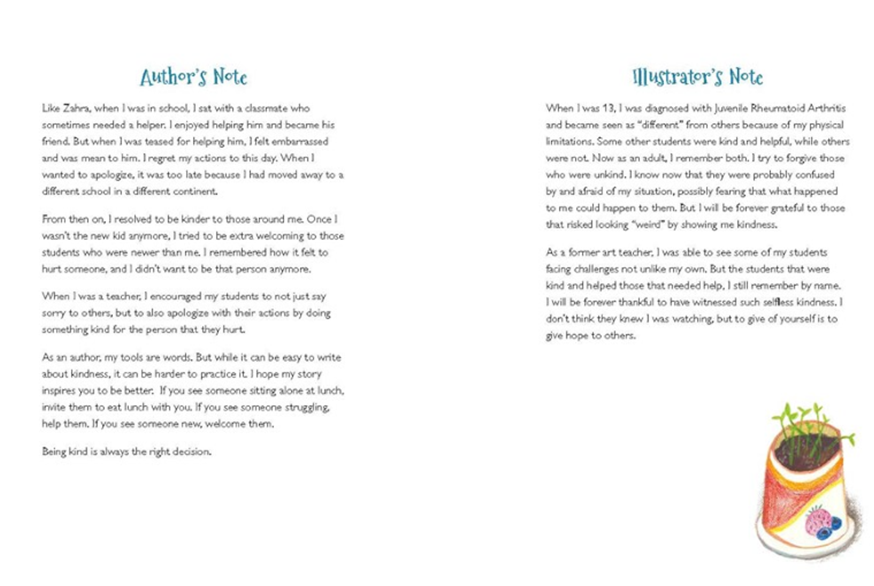
This 44 page early elementary book is absolutely beautiful: the message, the relatability, the representation, the heartfelt author note.  Reem Faruqi is brilliant.  Once again she takes something so personal to her and allows the readers to see pieces of themselves in her OWN voice narrative.  This book at it’s core is about peer pressure, but the way it stays with the reader will resonates deeply and powerfully.  Readers will remember the choice Zahra made and the way it changed not only her relationship with Kyle, but also her own view of herself, while forgetting the names of the classmates that teased her and made her question herself.  It is not the outside reprimanding that gives this book it’s strength, but the guilty conscious that such a young character has to come to terms with as she moves forward.

  i can help 3

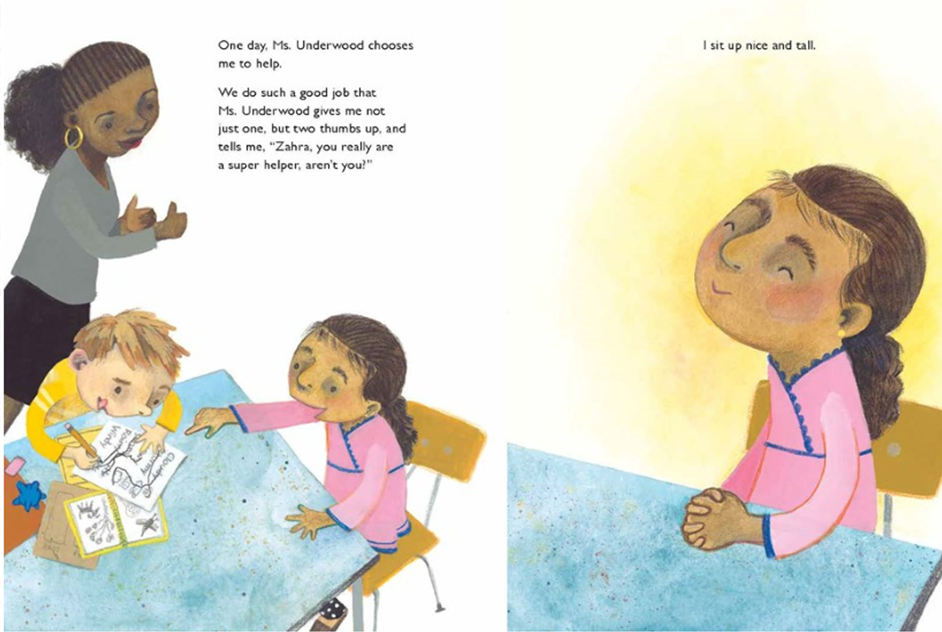
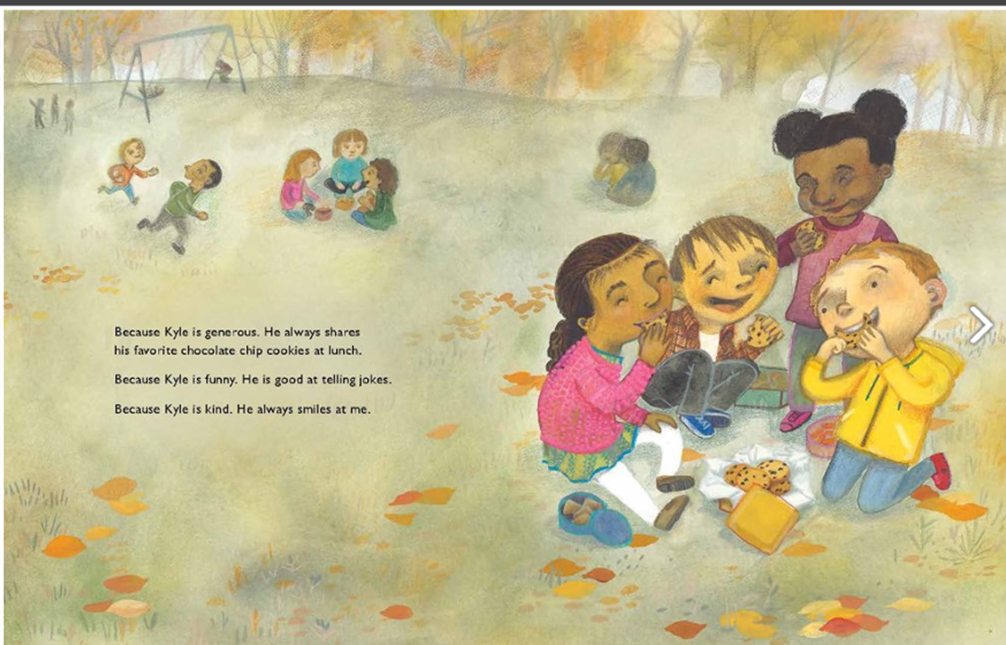
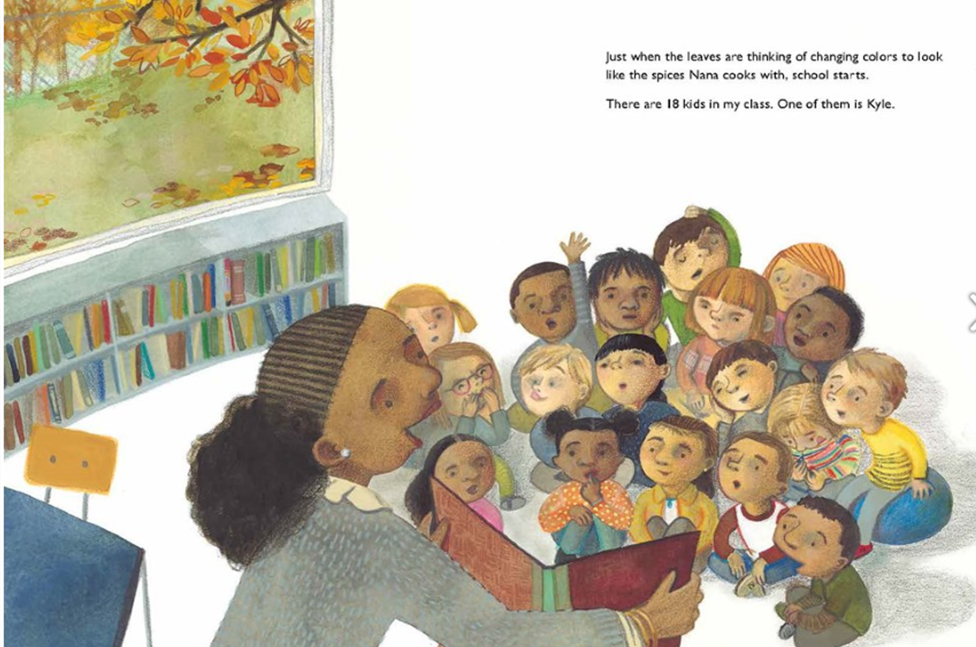
There are 18 kids in Zahra’s class in early fall, when the leaves are about to be the color of Nana’s spices.  One of the kids is Kyle.  Kyle often needs a helper, and Zahra is happy to help him with his cutting and gluing and writing.  The two have become friends.  Kyle is funny and nice and shares his cookies.

i can help 2

Zahra also likes the praise she gets for being such a good helper.  One day when the leaves have darkened, Zahra is climbing a tree and hears some of the girls making fun of Kyle.  She doesn’t want to listen, but her ears want to hear.  When she comes down, they ask her why she helps him.  She doesn’t really know.

i can help1

When she is helping him later, she sees the girls staring at her, and she snaps at Kyle.  The next day Ahmed helps Kyle instead.  Zahra misses being around Kyle, but he says that she is mean and he doesn’t know her any more.  Zahra doesn’t know herself any more either.

i can help 5

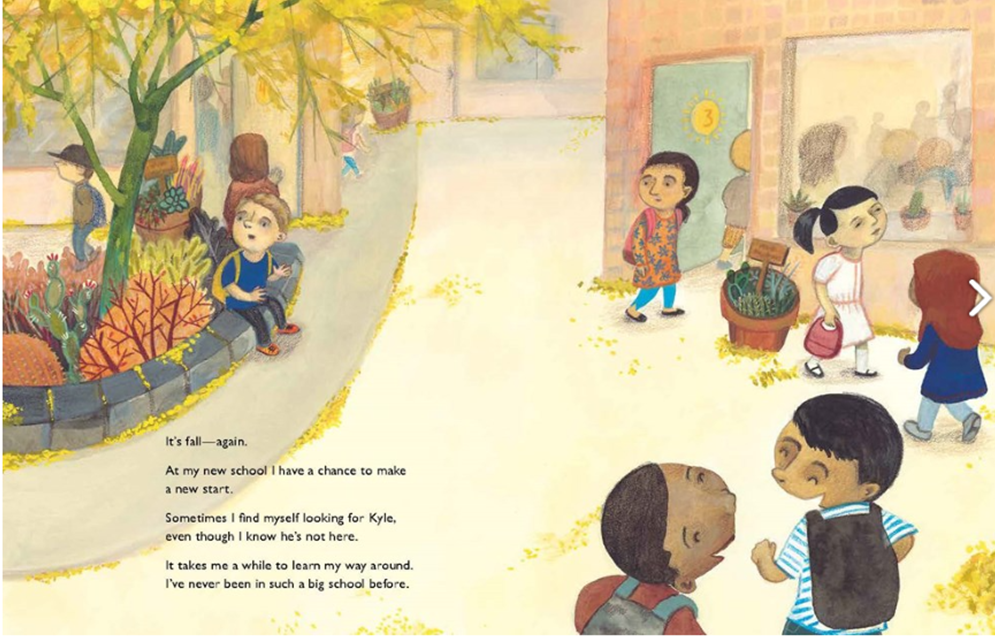
The next year finds Zahra at a new school, and when the opportunity presents itself for her to help someone, she jumps to offer herself as a helper remembering Kyle and finding her voice, one that she recognizes.

i can help8

The book is inspired by the author’s own experience, and the rawness and relatability shines through.  The illustrator also relates to the book and needing help with physical limitations.  There is nothing overtly religious or cultural other than the mention of the spices, Zahra’s and Ahmed’s names, and the term for Zahra’s grandfather.  The diverse kids in the classroom and the universal messaging make this book a must read for every kid and big person.  Be kind, always be kind.

i can help 9

A Sweet Meeting on Mimouna Night by Allison Ofanansky illustrated by Rotem Teplow

Standard
A Sweet Meeting on Mimouna Night by Allison Ofanansky illustrated by Rotem Teplow

img_0532

A story about the Morrocan Jewish holiday, Mimouna, that marks the end of Passover introduces readers to a small but growing Jewish celebration from Northern Africa.  Stemming from the historical fact of Jews often borrowing flour from their Muslim neighbors to make the traditional Maufletot, thin pancakes, after a week of not eating flour.  The story focuses on a Jewish girl and a Muslim girl meeting each other, celebrating with each other, and finding similarities between Ramadan and Mimouna.  Over 36 pages, kindergarten to second grade readers will get an introduction to two different faith holidays and see that friendship and kindness are possible everywhere.

img_0526

It is the last day of Passover in Fes and Miriam is tired of eating quickly baked unleavened matzah crackers, she is ready for the sweet dough pancakes of Mimouna, and she is willing to help her mom make them.  But before Passover, all flour was removed from the home, and she asks her mother where they can get flour tonight before the  party.

Mom and Miriam begin to walk.  They leave the part of town that Miriam is familiar with and Miriam sees a building with a dome and minarets.  “What is that?” she asks.  Her mother replies, “It is a mosque, where our Muslim neighbors pray.”

img_0529

They then enter a courtyard where a woman and her daughter about the same age as Miriam appear and invite them in for tea.  The two women say salaam and kiss each other’s cheeks.  Miriam’s mom gives the other lady a jar of fig jam and invites her and her family to come to the house to celebrate Mimouna with them. When the women are done drinking tea, Jasmine is asked to go to the store room for two bags of flour and Miriam is sent to help.  Jasmine is told one bag is for them, and one is for their guests.  The two shy girls go get the flour, and when Miriam trips, Jasmine catches the bag just in time.

img_0525

On the way home, Miriam has so many questions about the lady and how her mother knows her and how come they don’t have a jasmine vine. But, when they get home there is a lot of work to be done before the guests start to arrive.

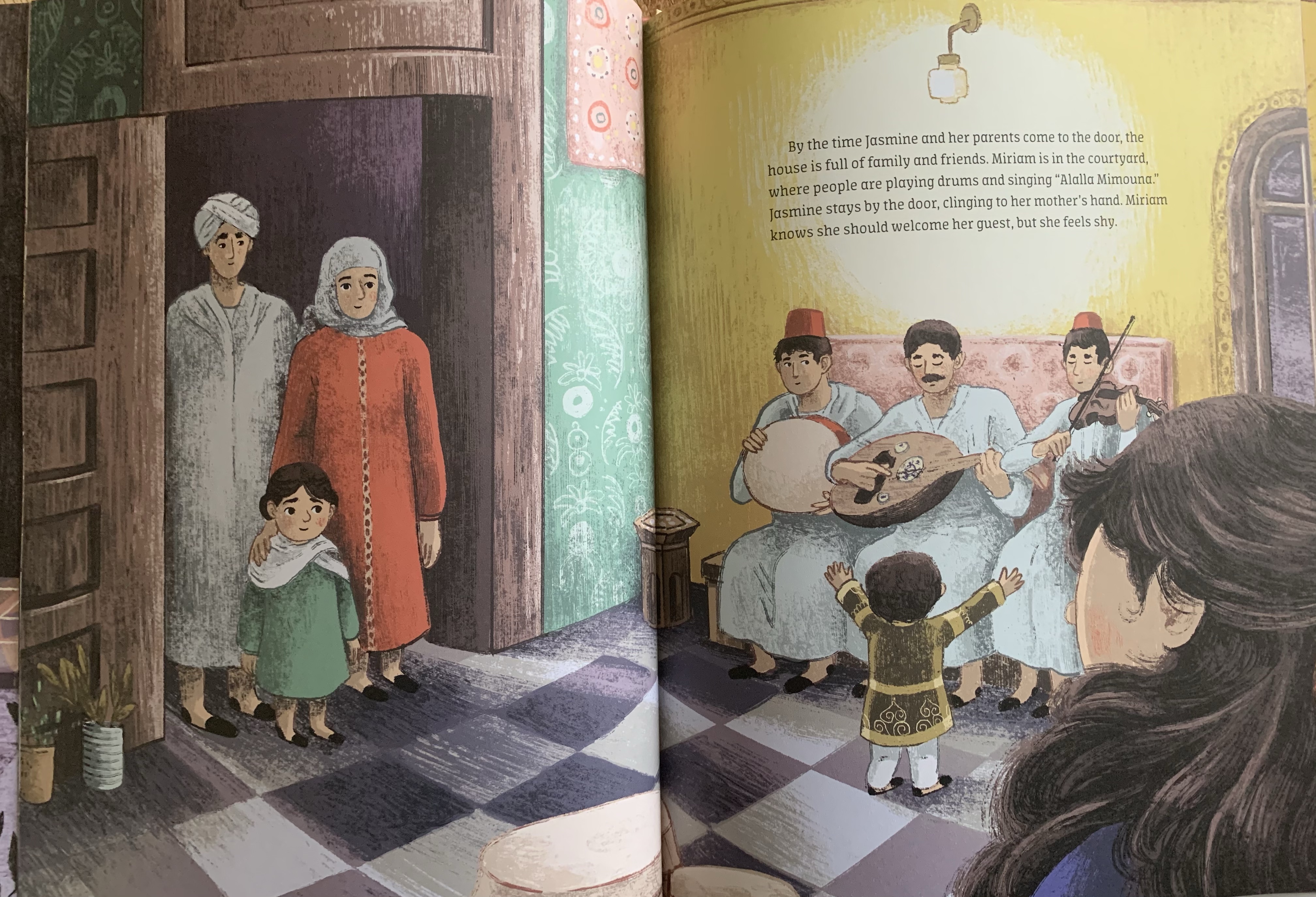
By the time Jasmine and her parents come the house is full and music is being played and songs are being song.  The first plate of maufletot goes to Miriam’s grandfather, and when she trips and they go flying it is Jasmine who catches them.  The girls giggle and Miriam teaches Jasmine to play the song, “Alalla Mimouna” on her tambourine.

img_0524

The party moves from house to house and at one home green wheat is dipped in milk and sprinkled over everyone’s head as a blessing for the upcoming year.  By the time the girls get back home they are tired, and as they share one last pancake, Jasmine tells Miriam about the nightly feasts of Ramadan after a day of fasting.  She invites Miriam to join them, and Mariam is excited, but Mariam’s mom explains that they are moving to Jerusalem.

img_0527

The following year on Mimouna Night, Mariam heads to the store to buy flour, but thinks of her friend Jasmine back in Morocco as she smells the jasmine growing in her home, and wonders if her friend is also thinking about her.

img_0528

The author is an Amerian Israeli, and I was nervous that there would be political overtones, but she deliberately wanted to avoid that and focus instead on presenting this little known Jewish holiday in an interfaith manner.  There is an info section at the end of the book explaining Mimouna and a recipe for moufletot.  In author interviews you can read more about how the story came to be, and what her hopes were in telling it: https://jewishbooksforkids.com/2021/03/14/interview-with-allison-ofanansky-author-of-a-sweet-meeting-on-mimouna-night/

The Olive Tree by Elsa Marston illustrated by Claire Ewart

Standard
The Olive Tree by Elsa Marston illustrated by Claire Ewart

olive tree


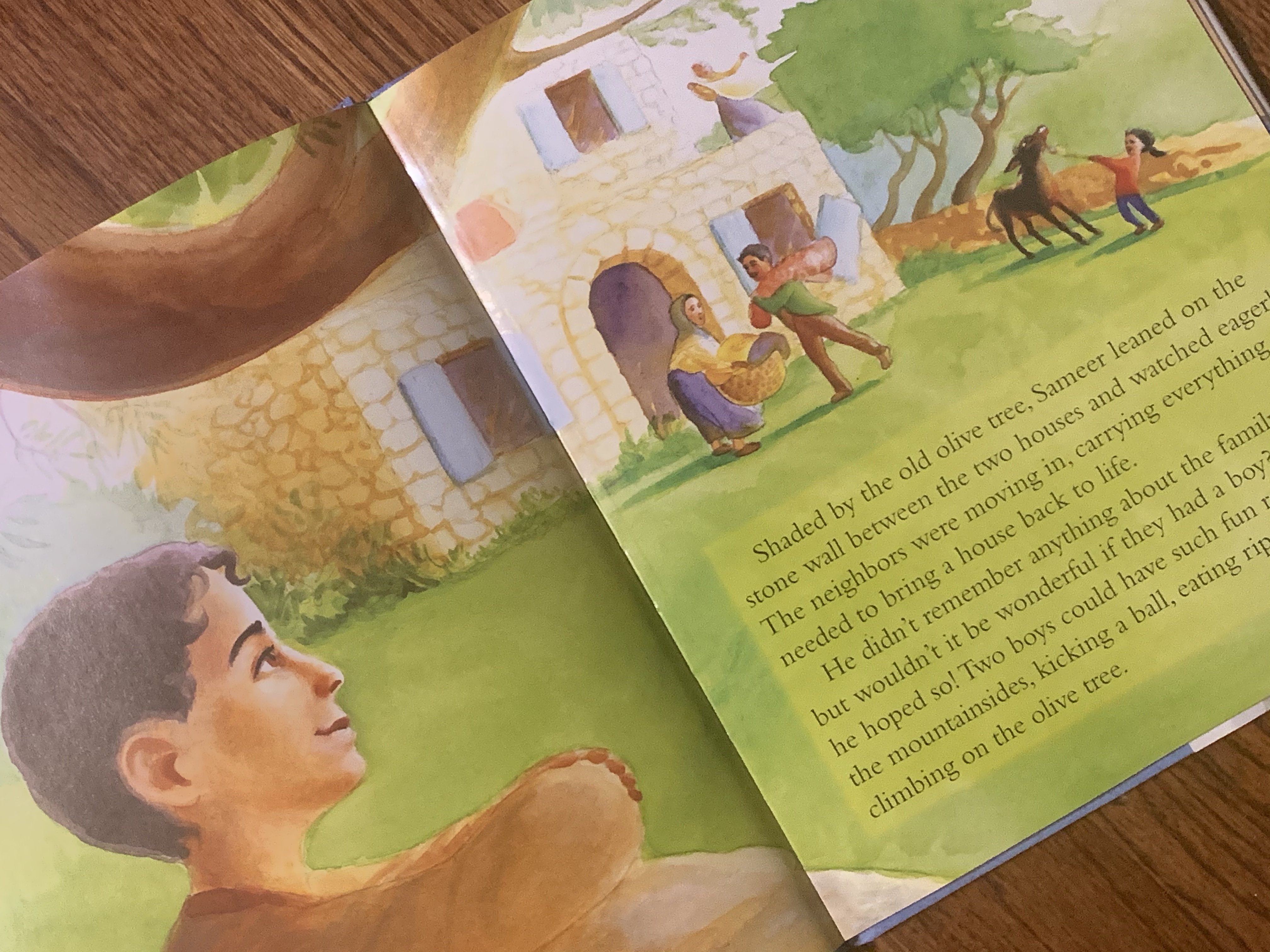
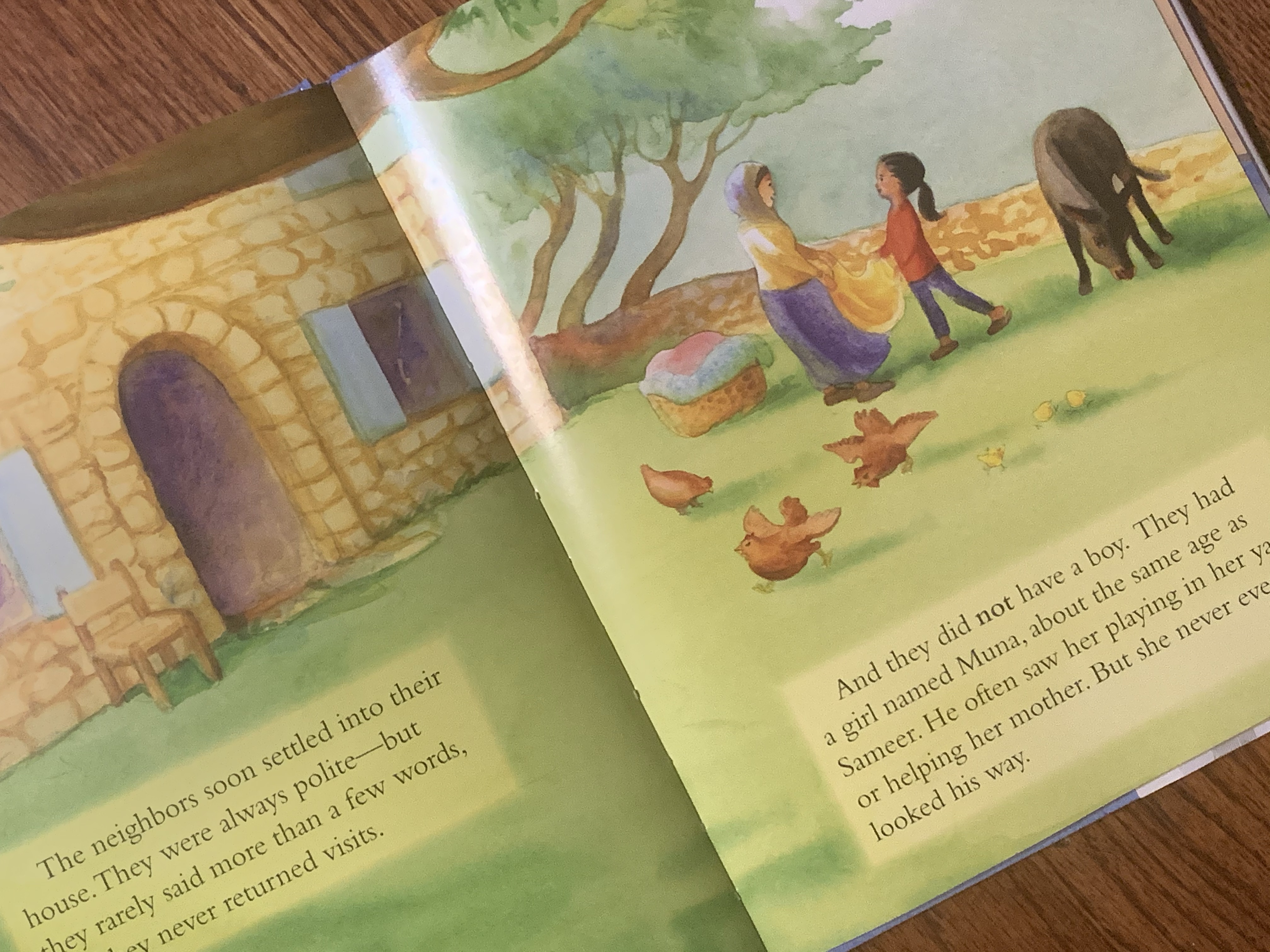
Set in Lebanon, this 32 page book for kindergarten to second graders uses the ever important olive tree as a point of contention between two neighbors. Muna’s family moved away during the conflict because they were not like the others in the village, and while they were gone, Sameer’s family cared for the olive tree on their neighbor’s property, and collected the olives that fell on their side of the wall. But now that the neighbors have returned, Sameer is not only disappointed that they don’t have a boy his age to play with, but also clashes with Muna when she says that he shouldn’t take their olives. By the end of the book, olive branches of peace will be referenced and hope hinted at in this brightly illustrated book with a lesson.

img_1647

I like that why Muna’s family left is not abundantly clear, saying that “For many years the house next to Sameer’s had stood empty. . . that the family who lived there had gone away during the troubles because they were different from most of the people int he village.”  Lebanon is a diverse place and the illustrations seem to show both Mom’s wearing head scarves, the text does not detail if they are unlike each other because of religion, or culture, or some other reason, and I kind of like that it is left vague so that children learn in the end perhaps, it doesn’t matter.  

img_1648

When the family moves back home, Sameer watches them and recalls the ways his mom prepares the best olives in Lebanon.  The neighbors are polite, but not friendly.  They don’t ever say much and they don’t return visits.  One day when the ripe olives have fallen on the ground, Sameer heads out with his basket to collect them.   Muna, who has never looked over at Sameer, watches him and tells him that they are her olives, and that the tree has been in her family for a hundred years.

The two bicker about who has rights to the olives on Sameer’s side of the wall and in anger, Sameer dumps his basket of olives on Muna’s side and walks off.  After that, no one on Sameer’s side collects the olives on the ground.  One night there is a storm and the olive tree and part of the stone wall are destroyed.  The adults gather to survey the damage, but walk off without saying anything.  The two children are left to decide what to do next about their beloved tree, and their relationship with one another.

img_1649

I like that the resolution is subtle, but thought provoking and that the adults don’t seem to interfere too much.  I can’t imagine that they don’t have opinions about their neighbors and the olives, but the book stays on the children and the assumptions, stubbornness, and unsaid words that have created such a divide, and must ultimately be resolved as a result.


Sitti’s Olive Tree by Ndaa Hassan illustrated by Soumbal Qureshi

Standard
Sitti’s Olive Tree by Ndaa Hassan illustrated by Soumbal Qureshi

olive trees

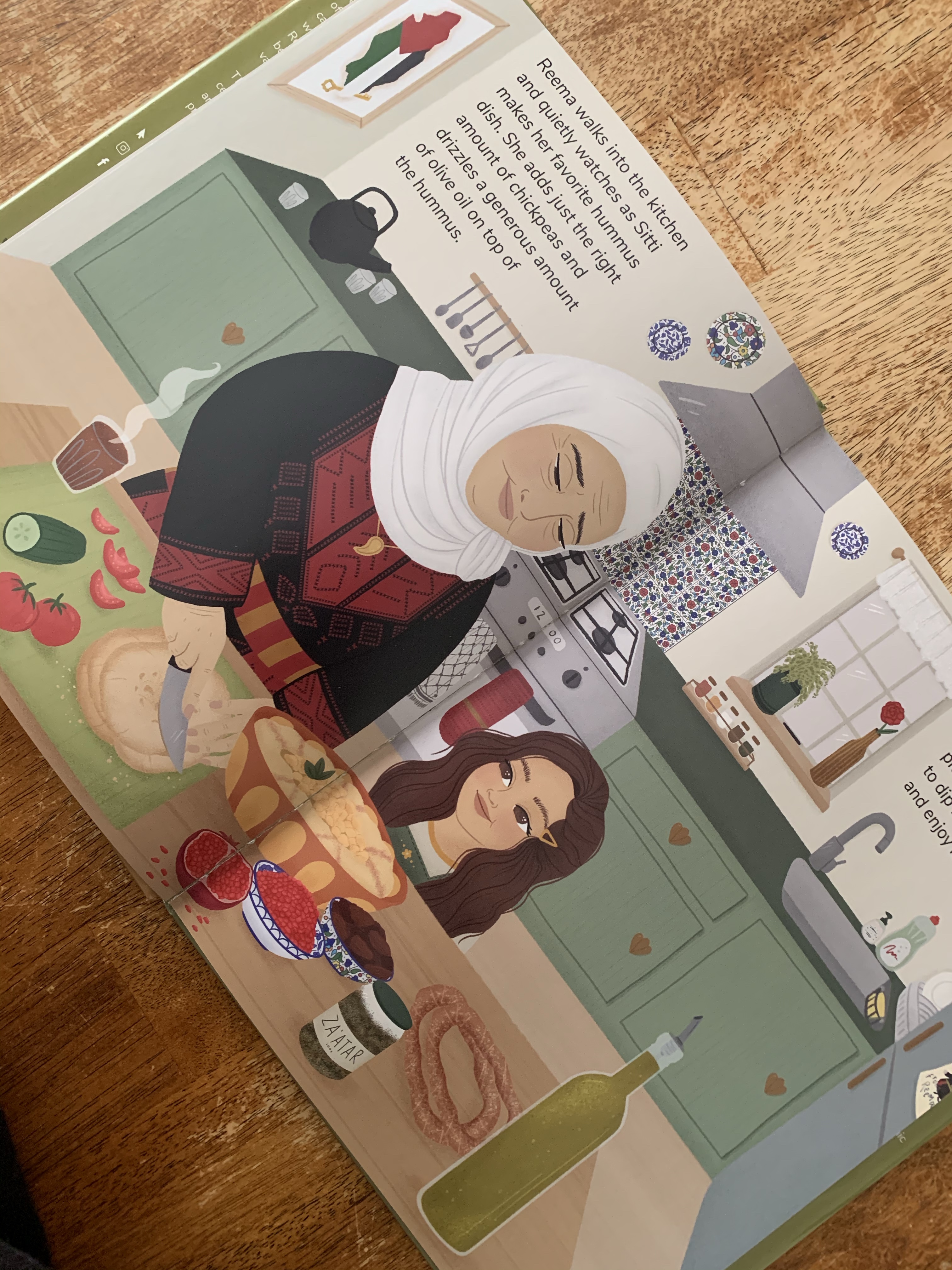
This lovely 27 page book is a story infused with love, culture, and olive oil.  The hardbound, large thick pages are richly illustrated as the text, perfect for ages preschool to second grade, tell of the olive harvesting season in Palestine.  The story is framed between a young girl learning about the past from her grandma’s memories and enjoying the olive oil sent by her uncles from their homeland.  The story is warm and informative and does not discuss politics or conflict. There is a key hanging on a map of Palestine in the illustrations, but nothing in the text.

img_1213

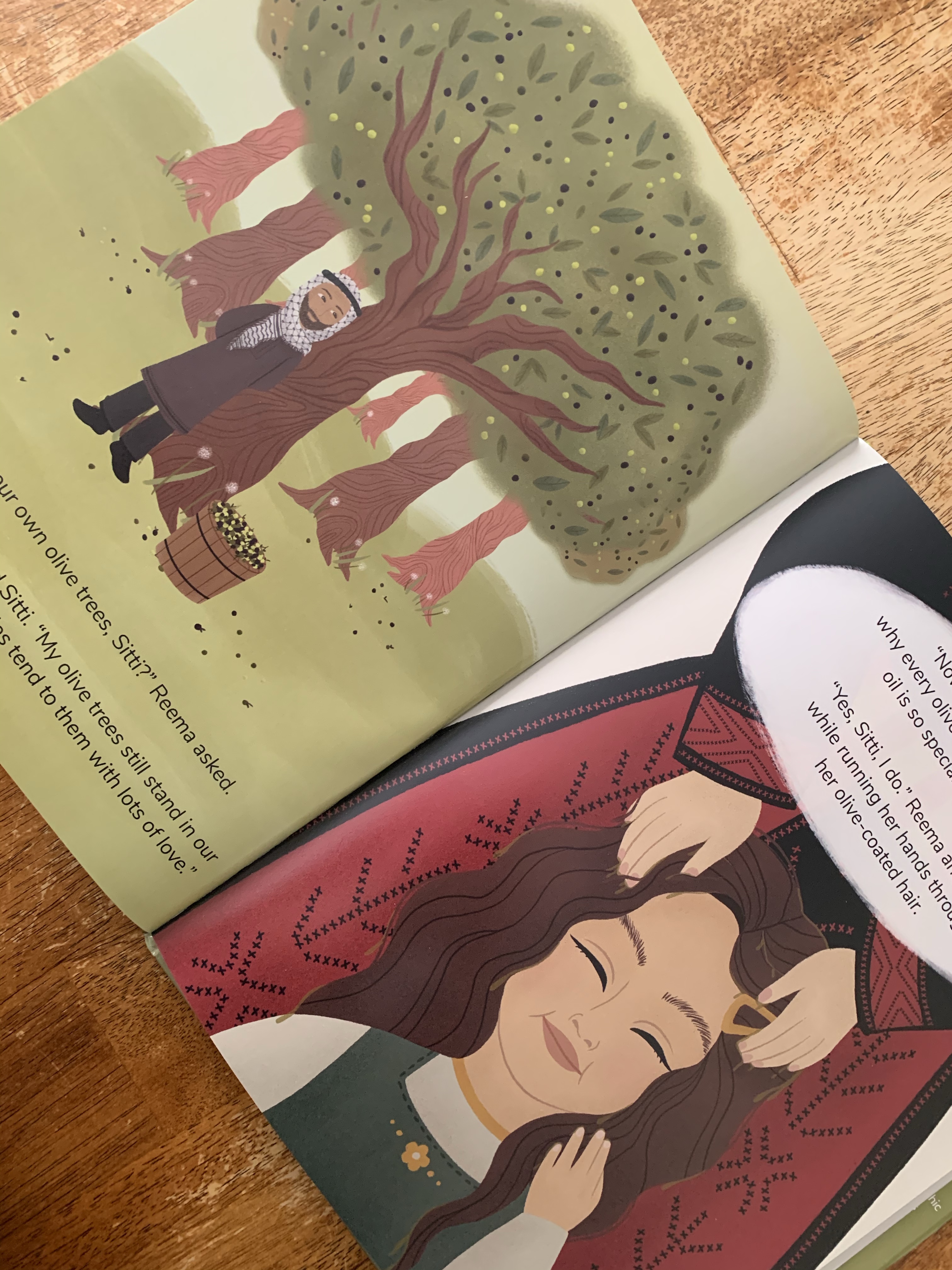
Young Reema watches her Sitti make hummus. When a drop of olive oil slips down the side of the bottle and Sitti wipes it up and rubs it in Reema’s hair.  Reema wants to know how olive oil, zeit zaytoun, can be used in such different ways. As Reema is reminded of how far the oil has traveled and recalls that her Sitti never buys olive oil at the store, the two settle in for Sitti to tell Reema some of her memories about the harvest on her ancestral land.

img_1214

Olive harvesting season comes at the end of the year and the families gather to pick the olives and fill the buckets before climbing ladders and catch the falling olives on blankets.  The elders sort them, and at the end of the day they eat and drink tea and coffee and laugh and enjoy each other’s company.

img_1215

They tell stories to pass on to the next generation just like Sitti is doing to Reema, because the olives keep the families together.  Sitti hopes one day Reema will go to Palestine and play among her family’s trees.

I wish there was a bit more detail about the hummus, it seems to imply that the garbanzo beans are whole and not smooshed or blended, also when it lists the other things Sitti’s grandparents would do with the olives, the list is olive oil, olive soap and olives for eating.  I would imagine there are more things to do with the olives, even perhaps detailing the way the olives for eating are pickled, or preserved, or prepared would have been nice.

img_1216

There is a glossary of a few terms at the end.  There is nothing religious in the text, but many of the women wear hijab in the illustrations.

Overall this book is well done and serves an important point in showing a culture that is rich and full, aside from conflict and politics.  It is a sweet story between a grandmother and her granddaughter and shows how stories, traditions, and food help pass on culture and heritage.

.

Halal Hot Dogs by Susannah Aziz illustrated by Parwinder Singh

Standard
Halal Hot Dogs by Susannah Aziz illustrated by Parwinder Singh

hotdogs

I’m not sure what I expected this book to be, I just knew I wanted to get my hands on it, but I’m fairly certain, that even if I would have had some expectations, they would have been no where near how well done this 40 page book for four to eight year olds is overall.  It is unapologetically American-Palestinian Muslim in an inclusive funny delightful way, that only an OWN voice book can be. There have been some great picture books lately that are authentic, yet mainstream, and this book pushes that standard just a little bit higher as it normalizes jummah, halal food, dabke, hijab, with familiar threads of street food, spunky little sisters, untied shoelaces, tradition, and excitement.  The story has a twist and some intentionally misleading foreshadowing, that give the book depth and added fun.  Readers of all backgrounds will relate to this book and find something that they can relate to, as they laugh and marvel at Musa’s infectious enthusiasm for hot dogs. img_0610

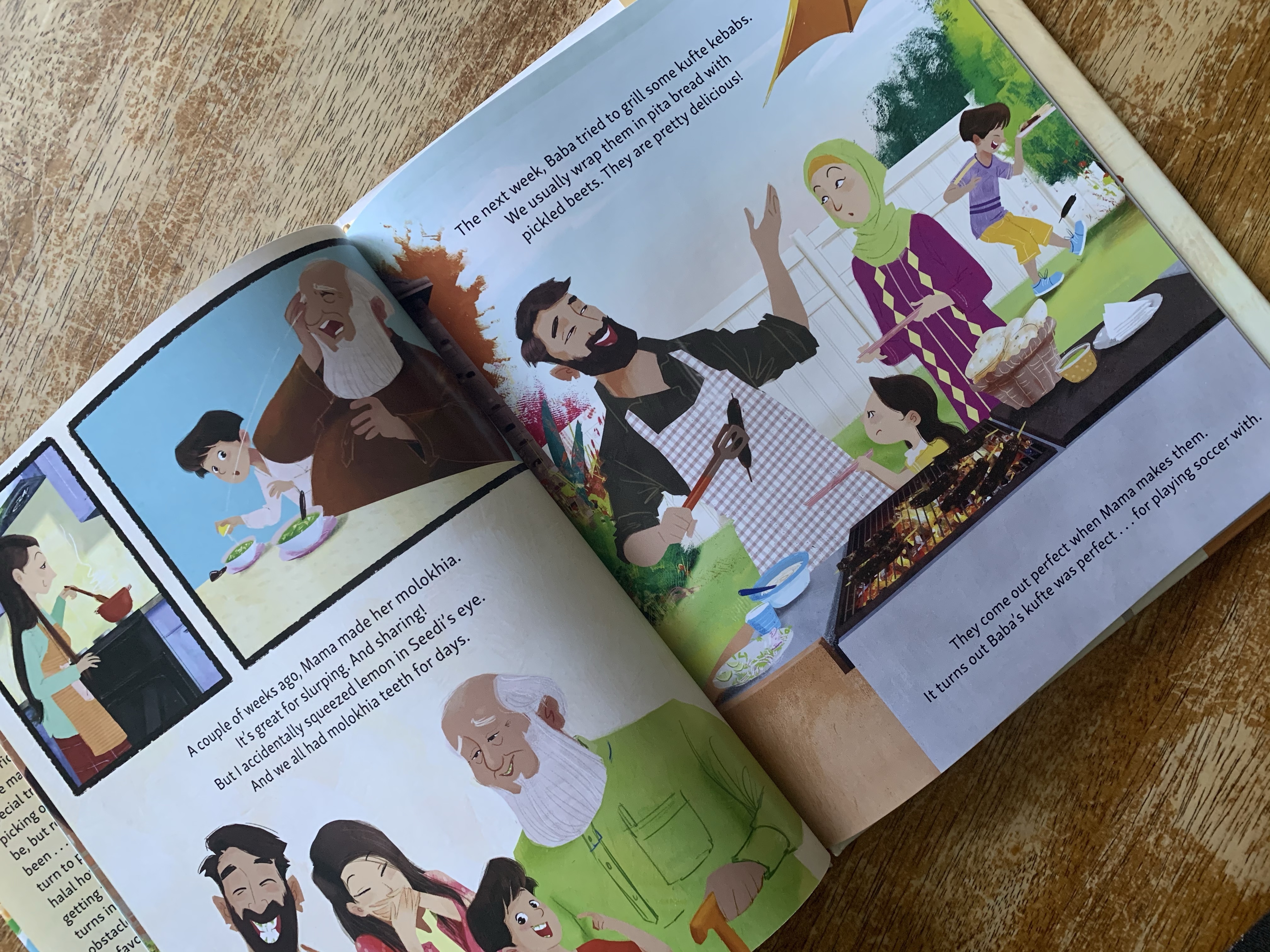
Musa Ahmed Abdul Aziz Moustafa Abdel Salam, aka Musa, loves Fridays.  His family heads to the masjid for Jummah prayer and then home for a special Jummah treat.  Lately, they’ve had molokhia, that stayed in their teeth for a week, kufte kabobs that were better for soccer playing than eating, riz bi haleeb with lost dentures, and prelicked jelly beans.  Alhumdulillah, this week is Musa’s turn to pick, and he is picking his favorite: halal hot dogs with Salam sauce.

img_0611

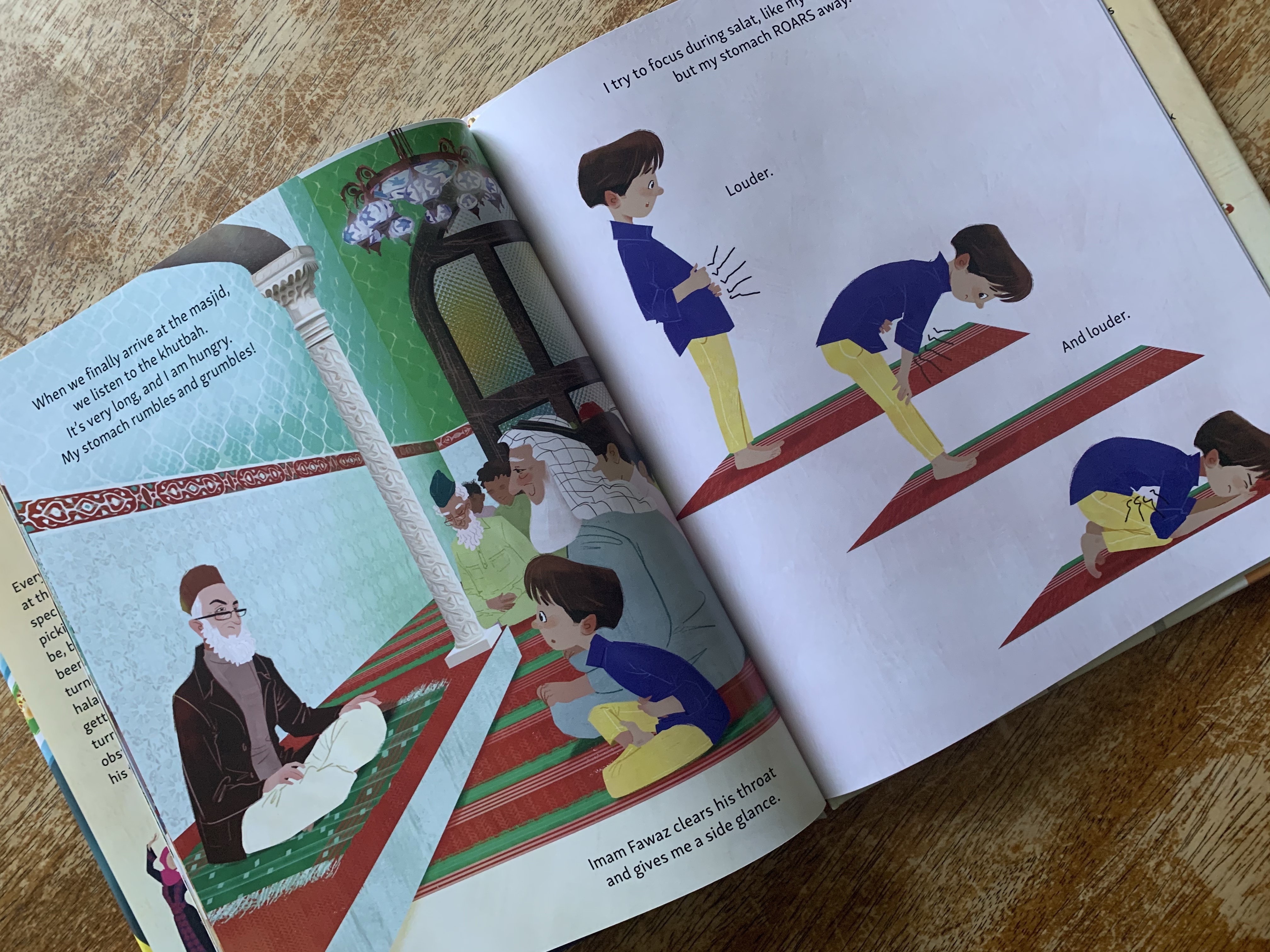
They head to the mosque dancing dabke as they leave their house with smiling faces.  The khutbah is long though, and during salat his stomach is roaring! Afterward he is off, but Seedi has to help Maryam find her red shoes in a sea of red shoes and mama is chatting with friends. 

img_0612

Dad gives in and lets Musa go get the hot dogs alone.  As he heads to the stall with the best hotdogs: the perfect amount of hot, chewy, juicy hot dog goodness, he passes all sorts of foods being eaten.  There is falafel and bao and tacos and samosas and churros, but he is determined to get hot dogs, even though the line is really long.

img_0613

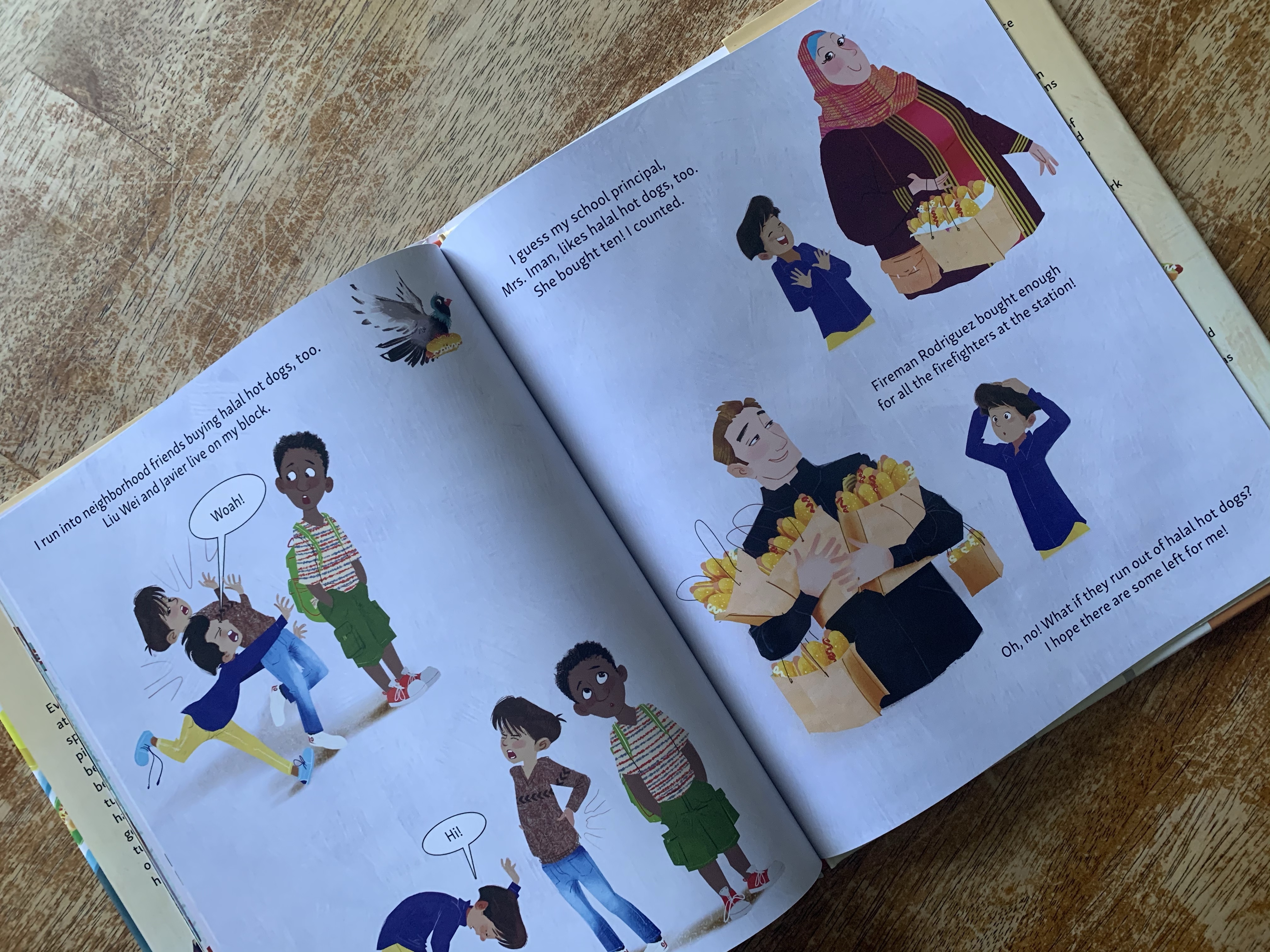
He sees friends in line, and firefighters, and even his school principal.  Everyone loves hot dogs, even birds and squirrels.  Finally he buys a whole bag full with special Salam sauce and races home to share with everyone.  But uh oh, it doesn’t go as planned, and I’m not about to spoil it, so get yourself a copy like I did from http://www.crescentmoonstore.com or your library, and maybe don’t read it while you are fasting, because you will be craving hot dogs, mmmmmm nom nom nom.

img_0614

There is an Author’s Note at the end that details her kids’ influence on the story and explains that a portion of the proceeds go to UNRWA USA, a non profit that helps Palestinian refugees.  There is a glossary of Arabic Words and Terms, and a section explaining Halal Laws.

img_0615

The book shows the mom in hijab outside the home, and uncovered within the home.  There are diverse skin colors among the Muslim and non Muslim characters in the book, as well as a variety of ages depicted.  Seedi wears a keffiyah on Jummah, but different clothes on different days.  The illustrations are wonderful and descriptive and do a lot to compliment the story by setting a relatable and diverse-positive visual.

img_0616

Salaam, World by Samia Khan illustrated by Teresa Abboud

Standard
Salaam, World by Samia Khan illustrated by Teresa Abboud

img_0255

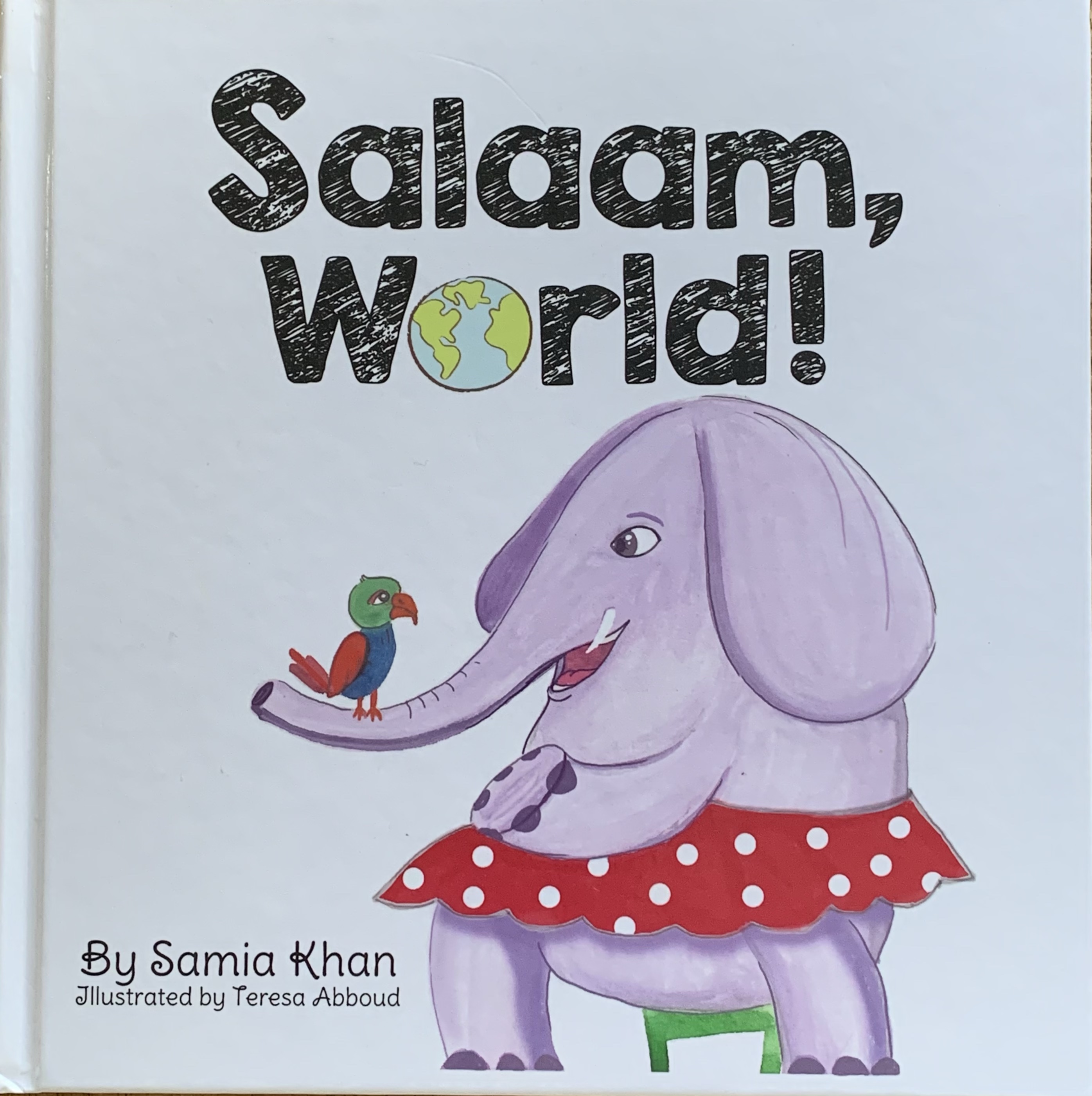
This 26 page rhyming picture book starts out basic enough with salaam being said from various locations, but it digs a little deeper as the book progresses to explain what salaam means, and how to respond. A good introduction to the greeting of peace for ages three and up. The pictures are jungle animals testing out the word and the 10 by 10 size is sufficient for bedtime and in small groups. My picky critiques are I don’t like the font as I think it is hard for early independent readers to decipher when capitalized, words such as “catastrophic” and “salutation” are a bit advanced for the demographic, and I wish there was a bit more Islam in the book, but overall it is sufficient, and an effective tool to helping get little ones to say salaam.img_0246

“Salaam from above, salaam from below, salaam from the mountaintops covered in snow,” is how the book begins as a cat hanging from a tree and braving the elements offers his greetings. A donkey then asks us to hold up and explain what the word means.

img_0243

Salaam is defined as meaning peace in Arabic and a word that Muslims use that is like ‘hello’ only kinder. It is sending peace to those you say it to, and a show of respect. The animals say it to others before noting that you can say it short or long: Salaam or Assalamualaikum.

img_0245

The book then asks how to respond before teaching us to say walaikum-assalam and telling us not to be alarmed the next time we hear the greeting, but to return it and spread it.

img_0247

David’s Dollar by Tariq Toure’ illustrated by Anika Sabree

Standard
David’s Dollar by Tariq Toure’ illustrated by Anika Sabree

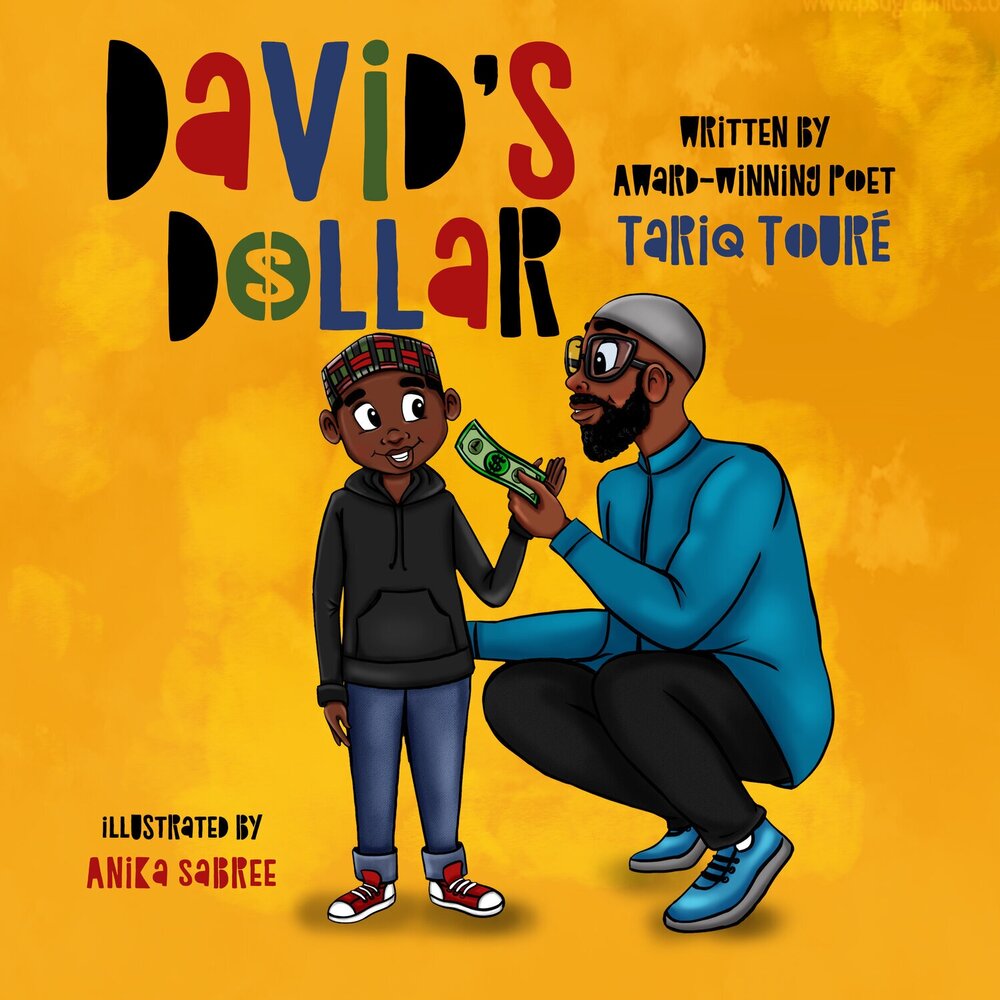
This early elementary 20 page story is an entertaining, yet informative look at community and economics on a kid’s level.  It features black Muslim characters, business owning women of color, commerce, charity, and relevance.  I loved the cadence of the book, the illustrations, and the simple text. Sure, maybe a dollar isn’t much and it is a transparent simplistic view, but it makes the point of how when you shop local everyone benefits, and how the path money takes impacts everyone it touches.

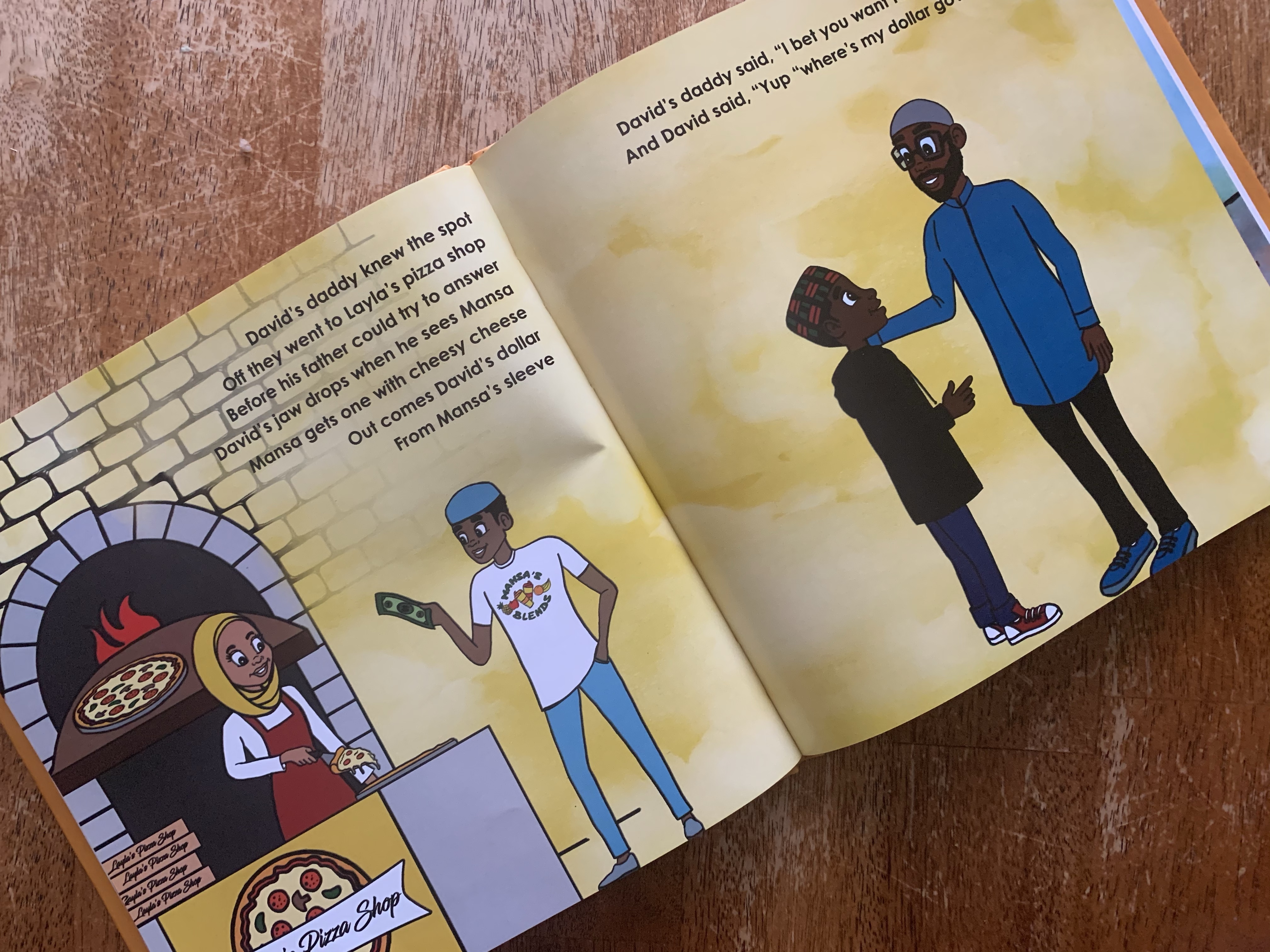
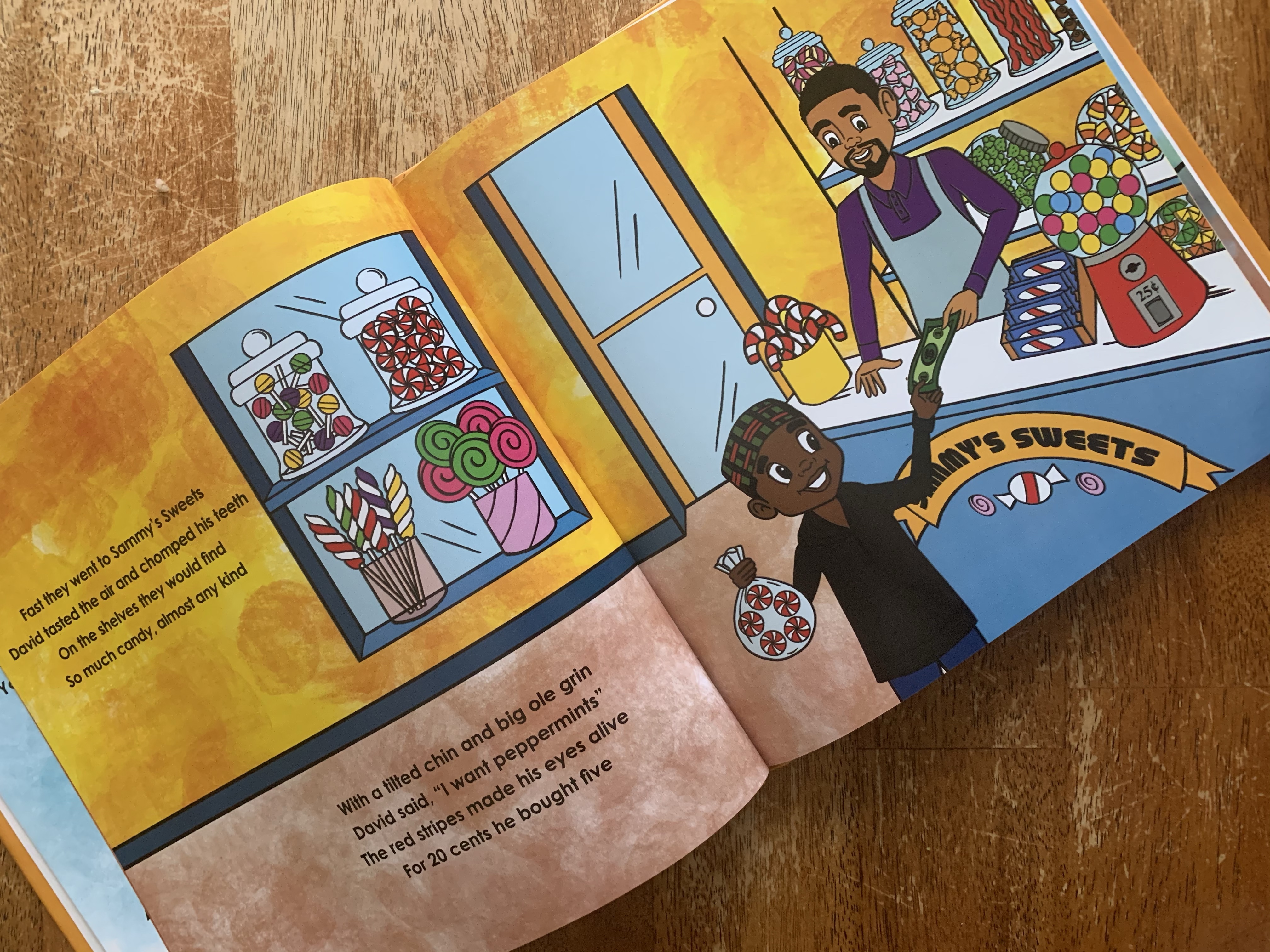
David is getting his dollar after doing his chores, and he is ready to head to the candy shop to see what to spend it on.  At Sammy’s sweets, he decides to get five peppermints, and just like that his hard earned money is gone.  He asks his dad where the money went and off they head to Mansa’s juice shop. When Sammy comes in and buys a drink, out comes David’s dollar and now it is in Mansa’s hands.

David and his Daddy follow the money and see it change hands at Layla’s Pizza Shop, and then Madame C’s Braids, before heading to Uncle Kareem’s hardware store where the dollar too has ended up.  It is time to pray so Uncle Kareem, Daddy, and David head to the mosque.

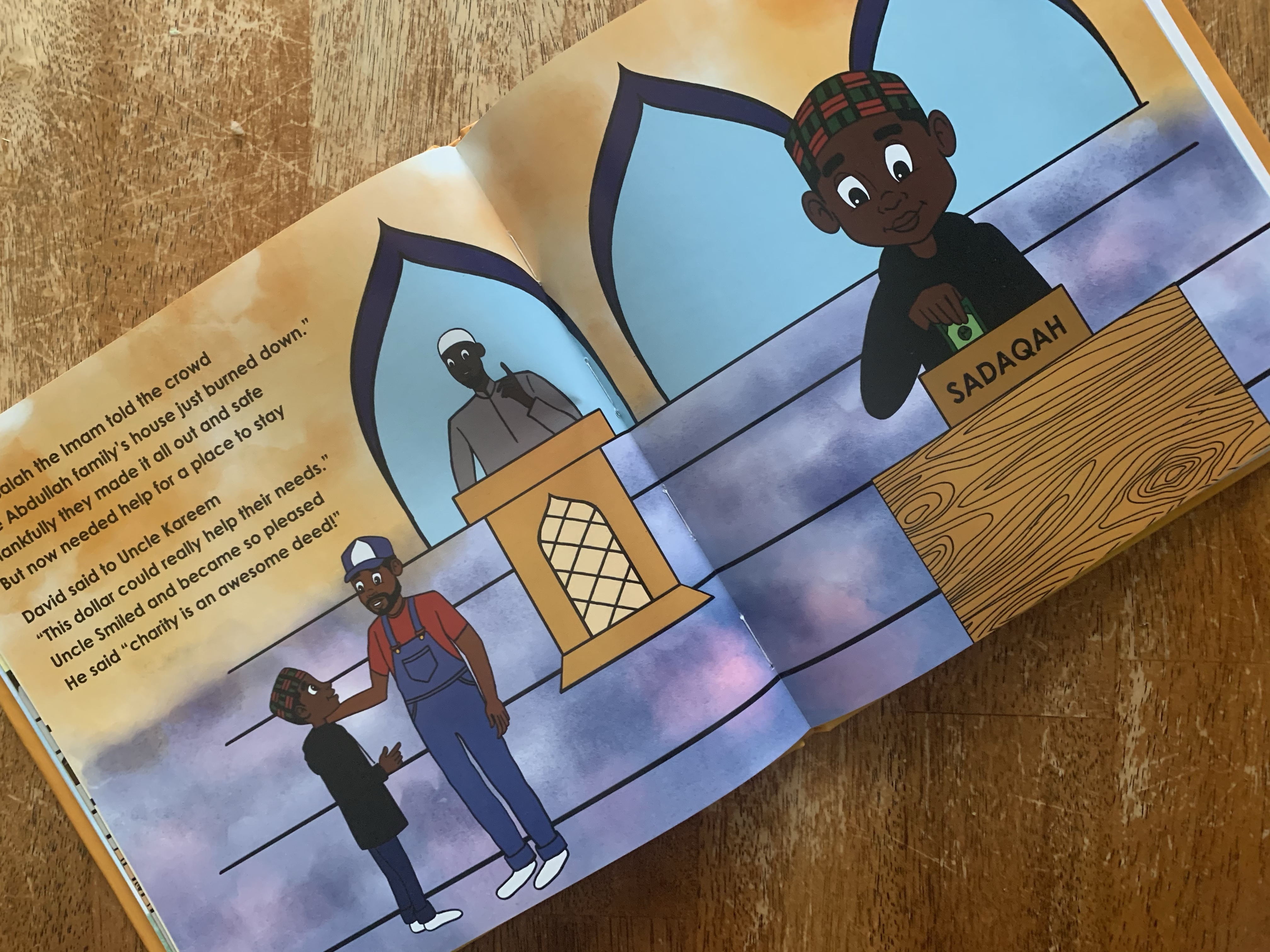
After Salah the Imam tells the crowd that a family’s house has burned down and they are collecting sadaqah.  David tells Uncle Kareem that that dollar should go to the family.  At night, David recalls all the places his dollar traveled and resolves to learn more math.

The book starts with a beautiful heartfelt gratitude message to Allah swt and the community of supporters.  The end of the book features a detailed bio of the book’s poet author and his successes and praises.

The story is rooted in an Islamic community, but is for all readers of all faiths.  There is no preaching or details about belief. many women have hijab on, there are Islamic names, they go to the mosque, they pray, and they give sadaqah.

Hannah and the Ramadan Gift by Qasim Rashid illustrated by Aaliya Jaleel

Standard
Hannah and the Ramadan Gift by Qasim Rashid illustrated by Aaliya Jaleel

img_0275

You may have seen this new 40 page Ramadan book that came out yesterday and thought, “another book about what Ramadan, is and a girl being told she is too young to fast, I’ll pass.”  And I’m here to tell you, please reconsider.  This book is wonderful and it is not the same-old-same-old.  I know the title and cover don’t hint at the heartfelt story within, but it really does an amazing job of showing, not just telling, about the feelings and purpose of Ramadan beyond the restraining of food and drink.  The text is a bit heavy, but the illustrations keep even four and five year olds engaged, and the story works for Muslim and non Muslim children alike.  The OWN voice book has a Desi slant with Urdu words, Pakistani clothing and featuring an immigrant family, but the cultural tinges are defined in the text and it flows smoothly.  This would be a great book to share with your children’s class to show how Ramadan is more than just going without food, or being just one day, or one act of kindness, it is an ongoing effort to show kindness to those near and far.  The book shows an authentic Muslim family and presents universal themes, making Ramadan and Islam more relatable and familiar to all readers, and inspiring Muslim children to find their own ways to save the world.
img_0276

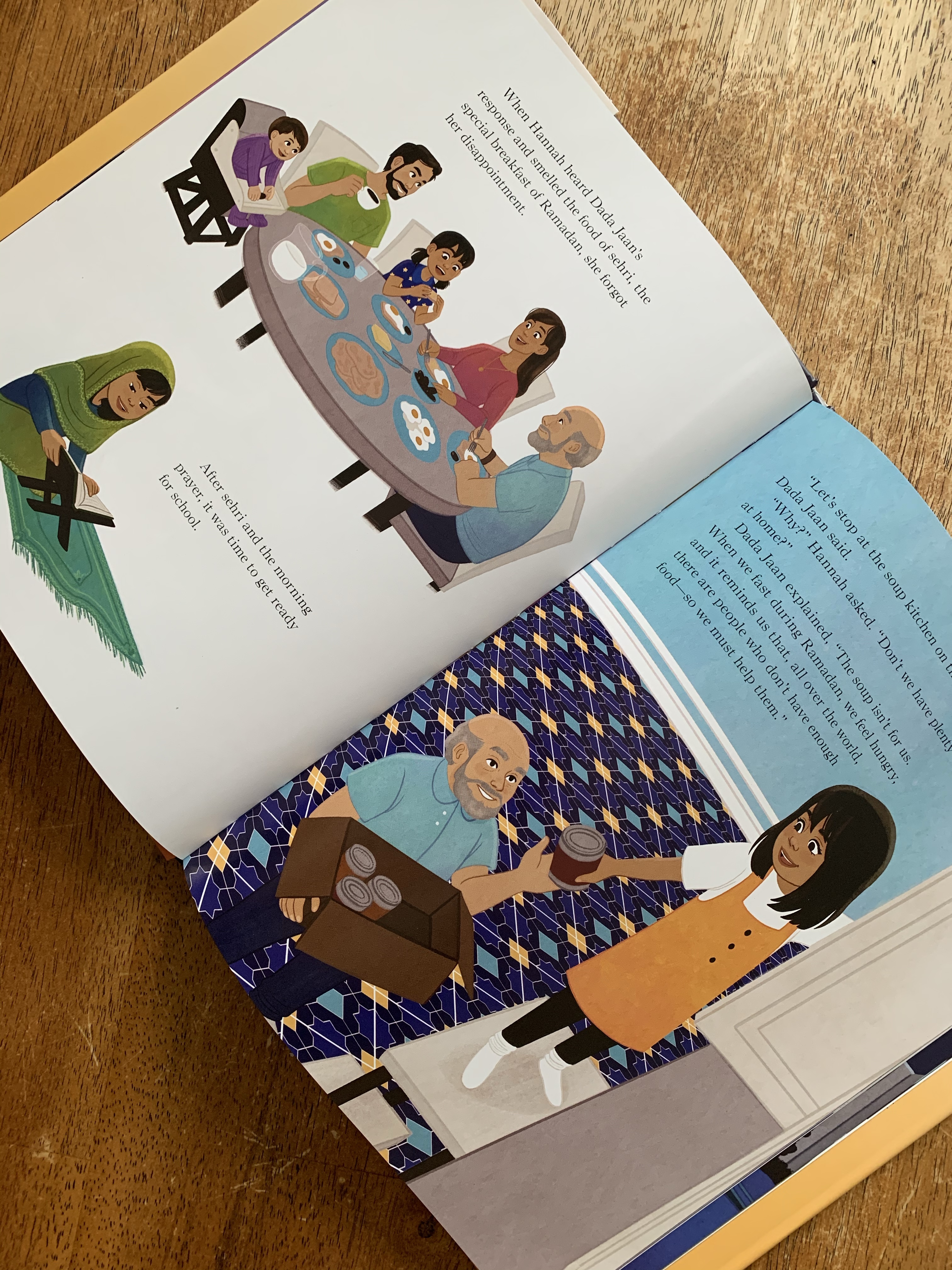
The book starts with Hannah being woken up by her paternal grandfather, Dada Jaan, it is the first day of Ramadan, and she is excited.  She hopes that now that she is eight years old, she is old enough to fast.  Her heart sinks when she is told, “Fasting is for grown-ups, not for growing children,” but her spirits rebound when Dada Jaan tells her that she is going to celebrate Ramadan by saving the world.

The first thing Hannah and Dada Jaan do is collect cans from the pantry to take to the soup kitchen.  Dada Jaan explains what a soup kitchen is, and why it is important to help those that don’t have enough food.  Hannah is worried they won’t be able to help everyone in the whole world, but Dada Jaan encourages her to start with her neighbors.

img_0277

Later in the day, Hannah’s friend loses a beloved family necklace, and when the bell rings she doesn’t want to be late for class, but she remembers that she is supposed to help, so she does.  Hannah finds the necklace, but her teacher is not happy when she comes to class late, and Hannah isn’t even given a chance to explain.

On the 11th day of Ramadan, Hannah and Dada Jaan decide to save the world again before they head off to the science fair.  They are packing up clothes to take to the shelter.  Hannah is worried that the people at the shelter won’t know that they are the ones that donated the clothes.  Dada Jaan says that it is enough to help people out of love and adds that the best superheroes work in secret.

img_0278

At the science fair Hannah sets up her model replica of Abbas ibn Firnas’s flying machine next to her friend Dani.  When Dani runs off to see a robot, his globe rolls off the table and Hannah saves it. Dani ends up winning and she is happy for him, but she is sad that no one knows she saved his project.

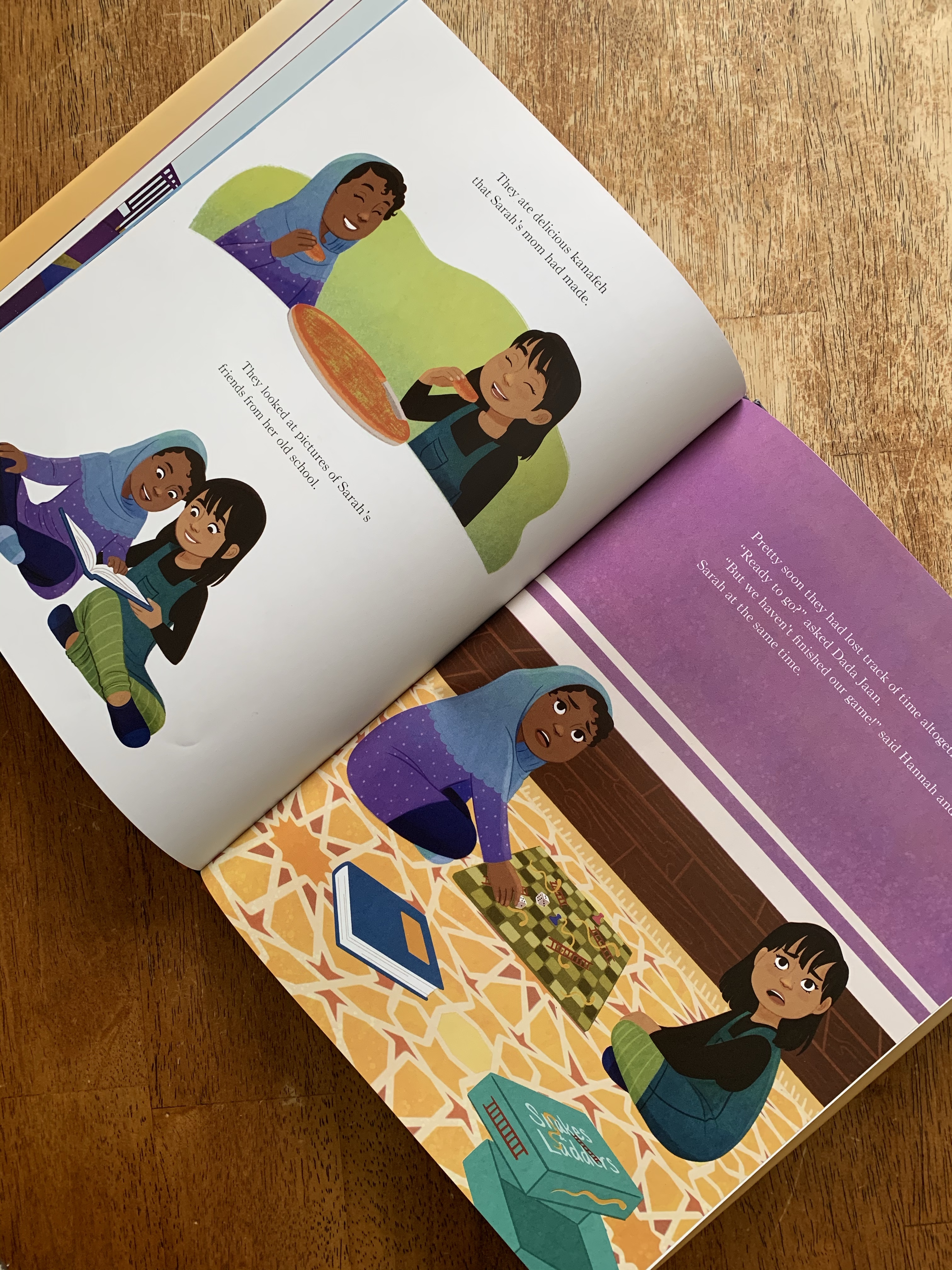
Twenty days in to Ramadan, Hannah has a play date with a girl she has never met before and Hannah does not want to go.  Sarah is new to the neighborhood and Hannah’s mom insists she goes.  Luckily Dada Jaan strikes up a deal that he will take her and they can leave when ever she wants.  Hannah and Sarah have so much fun together, Hannah doesn’t want to leave.
img_0282

When they get home, Dada Jaan shows Hannah old photographs of when he and Dadi Jaan had first come and didn’t even know the language.  They talk about how the kindness of others helped them, that and Dadi’s butter chicken.  The night before Eid, Dada Jaan asks Hannah if she helped make the world a better place, she doesn’t think she did, but he seems to think otherwise.

On Eid day they go to the mosque, then to the cemetery to pay respect to Dadi Jaan, and when they return home they find Hannah’s whole world there to celebrate with her.  Cousins, friends Maria and Dani from the church across the street and the synagog by the mosque, as well as the Sikh family that runs the soup kitchen.  Dada Jaan and Hannah enjoy gulab jamun, kheer, and jalebis as they discuss if Hannah really did help the world this Ramadan.

img_0280

It is hard in my heart to go wrong with a story that focuses on an amazing grandfather/granddaughter relationship that ends with them racing to get the last gulab jamun, so I might be a little bias.  But I was genuinely surprised and delighted by the direction the book took and the way it presented Ramadan in everyday situations that children can relate to and imitate. I was a little disappointed that the book wasn’t larger considering the phenomenal illustrations.  It is just 8.5 x 11.  I love that the characters pray and read Quran, and the mom covers and the neighbors are diverse.

Is That a Teapot by the Toilet: A Muslim Child’s Potty Training Story by Rabia Bashir illustrated by Basma Hosam

Standard
Is That a Teapot by the Toilet: A Muslim Child’s Potty Training Story by Rabia Bashir illustrated by Basma Hosam

I think I’ve loved every Bismillah/Precious Bees book I’ve ever read, and this book is no exception.  It is only the second children’s book I’ve ever seen on the subject of Islamic bathroom etiquette and I think combined with My First Muslim Potty Book, our little Muslims and their potty trainer adults are in a great position to explain, teach, laugh, and be successful in getting our little ones out of diapers and adopting Islamic Sunnahs and hygiene.   I love that this book is inspired by the author’s real life experiences, that it starts with a few WHO facts about the lack of access people have worldwide to a proper toilet with a portion of the book sales going to help those who lack hygienic facilities, and that the book is approved by a Sheikh.  Additionally, I love that there is a song that goes along with it (it isn’t posted yet, but will be shortly inshaAllah), that there are questions and games at the end with informative pages about istinja and the duas to be said, it is silly, the illustrations adorable and expressive, and overall just oh so relatable.  The book is perfect for ages three and up, and a great reminder resource for older kids that may need a nudge to stay on top of their bathroom behavior and feel normalized by seeing themselves in the pages.

It is a big day for mom and dad and Rayyan and Ridhwan.  Rayyan is going to start using the potty.  They have practiced entering the bathroom, but now they are going to do it for real: saying Bismillah and entering with the left foot first.  Only he uses his right, so they do it again, and it happens once more, and now mom and Rayyan are laughing and dancing.  The third time is the charm and in they go.

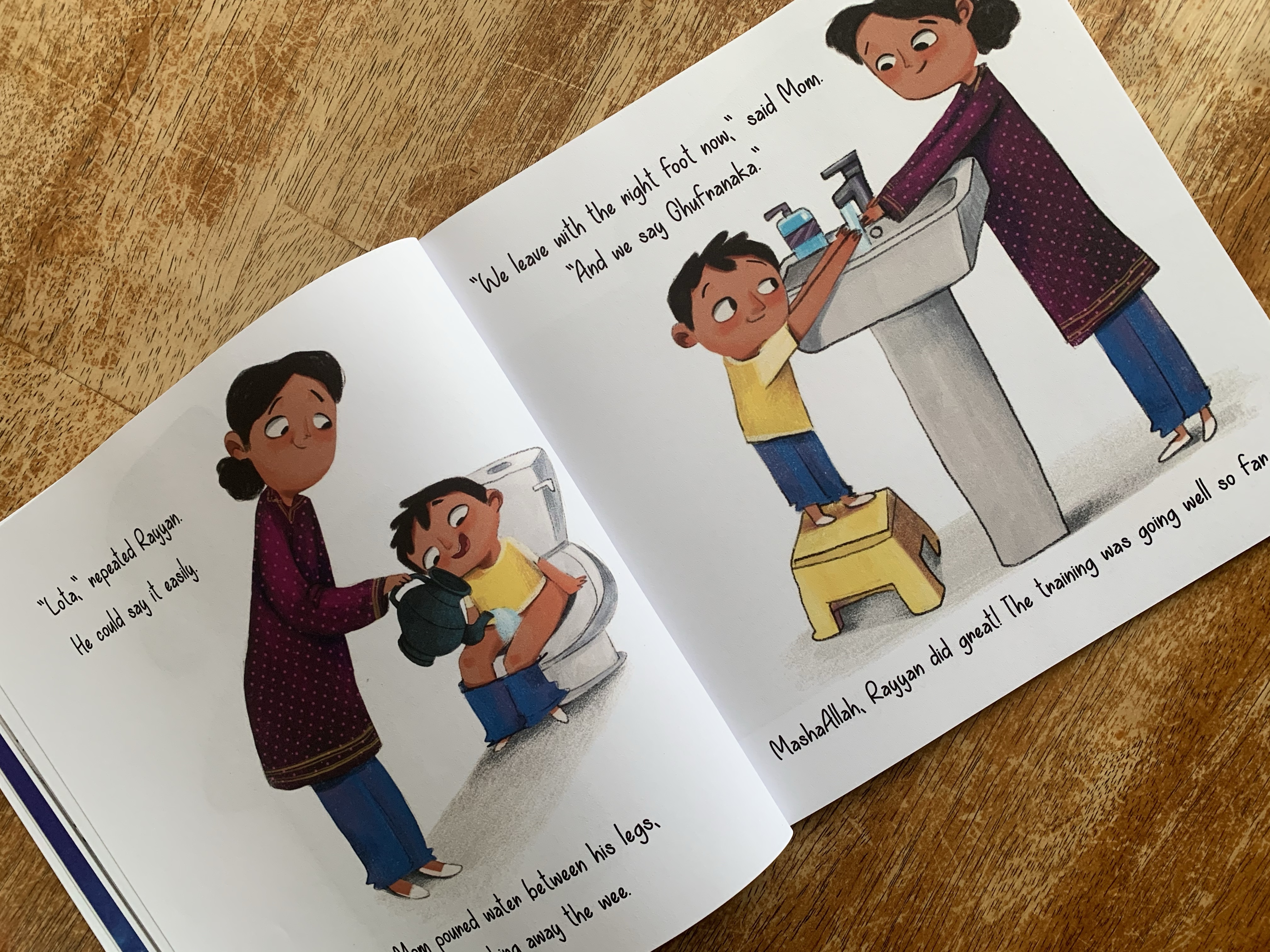
He sits on his little potty, and he goes, hurray, but when he starts to stand up, Mama explains that he must clean himself, all Muslims do.  Rayyan asks if that is a teapot when Mama lifts up what she calls in Bengali a bodna and his Urdu speaking father calls a lota.

Lota sticks and Rayyan is washed and ready to clean his hands before heading out the door with his right foot and saying Ghufranaka. So far so good, but it isn’t a one time thing.  There are a lot of days of accidents, but over time it gets better so the family decides to head out.  When all of a sudden Rayyan has to go, the family runs to a halal restaurant to borrow their restroom.

Phew they made it just in time, and instead of a teapot looking lota they have a watering can which makes his dad have to stand really far away to help him wash. Rayyan notices different places have lotas that look different than his does at home.  At a wedding they had to use a plastic cup, the mosque has a mini shower, at the park Mama pulls out a plastic bottle from her purse.  Rayyan decides he wants his own little bottle too, so they pick one out that he can keep in his backpack.  

One year later it is a big day for Ridhwan, he is about to start potty training, like kids all over the world. There is then a two page spread about many words different languages use to call the vessel that they use to wash themselves in the bathroom. There are questions to talk about regarding the story, a maze to get to the restroom in time, the Muslim Potty Training Song to the tune of the Hokey Gokey, which I’m assuming in America is the Hokey Pokey, a page answering What is Istinja?, Duas when using the toilet, the story behind the story, information about the illustrator and about the author.  All-in-all 48 pages.  

I purchased mine on Amazon, I think the local stockists will have it shortly and I would assume the bismillahbees.com website will as well.  I know the author recently had her father pass away, inna lillahi wa inna illayhi rajioon, so please make duas for her and her family, and be patient on the QR code and song which inshaAllah are forthcoming.

The Library Bus by Bahram Rahman illustrated by Gabrielle Grimard

Standard
The Library  Bus by Bahram Rahman illustrated by Gabrielle Grimard

library bus

It seems this polarizing 32 page picture book has instagram reviewers torn, perhaps along racial/cultural lines, as to whether the book is wonderful or simply victim to perpetuating the same old tropes and stereotypes.  Maybe being half brown, I shouldn’t be surprised to find myself in the middle.  I think if you are tired of feeling like the only strong Muslim female from the subcontinent acknowledged by the West is Malala Yousafzai, and seeing her single narrative and experience being repackaged in a new book every other week, then yes, this book is going to grate on a similar nerve and OWN voice or not, you will write it off as Afghanistan being close enough to Pakistan and the story of a girl and education being unoriginal.  I think the flip side is that if you find a female lead taking education in the form of a library bus to the places where formal education is not available and you love the empowerment that women educating women can have in changing a society, then you are going to probably love a female driving a bus, a female teaching, a girl planning to go to school, a grandfather making sure in a previous generation when women couldn’t be educated, that he taught his daughter, and being thankful that it is a person from the society and not a “white savior” coming to help the people in Afghanistan.  Both as far as I can tell have merit.  I think that you see in the book what your paradigm and perspective is before you even start.  I have read it and re read it and then read it again over the span of many weeks. I was alerted to it by @muslimkidsbooknook who sensed that we might disagree before she even posted her review (haha it’s like she knows me!), so my review is going to try really hard to focus on the text, and what it says, not on the 30 books before it that had a similar message or on my views on publishers only accepting manuscripts with reassuring easily palatable narratives, there is enough of that already about this book out there.  I’m going to try and offer my perspective on what the book contains and while it has problems for me, I definitely liked it more than I disliked it. Oh and one more thing: the illustrations, swoon, are gorgeous, like really, really beautiful. Bismillah…
img_0157

Pari and her mother are getting ready to set off in their library on wheels.  It is Pari’s first day as her mother’s helper and she is a little nervous. It is dark when Pari’s mom drives the bus to their first stop- a small village tucked in a valley between two gray mountains.  There are a group of girls waiting for the bus and call it over to return books and pick new ones.  This reminds me of my time in New England and hearing about the Book Mobiles and Mobile Book Fairs that would visit the small seaside towns that didn’t have proper libraries.  Even my mom used to tell me stories about waiting for the Book Mobile to stop on her street in Davis County, Utah to get books once a month.  The concept is universal and that it takes place in Afghanistan and is driven by a woman who is educated and independent, is intentional with the hopes of being inspiring.

img_0158

The girls then gather for a lesson, it is hard to know how impromptu it is or if it is a regular organized class.  It is also not made clear if they always practice English or it is something unique to the day, but they sing the alphabet song and count to ten.  After class a girl tries to chat with Pari and see how much she knows.  Pari lies and says she can print, but in reality can’t even read or write in Farsi yet. This shows a gap in the story as earlier Pari said she could barely count all the books in the library, and in the pictures there are a lot of books, but she is trying to keep up as the girls count to ten.  As the mom and daughter team pack up to head to their next location they discuss how Pari’s mama learned.

Pari’s grandpa taught her mom a long time ago, at a time when girls were not allowed to go to school and she had to hide in the basement to learn.  Pari wonders if her mom was afraid of the basement.  It is always dark down there.  It is really one paragraph on one page that mentions that girls could not learn.  It is presented in the past tense, and as the story progresses we learn that next year when Pari is older she will be going to school.

img_0159

There is a two page spread about the mom seemingly going off on her mantra that learning makes you free.  And I’m ok with it.  It says when you go to school study hard, period, then the next line says, “Never stop learning. Then you will be free.” Yes! I agree, how many of us pursued a skill or a hobby during this pandemic to feel free from the confines of staying at home.  Learning in any capacity is liberating.  It may not keep you safe in a war, but the freedom of the mind to find peace and pursue passions is critical to mental health and survival.  Am I reading too much in to these basic lines? Absolutely, well probably anyway.

img_0160

When the bus gets to a refugee camp with tents everywhere, Pari and her mom start handing out pencils and notebooks before settling in to what seems an organized English lesson of ABC.  I am torn on my thoughts about them stressing English over their own language.  A sense of pride in who they are by learning Farsi or Dari or Pashtu would show readers that Afghan culture is rich and worth learning and valuing.  I worry that by stressing the English, it presents the culture and language erroneously as the opposite.  At the same time, as a child and teen, I went to Pakistan over a dozen times and would beg my (middle class) cousins to teach me Urdu.  I’d make them take me to Urdu Bazaar for dictionaries and text books, and preschool grammar books so that I could learn my father’s language.  And it never happened.  I’d beg in letters before I got there, and they would agree, but when I arrived they all wanted to work on their English.  They wanted to practice it in conversation, they wanted me to read over their assignments, they would introduce me to their coaching center teachers, their principals, the tutors, and I’d find myself teaching them colloquialisms and explaining idioms, and I’d watch my “textbooks” gather dust.  This was before social media, and YouTube and Netflix and I was their link from their studies to the larger world that rewarded knowledge of the English language.  Is it correct or even logical? No.  But it was my experience that they desperately wanted to learn English over Urdu or the required provincial language Sindhi.  Would readers of this book know that? No.  Do critics of them learning English wish that it wasn’t the case more than wishing that the book simply didn’t highlight it? I don’t know.

img_0161

As they leave the camp, Pari reads the letters of the refugee organizations off the tents.  I find it off that earlier she called it ACDs instead of ABCs and yet now she knows the alphabet.  Again I’ve read the critiques questioning why the refugee camps are named and have over thought it.  In some ways I think it is a reminder that the country has been at war and that individual organizations are helping care for those displaced by countries that tore the country apart.  The text says that, “there are no schools for the girls in the village or the camps.” If anything I took this to show that while we stereotype Afghan society as not making education of females important, that international relief groups don’t either.  The great saviors aren’t teaching the girls in the camps, a mom and her daughter come once a week.  There is a subtle yet powerful critique of foreign policy there, if you want to really be honest, I think this should be made more clear.  At the end of the day the strong Afghan people are putting their country back together after a never ending illegal conflict has ravaged them further.

img_0162

The author says in his note at the end that this book is based on real people he met in refugee camps when he returned to his homeland and that this book is a tribute to the strong Afghan people, particularly the women.  Imagine where any war torn nation would be without the bravery and determination of mothers and teachers, and women who will risk it all for their children and ultimately an entire generation, when politics and power have found other things to value.

The book on its own I think is fine, allbeit written plainly for western readers.  Do I wish stories about life in this part of the world didn’t feature war and refugees and education, absolutely.  We can argue my experience compared to your experience, to the author’s purpose and intent, to the publisher’s vision. That is the beauty of books, we don’t have to agree and we can discuss and we can all be better for it.  There is nothing Islamic in the book other than some of the characters wearing a scarf or chador or hijab.

img_0163