Category Archives: Poetry

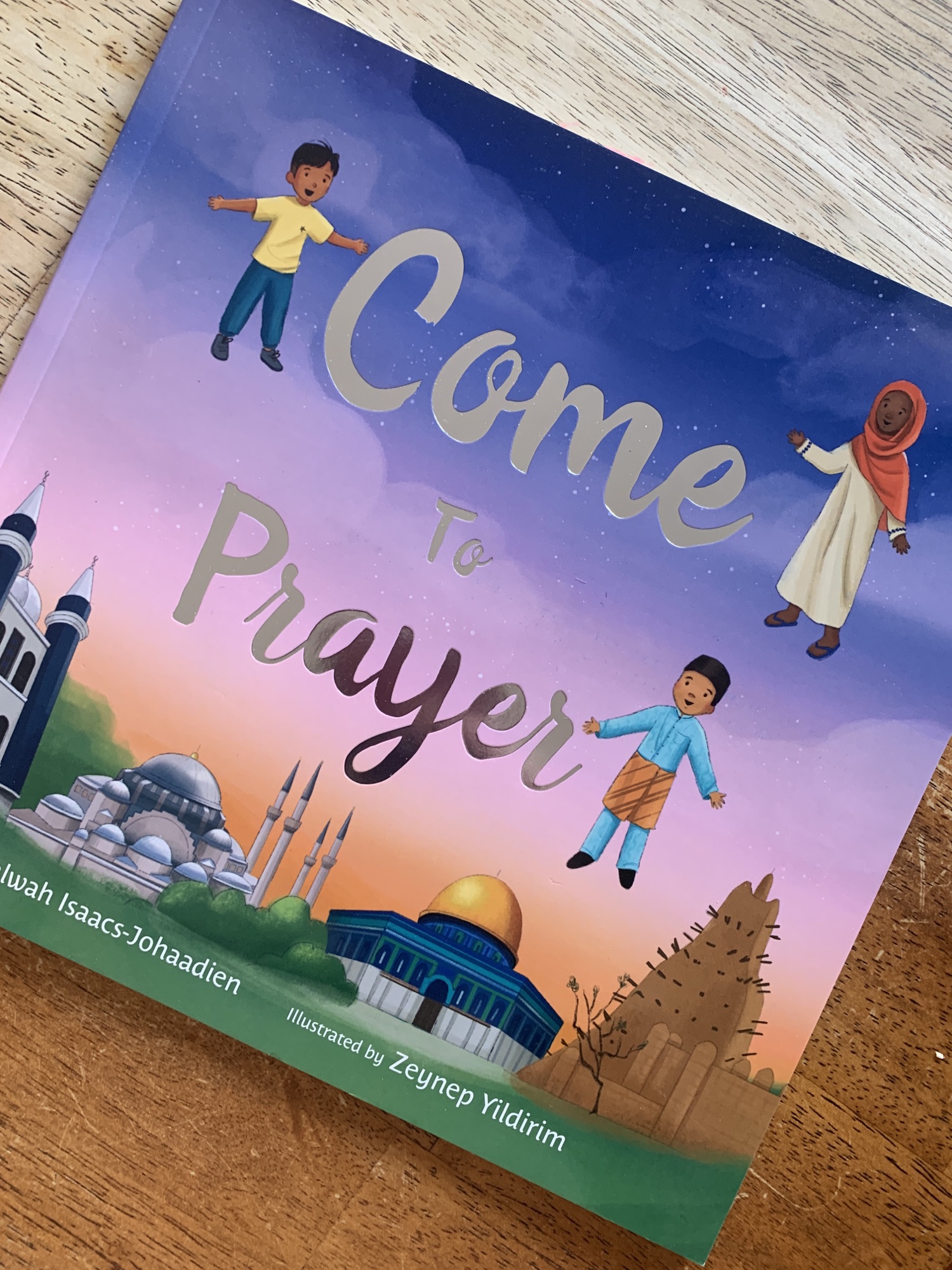
Come To Prayer by Salwah Isaacs-Johaadien illustrated by Zeynep Yildirim

Standard
Come To Prayer by Salwah Isaacs-Johaadien illustrated by Zeynep Yildirim

img_3530-1

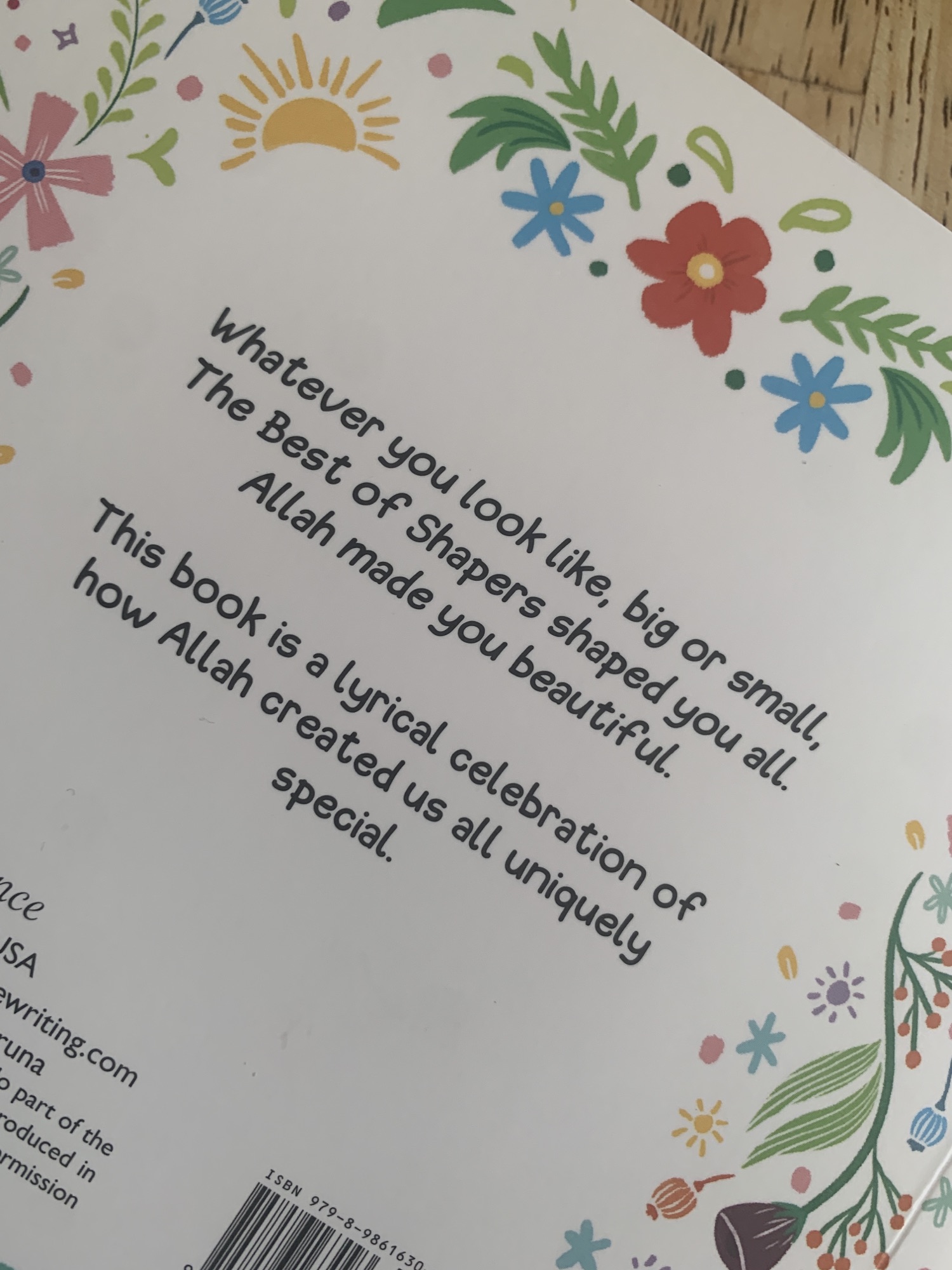
Framed around the five fard prayers, the rhyming 26 pages take readers all around the world with the refrain of “come to prayer, some to salah, come to success, come to falah” appearing after each two page spread.  Reykjavik, Honolulu, Rio, Timbuktu, Kuala Lumpur, and Makkah are shown as families gather to pray in each city.  It is hard to know if the locations were chosen for a specific reason, or to just help with the rhyming lines.  I appreciate the map at the end in showing 18 masjids in the world, but they are not the only ones pictured in the book, so honestly it was not intuitive why they were highlighted. Additional information about the masjids included and where they are located in the world would have been far more beneficial.  The rhyming at times is forced, but for the minimal lines on the pages, and the clear organization of the book, it didn’t bother me too much.  The illustrations compliment the text well and amplify the concept of Islam being a global faith through the connection of Muslims praying everywhere.  The Islamic fiction book is meant for toddlers to early elementary, and with the positive tone of salah being an invitation to success, I think it works well for the audience.

The book starts with little kids waking up in a snowy scene in Reykjavik and heading out with their parents to pray Fajr at the masjid.  Then it is rain in Honolulu that can’t stop a family of five from driving slowly to the masjid for Zuhr.  In Rio a family packs up at the beach to get to Asr salah on time.  For Maghrib, not even a sandstorm across the Sahara can keep a family in Timbuktu from getting to prayer.  And finally a family takes shelter in the masjid for Isha as thunder and lightning in Kuala Lumpur halt their tour. The story ends with everyone entering Makkah in ihraam to pray at the Kaaba.

The book is a thick paperback cover, with glossy 9 x 9.5 inch pages.  It works well for small group story times or bedtime.  It is available on Amazon here or from Crescent Moon Store here.

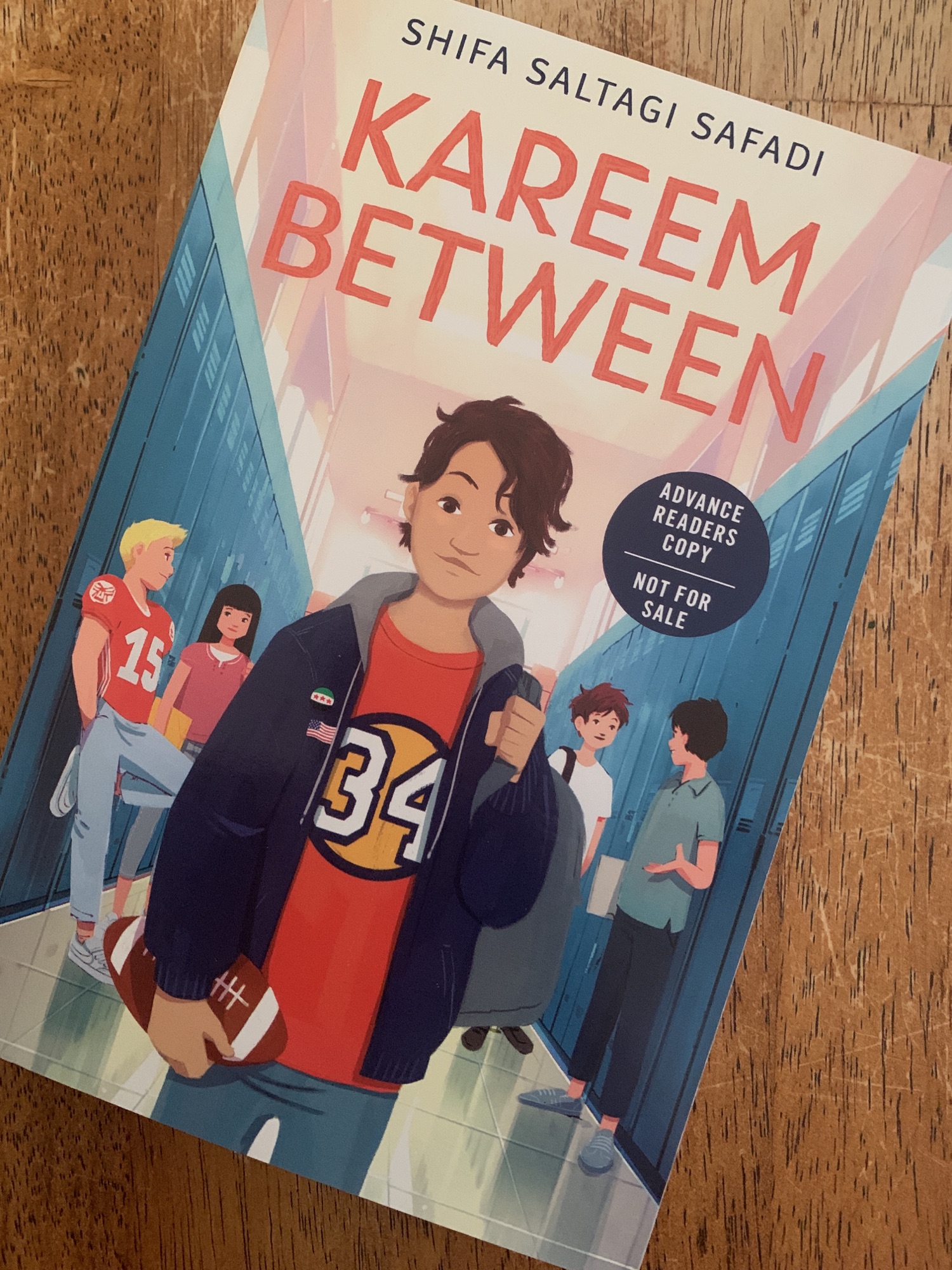
Kareem Between By Shifa Saltagi Safadi

Standard
Kareem Between By Shifa Saltagi Safadi

img_3395-1

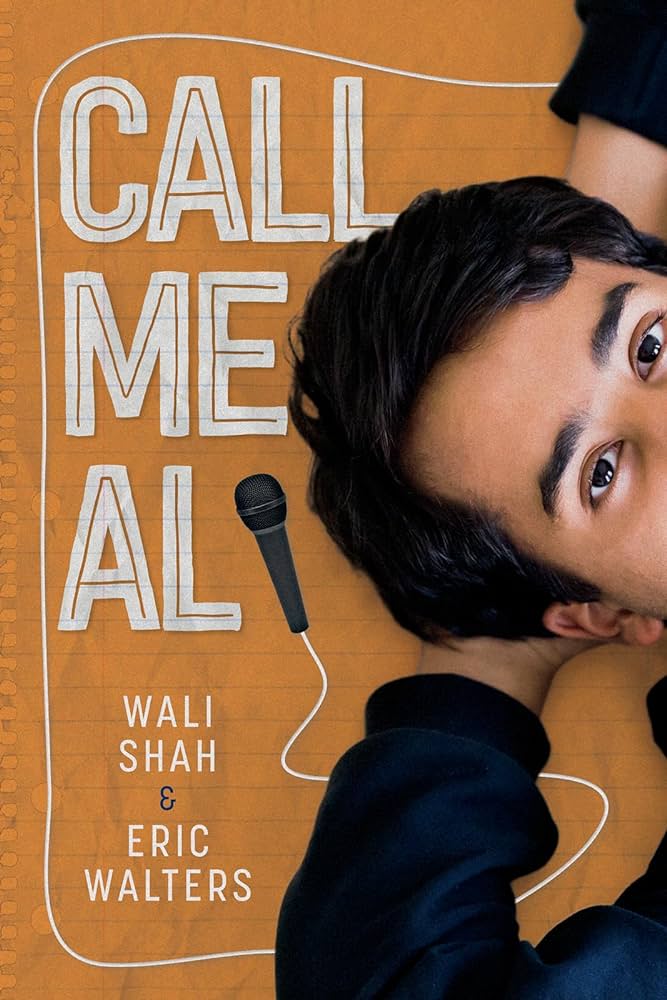
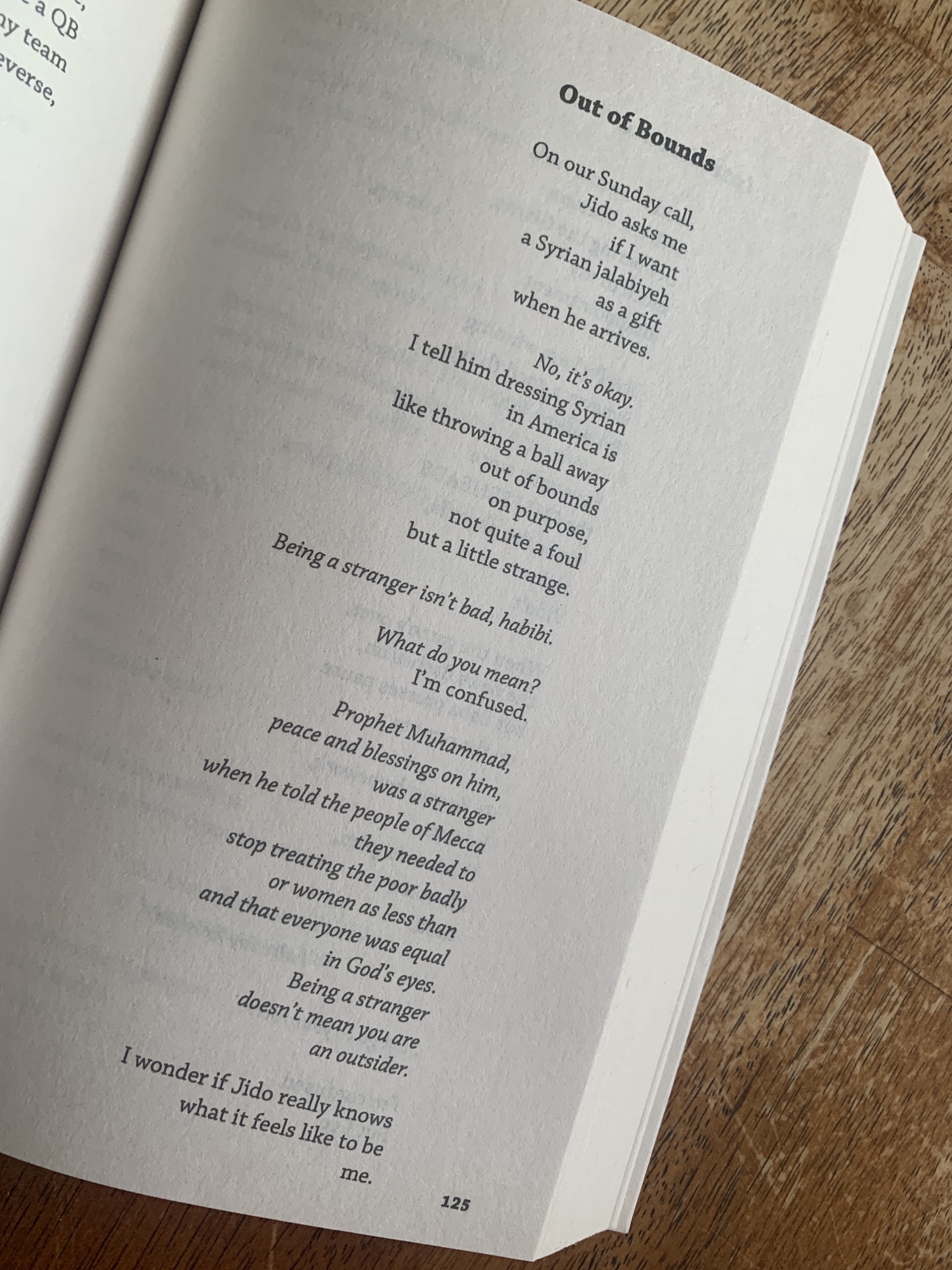
It doesn’t matter how many Word documents you read, Goggle docs you add comments to, and screen shots you revise; to hold a physical book in your hands that you have been blessed to observe from the sidelines through numerous revisions, is mind blowing.  Reading the final version from page 1 to page 324, plus the backmatter, has left me at a loss for words with tears streaming down my cheeks. I truly cannot imagine the book any other way. All past drafts and storylines, were just stepping stones to get the book to this version, and as a fan of literature my whole life, to see this metamorphosis in real time has added to my respect and admiration of authors.  Enough about me though, this review is of the middle grade novel in verse that tells the story of Syrian American Kareem, a loveable boy caught in between choices, siblings, friends, labels, and global acts beyond his control.  He makes mistakes, he tries to make things right, and at the center of it all is his Islamic identity, love of football, and genuinely good heart.  I am biased in that I have self appointed Kareem as my nephew, but even after dozens of readings, I was moved to tears three times during the course of this reading.  I made my teens read the book and they loved it, and like them, we hope we get more Kareem in the future.

img_3541-1

SYNOPSIS:

Kareem loves football, particularly the Bears, and dreams of seeing his Arabic name on an American jersey one day in the NFL.  Unfortunately, he hasn’t made the school team, his best and only friend Adam has moved away, and the coach’s son is offering to talk to his dad for Kareem in exchange for some school help.  Add in a new Syrian kid at school, his mom going to Syria to take care of his grandfather, and the fruition of Executive Order 13769 aka the Muslim Ban, and seventh grade has Kareem scrambling on every down to say the least.

img_3543-1

WHY I LOVE IT:

The football framing, the literary inclusions, the Arabic, the Islam, all combine with such tangible heart to create a seamless read both as a compelling story and as an example of literary craft.  The language is on point and intentional, that even if you don’t know the character or novel referenced, the Arabic words included, or football terminology used, you will be invested in the characters and plot, and find yourself cheering for Kareem.  Often debut authors show promise, but their stories have plot holes, or pacing issues, or inconsistencies, that is not the case with this book.  The crumbs are there that tie everything together, the depth of the characters’ personalities reveal how developed they are, and the timeline keeps the book moving forward.  There are no dry or slow spots in the entire novel, it is easily read in one sitting as you find yourself nervous for Kareem, and curious how it will resolve.

Boys and girls, Muslims and non Muslims, Arabs and non Arabs, all will find themselves drawn to this book, and thinking about the characters, particularly Kareem, long after the final page is read.

img_3544-1

FLAGS:

Some stress and anxiety with missing parents.  Death, bullying, cheating, fighting, lying, racism.

img_3540-1

TOOLS FOR LEADING THE DISCUSSION:

The book is a solid middle grade, but the quality of writing and engaging plot makes it work for a middle school book club read as well.  I cannot wait to share this book widely.

Preorders speak volumes and I truly hope if you are able that you will preorder a copy, you can do so here.  Requesting your local public library to shelve the book is also a tremendous help to signal to publishers what type of stories and OWN voice authentic representation consumers will support.

The Monkey, The Cow, and the Wolf (The Song Book) by Zain Bhikha illustrated by Amir Al-Zubi and Azra Momin

Standard
The Monkey, The Cow, and the Wolf (The Song Book) by Zain Bhikha illustrated by Amir Al-Zubi and Azra Momin

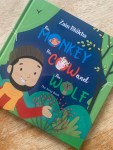
I was wondering when the book version of this song was going to be released.  It is a beloved at our house, and when the book arrived, I don’t know if the 4 year old or 13 year old was more excited.  Either way, none of us were able to read the book, we all, by about page two, were singing at full volume the story of the monkey, the cow, and the wolf.  If upon seeing this cover you didn’t immediately start humming the beloved kid’s song, then you are in for a treat with this book as three stories about animals teaching timeless lessons are shared.  The book is simply the lyrics of the song, so a parent might need to explain a bit, but the fun illustrations, and rhyming lines will make it a favorite for toddlers and preschoolers to sing and flip pages to, alhumdulillah.

The song/book is organized with a statement, a chorus highlighting the moral after each story and then repeating the opening framing statement.  The first story is about a business man who would cheat his customers, Allah swt sent him a monkey, and the monkey purified his wealth by disposing of half of it in the sea. The moral being that “Allah hates cheating, Allah hates lies, so give what’s due and receive what’s right.”

The next story is about a farmer and his cow.  The farmer works his animals way too hard, so Allah allows the cow to speak and tell his owner not to abuse him or the other animals.  The moral being that “Allah made animals, Allah made man, to all living creatures be kind and fair.”

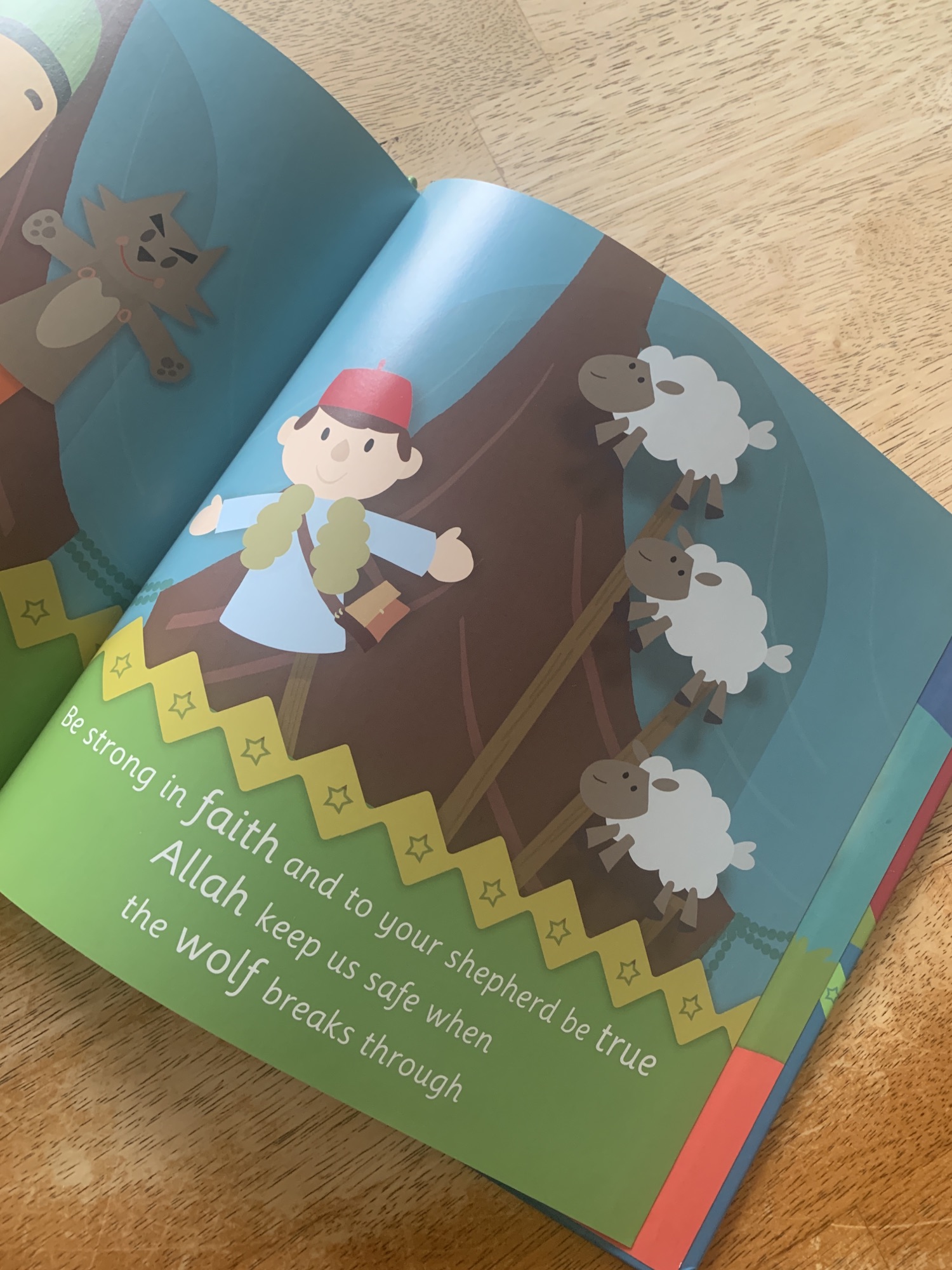
The final story is about the wolf trying to steal the sheep and the shepherd protecting them.  The warning is that the sheep must be strong in faith for the wolf will always be trying to take you.

The book and song are catchy and fun, and provide stories and morals to discuss with kids at story time and bedtime.  The only slightly odd thing about the book is that the last page is the inside back cover.  I’m sure it was a binding decision but it seems it could have balanced the title pages at the beginning to make it feel symmetrical.

Available to order HERE

Ilyas & Duck: Spectacular Salah by Omar S. Khawaja illustrated by Mattia Cerato

Standard
Ilyas & Duck: Spectacular Salah by Omar S. Khawaja illustrated by Mattia Cerato

img_3321-1

It has been a minute since we have had a new Ilyas & Duck book to read and share with our kids, and this one focusing on prayer is informative, fun, and was well worth the wait.  It is also long, 48 pages long to be exact.  There is a lot of information and works best for ages six or seven and up.  The clever rhyme and engaging illustrations tell about wudu, the times of the five daily prayers, Surah Al Fatiha, facing the Kabah, having the right intention, connecting with Allah, and not being distracted. I love the framing that salah is not just an obligation, but is an opportunity to talk to Allah swt and should be spectacular.  The author reads his books aloud a lot to kids, so if you have ever seen one of his readings, I highly recommend channeling the voices and energy, to hold the audiences attention if using the book at story time.  If reading at bedtime, or if handing to an independent reader, take the opportunity to discuss the points, check understanding, and reflect upon what Duck is learning.  As always the banter between Duck and Ilyas keeps the kids laughing, the story moving, and the information flowing, alhumdulillah.

The book starts with two verses from the Quran and the hashtag #freepalestine, before entering the world of Ilyas and Duck one summer afternoon,.  An alarm goes off and Ilyas heads off to make wudu and pray.  Duck couldn’t get up though, he prayed earlier, so he thought he was done.  Ilyas explains that there are five prayers in the day, and Duck is seriously worried that Fajr, Dhuhr, Asr, Maghrib, and Isha are going to cut in to his game time, snack time, and movie time.

When Ilyas tells Duck that prayers don’t take long and it is when you speak to Allah swt, Duck in his enthusiastic way is determined to make each and every prayer spectacular. He drafts a plan, learns the steps and what to say, finds the direction, makes his intention, says Allahu Akbar and starts training. 

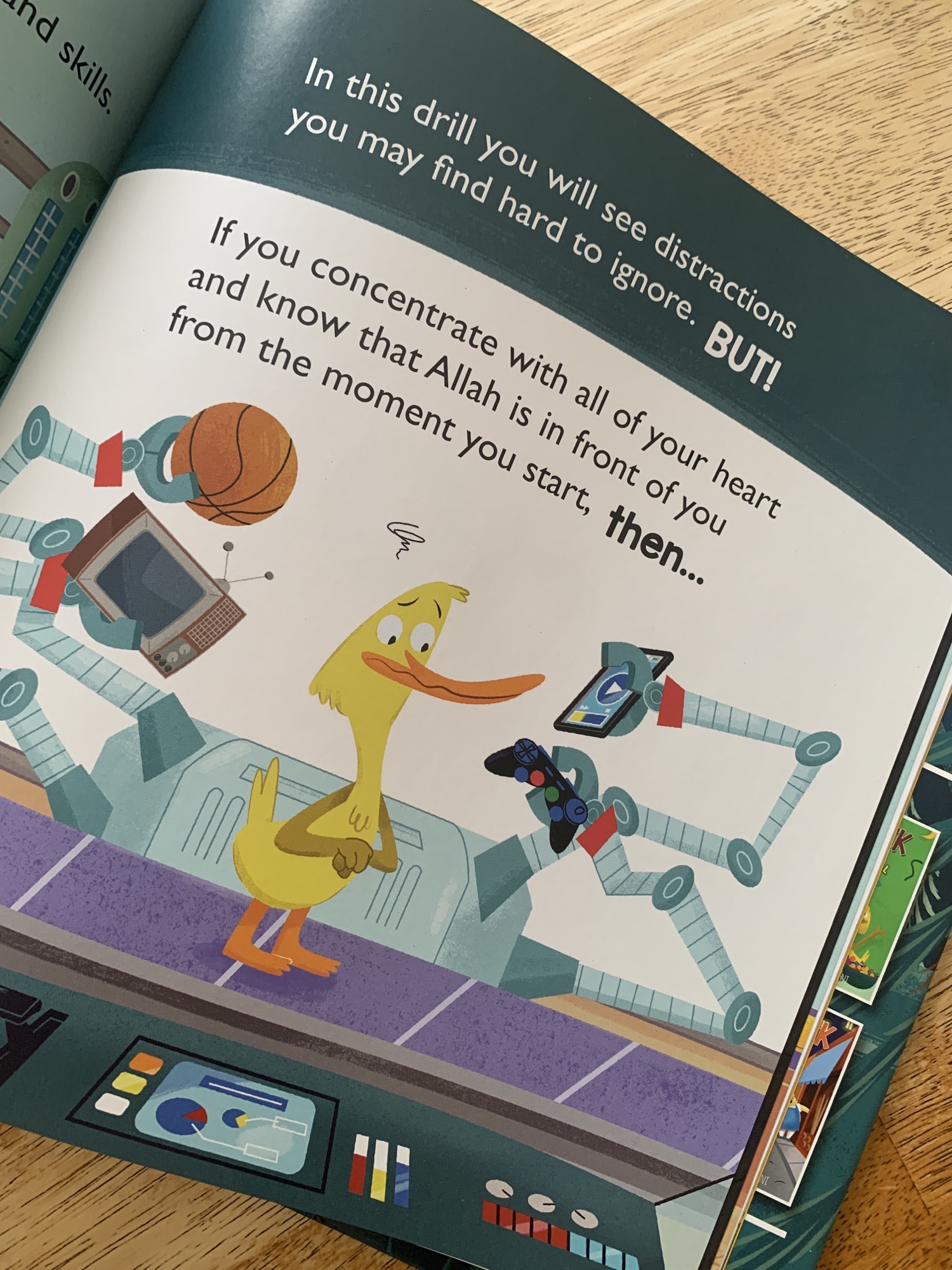
He is praying all over the Earth whenever the time comes, but then he learns he can do more and goes to visit the Professor.  He learns about connection and closeness to Allah.  He also learns about using his heart and staying focused, before rushing back to tell Ilyas all that he has learned.

The book covers a lot of ground, and gets kids excited to pray.  I like that the information is a mix of highly detailed specifics, general knowledge, and humor.  The way the salah times are described and the emphasis on connecting with Allah swt and making your prayers heartfelt is not often seen in books for this age group, and I think it gives the book a wider lasting appeal.  My 8 year old did point out after reading it independently and laughing, that if Duck prayed Fajr didn’t he know a little bit about prayer already?  Also, given the length of the book, a line clarifying that infact not all places on Earth are ok to pray upon, would have been nice. 

img_3327-1

I hope this book signals more books in the series are heading our way.  I notice that the illustrator is not the same, but the pictures are similar enough I doubt most kids will notice. The book is widely available and can be purchased from Amazon here or from Crescent Moon here

Noura’s Crescent Moon by Zainab Khan illustrated by Nabila Adani

Standard
Noura’s Crescent Moon by Zainab Khan illustrated by Nabila Adani

img_3075-1

I know, I know, another Ramadan book about the moon and a little girl’s first fast, but this one is slightly different.  The moon they are searching for is the Eid moon and the focus is on whether they will see it and Eid will begin, or if there is one more day of fasting.  The story itself would not make sense if it wasn’t Ramadan and the characters Muslim, but the story only subtly sprinkles in bits of Islam, the backmatter though, is where the Islam really shines.  The tone of the book with the lyrical text and full color illustrations is very relatable to Muslims that both want to see the moon and celebrate, while at the same time being sad the the blessed month of Ramadan is over.  It comes from a Desi centric approach to the foods, and traditions, but their aren’t a lot of Urdu words used either, and those that are, are defined at the end.  The book works for Muslims and non Muslims, and would benefit both groups with a bit of discussion. Overall, not a particularly memorable book, but one that stands out for focusing on the tradition of looking for the moon and being together as a family.

I love that the notes at the end do mention that Muslims fast to “show love and obedience for the Creator,” under the Ramadan header.  The other backmatter headings are Eid ul-Fitr, Suhoor, Iftar, Chaand Raath, Pakora, Gulab Jamun, Sheer Khurma, and The Islamic Calendar and the New Moon.  A lot of space is dedicated to food, explaining those mentioned in the story.  It gets it right that Muslims begin fasting at dawn, it shows mom not wearing hijab at home, but wearing it when they go out, yet, it doesn’t just say the maghrib athan it refers to it as the “call for the twilight prayer.”  And it doesn’t mention or show them praying, which would have been a nice inclusion.

img_3080-1

The book starts with Noura playing outside and her tummy rumbling on this 29th day of Ramadan, and her first fast.  Mama, Papa and Noura all help make and pack up iftar, as they get ready to go look for the Eid moon.

img_3079-1

Before they go, Mama shows Noura her new dress, and they add some henna cones to the items they are taking, they then set out to the countryside.  All along, Noura is hoping to see the moon and her parents are reminding her how rare it is to see it.

When they get to the hill there are other families already there, and Noura has done it, completed her first fast.  Unfortunately the moon is not there as hoped, or is it?

img_3078-1

I wish some duaas or Islamic expressions, and salat would have made it into the book, but the large hardback size makes this a good book to read at story times, and a nice way to explain why we don’t know when we will miss school to celebrate Eid, or how many days we will fast.

Ramadan Kareem by M.O. Yuksel illustrated by Hatem Aly

Standard
Ramadan Kareem by M.O. Yuksel illustrated by Hatem Aly

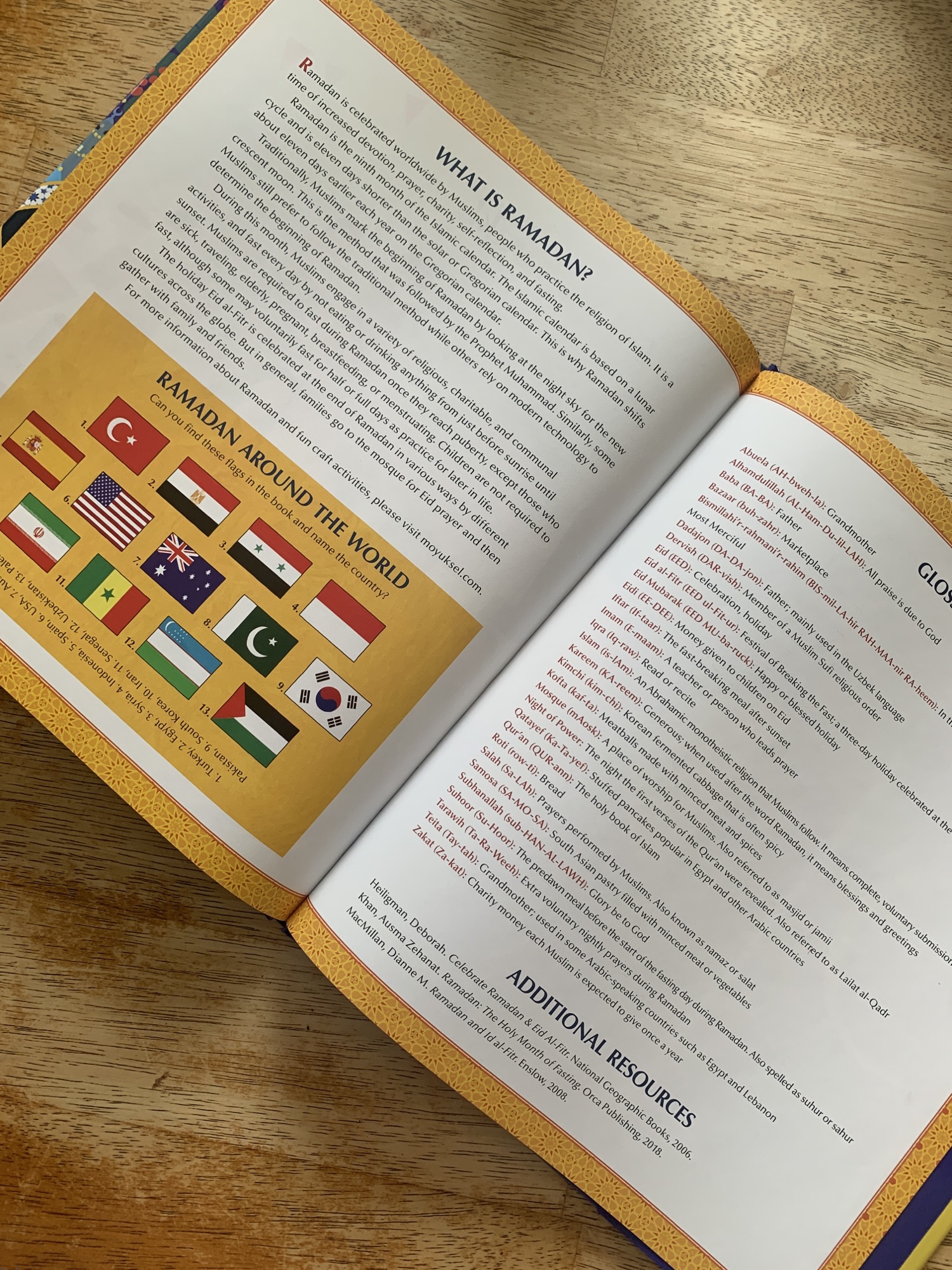
The lyrical text that shows joy, Muslim joy, all over the world during the most wonderful time of the year is felt, truly truly felt in this rich, beautiful book. The illustrations, the text, the sentiment, it all comes together so splendidly, that when you turn the last page you want to start over again. Hundreds of people are wondering what book to read to their children’s public schools this year, what book to start off masjid story times this Ramadan, what book to read every night leading up to the blessed month to get their children excited, what book to hand to your children to look through so they can have a few more minutes of sleep and alhumdulillah to all the above, I whole heartedly suggest, this one. Even with the errors.  The book states “the Night of Power is better than a thousand nights,” and should read, better than a thousand months.  The backmatter says “by not eating or drinking anything from just before sunrise until sunset.”  The story itself though has it correct and says “suhoor is a predawn meal” and notes the “sun is still sleeping.”

A universal story of celebrating Ramadan, with waking up for suhoor, greeting neighbors, having self control, praying, volunteering, iftar, community.  It is a singular story, but each two page spread showing a child in a new country continuing the narrative.  The worship uniting us all as Muslims even while our unique traditions add diversity and layers to the acts that we share.

It starts with gazing at the new moon in Turkey and mom saying that the narrator can fast. The drummer than beats her drum and it it time to wake up in Egypt. The call to prayer and remembering you are fasting reaches Syria, and donations are given in Indonesia. In Spain Qur’an is read in abuela’s lap and neighbors are visited in the United States.  Donations are packed in Australia,  friends and family are visited in Pakistan, and kimchi after dates for iftar in South Korea.  It is then off to Iran for prayers, Laylatul Qadr in Senegal, and getting ready for Eid in Uzbekistan.  Palestine is the final stop as Eid joy erupts for Muslims everywhere.

The book is widely available, you can order yours here at Crescent Moon or here on Amazon

Hope Ablaze by Sarah Mughal Rana

Standard
Hope Ablaze by Sarah Mughal Rana

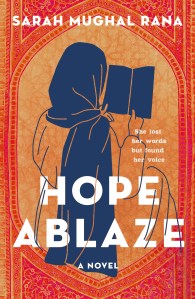
This young adult book is an intense raw unflinching read, containing  incarceration, assault, politics, Islamophobia, immigrant pressure, and loss throughout the 384 pages that mix poetry and traditional writing.  At times the book is incredibly hard to put down as the commentary on two party politics and Muslims in America is articulated in a way that transcends the fictional constrains and affirms reality.  But unfortunately, it took me a long time to complete the book, because when I did put it down, I didn’t feel that relentless urge to pick it up and see what happens next.  I had been alerted to the fact that there were elements of magical realism, but even with that knowledge, I still felt it misplaced, and truthfully, unnecessary.  The pacing was inconsistent, and many points unnecessarily forced.  It often felt the author was simply trying too hard to tell the story and make sure the reader got all the messages intended.  As a result many characters are flat, many plot holes exist, and the reader is left wishing things were done just a little bit different to make the book what it could have been, not what it is.  I know it is a debut, so I’m not going to be overly detailed in my harshness, I am fairly positive I will read anything this author writes down the road, I took pictures and shared passages that I loved on my socials.  The book is good, it just really could have been great.

SYNOPSIS:

Nida is a poet, her uncle is a poet, and her uncle is in prison.  When Nida is frisked, her hijab removed by a political candidate’s team as she makes salat in a public park, Nida is forced to find her words, her voice, and her place in an unkind Islamophobic world.  High school friendships, immigrant Muslim community pressures and idiosyncrasies persist for Nida as she navigates media manipulation, injustice, slander, and political talking points.  Life was already complicated with her father’s departure, her maternal uncle’s wrongful incarceration, and the goats that her mother brings home to sacrifice, but with the support of the Poet’s Block, her Muslim community, family, and the thread tied to her family through generations, she will find she isn’t alone, and she has support, she just has to take a stand.

WHY I LIKE IT:

I love how much mirrors contemporary reality, the MIST competition, the politics, the media, the dirtiness of it all. I also like that it has a fair amount of humor, the Islamic accuracy, friends getting called out for boys and girls texting each other.  Overall though, it just felt so forced. I think some subtly and nuance and undercurrents would have given the reader the ability to connect the dots for themselves, so the book would have lingered and taken up space long after the last page was read.  It is hard to write a book about how great a writer is, how powerful poems are, so at times it really felt spoon fed that this is powerful, here read it, see it was powerful.  Additionally, I think when the author did try for subtlety, it just came across as lacking.  I still don’t fully understand any of the side characters, their relationships, or their purpose.  From the betrayal of a school friend, to the new friend from MIST, to the little brother, to the friend and his uncle who is imprisoned, there ultimately lacked a lot of emotional heart for minor characters, who remained stagnant, while passionately emphasizing issues at their expense.

The OWN voice Islamic rep is so spot on even if the evil eye passages seemed amplified and repetitive. Islam is centered, it is unapologetic, it is the characters identity, comfort, and soul.   Only one point really stood out as erroneous, but I read a digital ARC so it could have been fixed or it could have been a spacing issue since it was in a poem, but it has sajood in janazah, and I’m really hoping the final book will not have it wrong, as there is no sajood in janazah.

FLAGS:

Assault, frisking, incarceration, death, profanity (not a lot, damn, hell, shit), Islamophobia, racism, systemic abuse, lying, talk of terrorism, stereotypes, gaslighting.

TOOLS FOR LEADING THE DISCUSSION:
I’m on the fence about using this book for a book club read.  I love the Pakistani culture, the Islam, the contemporary relevance, and the political commentary.  I think it would have actually more success in a guided or required reading situation with teens than it would as a pleasure read.  Undoubtedly I will order a copy to put on my library shelf, but I might test it out a bit on a few readers to see how their thoughts before I present it as a book club selection or not.
Dear Muslim Child by Rahma Rodaah illustrated by Aya Ghanameh

Standard
Dear Muslim Child by Rahma Rodaah illustrated by Aya Ghanameh

img_2280-1

The flow, poignancy, and lyrical verses force you to slow down, take a deep breath, and immerse yourself in the concepts and ideas so beautifully presented in the text, and illustrated on the pages.  Whether you are reading it alone, snuggled up with a little one, or in a boisterous story time, this book pulls you in as it speak directly to the reader (or listener), burrowing inside and inspiring reassurance and confidence.  The tone of the text melds with the illustrations making the book appeal to those looking to understand, be seen, or to be empowered.  The short stanzas with the opening refrain of, “Dear Muslim child,” are a delight to read and share again and again, alhumdulillah.

The book does not have a story or a plot, but has an organization that keeps the pace moving in a poetic way. It starts by mentioning that we were meant to be, even “before Allah spoke the universe into existence.”  It then tells us about Islam, nur, names, the power of words, purifying our hearts (with wudu), listening to the adhan, and praying.  It talks of the beauty of hijab, and community, and purpose and mattering.

img_2282-1

The centering of Allah (swt) is not shied away from, yet the book is not preachy or overly religious.  For example wudu is shown, but not named; adhan is named but not defined.  If you wish to discuss each page, there is a lot to unfold, but if you want to just read the surface it is beautiful just the same.  The book is traditionally published, and a true accomplishment of the author, and the authors that have come before that this book, this type of book, is widely available for us all to enjoy.

img_2284-1

Zain and Mima Stand for Palestine by Eman Kourtam illustrated by Sophia Soliman

Standard

img_1853-1

I love this 57 page rhyming book from the perspective of a non Palestinian family pulling out their Palestine gear and taking to the streets to protest the occupation of Palestine.  Along the way the sibling duo, and thus the reader, learns about the history of Zionism, birth righters kicking people out of their homes, allyship with those on the side of Palestine, the crimes of Hitler, it shows maps of the occupation, details how movement is restricted, and even how to use BDS as a form of resistance from afar. All on an early elementary level.  There is a game at the end with an activity about resistance symbols, as well.

The book starts with Zain and Mima coming home from school tired and hungry.  They notice Mama is upset and glued to her phone, they then here noise outside and are encouraged by their mother to join the march as she hands them keffiyehs and explains that people are losing their homes in Palestine.

img_1855-1

The kids are not sure of what is going on, but notice the chanting and signs and diversity of people coming together to demand freedom for Palestine.  After the protest they head home and Mama explains the history of Palestine and answers their questions.  She explains who Theodore Herzl was and his idea of Zionism.  Why it is dangerous and evil.  She then explains how Hitler’s actions in WWII gave rise to Zionism in the aftermath. A two page spread of maps show 1947 Palestine/Israel, 1948, 1967 and 2005 in easy to understand visuals. Mama then explains, without identifying any specific country, that Israel has the best weapons and Palestinians use rocks and slingshots to defend their homes and families.  It shows walls and checkpoints controlling people’s movements, and the oppression that has resulted.  When Mima asks what we can do in addition to marching and chanting, Mama explains using our money wisely with the BDS movement.  The next day, the children empowered by knowledge, make signs and are ready to stand bravely for Palestine.

img_1858-1

This book was originally written in 2022, and sadly is still so on-point.  It is available again on Amazon after being temporarily blocked, but I hope you will purchase it from a small business such as Crescent Moon Store where my initials ISL will save you 10%.

img_1857-1

Colours of Al Quds by Jenny Molendyk Divleli illustrated by Merve Ozcan

Standard
Colours of Al Quds by Jenny Molendyk Divleli illustrated by Merve Ozcan

img_0810-1

I have not posted a review since the latest genocidal escalation in Gaza, my heart just cannot carry on as before, but I keep being asked about Palestinian books that I have featured in videos, but not reviewed, so here we are.  This rhyming book is not OWN voice, but I think these days we are all Palestinian, and the tone of this book is accurately love, and beauty, and strength.  It is based around colors with beautiful illustrations for each two page spread focusing on one color.  Meant for toddlers and preschoolers this book works well in small groups and story times alike.

The book starts with an introduction to the narrator, Iman, from the land of Falasteen.  The first page spread talks about olive trees and the color green, then the blue of Dome of the Rock, orange of Quds Ka’ak and brown dates.  Over 32 pates, it also presents the keffiyeh, Masjid al Aqsa, knafeh, kaftan, keys, and Masjid al Qibly. The picture glossary at the end focuses on the Palestinian points, not the colors, keeping the focus on Al Quds.