Category Archives: Poetry

Dear Muslim Child by Rahma Rodaah illustrated by Aya Ghanameh

Standard
Dear Muslim Child by Rahma Rodaah illustrated by Aya Ghanameh

img_2280-1

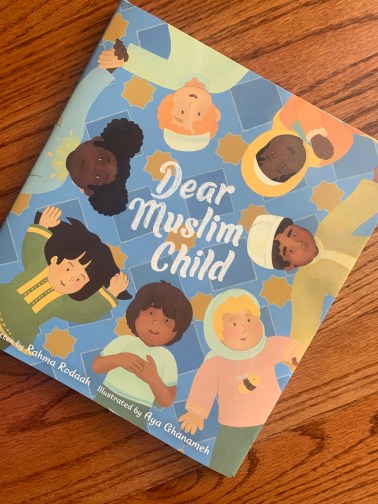
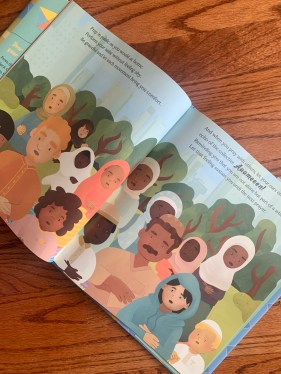
The flow, poignancy, and lyrical verses force you to slow down, take a deep breath, and immerse yourself in the concepts and ideas so beautifully presented in the text, and illustrated on the pages.  Whether you are reading it alone, snuggled up with a little one, or in a boisterous story time, this book pulls you in as it speak directly to the reader (or listener), burrowing inside and inspiring reassurance and confidence.  The tone of the text melds with the illustrations making the book appeal to those looking to understand, be seen, or to be empowered.  The short stanzas with the opening refrain of, “Dear Muslim child,” are a delight to read and share again and again, alhumdulillah.

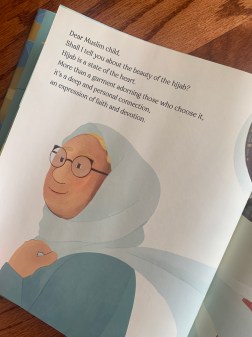
The book does not have a story or a plot, but has an organization that keeps the pace moving in a poetic way. It starts by mentioning that we were meant to be, even “before Allah spoke the universe into existence.”  It then tells us about Islam, nur, names, the power of words, purifying our hearts (with wudu), listening to the adhan, and praying.  It talks of the beauty of hijab, and community, and purpose and mattering.
img_2282-1

The centering of Allah (swt) is not shied away from, yet the book is not preachy or overly religious.  For example wudu is shown, but not named; adhan is named but not defined.  If you wish to discuss each page, there is a lot to unfold, but if you want to just read the surface it is beautiful just the same.  The book is traditionally published, and a true accomplishment of the author, and the authors that have come before that this book, this type of book, is widely available for us all to enjoy.
img_2284-1

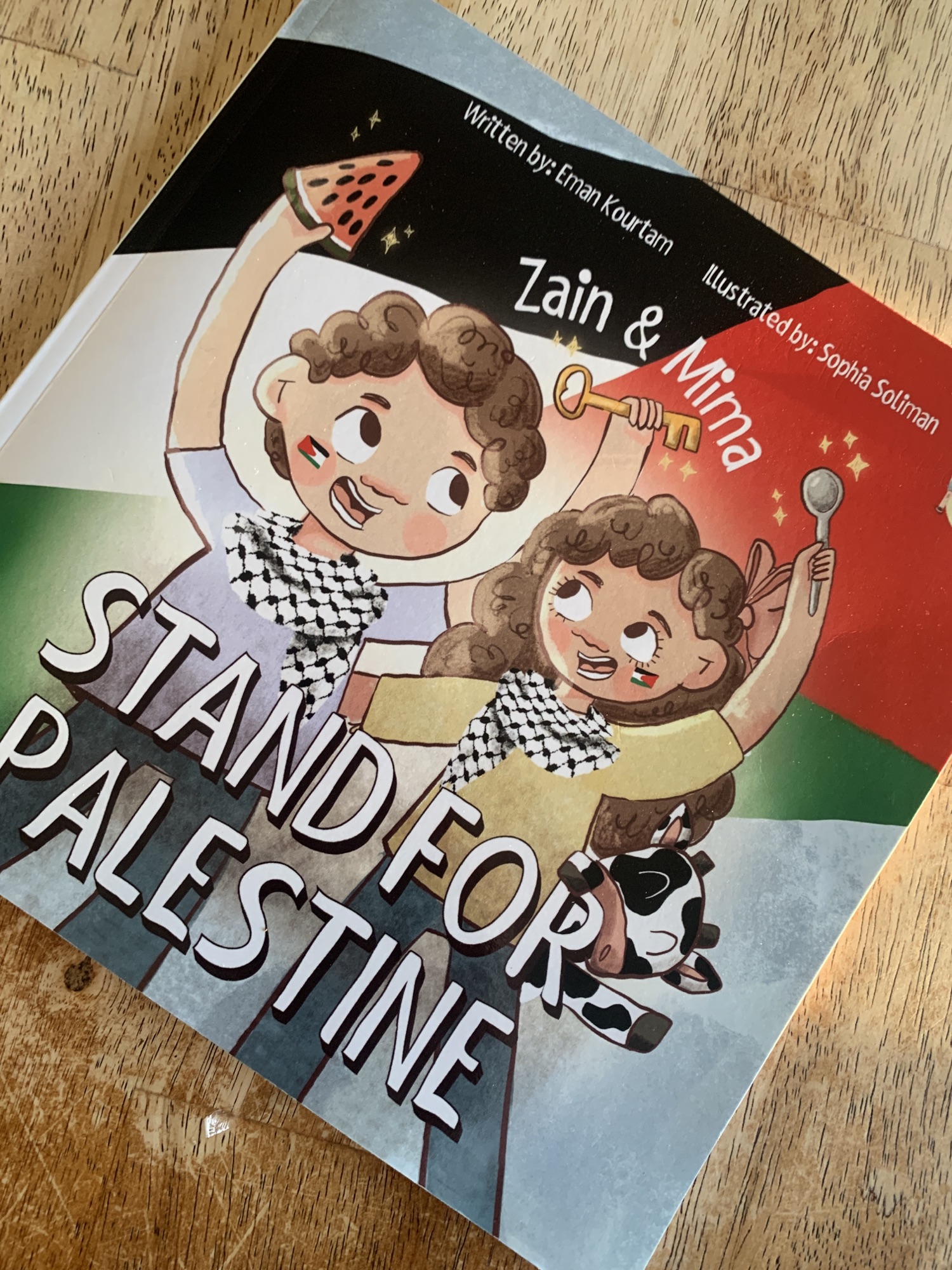
Zain and Mima Stand for Palestine by Eman Kourtam illustrated by Sophia Soliman

Standard

img_1853-1

I love this 57 page rhyming book from the perspective of a non Palestinian family pulling out their Palestine gear and taking to the streets to protest the occupation of Palestine.  Along the way the sibling duo, and thus the reader, learns about the history of Zionism, birth righters kicking people out of their homes, allyship with those on the side of Palestine, the crimes of Hitler, it shows maps of the occupation, details how movement is restricted, and even how to use BDS as a form of resistance from afar. All on an early elementary level.  There is a game at the end with an activity about resistance symbols, as well.

The book starts with Zain and Mima coming home from school tired and hungry.  They notice Mama is upset and glued to her phone, they then here noise outside and are encouraged by their mother to join the march as she hands them keffiyehs and explains that people are losing their homes in Palestine.

img_1855-1

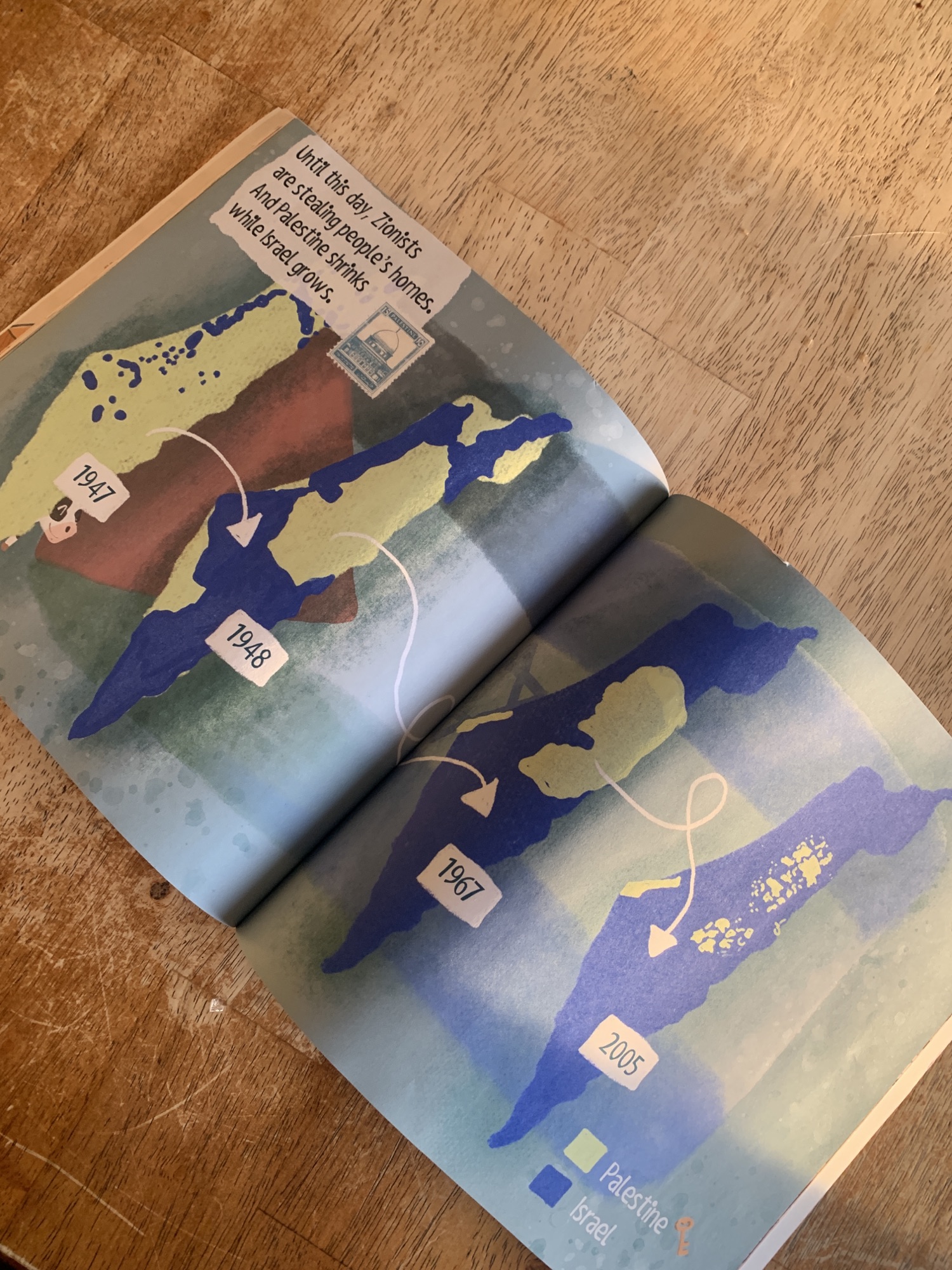
The kids are not sure of what is going on, but notice the chanting and signs and diversity of people coming together to demand freedom for Palestine.  After the protest they head home and Mama explains the history of Palestine and answers their questions.  She explains who Theodore Herzl was and his idea of Zionism.  Why it is dangerous and evil.  She then explains how Hitler’s actions in WWII gave rise to Zionism in the aftermath. A two page spread of maps show 1947 Palestine/Israel, 1948, 1967 and 2005 in easy to understand visuals. Mama then explains, without identifying any specific country, that Israel has the best weapons and Palestinians use rocks and slingshots to defend their homes and families.  It shows walls and checkpoints controlling people’s movements, and the oppression that has resulted.  When Mima asks what we can do in addition to marching and chanting, Mama explains using our money wisely with the BDS movement.  The next day, the children empowered by knowledge, make signs and are ready to stand bravely for Palestine.

img_1858-1

This book was originally written in 2022, and sadly is still so on-point.  It is available again on Amazon after being temporarily blocked, but I hope you will purchase it from a small business such as Crescent Moon Store where my initials ISL will save you 10%.

img_1857-1

Colours of Al Quds by Jenny Molendyk Divleli illustrated by Merve Ozcan

Standard
Colours of Al Quds by Jenny Molendyk Divleli illustrated by Merve Ozcan

img_0810-1

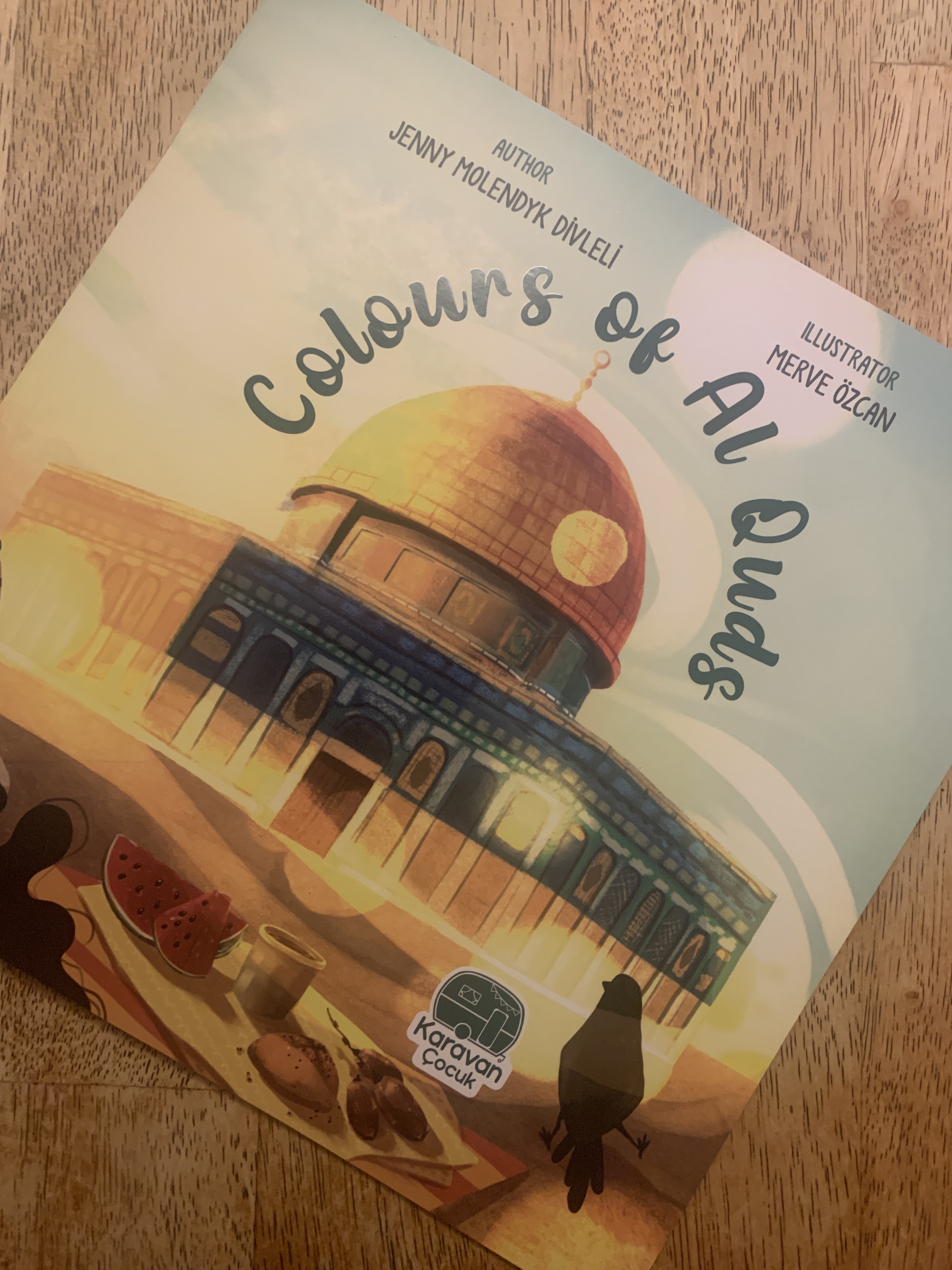
I have not posted a review since the latest genocidal escalation in Gaza, my heart just cannot carry on as before, but I keep being asked about Palestinian books that I have featured in videos, but not reviewed, so here we are.  This rhyming book is not OWN voice, but I think these days we are all Palestinian, and the tone of this book is accurately love, and beauty, and strength.  It is based around colors with beautiful illustrations for each two page spread focusing on one color.  Meant for toddlers and preschoolers this book works well in small groups and story times alike.

The book starts with an introduction to the narrator, Iman, from the land of Falasteen.  The first page spread talks about olive trees and the color green, then the blue of Dome of the Rock, orange of Quds Ka’ak and brown dates.  Over 32 pates, it also presents the keffiyeh, Masjid al Aqsa, knafeh, kaftan, keys, and Masjid al Qibly. The picture glossary at the end focuses on the Palestinian points, not the colors, keeping the focus on Al Quds.

The Little War Cat by Hiba Noor Khan illustrated by Laura Chamberlain

Standard
The Little War Cat by Hiba Noor Khan illustrated by Laura Chamberlain

img_0521-1

Even though the book is told from the cat’s perspective, the book never overshadows the human cost of the Syrian war.  The beautiful illustrations and clear text do not shy away from the pain and destruction, but allows for young preschool children and up to see the affects of war through the cat’s eyes, as well as the kindness and hope that prevails. Over 32 pages readers are taken to the streets of Aleppo to see the marble mosques give way to boots and destruction.  The little cat observes the changes, notes the differences and when kindness is shown to her, she finds a way to pay it forward.  I had not intended to post another book by Hiba Noor Khan so close to another book of hers, but as atrocities in Idlib increase I felt it a good time to remind us all, that the war is not “over” in Syria and the destruction and loss of life still requires our awareness, help, prayers, and attention.

The book begins with a warm scene of a little grey cat playing and lounging under the sun in a masjid courtyard. When the boots come, though, it all disappears. The cat begins to notice the changes and the fear becomes real.  

But then one day the cat sees humans that are different than the ones with boots, and she follows one. He cares for her, and she starts to feel like herself again, when she sees someone that also is afraid, the cat is determined to help.

img_0527-1
The book concludes with a note from the author telling about the inspiration for the story, The Cat Man of Aleppo,” and challenging readers to find ways to share kindness.


From Here and There by Larissa Olinda illustrated by Herry Prihamdani

Standard
From Here and There by Larissa Olinda illustrated by Herry Prihamdani

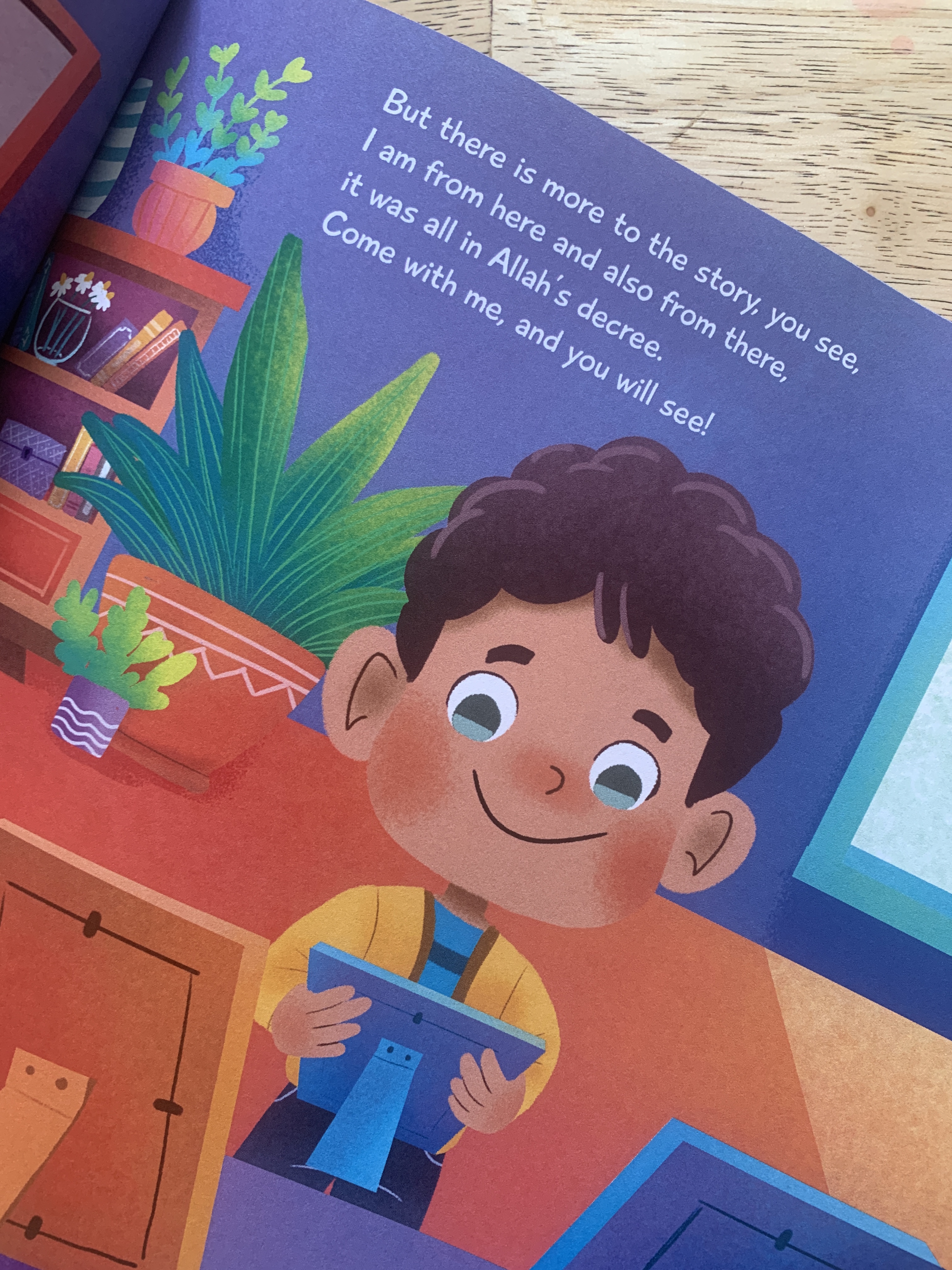
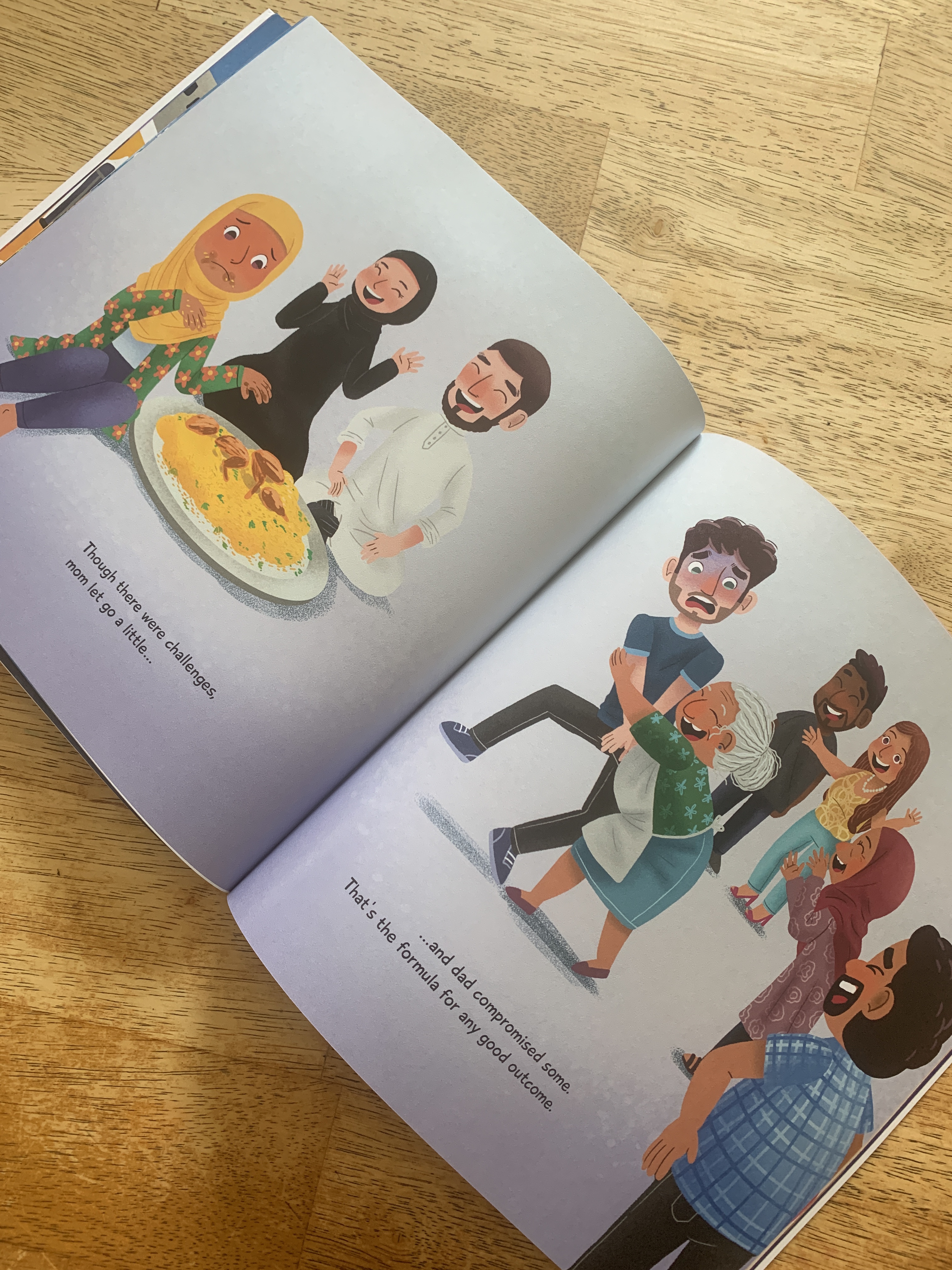
This sweet rhyming picture books discusses, focuses, and celebrates being a multicultural child.  Not the often seen child of an immigrant living in a society that is different than their parents, this story doesn’t even discuss where the child in the story resides, it just joyfully explores having a Brazilian mom and a Saudi father, while centering Allah swt in bringing them together.  The book highlights each culture, notes some differences, and acknowledges compromise, making this a reflective book for kids with parents from different cultures, but also a window of coming together that all readers can enjoy. Toddlers to early elementary will enjoy the 31 pages with bright engaging pictures and introduction to cultures and a topic not often seen in Islamic fiction, or any books for that matter.

The book is told from the child’s perspective as he breaks down his appearance and him being half his mom and half his dad.  He discuss the different sounds of Arabic and Portuguese, how meals are eaten, time is spent, people dress, and handwriting looks, without belittling or othering either culture.

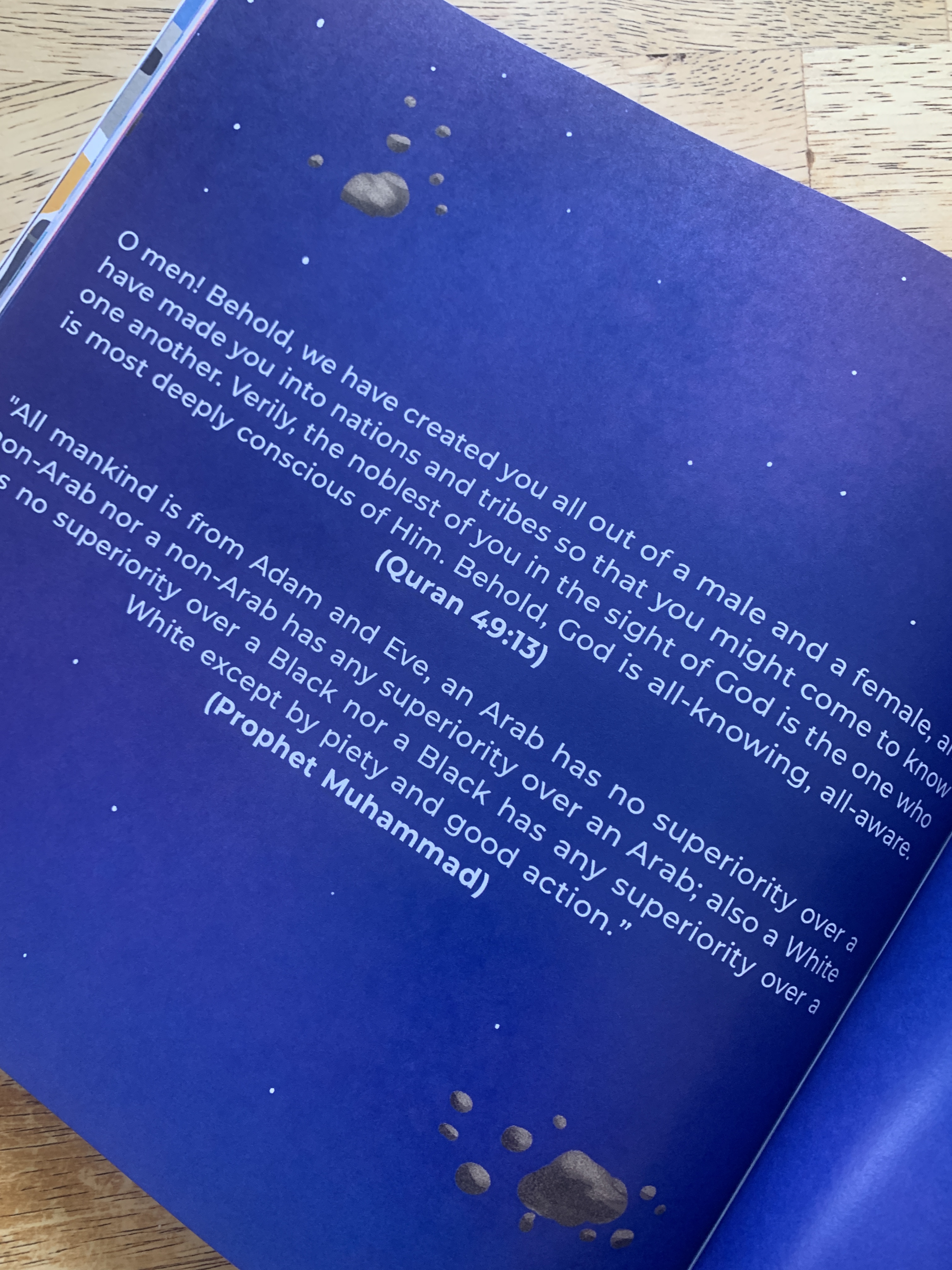
The little boy circles back numerous times that this is all Allah’s decree, that brought his parents from different parts of the world together.  It shows challenges and compromise at time, and ultimately love and smiles.  The book concludes with helping readers like him to feel seen and articulates Prophet Muhammad (saw) saying that no person is better than another based on where they are from.

The book concludes with an ayat from the Quran and a hadith, and is based on the author’s life. I can really see this book being used in a class as an introduction to a lesson asking kids to write their own family traditions coming together. It also works well at bedtime, or anytime.

You can order the book here

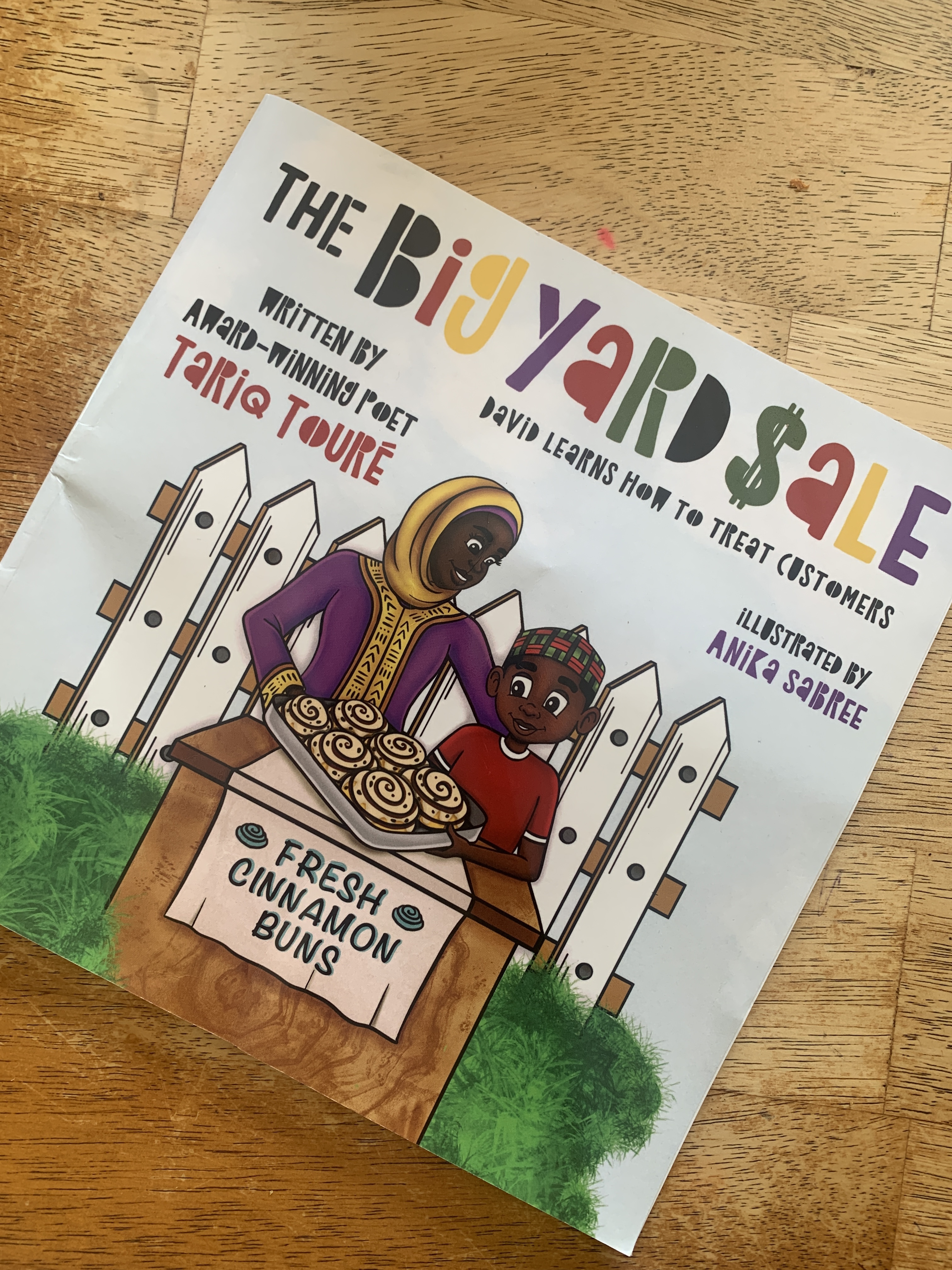
The Big Yard Sale: David Learns How to Treat Customers by Tariq Touré illustrated by Anika Sabree

Standard
The Big Yard Sale: David Learns How to Treat Customers by Tariq Touré illustrated by Anika Sabree

img_9753

David Kareem is back and learning how to treat customers at his neighborhood yard sale.  The 26 page rhyming poem, turned children’s book (note there is little punctuation) is brightly illustrated as it follows David on his selling journey.   With Mommy’s baking and guidance on how to treat customers, his Saturday morning offers lots of lessons, mistakes, learning, and entrepreneurship for David and the reader alike.  There is a hint about a smile being charity, an Imam stops by, and David puts on a kufi.  It has good lessons and the same community vibe as the first book David’s Dollar, with visible Muslims in the illustrations and with Muslim names in the text throughout. But there was a page with two typos which disappointed me, a changing number of cinnamon rolls, and when the copy arrived it was pretty damaged and bent (probably/possibly not the fault of the author, but it cost $25 through the preorder Launchgood, so disappointing none-the-less, alhumdulillah you can now purchase it here from Amazon for $12).
David wakes up and hears commotion outside, he thinks he left a toy on, but soon realizes the neighbors have their stuff on tables and are selling things.  David wants in on the action, but can’t figure out what to sell.  He seems to gather up some toys and household items in the early illustrations, but ultimately it is about him selling his mother’s cinnamon rolls.  She is a baker, and is testing them out, but he says he only needs five and is off to peddle his wares.

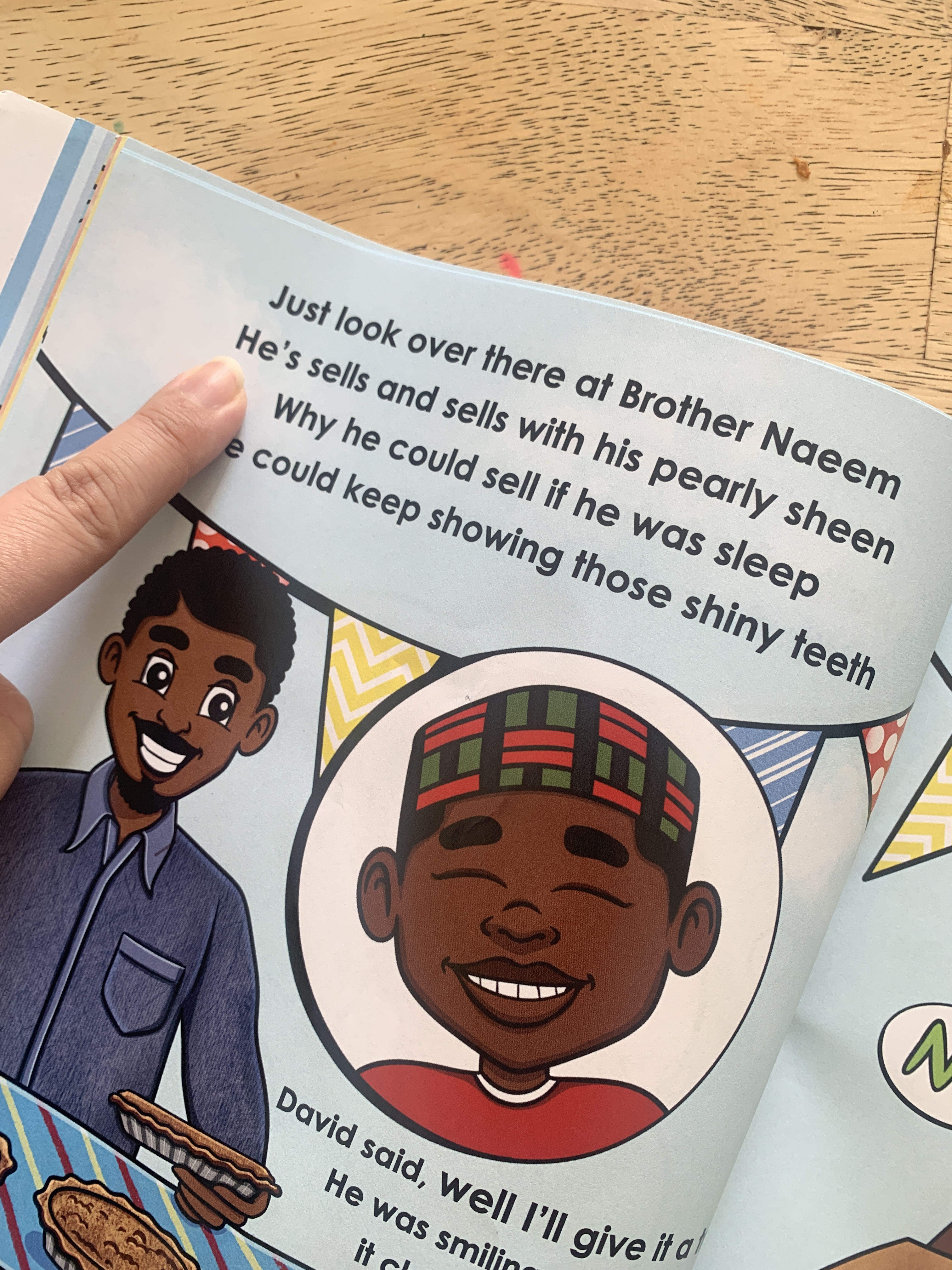
The first costumer comes, and leaves, he asks his mom what he did wrong, and she advises him to adjust his attitude by smiling.  They look at Brother Naeem as an example. The next costumer comes, but asks if he can warm up the now six cinnamon rolls in the illustrations.  David says no, and once again he turns to his mom to find out why.  She tells him that “the customer is always right” heads off to get a heat lamp, and uses Sister Khadijah selling beads for reference.  When Imam Musa comes, David completes the sale, but Mommy says he needs to learn gratitude.

img_9757

One page has “He’s” when it should be “He,” and “sleep” when it should be “asleep.”  I get the lack of punctuation is stylistic, but I don’t feel like these two on the same page are intentional, they just seem erroneous, and being that they are on the same page, makes it seem like the page was just missed perhaps in editing.

Overall I enjoyed the presentation, representation and content of this book and am glad I preordered it months ago. I wish it had a smidgen more Islam in it, but I think this book would be great in an early elementary story time with recently traditionally published books about business for a similar demographic, including the author’s earlier book, David’s Dollar. Teaching kids about entrepreneurship, ethics, gratitude and doing it with Muslim characters is incredible to see and important to share.

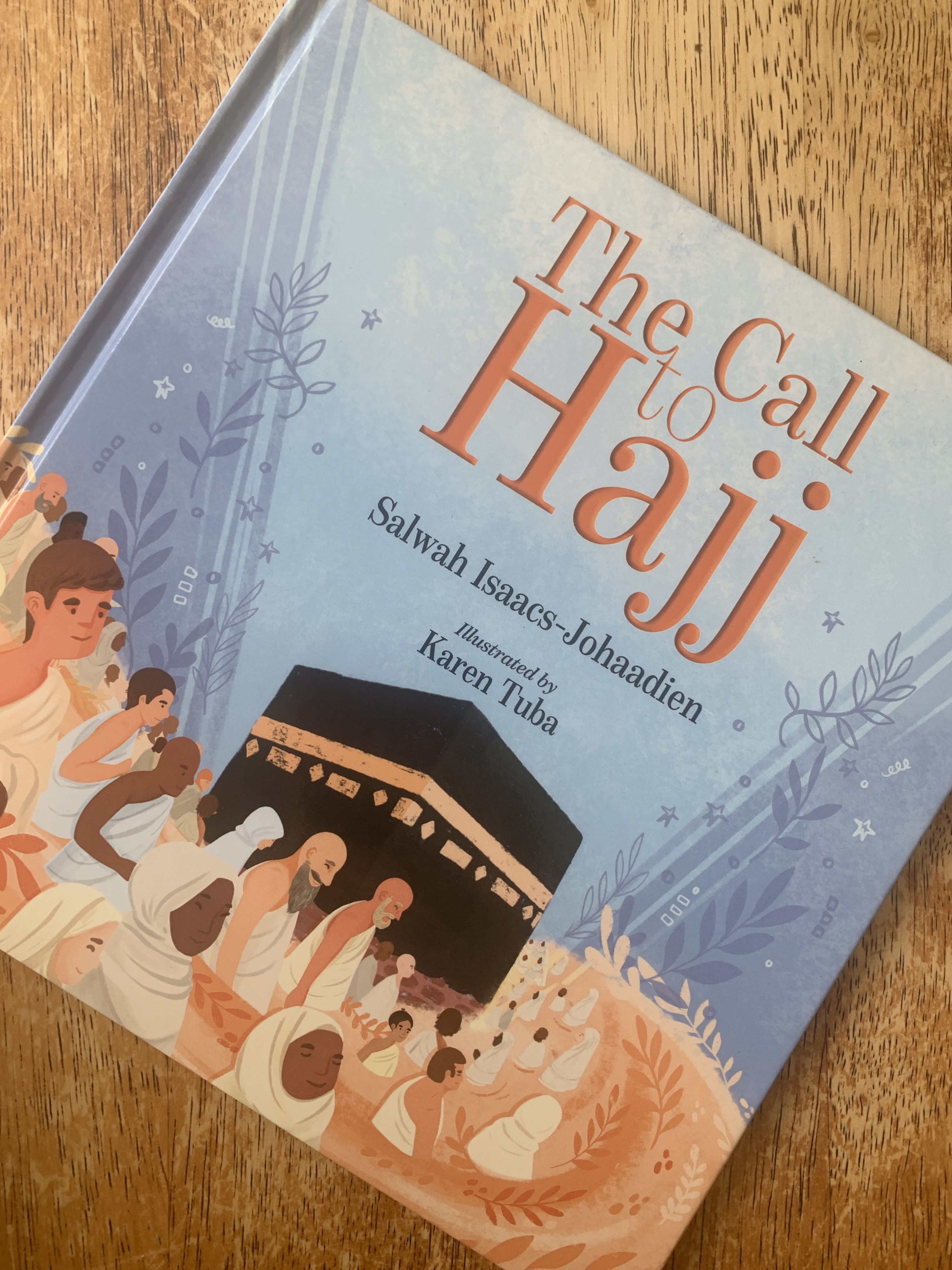
The Call to Hajj by Salwah Isaacs-Johaadien illustrated by Karen Tuba

Standard

img_8795

This small (7.7 x 7.5) hardback 24 page rhyming book blends labeling the steps of Hajj with modes of transportation to take to make the journey.  The idea is great, but every few pages the rhyme is just terrible and distracts from the sentiment. There are a lot of books that detail the steps of hajj on a kids’ level, so I like that this book changes it up a bit and as a result it makes it a solid addition to a Hajj themed story time reading (if you can muster through some of the forced rhyming lines and small size).  Even though the book starts with a bit of Prophet Ibraheem’s (AS) story, I would read this book second or third in a story time setting or even bedtime, once listeners understand what Hajj is and some of the steps, this book can then be used to guide them to thinking about how people from all over the world throughout time have journeyed to make the pilgrimage.  The publishers suggest the book for ages 7-9, but I think with some guidance and direction younger children will benefit as well.

img_8796

The book starts with Prophet Ibraheem and his son Ismaeel being ordered to build the Kaa’bah and being commanded to call people to come. At first they came on foot, then people came by horse, alone or in groups.  To circle the Kaa’bah, go between Safa and Marwa.  By camel to reach Mina, by sea to stand at Arafat.  No matter how they came and continue to come they answer is always “Labbayk ALlaah humma labbayk! Here I am, O Allah, here I am.”The final page asks the readers how they will answer the call to Hajj.

img_8797

The book is available here Crescent Moon Store code ISL at check out saves you 10% or here at Amazon.

img_8798

A Cat Like Me! A Fun Hajj Tale by Emma Halim illustrated by Aissa Mutiara

Standard
A Cat Like Me! A Fun Hajj Tale by Emma Halim illustrated by Aissa Mutiara

img_8799

A rhyming cat centered book about hajj that has been checked by a Shaykh!  Over 46 pages, preschool aged children and up will be able to see the steps of hajj in a fun, engaging and accurate way.  This book is great for bedtime and small group story time and the reasonable price makes it perfect for sharing too.  The illustrations do not have faces with eyes, but the joy comes through and Bissa the cat makes sure you know how special hajj is.

img_8800

I love that the book identifies what type of hajj is going to be shown and thus signals that there are different ways.  I also love that the book is sourced and the Shaykh is named and qualifications listed.  For so long erroneous information in children’s books has gone unchecked and it really is such an important   verification for something critical in our faith to be sourced and checked. Plus it is reassuring for the reader to feel confident in sharing the information with others.

img_8802

The book radiates with excitement and information and the rhymes and illustrations keep kids engaged.  The book is 8.5 x 8.5 so it might not work in big groups.  I purchased mine from if you use code https://crescentmoonstore.com if you use my initials ISL (Islamic School Librarian) at checkout you will save 10% it is also available here on Amazon.

img_8803

What Color is My Hijab? by Hudda Ibrahim illustrated by Meenal Patel

Standard
What Color is My Hijab? by Hudda Ibrahim illustrated by Meenal Patel

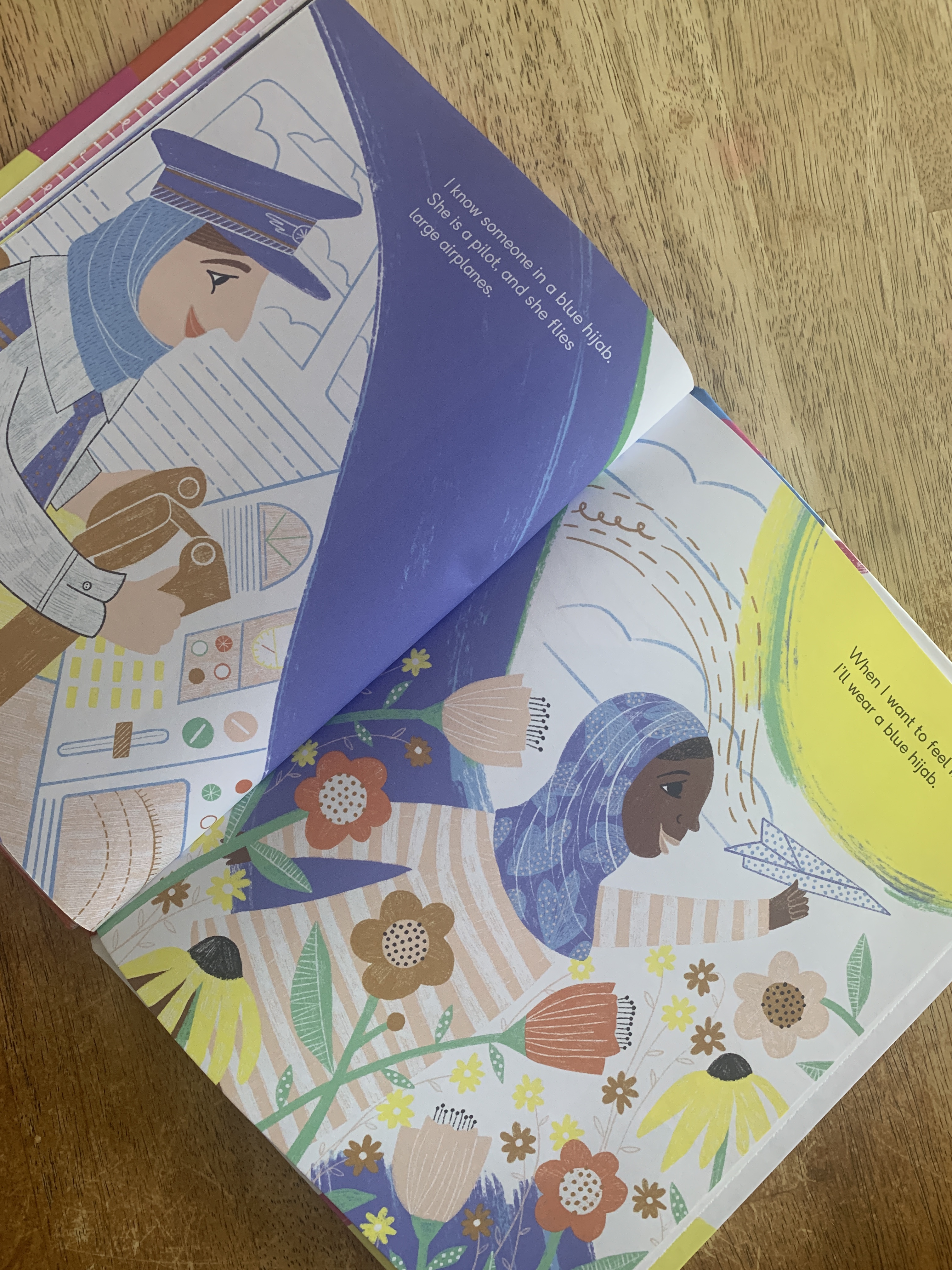
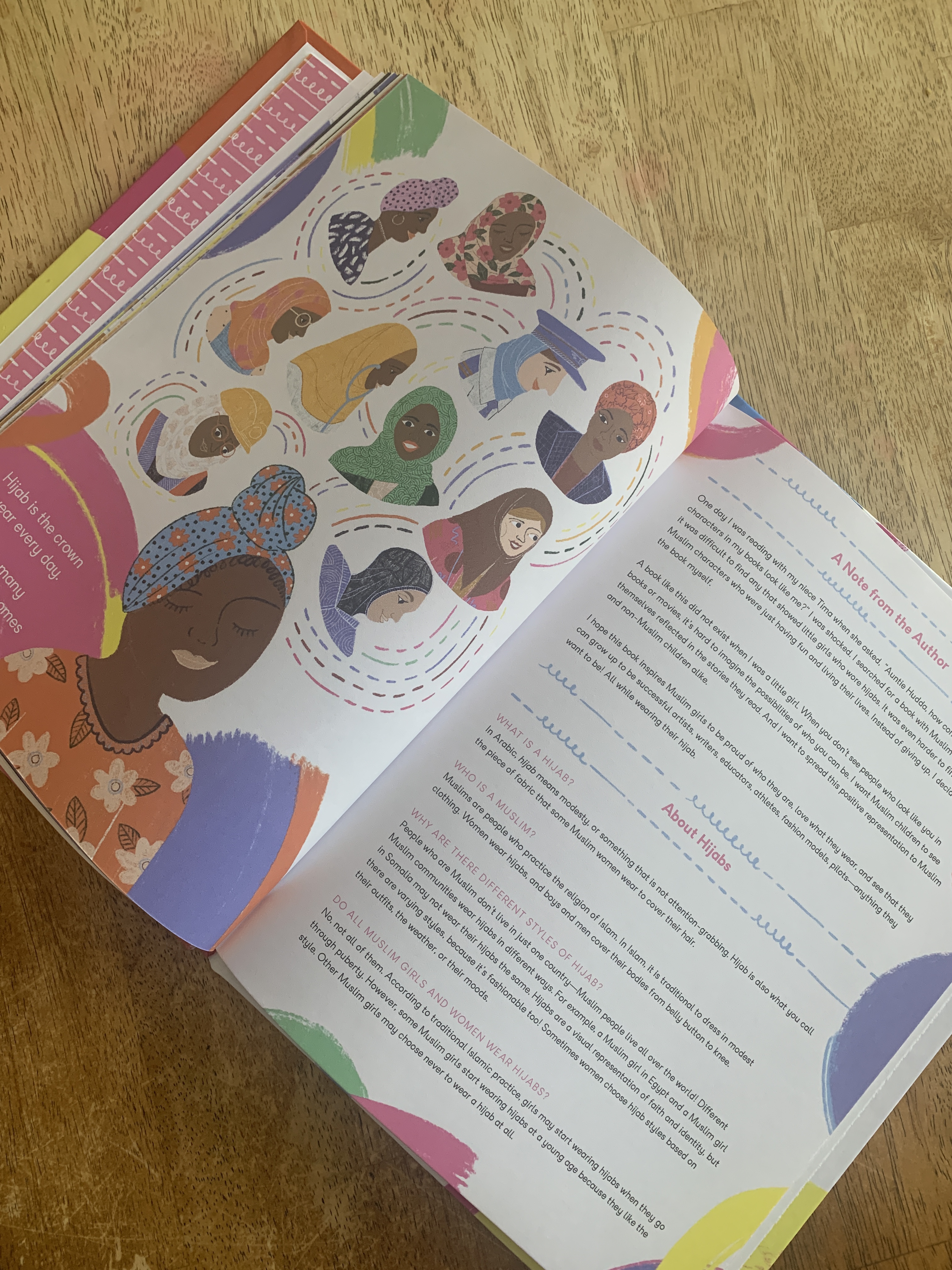
When this book arrived I flipped through it and loved that it tied hijab colors to careers, when I asked my seven your old to read it to my three year old and I overheard snippets, I was impressed that positive characteristics associated with the professions were articulated and embodied by the main character to inspire young girls everywhere.  When I finally sat down to read the book my self, I enjoyed the joy, diversity, and backmatter, but unfortunately felt like a page was missing at the end.  Over 32 pages the book introduces a color as seen on someone the narrator knows hijab, and identifies the woman’s job and a couple of characteristics.  The facing page highlights that when the girl wants to have strength or show kindness she too will wear that color hijab.  The text on the first page and the last page is the same, “Hijab is the crown/I wear every day./It is worn many ways, and it comes in every color.”  I absolutely love the premise of the book, but it seems that the conclusion should perhaps broaden that we can be anything and everything no matter the color we wear.  The blurb on the back of the book actually uses language of wearing “yellow, ‘like’ my doctor’s hijab, brown ‘like’ my teacher’s hijab,” etc.  that allows for a more interpretive and less literal view of I have to wear this color or that to be a leader or athlete or loving. I know I know, I’m probably overthinking it, but I’ve read the book so many times, and each time I just feel like the conclusion tying it together is missing and makes the book primarily a color book and thus preventing it from transcending into being more.

The book text is like a poem with the opening and conclusion reading the same.  The patterned body of the book works very well in establishing the links between hijab, color, occupation, empowerment, characteristics and implementation.  The pictures also allow the reader/listener to broaden their knowledge about various careers and see what they look like in action and what attributes they draw upon.

At times the wording gets a little loose with “give kindness” and “show wisdom” but the overall tone conveys the sentiment and allows for the stronger, “get results” and “be a leader” to balance out the flow of the book.  The illustrations amplify the color being presented, but it is worth pointing out that the hijab’s are all patterned and could be a little confusing to little readers.  Similarly, the yellow hijabs appear more orange and the purple more pink.

I love that the book is authored by a Somali woman and that the illustrations show diversity (skin color, mobility, body shape), but focus on strong black women inspiring the young protagonist.  The backmatter hints that it is the author’s niece and also explains hijab, and hijab styles.

I purchased mine from Book Depository, but they are going out of business, you can also purchase it on Amazon, here.

What Should I Do? By Fadelah Mahmood illustrated by Ayun Sekar

Standard
What Should I Do? By Fadelah Mahmood illustrated by Ayun Sekar

img_7640

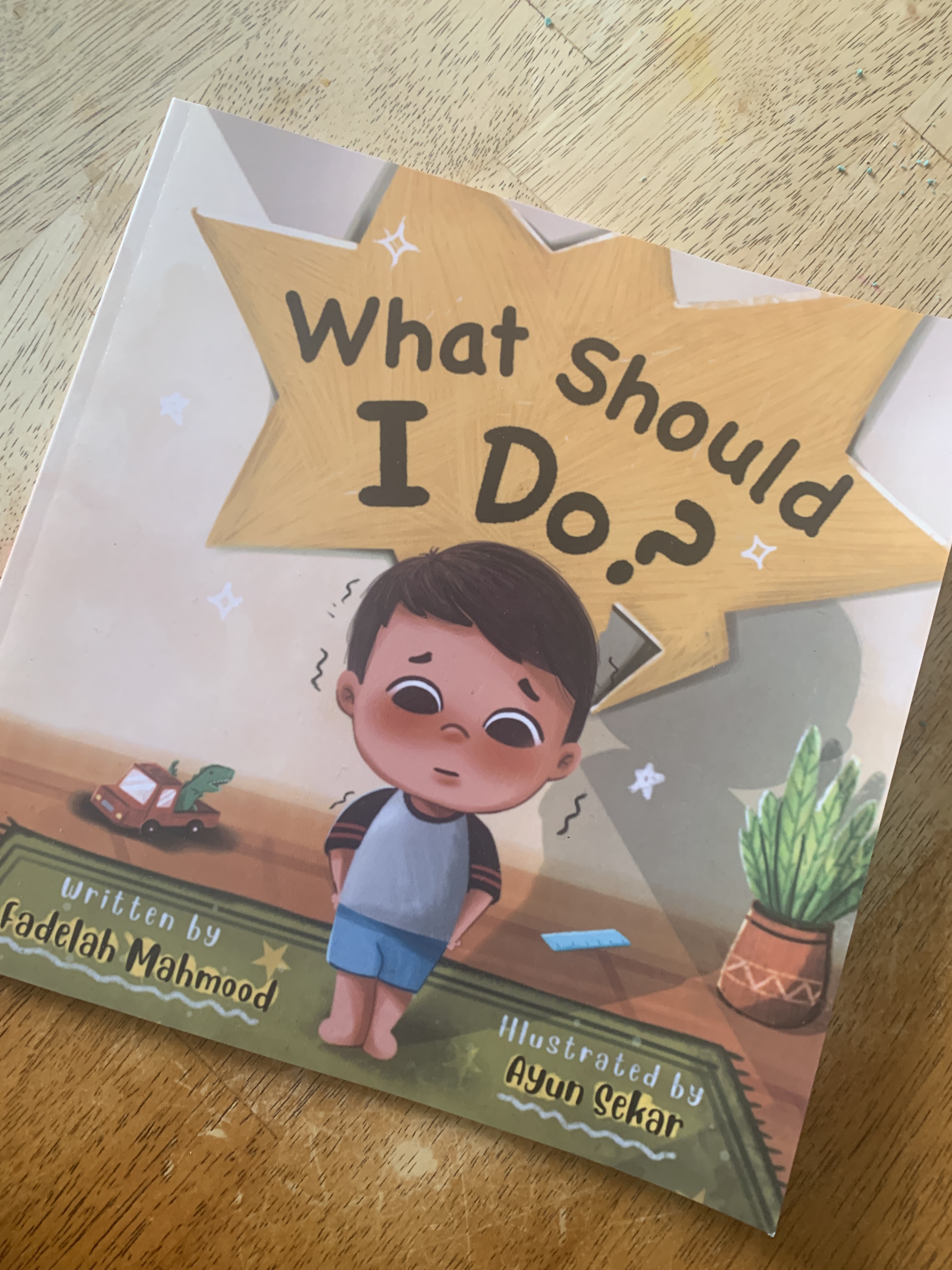
Most rhyming children’s books are absolutely terrible, but this one made me smile as the format compliments the tone of the book.  Every child has done something they regret and every parent desperate to raise truthful children; what very easily could have been a heavy handed story, stays positive as little Yousuf breaks something and seeks advice from his siblings about what to do.  The book provides a lot of teachable moments and allows discussion and reflective referencing.  It also is a reminder to us parents to praise the honesty, and forgive the transgression.  The book is 24 pages and while text heavy at times, the fairly smooth rhyme and relatable story will be great for mature toddlers to kindergarteners.  Some of the vocabulary will possibly need some explanation, but the cute pictures provide clues and the messaging will come through.

img_7641

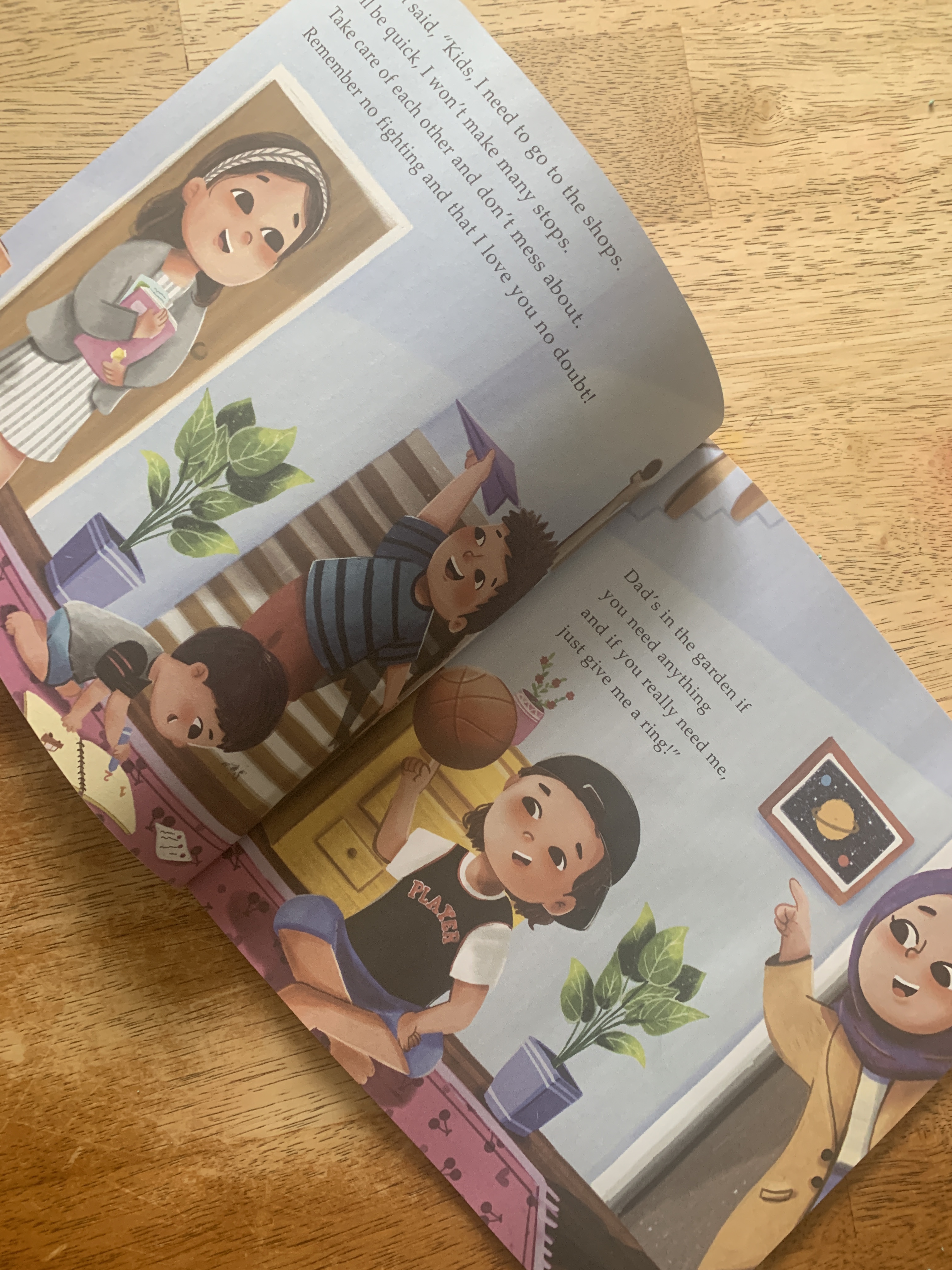
The book starts with Mum heading out to run errands and the kids being reminded to be nice, not to fight, not to make a mess, and that dad is in the garden and call if they absolutely need her.  Did I say it is relatable? Yeah, I say this at least once a week, but dad isn’t in the garden, and I don’t rhyme.

Yousuf amuses himself and one thing leads to another and a ceramic plate gets broken.  Not just any ceramic plate, his Mum’s favorite. He heads to his brother playing playstation for advice, and then to his other brother, and then finally to his sister before his mom comes home.

img_7642

I’m sure for adults the story is predictable, but the solutions the siblings provide are similarly relatable and mom being grateful that honesty won out are conveyed on a child’s level that makes the book enjoyable at bedtime or in small groups.  It provides an entertaining and  clear reminder of how important telling the truth is.

There is nothing clearly Islamic in the text except the children’s names and the mother wearing hijab.  No hadith or ayats are mentioned in conveying the universal character trait of honesty.  The author and illustrator are Muslim and I do wish that there was a tie back to Islam either before or after the story, but alas there is not.

img_7643

I purchased my copy here at Crescent Moon where my initials ISL (Islamic School Librarian) will save you 10% and it is also available here at Amazon.