Tag Archives: United Kingdom

Zeyna Lost and Found by Shafaq Khan

Standard
Zeyna Lost and Found by Shafaq Khan

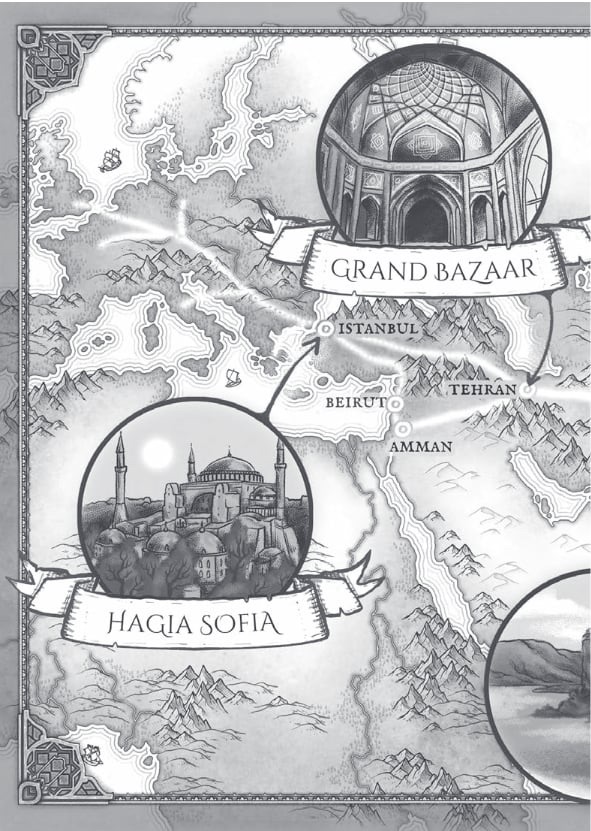
I think I needed this 336 page middle grade book that gets parents out of the way and lets a trio of kids  hop from country to country to solve a mystery, track down the bad guys and save the day. Set in the 1970s in the UK and on the Hippie Trail between Lahore, Pakistan and Istanbul, Turkey, the book is a fast paced read with humor, heart, and adventure.  I absolutely love Zeyna’s snark and voice, and her relationship with her brother and cousin, ground the story and make you cheer for them even when their antics are incredibly dangerous and improbable.  As an Islamic school librarian, my one critique with the book is that I wish there was more/any Islam. I, at one point considered that they are not Muslim, and I’m not sure what the author identifies as, but she does thank “Al-Barr, for all that is good” in the acknowledgements, and Zeyna does mention an Eid party in passing, so while I’m still on the fence, I’m going to assume they are all Muslim.  Major beats in the plot are meeting at both the Badshahi and Blue Mosque, but none of the characters ever pray, or mention the names of prayers when the athan is heard.  When they see women in burkas and chadors, Zeyna stares, not connecting the clothing to hijab, that one would hope she would know. There is only one salaam in the whole book, and the story is predominately set in Pakistan, Afghanistan, Iran, and Turkey. Granted I am sensitive, but it almost feels like a deliberate exclusion to the point of going out of the way to not let those details be present.  There are plenty of Urdu and Punjabi words and titles and cultural commentary, so it doesn’t seem that the author was concerned about watering down authenticity, a theme of the book infact is finding your place and accepting yourself.  All that aside I really enjoyed pickpocketing, imaginative, determined, sarcastic, loyal detective Zeyna, and I think kids will join me in hoping this is the first in a series.
SYNOPSIS:
Zeyna is 12, and likes to imagine she is a detective on a case, sneaking and snooping, and roping her inventing younger brother Mahir to be her Watson. The city is on edge with the theft of the Shirin Jewel, a large Persian ruby, a case involving the 15, that Zeyna would love to solve.  When she sees a man with knife in London, who later seems to be following her and her mum, and then drops a paper with their street name on it, Zeyna is convinced this her chance to prove her self. A sudden trip to Pakistan though dampens her mood as the clues to the case will be left in the UK. She doesn’t stay down long though, as her parents start acting peculiar in Lahore, meeting with strange people, lying about why they suddenly made the trip at all, and when the police show up at the familial home to arrest her parents, they all discover that her parents have vanished.  Zeyna realizes her parents and the events in London are tied to the missing ruby, and with the help of Mahir and their cousin Amina they set off to solve the case and find her parents.
WHY I LIKE IT:
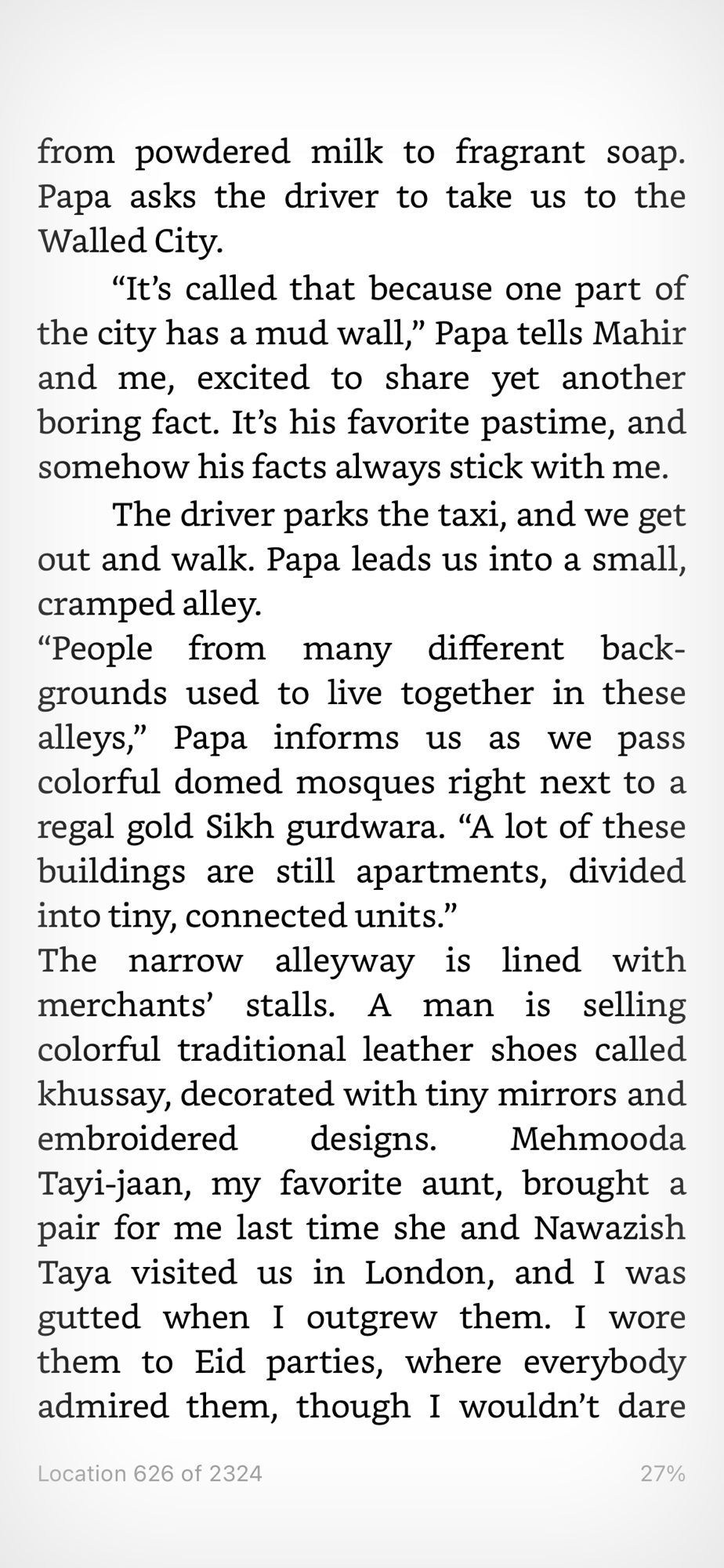
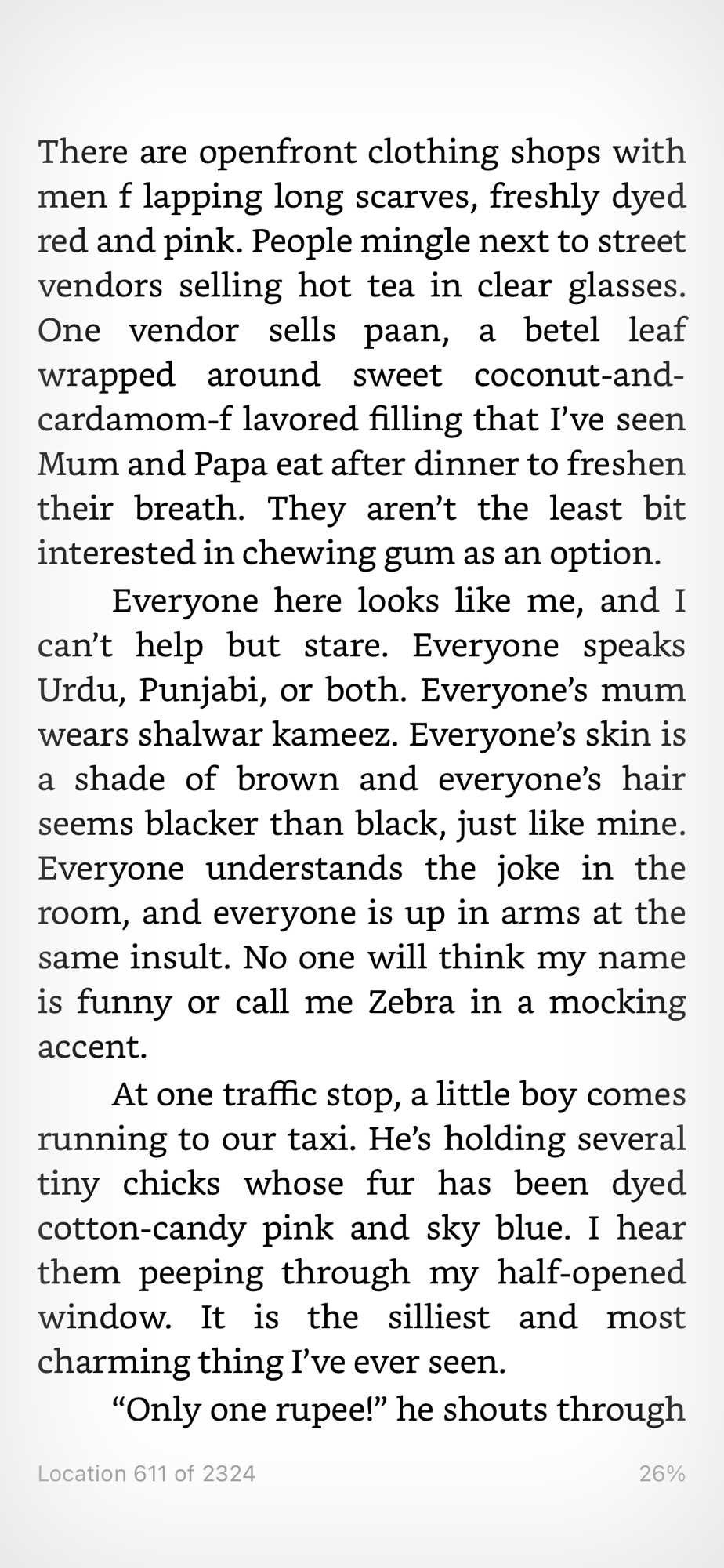
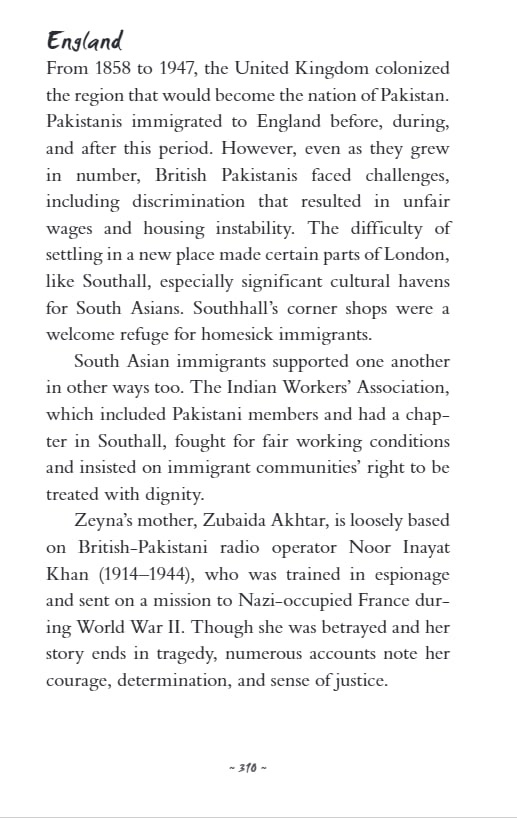
It’s hard to review a book like this without giving the twists and climax and resolution away, but more than once I gasped in delight when something happened on the page, and it crystalized where the book was going in my head.  Sure there were some particularly outlandish connections and a few plot holes, I even Googled when fax machines were invented, but I had a blast reading the book.  I loved the historical backmatter discussing the events in post partition Pakistan, a year before Bangladesh was independent, Soviet Union and UK competing over influence in Afghanistan, the discontent voices in Iran toward the shah, and the role of the Pudding House for messages in Turkey.  There are also discussion questions, a glossary, acknowledgements, and about the author at the end.

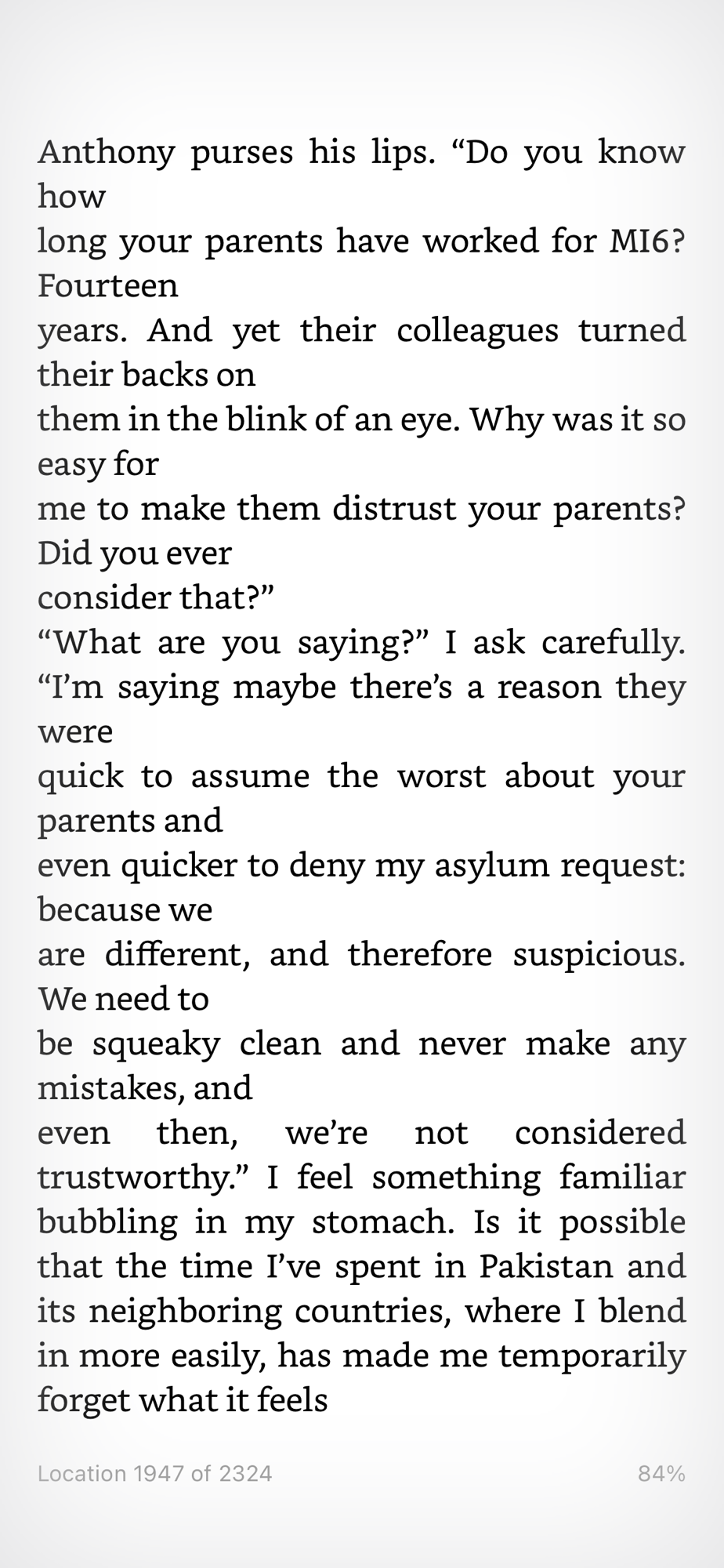
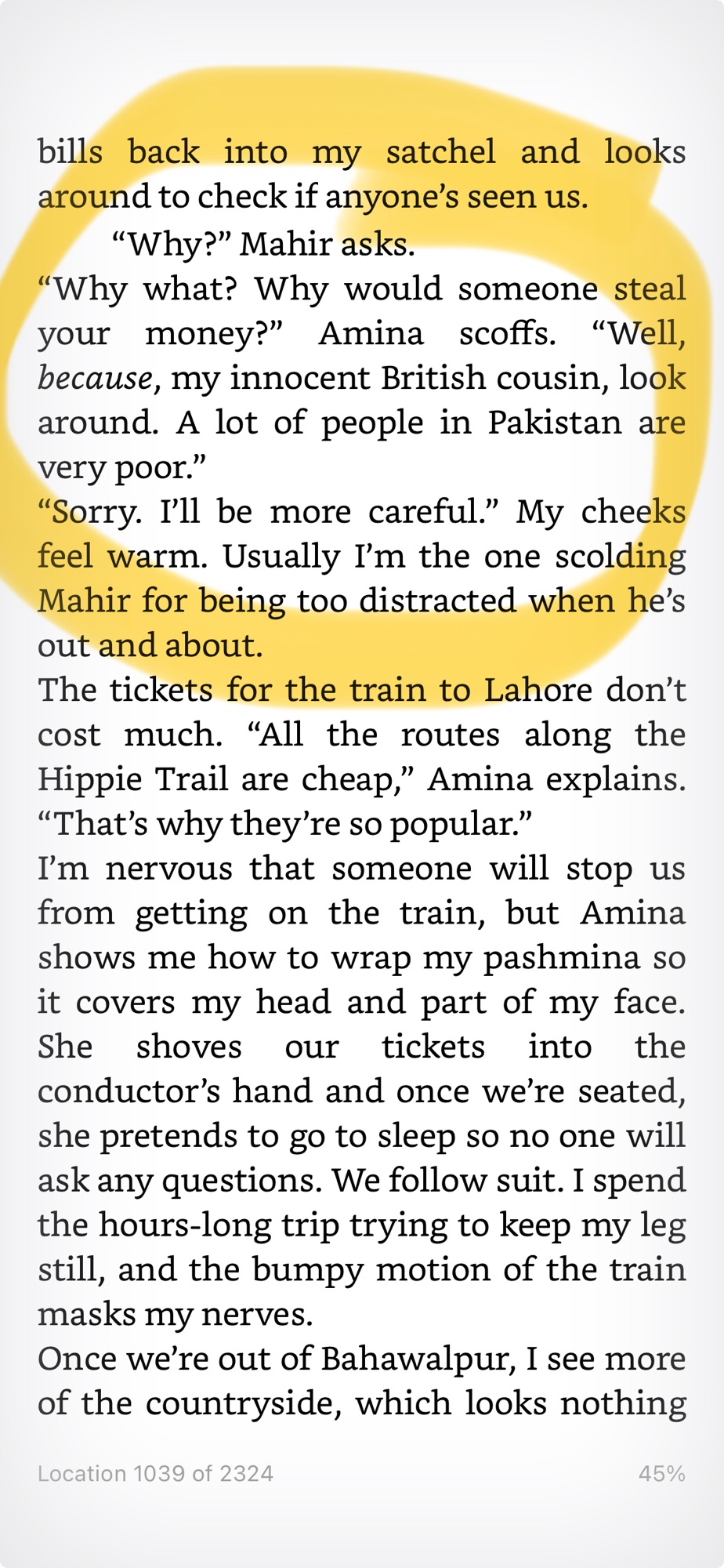
One tiny concern was the assumption that money could be stolen because the people around them are poor, it is just one paragraph, it isn’t a constant in the book, but it struck me as odd and stereotypical, and really not needed.

FLAGS:

Lying, stealing,  deception, pretending to be someone you are not, breaking and entering, eavesdropping, snooping, its a heist book!
TOOLS FOR LEADING THE DISCUSSION:
This would be an awesome book club book or novel study read, I can’t wait for it to be released in a few weeks so that I can have my kids read it.

Hidden Fires by Sairish Hussain

Standard
Hidden Fires by Sairish Hussain

I will not be getting over this book any time soon. It broke my heart, and all my other critical organs, in the most delightfully well-done way possible, and undoubtedly I am better for it. I don’t read a lot of adult fiction these days, and with some diabetic retinopathy concerns, I couldn’t read the 384 page adult book about generational trauma, partition, the Grenfell Tower fire, family dynamics, bullying, self-harm, and resilience, but was pulled in to the audio book version instead. The Desi-British voices of Yusuf, Rubi, and Hassan were refreshing to my American ears.  The multi-perspective book told in parts richly develops the characters, their relationships, and their current, past, and future struggles.  The author is Muslim, as are the characters, and while they all practice in their own way, it is undoubtedly who they are, and their Islamic identity is not questioned, feared, blamed, or apologized for.

SYNOPSIS:
The book weaves three distinct voices. Yusuf, is an 80 year old an immigrant who lived through partition, raised his family in the UK, has lost his wife a year prior, and is struggling with haunting memories of the past, failing health, regular loss of friends, and loneliness.  Hassan, Yusuf’s youngest son is a workaholic who is married to a non Muslim, non Desi who is suffering from fibromyalgia and who’s mother unexpectedly passes away in Spain.  Rubi, is Hassan’s 16 year old girl who is overweight, bullied, lonely and about to take her GCSE exams when she is dumped on her grandfather Yusuf’s door while her parents head to Spain.  The book opens in Ramadan the night of the Grenfell Tower fire and the horrific event affects them all, stirs memories, and shapes futures.  From there the layers of each character slowly unravel as they cope with the swiftly changing present as they desperately work to break free from the past.  As dementia plagues Yusuf, Rubi finds purpose in being needed, and Hassan is forced to re-prioritize his life before it is too late.

WHY I LIKE IT:
The book takes a slow approach to building up the characters and their back stories. It is almost feels like world building as a book would if it were a fantasy, it doesn’t info dump, but at some point the hooks are so deeply embedded that you really cannot leave the characters and their world and you have to finish the book, just to ensure they are ok.  Because I listened to the book, I feel like there might have been some Islamic content that was not completely ok, but again I was having vision issues and couldn’t note where to go back and check.  I think it is fine, and because it is an adult read, I think the audience can discern accuracy, but please know, I’m not 100% green lighting the Islamic rep.  It is undoubtedly well done and fasting and praying are a part of the characters, but their relationship to their faith and their understanding of it, is presented as theirs, it doesn’t get preachy or make broad statements about Muslims everywhere or Islamic doctrine.  

FLAGS:
There is body shaming, self-harm, trauma, death, torture, killing, lying, abuse, fear, guilt, dementia, bullying, assault, physical violence, drug use (mentioned), attempted suicide (mentioned), music, theft, make-up, close male and female relationships, Muslim marrying a non-Muslim, hallucinations.

TOOLS FOR LEADING THE DISCUSSION:
I think mature high school seniors or possibly even juniors could benefit from this book with discussions.  I think Rubi’s voice tied to her father and grandfather, will really open up youngsters perspectives, and provide a great vehicle to hear their thoughts, fears, worries, concerns about body image, self harm, aging grandparents, accessibility to parents, etc..

The Unlovable Alina Butt by Ambreen Butt-Hussain

Standard
The Unlovable Alina Butt by Ambreen Butt-Hussain

img_9079

This middle grade book in many ways reads like a memoir, it isn’t, it is OWN voice fiction, but the chapters often come across like short stories with their own climax or punchline.  The lacking continuity of smaller threads being resolved means if you put the book down, you aren’t necessarily itching to pick it back up to see what happens next.  There isn’t a larger pressing conflict driving much of the book, yes the girl is bullied, but by one kid, and she has a great group of friends and a supportive family, so the intensity is just not present.  I do like the growth of the character toward self-acceptance, but I don’t know that the target audience will get the 90s references of Spice Girls,  CDs, lava lamps, and gel pens.  The book hits most of the stereotypical immigrant tropes of feeling othered by one’s name, clothes, food, and while she works through them to deal with the bully and find her own confidence, she unfortunately never deals with her internalized Islamophobia, which is disappointing.  She puts Islam on her parents as something they practice, and only begrudgingly seems to acknowledge she too is Muslim when she doesn’t eat pizza with non halal meat.  She is embarrassed when her friends see Islamic calligraphy at her house, hear the athan, she doesn’t reply to her parents salaams, she calls her mother “the most devout in our family” as the reason she has to wear tights under her skirt: she only seems to ok with being Muslim when outsiders give their approval.  The book for me is mediocre, nothing to rush out and buy, nor anything to pull from shelves.  I’ll send my copy to the Islamic school library shelves as the book is fairly clean: a few giggles about naked statues at the museum and very lightly hinted at boy/girl crushes. The older sister deals with a boy who wants to date her and harasses her to the point of affecting her personality, but I think if a 10 or 11 year old picked up the book and read it, they would be ok to see the characters finding their voice, good friends, and sibling support.

SYNOPSIS:

Eleven year old Alina Butt is in her fourth school in three years since arriving in England from Pakistan.  She never fits in, and never has friends, but she is determined that if she can keep her last name a secret, she might have a chance.  One the third day of 6th grade though, her last name becomes known and Adam Atkins has his eyes set on giving her a hard time.  With encouragement from her older sister and love from her baby brother, Alina puts herself out there to make friends and when the teacher assigns her a new group, she finds herself among three girls happy to welcome her in.  The new group also puts her sitting across from Adam, but at least now she doesn’t have to face him alone.

At home, she navigates life as an immigrant trying to blend her worlds.  Her loving family lives above the grocery store they own and face Islamophobia and settling in together as they each have to find their strength and voice and resilience to drive, stand up to harassment, and for Alina, to love herself.  Alina gets the courage to try out for the school play, but when she lands the part of Gus in Cinderella, she has to dig deep to be happy for her friend, forgive a bully, and step in to the spotlight.

WHY I LIKE IT:

Alina is likeable enough, and I love that she grows to love herself too, I’m not sure she was ever unlovable though as the title suggests.  I don’t like that potentially really big plot points are mentioned and then abandoned.  She cuts her bangs way too short, her mom says something and no one else ever mentions it, and she never brings it up again.  Her dad is so sick he leaves the truck on the side of the road and sleeps and the mom takes care of everything, and what was wrong with the dad is never revisited.  These are just two examples of rising action that present that they are going to be important that are seemingly undermined by the lack of follow through.

I love that she finds a way to stand up to the bully and she even helps her sister deal with the boy antagonizing her.  It is strong and resonates with the reader, but it should also be noted that as soon as she has friends, they are gossiping and being rude to Adam too.  I’m not saying it isn’t warranted, and he definitely is worse, but if she is modeling behavior she should perhaps at least feel bad teasing him even before she knows that he has a bit of a rocky home life.  Plus he is one kid with two stereotypical sidekicks, yeah he is annoying and mean, but she has friends and family and teachers that are completely on her side too.  And Adam bullies her about her name, but no one else even acknowledges it or asks her about it.

I didn’t quite get the schooling, but it is probably because I am American.  She is in middle school, but she has one teacher all day and they play on the soccer fields at break and her kg aged brother does field day with her?   The 90s references were fine for me, but I don’t know that the target audience will get some of them, and it might be a little annoying to get through for younger readers.

Ultimately, the way Islam was presented was really disappointing.  It feels like we should be past the internalized othering of our faith.  The culture was worked through and appreciated internally for Alina, but for some reason, religion was only ok when the outside influences deemed it acceptable, and I’m not sure that in 2023 this angle of narrative is doing anyone any favors.  She loves her mom, and part of the character arc is seeing and appreciating her mother’s strength, but very early on mom is labeled as “devout” even though they are all Muslim.  And this self othering to be the reason her mom is keeping her from dressing like everyone else left a bitter taste in my mouth.  Never once does it feel that Alina has a connection to Allah swt, no matter what she is going through there is no bismillah, or prayer, or dua to ask for help, and strength, or show appreciation.  I absolutely get that not every story will have that, but the way Islam is presented as something foreign and never circled back on or portrayed as something that she embodies, makes all the mentions of faith seem deliberately othering, and as a Muslim book reviewer, I feel it is an important point to mention about this book. I wonder if it was intentional or an oversight sensitivity reading would have helped resolve.

FLAGS:

Birthdays, music, bullying, harassment, teasing, othering, mention of naked statues, some sneaking and dishonesty.

TOOLS FOR LEADING THE DISCUSSION:

I wouldn’t use this as a book club selection, and as stated above I wouldn’t rush out to buy the book to shelve at home, in a class or school library, but if it found its way to the shelves I would not remove it.  The book has heart, I just feel like along the way the messaging of finding your voice and putting yourself out there to make friends, the book also hints that the Quran on your walls, modesty, the athaan, eating halal, are all things that are weird, unless your friends think it is cool, then it is ok- and that is not messaging I would really want to spread.

Heroes Like Us: Two Stories by Onjali Q. Raúf

Standard
Heroes Like Us: Two Stories by Onjali Q. Raúf

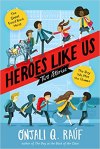
So this book is a little unique in that it is two stories, and The Great Food Bank Heist, one of the stories, has already been published, and the other story is a bit of an epilogue to The Boy at the Back of the Class.  So, I’m just going to review the first story in the book, The Day We Met the Queen, and while you probably can get away with not reading The Boy at the Back of the Class first, I wouldn’t want you to.  It is such a good book and you really should read it, everyone should. Yes, it is that good. So back to The Day We Met the Queen, the first story in the upcoming middle grade 176 page book, about refugees and kids making a difference.

SYNOPSIS:

This charming story shows what happens to Alexa and Ahmet and the whole crew as they prepare to met the Queen for tea.  The group of friends is about to show the entire school their invitations and share the two questions each that they plan to ask the monarch, the list was 52 questions, but because the Queen is nearly 100 years old, they have been advised to shorten the list.  On the day of the assembly news crews are present and Brenden-the-Bully is acting a little strange, as Ahmet starts talking the auditorium erupts with stink bombs and everyone leaves running.  The kids think it is just the bully striking again, but the gossip at the school and reports on the news imply it might be more than that, and the kids might not make it to the Queen’s tea after all.

WHY I LIKE IT:

I love getting some closure on the story, while simultaneously showing that refugee treatment and rights is not a thing yet resolved.  The idea of the Queen being at the center of the book definitely adds to the coincidental timeliness of it all, but that she is easy going and relatable to the children is still the takeaway whether you were a fan of the real Queen or not.  I love the voice of the protagonist and the relatability that her concerns are with the target audience. I particularly enjoy the critique about the media and the clarity in which the children understand the flaws and limitations of what they are told in the news both on the school level and on a global stage.  There isn’t anything Islamic in the text, Ahment is Muslim, as is the author.

FLAGS:

Hate speech, deception, bullying

TOOLS FOR LEADING THE DISCUSSION:

I don’t think there is an author that brings big real issues to children’s stories as well or as consistently as Onjali Rauf. Both stories in this book should be shared with middle grade readers and up to be discussed, reflected upon, and learned from as often as possible.  You can preorder your copy here: https://amzn.to/3Eq2G4M

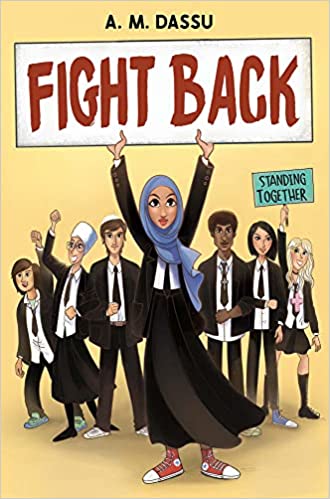
Fight Back by A.M. Dassu

Standard
Fight Back by A.M. Dassu

fight back

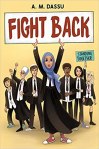
At 384 pages, this middle grades book takes on hijab, terrorism, Islamophobia, finding your voice, and fighting back.  At times the book was insightful and smoothly written, at other times the voice seemed childish and the writing directionless.  The inconsistencies don’t ultimately make the book good or bad for me, but rather very forgettable.  I read the book over the span of three days, but honestly remember very little about the book without looking at my notes.  The writing just isn’t particularly strong.  I never connected with the main character, and no it wasn’t because I didn’t agree with her wearing hijab out of solidarity, I accept that people make the decision for a variety of reasons, somehow I just never felt sympathetic to her as a person, or found myself cheering her on.  Her naivety vacillated too much for me to find her believable, and the pacing of the book made it hard to get revved up.  I think upper MG and middle school readers will be a better fit for the book with hate speech, assault, school bans, concert, musical references, and alt right indoctrination.  I think the book is worth shelving in a classroom/school library and I’m considering it for a book club selection, but I’m skeptical that the book would be finished, even if started, by most readers without some incentive to see it through.

SYNOPSIS:

Aaliyah and her friends are at a K-pop concert when a terrorist attack kills and injures numerous people.  A Muslim takes responsibility and with it coming on the heels of numerous London attacks, Islamophobia is at an all time high.  For 13-year-old Aaliyah, it is a stranger yelling at her mother in a parking lot, her best friend Lisa ignoring her, and her brother getting riled up in retaliation, that gets her to wonder why her mother wears hijab, when she started, and decide to start covering herself, in solidarity. As a result for Aaliyah there is now increased bullying at school which results in physical assault, and teachers turning a blind-eye.  It reaches an all time high when a religious display ban goes in to effect.  Still dealing with trauma from witnessing horrific violence, Aaliyah decides to push back.  Finding her inner strength and finding allies in a few good friends, and a secret cat adoption, she finds enough motivation to keep her plugging forward against the growing hate in her world. When she finally finds her voice will it be enough to overturn the ban and save her brother? Nope, not going to spoil it.  The fight is not a one-and-done, as anyone who has gone up against racism and systemic oppression knows, and this fictional book keeps that integrity and doesn’t give a happy ending, but rather hope and motivation.

WHY I LIKE IT:

I like that the Islam is centered in a consistent and empowering way.  At times it is a perspective that I’m not completely onboard with, but a few pages later the insight is powerful and the messaging clear.  I found it odd that Aaliyah doesn’t know when her mom started covering or why, or anything about hijab, it comes off very immature. The book keeps culture and religion separate, hijab a choice, and I like that it was Aaliyah who wants to cover even when her parents try to talk/force her out of it.  I find it a little off that she doesn’t go to the mosque, but her father consulted with masjid folks when looking for advice for handling the alt right groups.  She prays a few times in the book and it being mentioned is nice.

I like that the kids in the book think for themselves, and that the adults don’t have all the answers.  I enjoyed the passages asserting why the family came to the UK generations ago and why they have stayed, is powerful.   A few of the characters that are really strong at the start don’t ever get mentioned again.  Which is fine, but I did wonder about Harpreet and why Yusuf’s friends weren’t contacted when Aaliyah was sleuthing about.

Loved the literary shout-outs, and the hypocrisy of allowing swim caps and hats but not hijab, but sigh, didn’t love the cat thread.  I think I just don’t like fictional cats, I sound like a broken record.  I think the inclusion was to show how much Aaliyah had to keep hidden in her life and how she needed comfort, but I don’t know, sigh, I found the contrast of tone jarring to the pacing.

There is a glossary at the end, and the definition of Hijab is a bit odd, highlighting Western and South Asian terminology and not the Middle Eastern or even global use of the Arabic word.  I don’t know that the glossary is even needed as the book really tries to establish that the characters are a part of their society and don’t need footnotes and differential treatment, so the inclusion of a glossary for me, diminished the point a bit.

FLAGS:

Assault, hate speech, bullying, fear, death, injuries, bombing, terrorist attack, lying, music, mention of a transgender/gender neutral student, a rainbow pin. sneaking out.  Criticism of police, alt right indoctrination.

TOOLS FOR LEADING THE DISCUSSION:

The book is unique in showing affects of the alt right and not having it all work out in an MG book.  It shows the anxiety and fear that Muslims often feel and the determination of not becoming victims. It also does a good job of showing that something like a religious symbolism ban doesn’t just affect Muslims, but people of various faiths and culture, and thus when common ground is found, there are more allies that one often thinks.  I think it could work for a middle school book club and undoubtedly the discussions would be great, but I am given pause with the main characters view of hijab as not being something in the Quran, but rather done in protest and in solidarity.  I think once I see which kids are interested in book club I can gauge if it is something that we can work through and discuss or not.

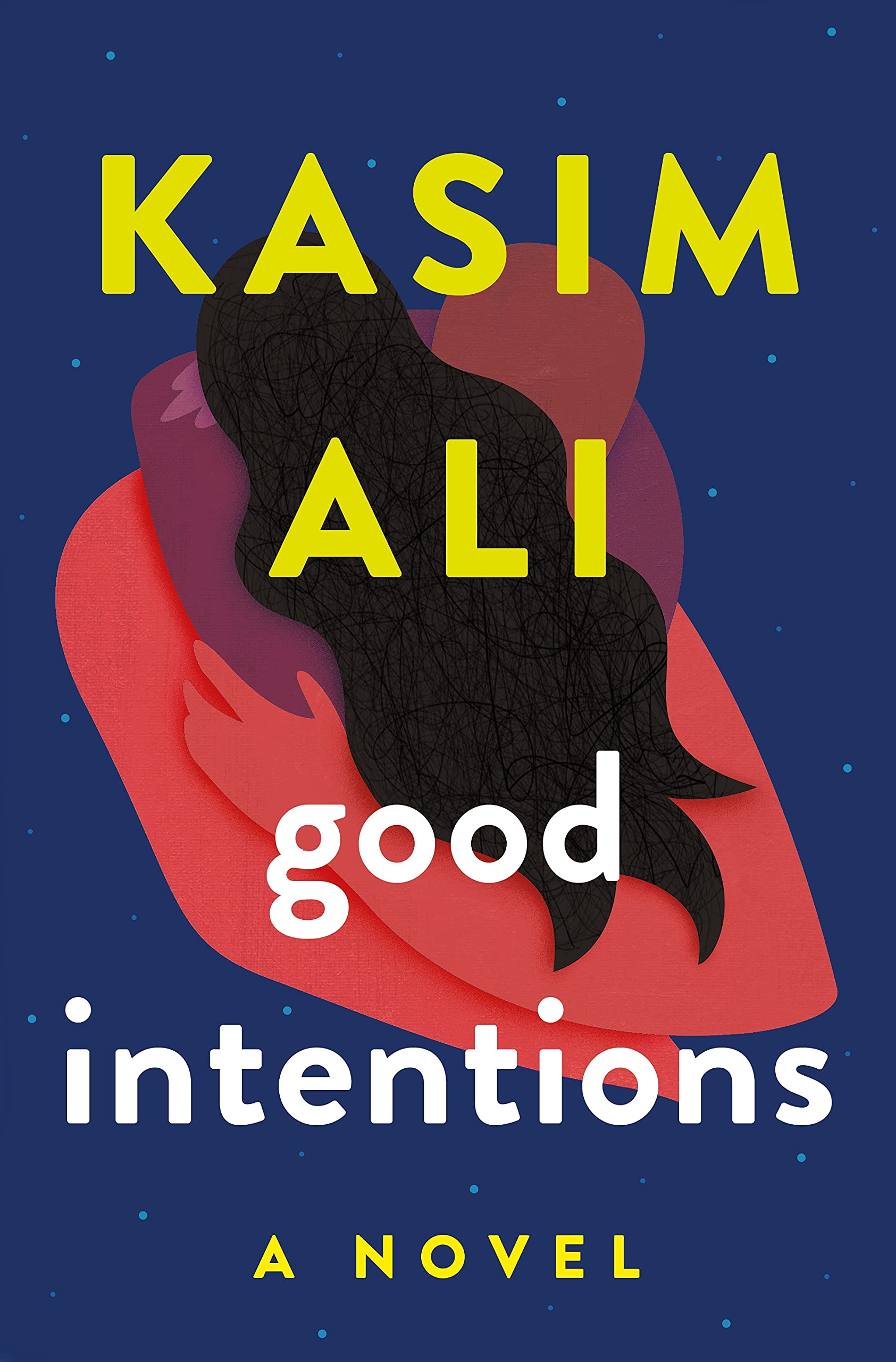
Good Intentions by Kasim Ali

Standard
Good Intentions by Kasim Ali

good intentions

There is a reason that I read juvenile fiction: from board books to YA, but lately the “New Adult” category has really been tempting me.  Muslamic romance novels, often really need the protagonist to be looking to get married to make the plot work with some authenticity,  which means the main character usually needs to be a bit older than in their teens.  I decided to start my tiptoeing into the genre with this book, because I was intrigued at the racial and mental health themes that the blurb teased.  Sadly after reading the 288 page story, I still was waiting for more racial and mental health insight or enlightenment or perspective or deeper appreciation or anything really.  I kept reading hoping for more character growth, and to find out if the relationship worked.  I understand after finishing, that the book was intentionally more subtle and nuanced, and part of me appreciates it, but I still felt the book ultimately provided too little in either regard for me to feel satisfied or content that I had spent time with the characters.  The abruptness and harshness of the first few chapters, seemed disjointed from the dialogue filled introspective remainder of the book that showed so much potential, but left me feeling strung along for no real purpose.  The book covers mature themes of sexuality, drug use, racism, co-habitation, relationships, culture, mental health, and more.  The characters’ identify as Muslim, but aside from Eid prayers, iftar, and mentioning once that they should pray more, there is nothing religious practiced, mentioned, or contained in the story.

SYNOPSIS:

Told in a variety of timelines that all follow the relationship of Nur and Yasmina, the story begins with Nur finally after four years getting up the nerve to tell his desi parents that he has a Black girlfriend, and wants to marry her.  He leaves out that they have been living together for years, and the book then flips back to how they met and bounces around filling in the gaps that bring them back to the big reveal.

While in college, Nur had just broken up with Saara, but still goes to her fairly regular house parties.  At one such party he meets Yasmina, as a small group at the party sneak off to smoke pot, and he is immediately crushing.  His hungover broken-hearted gay friend Imran calls him out on it immediately, and his roommate Rahat chastises him for going to his ex’s parties.  Nearly all the main characters are met early on, and the rest of the book focuses on Nur and Yasmina growing closer through college, after school, through their early years of jobs and grad school, and the overshadowing of the fact that Nur has yet to tell his family about Yasmina, while Yasmina’s family is fully aware and fully supportive that they are living together.

All the characters are Muslim, but practice is pretty minimally detailed.  Yasmina tells Nur at their first meeting that she wishes she prayed more, and later it is mentioned that her parents were raised strict so they have raised their own children less so.  It is possible that Nur’s mom wears a scarf, but not clear either way, and they don’t seem to be bothered that she is living with her boyfriend.  Nur on one of his visits home goes for Eid prayers with his father, his mother and sister do not go, and it mentions that they are fasting.  Rahat does not find dating is for him, and wants to have a traditional arranged marriage, but it does not disclose if this is because of religious or cultural views.  Imran discusses his family praying and that he had to square away his sexuality with Allah swt more or less.

Nur and Yasmina’s younger sister have mental health afflictions.  Nur has anxiety attacks, and Hawa severe depression.  It does not label or identify or diagnose, this is my assumption, it does detail their experiences though, and how they affect those around them.

WHY I LIKE IT:

I actually enjoyed the writing style and the ease in which it flowed-save the beginning of the book. The beginning was a little crass, almost like the author was trying too hard to get the characters’ environment to read that they were in college.  The crude talking about sex and them talking about their parents’ intimacy and smoking and drinking and being vulgar, was in such contrast to the very subtle nuanced rest of the book that tried to show the layers of Nur and Yasmina’s relationships and lives.  Once I got through it, I genuinely wanted to know if they could make the relationship work.  No I’m not going to spoil it, but that really is why I kept reading.

I was disappointed that the book didn’t draw mental health out in the open.   I also wanted some religious based push back on racism.  It is a big thing in our communities and the book really could have had the characters argue it and make their points, right or wrong, for the disconnect between faith and culture.  It didn’t have to be preachy, or even mean that anyone changed their opinions, but it mentions numerous times, something to the effect of Nur’s parents being racist, but doesn’t detail why that is the suffocating presence in disclosing his relationship.  In four years I would imagine the opportunity to correct his parents way of thinking would have arisen, and he could have challenged it.  I get that might negate Yasmina’s point that Nur is racist, but I think it should have been made more clear then that he didn’t speak up when opportunities presented, otherwise it just seems unexplored and we, the reader, are expected to just accept the characters on face value, when the book really very easily could have nudged us, to self reflect and look inward.

FLAGS:

There is sex, and drugs, and lying, and racism, and all the other flags that adult books often have.  There is one “steamy scene” between Nur and Yasmina, but the rest of the relationship is very mild.  Nothing else is graphic in detailing their day-to-day living, or the day-to-day relationships of the other characters in the book: gay or straight.

TOOLS FOR LEADING THE DISCUSSION:

No. Would never, could never encourage unmarried Muslims living together, fictionally or otherwise.

Boy vs Girl by Na’ima B. Robert

Standard
Boy vs Girl by Na’ima B. Robert

9781847801500.jpg

I read this book a few years ago and was blown away that Islamic fiction could explore these topics compellingly in a YA package.  I remember loaning out the book to a mom with middle school kids to see if she could tell me how accurate the storylines were.  Yeah, I never got the book back, and never got the feedback, and the book slipped my mind and thus I never wrote a review on it.  Fast forward to last month and I’m trying to find a middle school book club selection and I can’t believe that I don’t have a blog entry of this book to look back on.  Clearly, this shows why 1- I don’t loan out books anymore and 2-Why I have a blog, cause I remember nothing about the flags, relevance or appropriateness of the book, thus I bought another copy, read it, and am now documenting my thoughts.

The book is 260 pages and an AR 5.3, but the drug use and violence I’d say would warrant an older reader, 9th grade and up perhaps.  And while by the end, the book leaves a pleasant taste in your mouth and you would place it back on the shelf in a contented manner, I would be misleading if I didn’t confess that it took much self motivation to pick the book up and keep reading more than once, that it honestly took me a month to read.  The last third was hard to put down, but you have to get through a fair amount of frustration, stereotypes, and extremes to get there.

SYNOPSIS:

Sixteen year old twins Farhana and her brother Faraz live in London and are incredibly different from one another.  Farhana goes to a school where she excels both academically and socially.  She is queen bee, beautiful, and articulate.  Faraz on the other hand, goes to a different school and doesn’t really fit in anywhere, but in the art studio.  One thing that unites them, however, is their determination to grow and learn about Islam this Ramadan, and their home environment of a large extended Pakistani family that places culture above religion.

Both twins are close with the “black sheep” of the family, their Aunty Najma, a niqabi rebel set on marrying a white convert.  But, both twins have their own stresses as well.  Farhana has recently called it off with a boy named Malik, but isn’t really over him and Faraz has gotten himself involved in a street gang to find a place to belong, but the stakes are getting higher.  Both twins on the eve of Ramadan and with the coaching of their Aunt are determined to get their lives straightened out, fast properly, reconnect with their faith, and with each other.  They do, alhumdulillah, however, the spiritual high only lasts so long, as earlier decisions come back to haunt them.

Farhana makes the bold decision to start wearing hijab, but once the novelty wears off, she starts to question her choice.  It isn’t helped by her mom who is very, very against the need to veil and makes it difficult for her daughter.  Faraz meets some street artists at the masjid and while it looks like he could find a place to excel, his alliance with a gang, also comes with enemies from rival crews.  Physical fights and drug runs have him out at all hours of the night and the priority of fasting and praying fade as the the pressures of not getting killed or caught prevail.

As each kid has their ups and downs, and the parents prove to be out of touch with the lives of those in their homes, tidbits of Islam come through, but unfortunately so does a lot of cultural dogma that isn’t always clarified or pushed back on, making there a lot going on in this book, and making me wish it was a just a bit longer and more fine tuned.

WHY I LIKE IT:

The book, I could argue set the foundation for the amazing pieces of literature currently available.  Published in 2010, the book really was a first of its kind.  Written by a Muslim, unapologetically written for Muslim and non-Muslims, and available in the mainstream.  The book tackles real issues, but seems to fall into stereotypes too.  That Farhana covers and is so beautiful, she looks like Aishwariya Rai, the Bollywood actress, why would she cover.  Malik decides to figure things out and wait for her, ahhh, so sweet.  There’s the rebel Asian girl who gets a lot of page space early on for her incredibly minor role, going on about Asian Girl Bachelor Parties and hooking up with everyone and anyone. There is the best friend who is religious and the Imam’s daughter and is also chubby.  The nice brother at the masjid who saves the protagonist.  I don’t know, they all seem predictable.  What I like about fiction is it allows Muslims to be seen in shades of gray not just black and white, and while this book tries to do it, I feel like only the main characters are allowed to grow and change, the minor characters hold on to their positions so resolutely that, they kind of seem dry.

I like that the tables on hijab are switched up, it isn’t the parents that want the girl to cover, but rather the girl her self, and some of the conversations about hijab and Farhana’s choice to do it compared to her friend who is forced allow for some powerful moments.  I also like, that she has doubts soon after opting to wear it.  I wish some religious reasonings were brought in to her understanding of hijab, but the aspects of choice and how to wear it, are present.  I’m grateful that Faraz’s storyline takes most of the action, so that it isn’t a romance novel, with Farhana pining relentlessly for Malik.  I had hoped for a little growth from the gang head, Skrooz, especially after Aunty Naj sheds some light on him, but his criminal act at the end after showing Faraz his cousin or maybe it was his brother seemed a bit off.  Again, it was only to benefit the protagonist, not to show that we all have our own battles.

The parents and extended family are irritating to say the least. To the extent of delaying iftar to get the food to the grandmas house and then serving the men first, like really? I don’t think so.  There is nothing that says the women have to eat after serving everyone else in religion and that is never challenged.  Yes, Farhana challenges her mom’s notion of women not going to the mosque, but the food bugged me.  I am Pakistani American, and the culture has its flaws, but the presentation in the book, is one big wide stripe of female oppression, which isn’t fair either.  Absolutely, their are families that the women cook all day and then eat in a corner, but I feel like the staging of this book as “authentic” either needs to show variation, or account that this is how one family views it, not that it is universal.

FLAGS:

There is talk of casual sex, physical violence with knives and fists, details about drugs: cocaine and heroin.  None of it is celebrated, but it is present and very much the norm in how it is presented.

TOOLS FOR LEADING THE DISCUSSION:

I still sway back and forth on if this could be done as a book club selection, and in the end I would opt that no it can’t.  Not for the drug use, or boy girl relationships, but ultimately for how the backwards and closed minded the Pakistani culture is presented as being.  If the group was high school Pakistani heritage kids maybe, but I think Arabs and non Muslims in general will not think very highly of the culture after reading this book, and I think that is a disservice to be promoting in a book club selection.  


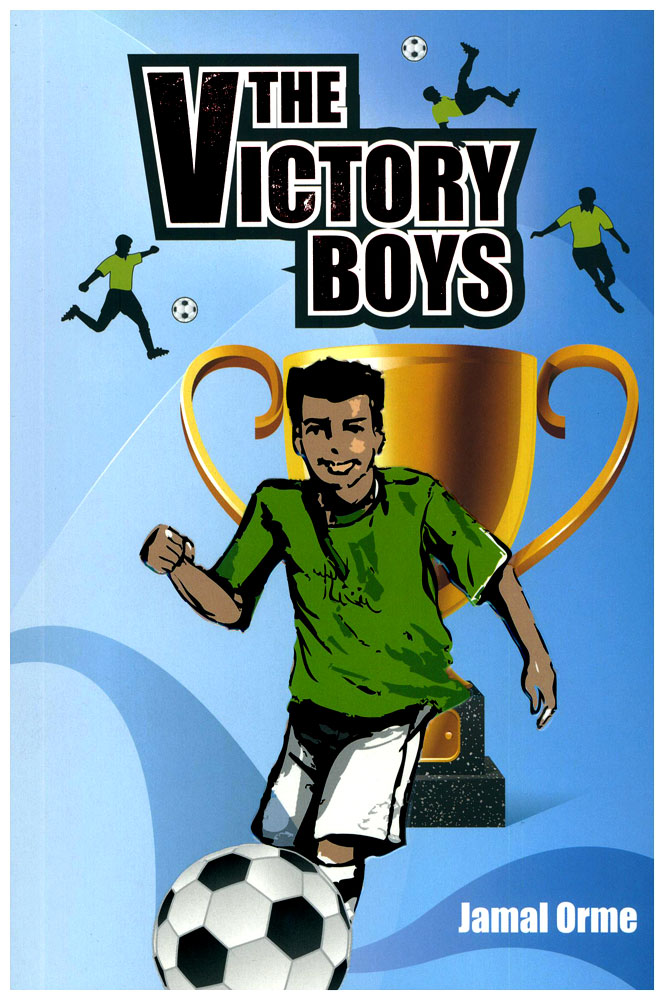
The Victory Boys by Jamal Orme illustrated by Eman Salem

Standard
The Victory Boys by Jamal Orme illustrated by Eman Salem

victory boys.jpg

I’m not sure why Amazon states the book is for pre-school and up, when the publisher, Kube, posts this book for ages 7 and up.  I think 3rd or 4th grade soccer/football fans will enjoy the book.  There are some slightly mature ideas presented and worked through, and the soccer lingo assumes the reader knows the sport.  Plus the quality of the illustrations and the small font isn’t going to entice someone not already excited to read the book based on the content within.  My boys, ages 8 and 9, enjoyed the book, as did I, once the story got going.  It doesn’t really grip you from the first sentence, but as the story progresses and the way Islam is woven in makes for some learning experiences in the midst of a few intense football matches.

SYNOPSIS:

The boys at the Sunday Madrasa do not enjoy their time there.  They find the Imam boring and thus are not inspired to learn. When they sneak a football into break time however, they suddenly feel more engaged and present in their lessons.  A change the Imam notices and appreciates, but doesn’t know the reasoning for as he strictly forbids football and finds it a waste of time.  Outside of Madrasa, Junayd is having a hard time at home.  He has to help out a lot at his father’s restaurant and his older brother Saleem has gotten in trouble with the police.  His mom prays for the kids, but is also at a loss as to how to help with the stresses at home.

During a secret game of football in the masjid courtyard, an arrant ball breaks the neighbor’s greenhouse window, and the boys are forced to come clean about their covert game.  The Imam demands the kids stop playing and that they tell their parents what they have done, so that they may earn some money to replace the window.  As the kids come through with the money and the Imam sees the kids resort back to their lackluster attitudes to learning.  He gets an idea to start a football club after madrasa classes.  The only problem is that he knows nothing about the sport and no parents are willing to help.

Saleem by chance comes to collect his brother one day, and as he hollers advice from the sidelines, the Imam recruits him to coach the team.  In response the Imam ever so gently uses football to teach not only the madrasa kids, but Saleem as well.  When the boys learn of an upcoming tournament, the Madrasa enters an A and B squad and the Shabab Al-Nasr, Victory Boys, will be tested not only in their play, but also in their manners, and understanding of what it means to be a team and Muslim.

WHY I LIKE IT:

I love that the Imam grows and changes.  I mean it is a kids book about soccer, but really it is the adult in the story that shows the most heart.  He goes out of his comfort zone, reevaluates his opinions, and admits when he is wrong.  High five Imam!  I also like that he didn’t give up on Saleem, and the way he leads him is with such kindness and compassion, that even youngsters, will be impressed.  

The book does not talk down to the reader, which is nice, but at the same time I think it pushes the age appropriateness a bit with the detail devoted to alcohol being sold at the restaurant, Junayd’s father’s flaws, and even Adam’s dad’s tantrum of sorts.  There really aren’t any nice parents in the book.  We don’t learn much about the moms, but none of the dads seem too supportive.  Really the only nice adults are the Imam and the neighbor who’s window they broke.

The timeline isn’t entirely smooth, the kids come together and play well as a team remarkably fast for how intense the tournament is, and how well they perform. And some of the characters could have used some fleshing out, I couldn’t really tell you much about them.  The font is really small and the spacing often forgotten.  The book is about 95 pages with a glossary and an acknowledgement at the end, fortunately the 2nd book in the series seems to space the words and lines out more and is 155 pages.

The story is solid and for the most part well written.  I read it in one sitting and thoroughly enjoyed the lessons learned and then put into practice.  The book isn’t preachy, but you are glad to see the Imams words given life in the other characters’ actions.  Saleem changes quickly, but the author and story account for it in a way that is believable for the audience and the message of not giving up on one another comes through loud and clear.  There is a lot of technical detail about the sport, but it doesn’t drag on, it adds to the excitement even if you just know the basics.

FLAGS:

The talk of alcohol, of Saleem being with a group of kids and a stolen car, there is some yelling and aggressiveness from the adults.

TOOLS FOR LEADING THE DISCUSSION:

The story is a bit short for a book club selection, but I would definitely consider it for Lunch Bunch (where I read to 4th and 5th graders while they eat lunch).  And I think most Islamic School libraries and classrooms should stock the series.  

https://thevictoryboys.com/

https://www.youtube.com/watch?v=oSpK6-fNiSQ

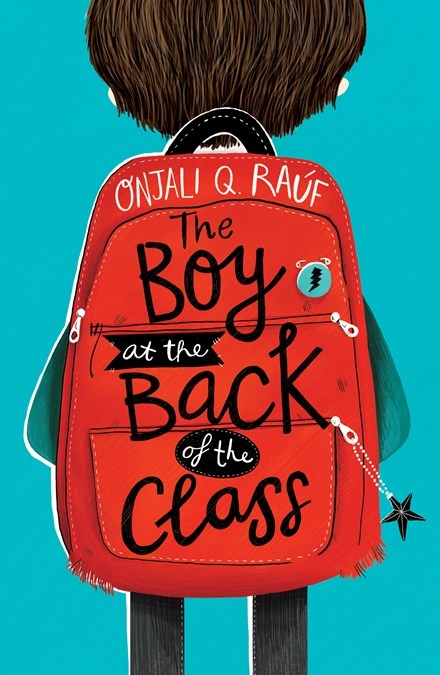
The Boy at the Back of the Class by Onjali Q. Rauf illustrated by Pipa Curnick

Standard
The Boy at the Back of the Class by Onjali Q. Rauf illustrated by Pipa Curnick

boy at the back.jpg

A perfect introduction to the refugee crisis for upper elementary aged kids.  The story is told from the perspective of an unnamed 9 and 3/4 year old narrator about her friends and how the filling of an empty chair in the back of the room changed their lives.  Ages 7 through 12 will enjoy the plotting and planning of the friends, the awesome climax and the gentle opening of their eyes to the atrocities and bigotry around them.  At 297 pages, with a few pictures and some engaging notes and tidbits at the end, the book is both big, yet completely non intimidating at the same time.  

SYNOPSIS:

Right near the end we learn that the narrator’s name is Alexa, and not too much before that, I learned that she is a girl.  I kind of like that vagueness of it, especially as we also learn that she is half Indonesian and half Austrian.  You realize that it doesn’t matter, that it doesn’t change anything, and that we all bring our own assumptions to the story and learn a bit about our selves as the narrator’s identity is revealed.  But really, thats a tiny bit of the book, the book is really about a group of diverse friends battling bullies, bully teachers, and trying to help the new kid in their class Ahmet.

Ahmet is a refugee from Syria, but the information isn’t easy to establish, he doesn’t talk to anyone, he disappears at lunch and recess, so Alexa, Josie, Tom, and Michael, first have to figure out who he is, and how they can be his friends.  Along the way we learn the Tom is from America, the book takes place in England.  Josie is the best football player and her parents are nervous to have her interacting with Ahmet, Michael is incredibly wealthy and his parents are Nigerian and French, and Alexa lives with her mom a librarian who works really long hours, her dad passed away and money is incredibly tight.

Once friendships are established, Alexa learns that Ahmet’s mom and dad are missing and that his sister and cat died while fleeing Syria.  When she learns that the government is planning to close the borders to immigrants and refugees, the group of kids come up with plans to keep the gates open until Ahmet’s parents can be found and they can come to the United Kingdom.  The kids come up with a variety of plans, but “The Greatest Idea in the World,” is the one they decide to go with.  It involves a lot of danger, but the general gist is to get a message to the Queen of England, who will keep the gates open, find Ahmet’s parents and reunite the family.  

Naturally, there are a lot of moving parts to the plan, and a lot of naivety on the part of the 9 year olds, but they do get the Queen’s attention, and they do have a wonderful support system of parents and teachers and while their are bullies around every corner, they do come together to make the world a bit better for Ahmet and for us all.

WHY I LIKE IT:

I love that it is realistic, with the plotting, and understanding of war, alike.  The war and Ahmet’s journey is very very simplified, but the tone, introduces kids to the intensity without overwhelming them.  Just like the plot to get the Queen’s attention is not celebrated, but appreciated.  What the kids did was wrong and dangerous and they lied, and the kids don’t ever know after if they are in trouble or being praised.  I like that the integrity of both situations is upheld and the book doesn’t get too far fetched.  Similarly, the book is fun and adventurous, and in many ways Ahmet is just a catalyst for the kids to come together to solve a problem and save the day. 

There aren’t a lot of details about his life in Syria, because he doesn’t speak English, there isn’t anything about Islam, except he draws his mom with a scarf on her head.  But there is a lot of learning to accept each other, and stick up for whats right and to not give up on people.  I love the diversity of the friends and how they don’t expect each other to change, they accept each other and move along.  

There is a slight typo on page 3, “…could be half as useful as a Tintin’s dog, Snowy,” that had me afraid that this book was going to be unrefined, but alhumdulillah I was wrong.  The book reads easily and wonderfully, and my children loved it as much as I did.  The author is a first time writer, and I hope she has a bunch more stories in her, because I look forward to reading them.  

FLAGS:

The book is clean and reads believably from a 9 year old’s perspective.

TOOLS FOR LEADING THE DISCUSSION:

I would do this in an elementary book club in a heartbeat. I’ve suggested it to many and I hope to read it aloud to my 4th and 5th grade lunch bunch crew. It is well written, timely, and memorable.

Teacher’s Notes: https://www.hachetteschools.co.uk/wp-content/uploads/2018/07/The-Boy-at-the-Back-of-the-Class-Teachers-Notes.pdf

A bit about the author: http://beingthestory.org.uk/speakers/onjali-q-rauf