Tag Archives: tradition

Say Something, Poupeh Babaee!: A Graphic Novel by Haleh Massey illustrated by Ghazal Qadri

Standard
Say Something, Poupeh Babaee!: A Graphic Novel by Haleh Massey illustrated by Ghazal Qadri

I had planned to just flip through this 176 page middle grade graphic novel to see primarily if there was any Islam mentioned, and if so, to see how it was framed. The blurb makes it clear it is culturally Iranian immigrant in focus, and set during the Muslim ban.  The heightened intrigue is that it isn’t just metaphorically about finding your voice, the character is labeled as having selective mutism and the author who is a clinical psychologist truly has her protagonist voiceless in nearly every setting for the majority of the book. The bright illustrations, and easy read though, had me reading the book front to back and finding that Islam is by-and large-not present. The flashbacks to her life in Iran show her wearing a scarf, and praying, and the memories are warm and inviting, with no internalized Islamophobia or political commentary, or Islamic practices at all following Poupeh to America. In fact when sought after news is finally heard the family exclaims, “it’s a Christmas miracle.”  It is hinted that the female cousin has a girlfriend, and the book features a lot of stereotypes about aggressive men, name mispronunciation, bullying for ethnic foods, and anti immigrant ideologies.  On the plus size it normalizes therapists, shows character arcs for the main and minor characters, and shows that inability to speak, doesn’t mean someone doesn’t understand.  While the book was better than I thought it would be in many ways, it ultimately didn’t have a climax, all the build up for two questions, really fell flat for me.  I also felt like while the Muslim ban was a fairly unique premise (shout out to Kareem Between!) all the other tropes are overly done, and render the book forgettable even though the format of a graphic novel should make it a standout.

SYNOPSIS:

Poupeh Babaee has come to America from Iran alone, her parents were held up settling their affairs, and they didn’t want her to miss more school, so she is sent ahead to stay with her aunt, uncle, and cousin. She understands English, but when she messes up the national anthem on her first day of school and is teased, she simply stops talking, not even to correct when everyone starts calling her “poopy baby.”  When the Muslim ban blocks travel for her parents to come, the fate of her family rests on being able to plead their case in an immigration interview. Yes, she is 10 and will be asked two questions to determine if her parents are terrorists or not.  There is teasing, tension with the cousin she has to share a room with, and a sympathetic therapist that flesh out the story of trying to get Poupeh to say something.

WHY I LIKE IT:

I like many of the pieces, and I like the format, but I really felt that the build up to the interview, the pressure she was under, was not warranted by the interview itself.  Had some commentary existed about the brevity of the interview or the chaos of America’s immigration policies perhaps it would have been worth the anticipation.  As written though, it felt rushed.  Same for the portrayal of the men in the story: from Poupeh’s own father, her uncle, to Trevor’s dad, all are aggressive, and I’m glad her own father apologizes, but again, it felt rushed and anti-climatic.  I don’t expect literary masterpieces from most mg graphic novels, but some of the “meanness” seemed abrupt for shock value, and made the cousin, the dad, the uncle read very inconsistent.  I had hoped a therapist author would have brought not just a storyline of mental health, in this case, selective mutism, but some nuance to the immigrant experience, moving beyond food, clothes, and names.  Speaking of names, I googled what Poupeh’s name means in English, and it really should have been in the book, or at least the backmatter.

FLAGS:

Stereotypes, racism, hate speech, hints and relationships, mental health, anger, homesick, bullying,

TOOLS FOR LEADING THE DISCUSSION:

The level and format would not make it a good choice for a book club read.  I probably would not unshelve this book, but I wouldn’t seek it out either.

Lulu in the Spotlight: A South Asian Wedding Story by Natasha Khan Kazi

Standard
Lulu in the Spotlight: A South Asian Wedding Story by Natasha Khan Kazi

This adorable 40 page culture focused picture book explores a Desi tradition with layers of competition, frustration, mystery, problem solving, kindness, and joy woven in.  Lulu likes the groom and his family, but at her cousin Amirah’s wedding, the games are about to begin, and she has a plan to win the money for team bride, and prove she is old enough to share in the spotlight. Each of the traditional teasing games though find Lulu pushed aside, until the joota chupai, where the shoes go missing.  With Nani’s encouragement to stay true to herself, Lulu gets a chance to shine by doing it her way, and bringing the families together. There are a few visible hijabis in the illustrations of this Muslim author/illustrated book and the backmatter really makes the traditional references accessible to all readers.  As a Pakistani American, my children haven’t attended cultural weddings with all the traditions, fun, and games, and this book is already a favorite in discussing what this family does, where our families might do it a bit different, and how they can twist it to fit an upcoming wedding we have this summer.  The bright large pages, add to the text and illustrations truly conveying the excitement, emotions, and colors of South Asian weddings.  By focusing on one tradition, and not trying to include everything about the multiday affairs, the book stays on message and maintains an in the moment tone, keeping the readers engaged, well done.

The book opens at the mehndi ceremony of Lulu’s cousin, and while the dances are taking place, Lulu is scheming.  She knows the next day there will be chances to make some prize money from blocking the groom and stealing his shoes, and she is determined to capitalize. Normally it is just the bride’s side against the groom’s side, but Lulu has to battle her own cousins for a role in the games.  Tarek says she is too little.  Zara is clever at negotiating, and Farah is athletic and gets places fast.  In the past, Lulu hasn’t been included, but this time, this wedding, she is ready.

On the groom’s side it is Kamal, Sameer’s little brother that serves as Lulu’s biggest competition, and who trips her as she heads for the shoes. Frustration and sadness have damped the festivities for Lulu, yet she still is helpful and kind.  With the games wrapping up, a dejected Lulu finds solace in her grandmother’s lap.  When Nani shares why the shoe stealing tradition still is carried out, Lulu knows just what to do to find the spotlight her way.


I’ll See You in Ijebu by Bunmi Emananjo illustrated by Dian Ejaita

Standard
I’ll See You in Ijebu by Bunmi Emananjo illustrated by Dian Ejaita

img_5253-2-1

As a window into Nigerian life, this 32 page book is beautiful, celebratory, and an incredible resource to learn from and emerge yourself in, as the beautiful pages, and delightful language sweeps you away to Ijebu and Olu’s grandparent’s house for Eid al Adha.  As a Muslim, this book’s framing might require some conversation with little ones that may or may not be right for your family.  The protagonist in the book, Olu, is Catholic, her siblings and parents are as well, her mother’s family however, is Muslim.  The multi-faith family celebrate each others’ holidays, for example Olu goes to the mosque to pray after taking communion at church, and the cousins haven’t seen each other since they came to Lagos to celebrate Christmas.  Eid al Adha is celebrated with a big meal, prayers, and being together, but nothing specific about belief or doctrine is included in the text. The tender heart of the story is the subtle bond between Olu and her grandfather, Baba, even though language differences prevent them from talking. The writing style is as beautiful as the full page illustrations, with part of each page dedicated to more traditional story telling, and another complimentary part expressed in a more lyrical fashion that reads often like a song.  The backmatter is robust with information about Nigeria (including a map), Food, Fun, Faith and Family, Oriki, Fashion, an Author’s Note, a recipe for Puff Puff, an Illustrator’s Note, and a list of people who helped create the book. The book is OWN voice written and illustrated, but I do not think either are Muslim, and while the publisher lists the book as being for ages 4-10, it is a bit text heavy, so take that into consideration. 

The book starts with Mummy calling Olu and her brothers for breakfast.  Daddy is in America at their old home visiting his brother, and today they are going to Ijebu to visit Baba and Iya Akin for Eid.  This year Olu is eight and will finally get to help make the Sallah feast. The traffic is bad in the hot weather, with smells of vendors cooking filling the air.  The family listens to Afrobeats and 90s pop music until they are finally there.  When they arrive Baba is waiting and sings Olu’s oriki as they embrace.  Food is a big part of visits to Ijebu, as they pick ripe cashews, sugar cane, guavas, and mangoes on Baba’s farm.

When it is finally Eid the family walks to the nearby mosque for prayers in matching outfits.  Then it is time to cook the two rams for the Eid feast.  Olu is going to braid the ram intestines.  It is a lot to cook and a lot to eat. When the week is over, and it is time to leave, once again it is Olu and Baba’s hug that make the love tangible and the book emotional as they say their wordless goodbye.

Sami’s Special Gift: An Eid al-Adha Story by M.O. Yuksel illustrated by Huseyin Sonmezay

Standard
Sami’s Special Gift: An Eid al-Adha Story by M.O. Yuksel illustrated by Huseyin Sonmezay

img_5215-1

This sweet 32 page story, blends themes of loss, grief, giving, homelessness, Islam, Eid al Adha, and joy with simple early reader level text and beautiful illustrations. The book never gets preachy and doesn’t other, making it a great addition to all shelves, everywhere. There is information about Eid al Adha and what a homeless shelter is in the backmatter along with a glossary that explains, Islamic and Turkish terms.

Sami loves Eid and celebrating at the carnival with Dede, his grandfather, but this year, Dede is not there, and Sami is sad. When a package from Nene arrives from Turkiye with Dede’s favorite sheep decorated Eid tie for Sami, things start to look up. Sami never wants to take it off, and even wears it over his new Eid clothes as they head to the mosque for prayers. After salat and before the carnival, the family visits a local butcher and picks up meat to take to the homeless shelter.

Sami has never been to a homeless shelter and has only heard of his parents going and helping there. He asks his parents about it on their way and once they arrive heads off to play ball with a boy, as his sister shares her doll with a little girl. When it is time to leave for the carnival, Sami imagines what the his life would be like if he lost his home and belongings, and makes a decision, knowing exactly what his Dede would do.

img_5218-1

I love how the book weaves in information about Islam by having the family praying, listening to the imam, wearing new clothes, and giving in charity, without pulling out of the story. Same for the Turkish cultural inclusions of food and words. I also like that in the illustrations the mom wears hijab when out of the house, but not inside. It all comes together smoothly and is unapologetic, even while handling the sadness of his grandfather no longer being with him, the empathy at the homeless shelter, and joy at the carnival.

My only concern is when it says both in the text and in the backmatter that meat is given: one third to friends, one third to family and one third to the poor. I don’t know that it is wrong, but to clarify you keep one third for yourself (and family), and distribute one third to friends, and one third to the poor. Additionally, I also know a lot of people might not love the illustration style, but the picture of them in the mosque, won me over.

The Great Henna Party by Humera Malik illustrated by Sonali Zohra

Standard
The Great Henna Party by Humera Malik illustrated by Sonali Zohra

img_3465-1

This 32 page story shares a desi family at a henna party before a wedding.  There is nothing Islamic in this book by a Muslim author, it is simply cultural.  The story on its own is fine.  It is sweet and joy filled, as a girl tries to decide who’s name to have hidden in her henna design.  I do wonder though, if the book is meant to be a window into desi culture, why the Urdu word “mehndi” isn’t used instead of henna.  It mentions it in the backmatter, that mehndi is the Urdu word, but it seems a little inauthentic and western gaze presenting throughout the story, and honestly I really struggled to get past it.

img_3466-1

The book starts with Noor entering the henna party, the night before her cousins wedding, to sing with the ladies of the family and have their hands painted.  Her mother asks her if she knows about the name game, where the bride hides the grooms name on her hands, and if he finds it, he wins, and if he does not, the bride wins. Noor asks if she can hide someone’s name and her mom says yes, just tell the artist.

img_3467-1

She watches her dad setting up decorations and wonders if she should have his name hidden.  She then sees her Mama playing the dholki and singing and wonders if she should hide her mother’s name.  She continues through various family members before making her decision.  Along the way the reader learns about the music, the food, the clothes, and how the paste dries and leaves a color.

img_3468-1

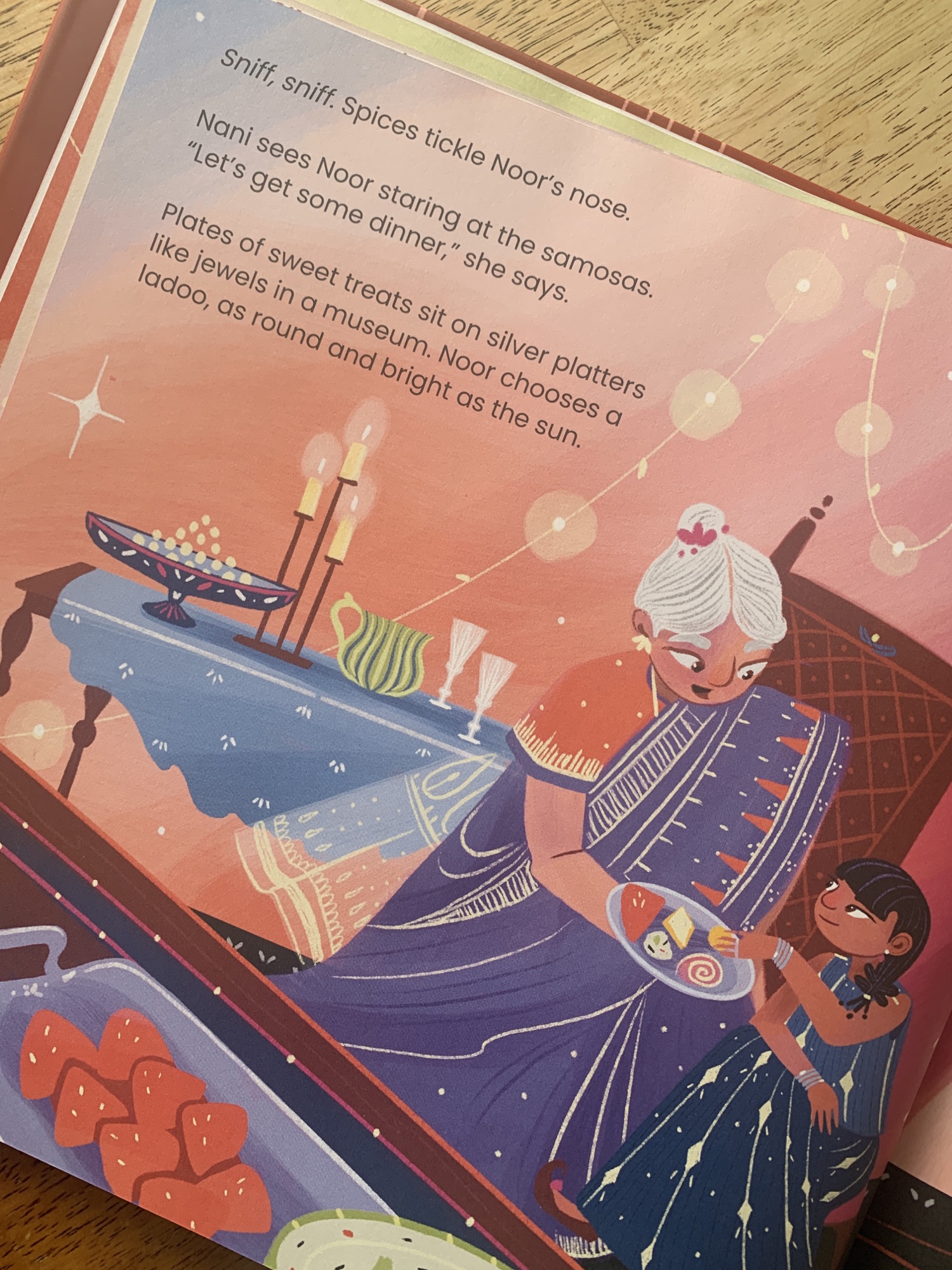
The page on food starts with spices, then talks of samosa and then they are eating ladoo, and while I’m glad there is not a glossary, I don’t know that the lacking context clues make any of those scrumptious foods known. I do like that her grandfather helped her pick out her lehenga, and her father is shown decorating to show full family involvement.

Ultimately, though I think the tricky thing about cultural weddings, is that every family has their own traditions, and while in a desi wedding some things might be widespread, when presenting them to readers outside your culture, it is hard to know how they will be perceived.  I almost feel like this book makes it seem that every family hides names in the mehndi as a staple of the festivities. And based on other reviews I’ve read, people seem to feel that this is insightful into the culture, or that hiding and finding names has more weight, a stress even, than just being fun.

img_3469-1

I could be over thinking it, but it feels like even the backmatter is trying to cast a wide net over every religion and culture that uses henna and ends up being oddly vague in this specific example.  Like I said the book is adequate, I like that the little protagonist Noor, loves so many people and solves her dilemma on her own, it has plot, and conflict and resolution, it just seems to lack the exciting tone and thus fails in immersing the reader into the henna party.

Under the Sana’a Skyline by Salwa Mawari illustrated by Mary Charara

Standard
Under the Sana’a Skyline by Salwa Mawari illustrated by Mary Charara

img_2034-1

For the last 100 days it seems the only time I truly smile is when I see images of Yemen standing with Palestine.  It is impressive, so very inspiring, and equally humbling as well.  Sadly, there are not many children’s books celebrating Yemeni culture, heritage and joy available to us in the west.  This book published in 2022 is set in the war, with memories of easier times peeking through.  When Belquis is assigned to write an inspirational story about Yemen for a global contest, she is at a loss of what to write about as she is surrounded by “bombings, fighting, blockades, loss, and poverty.” This 38 page picture book is text heavy, admittedly it isn’t particularly literary or memorable, but it shows a culture and traditions that need to be shared with our children.  The media and talking points dismiss the rich history of the countries we are attacking in attempts to dehumanize those affected.  This book does not get political or even name the sides in the conflict, it simple shows a girl and her sister rediscovering their city, their history, and their peoples’ kindness and generosity.  I hope more books about Yemen will enter the marketplace, and I pray for the bombings to stop.

img_2035-1

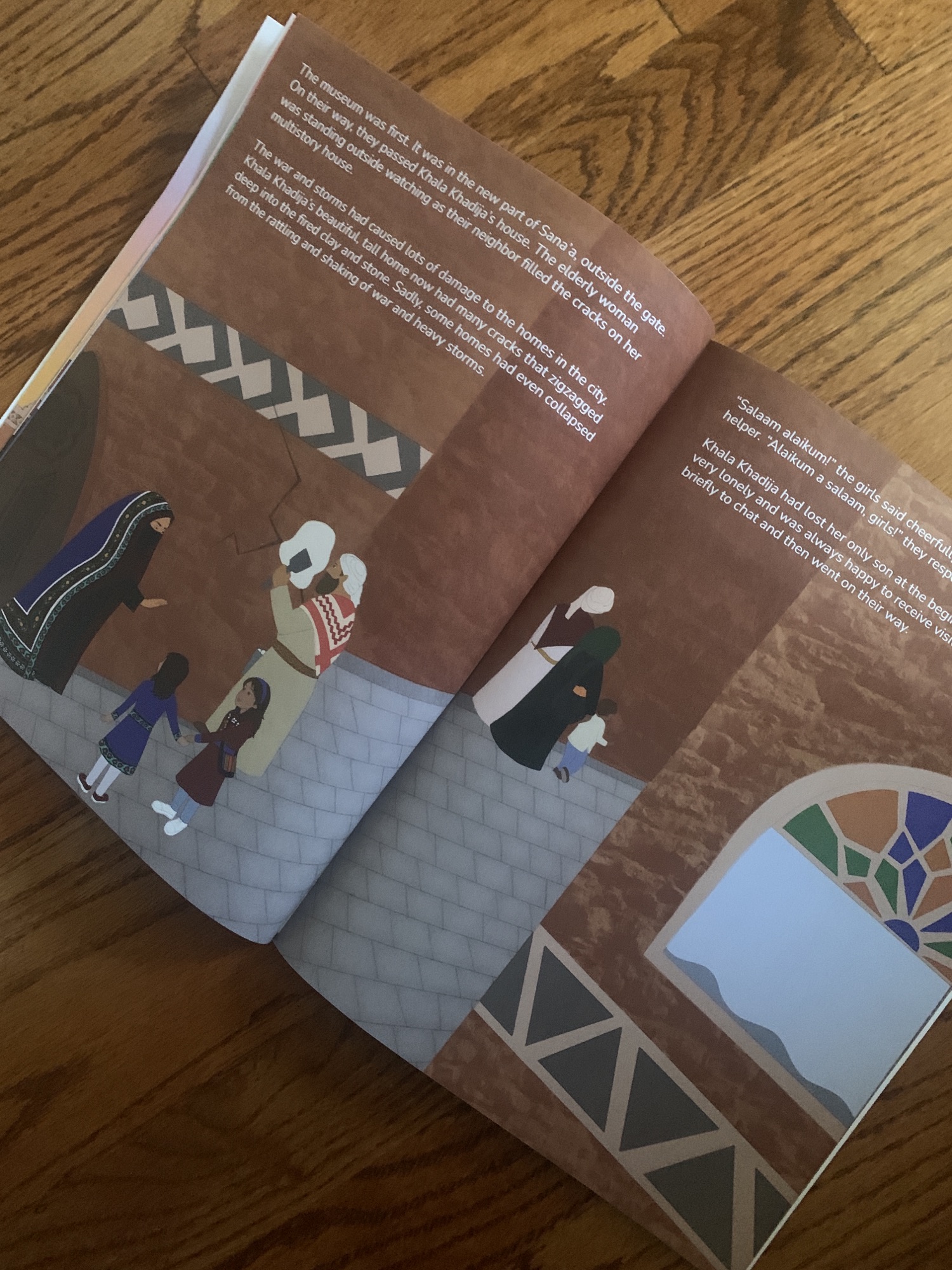
Set in Old Sana’a Belquis dreams of being a writer, but when assigned to write about something “inspirational” she is at a loss. Her geddah encourages her saying that “Some of the most inspirational stories arise from hardship.” Her father encourages her, and her younger sister Saba, to go to the roof and look out from a “bird’s-eye-view.” At maghrib time as they listen to the athan from the Great Mosque they look out at the 2,500 year old city and the qamariyat sparkling in the changing sunlight, but don’t feel inspired.

img_2036-1

Beliquis briefly laments the looming deadline and the lack of sabaya to eat, but decides to go story hunting by taking Saba and rediscovering their ancient city.  They pass Khala Khadija’s crumbling house as they head to the museum where they are reminded about the Queen of Sheba, Yemen’s original name Arabia Felix, and Queen Arwa.

img_2037-1

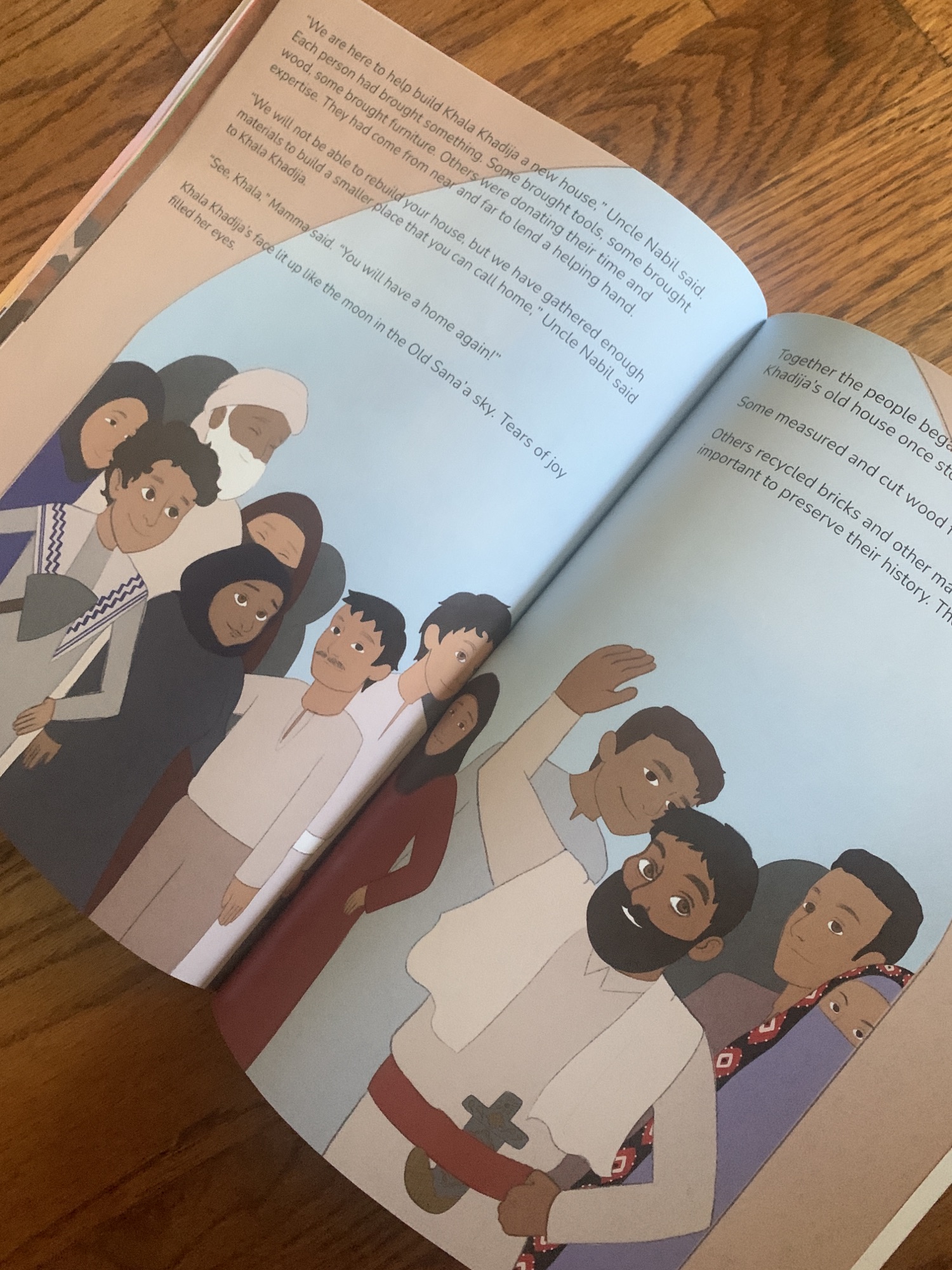
As they leave the museum and head to Souk al-Milh they pass lines of people looking for handouts of food and waiting in line for fuel. When the war started, the tourists stopped coming, so the girls are free to browse, and end up using their pocket money to buy bakhoor for their mother before heading back home.  Heavy hearts make them wish they had instead given that money to a hungry family, and when the cracks from the weather and bombs destroy Khala Khadija’s house completely, the girls, their family, and their entire neighborhood will show the inspiring generosity and spirit of the Yemeni people.

img_2038-1

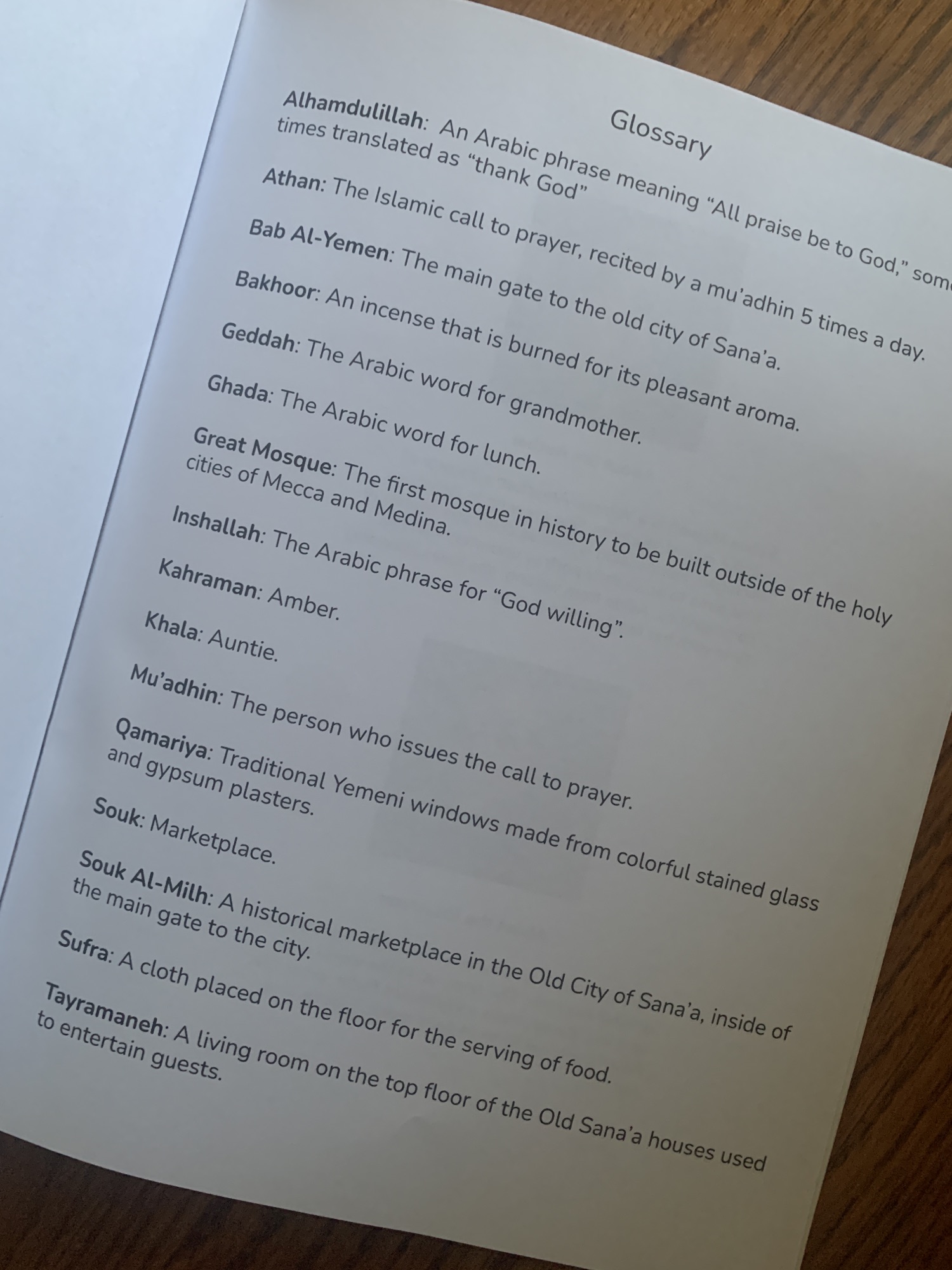
As always, with most every book I read,  I wish there was a map, and while there is a glossary, I wish there was a more robust backmatter section with actual photographs of the many places, foods, items mentioned in the story. This book is important, seek it out, urge your libraries to shelve it. Learn about Yemen, make duas for the people suffering, hurting, and standing up for the oppressed, ameen.

Three Holidays and a Wedding by Uzma Jalaluddin and Marissa Stapley

Standard
Three Holidays and a Wedding by Uzma Jalaluddin and Marissa Stapley

3 holidays

I don’t think I have ever sat down and watched a complete Hallmark Channel holiday movie, but I know the stereotypes and I’ve caught enough scenes while hanging out with my grandma to know that reality has to be suspended, there will be a happy ending, and the snow and small town charm is going to be laid on pretty heavy as the wholesome romance plays out.  This book is the literary equivalent of such a movie. So with that in mind, there are somethings I will concede can be overlooked, but religiously there are some things that need to be noted (see below).  I also have to admit that I couldn’t put the book down and read the entire 384 page Adult book in two sittings. The book is told in alternating perspectives: Maryam and Anna.  Maryam and her family are Muslim, the book takes place in 2000 when Ramadan/Eid, Christmas and Hanukkah all took place within days of each other.  Anna celebrates Christmas, but grew up celebrating Hanukkah too.  Even if a romance that has Muslims ok with adopting “Christmas-y” celebrations during the last ten nights of Ramadan no less. is not a book that appeals to you, it is worth noting that this book does an incredible job of not becoming performative.  There is no internalized Islamophobia, self-othering, no over explaining, convincing, justifying or religious or cultural identity crisis. For a book co authored by a Muslim and a non Muslim and traditionally published, I am excited for the precedence this book sets.

SYNOPSIS:

Anna is in a perfect relationship, with the perfect guy, and accidently sees the perfect ring in her boyfriend’s luggage.  With Christmas plans in Toronto to meet Nicks wealthy parents, it is clear that the perfect proposal is also going to happen.  But Anna is not perfect, and who she seems to be to Nick is not who she is or wants to be.  It feels so fake.  With separate flights from Denver to Toronto, getting redirected and stranded in Snow Falls, Ontario gives her the pause she needs to decide what she wants.  She meets Josh, someone in town visiting, which complicates things, and she sorts through her grief of loosing her father and the speed in which her ex step mother moved on, all why becoming good friends with Maryam and her family in this idyllic town that she doesn’t want to leave.

Maryam is the oldest daughter who shoulders the expectation so that her younger sister can live her best life.  She became a pharmacist to carry on the family business, so Saima could be a physician with Doctors Without Borders.  Now Saima has decided that she wants a wedding in Ramadan and Maryam has to plan it. The flight being diverted and the wedding party being stuck in Snow Falls has long ago crush Saif and Maryam sorting through their past and a possible future together.  

The two protagonists, their past, future, love interests are all multiplied by a town full of love and holiday activities, a wedding that might be missed, a Holiday Hoopla show, a movie being filmed, fasting in Ramadan, and wise old Dadu, a former Bollywood director guiding the characters to a happy ending.

WHY I LIKE IT:

The book is an easy read, it really is a guilty pleasure escape from reality and that it comes from a place of- we are Muslim, we fast, we pray, we don’t/shouldn’t date without marriage in mind, and everyone in the book already knows all this makes you feel ok about indulging.  It even has a thread of analyzing parental expectation and peeling back some of the assumptions regarding the disconnect worked in throughout the story.  

It took a few chapters for me to stop fighting and accept that the snow is so bad that the airport is closed, but every store, restaurant, and the roads in the town are open.  That the phones are out, no one has a charger, but the payphone works and food can be ordered and delivered.  That Anna is strolling around in a cocktail dress and can find a sweater, but she can’t find pants, and holiday gifts for everyone were not a problem to obtain.  The book notes the idyllic diversity and amazing payphone, but you really just have to let it go if you are to enjoy the book.

Some things I couldn’t let go though are the Islamic religious portrayals.  The characters note that a wedding in Ramadan is a terrible idea, but for as authentic as the waking up for suhoor and fajr are every day and iftar is every evening, the Muslim wedding party spend the last 10 days and nights of Ramadan watching Bollywood movies, dancing at a music filled mehndi party, planning and performing in an interfaith holiday show, and listening to Christmas music.  I know Ramadan staples of reading Quran, doing thikr, and praying, don’t fit the genre, but there are enough people to make jammat, one night it mentions they go to the musallah for taraweeh salat, but I really wish it was every night, and that more traditional Ramadan foundations were shared.  I did love that why Dadu couldn’t fast was explored, and that when Saima was stressed she went to the musallah, but really Bollywood marathons and parties in Ramadan are uncomfortable even in fiction.

FLAGS:

For Adults and New Adults the book is remarkably clean.  The romance is tame even for YA, the characters are all adults and it is more the Ramadan non worship and Christmas normalization that is more flag worthy to me if a Muslim teen were to read it, than the relationships.  So take what you will from the flags: Anna and Nick seem to live together at the beginning, Anna and Josh hold hands, kiss.  Maryam and Saif hold hands and hug.  Saima and Miraj hug.  There are some other hetero couples that kiss. Mention of Maryam’s prior relationship features her husbands infidelity, and Saif admits to having a girlfriend.  There are a few LGBTQ+ couples in the town that own stores and the inn, but don’t seem to be Muslim, and their relationships are not significant plot points.   Muslims joining in Christmas activities. Alcohol and a pub are mentioned, but Anna partakes, no Muslim characters.

TOOLS FOR LEADING THE DISCUSSION:

I don’t think I could do this as an Islamic school book club choice for middle or high school.  But I do want to gush about it with my Lit Sisters.  You can preorder it here https://amzn.to/3L7K9wQ
The Night Before Eid: A Muslim Family Story by Aya Khalil illustrated by Rashin Kheiriyeh

Standard
The Night Before Eid: A Muslim Family Story by Aya Khalil illustrated by Rashin Kheiriyeh

img_7123

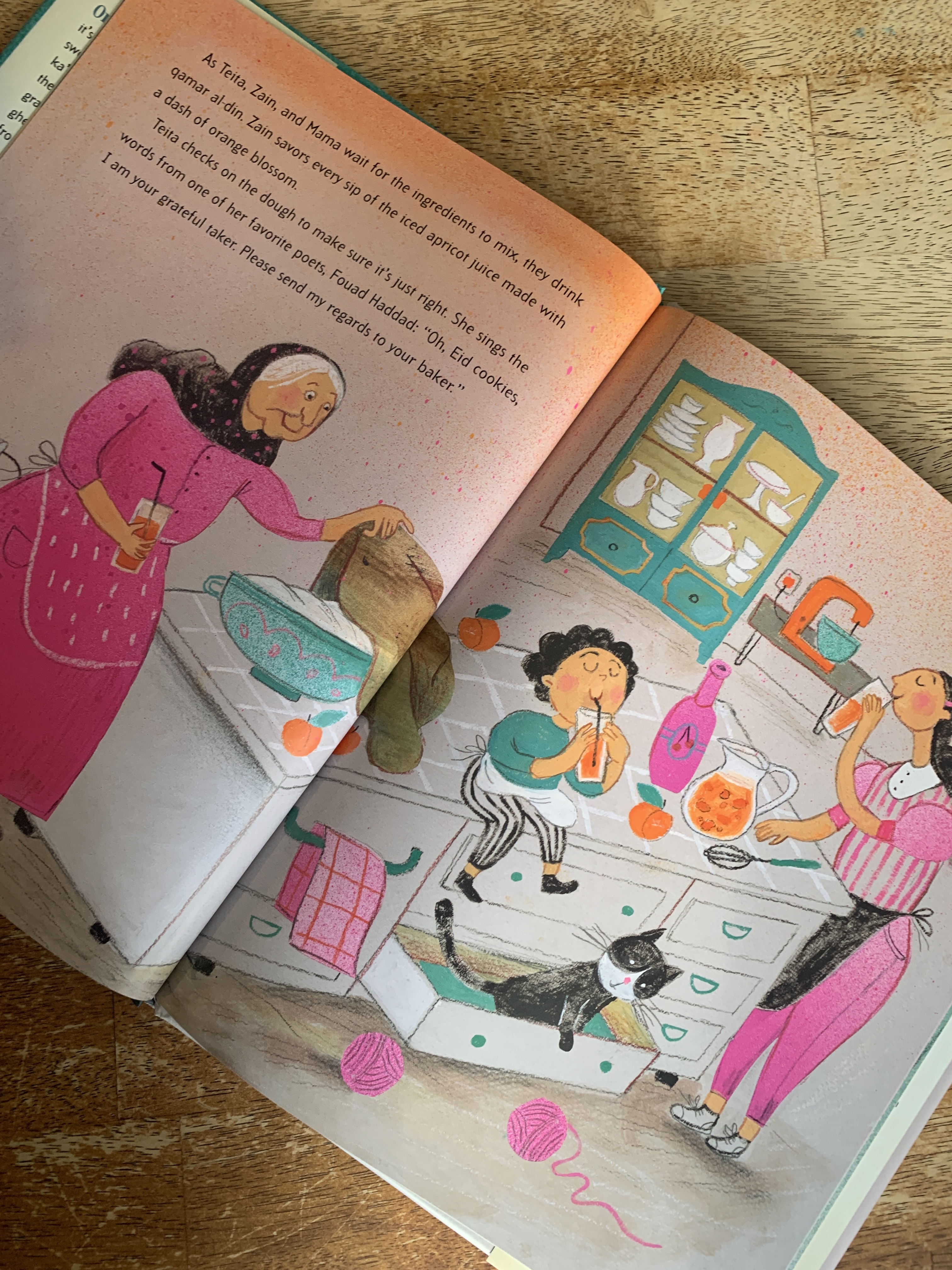
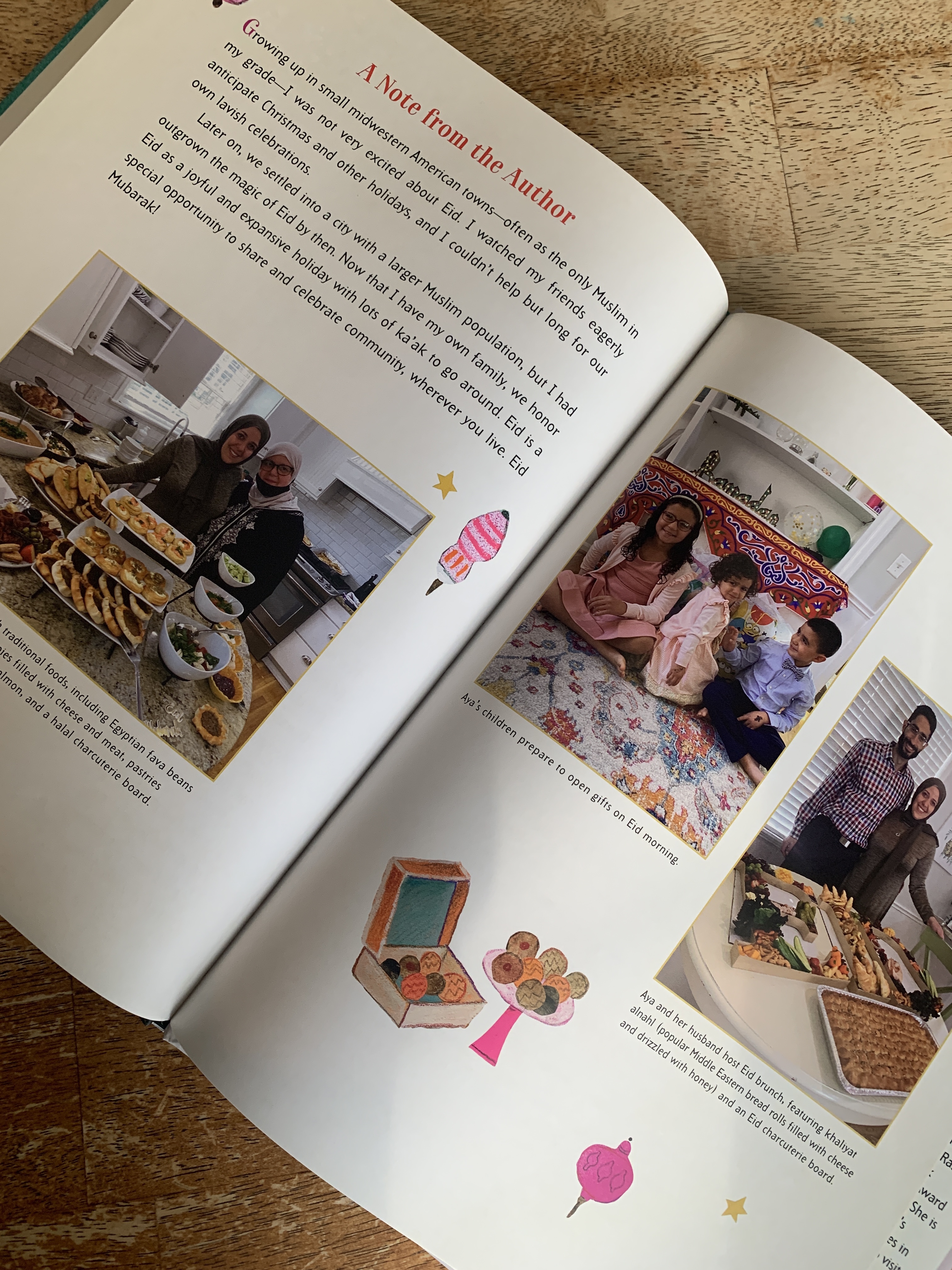
This 40 page early elementary picture book is set the night before Eid and radiates with love from a boy to his Teita, traditional ka’ak, and the family’s Egyptian culture.  The robust and personal backmatter shares a glimpse into the threads from the author’s real life that the story touches upon, and makes the book extend beyond the pages.  It is worth noting that this book does not articulate if it is for Eid al Fitr or Eid al Adha and thus works for both.   There is nothing religious in the book except a reference to something happening after Eid prayer in a memory, and the shape of the cookie being round like the Ramadan moon, Eid day is not mentioned, it is simply the catalyst for this warm family story about a boy and his grandma making a special treat for the first time and sharing it at school.  The large hardback book with fun illustrations is ideal for both story time and bedtime readings alike.

img_7124

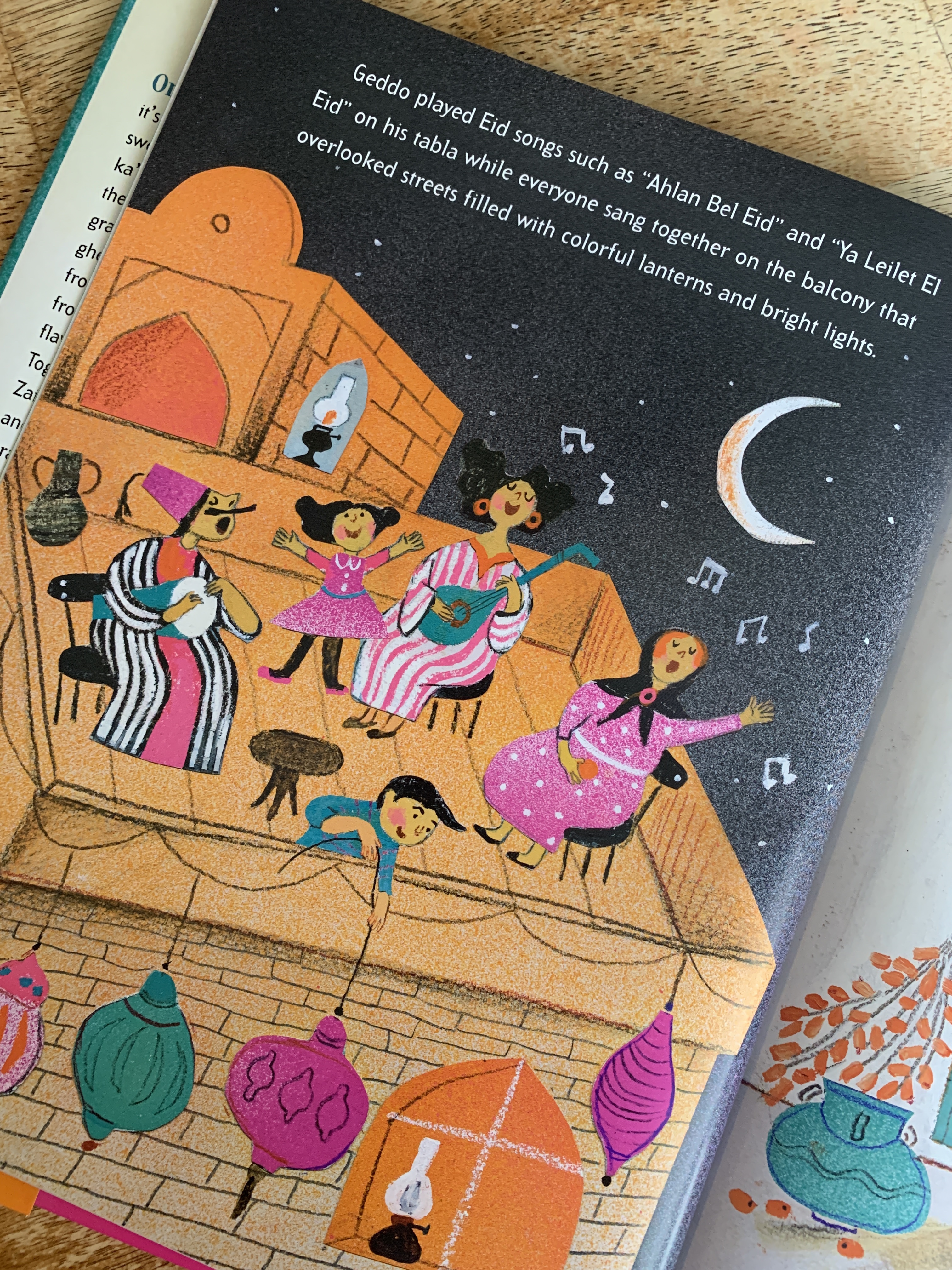
It is the night before Eid and Teita has arrived from Egypt.  Zain can’t wait to make ka’ak to take to school and share with his friends.  The beloved powdered sugar cookies are steeped in tradition, both in Zain’s family and in Egyptian history.  Once the suitcases is unpacked and the special ingredients found, Teita and Mama share memories of baking with cousins, painting henna designs on hands and putting eidiya in envelopes.  The family recalls singing together on the balcony while Geddo played the tabla and lights and lanterns filled the streets below, after Eid prayer they would hand out the ka’ak.

img_7125

Zain wants the ka’ak to turn out perfectly so his teacher and friends will like them.  Teita tells him that ka’ak is as old as the ancient pharaohs, and that recipes were found in the pyramids.  At one time rulers would even put gold coins in the cookies.  Zain and his Teita mix and add the required ingredients, and drink iced apricot juice as they wait for the dough to be just right.  Getting the cookies pressed with the molds though is harder than it looks, and Zain gets frustrated. Teita’s love and patience and Zain’s clever thinking get the treat making back on track.  The ka’ak doesn’t have a gold coin filling, but they are filled with tradition.

img_7126

The timeline is a bit off for me with the grandma coming before Eid and then the cookies going to school on Monday, and then Monday evening when Zain is writing down the recipe with Teita he is telling her Eid Mubarak and that it is the best Eid ever.  So, it seems that he went to school on Eid, not to Eid prayers, which is fine, just a little sad that there was no Eid celebration or prayers.  I don’t know that kids will be bothered by it, but the lack of mirroring and stressing how joyous Eid is does somehow get lost and mitigated, in my opinion, by skipping acknowledgement of the religious holiday.   In the backmatter the author remarks that she has “outgrown the magic of Eid,” so perhaps it is intentional that the day is not included in the text.

img_7127

The last six pages of the book are filled with informative and engaging information about What is Eid, Ka’ak Time Line, A Note from the Author with photographs of her and her family celebrating Eid, a Simple Ka’ak Recipe and Additional Resources.

I purchased my copy from Crescent Moon Store where if you put my initials ISL (Islamic School Librarian) in at checkout you will save 10% or is available here on Amazon where the book currently has a coupon for $3.80 off.

Mona’s Scrapbook Adventure by Nouha Deliou illustrated by Kadhima Tung

Standard
Mona’s Scrapbook Adventure by Nouha Deliou illustrated by Kadhima Tung

mona

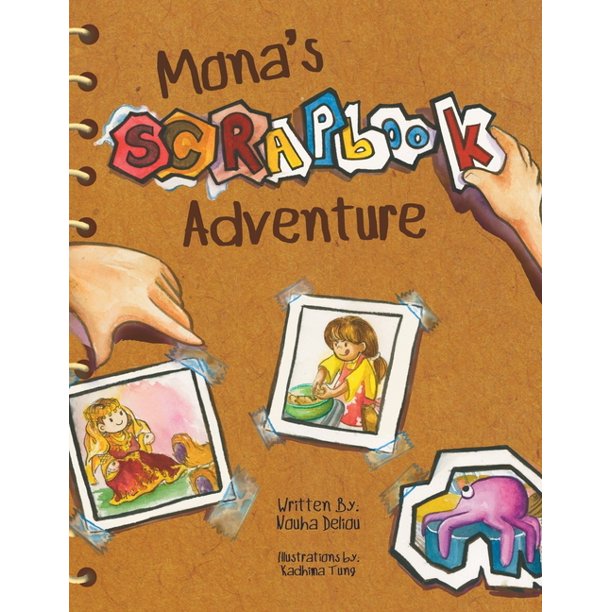
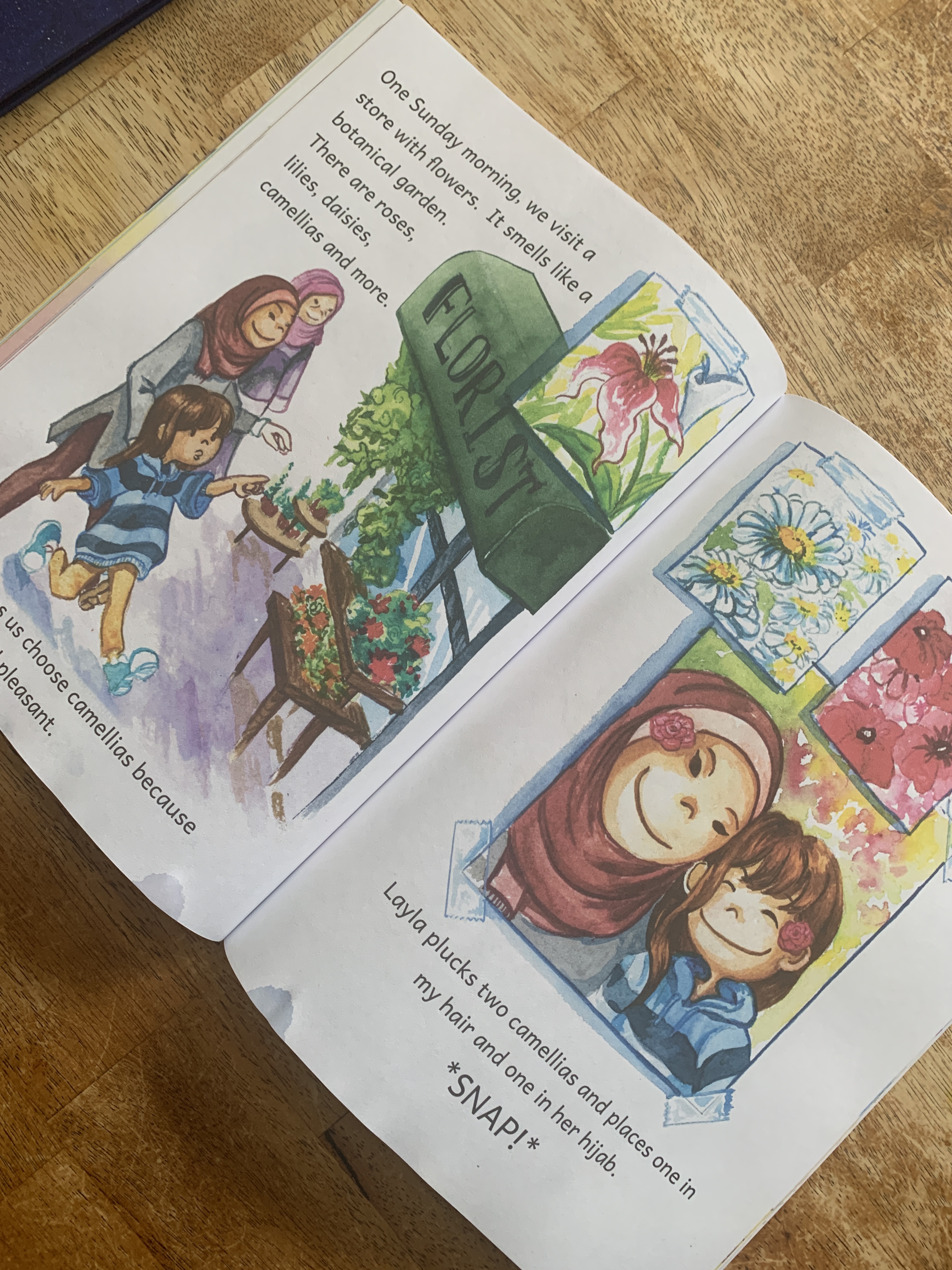
Algerian culture, as far as I’ve seen, is incredibly underrepresented in western literature and not represented at all in children’s books.  I love that this author, who felt the same- did something about it.  This 40 page colorful story incorporates Algerian traditions and culture with universal themes of sibling love, wedding excitement, and being sad about change.  The OWN voice warmth shows Muslim characters in America holding to traditions and making new ones.  The book is long, but is not text heavy.  For toddlers and preschoolers up to second grade, I can see readers enjoying the detailed descriptions of the dresses and foods, and feeling the feelings of little Mona as her beloved older sister prepares for her wedding and ultimately leaving with her husband.

img_2564

The book starts on the morning of the big day, Layla’s engagement.  Mama explains to Mona that the Imam will do the kitab and that her older sister is excited because she has known Ahmed since school and likes him a lot.  Once dressed Mona watches Layla get ready in traditional Algerian clothes.

img_2565

When Ahmed and his family arrive, he and Layla announce that after the wedding they will be moving from New York to Arizona.  Mona is devastated, as the women start to zaghreet in celebration. She wonders if she can go with them, but decides she can’t leave her parents.  Later that night, Layla and Mona chat and decide that Mona will help plan for the wedding and they will make a scrapbook.

img_2566

Over the next few months, clothes are bought, cakes are tasted, flowers are decided upon, and Arayech is made.  The night of the henna is fun, but then it is the wedding, and then time for Layla and Ahmed to go. Happy tears and promises to always be connected conclude the story before a scrapbook page for the readers is revealed to make their own designs.  That is followed by a glossary, and information about the author and illustrator.

img_2567

I love the detail about the different cultural and regional Algerian dresses in the illustrations, the Algerian traditions shared through the text, and the connection between the two sisters. The book is available in hard back or paper back and I got mine from Crescent Moon Store  

https://crescentmoonstore.com/products/monas-scrapbook-adventure?sca_ref=1601585.fIPhoqtScY

Wiil Waal: A Somali Folktale retold by Kathleen Moriarty illustrated by Amin Amir and Somali translation by Jamal Adam

Standard
Wiil Waal: A Somali Folktale retold by Kathleen Moriarty illustrated by Amin Amir and Somali translation by Jamal Adam

wiil

This bilingual (English and Somali) book tells the folktale of a wise leader challenging the men in his province with a riddle, and it being solved by a poor farmer’s eldest daughter.  Based on a real Sultan from the mid 19th century, the book does not claim the story to be true, and leaves it up to the reader to form their own impression.  The lesson however, is rich with culture, insight, charm, and perhaps surprise.  There is no Islam present or hinted at, but the illustrator’s and translator’s names suggest that they are Muslim as the majority of Somali’s are, and the picture at the back of the book of members of the Somali Book Project show multiple females in hijab- so I’m sharing it on my platform to inshaAllah encourage often rarely seen, in western literature, cultures and traditions to be brought to more peoples’ attention.

The book starts with an author’s note explaining the tradition in East Africa of having a nickname and that Wiil Waal was the naanay of Garad Farah Garad Hirsi, a man who was a sultan for a brief time.  He was known to be a great leader who was brave, and clever, and used riddles to unite people.  Like all folktales though, this doesn’t claim to be a true story, but one filled with wisdom.

img_6966

Long ago Wiil Waal set forth a riddle, “bring me part of one of your sheep.  The sheep’s part should symbolize what can divide people or unite them as one.”  The one who can do so will be honored as a wise man.

img_6968

The men pick different parts to bring to the sultan with little success:  a rib, a liver, a shoulder of meat.  In a distant province a poor farmer who had few sheep and many children half heartedly prepared to slaughter his finest animal to present to Wiil Waal.  His oldest daughter comes to help him, and he tells her the riddle.  They work through it, and she thinks she is certain she knows the answer.

img_6969

Trusting his daughter the farmer presents the sultan with what his daughter recommended.  Quick to see that the farmer is not confident, he asks who solved the riddle and the story of the daughter’s intelligence is conveyed.

The book ends hinting that she is a future leader of Somalia.  And no, I’m not going to tell you the answer.  Go read the book!

img_6972