Tag Archives: Toddler

Ramadan Mubarak by Saniyasnain Khan

Standard
Ramadan Mubarak by Saniyasnain Khan

img_6800

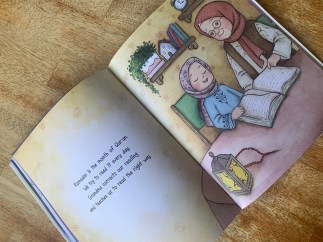
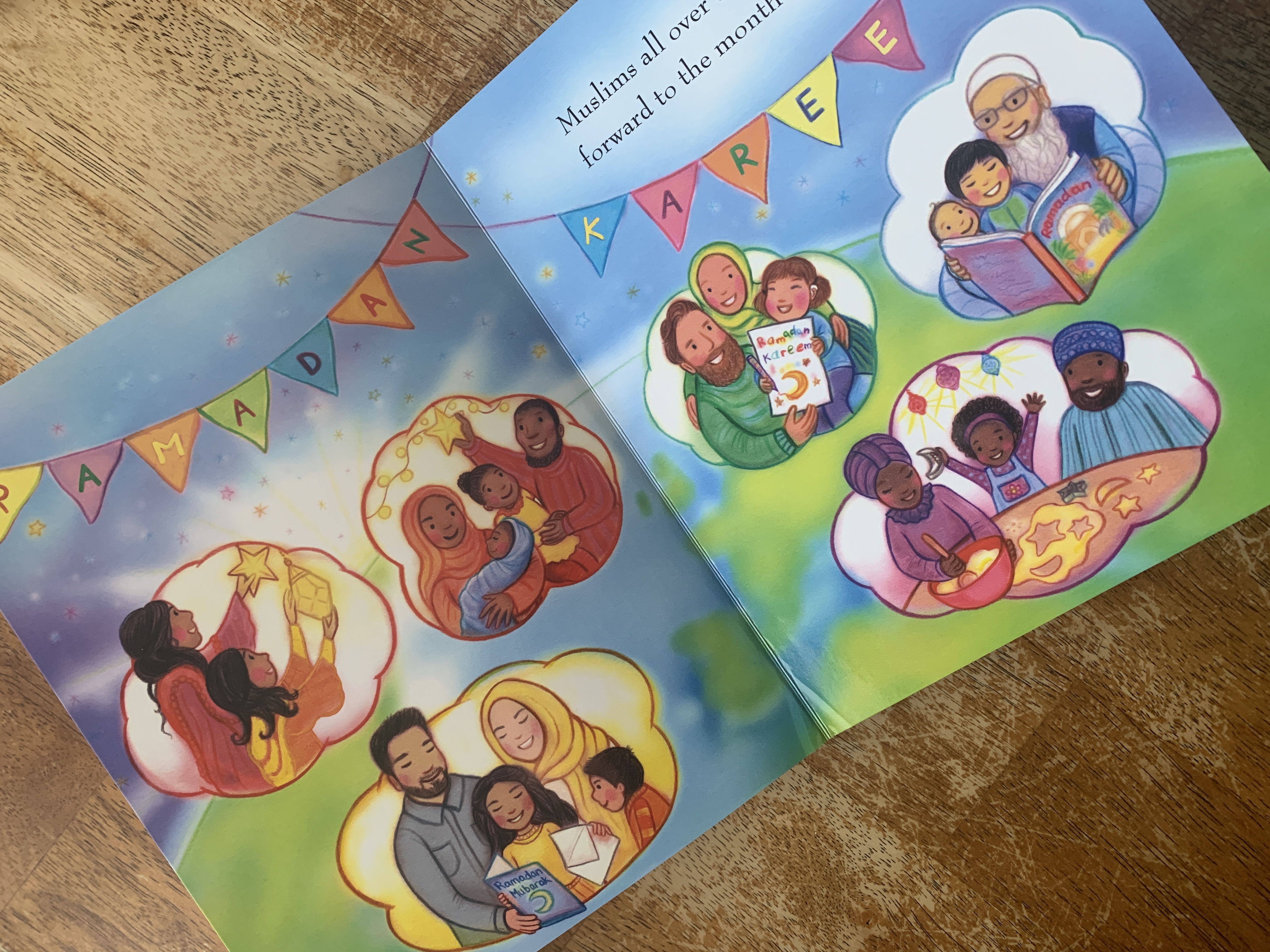
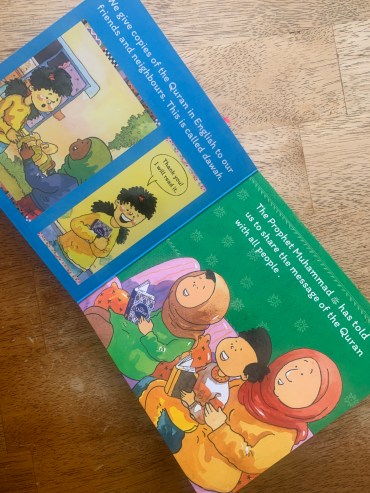
I don’t know how I missed this board book from 2020, possibly because I have the old school original Goodword one I didn’t think to acquire this one, but now that I have it, I’ll share my thoughts.  The illustrations are the same as the original, with a few placement rearranging and color changes, but the text (unfortunately) is completely different and the binding is now a small 5×5 22 page board book.  The book is all over the place with what is included about Ramadan, there is no story, and at times the vocabulary is definitely too advanced for little listeners.  Honestly, the book is great for little hands to carry around and for parents to point out important parts about Ramadan in the illustrations to talk to toddlers and preschoolers about, but the text is really hit and miss.  As my mom, a veteran preschool and ESL teacher would say, “don’t read the story, tell the story.”  I don’t regret buying it, but I doubt I’ll ever read it cover to cover as written to my three year old, he doesn’t grasp the need to hand out Qurans in English to our friends and neighbors, but he benefits from the page before saying that “Ramadan is the month of the Quran” and seeing the smiling Muslim faces praying, caring for others, and praising Allah swt.
img_6802

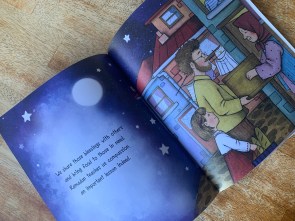
The book starts with Ramadan starting and bringing joy and happiness as it fills our hearts with peace and love for Allah.  It states we fast from dawn to dusk which makes us hungry and thirsty, but that these feelings “remind us that food and water are great blessings from Allah.”  I love this point about remembering our blessings from Allah, and that it then mentions shukr, and being thankful.  It then says that Ramadan is the month of the Quran and that we read it and need to apply it in our lives.
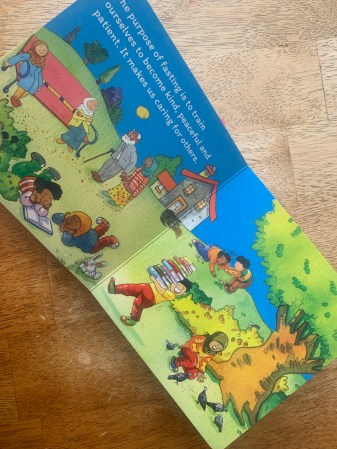
img_6803

I don’t understand the dawah page, and I wish the following page with a hadith was sourced.  It then returns to the purpose of fasting, this time saying we do it to “train ourselves to be kind, peaceful, and patient.  It makes us caring for others.”  These are great lessons to come from fasting, but we fast because Allah swt prescribed it for us.

img_6804

The book stays on this theme of fasting reminding us about the poor and needy and encouraging us to feed and help them, but doesn’t mention zakat or charity by name.  It then defines taqwa and says fasting helps develop it before spending four pages on Lailatul Qadr, using phrases such as “Night of Destiny,” “innumerable angels” which might need some explanation, and taraweeh was never mentioned.

img_6801

The book concludes with Ramadan ending and Eid al Fitr being celebrated. Goodword seems to recycle and update parts of books every so often, and I hope they will tweak this book to be a better fit for toddlers and preschool aged readers.  Board books are important, the illustrations fun, but the text needs some attention to truly make the book a staple in Muslim homes.

I purchased mine here from Crescent Moon Store if you use my initials ISL (Islamic School Librarian) you can save 10%. Happy Ramadan.

Ramadan Nights by Jenny Molendyk Divleli illustrated by Halime Nur Sevim

Standard
Ramadan Nights by Jenny Molendyk Divleli illustrated by Halime Nur Sevim

img_6768

This rhyming softcover picture book sets the tone of the month with its large heartfelt images on cardstock thick pages.  The book mentions tarawih, reading Quran, suhoor, iftar, compassion, Laylatul Qadr, eid, but does so in a way that reflects what Muslim kids know and love about the month.  It is not overly descriptive, nor does it define the terms. It shows Muslim kids in Ramadan living their lives and draws out the emotional joy felt in acts of ibadah, not in the gifts and parties alone.  The rhyme works and isn’t terribly forced and the 8.5 by 11 size and the introductory framing of major Ramadan activities makes the book a good addition for toddlers and up. I plan to use this for a masjid story time for Muslim kids ages 4-9, but it can be used in non Muslim settings easily as well.

img_6770

The book starts out with decorating the home for Ramadan, as the city decorates outside too.  Ramadan has arrived, the moon has been seen with binoculars, and Tarawih at the mosque is where everyone is praying, and kids are playing.  Mornings start with the Ramadan drummer waking people up for suhoor, but mom is already up cooking.  The first few days of fasting are hard waiting for iftar, implying it gets easier.

img_6771

The kids and their parents make duas and thank Allah for their blessings as well as share their blessings with neighbors as they learn compassion.  The kids practice reading Qur’an every day with Grandma and before you know it, it is the last ten nights and Laylatul Qadr and then eid, alhumdulillah.  The 32 page book ends with prayers of gratitude and hope that Ramadan will be seen again.

img_6773

The book really is well done, there is no plot or story, but it introduces the month to little ones, reminds older ones what to expect and does so with accuracy and mirroring.  The book will lend itself to spark discussions about what a readers’ family can look forward to in the month, how one should behave in a masjid, perhaps some Quran goals and some appreciation for parents.  The poor mom helps decorate, stays up early to cook suhoor, cooks yummy iftar, and lays out Eid clothes all while wearing hijab.  InshaAllah a point to mention when reading how amazing moms (and dads) are in making Ramadan memories while fasting themselves.

img_6772

I purchased mine from https://crescentmoonstore.com/ if you use my initials at checkout ISL (Islamic School Librarian) you can save 10% or click this link directly to go to the book.

Ramadan Mubarak!

Baby’s First Series: Bismillah by Marwa Ahmed illustrated by Natalia Scabuso

Standard
Baby’s First Series: Bismillah by Marwa Ahmed illustrated by Natalia Scabuso

bismillah

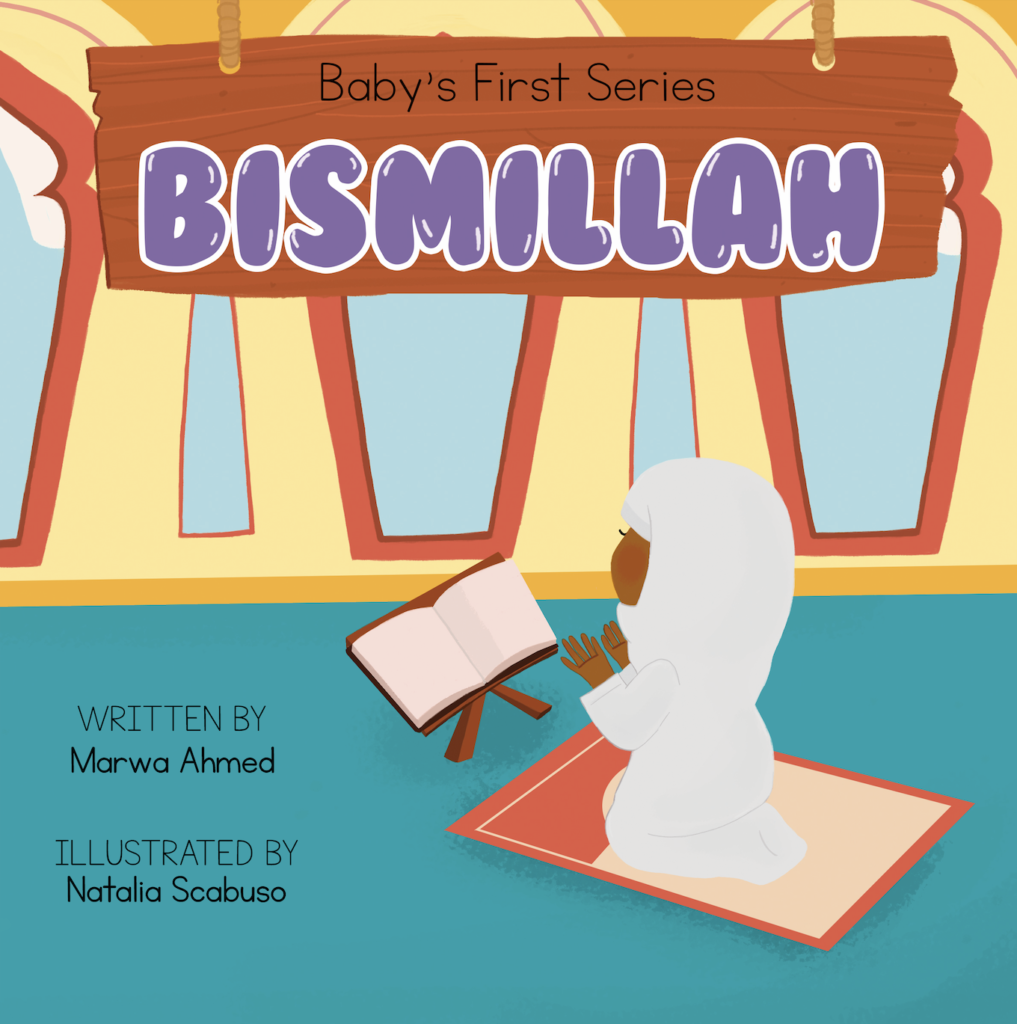
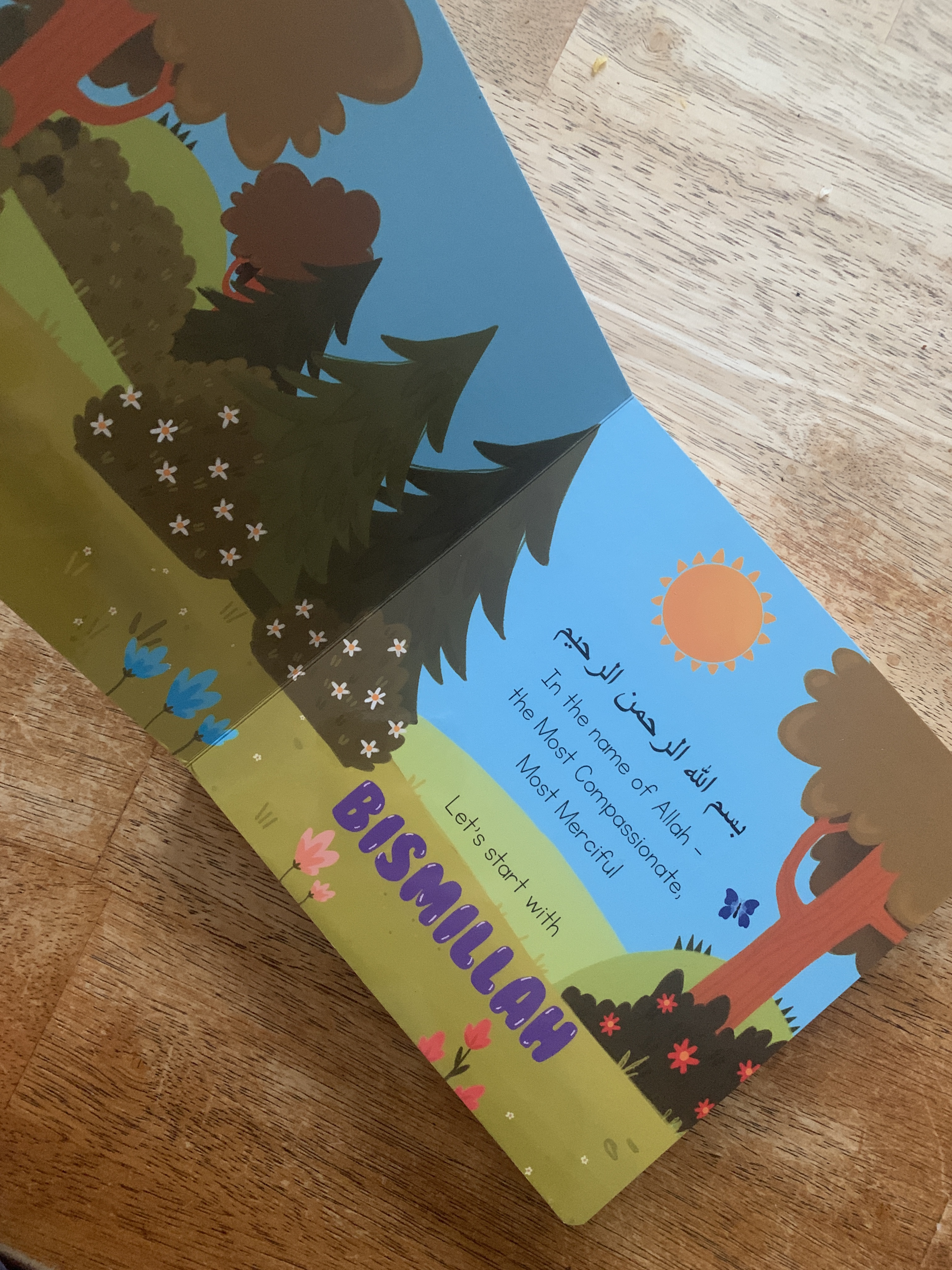
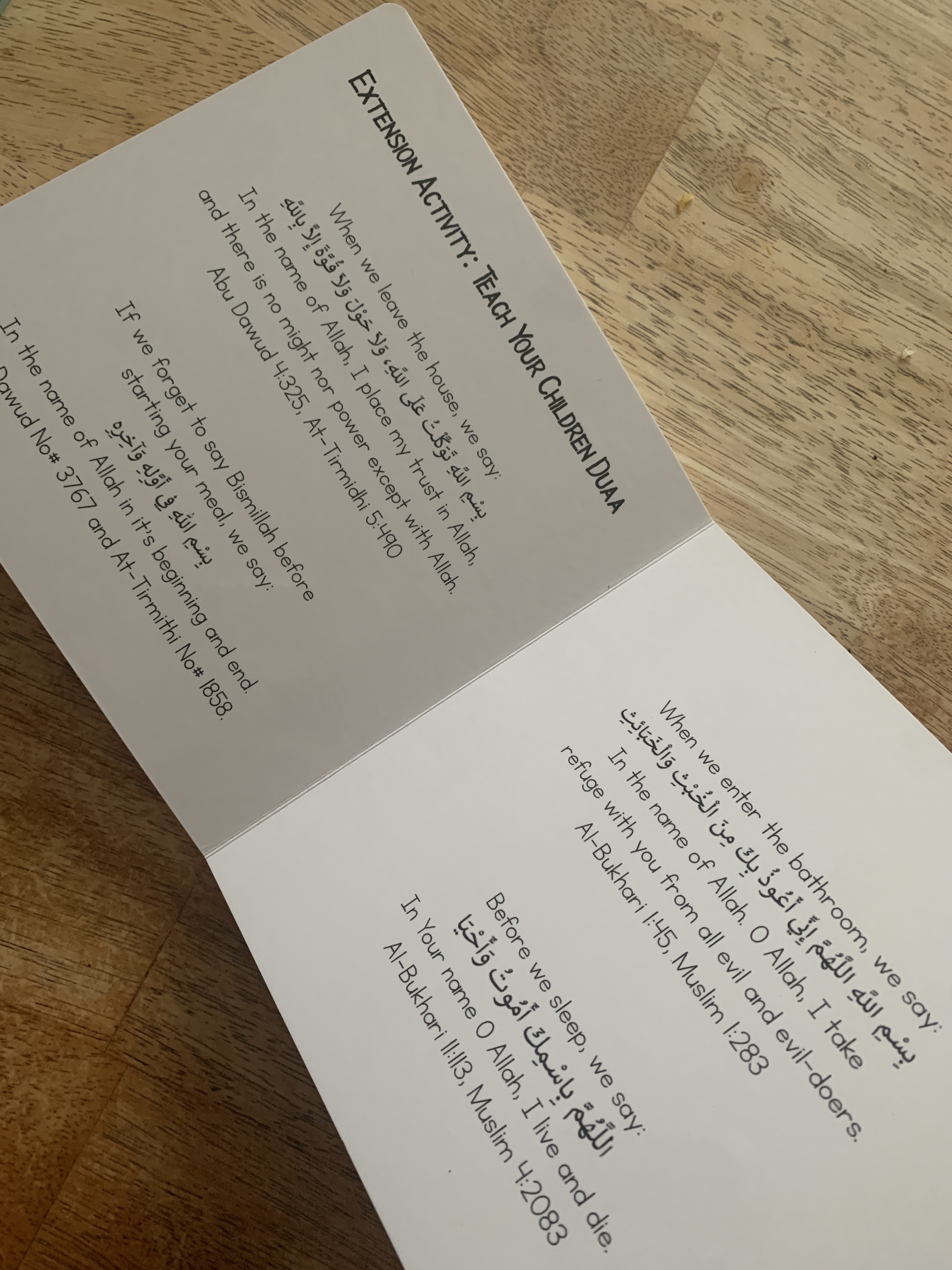
Every few years a new Bismillah board book comes out and while after a while they all blur together, this new 2022 version is bright and colorful and at 24 pages a good length to show and teach toddlers when to say Bismillah without boring them.  At this age repetition is key, so while there is no real story, the book highlights familiar activities through the character Maryam and stresses saying Bismillah before you begin them. The book concludes with sourced duas to say when leaving the house, starting a meal, entering a bathroom, and before sleeping, and every morning and evening. I do wish the book would have clearly established that you say Bismillah, before starting anything and everything.  It hints at it at the end saying, “throughout the day, remember to say Bismillah,” but I worry that some kids would take it more literal, that you only say it at the times mentioned in the book, and not that the featured scenarios are just examples.  

img_4954

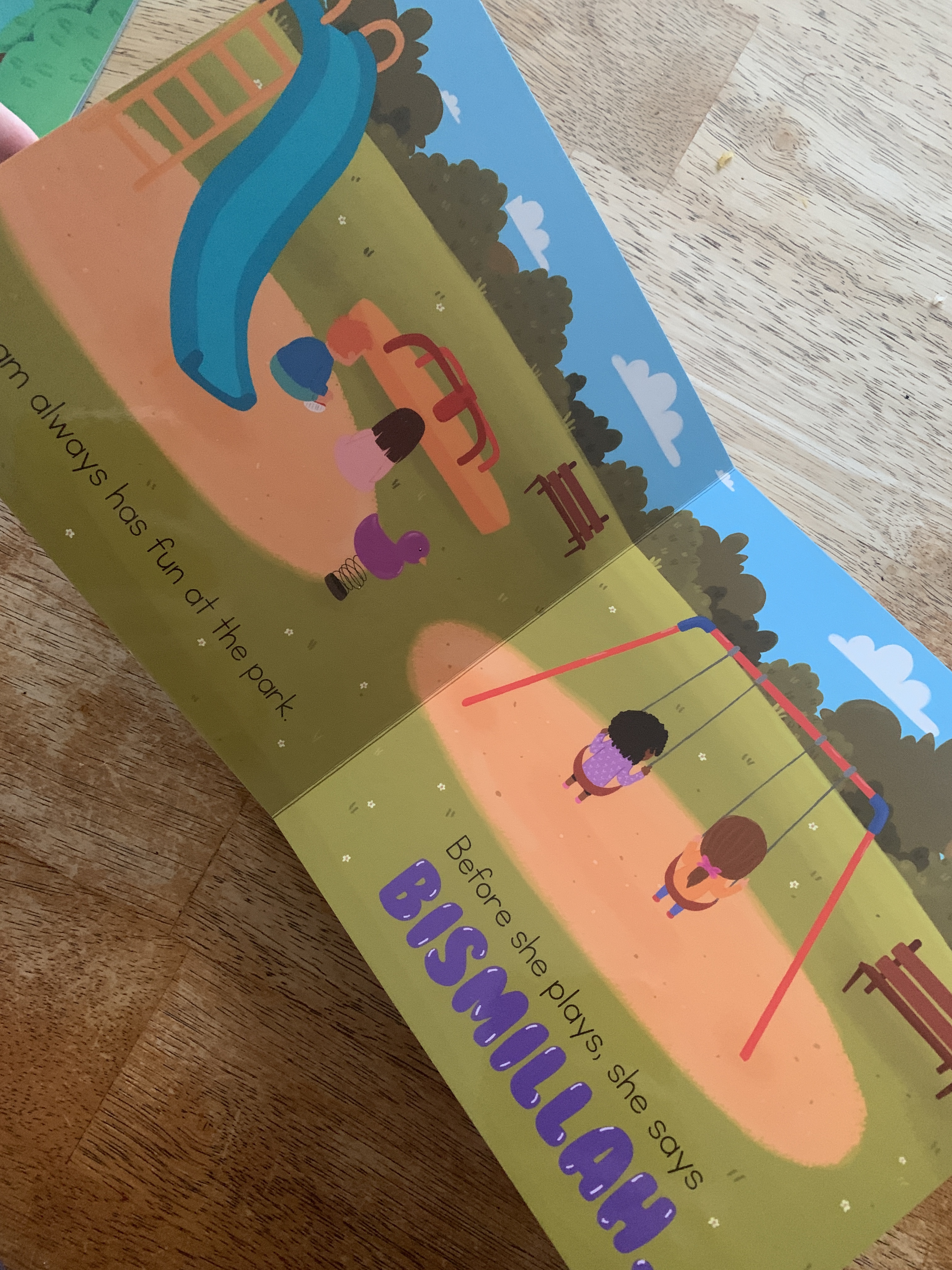
The book begins with Bismillah in Arabic text and the translation before starting the format of Maryam doing something on the left page spread and the saying of Bismillah on the right. So, “Maryam likes taking walks with her day,  When they leave, they say Bismillah.” In this manner Maryam takes the readers to play at the park, eat a meal with vegetables, drink a drink after her meal, read a book, wash before prayer, and get ready for bed.

img_4955

The faces of Maryam and other people are never shown, the stuffed animals in her room do not have eyes, although the duck bouncy seat at the park does.  The illustrations are blocky and colorful with the text clear and large.  The duas at the end tell when to say the dua, the dua in Arabic, the translation in English, and the source.

img_4956

For where to purchase the book you can visit the publisher’s website: www.litfancyhouse.com

img_4957

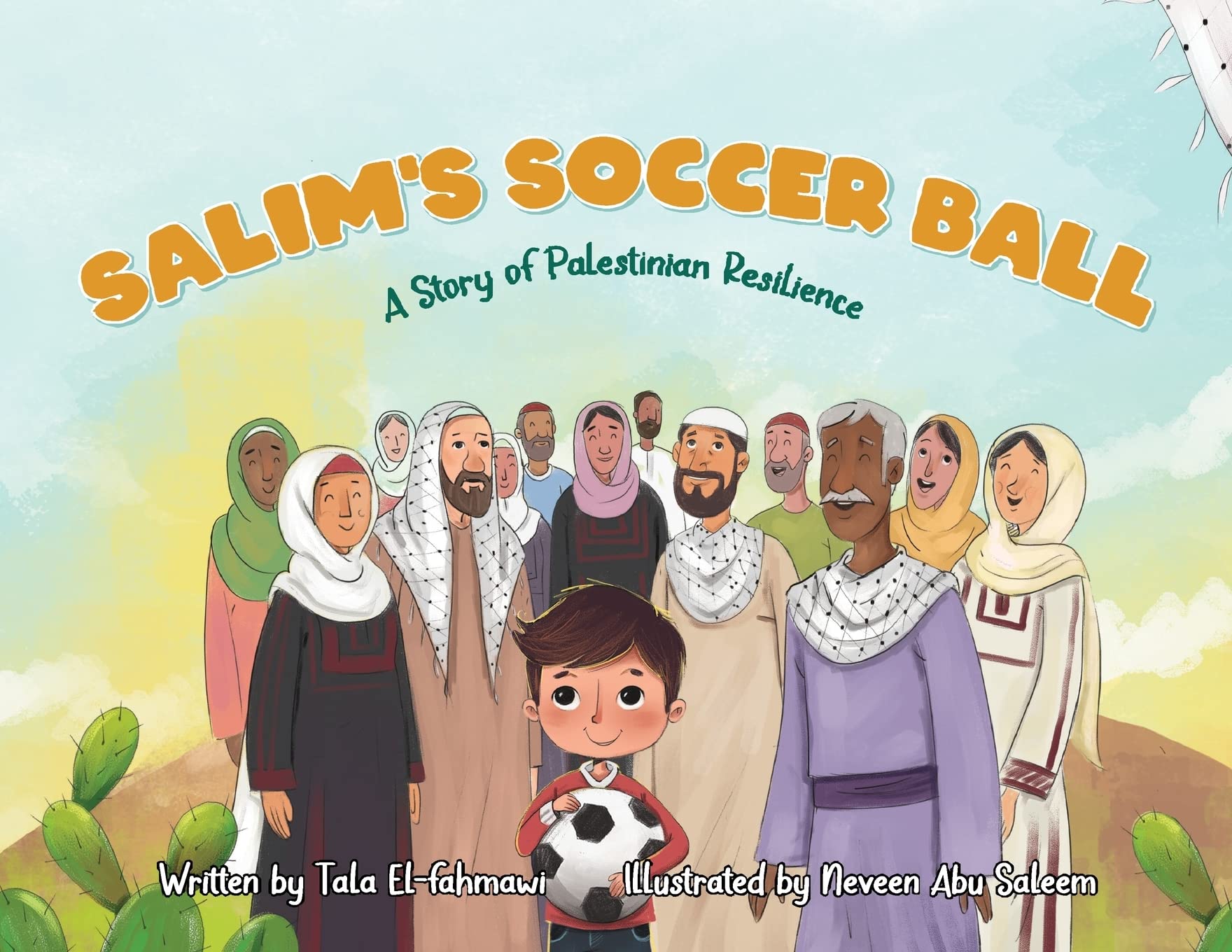
Salim’s Soccer Ball: A Story of Palestinian Resilience by Tala El-fahmawi illustrated by Naveen Abu Saleem

Standard
Salim’s Soccer Ball: A Story of Palestinian Resilience by Tala El-fahmawi illustrated by Naveen Abu Saleem

salim

This 58 page rhyming picture book weaves together a tale of a little boy and his lost soccer ball, with larger issues of community, oppression, and perspective for the youngest of readers to older children too.  I am noted to be skeptical of rhyming books, but the large font, the sweeping pictures, and the dropping of occupation, struggle, and resilience really make this book a treat. Add in discussion questions and an author’s note and you have a solid book that deserves space on home, library, and classroom shelves.  My only wish, was that the book was hardback.  The horizontal layout with a soft cover make the book difficult to read during story times as the pages flop back.  The book is long, but the text on most spreads is minimal and while I could not identify the author’s religious identity, their are numerous hijab wearing #muslimsintheillustrations as Salim journey’s around his neighborhood and into his grand father’s memories.

Salim wakes up, brushes his teeth, and is out the door to play soccer with his best friend Qusai, but the ball goes flying and Salim can’t find it. He starts walking down the hill and it seems to have disappeared.

img_5055

He asks the fisherman, Abu Zaid, if he has seen it, and he hasn’t, but he offers to help.  They then go and ask the seamstress, she hasn’t either, but she puts down her tatreez, offers reassurance, and offers to help.  As they head out they bump in to Dr. Bassam.  “‘I will help you look,’ the kindly man said. “I can fix broken bones with very few supplies.  A lack of resources has made me clever and wise. Resilience and courage are plentiful here. We will find your ball. Salim, no need to fear.'”

img_5054

The searching continues, with a small break for khanfeh, and then Qusai is found, and so is the ball.  Like so many joyful items, the barbed wire of the apartheid wall has destroyed the soccer ball. Upset, Abu Omar, calls out to Salim, and his grandpa embraces and consoles the young boy recalling a donkey with wonky ears and life on the farm.  With resilience and joy Salim heads home to a community surprise and a hopeful future inshaAllah.

img_5053

The book concludes with five discussion questions that connect Salim’s experience to universal experiences of people everywhere.  It is followed by factual and personal author’s note about Palestine and the book.  

img_5056

There is nothing religious aside from the hijabs worn, Dome of the Rock, Masjid al Aqsa, and Church of The Holy Sepulcher in the backgrounds of a few images.  I purchased my copy from Amazon HERE and can also be purchased through Shop Palestine HERE.

img_5057


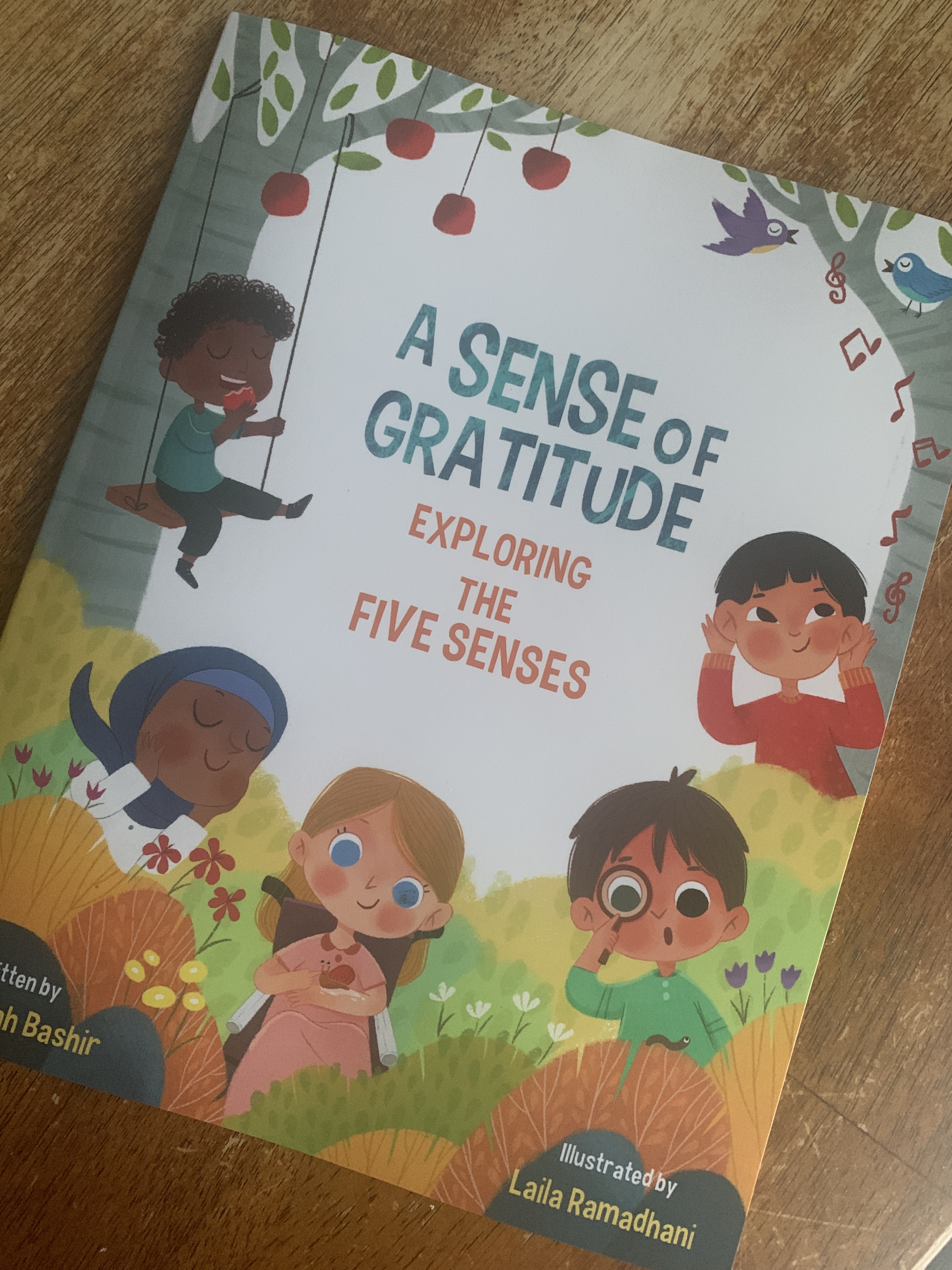
A Sense of Gratitude: Exploring the Five Senses by Halimah Bashir illustrated by Laila Ramadhani

Standard
A Sense of Gratitude: Exploring the Five Senses by Halimah Bashir illustrated by Laila Ramadhani

img_4855

As a story time host for littles, you always need books about the five senses.  Additionally as a story reader at an Islamic school, thanking Allah swt while talking about your senses and the world around us is a staple year after year.  So purchasing this book with large adorable pictures and claims of rhyme was an easy decision to make, and while it will get used, sigh, the rhyme and lacking rhythm is terrible.  There’s also frequent illogical sentence structures and a bizarre tangent- two pages on wafting.  The book is for toddlers through kindergarteners, not kids learning experiment safety protocols.  @muslimkidsbooknook did a wonderful Instagram post regarding rhyme in kid’s books, and this book really would have benefitted from some additional editing and outside eyes reading the book aloud repeatedly.  That being said, the book will still be used and will be enjoyed with real time editing.  A positive about the book, in addition to the illustrations, is Allah (swt) in Arabic script.  But overall, it really could have, and should have been so much better.

The book starts with a note to grown ups reminding them to stress the importance of being grateful and exploring God’s creation.  It starts with what eyes can be used for, stressing the beauty in nature. and moves to the nose, and has the pages on wafting chemicals, enjoying baked goods, and saying please pardon when passing bad smells.

Tongue is next and stresses that sweets are not nutritious, and then assumes that veggies and fruits are unliked by children, but the narrator admits that they enjoy consuming them.  Hands and skin- touch and feel, and also convey love.  As an FYI- the text states and illustrations show kids petting a dog. The final sense of ears and the gift of hearing wraps up the book.

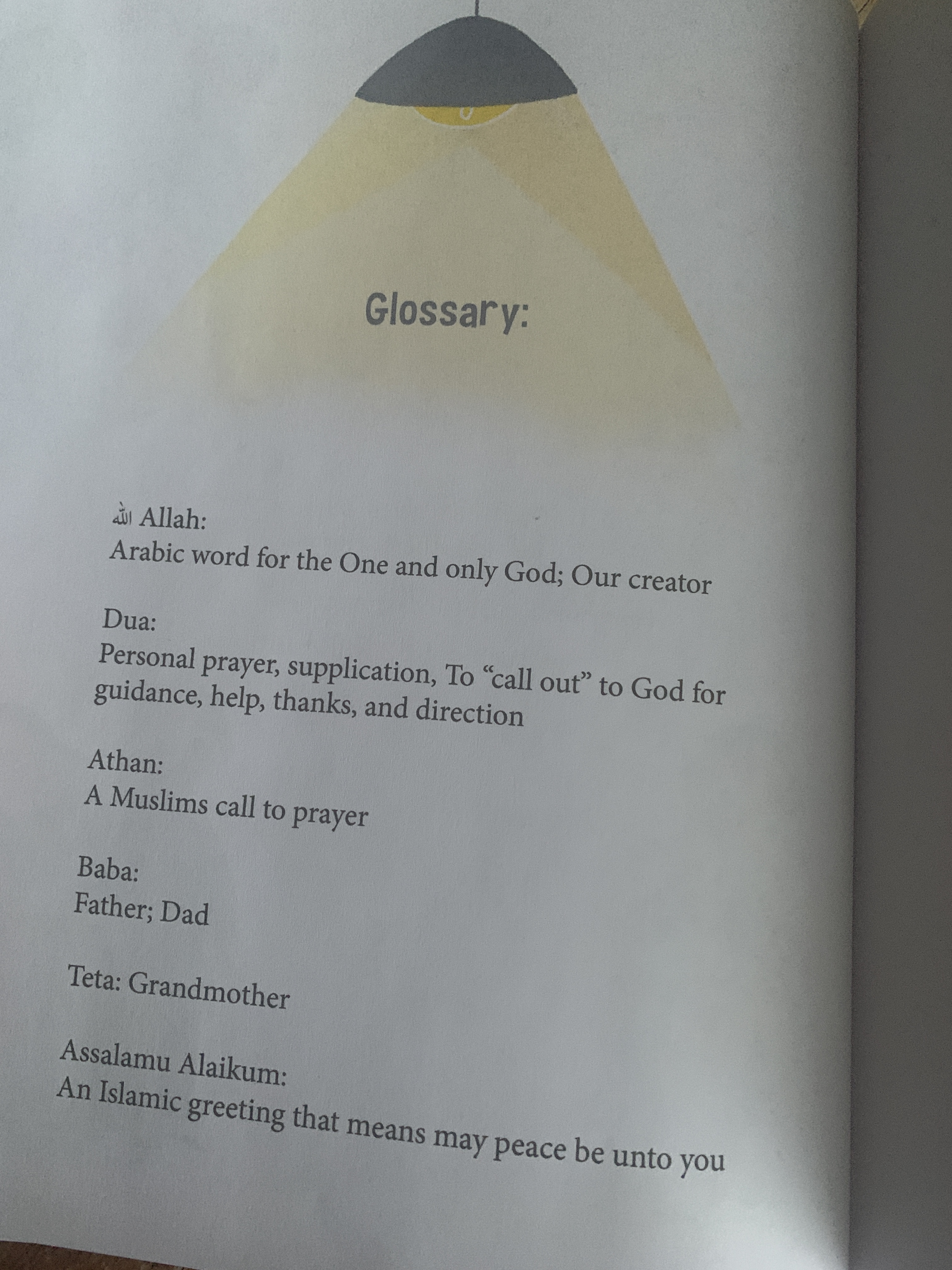
I’m terrible at grammar, really bad, but even I know not to say “colors like purple,” it should be colors “such as” purple, not “smells like Teta’s baked cookies,” but smells “such as” Teta’s baked cookies.  The formatting on a spread seems off as well with “Like slimy frogs” being under a a two line refrain and the rest of the sentence, “and hairy dogs…” being on the next page with another line and a half, it throws you off when reading aloud to keep some rhyme and rhythm going, every. single. time. On some pages the chopping of normal speech structure to make the “rhyme” is difficult to understand, and I don’t think the glossary, nor putting (God) in English was particularly necessary.

My favorite pages are when they tie directly back to ibadah and Islam, hearing the athan, using your hands to make dua and the little rhyme that starts and concludes the book. Truly the concept makes the book important on a shelf and the illustrations make it attractive, the text needs some editing.

img_4866

Egypt by Aya Khalil illustrated by Magda Azab

Standard
Egypt by Aya Khalil illustrated by Magda Azab

egypt

This sweet board book is part of a series, the other two books are Japan and France, releasing in October.  All are brightly illustrated, 20 page books for ages zero to four and take the littlest of readers into a country, through sights, experiences, foods and language.  This particular book does not feature any visible #muslimsintheillustrations but the author is Muslim, and so I am reviewing and sharing it here.

egypt5

The framing of the book is a day in the life of a little girl, who wakes up with bosas from her mama and baba and greetings of Ahlan.  Some of the words are written in Arabic script with the English transliteration and pronunciation provided, other times it is just the English transliteration of the Arabic with the pronunciation asterisked and written smaller immediately below the text.

egypt3

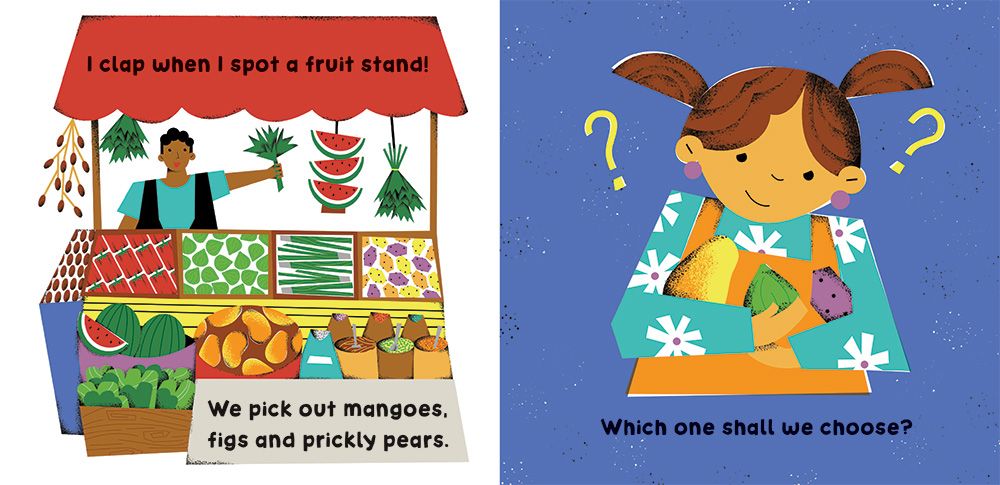
Once she is awake, she gets dressed, brushes her teeth and is off with her baba to buy pita and ful.  The busy street offers sights to see and fruits to pick from.  She ponders and asks herself and the readers which one to choose.

img_2209

At her Teita and Geddos there is dancing and tabla playing before walking back home along the Corniche.  Dinner is served and bedtime has arrived. The book concludes with a summary of her day linking the Arabic words to the illustrations and English meaning, as well as some pronunciation tips for the Arabic sounds.

egypt1

As a Muslim reviewer I had to hope there might be one hijab clad woman in the illustrations, I know many Muslims don’t cover and Egypt is diverse, but considering the lens I review from, I feel obligated to state that opinion.

egypt2

A little more critically, I was a bit surprised on the page with the colorful boats that the color names yellow, blue, and purple, were not included in Arabic and only in English.  Seemed that would have been an naturally and easy inclusion.

Overall, the book did a good job of celebrating Egypt without over explaining, keeping it bright and engaging for toddlers.  I really like the language being shared in a story context, not just a book with a picture on it and words in different languages.  I also liked that while the details were Egypt specific, there were also pages that were universal.

Available for preorder and purchase here

Let’s Think about Allah’s Great Garden by Ali Gator

Standard
Let’s Think about Allah’s Great Garden by Ali Gator

allah's garden

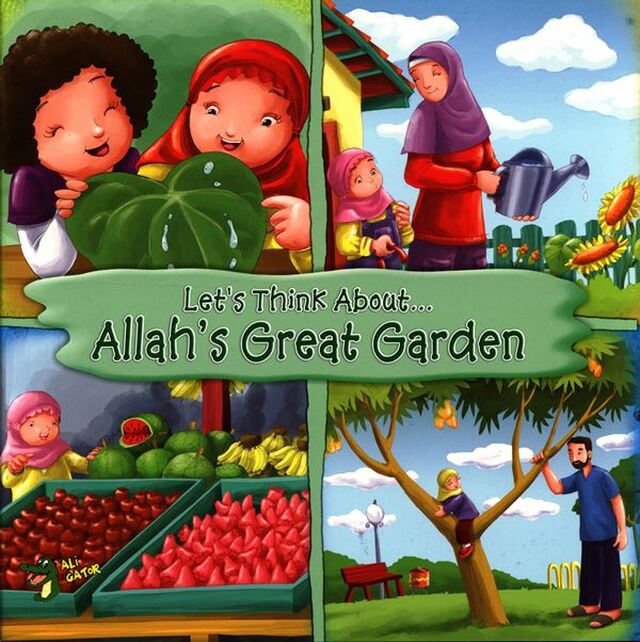
At 22 pages this book’s title aptly describes the contents within: at times factual, sometimes breaking down the fourth wall and asking readers to do something engaging, at times fictionalized, and often meandering and reflective.  The book is all over the place and only cohesive in theme.  It has sat on my shelf untouched by my children for quite a while, but when I needed options for the library during Earth Day, this book did a great job in facilitating discussion with pre k to 1st grade.  It isn’t a story time book so to speak, but it gets kids thinking and can be tailored to their level of discussion.  I don’t think that is how the book was intended, and as it is written it is rather unimpressive, but when pulled apart it did serve a very specific purpose.

img_9837

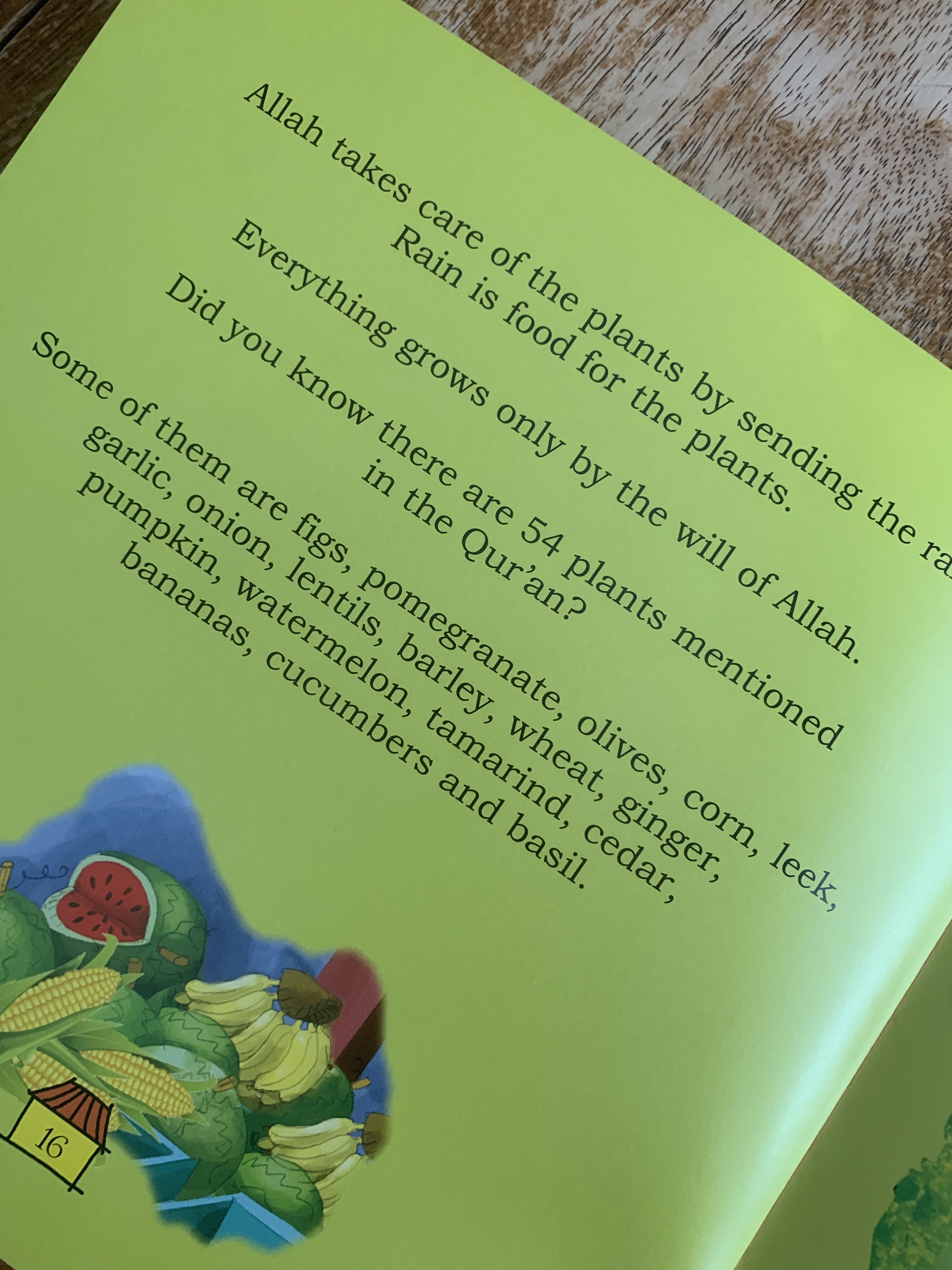
The book starts out with a few lines about Allah’s blessings of all things particularly trees and plants and gardens.  I wasn’t sure if it was trying to rhyme or not, but I think the first lines are just incidental rhyme as the flow and words quickly unravel. It talks of climbing trees and the narrator’s father telling him to be careful. It then discusses watermelons and how they grow in the ground, not on a tree and asks readers if they can see the watermelon seeds in the illustrations.

img_9836

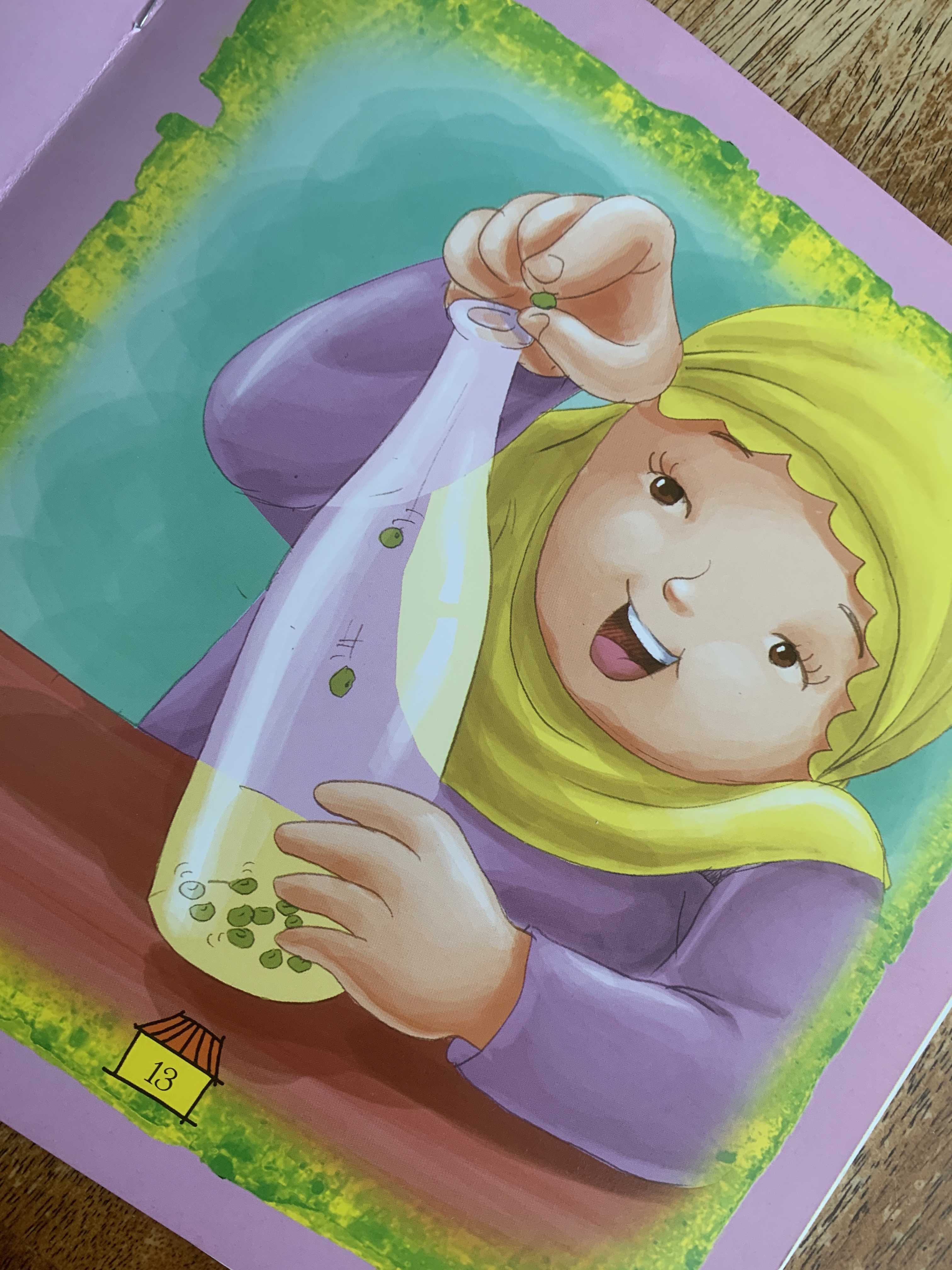
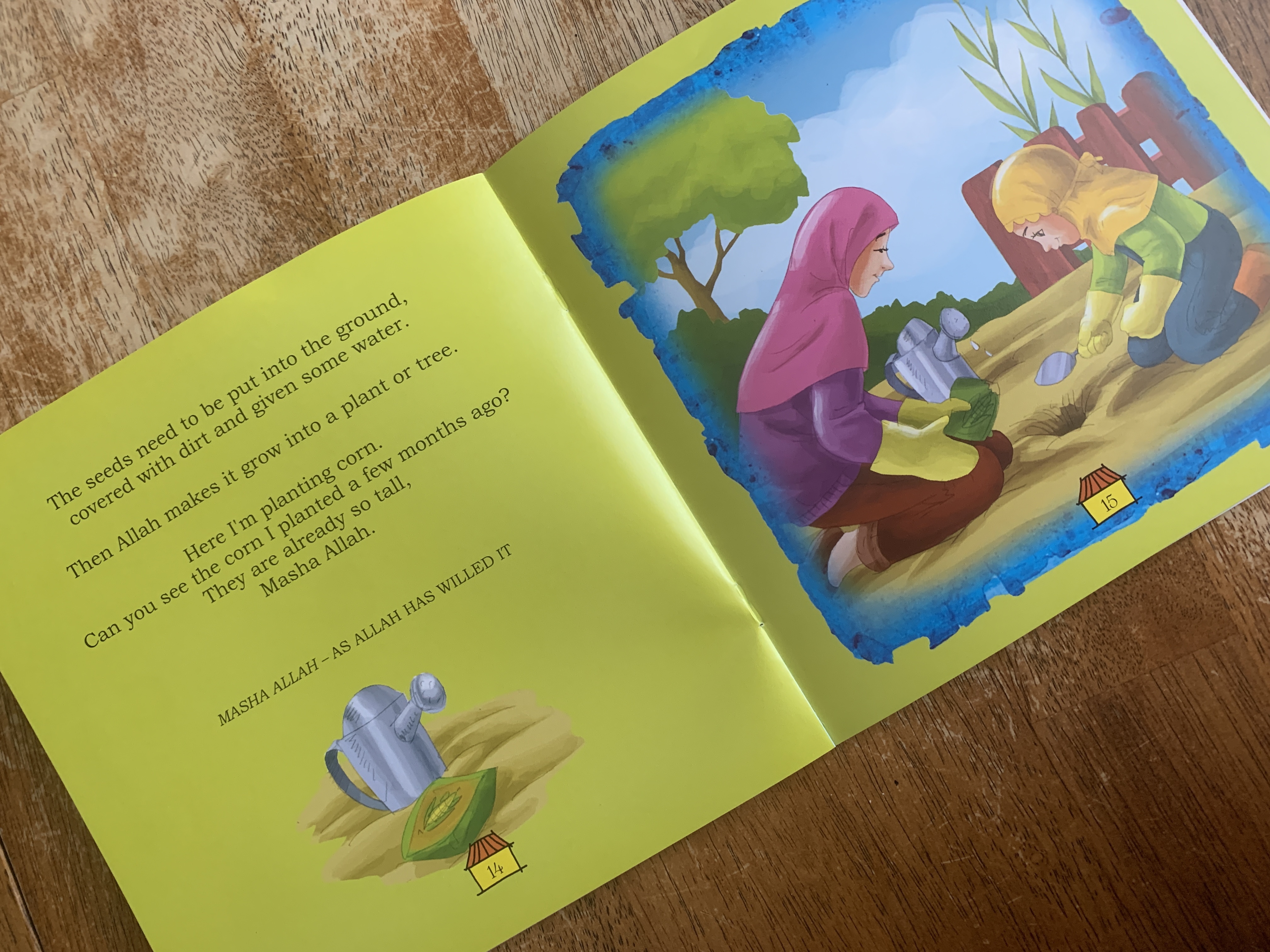
The book focuses on the life cycle of plants: seeds, flowers, trees. Drawing on that information it then shows the little girl collecting seeds to plant.  It then talks about the planting process and the needs all growing things have to prosper if Allah so wills it.

img_9838

Then the book gets interesting and starts to discuss the plants mentioned in the Qur’an before returning back to the half hearted narrative remarking on how the flowers complement the color of their house.

img_9839

The story seems to then end, but it isn’t denoted that the remaining pages are factual or set aside as back matter, it just pivots and begins discussing rain in Surah an-Nahl, Trees in Paradise as mentioned in Qur’an and Hadith, and then again, but this time in table form, the fruits and vegetables mentioned in the Qur’an, and highlighting dates specifically.

img_9841

The book is all over the place, and I doubt it will be read again until next year.  There are a few other books that have come out about his topic, and I plan to look in to them to see if they work better for story time readings and child engagement.

My First Book About Ramadan: Teachings for Toddlers and Young Children by Sara Khan illustrated by Ali Lodge

Standard
My First Book About Ramadan: Teachings for Toddlers and Young Children by Sara Khan illustrated by Ali Lodge

ramadan

Once again, Sara Khan pushes the standard of what can be conveyed and presented in a toddler board book.  This book on Ramadan not only introduces concepts of the blessed month to our littles Muslims, but also provides details that will allow the book to stay relevant even as a child grows.  The soft, yet colorful pages allow the book to be engaging and attention holding for ages 2 and up, and provides a great way to get young children looking forward to Ramadan, as well as be read repeatedly during the month.  The 26 thick pages have a facts and questions about Ramadan at the end which make the book shareable with non Muslims and the many shapes, colors, cultures, and ages that make up our Muslim communities fill the pages that radiate with joy and love.

img_7070

The book starts out expressing the excitement of Ramadan, the new moon, and the anticipation.  It then talks about how Allah swt wants us to fast from dawn until sunset.  It mentions the five pillars, and fasting in Ramadan being one of them, and what it means to fast.

img_7071

It focuses on doing good deeds to make Allah swt happy.  It also dedicates a two page spread to showing who doesn’t have to fast, which answers that inevitably next question that people ask.  The book then says that even if you aren’t fasting, there are still blessings everyone enjoys in the month and spends a few pages detailing those activities and acts of worship.

img_7072

It mentions that Ramadan is the month of the Qur’an and that Laylat al-Qadr is the night of power, but doesn’t give much detail about either. Eid is celebrated at the end and a dua is made referencing a hadith in Bukhari about entering through the gate of Ar-Rayyan.

I love that the book’s tone is that this is what Allah swt wants us to do, and this is what makes Him happy.  Even with numerous Ramadan books out there, this one still manages to find a way to be unique, and truly the entire series is enjoyable and beneficial, alhumdulillah.


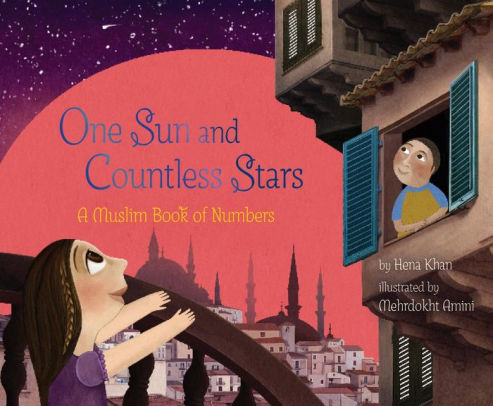
One Sun and Countless Stars by Hena Khan illustrated by Mehrdokht Amini

Standard
One Sun and Countless Stars by Hena Khan illustrated by Mehrdokht Amini

one sun

I don’t think that Hena Khan is necessarily a controversial figure, but some days her work feels very polarizing as some praise her ability to share OWN voice desi American Muslim stories while others feel like she waters down the very stories she is sharing to appease the majority.  Irregardless of our nuanced views, many of us first were made aware of her when we we were swept away in 2012 by the mainstream book, Golden Domes and Silver Lanterns.  Since then she also has published a book about shapes in the same format, and now this counting book that reminds me how beautiful and powerful it is to see Islam so unapologetically presented to all children.

Screen Shot 2021-11-10 at 10.25.04 PM

The author’s note at the end is important:

There are many significant numbers in Islam.  They include one for God, five for the pillars of the religion and daily prayers, seven for the circles pilgrims and visitors walk around the Ka’aba during hajj and more.

Mathematics and astronomy were among the intellectual pursuits of early Muslims.  They helped to develop algebra and used geometry to create the elaborate patterns found in Islamic art.

For this book, I chose concrete and illustratable terms rather than abstract concepts.  The representations for each number focus on things we can count in the world around us.

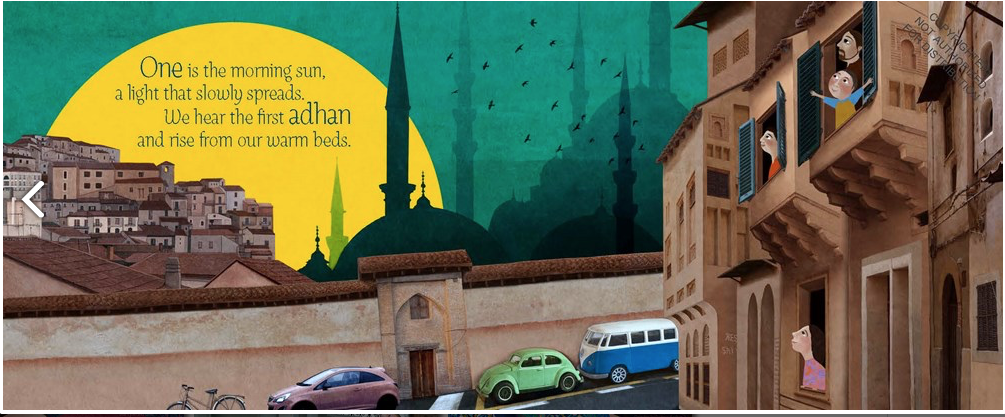
The book counts the diverse and global parts of a practiced faith.  The unique and the mundane, all beautifully illustrated and richly conveyed.  From cups of tea and shoes taken off for prayer to two hands making dua and four lines of a surah being memorized.  The book counts up to nine and then marvels at the countless stars that we see each night.

The first page is possibly a bit problematic in accuracy.  The tone and framing of starting the day with the sun rising and the sound of the adhan is warm and beautiful, but the adhan is not called at sunrise for the first prayer of the day, fajr.  Fajr begins at dawn.  There are only 21 words on the first page, so I’m inferring a lot about the correlation of the sun and athan that may or may not be present.  It is something frequently misrepresented, so it catches my attention. And yes, the seven tawafs mentioned in the author’s note would also apply to umrah, not just hajj.

Overall, the book is lovely and will remind many of us what made us all celebrate Hena Khan and her stories so many years ago.

Pizza in his Pocket: Learning to be Thankful to Allah by Jawaad Abdul Rahman illustrated by Natalia Scabuso and Johera Mansura

Standard
Pizza in his Pocket: Learning to be Thankful to Allah by Jawaad Abdul Rahman illustrated by Natalia Scabuso and Johera Mansura

pizza in his pocket

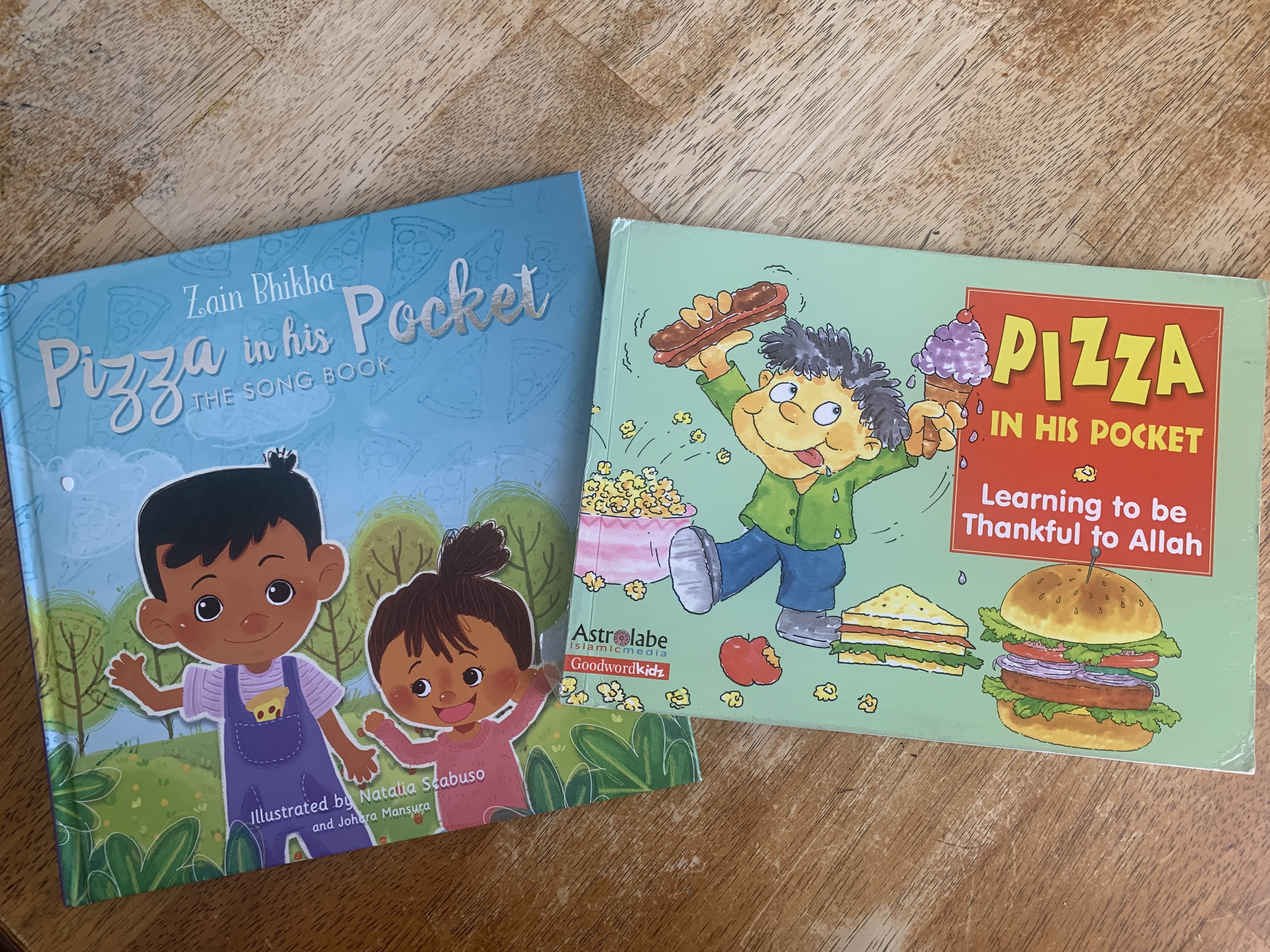
I didn’t think the old version was falling short, but I had to have the new one, because well, I’m a mom.  And sometimes songs that have stood the test of time really do translate perfectly to story books that are engaging, memorable, and so fun.  I can’t get through it without singing it, but the new pictures do force me to slow down and look at the maps and the points of interest that have been included.  Ages two and up will love the book, older kids will enjoy the nostalgia, parents will beam at the words getting stuck in everyone’s head and the lessons making their way in to real actions.

img_4980

The new book is slightly different than the original, but more inline with the online videos by Zain Bhikha and his son.  The back of the book has an ayat from surah Al-An’am and reinforces that while the song is fun, the foundation of not wasting and sharing with the poor is an important part of Islam.

A great book to read over-and-over again and one that is universal enough to be shared with Muslim and non Muslim children alike.