Tag Archives: Sweet

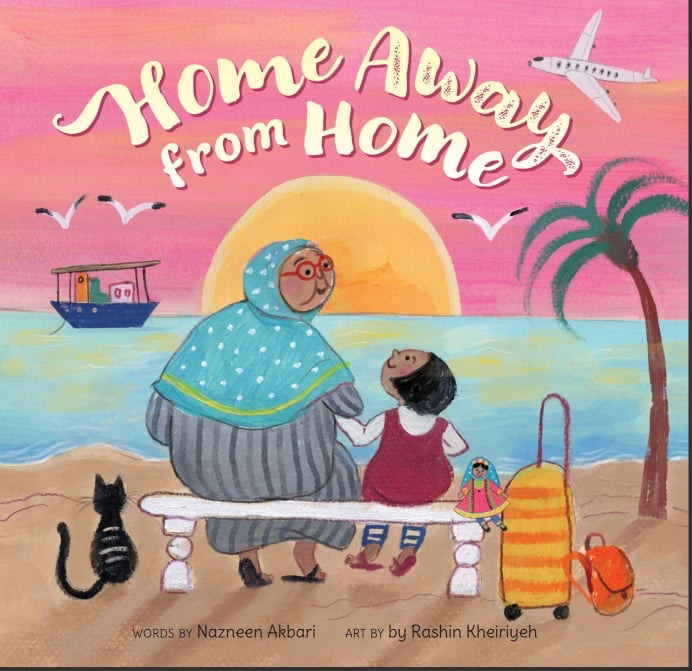
Home Away from Home by Nazneen Akbari illustrated by Rashin Kheiriyeh 

Standard
Home Away from Home by Nazneen Akbari illustrated by Rashin Kheiriyeh 

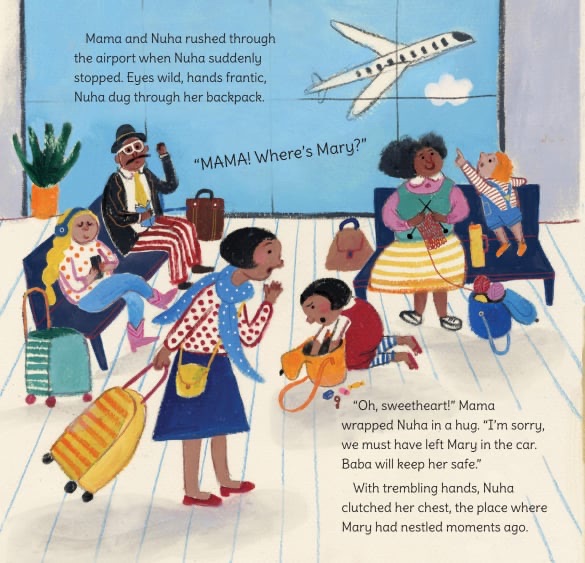
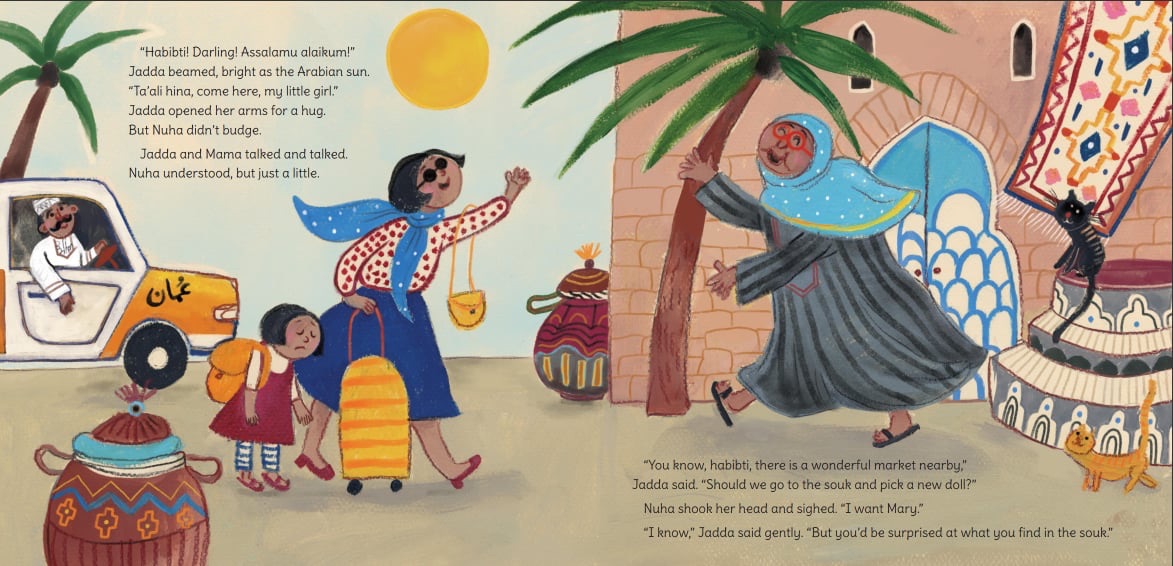
Set in Oman, this 32 page picture book shows family, connections, trying new things, and similarities as the concept of home is expanded. The illustrations bring the text to life as Nuha travels to Oman with her mother without the reassuring presence of her belove doll Mary, and into the souk with her grandma who slowly nudges her into finding joy and fun and her home away from home.  The illustrations show Jadda and other characters in hijab, and greeting of Assalamu Alaikum being shared, the call to prayer is heard and a blue mosque is marveled at. I am not sure if the author is Muslim, she is not Omani but lived there according to the Author’s Note. The backmatter, also highlights the culture and Christian and Muslim respect for the names Mary and Maryam.  The beautiful book is heartfelt in showing the relationship between a young girl and her grandmother, as well as her culture.  With few books focusing on Oman, I’m excited to add this to my collection when it releases in February, and share it at story times and bed times with children ages four and up.

The book starts with Nuha not looking forward to an upcoming trip to Oman.  She doesn’t really know her Jadda, and is going to miss Baba and her home for the summer.  She finds reassurance in her doll, Mary, that at least she will have something familiar to hold on to.  When Mary gets left in the car, Nuha arrives in Oman grumpy and sad.

Grandma knows just what to do and scoots Nuha off to the souk to look for a new doll and where the sights, sounds, and smells, eventually win Nuha over.  From the nibbles turning into bites of shawarma, to henna being applied to their hands, to drums being played and danced with, Jadda and Nuha spend the day hand-in-hand.  When an Omani doll is finally chosen as they head home from the market, Nuha settles on the name Maryam, so that Mary and Maryam can represent ALL of Nuha.

Always Be My Bibi by Priyanka Taslim

Standard
Always Be My Bibi by Priyanka Taslim

I had pretty low expectations going into this 368 page YA romcom- as often YA is really “adult” and if the characters/author are Muslim in a “romance” it tends to become a heavy handed rebellion against Islamic principles. So imagine my surprise when the book really is meant for teenage readers. The protagonist loves her culture, and it is established really early on that they are Muslim, but aren’t religious.  Sure as an “Islamic School Librarian,” I wish the characters practiced Islam, and that the the kissing and hugging was labeled as haram, but for the fictional story on the page, that is cultural based, it is a delightfully chaotic and fun read.  Note, the kissing and haramness occurs when they are “sneaking out,” and reads as if they are sneaking out from parental rules, not Islamic ones, as they do not view the world through an Islamic lens.  The protagonist’s sister is presented as religious in that she wears hijab, and left a prestigious private school to attend a local Islamic one, but it is not a major plot point, and if anything shows that Islam is not a monolith or something forced, really though it just shows how different the siblings are.  Does that mean the writing is some literary genius? No, not really, but it is a quick light summer read that I enjoyed. The main character, Habiba, aka Bibi, reads as a Bangladeshi Cher from Clueless through and through, and while at the start it was a bit annoying, I ultimately found her endearing by the end.  There are plot holes, but I didn’t care too much given the quick pace and the nature of the book. The ending though, was drawn out and too long, and the book could have been easily 50 pages shorter. All in all it was fun to be transported to a tea estate in Bangladeshi for a wedding, and I wouldn’t have a problem with 15 – 16 year olds or so reading the book.

SYNOPSIS:

Bibi is in hot water with her father for sneaking off to prom with a boy, the deal has always been no dating until her older, perfect, law school bound, sister Halima gets married.  And her punishment for the summer is working at the family restaurant, one of the many Royal Fried Chicken locations in the chain they started that makes her family, chicken royalty. When hijab wearing, no haram dating Halima springs on her family that she is getting married, the family all heads to Bangladesh for the summer to get to know the groom’s family on the massive tea estate, and celebrate the wedding. Oh and Bibi’s punishment will be transferred from working fast food, to working in the fields under her new brother-in-law to be’s grumpy, serious, younger brother, Sohel.  Bibi also holds her father to his end of the deal and when the big book of biodatas arrives, she is ready to have her chaperoned dates as promised.

As the prickly family of inlaws look down on Bibi and her family, Bibi and surprisingly, Sohel join forces to break the pair up. As the book unfolds their mission changes, the bio data book causes drama, old flames are sought after, and the wedding takes some surprising turns.

WHY I LIKE IT:

As I write this, I’m rolling my eyes at the fact that I really did read it in two sittings and was amused. Bibi is spoiled and clueless and yet does have a good heart.  As with most romantically inclined books, a whole lot of suspension of reality takes place and side characters are not fully fleshed out.  Halima and Sunny met in college, and there families are from the same part of Sylhet, infact Baba worked on the Rahman’s tea estate before coming to America.  The grandma is woefully underdeveloped, I get that she is a side character but the girls spend so little time with this woman they love so dearly is a blaring hole. I really didn’t get some of the scenes after the midpoint, they felt like filler and they felt forced: friends coming from America, the bachelorette party turned amusement park trip, Sohel not sticking up for Bibi, the half hearted love triangle, and the Bibi Baba multiple rehashings.

I did like that the title of the book though comes from something Baba says to Bibi, and not from a love interest, that made me smile. And I liked that the “dates” were supervised, it is vague if the dates in America would have been, or if once Halima was married she would have been allowed to “date” with a western definition, but I kind of liked that it wasn’t defined.

FLAGS:

Disrespect, sneaking out, kissing, hugging, close boy girl friendships, sneaking out, language.

TOOLS FOR LEADING THE DISCUSSION:
Definitely not a book to spotlight as a book club selection, but one that I would have on the shelf and not mind older high schoolers reading.

Lulu in the Spotlight: A South Asian Wedding Story by Natasha Khan Kazi

Standard
Lulu in the Spotlight: A South Asian Wedding Story by Natasha Khan Kazi

This adorable 40 page culture focused picture book explores a Desi tradition with layers of competition, frustration, mystery, problem solving, kindness, and joy woven in.  Lulu likes the groom and his family, but at her cousin Amirah’s wedding, the games are about to begin, and she has a plan to win the money for team bride, and prove she is old enough to share in the spotlight. Each of the traditional teasing games though find Lulu pushed aside, until the joota chupai, where the shoes go missing.  With Nani’s encouragement to stay true to herself, Lulu gets a chance to shine by doing it her way, and bringing the families together. There are a few visible hijabis in the illustrations of this Muslim author/illustrated book and the backmatter really makes the traditional references accessible to all readers.  As a Pakistani American, my children haven’t attended cultural weddings with all the traditions, fun, and games, and this book is already a favorite in discussing what this family does, where our families might do it a bit different, and how they can twist it to fit an upcoming wedding we have this summer.  The bright large pages, add to the text and illustrations truly conveying the excitement, emotions, and colors of South Asian weddings.  By focusing on one tradition, and not trying to include everything about the multiday affairs, the book stays on message and maintains an in the moment tone, keeping the readers engaged, well done.

The book opens at the mehndi ceremony of Lulu’s cousin, and while the dances are taking place, Lulu is scheming.  She knows the next day there will be chances to make some prize money from blocking the groom and stealing his shoes, and she is determined to capitalize. Normally it is just the bride’s side against the groom’s side, but Lulu has to battle her own cousins for a role in the games.  Tarek says she is too little.  Zara is clever at negotiating, and Farah is athletic and gets places fast.  In the past, Lulu hasn’t been included, but this time, this wedding, she is ready.

On the groom’s side it is Kamal, Sameer’s little brother that serves as Lulu’s biggest competition, and who trips her as she heads for the shoes. Frustration and sadness have damped the festivities for Lulu, yet she still is helpful and kind.  With the games wrapping up, a dejected Lulu finds solace in her grandmother’s lap.  When Nani shares why the shoe stealing tradition still is carried out, Lulu knows just what to do to find the spotlight her way.


Abdullah’s Bear Needs a Name by Yasmin Hanif illustrated by Sophie Benmouyal

Standard
Abdullah’s Bear Needs a Name by Yasmin Hanif illustrated by Sophie Benmouyal

I love the idea behind this 28 page book, and the illustrations are pretty great too, but I felt like the story needed a little more depth to convey meaningful emotion, appreciation, and connection.  It starts with an Eid gift, but there is nothing tying it to the holiday after the first spread.  And while it shows both Islam and Desi culture in action, I wanted to hear the stories of his family, and the connection to his culture that helps him name his bear.  I also feel like the premise was a little rocky, did everyone get family heirlooms for gifts? Did they get other gifts? Why was he gifted this special stuffed toy and not his older or younger siblings? Would a kid really be that excited to get a hand me down stuffed bear? Once you read the author’s intent, and the inspiration for the story, an adult could connect the dots and help a reader recognize the internalized othering being overcome, and discuss it, but I don’t know if all kids would not pick a cultural name for a toy, or see that Abdullah didn’t consider reflective names either.

The book starts with the reader dropped into an Eid day celebration.  Abdullah is handed a gift by his parents and when he unwraps it he finds himself the new owner of an old well-loved teddy bear.  His father was the previous owner, but refuses to tell Abdullah the bear’s name, urging him to discover it on his own.

Abdullah loves the bear, and takes it with him to the store, to school, to cricket, to madrasa Everywhere he goes he tries out names: old names at the museum, classmates names, but nothing seems to fit.  When his Abba tells him a story about his grandfather, he finally finds the perfect name for his bear.

I really like the details in the illustrations, they bring the story to life and feel authentic: the store names, the Eid spread, the activities.  I feel like this book is so close to being a standout, but I don’t know that kids who don’t find themselves exactly in Abdullah’s mindset, would be able to relate and connect to what transpires.  Unfortunately, it is unclear if he grows and learns from the experience, or if it was contained to this one incident. 


Momo & Bronty’s First Book About Allah by Zanib Mian illustrated by Laila Ramadhani

Standard
Momo & Bronty’s First Book About Allah by Zanib Mian illustrated by Laila Ramadhani

The short simple texts spread out over 14 thick pages talking about Allah swt is a great addition for our littlest believers.  Accompanied by engaging adorable illustrations, this book offers a great way to encourage kids to think, talk, and center Allah swt.  It isn’t just a list of all Allah swt created, it dedicates a spread to that, but then builds on it by sharing that He wasn’t born, He is one, He loves us, and that is why we worship Him and do what He has asked, so that we can one day see Allah swt in Jannah, inshaAllah.

The illustrations on every spread burst with joy and make it fun for older preschool and kindergarteners.  I love that it clearly states that “We do the things He asked us to.  And don’t do the things He said not to.”  I don’t recall ever seeing this articulated in a child’s book, and the simplicity is powerful.  Anyone that has kids, know they have a lot of questions about Allah swt and this book is a great start to cultivating the love and connection between child and creator.

I purchased my copy from Crescent Moon and if you use my initials at checkout (ISL) you will save 10%

Eid for Nylah by Nizrana Farook illustrated by Zelma Firdauzia

Standard
Eid for Nylah by Nizrana Farook illustrated by Zelma Firdauzia

I have read this book dozens of times and I honestly don’t know how I feel about it. If you remove the title and second to last page and just READ the words, the book could be about any holiday that you might clean and decorate for, that would involve giving gifts, putting on henna, wearing new clothes, praying, and sharing food at. The illustrations imply that it is a Muslim holiday with about half the women in the pictures wearing hijab, and a few decor items that say Eid Mubarak in English and Arabic, but readers that are unaware or unfamiliar might not grasp that it is faith based at all, and the Author’s Note mentions, but doesn’t detail much about the religious significance either. During one reading, I felt it also could almost seem like a mystery, that the title just happens to ruin. The cat Nylah goes to different houses on the street seeing and hearing the tidying and banner hanging and gift wrapping occurring, but doesn’t know why no one has time for her, until the big reveal that it is Eid. I think for little non reading kids that actually might be my approach, to share the book without the title and back blurb and see if they can figure out why everyone is too busy to play with Nylah.  I don’t know that it is tokenism, or that Islam is left out to make the book palatable for the Western gaze, I could be wrong though, I really just think this is the author’s style.  Having read her chapter books that always center animals, feature community, and include Muslim names, I think this is just an extension of her lyrical writing in her debut picture book. The book would work for either Eid, but the backmatter is the author’s reflection on Ramadan and Eid al Fitr.  I know I’m the minority that struggles with Islamic holiday books that leave out the Islam, so for those of you that do not find it disappointing, the book is sweet.  Nylah is a cat that is welcome and known to the entire neighborhood, to come and go as she pleases, the age engaging illustrations complimented by the cadence and rhythm of the structure, lines, and diction are easy to read aloud to groups of all sizes, and hold the attention of 3 year old children and up.

The book starts with a family “wiping and scrubbing, tidying and sorting, everything in sight.”  When no one has time to play with Nylah, she heads outside under the crescent moon, and goes next door to Bilal’s house, where he and his family are decorating.  When she tries to play with the ribbon, she is once again told they are too busy to play, so she slips into Reem’s house where they are doing henna.  This continues from one house to another until the next morning when her family all dressed wakes her up to go to the park with them for prayers and Nylah realizes it is Eid.  Now the children are not too busy and everyone plays with Nylah.

Yeah, I know, taking a cat to Eid prayers sounds wild to me too, kids love imagining though what chaos might ensue.  There is enough hinted at that Muslim families can find the clues and make the book more religious or holiday centered, but I wish it showed the cat seeing praying or reading Quran, hearing the athan or thikr, or something that would ground the book in Islam, but alas, it does not.

The book concludes with an Author’s Note and scanable QR Code for a free audio reading.

Our Neighborhood: Friday Fun by Marzieh Abbas illustrated by Anoosha Syed

Standard
Our Neighborhood: Friday Fun by Marzieh Abbas illustrated by Anoosha Syed

img_8215-1

At 26 pages and 55 words, this adorable board book conveys Jumu’ah sunnahs, joy, Islam, and community.  The simple rhyming words and bright engaging illustrations are meant for babies to three year olds, but I have a house full of older kids and this book made them all smile.  The book is part of a larger non fiction series, “Our Neighborhood,” that focuses on different communities, and the first of two that celebrate Islam.  “Excited for Eid” will be released before the end of the year.  The 7 x 7 size and thick pages can work in small groups in addition to bedtime.  Whether your audience is Muslim kids learning about Jumu’ah, or non Muslims learning about what Muslims do on Fridays, the book will have a large appeal and be a joy to read over and over.

The book establishes it is Friday and then the characters get ready for Jumu’ah at the masjid.  They shower and groom, and trim, and head to the mosque for a talk before the adhan signals the time to pray.  After duas they give charity, hug their friends, and share a meal.

The little kids, male and female, pray together, but I took it to be realistic as often little kids are with one parent and are not segregated like the adults.  The illustrations show some of the kids in hijabs, others not, some of the adults in duputta style head coverings, others in hijab, and some in niqab.  “Allah” is written in Arabic above the mimbar, and the word “sadaqah” is on a box under donations and above mosque.  All the other words are the English versions of the word, except Adhan is in the text and not defined as the call to prayer.  There is no glossary.  The book really is for Muslims, by Muslim, but as a mainstream published book, it also is an easy window to open for non Muslims to see us in our element on Jumu’ah, alhumdulillah.

img_8222-1

How to Free a Jinn by Raidah Shah Idil

Standard
How to Free a Jinn by Raidah Shah Idil

This 276 page book drew me in from the first page and held my attention until the last. I can’t recall ever reading a fantasy book in a single sitting.  The Islam, heart, Malay culture, and family dynamics have me hoping that maybe there will be a sequel, and that hopefully this debut novel is a first of many from the author. Of course I have minor critiques, the book definitely in the middle had some repetition and pacing hiccups, the rising action and climax could have been stronger, and there are a few noticeable loose threads, but Insyirah is a loveable protagonist that you really hope can sort through her family secrets, save the day, and be at peace with her decisions.  There is a lot of Islam, and it is well woven into the characters’ identities, the plot, and the lens of the book.  If you are Muslim reading it, you will see the fasting on Monday and Thursday, and staying in wudu a little different than non Muslim readers, but no matter who you are, you will enjoy the plot, the adventure and fun ride that will undoubtedly become a beloved favorite.

SYNOPSIS:

Twelve year old Insyirah and her mom are moving back to Malaysia to care for her elderly grandma.  Insyirah is anxious and not thrilled to be leaving Australia.  She hardly has time to miss her old life though as family secrets, discovering she can see and interact with jinn, and learning that an old jinn with a big grudge is after her.  Navigating the seen and unseen words, the rules of her mother opposed to those of her grandmother, and figuring out what she wants will take time to ponder, learn, and reflect upon.  Unfortunately, Syirah doesn’t have that kind of time, as she keeps falling into the unseen world, realizing that a jinn bound to her blood line will soon be under her control, and that pesky jinn haunting her school is trying to get her to leave Malaysia.

WHY I LIKE IT:
I am intrigued by the the way the book holds space for Islam, culture, and fiction, and interweaves the three.  Islam is adhered to, along with the worship, and uncompromising faith in Allah swt, and while the jinn are kept as being real, as understood by Muslims,  their day to day antics cultural and fictional positioning, is richly developed and not put in conflict with deen, seemingly trying to keep everything halal.  I am not a scholar, I would not venture to proclaim that this does or does not cross lines, but the author is very aware of the threads at play, and has a solid awareness of writing craft, so the result is a great story, that feels authentic, without being “shirk-y.”

There are some pop cultural references that might age the book a bit, but I love the shootouts to Hanna Alkaf books.  For me, a Western reader, that really is my only other Malay juvenile literature reference, and the vibes are similar, so it was nice to see the connection.  

FLAGS:

Jinn, loss, death, fear, murder, threats, lies, enslavement, haunting, scaring, secrets, fighting.

TOOLS FOR LEADING THE DISCUSSION:

This book is solid middle grade, but I think older kids will enjoy the story and find plenty to relate to, learn about, and be captivated by.  I think this book will be a great addition to home, school, and library shelves, and while my copy is from Australia, I believe a US version will be available in 2025, inshaAllah.

Doctor Bear and Helpful Bunny: The Travelling Dentist by Emma L. Halim & Her Mum Mary Tucker illustrated by Alissa Mutiara

Standard
Doctor Bear and Helpful Bunny: The Travelling Dentist by Emma L. Halim & Her Mum Mary Tucker illustrated by Alissa Mutiara

Sometimes you just need a sweet little story about a traveling (sorry one l I’m not British) dentist going under the sea to help a hammer head shark with a toothache.  This rhyming story for toddlers is perfect for the demographic as duas are said to get through the pain and fear and the reliance on Allah swt that all will be well.  The Muslim animals and the fun illustrations make the story appealing whether your child is afraid of the dentist or not, and the focus on the duas in the backmatter, makes the book a good tool for repetitive use.  It is worth noting that their are 32 pages in the book, but the story is only 20 pages.  There is a glossary, multiple dedications, scanable codes for activities, ads for other books, duas, sources for duas and author bios in the back.

The book starts with Doctor Bear and Helpful Bunny introducing themselves as traveling dentists for all animals, even those under the sea.  When they get a call from Sonny, they set an appointment time, gather their gear on a boat and then head underwater to the shark village.

Sammy is glad they are there, as he is in pain. They clean his teeth, but need to remove the wiggly one, and that scares him.  He says a dua and before he knows it the huge tooth is out, alhumdulillah.

The book then has a two page spread about duas that help when you are “feeling funny inside” in Arabic, English transliteration, and their meanings in English.  A fun book with a great mix of story, silliness, education, and heart.

My Olive Tree by Hazar Elbayya

Standard
My Olive Tree by Hazar Elbayya

img_7154-1

I love that this author illustrator traditionally published book shows the ways that olive trees and their fruit connect people.  The little girl, Salam, can’t wait to grow her very own tree, but it takes a while, and when it finally sprouts, it is trampled by soldiers.  Heartbroken to lose her plant, her community shows her how they are like their beloved olive trees: their roots are deep, and they are a part of the land.  The tender illustrations, the poignant symbolism, and the love and unity that radiates through, makes this book an important read for children and adults of all ages and backgrounds.  There are no countries mentioned in the text (Palestine appears only in the author’s note), nor any religion, there are visible Muslims in the illustrations, even the soldiers are unnamed, but the setting is clear.  Picture books take years to be published and that it released at this point in history, shows how long the struggle for freedom has been taking place, and how strong and resilient Palestinians are.  This book that will be read over and over, shows even in the sadness, the feeling of hope abounds.

The book starts with Salam noting how old her grandpa is, and that only the olive trees are older than Sido.  Sido then explains to his granddaughter how the olive trees connect them all: farmed, picked, pressed, oil used to cook, olives sold to eat, added to dishes, and made into soap.  Salam goes to plant her seed and be part of the connection. She waters it and waits, but it doesn’t seem to be growing.

Finally a spout, and then a little plant, and then the soldiers march into their lands and destroy everything in their path, even Salam’s olive tree.  Sido reassures her that she will plant more olive trees in her lifetime, but Sido also wants to show her that she is not alone.  Friends, family, and neighbors, come together to show her, “just like the olive trees, when they try to break us, we grow back stronger.”

A truly beautiful hopeful book, subhanAllah.

img_7144-1