Tag Archives: Silly

Sameer and Snazzy: Kindness Counts by Emma L. Halim illustrated by Herry Prihamdni

Standard
Sameer and Snazzy: Kindness Counts by Emma L. Halim illustrated by Herry Prihamdni

The 32 page faceless picture book for toddlers and up, is set in Australia and follows Sameer and his cat Snazzy on a bushwalk.  At first I felt like it might be a little bit like the classic, “And to Think that I Saw it on Mulberry Street,” but the structured story with a repetitive refrain adds in Islamic phrases, silly encounters, and examples of kindness that make it unique.  Add in a fun surprise at the end, and like many other books by the author, be prepared to have it memorized as your little ones ask for it over and over again.

The book starts with Sameer look forward to his grandpa coming to visit, but wishing he had something exciting to share with him.  Snazzy suggests he shares that he can talk to animals, but Sameer knows no one would ever believe that, so the two set off on a bushwalk to find something exciting.

When they hear an “A-choooooo!” in the trees, the fun is just getting started with Miss Koala sneezing and making eucalyptus leaves fall. The duo finds a way to help, but the fallen leaves mean ants are stuck in their home and can’t get out.  Once again, Sameer and Snazzy, find a way to help.  After each episode the refrain of, “‘Imagine if I told Grandpa this!”‘ I say to Snazzy.  ‘He’d never believe you! he smiles.  ‘NO-ONE WOULD!’ We laugh together and continue along the path, when suddenly…”

The book ends with a surprise, that I won’t spoil. The backmatter has a reference to Surah An-Naml and explains that Prophet Sulayman peace be upon him, really could speak to animals.  There is also a glossary of the Islamic phrases and a QR code to continue to the fun after the story ends.

The book is a bit more text heavy than some of her others, but the illustrations are fun, and will keep kid’s attention.  It does not rhyme, but has a cadence that makes reading it aloud easy. The small size makes the book better suited to bed time, but could work in a story time, and would be wonderful tuned into a story board/felt board read aloud.  The book is a universal story, but at some point in Islamic fiction self published and small published books, I think we will need to have open dialogue and discussions if having characters that are not the same race as the author or illustrator is appropriate and beneficial, or is misleading and better to avoid.

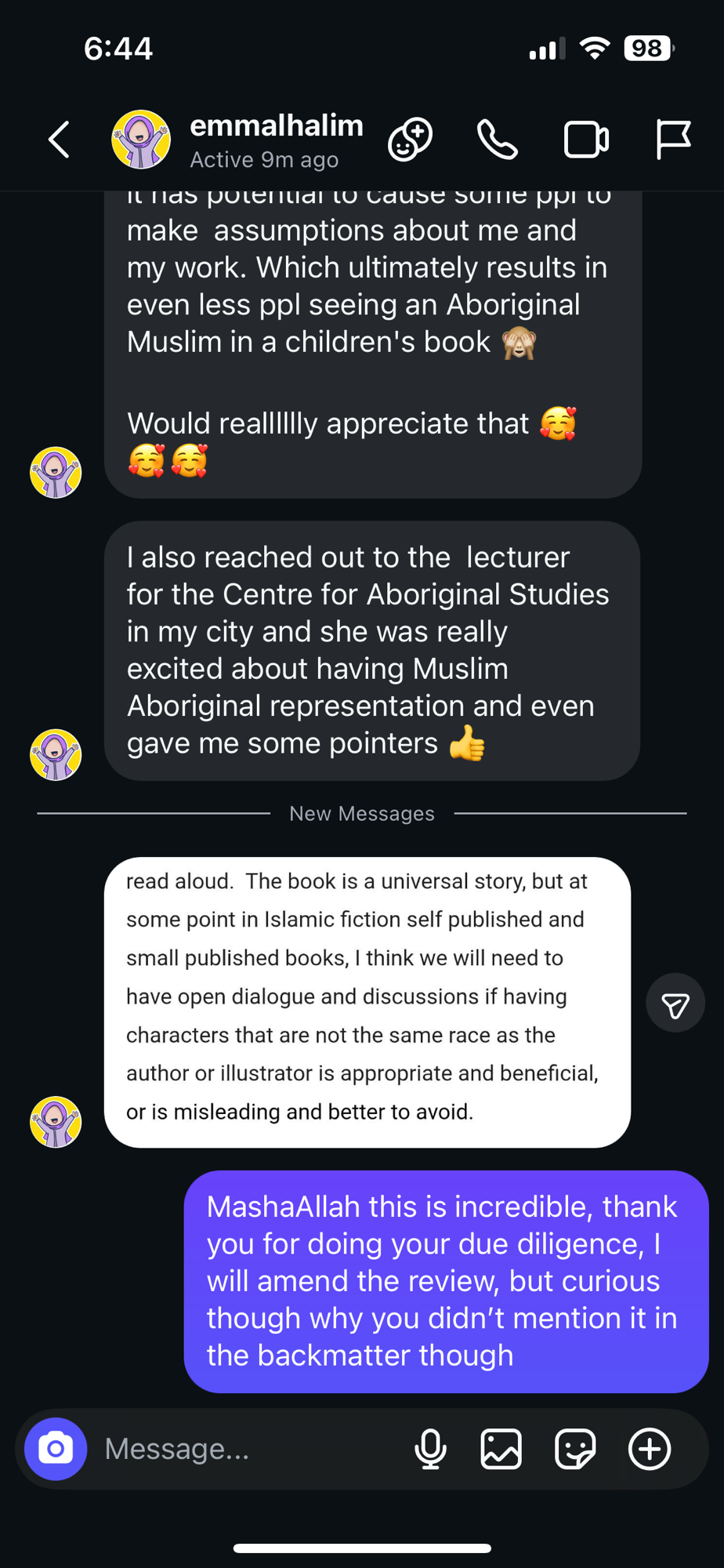
***EDIT: The author reached out to me asking me to remove this generalized opinion of me calling upon the need to have discussion, I opted to amend, as I think we need to have conversation and believe intention and purpose in whatever one decides is a benefit.  So, to avoid errors in interpreting her ask, I will simply post the screen shots, and my response.  Please note I did not tag the author in my Instagram post, she reached out to me.  I purchased the book, it was not gifted.

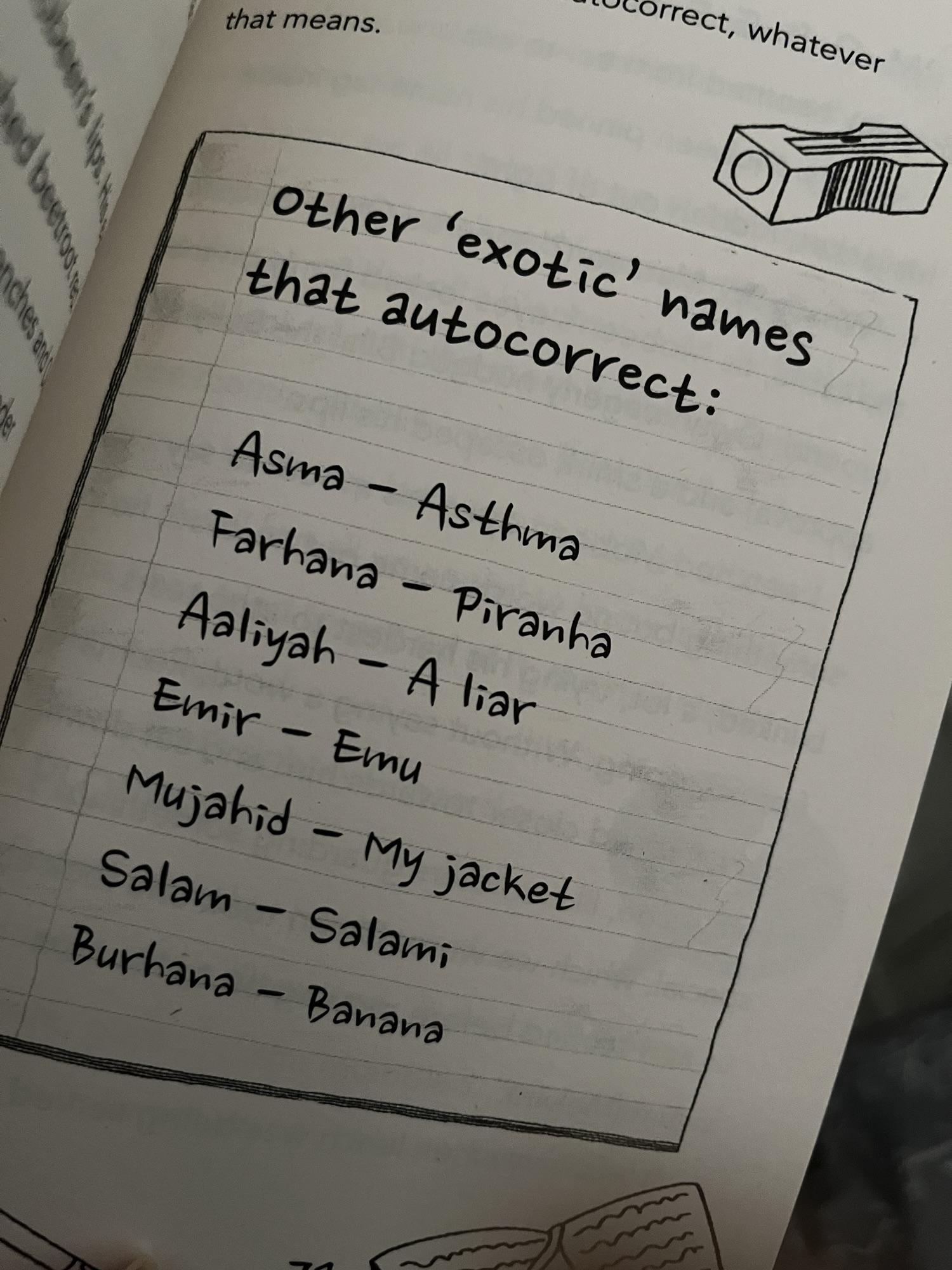
The Misadventures of Mina Mahmood: School Trip by Farhana Islam illustrated by Simran Diamond Singh

Standard
The Misadventures of Mina Mahmood: School Trip by Farhana Islam illustrated by Simran Diamond Singh

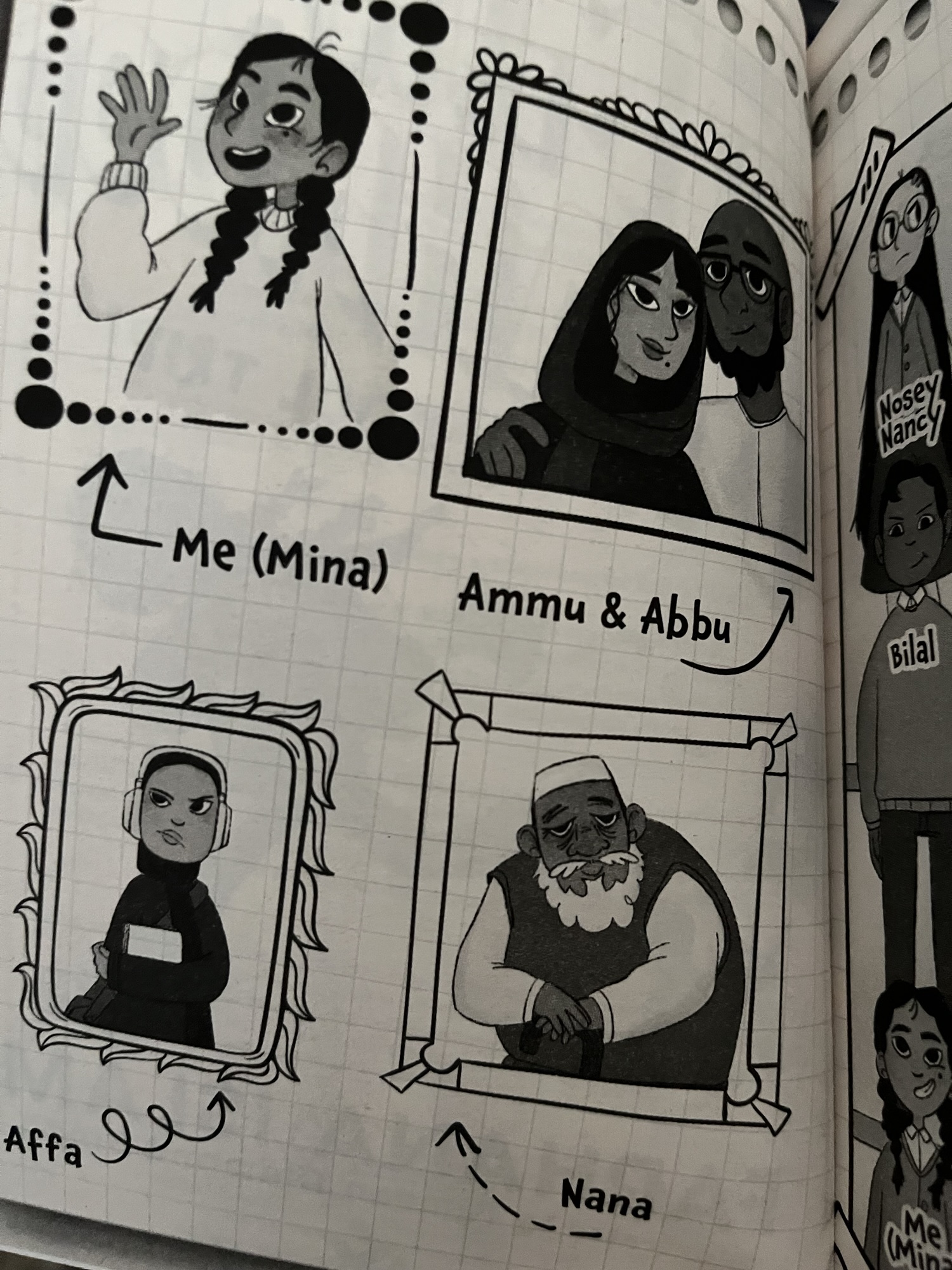
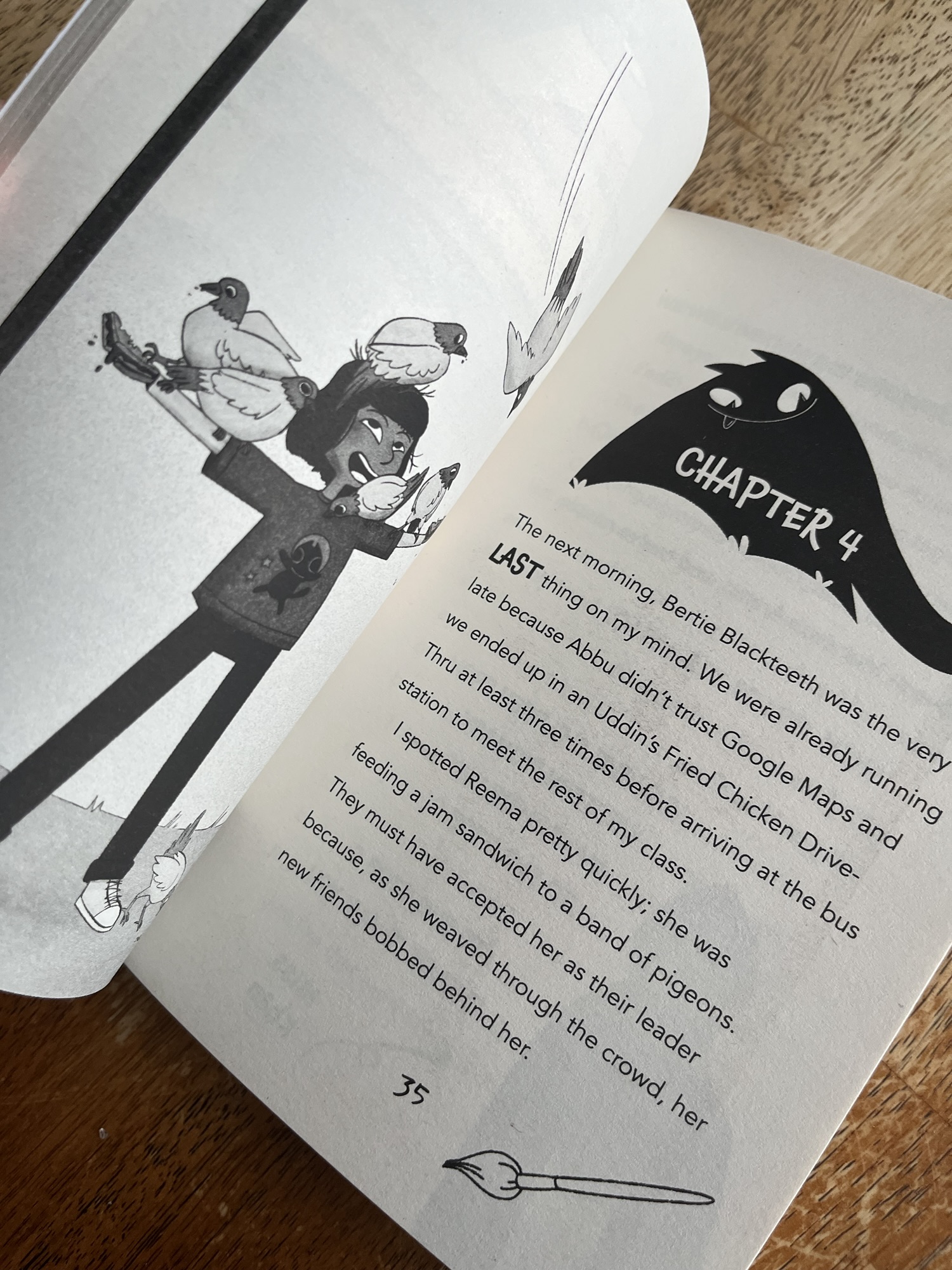
The illustrations in this book, by a Muslim author featuring Muslim characters, are impressively fun and complimentary to the story.  Yes, the 184 page book is highly illustrated.  The publisher says it is MG, and I can see that based on the length, but I think it is a solid second grade to fourth grade read.  The storyline is singular and surface level, and the scary silly bits are just meant to be funny and not taken too seriously.  I enjoyed the book, the normalizing of the Muslim kids in a non Muslim setting just living their life, and the main character’s voice had me smiling throughout.  A school camping trip is overshadowed by bullies and then consumed by the ever growing out of control scary story of Bertie Blackteeth.  An epic laser tag battle, quad adventures, and the comical banter of Mina and her friends, Mobeen and Reema, make for a light engaging read.  Sensitive kids might find the fright to be too much, but I think most will finish and be glad to learn there are more books to come in the series.

SYNOPSIS:

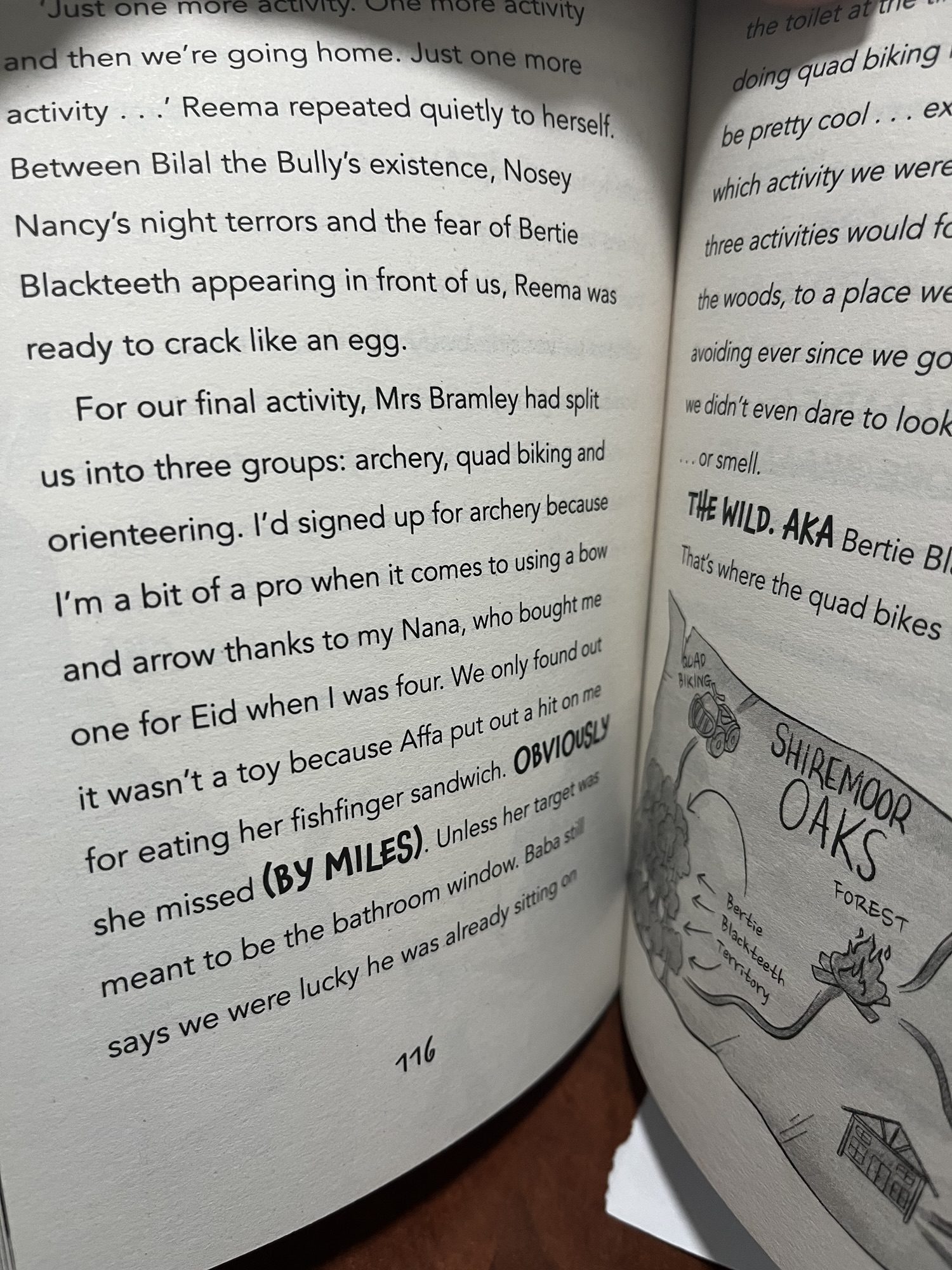
Mina Mahmood and her friends are ecstatic, it is finally their turn to head off on the annual camping trip to Shiremoor Oaks.  A weekend of laser tag, orienteering, archery, and quad biking without adults, well teachers, but no parents.  All Mina has to do before the fun begins is get through a family dinner with Auntie Selma and her cousins.  Mina doesn’t believe anything her cousin Abbas says, so when he mentions he went camping in school to Shiremoor Oaks and heard about a girl, Bertie Blackteeth who vanished there, Mina pays him no mind.  When her older sister Affa, also mentions that she heard the story, Mina starts to wonder if there could be some truth.  The next morning on the bus, when Bilal the Bully and his minions Owen and Brodie are also talking about Bertie Blackteeth and her need for a new body, Mina and the rest of the class are properly spooked. The fear hangs over all the activities, ruins the midnight snack extravaganza, and makes this a camping trip they will never forget.

WHY I LIKE IT:
I enjoy when Muslim kids drop mention of Eid and Ayatul Kursi in their adventures. When a character wears hijab, but she is the teacher, so the book isn’t about her identity, it is just a part of who she is.  I also really like when books are funny, characters are snarky, there is a plot, a climax and a resolution.  The book doesn’t have layers and heavy themes, sure you could discuss bullying, and fear and friendship.  At times Mina is tasked with saving Mobeen and other times advised to sacrifice him.  But considering he feels to young to be a father if the spider that just landed on him lays eggs in his eyebrows, it is probably best to just enjoy the story for what it is and not look to make it more.

FLAGS:
Could be a little scary, it is a little imaginative in the lies and embellishments of Bertie Blackteeth.  Bully and dealing with bullies.

TOOLS FOR LEADING THE DISCUSSION:
I handed it to my 10 year old and said enjoy, not much more than that is needed. A fun addition to elementary shelves, and one that will be picked up often.
Doctor Bear and Helpful Bunny: The Travelling Dentist by Emma L. Halim & Her Mum Mary Tucker illustrated by Alissa Mutiara

Standard
Doctor Bear and Helpful Bunny: The Travelling Dentist by Emma L. Halim & Her Mum Mary Tucker illustrated by Alissa Mutiara

Sometimes you just need a sweet little story about a traveling (sorry one l I’m not British) dentist going under the sea to help a hammer head shark with a toothache.  This rhyming story for toddlers is perfect for the demographic as duas are said to get through the pain and fear and the reliance on Allah swt that all will be well.  The Muslim animals and the fun illustrations make the story appealing whether your child is afraid of the dentist or not, and the focus on the duas in the backmatter, makes the book a good tool for repetitive use.  It is worth noting that their are 32 pages in the book, but the story is only 20 pages.  There is a glossary, multiple dedications, scanable codes for activities, ads for other books, duas, sources for duas and author bios in the back.

The book starts with Doctor Bear and Helpful Bunny introducing themselves as traveling dentists for all animals, even those under the sea.  When they get a call from Sonny, they set an appointment time, gather their gear on a boat and then head underwater to the shark village.

Sammy is glad they are there, as he is in pain. They clean his teeth, but need to remove the wiggly one, and that scares him.  He says a dua and before he knows it the huge tooth is out, alhumdulillah.

The book then has a two page spread about duas that help when you are “feeling funny inside” in Arabic, English transliteration, and their meanings in English.  A fun book with a great mix of story, silliness, education, and heart.

Esma Farouk, Lost in the Souk by Lisa Boersenand Hasna Elbaamrani illustrated by Annelies Vandenbosch

Standard
Esma Farouk, Lost in the Souk by Lisa Boersenand Hasna Elbaamrani illustrated by Annelies Vandenbosch

img_7161-1

This fun and silly picture book takes place in a Moroccan shopping center, where a visiting Esma Farouk, suddenly can’t find her mother.  Lost and tearful, the community comes together to help her out: from water carriers, to a man with a monkey, the acrobats, the fortune teller, the musicians, and even the snake charmer. Esma is encouraged to be brave and together they all put on a show, and reunite Esma, Mama, and Auntie Fatima.  There is no Islam, or any religion, in the text, but their are plenty of visible Muslims in the illustrations, in this OWN voice book inspired by the author’s memories of packing peanut butter and cheese on summer trips to visit family.

The book starts with Esma and her family heading to Morocco with their bags bursting with gifts, when they get there they are emptied and quickly refilled with the gifts their family is giving to them.  Esma wants to go to her favorite place, the souk, and Mama and Auntie Fatima are happy to take her.  Mama is in her new purple djellaba’ bargaining, and Esma is watching a snake charmed by music, when suddenly she realizes, Mama is not there.  Panic sets in, but Esma is quickly surrounded by kind strangers willing to help her find her family.

I enjoyed the illustrations and the love and joy and excitement that they brought to the text.  I have no way to know if the details are accurate, but I hope they are as my kids enjoyed going back and getting lost in them, even after the last page was read.  The sense of community and kindness is wonderfully portrayed and the action at the souk, makes it seem like a fantastic place that everyone should go and visit.

Not Now Noor! by Farhana Islam illustrated by Nabila Adani

Standard
Not Now Noor! by Farhana Islam illustrated by Nabila Adani

img_7621

This 32 page book is incredibly adorable and silly, and yet so vague in the answer that is the whole premise of the book, that it really has me wondering why we are so afraid (in children’s books and possibly in our daily lives) to say that we wear hijab because Allah swt commands it?  The book articulates that we are Muslim and that hijab defines us, which I love, it just seems that while the rest of the book is incredibly direct and funny, the answer is fuzzy and lyrical.  It is by no means wrong, it just at the end presents what hijab means, the benefits of wearing it, and one’s personal feelings toward it, while skirting the answer the girl keeps asking of why? It seems to be a common approach lately, and I wish that more picture books about hijab would clearly articulate that the commandment to cover is in the Quran.  It isn’t for any other reasons. It may have perks of keeping your ears warm, fashion, or hiding your earbuds, but that isn’t why Muslim women wear hijab.  Perhaps the trend has me more frustrated than this book on its own warrants, it really is sweet and I don’t regret purchasing it and having it sent from the UK.  It allows for a serious conversation about hijab to occur after, and it intentionally pushes the humor, which I definitely think we need more of in Muslim centered books.

img_7623

The book starts with Noor identifying what her Ammu’s hijab is and isn’t, how she wears it and how she doesn’t.  The next page shows Noor’s bustling family and she compares how her Ammu’s hijab is not the same as her Nanu’s or Dadu’s or Aunt’s or even her sister’s, but she doesn’t know why any of them wear it.  Yes, I’m sure there is some pointed criticism I should make about how can a child her age not know, but I think for the sake of it being a book and being comically done, I am willing to let it slide.  I do wish that the spread had the women and their style of wearing a scarf shown.  I appreciate that they are in the dining room at home and thus not wearing a scarf, Nanu is because Dada is in the picture, authenticity which I love seeing, but children need a little more hand holding to see which person the text is talking about. Yes I know there is a family tree on the inside cover, but at story time, it is cumbersome to flip back and forth.

img_7626

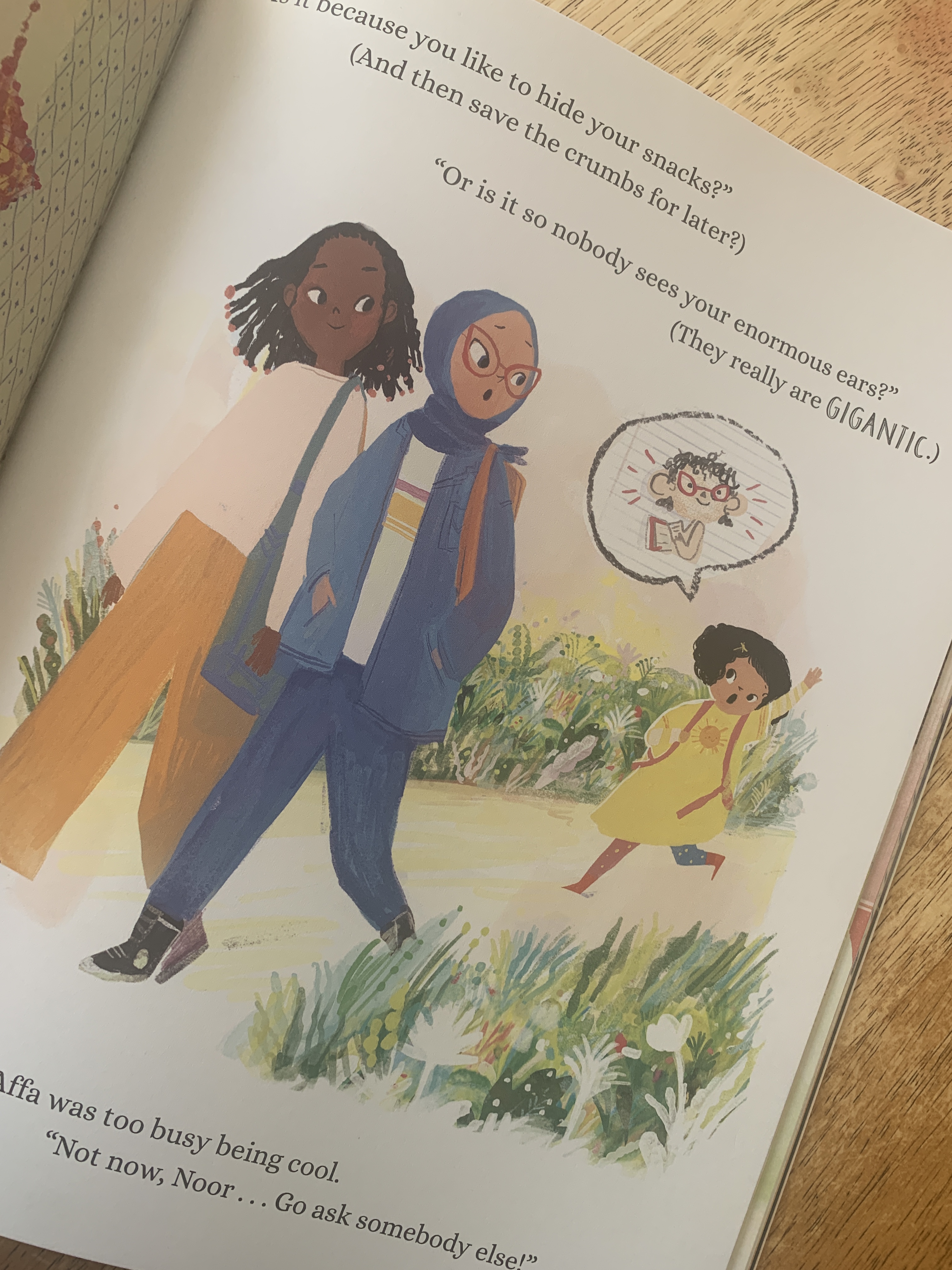
Back to the story, Noor starts by asking her sister, the coolest hijabi she knows, if she wears it to hide her snacks in, or hide her big ears, but Affa brushes her off with a, “not now, Noor” and she is off to the next family member to ask.  Each time the rationale gets more outrageous: hide the eyes on the back of your head, prevent you from getting nits, etc..  And each time the person she asks sends her on her way with a “not now, Noor.”

When Noor finally gets to her mom it is she who answers with poetic lyricism, “We are Muslim women, my Noor, Unapologetic and true.  We are believers.  We are dreamers.  We are thinkers. We are leaders. We can wear our hijabs on our heads like our hearts on our sleeves.  Whether you choose to or not, my Noor,, we are so many things…and we are more than enough.” On the next page it continues, “My hijab is not just a scarf.  It means more to me.  It is a reminder of who I am, where I’m from, and where I’m going to be.  And perhaps one day you’ll understand what I mean.  Because, most of all without my hijab, my Noor, I don’t feel like me.”

img_7622

A flowery sentiment, but little Noor and the reader never got the answer as to why Muslim women wear hijab, and I think that it is unfortunate.  The book is beautifully illustrated, the size is great to be shared, the text funny, the voice playful, the joy contagious but the answer for me, just missed the mark, not by a lot, but by enough that I think an adult would need to supplement the overall takeaway message.

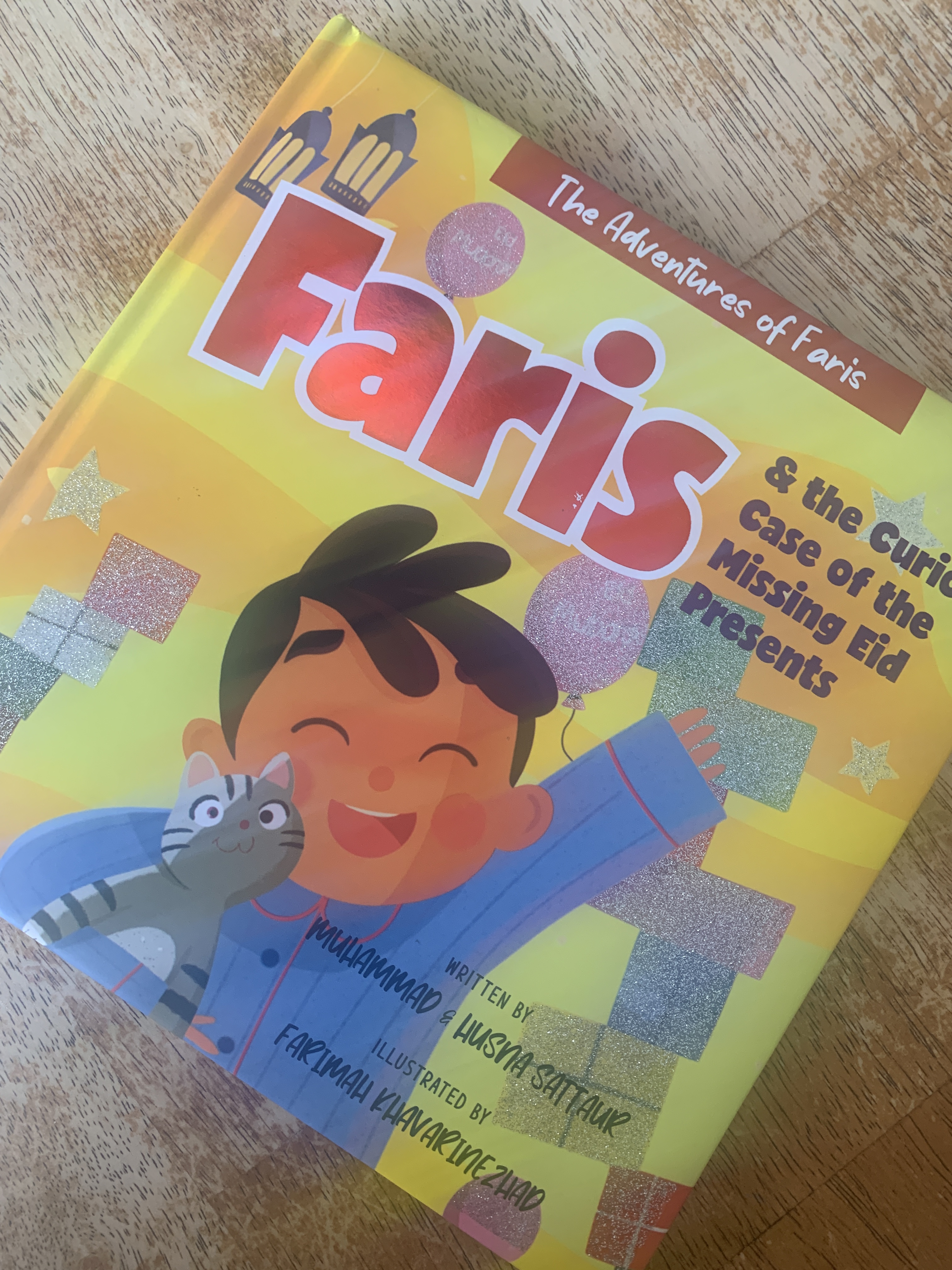
The Adventure of Faris: Faris & the Curious Case of the Missing Eid Presents by Muhammad and Husna Sattaur illustrated by Farimah Khavarine Zhad

Standard
The Adventure of Faris: Faris & the Curious Case of the Missing Eid Presents by Muhammad and Husna Sattaur illustrated by Farimah Khavarine Zhad

img_6999

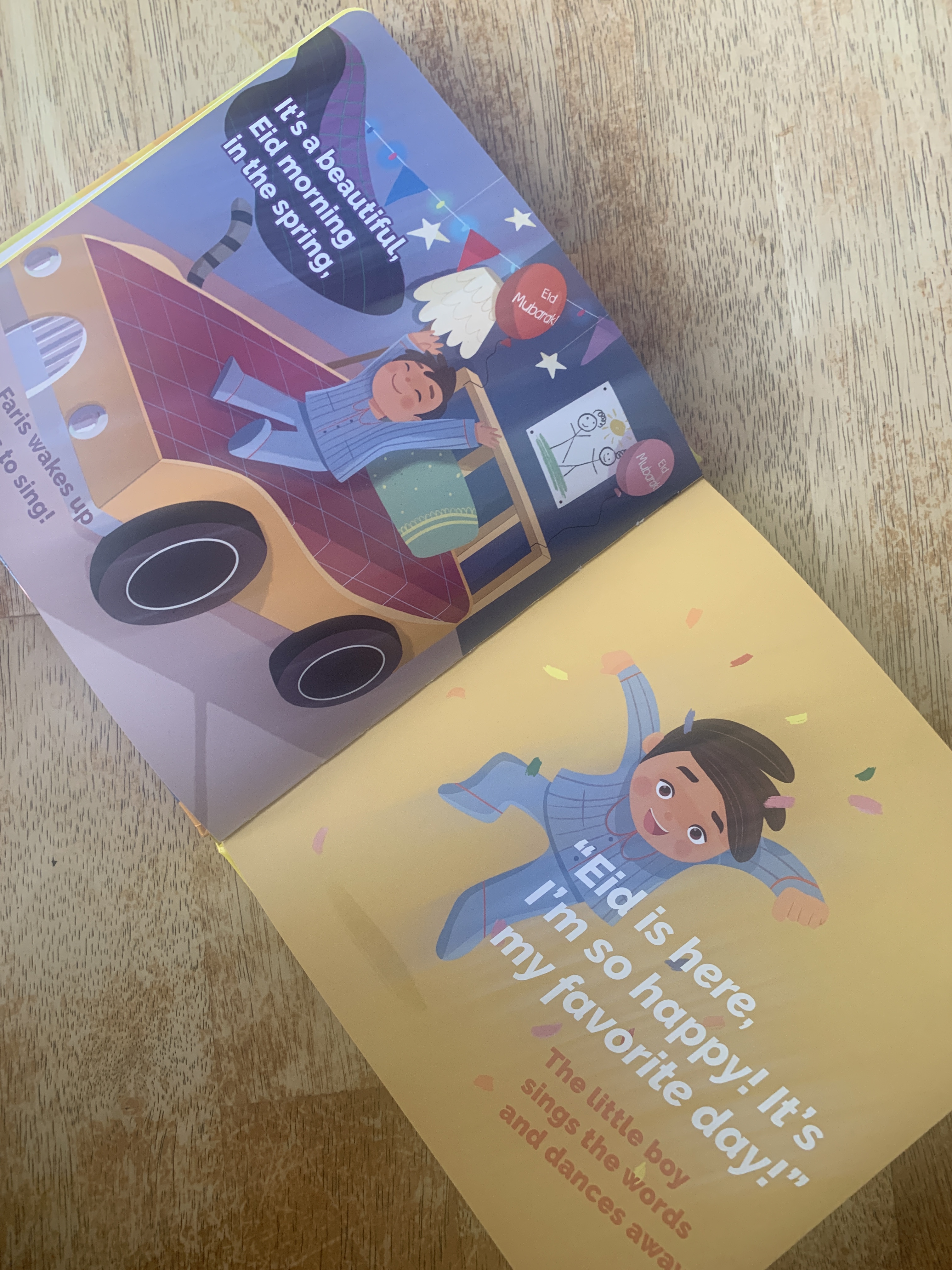
This 22 page padded cover toddler book, is not quite a board book, but the thick cardstock glossy pages are definitely meant for toddler hands.  The book works for both Eid al Fitr and Eid al Adha and my 3 year old finds it silly. My older kids that have walked in and paused to listen to me reading it, as well as myself, feel like a page is missing.  The rhyming story sets the stage of Eid morning and missing presents, but the resolution is abrupt, really abrupt, with no hinting at and the forced rhyme has you wondering who Uncle Sam is in the story.  The 22 pages are bright with Islamic decorations in the house and references to Eid and praying in the text. The excitement and joy are sweet, and the focus is presents, there is nothing about Eid or anything deeper than the story at hand as it stays on level for toddler aged children.

img_7002

The book starts with Faris waking up on a beautiful spring morning, it is Eid and he starts to sing, before tip toing down the stairs in his Eid pjs.  He sees the time and knows they won’t be up til fajr.  So, while kids won’t care, as someone who has read the book now a dozen times, I’m curious how old Faris is that he knows how to tell time, what it means and what time fajr is.  I’m also wondering how it is ok to sing and dance, but then you need to sneak down quietly, and how it is a beautiful morning, if it isn’t fajr yet, it is dark outside.

img_7003

He daydreams in the kitchen before heading off to open presents.  Except the presents are missing. He looks everywhere and imagines a dragon eating them.  I don’t want to spoil where the presents are, but they are found, and he opens them and then his parents wake up.

img_7004

It is a little sad that he opens one at least before his parents come, and I really wish there was a little hinting at what had happened to the presents, it really feels like a page is missing.  The book was published in 2021 so hopefully they will edit the text for a next printing.

img_7001

I got mine from Crescent Moon and you can purchase a copy by clicking this link here, if you use my initials ISL (Islamic School Librarian) at checkout you will save 10%.  


Mama Shamsi at the Bazaar by Mohdeh Hassani and Samira Iravani illustrated by Maya Fidawi

Standard
Mama Shamsi at the Bazaar by Mohdeh Hassani and Samira Iravani illustrated by Maya Fidawi

shamsi

At first glance it might seem that this Iranian set book with a chador at it’s core is a political statement.  I do not believe that it is.  The backmatter does state that, “Our wish in writing this book is to add to the growing list of stories for children that demystify this veil (that is too often used as a symbol of hate) and instead present a different view of it as the safe and comforting space we always knew it to be.”  This is an OWN voice authored book, from what I can find online the authors do not cover. It is a warm memory of finding love and humor and safety in the modest coverings worn by a grandmother.   I do wear hijab and I choose to do it based on my understanding of what Allah swt commands, I have never been forced to cover by a person or government, and do not know how that would effect my love of fulfilling a tenant of my faith.  But all that is an aside to make the point that this book to me is not weighing in on Iran’s politics, books are written and slated to be published years before they finally release, and this book is a silly heartfelt picture book about a girl and her chador wearing grandmother heading to the bazaar.

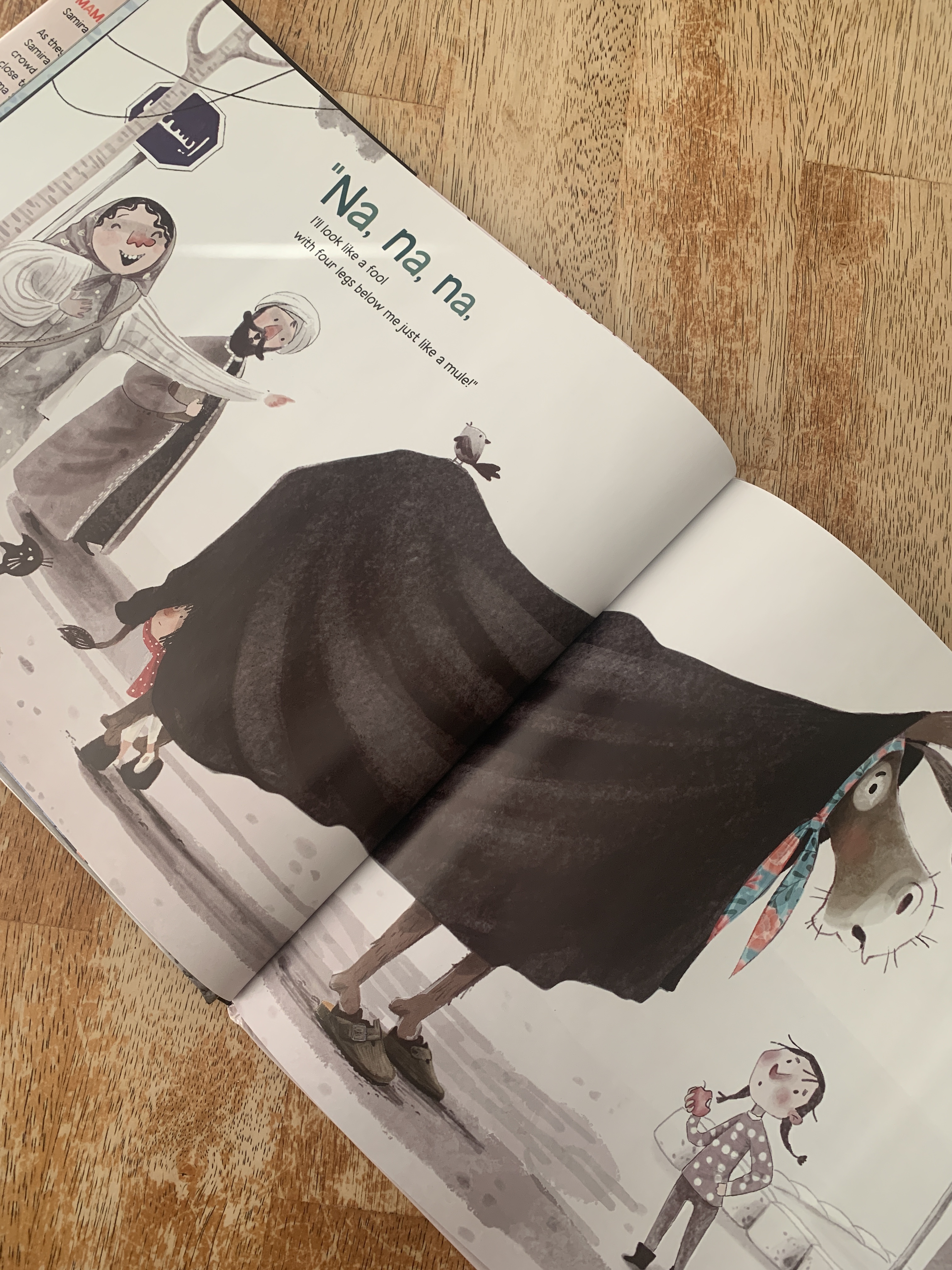
In the bustling city of Tehran, Samira is heading out to buy groceries in the big bazaar for the first time with her grandmother. Samira is nervous that it will be loud, and she might get lost, she asks her grandmother if she can rider under chador on her back. Her grandmother tells her no, she will look like a turtle.

Samira then suggest they walk in a line with grandma in front and her behind.  Grandmother Shamsi says, na, na, na, she doesn’t want to look like a donkey. Various other suggestions involving hiding under the big black chador and staying close to Mama Shamsi are suggested, but all make grandma look like a funny animal, and she declines.

When at last they arrive at the bazaar, Mama Shamsi encourages Samira to not hide but to use her eyes, and ears, and nose to learn about the world around her. Hand in hand, they stick close together, and enter the market.

The love between the two characters is heart warming in the text and truly elevated by the remarkable illustrations.  You love their relationship, you can feel Samira’s nerves, you appreciate Mama Shamsi’s humor to lovingly empower her granddaughter, and at the end you truly long to have your grandma next to you guiding you.

I enjoyed this book and don’t mind one bit reading it over and over again as kids giggle at the pictures and find details they hadn’t noticed before.  The book releases in February, and I hope that presales can reinforce the power of OWN voice authentic tales to be shared.  You can preorder/purchase it here.


Hana’s Hundreds of Hijabs by Razeena Omar Gutta illustrated by Manal Mirza 

Standard
Hana’s Hundreds of Hijabs by Razeena Omar Gutta illustrated by Manal Mirza 

img_1826

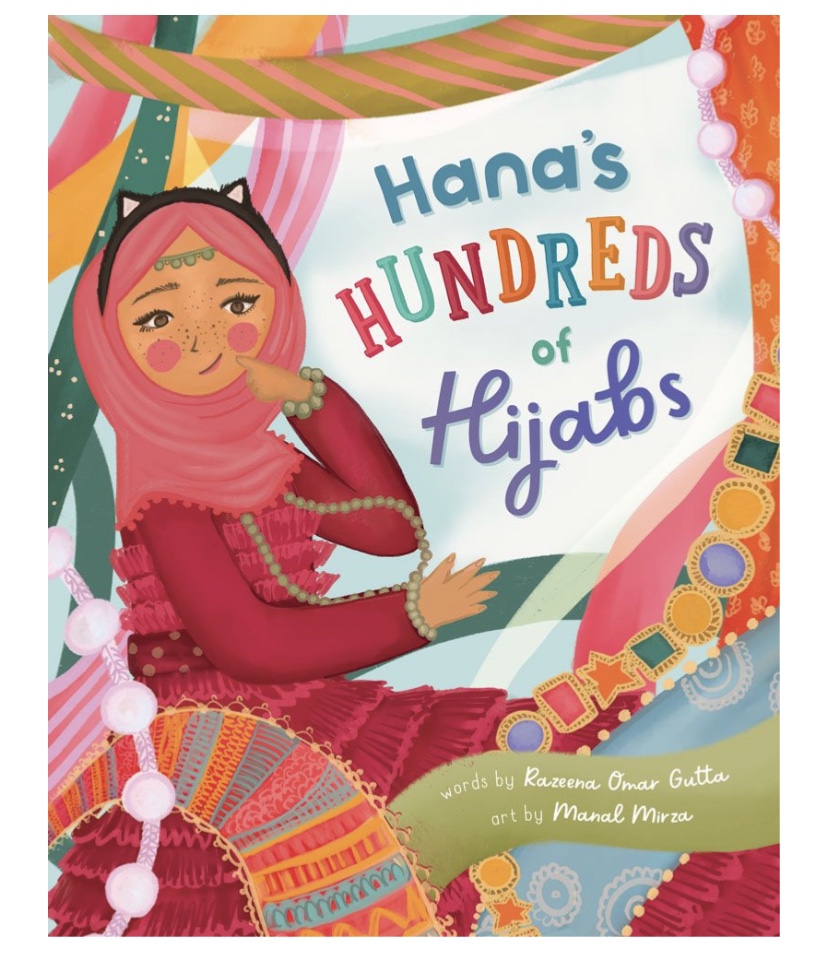
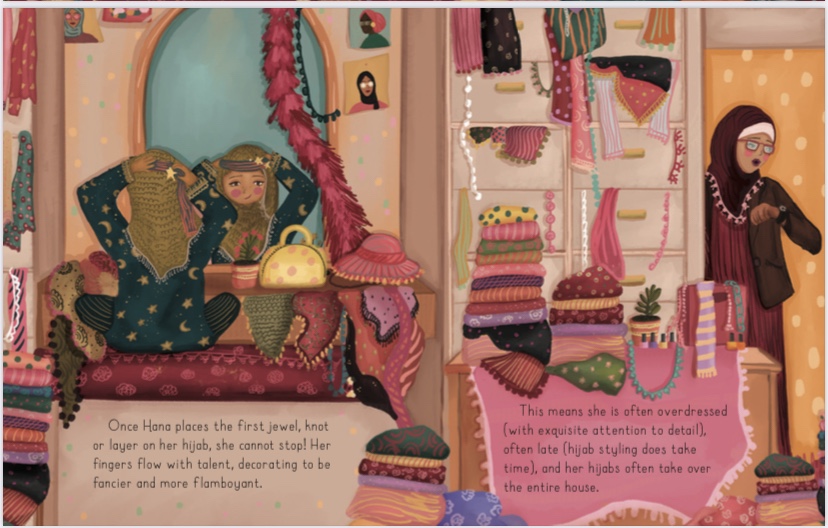
I love the idea of this book and I can see me reading it at story time to KG-2nd graders with great success. The illustrations are rich and detailed, the over the top bedazzling is fun and extra, the plot however, is non existent, surface level at best, the Islamic representation incredibly shallow, and the inconsistencies puzzling.  I’ve read this book a lot of times trying to articulate why it just rubs me the wrong way, and I think it is because it really reduces hijab to a fashion piece.  You can change the word “hijab” to hat or t-shirt or sock and the story would be EXACTLY the same. There is no connecting hijab to Islam, no showing or telling why a woman would even where it.  It presents hijab as being a costume or a decoration.  If you don’t read the author’s note at the end, you would have no idea that hijab is an obligation on Muslim women.  Even at story time in an Islamic school I don’t know that the author’s note will make the case clear enough, and I do plan to discuss with the classes how important it is to realize that hijab means something and is an act of worship and faith, and not something frivolous.  The 24 page book is cute, no doubt, but I wish it had just a bit more substance.

img_1827

A few other readers have shared that they found the story “offensive” and “triggering” for the main character’s judgmental and snooty attitude of criticizing others’ fashion sense.  As someone who doesn’t care much what I wear, I didn’t feel attacked, but their points are valid, so I share them. Hijab is incredibly personal and many women struggle with dressing for the sake of Allah swt with the messaging all around and pressures to compromise in one way or another, and this book for some could definitely add fuel to the fire of telling a woman how to dress.

img_1828

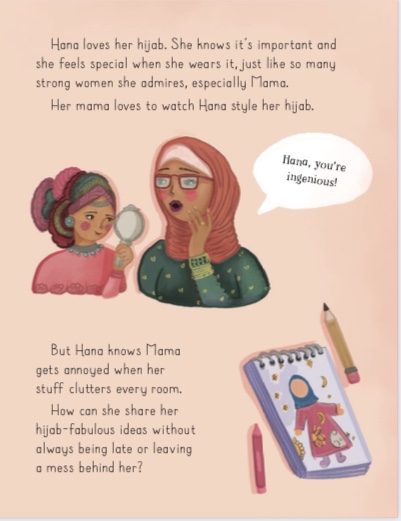
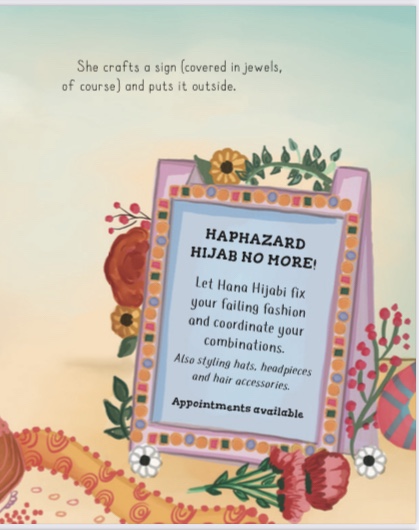
My plot concerns mainly pivot around Hana’s mom.  Why is the mom presented as irritated at the beginning and then so supportive at the end, what changed? Why doesn’t the mom remind her daughter about why one wears hijab when given the chance?  At least add the word “Muslim” in the above page between “strong” and “women.” I know the book is supposed to be fun and surface level, but connecting hijab to Islam isn’t preachy, it is logical. It is a key piece to the premise of the story.  Also, how does offering her services of styling solve the problem- wouldn’t it in fact make it worse?

img_1829

The fun illustrations and the extreme decorations really could have made the book a little girl favorite, but as it is, I don’t know that it will be requested more than once, or lend itself to being remembered once story time is over.  It draws on Fancy Nancy extremes, and thinking outside the box, but because of the faith based article at the core, it seems to miss the importance and true beauty that hijab represents.  I think Muslims will pick it up and be excited on first glance, but be left wondering what the point was, and non Muslims will probably be left with more questions than answers.

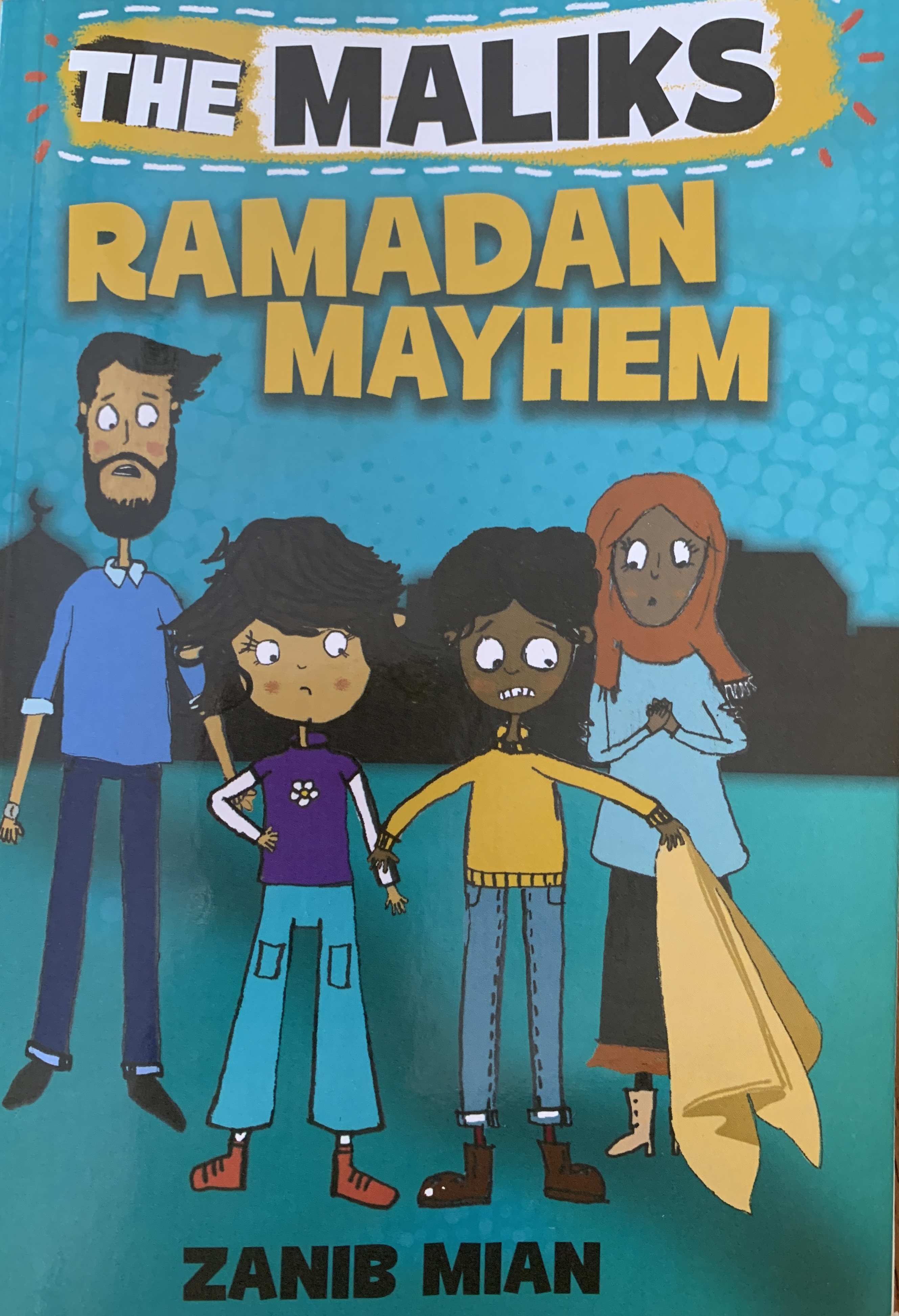
The Maliks Ramadan Mayhem by Zanib Mian

Standard
The Maliks Ramadan Mayhem by Zanib Mian

This 93 page Islam centered, action packed, humor filled book was written as a gift by the fabulous Zanib Mian for her readers. The book was to be free, all you had to do was pay shipping. Well, if you lived outside of the UK, that would make the book pretty expensive, so like any entitled book lover, I started annoying the author, my friend Noura the owner of Crescent Moon Store, and any and all connections I could muster to get the book during Ramadan. I wasn’t trying to get it for free, I just really wanted it in my hands. So, when the author did a second printing for purchasing, and my US stockist was on the list, I was giddy. Then I went out of town to be able to spend Eid with family and the lovely book sat on my neighbors dining table until the blessed month and the festivities of Eid, had come and gone. But guess what, it is ok. This book is fun, no matter what time of year you read it. It is as silly and informative and relatable as all the Omar books, and the characters just as delightful, the mystery just as teasing, and the quirkiness just as charming for readers 7 to 100. Thank you for this gift, thank you dear friend for stocking it at an incredibly affordable price and getting it to me with such speed and love. And dear readers, don’t wait until next Ramadan to get your copy, you and your children will enjoy the book now, repeatedly, and as they get excited for Ramadan next year (and the year after, and the one after that too), inshaAllah.

SYNOPSIS:

Maysa Malik is often misunderstood, and crossing lines at school, with friends, and at madrassah that get her in trouble, even while making others laugh. Her twin brother Musa doesn’t have Maysa’s penchant for getting in trouble, and so their parents are letting him go on the school trip, but not her. Maysa is determined to prove to her parents that she isn’t a class clown and can stay out of trouble. With help from Musa and their neighbor Norman, a cookie tower competition might be just the thing to raise money for charity and get in her parents’ good graces. But, a little lie to avoid teasing has big consequences and destroyed cookie towers mean her plan to go on her residential trip is failing. And no, I’m not going to spoil the plan b the kids come up with, or reveal the snowballing implications of the lie, I wouldn’t want to ruin it for you.

WHY I LIKE IT:

I love that the Islamic tidbits are woven in and made a part of the story. It doesn’t pull out to give facts about Ramadan, salat, and charity, it is all part of the story and works well for both Muslims and non Muslims without compromising or watering down important aspects of our faith. I absolutely love that Norman makes wudu before doing anything and everything related to Islam, and is very aware that farting is a wudu popping act.

There is a “moral” about honesty and self confidence, but it doesn’t come off preachy, and as I’ve grown to expect from the author, her voice reads very genuine and true. The lessons from one character to another and from within internal reflection of a character, feels organic and age appropriate.

The only thing that bothered me initially, but perhaps not so much at the end (I’m going to try not to spoil anything here). Is that the one character that speaks “broken” English is painted as being strict, mean, and short tempered. There is redemption for him, but I wish the characters were more aware of their own impressions of Mr Saleh, and that the stereotype wasn’t perpetuated.

FLAGS:

Lying, accusations, some retaliation against a bully, gossip, gambling is mentioned, butt jokes, fart and bathroom mentions. Nothing offensive, but it is funny.

TOOLS FOR LEADING THE DISCUSSION:

I won’t do this as a book club selection, but I am hoping to read it aloud to 2-4th grade next year before or during Ramadan. It would probably just take a few library sessions and I think the kids will love it.

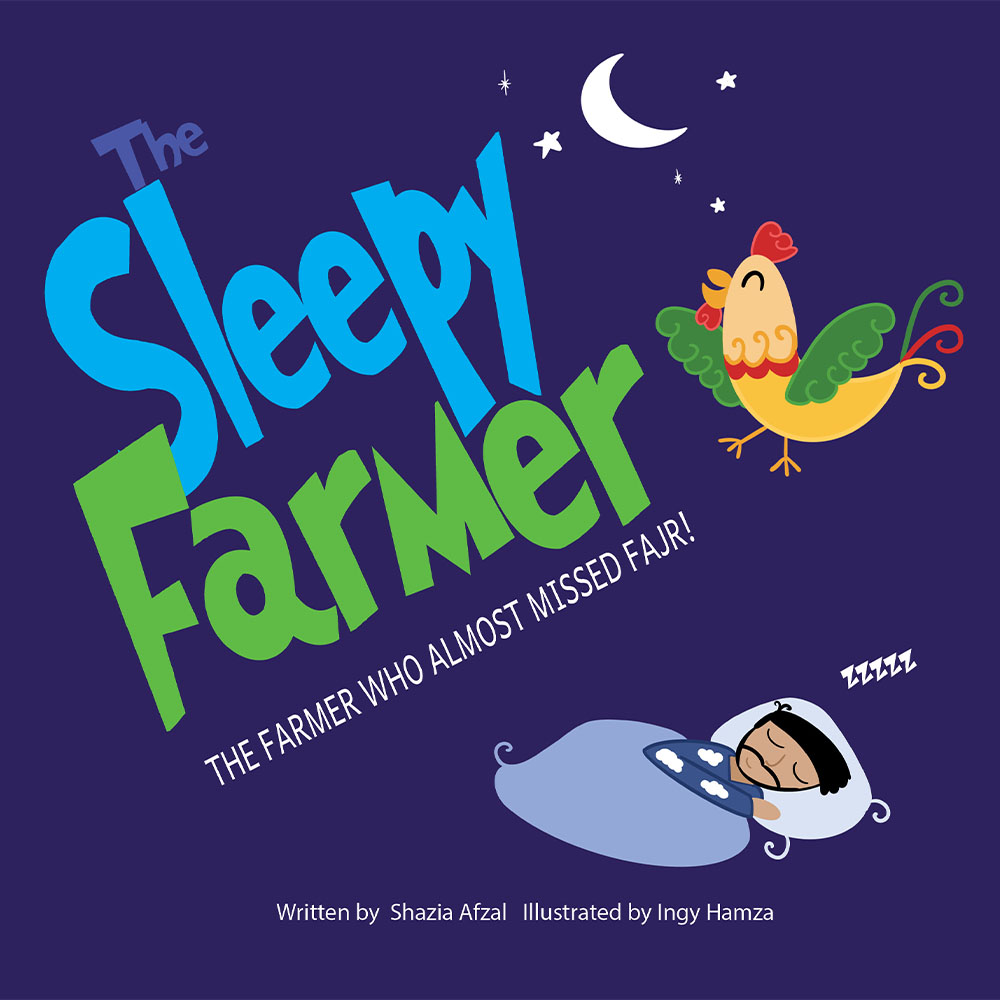
The Sleepy Farmer: The Farmer Who Almost Missed Fajr by Shazia Afzal illustrated by Ingy Hamza

Standard
The Sleepy Farmer: The Farmer Who Almost Missed Fajr by Shazia Afzal illustrated by Ingy Hamza

The Sleepy Farmer_

This adorable board book combines animal sounds, team work, appreciation, and getting to the masjid on time for fajr.  Oh ya, and it is silly too.

img_5554

Farmer Salman stayed up late and doesn’t wake up in the morning when the rooster crows. The crowing wakes the hen who starts to cluck, the clucking wakes the horse who starts to neigh…and before you know it, it awakens the entire farm.

img_5553

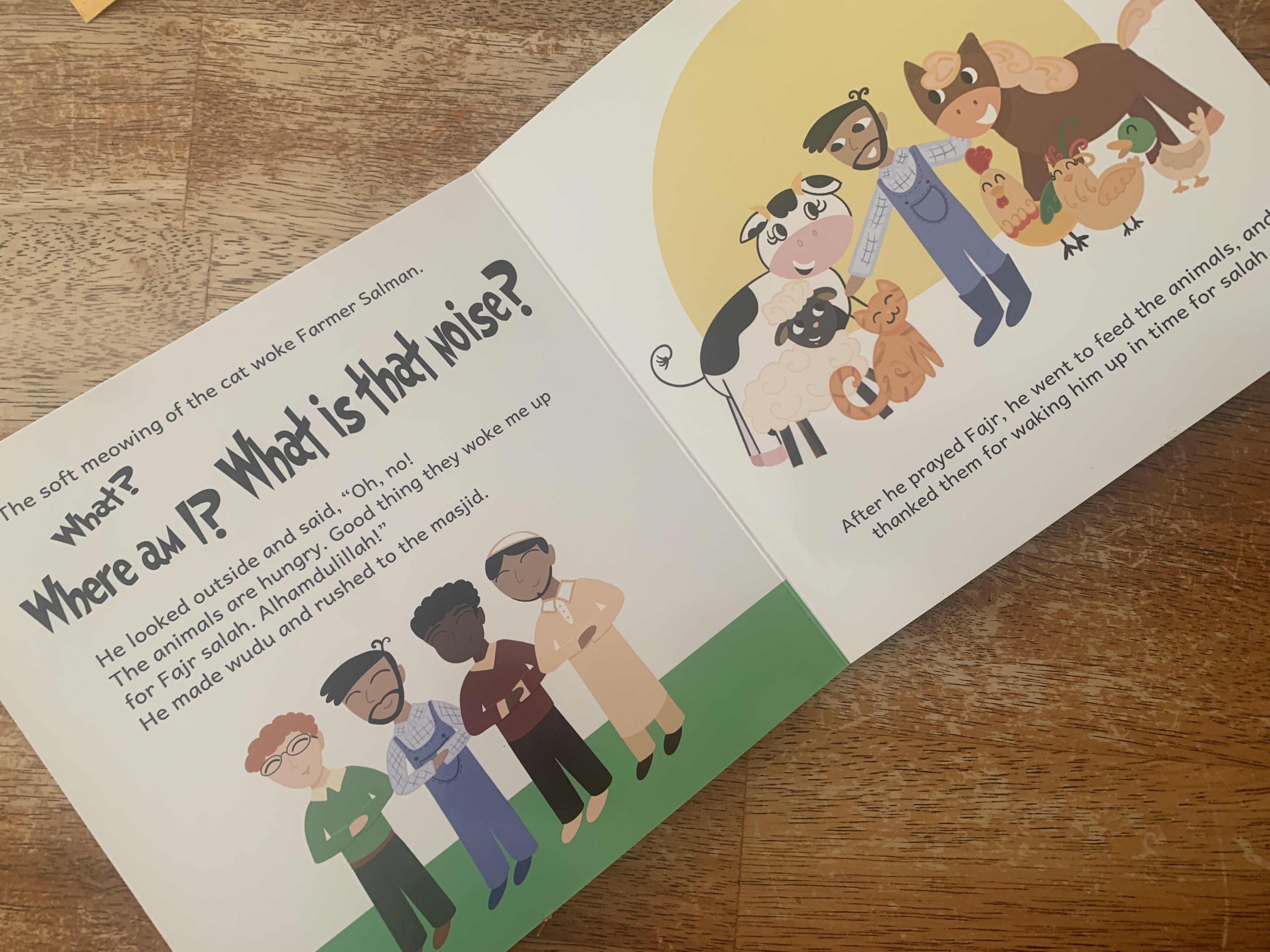
But, Farmer Salman still doesn’t wake up, so the animals get louder, and louder, and finally the cat in the house wakes up and meows in the farmer’s face.  The meowing wakes Salman up and he makes wudu and heads to the masjid, just in time for fajr salat.

img_5555

He returns from the masjid, thanks the animals and gives them their breakfast, alhumdulillah.

The book is only 10 pages and some pages are text heavy.  I think a few more pages to reduce the text on some of the pages would really make an already fun book, incredible.