Tag Archives: romance

That Can Be Arranged: A Muslim Love Story by Huda Fahmy

Standard
That Can Be Arranged: A Muslim Love Story by Huda Fahmy

arranged

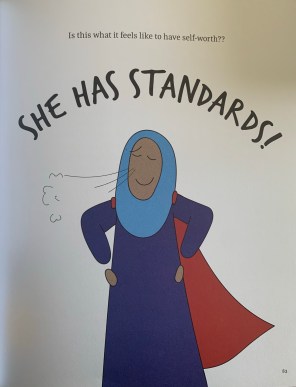
I’m not entirely sure why I didn’t review and highlight the first book, “Yes, I’m Hot in This: The Hilarious Truth About Life in a Hijab” I really should have, so to cut to the chase if you don’t follow the author/illustrator on social media you really should and you should read both her books.  Both are for all ages and while meant for adults, teens and tweens love it as well, I should know I’ve purchased and gifted over a dozen of them. I find my kids thumbing through both books a lot: my (early) teen girl and my tween boys.  Part of is it because the comics are funny, relatable, but more importantly as I’m learning from my kids, because they are curious.  In this book particularly, it is a great example of how Muslim marriages can happen, sure my kids know how my husband and my marriage was “arranged,” but they are constantly surrounded by ideas of dating and crushes and even divorce that I never realized that a book like this, featuring Muslims, actually Islamically contextualizes some of their gleamed information.  The fact that the book is hilarious and clean and rings with such honesty, makes it easier for them to articulate their questions and removes some of the taboo as well.  So, buy it for yourself to enjoy and if you have kids 11 and up in your home, you are ok to let them read it too.

img_6586

SYNOPSIS:

It isn’t a chapter book, it is part comic book, part story, part info-graphic, and all biographical.  The book opens with an ayat about spouses from the Quran and follows with an informative and funny message to the reader.  Seriously, I laughed as she explained about drawing herself with hijab in bed and noting that most people don’t read the notes to the reader at the beginning. There are also a list of helpful terms before the introduction begins.  Her story is broken up in to sections to pace and move the story along.  It starts with the ground work of expectations and cultural norms and then tells her story of how she eventually met and married her husband.  Not that it is straight forward, the book is 192 pages.  There is a decent amount of explaining Islam and the role culture plays in the many pitfalls and big decisions along the way.

img_6587-1

WHY I LOVE IT:

I think any female, born Muslim, over the age of 20 will relate to a lot in this, lots of others will as well, but that demographic specifically will find parts very reflective of their own experiences.  I love that it shows the banter between the protagonist and her mother, truly that to me was the heart of the story.  I love that it shows female empowerment and vulnerability at the same time within an Islamic context and unapologetically.  This book is by a Muslim for Muslims, but non Muslims will enjoy it as well.  It dispels and illustrates what an “arranged marriage” can mean for Muslims and shows that there is more than one way to understand the label.

I love the size of the book, the binding and the page quality.  I had no problems with “Yes, I’m Hot in This,” but after seeing the larger size of this book 7 x 8 and the thicker pages, I really preferred this presentation.

img_6589

FLAGS:

Clean

TOOLS FOR LEADING THE DISCUSSION:

Obviously not really a candidate for a book club, but I think teen girls would enjoy reading this and laughing about it with a group of friends.

img_6590

So fun and so good, alhumdulillah.

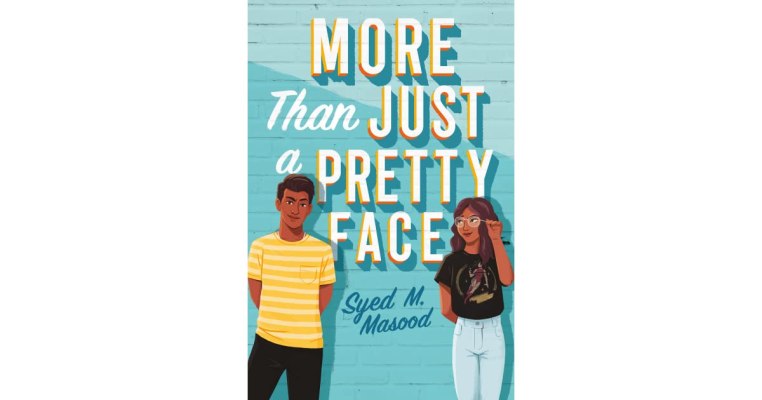
More Than Just a Pretty Face by Syed M. Masood

Standard
More Than Just a Pretty Face by Syed M. Masood

more than just a pretty face

This book is a Muslim YA romcom OWN voice written by a Muslim male.  Woah, right? And the actual story, sigh (blush) I enjoyed it, and part of me is disappointed in myself for how much I enjoyed it.  Most of the characters are Muslim and all over the spectrum in their religiosity so to speak, there are a lot of jokes at the expense of tenants in Islam and trivializing of certain concepts which really isn’t something to celebrate, but it reads real and there is a lot of Islam that is front and center and deep and though provoking. For most non Muslim readers, I’m sure 15 or 16 and up would be fine with the content and 353 page length, but as a former Islamic School Librarian, I’d have to reserve recommendations to college age.  The protagonist is 19, there is talk of sex, but not crass, the main female character has a past that includes a sex tape, and there is a lot of language, but its also really funny and really relatable and really sweet and takes place in high school.

SYNOPSIS:

Danyal is a pretty face, but he isn’t very bright.  He goes to an elite private school though somehow, and while he is admittedly dingy, he is also very kind, innocent and generous.  He was held back at some point in school and is 19 as a senior in high school.  He works in a French restaurant and dreams of being a chef.  He has no desire to go to college and as the only son of Pakistani immigrants, they are not thrilled with their son’t future plans.  Danyal is pretty chill about it though and his mom wants to arrange his marriage, and he is willing, although he is crazy in love with his friend’s twin sister.  He is religious and hasn’t really broken any of the Islamic relationship rules, he prays fajr, and just kinda floats through life doing the best he can and forgiving himself and others when they mess up.

When his mom arranges a meeting with Bisma he is willing to get to know if they are a match.  She however, fully discloses her past to him when they head out for coffee, which involves her rebelling, once a few years earlier, against her father and going to a party, further rebelling and getting drunk and then making the poor and regrettable choice to sleep with someone.  To make matters worse, the event was video taped and spread around the community forcing the family to move.  Bisma is pretty religious and really studious and really sorry, but her father and most community people don’t let it go.  Danyal thinks that is stupid, one mistake shouldn’t haunt her forever, unfortunately he doesn’t think chivalry and pity are enough of a reason to marry her as he doesn’t think they are meant for each other.  Basically, he is still really crushing on Kaval.  So he and Bisma decide to be friends.

When Danyal’s history teacher in a fit of spite nominates Danyal for a prestigious Renaissance Man competition, Danyal calls on Bisma for help.  The topic is Winston Churchill, the beloved British leader, but Danyal quickly learns he is not beloved by most Indian subcontinent people.  Kaval offers to help so that Danyal can win the competition, impress her parents and then maybe give them a chance.  But, suddenly Danyal doesn’t know if that is what he wants.  He wants to be himself, he wants to be accepted, he wants Bisma.

WHY I LIKE IT:

You know how it is going to end, you don’t know entirely how it is going to get there, but you know where it is headed, yet the book is still compelling and fun.  Between the banter of the religious friend, and the no longer religious friend, the advice the French Chef bestows on Danyal and Danyal’s complete and utter cluelessness to everything, the book is really warm and the characters really like-able.  I dislike the stereotype of the “religious” character, but the other side characters are better developed.

On occasion I think Danyal’s stupidity is over done, he isn’t an idiot, he just isn’t book smart. So when he doesn’t know what “break a leg” implies for example, it seems a tiny bit off.  I know his friends say he isn’t funny, but I think he is hilarious, especially with his commentary on the Desi community.  “It is the curse of brown boys everywhere.  We either die young or we live long enough to see ourselves become uncles.”

The role of Islam is incredibly prominent, and the characters understand what it means to be Muslim differently.  Sometime I agreed with them, sometimes I didn’t, sometimes the characters didn’t agree with each other, sometimes they did.  There is a lot to think about: destiny, Allah’s mercy, Qalb-e-saleem (a pure heart), caring for the less fortunate.  Even politically there is a strong thread of colonialism, which the characters wrestle with and with being immigrant’s children.   There is a lot packed in, but it flows so smooth and the writing rich with authenticity, that quite often I would laugh out loud and read various lines to my young children.

FLAGS:

Talk of sex and losing virginity, but not detailed, just stated.  The chef is a lesbian.  There is lots of language including the F word, not thrown in effortlessly, usually for a reason, and often reprimanded.  There are a few kisses on the cheek and lips between Danyal and Bisma, but in a Disney princess movie sort of way.

TOOLS FOR LEADING THE DISCUSSION:

Not for middle or even high school book club. I don’t think that it is a completely “halal” romance story, but I think I wouldn’t be concerned if juniors and seniors were reading it, I think they would love it, and I might just have a few that I want to suggest it to…


The Candle and the Flame by Nafiza Azad

Standard
The Candle and the Flame by Nafiza Azad

flame

It takes about 124 pages to be swept away to the city of Noor, but once it happens, it is hard to come back.  The 391 page fantasy story takes a while to get going, but the character driven plot filled with amazingly strong and diverse women is worth the slow start.  Middle school readers and up (AR 5.8) will enjoy the blend of Islamic imagery, sub-continent Asian culture, fire, Ifrits, Djinn, family, relate-ablity and good quality story telling.  The fact that it is a main stream book, with so much religion and culture makes it all the more remarkable in its universal appeal.

SYNOPSIS:

Fatima is a Muslim girl adopted by a Hindu family, only everyone in the entire city was killed eight years ago except for Fatima, her adopted sister, and an elderly lady, when the Shayateen attacked.  The orderly Ifrit were asked to defeat the Shayateen and protect the city, and when they did, the wealthy returned along with people from other cities.  Thus Noor is now a vibrant city of different backgrounds, cultures, religions, and languages repopulated and ruled in halves by the Maharaja, Aarush and Ifrit Emir, Zulfikar.

Fatima works as a messenger and her favorite place to deliver packages to is an old book shop owned by Firdaus, an Ifrit she regards as a fatherly figure.  He has taught her languages and provides her a place to learn and grow.  When he dies in front of Fatima, she is forever changed, literally, he transfers his powers to her, and she is now not only part human, part Ifrit, but also the Name Giver, an incredibly powerful and important being in bringing the smokeless Djinn from their wold to her hers.

With rebel forces threatening the Maharaja’s rule, Ghul and Shayateen entering the city, a taint threatening the leader of the Ifrit, a traitor in each palace, and a budding romance between Fatima and Zulfiqar, the characters pull you in and create an enjoyable story that is vivid, fantastic, and hard to put down.

WHY I LIKE IT:

The story doesn’t have a neat and tidy plot culminating in a climax, but the character arcs and vivid world building pull you in and keep you interested.  I love that the characters are different and complex and unique, and that women are so so strong and celebrated for their strength in all spheres, not at the expense of the males, but solidly in their own right.  It is refreshing and glorious to see the matriarchal Ifrit world contrasted with the human world, and the strong females that emerge in both.

I love that there is so much diversity and tolerance and the book doesn’t shy away from presenting faith practices and acceptance in such an honest manner.  There is a four page glossary and it is needed, yet not overwhelming at the same time.  The most read page in the book for me however, was the Dramatis Personae page listing the characters.  Until that 124 page mark, I was constantly flipping back trying to keep everyone straight, not so much because the characters are confusing, but “what” they are took a little while to stick.

I got sucked in by this book truly, I ignored my children during our Corona virus quarantine one day to read the second half, and I don’t regret it one bit.  The romance, was a bit cheesy at the end, but it was clean, and sweet and presented as a way forward, not as a settling or sacrificing choice for either character which was greatly appreciated.

FLAGS:

There are a few kisses once the two main characters are married.  There is stalking and attempted sexual assault by a character, but Fatima more than took care of that with the support of many strong females.  There is mention of a homosexual relationship, but not dwelled on, and I think one could argue that there is  possibly something more going on between two of the females, but it isn’t explored.  There is death and killing and violence, but nothing extreme.

TOOLS FOR LEADING THE DISCUSSION:

I had hoped to sneak this in for book club next month, but with school closed indefinitely, it might have to wait until next year. I think girls will gravitate more to it than boys, but I think that is ok, because often girls need more of a nudge, in my experience, to give fantasy a try.  I am trying to convince my daughter to read it, but the first 100 pages are pretty slow, so if I can’t force her through it, I don’t know what chance I’ll have, here’s hoping.

NPR Review: https://www.npr.org/2019/05/18/724120066/language-has-magic-in-the-candle-and-the-flame

Interview with Nafiza Azad and Hafsah Faizal (We Hunt the Flame) https://www.slj.com/?detailStory=hafsah-faizal-and-nafiza-azad-interview

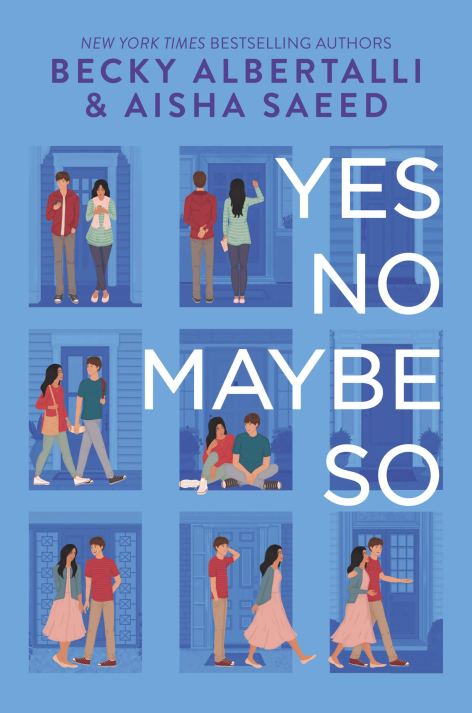
Yes No Maybe So by Becky Ablertalli and Aisha Saeed

Standard
Yes No Maybe So by Becky Ablertalli and Aisha Saeed

yes no

This new rom com in book form with a Muslim female character written by a Muslim author, sets itself apart by being co-written by a Jewish author and the other half of the love story being told by a Jewish boy’s point of view.  This YA book is very relevant as a special election in Georgia served as the catalyst of the two authors coming together and fictionalizing the effects of white supremacy, Islamaphobia, and antisemitism for the book, while real headlines were urging the two to canvas, get involved, and make a change against the increased showing of hate with the election of Trump.  The presentation of Islam is probably realistic, but definitely not ideal, and with the kissing, multiple LGBTQ+ supporting characters, the profanities, and 436 page length, the book is probably best for 15 year old readers and up.

SYNOPSIS:

Jamie Goldberg is 17 and is spending his summer helping his cousin work on a special election campaign for a Democratic candidate in an incredibly red district in Georgia.  A very nervous kid, who hates public speaking and talking to girls in general, he would rather be behind the scenes or hanging out at Target.  His little sister, Sophie’s bat mitzvah is coming and things at home are crazy with pre party planning.  His grandma, an Instagram sensation uses him for tech support and video filming, and his easy going demeanor means he spends a lot of time, being bossed around.

Maya is the 17 year old only child of a lawyer mom and physician dad and has just found out that they are separating.  With her one friend too busy with work and starting at the University of Georgia, US born, Pakistani-American Muslim Maya, is not having a very good Ramadan.  When an interfaith event reunites her with a childhood play-date friend, Jamie, her mom convinces her to help him canvas to keep busy and sweetens the deal by bribing her with a car.

Naturally the two spend a lot of time together vounteering for Jordan Rossum, stuffing envelopes, canvassing, and putting up signs.  Along their way they become good friends, and invested in the election as a House Bill banning head coverings, and antisemitic bumper stickers start getting plastered around town.  The end of Ramadan, the election, the hate the two encounter, and families changing, bring Jamie and Maya together.

Maya’s parents are pretty chill about boys, and only caution her about unnecessary complications by dating in high school, when Maya throws it back on them, that their relationship is pretty complicated, she seems to not find an Islamic reason not to make-out with Jamie.  The whole book is angsty and the two feign cluelessness, but based on the cover of the book alone you know where it is going.  The true climax is how much the relationship can be used for political gain, and if they can get their candidate elected.

WHY I LIKE IT:

I like the political setting, it is a different and very relevant slant.  It might be a little alienating to readers outside the United States, because the political process isn’t really detailed, but the characters involvement in their small slice is a major aspect of the book.  The book is definitely pro Democrat, but addresses the gas lighting, hate speech, and views of those on both sides.

I also like that two minority authors came together to share an OWN voice perspective of life today.  For the most part the story telling is smooth with the two characters getting alternating chapters to tell their story from their point of view.  A few times, I felt details were missing, for example what Maya wore for Eid, when space was given to detail that she didn’t wear ethnic clothes to an iftar, and her picking a dress for Sophie’s bat mitzvah.  Similarly, Maya’s parents seemed flat for their trial separation being a major part of Maya’s stress.  Jamie’s grandma was probably my favorite side character, and one of the most fleshed out.

I am fully aware that some Muslims pick and chose what to follow and that not everyone is strict about boy/girl relations, but I felt like for a book that is set in Ramadan, uses religion as a catalyst for civic action, Maya’s mom wearing hijab, and an opening scene being set at the masjid, there is really nothing Islam in the defining aspects of the characters or story.  It is so watered down and almost catering to non Muslims to feel comfortable, that it left me annoyed.  And I think non Muslims too will wonder why Maya’s mom covers and Maya doesn’t and how that works, or why Maya switches to having one reason for not dating and then a religious one.

The book sets out to do a lot in terms of humanizing the effects of laws and policy on average people, but I don’t know that most Muslims hoping to see a mirror to their experience will find that in Maya.  I can’t speak about Jamie, and the Jewish experience, but Maya is rather forgettable in my opinion.

FLAGS:

There is a lot of cursing, and the F word at that.  In the dialogue set in Ramadan, it becomes a joke to substitute it for something else, but once the month is over, the language resumes.  There is kissing, and making-out with the main characters.  There is talk of hooking up, but nothing explicit.  There are is a side character friend that is gay and he and his boyfriend are affectionate.  After the bat mitzvah Sophie comes out to Jamie.

TOOLS FOR LEADING THE DISCUSSION:

I don’t think that I could do this as a middle school selection, the rationale for Jamie and Maya dating, isn’t ok for an Islamic School message.  I really wish just once, a book like this would have the main character, being like, “nope, sorry.”  It is getting predictable and while I know it is countering the oppressed woman view, it is becoming equally one dimensional in its presentation of Muslim women.


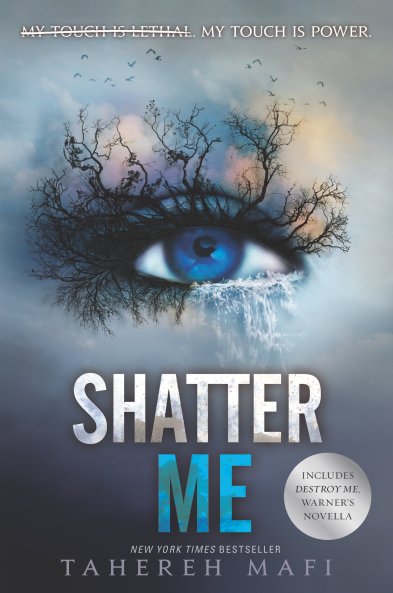
Shatter Me by Tahereh Mafi

Standard
Shatter Me by Tahereh Mafi

shatter

In many ways this 338 page dystopian YA fiction book focuses more on romance than the super human powers the 17 year old protagonist has and the role she will play in the resistance.  That isn’t to say the book is bad, just that it isn’t as high action, or reform-a-broken-world, or even use-my-super-powers-to-save-myself-and-those-around-me as I had hoped. It is more a lot of self loathing, desire, and anger.  That being said, I am on the fence about reading the rest of the series, as this is the start of a six book series, with two “half” novellas interjected in and being told from other characters’ perspectives.  If this was a show pilot, however, I would let Netflix automatically start the next episode until I had binge watched the entire season, not necessarily because the story is great, or the characters amazing, or the writing stellar, but because it is easy and fun and you really want to suspend belief and know who all these attractive mutated teens running a broken world are, and yes you will roll your eyes at the syrupy sweet lust filled pages, but it is YA so maybe I’m just overly cynical and 15 year olds and up will enjoy it.  It is an AR 4.3, but the language, violence, and romantic build ups should not be read by 4th graders.

SYNOPSIS:

The book starts with Juliette counting how many days she has been locked up in a cell, 264, void of human interaction of any sort and hinting at the reason her parents feared her and turned her in.  She is then joined by a male cellmate, Adam, one she slowly realizes she remembers from her youth and is in love with.  As he asks her questions we learn a bit about her power and the state of the world.  Juliette can kill people with her touch and apparently has killed someone, a child.  Her parents, along with everyone else, have always feared her, and not being hugged or touched her whole life has definitely been a painful existence for her.  Adam is a soldier and can touch her, he is also planted to learn about her as part of his job.  Warner, another teen, is in charge of a soldiers in the Reestablishment and has been following Juliette for a long time trying to see how they can weaponize her and use her for their cause.  Adam was playing a role, and now Juliette will have to play one in a world where the food is fake, the clouds the wrong color, and artifacts of culture and life before it all fell apart are destroyed and deemed illegal.  Along the way she will have to see the world in shades of gray and be willing to forgive and understand that people are not just for or against the way things, are, that sometimes you just have to do things to survive and protect the ones you love.

WHY I LIKE IT:

With all the talk of Iran in the news, I felt compelled to read a book with a Persian character, or at least by a Persian author, so I revisited the works of Iranian-American Muslim Tahereh Mafi.  The book reminds me of a Bollywood drama from the 90s where the hero and heroine do everything suggestive, except kiss, in this book they do a lot, but I guess don’t quite cross a line.  The scenes with Adam and Juliette are too much at times, where the story building about her understanding herself, her world, and what her powers can be, too little. The stage however, is set for the book and characters to grow in the series and with that optimism of knowing that the story stretches on, I have to hope the twists and turns make for a more interesting ride than this first book presents.  Most of the drama is already spelled out on the back cover, she can kill people just by touching them, she wrestles with seeing herself as a monster, or as being more than human.  It really doesn’t start getting good until she finds others like her, but then she is bored of them and the book ends.  The book has a huge following, so much like perhaps the Twilight series, maybe I’m just too cynical, and not in the target demographic, or maybe I need to keep reading.

FLAGS:

There is violence, *SPOILER* Juliette accidentally kills a child.  There is language, there is suggestive talk, there are romantic passages with kissing and touching.  For a book about a character who can’t touch, I feel like the majority of the book is about her touching and being touched.

TOOLS FOR LEADING THE DISCUSSION:

I wouldn’t do this as a book club, because I feel like it really is just a book setting the stage for what more is to come and because it ends so abruptly it feels almost like a teaser, yes a 300+ page teaser.  I was hoping that I could at least suggest it to readers of Hunger Games, City of Ember, The Giver, etc., but I don’t think it spends enough time on the crisis of the world at hand, and the adjustments made by a select few to appeal to the same readers.  It really is a romance, at least thus far, and the destruction of life and the environment just a back drop for their storyline.

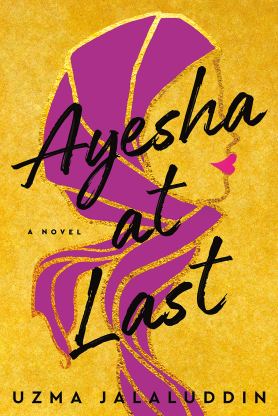
Ayesha at Last by Uzma Jalaluddin

Standard
Ayesha at Last by Uzma Jalaluddin

ayesha at last.jpg

This is not a YA book.  The back of the book and about 75% of the story could really make it seem ok for mature middle school and early high school readers, but I’m reviewing it as a “public service announcement,” that it really isn’t appropriate for a young adult demographic.  No where does the book claim to be YA, I’ve just seen a lot of people online ask if their 13-16 year old (ish) daughters would like it.  That being said, the 351 pages of halal romantic comedy a’ la Pride and Prejudice inspiration, really is a fun light summer read that I enjoyed and feel young college age girls and up will too.

SYNOPSIS:

Set in Canada, Ayesha is 27 and still sorting out what she wants in life while considering expectation, obligation, and passion.  Born in India, she came to Canada after her father died in secretive circumstances, and with a workaholic mom against marriage, a Nani who once studied to be a police officer, a Nana who quotes Shakespeare at all times, Clara, a best friend, and a flighty beautiful younger richer cousin, this cast of characters cheer her on, gently nudge her, and support her, giving a diverse and nuanced view of what a Muslim family looks like and how they interact.  Then throw in Khalid.  A very black and white character in his views on Islam, and culture and pretty much everything, and you have a storyline with a lot of potential, twists, and interconnections.  

Khalid works with Clara, lives across the street from Ayesha, and has an incredibly controlling mom who has just sent a marriage proposal to Ayesha’s flighty cousin Hafsa.  When a conference at the masjid forces Ayesha and Khalid to work together after meeting earlier, tension and sparks fly, and to top it all off Ayesha is pretending to be Hafsa. 

Khalid has his own team of supporting characters, Amir an alcoholic- womanizing-homeless colleague who for some reason is considered a friend, a sister who was banished to India and forced into an arranged marriage 12 years earlier, an Islamaphobe boss, and his own baggage regarding his father’s sudden death. 

Bring in the Wickham character of Tarek and the cast of characters is complete for all the action to go down at the mosque and give the Aunty Brigade a whole lot of gossip to process and spread.

WHY I LIKE IT:

The book is fairly predictable in the major story arcs, but there are a lot of twists that keep you hooked, and the author’s writing is smooth and fluid.  Being it is a loose retelling of a classic, I wasn’t expecting much and was pleasantly surprised how well the story would stand alone as an OWN voice piece about growing, maturing, changing and willing to challenge oneself. 

I love that every Muslim and desi character in the book is different and unique and not a cookie cutter of stereotypes and tropes.  Most of the females cover, but they are nuanced in how they do it, what it means, how they carry themselves etc., some shake hands with males some don’t, some are comfortable in bars, some are more reserved, some have never had a boyfriend, some have, and they really show the reader that Islam is a deeply personal conviction and the rules are interpreted and challenged differently for each person.  It also shows different male approaches and the internal struggles of doing what you want to do and what you know you should or shouldn’t do in a very realistic non preachy way.

My favorite relationship by far is that of Ayesha and Clara, I love that Ayesha’s non Muslim friend knows that Khadijah (RA) proposed to Prophet Muhammad (SAW) and jokes about rishtas and frequently asks “What would Nana do.”  Seriously, as someone of  Paki background, who started covering in high school, who is half American and proud to be Muslim, this is friendship goals!

The book is perfect for the beach, or a day at the pool, it is light and silly and really you just go with the outrageousness of some of the details.  There are a few thought provoking themes, but really it is just fun and sweet.

FLAGS:

I was really impressed how halal the main story romance remained, however a few of the side stories are a little intense for younger readers and don’t really appear until about 2/3rds of the way into the book.  Yes, Clara has a live in boyfriend and there are a few jokes and situations involving  hooking up, virginity and porn, along with some characters smoking and drinking and being around alcohol, but then the climax really puts more mature situations on center stage. 

Khalid’s sister had an abortion resulting from a pre-marriage relationship and thus was sent to India.  Amir shows Khalid a porn website where hijabi and niqabis strip and pose, a website that is discovered Tarek runs and Hafsa is featured on. The website and the pregnancy/abortion really are the crux of the book and it becomes a big portion of the last third of the book.  It isn’t that the content is overly detailed, it just what the concept presents.  It isn’t salacious or pornographic or titillating in presenting the information to the reader, but the mere presence of it in the story would make it inappropriate for a YA book or younger readers.

TOOLS FOR LEADING THE DISCUSSION:

No way the book could be taught in an Islamic school book club setting, however, if the teachers wanted to start a book club, this one would be a great candidate.


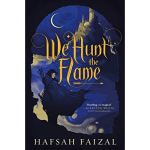
We Hunt the Flame by Hafsah Faizal

Standard
We Hunt the Flame by Hafsah Faizal

we hunt the flame.jpg

A mature upper middle school/high school aged fantasy romance, written by a nikabi and filled with ancient Arab imagery and Arabic words.  Story-wise it read to me like a mashup of Hunger Games and Ember in the Ashes, and while the overall story is good, the first 60 pages of world building were utterly confusing to me.  I told myself I would read at least 100 pages and then decide if I wanted to continue, luckily before I hit 100 pages I found a glossary of terms, characters, and places online, and the story moved from world building to character development and I enjoyed the rest of the ride.

SYNOPSIS:

In a world that is slowly being taken over by the dark magic that is the Arz, a deadly forest that surrounds the country of Arawiya, one girl in one of the five Caliphates, Zafira, dares to venture into the darkness to hunt game and prevent her people from starving.  Unfortunately the Caliph of her state looks down upon women and this regular heroic act must be done with her impersonating a man and keeping her efforts as covert as possible.  Life for Zafira is hard as she not only juggles this masquerade, but her father has recently been killed, her mother is mentally absent, her best friend is getting married, the Arz is growing, and the people around her are starving.

In more or less alternating chapters we also learn of Nasir, the ‘Prince of Death’ who is an assassin for the Sultan who has also now taken over as Caliph of Sarasin.  Forced to kill innocent people by his heartless father, Nasir also is mourning the loss of his mother,  as he tries to earn his father’s approval and find some validation for his current life.

The two characters come together when an immortal witch summons Zafira to retrieve a magic book from a cursed island beyond the Arz and Naisr’s father sends him to intercept her.  The majority of the book takes place on the island of Sharr, an island that is not only a location, but a living consuming character, and involves a variety of other enchanted beings from the various states.  An immortal Safin, Benyamin, one of nine elites, Kafirah, and Altair, a general from Sarasin that weaves them altogether and complicates everything.   This group, the zumra, must work together to save Arawiya, while constantly evaluating how much they can trust one another, as well as themselves.

WHY I LIKE IT:

I love the detail and was pleasantly surprised with the pacing.  The chapters are short and kept the plot from dragging for 471 pages.  Having read it and enjoyed it, I don’t know that I can properly discuss it though.  There are things that I just accepted and moved on with without pondering over, because I don’t know if I understood it well enough to even ask the question aloud.  That being said, I feel like I got the story and I understood where the characters were coming from and I closed the book feeling satisfied and willing to read the next one in the series.  The characters grow and develop and they have a satisfying arc without being overly cliche or predictable.  I think Nasir grows much more than Zafira and knowing that the next book is more focused on him, intrigues me.  Altair is by far the most fascinating character and I hope to see more of him as well.

There is a map at the beginning of the book that I referenced A LOT, and truly I have no idea why the glossary and character list was not included in the book, as it is desperately needed. There are a lot of Arabic words and I would like to get an Arabic speaker’s perspective on how knowing what the terms meant affected the story comprehension. 

I like that Zafira has to find confidence in shedding her cloak and stepping in to herself, but I felt it told it more than it showed.  Some of the states are governed by women, the founders are women, that I didn’t feel her fear in hiding her gender.  Similarly, I wanted more information on who/what exactly the Lion of the Night was/is and where the affinities come from.  Perhaps minor points, but details that kept me from immersing myself in this fantastical land and kept me feeling like an outsider peering in and trying to connect with events just out of reach.

FLAGS:

There is a lot of killing, and some of it gruesome.  There is abuse and details of branding and a tongue being cut out.  There is alluding of sexual acts but nothing defined, random comments between characters and implications of girls in a room in the morning.  There is kissing and an intense makeout session that is used to achieve a battle goal, but it is detailed and the characters reflect on how it made them feel in terms of desire, longing, wanting, etc.  So, while it is there, it is there for a purpose other than titillation, that is why I think mature middle school could handle it.  There is a scene in a bar, but none of the main characters drink.  There is some language, albeit not in English.

TOOLS FOR LEADING THE DISCUSSION:

I don’t think I could do this with 6th graders in my middle school book club, but I will definitely suggest it for the high school one.  I think there are a lot of ways things can be interpreted and because it is a fantasy there is no right or wrong which would make the discussion fascinating.  The romance I think makes the book lean to being more female oriented, but I think there is enough action that boys will also enjoy it overall as well.

Book Website: https://www.wehunttheflame.com/

The book just came out, so I’m sure in the next few weeks and months there will be more tools, more interviews, and more details of what is to come in the series.


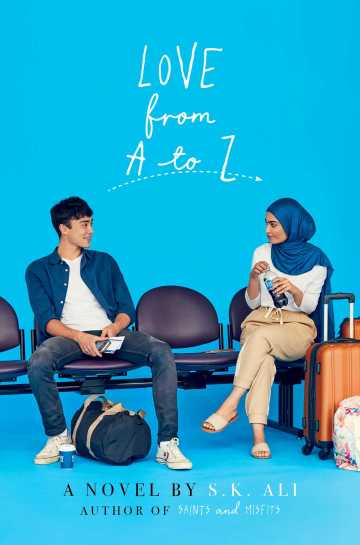
Love from A to Z by S.K. Ali

Standard
Love from A to Z by S.K. Ali

love from a to z.jpg

Now that there is legitimately a genre of YA Islamic Romance out there told in Own Voice, the expectations are high that a book is compelling, realistic, and unique somehow.  While the author’s first book, Saints and Misfits was pretty ground breaking, this 342 page was a great read, but not nearly as remarkable or memorable.  Granted it is not fair to compare the two books, and each day I do age out of the target demographic, but while the story reads authentic and true, albeit a bit serendipitous, it doesn’t have the teeth or grit I was kind of hoping for, and with a mother who suffers from multiple sclerosis my emotions were pretty invested.

SYNOPSIS:

Told from both Adam and Zayneb’s perspectives by way of their individual “Oddities and Marvels” journals, our two characters are presented by a narrator who keeps their story on track and interjects when their versions of an event differ. 

Zayneb is a high schooler and activist who has recently been expelled for threatening a teacher who consistently lets his Islamaphobic beliefs take over the days lessons.  In an environment filled with micro aggressions against Muslims, Zeynab’s parents are at a loss at how to keep their daughter from making waves, and thus allow her to leave her Indiana home a week before spring break to visit her aunt in Doha, Qatar.

Adam is at University in London where he has recently been diagnosed with MS and as a result has stopped going to classes, and is literally “making” the most of the time he has by making things.  As the term ends and he officially withdraws from school, he heads home to Doha to tell his dad and sister that he has the same disease that took his mother’s life years early.

The two characters meet at the airport briefly and then again on the plane and then at Adam’s house and the needless to say  their accidental meetings allow for friendship to grow, attraction to be built upon and a relationship to develop. Both characters have their own lives and own obstacles and own maturity that needs to occur in order for a happy ending to take place, and thus the book keeps you interested, invested and cheering them on.

WHY I LIKE IT:

I love the dynamic of how the book and characters are set up.  Both are practicing Muslims, both characters don’t cross a line, both characters have diverse mixed cultural backgrounds, and one is a convert and the other the daughter of a convert.  She is fiery and impulsive and emotional, he is pragmatic and calm and quiet.  While they have some background in common, their life experiences are rather different and it is very much a story about opposites attracting.  

I’ve been waiting for this book to come out, and so I knew my expectations would be too high.  That being said the book warns it is a love story and in some ways, that was what I kind of felt was lacking.  There was the physical attraction that was mentioned fairly often, but the deep connection of ideas or growing seemed a bit lacking.  

I really liked Adam, and his internal stresses and struggles and coming to grips with his disease seemed pretty developed.  Somehow though, and I’m probably in the minority, I didn’t love Zayneb.  She is impulsive and definitely learned and grew from the start of the book to the end, but I didn’t love her nuances with dealing with the Emmas and her friends back home and unraveling her teacher, it felt kind of forced and I can’t articulate why.  I’m glad she matured and she got answers about her grandmother, but maybe I should have felt so much in common with her and when I didn’t, I felt a little irritated.  Clearly I get too invested in fictional characters, I’ll admit that.

I like that Islam is presented in a non defensive way.  The parents aren’t evil, there is no rebelling, even the awful teacher spawns backlash and allies to Zayneb and her cause. There is no apologizing or overly explaining if the characters are pushing boundaries established by Islam or if they are establishing their own boundaries based on their understanding of Islam.  I like this, because it shows that Muslims are not a monolith, we are not one way good or bad.  Zayneb covers and prays and has friends that are boys and her family is kept in the loop of what she does, which alone breaks so many of the predominate stereotypes about Muslims.  Adam himself converted at age nine and plays the guitar and has friends that are girls, and is close to his sister, and likes dogs.  A side character is noted to be incredibly religious, but doesn’t cover.  The story takes place in an Islamic majority country, but attitudes at the swimming pool don’t allow Zayneb to dress modestly while she swims.  

Overall, the book is a delightful read that manages to keep the religious integrity in the characters and show their personalities as they come of age.  It may not be memorable years after reading, but what you do remember will be positive, and while you are reading it, you will have a hard time putting it down.

FLAGS:

There is angsty romance, and talk of sex.  The two main characters keep it pretty clean, but the side characters joke about hooking up, being horny, and sneaking off to hotel rooms.  The non Muslim aunt has a secret alcohol and cigarette stash that she gets called out on, but nothing more is mentioned about it. I think 9th or 10th grade and up will be perfectly ok to read.

TOOLS FOR LEADING THE DISCUSSION:

There is a lot to unpack in this book and I think if one just listens, teens will naturally add their own opinions and perspectives on EVERYTHING the characters experience, feel, question, and cope with.  The book just came out, but I would imagine that over time discussion questions will appear.

Author’s website: https://skalibooks.com/books/

Interview with the author: https://www.barnesandnoble.com/blog/teen/an-interview-with-s-k-ali-author-of-love-from-a-to-z/


Love, Hate & Other Filters by Samira Ahmed

Standard
Love, Hate & Other Filters by Samira Ahmed

love hate and other.jpg

I seriously wish I could get back the few hours I spent reading this 281 page AR 4.8 book.  The blurbs talks about a girl being torn between the world around her and the world her Muslim-Indian-American parents want for her, unfortunately the protagonist is rather unlikeable and her worlds are actual not that different.  Islam is not represented at all, it is just mentioned as a checkpoint almost for the main character to continually justify her identity as “other” and try and illicit sympathy.  It seems to be a part of the story so that the story line of Islamaphobia can be addressed, but the book is cultural at best, and even that is rather lacking.

SYNOPSIS:

Maya Aziz is 17 and missing a dance her senior year to attend a wedding because she is not allowed to go to such events as the daughter of conservative Indian Muslim (dentist) immigrants living in Illinois.  But, immediately the hypocrisy shows itself as at the wedding, a boy, Kareem, deemed suitable by her parents is presented to try and woo Maya and possibly marry her, and the two of them wander off together, and consider meeting up at an after party.  As the reader gets to know Maya and her circle of characters, we meet her “cool” Aunt who lives alone and wants Maya to have a life of boys and partying and going to school in New York.  Her parents are never really defined except to maintain the stereotype of being controlling, focused on food and appearances, and not understanding their only daughter.  At school Maya has a best friend Violet who loves to flirt and remains loyal to Maya throughout, a cute boy Phil, who she has been crushing on for years, and some side figures that stir up some trouble.  

The premise of the book is that Maya loves film and wants to go to NYU to attend film school, her parents, want her to live at home and go to the University of Chicago.  The idea is that because they are immigrants, and culture and religion dictate all, that she get educated and married.  This conflict is intensified by Kareem, her sudden relationship with Phil, and a terrorist act that is first blamed on Muslims occurring hundreds of miles away in Chicago and giving someone at Maya’s school a reason to take out his anger on her and her family.

WHY I LIKE IT:

I don’t like it.  The book is presented as an own voice minority representation piece, but it isn’t.  I get that Islam is personal and that people identify with it and choose different paths, but this isn’t a case of her looking at Islam and saying it isn’t for me, this is a book that is billed as Islamic fiction, yet the character does nothing Islamic, seems to know nothing of Islam and has no moral conscious for anything about the faith.  She says she doesn’t pray or go to the mosque, the parents lament after hate crimes materialize against them, that maybe they should have gone to the mosque at some point.  She wears shorts, and tank tops and a bikini and doesn’t feel a tinge or reflection.  Even if she were to remark that this is an act of rebellion the reader would know, oh because she was perhaps raised with modesty, but no, she wears whatever.  She constantly mentions that she can’t have a boyfriend because she is Muslim, but then makes out with Kareem on like their second meeting, kisses him in her parents living room before deciding she doesn’t like him, repeatedly kisses Phil, practically spends a night with him, and then in the epilogue is kissing a Hindu guy she kind of just met.  Yes, there are Muslims that do this, I’m not judging, but how exactly is being Muslim then stopping you from doing that you want to be doing?  At one point when out with Kareem, he is drinking wine, Maya remarks she has had it before, and that at least it isn’t eating pork.  Misguided and off the mark, yes  some Muslims do drink, but with all build up that she can’t do things like that, only to find out she has, and it isn’t a big deal, and she doesn’t even see it as a deal breaker or worth mentioning to her parents who have set her up on this whole path to semi arranged marriage, seems so off.

Anyone hoping to pick up a pice of Islamic fiction to identify with, are going to be so completely let down.  The book seems to be written for non Muslims to feel good about having read a book with a minority character.  It’s like a coming of age story, except there is no self reflection or understanding of the world, no lessons learned, or wisdom gained, unfortunately.

I kept reading hoping that if even the Islam was poorly done that the love story would be sweet, or the presentation of hate and Islamaphobia would be on point, but it also was shallow.  Really only one kid had it out for Muslims, and yes he got violent with Maya and threw a brick through her parent’s dental practice, but it could have been used to show light on misguided hate and it didn’t, I don’t really even know what it was used to show.  Maya’s parents got scared and wanted to keep her close, thus forbidding her from going to NYU, but they were already on the fence about it.  Yes, maybe it added to the catalyst of her running away from home an in to the arms of Phil, but even that ended up seeming lame, as she left for NYU and was in someone else’s arms by the end of the book.  So, not sure really, what religion at all had to do with anything, and why the author and publishing team would want to advertise the book with such a strong religious angle, or even cultural one for that matter.  The parents are both successful dentists, who let their daughter do whatever, yes they have an opinion on her future, but Maya reads like a brat, I wish I could like her, and take her side against her tyrant parents, but they don’t actually seem written that bad, and Maya doesn’t make any effort, so she really comes across as whiney, privileged, and entitled.  

FLAGS:

Alcohol, lying, hate crime, terrorism, physical altercation, kissing, hand holding, talk of condoms, sneaking out.  I would not let a 4th grader read this or even a 7th grader, based on content.  Quality, I’d encourage most kids to skip it altogether.

TOOLS FOR LEADING THE DISCUSSION:

I wouldn’t consider this as a book club, I considered not even reviewing it, with the fear that people wouldn’t read the whole review and would just assume I was throwing my support behind it.  I am a bit disappointed that the book is available through Scholastic as its back flap reads very different than the text within.  


Boy vs Girl by Na’ima B. Robert

Standard
Boy vs Girl by Na’ima B. Robert

9781847801500.jpg

I read this book a few years ago and was blown away that Islamic fiction could explore these topics compellingly in a YA package.  I remember loaning out the book to a mom with middle school kids to see if she could tell me how accurate the storylines were.  Yeah, I never got the book back, and never got the feedback, and the book slipped my mind and thus I never wrote a review on it.  Fast forward to last month and I’m trying to find a middle school book club selection and I can’t believe that I don’t have a blog entry of this book to look back on.  Clearly, this shows why 1- I don’t loan out books anymore and 2-Why I have a blog, cause I remember nothing about the flags, relevance or appropriateness of the book, thus I bought another copy, read it, and am now documenting my thoughts.

The book is 260 pages and an AR 5.3, but the drug use and violence I’d say would warrant an older reader, 9th grade and up perhaps.  And while by the end, the book leaves a pleasant taste in your mouth and you would place it back on the shelf in a contented manner, I would be misleading if I didn’t confess that it took much self motivation to pick the book up and keep reading more than once, that it honestly took me a month to read.  The last third was hard to put down, but you have to get through a fair amount of frustration, stereotypes, and extremes to get there.

SYNOPSIS:

Sixteen year old twins Farhana and her brother Faraz live in London and are incredibly different from one another.  Farhana goes to a school where she excels both academically and socially.  She is queen bee, beautiful, and articulate.  Faraz on the other hand, goes to a different school and doesn’t really fit in anywhere, but in the art studio.  One thing that unites them, however, is their determination to grow and learn about Islam this Ramadan, and their home environment of a large extended Pakistani family that places culture above religion.

Both twins are close with the “black sheep” of the family, their Aunty Najma, a niqabi rebel set on marrying a white convert.  But, both twins have their own stresses as well.  Farhana has recently called it off with a boy named Malik, but isn’t really over him and Faraz has gotten himself involved in a street gang to find a place to belong, but the stakes are getting higher.  Both twins on the eve of Ramadan and with the coaching of their Aunt are determined to get their lives straightened out, fast properly, reconnect with their faith, and with each other.  They do, alhumdulillah, however, the spiritual high only lasts so long, as earlier decisions come back to haunt them.

Farhana makes the bold decision to start wearing hijab, but once the novelty wears off, she starts to question her choice.  It isn’t helped by her mom who is very, very against the need to veil and makes it difficult for her daughter.  Faraz meets some street artists at the masjid and while it looks like he could find a place to excel, his alliance with a gang, also comes with enemies from rival crews.  Physical fights and drug runs have him out at all hours of the night and the priority of fasting and praying fade as the the pressures of not getting killed or caught prevail.

As each kid has their ups and downs, and the parents prove to be out of touch with the lives of those in their homes, tidbits of Islam come through, but unfortunately so does a lot of cultural dogma that isn’t always clarified or pushed back on, making there a lot going on in this book, and making me wish it was a just a bit longer and more fine tuned.

WHY I LIKE IT:

The book, I could argue set the foundation for the amazing pieces of literature currently available.  Published in 2010, the book really was a first of its kind.  Written by a Muslim, unapologetically written for Muslim and non-Muslims, and available in the mainstream.  The book tackles real issues, but seems to fall into stereotypes too.  That Farhana covers and is so beautiful, she looks like Aishwariya Rai, the Bollywood actress, why would she cover.  Malik decides to figure things out and wait for her, ahhh, so sweet.  There’s the rebel Asian girl who gets a lot of page space early on for her incredibly minor role, going on about Asian Girl Bachelor Parties and hooking up with everyone and anyone. There is the best friend who is religious and the Imam’s daughter and is also chubby.  The nice brother at the masjid who saves the protagonist.  I don’t know, they all seem predictable.  What I like about fiction is it allows Muslims to be seen in shades of gray not just black and white, and while this book tries to do it, I feel like only the main characters are allowed to grow and change, the minor characters hold on to their positions so resolutely that, they kind of seem dry.

I like that the tables on hijab are switched up, it isn’t the parents that want the girl to cover, but rather the girl her self, and some of the conversations about hijab and Farhana’s choice to do it compared to her friend who is forced allow for some powerful moments.  I also like, that she has doubts soon after opting to wear it.  I wish some religious reasonings were brought in to her understanding of hijab, but the aspects of choice and how to wear it, are present.  I’m grateful that Faraz’s storyline takes most of the action, so that it isn’t a romance novel, with Farhana pining relentlessly for Malik.  I had hoped for a little growth from the gang head, Skrooz, especially after Aunty Naj sheds some light on him, but his criminal act at the end after showing Faraz his cousin or maybe it was his brother seemed a bit off.  Again, it was only to benefit the protagonist, not to show that we all have our own battles.

The parents and extended family are irritating to say the least. To the extent of delaying iftar to get the food to the grandmas house and then serving the men first, like really? I don’t think so.  There is nothing that says the women have to eat after serving everyone else in religion and that is never challenged.  Yes, Farhana challenges her mom’s notion of women not going to the mosque, but the food bugged me.  I am Pakistani American, and the culture has its flaws, but the presentation in the book, is one big wide stripe of female oppression, which isn’t fair either.  Absolutely, their are families that the women cook all day and then eat in a corner, but I feel like the staging of this book as “authentic” either needs to show variation, or account that this is how one family views it, not that it is universal.

FLAGS:

There is talk of casual sex, physical violence with knives and fists, details about drugs: cocaine and heroin.  None of it is celebrated, but it is present and very much the norm in how it is presented.

TOOLS FOR LEADING THE DISCUSSION:

I still sway back and forth on if this could be done as a book club selection, and in the end I would opt that no it can’t.  Not for the drug use, or boy girl relationships, but ultimately for how the backwards and closed minded the Pakistani culture is presented as being.  If the group was high school Pakistani heritage kids maybe, but I think Arabs and non Muslims in general will not think very highly of the culture after reading this book, and I think that is a disservice to be promoting in a book club selection.