Tag Archives: Muslim Illustrator

Nadia and Nadir: Ramadan Cookies by Marzieh A. Ali illustrated by Lala Stellune

Standard
Nadia and Nadir: Ramadan Cookies by Marzieh A. Ali illustrated by Lala Stellune

nadia nadir

This 32 page early reader is part of the Nadia and Nadir series that can be read and purchased as a standalone.  It shows the sibling duo problem solving, working together, sharing, and getting excited for Ramadan.  With the theme of cookies, the book could work as a read aloud in a small group with an activity of making cookies following it, but the small leveled reader size and text volume would make it a hard selection for larger groups.  The setting is Ramadan, the female characters wear hijab (even in the home with just family), but there is not a lot of religious beliefs or practices included in the story. It does detail the lunar calendar and phases of the moon, but thankfully does a decent job of inserting that knowledge from Nadia who has learned about the moon in science class.  There are a few salams, and it mentions that Nadir isn’t fasting because he is young, Nadia gets up for their predawn meal, and snuggles back in to bed after saying her prayers. There is articulation that Ramadan is a month for Muslims and a time to share blessings when the kids share their cookies with the neighbors.  There is a handful of Urdu words sprinkled in and a glossary at the end.  The book shows a family’s traditions and radiates joy, it is a solid addition to Muslim and non Muslim book shelves in showing Ramadan cookie making and excitement in action, but would not inform a lot about the religious aspects, uniqueness, or basic practices about the month.

img_6746

Nadia and Nadir start the book with their binoculars around their necks waiting for Abu to arrive home from work, Ammi is already on the roof and they are determined to spot the Ramadan moon.  The kids are all sorts of confused where to even look in the vast night sky, but once Abu helps them out they find it and declare, “Chand Mubarak.”

img_6748

Nadir wants to know why it isn’t a full moon, and his older sister Nadia explains the cycles, they are then off to make cookies as per their families Ramadan tradition.  The dough is ready, the star cookie cutter has been found, but where is the moon cookie cutter? Nadia has an idea, and sure enough her problem solving skills allow crescent moons to be made.

img_6747

The next morning Nadia has her predawn meal of cookies and milk and when Nadir wakes up he has the same.  The kids pack up bags of cookies with their Ammi to pass to neighbors and friends, with only one left who will get it Nadia or Nadir?

img_6750

The books are available widely at places such as Amazon but for the same price I hope you will support a small Muslim owned bookstore and purchase your copy at Crescent Moon, if you use my initials ISL (Islamic School Librarian) at checkout you will save 10%, link:

Nadia & Nadir Series

img_6749

Amir’s Blue Jacket by Sarah Musa illustrated by Rania Hasan

Standard
Amir’s Blue Jacket by Sarah Musa illustrated by Rania Hasan

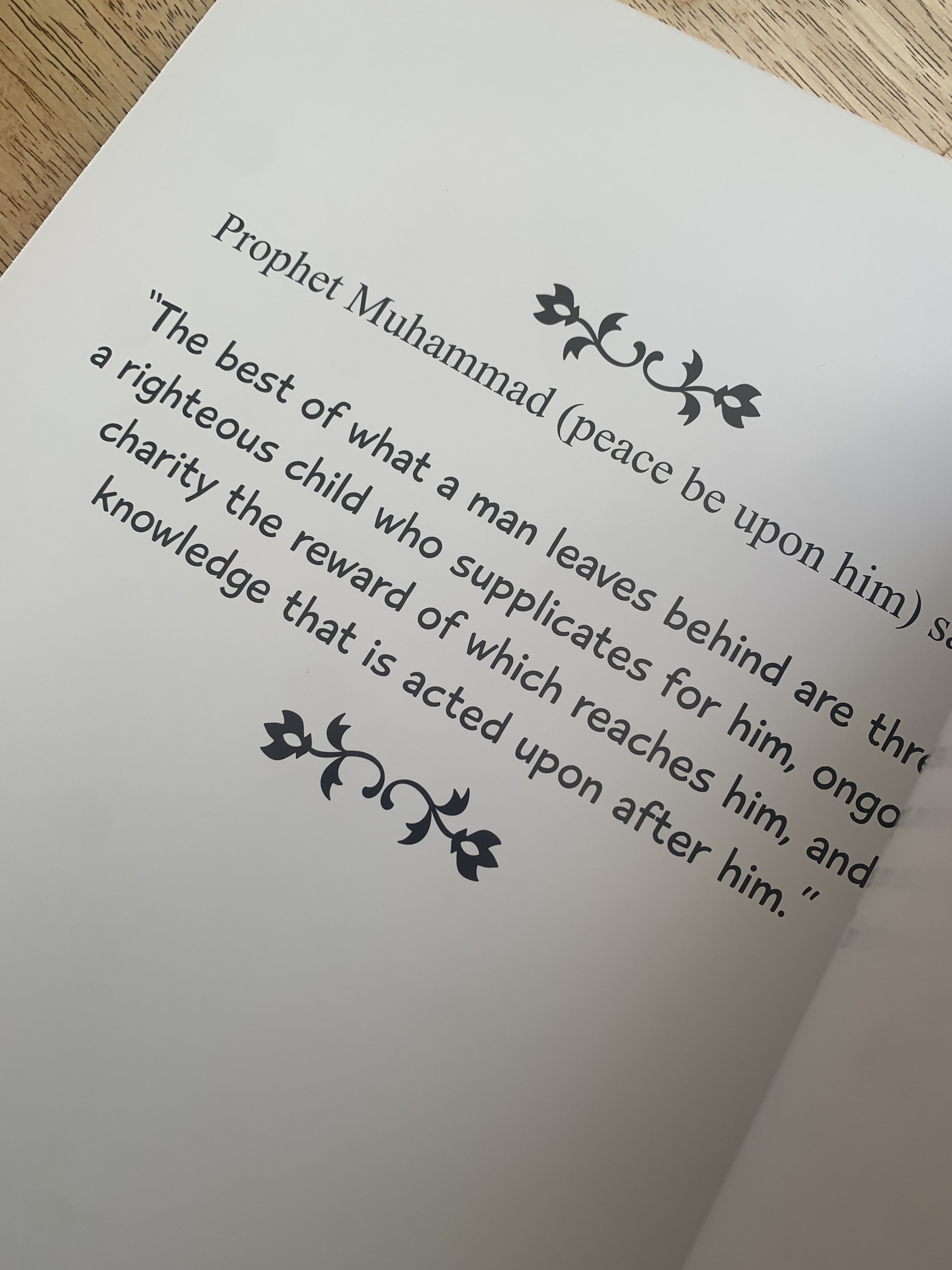
This heartfelt elementary picture book does a remarkable job of drawing the reader in to the emotions of the main character, his relationship with his grandfather, and imparting a moral message without being preachy. The illustrations are lovely on their own, but the way the muted tones convey the memories and illustrate the text really ties the book together. Whether it is for a larger story time or a one-on-one bedtime read, the book will offer discussion, comfort, guidance, and a little surprise at the end for Muslim and non Muslims alike. The slightly allegorical book does conclude with a widely known hadith (it is attributed to Prophet Muhammad saw, but is not further cited/sourced) and the family is clearly Muslim with their names mentions of Eid and God, and a hijab clad woman, but the book is universal and a lovely addition to any book shelf.

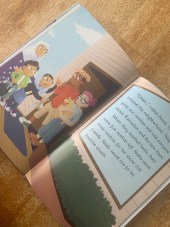
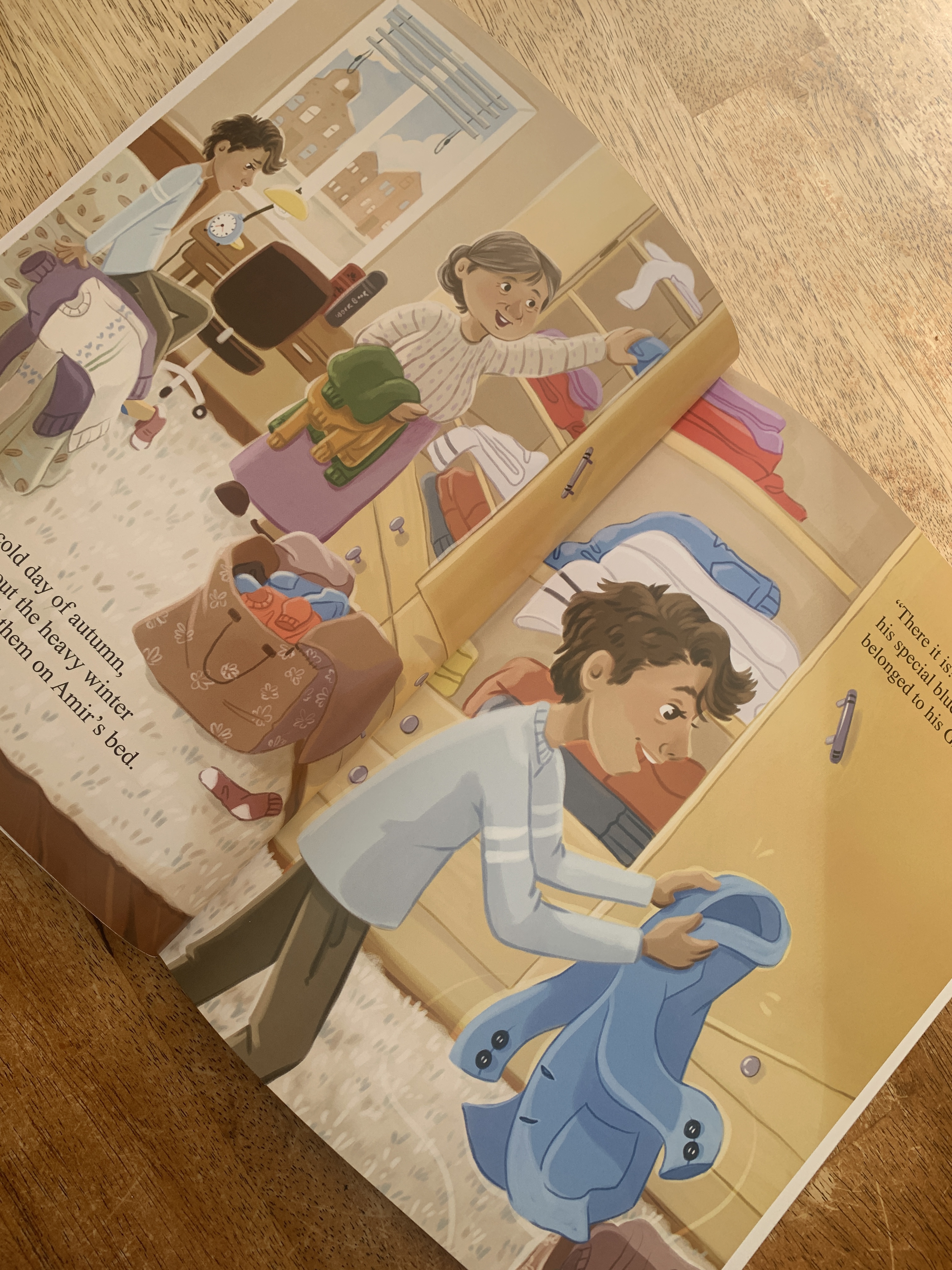
The book starts with Amir finding his Grandpa’s old blue jacket and recalling wrapping himself in it the day after his beloved Grandpa died. With it smelling like mothballs, he tosses it in the washing machine, but unfortunately when it comes out it has clearly shrunk. Amir is in denial, he says it fits fine and he has no desire for a new one. It is Grandpa’s jacket, and Amir is going to wear it, no matter how tight it is. Amir storms off to sit under the apple tree and recalls picking apples and making applesauce the year before for the whole neighborhood. Grandma shares that she used to keep grandpa’s cane but when someone needed it, she let it go.

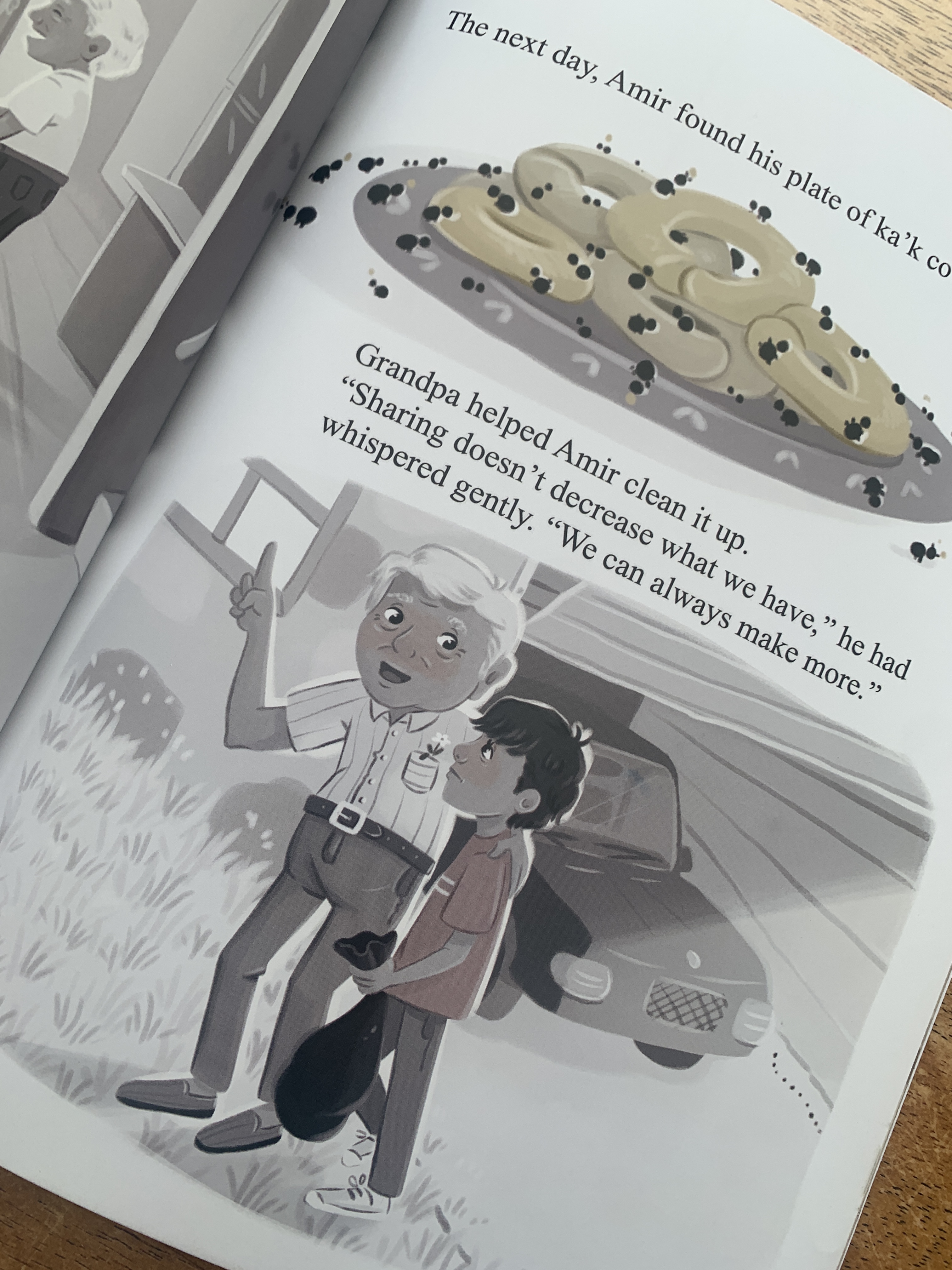
Grandma stirs another memory in Amir when she pulls the tray of ka’k out of the oven, of him trying to sneak a whole plate for himself only to have his hiding spot taken over by ants. When he is asked this time to share a plate, every step to the neighbors house reminds him even more of making the trip with his grandfather. Slowly he starts to realize that his memories are with him, not in his grandfather’s things, and Amir makes a decision that would make his grandfather proud, and (inshaAllah) give him more good deeds, even though he is gone.

The idea of sadaqah jariyah is understood through the story, and present in the hadith at the back, but it is never mentioned outright. Just as God is used, not the term Allah (swt). As Amir feels denial, frustration, and eventually peace, nothing is really told, it is shown, which really opens the book up to be a tremendous tool in sharing it with children and asking them to discuss what they understand, what they feel, and what they took away from Amir and his Grandpa’s blue jacket story.

The book is available through the publisher Ruqaya’s Bookshelf as well as HERE at Crescent Moon Bookstore where code ISL will save you 10%.

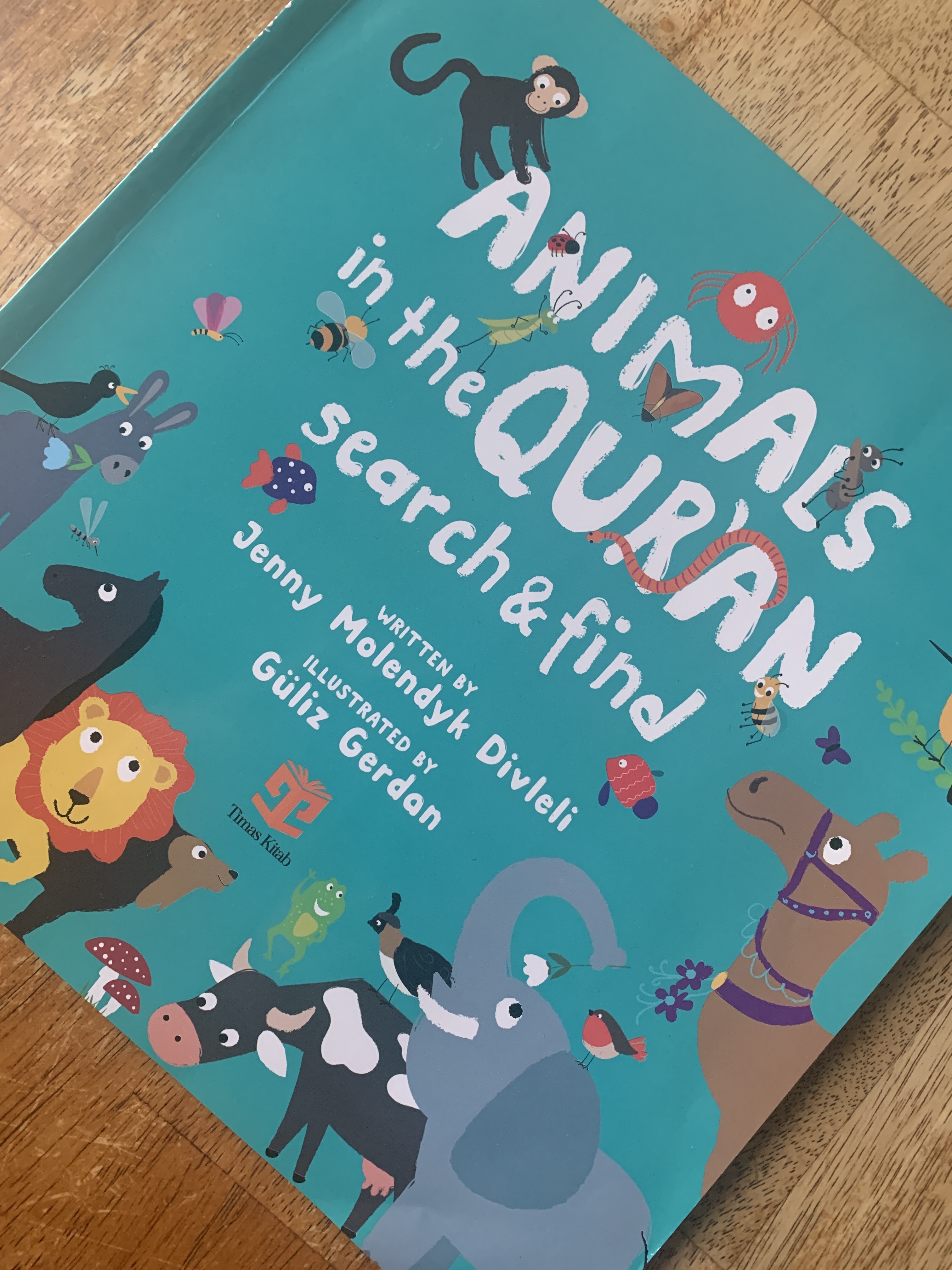
Animals in the Qur’an Search & Find by Jenny Molendyk Divleli illustrated by Guliz Gerdan

Standard
Animals in the Qur’an Search & Find by Jenny Molendyk Divleli illustrated by Guliz Gerdan

img_6282

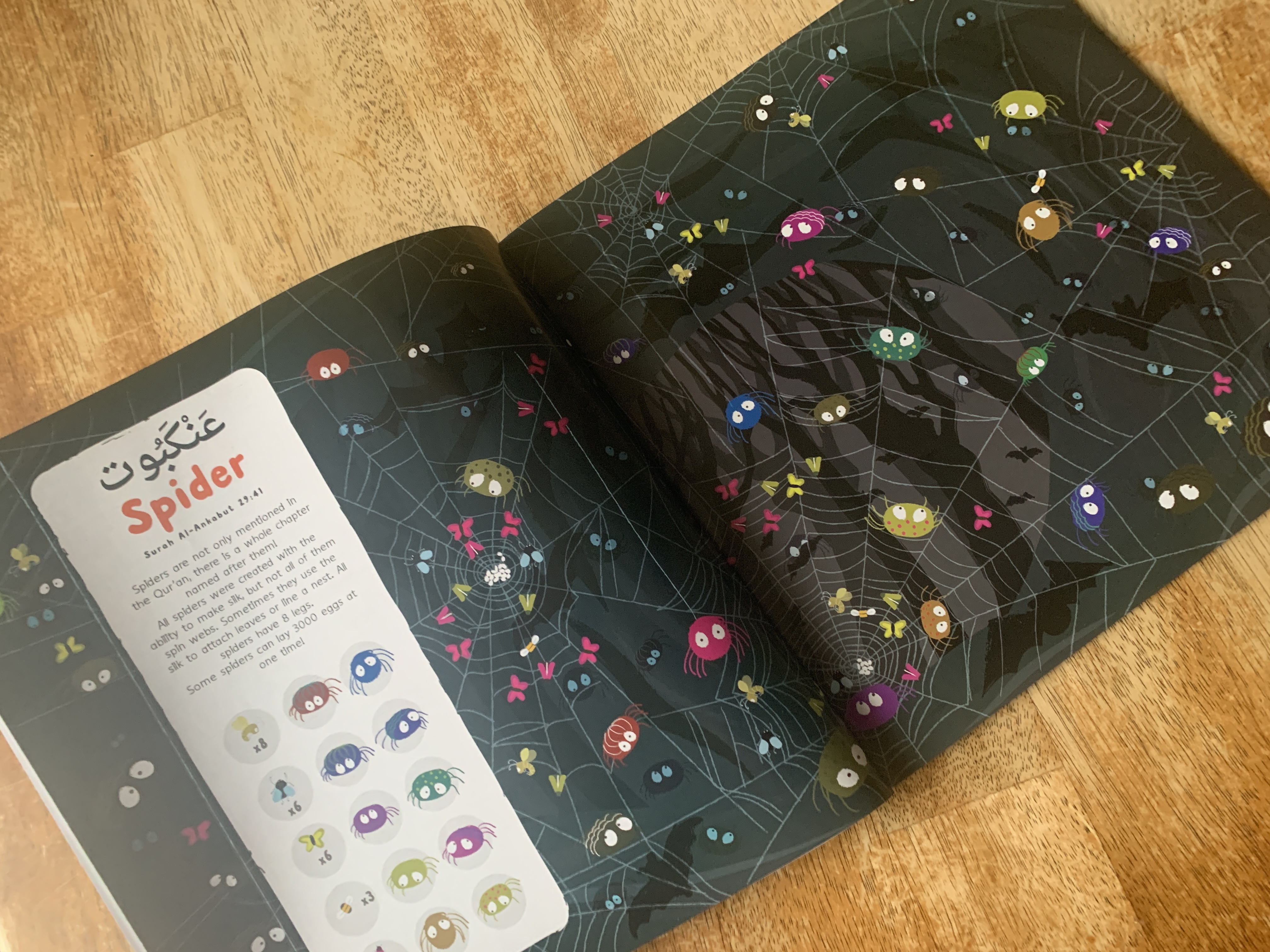
This book is targeted to preschoolers, but with the minor details the book sends readers looking for, I think children up to third grade will enjoy the mix of fun and learning that this book offers.  The book uses animals in the Qur’an as the theme for each two page spread, tells what surah the animal is mentioned in, and some Islamic context, as well as some basic facts about the animal.  Over 45 pages kids will learn about bees and snakes, donkeys and wolves, and dive in to the challenge of finding a spider with spots looking to the left or a fish with strips swimming to the right.  My three year old can not differentiate between some of the more specific markings of this cow or that, but he still loves the illustrations and benefits from the brief factual text. This book is a great addition to school, masjid, and home libraries with its Islamic foundation, beautiful large execution, and wide audience appeal.

The book starts with the Arabic ayat of verse 45 in Surah Nur and the English meaning of the translation.  It then establishes the format of the book, and then lists the 20 animals featured, where they are found in the Qur’an and on what page number, in the table of contents.

Each page offers the animals and some nature elements to be found on the large 10 x 10 pages.  The pictures are playful and colorful with the print quality glossy and a sturdy thickness.

img_6287

I enjoy the book and think most families with young elementary aged children will as well.  You can purchase a copy here from Crescent Moon Store and if you use my initials “ISL” at checkout, you will save 10%

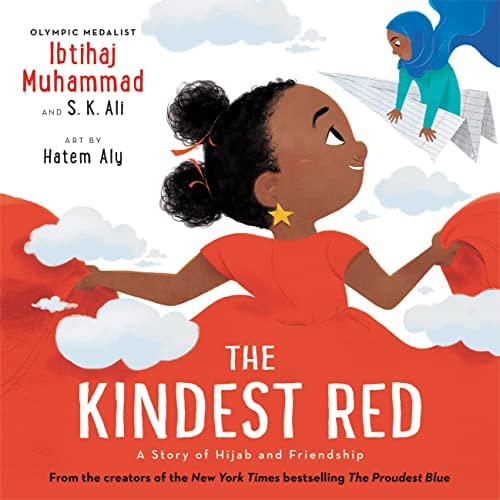
The Kindest Red: A Story of Hijab and Friendship by Ibtihaj Muhammad and S.K. Ali illustrated by Hatem Aly

Standard
The Kindest Red: A Story of Hijab and Friendship by Ibtihaj Muhammad and S.K. Ali illustrated by Hatem Aly

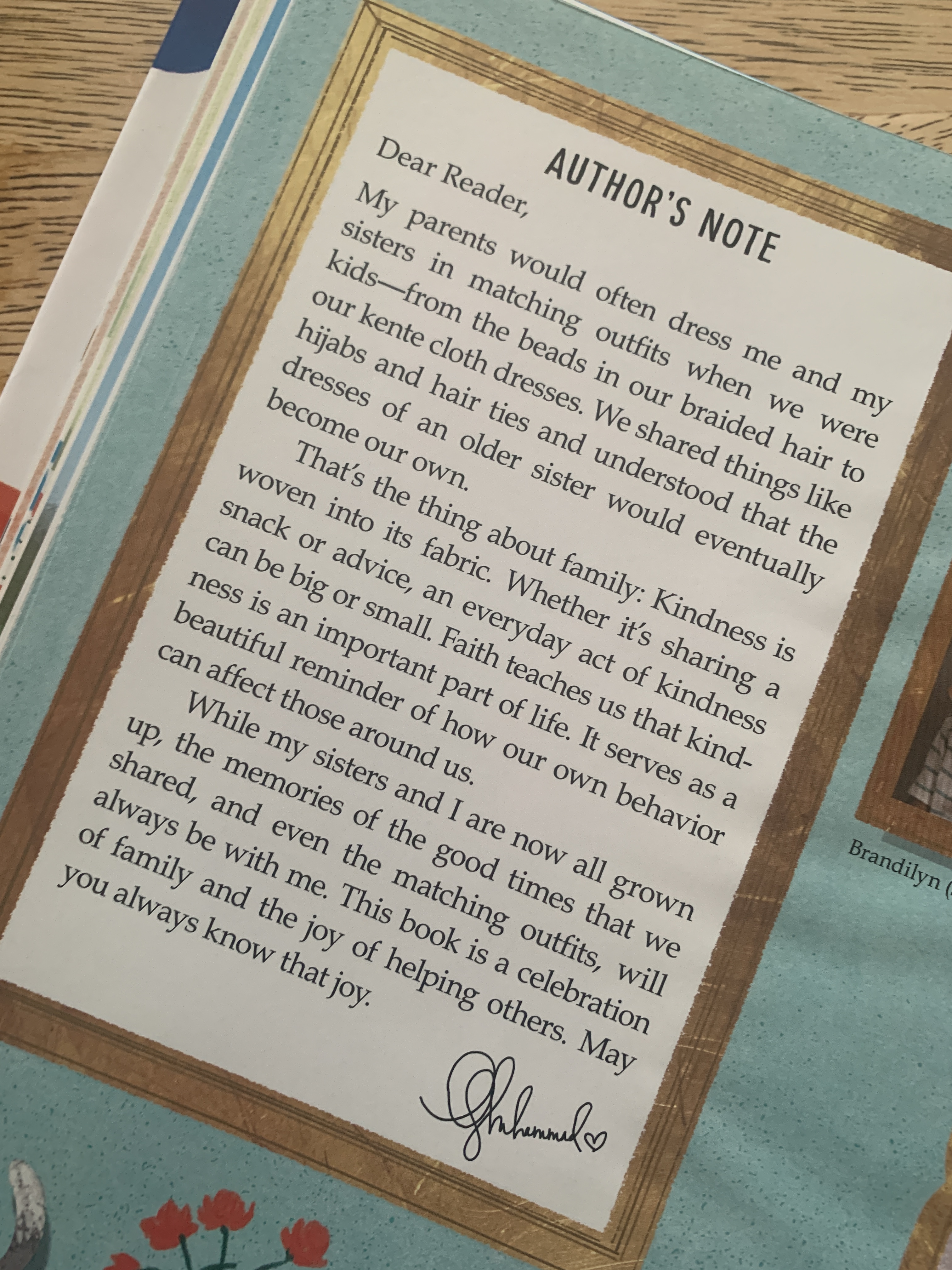
This heartwarming book centers kindness, family, and friendship in an inclusive way; and while the tagline says “A Story of Hijab and Friendship” I think the hijab angle is a bit of a stretch.  The authors are Muslims that wear hijab, the older sister and older females in the family wear hijab, but there is nothing in the story or text that connect hijab to Islam or to something Muslim women wear as part of religion.  I don’t want to compare the first book in the series, The Proudest Blue, to this book, but hijab really was centered in that book and the Author’s Note mentioned that hijab is an Islamic act.  This book does not make those same connections, which is fine, I just want consumers to be aware.  This book is beautiful and the messaging endearing, and the tone and heart over 40 pages ideal for preschool to early elementary children.  It works as a standalone, but with the same characters and sisterly love, I think most people will enjoy keeping them together.

The book starts with Mama passing on Asiya’s dress to Faizah, that had been Mama’s even before that.  It is picture day, and the girls are helping each other get ready. At school Faizah and her friend Sophie twirl in their pretty dresses before heading in to class to discuss what kind of world they want.

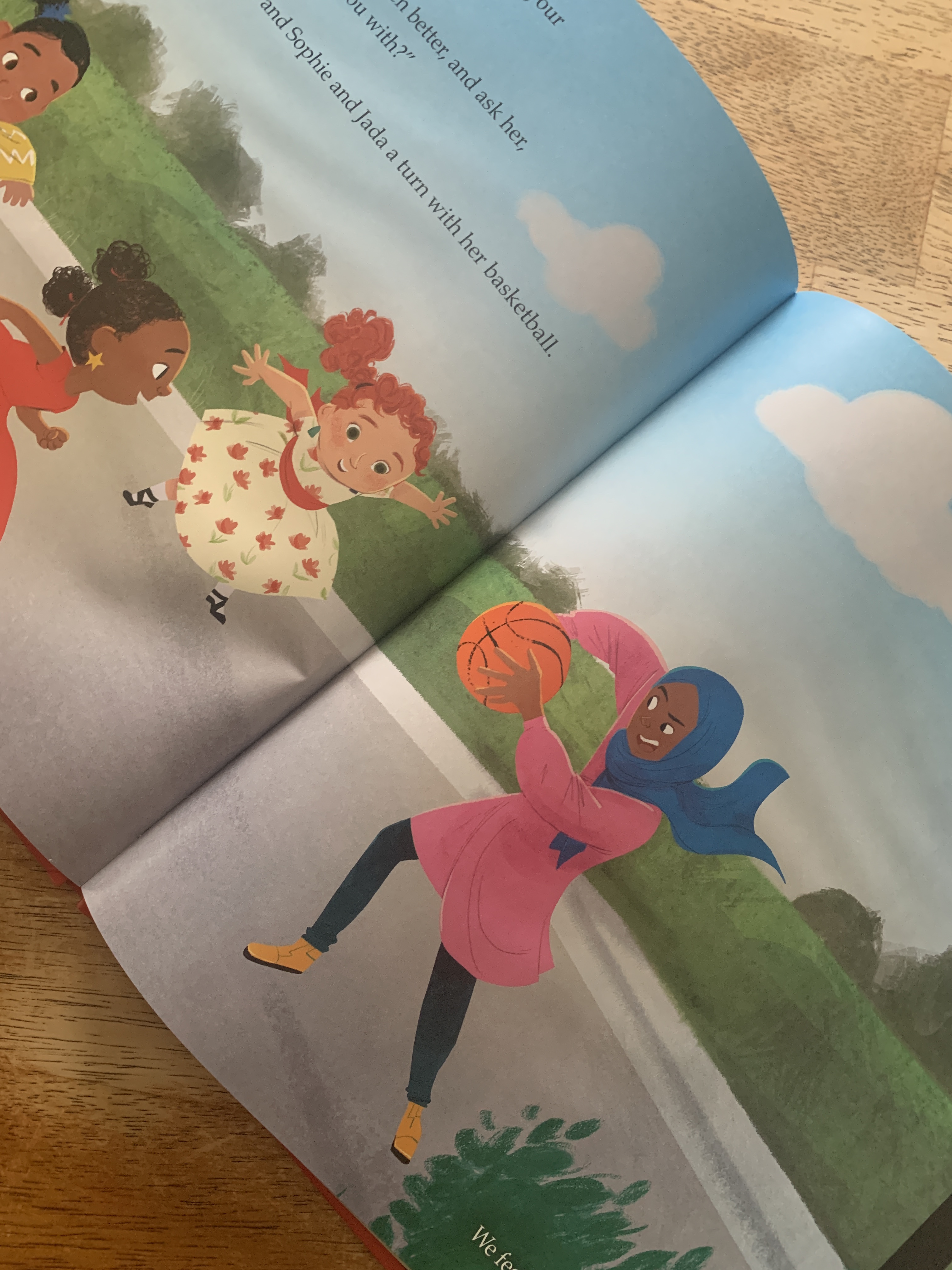
Faizah wants a kind world, where there’s always a friend nearby, where everyone helps. At recess, Sophie and Faizah combine their visions, superheroes and kindness, to help other kids on the playground.  When picture time arrives the class is full of smiles, but when it is time for sibling pictures, Faiza and Asiya realize they don’t match.

Faizah is sad, and Sophie notices, can the kindness be passed along like the dress to help the sisters? To make Faizah happy too? I’m not going to give away the conclusion, but it is sweet and idyllic and shows how lovely the world can be if we all just share some kindness.

I love the illustrations and the hijab wearing super hero that presumably Sophie drew is powerful.  I think the book does wonders to normalize hijab, even if I do wish it articulated why one would wear hijab.  It seems that the industry trend is to keep hijab superficial and I recognize I am in the minority that wants religious centering for religious tenants.  So yes, I’m fully prepared for the backlash when people want to point out that it is joyful and that I’m a naysayer, but I deal with people on a daily basis that do not know that my own hijab is a reflection of me being Muslim.  With as connected as the world is through technology, I  think those in diverse environments take for granted the understanding of basic Islamic principals in the general population.  However, not everyone has those real life connections and rely on books and media to fill the gaps, so when books about hijab, don’t actually connect hijab to faith, I feel obligated to point it out.

I purchased (preordered) my copy here, but I hope you will support small business and order yours here  use code ISL for 10% off.

What Colour is your Mosque? By Jenny Molendyk Divleli illustrated by Aybüke B. Mumcu, Damla Koçak,  Fatma Betül Akbal, Gökhan Özdemir, Gülşah Irmak, Hümeyra Yorgancı, M. Ahmet Demir, Menekşe Özdemir, Özlem Güneş, Şüheda Başer Yılgör, Zeynep Alptekin, Zeynep Begüm Şen  

Standard
What Colour is your Mosque? By Jenny Molendyk Divleli illustrated by Aybüke B. Mumcu, Damla Koçak,  Fatma Betül Akbal, Gökhan Özdemir, Gülşah Irmak, Hümeyra Yorgancı, M. Ahmet Demir, Menekşe Özdemir, Özlem Güneş, Şüheda Başer Yılgör, Zeynep Alptekin, Zeynep Begüm Şen  

img_5113

Sometimes the idea and presentation of a book make it stand out even if the writing is a bit bland and erroneous.  This book with bright colorful illustrations from 12 different illustrators highlighting the bold colors and designs of 12 masjids around the world is one such book for me.  I think young children will delight in seeing such beautiful masjids and appreciate that Muslims are found all over the world.  Adults and older children will also learn about mosques I’m sure they had never heard of before.  I kind of wish the book was a board book for little hands learning colors to enjoy, but the 8.5 x 8.5 style does suffice for story time and bedtime. 

img_5117

The book starts with an introduction to the author, Jenny and her sharing her favorite mosque in Turkey, Hagia Sophia. Each two page spread after that is a child introducing themselves, telling where they are from, and sharing their favorite mosque in their home country.  From Sri Lanka’s Jami Ul Alfar that looks like candy to the purple lights of Mohammed Al Ameen Mosque in Oman.  Some masjids stand out for their colors, others for their 99 domes, and some look like castles or are built out of mud.

img_5115

The illustrations reflect the beautiful buildings and radiate with joy from the smiling children introducing them.  I think the text is translated from Turkish to English which might account for some of the errors, but spelling Kabbah with two b’s doesn’t seem right in any language. 

img_5116

Despite it all, I’m happy with the book, I think we need to make a more intentional point to instill a sense of global community in our children and celebrate the beauty that our architecture and culture can result in for the worship of Allah swt.

The book is available from here from Crescent Moon Store.

img_5114

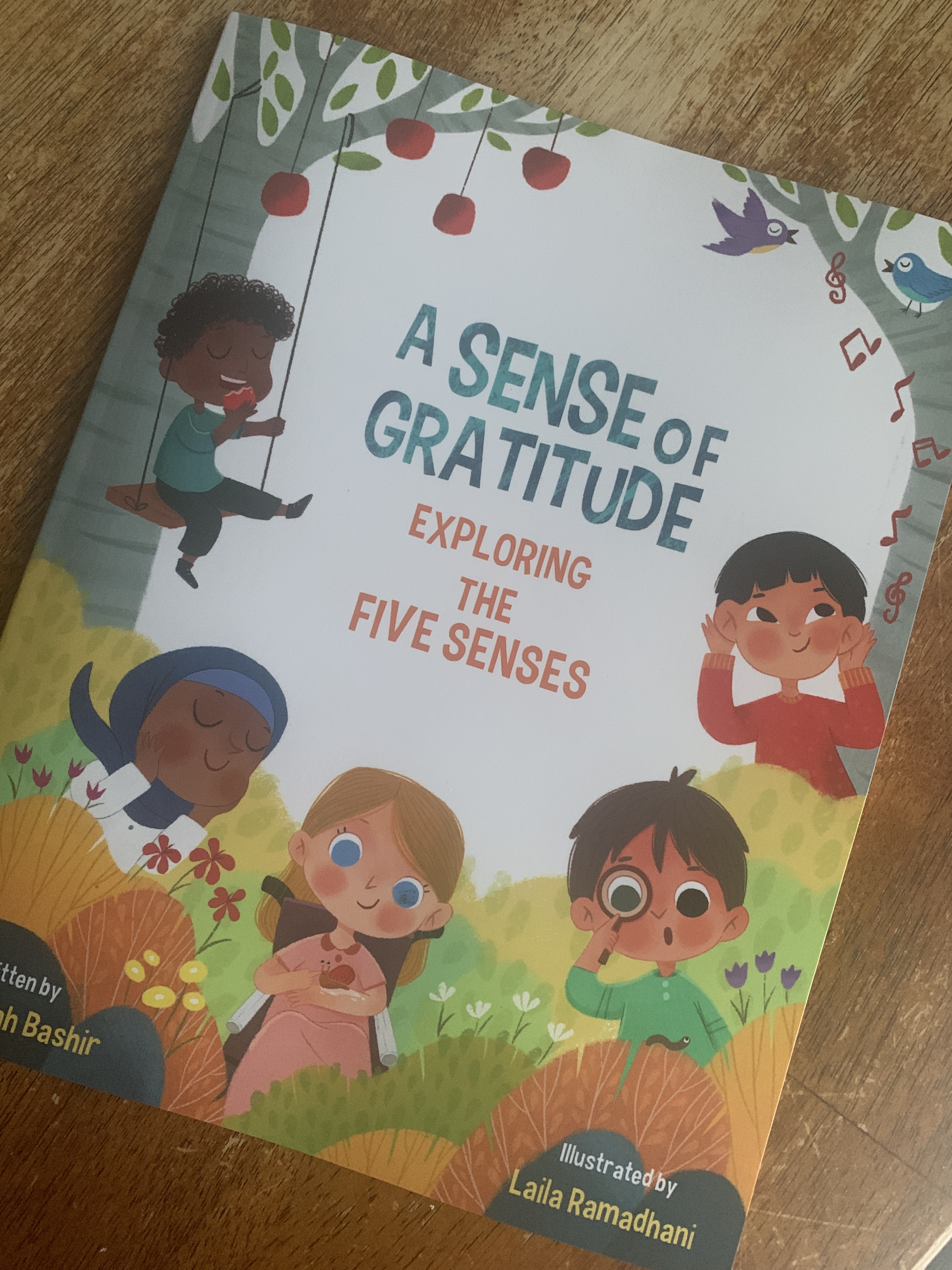
A Sense of Gratitude: Exploring the Five Senses by Halimah Bashir illustrated by Laila Ramadhani

Standard
A Sense of Gratitude: Exploring the Five Senses by Halimah Bashir illustrated by Laila Ramadhani

img_4855

As a story time host for littles, you always need books about the five senses.  Additionally as a story reader at an Islamic school, thanking Allah swt while talking about your senses and the world around us is a staple year after year.  So purchasing this book with large adorable pictures and claims of rhyme was an easy decision to make, and while it will get used, sigh, the rhyme and lacking rhythm is terrible.  There’s also frequent illogical sentence structures and a bizarre tangent- two pages on wafting.  The book is for toddlers through kindergarteners, not kids learning experiment safety protocols.  @muslimkidsbooknook did a wonderful Instagram post regarding rhyme in kid’s books, and this book really would have benefitted from some additional editing and outside eyes reading the book aloud repeatedly.  That being said, the book will still be used and will be enjoyed with real time editing.  A positive about the book, in addition to the illustrations, is Allah (swt) in Arabic script.  But overall, it really could have, and should have been so much better.

The book starts with a note to grown ups reminding them to stress the importance of being grateful and exploring God’s creation.  It starts with what eyes can be used for, stressing the beauty in nature. and moves to the nose, and has the pages on wafting chemicals, enjoying baked goods, and saying please pardon when passing bad smells.

Tongue is next and stresses that sweets are not nutritious, and then assumes that veggies and fruits are unliked by children, but the narrator admits that they enjoy consuming them.  Hands and skin- touch and feel, and also convey love.  As an FYI- the text states and illustrations show kids petting a dog. The final sense of ears and the gift of hearing wraps up the book.

I’m terrible at grammar, really bad, but even I know not to say “colors like purple,” it should be colors “such as” purple, not “smells like Teta’s baked cookies,” but smells “such as” Teta’s baked cookies.  The formatting on a spread seems off as well with “Like slimy frogs” being under a a two line refrain and the rest of the sentence, “and hairy dogs…” being on the next page with another line and a half, it throws you off when reading aloud to keep some rhyme and rhythm going, every. single. time. On some pages the chopping of normal speech structure to make the “rhyme” is difficult to understand, and I don’t think the glossary, nor putting (God) in English was particularly necessary.

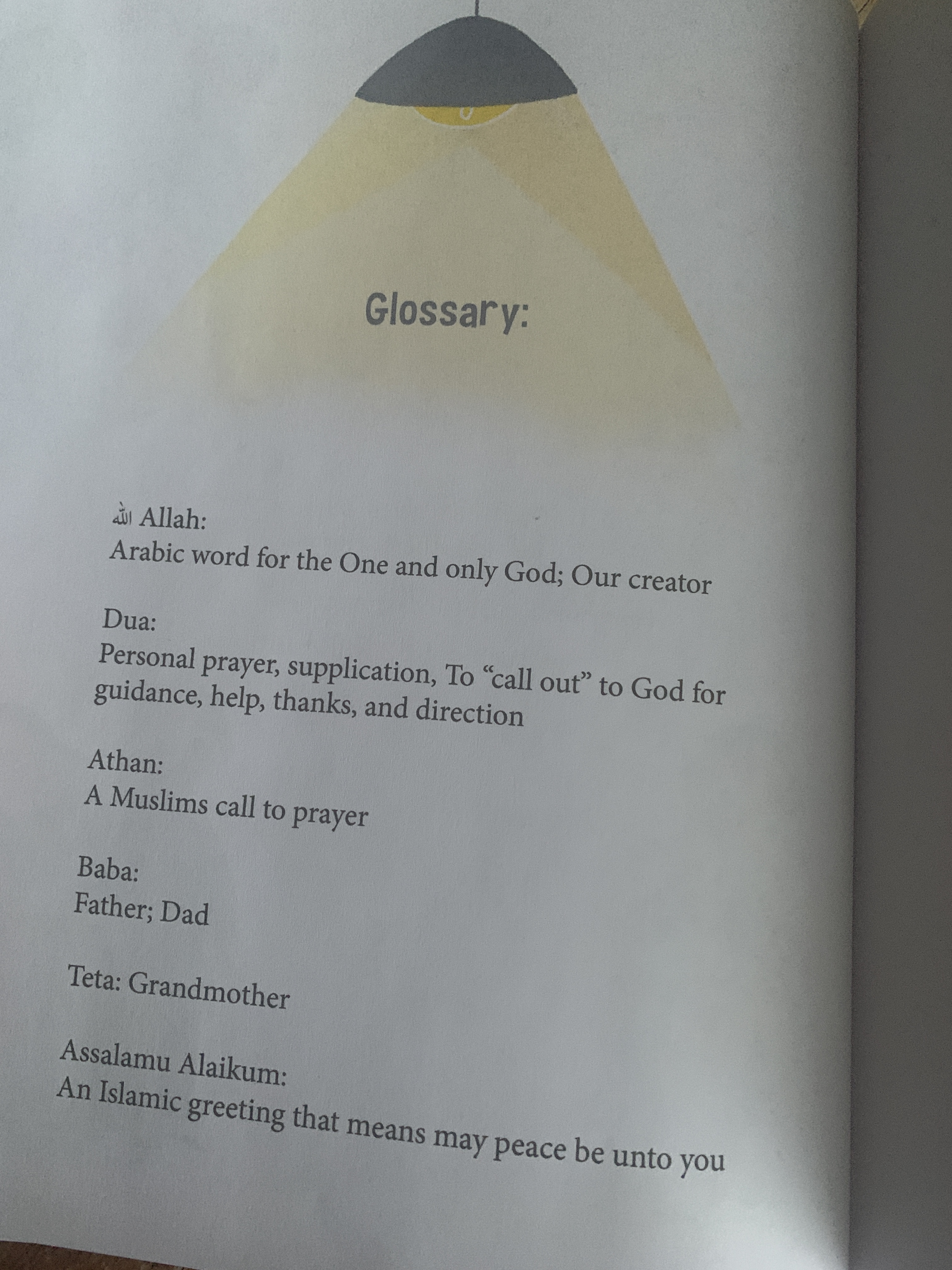
My favorite pages are when they tie directly back to ibadah and Islam, hearing the athan, using your hands to make dua and the little rhyme that starts and concludes the book. Truly the concept makes the book important on a shelf and the illustrations make it attractive, the text needs some editing.

img_4866

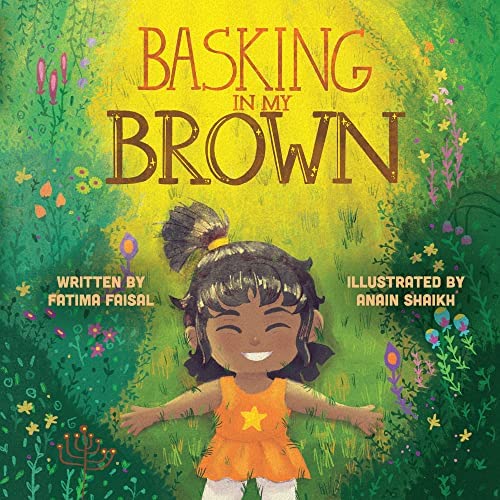
Basking in My Brown by Fatima Faisal illustrated by Anain Shaikh

Standard
Basking in My Brown by Fatima Faisal illustrated by Anain Shaikh

This picture book celebrating brown skin, particularly in girls, and specifically from a Desi culture point of view, takes on the notion of dark brown skin not being as ideal as compared to lighter skin.  If this is not a concept you are familiar with, I don’t think that the book will hit home, but as someone who has heard this refrain of staying out of the sun to not get darker since childhood, aimed at my friends and cousins (I turn red and burn in the sun), I do appreciate this owning and pushing back on a ridiculous colorist mindset. I don’t love the “magic” diction choice, and there is nothing Islamic in the book, save some covered heads that could be religiously inspired, or culturally, or even weather related, and I’m not sure if the author or illustrator identify as Muslim, but I’m sharing anyway because I know young Pakistani girls particularly, hear this colonial mindset messaging still, and I support undermining it.  This book is not about systemic oppression and racism and taking up space, this book is internal cultural acknowledgement of a pointless beauty notion.

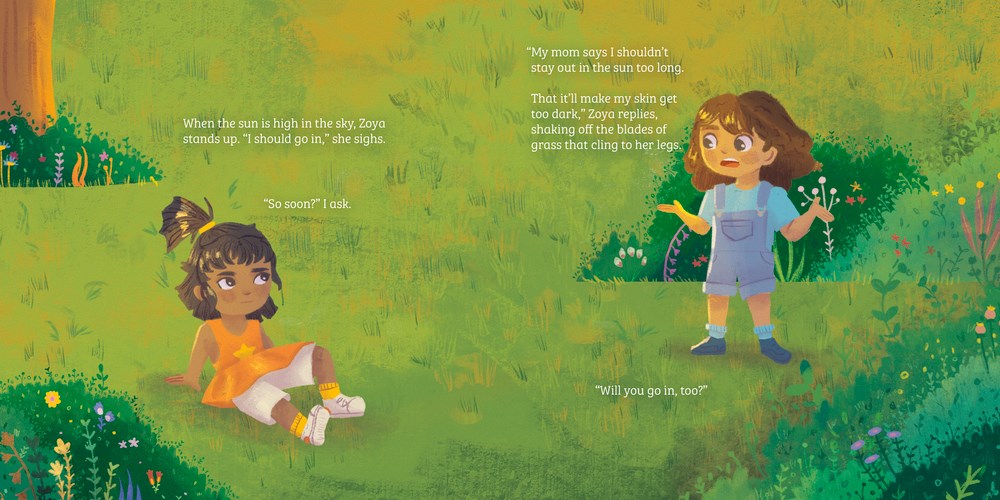
A young girl begins the book telling of things she loves: trips to Pakistan to fly kites with her Dada, her mother’s dinner parties, swimming, climbing trees, but most of all she loves basking in the sun.  One day while playing with her friend Zoya in the warm sun, Zoya abruptly says she should go in before she gets too dark.  The protagonist counters that she loves all the shades her beautiful brown turns and equates it to magic.

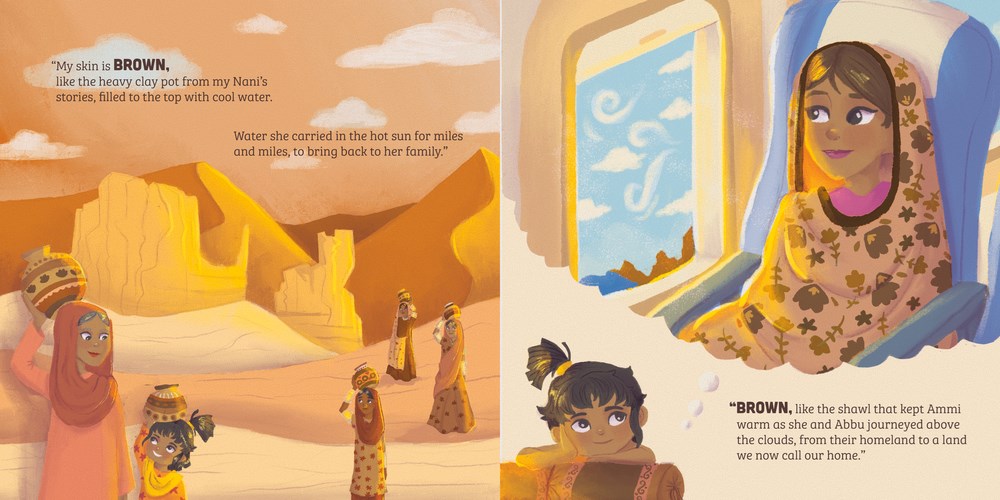
She holds out her hand to show her magical brown skin shimmering, and connects the beautiful brown to the brown clay pot her Nani used to carry water in, the brown shawl her mother wore when coming to a new home, the brown of the henna her sister puts on, etc..  She says her brown skin has its own story of being proud, brave, courageous, soft, sweet, and fearless.

Zoya decides she likes the magic and decides to stay and bask in the sun. The author on the final spread raches out to brown girls to own, embrace, and celebrate their brown skin.

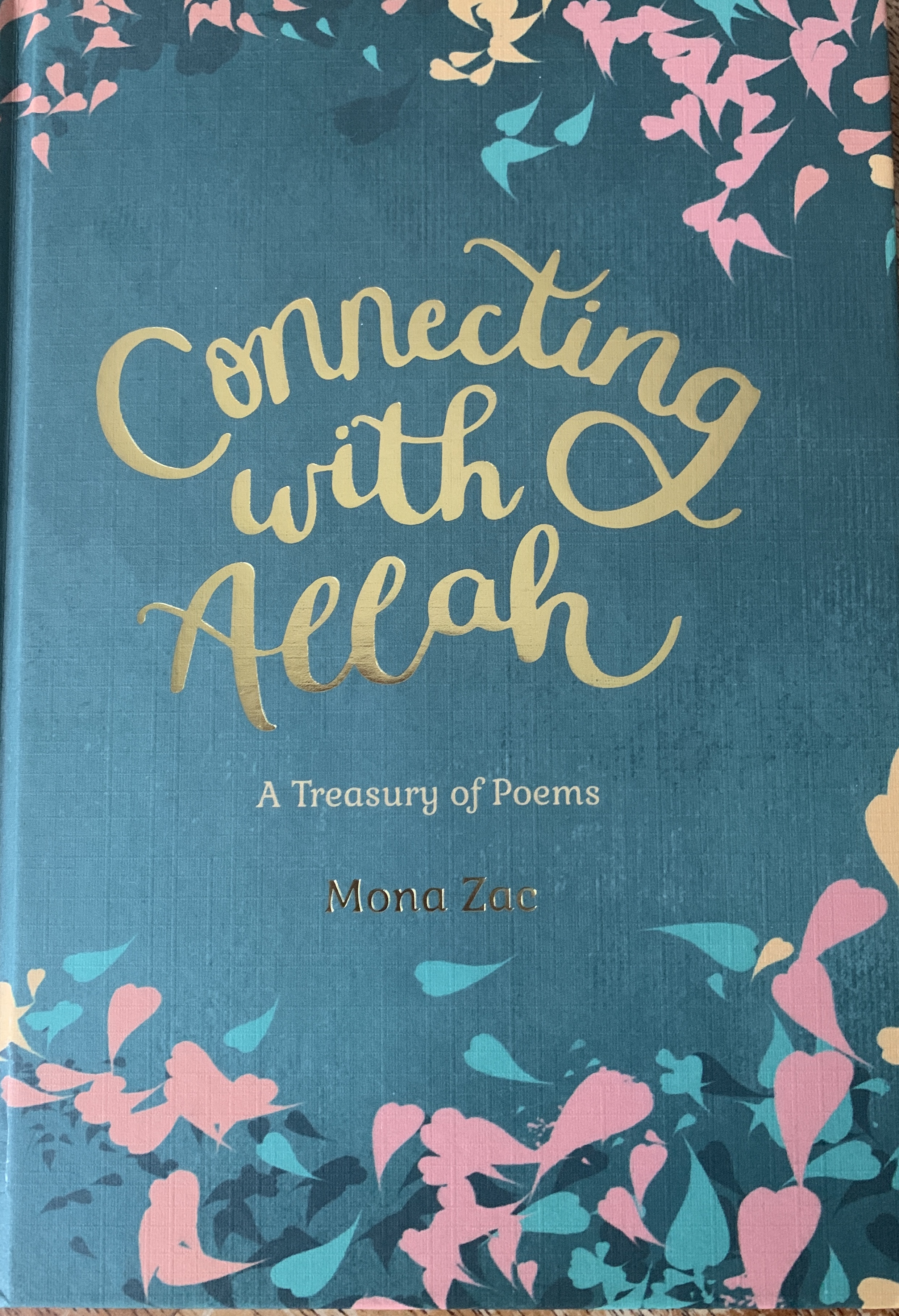
Connecting with Allah: A Treasury of Poems by Mona Zac illustrated by Neamah Aslam

Standard
Connecting with Allah: A Treasury of Poems by Mona Zac illustrated by Neamah Aslam

img_4279

Similar to Call Me By My Name, this book stands out in highlighting the Names of Allah swt.  In this collection it is the descriptive poetry, warm illustrations, urge to reflect and act, and space to think through and write up your own du’as that make this book so versatile.  I can see a middle grade to middle schooler using the book almost like a journal, just as easily as I can see an Islam teacher using the book to teach the names of Allah and have their students ponder and write their own verses.  I plan to use it with my own children when we gather up for salat-waiting for everyone to make wudu- to read a poem, discuss, and understand each name on whatever level the child is at thus bring the names of Allah swt, into our daily awareness, inshaAllah.

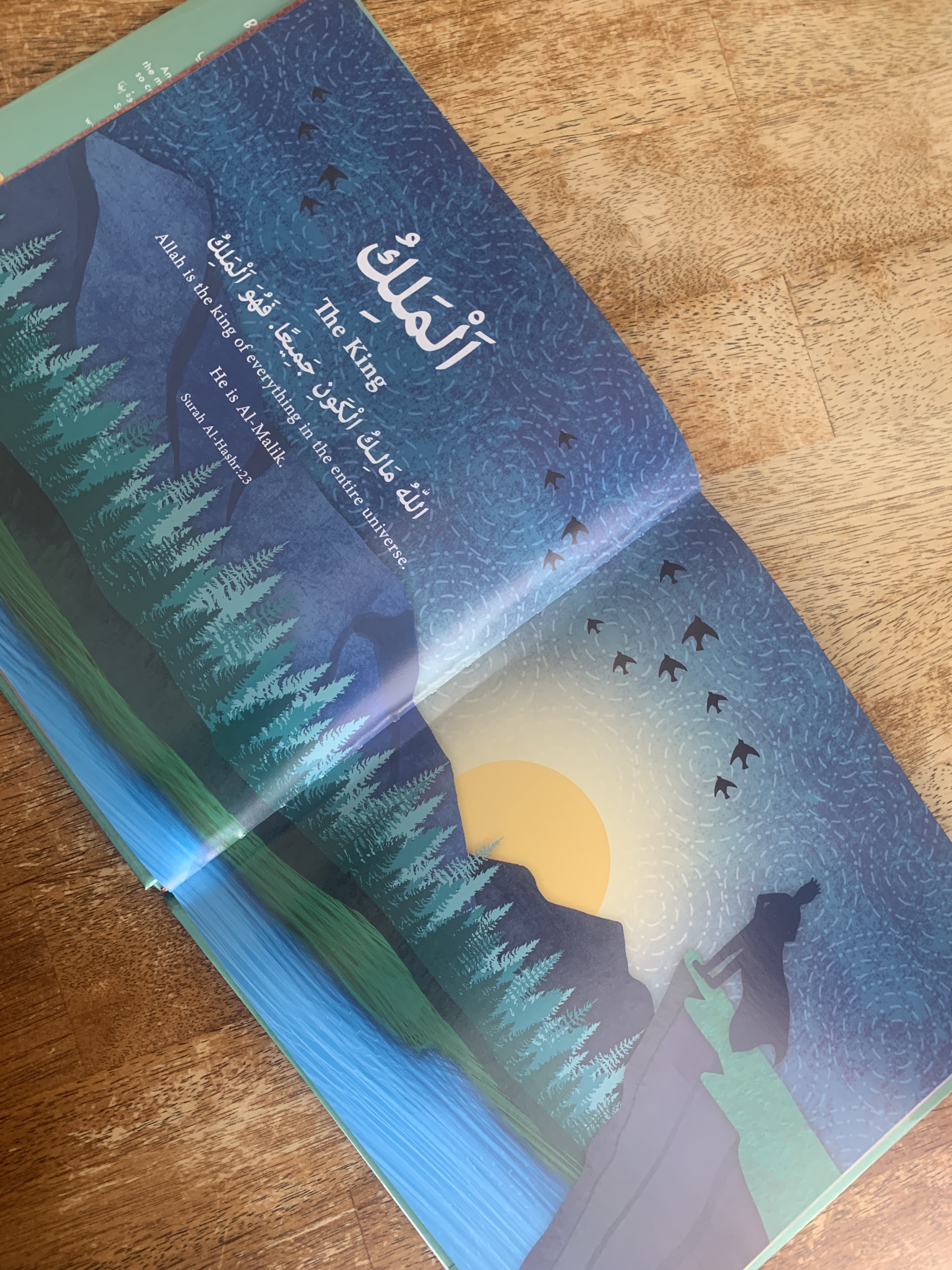
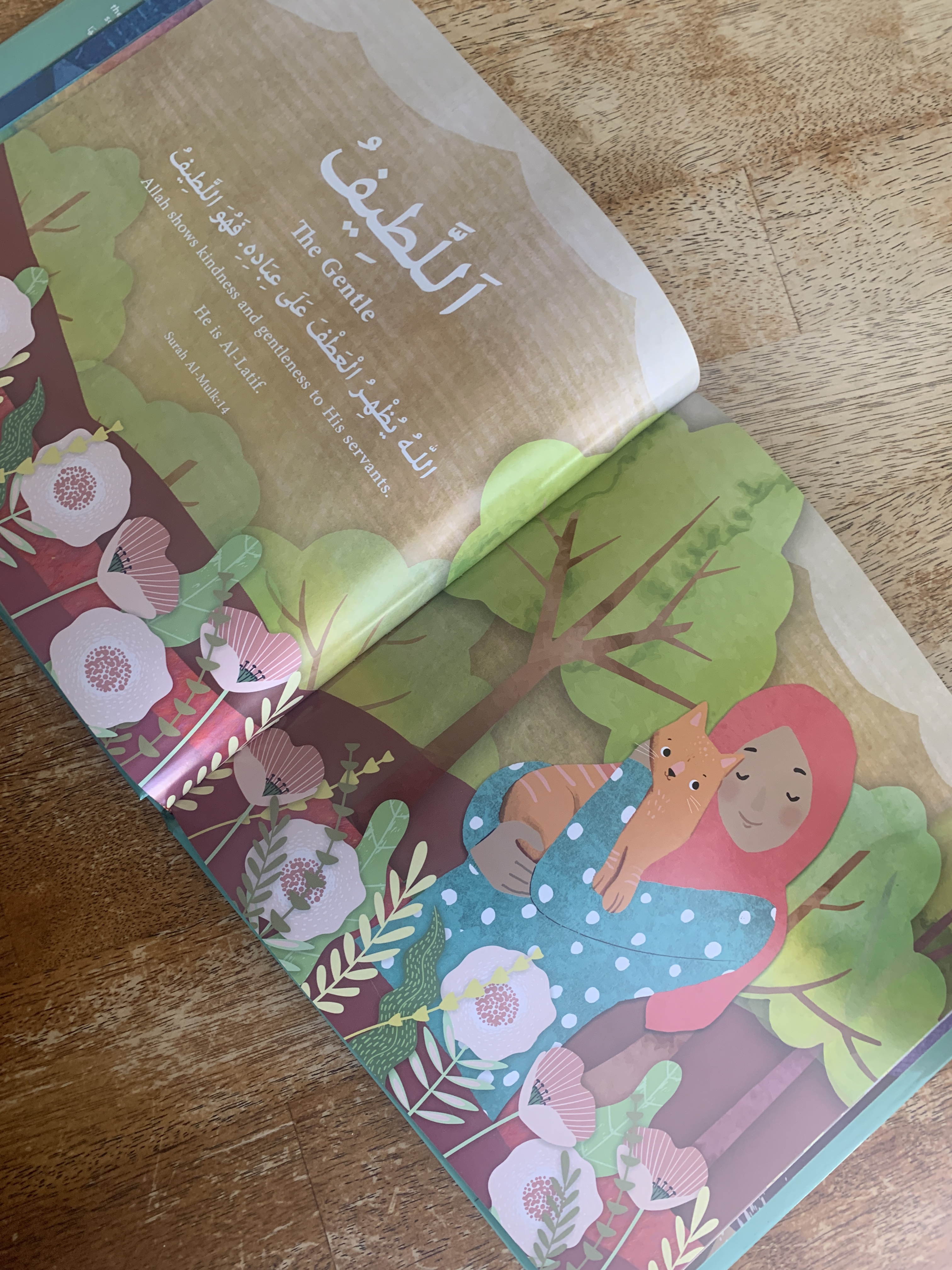
The book is divided into sections following a heading and seasonal imagery: Loving Allah, Asking Allah, Knowing Allah, and Blooming with Allah’s names.  The table of contents is out of order, but it isn’t an issue.  Poems are given a two page spread, some poems are one name, others are two.  At the end of each poem is a “Reflect and Act” section with bulleted items to help connect the name and the poem’s content with one’s own life and Islamic principles.

At the end of each section are two pages to write your own du’as using Allah’s names followed by Sources from the Qur’an and Hadith.  The illustrations are adorable to look at, and while on first glance the collection might seem more female appealing, I think boys and girls alike will benefit from time spent with the book and not find it targeting to only one gender.

The Asking Allah section features easy to read Arabic with harakat and even the English font is very appealing and easy to read.  Overall the hard bound book is beautiful and I hope to see it stocked in more places, hint hint Crescent Moon.  Currently in the US it is available here by the publisher.

img_4276

Call Me By My Name: 99 Names of Allah by Ayesha N. Rahmaan illustrated by Azra Momin

Standard
Call Me By My Name: 99 Names of Allah by Ayesha N. Rahmaan illustrated by Azra Momin

If you are going to put out a book that has been done hundreds of times before; think numbers, alphabets, Islamic phrases- then be sure and make your book stands out.  And while yes there are numerous English and Arabic books of all sizes about the beautiful names of Allah, this book does in fact stand out.  The shiny cover, with or without the dusk jacket, the sturdiness in your hands, the illustrations, the large font and easy to read English and Arabic (with harakat), is an absolute joy to read, look through, and talk about with children four and up.  The book works in a lot of settings for a lot of ages because of its simplicity, presentation, and appeal.  Kids will pull this off the shelf and look at it without prompting, just as adults can discuss the names, and build lessons off of the ayats included.  The versatility of the book is why I’m stretching out of my comfort zone of fictional reads to review this Islamic non fictional book.

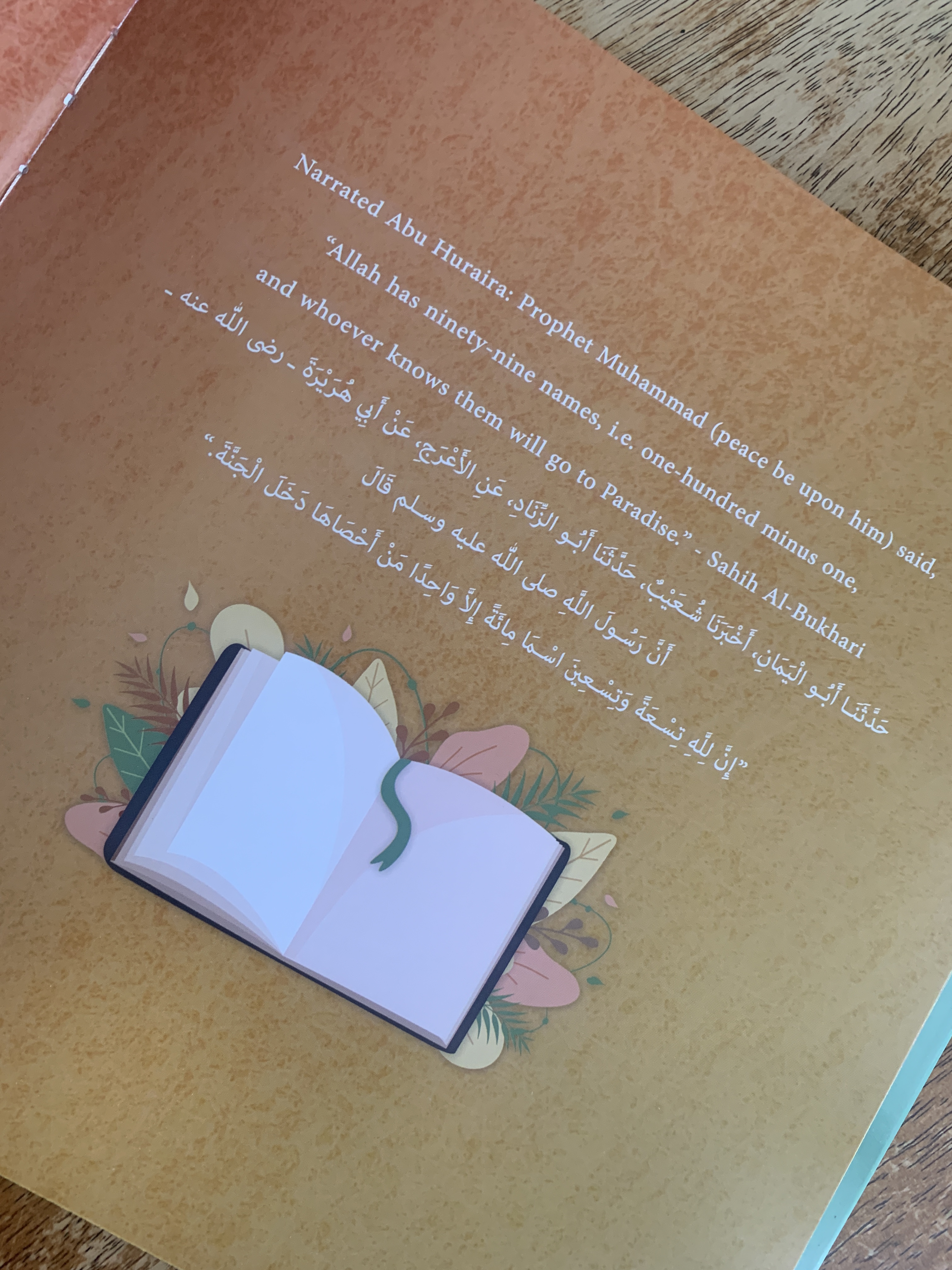
The book starts with establishing that the 25 of 99 names included are those “specifically mentioned in the Holy Quran, with a reference to the surah and aya where each name can be found.”  It shares an aya about the Asmaa Al Husna and a hadith narrated by Abu Huraira and then starts right in.

Most of the names are given a two page spread, a few are only given one, and the English, Arabic, aya, and source are provided.  The illustrations are joyful children and nature scenes.  The book concludes with a spread of all 99 names in English and Arabic with the translations.

You can purchase a copy here.

Nadia and Nadir Lunch in the Leaves by Marziah A. Ali illustrated by Lala Stellune

Standard
Nadia and Nadir Lunch in the Leaves by Marziah A. Ali illustrated by Lala Stellune

nadia

This 32 page early reader is absolutely adorable with jumping in the leaves, sibling love, imaginary unicorns and dragons, yummy food, Pakistani culture and delightful illustrations.  Books in this genre aren’t particularly known for their story telling, but with chapter breaks and relatable experiences I was absolutely pulled in to Nadia and Nadir’s world and family.  My seven year old loved that he could read it independently and was delighted to see himself so reflected in the text, infact I have given in and we will be having chicken tikka and raita for dinner tomorrow, but I’m not raking the leaves, haha.

img_4006

SYNOPSIS:

Siblings Nadia and Nadir are woken up by there mother with the promise of a surprise.  The hints are crunchy and colorful, and when the kids realize it isn’t a giant bowl of cereal outside, they are excited to jump into the giant pile of leaves their abu has raked up in the yard.  The kids dive and swim and imagine themselves to be dinosaurs and unicorns as their dad grills chicken tikka and their mom watches on shelling walnuts.

The kids bump heads and decide to play something a little safer by making faces with the leaves, branches, walnut shells, and flowers.  They create a family portrait and then it is time to eat lunch and drink chai.

img_4005

WHY I LIKE IT:

I love that it is a very recognizable family: the women are wearing hijab, urdu words are sprinkled in, and Pakistani foods are being eaten, there is no othering, all kids will enjoy the story, and Muslim and desi Muslims specifically will feel seen.

I love that there is imagination and dad cooking and hanging out in a chill environment.  There is a glossary at the back, but for this demographic I actually really like it.  It allows for the independent reader to use a book tool to understand a word.  I also like that illustrations of the words flutter around the cartoon author and illustrator blurbs.

There are details about the trees dropping the leaves as well as why the leaves are changing color.

img_4007

FLAGS:

None

img_4008

TOOLS FOR LEADING THE DISCUSSION:

Too young for a book club selection, but ideal to have on the shelves of a classroom library, school library, or home library.

Well done alhumdulillah.  Paperback and library bound additions available here.  The book is part of a series, but can be purchased individually or as a set.  I plan to review each of the six books over the next few months.