Tag Archives: Muslim Author

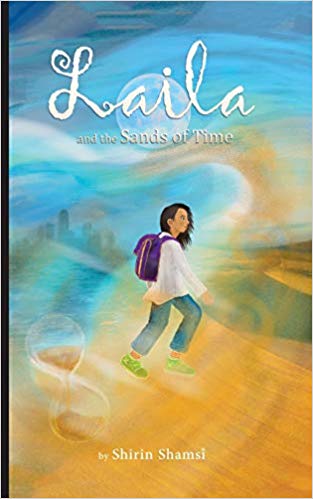
Leila and the Sands of Time by Shirin Shamsi

Standard
Leila and the Sands of Time by Shirin Shamsi

shirin shamsi

This 127 page book has a lot of potential, but ultimately didn’t win me over.  It is one of those that needs a good editor to encourage the author to flesh out the characters, take advantage of a potentially cathartic resolution, and fill the gaping holes in the story.  Meant for ages 8-12 the tiny font, and tight spacing, make the book really dense and intimidating to look at and read.  The book, as written, should be well over 200 pages, if spaced appropriately for the target audience.  Once you accept the presentation and get in to the story, it isn’t an awful read, it just could have and should have been so much more.  I hope the author revisits it and polishes it up- the time travel, the science DNA component, and the death of the protagonist’s parents, offer a lot for Muslim and non Muslim readers to sink their teeth in and be swept away by, but ultimately, I don’t know that most readers will be motivated to finish the book, and those that do, won’t remember anything about it.

SYNOPSIS:

Laila’s dad has recently died, and with her mother having died years earlier, Laila is now 13 and an orphan living with her stepmom and baby sister.  Feeling resentful that her dad remarried and had a child that took time away from her in his final span of life, doesn’t make Laila a very kind person at home.  Her best friend Beth, even points out how cold she is to her family.  With school vacations approaching, Laila is headed for Umrah with her dad’s brother, her uncle, and his wife.  While making tawaf, Laila loses her aunt and uncle in the crowd and finds herself transported to 7th century Arabia.  She hears a baby crying and learns that the baby’s life is in danger.  To save her, she must get the baby, the baby’s mom and baby’s sister from Makkah to Yathrib.  The only way to do that is to join a caravan, and they can only join a caravan if they have a male escort.  So Laila chops off her hair, acts like a boy, and gets them in the caravan.  They meet bandits along the way, but nothing too scary, they arrive in Medina and right before they meet RasulAllah, Laila finds herself back in the present.  She is in a hospital, but the doctors do not know what is wrong with her so they release her.  She returns to the US, relays the story to Beth, and decides that at an upcoming field trip to study DNA, she is going to submit the baby’s hair that she still has for dating.  The results show it is from 1400 years ago and a family heirloom of her step moms reveals that the baby is a great great great great… grandmother of her’s.  Resolved to open her heart to her family, Laila is a changed person, alhumdulillah.

WHY I LIKE IT:

I love the premise, it is like Sophia’s Journal and When Wings Expand  thrown together and scrambled.  Laila is struggling with her faith and is trying to find it, while also finding a way to move forward after losing her father.  There are just a lot of things that aren’t answered, are contradictory, or don’t make sense.  It says she learned Arabic because her mother spoke it, her dad is desi, but really no hiccups speaking in 7th century Arabia other than forgetting the word for scissors?  She at one point said she was a cousin from the north, but while on the caravan mentioned that she had never travelled through the desert.  There really should have been more action with the thieves and the regrouping when the men came back.  Similarly, her gender reveal should have been a bigger deal than it was.  I was hoping there would be a mention of if her hair was long or short when she awoke in the hospital, I don’t think I missed it, but maybe, or maybe it wasn’t there.  Once back home, there really needed to be a reunion scene with Laila and her stepmom and half sister, I mean the whole point of the time travel was to save a baby. Really? Nothing? I was disappointed that it was glossed over and mentioned as a retelling to Beth and pushed aside.  The second climax is when the DNA testing is being questioned, but I didn’t get the need for the babysitter and everything to be rearranged for a two second conversation with the principal accusing Laila of theft, a phone call should have sufficed, plus when Laila and Beth mention it to the scientist, it seems everyone was questioned, but Beth wasn’t, something wasn’t consistent there either.  Overall, the book needed more action for a book that involves time travel and more emotional attachment and character connection for a book that involves a newly orphaned young teen girl.

I like the conveying of Islamic facts and information and history in a fairly smooth way.  At the beginning, Umrah being explained was a little text bookish, but it smoothed out as the book progressed.  I love the little flashbacks at the beginning of each chapter, I wish there would have been some information about the remarriage of her father and her emotions on the matter at that time.  It is one thing to be grieving, but really she is a brat to her step mom, and if the uncle and aunt live right there, not sure where they live, someone should really be working on getting them all some family therapy, not a quality situation for anyone.

FLAGS:

none

TOOLS FOR LEADING THE DISCUSSION:

I wouldn’t use the book as a book club selection, nor would I think it would get read if on a classroom shelf.  I might use the premise of going back in time to meet Prophet Muhammad, as a writing prompt though.  Would be a good assignment with factual and Islamic references to get kids stretching their imagination to make it all come together and work.


Be Sure to Pray, Zain! By Humera Malik illustrated by Gonmuki

Standard
Be Sure to Pray, Zain! By Humera Malik illustrated by Gonmuki

1636FC1C-82AA-48FD-9904-10616FD9CB55

A very relatable 31 page early elementary chapter book about not only establishing salat, but doing it for the right reasons.  The book is not preachy or reprimanding, and even with a moral purpose, Zain manages to connect with readers and be funny and likable along the way.  Told from the view of the young narrator, realization is achieved, confessions made, understanding gained, and inshaAllah regular prayer established.  A great book to share with your own children when salat integrity is in question, and a great reminder of the power of salat that kids will enjoy reading even when it is not, alhumdulillah.

3FE2BB19-9372-4292-A0AE-B091D66B8F1D

SYNOPSIS:

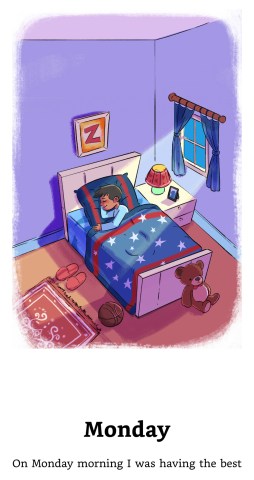
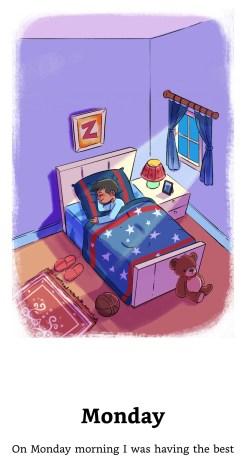
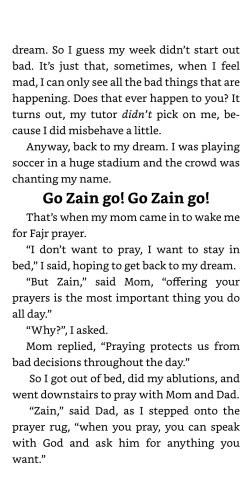
Zain starts off by introducing himself as a kid who lives with his parents and is having an  awful week.  He rewinds and begins with recapping Monday.  Right away he acknowledges that Monday actually started out ok as he was having an awesome dream, but that sometimes when he is mad he only sees and remembers the bad things.  Because of his awesome dream he didn’t want wake up and pray Fajr, but his parents reminded him that when you pray you can ask anything you want from God and that praying protects us from bad decisions.  He drags himself up to pray and asks God to help him on his spelling test.  Later that day he took his test, said Bismillah, and aced it.  So he concludes that maybe Monday wasn’t so bad, and Tuesday wasn’t either.

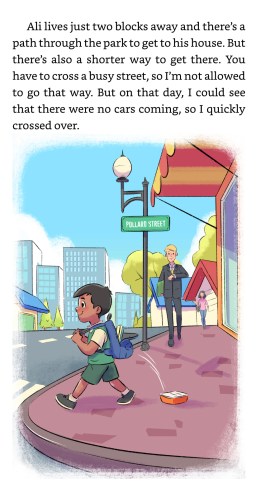
On Tuesday, Zain sticks up for his neighbor Joey who is being picked on by some older bullies.  Later that night Joey’s parents come over to thank him and take him out for ice cream in appreciation.  Wednesday, starts out great at school, and after school he gets to bake blueberry muffins with his mom.  When the muffins are done he was suppose to pray Asr and then take the muffins to his friend Ali’s house.  His mom reminds him to take the safe way and not cross the busy street.  But, Zain forgot to pray Asr and sees no cars coming and chooses to take the short cut across the road.  When he gets to Ali’s house his backpack is open and the muffins are missing.

The rest of the week continues with highs and lows.  Many of the lows coming when he doesn’t pray.  At one point a friend comes to tell him to come to the park to play soccer, and he knows his mom is going to ask him to wait a so they can pray together, so he pretends not to hear and rushes out the door.  Another day he chooses to not miss the end of a show he is watching to pray and heads off to tutoring without praying at all.

When the book rejoins Zain in the present he is feeling bad about kicking a friend playing soccer, cheating on a math test, and not getting to taste his muffins.  He unloads everything that has happened over the week, and his parents calmly and patiently ask him if he has been praying.  When Zain realizes he has been neglectful his mom likens prayer to bricks in a wall that help keep bad things out.  His parents tell him that when we miss our prayers, we end up with holes in our wall and bad ideas can sneak in.  Resolved to stay strong, Zain wakes up the next morning to pray Fajr and have a good day, inshaAllah.

31F4B3A3-12AE-493B-80DA-E93FC0F75AEB

WHY I LIKE IT:

I love that it stays with a young kids perspective and doesn’t get weighed down with hadith and ayats and lectures.  The parents let him learn from his mistakes and he comes to his own realization, not through their reprimanding or catching him in his deceitfulness.  The book is a great way to remind kids that it is their responsibility to pray and that Allah swt knows everything, so that connection has to be made between the person and their creator, it isn’t something you do only when someone is watching or telling you to do it.  I do wish that when he did resolve to pray that there would have been a bit of an outpouring to Allah.  I love that he had tears in his eyes when he told his parents everything, but I think it would have been really powerful to see Zain ask Allah to forgive him and to help him keep his wall strong.

The book reads smoothly, and the illustrations are well done and inviting.  Early chapter book readers will enjoy the font and format and knowing where the story is going with the days of the week chapters.  On one occasion I wish the word “wudu” would have been used instead of ablution, and I’m not sure what Zain has against carrots, but nothing too major will keep kids from enjoying the story and understanding it.

4AE0291F-2915-4F34-BA1C-D625DC0B97D6

FLAGS:

none.

EA28C866-45A0-47D6-B446-AF196504321E

TOOLS FOR LEADING THE DISCUSSION:

This book is for children learning to pray and realizing how important salat is.  So while it won’t work for a book club, I really hope teachers in Islamic Schools and Sunday Schools will read the book aloud or assign it to their students.  It is a great teaching tool, a great reminder, and a fun story too.


When Stars are Scattered by Victoria Jamieson and Omar Mohamed

Standard
When Stars are Scattered by Victoria Jamieson and Omar Mohamed

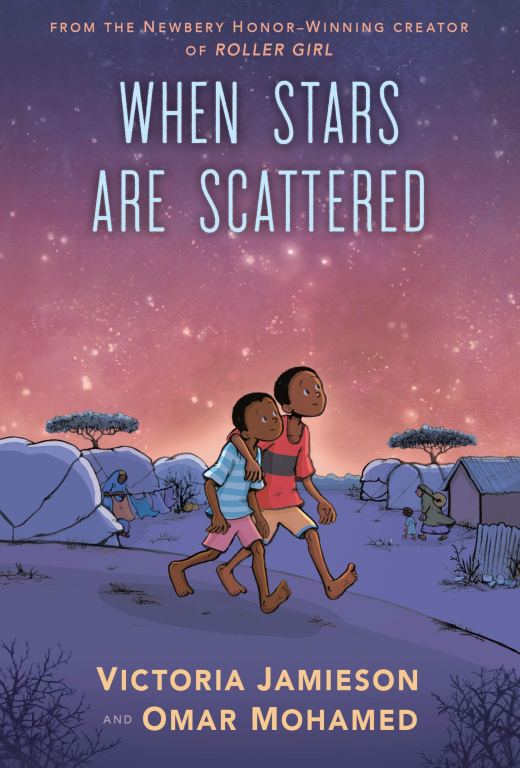
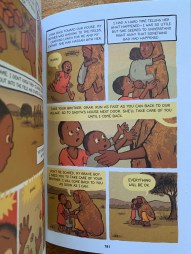
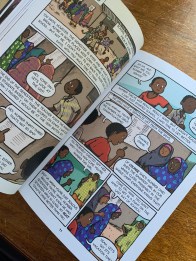
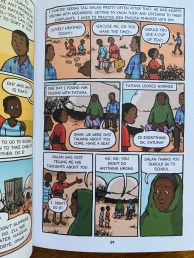
starsThis graphic novel swept me off my feet and left me in tears, not because of the hard life and sadness that life in a refugee camp entails, I had braced myself for that, but because of the hope and humanity and beauty that is so powerfully expressed and conveyed in this 264 page book.  Meant for 3rd graders and up, I think kids through middle school should be encouraged to read it.  The illustrations and colors are incredibly well done and the story is based on a true story that needs to be told and shared.  It is definitely in the top 10 books I’ve read this year and I keep catching my 11 year old re-reading this book repeatedly (like 5 or 6 times).
52BE6C8B-4246-4A92-BA66-004378A21862

SYNOPSIS:

Omar Mohamed lives in Dadaab refugee camp in Kenya.  His father was killed in the Somali war and his mother has not been seen after she sent Omar and his younger brother Hassan to run with the neighbors to escape the violence.  Hasan suffers from seizures and doesn’t speak, save one word, Hooyo, mother in Somali.  The two boys have an adopted mom Fatuma, who looks after the boys in the camp as if they were her own.  Unable to go to school, Omar spends his days looking after his brother, playing soccer with plastic bags, and waiting in lines for water, food, and news of a better opportunity.

When Omar gets the chance to go to school (5th grade) he has to make the difficult decision of pursuing his own opportunities, with the hope of helping Hassan later, or living day to day and taking care of his younger brother.  He is finally convinced that education will help them both, and that if the girls can find a way to do their chores and attend class, he can too.

Each transition from primary, to middle to secondary school requires testing, and only the top get to continue.  Determined to stay in school, Omar studies while dealing with life’s many challenges and the daily additional challenges of living with little food and resources.

When Omar and Hassan’s names finally appear on a UN interview lists for resettlement, hope seeps in, but the wait and the uncertainty prove to be yet another test.  Along the way there are side characters from the United Nations that show compassion, other families that show how generous and loving humans can be, female classmates show him how to take advantage of his privilege and friendships that move friends to family.

D74285FB-CBDC-4C4A-BD7B-070439BB08EF

WHY I LIKE IT:

The book is gripping and has heart.  I don’t know what I expected, but I truly could not put it down.  The character’s stresses are felt and emotions are conveyed so powerfully, that I don’t know that you can read the book and forget it.  The most emotional part for me was his honesty in dealing with his brother, the strength of his friends, particularly female, and the bond to Fatuma.  Truly their living arrangements and loss of family is gut wrenching, but it was the little things that touched me the most.  The honesty of Omar having to decide if he was tempted to not go to school because he was scared. Was he using his brother as an excuse to stay with something he knew.  The emotional tipping point of no return for me was when he realized Fatuma would not be able to go to the second interview with the UN and would not be a part of what came after.  Of course I knew that, but by that point I was so connected to the character, that when Omar realized it, I broke for him.  To feel that connection in a graphic novel was new for me, perhaps a first, and alhumdulillah I am better for it.

The characters are Muslim and behave traditionally with praying and Ramadan and Eid.

F9E64F9D-1722-4CBD-B905-BE754BCE6C77

FLAGS:

There is talk of khat, something the men chew on the side of the road to forget things.  There is some violence, bullying, a young girl getting married before 6th grade and having a baby.

CDD12698-52CE-4FFD-9444-29A666980797

TOOLS FOR LEADING THE DISCUSSION:

Yes! I am hoping if and when we resume school I am starting with this book inshaAllah, for my middle school book club.  There is so much to talk about and understand and empathize with.

Stuck in the Middle by Sumayyah Hussein illustrated by Diana Silkina

Standard
Stuck in the Middle by Sumayyah Hussein illustrated by Diana Silkina

middle

At 122 pages this early chapter book with frequent illustrations is a great book to share with 2nd-5th graders.  It is has a great message and lesson with lots for children to relate to with regards to life with siblings, getting frustrated, making mistakes and recovering.  The lesson is strong, but doesn’t become preachy as the protagonists voice rings true to her age.  Mistakes are made by many characters and situations are fleshed out so the reader can understand why things are done.   By showing that there isn’t one side to a story, and that knee jerk reactions are common, readers will get that ultimately we are still responsible for how we act, and learning from our transgressions is part of growing up.

5343F790-E06E-47DB-96D9-A85A7EAEFA9E

SYNOPSIS:

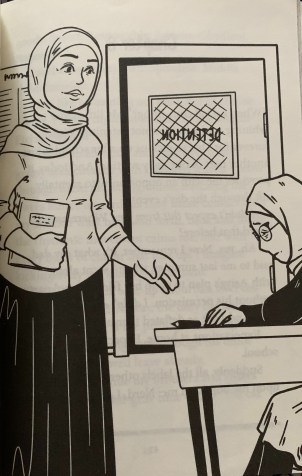
Salma is the middle child in a busy family, and very little is in her control.  When her frustration over her brother stealing a chocolate bar, causes her to lose her cool, and then she is forced to run errands with her family, homework doesn’t get done in time and she finds her self in detention.  Normally a very good student, teachers and other students are shocked that Salma is in trouble.  Things don’t improve when her brother steals her carrot cake the next day, and in a plot to get even, Salma ruins her brothers brand new PS4 controller.  She also turns a blind eye at school when she sees someone picking on him.

Doing her best to avoid being discovered as the culprit, or being in a position to see her brother being bullied, her guilt starts to get to her.  When an ambulance has to come to the school for a kid that got pushed and needs stitches, she realizes she has to make things right, even if that means getting in trouble.

7E60CD43-7DCB-41AE-BFF8-6CA415A5BDA2

WHY I LIKE IT:

I love that it is so relatable, honestly switch Salma with my middle son Haroon, and the 13 year old boy that doesn’t want to go out with the family, with my 13 year old daughter that doesn’t want to go out and we are looking in a mirror, haha.  The family is Muslim and they practice and let the religion shape their view of the world and how to function within it.  The girls wear hijab and use the hadith premise that they have to fix a bad deed with a good deed to provide the solution to the mistakes made earlier in the story.

AE60B7D6-48FA-4A46-A4E7-4F0BB40351AD

FLAGS:

None

46612FC3-B196-4A59-9BB8-AA54F7ADBD3F

TOOLS FOR LEADING THE DISCUSSION:

I already made my middle child read the book, and because of the length it wouldn’t lend itself to a book club, but I can see teachers having kids read it and then discussing, just like I am doing in my family.  It is sweet and well done and a great addition to your bookshelf.


Not Quite Snow White by Ashley Franklin illustrated by Ebony Glenn

Standard
Not Quite Snow White by Ashley Franklin illustrated by Ebony Glenn


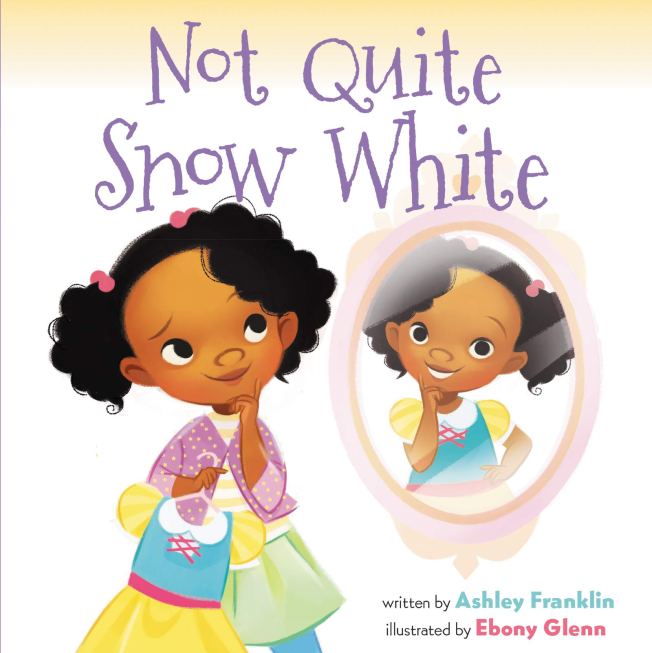
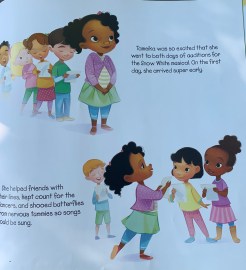
not quite snow whiteThis 32 page picture book meant for preschool to 3rd grade really should be required reading for EVERYONE.  So many lessons, so beautifully conveyed in the simple text and beautiful illustrations that I made each of my kids read or listen to it and then discuss: self confidence, nay sayers, self esteem, race, passion, body image, kindness, and perseverance to name a few. Accelerated Reader Level is 3.2 as older kids will understand a bit more than the younger ones, but I truly believe all will benefit.  Written by a Muslim woman of color, featuring a girl of color and illustrated by a woman of color, this OWN voice book has it all for girls and boys alike.
67C6C849-8C74-438C-B57D-15648F8E6136

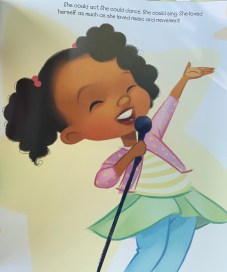
Tameika loves to sing and dance and be on stage in front of an audience (stuffed and unstuffed).  She feels like she can be anything she wants and when her school puts on a production of Snow White she can’t wait to audition to be a princess.

3A1948AB-AD83-42E1-8133-AB27C3708705

She arrives early the first day of auditions and helps her friends with their lines and nerves.  But then she hears them whispering that she can’t be Snow White.  “She’s too tall, too chubby, too brown.”

6639ED62-4406-41EB-8957-69B6268E8C75

Their words deflate her as she internalizes their thoughts about her.  She doesn’t feel like singing or dancing and she questions her appearance.  Her mom tries to build her back up.  Her father reinforces her qualities, and slowly she starts to think maybe her parents are on to something.

A06D6FE9-87FC-4A83-8F09-14D627BE9902

The next day she has to face her fears and when she steps out on to the audition stage.  She knows what she loves, she knows the joy it brings her and she has to dig deep to push the negative away and shine.

E0144101-5394-4BDC-B0AE-0441ED085ACB

Yes, I’m going to spoil the ending, she gets the part and she rocks it, ok I’m projecting based on her smile.  But it truly isn’t about getting the part and excelling at it, it is trusting that you are perfect as you are and confidently owning it.

The book is available everywhere, even the library, so please go get it, read it with your kids and get discussing! Fiction is a great start to talk about racism and fat shaming and all the other things that you think are hard, but kids need to hear and see and talk about from a very early age.


Mad, Bad, and Dangerous to Know by Samira Ahmed

Standard
Mad, Bad, and Dangerous to Know by Samira Ahmed

mad bad

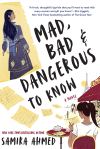
I really should give up reading Samira Ahmed books.  This is the third one I’ve read, and while she is definitely getting better, I still don’t know why her editors don’t fix her flat notes.  Like in Internment, the premise in this book is amazing, but other parts are just cringe-y and painful and really, really unnecessary.  My guess is, she would identify herself as a romance YA author, and yet consistently in her works, that is the most lacking part: the character building and forced romances.  The art history mystery, the inspiration and “real” life of the characters from the past, the setting of Paris in the summer, the fight for woman to be heard are all so well done and compelling and interesting that this romp that blurs fact and fiction might deserve a read, but you have to overlook the forced love triangle, excessive kissing, be willing to suspend reality regarding Alexandre Dumas, Eugène Delacroix, and Lord Byron, artifacts and sleuthing, but if you can do all that, this 337 page book for 9th grade and up, is definitely fun and hard to put down.

SYNOPSIS:
The protagonist is 17-year-old French-Indian-Muslim-American Khayyam, who is spending her summer in Paris with her professor parents like they do every year.  But this year is different as she is being ghosted by her boyfriend Zaid back in Chicago and has just been humiliated by her poor research attempts to link a missing painting from artist Delacroix to author Dumas in an entrance essay competition to her dream school.  Khayyam’s story is really just beginning though as she steps in dog crap and bumps into a descendent of Alexandre Dumas as she wipes it off.  A cute descendant, who shares the name with his distant grandfather, and viola’ the two of them are off on a whirlwind adventure of clues and attraction and mystery solving.

Khayyam’s story is interwoven and told between small glimpses of Leila’s story.  Leila is a Haseki, a chosen concubine of the Pasha in Ottoman Turkey, but the lover of Giaour and friend of the jin.  As we learn her story from 200 years earlier and her struggle to break free of her gilded cage in the harem, only to be defined by the artist and poets and author men around her, her story and Khayyams collide.

WHY I LIKE IT:

I know precious little of art history, I can name drop a few artists and paintings, but that is being generous, so the fact that I have no clue what is real and what is fake and what is possible, made this story all the more fun and engaging.  Yes, I researched, aka Googled, stuff as I read and am perfectly content to accept the fictional what ifs that the book offers.  I love how the art world and literary world are one in the book and that they inspired each other. The way the sleuthing, the finding of artifacts, and unraveling of it all is presented is indeed a romp.  Realistic? Not a chance, but fun.  I also love how both Khayyam and Leila had to define themselves and ultimately not do it in the reflection of a male.

The rest of the book, is a bit of a stretch.  Leila’s story naturally has holes in it as it is told in broken pieces, but Khayyam’s story does too.  I just didn’t care about her past boyfriend/ex-boyfriend/friend, whatever Zaid is or was, and clearly after moping about him for 300 pages and then not even giving him a proper goodbye, means that the author and character didn’t really care either, which made the already forced, cringe-y annoyingness all the more grating.  As for the relationship, the other piece in the triangle, with Alexandre, was fine in that there was angst, but they put it aside to solve the mystery, so it didn’t bother me too much.  Of course the fact that Khayyam is a practicing Muslim who seems to have no problems with boyfriends, and making out and that her parents don’t mind either, makes the faith aspect all the more befuddling.  I guess practicing might be a stretch, her mom and her go to Jummah prayer on Friday, thats about the extent, and she mentions she doesn’t drink.  Zaid, sets up a tutoring program at the masjid, but his instagram has him hanging all over girls too, so not sure why the characters are even Muslim.  I suppose it is good to have that diverse representation, but it doesn’t seem to make much necessary sense to the overall story.

FLAGS:

Implied concubine activities, with the Pasha and the lover.   Lots and lots and lots of kissing, nothing graphic, but annoying amounts of it being mentioned.

TOOLS FOR LEADING THE DISCUSSION:

I want someone to discuss it with me and point out where the facts end and the speculation starts and when the full on fiction takes over.  I don’t think I could use this book as a book club book because of the center stage of the haram romances in both Khayyam’s time and Leila’s.  But if you have read it, talk to me about it, I’m curious!

NPR’s Review: https://www.npr.org/2020/04/11/831873365/in-mad-bad-dangerous-romantic-sleuths-uncover-a-byronic-secret


Alya and the Three Cats by Amina Hachimi Alaoui illustrated by Maya Fidawi

Standard
Alya and the Three Cats by Amina Hachimi Alaoui illustrated by Maya Fidawi

aliya and the three cats

This sweet 32 page book is the purr-fect way to introduce the arrival of a new baby to toddlers and preschoolers.  Instead of siblings preparing for a new arrival, it is three very different cats that need reassurance that there is enough love to go around.

3cats

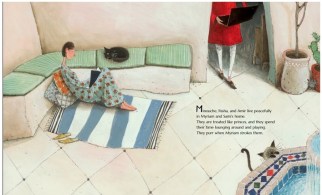
Minouche, Pasha, and Amir live with their humans Myriam and Sami, and life is good.  Minouche likes to hide, Pasha is regal, and Amir the Siamese is very curious.  One thing they all have in common though, is they like to curl up on Myriam’s belly.3cats1

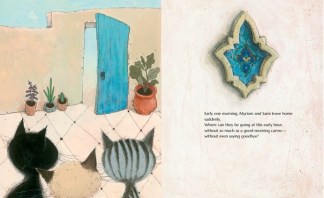
And her belly is growing! They are finding it harder to fit, and it even moves. Then one day Myriam and Sami leave early in the morning without even saying good-bye.

3cats2

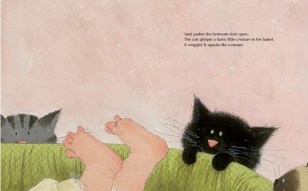
Finally she comes home.  She is carrying a basket and disappears in the room without even acknowledging the cats.  The cats sneak in and see a funny little creature that squeaks.

3cats4

Grandma steps in to assure the curious little cats that there is enough love for the new baby, Ayla, and them.  Feeling confident, the proud cats take on protecting their little human and the family full of love.

3cats3

There isn’t anything Islamic in the book, but it definitely is culturally rich in the names, illustrations and the author is Moroccan.

The sweet book would be a great way to get siblings comfortable with a new one on the way and let them talk about how the cats thought, felt, and handled the change.  Even children not about to have a new addition will find the silliness and sweetness entertaining and enjoyable.  The pictures are gorgeous and fun and the text and presentation perfect for bedtime, story time, and anytime.


The Story of the Holy Prophet Muhammad (peace and blessings of Allah be on him): Ramadan Classics: 30 Stories for 30 Nights by Humera Malik

Standard
The Story of the Holy Prophet Muhammad (peace and blessings of Allah be on him): Ramadan Classics: 30 Stories for 30 Nights by Humera Malik

the story of prophet muhammad

I debated posting about this book for so long that Ramadan is more than half over.  But as a reference for years to come, I thought I should go ahead and throw my late support toward this Ramadan tradition and a book deserving of space on your shelf for children 4th grade and up.  I’ve seen people praising it for a few years, and finally I ordered it this year, however, I wanted to not only read it, but also test it out first: reading a story a day, discussing and asking the correlating questions with my own children, before reporting back.  I cannot and thus won’t comment on the accuracy of authenticity of the book, nothing stood out as erroneous to me and there is a bibliography at the back, but there is a reason I try and steer clear of non fiction, I’m just not qualified to comment.

SYNOPSIS:

The book starts with the birth of Prophet Muhammad (saw) and ends with the selection of Abu Bakr (ra) as the first Khalifah.  Each chapter is between one-and-a-half to two-and-a-half pages and the 30 chapters plus one Eid day chapter (so a total of 31), covers 103 pages in all.  There are a few pictures of where the Battle of Badr took place, the Cave of Hira, not many.  There are three questions at the back of the book for each of the chapters, but no answers.  The book is pretty linear, just the second chapter bounces back to Prophet Abraham (as) and Hagar and the story of Zamzam and then the rebuilding of the Ka’bah.  It is a glorified timeline, which in this case is a good thing.  It doesn’t go off on tangents or provide a ton of outside references, it is concise and general, but hits the key parts: marriage to Khadijah, first revelation, migration to Abyssinia, Taif, Hijrah, treatment of slaves, year of sorrow, Battle of Badr, Battle of Uhud, Treaty of Hudaibiyah, it talks of tensions with various tribes, coming to an agreement about the Khalifah, and more.

I think younger children might possibly be able to have the short chapters read to them and then explained, but really, it would be a lot to process.  The words are simplified and the gist of situations are conveyed, but topics aren’t necessarily shied away from.  It discusses that Prophet Muhammad (saw) had more than one wife, and that there were slaves, and there were tensions with the Jews, and Bilal was tortured, all things that picture books might skip over.

WHY I LIKE IT:

I like that even my young teen could read and involve herself without feeling like the exercise was childish.  Many of the answers are open ended in nature and require more than just a one word answer.  It allows for children to add other facts that they know about RasulAllah to the dialogue and make connections to our history with our current life very easily.  Even children that know the story of Prophet Muhammad (saw) will find the book engaging and smooth enough to read through again (and hopefully again each Ramadan) and learn new tidbits, understand concepts more clearly and be reminded about the beauty of our Prophet.

FLAGS:

Nothing

TOOLS FOR LEADING THE DISCUSSION:

If I was a teacher, I would definitely start each morning reading a chapter and doing the Q and A, whether it was Ramadan or not.  I think we need to be more connected to our Prophet and grow our love and appreciation for him, so books like this are such a great tool in accomplishing that goal.


Mikaeel and Malaika: The Power of Dua by Kazima Wajahat illustrated by Gustavo Gutierrez

Standard
Mikaeel and Malaika: The Power of Dua by Kazima Wajahat illustrated by Gustavo Gutierrez

power of duaMikaeel and Malaika are back in this 32 page hardback book that explores why duas sometime seem not to come true.  Done in a hilarious manner that brings in riddles and problem solving elements, it is perfect for 6-8 year olds.  Younger children will enjoy the beautiful illustrations and silliness, and older children (and parents) will thoroughly enjoy Big Boss’s play on words and the illustrations showing his parenting style.  I’ve read the book multiple times to myself, my toddler, and even my older kids; each time surpressing a smile and enjoying the message lovingly and entertainingly conveyed: “rewards are best when the time is right.”

A8CB8717-C5BF-43A7-9A6D-AF90A8915A89

The book starts out with a problem to be solved, a mystery: who took the shoes from the masjid.  I know such a real world problem in a picture book, but fear not, super hero siblings Mikaeel and Malaika are on it.  There is just one problem, their super powers are gone.

04419E7B-4F57-4ACB-91CE-06F246F1C205

They head to Big Boss, aka their father, to find out what happened to their powers, only to learn they were part of a “14 day free trial” and their superjet? It was sold on Spamazon. At a loss of what to do, Big Boss reminds them that they have one super power left, the power of dua.

EA088D63-50D9-400D-A80D-A0C70FF1BF6A

The kids run to pray and then they wait.  When they can wait no longer, they go to see if the shoes have been returned, but…they haven’t. Big Boss gives them some sage rhyming explanaition that they don’t understand, but try to unravel in an apple orchard.  When that doesn’t work, he gives them more advice and they follow it up in a butterfly garden. With no answer insight, Mikaeel gets frusterated and wants to know why his dua won’t come true.

FE59775D-8071-4E5E-87FD-16CE71F341D5

Finally understanding that Allah (swt) does things at the perfect time and only at the perfect time, the children change their dua and the shoes are found, and the lesson learned and shared.

E5E3FE5E-EAA4-4B55-B192-BF82D8C69BA6

I love Big Boss, and this book makes it much more clear than in Mikaeel and Malaika: The Quest for Love, that his advice and riddles are in rhyme, but that the rest of the text is not.  I love that he is a hands on parent changing diapers, cooking, and guiding his kids. His steralizing of an infintile waste unit, and skimming a superhero manual are awesome and silly.

The book is about Muslim children, for Muslim children, but I think any child would enjoy the story to learn what Muslims believe, and any religious child who believes that there is one creator would be able to relate to the story as well.

671A295E-6B03-40AC-9172-C3F8085E7A73

The book ends with an ayat from the Qur’an in English promising that Allah swt answers the prayers of the supplicants.  InshaAllah there will be more Mikaeel and Malaika adventures, and more of Big Boss and Super Agent M.O.M., too.