Tag Archives: heart

Zeyna Lost and Found by Shafaq Khan

Standard
Zeyna Lost and Found by Shafaq Khan

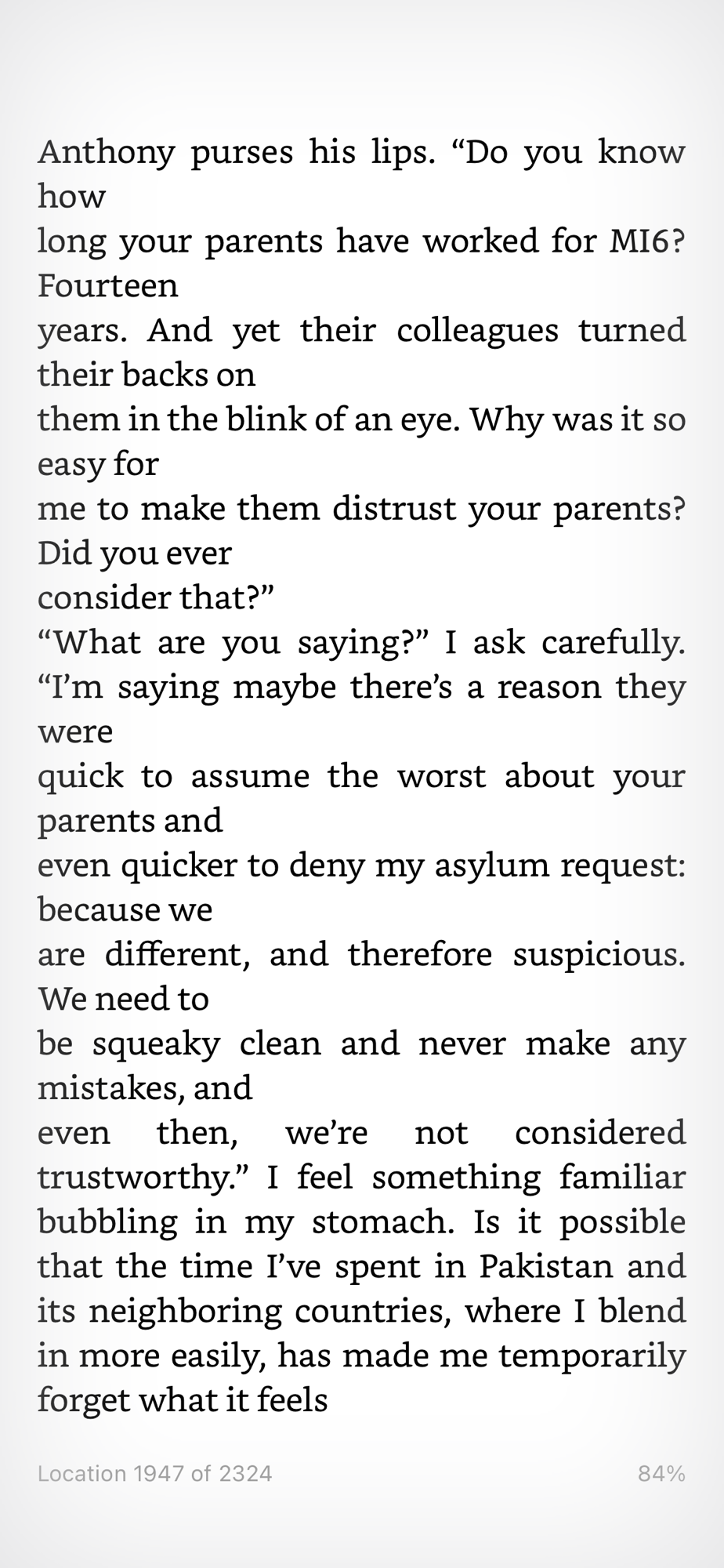
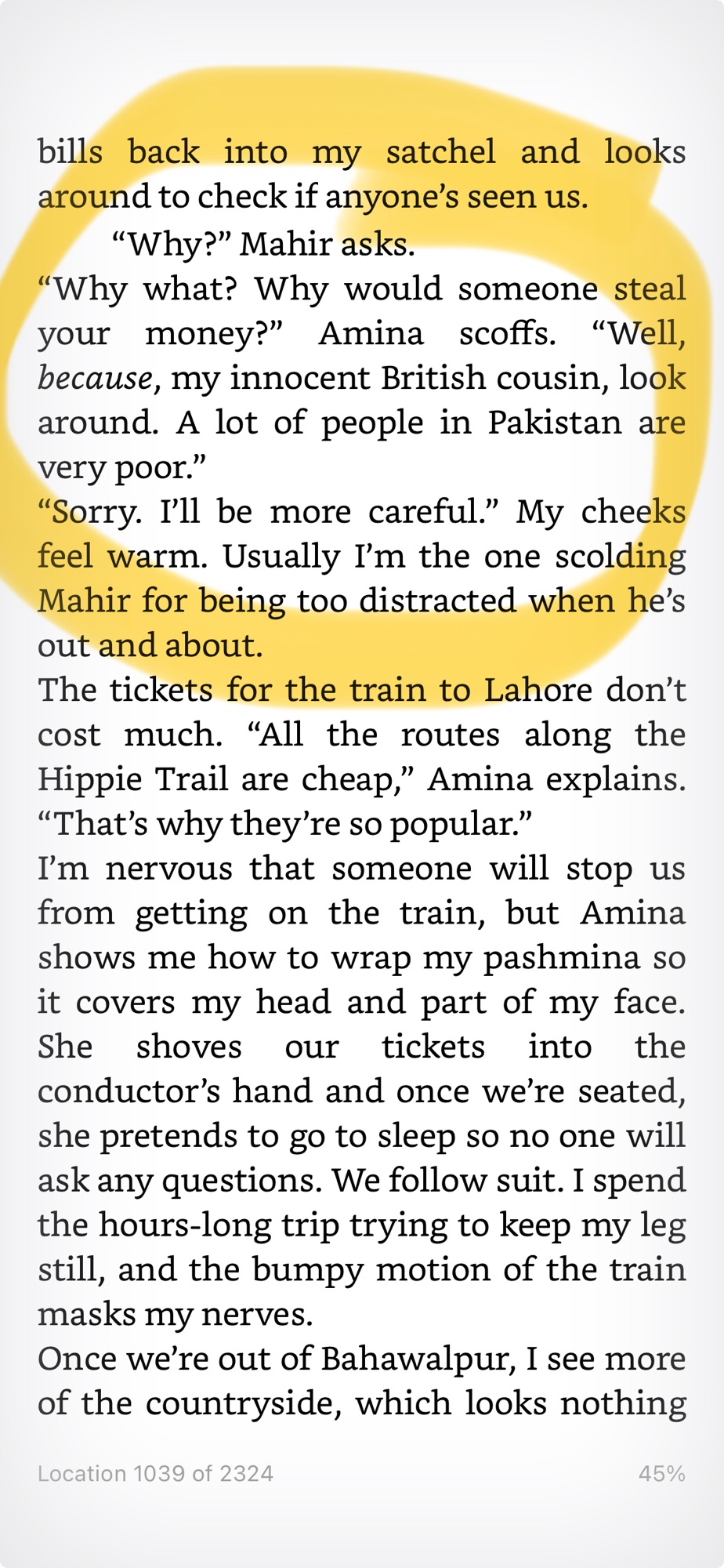
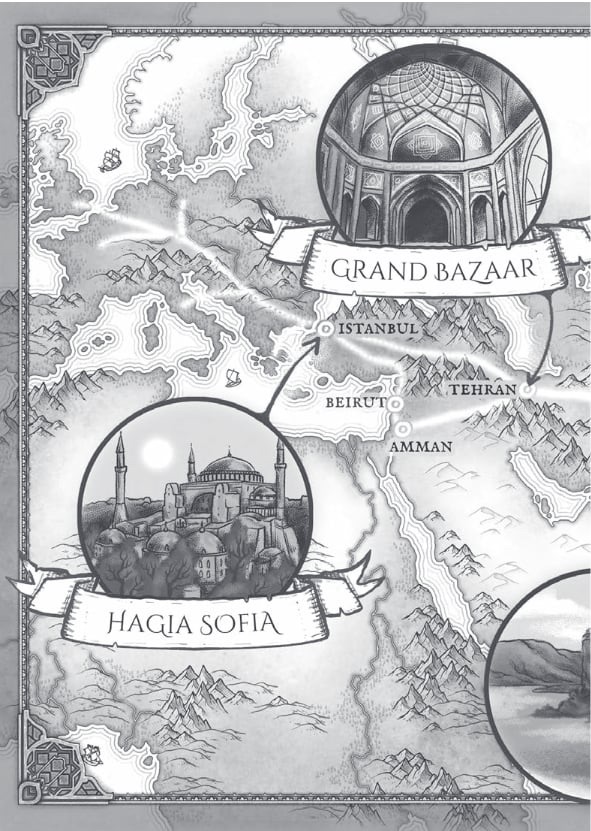
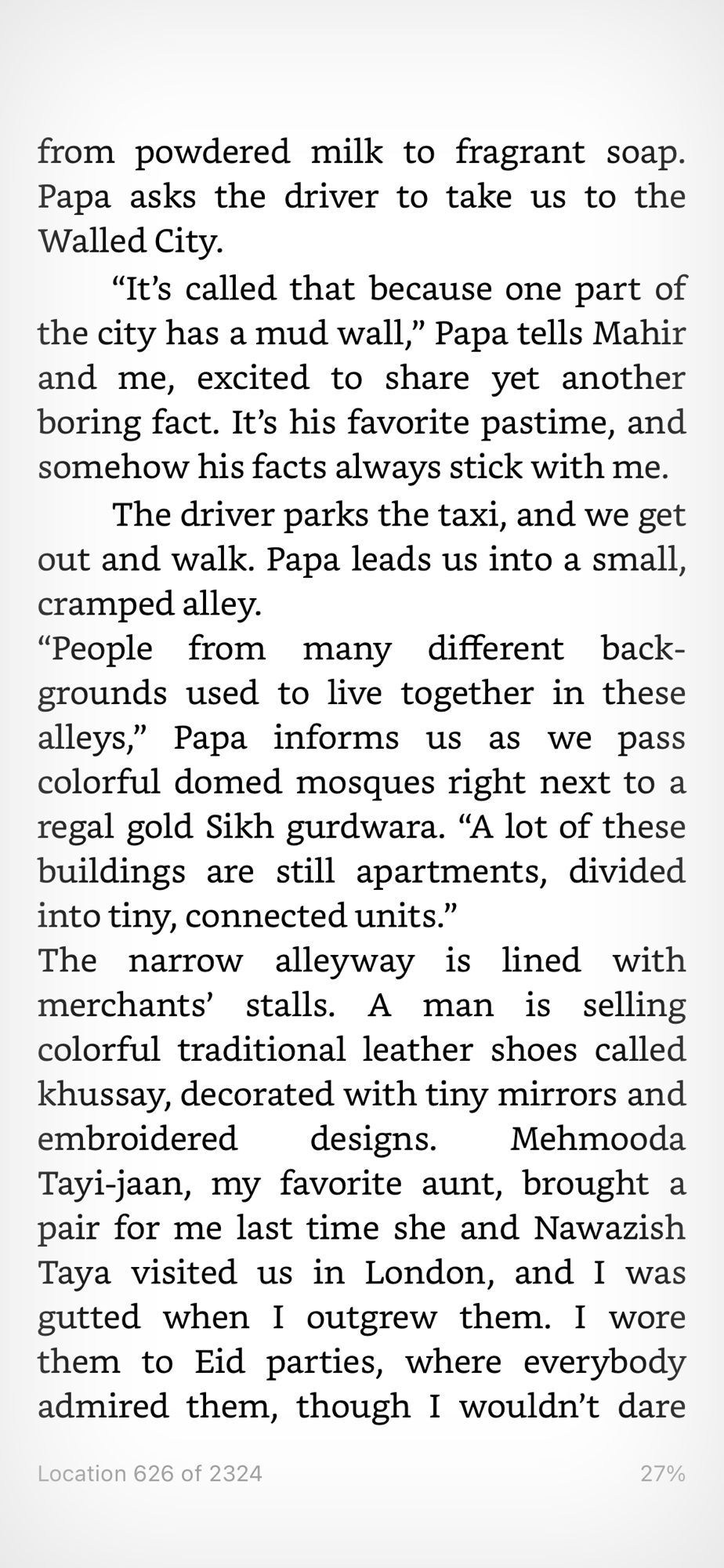
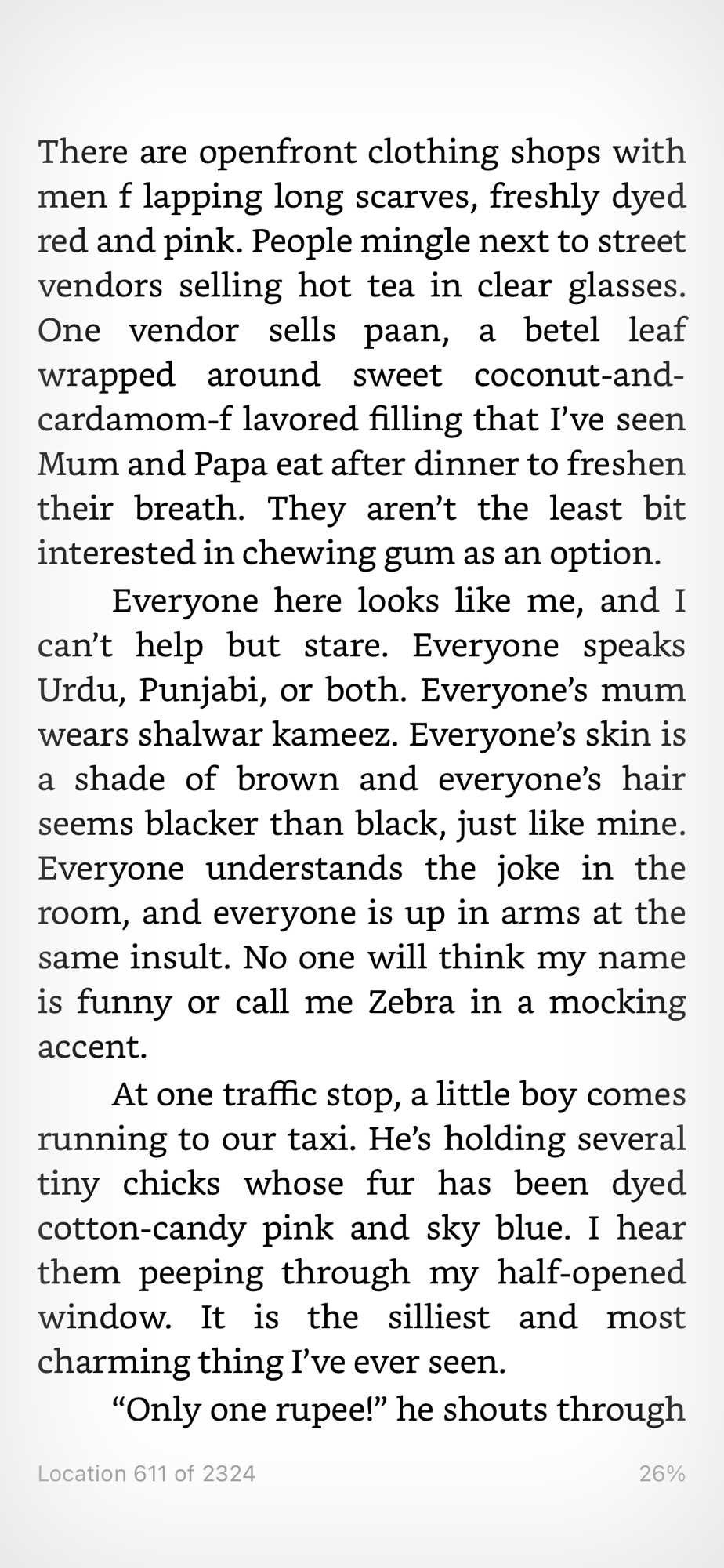
I think I needed this 336 page middle grade book that gets parents out of the way and lets a trio of kids  hop from country to country to solve a mystery, track down the bad guys and save the day. Set in the 1970s in the UK and on the Hippie Trail between Lahore, Pakistan and Istanbul, Turkey, the book is a fast paced read with humor, heart, and adventure.  I absolutely love Zeyna’s snark and voice, and her relationship with her brother and cousin, ground the story and make you cheer for them even when their antics are incredibly dangerous and improbable.  As an Islamic school librarian, my one critique with the book is that I wish there was more/any Islam. I, at one point considered that they are not Muslim, and I’m not sure what the author identifies as, but she does thank “Al-Barr, for all that is good” in the acknowledgements, and Zeyna does mention an Eid party in passing, so while I’m still on the fence, I’m going to assume they are all Muslim.  Major beats in the plot are meeting at both the Badshahi and Blue Mosque, but none of the characters ever pray, or mention the names of prayers when the athan is heard.  When they see women in burkas and chadors, Zeyna stares, not connecting the clothing to hijab, that one would hope she would know. There is only one salaam in the whole book, and the story is predominately set in Pakistan, Afghanistan, Iran, and Turkey. Granted I am sensitive, but it almost feels like a deliberate exclusion to the point of going out of the way to not let those details be present.  There are plenty of Urdu and Punjabi words and titles and cultural commentary, so it doesn’t seem that the author was concerned about watering down authenticity, a theme of the book infact is finding your place and accepting yourself.  All that aside I really enjoyed pickpocketing, imaginative, determined, sarcastic, loyal detective Zeyna, and I think kids will join me in hoping this is the first in a series.
SYNOPSIS:
Zeyna is 12, and likes to imagine she is a detective on a case, sneaking and snooping, and roping her inventing younger brother Mahir to be her Watson. The city is on edge with the theft of the Shirin Jewel, a large Persian ruby, a case involving the 15, that Zeyna would love to solve.  When she sees a man with knife in London, who later seems to be following her and her mum, and then drops a paper with their street name on it, Zeyna is convinced this her chance to prove her self. A sudden trip to Pakistan though dampens her mood as the clues to the case will be left in the UK. She doesn’t stay down long though, as her parents start acting peculiar in Lahore, meeting with strange people, lying about why they suddenly made the trip at all, and when the police show up at the familial home to arrest her parents, they all discover that her parents have vanished.  Zeyna realizes her parents and the events in London are tied to the missing ruby, and with the help of Mahir and their cousin Amina they set off to solve the case and find her parents.
WHY I LIKE IT:
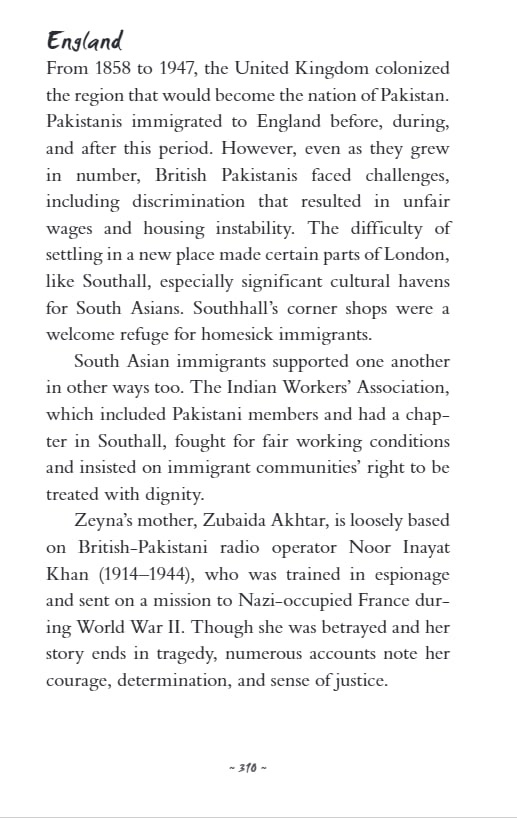
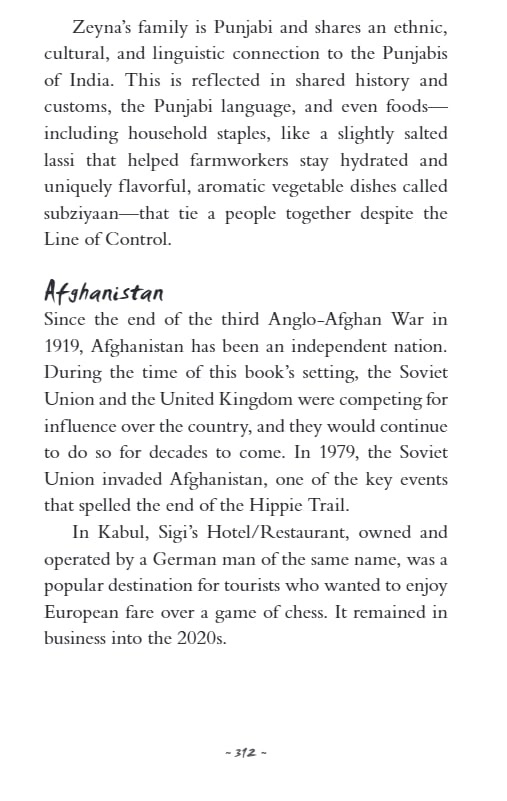
It’s hard to review a book like this without giving the twists and climax and resolution away, but more than once I gasped in delight when something happened on the page, and it crystalized where the book was going in my head.  Sure there were some particularly outlandish connections and a few plot holes, I even Googled when fax machines were invented, but I had a blast reading the book.  I loved the historical backmatter discussing the events in post partition Pakistan, a year before Bangladesh was independent, Soviet Union and UK competing over influence in Afghanistan, the discontent voices in Iran toward the shah, and the role of the Pudding House for messages in Turkey.  There are also discussion questions, a glossary, acknowledgements, and about the author at the end.

One tiny concern was the assumption that money could be stolen because the people around them are poor, it is just one paragraph, it isn’t a constant in the book, but it struck me as odd and stereotypical, and really not needed.

FLAGS:

Lying, stealing,  deception, pretending to be someone you are not, breaking and entering, eavesdropping, snooping, its a heist book!
TOOLS FOR LEADING THE DISCUSSION:
This would be an awesome book club book or novel study read, I can’t wait for it to be released in a few weeks so that I can have my kids read it.

MetalGhost: Kashif and the Echoes from a Past Life by Ali Mohammad Rizwan

Standard
MetalGhost: Kashif and the Echoes from a Past Life by Ali Mohammad Rizwan

img_8377-1

This 350 page YA book (14/15+) does not hit the ground running, but once it finds its stride, it is a lot of fun.  I handed the book to my son, who loves Islamic fiction, and at 30 pages he brought it back saying it was terrible. I upped the ante and bribed him with goalie gear to read to 100 pages, but he couldn’t stop, he finished the book, and returned the favor by encouraging me to move it to the top of my TBR pile.  Like him, I truly wanted to dnf it early on. There are too many names, too many line edit errors (mistakes, repetitive phrases, adverbs), and a little too many forced cheesy (halal) romance scenes. And then the writing gets a little better, the plot strengthens, the Islam is more than just the character’s religion, but something that actively engage with, humor is woven in, twists develop, emotional threads are pulled, and you find yourself absorbed and invested in the story.  The writing at the end unravels as well, it feels  forced, much like the beginning, but perhaps that is the vigilante/superhero genre’s norm to get readers to pick up the next book in the series for answers and clarity. I’m glad the book was nominated for the Muslim Book Awards, I may not have heard about it otherwise, and I love that my son, who is currently re-reading it, found a book that is relevant, appealing, and has an Islamic heart.  Think a mix of Batman and Green Arrow, with a splash of Ironman all wrapped up in a thobe, and being advised by his mother and the local imam to go pray.

SYNOPSIS:

Life is going pretty well for Kashif Razvi, he is about to marry his longtime crush, with both families’ blessings and excitement, he is busy at work but enjoys it, and he hangs out in his free time with his tech friend Samir, developing robotic and cutting edge devices, but then everything falls apart.  When his father dies because of a mysterious power outage in the ICU, Kashif can’t let it go, and starts looking for answers.  He comes up empty following the legal, traditional routes and decides to take matters into his own hands.  He throws on a suit designed by Samir and takes to the streets as MetalGhost, becoming the city’s new hope.  He follows leads to avenge his loss, uncovers corrupt police, cracks down on human trafficking, and seeks to set right other ails of the city.  No matter the crime, a few names always seem to be in the mix, and as the city starts to fall apart, copycat vigilantes start popping up, and MetalGhost finds it won’t be as easy as he thought to hang up his thobe and leave his crime fighting life behind.

WHY I LIKE IT:

Everyone wants a Muslim super hero, but usually they come across as overly juvenile, or their faith and culture performative. This book finds a nice balance of action, contemporary relevance and Islam. The structure feels formulaic, but it works as it seems to track with superhero movies.  You get the emotional tragedy, then the plot, then the resolution. The middle of the story flows and draws in seerah, sahaba inspiration, humor, and action.  The beginning and the end, though are just really stilted.  I’m not going to spoil anything, but the end was not as strong as it should have been, the reveals and twists were not articulated well and they should have been, they were so shocking.  The numerous names and characters at the beginning really need to be edited and simplified, they linger in the middle, but honestly the reader stops caring and just reads for the plot, hoping that it will get sorted.

FLAGS:

I love that the relationship beats are halal, there are a few tinges that might lean into the line, but are gray at most.  There is killing, death, torture, human trafficking, crime, lying, vigilantism.  For teens it is fine.

TOOLS FOR LEADING THE DISCUSSION:

My son and I have chatted about the book, but I think to take to a larger group, I really would want it to have another round of edits.  The idea of the story is wonderful, and to read by yourself I think it excels at what it is.  But to have teens, sitting around picking it apart to discuss and reflect on, will need the writing to be cleaner and stronger.

Xavier’s Voice by Ashley Franklin illustrated by Tatiana Gardel 

Standard
Xavier’s Voice by Ashley Franklin illustrated by Tatiana Gardel 

img_5385-1

At 48 pages this picture book provides a tender window into a little boy with anxiety, a small voice, and a huge imagination.  I absolutely love that Xavier is the star, the other kids are not mean or overly nice, they are important, but at the story’s core is him finding his confidence, and accepting himself, through his love of superheroes, sketching, and imagining what-ifs.  Xavier is Muslim, there is an “Assalamu Alaika” on one of the pages from another character to him, a superhero by the name of Super Saleem, and Islamic decor in the illustrations in his home.  Religion is not centered or explored in this Muslim authored book, but Muslim readers will see the subtle hints and feel seen immediately.  I love that Xavier discusses coping techniques his therapist has taught him to help with his anxiety and that the tone is empowering and positive.  A good story for kindergarten through second grade, and a great way for kids with anxiety to see themselves represented, and a window for others to grow their empathy and compassion.

The book starts with Xavier at school, which is loud, and wishing that he could make his small voice big.  He notices the big voice kids, have lots of friends, and he can’t seem to find the words when people talk to him.  He gets nervous, and as a result, he is lonely.  One day he discovers Super Saleem and that inspires him to create his own superheroes that are unstoppable.  When raindrops start to fall, a new kid, comes to help, and BJ likes Xavier’s drawings.  Xavier wonders if he has finally made a friend.  The book shows that even when things are going well, there can be a lot of worries, stresses, over thinking, and missteps. But being brave to keep trying, can have super results.

img_5388-1

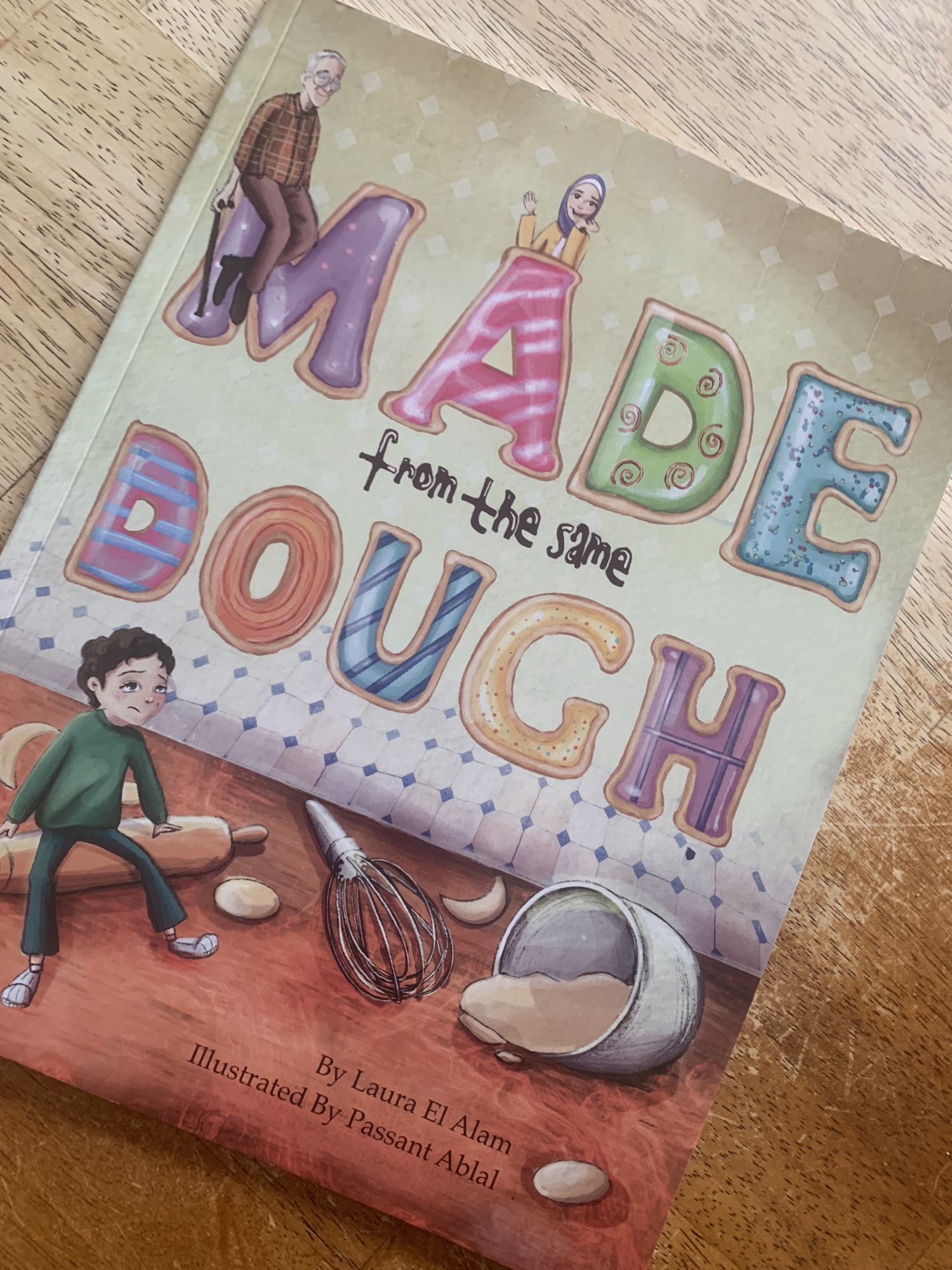
Made from the Same Dough by Laura El Alam illustrated by Passant Ablal

Standard
Made from the Same Dough by Laura El Alam illustrated by Passant Ablal

img_3052-1

Not all books about Ramadan have to be lists of facts. It is ok to show Ramadan and Islamic elements in stories that have their own plots, character arcs, conflicts and resolutions that are not just about abstaining from food and water, or losing your temper.  This book set in Ramadan is a story about a  Muslim boy and his Christian grandfather, and a whole lot of heart.  As a child of a convert, this book spoke to me, and I saw myself in that relationship, not only as a child, but even as an adult bringing my grandparents to my kids Islamic schools, friends’ lunches, and asking them to wait on the side while we pray.  I absolutely love the perspective of the protagonist, that he is worried about what Muslims will think of his grandfather not fasting or praying, as opposed to the often shown character worrying about what non Muslims think about us. The paradigm shift is subtle, but empowering to Muslim readers to see that they are not “other” in any environment.  The authenticity and how it all comes together in the clear text of the book is beautiful, but I must say, I really struggle with the illustrations.  I know art is subjective, and I am no artist, but yikes, I feel like the pictures actually distract from the story unfortunately.

The book starts with Papa coming over to his daughter’s family home and smelling something cinnamon-y delicious.  He dives in to the harira soup and recalls the cinnamon Christmas cookies they used to make.  Rayan wonders if Papa even remembers that the rest of them are all fasting.

Mama invites him to join the family at Auntie Hana’s for iftar the next night, and Rayan worries what Papa will do when they all pray, or if his friends will wonder why he came to iftaar if he is not fasting.

img_3054-1

Papa agrees and offers to make cinnamon cookies to share.  Rayan doesn’t like the idea of Christmas cookies at iftar and tells grandpa that Santa won’t be there.  The next day when Grandpa comes over to bake, Rayan refuses to help. Part scared, part frustrated, part anxious, Rayan hears everyone having fun, but stays in his room.

When they arrive at the iftaar potluck, Rayan reminds Papa to take of his shoes and then devises a plan to keep the Christmas cookies from causing any embarrassment. Only his sister Aliya foils his plan and Rayan will have to face his own feelings and make things right.

I’ve read this book easily close to twenty times, since ordering it, evaluating it for the Muslim Book Awards 2023, (it won the Holiday category), writing this review, and reading it to my littles at bed time, and it still hits close to the heart every time.  It reminds me of my own grandpa, who has been gone almost exactly a year, who may not have always understood our actions as Muslims no matter how often we tried to explain them to him, but never loved us any less.

img_3056-1

You can purchase your copy here at Crescent Moon

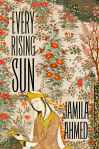
Every Rising Sun by Jamilya Ahmed

Standard
Every Rising Sun by Jamilya Ahmed

The lush writing and ever present threads of Islam captivated me from the first page of this Shaherazade retelling.  I truly could hear my own voice in my head reading each word, and falling into the masterful story-telling of the protagonist/author.  With about a third of the book left though, I was sadly stopped abruptly in my tracks.  I found myself annoyed by Shaherazade, and having to convince myself that even though this is an adult read, she is very much coming of age and finding herself, only she doesn’t evolve and grow, and doesn’t have a character arc, and by the end I felt deflated.  Is the book good? Yes.  Would I recommend it to readers 18 and up that enjoy OWN voice, strong female, historical fiction? Absolutely.  But I find myself frustrated, because when the book was good, it was so good, but as the end drew closer, I realized there were holes, big ones, that could so easily have been fixed.  The author has the skill, the knowledge, all the tools, but alas, I didn’t appreciate Dunyazade because she is largely absent.  I didn’t know the interworking of her assistants and friends so I didn’t care about them, side characters were so painfully underdeveloped. And with 50 pages left, I was for the first time perhaps ever, glad that the narrative moved from showing to telling (I know, who am I even). I needed the articulation to connect the dots particularly of Shahryar and Shaherazade’s relationship.  The 423 page book could have, and should have, been a hundred pages longer to not feel so rushed at the end, and there should have been a map.  The book has adult themes but they are handled in almost a YA manner.  The beheadings, affairs, wedding nights, battles, war, are not detailed, but rather identified and moved on from even though they are so central to the plot.

SYNOPSIS:

In twelfth-century Persia the daughter of the Malik’s adviser stumbles on the Khatoon and her lover, she anonymously alerts the King to the affair and the beheading of wives begins.  To keep the country from revolting at their mad king, Shaherazade offers to become his next wife, to assuage her guilt for what she set in motion, on the hope that her storytelling will keep her alive come morning.  Life doesn’t pause however, as Shaherazade spins her tales, but rather amplifies.  She accompanies her husband, Malik Shahryar as they join Saladin in the Third Crusade.  The caravan, the journey, the battles, the romance, all bring the climax of returning home to a Kirman under siege will test Shaherazade’s story-telling abilities to the brink and with it the Seljuk Empire.

WHY I LIKE IT:
The prose is on point, time stood still while getting lost in a world of history, imagination, and the author’s skill.  The constant presence of Islam in the characters life was incredible. It was not established and then left to the side: the times are marked by prayers, the athan is ever-present, the duas are heartfelt.  Yes the characters drink wine, and sleep around, but they also fast and treat their prisoners of war with compassion.

I really struggled with how little I cared about people dying, there should have been more connection and more emotion for the side characters, and as the story progressed, I became increasingly irritated that I wasn’t forced to care about them, to know them, to appreciate what they meant to Shaherazade.

I also felt that the majority of the story took place over one year.  How do you forget that you are telling stories to save your life and (SPOILER) start sneaking around with some other guy.  You have a guard detail that follows you everywhere, you are in a caravan and you live in a tent, everyone knows everything!  Shaherazade is also clueless a lot of the times asking soft questions and then told how intelligent she is and allowed to plot and scheme with various rulers.  I love that she has a voice, she isn’t silenced, that she is never apologetic for being opinionated and her very presence is never a kindness, she takes up space and doesn’t look back, but the inconsistencies in her judgement needed some smoothing out.  Show her understanding grow, and increase her intellect to wisdom, don’t have her charming and manipulating leaders one minute and then being so naive the next.  She should have been so much smarter by the end of the book than she was shown to be in her personal dealings.  Her political knowledge was strong, and she was a force, and that level of insight into her own life would have been a character arc to see.

The book is adult, but it almost reads YA and I’m not sure why, it is sourced, the historical presence is exciting, the words and flavors intoxicating.  I normally love when the characters are shown and the reader doesn’t have to be told things, but the only reason I finished to the end was honestly because I got some telling.  I was relieved to hear from Shahryar what he knew, what he felt, what he could own up to.  Perhaps had there been more showing of the intricacies of palace life with the side characters the book would not have gotten to that point, but the lush writing could only carry the book so far.

FLAGS:

Relationships. sex, kissing, fornication, killing, beheading, lying, hangings, war, battle, drinking wine, scheming, kidnapping, attempted rape, it is Adult, but nothing is overly detailed or glamorized.

TOOLS FOR LEADING THE DISCUSSION:

I would love to chat about this book, I think I could be swayed to love it, or play the devils advocate and argue for the sake of arguing.  Being how highly recommended this book came to me from a dear friend, I’m ready to battle and anxious to discuss!

I got my copy from the library, but can be purchased here.

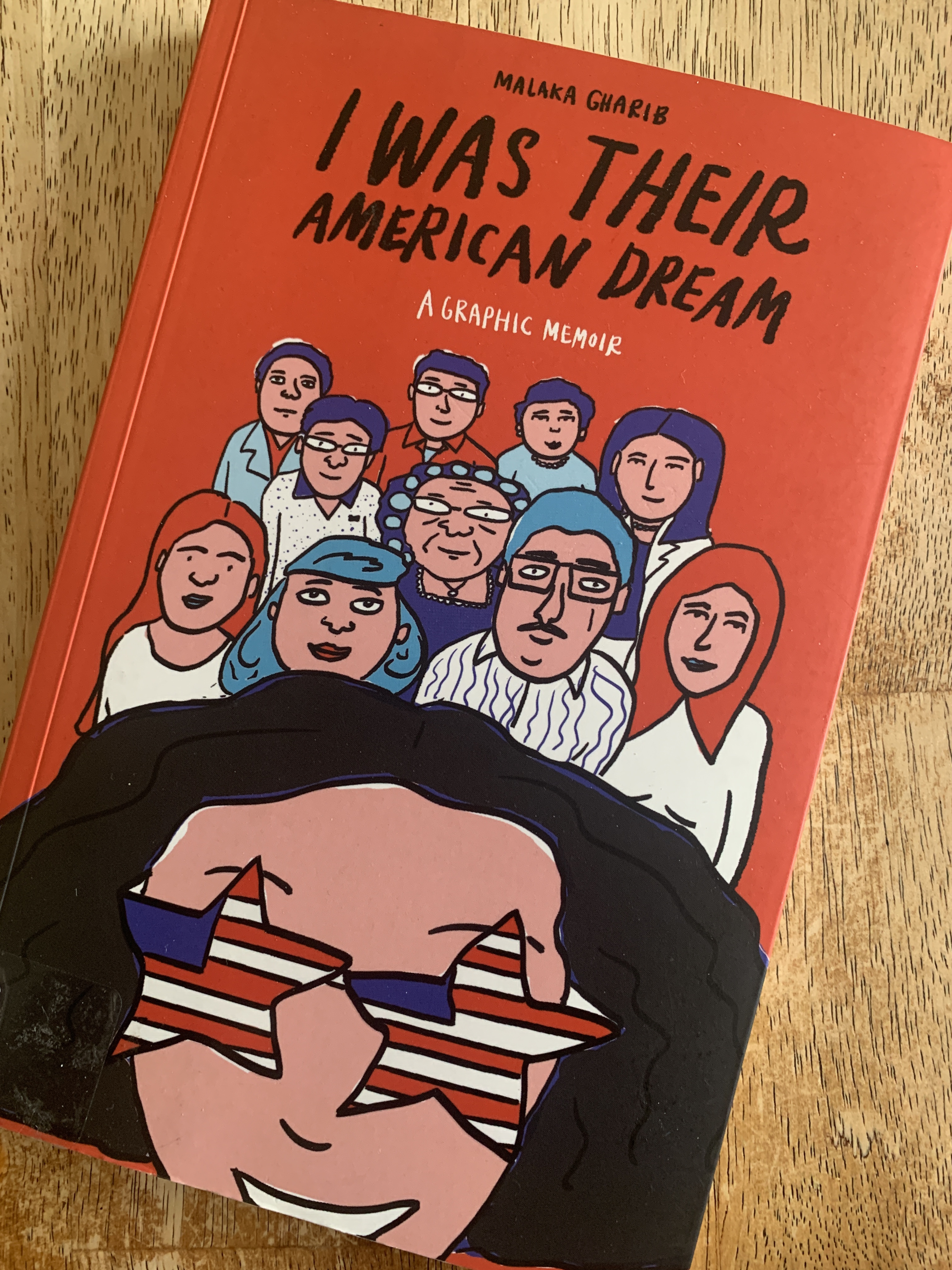
I Was Their American Dream: A Graphic Memoir by Malaka Gharib

Standard
I Was Their American Dream: A Graphic Memoir by Malaka Gharib

img_7800

I was hesitant to read the book, afraid it would pit the author’s two cultures (Egyptian and Filipino) and faiths (Catholic and Muslim) that her parents identified with against each other.  Raised as the daughter of immigrants from very different backgrounds in California I was very pleasantly surprised that the book leads with heart and positivity for the unique, yet universal feelings she experienced in her life.  The short 156 page red, white, and blue filled pages are funny, poignant, and reflective, that I think high school readers and up will enjoy spending time in Cerritos and Egypt through the eyes of Malaka.  It is easy to say that you can’t be Muslim and Catholic, but she doesn’t opine on the right or wrong of it in large terms, she discusses her life and her own situation.  As a teacher I would see students that would attend Islamic school five days a week and then go to church on Sundays, whether you agree with the choices this author/character makes is not what I intend to review, it is her life, but rather the manner in which it is shared.  There are many kids out there from “conflicting” backgrounds, and to see someone take the love and benefits offered to forge their own path in creating their own American dream, was a nice twist on the immigrant identity finding narrative.

SYNOPSIS:

The book starts with introductions to the characters, her family members that influence her, and then begins the tales of what brought her Filipino mother and Egyptian father to America, how they met, married, started a family, and divorced. Malaka exists outside her family in school, balancing her heritage and coming of age.  Raised during the school year by her mother and extended Filipino family, she spends summers in Egypt where her father resides with his new wife and children.  Coming of age as an immigrant, balancing cultures, religions, school, and dreams, the book concludes with her marrying a white Southerner and adding to the mix.

WHY I LIKE IT:

Even though she identifies more as Filipino American and goes to Catholic school, there is a fair amount of Islam and Egyptian culture included in the book.  I love that she loves her step mom and step siblings and finds beauty in Islam, learns to pray, read Quran, and mentions her love of Prophet Muhammad saw.  Sure as an Islamic school librarian, I wish she chose Islam, lived it and centered it in her life, but this is not a character, this is a real person, and to see her lovingly showing the goodness in Islam and how it has positively influenced her, is nice to see nonetheless.  There are a few storylines I didn’t quite understand, the skateboarding in Egypt a big one, but the quick pace of her narrative life-story flows well and is easily consumable.  Often stories like this are overly dragged down by dated pop cultural references and over criticizing “othering” paradigms, but this book contains enough to keep it grounded without it alienating contemporary readers.

FLAGS:

Stereotypes, lying, relationships, periods, music, dancing, nothing really stands out, there might have been some language, I read it a few days ago and honestly don’t recall anything overly problematic, but content wise it is a mature teenage read with retrospection and marriage being a part of the narrative.

TOOLS FOR LEADING THE DISCUSSION:
I don’t know that I would shelve or teach this book, but I think it is one to file away in my head for people I might encounter looking for a book about blended faiths and cultures benefitting from the many worlds they have one foot in and one foot out of, and those ultimately looking for a place to see their experiences mirrored.

I found my copy of this book at my local public library and it is also available here from Amazon.

The Masjid Kamal Loves by Ashley Fraklin illustrated by Aaliya Jaleel

Standard
The Masjid Kamal Loves by Ashley Fraklin illustrated by Aaliya Jaleel

img_7811

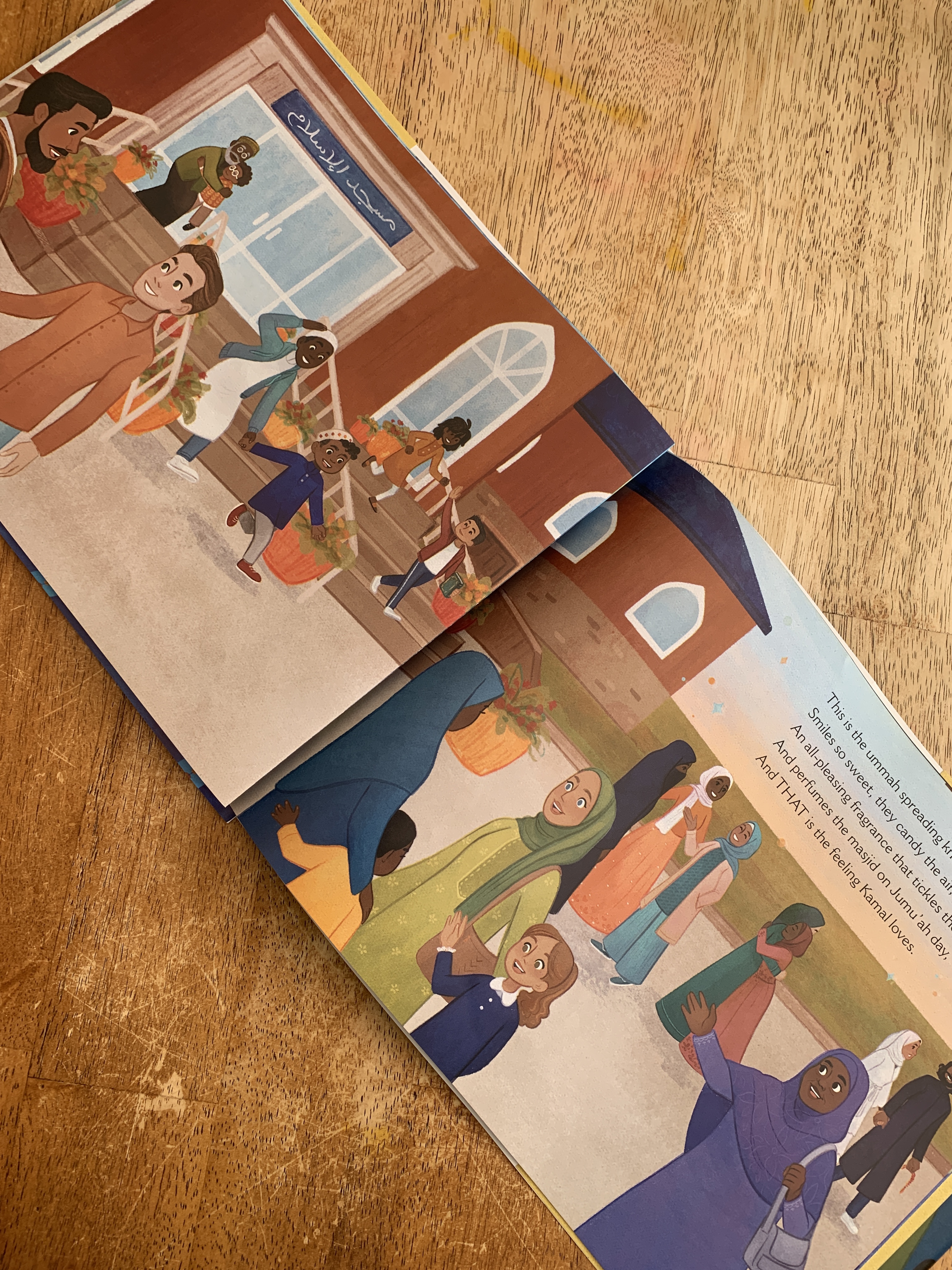
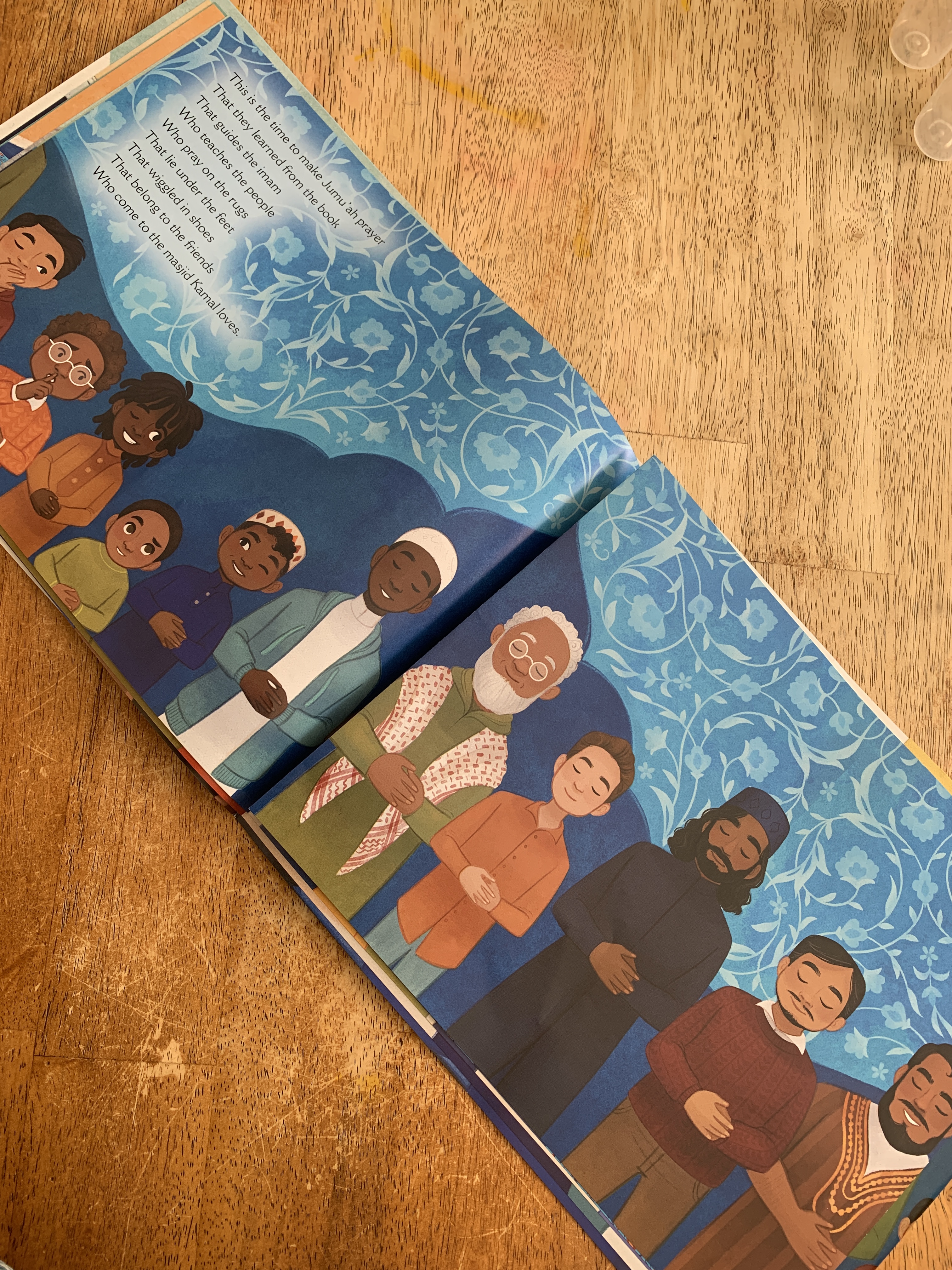
I don’t normally post about upcoming releases this far in advance (2.5 months), but I am hoping that if I share the link for preorders, I just might help in signaling to the traditional publishing world that books like this are so so so important and that we will support unapologetic, well written, Muslim centered, Muslim and Black joy featured books with our purchasing power.  This book is incredible for toddlers to early elementary in its “This is the House that Jack Built” format.  Muslim kids will giggle with excitement as they see themselves happy to see their friends at Jumu’ah, flinging shoes a little too hard before entering the musallah, splashing a bit when making wudu, playing while helping put out the prayer rugs, and getting a little wiggly or tired during the khutbah.  The happiness and love radiates off the pictures and through the text that even non Muslim readers will feel our connection to our Masjids and the prayers that occur within.  Muslim authored, Muslim illustrated, masjid not mosque, and a beautiful Author’s Note, makes this book a must have on every shelf where young children need books that mirror their experiences and provide windows into the beauty of Islam.

img_7814

The book starts out describing Kamal’s smile and offering the reason for such joy as being Jumu’ah at the masjid. It then starts with describing the masjid and all that is contained with the lines adding on the refrain of “the masjid Kamal loves.”  The friends, the shoes, the feet, the rugs, etc.. Terms such as imam, ummah, salaam are in the text and the illustrations show wudu, salat, khutbah, conveying a Jumu’ah experience.

img_7813

Each page is brightly illustrated across horizontal orientated scenes.  The expressions on the kids faces, are engaging and smile inducing and the lyrical text has a rhythm and strength that makes you feel proud to also have a masjid to love like Kamal.

img_7816

I have an arc, but have preordered a copy for myself here and hope you will do the same. Please also request your public libraries to order it, and if they have already you can place the book on hold, inshaAllah little steps to show support.

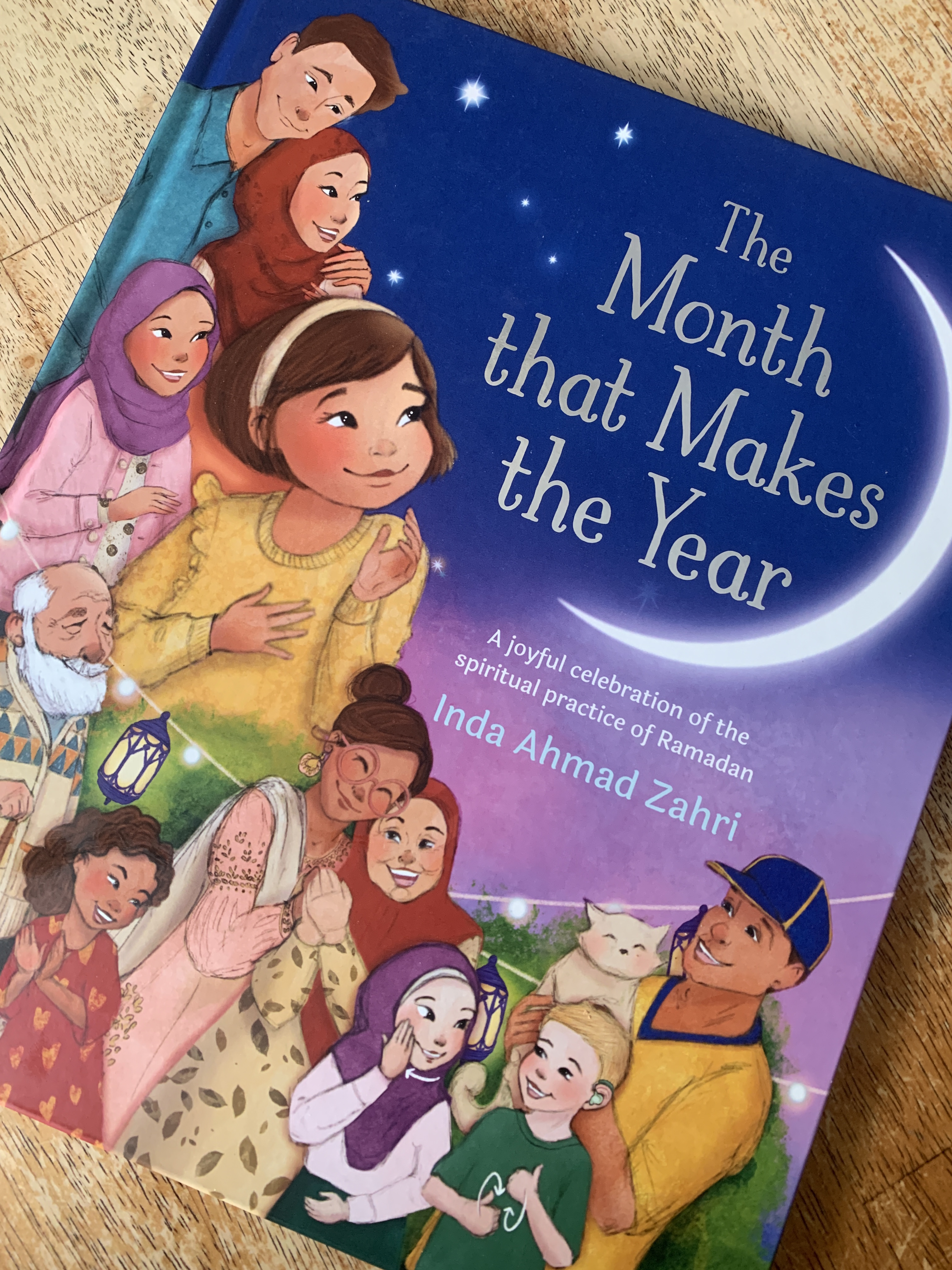
The Month that Makes the Year: A Joyful Celebration of the Spiritual Practices of Ramadan by Inda Ahmad Zahri

Standard
The Month that Makes the Year: A Joyful Celebration of the Spiritual Practices of Ramadan by Inda Ahmad Zahri

img_7355

This book was definitely worth the wait, alhumdulillah.  For all the complaining I do about books regurgitating facts, or Ramadan joy books leaving out the religion, and presentation feeling like it is more for non Muslims than for our own little children; this book does a great job of sharing key points about Ramadan with authenticity and heart that Muslims and non Muslims alike will benefit from the light story, engaging and adorable illustrations, and Muslim child centering.  This 32 page book works well for preschool to early elementary readers and listeners at bedtime, at story time, and in settings were introductions to Ramadan are shared.

img_7358

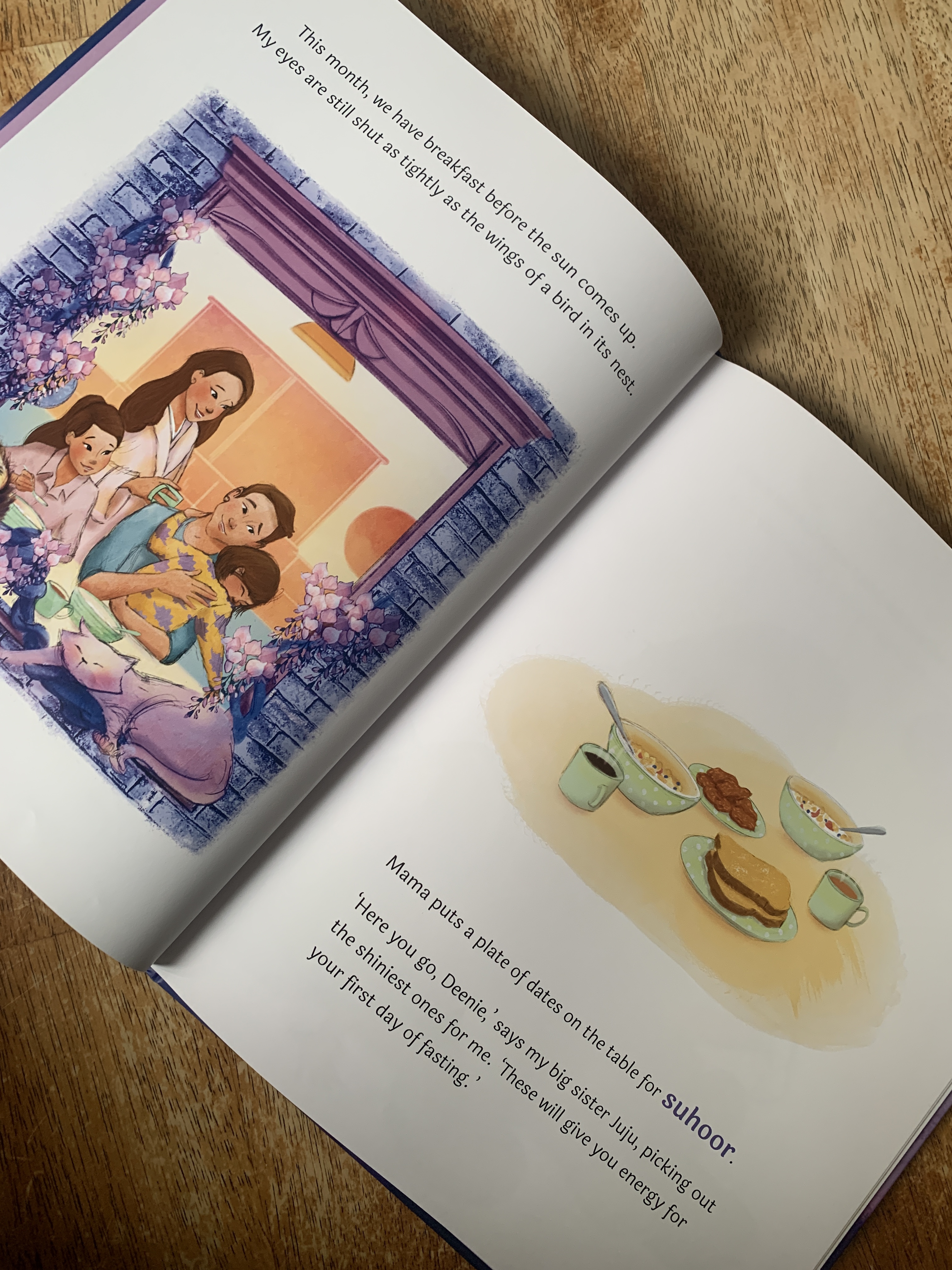
I was a little nervous that this book was framed as a child’s first fast, but a few pages in my concerns disappeared.  Little Deenie knows what Ramadan is, her family is encouraging her to try and fast for a few hours, and she knows that she can’t hide in a cave and sleep like a hibernating bear because Ramadan is so much more than going without food and drink.

I love the shelving of tempting snacks and bad habits of unkind words, waste, impatience, and that little changes lead to big changes one at a time: kindness, love, attention, gratitude.

img_7361

Deenie goes a little longer each day, and her tummy rumbles, but where she once felt lonely in the quite spaces, she is finding new things that otherwise would have been missed.  She helps the coach off the pitch at soccer, the family connects without screens, the “ordinary feels extra-ordinary.”

img_7357

The mosque opens its arms for tarawih, and extra prayers are “a chance to look inwards and upwards.” A chance to belong.  There is sadaqah and Zakat, and being thankful, learning about traditions and connecting with others.  There are non Muslim friends changing a lunch date to a gallery stroll, and realizing the kindness is not required, but appreciated none-the-less.  The human body is amazing, and Deenie is growing stronger with each Ramadan day.  Eid is a time of celebration, but Ramadan is missed, and we are not the same people we were before the blessed month..

img_7356

The book starts with an Author’s Note and ends with a Glossary.  The hardback 11 x 9 book is a great size to allow kids to truly enjoy the sweet illustrations that add to the text and bring the feelings to life.  There are a variety of skin tones, mobilities, clothing styles and head coverings, or not covered characters shown.  There are so many smiling faces, and relatable scenes.  This book is really well done and an absolute joy to read and share.

I personally needed to see that my expectations for a Ramadan read were not unrealistic, and this book alhumdulillah, not only proved that good representation can be beautiful and heartfelt and unapologetic, but raised the bar.  I can’t wait to share this for our Masjid Ramadan story time, I only wish it was easier to obtain in the USA.  I preordered mine from Book Depository, but since publication the price has gone up, inshaAllah if we all show our support, local stockists will find a way (www.allenandunwin.com).

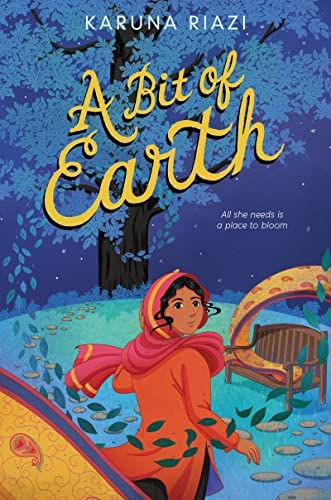
A Bit of Earth by Karuna Riazi

Standard
A Bit of Earth by Karuna Riazi

earth

This Secret Garden retelling mixes the heart of the original with a dash of modernity, the flavor of desi culture, and the lyricism of a good writer.  Over 368 pages the slow plot but rich imagery will draw readers in, hold their attention, and leave them thinking about the characters they have been fortunate to spend time with on Long Island.  Islam is practiced and normalized and naturally woven into the Muslim characters’ daily lives without othering or over explaining.  I did struggle a bit trying to keep the relationships of who was supposed to be caring for the protagonist at various points since her parent’s died clear, but once I abandoned stressing about it I was able to be swept away.  I recently reread The Secret Garden with my own children and the original is not plot heavy, nor action packed, but I watched as my own children were drawn to the slower, more grounded (pun intended) nuanced tale, and I think this book, in the same vein, will find its way in to the hearts of middle grade readers.  The book is clean, there is a possible crush hinted very slightly at the end, periods are also endured, and I do have reservations of the terrible marital relationship between Mr. and Mrs. Clayborne, but it establishes that change will occur, so at least it isn’t normalized.  There are sprinkles of magic implied regarding the house, but it is always framed without clarity and in a subtle way to set the tone and the emotions the characters are feeling more than centralizing something rooted (see I did it again) in fantasy.

SYNOPSIS:

The book updates and mirrors the original fairly well with an obstinate orphan arriving at a sprawling house, finding a prickly boy, and setting off to form a tentative toleration of one another with friendly neighbor kids in a garden that is unquestionably off limits.

Maria Latif arrives from Pakistan against her will to be taken in by a distant relative (I’m not sure how she is related), but Asra has been called away and she is forced to stay with Lyndsay, the new wife of Mr. Clayborne.  The first wife was a friend of Maria’s family, but Lyndsay is just as emotionally overwhelmed and lost as the child in her charge.  With Mr. Clayborne away on businesses, his mother Charlotte keeps them all on edge.  When Colin Clayborne is expelled and returns home, more tension erupts and the two children find themselves in an off limits garden trying to make the most of a difficult situation.

WHY I LIKE IT:

I love the mix of poetry and standard novel format.  It is beautifully written and clearly the author does a remarkable job of making her very unlikeable characters worm their way in to the reader’s heart.  Both Maria and Colin are thorny and difficult, stubborn and rude, but you seriously cheer for them, and I did shed a few tears at the end.  With the author’s writing ability apparent, I’m still not sure why the foundation of the relationships and getting Maria to the Clayborne home is so cumbersome.  It is too muddled and it drags the book down every time it is revisited.  The Dadi having the aunt’s phone number was too easy, the inconsistency of the neighbors having no relationship to the Clayborne’s for so long and Lyndsay not even pausing to think another Bangladeshi family living a few houses down might be my husband’s first wife’s friends, seems inconsistent.  Honestly Lyndsey in general needed to read like a competent woman struggling, not a teenager in over her head. I disliked her and Mr. Clayborne’s relationship and I would hate to think any reader would find it ok or normal.

I love the Islam and how it presents when the character has to pray, she goes and prays, it is part of the story and it is seamless.  I don’t think the culture is handled quite as well.  Lyndsay is a foot writer who is always cooking, yet knows nothing of desi foods? If Colin’s mom is desi, wouldn’t she at some point tried to cook familiar foods for him.  Half the neighborhood is Bangledeshi, so it seems everyone has a parent or step parent or distant relative that is desi and I loved the normalizing, but it seemed a bit assuming.  I don’t think kids will wish it was more clear, but as an adult reading it, I felt like it needed to be interjected more without explanation, or if left as is, adding some context. I also wanted to know what Maria’s parents did and a little introspection from Maria.  Again as an adult I see how her anger and grief changes how she remembers them, but from them always being away, to such soft poignant memories at the end, I think kids will need a little hand holding to understand the grief process and her understanding of them.  As it is, they just seem terrible and then all of the sudden great, and the pacing gets thrown off in the process.

FLAGS:

It seems to hint at the end that Maria might have a bit of a crush on Colin, I honestly thought up until a single line that they were making a chosen family with the people who cared for them, but that line seemed to suggest it might be more of a romantic feeling than friend or brotherly.  I read an early copy, so this is subject to change.

Maria gets her period and it is detailed what she is feeling.  I think boys and girls can and should read it.  It is presented on age and appropriately: cramps, achy, dry about blood leakage, having it start young like her mother, etc..

Implied magic (possibly), music and musical instruments being played, milaad, lying, sneaking, being kicked out of school for physical assault, close male and female friendships, ADHD stigma.

TOOLS FOR LEADING THE DISCUSSION

I think this book would work in a classroom and would appeal to readers in an Islamic or public library.  I would consider it for a middle school book club, I think readers will connect and feel empathy for Maria, Colin, and Lyndsay and be better for it.

I preordered my copy HERE and I hope you will do the same

Lowriders to the Rescue by Cathy Camper illustrated by Raúl Gonzalez III

Standard
Lowriders to the Rescue by Cathy Camper illustrated by Raúl Gonzalez III

lowriders

This is my first Lowriders book, so admittedly there was a lot going on that I really don’t feel confident that I understood, but even with that, it was a sweet story of first love (crush), Arab and Latinx joy, humor, social activism, environmentalism, gentrification, and fun.  I don’t know that the other books in this middle grades series explain the characters or their world any more or less, so I think it can be read as a standalone book, and I think the 140 page detailed illustration filled pages will tempt even the most reluctant readers to give it a try.

SYNOPSIS:

Sokar is an Arab Muslim monarch butterfly, and the fires have taken so many of her family, and cut the survivors off from being able to safely migrate.  She comes to town with a broken wing and in desperate need of help, only to find prejudice against her at every corner, until she meets the Lowriders:  Lupe, Flapjack, and Elirio.  Lupe is an impala, Elirio a mosquito, and Flappy a land octopus with brand new glasses who falls for Sokar at first sight.  Sokar, however, has concerns with the environmental impact the lowrider car has knowing that the fires and pollution are all related.  Add on that the Upscale Business Association gentrifying the neighborhood, and everyone is going to need to work together to save the monarchs, the neighborhood, the environment, and a tender friendship.  As characters find connections between Arab and Latin foods, Arabic and Spanish words, the readers will find similarities from the real world with this crazy one with people, animals, insects, and flying cars.
WHY I LIKE IT:

The author saw my review of Arab Arab All Year Long! and let me know that this book also had Islamic representation, and that I should check it out.  I love that there are Islamic phrases (inshaAllah, salam), a possible hijab on Sokar, connections to Moors of Spain, and Arab culture.  Part of me doesn’t love the love interest, crush thread, but it is between a land octopus and a butterfly and there is only a kiss on the cheek, so, I’m not sure it is that big of a deal.  I love that environmental concerns, discrimination and activism are the heart of the story, yet somehow it doesn’t read preachy.

The similarities of words, foods, and my favorite throwing of a chancla/throwing of a shabashib are all amazing for readers of all backgrounds to see and be made aware of.  I love the teamwork, altruism, and compassion that so many of the characters show, while not sacrificing the humor and quirkiness of it all.

I was a bit concerned with the posters going up everywhere, that seems like a lot of waste and excess, in every other instance they were so mindful: making the car solar powered, reducing plastic in the ocean, etc..

FLAGS:

Racism, discrimination, crush, kiss on the cheek, death, loss, destruction.

TOOLS FOR LEADING THE DISCUSSION:

I don’t think this would work for a full on book club selection, but I think it would be a popular book to give to a kid to read and then chat about it with them when they finish.  The book has a lot to discuss and maybe in small groups it would be a good selection.  I’m hoping to get it in the library when it releases and I’ll come back and report on how it works with reluctant readers, avid readers, and in getting the kids reading, thinking, and laughing.  You can pre-order yours to show support for the author by clicking HERE.