Tag Archives: friendship

Steet Puppy, Masjid Cat by Moniza Hossain illustrated by Wastana Haikal

Standard
Steet Puppy, Masjid Cat by Moniza Hossain illustrated by Wastana Haikal

I was a little nervous opening the book, I didn’t know if it was going to be a “Lady and the Tramp” type retelling, and I was unsure how dogs would be presented, but I sure was not prepared for the absolute adorableness that unfolded.  The simple rhyming lines contrasting the street puppy’s life to that of the pampered cat in the masjid, to their meeting, and the sweet imam leading with kindness warmed my heart.  The real chef’s kiss is the backmatter that doesn’t source, but references the sunnah of “acts of charity to every beast alive,” and notes that dogs, unlike cats, are not allowed in the mosque for religious reasons.  I love that “masjid” is in the title, that the author’s note and glossary explain adhan, imam, and the Quran, and ultimately that friendship amongst differences is the takeaway for all readers.  I don’t love that the adhan in the text is described as ringing and the imam as singing, but I acknowledge my pickiness.  And while I love that Prophet Muhammad saw is mentioned in the author’s note, I do wish salutations were given afterward.  The illustrations on every one of the 32 pages are delightful, and I love that the image on the jacket is different than the one on the book itself.  For ages 3 and up, and even emerging readers, this book has a lot of heart, and my 6 year old has read it aloud so many times, I just might have it memorized.

The book starts with simple rhyming lines showing the contrasting life of the cat and the dog, from their daily activities, to how other’s treat them.  When they meet, the cat is not too welcoming, but the imam shows the puppy kindness and the cat follows suit.  As simple as sharing and giving each other a chance, creates a friendship between the two animals, and a beautiful conclusion even the littlest children will understand.

The book is not didactic, and the role of the imam and setting of the masjid, for Muslim kids will be such a spark of joy, but in no way will it limit non Muslim children from connecting with the story.  The benefit for all is seeing a masjid environment and a Muslim in action, normalizing both, and inshaAllah reminding us all to be a little kinder to our animal friends.

The Misadventures of Mina Mahmood: School Trip by Farhana Islam illustrated by Simran Diamond Singh

Standard
The Misadventures of Mina Mahmood: School Trip by Farhana Islam illustrated by Simran Diamond Singh

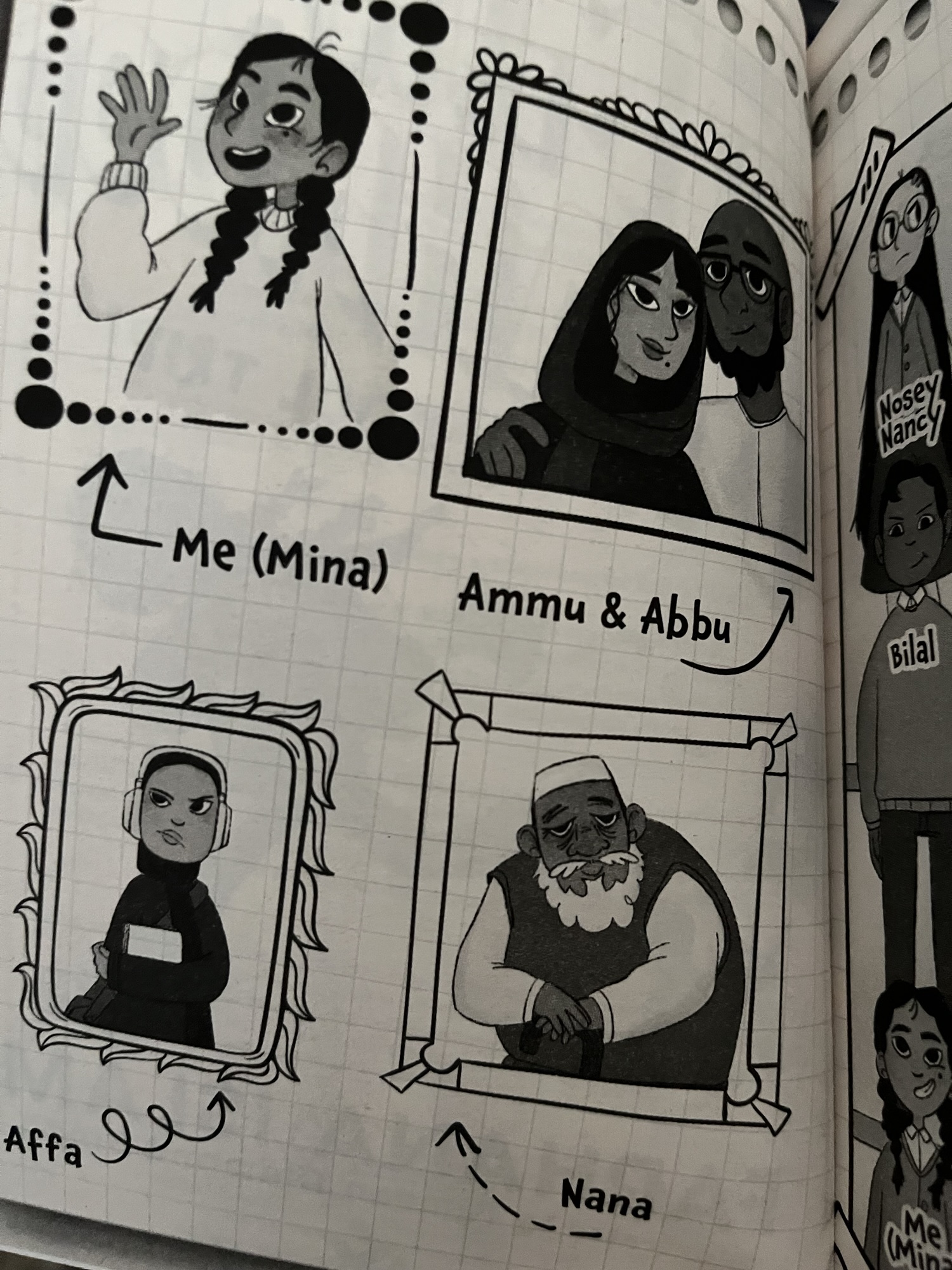
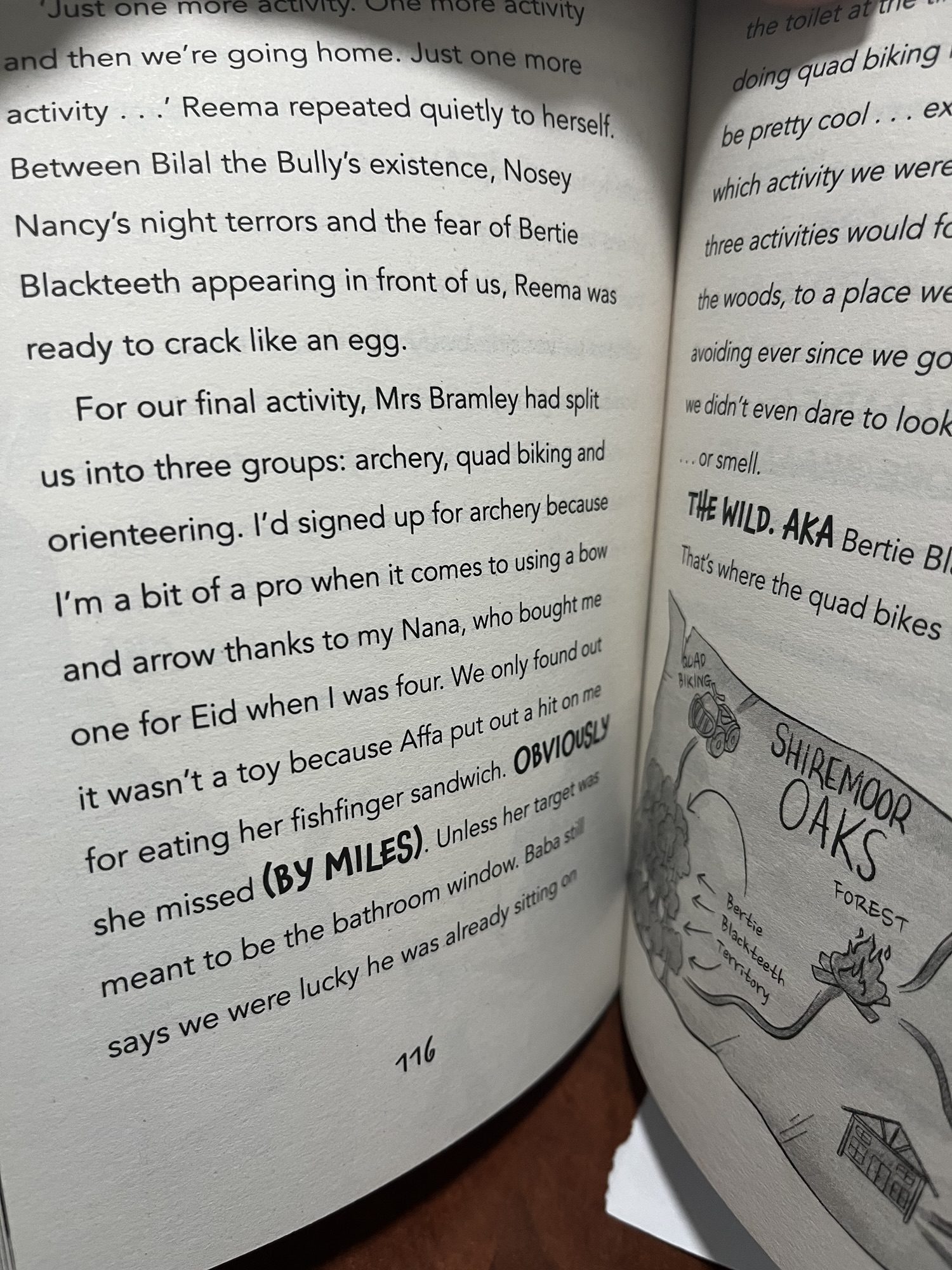
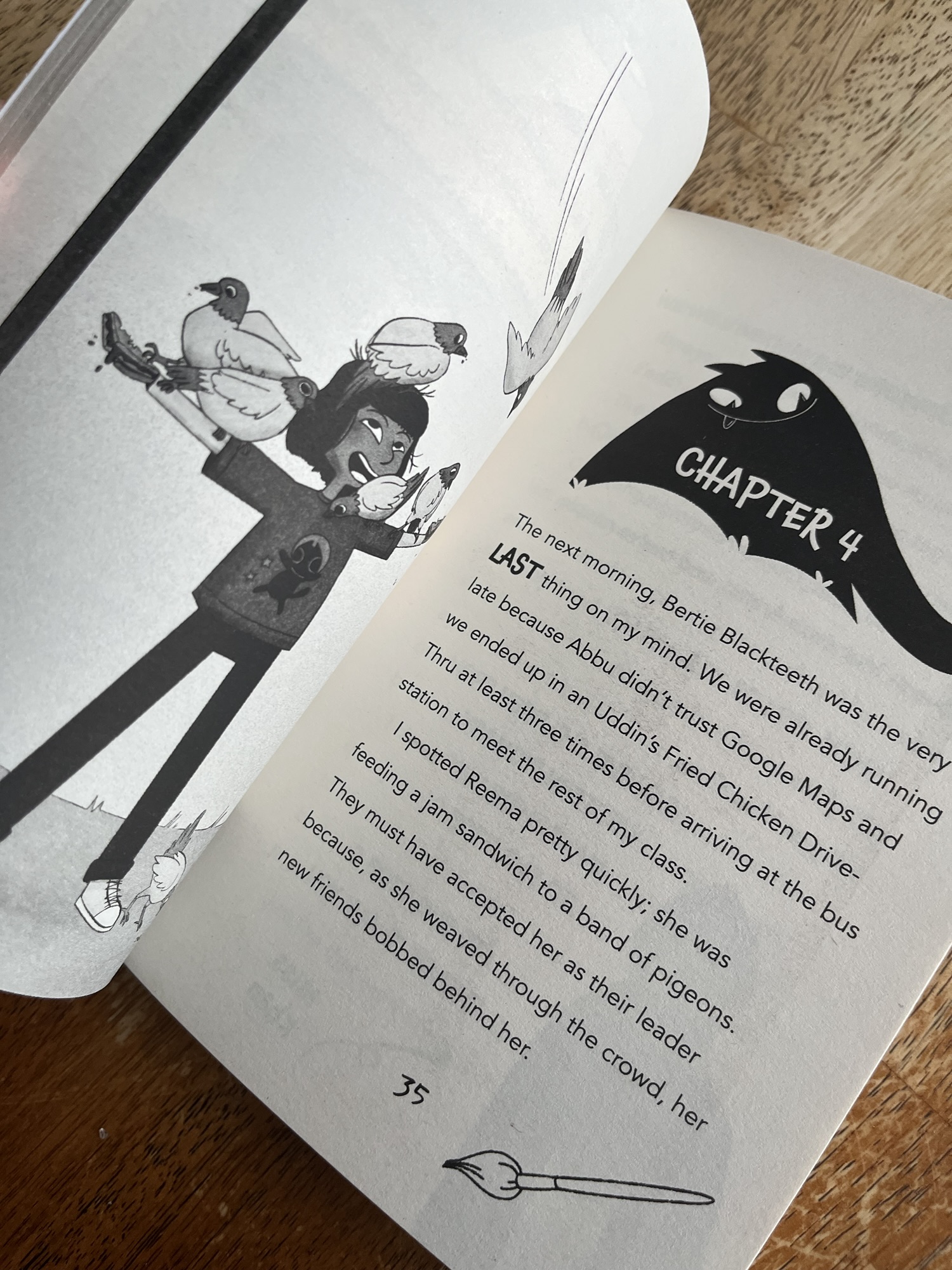
The illustrations in this book, by a Muslim author featuring Muslim characters, are impressively fun and complimentary to the story.  Yes, the 184 page book is highly illustrated.  The publisher says it is MG, and I can see that based on the length, but I think it is a solid second grade to fourth grade read.  The storyline is singular and surface level, and the scary silly bits are just meant to be funny and not taken too seriously.  I enjoyed the book, the normalizing of the Muslim kids in a non Muslim setting just living their life, and the main character’s voice had me smiling throughout.  A school camping trip is overshadowed by bullies and then consumed by the ever growing out of control scary story of Bertie Blackteeth.  An epic laser tag battle, quad adventures, and the comical banter of Mina and her friends, Mobeen and Reema, make for a light engaging read.  Sensitive kids might find the fright to be too much, but I think most will finish and be glad to learn there are more books to come in the series.

SYNOPSIS:

Mina Mahmood and her friends are ecstatic, it is finally their turn to head off on the annual camping trip to Shiremoor Oaks.  A weekend of laser tag, orienteering, archery, and quad biking without adults, well teachers, but no parents.  All Mina has to do before the fun begins is get through a family dinner with Auntie Selma and her cousins.  Mina doesn’t believe anything her cousin Abbas says, so when he mentions he went camping in school to Shiremoor Oaks and heard about a girl, Bertie Blackteeth who vanished there, Mina pays him no mind.  When her older sister Affa, also mentions that she heard the story, Mina starts to wonder if there could be some truth.  The next morning on the bus, when Bilal the Bully and his minions Owen and Brodie are also talking about Bertie Blackteeth and her need for a new body, Mina and the rest of the class are properly spooked. The fear hangs over all the activities, ruins the midnight snack extravaganza, and makes this a camping trip they will never forget.

WHY I LIKE IT:
I enjoy when Muslim kids drop mention of Eid and Ayatul Kursi in their adventures. When a character wears hijab, but she is the teacher, so the book isn’t about her identity, it is just a part of who she is.  I also really like when books are funny, characters are snarky, there is a plot, a climax and a resolution.  The book doesn’t have layers and heavy themes, sure you could discuss bullying, and fear and friendship.  At times Mina is tasked with saving Mobeen and other times advised to sacrifice him.  But considering he feels to young to be a father if the spider that just landed on him lays eggs in his eyebrows, it is probably best to just enjoy the story for what it is and not look to make it more.

FLAGS:
Could be a little scary, it is a little imaginative in the lies and embellishments of Bertie Blackteeth.  Bully and dealing with bullies.

TOOLS FOR LEADING THE DISCUSSION:
I handed it to my 10 year old and said enjoy, not much more than that is needed. A fun addition to elementary shelves, and one that will be picked up often.

My Perfect Family by Khadijah VanBrakle

Standard
My Perfect Family by Khadijah VanBrakle

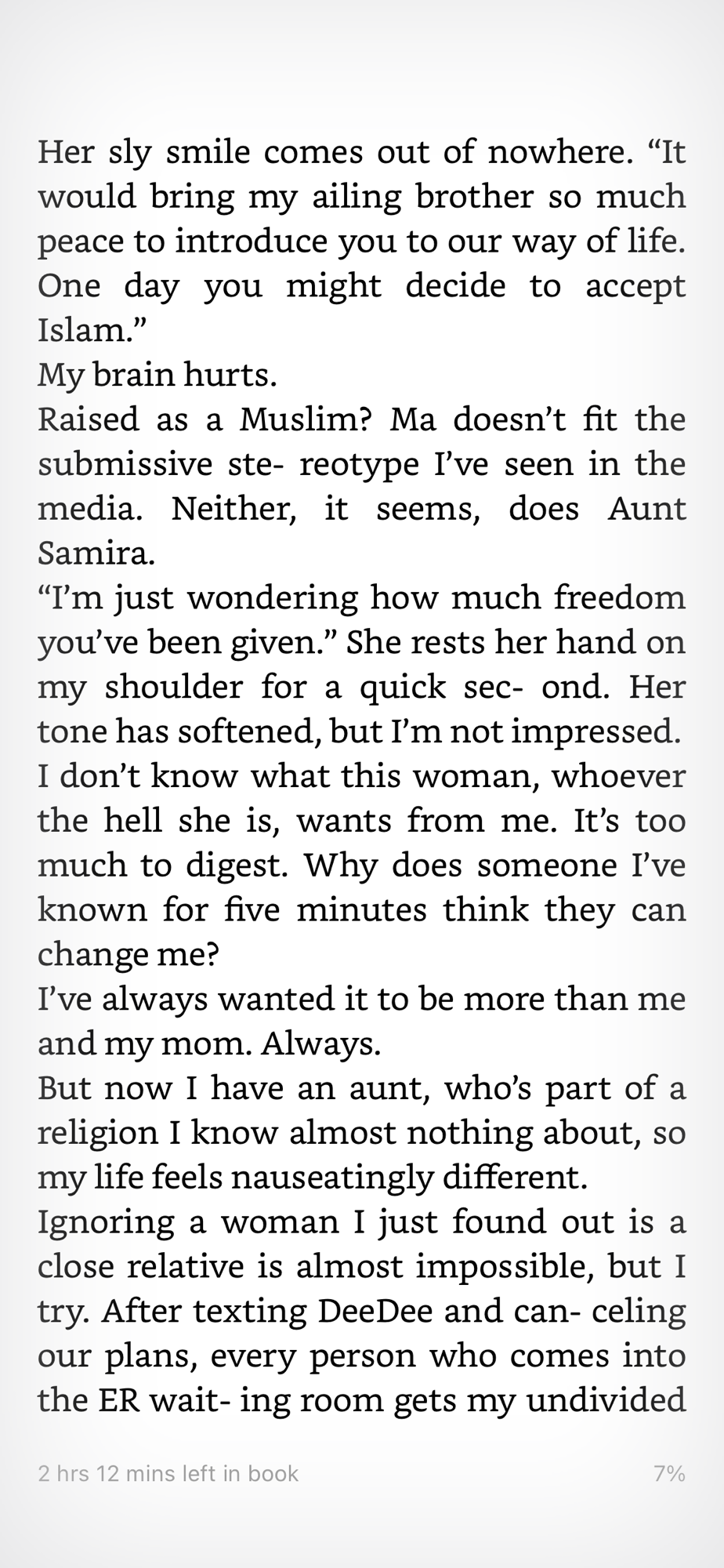
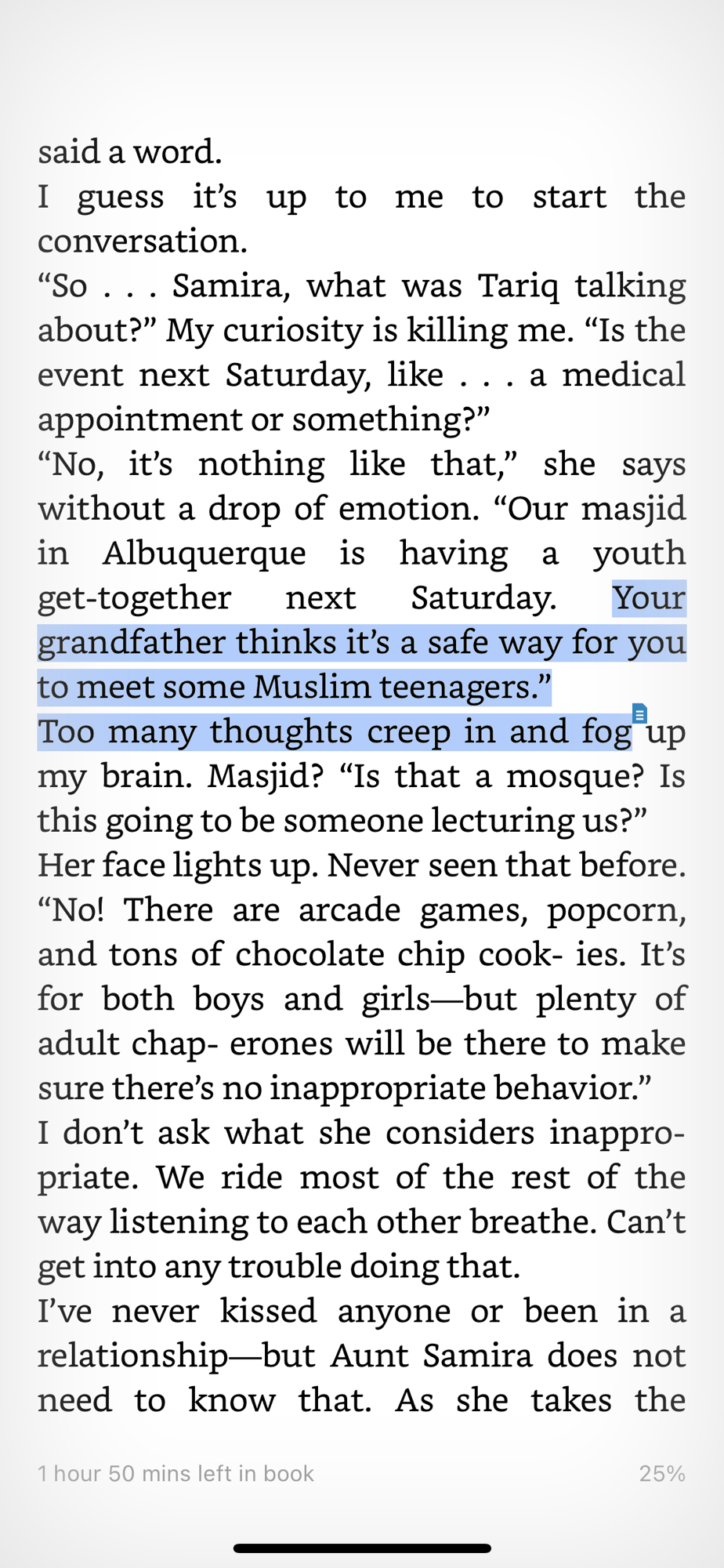
Oh Dear. The very premise alone of this book requires the author to expertly thread the needle of numerous pitfalls, which in my opinion did not occur.  A girl, Leena, learns about family members at age 16, who are Muslim, and the practice of Islam being the “reason” her mother ran away from her family when she herself was 16, means that for Muslim readers the representation needs to be clear that the family’s interpretation is to blame and not the religion itself.  It also means that as Leena learns the reader learns, and non Muslims (or honestly even Muslims) are not going to want a heavy handed preachy 256 page YA book. The Islam “taught” to Leena has to align with the readers interpretation or show why the characters believe as they do, and the conclusion regarding religion and identity needs to make sense for the character aside from what reader wants to have happen.  Unfortunately the copy I read contained numerous errors, repetitive paragraphs, a weak resolution, dropped plot threads, and had me cringing at how harsh Islam was being presented through the great aunt character, that honestly if Islam was just presented as no dating and dressing modestly, or else you will get married off, I can see why one would run away.  The book contains a lot of cursing, and features dating, having a child out of wedlock, death, and gambling by non Muslim characters.

SYNOPSIS:
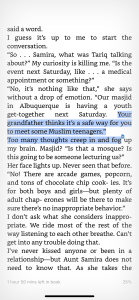
Leena has always wanted a big family, but her and her single mom, Asiyah tackle life together.  Leena and her best friend Deidre are employed by Asiyah’s in home daycare and are as close as sisters, but she wants more.  When Asiyah finds out her father has had a heart attack, Leena learns she has a grandfather and great aunt that live an hour away, in Santa Fe.  From the moment Leena sets foot in the hospital, under the gaze of her Aunt Samira, the judgmental overtones begin regarding clothing, education, food choices, and dating.  As a result Asiyah is reassured that she made the right decision all those years ago to leave Islam and her family.  Leena however, has had her entire world changed, and is willing to endure the abrasive Samira to get to know her grandfather Tariq.

WHY I LIKE IT:
I like that family drama and secrets were teased, even if I didn’t think that they were presented and resolved well. I wish they took more of the focus and that Islam being a reason for the animosity was downplayed.  I think religion could and should have been one of many factors, having it be the ONLY factor put a lot of pressure on the presentation, which fell short.  It also means that the resolution needed to resolve the Islam hanging in the air, SPOILER,  it didn’t.  The conclusion has Asiyah realizing her father never stopped loving her, but how did that resolve the relationship with her and Samira? And suddenly Samira just backed off her singular Islamic identity? A bit of whiplash with it all happening off the page, left me unsatisfied.  Speaking of pages, the book spends a lot of page space having characters drive the one hour one way to have conversations that are less than 15 minutes and could have been done over the phone or even texted.  Nothing exciting or revealing comes from these drives, they just make the story drag. Tariq should have ridden along, so we could see why he was “such a great man,” see why Leena kept enduring the harshness of her Aunt to get to know him, and have the family she always dreamed of.

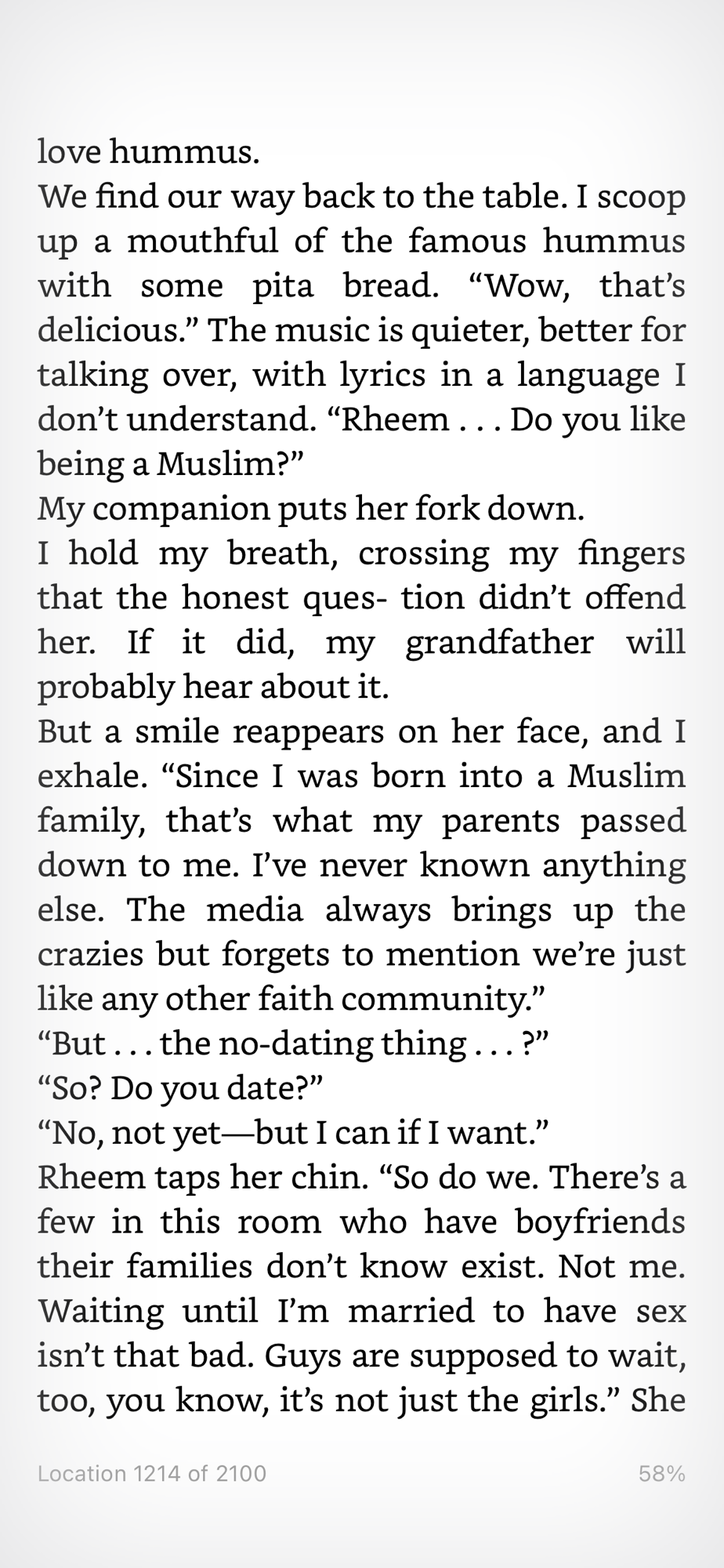
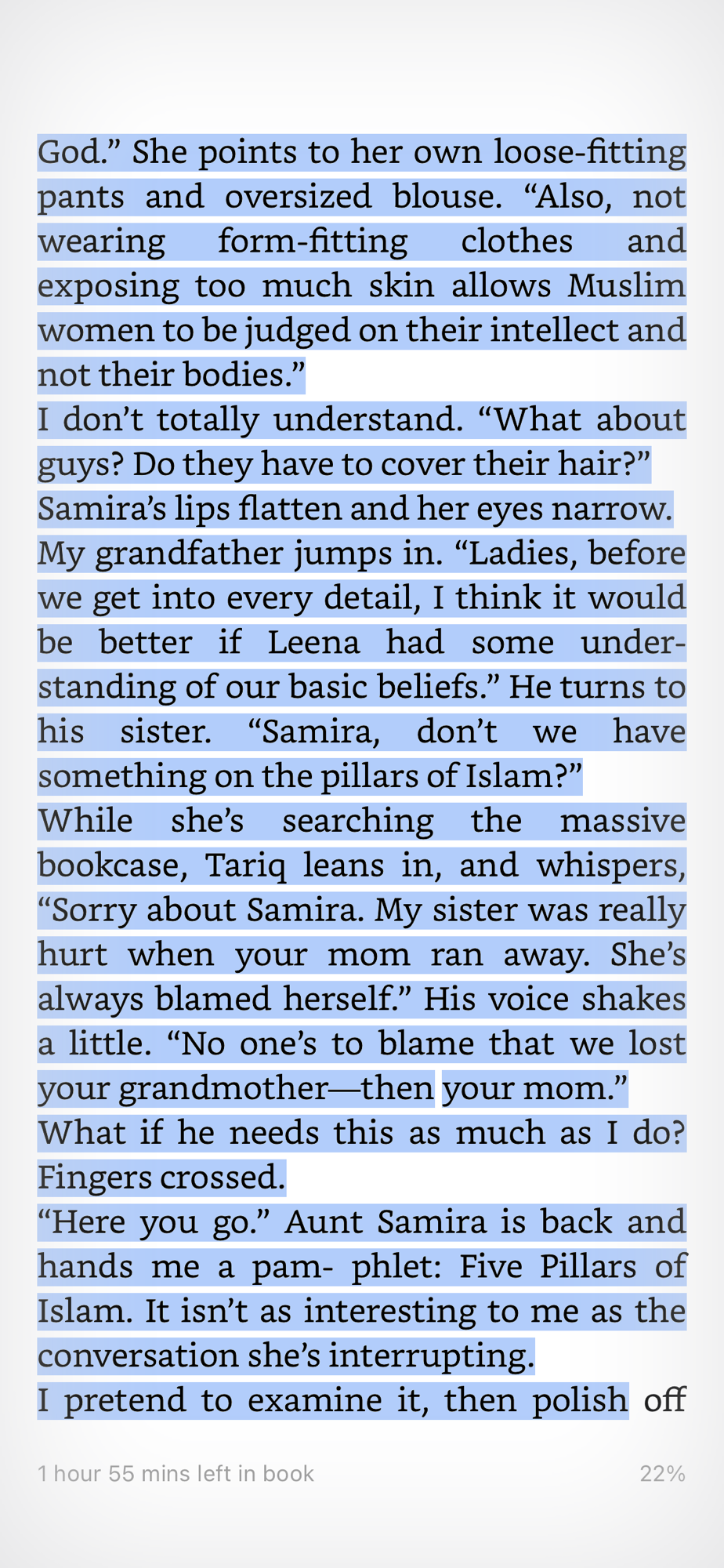
Islam is presented through the harshest of harsh characters, a few side characters are brought in that make Islam more realistic in practice and fleshed out, but it really feels like it is too little too late.  I think a non Muslim would feel Islam is just modest dress, no interacting with boys, marrying early, and rigid rules.  Leena is harassed from the first moment she meets her family, no easing in to it, she is even handed brochures on her first visit to her grandfather’s home.  Yet, Leena never shows any interest in learning about Islam, she could Google it if she was curious, even when at the masjid, she doesn’t go and watch them pray, no connection to Allah is ever discussed, it is just dos and do nots.  Consistently throughout it feels like Islam is weaponized and perhaps that is the author’s experience or intent, but it is odd coming from a Muslim writer in a fictional setting.  We get enough of that stereotyping from the non Muslim real world.

The emphasis on Islam being the only thing that matters for these characters means that whether they are religious or not, the characters are painted very one dimensional. Leena is a terrible friend, she counts on Deidre to drive her around, she never follows up on asking about her dates or reciprocating the effort for her other than feeding her.  Asiyah has an ex-boyfriend show up, and then goes out with a friend, but there is no context for their abrupt arrivals and then departures from the story, they do not serve as a foil to reveal any pertinent information or connection. A plot device used quite often in the book, and one I am not a fan of, is when things can be solved by characters simply having a conversation.  It is never the right time, they will talk later, even the fruition that started the family fracturing could have been eased by, you guessed it, the characters talking, not even agreeing, just talking.  While I’m running through my top gripes, might I add, that I have spent a few too many minutes on the cover as well.  Presumably Leena is in the middle, her young single mom Asiyah on the right, but who is the young hijabi? Her aunt does not read young at all, and she would not have her neck showing, that would go against her core characterization. So before you come at me that I have no right to my opinions and that I’m too mean, please solve the mystery of who is on the cover, thank you.

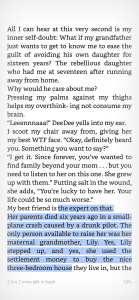
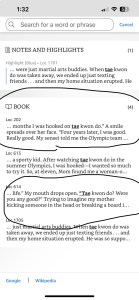
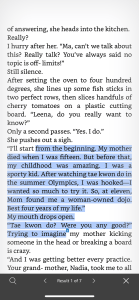
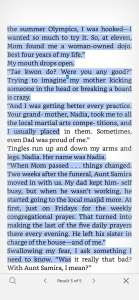
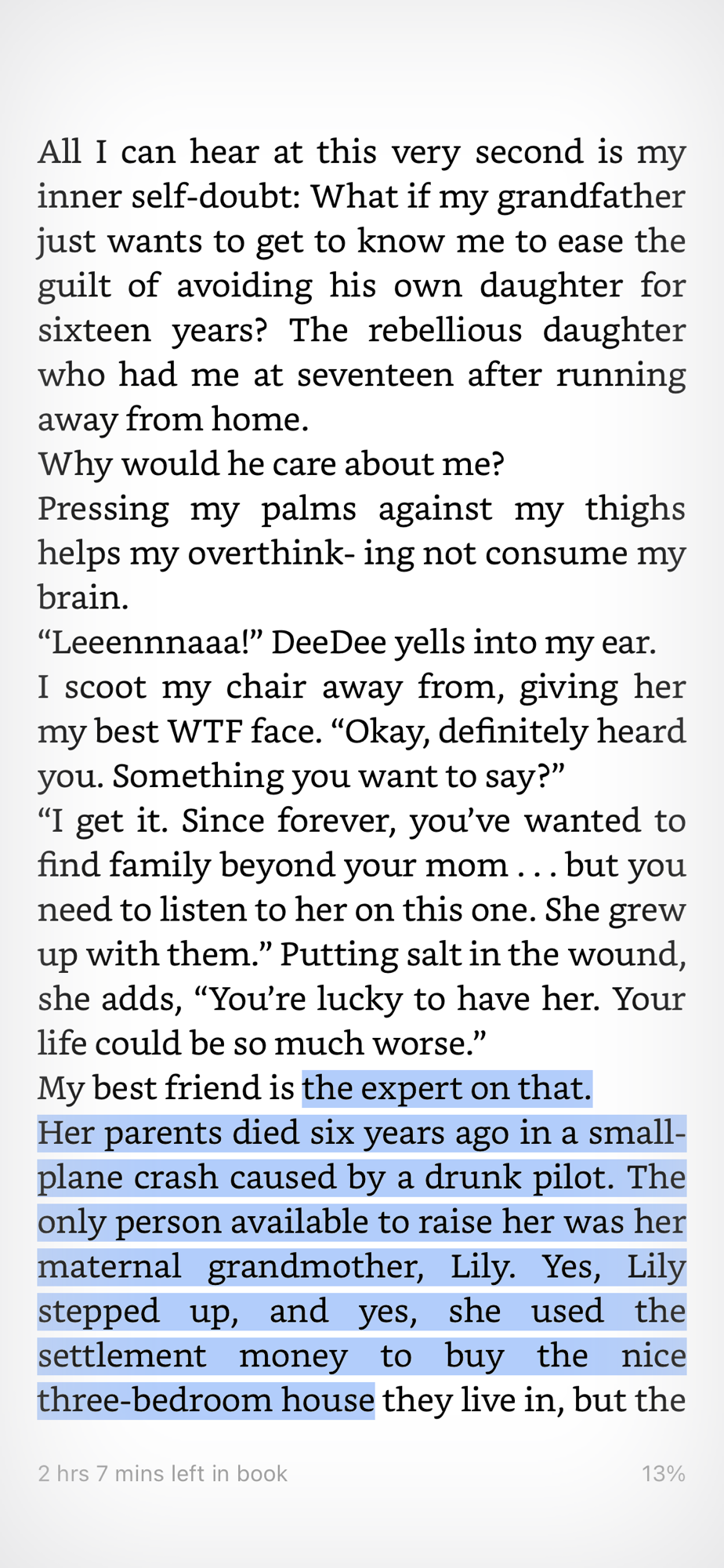
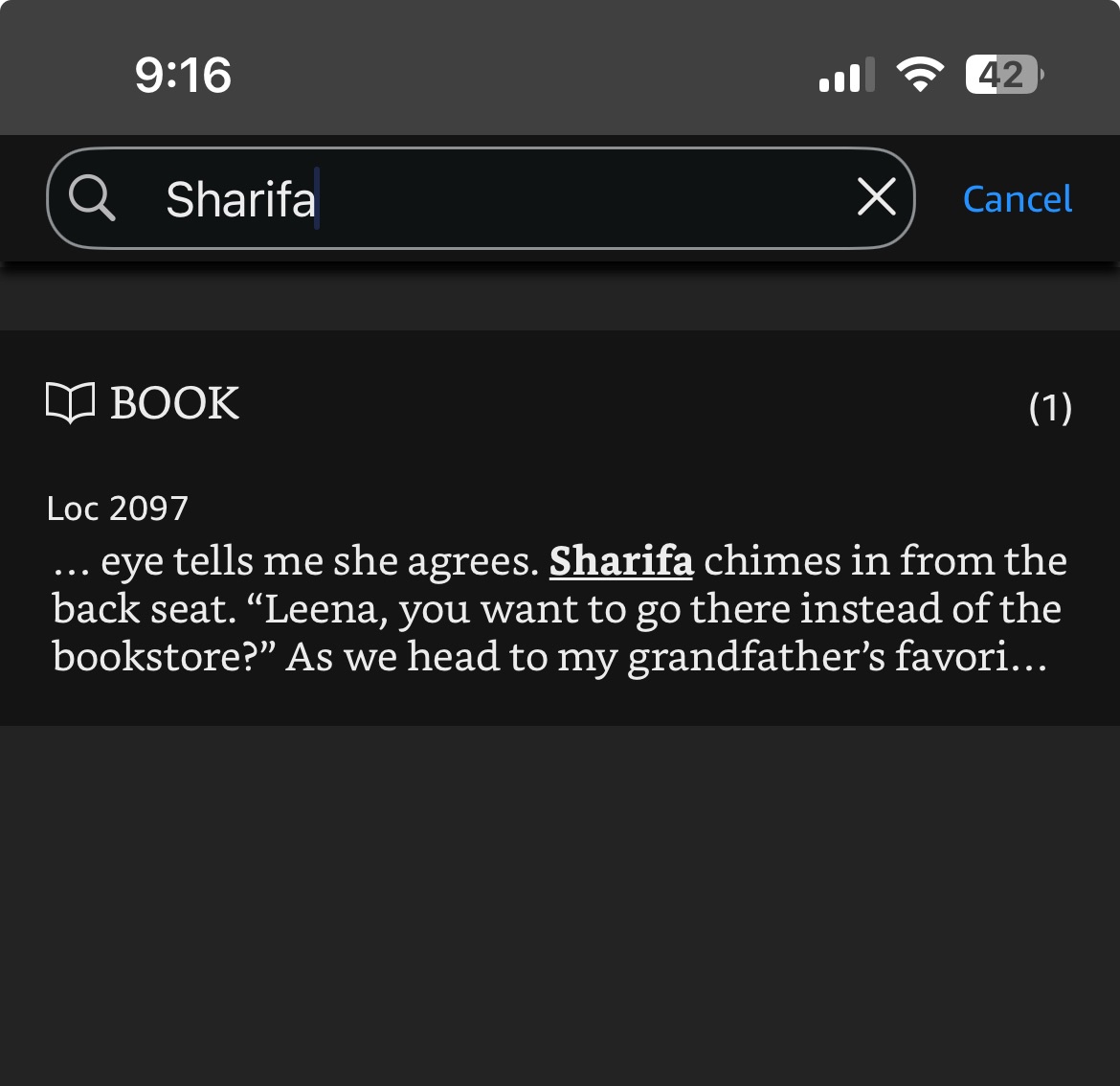
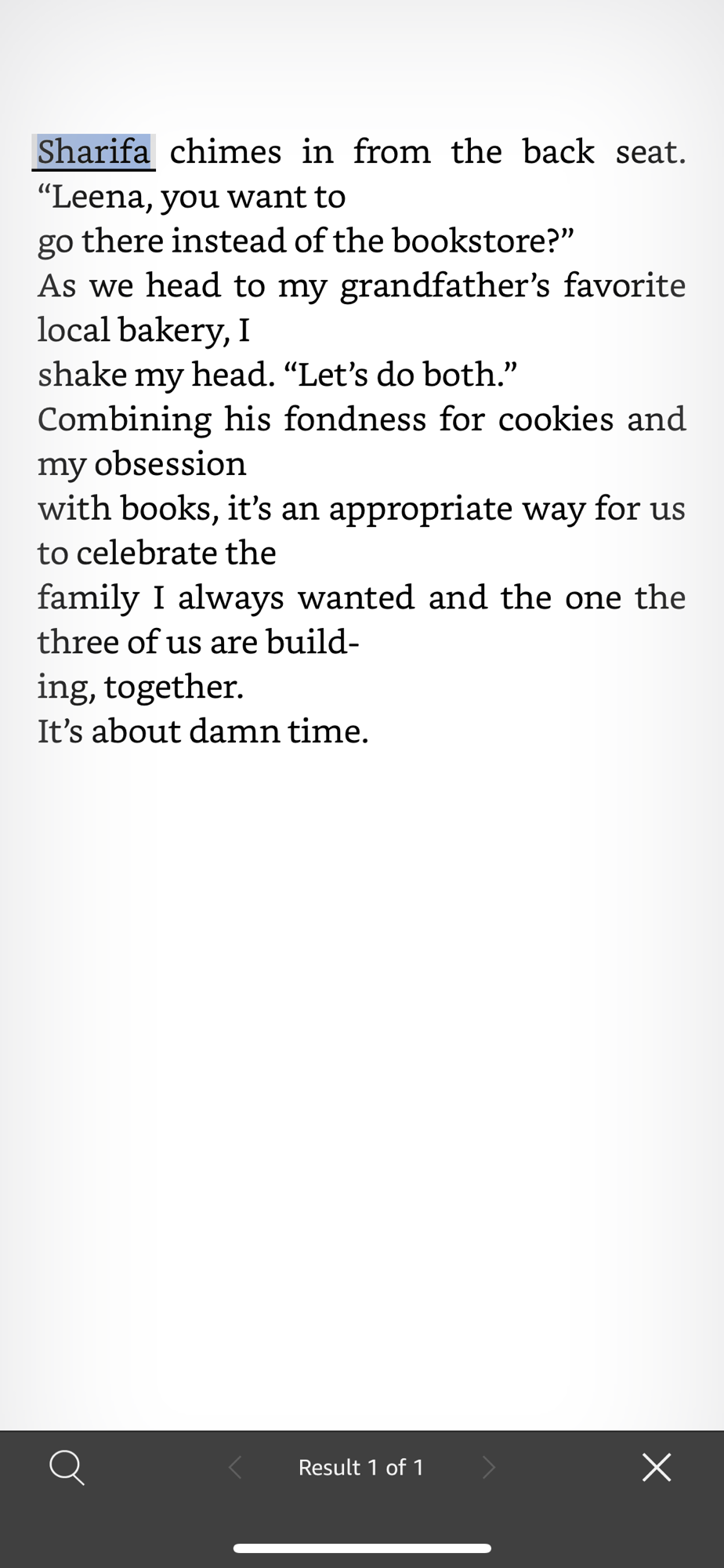
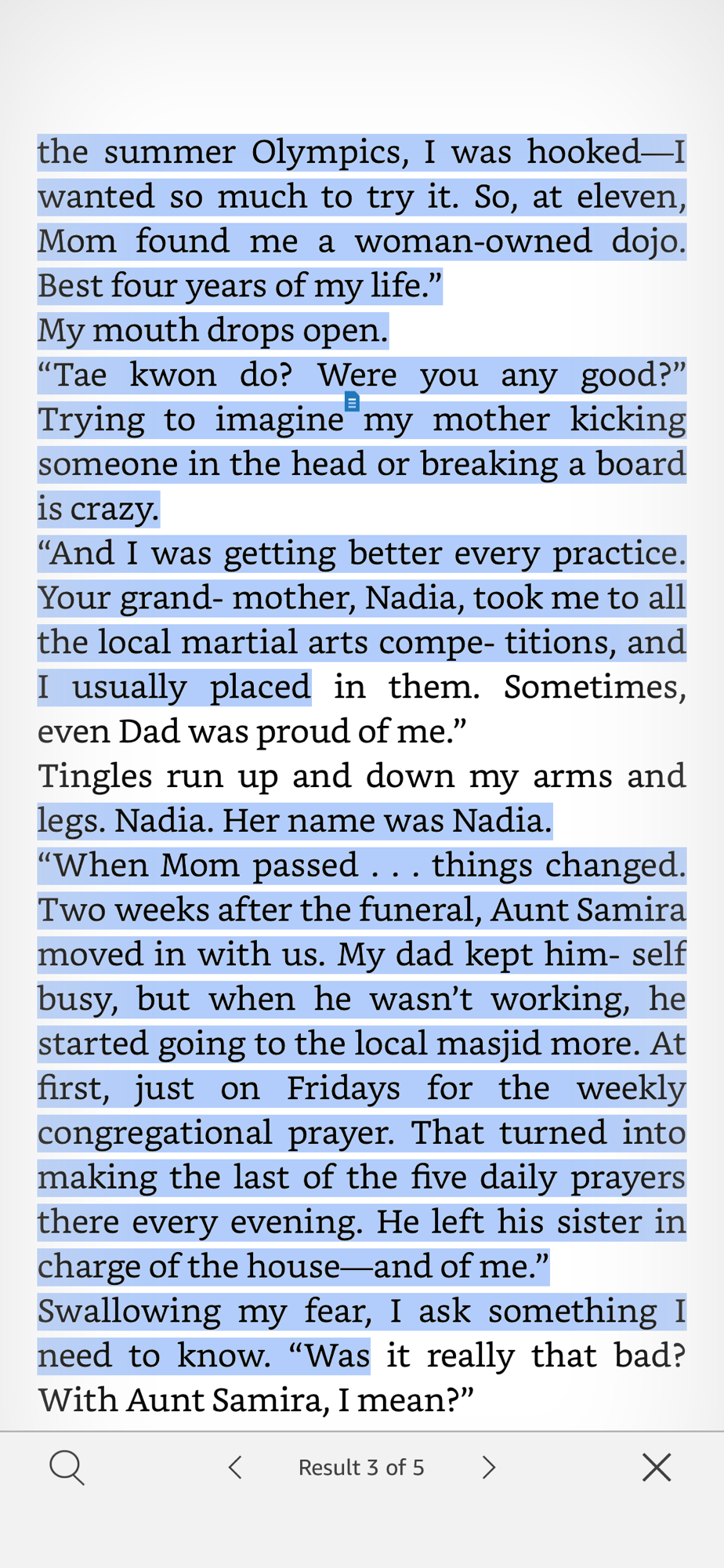
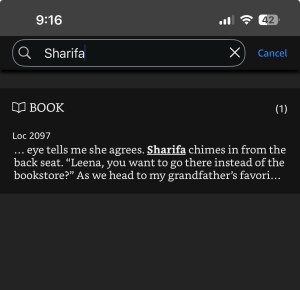
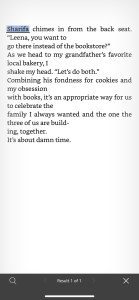
I read an ARC so I am aware that changes could have occurred, I’ve requested the book from my library and it is on order, and I will come back and correct this paragraph if needed.  The story of tae kwon do is repeated in two different spots almost word for word as if the information that Asiyah was good at tae kwon do both times is news to Leena.  Clearly it is in error.  It also has Deidre’s grandmother getting their house with the insurance money from Deidre’s parents dying and then a few lines later saying how the grandma doesn’t let Diedre forget that the spare room was changed to a bedroom for Diedre when she moved in.  A friend, Rheem, is brought in guide Leena academically, and is described as being homeschooled and changing to an online program for her senior year to also take dual enrollment classes, a few chapters later they are going to her Islamic High School for a party.  Side note, the sign on the high school says, “ALHIDAAYAH ISLAMIC SCHOOL: Grades sixth through twelfth.  We want our children learning it’s okay to be both American and Muslim.” The last page of the book also has a “Sharifa” in the back seat, and there is no Sharifa previously mentioned in the book.
FLAGS:
Cursing, judgement, dating, running away from home, anger, death, loss, lying, flirting, gambling, child out of wedlock, cutting family ties, clothing shaming, music, othering.

TOOLS FOR LEADING THE DISCUSSION:
I wouldn’t shelve or use this book for a book club read.  I think Muslim kids would be annoyed by the way Islam is presented.  I think they would be ok that Leena SPOILER didn’t take an interest in Islam, but I think they would be bothered by the flat, angry portrayal that it has in the book.

Tyger by SF Said illustrated by Dave McKean

Standard
Tyger by SF Said illustrated by Dave McKean

I don’t know that I’ve ever read a book like this 304 page middle grade fantasy, dystopian, highly illustrated adventure. It delves into philosophy, alternate universes, slavery, racism, politics, magic, identity, friendship, betrayal, human rights, education, following your dreams, saving the world, and a talking immortal tiger. It started a little stilted for me, but as the book progressed, I began to see that a lot of detail about all the above mentioned threads would make for a very adult, very lengthy read, and this is meant for 9-12 year olds, albeit they would need to be able to handle the darkness of the book at times, and caregivers, be aware there is a public hanging of a child. The author is Muslim, and the protagonist and a side character identify as Muslim.  There is not much about Islam, or shown in practice, but that they are afraid to learn and practice their faith is mentioned briefly. I think kids will enjoy the read, and not get hung up on threads unexplored as I did.  The illustrations really make it a book that feels exciting to spend time with, and one that will linger with the reader.  I look forward to sharing it when it releases soon in the US, as it was published in 2022 in the UK.

SYNOPSIS:

In short the book is about a boy, Adam, living “in an alternate London where the British Empire hasn’t ended and slavery was never abolished.” In a partitioned off Ghetto as a minority from the vague “Middle East,” who is unable to go to school, or even draw, he makes deliveries for his family to help keep them afloat. During one such delivery he encounters a tiger, an animal like so many others that is extinct, her name is Tyger, and she speaks.  She is an immortal searching for Guardians to help her heal and open a portal to the city.  When Adam, who is immediately connected to her, cannot find a Guardian, she begins to train him, time is short and when he discovers his friend Zadie, short for Scheherazade, has some training from her father, the two set out to open the doors of perception, imagination, creation, and  revelation, to save the day.

WHY I LIKE IT:

I really like that this book opens up larger discussions about society, self, literature, imagination etc, and can really be adapted to mean different things depending on what the reader brings to it. The book addresses these themes in a way that doesn’t talk down to the reader, and in many ways allows the simple bad guy of the story to not be the takeaway point, but rather the journey of understanding perspective, points of view, empathy, creating something, and hope to be far more important.

The identity of the characters being Muslim initially was just a label, one that just made Adam and Zadie more “other,” but a few cleverly crafted sentences about hiding their names, their skin color, and whether it worked or not, allow the reader to reflect on if denying yourself to appease others is effective or not, or rather more importantly knowing when and in which situations it could be a benefit or a selling out of who you are.  Zadie and her father seem to practice, and one point Solomon ( Suleiman), offers his prayers, he says Assalamualaikum and Bismilliah. Adam and his family on the other hand, have hidden their faith so as to fit in better, and thus it is simply an identity label.

I liked that the illustrations weren’t just stunning in their own right, but also highlighted the mood, and metaphysical elements of the story.  I feel like I could teach not just a few lessons on this book, but dozens, and who knows if they would be correct, but I think this book would be fantastic as a read aloud in a classroom for the story at hand and for the discussions.  The darkness, the excitement, the hope, really gripped me, and while I could opine on plot holes and lack of articulation, in some key scenes, I appreciate that over explanation would take away from all that the book gets right.

FLAGS:

Racism, oppression, colonialism, slavery, hanging, power imbalance, betrayal, lying, sneaking, fighting, killing, magic, fantasy elements.

TOOLS FOR LEADING THE DISCUSSION:

Where to even start, this book needs an educators guide, stat. I looked online and couldn’t find one and I hope that will be corrected soon because if you read my thought above, you know there is a lot to discuss.

MetalGhost: Kashif and the Echoes from a Past Life by Ali Mohammad Rizwan

Standard
MetalGhost: Kashif and the Echoes from a Past Life by Ali Mohammad Rizwan

img_8377-1

This 350 page YA book (14/15+) does not hit the ground running, but once it finds its stride, it is a lot of fun.  I handed the book to my son, who loves Islamic fiction, and at 30 pages he brought it back saying it was terrible. I upped the ante and bribed him with goalie gear to read to 100 pages, but he couldn’t stop, he finished the book, and returned the favor by encouraging me to move it to the top of my TBR pile.  Like him, I truly wanted to dnf it early on. There are too many names, too many line edit errors (mistakes, repetitive phrases, adverbs), and a little too many forced cheesy (halal) romance scenes. And then the writing gets a little better, the plot strengthens, the Islam is more than just the character’s religion, but something that actively engage with, humor is woven in, twists develop, emotional threads are pulled, and you find yourself absorbed and invested in the story.  The writing at the end unravels as well, it feels  forced, much like the beginning, but perhaps that is the vigilante/superhero genre’s norm to get readers to pick up the next book in the series for answers and clarity. I’m glad the book was nominated for the Muslim Book Awards, I may not have heard about it otherwise, and I love that my son, who is currently re-reading it, found a book that is relevant, appealing, and has an Islamic heart.  Think a mix of Batman and Green Arrow, with a splash of Ironman all wrapped up in a thobe, and being advised by his mother and the local imam to go pray.

SYNOPSIS:

Life is going pretty well for Kashif Razvi, he is about to marry his longtime crush, with both families’ blessings and excitement, he is busy at work but enjoys it, and he hangs out in his free time with his tech friend Samir, developing robotic and cutting edge devices, but then everything falls apart.  When his father dies because of a mysterious power outage in the ICU, Kashif can’t let it go, and starts looking for answers.  He comes up empty following the legal, traditional routes and decides to take matters into his own hands.  He throws on a suit designed by Samir and takes to the streets as MetalGhost, becoming the city’s new hope.  He follows leads to avenge his loss, uncovers corrupt police, cracks down on human trafficking, and seeks to set right other ails of the city.  No matter the crime, a few names always seem to be in the mix, and as the city starts to fall apart, copycat vigilantes start popping up, and MetalGhost finds it won’t be as easy as he thought to hang up his thobe and leave his crime fighting life behind.

WHY I LIKE IT:

Everyone wants a Muslim super hero, but usually they come across as overly juvenile, or their faith and culture performative. This book finds a nice balance of action, contemporary relevance and Islam. The structure feels formulaic, but it works as it seems to track with superhero movies.  You get the emotional tragedy, then the plot, then the resolution. The middle of the story flows and draws in seerah, sahaba inspiration, humor, and action.  The beginning and the end, though are just really stilted.  I’m not going to spoil anything, but the end was not as strong as it should have been, the reveals and twists were not articulated well and they should have been, they were so shocking.  The numerous names and characters at the beginning really need to be edited and simplified, they linger in the middle, but honestly the reader stops caring and just reads for the plot, hoping that it will get sorted.

FLAGS:

I love that the relationship beats are halal, there are a few tinges that might lean into the line, but are gray at most.  There is killing, death, torture, human trafficking, crime, lying, vigilantism.  For teens it is fine.

TOOLS FOR LEADING THE DISCUSSION:

My son and I have chatted about the book, but I think to take to a larger group, I really would want it to have another round of edits.  The idea of the story is wonderful, and to read by yourself I think it excels at what it is.  But to have teens, sitting around picking it apart to discuss and reflect on, will need the writing to be cleaner and stronger.

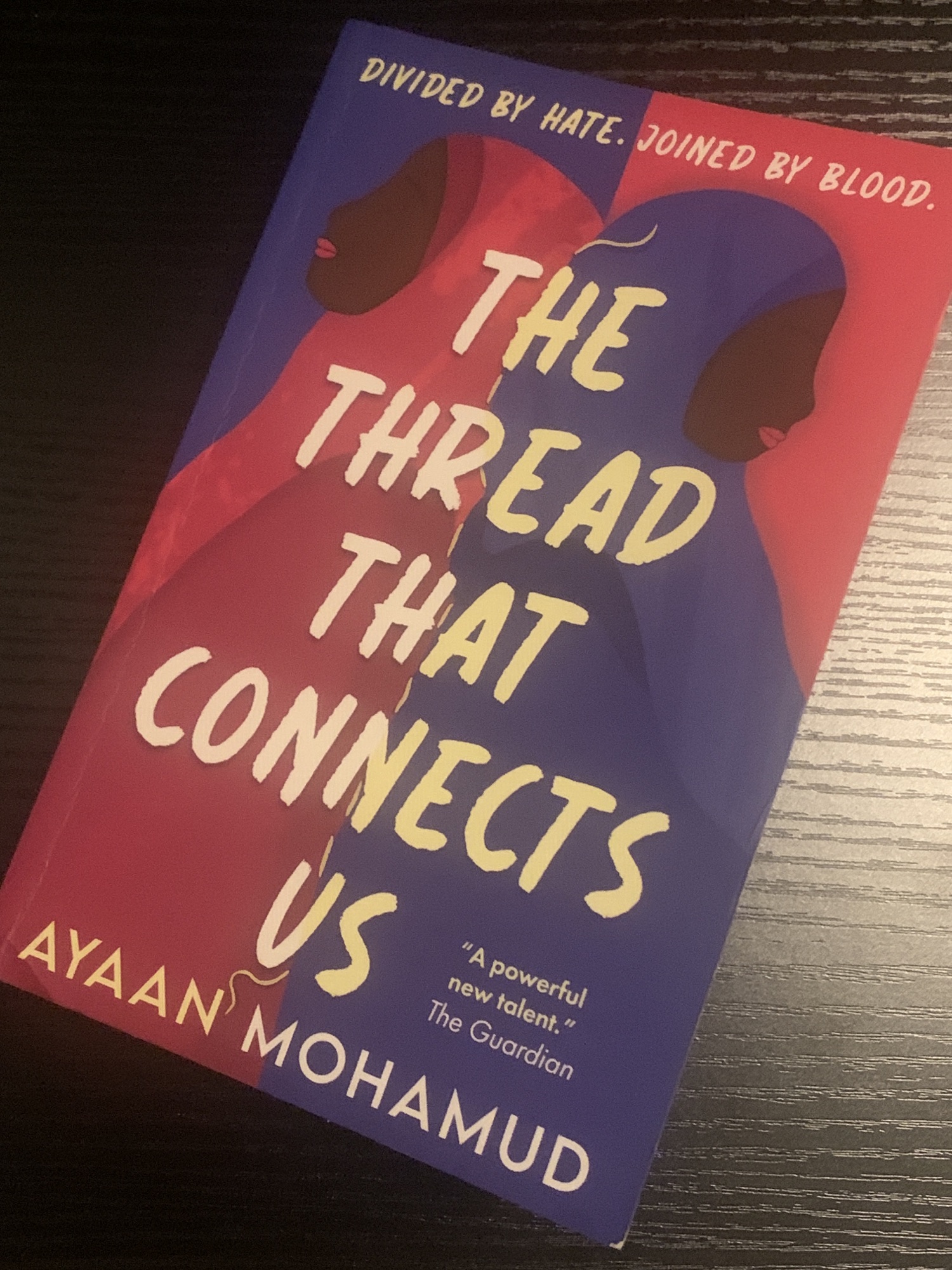
The Thread that Connects Us by Ayaan Mohamud

Standard
The Thread that Connects Us by Ayaan Mohamud


At just over 400 pages this book expertly blends the stresses of school, bullies, and friends in the UK with the twists and secrets of broken families, shattered hearts, and a past that needs to be reckoned with.  Told in dual perspectives from girls thrown together by the actions of their parents, Safiya and Halima maintain distinct voices that are rich with Somali culture, Islam, vulnerability, and ultimately love and hope.  The book is YA, but the premise is a bit mature and is better suited to older teens in my opinion, I think a high school book club would be wise to consider this book, as once you start reading, it is difficult to put the book down. 

SYNOPSIS:

Safiya is mature beyond her years.  Since her father abandoned her and her mother five years prior, she has managed the bills, the upkeep of the home, and for the most part her grades. Hooyo checked out and is rarely more than a silent being curled up unable to care for herself, much less her daughter.  With the the help from the community, particularly her best friends and neighbors Muna and Yusuf, Safiya has a found family that helps her weather the tough times.  When her dad moves back to London with his new family from Somalia, Safiya is forced to deal with not only all the painful memories of her past, but also the very real presence of her family living in her neighborhood, showing up to Eid prayers, and taking over the safe haven that school has often served as when home life has been so cold and lonely.

Halima’s father died when she was young, and life with her Hooyo in Mogadishu was good until her mother remarried, Safiya’s dad.  Her two younger half brothers that came further added to the rift between her and her mother, and now that they are moving to England with the husband, despite her protests, has her plotting a way to return to her home.  The language, the culture, the weather, are all added stresses to finding her way, and are compounded when she gets paired up to have Safiya show her around and help translate for her in school.  

The two girls hate each other, at least they have that in common, but their inability to avoid each other forces them to interact more than either wish to do.  As questions, and secrets are voiced, the two girls realize that they might have to work together to get what they want, and figure out their past.

WHY I LIKE IT:
I really enjoyed the owning of the characters’ language and culture and faith and how easy it was to be invested in their world.  Nothing pulls you out of the story, it is rich and lush and the reader can figure out why even though there is a crush, nothing is going to happen, and why they are wearing hijabs, and waking up to pray fajr, the balance is both inviting and educating, without the reader even realize it is happening, because hello, we are to busy trying to figure out what these two girls’ parents have done. 

The story has layers, and the emotional attachment I feel to both these girls, made me glad the story was over, they deserve some peace, but also desperate to know that they are going to be ok in the future too.  I can’t say too much without the risk of spoiling, but the writing is strong, the plot solid, the details intentional and relatable, and the characters very real.

FLAGS:

Lying, bullying, fighting, assault, crush, drug use, arrest, accusation, gossip, abandonment, relationships, edibles, affairs.

TOOLS FOR LEADING THE DISCUSSION:
This would be such a great upper high school read, the way the story unfolds will keep readers hooked from the first page and motivate those that start, to finish.  Students will see themselves in the characters, and be sleuths themselves trying to uncover what secrets are true and how do the pieces of the puzzle fit together.


All Mixed Up by Raj Tawney

Standard
All Mixed Up by Raj Tawney

all mixed up

The premise of this slightly biographical middle grade book is that of a very multicultural boy, Kamal, finding his voice, with the help of a Pakistani Muslim friend, Jaz, a year after the 9/11 attacks.  It brings in themes of Islamophobia, terrorism, bullying, friendship, alcoholism, immigration, refugees, “legal” and “illegal” citizens, Pakistan and India’s partition, and growing up and feeling alone over 208 pages.  The writing style seems deliberately loose in touching on very complex themes, but not preaching on them, and instead letting the reader draw on their own thoughts and experiences to form their own opinions. It is debatable if enough information is even provider for the reader to ruminate on the themes, or care to, or feel enough of a connection to the characters to want to know how all the dots connect, but none-none-the less it seems to have been done with intent, and with the middle grade POV for some it might get away with key information and the resolution going unexplored.  For me though, honesty I just couldn’t get past one line, one line tossed out with no explanation, no arc, no real purpose, never revisited even, at 16% it says “Allah is stupid.”  Yes, I debated tying the phrase out.  I don’t know why it has this line, it has no real impact on the story and could have easily been replaced for another reason Jaz received a purple nurple from a bully in Pakistan.  Later in the book there is a scene where Jaz has brought a prayer rug to school, he states he doesn’t always pray, but clearly he does practice Islam, not just maintain the label in name only.  I am not saying that the scene is not based on the author’s real life, or that people don’t say stuff of this nature, but it is hard to read in black in white in a book with no discussion.  I don’t know what the author’s intent was in including it, but I think it is a disservice to so many of the themes in the book and does not serve the target audience as a mirror, or a respectable takeaway either. For this one line, I truly don’t feel like I could have this book on my shelf, which is unfortunate.

SYNOPSIS:

Kamal Rao is half Indian, a quarter Puerto Rican, and a quarter Italian living in New York, he is relentlessly bullied at school, has no friends anywhere, and is dealing with a father that drinks a little too much most nights since he lost his job.  When a new boy, Jaz shows up at school, that can pronounce his name, a friend just might be what Kamal needs to find his voice, confidence, and place in the world.  Except Jaz has his own issues, and remains pretty mysterious about his past, his home life, even his name.  When a Halloween terrorist attack occurs, Jaz makes a run for it and Kamal has to decide what his friendship means.

WHY I LIKE IT:

I really can’t decide if I like the writing style or not. I recognize that to stay on a middle grade point of view the banter between Kamala and Jaz is often done when it is just the two of them in a scene, making sense of a world they might not know much about. Unfortunately, that also means a lot of erroneous statements, perspectives, and facts get unchecked, and possibly perpetuated.  It also means that at times the boys seem really worldly and competent: riding across town on their bikes, living pretty independently, but also being really naive about being a brown Muslim kid waving around a gun in public, even if it is pretend.  The inconsistencies often are in relation to Islam, so they particularly stood out to me, for example Kamal knows what a hijab is, but not that Muslim’s pray five times a day.  I think when a book is OWN voice and based on lived experiences, but so much of the plot pivots around someone who is so different from you, some of the details just seem inauthentic.  Admittedly, I was turned off early by that one statement, and I am not the target audience, but it was hard to relate to Jaz because it seemed so forcefully trying to present him in an almost performative way. A place of love no doubt, but overly polished to make the reader accept him and feel a kinship to him as Kamal did.

FLAGS:

Halloween, lying, terrorism, bullying, abuse, alcohol, sneaking

TOOLS FOR LEADING THE DISCUSSION:

I cannot encourage this to be on an Islamic school library or classroom shelf. That line even with discussion can’t really be explained, there is no point to it.  I’d like to assume that as a child he was frustrated with life and was lashing out in fear or grief or desperation even, but there is nothing in the text that would support or suggest that, it is just there.  I read an electronic ARC, and I hope that the line has been removed in the final copy.


Amir and the Jinn Princess by M.T. Khan

Standard
Amir and the Jinn Princess by M.T. Khan

amir

This 304 page middle grade fantasy book is a quick fun read.  There is no religion in this Muslim authored book, jinn are not portrayed as creatures from Islamic doctrine, and with the exception of Quranic decorations hanging in a room and Zam Zam water being mentioned, once each, in passing, there is nothing hinting or signaling religion.  Even the jinn come across as characters who just happen to be jinn, who have control over fire and live in an alternate world, the book uses their fantasy elements to create an added layer, but the heart of the story is making choices, doing what’s right, being a good friend, and changing injustice when you can. This is a companion book to Nura and the Immortal Palace, and even with the lacking religion, I think I enjoyed this book more.  The plot is clearer, the characters are relatable, the thread of the missing mother is emotional, and the commentary on corporations and labor practices are awesome to see in a middle grade book.  

SYNOPSIS:
Amir is wealthy, really wealthy, and arrogant, and unlikeable, and yet, the over the top framing of him being all these things, makes even the target audience reader realize, that he is also a 12-year-old little boy who is grieving his missing mother, longing for friends, wanting to be seen in his competitive family, and ultimately smarter and more emotionally intelligent than he will ever force himself to admit.  Until, a cat, or rather a jinn princess in the shape of a cat, shakes up his world, by convincing him to come to hers.

Shamsa strikes a deal with Amir, she will help him look for his mother, if he helps her battle against her siblings to be the next heir of the Kagra Kingdom.  Amir knows she is a trickster, it is her nature, but he wants, no needs, to find his mother, so he is willing to pose as her slave and do her bidding.  There are three tasks to test the future heirs physicality, artistry, and diplomacy, and the irony that Amir does not want to be heir to his own fortune, while helping Shamsa claim hers, is not lost on him and will in fact force him to make choices about who he wants to be and what he wants to stand for.

WHY I LIKE IT:
I like that the book discusses monopolies and business and corporations and systemic gatekeeping.  It stays on level and articulates the points it wants the reader to explore with Amir, but does so without taking away from the story.  Also the ability to see all that Amir has, because he is wealthy, also allows the reader to see what he is also missing, and this is done with a little more subtly, some self-awareness, and some quality writing which results in making Amir a little more relatable.

I do wish there was some Islam, jinn are Islamic based and to not have any signaling seems a bit lacking.  Perhaps it kept it so that accuracy or rep was not a factor, I don’t know, but when Amir says that he thought only the uneducated believe in such creatures, it rubbed me the wrong way, just like when he makes a comment that, “those are the kinds of games God like to play with me.” The lines are minor, but when that is the only religion mentioned and it is done in a negative trivial, dismissive way, they carry more weight than perhaps intended.

I like that the characters and plot are solid.  It doesn’t feel like Amir is free-falling through a crazy chaotic world, there is direction and purpose.  There really isn’t a lot of world building or even Pakistani culture, it really is about the characters and their arc of growth and coming in to their own.

FLAGS:

Fantasy, jinn, lying, sneaking, death, abuse, manipulation, plotting, casinos, fears of water, abandonment, abuse.

TOOLS FOR LEADING THE DISCUSSION:
Probably wouldn’t do it as a book club, there are teachable moments and concepts that would be fun to discuss perhaps with economic or business tie-ins, but I don’t know that there is that much to discuss outside of what the book offers.  I do plan to shelve this though, so my own kids have easy access to pick it up and read and hope teachers, librarians, and parents will as well.


Kicked Out by A.M. Dassu

Standard
Kicked Out by A.M. Dassu

81h06Amch6L._AC_UF1000,1000_QL80_

The first few chapters of this 336 page middle grade book were rough. It is a stand-alone companion novel, and I have read the previous works, so I don’t know if my expectation of myself to know the characters being introduced, was additionally muddled because the memories were faint, or as I actually suspect, the writing at the beginning is just weak. Like really weak, but I’m stubborn, and I kept reading, and I was rewarded, alhumdulillah. The book found its voice, its pacing, its heart, its relatability, its layers and I am so glad that I didn’t dnf it. The characters, their community, their tenacity, the exploration of family really stays on level with providing the reader insight and messaging to make them reflect on their own lives, without feeling preached to. The focus of football (soccer) keeps the book light and hopeful, while the difficult themes of deportation, Islamophobia, refugees, theft, absent parents, self doubt, forgiveness and second chances with adults, thread in and out. Many of the characters are Muslim, halal food is normalized as is saying salam, it isn’t focused on Islam but the kids make duas before they start a sting operation and when life changes are presented, also they consider Qadr of Allah when things occur. It feels authentic, and Muslim kids will enjoy that the focus isn’t a religious or cultural identity crisis, but just part of who they are as they take on this next chapter of their lives, non Muslims will feel the same.

SYNOPSIS:
Ali, Mark, and Sami are living it up since Mark’s mom won the lottery and they move in to a mansion with a pool. Sami’s brother Aadam starts doing the lawns to help pay for his lawyer fees to appeal his deportation, and things are looking up, expect for Mark’s mom’s new boyfriend though, he seems to be a bit of a racist. It all comes pouring down when Aadam is accused of stealing money, the boys are no longer allowed at the house, and Mark is prevented from hang out with his friends. Ali and Sami are not about to take this treatment without a fight, they have an idea to raise some money for Aadam with a charity football match, and Mark knows his mom is being influenced by her boyfriend and doesn’t abandon his friends. Ali though, is preoccupied, his absent father shows back up, and his step-brother has just been enrolled in their school. It is a lot but together Ali, Sami, and Mark support each other, stand up for what they believe in, and find ways to make sure they and Aadam are not “kicked out.”

WHY I LIKE IT:
I love the commentary on refugees, that it isn’t a political issue, but a human one. The exploration of found family and born family, and giving family second chances impressed me in a middle grade book. I also liked the kids hyping up the community and getting creative to solve a problem, rather than wait for the adults to step in. Whether it was to raise money for legal fees, or solve a mystery and clear someone’s name, these kids really have each other’s backs while dealing with a lot of heavy stresses. They mess up and make mistakes, but the book spending time to show them come back from them is a level of emotional intelligence and maturity that I think readers will benefit from.

I was thrown at a passage that mentioned that Ali can’t go to the mosque because he doesn’t have his dad around. Which made no sense to me as the kid goes to restaurants, parks, stores, on buses, on his bike alone throughout the book. Alhumdulillah, I have wiser folks I can ask concerns to, and my Lit Sister Zainab explained that in fact in the UK some masjids don’t allow women all the time and kids are not encouraged to come unsupervised, so if that stands out to you as well for being completely off, recognize it doesn’t mean it is wrong, like I did.

Truly the book is terrible at the beginning. The barrage of character names, the unlikability of Ali because of how he treats his brother, and the stress of how winning the lottery has made Mark’s life better, is all over the place. I must have read the first three chapters at least four times, before I just decided to plow through and see if the pieces fell in to place, which alhumdulillah, they did.

FLAGS:
Lying, stereotypes, racism, Islamophobia, accusations, theft, lottery, Mark has a crush on Grace, but it is subtle, anger, jealousy.

SPOILER: Ali’s dad was in love with a lady before he married Ali’s mom. His parent’s had him marry Ali’s mom to tame their “wild son” and at some point in the marriage, the dad had a nikkah with the first lady and eventually left Ali, his mom, and two siblings for his other family. The focus is how Ali feels about having his dad leave their family, being jealous of his step brother, and dealing with his return. It doesn’t make it a religious issue or judge if this was permissible, it really stays focused on the parent children relationship and the emotions involved in the leaving, not staying in touch, and the returning. I think middle grade can handle it.


We Are Big Time by Hena Khan Illustrated by Safiya Zerrougui

Standard
We Are Big Time by Hena Khan Illustrated by Safiya Zerrougui

With themes of being new in school, balancing sports and school, teamwork, focusing on the positive and pushing back on media stereotypes, this 240 page middle grade graphic novel inspired by a true story is a feel good story that can be enjoyed by all.  The all hijab wearing Muslim high school girls’ basketball team is researched and noted in the backmatter, and while often Hena Khan books feel performative, the tone of this is not identity based. The characters are Muslim, they are not questioning their religion, and in fact push back on the media who try and make it about what they have to overcome by practicing their faith, rather than on their abilities on the court.  That isn’t to say that the Islamic representation is strong.  For characters in an Islamic school, a whole page is dedicated to being the new kid in each class, but only one “salaam” is offered.  The team informs their non Muslim coach when they need to pray which is nice, but surprisingly with a Muslim author and Muslim illustrator when the protagonist prays at home with her family, the men and women erroneously stand together.  The framing, the setup, the accomplishments are all Muslim centered, but the book is not particularly Islam centered. The take away of teamwork, hard work, and normalizing Muslim hijabi women in sports is well done, and I think an easy book for kids to identify with as they read the panels of Aliya dealing with stresses and changes, on and off the court. This book releases next month, and I encourage you to consider for yourself if you feel the author has done enough with her platform to speak about Palestine before supporting or not supporting the book.

SYNOPSIS:
The book starts with Aliya, her two brothers and parents stuck in a car headed from Tampa to Milwaukee.  They are relocating to be closer to her grandparents, and the kids are not excited.  The first day for the trio at Peace Academy stands out because the school is big.  Aliya who has played rec basketball in the past, now decides to try out for the school team.  Tryouts are a bust, only nine girls show, so they all make the team.  With hopes of turning a failing program around, the school has hired a new coach, a non Muslim who used to play Division 1 ball.  It seems Aliya might start to make friends with her teammates, but then she is named co-captain which ruffles some feathers, her grades start slipping, and the team still isn’t winning. When the media takes an interest in the team, the pressure mounts to represent themselves, their school, their faith, and show what they can do on the court.

WHY I LIKE IT:
I love that identity is not in question and that the characters articulate the worries they have about their representation in the media, not because of something they’ve said or even Islamophobia, but just based on the framing of the questions, and assumptions that abound.

I read a black and white arc, so at times I didn’t know who was the dad and who was the older brother, but even with that confusion, the beginning is a bit stilted.  The dad doesn’t know if his daughter was any good at basketball, and the dialogue is so flat to set the stage, that I was glad it only lasted a few pages.  I appreciated that the parents were stressing grades, but were not overly narrow minded, they were presented in a very level headed supportive way as to not fall into a common desi/immigrant stereotype.

I don’t know why the prayer scene is wrong, but the more I try and tell myself it was just a mistake, the more mad I get.  This is why beta reading is so important, Muslim kids will notice, it will make the book feel just that much less authentic, and it so easily could/should have been fixed.

FLAGS:

None, a little bit of Islamophobia, but it is pretty clean

TOOLS FOR LEADING THE DISCUSSION:

The graphic novel format makes the book a pretty quick read, and most of the discussion points are handled in the text, so I don’t know that a book club would benefit.  I do think having it on the shelf for kids to pick up and read, will keep the book bouncing from one reader to the next.  I know my kids have all read it…that’s the beauty of graphic novels, just having it around means it gets picked up, read, and often finished, despite the readers age or even interest.