Tag Archives: freedom

Your Friend From Palestine by Nabila Adani

Standard
Your Friend From Palestine by Nabila Adani

This book is absolutely gorgeous, from the raised text on the cover, the sweeping illustrations with tangible details, the Islamic threads, and the heart, but…yeah you knew something critical was coming, the rhyme is not consistent, and the biggest hurdle for me, is that there is no backmatter.  I can’t say that I’m “bringing this up again,” because I don’t know that the debate ever dies down: can you write a book about something personal that you have not lived through? In this case can a non Palestinian write a book from a Palestinian perspective? As a former journalist and long time reader, I still maintain that you can, but backmatter detailing your own limitations, what efforts were made to have the book verified by those with OWN voice experience, and background information on why this is pertinent and relevant are mandatory. And this book does not offer them.  Nothing feels off about the contents, and anyone with a heart, has seen and felt everything on the pages about our brothers and sisters living under occupation and through genocide. So is it a good book, yes. Do I think it has value, yes. But, is it authentic? Is it accurate? Is it enough? Does the focus on hardship and destruction open eyes or diminish Palestinian joy? Why wasn’t a Palestinian brought in to cowrite the book with the author illustrator? Was it sensitivity read? I am not able to answer these questions, I simply bring up my concerns for you to decide for you and your children. While the book ends on hope for a free Palestine, and a safe Gaza, the oppressor is unnamed.
The book starts with children on a beach playing when they find a message in a bottle.  The message is from Khalid, a child in Gaza telling the finder about his life and asking about theirs. He likes to play football, but sometimes it isn’t safe, he likes to read stories but often can’t because there are no lights, and he dreams of swimming in a swimming pool, because they often don’t even have water to drink.

Khalid then tells the finders of the bottle, and thus the readers, to not lose hope, “to hold on to your imaan.” And it highlights what we can all do to help.  “You can pray for us! Send charity! Spread the news!” and tell people about Palestine. So that one day we can meet at the Dome of the Rock, pray at Masjid Al-Aqsa, and be together in a free Palestine, inshaAllah.

The illustrations are beautiful and the framing effective in connecting with readers, and highlighting the similarities before revealing the obstacles. Again why I wish there was backmatter, so that it didn’t feel simplistic, but rather bringing it down to a younger audience level.  With dialogue, explanation, and context, the book can be powerful, but on its own, I feel the lacking authenticity, transparency, and details about Palestine, make the book in need of an update before future reprintings.

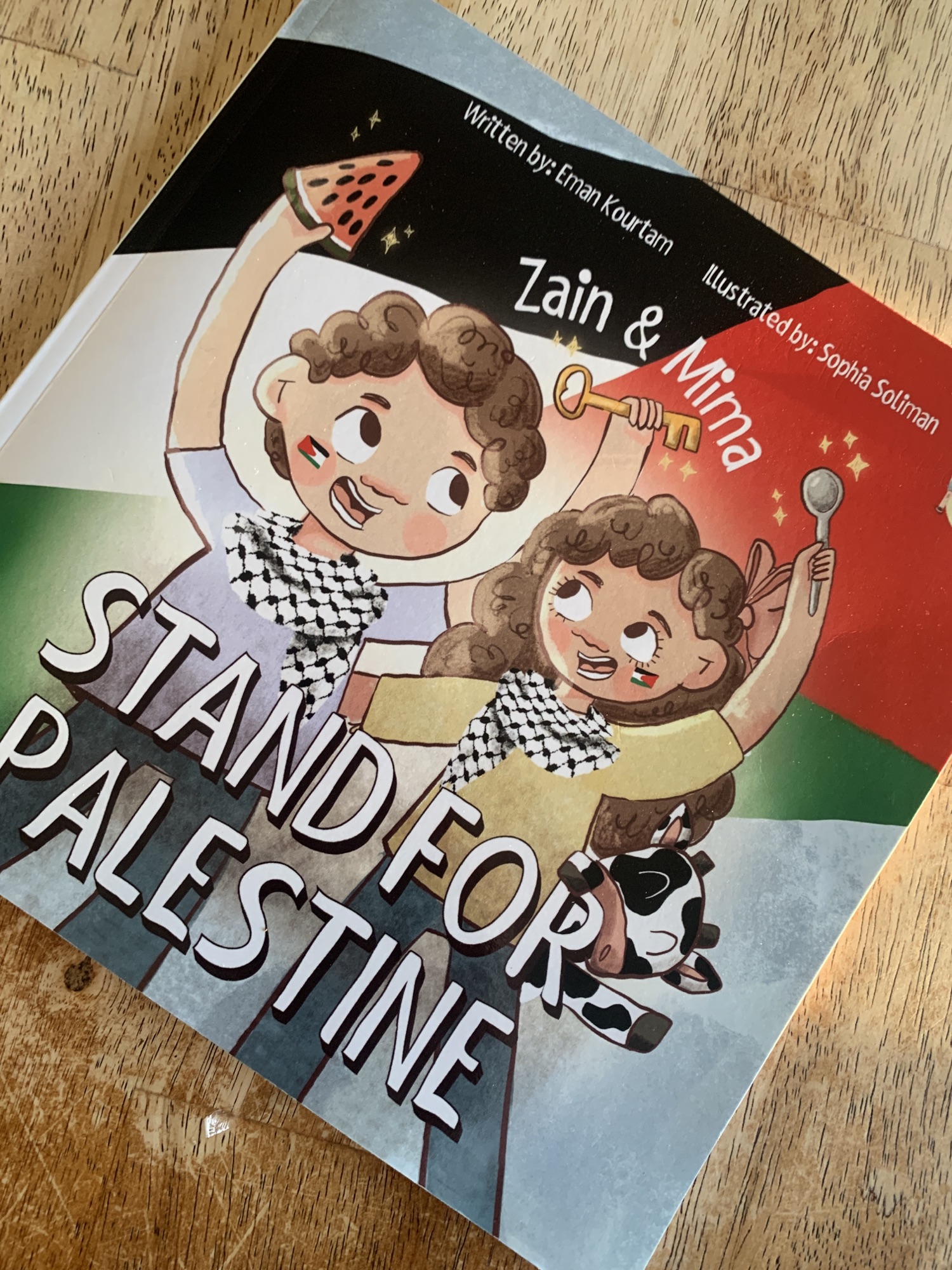
Zain and Mima Stand for Palestine by Eman Kourtam illustrated by Sophia Soliman

Standard

img_1853-1

I love this 57 page rhyming book from the perspective of a non Palestinian family pulling out their Palestine gear and taking to the streets to protest the occupation of Palestine.  Along the way the sibling duo, and thus the reader, learns about the history of Zionism, birth righters kicking people out of their homes, allyship with those on the side of Palestine, the crimes of Hitler, it shows maps of the occupation, details how movement is restricted, and even how to use BDS as a form of resistance from afar. All on an early elementary level.  There is a game at the end with an activity about resistance symbols, as well.

The book starts with Zain and Mima coming home from school tired and hungry.  They notice Mama is upset and glued to her phone, they then here noise outside and are encouraged by their mother to join the march as she hands them keffiyehs and explains that people are losing their homes in Palestine.

img_1855-1

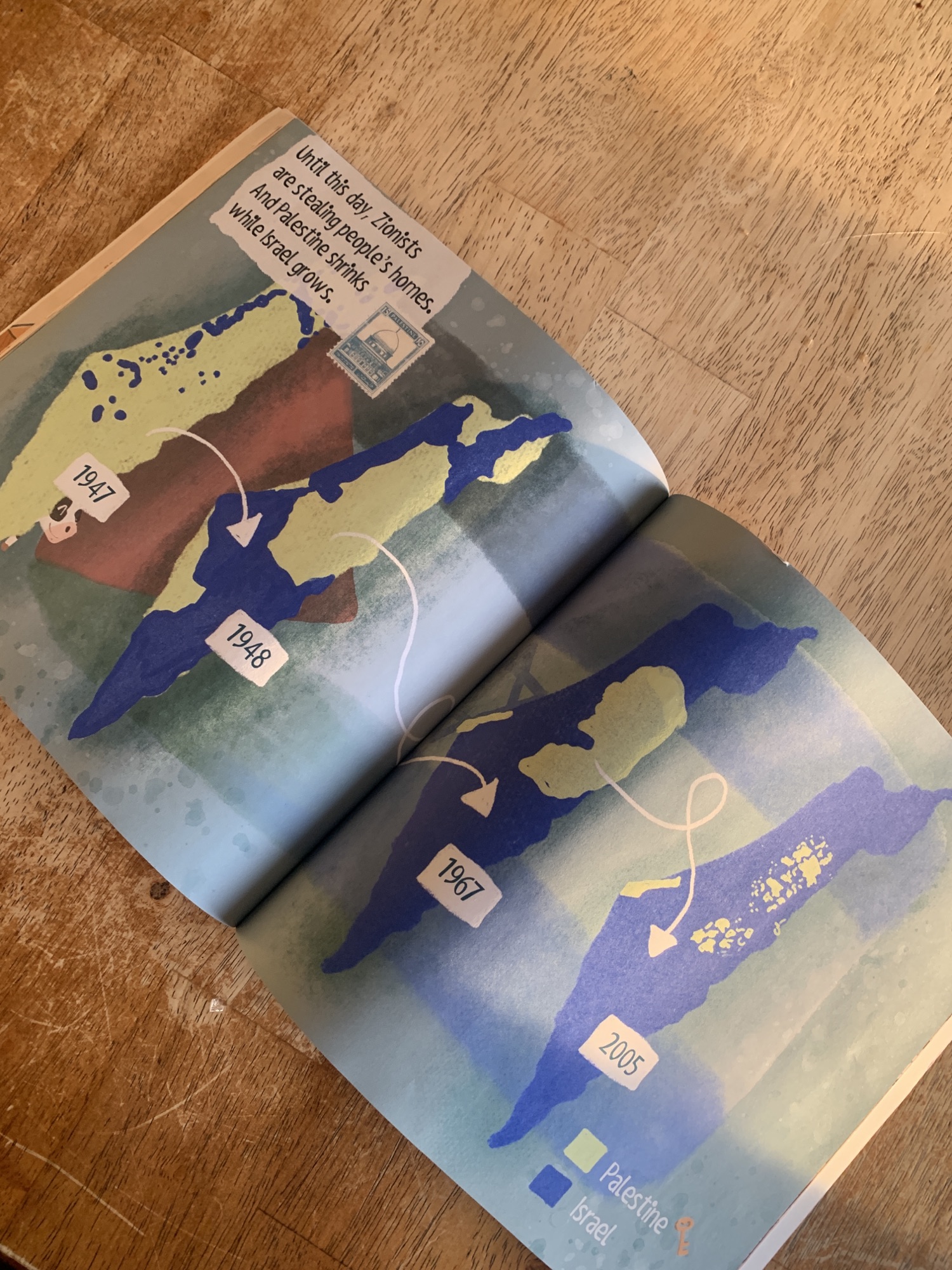
The kids are not sure of what is going on, but notice the chanting and signs and diversity of people coming together to demand freedom for Palestine.  After the protest they head home and Mama explains the history of Palestine and answers their questions.  She explains who Theodore Herzl was and his idea of Zionism.  Why it is dangerous and evil.  She then explains how Hitler’s actions in WWII gave rise to Zionism in the aftermath. A two page spread of maps show 1947 Palestine/Israel, 1948, 1967 and 2005 in easy to understand visuals. Mama then explains, without identifying any specific country, that Israel has the best weapons and Palestinians use rocks and slingshots to defend their homes and families.  It shows walls and checkpoints controlling people’s movements, and the oppression that has resulted.  When Mima asks what we can do in addition to marching and chanting, Mama explains using our money wisely with the BDS movement.  The next day, the children empowered by knowledge, make signs and are ready to stand bravely for Palestine.

img_1858-1

This book was originally written in 2022, and sadly is still so on-point.  It is available again on Amazon after being temporarily blocked, but I hope you will purchase it from a small business such as Crescent Moon Store where my initials ISL will save you 10%.

img_1857-1

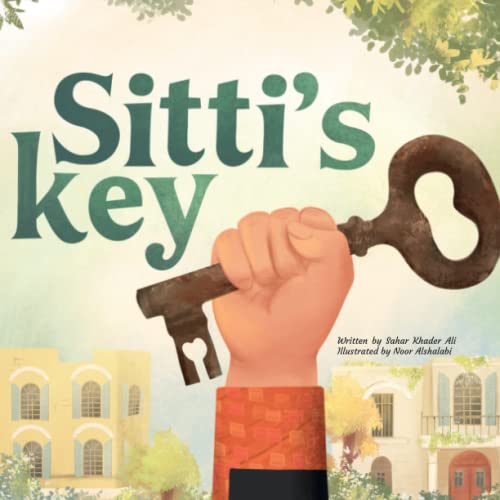
Sitti’s Key by Sahar Khader Ali illustrated by Noor Alshalabi

Standard
Sitti’s Key by Sahar Khader Ali illustrated by Noor Alshalabi

sitti key

I try and buy, read, and review every children’s book about Palestine that is published, it is the least I can do.  I also try not to compare them to each other as they present different aspects of oppression, perspectives of strength, examples of joy, and messages of hope, even among many similar themes of food, keys, traditions, and culture.  I really appreciate that this book though is incredibly blunt.  It isn’t lyrical, it isn’t poetic, and as Israel is bombing Jenin as I write this I’m glad it doesn’t mince words about the Nakba. I do think caregivers though, should probably read it first as it might be a little triggering for sensitive children.  The story is OWN voice and probably best suited for middle elementary aged children.  It is perhaps also worth noting that the book could be seen as making Jews synonymous with Zionists.  The characters are Muslim, Islamic phrases and Arabic terms are sprinkled throughout, and even despite the pain the family has endured, the book stays hopeful and proud.

Sitti is coming and Amal is excited, it has been two years since she last saw her.  She loves how excited her mom and grandma are to unpack gifts of olive oil, dates, and zataar from friends.  Amal isn’t sure what to do with the “old lady thoub” she has been gifted, but she smiles in appreciation none-the-less.  When Sitti pulls out an old key, Amal starts to ask her about it, but her mother shuffles her off to bed.

The next day at school, Amal has to work on a presentation about “culture,” but there are no Palestinian books in her school library, so she just watches the other kids.  At home they eat and listen to Sitti’s stories of long ago in Haifa, and Amal asks her why she left Palestine.  Despite her mother trying to redirect, Sitti says it is time she knew about the Nakba.

Sitti tells about living on the land for generations and how the Jews believed the land belonged to them.  In 1948 the British decided Palestine would be the homeland for the Jews.  Armed men came and arrested anyone who tried to stay in their homes. Sitti’s brother was handcuffed and never seen again.  The family grabbed what they could including the key to their home as they made their way to a refugee camp in Lebanon.  They stayed for three years, before making their way to America.

When Sitti concludes her story she hands the key to Amal and her hope that she will return to their home inshaAllah.  Feeling the pride and warmth of home, Amal has a determination to reclaim her heritage and share her “culture” with her classmates.

The illustrations are sweet, the mom and Sitti wear hijab even in the home, and the inshaAllahs and salams come naturally. The book does not stop to define zataar or marimya, which helps the flow. I also like how it shows that there aren’t books about Palestine in the school library, it is strong and important detail.  I don’t understand where Sitti is coming from though, it would seem Palestine as she is bringing gifts from friends, but in the story it says after Lebanon they made their way to America, so I’m not sure where Sitti lives, and how the logistics of the family work to be honest.  I also kind of wish there was a  recipe for zataar in the book and lyrics with translation for the song the family sings.

Book is available on Kindle or can be ordered from www.littlehibba.com

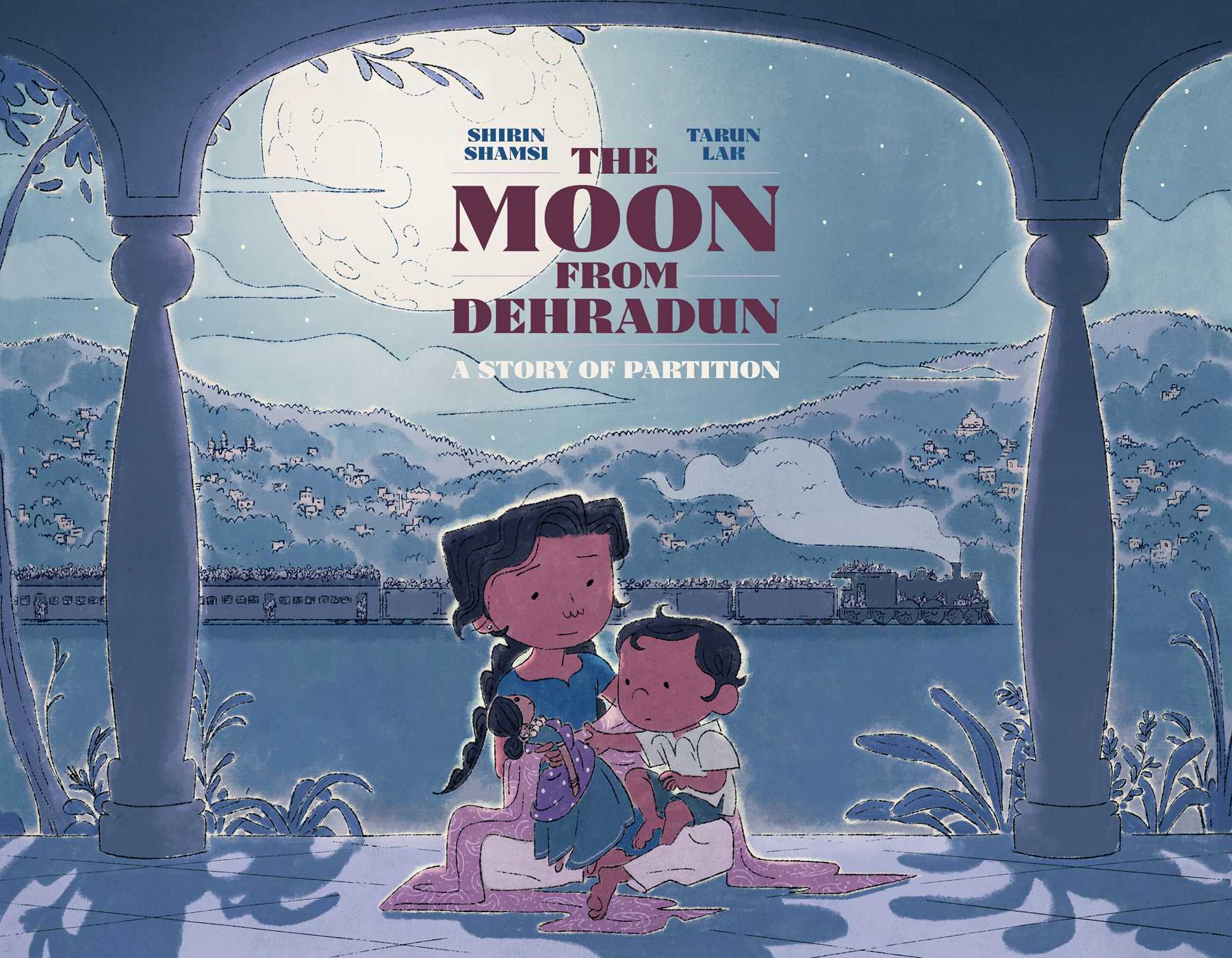
The Moon from Dehradun: A Story of Partition by Shirin Shamsi illustrated by Tarun Lak

Standard
The Moon from Dehradun: A Story of Partition by Shirin Shamsi illustrated by Tarun Lak

partition

I’ve read this book numerous times: sometimes for the text, sometimes for the tone, sometimes to slowly immerse myself in the pictures. I know the basics of my own family’s journey to Pakistan, and this book added to that understanding. I like that it forced me to slow down and to really appreciate what partition was for both sides, from a child’s perspective. Pakistan and India gained freedom from British rule 75 years ago. Nearly every Pakistani or Indian you know today, has a parent or grandparent that lived through it. It is not history from long ago, it is still very much with us, and no I’m not talking about the lingering effects of colonization, I’m talking family stories, and loss of property and wealth, memories of the journey, the terror, the fear, the relief, the determination. This book is one story, perhaps the first mainstream published in the west, of one family’s experience. There could be a thousand more books and they would all be different, all powerful, all reflective. I love that this book is Pakistani authored, Indian illustrated, I love that it offers pages with no words at all. I love that a child’s perspective for such a monumental event is told for other children. There is a lot there for desi readers to unpack, and consider, there is also a lot there for non desi’s to be made aware of, and I hope that you will seek out this book no matter who you are, and share it.

img_3563

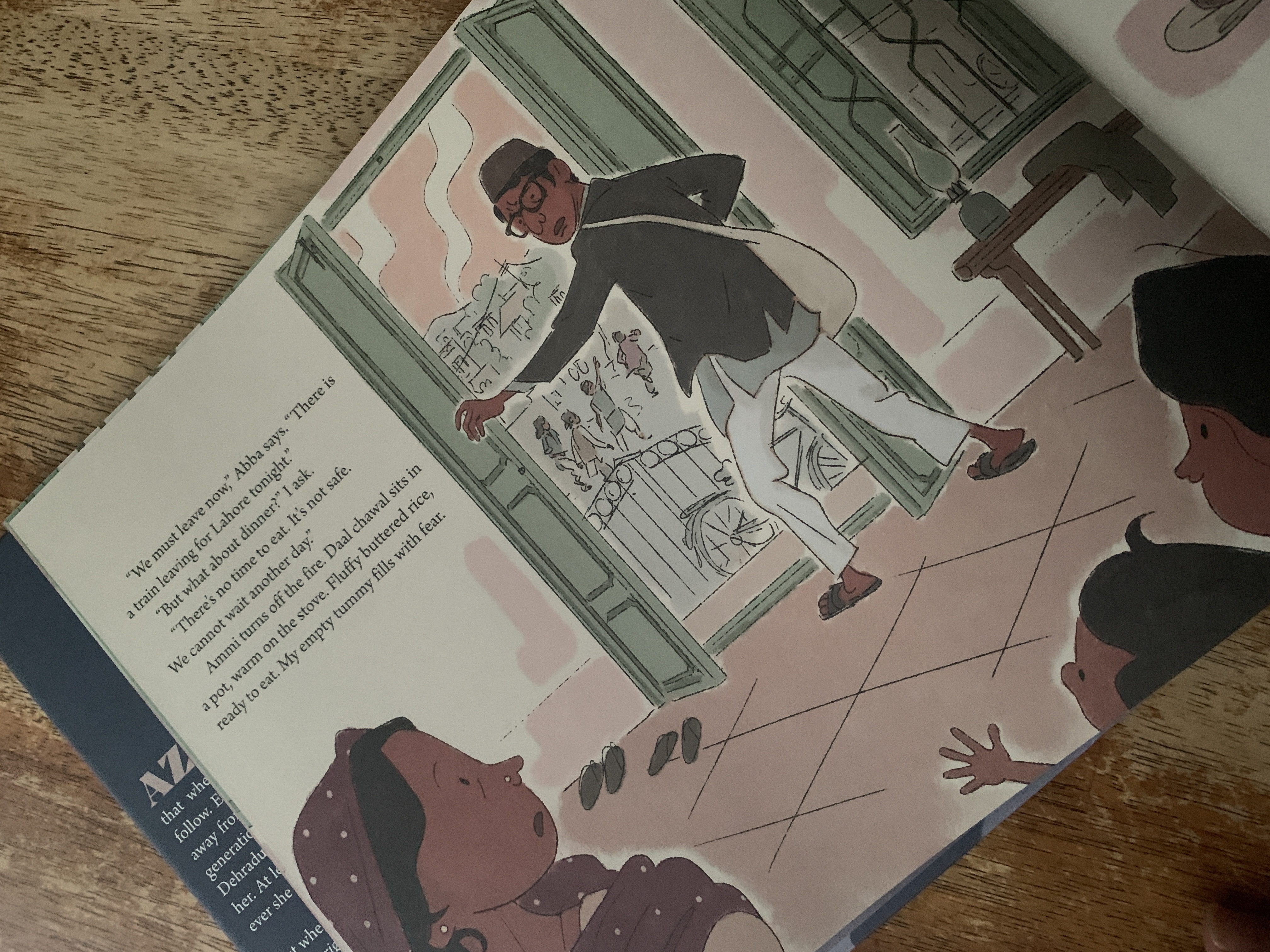
The book starts with excitement from Azra about an upcoming train ride, even though her family has lived in Dehradun, at the base of the Himalayas, for generations. Suddenly though there is yelling outside because people are afraid, and her Abba runs in saying they have to leave now. Ammi, Abba, Azra, and the baby “Chotu,” rush out the door, leaving the cooking dinner still on the stove. When they get to the train, Azra realizes she has left her beloved doll, Gurya behind. They cannot go back for her.

img_3564

Azra blames Chotu, for making her forget her doll, for taking her parent’s attention, yet as the days and nights on the train reveal tired people, sad faces, and fear, Azra finds comfort in her little brother’s embrace.

img_3568

When they arrive in Lahore, they are met with food, and shelter. They are given a house that looks like the owners left in the same manner that they had to flee. There are balls of dough with a rolling pin, laundry strewn about, and even a doll left abandoned under a bed.

img_3565

The book concludes with a map, a glossary, and an informative author’s note addressing pre-partition, partition, and the author’s own family story. There is hardship and frantic upheaval, but peace and welcome too. The illustrations illuminate the text and show the powerful emotion when words sometime simply don’t exist.

img_3566

The book is not political or even religious. There is an Indian flag when they leave and a Pakistani flag when they enter, there are sounds of athan, and packing of a rehl, and a comparison to Eid, and the doll at the end has a bindi on her forehead. The book does not make one side out to be in the right or in the wrong, if you do not know that partition of the subcontinent was a mass migration based on religion and the chaos further exacerbated by the British, this book will not spell it out for you.

img_3567

I preordered mine here and it can now be purchased from all major book sellers.

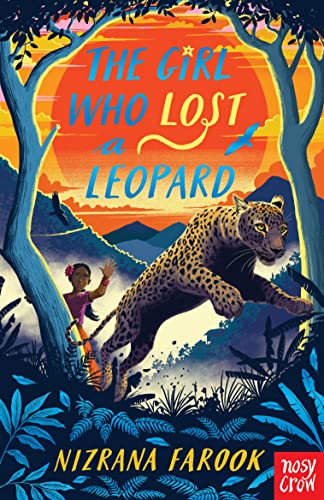
The Girl Who Lost a Leopard by Nizrani Farook

Standard
The Girl Who Lost a Leopard by Nizrani Farook

leopard

This stand alone middle grade read by Muslim author Nizrana Farook is similar to her first two books about an elephant and a whale in that it is set in Serendib a long time ago and revolves around a beautiful wild animal and clever, endearing, determined young children. This actual story is an easy read at 203 pages (the end of the book is the first four chapters of one of her previously published books).  I think seven and eight year olds will enjoy getting to know Selvi and the beautiful leopard Lakka that she considers a friend.  For me the ending took an odd turn that seemed out of place, but up until then I was enchanted by the lush imagery, sheer determination, and sweet friendship shared within the pages.  The main character is not Muslim, but presumably some of the side characters are with names such as, Amir and Salma.

SYNOPSIS:
Selvi and her mother live in a small home on the mountain.  Most days she runs wild with a golden leopard she has named Lakka.  She keeps her distance, but there is a pattern to their interactions, and when Selvi’s mother finally allows her to go to school, and she finds the other children unkind, Lakka becomes her only friend.  One day poachers are on the mountain hunting not just any leopards, which are protected by the queen, but the rare golden one that is often seen in the area, Selvi tries to interfere.  And before she knows it, they are after her.  She hides near a home, and when the poacher’s come looking for her, she is at the mercy of Amir to lie and say he hasn’t seen her.  Amir is a classmate, a mean one, but he has seen her before with the leopard, and suddenly Lakka is not so alone.

Between making friends at school, battling her uncle’s rules to start behaving more ladylike, and keeping a leopard safe, the adventure is fast paced and the story entertaining.

WHY I LIKE IT:

I love kids outsmarting adults and saving the day, it makes for good story telling.  I don’t want to spoil the ending, but I really felt like it was forced.  I truly do not understand why the children needed to take a drugged Lakka to the port and back.  Why not leave him with the new friends and go to the port without him? He is a wild animal, we have been given reasoning for so much of the human animal interactions to be believable, that this seems to be negligent.  So much could have gone wrong and for what? There was no need.  The kids wanting to see punishment handed out is motivation enough for them to make the journey in my opinion.  Sigh, I don’t know that younger kids will be as bothered as I am, but I think fourth graders and up will definitely question it and be confused.  I also don’t know that I have ever seen the sneak peak of another book included at the end, being for a book previously published.  Aren’t they usually for upcoming releases? Either way, it seemed to make the last portion of the book deflate a bit for a story that was engaging, entertaining, and hard to put down until then.

FLAGS:

Lying, poaching, abuse, threats, killing, animal cruelty, bullying.

TOOLS FOR LEADING THE DISCUSSION:

This would be a fun read aloud in a classroom or at bedtime.  The short chapters have little illustrations above the headings that hint at what is to come, and the writing style is perfect for short blocks of time.

The book is available on Amazon

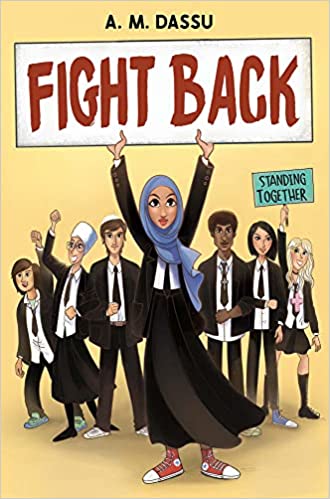
Fight Back by A.M. Dassu

Standard
Fight Back by A.M. Dassu

fight back

At 384 pages, this middle grades book takes on hijab, terrorism, Islamophobia, finding your voice, and fighting back.  At times the book was insightful and smoothly written, at other times the voice seemed childish and the writing directionless.  The inconsistencies don’t ultimately make the book good or bad for me, but rather very forgettable.  I read the book over the span of three days, but honestly remember very little about the book without looking at my notes.  The writing just isn’t particularly strong.  I never connected with the main character, and no it wasn’t because I didn’t agree with her wearing hijab out of solidarity, I accept that people make the decision for a variety of reasons, somehow I just never felt sympathetic to her as a person, or found myself cheering her on.  Her naivety vacillated too much for me to find her believable, and the pacing of the book made it hard to get revved up.  I think upper MG and middle school readers will be a better fit for the book with hate speech, assault, school bans, concert, musical references, and alt right indoctrination.  I think the book is worth shelving in a classroom/school library and I’m considering it for a book club selection, but I’m skeptical that the book would be finished, even if started, by most readers without some incentive to see it through.

SYNOPSIS:

Aaliyah and her friends are at a K-pop concert when a terrorist attack kills and injures numerous people.  A Muslim takes responsibility and with it coming on the heels of numerous London attacks, Islamophobia is at an all time high.  For 13-year-old Aaliyah, it is a stranger yelling at her mother in a parking lot, her best friend Lisa ignoring her, and her brother getting riled up in retaliation, that gets her to wonder why her mother wears hijab, when she started, and decide to start covering herself, in solidarity. As a result for Aaliyah there is now increased bullying at school which results in physical assault, and teachers turning a blind-eye.  It reaches an all time high when a religious display ban goes in to effect.  Still dealing with trauma from witnessing horrific violence, Aaliyah decides to push back.  Finding her inner strength and finding allies in a few good friends, and a secret cat adoption, she finds enough motivation to keep her plugging forward against the growing hate in her world. When she finally finds her voice will it be enough to overturn the ban and save her brother? Nope, not going to spoil it.  The fight is not a one-and-done, as anyone who has gone up against racism and systemic oppression knows, and this fictional book keeps that integrity and doesn’t give a happy ending, but rather hope and motivation.

WHY I LIKE IT:

I like that the Islam is centered in a consistent and empowering way.  At times it is a perspective that I’m not completely onboard with, but a few pages later the insight is powerful and the messaging clear.  I found it odd that Aaliyah doesn’t know when her mom started covering or why, or anything about hijab, it comes off very immature. The book keeps culture and religion separate, hijab a choice, and I like that it was Aaliyah who wants to cover even when her parents try to talk/force her out of it.  I find it a little off that she doesn’t go to the mosque, but her father consulted with masjid folks when looking for advice for handling the alt right groups.  She prays a few times in the book and it being mentioned is nice.

I like that the kids in the book think for themselves, and that the adults don’t have all the answers.  I enjoyed the passages asserting why the family came to the UK generations ago and why they have stayed, is powerful.   A few of the characters that are really strong at the start don’t ever get mentioned again.  Which is fine, but I did wonder about Harpreet and why Yusuf’s friends weren’t contacted when Aaliyah was sleuthing about.

Loved the literary shout-outs, and the hypocrisy of allowing swim caps and hats but not hijab, but sigh, didn’t love the cat thread.  I think I just don’t like fictional cats, I sound like a broken record.  I think the inclusion was to show how much Aaliyah had to keep hidden in her life and how she needed comfort, but I don’t know, sigh, I found the contrast of tone jarring to the pacing.

There is a glossary at the end, and the definition of Hijab is a bit odd, highlighting Western and South Asian terminology and not the Middle Eastern or even global use of the Arabic word.  I don’t know that the glossary is even needed as the book really tries to establish that the characters are a part of their society and don’t need footnotes and differential treatment, so the inclusion of a glossary for me, diminished the point a bit.

FLAGS:

Assault, hate speech, bullying, fear, death, injuries, bombing, terrorist attack, lying, music, mention of a transgender/gender neutral student, a rainbow pin. sneaking out.  Criticism of police, alt right indoctrination.

TOOLS FOR LEADING THE DISCUSSION:

The book is unique in showing affects of the alt right and not having it all work out in an MG book.  It shows the anxiety and fear that Muslims often feel and the determination of not becoming victims. It also does a good job of showing that something like a religious symbolism ban doesn’t just affect Muslims, but people of various faiths and culture, and thus when common ground is found, there are more allies that one often thinks.  I think it could work for a middle school book club and undoubtedly the discussions would be great, but I am given pause with the main characters view of hijab as not being something in the Quran, but rather done in protest and in solidarity.  I think once I see which kids are interested in book club I can gauge if it is something that we can work through and discuss or not.

Sitti’s Bird: A Gaza Story by Malak Mattar

Standard
Sitti’s Bird: A Gaza Story by Malak Mattar

img_2562

I hate that this book is so timely.  It was written by the author/illustrator recalling the 2014 airstrikes, but alas, has anything changed for the Palestinians’ suffering at the hands of the Israeli occupiers amid the  apathetic silence of the world?  This 32 page picture book shows family love and daily life while Gaza is under siege.  The heartbreak of a young girl’s reality and perception shows the reader, in a simple empathetic, heart-wrenching, real-life example how her dream was limited and caged because she is not free.  The book is not sensationalized, nor graphic, it is written by someone who endured this as a child, and has written the book for children. The theme is not even political, but more hopeful as art is found as a respite and way to keep dreams from completely dying.  May Allah swt ease the suffering of those under occupation and free Palestine, ameen.  

img_2557

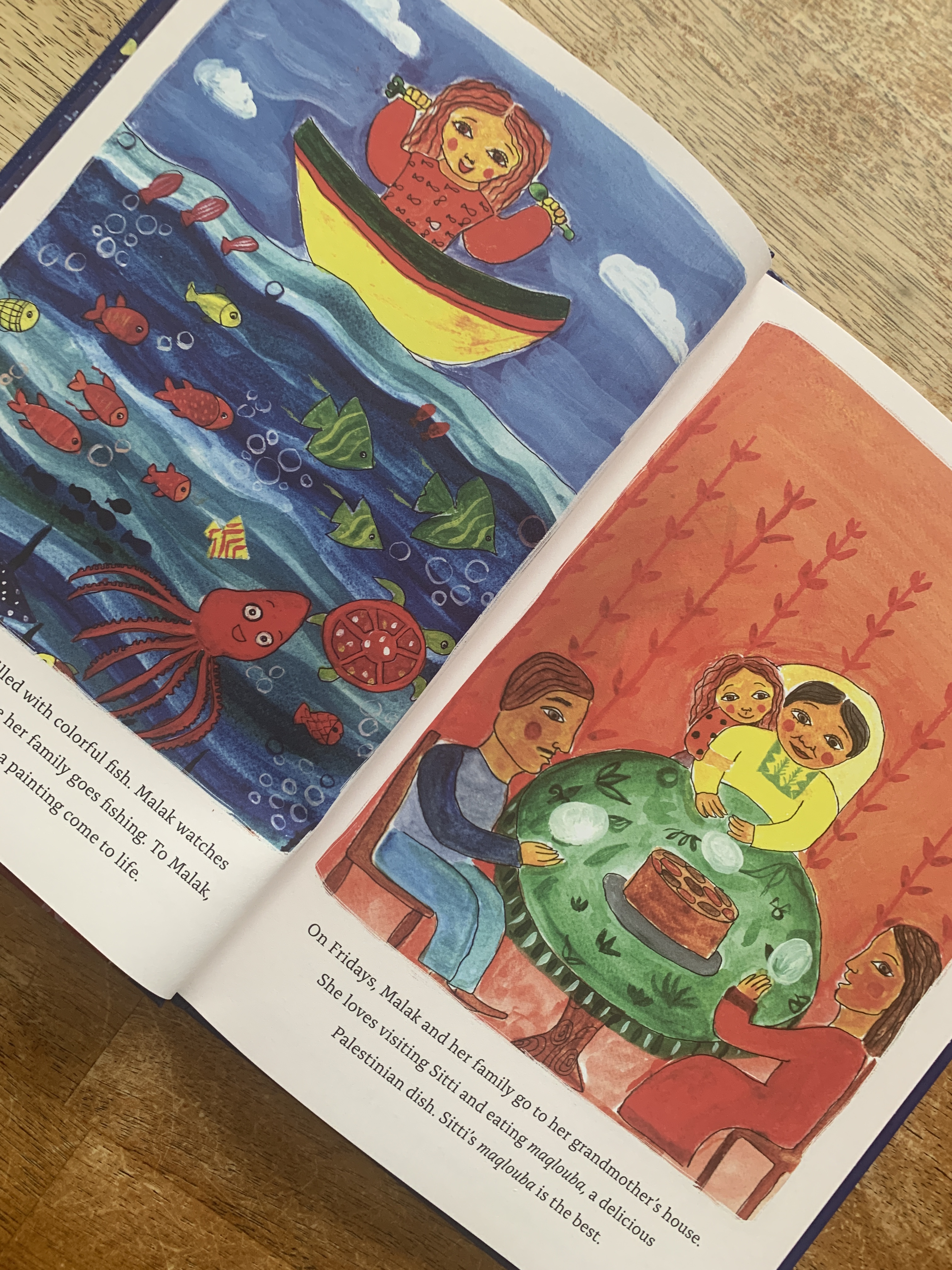
The book starts with a little girl and her parents going to Sitti’s house for the best maqlouba.  Sitti has a beloved bird, Malak wonders if she too is in a cage.  Her grandmother encourages her to fly in her dreams.  At school she is happy with her friends, playing games, listening to stories, but when an explosion sends them all home, she won’t get to return for 51 days.

img_2559

Constant airstrikes keep the family home and in fear.  Malak finds some paints and starts to create.  Sitti’s bird is lost when Sitti’s home is destroyed, but somehow shows up at Malak’s home.  Eventually Malak returns to school and she shows her teacher all her paintings. Her teacher decides to host an exhibit. 

img_2560 

People show up and marvel at her art work.  Months later an international exhibit invites her to attend with her parents, but sadly she must decline.  Gaza is closed.  She cannot leave.  

The book is hopeful, but does not have a happy ending, and I think the weight of that makes this book all the more powerful: because it is timely, because occupation persists, because dreams cannot be made into reality, generation after generation, this story inshaAllah will inspire some change and lots of compassion.

img_2558

There is nothing Islamic in the book, save some #muslimsintheillustrations, the author is Muslim.

Available here at Crescent Moon Book Store https://crescentmoonstore.com/products/sittis-bird?sca_ref=1601585.fIPhoqtScY  

Amal Unbound by Aisha Saeed

Standard
Amal Unbound by Aisha Saeed

amal unbound.jpg

This book was suggested to me and I was thrilled to find it at the public library so quickly after its May 8, 2018 release date.  I love that it is an AR 4.2 and 226 pages about a girl standing up for her self, determined to be educated, and facing whatever society, and culture, and circumstance throw at her.  The protagonist is 12, but I think most middle school readers will find the story a bit too idyllic, perhaps even too simplistic and neat.  I really think the AR level of 4.2 is spot on in terms of writing level, interest, and story telling: 3rd through 5th graders will benefit the most from this inspiring, memorable and informative tale.

SYNOPSIS:

Amal lives in a small Pakistani village.   The book opens with her begrudgingly having to take time off from school, as the oldest, to help her mother who is about to deliver her fifth daughter.  The stage is quickly set to show a supportive father, but the cultural stress involved in educating a girl is incredibly strong.  The priority is to care for the home when push comes to shove and this fight is simplified in the book, but not completely belittled.  Right away we also see some class divisions with servants and landowners and the various positions in between.  It is easy to judge those with money as being evil, but the author does show some nuances in character aside from wealth and position.  As Amal’s mom struggles with recovering after the baby, it is decided that Amal will miss more school.  This devastates Amal who dreams of being a teacher.  Burdened by keeping up the house and carrying for everyone’s meals, laundry, and watching her younger sisters constantly, frustration mounts and she snaps when an arrogant man tries to take her pomegranate in the market.  Her simply saying no, is the catalyst that changes her life as the man she stands up to, Jawad Sahib, is the wealthy land owner everyone in town is indebted to.  Saved by his mother, Nasreen Baji, who is in need of a personal servant, Amal is now forced to pay off an impossible debt to a cruel powerful family. 

In  many ways the story doesn’t really get good, until Amal enters the Khan family’s world, about 50 pages in to it, but obviously the character building and detail is necessary, so if you find your kid is getting a bit bored, encourage them to keep going.  

Once, she arrives at the Khan compound, she begins to make friends, and enemies, and similarly see just how ruthless Jawad Sahib is, and can be.  As she finds her own voice and realizes her own role in determining how others treat her, what her future holds, and what power she does have, she is forced to wrestles with the choices in front of her. Ultimately, the reader will cheer for her to take a stand and be bold in doing what is right, no matter the cost.  And while one can guess, because of the target demographic, that it has a happy ending, I won’t spoil the climax, the resolution, or outcome of the young heroine.

WHY I LIKE IT:

I love that despite the themes, the story isn’t depressing, in many ways it is informative and inspiring. I think the fact that things are not left to ponder but clearly articulated, has its merits in a book for elementary children who might be overwhelmed by the cultural aspects to think critically on their own.  At the beginning, with the birth of yet another daughter, the biggest concern is that the mom is depressed because she hasn’t had a boy.  The mom even apologizes to the dad about this.  The neighbors, friends, everyone seems so upset about it, but Amal doesn’t understand why the women particularly seem disappointed, when they themselves were little girls once, and this simplistic point of view on such a complex and real issue, is so spot on and obvious, I loved it.  The mom and dad point out that it is God’s doing and they clarify that they are not sad the baby is a girl, and to me it seems obvious the mom is suffering from postpartum depression, but the book only describes it, it doesn’t identify it.  I also love that there is perspective on how while Amal is in forced servitude and thus not free, either is her female boss, who is unable to go visit her family, or to garden.  This helps amplify that even the wealthiest woman, is still limited to be truly free in the context of the character’s world.  

I like that the book is culturally authentic and not judgemental.  There are strong females, supportive male friends, and plenty of details to show that the author is writing about what she knows, and that she loves her culture.  Islam is mentioned only a few times with regards to prayer time, but nothing more.  There is nothing about praying for anything specific, or covering, or religious beliefs, practices, or traditions.   The book like the author’s first book Written in the Stars, almost oddly leaves religion out, and stresses culture.  Because this book is for a younger audience, it isn’t as obvious, and if I didn’t write reviews about books I probably wouldn’t notice.  

The presentation of culture, the idea of indentured servitude, and females being educated is balanced and explained pretty well.  At most many of the readers will know little of Pakistan, but may have heard of Malala, and the author talks about her in the Author Note.  I like that this book shows a fictional strong female in a similar vein as Malala, but also shows that it isn’t an outside force, the Taliban, preventing her from an education, but in some ways a whole societal view.  I think this expansion of paradigm is really the most powerful thing about this book.  It is important to understand that people may want their daughters educated, and opportunities may be available, but sometimes more is needed.   A lot more to change tradition, on a lot of different fronts.

The book also does a good job of showing some of the paradoxes that exist in developing countries as well: Amal rides in a car for the first time, but also is handed a cell phone from her mom, she knows all about email but has never used a computer.  For readers to see that somethings are very similar to their own lives, and some things are foreign, will make Amal and what she stands for have staying power and relevance, long after the end of the book.

FLAGS:

There is talk of physical violence when people are murdered, crops burned, and Amal is slapped.  There is some lying, but the truth comes out. Overall: clean.


TOOLS FOR LEADING THE DISCUSSION:

I would absolutely present this book as an Elementary Book Club selection and I would encourage teachers to use it as a novel study.  There is a lot of perspective to be had from this book, and its clean simple style will keep the keep points in focus.

Author’s website: http://aishasaeed.com/amalunbound/

Q & A with the Author: https://www.publishersweekly.com/pw/by-topic/childrens/childrens-authors/article/76814-q-a-with-aisha-saeed.html

Discussion Guide: http://www.penguin.com/wp-content/uploads/2018/05/AmalUnbound_Brochure.pdf