Category Archives: YA FICTION

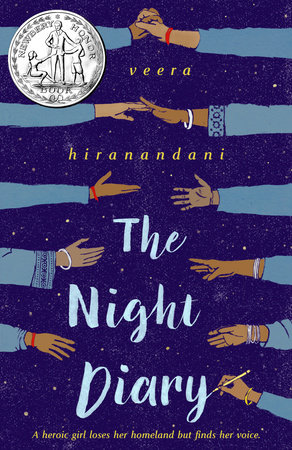
The Night Diary by Veera Hiranandani

Standard
The Night Diary by Veera Hiranandani

night diary

I was curious to see how partition would be presented in this book by an Indian Hindu author featuring characters who are half Hindu and half Muslim relocating to Hindu India.  Told in journal entries written by 12 year old Nisha to her deceased Muslim mother, the 264 page AR 4.5 book is wonderfully done, extremely compelling, and about so much more than the politics that birthed India and Pakistan.

SYNOPSIS:

Nisha and her twin brother Amil are opposites, yet they complete each other and care for each other in such a tangible and heart swelling way, that you can’t cheer for one while not rooting for the other one to find success and their place in the world as well.  As the twins turn 12 and Nisha is gifted with a journal from the families beloved cook Kazi, India and Pakistan too are about to come to fruition and Nisha’s journal entries detail her understanding of the larger events around her as well as her own struggles to come in to her own.

For Nisha words do not come easily.  She excels at school and loves to cook, but talking to people, or making friends eludes her and her longing for her deceased mother, make her a quiet reflective child.   She observes and  takes in so much around her, internalizes it, ruminates on it, and pieces it back together in a gifted way when she writes, that reading her entries, and the voice the author creates for her, is really amazing and fluid.  You feel like you really know Nisha and what makes her tick, what she fears, and how she thinks, you also get emotional attached to her and her world and find yourself surprised at how invested you are in not only her family’s successful migration across the new border, but also in her finding her voice and the confidence to use it.

Amil’s voice comes through Nisha, but her love for him and the way his strengths are her weaknesses and vice versa allows insight into the other family dynamics and attitudes to the two children.  Amil is an amazing artist, that suffers from dyslexia and does poorly in school.  He is weak and wiry, but fast, and he can talk and charm and ask all the questions that Nisha wants asked but can’t find the words for.  He and their physician father are rarely on good terms, as he isn’t the ideal strong boy with a medical degree in his future.

When it is decided that the family must leave their city where Muslims and Hindus and Sikhs live together and journey into Hindu India, the twins, their father, and their father’s mother, Dadi, must rely on each other to survive the riots and violence of the mass migration.  Nisha must also survive the understanding that with a Hindu father and Muslim mother there is so much about her own place in the world she doesn’t understand, and thus the journey is both an internal and external one, that will change Nisha forever.

WHY I LIKE IT:

I love that the protagonists voice is so steady and believable.  I truly fell in love with Nisha and felt her pain, happiness, anguish and overall got emotional for her, it was a rollercoaster.  The author does an amazing job of painting the politics of Jinnah, Nehru, Gandhi and Mountbatten in broad strokes, but believable ones to the understanding of a 12 year old.  She sees that one India held people of all faiths and that this breaking up of everything is leading to violence, upheaval, and horrors previously unimaginable.  She doesn’t understand why people had issues with her mother being of one faith and her father another, she loves her Muslim cook and loves listening to him pray five times a day as her paternal grandmother sings Hindu prayers in the other room.  She is both Hindu and Muslim and doesn’t see the contradiction within herself, suspending the reader’s own opinions on partition (if they have them), because how she sees it, does make sense for the story’s narrative.  The author takes Gandhi’s side of non violence and staying together, but balances very well and very intentionally that atrocities and humanity was seen from people of various faiths and political persuasions.  The role of British colonization and freedom from it, is slightly glossed over to the point of disservice, but again, being the target age of the reader and the age of the characters, I’m willing to over look it.  Families with Indian and Pakistani heritage will want to take the lacking information and help their children to fill in the blanks.

I love that the backdrop is the action of the story, but the relationship between the characters is truly the heart.  A lot of growth and compassion is conveyed very succinctly and powerfully.  Nisha wants so desperately to speak, but can’t, and her internal struggle and the pain she feels when she can’t speak up to help and participate in the world around her is gut wrenching.  As she confides in her diary, you realize that kids understand so much more than we adults often give them credit for.  The lesson is not lost on me.  I initially thought a book steeped in subcontinent history, with religious conflict and foreign words, wouldn’t appeal to a western elementary aged readers, after reading it, however, I now think this heartwarming story should be thrust upon them all.

FLAGS:

There is violence and death.  Not sensationalized, but detailed enough to set the tone of how serious the journeys were between the two countries when British rule stopped  There is some bullying and mention of the father smoking socially with friends.

TOOLS FOR LEADING THE DISCUSSION:

There is an Author’s Note, and a glossary at the back, and the inside covers have maps showing the journey the characters take.  I would absolutely do this as a Book Club selection for upper elementary, and will consider it even for middle school.  A lot of tools for teaching the book are available online, here are just a few:

Educator’s Guide: https://www.penguin.com/wp-content/uploads/2018/02/The-Night-Diary_Educator-GuideWEB.pdf

Children’s Discussion Questions: https://www.readbrightly.com/brightlys-book-club-for-kids-the-night-diary/

Classroom Bookshelf: http://www.theclassroombookshelf.com/2018/06/the-night-diary/
 

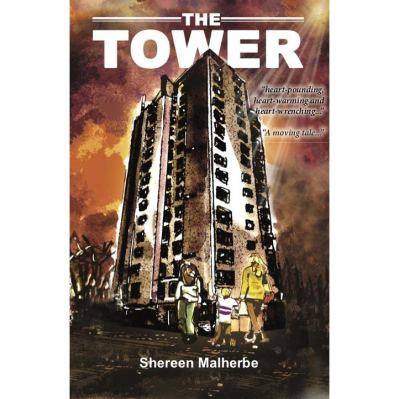
The Tower by Shereen Malherbe

Standard
The Tower by Shereen Malherbe

the tower

At 246 pages I’m not sure if this book would be classified as Young Adult, but I think it could be, as its message, focus and presentation makes it a valuable thought provoking read.  And the cleanliness of everything being resolved so neatly might almost be too coincidental for older, more jaded readers, where I personally wasn’t too bothered by how much emotional action was packed in to the book and how quickly it was resolved as the characters were compelling and the pacing made it an enjoyable quick read.

SYNOPSIS:

The story follows two women, Reem and Leah as their very different worlds and circumstances come together when they move in to the same apartment building.

Reem is a Syrian refugee whose past is presented in bits and pieces as her fragmented memories surface in the story.  She is searching for her 10 year old brother Adar, as well as trying to create a future for her self in London.

Leah has recently lost her husband, left her training as a doctor, and is trying to make a life for her and her son, Elijah, away from her parents’ shadow of expectation and demands.

When the two ladies meet, neither is completely settled or functioning, yet the desperation each is feeling causes Reem to ask for Leah’s help, and Leah agreeing.  The two become friends as they share parts of their world with one another and slowly start to heal.

Then Reem’s secret pregnancy comes to light, her abusive husband finds her, Leah’s posh friends abandon her, and their apartment building, the tower, catches fire.  Granted it doesn’t all happen that quick and there are lots of details that make their pasts, their friendship, and their goals for the future believable and inspiring, as well as making the pain for those lost in the fire emotionally wrenching.

As the two women once again try and survive hardship, this time together, they make progress before a terrorist attack on the mosque again sets them back.  Through all these major plot points details about how Reem got to England, and the atrocities she suffered that her mind blocked out are made clear.  Additionally, more about Leah and her families involvement in the tower fire and their friends’ involvement in human trafficking all tie the lose ends up. In the final pages there is hope and resilience and respect from the reader for the brave characters brought to life and their determination to persevere.

WHY I LIKE IT:

I love that it is a very personal, character driven story about a horrific fire, reminiscent of the Grenfell fire which claimed the lives of over 70 people.  I also absolutely love how Islam is presented.  The Muslim characters are tangibly real.  Reem wants to fast because it is Ramadan, but has the excuse that she is pregnant, but tries anyway.  She prays, she covers, she meets a Muslim that doesn’t cover, but they pray together at the mosque later and become great friends.  Leah is interested in Islam and asks questions and when she cooks for her Muslim friends she gets halal meat.  There is an amazingly helpful character Mo in the story who Leah is crushing on, but he refuses to be alone with her, or touch her, and when she tells him of her feelings, he says that everything she likes isn’t him it is his religion.  Leah and Reem discuss how the sunnah’s of the Prophet influence Mo and his brother and it is quite detailed.  Quranic ayats are quoted in character’s dialogues in natural presentations, not preachy or misplaced.  It hints at the end, when Leah has joined Doctors Without Borders and is in the Middle East that perhaps she has taken shahada, but it isn’t a plot point and isn’t mentioned explicitly.

My biggest complaint about the book is the random foreshadowing that pulls out from the story to hint that something more is going to happen between certain characters or be of more importance later.  I think it happened three times, and each time completely unnecessary. The story and characters and writing are clear and done well enough that needing the hint sells it all short and it wasn’t just annoying and irritating, it really kind of made me mad.  Here I was feeling an attachment for a character or what they were experiencing only to be reminded that there will be more, rather than letting me go along for the ride with the character.

I also was bothered by the font and spacing.  It is really tight on the pages, but with big margins, that a little breathing room would have been nice.  So, much happens in the book, that I wanted to be able to relish in each event and often I felt the presentation made it rushed and I found myself skimming, more than I would have liked.  I would have also liked to know what parts, if any, were based on or inspired by real events: the tower fire, human trafficking, stealing organs, artifacts coming out of Syria, refugee treatment in London, etc.

FLAGS:

There are memories of war and dead bodies.  The stealing of organs and dumping of bodies into the ocean.  There is a lot of death after the fire and after the shooting at the mosque.  There is a lot of blood, a terrorist act, a baby being delivered, a drunk man at a party.  Nothing is overly sensationalized, but it is a gripping book with some intense moments.

TOOLS FOR LEADING THE DISCUSSION:

I don’t know if middle school can handle the book, the characters are older, so it won’t resonate with them like a traditional YA book would, but I’m tempted to have my almost 13 year old read it so we can discuss.  I will most definitely suggest it to the high school book club adviser as there is a ton to discuss and relate to in this action packed book.

Author’s website and Q and A: https://shereenmalherbe.com/


We Hunt the Flame by Hafsah Faizal

Standard
We Hunt the Flame by Hafsah Faizal

we hunt the flame.jpg

A mature upper middle school/high school aged fantasy romance, written by a nikabi and filled with ancient Arab imagery and Arabic words.  Story-wise it read to me like a mashup of Hunger Games and Ember in the Ashes, and while the overall story is good, the first 60 pages of world building were utterly confusing to me.  I told myself I would read at least 100 pages and then decide if I wanted to continue, luckily before I hit 100 pages I found a glossary of terms, characters, and places online, and the story moved from world building to character development and I enjoyed the rest of the ride.

SYNOPSIS:

In a world that is slowly being taken over by the dark magic that is the Arz, a deadly forest that surrounds the country of Arawiya, one girl in one of the five Caliphates, Zafira, dares to venture into the darkness to hunt game and prevent her people from starving.  Unfortunately the Caliph of her state looks down upon women and this regular heroic act must be done with her impersonating a man and keeping her efforts as covert as possible.  Life for Zafira is hard as she not only juggles this masquerade, but her father has recently been killed, her mother is mentally absent, her best friend is getting married, the Arz is growing, and the people around her are starving.

In more or less alternating chapters we also learn of Nasir, the ‘Prince of Death’ who is an assassin for the Sultan who has also now taken over as Caliph of Sarasin.  Forced to kill innocent people by his heartless father, Nasir also is mourning the loss of his mother,  as he tries to earn his father’s approval and find some validation for his current life.

The two characters come together when an immortal witch summons Zafira to retrieve a magic book from a cursed island beyond the Arz and Naisr’s father sends him to intercept her.  The majority of the book takes place on the island of Sharr, an island that is not only a location, but a living consuming character, and involves a variety of other enchanted beings from the various states.  An immortal Safin, Benyamin, one of nine elites, Kafirah, and Altair, a general from Sarasin that weaves them altogether and complicates everything.   This group, the zumra, must work together to save Arawiya, while constantly evaluating how much they can trust one another, as well as themselves.

WHY I LIKE IT:

I love the detail and was pleasantly surprised with the pacing.  The chapters are short and kept the plot from dragging for 471 pages.  Having read it and enjoyed it, I don’t know that I can properly discuss it though.  There are things that I just accepted and moved on with without pondering over, because I don’t know if I understood it well enough to even ask the question aloud.  That being said, I feel like I got the story and I understood where the characters were coming from and I closed the book feeling satisfied and willing to read the next one in the series.  The characters grow and develop and they have a satisfying arc without being overly cliche or predictable.  I think Nasir grows much more than Zafira and knowing that the next book is more focused on him, intrigues me.  Altair is by far the most fascinating character and I hope to see more of him as well.

There is a map at the beginning of the book that I referenced A LOT, and truly I have no idea why the glossary and character list was not included in the book, as it is desperately needed. There are a lot of Arabic words and I would like to get an Arabic speaker’s perspective on how knowing what the terms meant affected the story comprehension. 

I like that Zafira has to find confidence in shedding her cloak and stepping in to herself, but I felt it told it more than it showed.  Some of the states are governed by women, the founders are women, that I didn’t feel her fear in hiding her gender.  Similarly, I wanted more information on who/what exactly the Lion of the Night was/is and where the affinities come from.  Perhaps minor points, but details that kept me from immersing myself in this fantastical land and kept me feeling like an outsider peering in and trying to connect with events just out of reach.

FLAGS:

There is a lot of killing, and some of it gruesome.  There is abuse and details of branding and a tongue being cut out.  There is alluding of sexual acts but nothing defined, random comments between characters and implications of girls in a room in the morning.  There is kissing and an intense makeout session that is used to achieve a battle goal, but it is detailed and the characters reflect on how it made them feel in terms of desire, longing, wanting, etc.  So, while it is there, it is there for a purpose other than titillation, that is why I think mature middle school could handle it.  There is a scene in a bar, but none of the main characters drink.  There is some language, albeit not in English.

TOOLS FOR LEADING THE DISCUSSION:

I don’t think I could do this with 6th graders in my middle school book club, but I will definitely suggest it for the high school one.  I think there are a lot of ways things can be interpreted and because it is a fantasy there is no right or wrong which would make the discussion fascinating.  The romance I think makes the book lean to being more female oriented, but I think there is enough action that boys will also enjoy it overall as well.

Book Website: https://www.wehunttheflame.com/

The book just came out, so I’m sure in the next few weeks and months there will be more tools, more interviews, and more details of what is to come in the series.


Other Words for Home by Jasmine Warga

Standard
Other Words for Home by Jasmine Warga

other words for home.jpg

Three hundred and forty pages written in verse that beautifully consume you and leave you emotionally changed and vulnerable and humbled all at once.  The book claims it is for middle grades, but I think middle school will appreciate it more, and I sincerely hope everyone of all ages will take a couple of hours to fall under the spell that is woven to tell a story of a refugee leaving home and starting anew in America.

SYNOPSIS:

Jude is a 12 year old girl living on the beach in Syria, watching American movies with her friends and hanging out at her dad’s store.  With an older brother and a little sister on the way, life as told from her own perspective is pretty good.  Until it is not.  Until the crimes they only hear about happening in Aleppo and Damascus start to hit closer to home.  Until her brother starts sneaking out to meetings with other youth hoping to change the politics of their country.  Until a raid almost catches Jude and her brother and her parent’s decide it is time for Jude and her mother to journey to America, for a little while, to visit her mom’s brother and deliver the baby.

America is not like it is in the 90’s movies that Jude loves: Pretty Woman, Legally Blond, Miss Congeniality.  Her American aunt and her Uncle that seems to have forgotten his Syrian upbringing, are gracious and welcoming and their daughter, Sarah, who is less than a year older than Jude waxes and wanes in her approach to her cousin.  Adjusting to school, life without baba and her brother, and all the other adaptations that moving to a new country entail are brought to life through Jude’s eyes and understanding of the world around her.  As she comes of age and decides to wear hijab, as Islamaphobia shakes her sense of justice, and her little sister is born, the reader sees her grow and change and mature and find themselves hoping that she will soar.

WHY I LIKE IT:

I love that the style of the story telling somehow gives life to so much.  With verse some things are highlighted in detail and other things skimmed over and yet at the end, not only do you feel like you understand Jude, but a lot of the side characters as well, which caught me off guard.  Truly the writing is strong and deliberate.  A lot of the politics and war crimes occurring in Syria are not detailed, and I have to assume that is because the point of view is a 12 year old girl that is blissfully in her own world.  I imagine this is also why the target audience is listed as 8-12 year olds, because it simplifies a truly horrific situation.  Also because despite moments of raw vulnerability, the book stays pretty optimistic and hopeful.  

I like that the characters are Muslim, and that the mom scolds her brother for not going to the mosque.  The book does talk about Jude’s period starting and thus Jude starting to wear hijab, which is one of the reasons I feel like early middle school might be a bit more appropriate age group.  There isn’t too much talk about faith and Islamic beliefs, but a few tidbits are sprinkled in, prayer, not eating pork, modesty.  The book is not gender exclusive, but I think girls will gravitate much more to Jude’s perspective, experiences and voice.

The only thing I found a bit off is that the book takes place in modern time, present day, yet none of them have cell phones or social media.  Jude Skypes her dad, yet writes letters to her friend back in Syria and is distraught when they don’t have a forwarding address to send them to after her friend also leaves home.  It seems that social media, email, a cell phone number, something would be available for them to all keep in touch.

FLAGS:

There is mention of Jude and her friends having to sneak in to see Pretty Woman because Julia Roberts is a prostitute, and mention of blood between one’s legs and periods starting.  The book otherwise is pretty clean.  It hints at her kind of crushing on a boy that is in the play with her, but nothing more than friendship is explored.  Violence mentioned is minimal and language is clean even when dealing with hate crimes in America.

TOOLS FOR LEADING THE DISCUSSION:

There is a good chance that next year the students joining the middle school book club will be all girls, so if that is the case and the school counselor feels all the girls can handle the puberty aspects mentioned I would totally do this book.  The book reads very quick and might be a good way to get new kid to give a book club a try as well.

Author’s website: http://jasminewarga.com/about

Q & A with the Author: https://www.publishersweekly.com/pw/by-topic/childrens/childrens-authors/article/80127-q-a-with-jasmine-warga.html

Interview with the Author: https://www.hbook.com/2019/04/authors-illustrators/publishers-previews/spring-2019-publishers-preview-five-questions-for-jasmine-warga/


Mosque by David Macaulay

Standard
Mosque by David Macaulay

mosque1

This 96 page “picture book” written on an AR 8.4 is not for everyone, but for those interested in architecture or structural engineering, or 16th Century Ottoman culture, or even Turkey in general, this book is fascinating, beautiful and most of all informative.  It first caught my attention when I was planning a story time to remind children of how they ought to behave in a mosque, needless to say it didn’t fit the occasion, but this fictionalized account of how a typical Ottoman mosque would have been built and why was perfect for my 7th grade daughter who loves legos and design and has been to Turkey.

IMG_4394

SYNOPSIS:

The story starts with a wealthy Turk realizing his own mortality and wanting to follow his Islamic faith in giving back his wealth and providing for his community before he passes.  Thus he commissions the building of a mosque, madrese (religious school and library), an imaret (a soup kitchen for preparation and serving of food), hamam (public bath) and a cesme (a public fresh drinking water fountain).  

From there the book details how the foundation to the minarets are designed, crafted, erected and used.  Explaining how domes are supported to how stones are laid and stained glass windows constructed, so many details are illuminated and kept simple at the same time. 

Aside from the physical construction of the buildings, it really is incredibly remarkable and gives insights into how Islam shaped cultures, and similarly how Mosques became integral  parts of societies.

IMG_4393

WHY I LIKE IT:

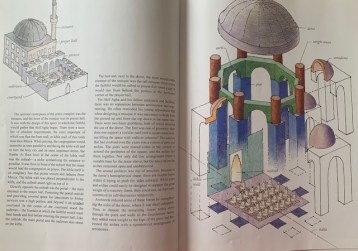
The book is fact and historically based with a fictionalized story layered on top to move the information along.  The pictures are detailed and informative with labels and descriptions that make the technical jargon of the text visually understood.

If one has ever been to the Blue Mosque, even in its fiction, the book will explain the function and thought process behind the gardens and porticos and women’s spaces in a very satisfying manner.

I love that it mentions how even Jews and Christians contributed to building of such Mosques and how the all facets of the community took pride in the completed works.  I’m not sure why the author specified the blood of a ram being spread out, as it isn’t Islamic culture, but with my limited knowledge of 16th century Ottoman practices, I didn’t dwell on it too much.

IMG_4392

FLAGS:

Clean.

IMG_4391

TOOLS FOR LEADING THE DISCUSSION:

I feel like this book would be great in any middle school STEM class to just have to look at and thumb through, Muslim or not.  The author has written numerous books about different structures (Cathedral, Castle, City) and breaks down how they were constructed and why.  A great resource for anyone willing to ponder and marvel at the structures around them and take their understanding to the next level.

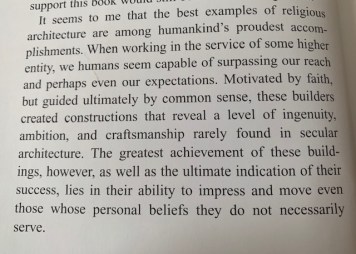
There is a Glossary at the end, and I really enjoyed the last paragraph of the Preface at the beginning:

IMG_4388

IMG_4390


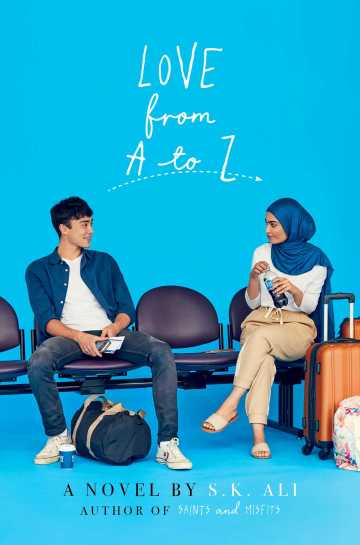
Love from A to Z by S.K. Ali

Standard
Love from A to Z by S.K. Ali

love from a to z.jpg

Now that there is legitimately a genre of YA Islamic Romance out there told in Own Voice, the expectations are high that a book is compelling, realistic, and unique somehow.  While the author’s first book, Saints and Misfits was pretty ground breaking, this 342 page was a great read, but not nearly as remarkable or memorable.  Granted it is not fair to compare the two books, and each day I do age out of the target demographic, but while the story reads authentic and true, albeit a bit serendipitous, it doesn’t have the teeth or grit I was kind of hoping for, and with a mother who suffers from multiple sclerosis my emotions were pretty invested.

SYNOPSIS:

Told from both Adam and Zayneb’s perspectives by way of their individual “Oddities and Marvels” journals, our two characters are presented by a narrator who keeps their story on track and interjects when their versions of an event differ. 

Zayneb is a high schooler and activist who has recently been expelled for threatening a teacher who consistently lets his Islamaphobic beliefs take over the days lessons.  In an environment filled with micro aggressions against Muslims, Zeynab’s parents are at a loss at how to keep their daughter from making waves, and thus allow her to leave her Indiana home a week before spring break to visit her aunt in Doha, Qatar.

Adam is at University in London where he has recently been diagnosed with MS and as a result has stopped going to classes, and is literally “making” the most of the time he has by making things.  As the term ends and he officially withdraws from school, he heads home to Doha to tell his dad and sister that he has the same disease that took his mother’s life years early.

The two characters meet at the airport briefly and then again on the plane and then at Adam’s house and the needless to say  their accidental meetings allow for friendship to grow, attraction to be built upon and a relationship to develop. Both characters have their own lives and own obstacles and own maturity that needs to occur in order for a happy ending to take place, and thus the book keeps you interested, invested and cheering them on.

WHY I LIKE IT:

I love the dynamic of how the book and characters are set up.  Both are practicing Muslims, both characters don’t cross a line, both characters have diverse mixed cultural backgrounds, and one is a convert and the other the daughter of a convert.  She is fiery and impulsive and emotional, he is pragmatic and calm and quiet.  While they have some background in common, their life experiences are rather different and it is very much a story about opposites attracting.  

I’ve been waiting for this book to come out, and so I knew my expectations would be too high.  That being said the book warns it is a love story and in some ways, that was what I kind of felt was lacking.  There was the physical attraction that was mentioned fairly often, but the deep connection of ideas or growing seemed a bit lacking.  

I really liked Adam, and his internal stresses and struggles and coming to grips with his disease seemed pretty developed.  Somehow though, and I’m probably in the minority, I didn’t love Zayneb.  She is impulsive and definitely learned and grew from the start of the book to the end, but I didn’t love her nuances with dealing with the Emmas and her friends back home and unraveling her teacher, it felt kind of forced and I can’t articulate why.  I’m glad she matured and she got answers about her grandmother, but maybe I should have felt so much in common with her and when I didn’t, I felt a little irritated.  Clearly I get too invested in fictional characters, I’ll admit that.

I like that Islam is presented in a non defensive way.  The parents aren’t evil, there is no rebelling, even the awful teacher spawns backlash and allies to Zayneb and her cause. There is no apologizing or overly explaining if the characters are pushing boundaries established by Islam or if they are establishing their own boundaries based on their understanding of Islam.  I like this, because it shows that Muslims are not a monolith, we are not one way good or bad.  Zayneb covers and prays and has friends that are boys and her family is kept in the loop of what she does, which alone breaks so many of the predominate stereotypes about Muslims.  Adam himself converted at age nine and plays the guitar and has friends that are girls, and is close to his sister, and likes dogs.  A side character is noted to be incredibly religious, but doesn’t cover.  The story takes place in an Islamic majority country, but attitudes at the swimming pool don’t allow Zayneb to dress modestly while she swims.  

Overall, the book is a delightful read that manages to keep the religious integrity in the characters and show their personalities as they come of age.  It may not be memorable years after reading, but what you do remember will be positive, and while you are reading it, you will have a hard time putting it down.

FLAGS:

There is angsty romance, and talk of sex.  The two main characters keep it pretty clean, but the side characters joke about hooking up, being horny, and sneaking off to hotel rooms.  The non Muslim aunt has a secret alcohol and cigarette stash that she gets called out on, but nothing more is mentioned about it. I think 9th or 10th grade and up will be perfectly ok to read.

TOOLS FOR LEADING THE DISCUSSION:

There is a lot to unpack in this book and I think if one just listens, teens will naturally add their own opinions and perspectives on EVERYTHING the characters experience, feel, question, and cope with.  The book just came out, but I would imagine that over time discussion questions will appear.

Author’s website: https://skalibooks.com/books/

Interview with the author: https://www.barnesandnoble.com/blog/teen/an-interview-with-s-k-ali-author-of-love-from-a-to-z/


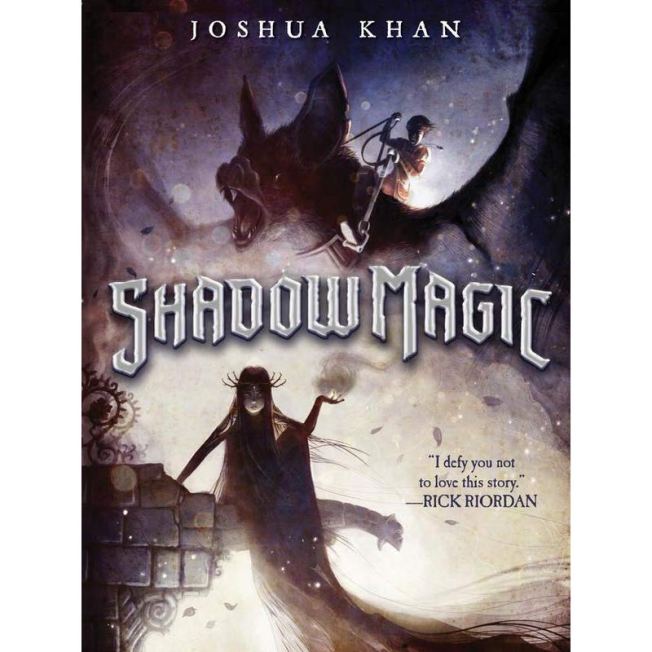
Shadow Magic by Joshua Khan illustrated by Ben Hibon

Standard
Shadow Magic by Joshua Khan illustrated by Ben Hibon

shadow magic.jpg

This book is fun and enchanting, whether you read all 321 pages and fall in to the occasional illustrations and pour over the map, or listen to the audio and get swept away.  It is an AR 4.1, and the first in the three part series.  Told by the point of view of two characters, the book’s short chapters and high action speed are expertly crafted to keep suspense and interest high, while maintaining solid world building events and making the character’s history come alive.  There isn’t anything Islamic in the books, save some critical and cleverly named characters and ideas, but the author in interviews has said he is Muslim, and that is enough for me to share a book I thoroughly enjoyed on this blog!

SYNOPSIS:

Thorn is a fugitive kid, on the run from something left intentional vague and possibly the son of an outlaw.  Raised on the edge of Herne forest (earth), he is good with animals, feels comfortable in nature, has a soft heart for doing what is right, and isn’t afraid of hard work.  He finds himself being sold as a slave to the executioner of Gehenna, Tyburn, and is off to Castle Gloom where he will meet and befriend the new ruler of House Shadow (death/darkness), Lily.

Lillith Shadow’s parents and brother have been murdered and she is now the ruler of Gehenna.  She is also still a child and events around her require her to grow up fast.  To end hostilities with House Solar she is to wed Prince Gabriel, a pompous idiot, who she despises in principle and in person.  

When an attempt is made on Lily’s life, Thorn and an unexpected ally, K’leef a Prince from the Sultanate of Fire, must work together to figure out who is trying to kill Lily, possibly who killed her parents, where Thorn’s father is, who is raising an army of zombies, and now how to get out of this wedding without causing continued war.

The history of the six founding houses that make up this world, and their elemental magical rules and limitations as magic dies out with each passing generation, come together and a tale is told that contrasts easy everyday language in a mystical proper world of royalty and dukes, colored by the dark of death and necromancy and shadows, while somehow remaining light, and funny, and completely relatable as the kids come of age and learn who they are and what they are capable of doing and accomplishing.

WHY I LIKE IT:

I love that the book is clean and that it has both Thorn and Lily’s perspectives to move the story along and give insight into the characters.  I love the world building and how the history of each of the houses is so well thought out and clear.  

“The whole idea of House Shadow is based on the Middle-East. Lily’s dad’s name is Arabic for the devil. Her mother’s the great villainess of the Old Testament and Lily is Lilith, a Hebrew demoness. The view people have of House Shadow mimics the fear the West has of East, and specifically Islam. For that reason all of House Solar is named after archangels. . . Some houses were easier to establish than others. House Djinn was fire as djinns are (out of Arabic lore) beings of smokeless fire. Herne’s an ancient English forest deity, so again a pretty easy fix” (http://www.cybils.com/2017/03/interview-with-joshua-khan.html).

A big plot point is that Lily is magical, and it is against ancient laws, meaning all six houses agree, that women cannot practice magic.  The irony is great, in that even kids can pick up on the fact that the six brothers and founders of the magical houses acknowledge that the source of their magic comes from their mother, a woman, and the hypocrisy of it all is frustrating.  I love that three very different characters have to work together, and pick their battles, it really is a testament to the strength of friendships even with people so very different than yourself.

FLAGS:

Pretty clean, not recalling anything cringeworthy as we listened to it in the car (kids ages 3, 8, 9, 12).  The book is dark in that it takes place in Gehenna and there is talk of the undead and bringing the dead back to life and they really celebrate Halloween in their own dark way.  There is murder and death and assassinations, but it isn’t overly morbid or gory or violent.

TOOLS FOR LEADING THE DISCUSSION:

I think I’ve already 90% decided to start next years middle school book club off with this book.  It is fun and engaging and the discussions would connect this fantasy story to so much in the kid’s lives and greater world that I get giddy just thinking about how fun a discussion it will be.  Sadly the school year is wrapping up and I’ll have to wait until fall.  Here are some of my favorite interviews online with the author:

http://www.cybils.com/2017/03/interview-with-joshua-khan.html

https://www.greenhouseliterary.com/authors/joshua-khan/

Author’s Website: http://www.joshuakhan.com/


Ayesha Dean: The Seville Secret by Melati Lum

Standard
Ayesha Dean: The Seville Secret by Melati Lum

seville.jpg

This is the second middle grade mystery story for globe trotting sleuth, Ayesha Dean, and much like her first adventure in Istanbul, this Spanish setting is infused with rich history, delicious food, relatable characters and quick paced action.  

SYNOPSIS:

Once again Ayesha and her two friends Jess and Sara are tagging along on a business trip with Uncle Dave, Ayesha’s uncle who has raised her since her parent’s passing.  As they wait in line to board the final flight of their lengthy journey from Australia, a young man drops his contents and Ayesha and him chat, later they are seated next to each other on the plane where he discloses his travels from England to Seville are to help locate his missing grandfather.  Ayesha volunteers herself and her friends to help him and they hit the ground in Spain determined to solve the case.

The boy, Kareem, is staying with the friends his beloved grandfather was staying with when he went missing, so that is where the detectives start their work.  In searching his room, Ayesha uncovers a 400 year old diary written in Arabic, and a pamphlet from the Archeology Museum with a necklace circled, the Collar de Pajaros.  Just enough to get them started and set their adventure in motion.

The group of teens rely on Kareem to translate the Arabic in the diary and Ayesha’s wit to decide what to follow up on and how to incorporate their sightseeing with the task at hand.  As they journey through the city of Seville, learning the history and tasting the food, nefarious characters start to notice the group and things get intense.  From Cathedrals, to cafes, to Museums, and even to an ancient city uncovered in Cordobo, Madina Al-Zahra, the chase is on, not only to find Kareem’s grandpa, but to also avoid being caught themselves and maybe even solving a centuries old mystery about treasure and a necklace along the way.

WHY I LIKE IT:

I love that Ayesha in any situation stays true to her self.  She wears hijab, she prays, she is aware of the good looking guy, but doesn’t cross her own line, she is a good friend, an inquisitive person, and confident.  All amazing attributes for a fictitious hero and real ones too.  

Much like Nancy Drew and other middle grade novel series, the books don’t need to be read in order, and while they reference other adventures, they stand alone sufficiently too.  Also, like the aforementioned books there is definitely a formulaic pattern to how the author writes her books.  And while reading it I didn’t notice it intensely, as I write the review I do.  Ayesha travels abroad, she has her sidekicks that are not developed at all and truly have no barring on the story plot wise or as comic relief, they are simply foils to bounce conversation off of, there is a cute boy who could be pursued, but isn’t, someone passes out while she and her friends are sight seeing, and the spouses provide added clues, Ayesha gets locked in a small dark space, there is a twist and a surprise, a trap, and they all live to repeat the adventure in another city another day.  I don’t think I have a problem with it, but maybe because I am not the target audience age, I might get bored with it about book four or so.  As it stands right now, I’m anxiously waiting for book three.

While reading I was a little irked that Sara and Jess weren’t any more developed in Spain than they were in Turkey.  One of them could have been the one to administer CPR or to stumble on the diary in the room, something to give them some plot significance, but alas, the books do not bare their names.  I wish Kareem would have at least said “Salam” on occasion.  I like that the author shows he doesn’t know much about Islam and shows that his grandfather admits its been so long since he has prayed, but the boy is a Morisco and his parents immigrants from Algeria, he translates Arabic, he should say Salam when he meets Ayesha in her hijab wrapped head. 

The author does a much better job in this book staying with the characters and showing the city through their eyes rather than pulling them out of their scenes to convey something.  Only once at the end of a chapter did I feel there was some forced foreshadowing that was not needed, as the book is quick and chapters may end, but the pages still turn until the end is reached.  I had more trouble putting the book down than picking it up, and that is saying something as I read it online and I definitely favor physical books.

I wish there was an afterword or author’s note explaining what was real and what was fiction.  I googled Madinat al-Zahra and found it fascinating, but couldn’t find anything in English about the Collar de Pajaros.  Also a map or two would be great.

FLAGS:

None.  This book is clean and even the fights are not gory or over the top. Yay!

TOOLS FOR LEADING THE DISCUSSION:

I would absolutely do this as an elementary book club selection, and can’t wait to get a copy to my children’s school library and their classrooms.  The book is an easy read and the history and culture is seamlessly interwoven in to the story that kids will enjoy the action and find they learned something about a culture along the way.   I think boys and girls will enjoy it, even if it appeals more to the girls.   The cover, the binding, the font is all spot on for the age group and I eagerly await Ayesha’s next adventure.


Love, Hate & Other Filters by Samira Ahmed

Standard
Love, Hate & Other Filters by Samira Ahmed

love hate and other.jpg

I seriously wish I could get back the few hours I spent reading this 281 page AR 4.8 book.  The blurbs talks about a girl being torn between the world around her and the world her Muslim-Indian-American parents want for her, unfortunately the protagonist is rather unlikeable and her worlds are actual not that different.  Islam is not represented at all, it is just mentioned as a checkpoint almost for the main character to continually justify her identity as “other” and try and illicit sympathy.  It seems to be a part of the story so that the story line of Islamaphobia can be addressed, but the book is cultural at best, and even that is rather lacking.

SYNOPSIS:

Maya Aziz is 17 and missing a dance her senior year to attend a wedding because she is not allowed to go to such events as the daughter of conservative Indian Muslim (dentist) immigrants living in Illinois.  But, immediately the hypocrisy shows itself as at the wedding, a boy, Kareem, deemed suitable by her parents is presented to try and woo Maya and possibly marry her, and the two of them wander off together, and consider meeting up at an after party.  As the reader gets to know Maya and her circle of characters, we meet her “cool” Aunt who lives alone and wants Maya to have a life of boys and partying and going to school in New York.  Her parents are never really defined except to maintain the stereotype of being controlling, focused on food and appearances, and not understanding their only daughter.  At school Maya has a best friend Violet who loves to flirt and remains loyal to Maya throughout, a cute boy Phil, who she has been crushing on for years, and some side figures that stir up some trouble.  

The premise of the book is that Maya loves film and wants to go to NYU to attend film school, her parents, want her to live at home and go to the University of Chicago.  The idea is that because they are immigrants, and culture and religion dictate all, that she get educated and married.  This conflict is intensified by Kareem, her sudden relationship with Phil, and a terrorist act that is first blamed on Muslims occurring hundreds of miles away in Chicago and giving someone at Maya’s school a reason to take out his anger on her and her family.

WHY I LIKE IT:

I don’t like it.  The book is presented as an own voice minority representation piece, but it isn’t.  I get that Islam is personal and that people identify with it and choose different paths, but this isn’t a case of her looking at Islam and saying it isn’t for me, this is a book that is billed as Islamic fiction, yet the character does nothing Islamic, seems to know nothing of Islam and has no moral conscious for anything about the faith.  She says she doesn’t pray or go to the mosque, the parents lament after hate crimes materialize against them, that maybe they should have gone to the mosque at some point.  She wears shorts, and tank tops and a bikini and doesn’t feel a tinge or reflection.  Even if she were to remark that this is an act of rebellion the reader would know, oh because she was perhaps raised with modesty, but no, she wears whatever.  She constantly mentions that she can’t have a boyfriend because she is Muslim, but then makes out with Kareem on like their second meeting, kisses him in her parents living room before deciding she doesn’t like him, repeatedly kisses Phil, practically spends a night with him, and then in the epilogue is kissing a Hindu guy she kind of just met.  Yes, there are Muslims that do this, I’m not judging, but how exactly is being Muslim then stopping you from doing that you want to be doing?  At one point when out with Kareem, he is drinking wine, Maya remarks she has had it before, and that at least it isn’t eating pork.  Misguided and off the mark, yes  some Muslims do drink, but with all build up that she can’t do things like that, only to find out she has, and it isn’t a big deal, and she doesn’t even see it as a deal breaker or worth mentioning to her parents who have set her up on this whole path to semi arranged marriage, seems so off.

Anyone hoping to pick up a pice of Islamic fiction to identify with, are going to be so completely let down.  The book seems to be written for non Muslims to feel good about having read a book with a minority character.  It’s like a coming of age story, except there is no self reflection or understanding of the world, no lessons learned, or wisdom gained, unfortunately.

I kept reading hoping that if even the Islam was poorly done that the love story would be sweet, or the presentation of hate and Islamaphobia would be on point, but it also was shallow.  Really only one kid had it out for Muslims, and yes he got violent with Maya and threw a brick through her parent’s dental practice, but it could have been used to show light on misguided hate and it didn’t, I don’t really even know what it was used to show.  Maya’s parents got scared and wanted to keep her close, thus forbidding her from going to NYU, but they were already on the fence about it.  Yes, maybe it added to the catalyst of her running away from home an in to the arms of Phil, but even that ended up seeming lame, as she left for NYU and was in someone else’s arms by the end of the book.  So, not sure really, what religion at all had to do with anything, and why the author and publishing team would want to advertise the book with such a strong religious angle, or even cultural one for that matter.  The parents are both successful dentists, who let their daughter do whatever, yes they have an opinion on her future, but Maya reads like a brat, I wish I could like her, and take her side against her tyrant parents, but they don’t actually seem written that bad, and Maya doesn’t make any effort, so she really comes across as whiney, privileged, and entitled.  

FLAGS:

Alcohol, lying, hate crime, terrorism, physical altercation, kissing, hand holding, talk of condoms, sneaking out.  I would not let a 4th grader read this or even a 7th grader, based on content.  Quality, I’d encourage most kids to skip it altogether.

TOOLS FOR LEADING THE DISCUSSION:

I wouldn’t consider this as a book club, I considered not even reviewing it, with the fear that people wouldn’t read the whole review and would just assume I was throwing my support behind it.  I am a bit disappointed that the book is available through Scholastic as its back flap reads very different than the text within.  


The House of Ibn Kathir: The Competition Begins by S.N. Jalali

Standard
The House of Ibn Kathir: The Competition Begins by S.N. Jalali

IMG_3210

At 254 pages this boarding school story beautifully blends Islamic information, mystery, and compelling characters embarking on a new stage of their lives.  I was pleasantly surprised at how easy and engaging this book for upper elementary aged children reads and would strongly recommend it for grades 3-5.

SYNOPSIS:

Eleven year old Yusif is about to begin his first year at the prestigious Dar Al Ilm Academy a few hours away from his family, friends, and home.  Nervous to be on his own, he is excited to be giving his dream of memorizing the Quran the chance to become a reality.  When he arrives at the old mansion turned beautiful campus, he is paired up with Reda, a student to help him get situated and before you know it the two are fast friends.  When they get put in the same house, Ibn Kathir, with Warsoma and Daud, the four friends embark on a year of adventure and bonding as well as growth and learning.  Along the way they learn some Islamic history, they understand important hadith and Quranic Ayats and are challenged to live according to the sunnah even when tempers and frustrations abound.  When items start to go missing the boys and their house will have to keep their cool, not accuse anyone, but figure out what is going on all at the same time.  When the culprits are uncovered, they will be further tested to hold a grudge, offer forgiveness, or even extend an invitation to friendship. 

IMG_3211

WHY I LIKE IT:

This idyllic story and predictable mystery will appeal to impressionable readers that can’t see what is coming and can still be inspired by the beauty of such a protected environment.  The window might be small for such readers, but well worth the attempt as the book is well written and the characters well developed.  The boys are diverse and kind and helpful and all the things we want our children to be, especially when they are away from us.  Each character has their strengths and weaknesses and the friends accept them and celebrate one another rather than try and force them to change. The four houses and the characters vying for year captain and having fun along the way reminds me of a Harry Potter spinoff, but alas I think that is just my ignorance of the British school system.  I love that the four houses and their namesakes are detailed at the end as well as there being a glossary of terms.  There are illustrations every chapter or so that are appealing and offer a nice visual of the boys’ world.  The text, line spacing, chapter breaks and all are perfect for the demographic and while the fictional story is solid, I am happy to report I learned a number of things as well. 

IMG_3212

FLAGS:

None, alhumduillah

TOOLS FOR LEADING THE DISCUSSION: 

I can’t find much on the author or even on any future books, which is unfortunate because I think it would be great for an elementary book club selection, and I may read it to my 4th and 5th grade Lunch Bunch group after we finish The Great Race to Sycamore Street.  I think it should be in Islamic School Libraries and classrooms as its cover will hold its own and compel kids to pick it up off the shelf.

Book trailer: http://www.ibnkathir.co.uk/trailerfullhd.html

Book website:http://www.ibnkathir.co.uk/index.html