Category Archives: Muslim Character

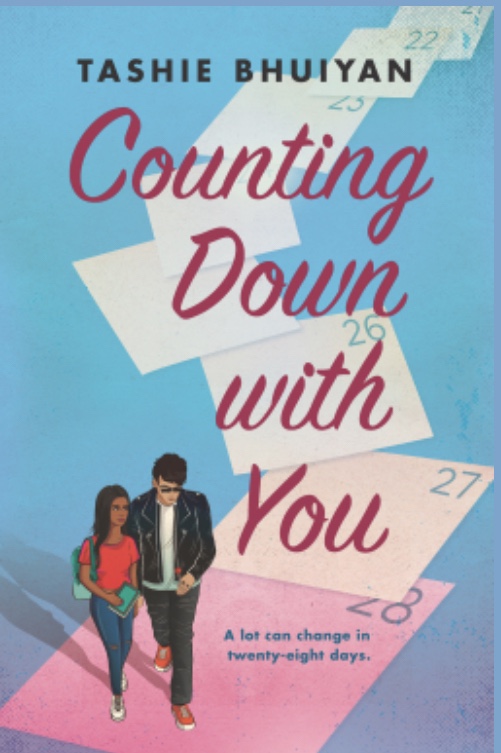
Counting Down with You by Tashie Bhuiyan

Standard
Counting Down with You by Tashie Bhuiyan

img_7940

I have to be honest that this book really held my attention and was hard to put down for about two-thirds of the 416 pages.  I was genuinely invested in the characters and wanted to see how it all resolved.  Sadly, by the end, I was disappointed with the conclusion, the predictability, the stereotypes, and the cliche’ of it all.  The author mentions in the forward that she is representing her story, not a representation of all Bangladeshi- Muslim American girls, but for an OWN voice book with such a clever premise, I really wanted to be shown more than I was told, I wanted to feel the protagonists strength, and cheer her on as she found her happiness on her terms.  But alas I felt that she let other’s fight her battles and she really only threw her religion and culture around as weighted plot oppressors, not as strands of her life that she had to decide to embrace or understand in the process of growing into herself.  There was a lot of potential to discuss mental health and family expectation, but the end unraveled all that the book could have been.  Undoubtedly the author is a good writer, and brown Muslims are not a monolith, but I feel like sometimes we need to square away who we are before we just clamor for what we want.  This book has relationships, it is a romance novel afterall, but whether the characters are straight or LGBTQ+, there isn’t more than kissing and hand holding and would probably be fine for 9th grade and up if you are ok with a Muslim lead lying to her parents and having a boyfriend.

SYNOPSIS:

Karina Ahmed is 16 and expected to be a doctor when she grows up.  Her conservative Muslim parents are immigrants from Bangladesh and very over protective of their oldest child.  Samir her younger brother, a freshman, is a robotics nerd and the pride of their family.  Karina loves English and wants nothing more to major in English in college, but her parents are insistent and despite her struggles with math and science she is determined she has no choice in the matter and must make them proud by being a doctor.  This inability to be what her parents want has caused tremendous anxiety within Karina and when her parents leave for a vacation to Bangladesh for a month, she is hoping to be able to relax and enjoy life for 28 days with her Dadu, paternal grandma, and her friends, Cora and Nandini.

The only extracurricular activities Karina is allowed are Pre-Med Society and tutoring, where she helps others with English.  Her teacher asks her to tutor a classmate one on one to prepare for the end of the year exams, and reluctantly she agrees.  Very reluctantly.  The classmate is brooding resident bad boy Ace Clyde, a beautiful slacker that seems to not care about much.  In Karina’s efforts to get Ace to study and taking advantage of limited parental supervision, Karina goes with Ace to a sweetshop and even ends up at his house where she meets his family.  Ace is not ready to admit to his incredibly wealthy family that he is seeking help from a tutor and instead introduces Karina as his girlfriend.  Ace’s older brother Xander, the Student Body Class President, isn’t buying it, so Ace announces it on social media and shows up the next day with coffee for Karina as he walks her to class determined to convince everyone that they are indeed a couple. Karina is not ok with this, but he does promise her a dozen books a week and he is aware that the “relationship” can only last 28 days, so she is in.   Karina’s friends predict that they will fall hopelessly in love and they are pretty correct.  Over the course of the next three and half weeks the two grow closer, he even comes over and spends time with Dadu and Samir.  She encourages him to fix his relationship with his family, and he encourages her to fix hers.  And somewhere in the midst of pretending they decide to make it real and then Karina’s parents return.  She at this point has been cheered on to stand her ground on confronting them about not wanting to be a doctor by Ace, Cora, Nandini, Dadu and Samir.  The conversation does not go well and Karina goes into a two week slump pushing everyone out before she *spoiler alert* resolves to date Ace in secret as long as he respects her lines, and Dadu stands up to her parents for her.  The story concludes with her going to Jr. Prom and her resolved to just stay strong for a little while longer until she is “free.”

WHY I LIKE IT:

I like that I really didn’t know if the book would turn cliche until it ultimately did.  I really liked the realness and rawness of Karina coping with her anxiety and her friends supporting her in Googling coping mechanisms and helping her test them out.  I feel like it was a missed opportunity for Karina’s parents to not reach out to her, or for Karina to even mention that they were missing it.  I think readers that see themselves in Karina would have hoped to see that story thread play out and give them hope of getting help and support or at least getting it out in the open to normalize it.  I love the growth of Samir once Karina make him aware of the double standard, but I feel like he doesn’t read with a consistent persona.  He has a job, he has friends, he likes a girl, but he reads like he is clueless and maybe 10 years old at best, not in high school.  A bit off for me.  And of course you have to love Dadu, a wise old woman who supports her grandchildren and sticks up for them.  I wish Karina would have taken her cues from her beloved grandmother and stood up to her parents with Dadu in the room rather than let Dadu fight the fight and just stand there.  I thought the big climax would be Karina standing up to her parents, so I felt let down when she let someone else fight her fight.  Yes Karina tried and failed, but I think her grandmother should have backed her up in round two, not taken over.

Karina throughout says she is Bangladeshi-Muslim and uses it as a reason to fear her parents and feel obligated to not date or study English.  She does say she isn’t against religion, and actually likes being a Muslim and praying and knows Allah loves her, but that it is the tradition that blindly is followed that gives her trouble.  Her maternal grandfather is an Imam and her mom is much stricter than her father, but he follows her lead in raising the kids.  My critique isn’t so much to argue with the author’s perspective about religious standards, but more a literary one, when the character says she is Muslim and uses that to reason why she has lines, but yet is never seen praying or wresting with what she wants and what she believes.  Never asking Allah for help with her anxiety or confronting her parents or anything for that matter.  As soon as her parents leave she is in a crop top, so where is the religious line and where is the cultural one?  Where is her understanding of her culture and where it fits in her life and where she wants it to fit in her future? Is she Muslim because her parents are or because she believes it? She won’t eat ham, and eats halal, but later eats meat at Ace’s house? Everyone, even fictional characters, get agency, but in a book where the premise is a fake relationship turned real turned rebellious because of religion and culture, a little introspection seems warranted.

The conclusion after hundreds of pages of being called lionhearted and brave and strong seemed diminished when going to prom and lying to parents and having grandma fight your battle is the happy ending.

FLAGS:

Relationships: The main couple hold hands and kiss. There is a supporting character that is bisexual as is a cousin, one is gay, they hold hands and kiss as well. Nothing more than that or detailed. There is lying and deception.

TOOLS FOR LEADING THE DISCUSSION:

I don’t think I would do this as an Islamic School book club selection because it would imply agreement with lying and going behind your parents backs.  Granted her parents are difficult and her grandma is aware and ok with the situation, but I still think it would send the wrong message to endorse such behavior from a religious school perspective.

Float Like A Butterfly by Ntozake Shange illustrated by Edel Rodriguez

Standard

img_8250

This 40 page biography beautifully presents major events of the famous boxer’s life without going in to much explanation. While it is an AR 4.7, it is still a picture book, and might work better for younger kids with some conversation and context, than for middle grade readers looking for anything in-depth about the beloved hero. While following his life, the reader sees him as a child growing up before he becomes famous, and sees that even after he retires, he is so much more than just a boxer, he is a compassionate leader, icon, and humanitarian.

img_8251

Born in Louisville, Kentucky in the Pre-Civil Rights South as Cassius Clay, he struggled to understand why there was only a white superman, and questioned if heaven was divided up by color and income like Smoketown.

img_8252

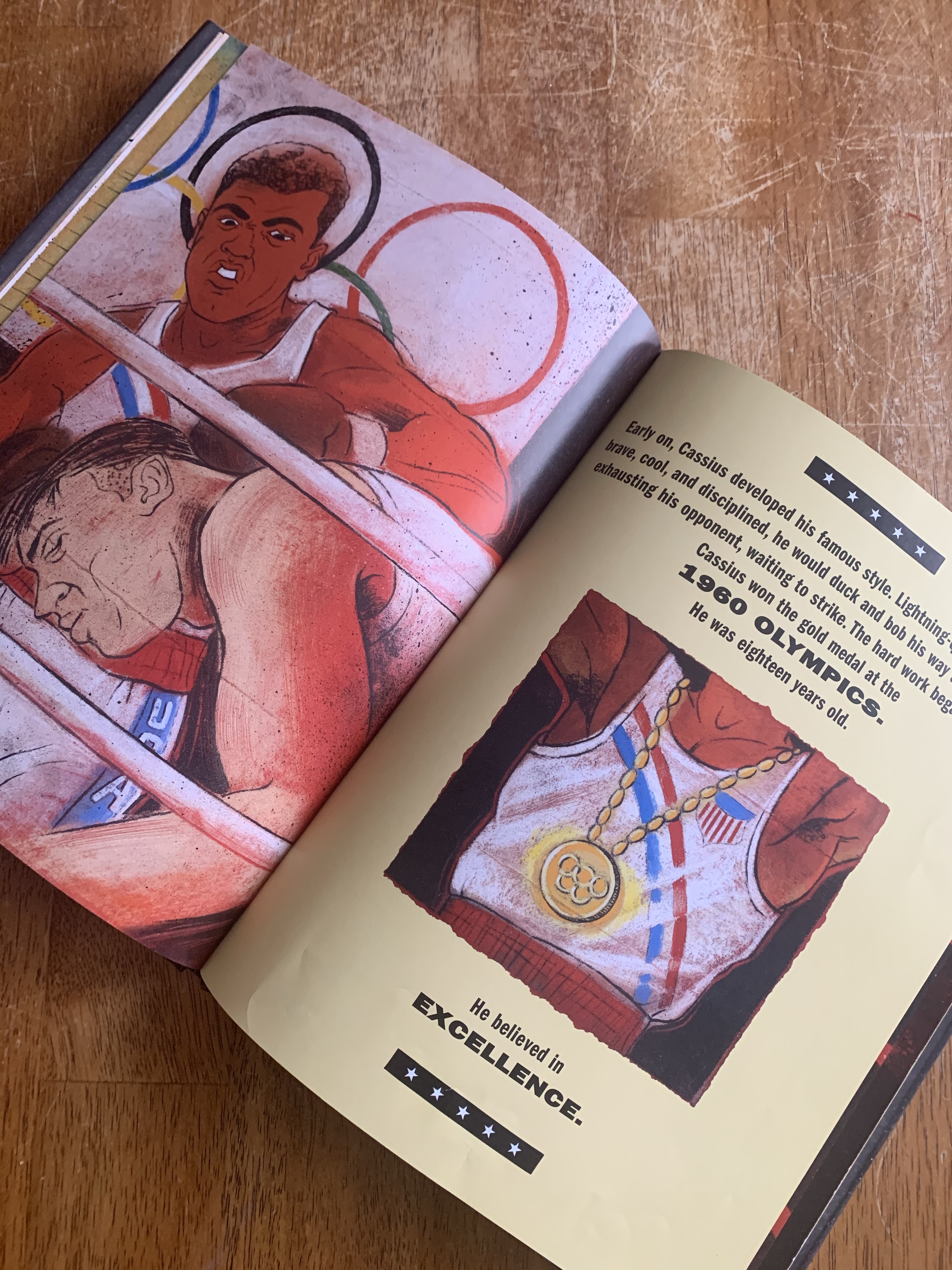
Cassius loved the power of words and would help his father make rhymes as a sign painter. When his bike gets stolen he is motivated to learn to fight so that nothing else is ever taken from him and his. He may not be the colored superman, but he is determined to be lightening fast and have fists that fly.

img_8253

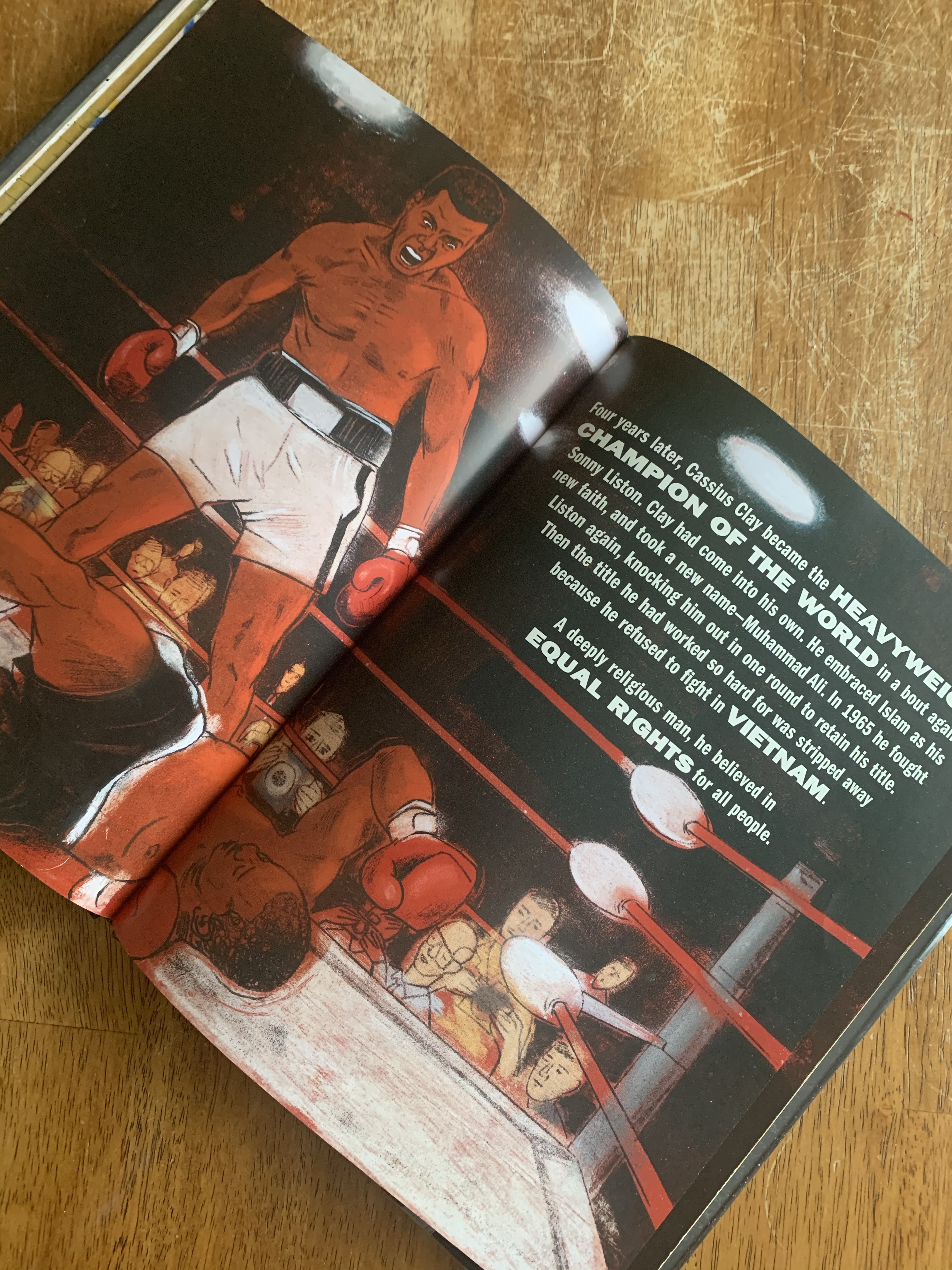
In 1960 at age 18 he won Olympic Gold. In 1964 he converted/reverted to Islam and changed his name to Muhammad Ali days after becoming the Heavyweight Champion of the World. His titles were stripped from him, however, when he refused to fight in Vietnam.

img_8254

Years later in 1971, the Supreme Court reversed his convictions for not fighting and in 1974 he reclaimed his title by beating George Foreman in “The Rumble in the Jungle.” In 1981 after winning, keeping and losing the title, Muhammad Ali retired from boxing for good.

img_8255

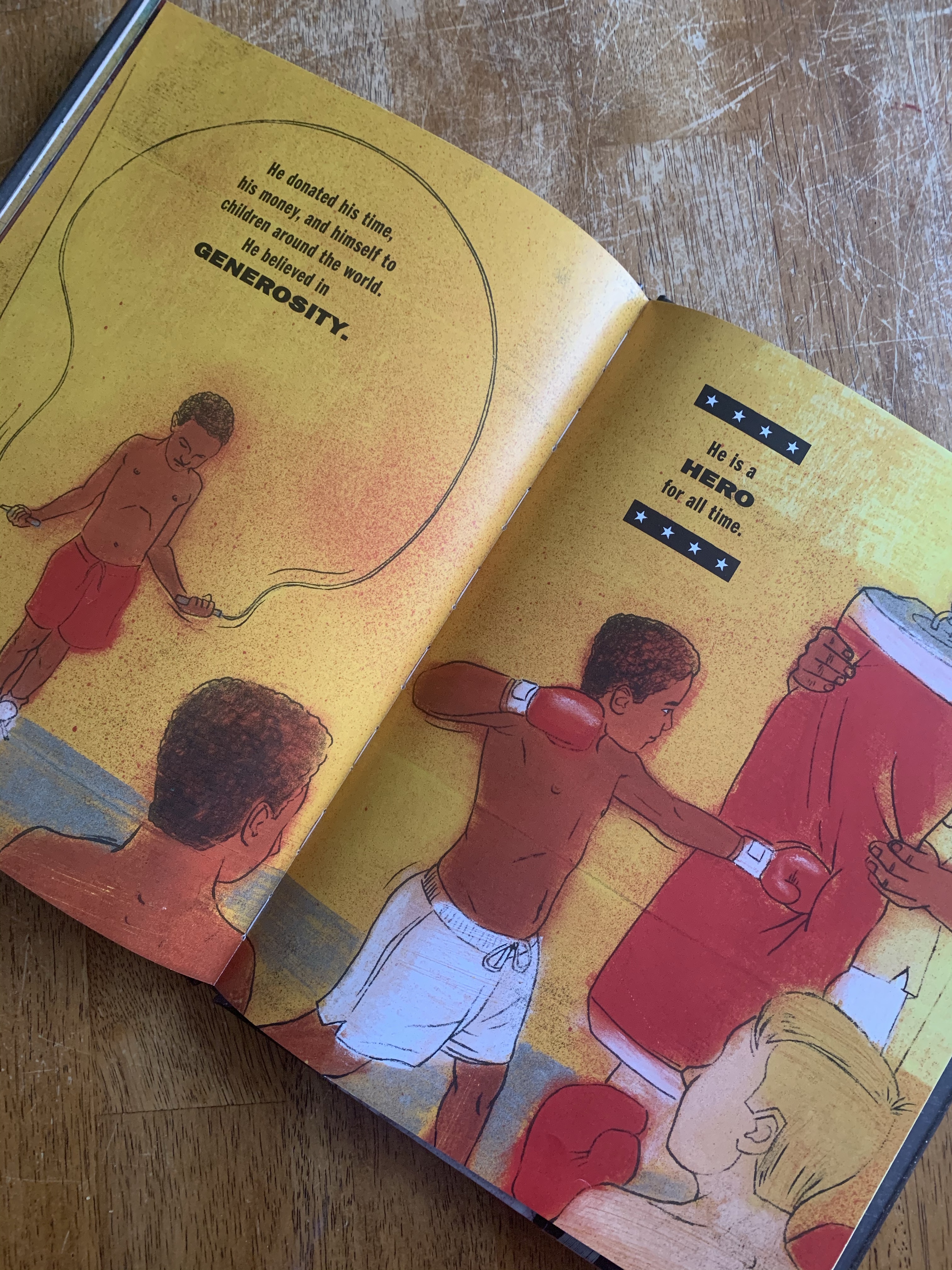
Muhammad Ali suffered from Parkinson’s disease but still donated his time, his money and himself. He believed in perseverance, and equality, and fought for what he believed in. He passed away in 2016 at the age of 74.

img_8256

This is an updated edition from the 2002 originally published book, it now includes his death. I wish it was more than a fleshed out timeline and showed him as a person, or what it was like to lose everything when standing up for something you believe in, or explained what some of his catch phrases meant, or really just as a more high energy celebration of his life.

img_8257

Amina’s Song by Hena Khan

Standard
Amina’s Song by Hena Khan

img_7581

This middle grades companion book to Amina’s Voice, reads in much of the same way as a lot of Hena Khan books in that I feel she is presenting Pakistani Muslims in America to non Pakistani non Muslims in the west.  In the first quarter or so of this 288 page book that takes place in Lahore,  I felt a different tone than really spoke to me. Granted I am (half) Pakistani and Muslim, but when Amina says good-bye to her family, I was in tears.  It was relatable and powerful and so real to me that I got emotional, the rest of the book, sadly, not so much.  It’s not to say that it isn’t well written, I just feel like the majority of the book are borderline issues for many Muslims looking to see themselves in literature: music, school dances, boy/girl friendships, and when presented that a religious family is permitting and celebrating of these issues, it seems to be trying to make us fit in, rather than support us for holding to a different perspective.  There is a lot of good in the book about finding your voice, sibling and family relationships, friends, and challenging stereotypes, that I think the book would be great for some 3rd graders and up.  However, if your family is against the aforementioned potential flags you may find the book that talks about reading Quran and praying makes the characters harder to separate from your own kids, you may want to hold back in recommending it to them.  Don’t get me wrong the book is clean and well done, I just know from personal experience that sometimes when characters do things that you family doesn’t agree with it is easier to say that those things are for them, not us, but when the family doing them looks a lot like your family, you have to be ready to explain the differences.  
SYNOPSIS:

Amina is in Lahore exploring the city with her brother and cousins.  She is visiting her uncle who had come to visit in Amina’s Voice and as the trip comes to an end, she doesn’t feel like she is the same person that came to Pakistan a month ago.  She is closer to her older brother Mustafa, she feels connected to her extended family, and she is growing more comfortable with pieces of her self she didn’t know existed before.  Excited to go back to America and tell her friends about her summer, she finds they really aren’t interested, and she is unsure how to keep her promise to her uncle to show the world the beauty of Pakistan.  

Once school starts, Amina is assigned a wax museum project in Social Studies that requires her to research and present a person that has changed the world.  She picks Malala, but when she explains to her class at a midway check how Malala was shot for going to school, rather than feel inspired, her classmates feel sorrow that Pakistan is so backward and oppressive, the complete opposite of what Amina felt surrounded by such vibrancy and strength while in Pakistan.  Determined to set things right, she reaches out to her cousins and uncle in Pakistan, except her uncle is back in the hospital and worry consumes Amina and her family, who are torn with being so far away from their loved ones. 

At the same time Amina is feeling like her best friends Emily and Soojin are drifting apart.  Emily is in chess club, Soojin is running for class president, and Amina just wants to write music, produce songs and sing.  There is a new kid Nico, who is half Egyptian, and has music computer software that when he offers to help Amina produce music she says yes, and he starts spending a lot of time at Amina’s house.   

Friends new and old along with immediate and extended family, love and support Amina and cheer her on as she finds her voice to share the beauty of Pakistan, fight for her friendships, and be content with all her pieces that make her unique.

WHY I LIKE IT:

I love that Amina realizes her culture is more important than following rules and her grade.  She breaks from the assignment to spread light on more strong, brave Pakistani women than just the one, and is ok with her grade suffering as a result.  I love that she realizes the headlines don’t reveal reality and that you have to see more than one side to the story.  I love that she is religious and that the imam is cool and that her whole family is service oriented and compassionate.  I love that her friends are diverse and their families are close friends as well.  The sense of community established is carried over from the first book, and I think it gives the book a level of comfort that is pure and honest.

I have issues with Amina’s family being ok with her going to the school dance.  She goes with her female friends, but to me it seems like a conversation is missing or she shouldn’t be going.  It is mentioned that Mustafa went alone to a high school dance, but never explains why.  Similarly, Amina is nervous about having Nico over and her family at times is bothered by it, but again it never specifies why.  I feel like if there was a conversation about why her family would be weird about it or why she is nervous to tell her mom that the friend coming over is a boy then when Amina reminds her mom that her best friend in kindergarten was a boy and everyone was fine with it, or that when her mom asks if there is anything more than friendship going on, the reader would know why it is such a big deal.  It seems to skip the explanation part and jumps from the nervous to have a boy who is a friend, to defending the friend being a boy, and skip the why part.

I didn’t get why Nico identifies as Muslim and Christian but never says salam, and I especially didn’t get why Amina’s mom was more relaxed when she thought he might be Muslim.

I also wish that after the whole emphasis on music, that the lyrics would have at least been shared. I was looking forward to it and was let down by it not being shared.

FLAGS:
Nothing blatant.

TOOLS FOR LEADING THE DISCUSSION: 

I don’t think that this would work level wise or content wise for a middle school Islamic school book club.  

The Girl Who Slept Under the Moon by Shereen Malherbe illustrated by Sarah Nesti Willard

Standard
The Girl Who Slept Under the Moon by Shereen Malherbe illustrated by Sarah Nesti Willard

img_8044

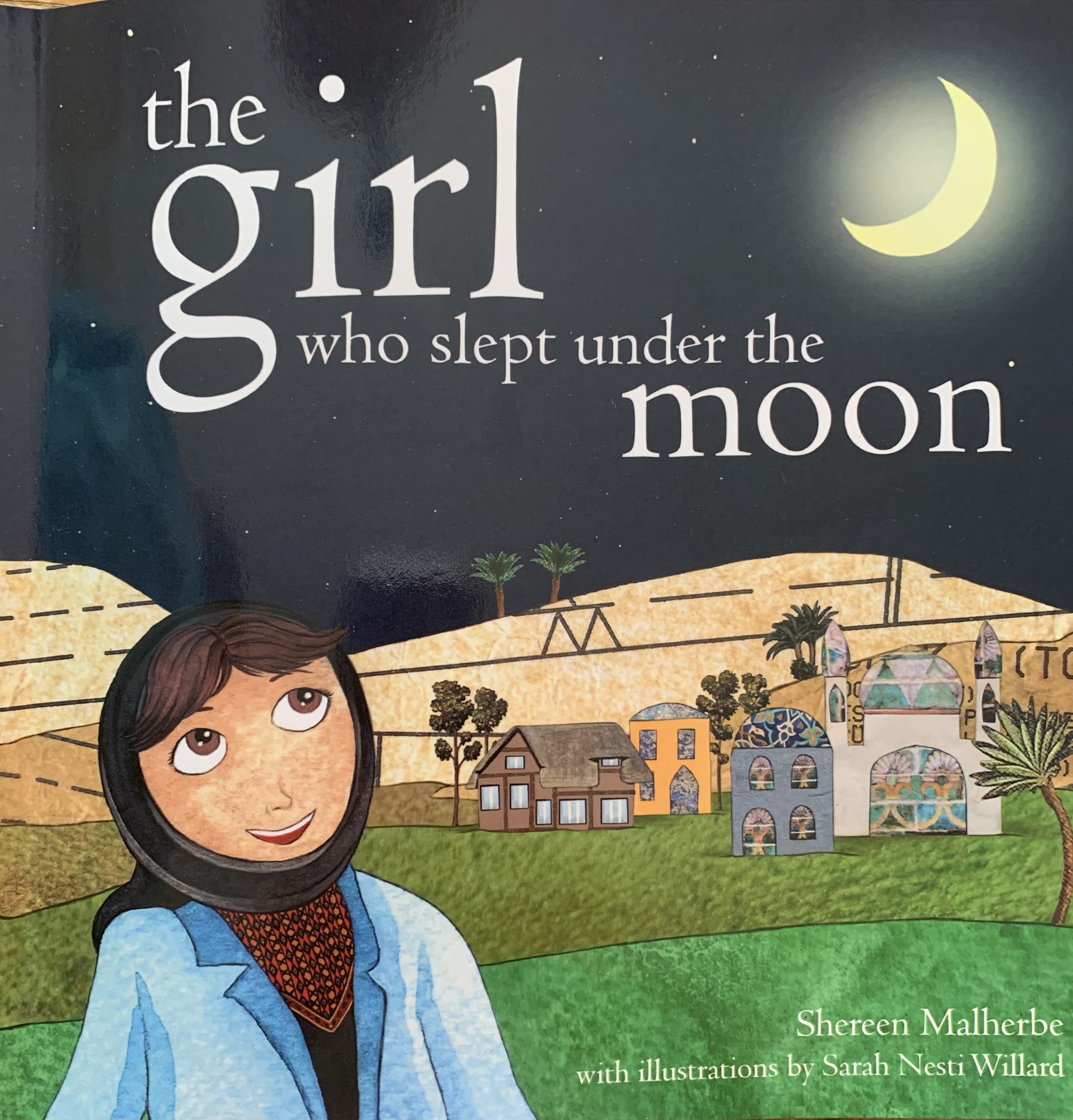
I was really surprised by the number of gaps in this 46 page story that is so adorably illustrated and seemingly planned out. I thought perhaps I was being overly critical, so as always I tested it on my kids, and they too were confused by the main character’s rational and choice of words, the holes in the narrative, and the inconsistency of the characters. The book is wordy, so conciseness cannot be the reason for the holes, and it is published by a publishing company, so I would assume it has been proofed. Really the point of stories connecting us and giving us comfort when we need it, is sadly lost. I had hoped to love this fictional story of a Palestinian girl using prayer to give her comfort in her new home, but alas it seemed to be trying to weave in too much, and as a result the story isn’t fabulous for me unfortunately.

img_8038

Noor is new at school and stands out. She finds comfort in remembering the things that are the same. 1-Allah could still see and hear her. 2- The Angels were still by her side, and 3-She still slept under the same moon. She also wears clothes that remind her of home and provide an unspoken clue as to where home is for her.

img_8039

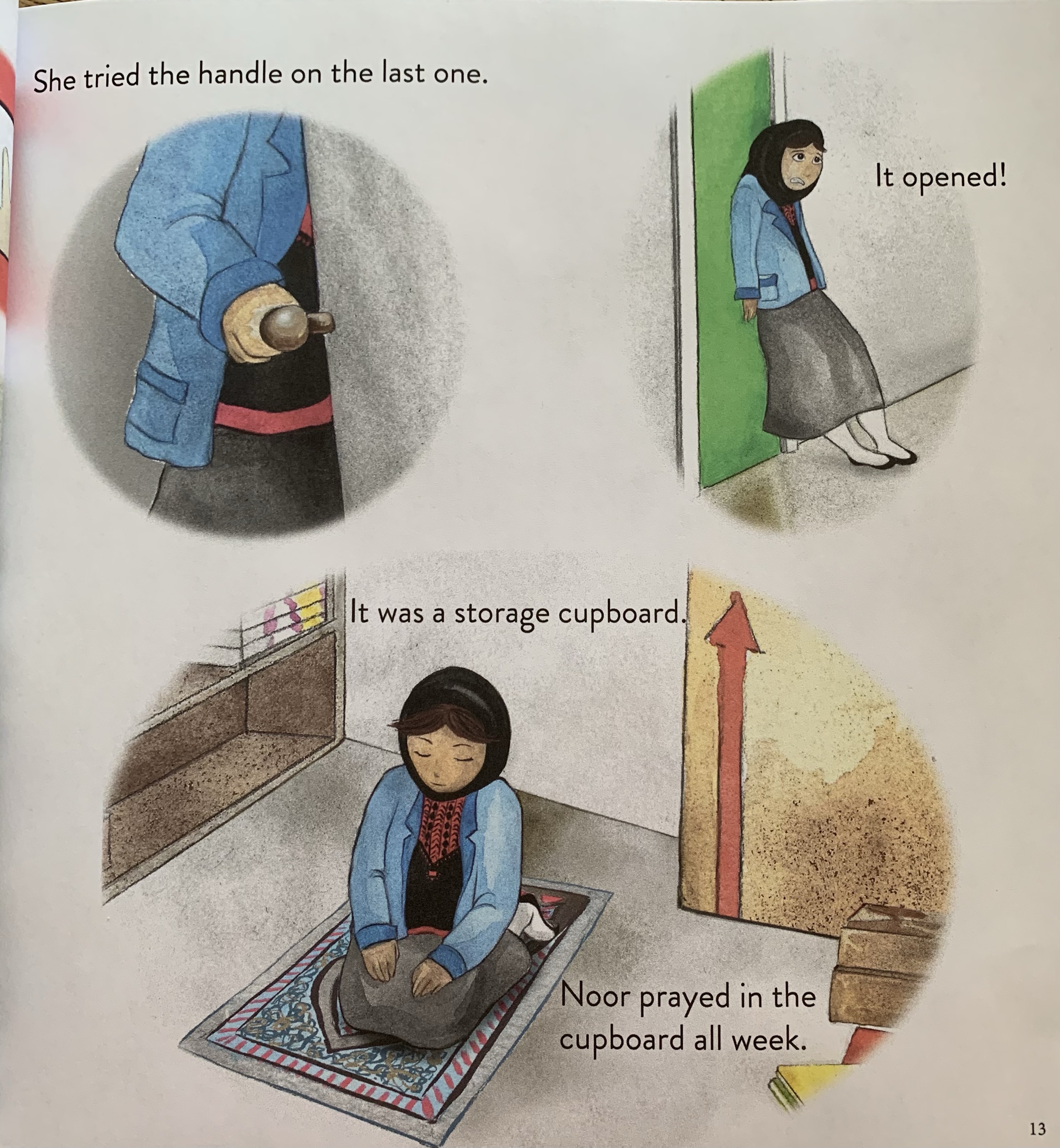
At school Noor has a problem, she needs a place to pray, but at lunch time the kids are not allowed to go inside and the dinner lady guards the door. Noor needs a distraction to sneak in the building and it isn’t clear if she provides the distractions, or just benefits from a baby bird falling out of a nest, a snake being in the grass, and a classmate getting hurt. Either way, when the teacher is occupied, Noor enters the building and finds a closet to pray in.

img_8040

On one such visit to the closet she finds someone already in there, Hannah. Hannah is there because she doesn’t like being on the playground because she is different. Noor never asks why Hannah feels different, so the reader isn’t made aware either. Hannah asks her why she is there and Noor says she comes “to pray because it reminds me of where I’m from.”

img_8041

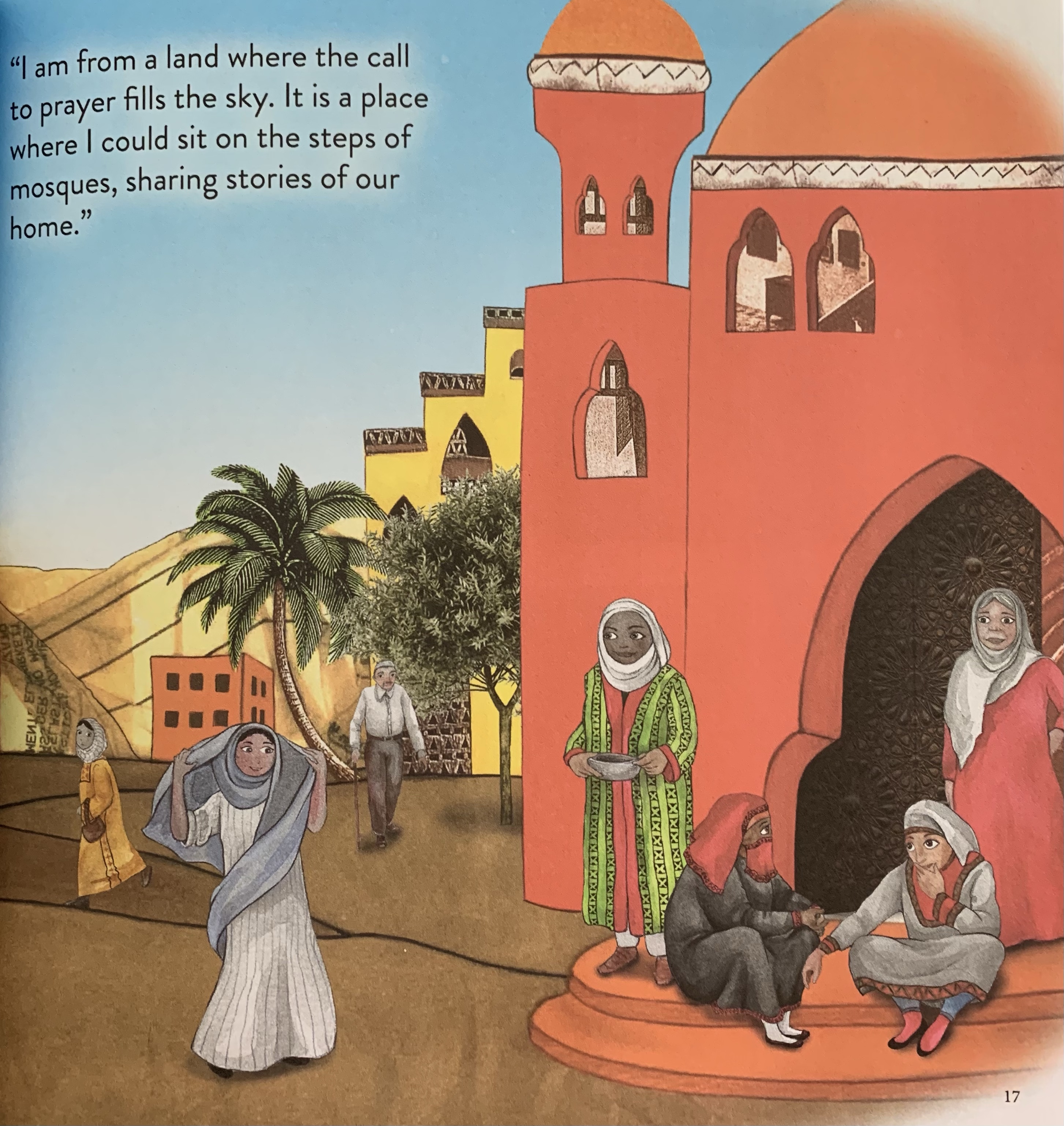
When Hannah asks where she is from, Noor doesn’t just simply answer, she tells her stories about her homeland, the mountains, olive trees, where the athan floats in the air and fisherman return to the shore with their catch. The next day Hannah is there again, and Noor tells her more stories and legends about her culture and lessons of the Prophets. Noor learns that through her stories she feels connected to her old home.

img_8042

Weeks pass, and one day when she sneaks in to the school, she finds the door locked. With no where to go she heads back to the playground and starts to cry that she won’t be able to pray. She then sees Hannah disappear and she follows her in to the drama studio. When she enters she sees sets built that look like the setting of her stories, of her home. Hannah knew she missed home and built her sets to look like Palestine.

img_8043

Other kids miraculously enter, and Noor begins telling them her stories, without praying first. The other kids seem to enjoy her stories and Noor learns that she can pray anywhere while holding on to her three reassuring thoughts.

The illustrations are engaging, although I’m not sure where the prayer rug seems to magically come from for Noor to pray on in the closet the first time. Had the book just been about prayer and finding a way to pray, or just about the stories connecting us to our past I think it would have been more powerful. I’m glad that Noor loves salat and that Hannah is a good friend, but I feel like by trying to do too much, the poignancy of the little things was lost.

And as for my questions: Can’t Noor ask for a place to pray? Can’t she pray outside? How is Hannah making the sets all by herself? Noor says she prays because it reminds her of home, she doesn’t pray for the sake of Allah or because it is required of her? Why did Hanna feel different, and why didn’t Noor bother to ask? It says that she needed to distract the dinner lady, isn’t that dishonest even for a good cause? Did she harm the baby bird so that it would need rescuing? Put the snake in the grass? Hurt the little girl so that she could get by the teacher? How was Hanna getting inside at lunch time? How is the school ok with a kid coming inside to build a whole set with school materials, but can’t let another child inside to pray for less than 5 minutes? And if Noor didn’t feel comfortable asking for a space to pray, clearly Hannah had connections to get permission to create a huge scene, couldn’t she have asked, or helped Noor ask?

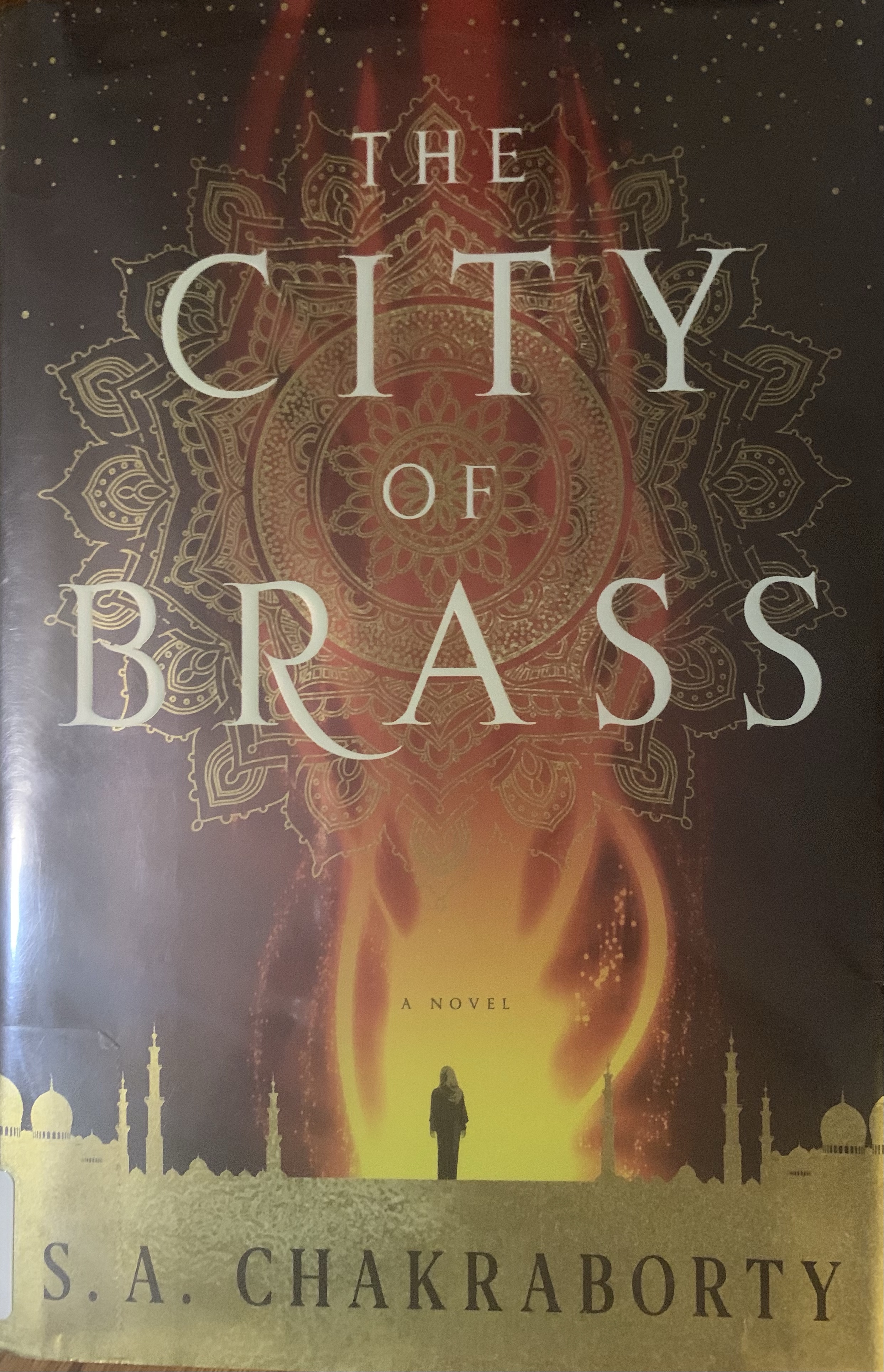
The City of Brass by S.A. Chakraborty

Standard
The City of Brass by S.A. Chakraborty

This series is adult fantasy written by a Muslim author for her ummah and contains Muslim characters. I think the series as a whole is definitely not YA, as the main characters would age out of the target demographic, but I think that book one could qualify. I’ve contacted the author to get her perspective on the matter, and will update this if I hear back. So why am I reviewing it? Because it is so good, and I’ve heard of a lot of people letting/encouraging their teens to read it, and honestly, I did as well. There is complex world building, implied physical interactions, one hinted at gay romance, alcohol, concubines, violence, djinn, ifrits, killing and one kiss/slight make out session. There is also Middle Eastern culture, Islam, and a fiery protagonist that make the 530 pages in the first book fly by. I’m only reviewing the first book, and I think 14 years and up can handle it, I know my 14 year old and I haven’t stopped talking about it, and it has been quite fun to fan girl with her over it.

SYNOPSIS:

Nahri is living in 18th Century Cairo. She is completely alone and always has been. To survive she relies on her healing abilities and her ability to steal, cheat, and con her way to food and shelter. She knows nothing of her past, but is able to pick up any language after hearing a few words. At a performance to con a family needing help healing their daughter, she accidentally summons a djinn, Dara, which in turn awakens a graveyard full of ifrit, and sends Nahri on the run. Not trusting Dara they are travel companions none-the-less as they make their way to Daaevabad, a protected home of the fire beings, and the only place Dara thinks she will be safe. Along the way on the month long journey, Nahri tries to learn about the djinn, called Daeva, and the creatures they are running from. She also learns that she is the last surviving Nahid, healer, and while she may be a shafit, a half blood, she has powers and lineage the kingdom desires. Dara isn’t forthcoming with information, as a result his dark past and incredible powers keep Nahri on edge. She is constantly plotting her escape from the magic carpet carrying them and the future that she doesn’t understand let alone know if she wants.

The book is told from Nahri’s perspective and from Ali’s as well. Ali is the second born son to the king of Daevabad and has been raised away from the palace at the citadel. With a soft spot for the shafit, second class citizens of Daevabad, he gets tangled up in a plot to free child slaves and gets called back to the palace to be watched and tested as his brother’s future Qaid, the top military official that he has been preparing for his entire life. Ali is already an outcast to his family, as a devout Muslim in practice, belief, and actions, unlike his family who identify as Muslim for political unity.

Once Nahri and Dara cross in to Daevabad and the two narratives come together, the politicking, deception, deceit, and historical complexities get intense. The king demands that Ali get to know Nahri so that she can be persuaded to marry the emir, Muntadhir, but Nahri is in love with Dara and struggling to learn how to be a healer in the mythical world. To say that the story gets messy with the djinn tribes, and the manipulation of power and historical atrocities would be a simplification. But the writing is superb, and the world building encompassing. The book doesn’t drag and even after reading all three volumes, you’ll find yourself thrilled to know that the author has some additional points of view online.

WHY I LIKE IT:

The author takes a lot of liberties with Prophet Suleiman’s story, but it is fiction and I don’t think that anyone would be mislead by the information given about him and his control over the djinn. The “Islamic” elements in the book are really just that, elements, they aren’t plot lines, or more than just a layer to the setting and the characters. The history and the cultural richness is made more complete by the foods, clothes, and salat times mentioned, but there is nothing Islamic fiction about the text.

I love the writing. Period. It is engaging and doesn’t lag or feel repetitive. The characters are very fleshed out: no one is good or bad, the entire cast is shades of gray, and their motives and intentions are often debatable. My daughter and I have argued and I don’t think we have tried this hard to convince each other about characters since Harry Potter, and it is so great!

FLAGS:

SPOILERS: Dara and Nahri have chemistry and they kiss and long for each other, but it isn’t the bulk of the story line. Ali starts to fall for Nahri, but he has poor judgement so it is by and large dismissed. Muntadhir is always drinking wine and courting courtesans and is never in his own bed, nothing is detailed, it is said in passing, or implied. It is also hinted that Muntadhir is in love with his best friend, a male, and pretty much everyone knows, and they just look the other way. It does not state anything explicitly about them, but it is hinted at, implied, and mentioned by the other man’s father that the prince has broken his son’s heart numerous times.

Wine is always present, as is stealing, and lying. There is a lot of violence, not overt gore, but occasionally graphic as Nahri is a healer and there is a war simmering in the current time line, and a historical one that wiped about a whole tribe that is discussed throughout.

TOOLS FOR LEADING THE DISCUSSION:

I wouldn’t be able to do this for middle school, but perhaps closer to the end of the school year, I would suggest that the high school book club consider it. There is a ton online for this award winning debut novel, so I’ll just include the author’s website: http://sachakraborty.com

Happy Reading!

Fatima Al-Fihri by Aaliyah Tar Mahomed illustrated by Winda Lee

Standard
Fatima Al-Fihri by Aaliyah Tar Mahomed illustrated by Winda Lee

img_7927

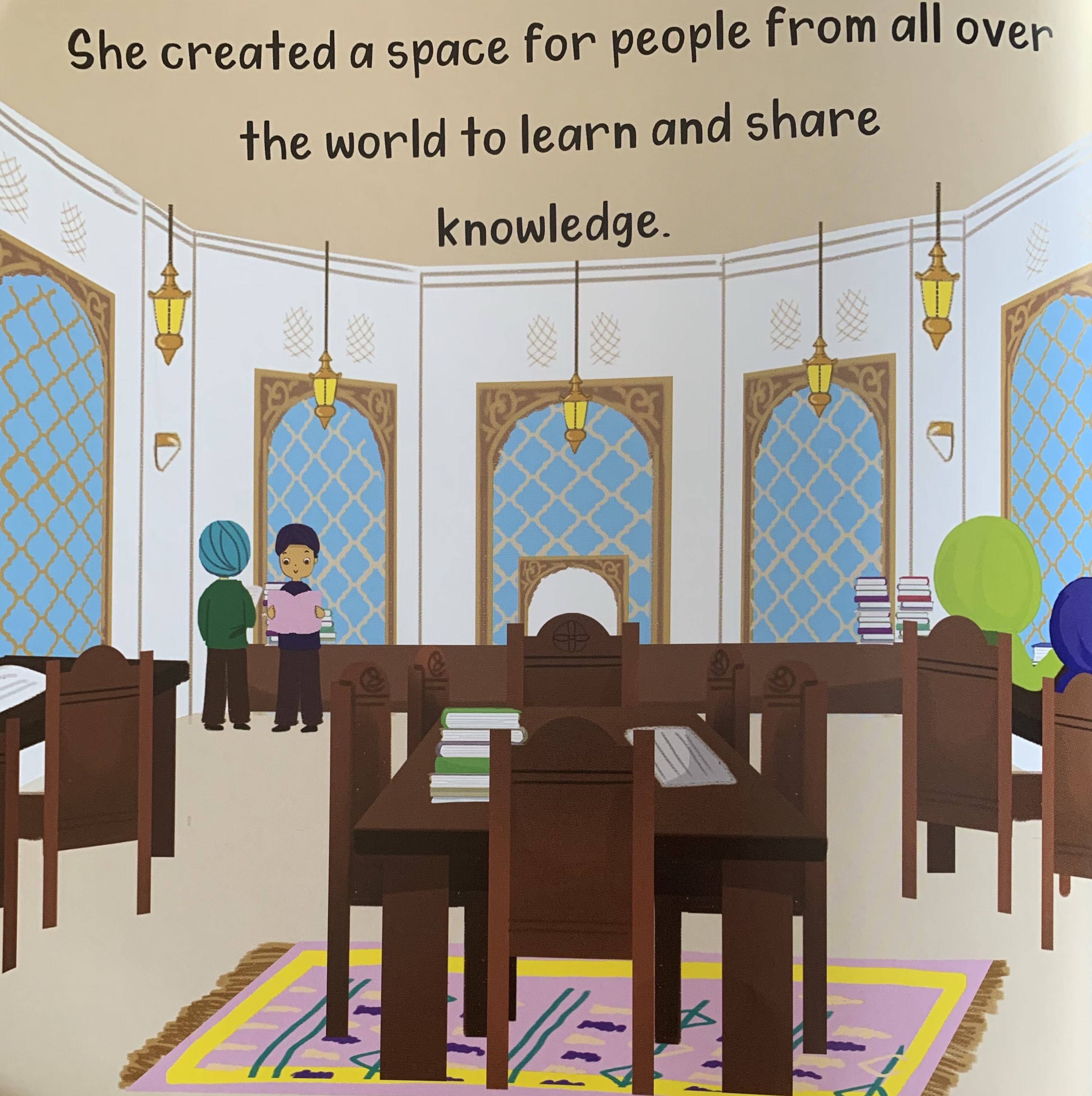
This adorable simple nonfiction highlight of the founder of the world’s first university still existing, The University of Al-Qarawiyyin, is perfect for preschool/kindergarteners and up.  The brightly illustrated, large minimal text passages spread out over 16 glossy pages breathes life in to a remarkable character and celebrates an accomplishment that every one should be familiar with and inspired by, inshaAllah.

img_7928

The story starts by establishing little Fatima’s love of learning.  She learns from books, her family and from the people in her city.  When her family moves from Tunisia to Fez in Morocco, Fatima is excited to learn new things.

img_7929

Every day she goes to the mosque to read and meet new people. Her father supports her, and when he passes away she is left with his wealth.  She decides to use the money to rebuild the mosque.

img_7930

She recalls that ‘iqra’ is not just about gaining knowledge, but is also sharing what you have learned with others.  She purchases the land around the mosque and builds a university.   It is documented as being the first institution to issue educational degrees.

img_7931

I wish the story was slightly more fleshed out with detailing more about her family and her influences, about her overcoming some obstacles and even how long she lived for.  I know the target audience has a short attention span, but a few details even little ones can relate to will connect them to such an important figure and inspire the readers to dream big and make a difference.

img_7932

This book is the first in the WomanKind series.   A new series to tell stories about Muslim women who made history.

img_7933

Unsettled by Reem Faruqi

Standard
Unsettled by Reem Faruqi

img_7503

This book is a great OWN voice, middle grade coming of age book that rings with truth and hope in its poetic lines that sweep you up and keep you cheering.  Over 352 pages the author’s semi-autobiographic story of coming to Peachtree City, Georgia from Karachi, Pakistan beautifully unfolds.  I absolutely loved this book and the way it is told, in verse.  The details, often small, ring with such sincerity that even those that have never moved to a new country, or been to a new school will feel for young Nurah Haqq and be inspired by her success, touched by her hardships, and disappointed in her mistakes.

img_7544

SYNOPSIS:

Nurah’s best day is spent on the beach with her best friend Asna, playing in the warm waves and riding camels.  However it ends up also being her worst day, when she returns home to her father’s news that they are moving to America.  Strong, confident Nurah who spends time with her grandparents, swimming with her older brother Owais, and excelling at math in school is reluctantly leaving it all behind to start anew.

When they arrive in Georgia the family of four settles in a hotel until they find a house.  Everything is different and new, and the transition with no friends and family difficult for the entire family.  The way words are pronounced, the way the air feels and the birds chirp all make Nurah long for home.  When they find a swimming pool at the rec center, things start to slowly change.  Owais was a medal winner in Karachi, and will be one here too, people start admiring him, and Nurah tries to bask in his light.

School starts and math is a relief, but people are white, so white, and a boy reaches out to shake her hand.  She feels betrayed that she has been told the schools in America are better, and lunchtime, with no one to sit by is a huge stress.  She questions her clothing, her appearance, and the weather.

Her and Owais try out for the swim team and make it, and Nurah makes her first friend, Stahr. Stahr lives a few houses down from their new house and when Nurah’s mom has a miscarriage, it is Stahr’s mom who comes to show support and give comfort.  The support is reciprocated when Stahr and her mom need help escaping from her abusive father.

As Nurah works to win swimming races and be more like her brother, she works to find her voice and use it to defend others and herself.  A terrorist attack committed by someone claiming to be Muslim sets the family up to be targets.  In a moment of jealousy, Nurah doesn’t intervene to help her brother and the consequences are huge.

img_7502

WHY I LIKE IT:

I love the details and how they are articulated.  I related to so much of Nurah’s feeling and impressions, that I reached out to the author and found her to be just as endearing as her character.  The feeling of being different when swimming because of your decision to be modest, the role of food to comfort you and make you feel at home, the older brother that you so desperately want to resemble and be like: All of it hit close to home for me.  I love how religion and culture are so much a part of the story and about the character’s identity, not to be made preachy, just to understand her and her experiences.  She goes to the masjid, she prays, she starts to wear hijab. I love how she finds her voice and defends those that can’t, but that her path is not easy.  She makes mistakes and she has to challenge herself to do what is right.  The backdrop is always trying to “settle” in a new place, but the story has it’s own plot points that are interesting and simply made more impactful by Nurah’s unique perspective.

There are lots of little climaxes and victories for Nurah that show her to be well-rounded and relatable.  You cheer for her early on and enjoy the journey.  The only slight hiccup I felt was the name confusion of her Nana and Nani (Nana), it is explained, but it was a little rocky for me, it might be based on a real thing in her family, but once that is resolved, the book flows beautifully and smoothly.

img_7545

FLAGS:

Nothing a 3rd/4th grader would find alarming, but none-the-less:

Crushes: Nurah has a crush on a boy at school when he shakes her hand and picks her for a lab partner, but she moves on from him while still maintaining a crush on her brother’s friend Junaid.  Nothing happens, she just thinks they are cute.

Miscarriage: Her mother has a miscarriage and it details a blighted ovum and the mental strain on the mom and family in the aftermath.

Abuse: Stahr’s father is abusive

Hate: There are bullies, discrimination, physical violence.

TOOLS FOR LEADING THE DISCUSSION:

The book is a little below level for my middle school book club, but I think it it was on a bookshelf and a middle schooler picked it up, they wouldn’t set it down until they were done reading it.

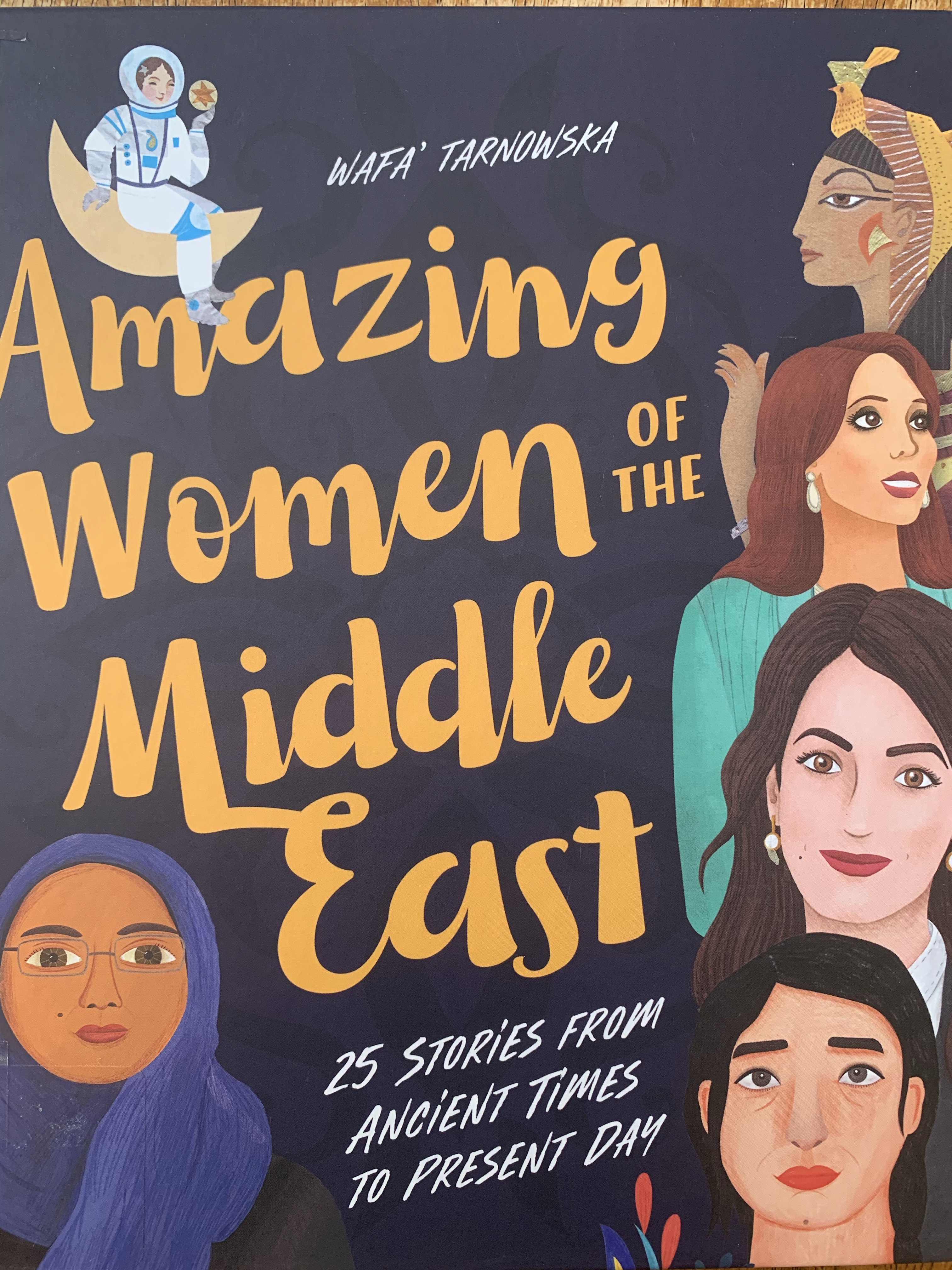
Amazing Women of the Middle East: 25 Stories from Ancient Times to Present Day by Wafa’ Tarnowska

Standard
Amazing Women of the Middle East: 25 Stories from Ancient Times to Present Day by Wafa’ Tarnowska

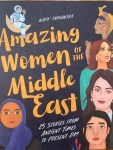
img_7464A nonfiction picture book for teens that features amazing women from ancient times to the present day.  Many of the women featured are Muslim and each entry receives a teasing summation page with a full page portrait from one of five international artists before a two page, more in-depth biography is presented.  The 112 pages feature an introduction, and a map to start the book off, and acknowledgements and a glossary at the end.  There are large time gaps that I wish would have been commented on, the geographical pool includes India which surprised me, and in one of the entries the way hijab is discussed seemed judgmental to me, but other than that the stories are absolutely remarkable.  There are amazing women in every culture and throughout all time periods, but to see one that highlights a region that is stereotypically oppressive to women is a sight for sore eyes.  I learned so much and marveled at the intellect, bravery and determination shown from being rulers of empires to intellectuals to scientists and artists everything in between.

The book starts with Nefertiti born in 1370 BCE and concludes with Zahra Lari, a hijab wearing ice skater from the United Arab Emirates born in 1995.  There are “celebrities” such as Amal Clooney, Fairuz, Cleopatra, Sheherazade and many that might not be as well known.

I particularly enjoyed learning about Zenobia the 3rd century warrior queen who conquered a third of the Roman empire in just five years.  Sufi mystic and poet Rabi’a al Adawiyya and her devotion to Allah swt.  Eqyptian Shajarat al-Durr who was nicknamed Queen of the Muslims in the 13th century.  And Hurrem Sultan from the Ottoman Empire.

Not every one featured was a ruler or married to one, and not are so far in the past, which in many ways gives the collection it’s charm.  Somayya Jabarti was the first female editor-in-chief in Saudi Arabia in 2014 and  Maha al Balushi is the first Omani woman to fly professionally for her country’s airline in 2010, examples of two women presented that cracked the glass ceiling by following their own dreams.

It is great to learn about the strength of the women from the past and see how to add to the legacy.  The book is a great reference, as well as a source of inspiration for people of all backgrounds to enjoy and appreciate.  I found the book at my local public library in the YA/Teen nonfiction women section.

Punching the Air by Ibi Zoboi and Yusef Salaam

Standard
Punching the Air by Ibi Zoboi and Yusef Salaam

img_7268

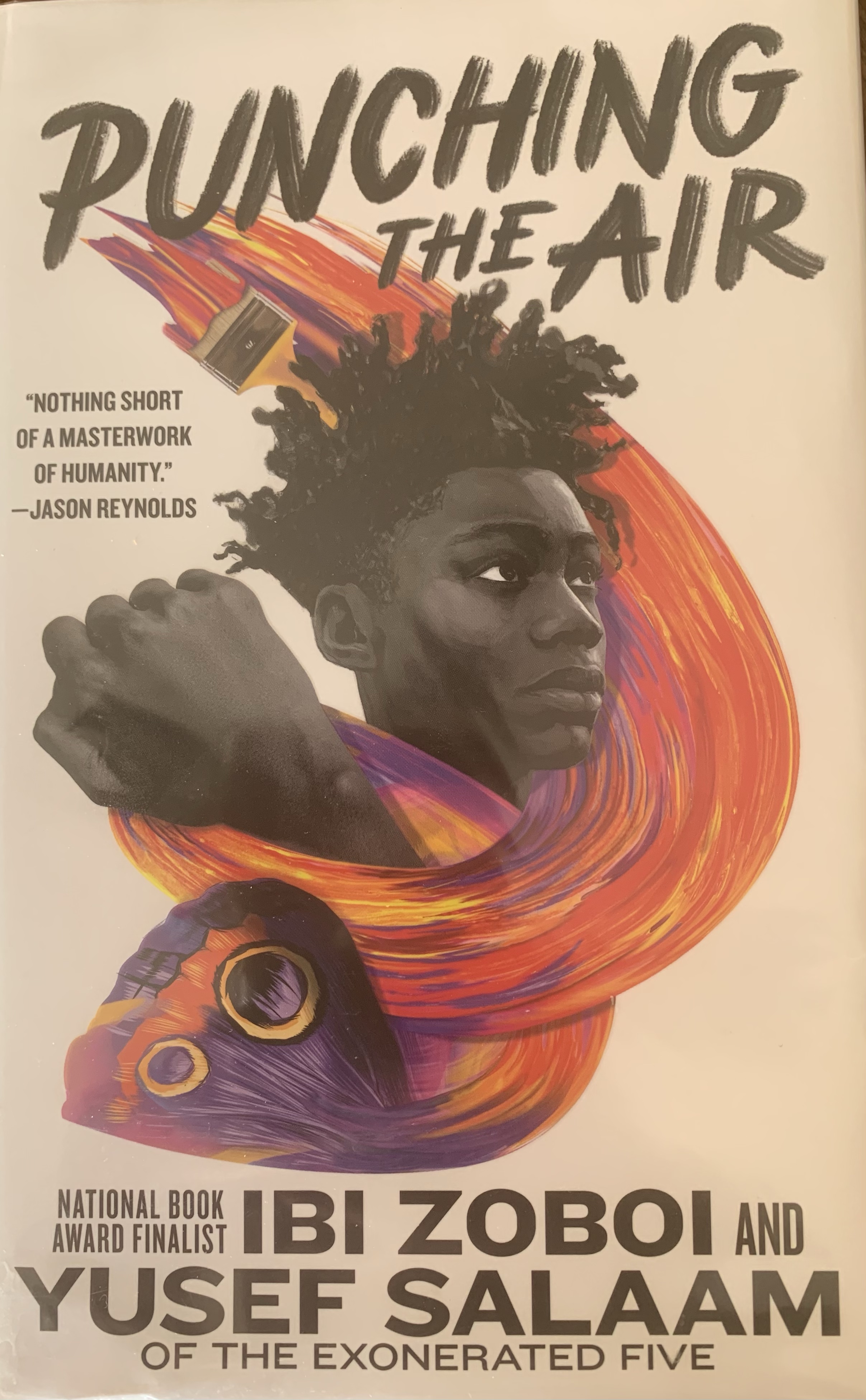
Four hundred pages of painfully powerful verse that you will have to force yourself to slow down and not rush through.  Yes, you want to know what happens to the young, black, muslim teen writing his truth, but to read it too quickly will deprive you of feeling and contemplating and absorbing the message that if, you, like me are a white (ish) person of privilege, need to surround yourself regularly with to understand.  The OWN voice narrative is co-written by one of the Central Park Exonerated Five and should be required reading for everyone 14 and up.

img_7263

SYNOPSIS:

Amal Shahid is 16 years old, and maintains he is being wrongfully accused of a crime that has left a white boy unconscious.  He acknowledges he threw the first punch, but is adamant that he didn’t throw the last.   From his trial to his incarceration in a juvenile detention facility, the narrative pushes forward as he adapts to confinement with flash backs to pivotal moments in his life.  He is a gifted artist and writer and his creativity and ability to express himself is what will hopefully provide him a way to survive.

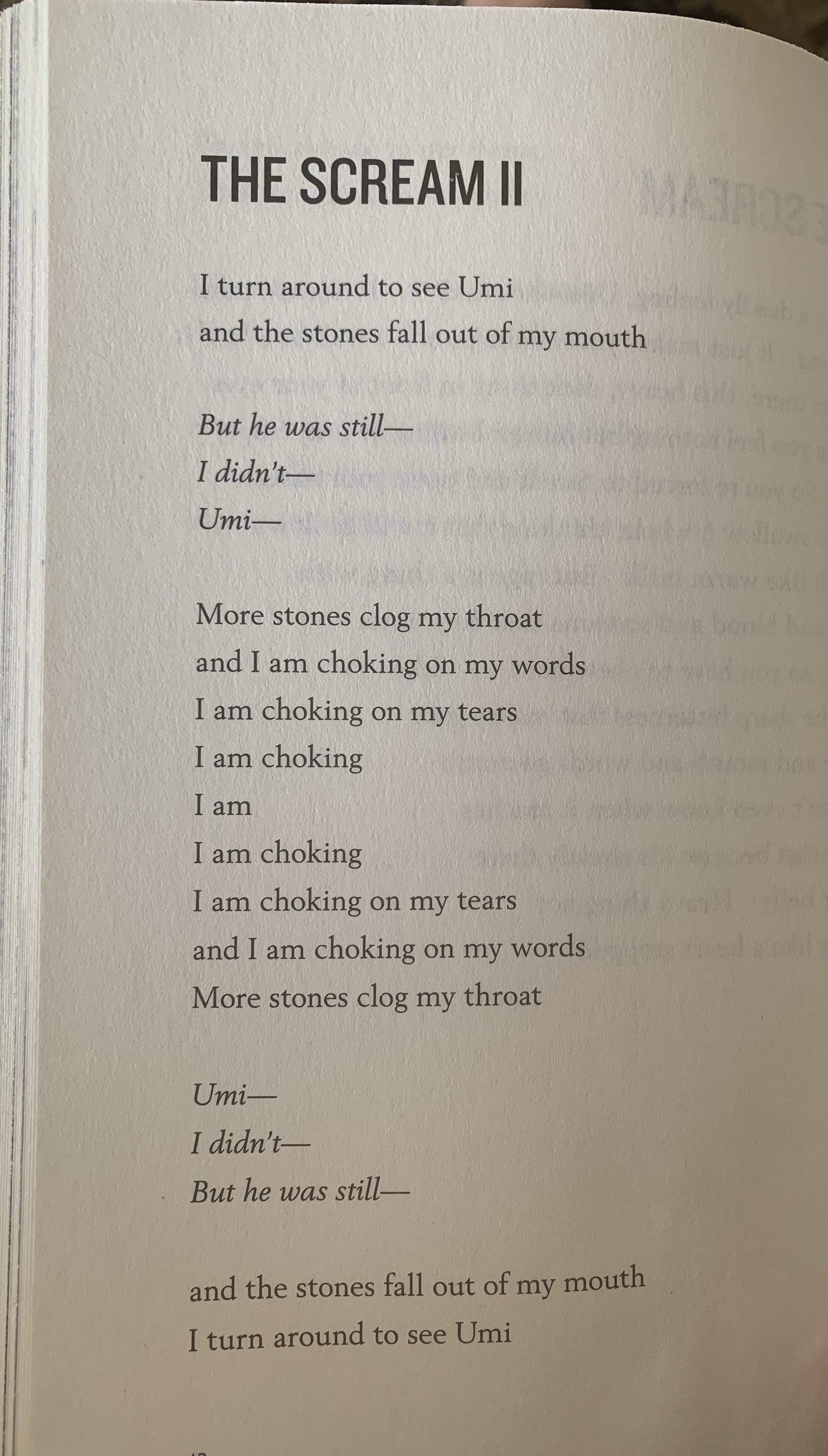
I know I’m leaving this vague, because truly I cannot do it justice.  I started taking pictures of powerful sections, and when I found myself taking pictures of nearly every page, I realized that the book is something to be experienced in its entirety and will include just a few internal pages to tempt you.


WHY I LIKE IT:

The book is impactful in that it claims only to share the protagonist’s truth, it doesn’t get off tangent from that, but allows for the reader to add to the narrative their own understanding to make it personal and resonate most profoundly.  His situation involves so many injustices plagued upon him only because of his skin color, and a system that is designed to keep racism alive and powerful.  He was at the wrong place at the wrong time perhaps, but while the book is heavy, hope is ever present.  I’d like to believe it is because of those that refuse to give up on Amal. I was swept away by the power of a mother’s love.  Truly, what strength for a young man in Amal’s situation to have the world betray him so often in his young life, to find unflinching love, support, belief, and determination in his mother.  

I love that his mother is a practicing Muslim, his grandmother attends church, and he loves them both and values their spirituality.  Allah, the Quran, and Islam are mentioned regularly.  It never is preachy, or gives much doctrine, but it is present, and is a tangible part of how Amal sees the world.

img_7266

FLAGS:

There is language and violence.  He has a crush on a girl and she writes him letters, nothing obscene.  There is racism, bullying, racial slurs.

img_7261

TOOLS FOR LEADING THE DISCUSSION:

There is so much to discuss in this book, and so many resources online.  I think the book might be too mature for my middle school book club, but I am suggesting it to the high school book club.  This book needs to be read, discussed, breathed in, and experienced.  Plus the author’s real life experiences should be incorporated into the discussion as well as the student’s understanding of how present racism is and how they can use their voices and influence to create real, lasting, change, inshaAllah.

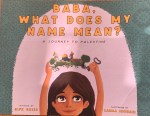
Baba, What Does My Name Mean? A Journey to Palestine by Rifk Ebeid illustrated by Lamaa Jawhari

Standard
Baba, What Does My Name Mean? A Journey to Palestine by Rifk Ebeid illustrated by Lamaa Jawhari

img_7233

This lyrical journey through Palestine’s major cities, shares historical facts, geographical information, cultural richness, and love for a homeland that will inspire and educate all readers. There is a lot of information pressed in to 32 pages and at times the rhyming text, illustrations, and maps are powerful, and at other times overwhelming. The 8.5 x 11 horizontal paperback bound book needs to be bigger to hold all that the pages contain, and hard back to hold up to the details that need to be poured over to be appreciated. The content about the names and places in Palestine is priceless and well done, but I really wanted to love the book a bit more than I ended up feeling for it. I think trying to make it all rhyme was just a bit too much for my liking, but I would buy this book again in a heartbeat to share with my children. Even though we are not Palestinian, I think all Muslims have a piece of Palestine in our hearts and feel a deep need to celebrate the culture, fight for their freedom, and demand a quality of life that they are brutally being denied by their oppressors.

img_7234

The book starts out at bedtime with a little girl, Saamideh asking her baba what her name means. He explains to her that it means “one who is patient, persistent and one who perseveres.” She is named this because she is Palestinian, he explains and then he shows her the key to their ancestral home in Palestine. He asks her to close her eyes and imagine a white dove, named Salam, taking her on tonight’s journey.

img_7235

Salam and Samamidah prepare to journey across Palestine’s mountains, hills, deserts, and plains. They start in Areeha, one of the oldest cities in the world, and one one of the lowest points on Earth.

img_7236

They journey next to Al-Quds, the capital. They see the old city, Al-Aqsa, and more, before heading off to Nablus, Yafa, Haifa and the Akka. Learning about the cities, the food, and the history of each.

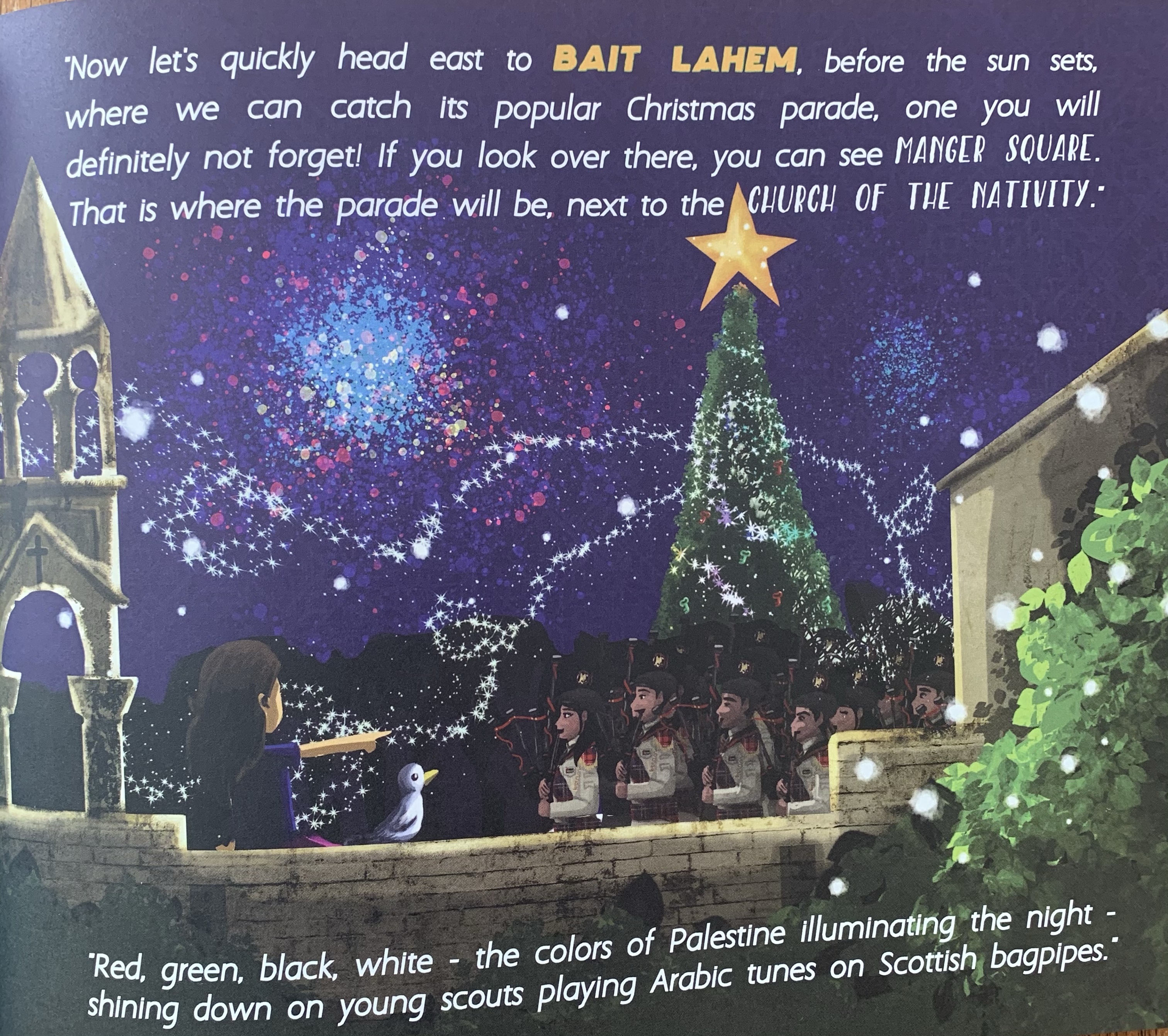
They learn about the dabkah, and the weaving in Gaza and head to Bait Lahem too. They learn about glass blowing in Al-Khalil at the Ibrabhimi Mosque, and finally they conclude their journey with the little girl dreaming of flying around the world to use her key and open people’s hearts and minds.

img_7239

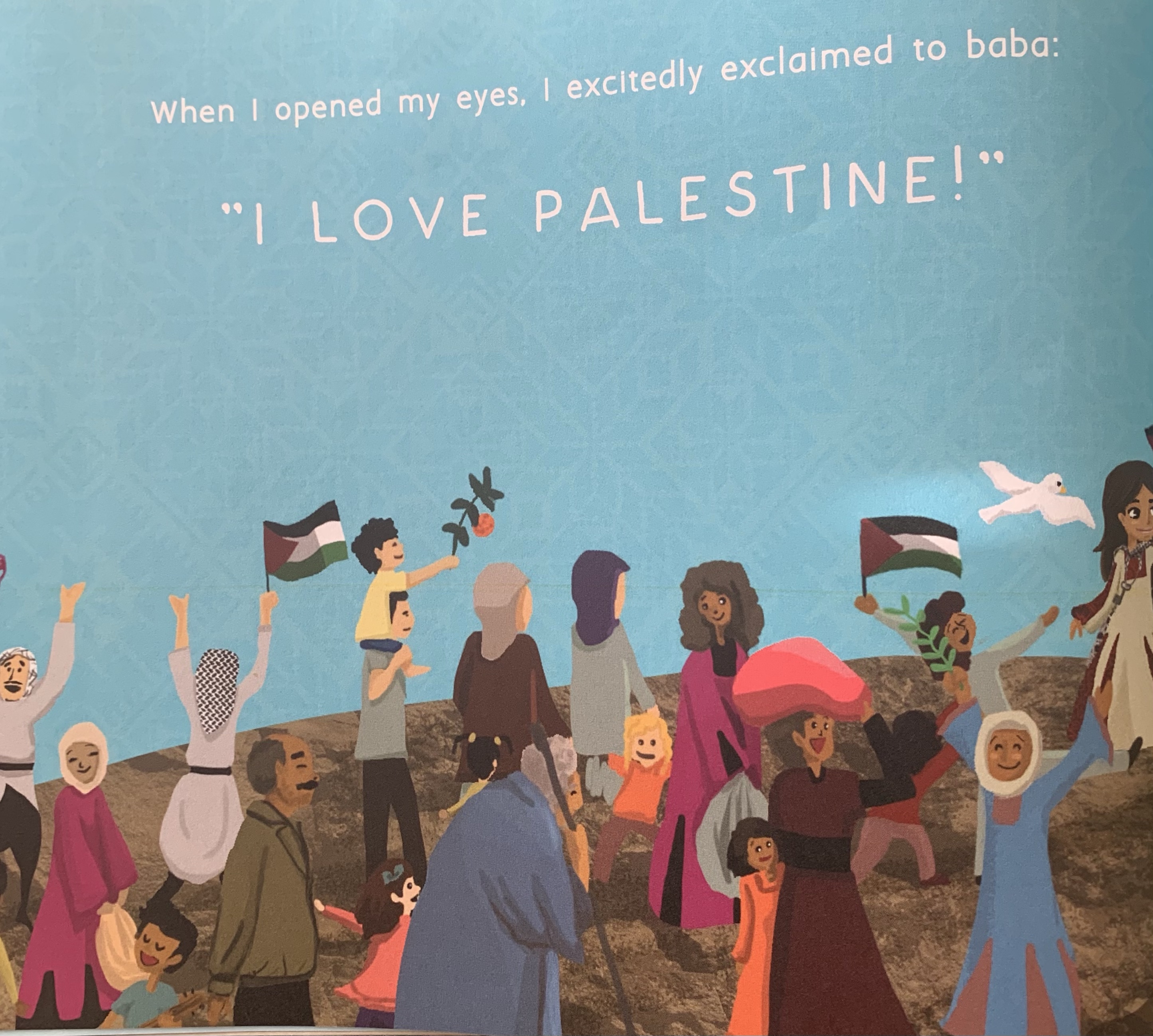
She proudly exclaims her love of Palestine and her and her baba pray that one day they will be able to return. Saamidah then asks her baba why they are refugees, and he promises to save that conversation for tomorrow’s beditme story.

img_7240

The book concludes with a list of the city names in Arabic, trasliterated in English, and then the English names. It then has discussion questions at the end.

The book is not outwardly political, nor critical. It is a celebration of a people, a culture, and land. Happy Reading!