Category Archives: Muslim Bookstagram Awards

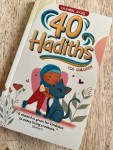
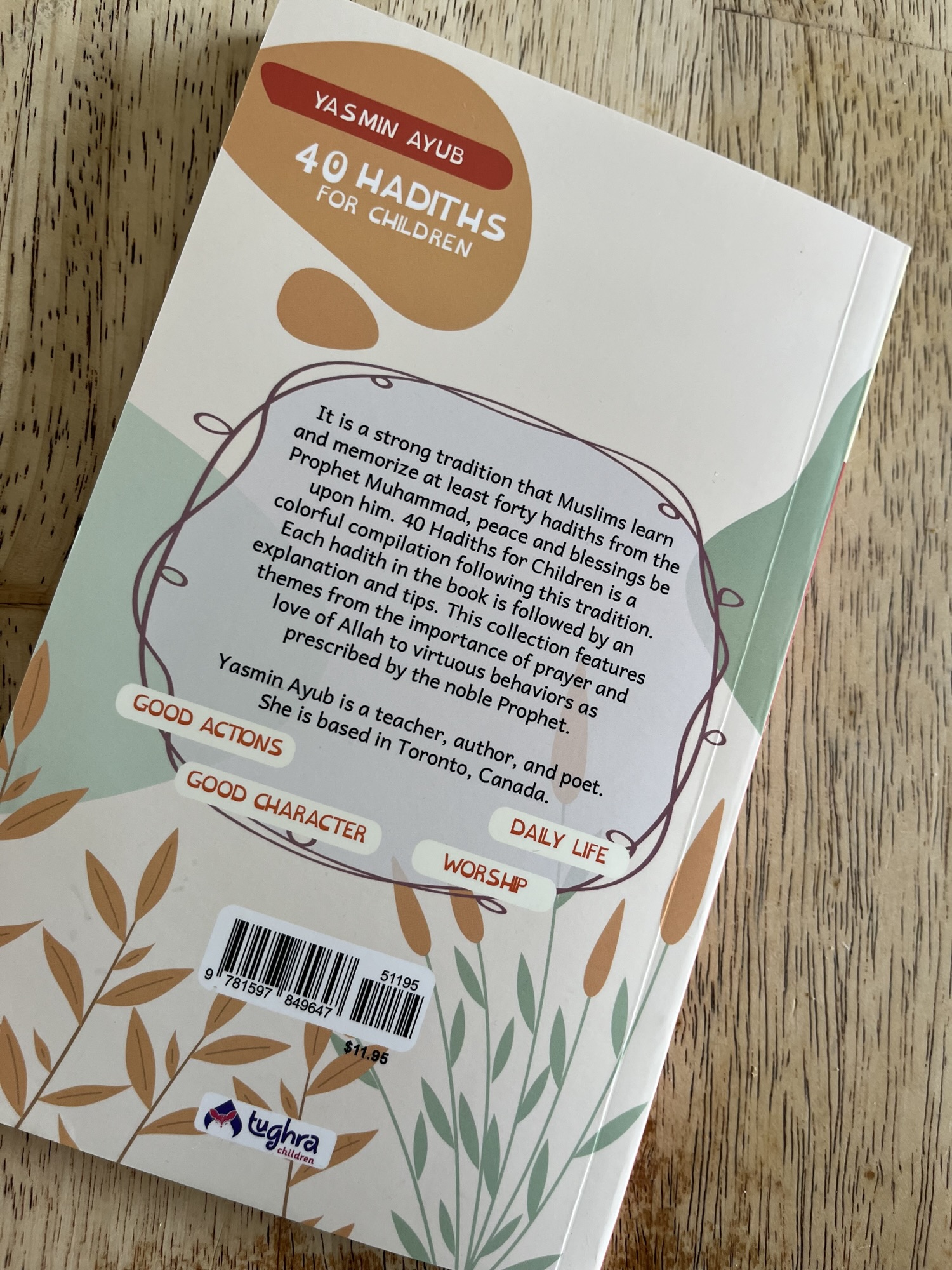
40 Hadiths for Children by Yasmin Ayub illustrated Sabahat Hareem

Standard
40 Hadiths for Children by Yasmin Ayub illustrated Sabahat Hareem

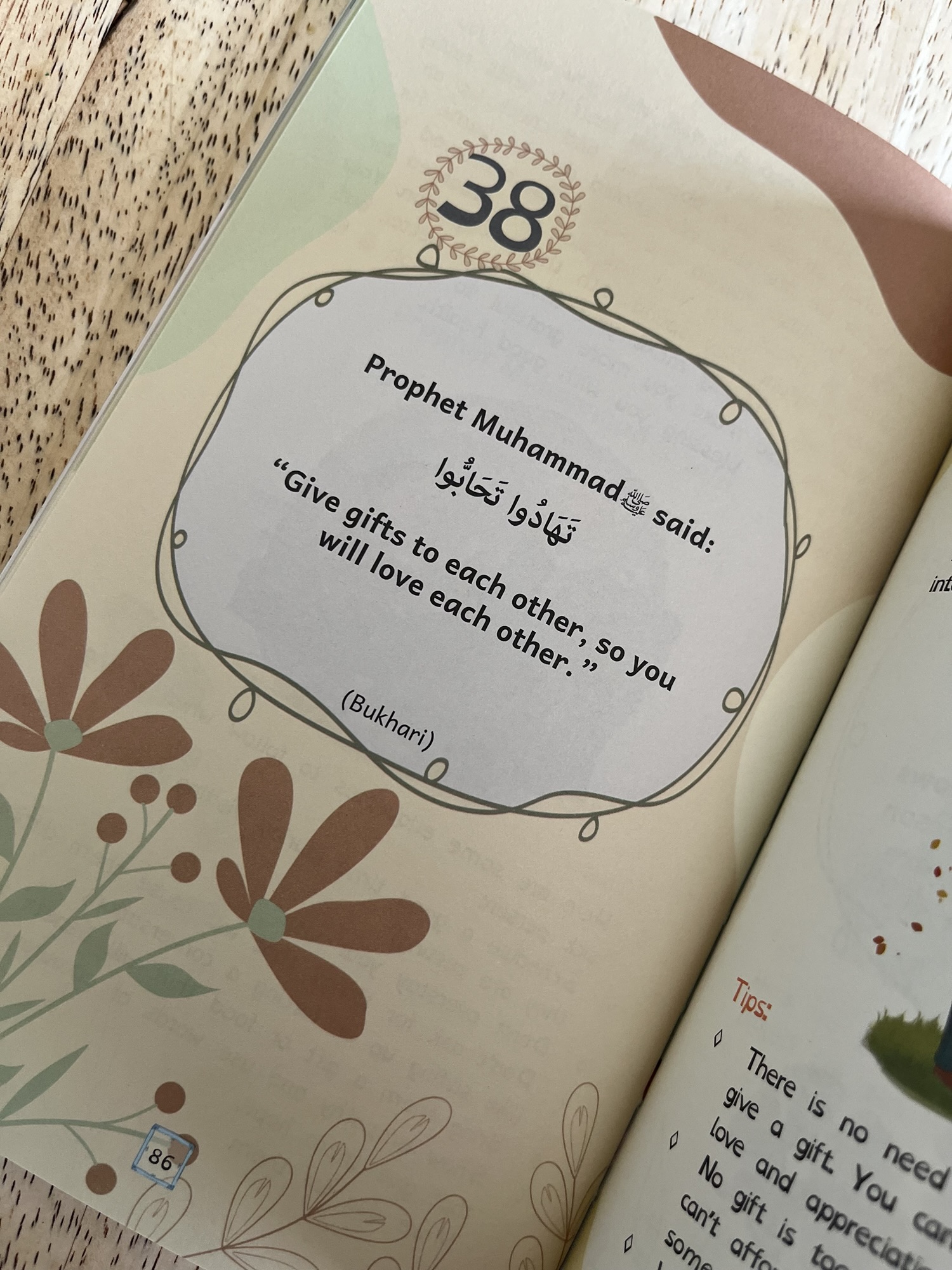
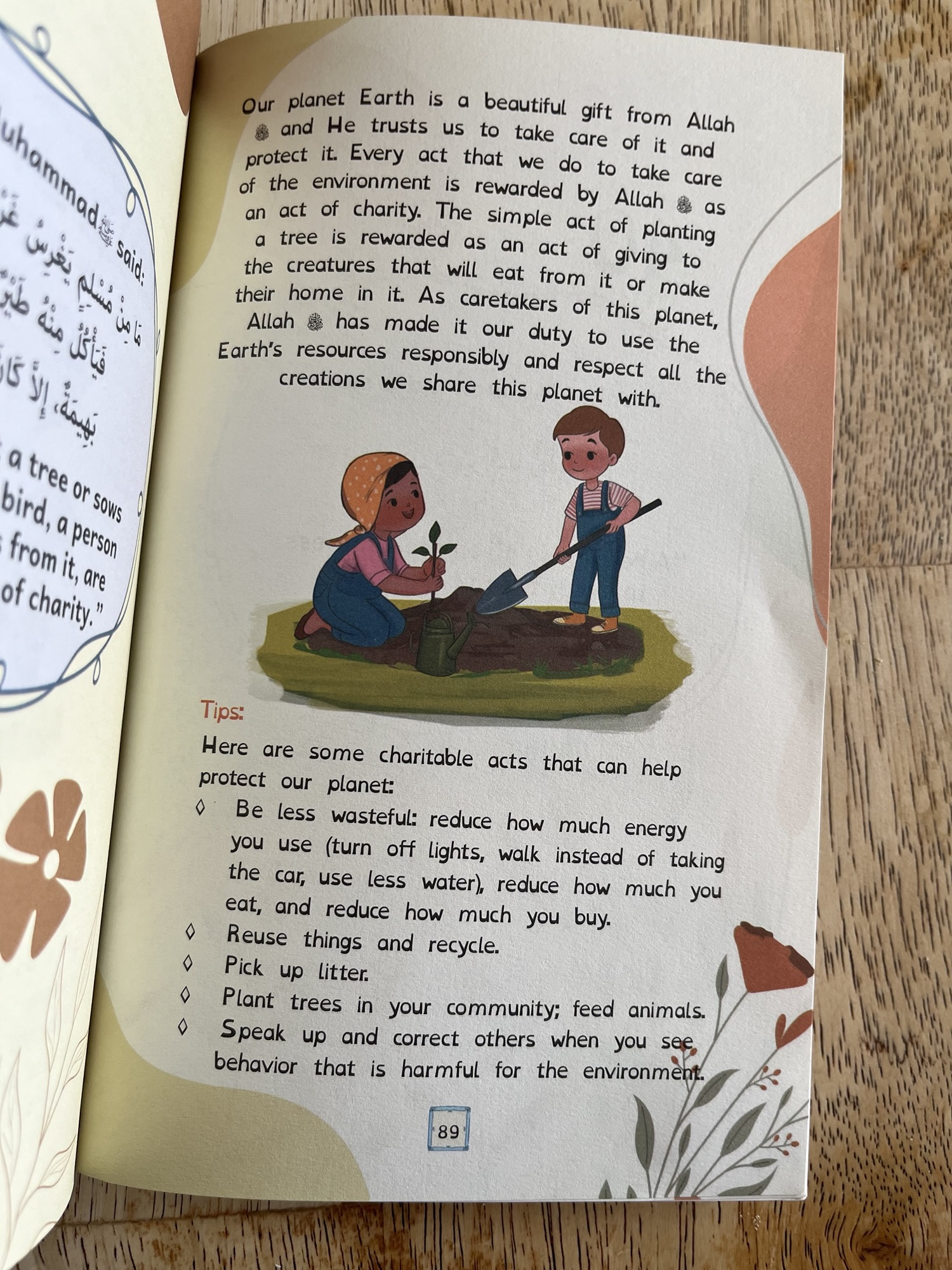
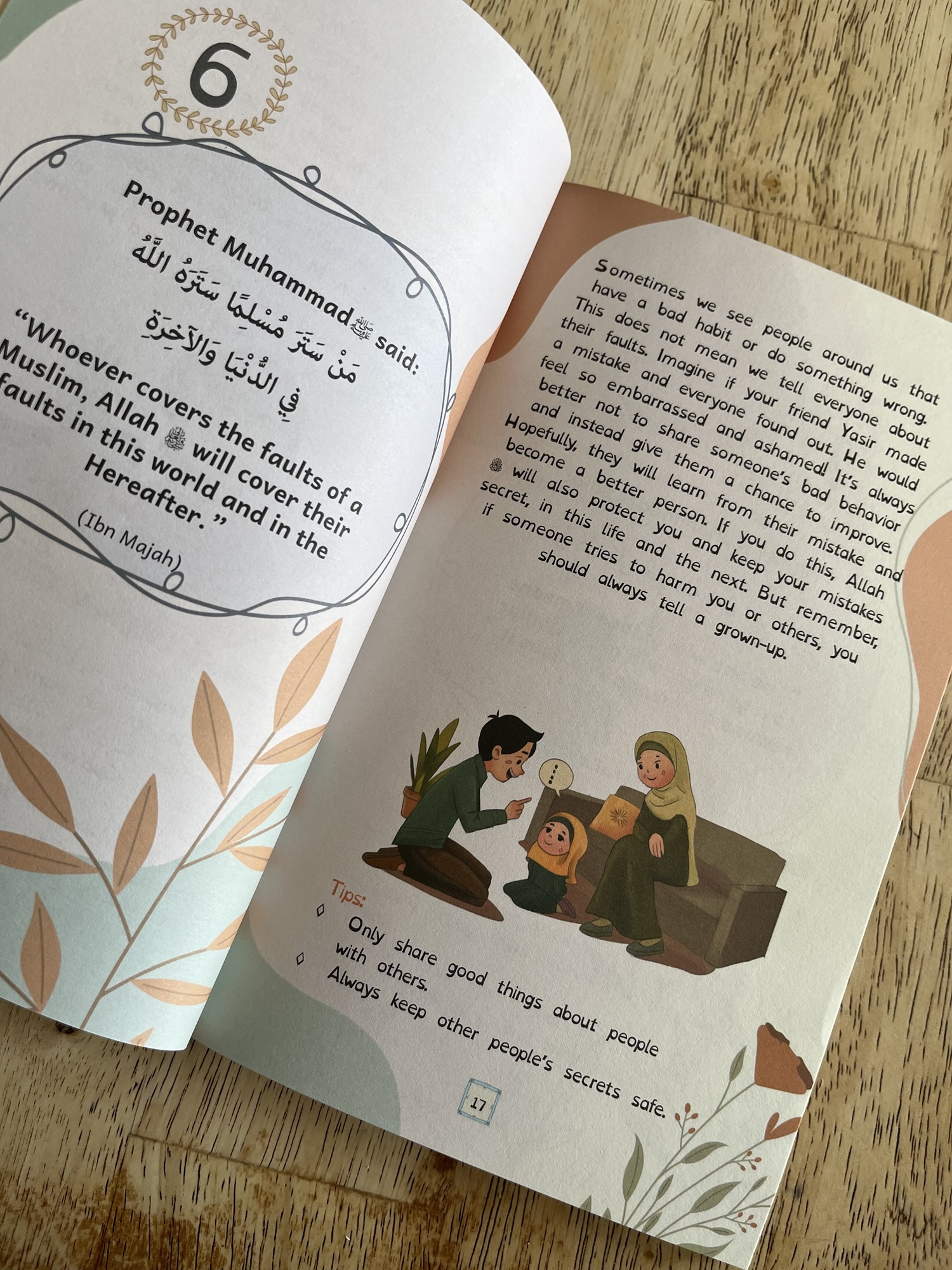
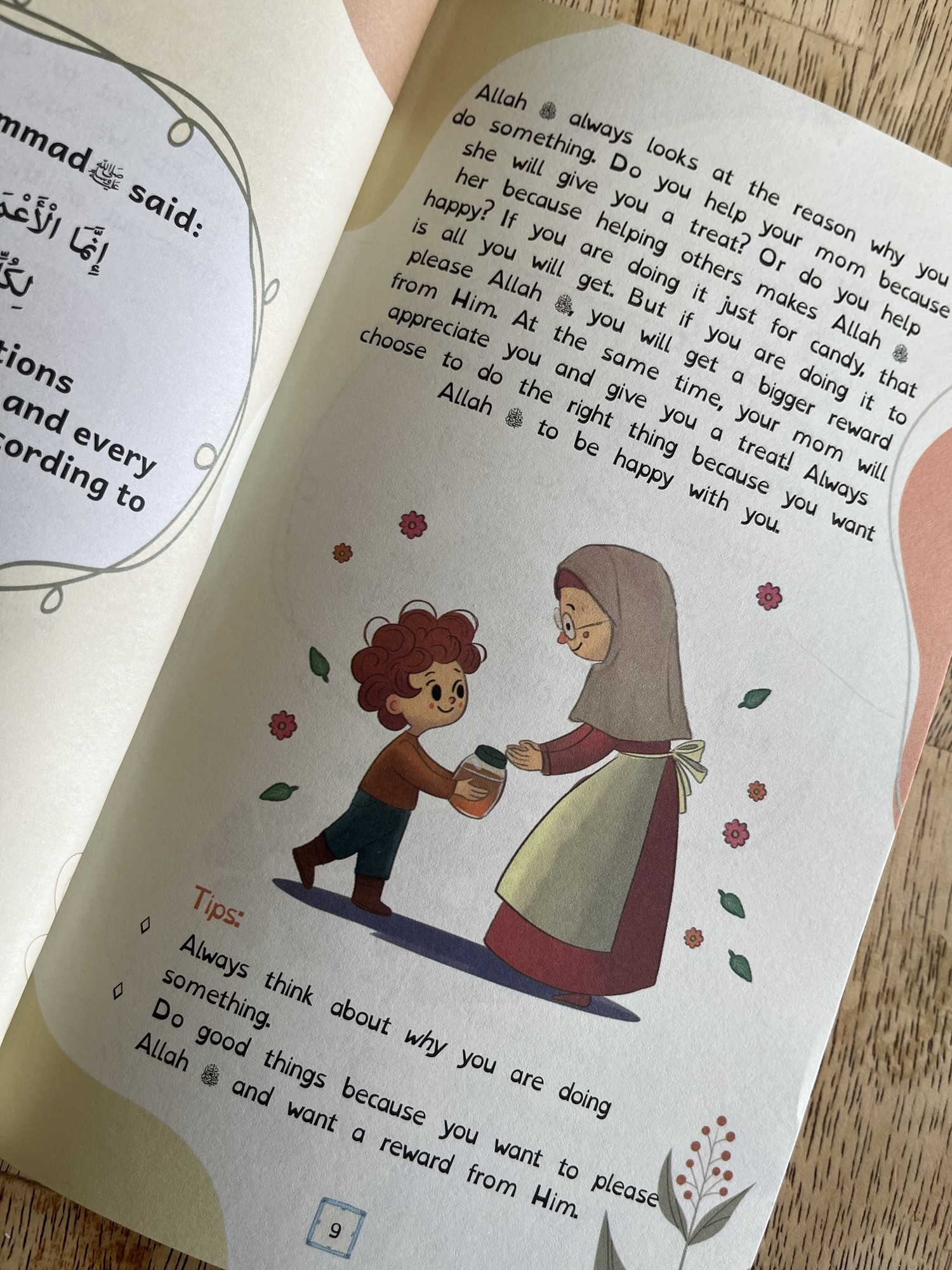
My first thought when I received this book is that it is tiny and will get lost on the shelf, but the prodding of a friend encouraged me to give it a chance, and subhanAllah, it is a delightfully well done book that I now nightly read with my kids, reread myself, and have floating around so that my teenagers also thumb through the contents within.  Divided into four sections: Good Actions, Good Character, Worship, and Daily Life, each two page spread has an attributed hadith in Arabic with English translation opposite a page giving some relatable context, scenarios and further explanation, along with tips to put the hadith into practice.  The sweet illustrations break up the text, making it enticing to read and easy to consume.  The writing is on level for elementary, but not condescending for older readers, and the organization makes the book easy to spend time with in a variety of settings at home, school, or at masjid activities.
I particularly enjoy that the messaging is on level for today’s children in an appropriate and relatable tone.  For example, the page encouraging the covering of faults makes it clear that if someone tries to harm you or others, you should tell and NOT cover that, which is so important.  That the author is a teacher shines through throughout as little tidbits such as that allow the book to be shared independently, and don’t require that an adult provide the context and discussion for the hadith included.  I find that when I read the pages as written, my children speak after, and I get to listen. They don’t seem to have any further questions, but rather want to share what they have done or can be better at, which speaks to a book well done, alhumdulillah.
As for the “tips,” they are a mix of more generic, but on point, and some are very specific such as the visiting the sick allowing the child to immediately put into action certain behaviors, and allowing others to be regularly worked at and contemplated.
Shining Hearts: Sahabah Stories for Kids by Marium Uqaili illustrated by Mirha Asim

Standard
Shining Hearts: Sahabah Stories for Kids by Marium Uqaili illustrated by Mirha Asim

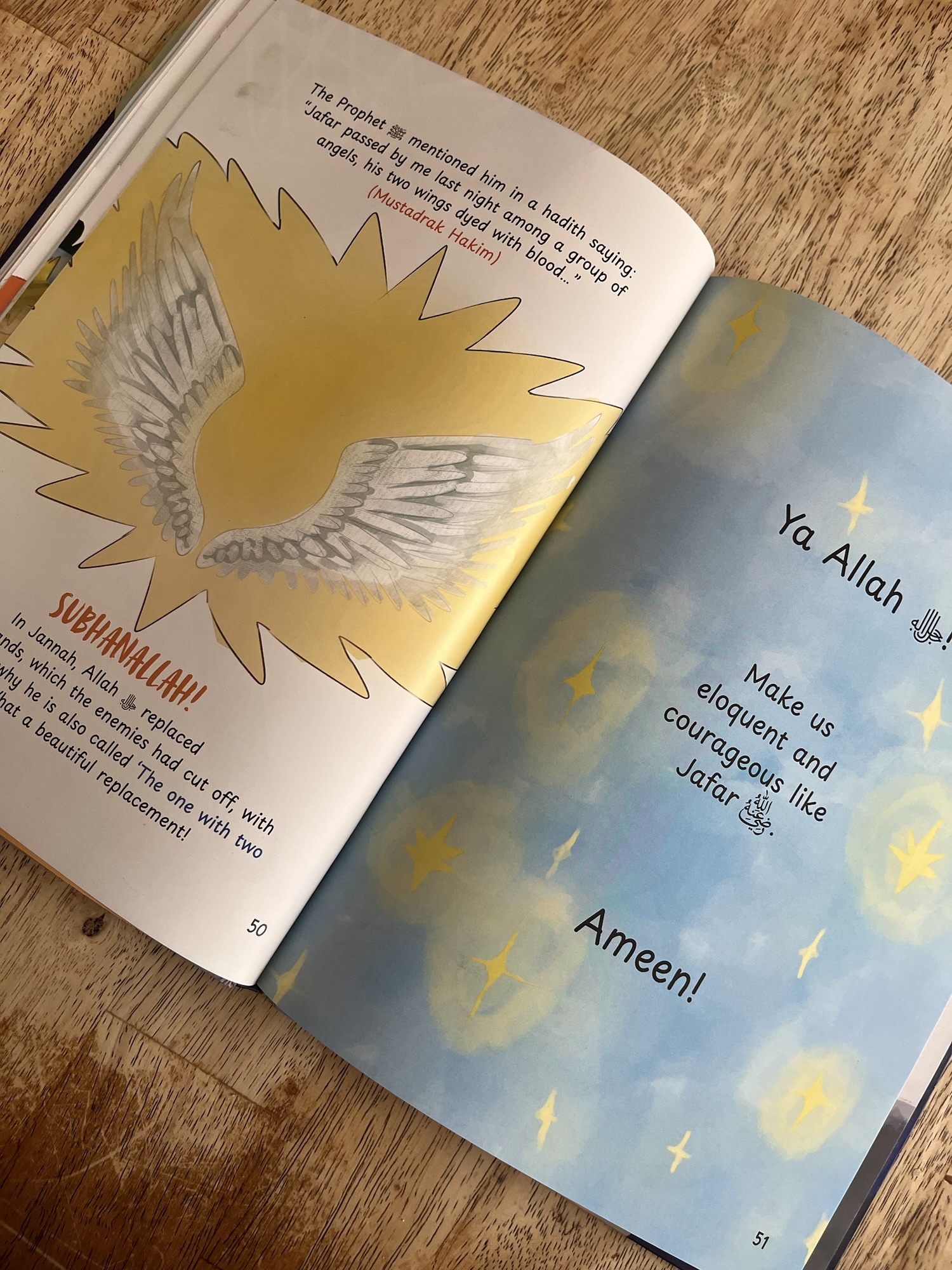
This book contains ten Sahabah stories, five males and five females, conveyed over 121 large 9×12 pages in an easy engaging manner for elementary aged children.  The stories are told one at a time, with simple illustrations, easy to read font, and pullouts featuring engaging blurbs that increase understanding, connection, or challenge the reader to think about something further.  The conversational tone and breaking of the fourth wall helps keep the readers interested while focusing on engaging bits and not a Sahabah’s entire biography.  Inclusion of hadith and ayats and seeing that a named Shaykh has written the forward really makes this book a great one to have in one’s home to read at story time, and to keep on the shelf as a resource. 

The Sahabahs included are: Mus’ab Bin Umair, Salmaan Al-Faarisiy, Abu Dharr Al-Ghifaariy, Jafar Bin Abi Talib, Bilal Ibn Rabaah, Sumayyah Bint Khayyat, Safiyyah Bint Abdil Muttalib, Asma Bint Abi Bakr, Umm Ayman (Baraka Bint Tha’laba) Lubabah Bint Al-Harith, may Allah swt be pleased with all of them.  The first page of each section has the Sahabahs name and one line description before the story begins.  Each section concludes with a dua to Allah swt to make us like the Sahabah we have just learned about in a specific way.  The pages about the Sahabah contain what they are most known for, some attributes about them, and function as a snapshot for young children to grow familiar with these “super heroes” and how we can emulate them in our own lives.

The tone is similar to the staple Migo and Ali Prophet Stories, and proves how desperate we are for Islamic texts that appeal to our children (and how few quality English resources we have).  The pictures aren’t great, but they are sufficient, and I appreciate that there are no faces or depictions. Even an image that could be seen as Sumayyah (rA) has an arrow saying “your grandmother” so there is no confusion. The binding is a bit weak, I was warned before starting, so I read the first few times for review and picture purposes at a table, before handing to my children and reading to my youngest at bedtime.  I’d encourage wrapping the book in contact paper upon receiving it. I appreciate all the letters of approval at the start, and the simple activities at the end, and am impressed overall with the book and how it engaged my children, alhumdulillah.  

Here’s Our Religion by Jenny Molendyk Divleli illustrated by Dasril Iqbal Al Faruqi

Standard
Here’s Our Religion by Jenny Molendyk Divleli illustrated by Dasril Iqbal Al Faruqi

This HUGE 14 page board book is such an engaging, teachable, and shareable book for toddler to early elementary aged children.  Similar to the author’s First Words in the Qur’an I can see this book being shared at story times and in classrooms regularly.  Each two page spread is literally a board book in and of itself.  With headings of: Ummah, Shahadah/Qur’an, Salah, Ramadan, Zaqat/Sadaqa, Hajj, and Prophet Muhammad (saw)/ Sunnah, kids will be able to deduce from the pictures and simple captions how the details relate to the theme, learn new information, review what they already know, and delight in the illustrations.

I don’t know that I would sit down with a toddler or preschooler and just read the book straight through very often, but when I was doing multiple story times a week, I had planned books for every theme highlighted in this book. I would have loved to be able to pull it out after a few stories had been read and used it as a review, where I could point to a picture and the kids could holler out what the illustration was teaching.  The large size would have saved me from having to make story board pieces, and the critical thinking would encourage comprehension and retention.  Example: learning about salah, and then opening to the salah spread, kids could see the vacuuming child and decode that we pray in clean places, that the picture of four people praying together is to learn/remind/teach that it is better to pray together.  


Steet Puppy, Masjid Cat by Moniza Hossain illustrated by Wastana Haikal

Standard
Steet Puppy, Masjid Cat by Moniza Hossain illustrated by Wastana Haikal

I was a little nervous opening the book, I didn’t know if it was going to be a “Lady and the Tramp” type retelling, and I was unsure how dogs would be presented, but I sure was not prepared for the absolute adorableness that unfolded.  The simple rhyming lines contrasting the street puppy’s life to that of the pampered cat in the masjid, to their meeting, and the sweet imam leading with kindness warmed my heart.  The real chef’s kiss is the backmatter that doesn’t source, but references the sunnah of “acts of charity to every beast alive,” and notes that dogs, unlike cats, are not allowed in the mosque for religious reasons.  I love that “masjid” is in the title, that the author’s note and glossary explain adhan, imam, and the Quran, and ultimately that friendship amongst differences is the takeaway for all readers.  I don’t love that the adhan in the text is described as ringing and the imam as singing, but I acknowledge my pickiness.  And while I love that Prophet Muhammad saw is mentioned in the author’s note, I do wish salutations were given afterward.  The illustrations on every one of the 32 pages are delightful, and I love that the image on the jacket is different than the one on the book itself.  For ages 3 and up, and even emerging readers, this book has a lot of heart, and my 6 year old has read it aloud so many times, I just might have it memorized.

The book starts with simple rhyming lines showing the contrasting life of the cat and the dog, from their daily activities, to how other’s treat them.  When they meet, the cat is not too welcoming, but the imam shows the puppy kindness and the cat follows suit.  As simple as sharing and giving each other a chance, creates a friendship between the two animals, and a beautiful conclusion even the littlest children will understand.

The book is not didactic, and the role of the imam and setting of the masjid, for Muslim kids will be such a spark of joy, but in no way will it limit non Muslim children from connecting with the story.  The benefit for all is seeing a masjid environment and a Muslim in action, normalizing both, and inshaAllah reminding us all to be a little kinder to our animal friends.

MetalGhost: Kashif and the Echoes from a Past Life by Ali Mohammad Rizwan

Standard
MetalGhost: Kashif and the Echoes from a Past Life by Ali Mohammad Rizwan

img_8377-1

This 350 page YA book (14/15+) does not hit the ground running, but once it finds its stride, it is a lot of fun.  I handed the book to my son, who loves Islamic fiction, and at 30 pages he brought it back saying it was terrible. I upped the ante and bribed him with goalie gear to read to 100 pages, but he couldn’t stop, he finished the book, and returned the favor by encouraging me to move it to the top of my TBR pile.  Like him, I truly wanted to dnf it early on. There are too many names, too many line edit errors (mistakes, repetitive phrases, adverbs), and a little too many forced cheesy (halal) romance scenes. And then the writing gets a little better, the plot strengthens, the Islam is more than just the character’s religion, but something that actively engage with, humor is woven in, twists develop, emotional threads are pulled, and you find yourself absorbed and invested in the story.  The writing at the end unravels as well, it feels  forced, much like the beginning, but perhaps that is the vigilante/superhero genre’s norm to get readers to pick up the next book in the series for answers and clarity. I’m glad the book was nominated for the Muslim Book Awards, I may not have heard about it otherwise, and I love that my son, who is currently re-reading it, found a book that is relevant, appealing, and has an Islamic heart.  Think a mix of Batman and Green Arrow, with a splash of Ironman all wrapped up in a thobe, and being advised by his mother and the local imam to go pray.

SYNOPSIS:

Life is going pretty well for Kashif Razvi, he is about to marry his longtime crush, with both families’ blessings and excitement, he is busy at work but enjoys it, and he hangs out in his free time with his tech friend Samir, developing robotic and cutting edge devices, but then everything falls apart.  When his father dies because of a mysterious power outage in the ICU, Kashif can’t let it go, and starts looking for answers.  He comes up empty following the legal, traditional routes and decides to take matters into his own hands.  He throws on a suit designed by Samir and takes to the streets as MetalGhost, becoming the city’s new hope.  He follows leads to avenge his loss, uncovers corrupt police, cracks down on human trafficking, and seeks to set right other ails of the city.  No matter the crime, a few names always seem to be in the mix, and as the city starts to fall apart, copycat vigilantes start popping up, and MetalGhost finds it won’t be as easy as he thought to hang up his thobe and leave his crime fighting life behind.

WHY I LIKE IT:

Everyone wants a Muslim super hero, but usually they come across as overly juvenile, or their faith and culture performative. This book finds a nice balance of action, contemporary relevance and Islam. The structure feels formulaic, but it works as it seems to track with superhero movies.  You get the emotional tragedy, then the plot, then the resolution. The middle of the story flows and draws in seerah, sahaba inspiration, humor, and action.  The beginning and the end, though are just really stilted.  I’m not going to spoil anything, but the end was not as strong as it should have been, the reveals and twists were not articulated well and they should have been, they were so shocking.  The numerous names and characters at the beginning really need to be edited and simplified, they linger in the middle, but honestly the reader stops caring and just reads for the plot, hoping that it will get sorted.

FLAGS:

I love that the relationship beats are halal, there are a few tinges that might lean into the line, but are gray at most.  There is killing, death, torture, human trafficking, crime, lying, vigilantism.  For teens it is fine.

TOOLS FOR LEADING THE DISCUSSION:

My son and I have chatted about the book, but I think to take to a larger group, I really would want it to have another round of edits.  The idea of the story is wonderful, and to read by yourself I think it excels at what it is.  But to have teens, sitting around picking it apart to discuss and reflect on, will need the writing to be cleaner and stronger.

Our Neighborhood: Excited for Eid by Marzieh Abbas illustrated by Anoosha Syed

Standard
Our Neighborhood: Excited for Eid by Marzieh Abbas illustrated by Anoosha Syed

img_8357-1

Like the first book in the Celebrating Islam from the Our Neighborhood series, Friday Fun, this 26 page 7 x 7 board book is delightfully done in capturing the joy, sentiments, and traditions of the day. The mix of specifics and generalized parts of an Eid day experience offer both a window and mirror for toddler to early preschool kids. My concerns is that while maybe families will sense that henna/mendhi is cultural fun, and balloons and ice cream are not a religious requirement of the holiday, the two page spread dedicated to gathering at graves is a lot of space given to a cultural practice, not an Islamic one. I’m not a scholar and the book with its minimal words does not indicate if these families are visiting all graves, if they visit on days other than Eid, if they are grieving recent deaths and acknowledging that holidays can be hard. It shows multiple families at multiple graves some with flowers, some bare, some placing flowers, under the words, “gather together” and “love forever.” It is uncomfortable to me because of the space it takes up and the implication that it is a major part, or perhaps that it is a requirement of the religious holiday, when it is not.

img_8360-1

Similarly, the absence of going to the masjid or even praying is also glaringly missing. The family goes past the “lit up mosque” to get to the “fun kiosk” later at night for fun and games, but again no Eid prayers, five daily prayers, or really any worship is shown to take place on Eid other than in the illustrations reading Quran and making dua at graves. Hijab is shown on numerous women and mentioned in the text. For a book about a religious holiday, positioned to celebrate Islam, I would have hoped for some clear religious acts to be shown and articulated as being joyous parts shared by a global faith.

I enjoyed the little baby’s desire for ice cream that stretches through the story. It will add a layer of joy to even the youngest audience members. The gathering to eat and share and have fun is beautifully illustrated under the simple rhyming text, but Eid is a religious holiday, and that point seemed unfortunately absent.

Gift of Salah by Yusra Khan illustrated by Aisha Aamir

Standard
Gift of Salah by Yusra Khan illustrated by Aisha Aamir

img_8247-1

This basic 10 page board book, is simple, and age appropriate to teach toddlers the order, name, number of rakats each of the five prayers are, and the time of day that they should be offered.  The gift on each of the two page spreads lifts to reveal the name of the prayer and the repetitive refrain will allow the audience to jump in on cue to supply the answer to the question being asked.  We have a lot of high tech and fancy lyrical options to entertain and teach our kids these days, but sometimes a solid book, that can teach and reinforce such a foundational concept is a just what our kids need.  I do wish the flaps were a little thicker, but the 6 x 6 inch size is great for little hands, alhumdulillah.

The book is consistent with each two page spread discussing the time for each of the five prayers on the left, with the number of fard rakats and the refrain of “Do not miss/ Do you know which salah is this?” I think some punctuation would help, but none-the-less, the present is then meant to be lifted for the name of the prayer to be revealed.

The illustrations do not have faces, and show the little boy praying from different angles and in different positions.

img_8252-1

Hidden Fires by Sairish Hussain

Standard
Hidden Fires by Sairish Hussain

I will not be getting over this book any time soon. It broke my heart, and all my other critical organs, in the most delightfully well-done way possible, and undoubtedly I am better for it. I don’t read a lot of adult fiction these days, and with some diabetic retinopathy concerns, I couldn’t read the 384 page adult book about generational trauma, partition, the Grenfell Tower fire, family dynamics, bullying, self-harm, and resilience, but was pulled in to the audio book version instead. The Desi-British voices of Yusuf, Rubi, and Hassan were refreshing to my American ears.  The multi-perspective book told in parts richly develops the characters, their relationships, and their current, past, and future struggles.  The author is Muslim, as are the characters, and while they all practice in their own way, it is undoubtedly who they are, and their Islamic identity is not questioned, feared, blamed, or apologized for.

SYNOPSIS:
The book weaves three distinct voices. Yusuf, is an 80 year old an immigrant who lived through partition, raised his family in the UK, has lost his wife a year prior, and is struggling with haunting memories of the past, failing health, regular loss of friends, and loneliness.  Hassan, Yusuf’s youngest son is a workaholic who is married to a non Muslim, non Desi who is suffering from fibromyalgia and who’s mother unexpectedly passes away in Spain.  Rubi, is Hassan’s 16 year old girl who is overweight, bullied, lonely and about to take her GCSE exams when she is dumped on her grandfather Yusuf’s door while her parents head to Spain.  The book opens in Ramadan the night of the Grenfell Tower fire and the horrific event affects them all, stirs memories, and shapes futures.  From there the layers of each character slowly unravel as they cope with the swiftly changing present as they desperately work to break free from the past.  As dementia plagues Yusuf, Rubi finds purpose in being needed, and Hassan is forced to re-prioritize his life before it is too late.

WHY I LIKE IT:
The book takes a slow approach to building up the characters and their back stories. It is almost feels like world building as a book would if it were a fantasy, it doesn’t info dump, but at some point the hooks are so deeply embedded that you really cannot leave the characters and their world and you have to finish the book, just to ensure they are ok.  Because I listened to the book, I feel like there might have been some Islamic content that was not completely ok, but again I was having vision issues and couldn’t note where to go back and check.  I think it is fine, and because it is an adult read, I think the audience can discern accuracy, but please know, I’m not 100% green lighting the Islamic rep.  It is undoubtedly well done and fasting and praying are a part of the characters, but their relationship to their faith and their understanding of it, is presented as theirs, it doesn’t get preachy or make broad statements about Muslims everywhere or Islamic doctrine.  

FLAGS:
There is body shaming, self-harm, trauma, death, torture, killing, lying, abuse, fear, guilt, dementia, bullying, assault, physical violence, drug use (mentioned), attempted suicide (mentioned), music, theft, make-up, close male and female relationships, Muslim marrying a non-Muslim, hallucinations.

TOOLS FOR LEADING THE DISCUSSION:
I think mature high school seniors or possibly even juniors could benefit from this book with discussions.  I think Rubi’s voice tied to her father and grandfather, will really open up youngsters perspectives, and provide a great vehicle to hear their thoughts, fears, worries, concerns about body image, self harm, aging grandparents, accessibility to parents, etc..

Different Together by Ayesha N. Rahmaan illustrated by Rizkia Gita

Standard
Different Together by Ayesha N. Rahmaan illustrated by Rizkia Gita

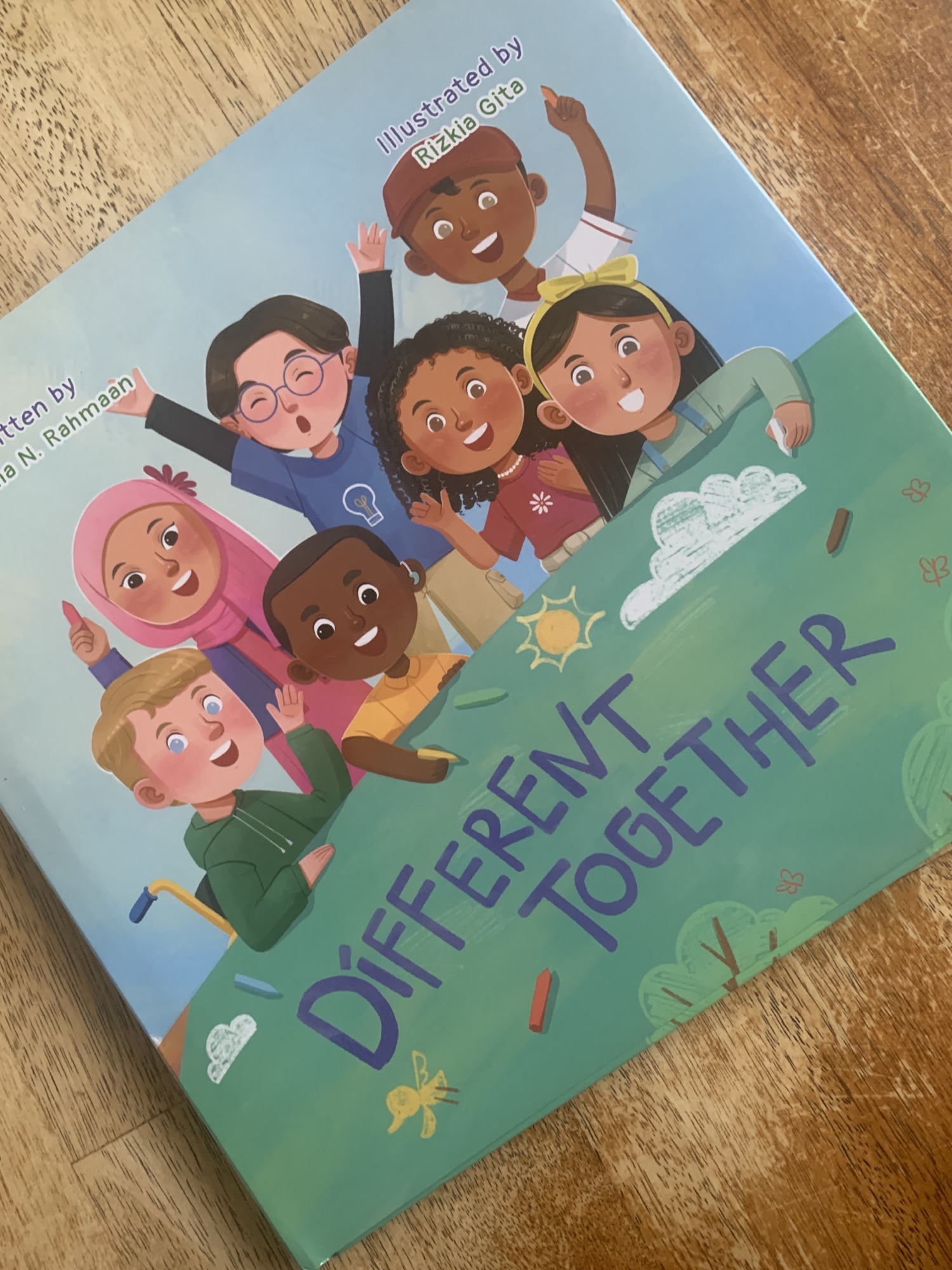
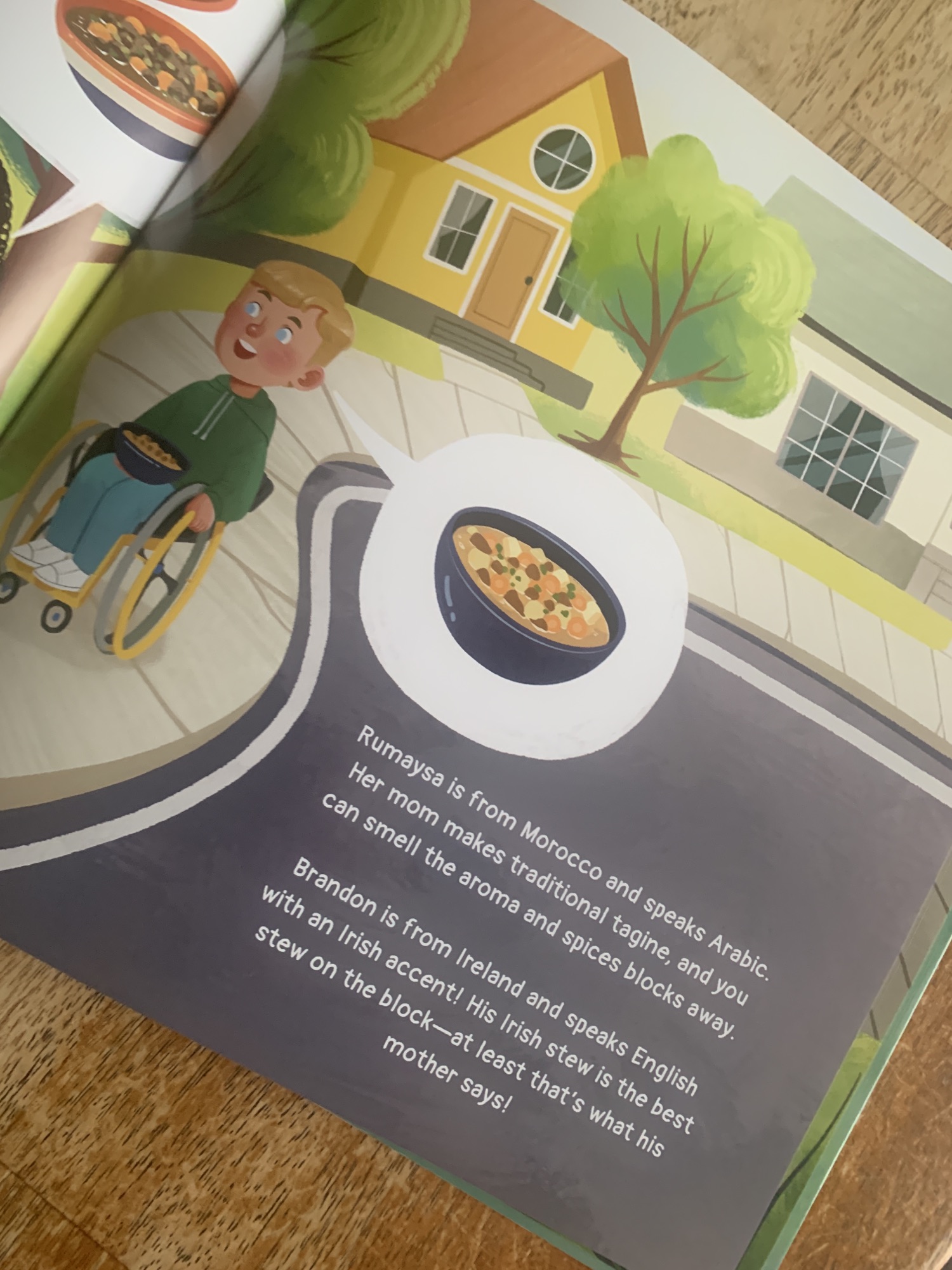
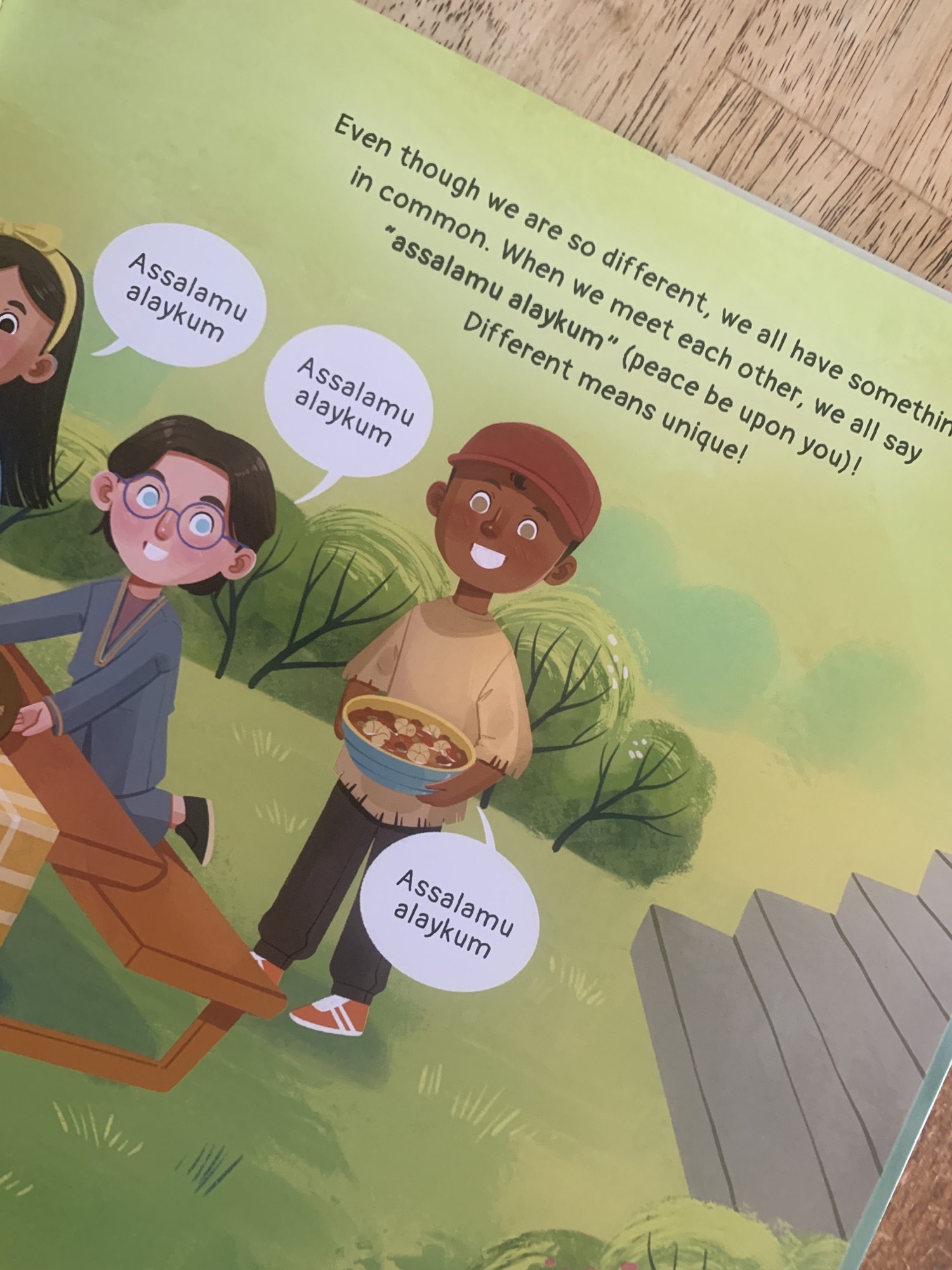
This 32 page large 10 x 10 hardback book explores how we are all different and unique, while also being the same too.  The illustrations and text present a nice way for children to learn that Allah swt created us all to be different in our appearances, what foods we like, how we dress, how we speak, but come together to all say Assalamu alaykum and stand foot-to-foot to pray.  Some of the refrains are a bit abrupt, and it really focuses a lot on physical descriptions and food, the target audience though of preschool to early elementary, will see themselves in the book, probably even a character that looks like them, and expand their understanding of al-Khaliq creating them all.


The book starts with an ayat from Surah al-Hujurat and then starts by asking the audience to imagine a world were everyone is the same.  It highlights that Allah created each of us starting with prophet Adam (as) to be just as we are, with different traits. From there, neighbors are introduced: their names, country of origin and favorite foods that all come together to make a table of sharing.

In school the students look different and play different, in the city the different building types are shown to come together, and in the masjid our hearts are in sync when we pray. The text concludes asking the reader to highlight five ways they are unique and a hadith in Arabic along with its English translation.

The Prophet;s Sunnah by Ayesha N. Rahmaan illustrated by Laila Ramadhani Ritonga

Standard
The Prophet;s Sunnah by Ayesha N. Rahmaan illustrated by Laila Ramadhani Ritonga

This joyful 20 page board book shows our littlest (and biggest) Muslims some of the Prophet’s sunnahs in a way that they can also do in their lives.  The adorable illustrations appeal to kids and the simple text showing the acts are relatable and engaging.  I did cringe at times with the changing size of the basic font and the perspective of some of the lines being told to the reader as “your” and others as “our,” but I’m a bit of a sucker for kid’s books about Rasulullah.  Some of the vocabulary might need some explaining, but overall my little ones enjoyed the book when I read it, and I have caught them looking through it on their own, so yes I’m aware that I’m over looking a few basics.

The book starts with a hadith on the dedication page and is then followed by an ayat in Arabic and English meaning of the translation about following Prophet Muhammad (saw) if you love Allah swt.  It  introduces Prophet Muahmmad saw to the little readers, not stressing the call to Prophethood and revelation, but him as a “neighbor, friend, father, husband, leader and teacher.” Starting with Bismillah, sharing, and helping, visiting the sick, being humble, some pages are filled with multiple images, and others a single scene.  Some have Arabic transliteration and one has Arabic script accompanying the English.

The illustrations show different sizes, colors, abilities.  Some of the girls wearing hijab, some not.  Readers are bound to find someone in the book that looks like them.  The binding quality and page thickness is well done and the 8.5 square size makes it great for story time or reading in small groups.