Category Archives: Muslim Author

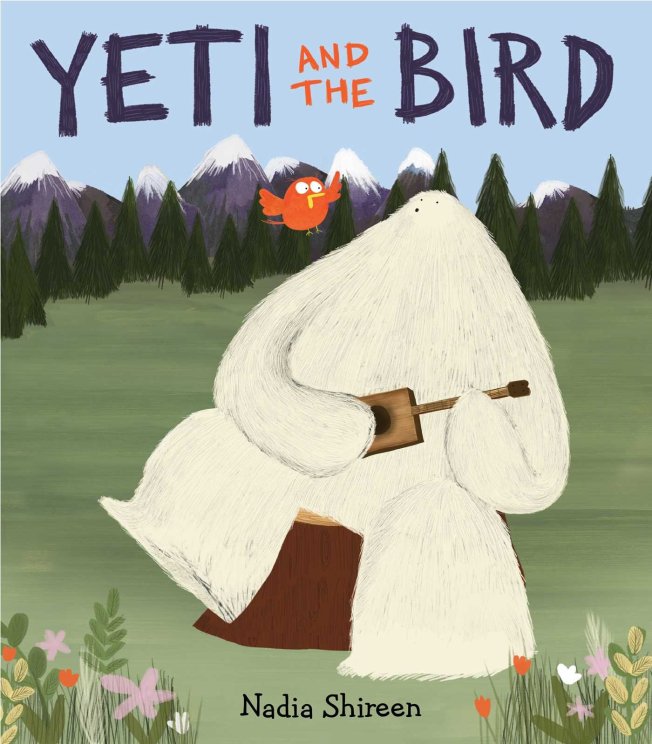
Yeti and the Bird by Nadia Shireen

Standard
Yeti and the Bird by Nadia Shireen

yeti

What a sweet story about assumptions, loneliness, friendship and kindness.  An AR 2.0, this 32 page simple picture book tells the story of an accidental meeting, making friends, and the opening of hearts of the forest critters as a result.  Written and illustrated by a Muslim author, the adorable illustrations make the story come to life and provide smiles for kg-2nd graders along the way.

84128316-9DAA-4B13-9391-E41C19804A57

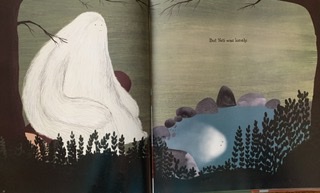
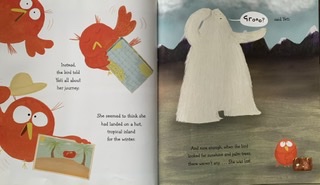
Yeti is the biggest, hairiest, scariest beast anyone has ever seen.  So no one comes near him, making him very lonely.  But one day a lost bird thunks him on the head.  The Yeti growls, but the bird doesn’t get scared. At all. Instead the little bird tells Yeti about her journey and how she was headed to a hot tropical island for the winter.

9794A3B4-1DEF-4183-B784-67190ED94037

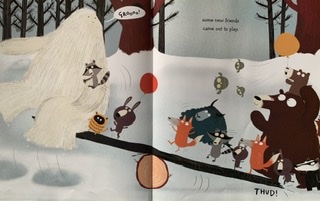
Yeti doesn’t know what to do with the sad little bird, so he picks her up and takes her home.  The next day the two play and laugh.  The forest animals look on in surprise and curiosity.

51FA79D6-1ABE-4C09-8E2B-31023FC4E69A

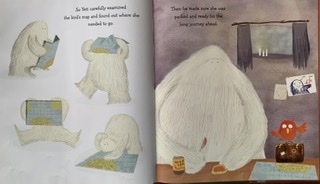
As it gets colder, Yeti knows his new friend will need to leave so he studies the map and helps give her directions for the long journey ahead.  Once she leaves, Yeti is even lonelier than before.

41A015EF-3798-41D6-BEF9-395197E9401B

But, alas, new friends are ready to play and the little bird stops by to play when she can.

587A7DA5-DE9A-4270-B8B4-202C6943F846

Cute and fun and great for littles, to be brave and give a new friend a chance.

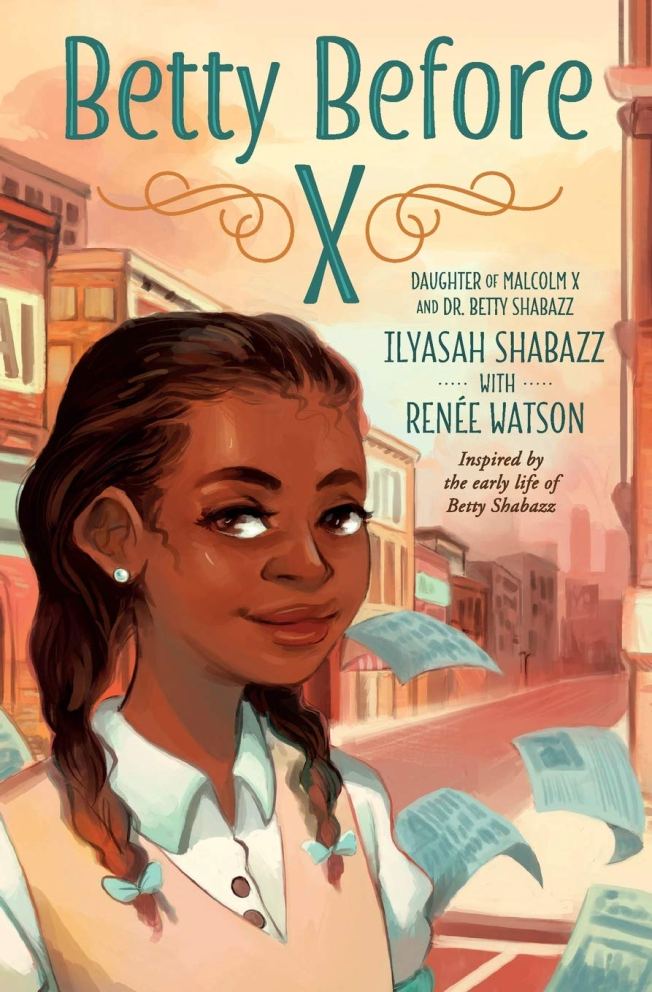
Betty Before X by Ilyasah Shabazz with Renee Watson

Standard
Betty Before X by Ilyasah Shabazz with Renee Watson

betty

This 248 middle grades (AR 4.9) fictionalized biography of Betty Sanders, later to be Betty X and then Betty Shabazz, is the early years of her life in Detroit during the 1940s and how she understood her place in her family, and in the community.  Written by her daughter, the book hops around to major events in her life and doesn’t detail a lot of the whys, but rather keeps an 11 year-old-perspective, allowing readers to identify with her family stresses and anger at the racial discrimination and violence that is rampant.  Showing disagreements within the black community allows young readers to broaden their horizons and not see the civil rights as a monolithic point on a timeline, but something that is still ongoing and part of culture still today.  There is nothing Islamic in the book, as this is a glimpse of her childhood long before Nation of Islam, her conversion to Sunni Islam or her Hajj, in fact the majority of the book focuses on her involvement in the Bethel African Methodist Episcopal Church.

SYNOPSIS:

Betty was born in Georgia, as the story goes, but before she was even a year old, Betty’s grandma took her away from her mother and gave her to her aunt, Fannie Mae, to raise.  Having seen a bruise on the baby girl’s neck Grandma Matilda didn’t feel that the young mother was capable to care for Betty.  Fannie Mae showered Betty with love and consistency and treated her like her own daughter.  Betty saw her first lynching while in Fannie Mae’s care and the image stayed with her her whole life.  When Betty was seven her aunt died and Betty went to live with her biological mother, Ollie Mae, in Detroit.

In Detroit, Ollie Mae has married and has three daughters with her husband, Arthur, who also has two sons.  A full house that is religious and disciplined, but for Betty not full of love.  She prays that her mother will look at her the way she looks at her sisters, but that never seems to happen. The family attends Bethel AME church and at age 11 that is when the story gets going.  Betty and her friends sneak out of church to get candy and the cost will probably be a whipping.  Luckily a few of the church ladies like Betty and realize how hard Ollie Mae is on her.  They work to get Betty permission to hang out with girls her own age and try and convince her mother to let her join the Jr. Housewives’ League.  Ollie Mae doesn’t agree with the work of the Housewives, a strong group of women that work to convince others to only support businesses that hire Negroes.  This organization is a major division within the community and the church.  Mrs. Malloy and Mrs. Peck are leaders in the organization, and one of Betty’s friends is for it, while another is against it. This rift affects Betty in many ways.

At age 11 Betty leaves home to go and live with the Malloy family.  A husband and wife who have no children and own a shoe repair shop.  One night turns into two and then she is living there full time and only seeing her siblings and mom at church on Sunday.  She even gets to calling Mrs. Malloy, Mother.  As she comes of age with a new family, and splintering friendships she seeks to make her own family with those that love her, and seeing violence targeted against blacks when a young boy is shot by police in the back, and working with civil rights activists- the icon and leader we know Betty Shabazz to be, is shaped and inspired.

WHY I LIKE IT:

I love that she gets her own story and own voice, not just to be left as someone’s wife.   She is a force before she meets Malcolm and after he is murdered.  Her story is shaped by so many outside influences, but ultimately it is her own and even in her early years the reader feels that.  She seeks out those that love her the way she should be loved, but she doesn’t give up on those that try and leave her either.  She fights for her mother’s praise and doesn’t abandon friends that believe differently than her, which is powerful to see from an 11 year old.  She sees the world around her and takes a stand against that which is wrong, she feels and hurts and doubts, but she gets back up.

I like that she questions if what she is fighting for will make a difference, while simultaneously doesn’t want to take racism quietly.  The day-to-day nuances flesh out the struggle of the civil rights and give a unique perspective that biographies that cover adult lives or larger portions of one’s life don’t necessarily spend time on.  Seeing activism affect a young girl’s friendships will stay with readers,  as well as how desperate she is for her mother’s love, just as seeing how she is treated on a shopping trip will create a sense of universal struggle that make equality in society resonate as being the responsibility of us all, not just those that are being oppressed.

FLAGS:

Racism, violence, murder, lynching, abuse, Betty being born out of wedlock.

TOOLS FOR LEADING THE DISCUSSION:

The book would work for a book club, and would definitely be a great historical fiction touchpoint to bridge with the Black Lives Matter movement.  A classroom discussing Civil Rights and Malcolm X would perhaps get more value from it than a half hour lunch chat, but either way the book should be read, the ideas discussed, and people made aware of Betty Shabazz’s life.


The Girl and the Ghost by Hanna Alkaf

Standard
The Girl and the Ghost by Hanna Alkaf

ghost

A book meant for middle grades, 8-12 year olds, that has depth and layers and culture and strength is not something you find very often.  Over 275 pages, the book is at times dark and haunting, but what is truly remarkable is that it doesn’t talk down to young readers and with its pop cultural references and relate-ability,  the book is not dreary.  In fact, the true “haunting” occurs after the book is finished and the concepts of friendship, being alive, and forgiveness stick around and require thought and consideration.  The book is based on a Malyasian folktale, how much is a fleshing out, or simply a starting point, I do not know, but I do know that the characters are memorable, the concept thought provoking, the writing flawless, and the intertwining of Malay culture, Muslim characters and the supernatural, a combination that makes for an enjoyable read.

SYNOPSIS:

When an old witch dies, her pelesit, her ghostly demon, is passed on to her granddaughter Suraya.  Suraya lives with her mother, a teacher, and is lonely and emotionally neglected.  An adventurous girl, the pelesit, keeps the small girl safe, but waits to reveal himself to her in the form of a grasshopper when she is older.  When he does reveal himself to her, she asks him his name, and he doesn’t know it, so she names him Pink.

Suraya and Pink become best friends, and he provides company for her as she receives very little from her mother and has no friends.  Suraya had no knowledge of her grandmother and Pink modifies the stories to leave out how evil, cruel and vindictive she was through him.  As an evil being with no heart these acts never bothered him, although he stopped enjoying them long before she died.  With Suraya however, he feels things.  He is sad that she is unloved by her mother, teased by the other children, and that she doesn’t have the things other kids have.  Suraya is kind, and forgiving, and tries so hard not to let things bother her.  Pink however, with a twitch of his antenna can make things happen.  Bad things.  Things that might at first seem like a part of life, but when Suraya catches on, she scolds Pink.  She makes him promise never to use his magic to hurt people, ever.  He reluctantly agrees, she is his master after all.  Unfortunately he doesn’t keep his promise.

On Pink’s prodding, Suraya makes friends with a new girl at school, Jing, and their friendship makes Pink jealous.  He harms Jing and Suraya decides she no longer wants to be his master.  As a result Pink is determined to make Suraya’s life miserable.  As desperation mounts, Suraya tells her mom about Pink and a pawang is called in to separate the spirit from Suraya.  Something seems off about the pawang, and when Suraya investigates, she realizes that she must save Pink from him.  Together with Jing, Pink and Suraya are off on an adventure against the pawang and might just learn more than Pink’s backstory in their efforts along the way.

WHY I LIKE IT:

I love that Suraya and her family are Muslim and that Jing is not and they are best friends.  Suraya and her family pray, celebrate Eid, give salams when at the graveyard, but obviously also believe in magic and ghosts, and somehow in the story it doesn’t seem to be contradictory or odd.  I love Suraya’s strength.  None of the relationships in her life are good.  Yet, she is good, and she forgives and fights to make those close to her better.  Pink is manipulative and controlling and abusive, but she still fights for him to be treated better and that says more about her, than whatever he is.  Suraya’s mom is distant and neglectful, but yet, there is still realistic hope that their future can be and will be better.  I love that all these layers are there and yet are subtle too.  Kids are smart and they will bring their own experiences, understanding, and expectations to decipher these relationships, and that is amazing.  I love that the characters in the story may be so different than the typical western reader, but they will still see themselves in this poor Malay girl from a small village, in her best friend Jing who lives and breathes Star Wars, or even in the religions pawang who is a power hungry charlatan; toxic friendships and family secrets make the book universal.

FLAGS:

Pink makes it look like blood is on a girls back side, implying a girls fear of leaking, but it isn’t explicit or named.  There is death and dying and supernatural and lying.

TOOLS FOR LEADING THE DISCUSSION:

I am thinking strongly about using this as a book club book, as the discussion would be delicious and varied among the participants.

Interview with the author: https://thequietpond.com/2020/08/20/our-friend-is-here-an-interview-with-hanna-alkaf-author-of-the-girl-and-the-ghost-on-writing-friendship-malaysian-childhoods-being-true-to-your-stories/


Your Name is a Song by Jamilah Thompkins-Bigelow illustrated by Luisa Uribe

Standard
Your Name is a Song by Jamilah Thompkins-Bigelow illustrated by Luisa Uribe

song

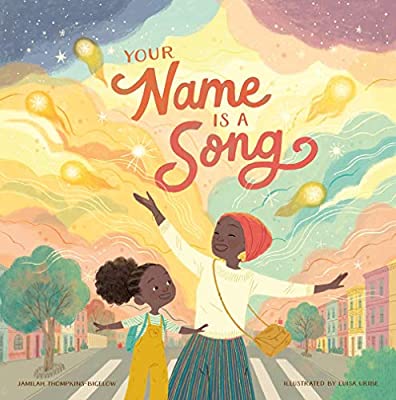
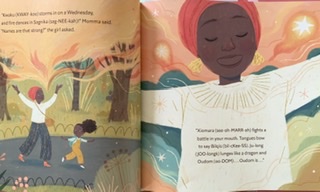
An amazingly empowering simple story that breathes pride and beauty in to names and our identities.  The 40 pages are a celebration of the rhythm of our names and the dreams and hopes that they contain for us.  Perfect for kindergarten to second graders, readers of all ages will find something valuable in this book.  Those with “common” names might reevaluate what their names mean or why they were so named, children with “unique” names will find the music and confidence to ask others to learn their name correctly, older kids might reconsider shortened nick names, and we all inshaAllah will make more of an effort to get people’s names pronounced right.

3A20341F-991D-4929-9A52-D9794E284880

A little girl has had an awful first day of school.  As she stomps toward her mom at dismissal.  No one could say her name.  Not even the teacher, it got stuck in her throat.  Her mom gently reminds her stomping is only for dancing, and tells her that her name is a song.

034DED6F-D931-4FB1-ADC0-15006AC8EAC2

The little girl is skeptical, but as they say people’s names on their way home, and find the magic and rhythm and beat in each one, they address the horrible things that have happened to the girl that day regarding her name.  At lunch girls pretended to choke on her name, and later one boy said her name was scary, some even tell her, her name sounds made up.

86E8B8E7-5336-4D72-BAC3-174F2B5B9AA2

Her mother explains that some names come from deep in the heart, not the throat and cannot be choked on, that names are fire and strong, and that names are made from the sky when our real names were stolen and so new ones have to be dreamed.

8D42050F-B9BA-4813-8BD6-CB543566748A

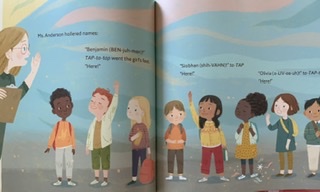
All the way home they go through names, diverse names, beautiful names.  The next day she doesn’t want to go to school, but she has a song to teach.  When her teacher starts calling  out names, the little girl starts tapping the rhythm, when Ms. Anderson starts to struggle on the little girl’s name, she starts to sing it.  She explains that her name is a song, and that she will teach it to them.  The other children then ask her to sing their names. And with a smile on her face, it is music to Kora-Jalimuso’s ears.

58B39FE0-63CA-4196-9452-4C64B517BAAA

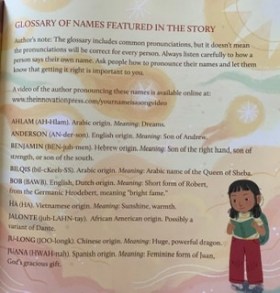
I love that there are three pages of the names mentioned in the story and their origins and meanings listed.  I also like that the little girl’s name is not revealed until the end.  The pronunciation of the names is in the text, all of them, even Bob.   And when I read the name Trayvon, I felt an added weight of saying people’s names, breathing them into our lives and not forgetting them.

74247213-AEE1-464E-A8C4-DE0ECB824335

The family could be Muslim based on the mom’s head wrap.  The author is Muslim and there are Arabic and Islamic names included in the story.

The Battle by Karuna Riazi

Standard
The Battle by Karuna Riazi

the battle

This claims to be a companion book to The Gauntlet, but it does rely heavily on details from the first to make sense of who some of the characters are as this book does little to explain them and advance their story.  In reality the book is very similar to the first book, but sadly not as fun.  I was disappointed in the 295 page AR 5.2 book, but my fourth and fifth grade boys enjoyed it as they had few expectations and the fast pace kept the book fun.

SYNOPSIS:

It has been four years since Bengali American Ahmad Mirza has left the game world, Paheli, with his sister Farah and her friends.  The old board game has been destroyed and the reboot focuses on a new video game setup.  This time around Ahmad is the main character and with his ADHD he finds himself getting in trouble a lot in school and desperate for a friend.  When a mysterious package holding a video game shows up and Winnie sticks up for him, things are possibly looking up. When all of New York freezes at the insertion of the game, however it clearly is not.  Winnie and Ahmed are off to battle the Architect and MasterMind to unfreeze their beloved city and escape Paheli.

Different battles and characters inch the duo closer to winning, but facing their fears and  being sidetracked by remnants of the last game trying to return make everything complicated.  Ahmed’s uncle returns to the game, giant mice try and help, crazy monkeys distract, and flying rickshaws populate the eastern inspired world filled with Bengali, and Arab references.

WHY I LIKE IT:

I love that it is a Muslim kid with some struggles at the helm, but there is really so very little character building that it ultimately doesn’t count for much in the long run.  Just like the first book, the characters are taken from the “real” world and transported to a game world and they must win the game to return home.  The book is fast paced and fantastical, but I constantly felt confused.  The challenges were disjointed, there wasn’t a clear objective, Ahmed didn’t recall being there before or that Vijay bhai had somehow come back with them, the mice help and then they are absent, and there wasn’t really a big reveal or explanation resolving any of it.  It felt all over the place and with little world building I didn’t feel like I could even picture what Paheli looked like, so forget feeling what the characters felt or imaging the intensity that that the game was running on.  It seemed like an updated version of the first book, but not done as well at all.

FLAGS:

Pretty clean, some intensity, some fighting/battling, death, nothing detailed nor grotesque.

TOOLS FOR LEADING THE DISCUSSION:

I think the book is great to have in a classroom or on a home book shelf especially if the Gauntlet was enjoyed, but I wouldn’t use it as a book club book because it doesn’t offer much to talk about.  There isn’t a cathartic release or even an under current of family and friendship and loyalty, it really is just surface level story telling.

Let it Go: Learning the Lesson of Forgiveness by Na’ima B. Robert and Mufti Menk illustrated by Samantha Chaffey

Standard
Let it Go: Learning the Lesson of Forgiveness by Na’ima B. Robert and Mufti Menk illustrated by Samantha Chaffey

let it go

1AA90D6C-5528-4766-B486-219F31FF7AEC

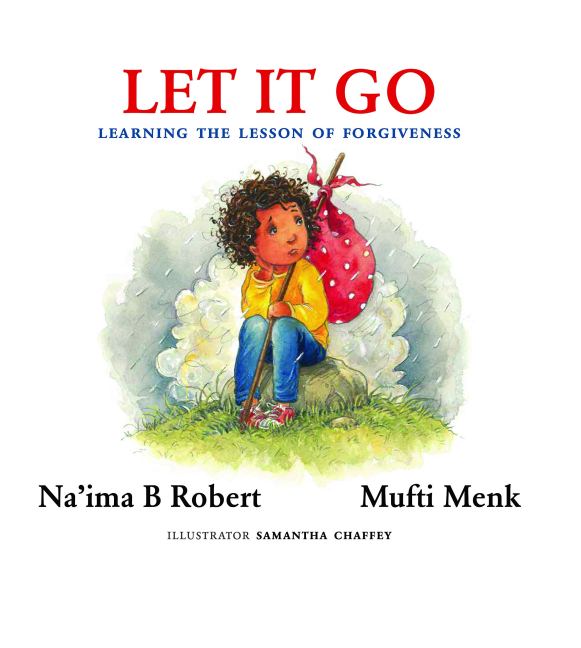
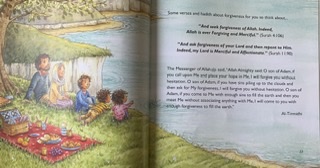
This 32 page rhyming book follows a little boy around as he is weighed down by a lot of things not going his way.  He doesn’t want to forgive until he is the one that hurts someone else and realizes we all make mistakes, forgiveness is not a weakness, and we all feel angry at times.  The book breaks from the story to ask the reader to think about their emotions in various situations, and encourages the reader to talk about their feelings.  The framework is Islamic and the repenting to Allah swt is part of the message. I found it awkward to read independently, but I read it to a small group of my own kids and their cousins, seven in all, ages four to thirteen, and it worked very well to discuss what the boy was feeling and how they would react.  I think this book would be great in a classroom or as a book an adult reads to a child at bedtime to encourage conversation.  I had to point out to the little ones, that the knapsack was getting bigger with the little boys anger, and explain what it was, but as a tool to foster dialogue it was incredibly powerful.

AF3C685C-9745-42B2-96C3-53F2B28B50B7


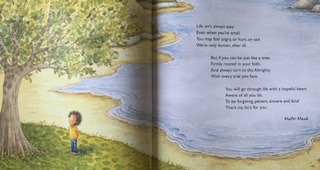
The book starts out with a poem/du’a by Mufti Menk that sets the tone for the book.  It makes clear that we are all human and feel things and that this book is a tool to understand and emotionally grow from.  No one is going to get in trouble or be reprimanded.

997B392B-E053-4EB3-AAAE-B40023247F90

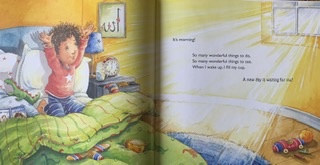
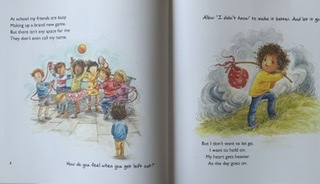
The story stats with the little boy waking up happy and ready to have a wonderful day.  But then when he comes down for breakfast, his sister has eaten the last piece of toast.  The book asks the reader, “how do you feel when things don’t go your way?” and asks the little boy to let sorry make it better so that he can let it go.  But the little boy doesn’t want to let it go, he wants to hold on, and as a result it makes his heart feel heavy.

71B6DCC3-5B85-423E-A3F7-6F1F3DC80136

This pattern is followed throughout the book giving examples when the boy doesn’t get included in a game at school with his friends, when his friend kicks his football (soccer ball) in to the road and it gets popped by a passing car, and at dinner when his older brother laughs at him.

5BAA4271-891B-4D25-8451-B1A787D4C1F9

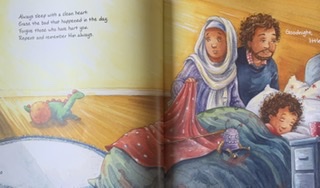
He then picks on his sister at bedtime, and doesn’t even know why he is doing it, and realizes that he too has made a mistake.  He learns that “it takes a strong person to let it go,” and that “forgiving is like taking off a heavy bag that I’ve been carrying all day long.”

4D498CEE-6886-40ED-925B-6D230205CB6C

The book ends with some verses and hadith about forgiveness.  Has some facial expressions with emotions to discuss, and space to write down things that make you feel angry, hurt, or sad as well as a place to share what makes you happy, grateful, and safe.  There is also a glossary of Islamic Arabic terms on the inside back cover.

D5E111E7-2791-466B-9343-B362E7D4EB23


Leila and the Sands of Time by Shirin Shamsi

Standard
Leila and the Sands of Time by Shirin Shamsi

shirin shamsi

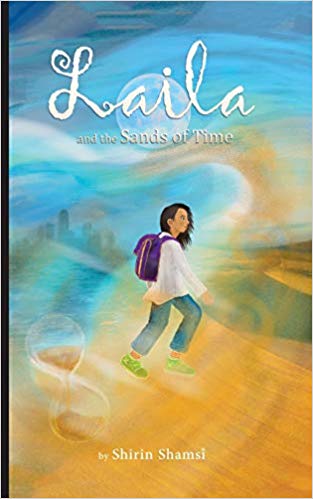
This 127 page book has a lot of potential, but ultimately didn’t win me over.  It is one of those that needs a good editor to encourage the author to flesh out the characters, take advantage of a potentially cathartic resolution, and fill the gaping holes in the story.  Meant for ages 8-12 the tiny font, and tight spacing, make the book really dense and intimidating to look at and read.  The book, as written, should be well over 200 pages, if spaced appropriately for the target audience.  Once you accept the presentation and get in to the story, it isn’t an awful read, it just could have and should have been so much more.  I hope the author revisits it and polishes it up- the time travel, the science DNA component, and the death of the protagonist’s parents, offer a lot for Muslim and non Muslim readers to sink their teeth in and be swept away by, but ultimately, I don’t know that most readers will be motivated to finish the book, and those that do, won’t remember anything about it.

SYNOPSIS:

Laila’s dad has recently died, and with her mother having died years earlier, Laila is now 13 and an orphan living with her stepmom and baby sister.  Feeling resentful that her dad remarried and had a child that took time away from her in his final span of life, doesn’t make Laila a very kind person at home.  Her best friend Beth, even points out how cold she is to her family.  With school vacations approaching, Laila is headed for Umrah with her dad’s brother, her uncle, and his wife.  While making tawaf, Laila loses her aunt and uncle in the crowd and finds herself transported to 7th century Arabia.  She hears a baby crying and learns that the baby’s life is in danger.  To save her, she must get the baby, the baby’s mom and baby’s sister from Makkah to Yathrib.  The only way to do that is to join a caravan, and they can only join a caravan if they have a male escort.  So Laila chops off her hair, acts like a boy, and gets them in the caravan.  They meet bandits along the way, but nothing too scary, they arrive in Medina and right before they meet RasulAllah, Laila finds herself back in the present.  She is in a hospital, but the doctors do not know what is wrong with her so they release her.  She returns to the US, relays the story to Beth, and decides that at an upcoming field trip to study DNA, she is going to submit the baby’s hair that she still has for dating.  The results show it is from 1400 years ago and a family heirloom of her step moms reveals that the baby is a great great great great… grandmother of her’s.  Resolved to open her heart to her family, Laila is a changed person, alhumdulillah.

WHY I LIKE IT:

I love the premise, it is like Sophia’s Journal and When Wings Expand  thrown together and scrambled.  Laila is struggling with her faith and is trying to find it, while also finding a way to move forward after losing her father.  There are just a lot of things that aren’t answered, are contradictory, or don’t make sense.  It says she learned Arabic because her mother spoke it, her dad is desi, but really no hiccups speaking in 7th century Arabia other than forgetting the word for scissors?  She at one point said she was a cousin from the north, but while on the caravan mentioned that she had never travelled through the desert.  There really should have been more action with the thieves and the regrouping when the men came back.  Similarly, her gender reveal should have been a bigger deal than it was.  I was hoping there would be a mention of if her hair was long or short when she awoke in the hospital, I don’t think I missed it, but maybe, or maybe it wasn’t there.  Once back home, there really needed to be a reunion scene with Laila and her stepmom and half sister, I mean the whole point of the time travel was to save a baby. Really? Nothing? I was disappointed that it was glossed over and mentioned as a retelling to Beth and pushed aside.  The second climax is when the DNA testing is being questioned, but I didn’t get the need for the babysitter and everything to be rearranged for a two second conversation with the principal accusing Laila of theft, a phone call should have sufficed, plus when Laila and Beth mention it to the scientist, it seems everyone was questioned, but Beth wasn’t, something wasn’t consistent there either.  Overall, the book needed more action for a book that involves time travel and more emotional attachment and character connection for a book that involves a newly orphaned young teen girl.

I like the conveying of Islamic facts and information and history in a fairly smooth way.  At the beginning, Umrah being explained was a little text bookish, but it smoothed out as the book progressed.  I love the little flashbacks at the beginning of each chapter, I wish there would have been some information about the remarriage of her father and her emotions on the matter at that time.  It is one thing to be grieving, but really she is a brat to her step mom, and if the uncle and aunt live right there, not sure where they live, someone should really be working on getting them all some family therapy, not a quality situation for anyone.

FLAGS:

none

TOOLS FOR LEADING THE DISCUSSION:

I wouldn’t use the book as a book club selection, nor would I think it would get read if on a classroom shelf.  I might use the premise of going back in time to meet Prophet Muhammad, as a writing prompt though.  Would be a good assignment with factual and Islamic references to get kids stretching their imagination to make it all come together and work.


Our Favorite Day of the Year by A.E. Ali illustrated by Rahele Jomepour Bell

Standard
Our Favorite Day of the Year by A.E. Ali illustrated by Rahele Jomepour Bell

favorite day

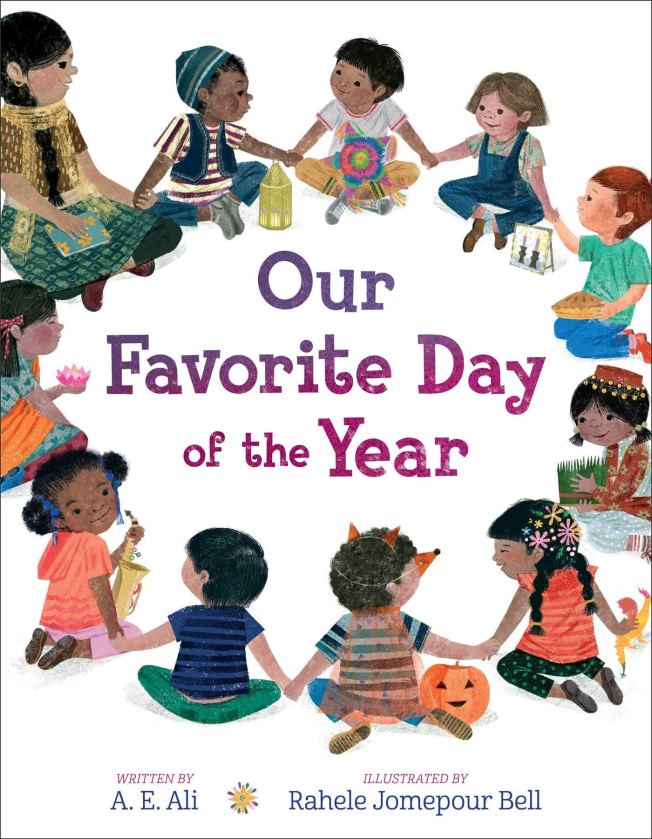
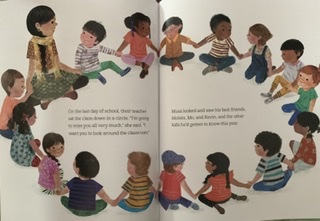
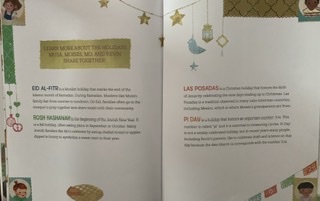
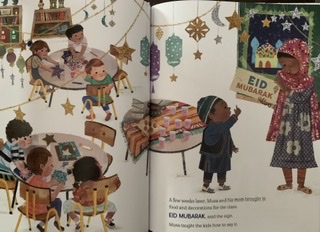
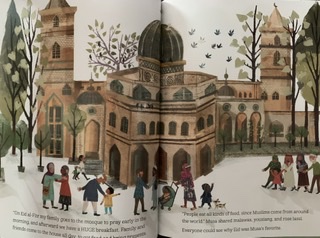
A great book about inclusion for back to school, except well with Corona, we aren’t doing things how we always have.  None-the-less this book about the first day of kindergarten for Musa and the friendships and celebrations of diversity (Eid al-Fitr, Rosh Hashanah, Las Posadas, Pi Day) that will take place over the school year, connect the kids and their cultures in a beautiful and heartwarming way.  The book is 40 pages with engaging illustrations and text perfect for 5-7 year olds.

EDFC15B2-0A7C-4B7F-ACAD-E019DBDEDEC4

It is the first day of school and Ms. Gupta tells the class it is her favorite day of the year.  She also tells the children that the people around them will become their best friends.  Musa doubts this as he looks around at the strangers at his table.

EFE30123-CA0D-41E9-BAFB-2ADFA7CE811F

He also wonders how the first day of school can be any ones favorite day, clearly Eid al-Fitr is the best holiday.  Luckily, every show-and-tell will be about someone’s favorite day, so that the class can join together in celebrating it.  Moises can’t believe that Christmas isn’t the most fun until he learns that not everyone celebrates it.

011E4F77-4479-412E-AF9E-D37B9B870308

When it is Musa’s turn to teach about Eid, his mom and he bring in food and decorations and teach the kids to say Eid Mubarak.  They learn what Eid is like and can see why it is his favorite.

6B5884B2-A9ED-42D1-A624-B8100CE0D160

Up next is Mo’s turn.  He tells everyone about Jewish New Year and how to say Shanah Tovah.  On Rosh Hashanah they light candles and share food with friends and family.

DAC82C2A-06CC-485B-B589-F34682F0914E

Moises explains how Las Posadas is how his family celebrates Christmas.  It lasts nine days and there are songs and pinatas and presents.

2CECB33E-AFBD-4118-B893-8B9D2B81385C

In the spring it was Kevin’s turn and he shared his love of Pi Day as his family celebrates science.  On March 14 (3.14) they make different pies and learn about scientists and their discoveries.

A657B13B-02A0-4E75-95D0-25513C8788F6

On the last day of school, the children are sad, but their teacher hopes they will remember each other always throughout the year as she hands out calendars for them to keep.

83CC82E2-4045-4F02-8202-D6E6124A0E5F

The book concludes with information about each of the four holidays mentioned. It is possible that on the Rosh Hashanah page the family is two gay men with two children, but it could be just two men as well, and doesn’t say anything in the text that suggests who and how the family is comprised.

731DE17E-FCD5-4B41-9209-3EEB21052101

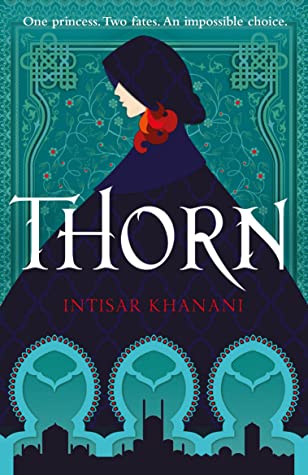
Thorn by Intisar Khanani

Standard
Thorn by Intisar Khanani

thorn

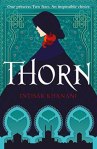
I finished this book, all 512 pages, and before closing it at 12:44 am, I picked up my phone and sent the author a thank you message on instagram.  Yes, it was that good and that fun, and so well written and so encompassing that I don’t feel like I read a book, I feel like I got to know a friend.  There is abuse, and death and sexual assault, but I think thirteen and up can handle and appreciate the crimes and the severity of them, as they are not taken lightly.  The book has magic and royalty, but is so much more about choice and justice and making life meaningful, that Thorn will stay with you as you imagine her life, long after you turn the last page.  ***I did not know it was a retelling of Goose Girl by the Brothers Grimm prior to reading the book, and only read it after writing this review, so forgive me for being so swept away by Falada and Kestrin and loathsome to Corbe’ and Valka, if it so irks you that I am.***

SYNOPSIS:

Princess Alyrra is set to marry Prince Kestrin in a neighboring country.  Unloved and unwanted by her own mother and abused by her brother, none of the royal family can figure out why the King of Menaiya would be coming to see her and appraise the match.  One possibility is because the royal Menaiyan family tends to disappear at alarming rates, and Alyrra might just be a princess that no one will miss.  When a Menaiyan mage comes to warn her and is pushed aside by a magic Lady, Alyrra may be leaving an abusive brother, but getting herself a much bigger nightmare to manage.

Alyrra is known for her honesty.  She stood up for a servant against a Lord’s daughter and prospective wife for her brother, and since then, the royals despise her and the servants adore her.  She spends her time with the holsters and cooks and they keep her aware of her cruel brother’s locations.  When the visiting entourage comes, they see her tormentor and give her a security detail, as well as see how she is beloved by the staff.

Once the match is arranged she is off to Menaiya with Valka, the girl she revealed to be a thief.  Along the way, the Lady presents herself again and switches Valka and Alyrra’s bodies, to give Valka another chance to be queen and to use the real Valka as a tool to destroy the royal family.  The only person in the traveling group aware of the switch, and that can see through it, is Falada a white talking horse, that only speaks to the real Alyrra and refuses to be ridden.

When the girls arrive at the palace, the pretend princess dismisses Alyrra, who has decided to rename herself Thoreena, Thorn.  She asks the king if there are any available positions and thus becomes the Goose Girl.

Thorn is still summoned to the castle to write letters home for the imposter and the prince and former security quad find something off with a former lady of the court finding such contentment in manual labor.  As she settles in to life with the other employees she finds laughter and companionship and only Falada prods her to reclaim her position as princess and save Prince Kestrin from the Lady.

When Falada is killed, and street justice is called on to avenge the brutal rape and killing of a friend, Thorn must decide to enjoy her quiet life or step up and be the change the people and royals of Menaiya need.

WHY I LIKE IT:

I love that it isn’t a sappy love story, it really could have been, but Thorn is calling the shots and she is enough without anyone or with everyone.  I love that she is secure in any role and that her sense of loyalty and obligation comes from within.  The writing is seamless, so often things are repeated and forced upon in a first person present tense story, but this read easily and held my interest.  I love the titles and some of the sprinkling of made up words, it gave depth and richness, as well as the struggle that Thorn had to go through to speak the language.  I loved that she had to work to acquire the skills to communicate and that it was a part of the story, it didn’t just happen, nor did it get swept aside.

Thorn is religious, but no idea what religion or what it means, she seeks going to the temple for peace and clarity, and we know she takes off her shoes, but that is about it.  The author is Muslim and the book is superb.  I had my daughter read it before I read it, and she in turn made me read it, even watching her younger siblings so I could sneak away.

FLAGS:

Death, murder, public execution, hanging, sexual assault, rape, abuse, violence.

TOOLS FOR LEADING THE DISCUSSION:

I am thinking to do it as a book club book if and when we return to school.  It would depend a bit on the group, but I think older middle school could handle it toward the end of the year.  There is a lot to discuss, a lot that readers could understand differently regarding the Lady, when her secret identity was blown, the value of love and choice, that I am confident that the conversation would be rich and enlightening.
Be Sure to Pray, Zain! By Humera Malik illustrated by Gonmuki

Standard
Be Sure to Pray, Zain! By Humera Malik illustrated by Gonmuki

1636FC1C-82AA-48FD-9904-10616FD9CB55

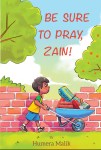
A very relatable 31 page early elementary chapter book about not only establishing salat, but doing it for the right reasons.  The book is not preachy or reprimanding, and even with a moral purpose, Zain manages to connect with readers and be funny and likable along the way.  Told from the view of the young narrator, realization is achieved, confessions made, understanding gained, and inshaAllah regular prayer established.  A great book to share with your own children when salat integrity is in question, and a great reminder of the power of salat that kids will enjoy reading even when it is not, alhumdulillah.

3FE2BB19-9372-4292-A0AE-B091D66B8F1D

SYNOPSIS:

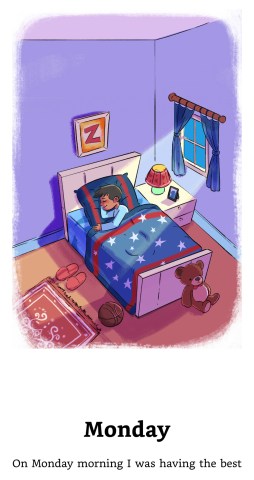
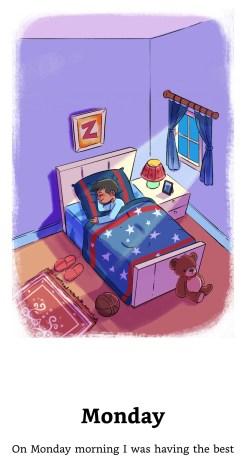
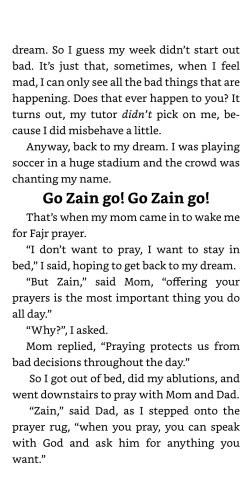
Zain starts off by introducing himself as a kid who lives with his parents and is having an  awful week.  He rewinds and begins with recapping Monday.  Right away he acknowledges that Monday actually started out ok as he was having an awesome dream, but that sometimes when he is mad he only sees and remembers the bad things.  Because of his awesome dream he didn’t want wake up and pray Fajr, but his parents reminded him that when you pray you can ask anything you want from God and that praying protects us from bad decisions.  He drags himself up to pray and asks God to help him on his spelling test.  Later that day he took his test, said Bismillah, and aced it.  So he concludes that maybe Monday wasn’t so bad, and Tuesday wasn’t either.

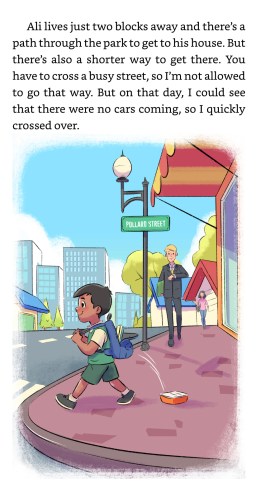
On Tuesday, Zain sticks up for his neighbor Joey who is being picked on by some older bullies.  Later that night Joey’s parents come over to thank him and take him out for ice cream in appreciation.  Wednesday, starts out great at school, and after school he gets to bake blueberry muffins with his mom.  When the muffins are done he was suppose to pray Asr and then take the muffins to his friend Ali’s house.  His mom reminds him to take the safe way and not cross the busy street.  But, Zain forgot to pray Asr and sees no cars coming and chooses to take the short cut across the road.  When he gets to Ali’s house his backpack is open and the muffins are missing.
The rest of the week continues with highs and lows.  Many of the lows coming when he doesn’t pray.  At one point a friend comes to tell him to come to the park to play soccer, and he knows his mom is going to ask him to wait a so they can pray together, so he pretends not to hear and rushes out the door.  Another day he chooses to not miss the end of a show he is watching to pray and heads off to tutoring without praying at all.

When the book rejoins Zain in the present he is feeling bad about kicking a friend playing soccer, cheating on a math test, and not getting to taste his muffins.  He unloads everything that has happened over the week, and his parents calmly and patiently ask him if he has been praying.  When Zain realizes he has been neglectful his mom likens prayer to bricks in a wall that help keep bad things out.  His parents tell him that when we miss our prayers, we end up with holes in our wall and bad ideas can sneak in.  Resolved to stay strong, Zain wakes up the next morning to pray Fajr and have a good day, inshaAllah.
31F4B3A3-12AE-493B-80DA-E93FC0F75AEB

WHY I LIKE IT:

I love that it stays with a young kids perspective and doesn’t get weighed down with hadith and ayats and lectures.  The parents let him learn from his mistakes and he comes to his own realization, not through their reprimanding or catching him in his deceitfulness.  The book is a great way to remind kids that it is their responsibility to pray and that Allah swt knows everything, so that connection has to be made between the person and their creator, it isn’t something you do only when someone is watching or telling you to do it.  I do wish that when he did resolve to pray that there would have been a bit of an outpouring to Allah.  I love that he had tears in his eyes when he told his parents everything, but I think it would have been really powerful to see Zain ask Allah to forgive him and to help him keep his wall strong.

The book reads smoothly, and the illustrations are well done and inviting.  Early chapter book readers will enjoy the font and format and knowing where the story is going with the days of the week chapters.  On one occasion I wish the word “wudu” would have been used instead of ablution, and I’m not sure what Zain has against carrots, but nothing too major will keep kids from enjoying the story and understanding it.

4AE0291F-2915-4F34-BA1C-D625DC0B97D6

FLAGS:

none.

EA28C866-45A0-47D6-B446-AF196504321E

TOOLS FOR LEADING THE DISCUSSION:

This book is for children learning to pray and realizing how important salat is.  So while it won’t work for a book club, I really hope teachers in Islamic Schools and Sunday Schools will read the book aloud or assign it to their students.  It is a great teaching tool, a great reminder, and a fun story too.