Category Archives: Eid ul Adha

I’ll See You in Ijebu by Bunmi Emananjo illustrated by Dian Ejaita

Standard
I’ll See You in Ijebu by Bunmi Emananjo illustrated by Dian Ejaita

img_5253-2-1

As a window into Nigerian life, this 32 page book is beautiful, celebratory, and an incredible resource to learn from and emerge yourself in, as the beautiful pages, and delightful language sweeps you away to Ijebu and Olu’s grandparent’s house for Eid al Adha.  As a Muslim, this book’s framing might require some conversation with little ones that may or may not be right for your family.  The protagonist in the book, Olu, is Catholic, her siblings and parents are as well, her mother’s family however, is Muslim.  The multi-faith family celebrate each others’ holidays, for example Olu goes to the mosque to pray after taking communion at church, and the cousins haven’t seen each other since they came to Lagos to celebrate Christmas.  Eid al Adha is celebrated with a big meal, prayers, and being together, but nothing specific about belief or doctrine is included in the text. The tender heart of the story is the subtle bond between Olu and her grandfather, Baba, even though language differences prevent them from talking. The writing style is as beautiful as the full page illustrations, with part of each page dedicated to more traditional story telling, and another complimentary part expressed in a more lyrical fashion that reads often like a song.  The backmatter is robust with information about Nigeria (including a map), Food, Fun, Faith and Family, Oriki, Fashion, an Author’s Note, a recipe for Puff Puff, an Illustrator’s Note, and a list of people who helped create the book. The book is OWN voice written and illustrated, but I do not think either are Muslim, and while the publisher lists the book as being for ages 4-10, it is a bit text heavy, so take that into consideration. 

The book starts with Mummy calling Olu and her brothers for breakfast.  Daddy is in America at their old home visiting his brother, and today they are going to Ijebu to visit Baba and Iya Akin for Eid.  This year Olu is eight and will finally get to help make the Sallah feast. The traffic is bad in the hot weather, with smells of vendors cooking filling the air.  The family listens to Afrobeats and 90s pop music until they are finally there.  When they arrive Baba is waiting and sings Olu’s oriki as they embrace.  Food is a big part of visits to Ijebu, as they pick ripe cashews, sugar cane, guavas, and mangoes on Baba’s farm.

When it is finally Eid the family walks to the nearby mosque for prayers in matching outfits.  Then it is time to cook the two rams for the Eid feast.  Olu is going to braid the ram intestines.  It is a lot to cook and a lot to eat. When the week is over, and it is time to leave, once again it is Olu and Baba’s hug that make the love tangible and the book emotional as they say their wordless goodbye.

Baby Touch: Happy Eid! by Lemon Ribbon Studio

Standard
Baby Touch: Happy Eid! by Lemon Ribbon Studio

img_3516-1

This 12 word, 10 page, touch and feel board book is nothing special, yet for some reason it does make me smile.  It could be better, and absolutely, “star” has nothing to do with Eid, but that it is in our public library, that it is full of joy for our littlest humans, and that it has mosque and prayer rug, and charity, and community, and family, and feast, is really quite sweet. It would work for either Eid and the bright uniform pictures are clear and simple to engage babies and toddlers alike.

img_3517-1

Each page spread has a singular image and a word below it.  The pictures on the right have some sort of touch and feel element, from a bumpy minaret, to raised smooth coins in the charity jar.  I wish the rice on the feast plate would have been raised and that a plush prayer rug would have been offered, but until publishers seek out beta readers, this is probably as good as it is going to get.

img_3518-1

Some of the words might be too advanced, but I think the singularity allows for discussion if the child wants, if not, it is still nice to see elements of Eid illustrated for a baby to connect to in a joyous presentation.  The 7x 7 book is not overly padded, but the corners are rounded and easy for little hands to carry.

I found mine at my library, but it is also available here on Amazon.

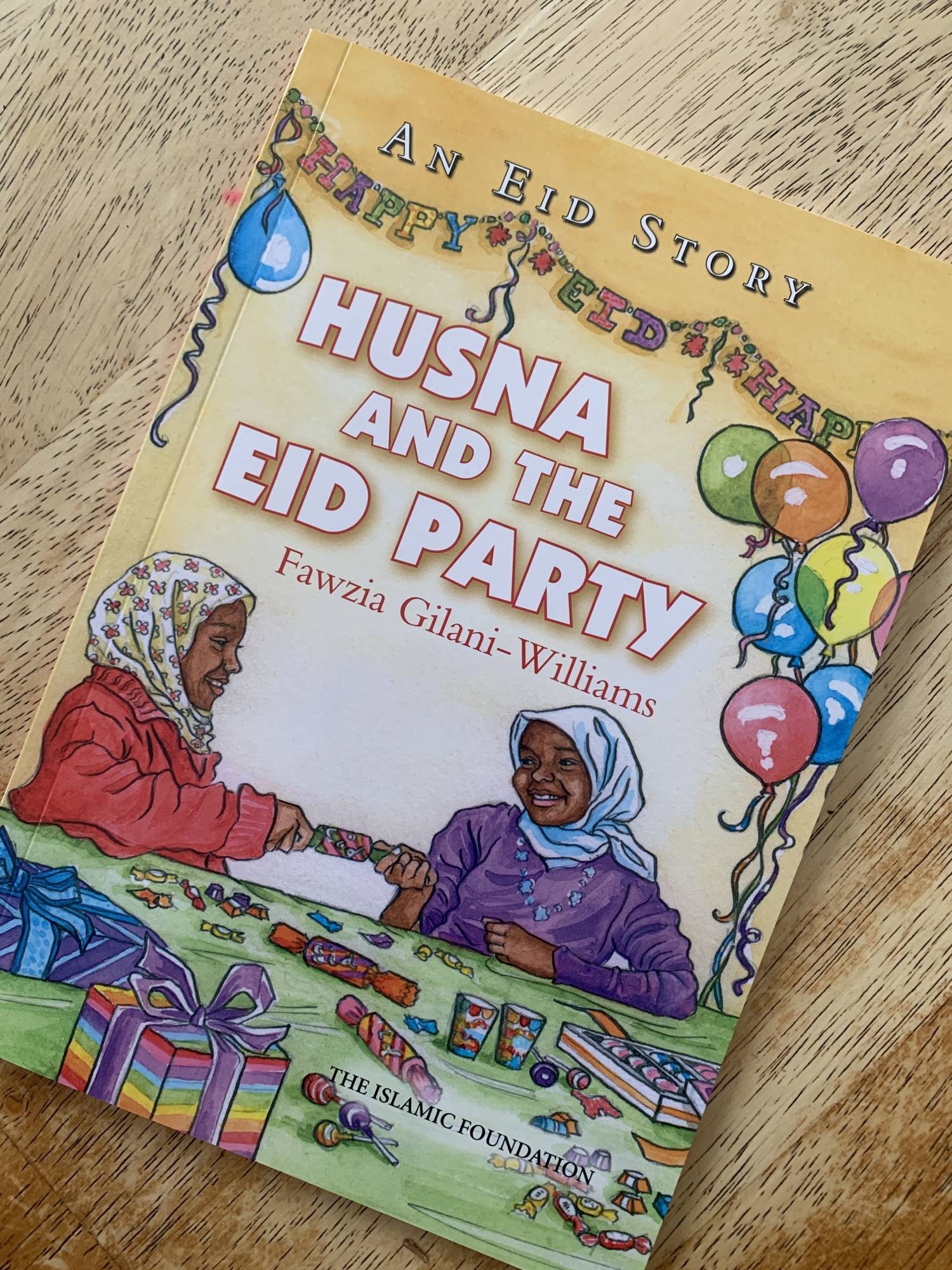
An Eid Story: Husna and the Eid Party by Fawzia Gilani-Williams illustrated by Kulthum Burgess

Standard
An Eid Story: Husna and the Eid Party by Fawzia Gilani-Williams illustrated by Kulthum Burgess

img_3309-1

This 27 page book is old, published in 2007, and one that I kept an eye out for on occasion since reviewing a similar early chapter book by the same author, The Lost Ring, that I found in a public library in 2016.  Somehow it found its way to me in 2024, and I’m reviewing it because it has been a while since I’ve indulged in older books that shaped the foundation of Muslim literary representation so many years ago.  It is the epitome of Islamic fiction and what Islamic fiction looked like when I started teaching.  It has a Muslim protagonist, with a universal stress, framed in Islamic acts, perspectives, information, and morals.  It is unapologetic, it is at time preachy, and while the writing isn’t remarkable, an engaging story is laid out with numerous lessons along the way.  You may not want to rush out and purchase this book, but if you have it on your shelf, it would be worth pulling out, dusting off, and sharing with a child. At times the details feel a little dated, but there is a timelessness to stresses with friends, being left out, assuming the worst, and wanting to be included.  This book will offer a chance to be seen in the text and illustrations as Husna waits to be invited to her friend’s Eid party.  The book does not specify if it is Eid al-Fitr of Eid al-Adha, but it really isn’t impactful on the story, as it simply sets the time, mood, and draws all the threads together.

SYNOPSIS:
It is the week after Eid and students are back at their Islamic school, Husna has lots of friends, but Maryam is her favorite.  While on the playground, someone asks Maryam where the party is going to be, and she responds, “probably at the house.”  Excited Husna waits for her invitation, that unfortunately never comes.

WHY I LIKE IT:
Even though the book has a happy ending and is based on a misunderstanding, the feelings are very real.  I remember feeling left out, I’ve seen my own kids and students feel it, and that the book is a snapshot of that feeling from a Muslim perspective, really makes it hit home.  Husna makes dua in sujud at Maghrib and Fajr that she will be invited, conversations begin with As-Salamu ‘Alaikum and end with Barak Allahfi-ki, homework is learning Hadith and memorizing ayats, jumah is prayed, and every page is filled with Islam.

FLAGS:

None

TOOLS FOR LEADING THE DISCUSSION:
The book is an early reader, a text heavy one at that, but none-the-less meant for ages seven and up. I can see it being read today in small groups in an Islamic school or if you have a young one who is perhaps feeling something similar.  You might have to explain invitations in the mail, or calling on a house phone, but it still has relevance.

Khadija and the Elephant Toothpaste Experiment by Farah Qaiser and Hajer Nakua illustrated by Natalya Tariq

Standard
Khadija and the Elephant Toothpaste Experiment by Farah Qaiser and Hajer Nakua illustrated by Natalya Tariq

img_3251-1

This 26 page book is set on Eid, it does not specify Eid al-Fitr or Eid al-Adha, but it isn’t overly impactful on the story outside of the framing, so really it is a non issue.  The book shows a Muslim family and is a benefit for appealing to women and girls in science, unfortunately it has some plot holes though.  A big point of the book is the girl, Khadija, wondering if she can be a scientist who wears hijab because she doesn’t see any scientists at the fair wearing one. When she voices this concern to her parents, her father reassures her saying, “Anyone can be a scientist.  Scientists can wear a hijab like Amma, or glasses like me.”  First of all, I don’t like it equating hijab to glasses, hijab is a religious practice, not a tool to help you see or an accessory.  I’m well aware not every book has to have Islam centered, but I do worry that if hijab is relegated to an article of clothing, and Khadija doesn’t wear hijab, that readers might just be confused and not be able to connect the dots.  With weak writing, a confusing premise, and a climax of doing an experiment, that is not included for the readers to do at home, included in the book; I am struggling to recommend this for every bookshelf.  It isn’t a bad read, it just should be better.  I love the joyful engaging illustrations, I like the female Muslim science representation even. I just ultimately think the weak writing drags the book down and will have some kids confused why she is worried about a scarf she doesn’t wear impeding on a career she doesn’t have, and be unable to see that as a Muslima she will want to wear hijab as an act of worship when she grows up.

img_3252-1

The book starts with Khadija and her family heading to her school for the science fair after Eid salah.  She sees lots of scientists, but notices none wearing hijab.  She gets a science kit to do at home and then the family starts to prepare for guests coming over for dinner.

img_3253-1

Khadija can’t wait to do her experiment so she quietly gathers up supplies, and heads to the bathroom to make elephant toothpaste. It works, a little too well, but then it is everywhere and mom and dad show up to help her clean.  Khadija wonders if she is not cut out to be a scientist.  Mom and dad console her, the people arrive for an Eid party, and her parents and her do the experiment for all to see.

The story is pretty straightforward, but I sure have a lot of questions: why is the “big day” the science fair and not Eid.  It is at her school but the science fair is not students sharing projects, but professional scientists? And does she purchase a science kit, why does her mom give it to her at the fair, but then she asks the scientist is she can do it at home? What else did she see or learn at the science fair, she just went saw scientists in lab coats, got the kit and left?  How was it still morning when she got home after the fair, after Eid salah?  There is a whole page of her getting an Eid gift and squealing with delight, but never shares what the gift is.  I also really, really wish it had the experiment in the book. I want to know what it is and why it is called, “elephant toothpaste.” I truly do not know why this book has no backmatter.  Information about women in science, how to do the experiment, maybe something about hijab or Eid. A link or scannable QR code to see the experiment would have even added something to increase knowledge and excitement for science, representation, and dreaming big.

img_3256-1

The Ramadan Cookbook: 80 Delicious Recipes Perfect for Ramadan, Eid, and Celebrating throughout the Year by Anisa Karolia

Standard
The Ramadan Cookbook: 80 Delicious Recipes Perfect for Ramadan, Eid, and Celebrating throughout the Year by Anisa Karolia

img_3081-1

Another surprising library find, this 2023 published cookbook shares meals for all the time, but organizes them with Ramadan in mind.  Unlike many online recipe pages, there is not a lot of backstory about the culture behind the recipes, or how the author has made them her own, it really is pretty direct and to the point.  The author is Desi, and the bulk of the recipes Indian, but it isn’t all of them.  I found myself flipping through the pages hoping to be inspired, but sadly most of the recipes were fairly basic.  That isn’t too say they are not good, I have not tried them, but being of Pakistani decent and that I have been cooking multiple meals a day for too many years to count, I didn’t feel compelled to check the kitchen for ingredients.  I think a big part of it is, I need pictures of the food to spark interest, and not every page had images of the food.  I think the book is fun to look through, maybe remind you of something you tried once and enjoyed, or give you ideas of something you and your family might like to try.  I would say it is for beginner cooks, but without step-by-step directions, you have to have some basic skills, perhaps it is more a family friendly cook book as she makes comments of what her children like, or dishes them come together quickly and easily.

Clearly I am not a foodie, or a cookbook reviewer, I was just excited to see a Ramadan cookbook available at the library and wanted to share.  The author shares her thoughts on Ramadan, and interjects some thoughts on the section pages. Apparently she is a famous blogger, so if you follow the author and there is something I should try, please let me know.

Craft it Up This Ramadan and Eid by Zayneb Abdullatif photography by Sidoie Djunaedi

Standard
Craft it Up This Ramadan and Eid by Zayneb Abdullatif photography by Sidoie Djunaedi

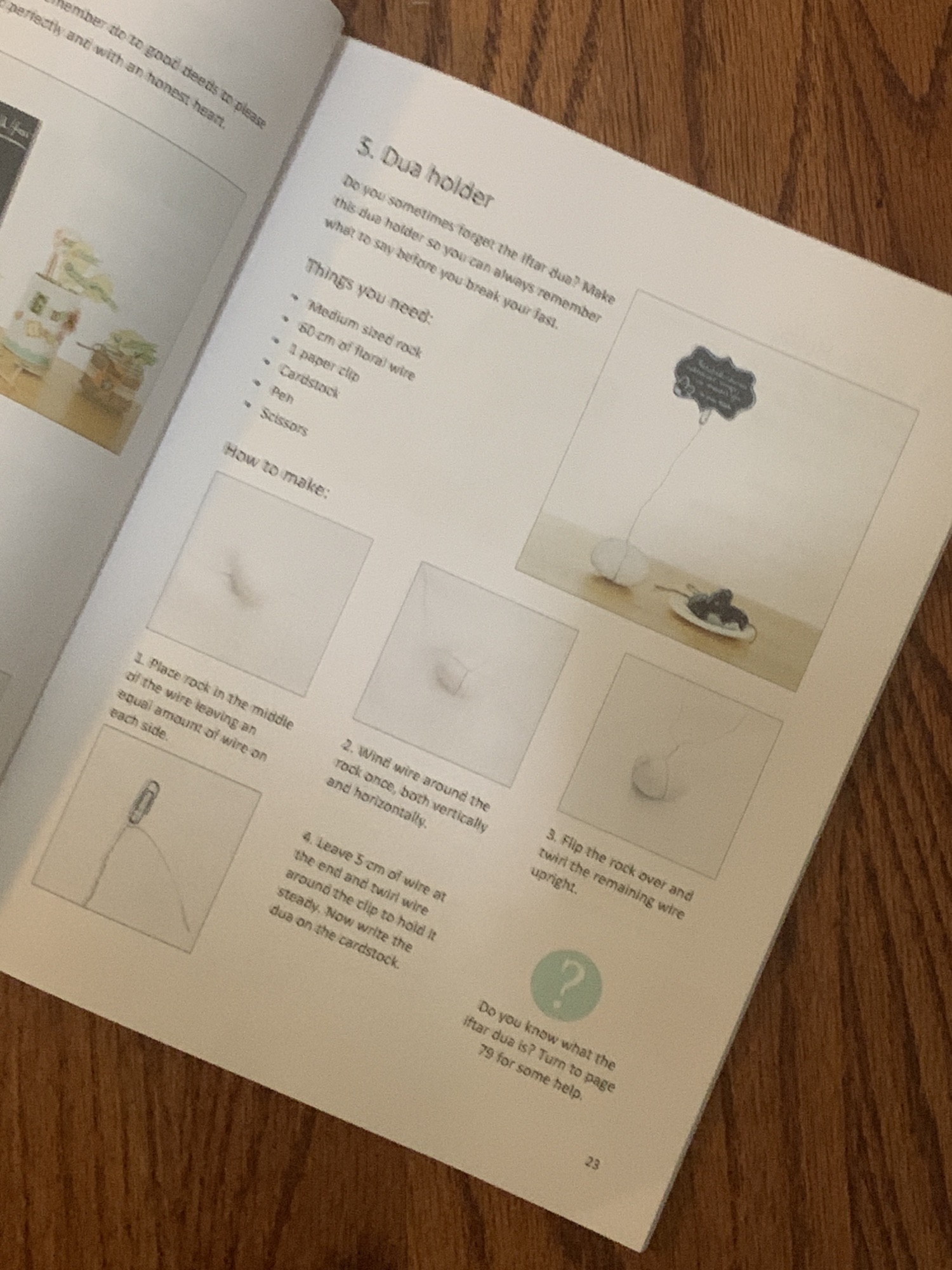
This book is not new, but I saw it at my library and thoroughly enjoyed looking through it.  I’ve hosted, helped, and attended numerous Ramadan craft fairs and story and craft times over the years, and I know everything can be found online.  Yet somehow this 79 page, 2015 published book was kind of fun to look at with my toddler.  It wasn’t overwhelming or super complicated, it was just a nice roundup of simple crafts that you could easily do with items around your home, while dropping little informative bits about Islam, Muslims, Ramadan, and Eid.  I doubt young parents today would even think to look in a library book for Ramadan craft ideas, it is a bit of an antiquated concept in todays day and age.  I highlight it today to remind us that so many have worked very hard to advance Muslim representation in books in all its forms, alhumdulillah, so that we can continue to see ourselves, make strides, and raise the bar.

The book starts with tips for parents and guardians, followed by the basics, crafts for the joyous month, crafts for Eid, a special festival, and concludes with templates, good deeds activity list, and a glossary.

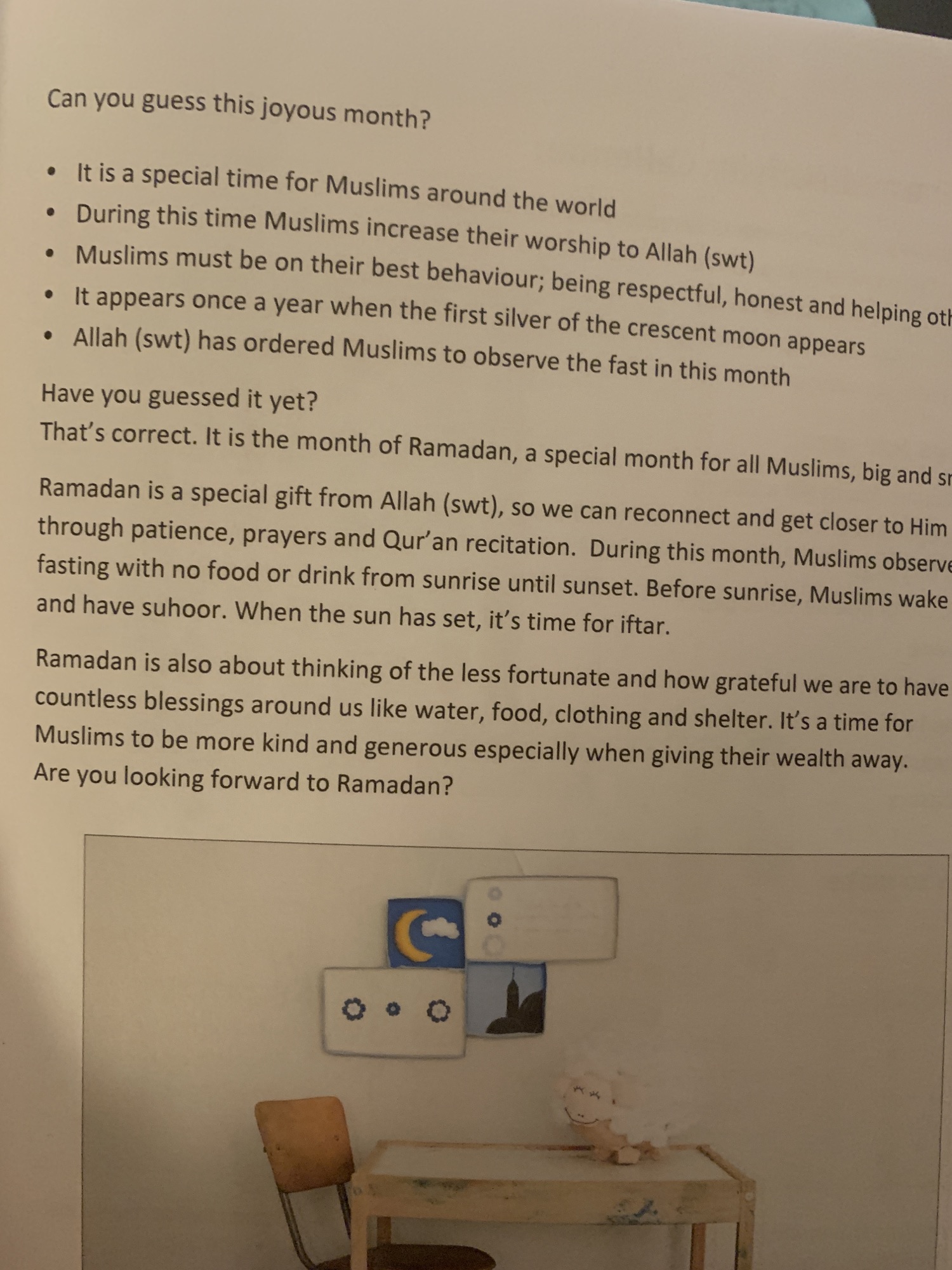
It erroneously says we fast from sunrise to sunset, but does get right that we increase our worship and that fasting was ordered for us by Allah swt.  On the Eid section it discusses the takbirat and gives Eid al Adha a paragraph explanation as well.

A fun library find, that kept us off a screen and able to plan some little activities to do this Ramadan.

A Cat Like Me! A Fun Hajj Tale by Emma Halim illustrated by Aissa Mutiara

Standard
A Cat Like Me! A Fun Hajj Tale by Emma Halim illustrated by Aissa Mutiara

img_8799

A rhyming cat centered book about hajj that has been checked by a Shaykh!  Over 46 pages, preschool aged children and up will be able to see the steps of hajj in a fun, engaging and accurate way.  This book is great for bedtime and small group story time and the reasonable price makes it perfect for sharing too.  The illustrations do not have faces with eyes, but the joy comes through and Bissa the cat makes sure you know how special hajj is.

img_8800

I love that the book identifies what type of hajj is going to be shown and thus signals that there are different ways.  I also love that the book is sourced and the Shaykh is named and qualifications listed.  For so long erroneous information in children’s books has gone unchecked and it really is such an important   verification for something critical in our faith to be sourced and checked. Plus it is reassuring for the reader to feel confident in sharing the information with others.

img_8802

The book radiates with excitement and information and the rhymes and illustrations keep kids engaged.  The book is 8.5 x 8.5 so it might not work in big groups.  I purchased mine from if you use code https://crescentmoonstore.com if you use my initials ISL (Islamic School Librarian) at checkout you will save 10% it is also available here on Amazon.

img_8803

The Night Before Eid: A Muslim Family Story by Aya Khalil illustrated by Rashin Kheiriyeh

Standard
The Night Before Eid: A Muslim Family Story by Aya Khalil illustrated by Rashin Kheiriyeh

img_7123

This 40 page early elementary picture book is set the night before Eid and radiates with love from a boy to his Teita, traditional ka’ak, and the family’s Egyptian culture.  The robust and personal backmatter shares a glimpse into the threads from the author’s real life that the story touches upon, and makes the book extend beyond the pages.  It is worth noting that this book does not articulate if it is for Eid al Fitr or Eid al Adha and thus works for both.   There is nothing religious in the book except a reference to something happening after Eid prayer in a memory, and the shape of the cookie being round like the Ramadan moon, Eid day is not mentioned, it is simply the catalyst for this warm family story about a boy and his grandma making a special treat for the first time and sharing it at school.  The large hardback book with fun illustrations is ideal for both story time and bedtime readings alike.

img_7124

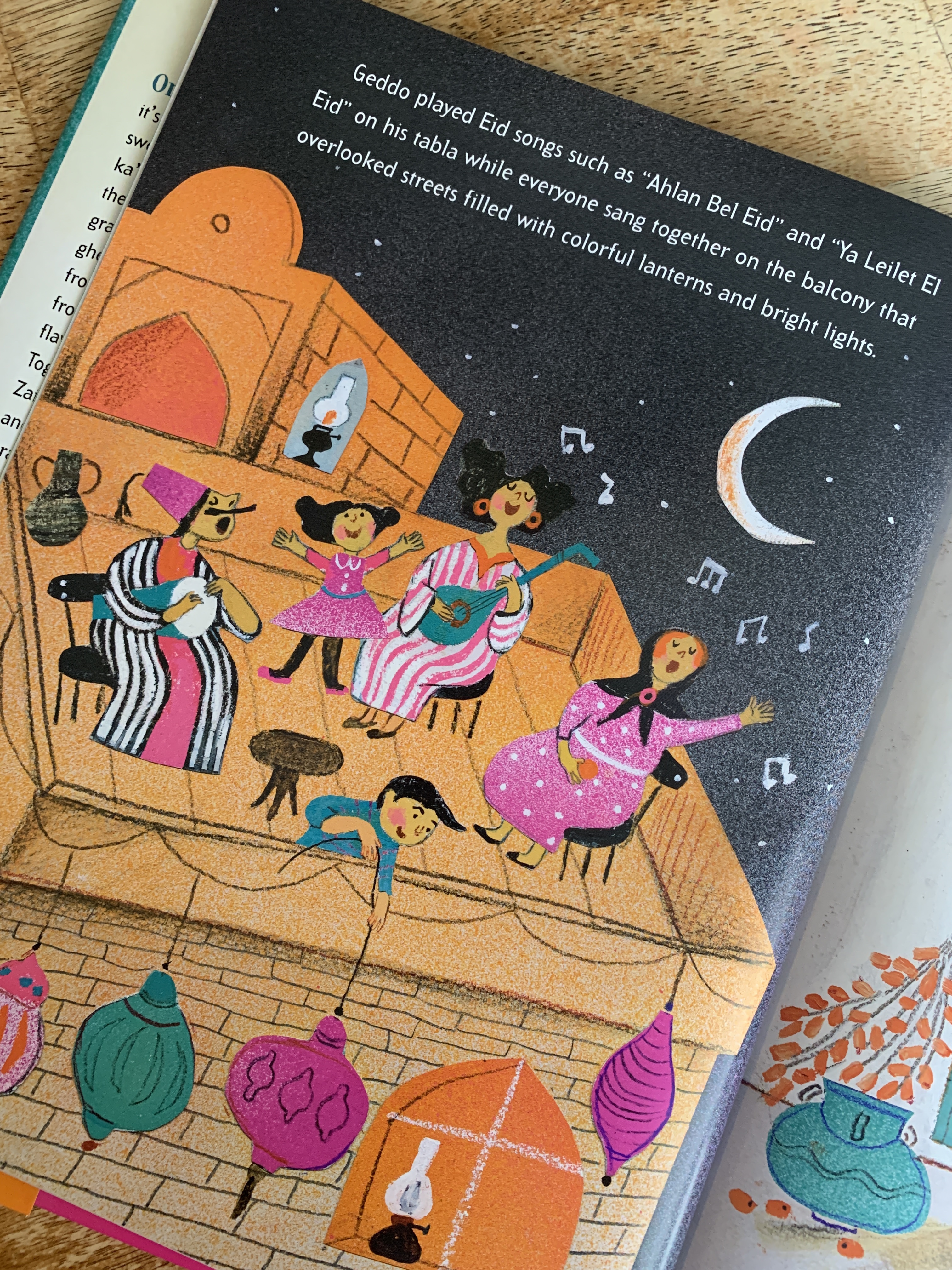
It is the night before Eid and Teita has arrived from Egypt.  Zain can’t wait to make ka’ak to take to school and share with his friends.  The beloved powdered sugar cookies are steeped in tradition, both in Zain’s family and in Egyptian history.  Once the suitcases is unpacked and the special ingredients found, Teita and Mama share memories of baking with cousins, painting henna designs on hands and putting eidiya in envelopes.  The family recalls singing together on the balcony while Geddo played the tabla and lights and lanterns filled the streets below, after Eid prayer they would hand out the ka’ak.

img_7125

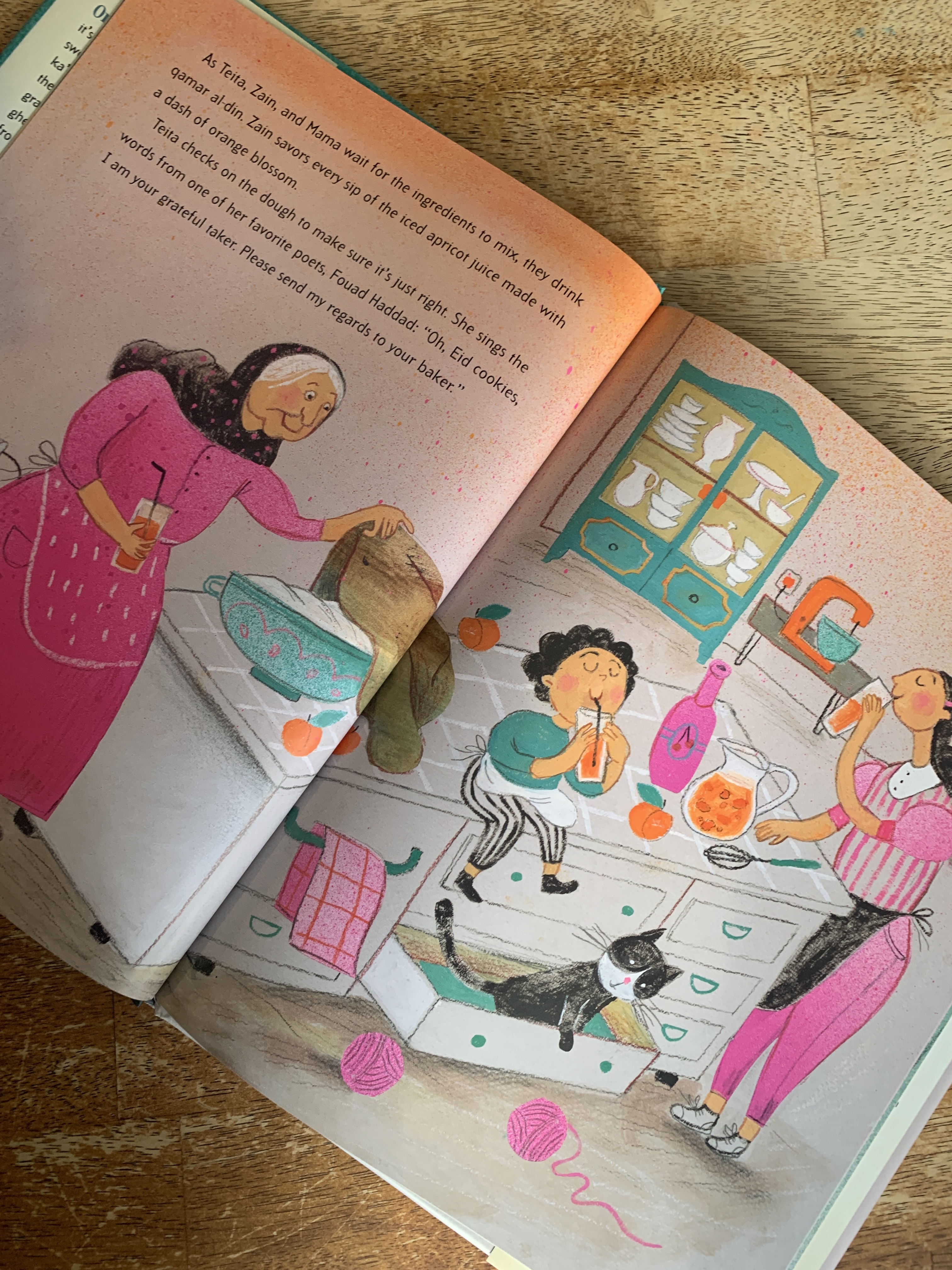
Zain wants the ka’ak to turn out perfectly so his teacher and friends will like them.  Teita tells him that ka’ak is as old as the ancient pharaohs, and that recipes were found in the pyramids.  At one time rulers would even put gold coins in the cookies.  Zain and his Teita mix and add the required ingredients, and drink iced apricot juice as they wait for the dough to be just right.  Getting the cookies pressed with the molds though is harder than it looks, and Zain gets frustrated. Teita’s love and patience and Zain’s clever thinking get the treat making back on track.  The ka’ak doesn’t have a gold coin filling, but they are filled with tradition.

img_7126

The timeline is a bit off for me with the grandma coming before Eid and then the cookies going to school on Monday, and then Monday evening when Zain is writing down the recipe with Teita he is telling her Eid Mubarak and that it is the best Eid ever.  So, it seems that he went to school on Eid, not to Eid prayers, which is fine, just a little sad that there was no Eid celebration or prayers.  I don’t know that kids will be bothered by it, but the lack of mirroring and stressing how joyous Eid is does somehow get lost and mitigated, in my opinion, by skipping acknowledgement of the religious holiday.   In the backmatter the author remarks that she has “outgrown the magic of Eid,” so perhaps it is intentional that the day is not included in the text.

img_7127

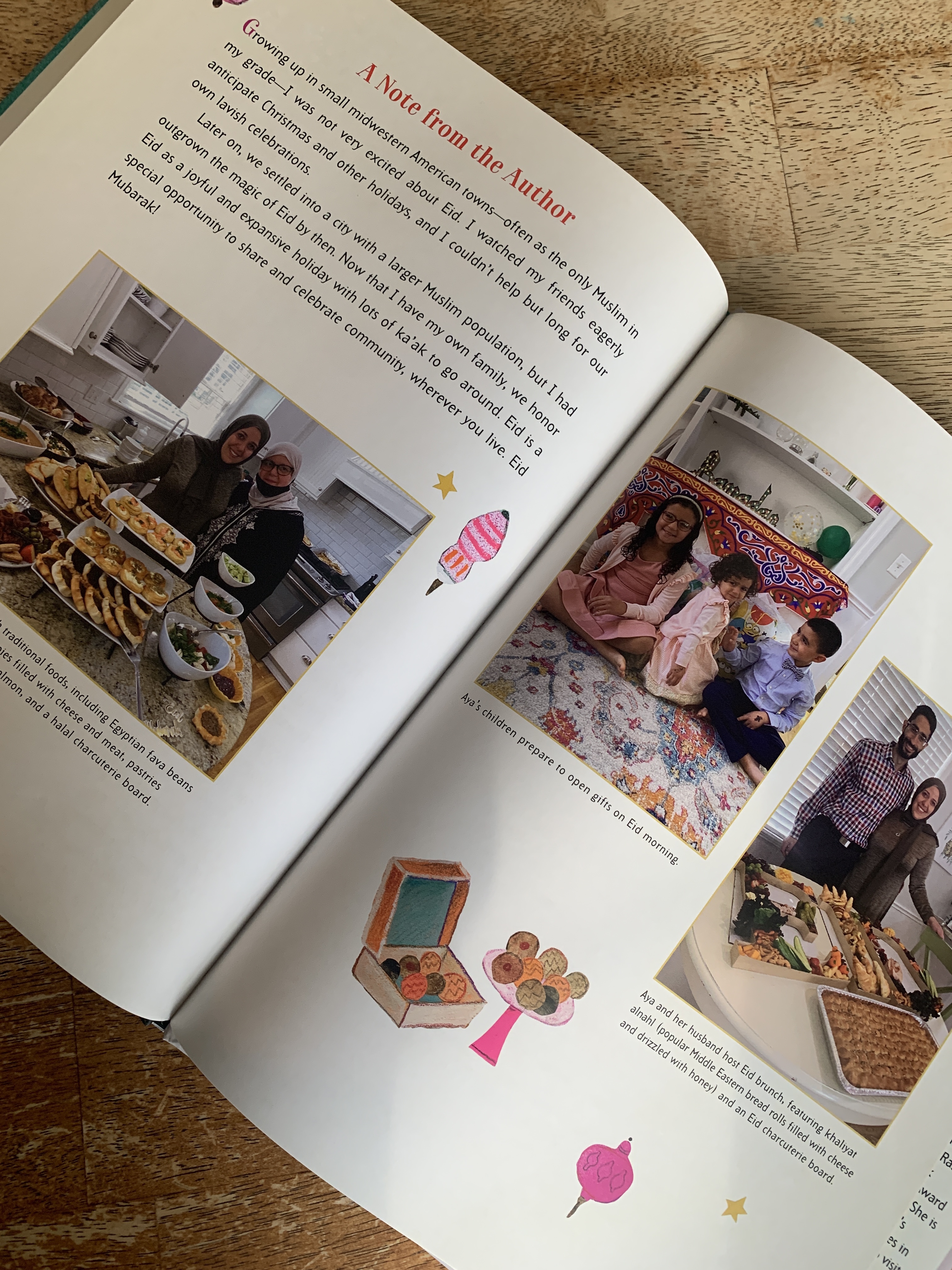
The last six pages of the book are filled with informative and engaging information about What is Eid, Ka’ak Time Line, A Note from the Author with photographs of her and her family celebrating Eid, a Simple Ka’ak Recipe and Additional Resources.

I purchased my copy from Crescent Moon Store where if you put my initials ISL (Islamic School Librarian) in at checkout you will save 10% or is available here on Amazon where the book currently has a coupon for $3.80 off.

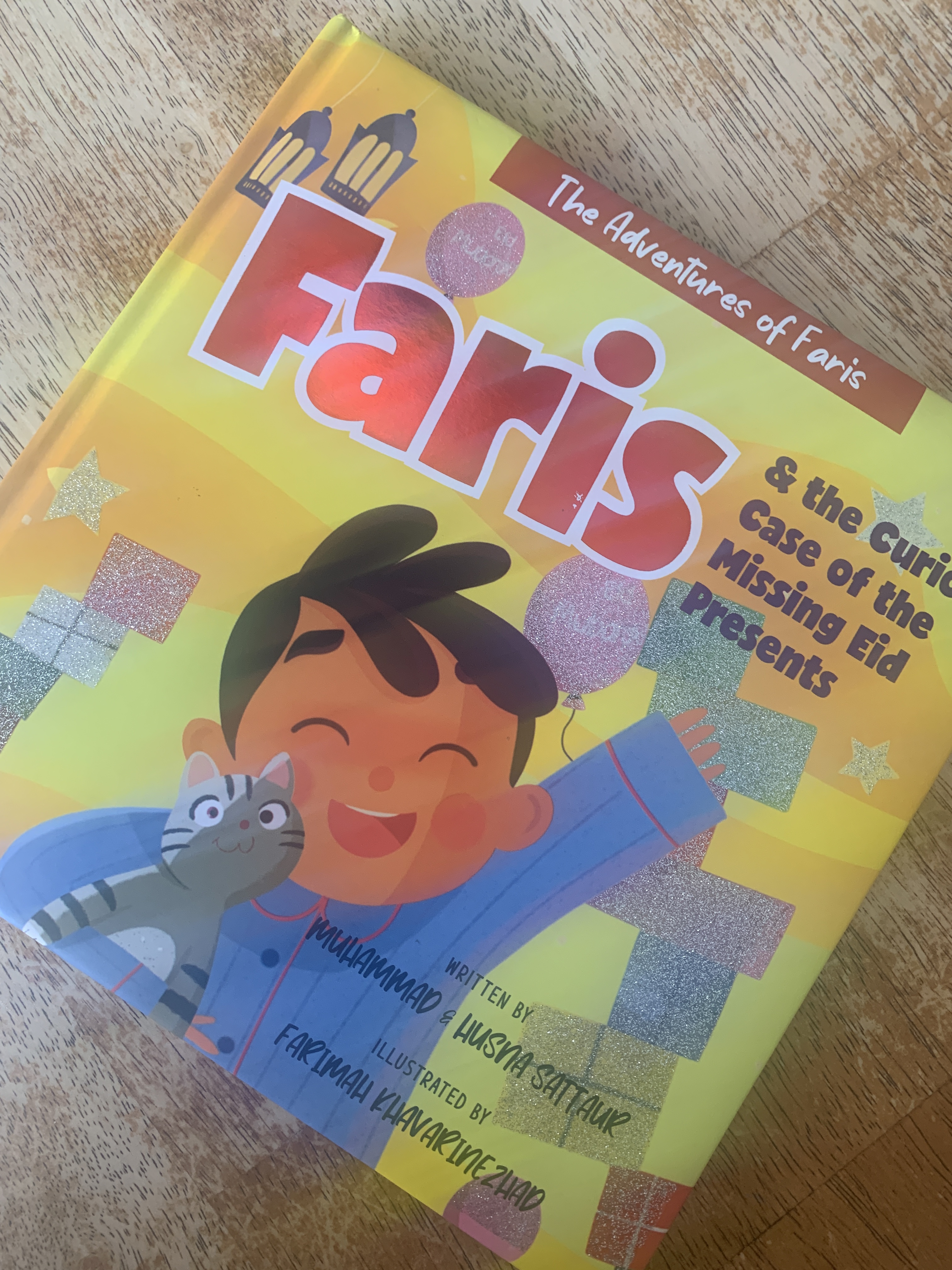
The Adventure of Faris: Faris & the Curious Case of the Missing Eid Presents by Muhammad and Husna Sattaur illustrated by Farimah Khavarine Zhad

Standard
The Adventure of Faris: Faris & the Curious Case of the Missing Eid Presents by Muhammad and Husna Sattaur illustrated by Farimah Khavarine Zhad

img_6999

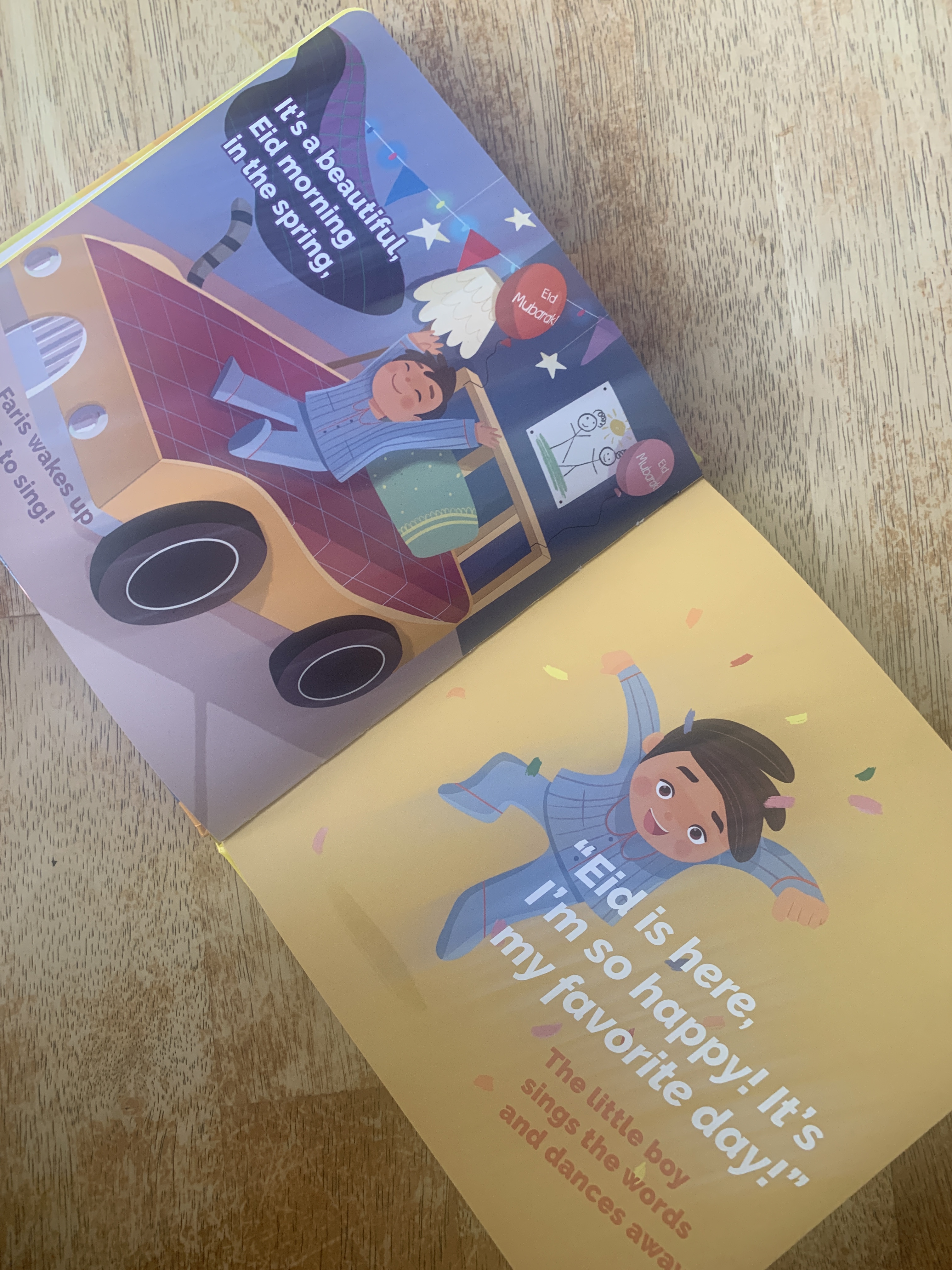
This 22 page padded cover toddler book, is not quite a board book, but the thick cardstock glossy pages are definitely meant for toddler hands.  The book works for both Eid al Fitr and Eid al Adha and my 3 year old finds it silly. My older kids that have walked in and paused to listen to me reading it, as well as myself, feel like a page is missing.  The rhyming story sets the stage of Eid morning and missing presents, but the resolution is abrupt, really abrupt, with no hinting at and the forced rhyme has you wondering who Uncle Sam is in the story.  The 22 pages are bright with Islamic decorations in the house and references to Eid and praying in the text. The excitement and joy are sweet, and the focus is presents, there is nothing about Eid or anything deeper than the story at hand as it stays on level for toddler aged children.

img_7002

The book starts with Faris waking up on a beautiful spring morning, it is Eid and he starts to sing, before tip toing down the stairs in his Eid pjs.  He sees the time and knows they won’t be up til fajr.  So, while kids won’t care, as someone who has read the book now a dozen times, I’m curious how old Faris is that he knows how to tell time, what it means and what time fajr is.  I’m also wondering how it is ok to sing and dance, but then you need to sneak down quietly, and how it is a beautiful morning, if it isn’t fajr yet, it is dark outside.

img_7003

He daydreams in the kitchen before heading off to open presents.  Except the presents are missing. He looks everywhere and imagines a dragon eating them.  I don’t want to spoil where the presents are, but they are found, and he opens them and then his parents wake up.

img_7004

It is a little sad that he opens one at least before his parents come, and I really wish there was a little hinting at what had happened to the presents, it really feels like a page is missing.  The book was published in 2021 so hopefully they will edit the text for a next printing.

img_7001

I got mine from Crescent Moon and you can purchase a copy by clicking this link here, if you use my initials ISL (Islamic School Librarian) at checkout you will save 10%.  


The Love Match by Priyanka Taslim

Standard
The Love Match by Priyanka Taslim

This new YA book features Muslim characters, but is not a religious conscious read that fits in the halal category.  There is a lot of Islam: waking up for fajr, celebrating Eid, a hijabi, mention of jummah, but the OWN voice rom com sets boundaries based on Bangladeshi culture and American perspectives.  The book does not other, or have internalized Islamophobia, or fall in to tropes of oppression and rebelling- quite the contrary- it normalizes everything: LGBTQ+ relationships, dating, music, etc.  The book is well written from a literary perspective: easy read, fleshed out characters, resolved plot lines, I wish there would have been more slow burn and heightened emotion, and cathartic release, but it happily held my attention for 388 pages, so I can’t really complain about plot holes or development.  The problem I have as an Islamic School Librarian is the non issue dating and romance is for the characters with their parents knowledge, both lesbian and heterosexual.  The book doesn’t get graphic, in fact there is only a handful of kisses, but there is a lot of hand holding and pdas in front of parents and even a sleepover with a lesbian couple in a Muslim family’s home, again, nothing “racy” occurs, but the normalization is worth noting for those thinking a Salaam Reads book is going to be a more Islamically centered publication.

SYNOPSIS:

Zahra Khan has graduated high school, and while she’d love to be heading to Columbia to study writing with her best friends, she is stuck deferring her admission and scholarships, and hiding her dream to be an author.  Two years earlier her father has passed away and Zahra works in a tea shop to help keep a roof over the heads of her mother, grandmother, and siblings.  In the Bangladeshi community in Patterson, New Jersey Zahra’s mom imagines arranging a marriage to a wealthy family for Zahra to ease their financial stresses.  When a potential match comes a possible reality, Zahra takes control to try and keep the peace and keep her dreams within reach.  In Jane Austin-y feels, a love triangle emerges, friends step up, culture and family touchstones shared and appreciated, and decisions about the future will have to be figured out at 18 years old.

WHY I LIKE IT:

I loved how easy a read the book is, the cultural framing was warm and rich and never overly explained or apologized for.  It is what it is, it is who the characters are, and while at times they push back on the negatives, it doesn’t disregard the love that exists at the core.  Unfortunately, I really struggled though with the ease in which the characters date with their parents’ knowledge, hold hands, cuddle.  I really couldn’t imagine a practicing Muslim family being so supportive of a lesbian daughter in the way that the Tahir family is and allowing a sleepover, nor could I see a hafiz attending musical concerts and Bollywood movies or an imam passing on “love” notes, even side comments about a loan between mother and daughter being paid back with interest felt off.  I know I know, there are lots of shades of Muslims, but the normalcy of haram I feel in a review of this book should be noted. It isn’t side mentions, they are central to the story and large portions of the book.  The reason I also feel they are worthy of note, is because the book includes a lot of Islam as well.  The characters pray and fast and eat halal.  They are conscious of chaperones in some settings and keeping things appropriate.  There is no doubt that the characters are Muslim, but I think intentionally, to avoid perhaps critiques such as mine, Islam is not used as a reason to do or not do anything, Islam is not used in the thought process or conscience of the characters, culture is.  There is no haram police setting boundaries, it just isn’t what “good Deshi girls do.” To be fair, I don’t think the author has ever claimed that this is a halal love story, or that the characters are exploring their Muslim identities, it is a love story that features Muslims is all.

FLAGS:

Straight and sapphic relationships, secret relationships, kissing, hand holding, hugging, lying, music, loss, bullying, interest.

TOOLS FOR LEADING THE DISCUSSION:

I would not be able to use this book, it would be very damaging to be given to a Muslim child from a Muslim teacher in an Islamic school.  It normalizes a lot of haram in a familiar Islamic framing that I think would really confuse YA readers who see themselves and see no push back or consequences for actions they know to be against Islamic ideology.