Tag Archives: wudu

My First Salah Book: Why and How we Pray by Learning Roots

Standard
My First Salah Book: Why and How we Pray by Learning Roots

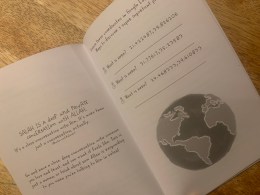
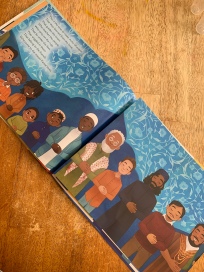
Over 91 pages this informative book tells “The Story of Salah” through the miraculous night journey, how to do wudu and its benefits, step by step how to make salah, and then a story style portion of “Life with Salah.” I do not have the digital “kitab” pen that allows readers to have the book read to them and activities made interactive without parental involvement, but even with out it, the book is a pretty solid resource.  The hardback binding, and full color pages are not crowded, they introduce nine characters at the beginning and feature them throughout the pages learning the steps, imagining witnessing the events, and putting the lessons into practice.  Some of the recent Learning Roots books have the characters watching or imagining themselves in story’s of the Sahabas and Prophets, that make me uncomfortable.  The first chapter of this book, is more limited as it illustrates a light in the sky as the Buraq being seen by some children, not the characters in the book, and a silhouetted tree as Sidrat al-Muntaha.  As I am not knowledgeable enough to know if it is “right” or “wrong” to have a child seeing the silhouetted tree and pointing to it, or who it is meant to be, I’ve included pictures for you to decide what is best for your family.  I particularly like that on the pages where Arabic is spoken it is found written in easy to read Arabic with English translation and transliteration.  Within the text there are attributions of hadith and after each chapter there is an activity and questions.  The book concludes with a glossary.

Whether as a tool to learn for the first time, or a book to revise with children already praying, the approach is gentle and easy, inviting children to engage with the pages.  The four chapters are packed full of information, but the illustrations, diagrams, and steps, also allow the book to be referenced, or read cover to cover.

The last chapter, “Life with Salah” shows the character group engaging with salah in a very idyllic way, but given the tone of the book, it works, and will allow readers to see salah as more than just an obligation, which is important.

I got my copy from crescent moon store, if you use my initials (ISL) at checkout you can save 10%.

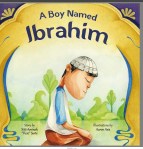
A Boy Named Ibrahim by Sitti Aminah “Flexi” Sarte illustrated by Aaron Asis

Standard
A Boy Named Ibrahim by Sitti Aminah “Flexi” Sarte illustrated by Aaron Asis

img_9818

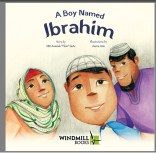
This 24 page Filipino book originally published in 2014 was republished with a new traditional publisher earlier this month and reads and feels like solid Islamic fiction.  The book focuses on the five daily prayers throughout the day of a young boy’s life, with the repetitive refrain being the steps of wudu. Ibrahim leaves his activities to pray, wakes up early to join his parents in salat, loves his mother, and listens to her reminder about prayer being an important way to remember Allah swt.  The book is preachy, religious, and unapologetic.  The timing of fajr is a bit questionable, but roosters do crow at all hours, and the light outside the window might be a street lamp and not the rising sun.  Islamic phrases are used, but it does say “Alaikum Salam” in response to “Assalamu Alaikum” which is a variation of the norm.  Overall, the book is a nice addition to share with young children highlighting the importance of prayer, it also works well to learn and review the steps of wudu, and the names and order of salat, alhumdulillah.
The sun is about to rise, Ibrahim says, “Bismillah,” makes wudu and joins his father for prayer.  It is the first day of school and Ibrahim is excited.  He spends half his day at school, then prays Dhuhr.  He makes wudu and prays.  While playing soccer in the afternoon, he leaves the game to pray his Asr, but first he makes wudu.

Once home he chats with his mother about prayer, and coming closer to Allah swt, while he enjoys a snack and then makes wudu and prays maghrib.  Baba then comes home, they eat and pray isha all together.

I enjoyed the illustrations and the simple story.  The book is straightforward, and the contentment and unapologetic portrayal of prayer in a person’s day is sweet and important to highlight. For preschool to early elementary this book would be a great addition to shelves, story time, and bedtime as well.

The book can be ordered on Amazon here

img_9830

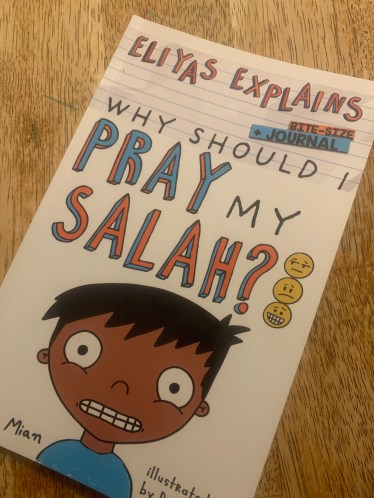
Eliyas Explains Why Should I Pray My Salah? Bite Size Journal by Zanib Mian illustrated by Daniel Hills

Standard
Eliyas Explains Why Should I Pray My Salah? Bite Size Journal by Zanib Mian illustrated by Daniel Hills

img_7821

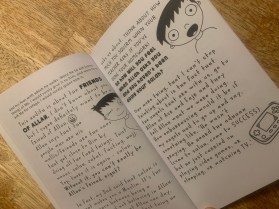
I love the Eliyas Explains books, but was a little curious what a “Bite-Size Journal” version would be, and Alhumdulillah, the silly relatable voice is the same, there just isn’t as much fictional story weaving together as the Angels and Miracles books had.  Instead it has activities and guided prompts for the reader to engage with and space for them to write.  The first 15 pages or so are Eliyas explaining about salah and what he has learned and how he has improved, and some parables through his point of view.  Then the journal pages begin, and while the first few are truly “journalistic” as it progresses to the last of the 60 pages you realize along the way there was a lot of “story” included on the activity pages as well.  The book isn’t blank pages and bound together as a book, it has text, it has hadith, it has games, it has questions, and trackers, and a lot of information.  I love that it states that it has been checked and the Shaykh’s name is included, the positive child framing, and the reasonable price point.  For first through third graders learning about salah, wudu, athan, and inshaAllah becoming more mindful of their actions and behavior, this book will be relatable, funny, and informative.

img_7823

SYNOPSIS:

The book starts with Eliyas remembering when he was too lazy to make wudu and pray his salah, he then offers a story of an orphan and a muffin and a lady who makes the muffin to try and show readers that salah benefits and nourishes us and the maker of the muffin truly loves us.  It is a little random, but it somehow all works and kids will go along with the allegory, it isn’t drawn out.  He then moves to talking about how Allah swt loves him and what his parents told him that helped him to love praying.  There are hadith and Eliyas’s explanation attempts, drawings, and some really powerful points about angels and being accountable on the day of judgement to Allah swt.  The journal pages involve decoding, timing your prayers, writing down all the places you’ve prayed, latitude and longitude decoding and a lot more.  The book also discusses the athan and Surah Fatiha.

img_7824

WHY I LIKE IT:

I love the voice of Eliyas.  It isn’t fear driven, or punishment framed, it stays positive and motivates from a place of love, but the conscience and priorities are highlighted too.  It is such a crucial part of raising young Muslims, to lead with Allah’s love, but as kids get older you want to introduce consequences, and choices, and being accountable, and this book does it seamlessly with out it being overwhelming.

I honestly don’t know if I like the journal format or the other Eliya’s Explains books more, I do like the storytelling of Miracles and Angels and the way the facts are woven in, but I think for the topic of Salah this format works.  I am happy with mine, and you can purchase yours here from Crescent Moon Store.

img_7825

FLAGS:
None

TOOLS FOR LEADING THE DISCUSSION:

I don’t think the book would work for a book club, but in small groups at an Islamic School or Weekend School the teacher could very easily and affordably have a book for each student, or read aloud the story parts and engage the students in the activities without any difficulty at all.

The Masjid Kamal Loves by Ashley Fraklin illustrated by Aaliya Jaleel

Standard
The Masjid Kamal Loves by Ashley Fraklin illustrated by Aaliya Jaleel

img_7811

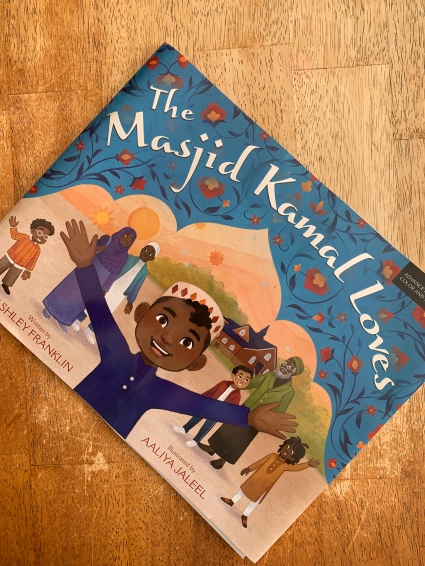
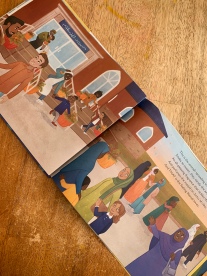
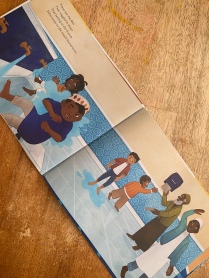
I don’t normally post about upcoming releases this far in advance (2.5 months), but I am hoping that if I share the link for preorders, I just might help in signaling to the traditional publishing world that books like this are so so so important and that we will support unapologetic, well written, Muslim centered, Muslim and Black joy featured books with our purchasing power.  This book is incredible for toddlers to early elementary in its “This is the House that Jack Built” format.  Muslim kids will giggle with excitement as they see themselves happy to see their friends at Jumu’ah, flinging shoes a little too hard before entering the musallah, splashing a bit when making wudu, playing while helping put out the prayer rugs, and getting a little wiggly or tired during the khutbah.  The happiness and love radiates off the pictures and through the text that even non Muslim readers will feel our connection to our Masjids and the prayers that occur within.  Muslim authored, Muslim illustrated, masjid not mosque, and a beautiful Author’s Note, makes this book a must have on every shelf where young children need books that mirror their experiences and provide windows into the beauty of Islam.

img_7814

The book starts out describing Kamal’s smile and offering the reason for such joy as being Jumu’ah at the masjid. It then starts with describing the masjid and all that is contained with the lines adding on the refrain of “the masjid Kamal loves.”  The friends, the shoes, the feet, the rugs, etc.. Terms such as imam, ummah, salaam are in the text and the illustrations show wudu, salat, khutbah, conveying a Jumu’ah experience.

img_7813

Each page is brightly illustrated across horizontal orientated scenes.  The expressions on the kids faces, are engaging and smile inducing and the lyrical text has a rhythm and strength that makes you feel proud to also have a masjid to love like Kamal.

img_7816

I have an arc, but have preordered a copy for myself here and hope you will do the same. Please also request your public libraries to order it, and if they have already you can place the book on hold, inshaAllah little steps to show support.

My First Book About Salah: Teachings for Toddlers and Young Children by Sara Khan illustrated by Ali Lodge

Standard
My First Book About Salah: Teachings for Toddlers and Young Children by Sara Khan illustrated by Ali Lodge

img_3719

Looking at the books in the series, reading them to my children, getting the latest one delivered to my doorstep: every step along the way makes me smile, alhumdulillah.  The soft warm illustrations and impressive amount of information lovingly conveyed in board book form really makes the series a staple for young children.  The newest addition to the series is about Salah, and I love that the framing is that prayer is a blessing, it doesn’t open with listing the five daily prayers, it begins with Isra wal Miraj.  It sets the tone that prayer is special and beautiful and a gift.  It does eventually list the five required prayers, the words of the athan, Fatiha in English and Arabic, steps of wudu, and parts of salah, but the way it is woven together is seamless and so much more than just lists of information.  With ayats from the Quran sprinkled in, the book flows from one focus to the next, leaving the end as always, for facts and questions.  Appropriate for ages two and up, this 26 page board book can and will still inspire and teach older kids.

The only pause this book gave me were the illustrations.  There is not a single page where the people praying are standing shoulder to shoulder, foot to foot.  I could see if in a few pictures the creative liberty, or Covid reality manifest itself in the pictures, but whether it is a family praying, or people in a masjid, there is a gap between the individuals, and that seemed off to me.  Additionally because of the spacing in all the pictures, the pictures where perhaps the people are not praying together, but are just shown to be making tasleem or the illustration that all Muslims of all colors and all professions and all abilities pray, it almost seems to show men and women praying together.  I don’t know that the toddlers in the audience will notice, but perhaps be aware of it if when reading it to your children.  Aside from that the illustrations show the global faith of Islam and the beauty that we all worship together.

Available to purchase here and I’m sure it will be stocked by Crescent Moon as well.  Oh PS it also comes with a sheet of stickers.

This is Why We Pray: A Story About Islam, Salah, and Dua by Ameenah Muhammad-Diggins illustrated by Aaliya Jaleel

Standard
This is Why We Pray: A Story About Islam, Salah, and Dua by Ameenah Muhammad-Diggins illustrated by Aaliya Jaleel

this is why we pray

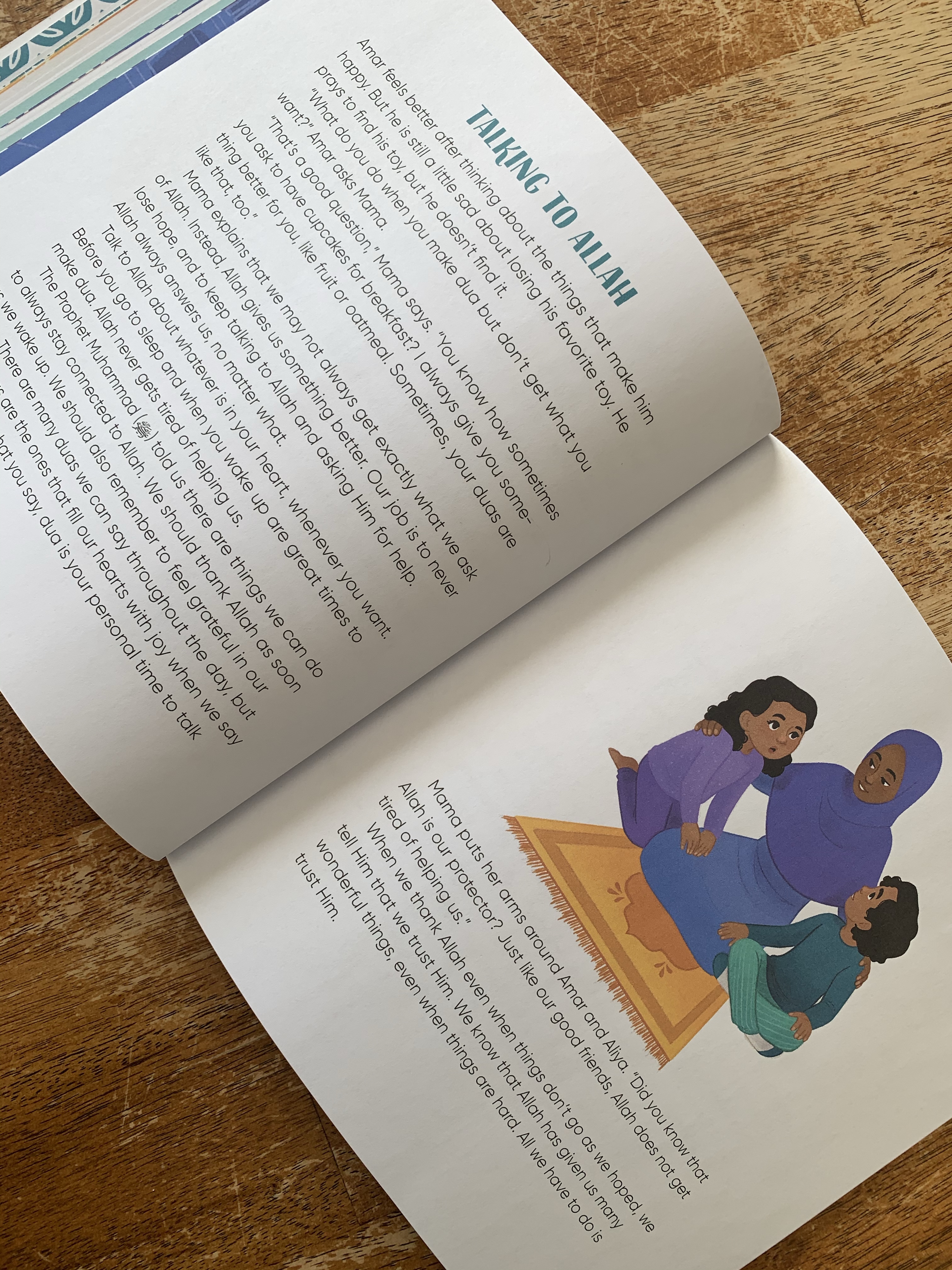
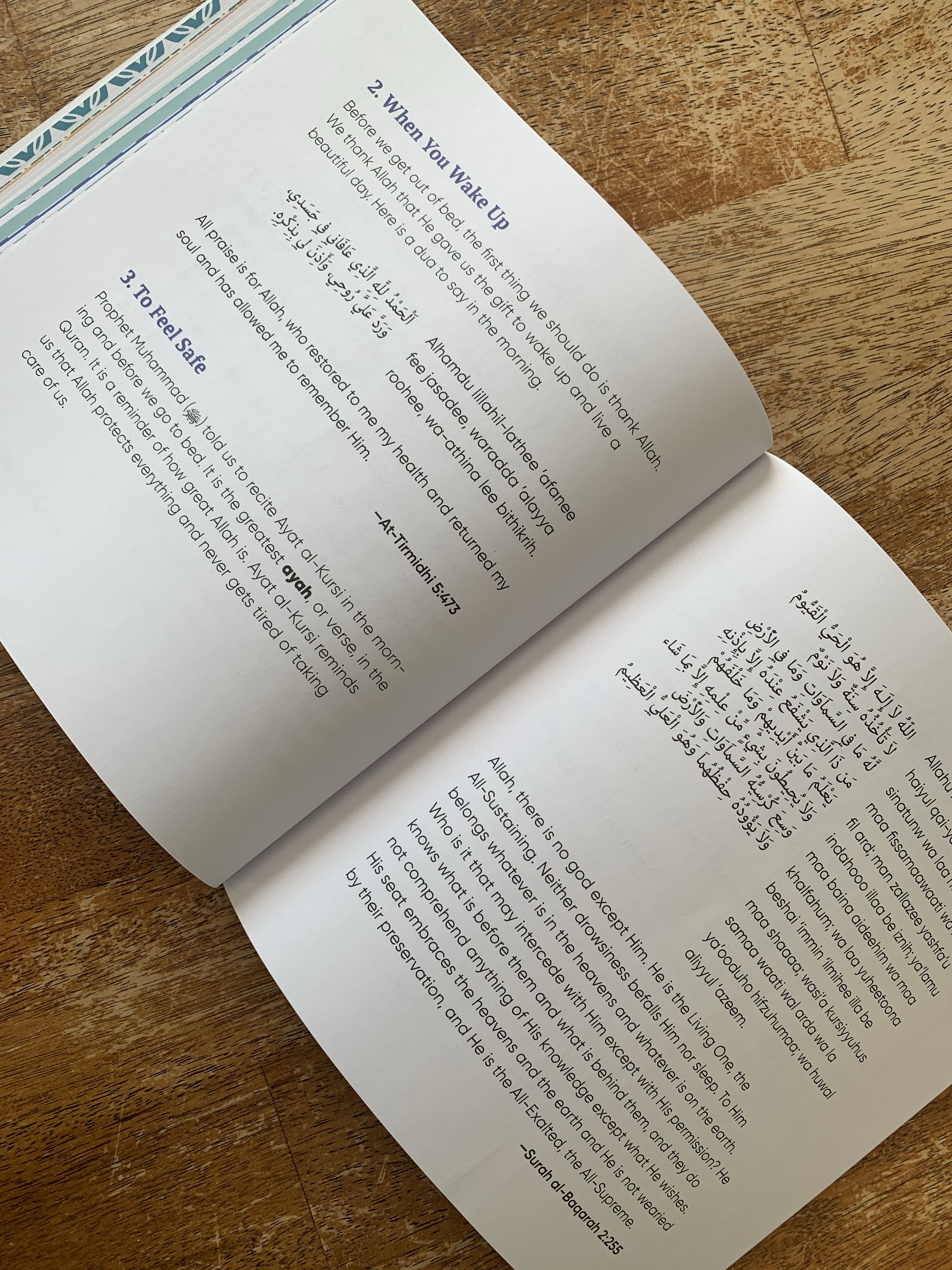
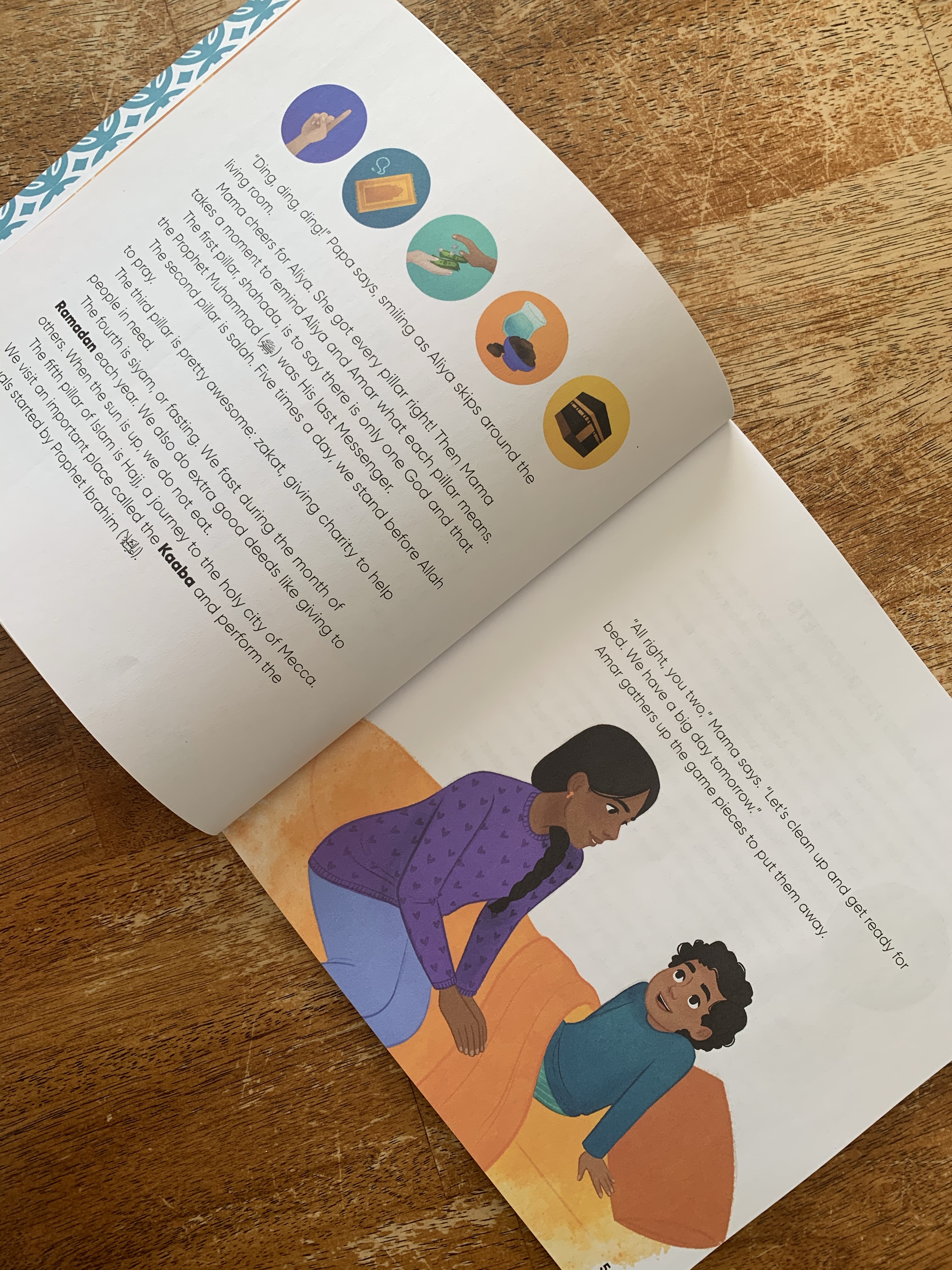
This 8×8 softbound 55 page book for ages 5 to 7 is a great resource for learning the basics about the five pillars, wudu, salah and dua.  It claims that it is a story, but I feel like that is a bit of a stretch.  It has fictionalized framing that is done well, but to call it a story I think is misleading.  It is set up like a children’s Islamic text book, think Islamic School or Sunday School curriculum, where there is a story that highlights Islamic concepts with vocabulary, there are breaks to focus on some specific idea from an outside source, in this case the Quran, there are things to think about, questions to answer, and then the same characters re-emerge in the next chapter to repeat the process. The book has an amazing illustrator, but there are only maybe three full page illustrations, four half page illustrations, and the rest are just small glimpses to compliment the heavily text filled pages.  I can see myself reading the entire book to my five year old, and then it sitting back on the shelf to be pulled out and revised when we need to go over salat, wudu, or need to learn some duas, and understand the five pillars.  I don’t think it will be requested for the “story,” or the pictures, it just isn’t that type of book.  It borders fiction and nonfiction, but I think it is closer to nonfiction, and works well as a tool to engage your children with easy to understand text, quality illustrations to see the steps of salat and wudu, and to see Islam practiced in scenarios that young children will recognize, such as playing games, going to the beach, and losing a favorite toy.

img_0647

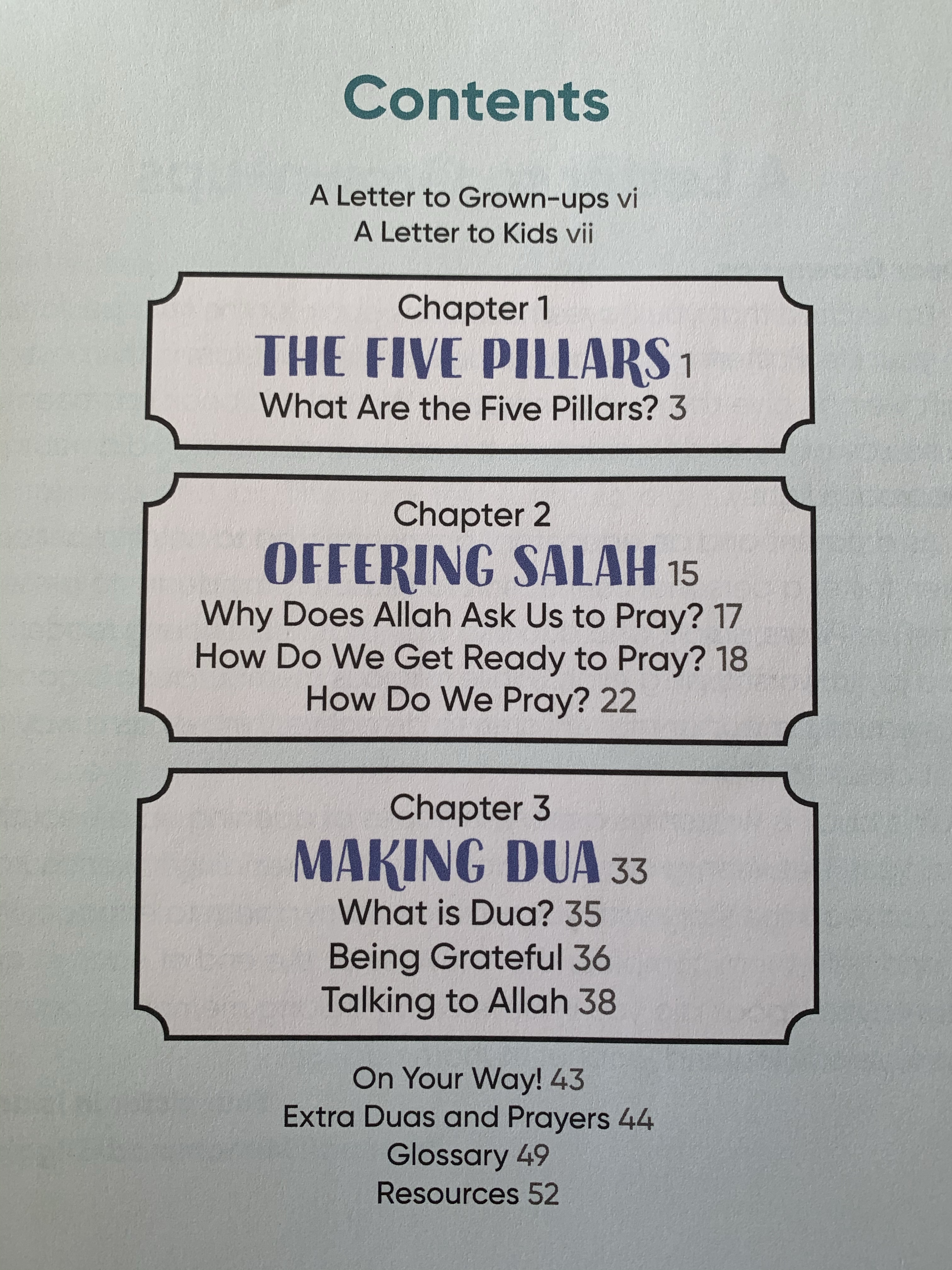
The book is divided in to three chapters: The Five Pillars, Offering Salah, and Making Dua.  Before the chapters there is a letter from the author to grown-ups and then one to kids.  After the final chapter there are reference pages with extra duas and prayers and a glossary.

img_0649

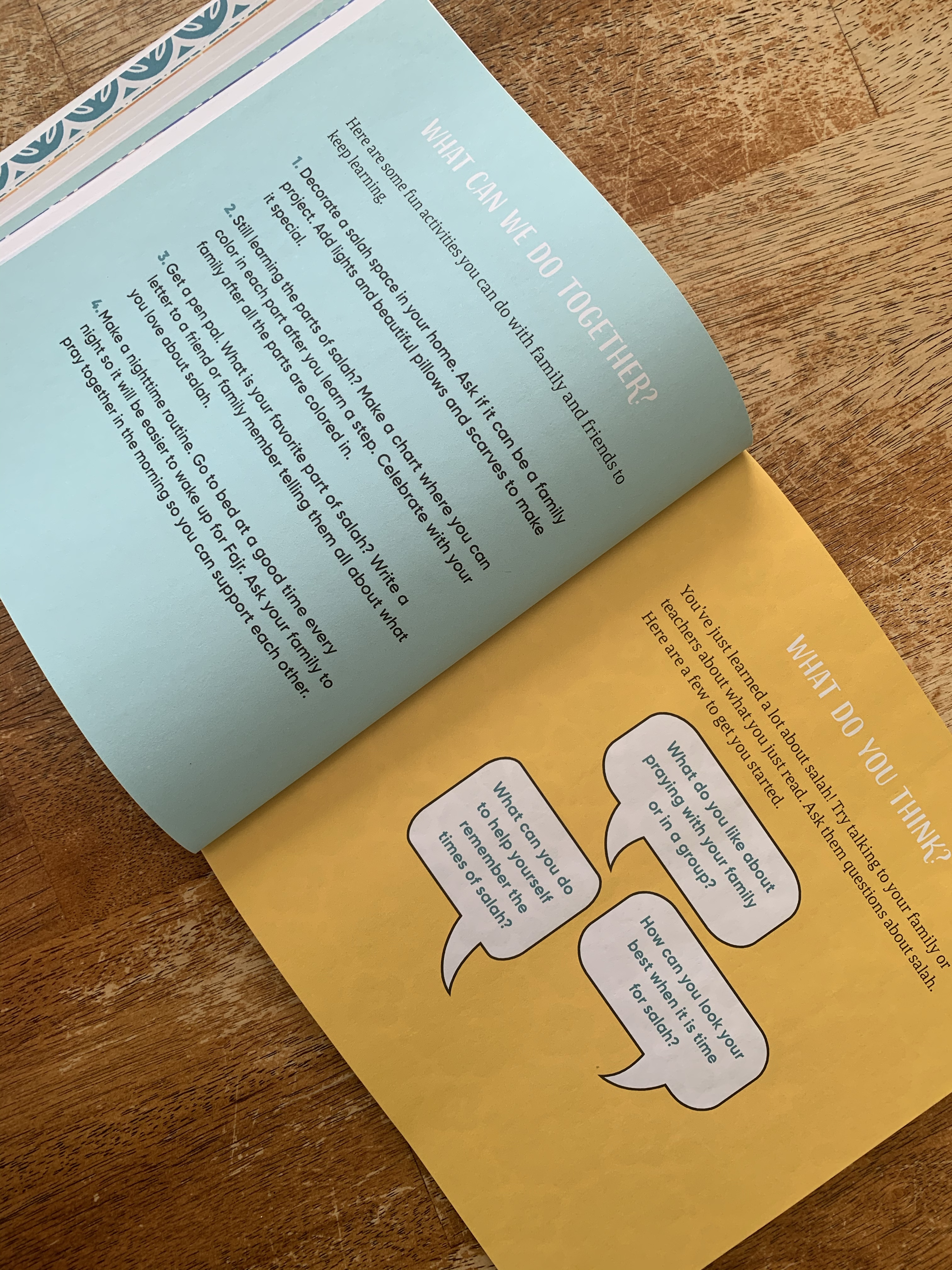
The first chapter opens with the Abdur-Rahman family playing an Islamic question game.  Older sister Aliya knows the five pillars, younger brother Amar needs a little more explaining.  The next morning the kids are heading to the beach, but first they have to get up to pray salah and send some food to the neighbor. As the kids drive they talk about Ramadan and their Uncle Sharif having just gone for Hajj.  There is then a page dedicated to a Quran Story Time that focuses on Allah swt wanting us to ask him for each and everything no matter how big or small. There is an ayat from the Quran as well as a hadith. The next page is a section called, “What We Can Do Together,” to further learn about the five pillars, and then some questions asking the reader, “What Do You Think?”.

img_0654

Chapter two has the family at the beach pausing their fun to pray.  But first they have to make wudu, and the steps are illustrated and detailed with tips and directions.  They then pray, again the steps and words are detailed and illustrated with tips about how to stay focused and the like.  The translation of the Arabic is included and the transliteration is as well.  The Quran Story Time focuses on Fajr and then the questions and ways to further engage with the information concludes the chapter.

img_0648

The third chapter is on Dua and has the kids barely making it to Sunday School on time.  Papa says he made dua that they wouldn’t be late, and even in class the lesson is on dua. After class Amar can’t find his toy even after making dua and is encouraged to be grateful for what he does have.  The Quran Story tells the story of Prophet Muhammad (saw) helping the old woman who is talking bad about the Prophet and how after he helps her and he tells her his name, she converts.  I don’t know that, that is in the Quran, I thought it was a hadith?

img_0655


The kids learn that Allah swt may not answer duas, but will inshaAllah give them something better.  There are four additional duas to learn in the moving on section and the bolded words throughout are defined in the glossary.

img_0651

I’m not sure about the title of the book, it is about more than just prayer, so don’t think that it is limited to just that.  It also doesn’t detail the number of rakats or what breaks wudu, it is specific in somethings, but is more a broad overview than an all encompassing handbook on salat.

img_0656

I think the book is well done and will be useful for most, if not all, Muslim families with young children learning the basics, but it isn’t a picture story book in my opinion, it is more of a fun engaging twist on information that might otherwise be presented in a boring manner.

img_0650


We’re off to Pray by Sana Munshey illustrated by Eman Salem

Standard
We’re off to Pray by Sana Munshey illustrated by Eman Salem

img_8684

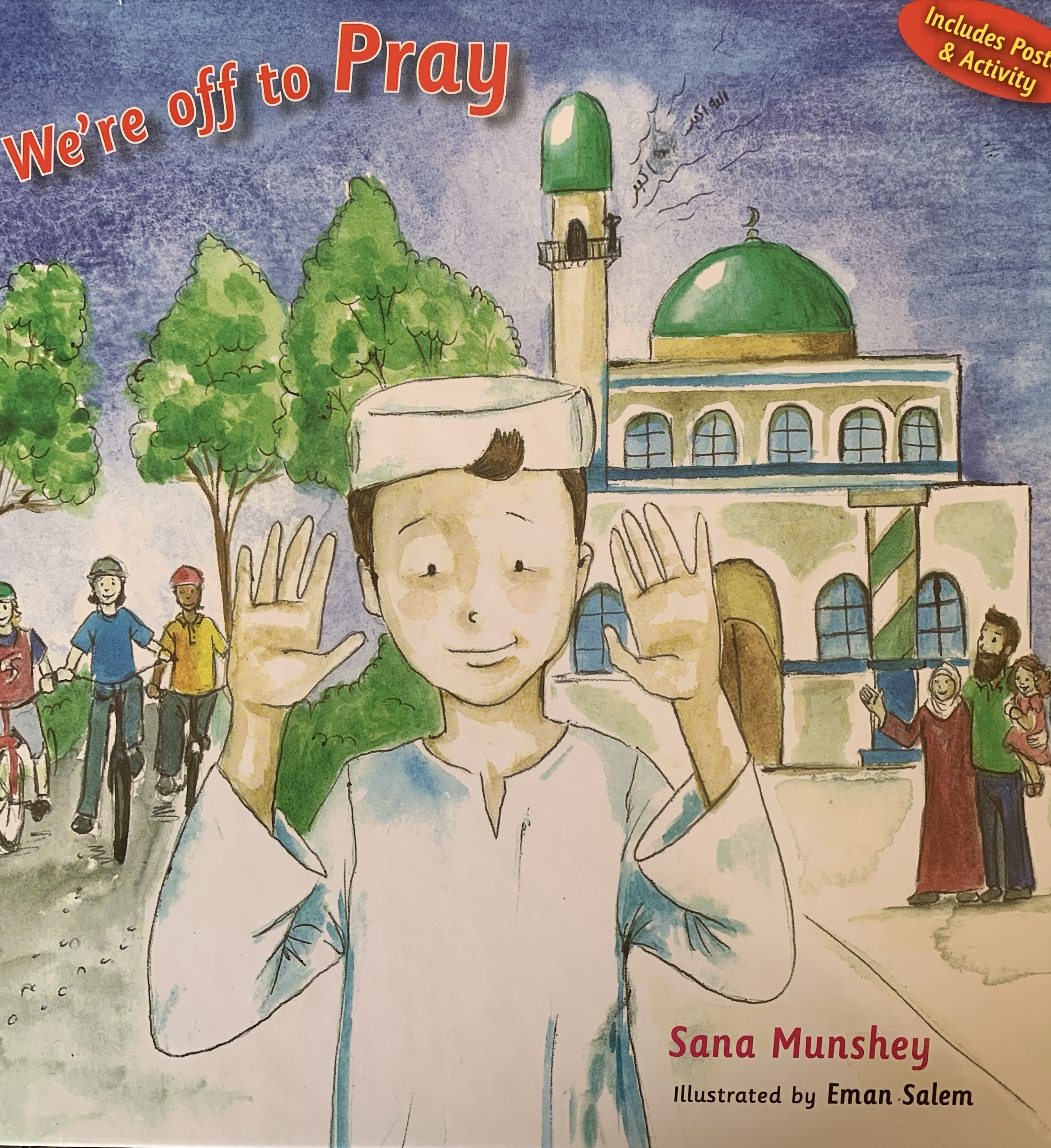
This 8×8 hardback rhyming book for ages 4 and up is filled with detailed pictures that will remind children of all ages how important salat is despite how tempting it often is to neglect it.  I think six and seven year olds will benefit the most from this 30 page book that also has an activity poster included, as they start to take on the responsibility of praying on time and making good choices.  The gentle parents, the relatable scenario and the adorable little sister, bring this story to life, and will hopefully be a benefit for young muslims and their families.

img_8685

A small family of a mom, a dad, a brother and a sister are out working in the garden when the athan is heard.  The five prayers are mentioned as they set off to pray just like the Prophet (saw) did.

img_8686

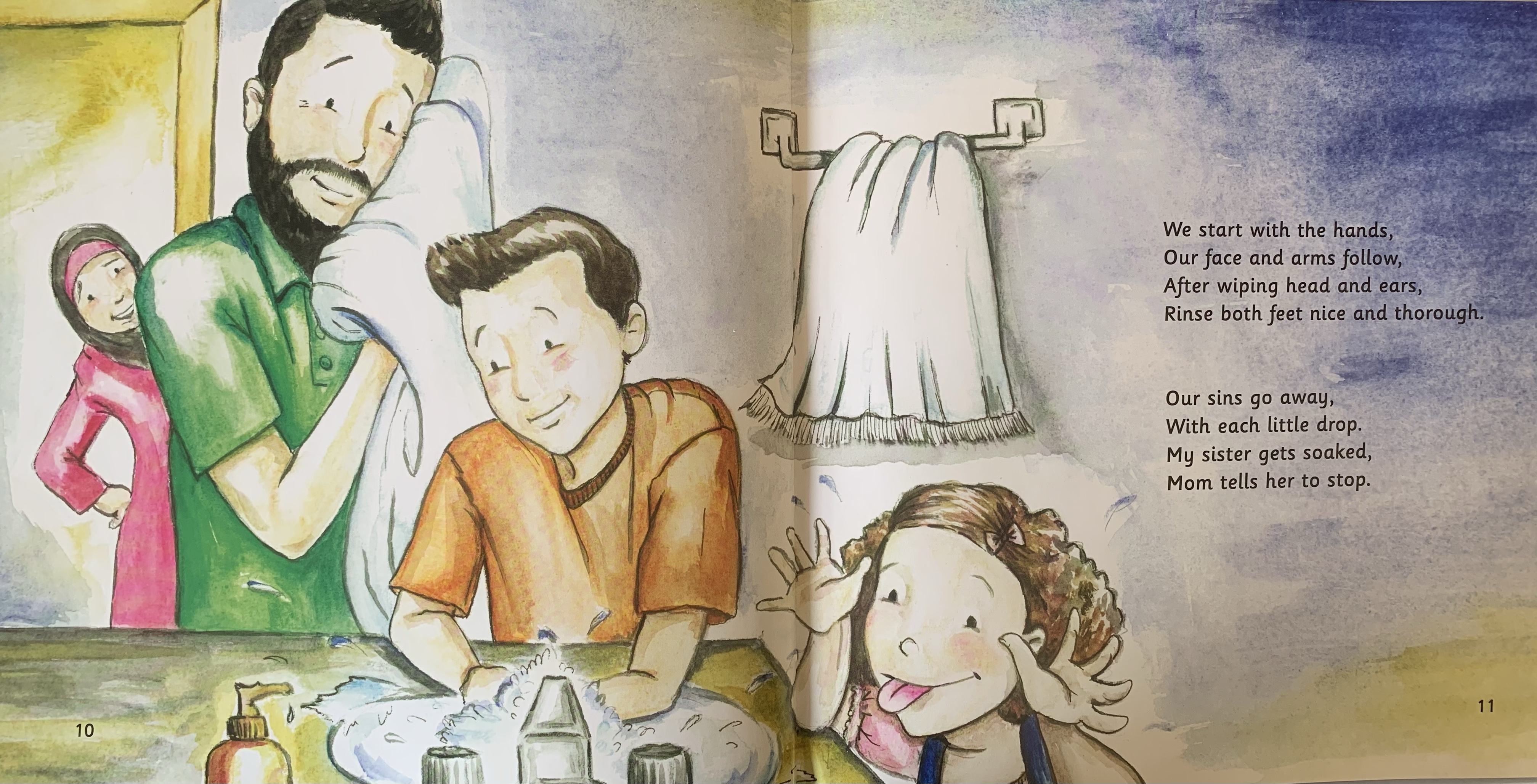
They all head in to make wudu as wudu and salah go hand in hand.  They start with bismillah before going through the simplified steps to wash their sins away.  They are about to start, when the doorbell rings.

img_8687

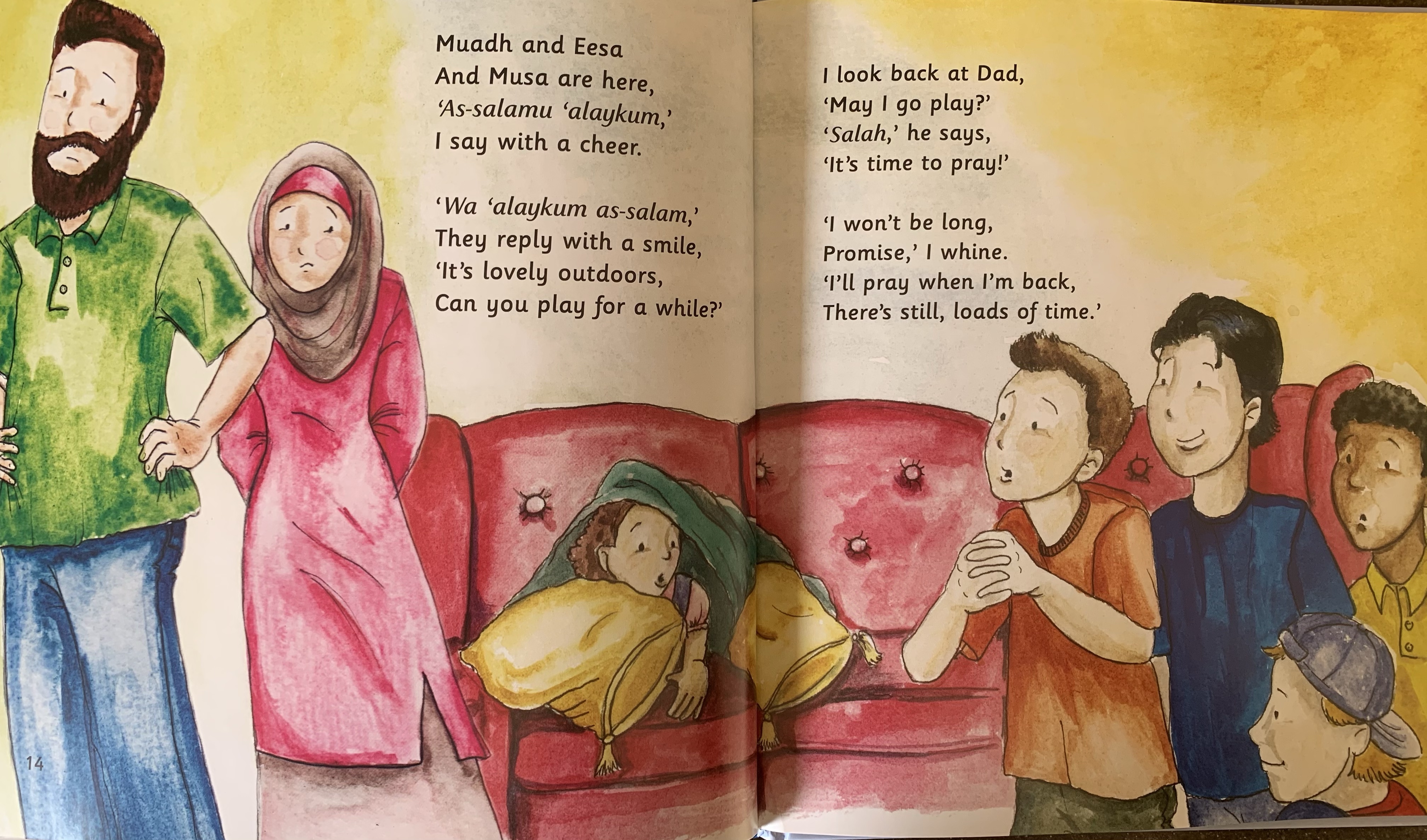
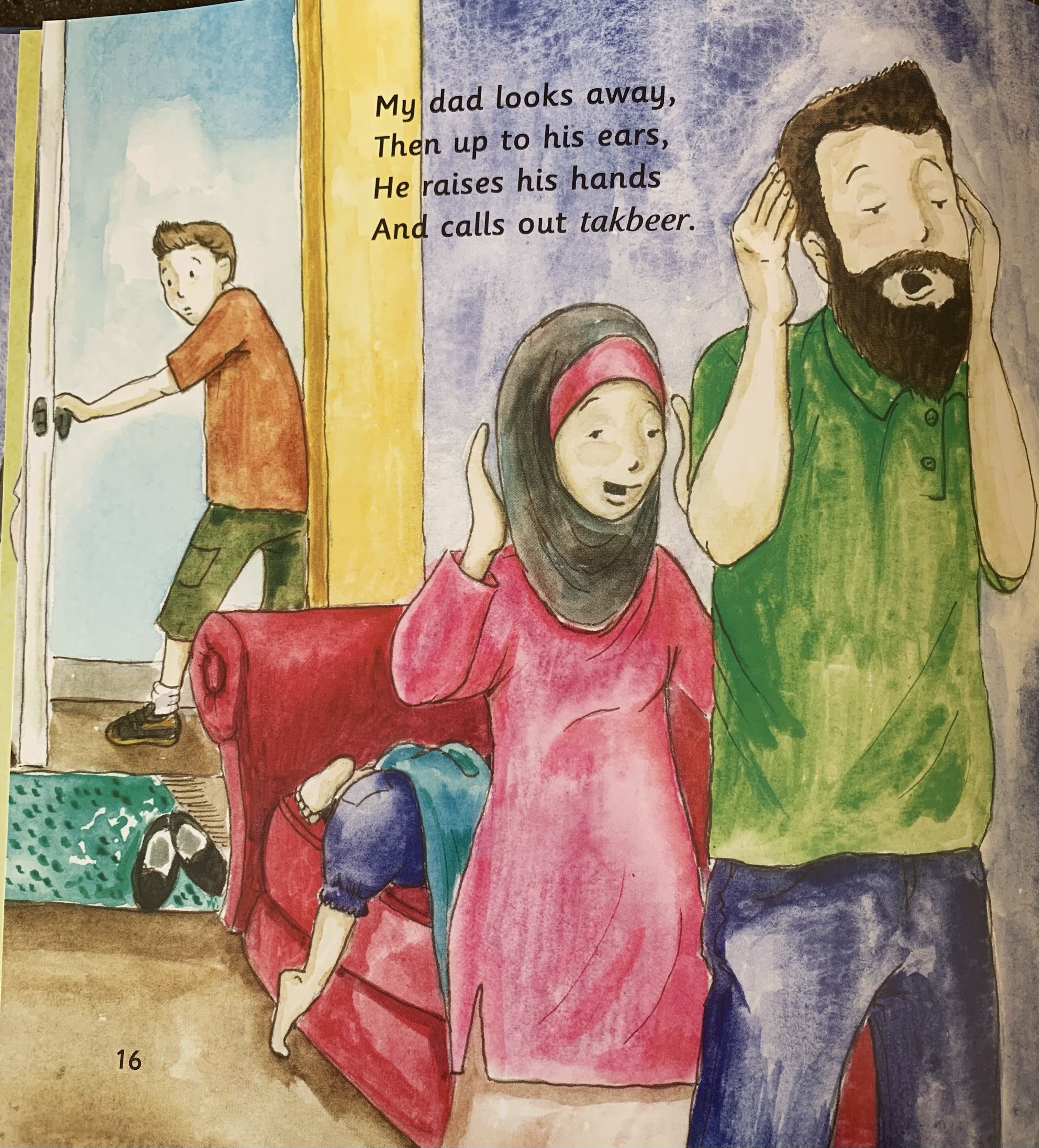
Friends have come to play.  Mom and dad tell the boy to pray.  The boy says there will be time after they play.  Once takbeer is called, the boys slip out on their bikes.  The boy wants to have fun, but something is nagging at him and he wonders what the Prophet (saw) would have done.

img_8688

Whispers urge him to enjoy the beautiful day, but he realizes what he must do, and when his friends ask what is wrong he suggests they go pray.  Aqeemus salah!

img_8689

They head back to the boy’s house, make wudu and pray together. The steps are named and explained and after concluding he sees his proud parents watching.

img_8690

There is a glossary at the end and the poster has the steps of wudu and salat as well as an activity to put the steps in order.

img_8691

Mosque by David Macaulay

Standard
Mosque by David Macaulay

mosque1

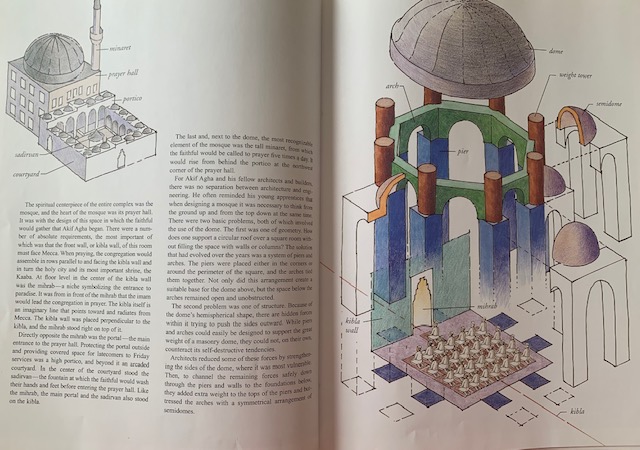
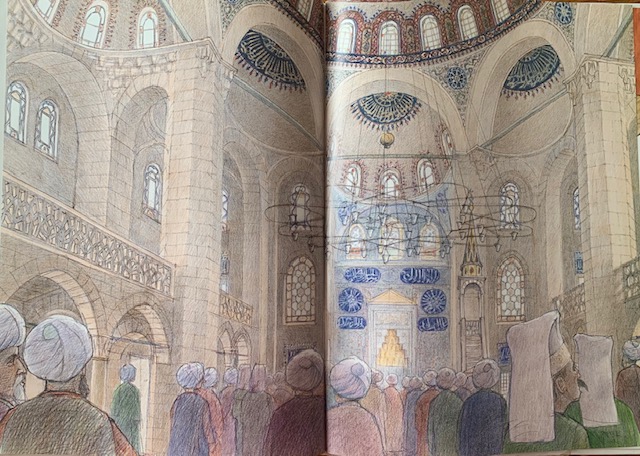
This 96 page “picture book” written on an AR 8.4 is not for everyone, but for those interested in architecture or structural engineering, or 16th Century Ottoman culture, or even Turkey in general, this book is fascinating, beautiful and most of all informative.  It first caught my attention when I was planning a story time to remind children of how they ought to behave in a mosque, needless to say it didn’t fit the occasion, but this fictionalized account of how a typical Ottoman mosque would have been built and why was perfect for my 7th grade daughter who loves legos and design and has been to Turkey.

IMG_4394

SYNOPSIS:

The story starts with a wealthy Turk realizing his own mortality and wanting to follow his Islamic faith in giving back his wealth and providing for his community before he passes.  Thus he commissions the building of a mosque, madrese (religious school and library), an imaret (a soup kitchen for preparation and serving of food), hamam (public bath) and a cesme (a public fresh drinking water fountain).  

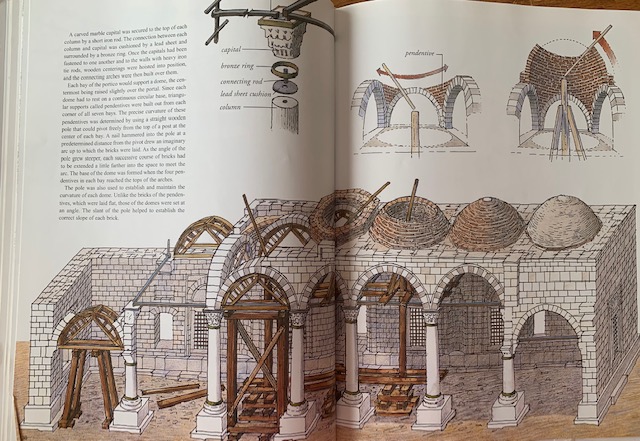
From there the book details how the foundation to the minarets are designed, crafted, erected and used.  Explaining how domes are supported to how stones are laid and stained glass windows constructed, so many details are illuminated and kept simple at the same time. 

Aside from the physical construction of the buildings, it really is incredibly remarkable and gives insights into how Islam shaped cultures, and similarly how Mosques became integral  parts of societies.

IMG_4393

WHY I LIKE IT:

The book is fact and historically based with a fictionalized story layered on top to move the information along.  The pictures are detailed and informative with labels and descriptions that make the technical jargon of the text visually understood.

If one has ever been to the Blue Mosque, even in its fiction, the book will explain the function and thought process behind the gardens and porticos and women’s spaces in a very satisfying manner.

I love that it mentions how even Jews and Christians contributed to building of such Mosques and how the all facets of the community took pride in the completed works.  I’m not sure why the author specified the blood of a ram being spread out, as it isn’t Islamic culture, but with my limited knowledge of 16th century Ottoman practices, I didn’t dwell on it too much.

IMG_4392

FLAGS:

Clean.

IMG_4391

TOOLS FOR LEADING THE DISCUSSION:

I feel like this book would be great in any middle school STEM class to just have to look at and thumb through, Muslim or not.  The author has written numerous books about different structures (Cathedral, Castle, City) and breaks down how they were constructed and why.  A great resource for anyone willing to ponder and marvel at the structures around them and take their understanding to the next level.

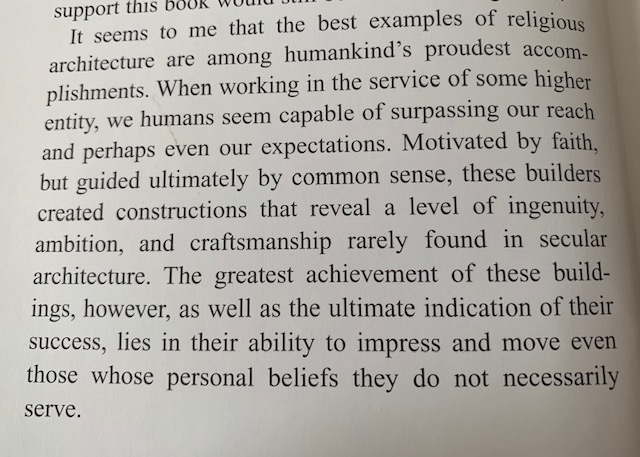
There is a Glossary at the end, and I really enjoyed the last paragraph of the Preface at the beginning:

IMG_4388

IMG_4390


Purity & Prayer: A Rhyming Picture Book of Sacred Rulings by Ameena Bint Abdir Rahman illustrated by Reyhana Ismail

Standard

IMG_2921

This book is definitely non fiction, and I’m reviewing it because I figure some of you like me, have looked at it online and wondered how it can do everything it claims.  The book is 50 pages, fully illustrated (with faces), meant for children before the age of accountability, written in rhyme about fiqh (wudu and salah) according to the Hanafi madhab, and everything is scholar supervised and checked.  I’ve read it a few times now, and yeah, it does all it claims to, and is a great tool and resource, and book to have around for kids of all ages, plus I think they’ll really enjoy it.

IMG_2922

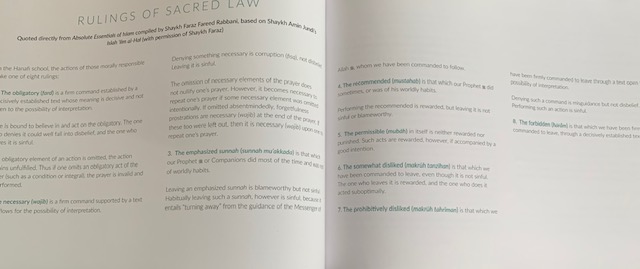
The book has a lot of information and disclaimers about how the author wrote the book and verified the information, there is a dua, preface, and Author’s Note at the beginning, and Rulings of Sacred Law by Shaykh Faraz Fareed Rabbani, an Appendix, References, Glossary of Arabic Terms, messages from the Fiqh Teachers, Author, and Illustrator at the end.

IMG_2925

The 8.5 x 11 hard bound horizontal glossy book is divided into sections.  The first section is Du’a and Salah, followed by Purity which covers things like fard parts of wudu, what breaks wudu, etc..  The next section is Prayer and covers the fard conditions and integrals within prayer, wajib things you say, how you recite, postures, what breaks your salah, and incorporated in to the sections are what would need to be redone to make your salah valid.

IMG_2923

Each subheading is a two page spread with a title and either rhyming couplets or quatrains to convey the information.  While naturally at some parts the rhyme is incredibly forced, but because I found myself learning things, I wasn’t as bothered by it as I thought I would.  The repetition sometimes got jarring, but again, because the complex facts are being brought down to a child’s level ,and yet isn’t belittling, I’m willing to overlook a lot. 

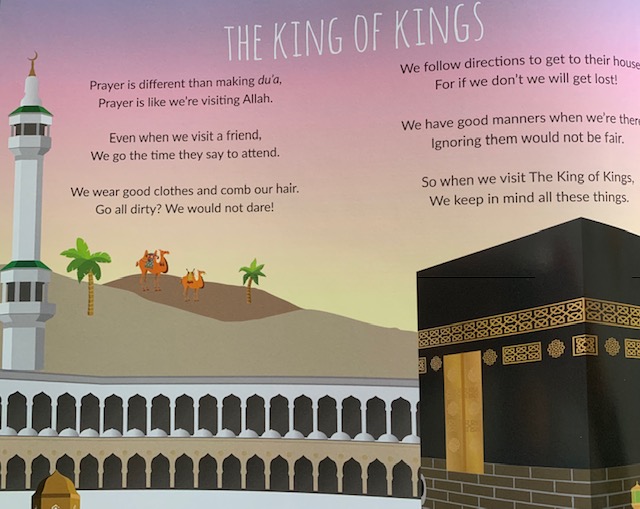
I like that it isn’t just facts, the Appendix is there for that, but also similes and metaphors that will help put the concept in perspective.  Du’as can be made at any time like making a call to Allah.  Prayer is like visiting a friend, you have to go at the time you were invited, dressed nicely, wear appropriate clothing.  

IMG_2924

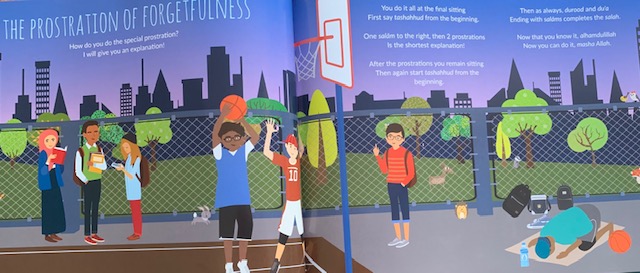
The breakdown of when you have to repeat the whole salah, or do a special prostration is incredibly helpful.  As is knowing what laughter breaks wudu and what breaks wudu and salah.  It is so great that children will see how detailed our religion is, and how everything has an explanation.  Yes, you shouldn’t laugh while praying, but clearly it happens, so when it does this is what you do.  The approach makes the book grow with children as their knowledge and awareness increases.

IMG_2926

I hope to read a two page spread each night with my kids, and have them discuss.  My kids range in age from 3-12 and while my 3 year old won’t add a lot, he will be entertained by the rhyme, fascinated by the pictures, and be included in the early introduction to fiqh.  InshaAllah the older kids will learn or review something and know how to find such knowledge if they have questions in the future.

IMG_2927

Undoubtedly, such a book, was a huge undertaking, may Allah swt reward all those involved, I was pleasantly surprised and greatly impressed at how the book reads, presents the information, and still connects to younger children, mashaAllah.


A Race to Prayer: Sulaiman’s Rewarding Day by Aliya Vaughan

Standard
A Race to Prayer: Sulaiman’s Rewarding Day by Aliya Vaughan

a race to prayer

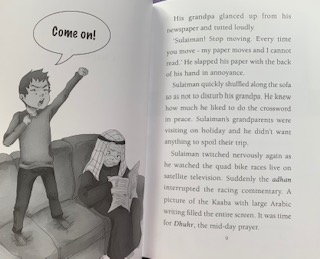
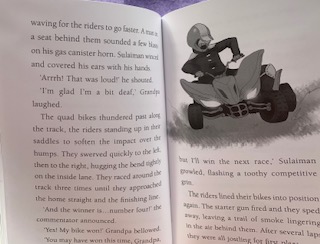
This 56 page (only 38 pages of story) early chapter book is a simple book with a lesson.  For kindergarten to 2nd grade readers the book could be a short story, but the added minuscule details (how he got in the car, slid over, and buckled up) and the illustrations, flesh the book out in to seven chapters with a note for parents/educators at the beginning, and sections of: evidence from the Quran and Sunnah, comprehension questions, inspiration behind the story, glossary and information on the author at the end.  The book isn’t bad, just kind of dry and bare bones.  Satisfactory for young readers that enjoy quad races, and ideal for those that whine whenever it is salat time.

SYNOPSIS:

Sulaiman loves watching quad races and playing football (soccer, the book is British), but feels like, “Every time I want to do something exciting, it either rains or it is time to pray.” one afternoon when he is feeling particularly grumpy, his dad offers to take him to watch the quad races at a nearby stadium.  Grandpa joins them and grandma sends them off with lunches and duas.  First the car won’t start, then they take a bus and wait in line.  Once they are inside the day looks up, the races are fun and then it is Thuhr time.  Sulaiman wants to wait until a break, but it is winter and the days are short meaning Asr will be approaching fast.  They go find a place to pray and when they return their seating section is closed.  Part of the roof fell in due to the rain.  Feeling fortunate that they had left to pray, Sulaiman sees the value of praying on time in this duniya.  They later are given better seats and Sulaiman feels blessed that they had gone to pray.

The story was inspired by a real event, according to the “Inspiration Behind the Story” at the end, where the author says that her husband was at a football match in Algeria when an earthquake struck.

IMG_0029

WHY I LIKE IT:

I love that the character is relate-able to most of our young Muslim children.  He is a good kid, but has a hard time stopping what he is doing to pray.  He has to be reminded to make wudu and brush his teeth.  I like that grandpa gets to come along, but I wish he would get to tell some of his stories, rather than just have Sulaiman shush him and be annoyed.  Similarly, I like that the dad is a “fixer” but some character development would have been really great.  I understand the reading age isn’t tempted by back story, but a little investment in the characters would make the climax that much more intense.  I was surprised by the roof falling in, but it snuck up so quick and was resolved equally fast, that I didn’t really feel it.

Also, I am not entirely sure what quad racing is. I mean I get that they are 4 wheelers racing on a stadium track.  But, I didn’t realize it was such a thing to be watching it on tv and then heading to watch it live nearby.  I’m glad I learned that kids dig it in Britain, but I’m thinking that it might be a little foreign .  A soccer match or another race, might have made the story a bit more appealing.

The book is for Muslims by a Muslim despite the glossary at the back. The pictures aren’t great, but they make the page breaks appeal to the younger kids.  The font, binding, and presentation makes for a nice looking and feeling book.

IMG_0030

FLAGS:

None, alhumdulillah.

TOOLS FOR LEADING THE DISCUSSION:

This book would be really great in small groups.  I can see it being used in Sunday schools or in Islamic schools, where Language Arts teachers and Islamic Studies teachers crossover to drive the importance of salat home.  I think this would easily inspire this age group to then write their own copy-cat stories of why salat is important.  The questions at the end could even make it like an extra credit novel study or a read aloud story with the questions used to verify comprehension.