Tag Archives: swimming

Saif’s Special Patches by Humera Malik illustrated by Ravan Sader

Standard
Saif’s Special Patches by Humera Malik illustrated by Ravan Sader

I really had no idea what this book was going to be about, and the first page or so seemed a little off with the child not knowing about the quilt he was wrapped up in, but. oh. my. heart! Every subsequent turn of the page was a hug from Saif’s patch made quilt straight to my cynical soul.  The infusion of Islam as such a part of his daily activities, his loving family and environment, and the reminder that labels can both hurt and inspire is beautifully done. The illustrations, the tone, and the messaging, is great for kids that have been called “just shy” and everyone who has ever doubted themselves (i.e. everyone) with it’s relatable emotions, and reminder that like a quilt, we are still growing.  I cannot wait for this book to be released and I can enjoy a physical copy to share in classrooms, libraries, and bedrooms. One of the best picture books I’ve read in a while, thank you.

The book starts with Ami asking Saif why he isn’t outside playing basketball with his friends.  He replies, that he “is shy.”  His mother shows him that the quilt is made of patches of Saif: experiences he has had. She shows him a patch and helps him recall the memory attached to it,  starting with last Eid when he was brave and went down the big slide. As he joins in the recollection, he then owns the label that he is brave.  It isn’t that easy though, he tries to be smart like his brother and read a lot, but reading is hard, his brother reminds him he is smart and points out the patch from when he won the scavenger hunt.  Swimming, helping at the masjid, reading Quran, calling the athan, all help Saif to realize he is more than just shy, more than one label, and that he is still growing.

I love the relatability of what Saif is going through, and even though so many of the settings and examples are Muslim centered, the book will resonate with all readers, of all ages.  A tear or more two may have stumbled out as I saw little me in the illustrations and the scenarios, and I have never been called shy. The book releases in March and is traditionally published, meaning plenty of time to pre-order a copy and request your library to shelve it, as it will be available wherever books are sold.

Sam(ira)’s (Worst) Best Summer by Nina Hamza

Standard
Sam(ira)’s (Worst) Best Summer by Nina Hamza

img_5254-1

The first 15% of this 336 page book were rough, the internalized Islamophobia/othering, the excessive discussion of Halloween and being toilet papered, but then I don’t know, something suddenly changed, and I was hooked.  There really is no plot, the reader just spends the summer with Samira, the highs the lows, you see it all through her tween eyes, which worked great for me because I truly loved her voice.  Her dry witty humor, the short choppy chapters, once the forced Islamic rep faded (I know, the irony is not lost on me), the book was hard to put down.  It has Muslamic flags: music is a HUGE part of the book, there is lying, mention of beer, parties with boys, Halloween, dancing, bullying, racism, ageism, Islamophobia, stereotypes, but it also has a lot of heart, finding yourself and voice, amazing sibling support, community, a super grandma, a little brother who is on the spectrum and absolutely a star who holds his own. It is very idyllic even for middle grade, but I think if you are ok with the aforementioned flags and have a middle grader trying to find their place or has had some friend trouble, this book will resonate and be well loved.

SYNOPSIS:
Sam/Sammy/Samira is wrapping up a school year that did not go as planned even though she found she loved being a photographer for the yearbook. She had a huge falling out with her best friend Keira, and she cannot wait for a summer of never leaving her room.  Her parents and older sister are heading to India, leaving her with her little brother Imran, and Umma, their Grandma who came from India to watch them. The end of school culminates with the yearbooks being delayed, her house being toilet papered, the talent show performance that she quit- being completely changed and incredibly racist, Keira spreading lies, and a new girl moving in to the neighborhood.  It is a lot for Samira, and summer is just getting started.  Umma knows the whole neighborhood before the week is out, and starts building a community that rallies around the three of them.  Samira becomes a roadie for a band, Imran gets an old artist to teach him to paint, parties are planned, voices are found, friendships are established, and videos are made celebrating the success and obstacles of it all.  Every time they call the rest of the family in India, even the reader realizes just how much they all have grown.

WHY I LIKE IT:

I just love Samira, she is relatable, funny, and you just cheer for her. I wish her lens though was Islamic.  She doesn’t wear a swimsuit because she misread the dress code, but had no Islamic perspective hesitation of going to a swimming party with boys.  She gets blamed for sneaking beer to a gathering and it says she doesn’t drink, but doesn’t stress, that it would be a huge, huge deal Islamically, not just because she is underage.  Music and dancing aren’t even blips on the radar. Umma prays, Sammy finds it annoying that her prayers seem to take longer when Sammy is waiting for her.  Once it mentions that Sammy was told to pray, but it never shows her praying.  Islam seems very forced, just enough for the character to mention Islamophobia in other instances where the label creates stress for the family.

The character development of Imran and Umma, even though they don’t change at all, has depth and grounds the story. I read a digital copy that doesn’t have any backmatter, but I do hope that the autistic rep is accurate.  Imran’s perspective and heart are so engaging and his and Samira’s relationship is very tender.  There is no pity, or looking down, he legit is fully fleshed out and awesome.  Umma is incredible too, her magic network of getting things done really is a super power.  She connects with people, has a huge heart, and picks her battles.  I wish I could take an internship from Umma.

I can’t figure out if the resolution to the “climax” is intentionally understated because Samira has moved on and grown, and having a big explosion doesn’t fit her character, or if it was just not written strong enough.  That is why I put climax in quotations, because there really isn’t a lead up, or rising action, it is a progression, but it is like the rest of the smaller ups and downs, it is just a stress of the day-to-day living of the protagonist.  The other thread of the “climax” being Alice’s grandma coming home from the hospital, really just seemed weak.  She should have come to the party in her wheelchair, I really didn’t get why it centered the party for being for her, but then let her leave.

I like that Keira wasn’t given redeeming qualities, and her treatment of Samira was never justified.  Often the bullies are shown to have hard lives, which is fine, but sometimes they are just mean.  Samira really takes the high road in handling Keira and what she wants their interactions to look like in the future, which is much better messaging than most books about bullies contain, and I really appreciate that.  

FLAGS:

Bullying, racism, stereotypes, lying, Islamophobia, agism, mocking, teasing, music, dancing, vandalism, mention of Halloween and beer.

TOOLS FOR LEADING THE DISCUSSION: It wouldn’t be possible to do this as a book club selection in an Islamic school because of the music element, but depending on the school, it might still be ok to shelve in classrooms and the library.

Three Summers: A Memoir of Sisterhood, Summer Crushes, and Growing Up on the Eve of the Bosnian Genocide by Amra Sabic-El-Reyess with Laura L. Sullivan

Standard
Three Summers: A Memoir of Sisterhood, Summer Crushes, and Growing Up on the Eve of the Bosnian Genocide by Amra Sabic-El-Reyess with Laura L. Sullivan

three summers

It is difficult and probably rather inappropriate for me to offer a “review” of a memoir, after all who am I to have opinions on someone’s lived experience.  And this non fiction book in particular is so desperately needed and important, as OWN voice middle grade literature about Bosnia is fairly non existent. So continue reading my thoughts with a grain of salt, suffice it to say, that I enjoyed the book, and loved the author’s YA book The Cat I Never Named, but ultimately I struggle to suggest this for the intended audience of 8-12 year olds.  As a child my family was involved with Bosnian refugees in the 90s, as an adult I understand that Islam, and being Muslim, is not a monolith, as someone who can empathize with loss and heartache, I couldn’t put the book down.  Yet, I truly doubt that many fourth graders will feel the emotional climaxes that are not shown, but told.  That they will understand the timeline and what is about to happen if the book were to continue.  That they will feel a connection to the characters who read so much older than them.  If the book was fiction, I would say the characters read YA, with the bikinis and details of body growth, kissing, making out, having boyfriends, and dancing at the discotheque, cigarette smoking, backless dresses, noting which neighbors are having affairs, and trying to become their “truest self,” but the book is a memoir, this is the author’s life when she was 11, 12, and 13.  In an environment where her maturity is noted as being heightened because of the loss of her brother and her personality, the book shows cultural norms, that will still strike contemporary reader as being much more adult in nature. Islamically, the label of Muslim and Bosniaks, is ever present.  Bosniaks were massacred for being Muslim, period.  The book never shows them praying, or mentions Allah swt or the Quran, covering is something only the older generations did, they do drink alcohol on occasion, but they have a cow slaughtered Islamically and burials are done in accordance with Islamic principles.  There is kissing, having boyfriends is not problematic unless they are Serb, the only imam mentioned does weird black magic type things.  So while the label of “Muslim” may feel to Muslims readers more like a cultural marker at times, it is none-the-less incredibly empowering to see that Amra takes pride in her Bosniak identity and doesn’t shy away from it. Other flags/triggers are domestic abuse, bullying, physical violence, attempted drowning, accidental drowning, death of a sibling, kidnapping, imprisonment, threat of war, racism, Islamophobia, music, fortune tellers, lying, threatening.  The backmatter offers a timeline and thus gives some information about the rape, torture, genocide, abuse, and destruction.

SYNOPSIS:

The book starts with a visiting fortune teller giving Amra and her family hope that her older brother Amar will be pain free soon. Amar suffers from Marfan syndrome, and is frequently weak, teased, and in pain.  But he is also wise and patient, brilliant and gentle, and beloved by so many, and Amra is broken when he passes away.  To help break her from her debilitating grief, her parents reach out to a cousin in Belgrade, who has long been estranged for marrying a Serb, to come visit for the summer.  Zana and her younger sister Vedrana, engulf Amra in warmth and adventure and the summer on the River Una is just what Amra needs.  The next summer Zana and Amra resume their idyllic adventures of swimming, make-up, crushes, and coming of age, with only a hint of fracture based on religious lines creeping in the final days.  The following summer Amra is starting to mature on her own and understand the world around her.  Her father has lost his job, been kidnapped essentially and tortured, and while nights dancing at the discotheque give laughter and light, the girls final summer, is the end of peace, and innocence for all Bosniaks.

WHY I LIKE IT:

I love the end, that there are real life updates of the people in the book.  It made me cry.  It is also so timely to what is occurring in Gaza and how no matter how clear it is that it is genocide, and it is oppression, and it is racism, some just cannot see it.  The book is joyful, but the reality of the backmatter is heavy, and real, and important.

I like that the book shows Bosnia and the culture and the traditions, the few books I’ve read focus on the war, and the rich culture and deep history doesn’t get to shine like it does here.

I do wish the book was more showing than telling.  I know it is a memoir, but at times it was just too advanced commentary and insight.  I fully believe the author is brilliant, and at 11 years old was pondering her life, but most readers just aren’t at that age, and the tangents keep the readers at arms length.  The book says it is about crushes, so I don’t want to keep harping on it, but it really is Amra and Zana and a gaggle of other female cousins quite often worrying about boys, and crushes, and kissing.  It doesn’t get obnoxious, but it isn’t a line here or there, it is the bulk of the book.

FLAGS:

Domestic abuse, bullying, physical violence, attempted drowning, accidental drowning, death of a sibling, kidnapping, imprisonment, threat of war, racism, Islamophobia, music, fortune tellers, lying, threatening, death, loss, grief, affairs, cheating, racism, bare bodies, crude jokes, crushes, kissing, making out, sneaking out, smoking, drinking, developing bodies, bullying, internalized Islamophobia, kidnapping, imprisonment, dancing, black magic imams.  The backmatter offers a timeline and thus gives some information about the rape, torture, genocide, abuse, starvation, and destruction during the Bosnian genocide.

img_4254-1

TOOLS FOR LEADING THE DISCUSSION:

I think with some context about war, about communism, the Ottoman empire even, this book could be used in a teaching setting to allow the time frame to be seen from those living it, but, for more mature middle school to early high school readers.  It is a lot for MG and that it is non fiction makes me want it to be understood and appreciated and I don’t know that for the intended demographic, even with context and guidance it would be achieved. There really isn’t a plot, it is a memoir, and the pacing and assumed context knowledge I feel like, just wouldn’t be there for the typical western middle grade reader.

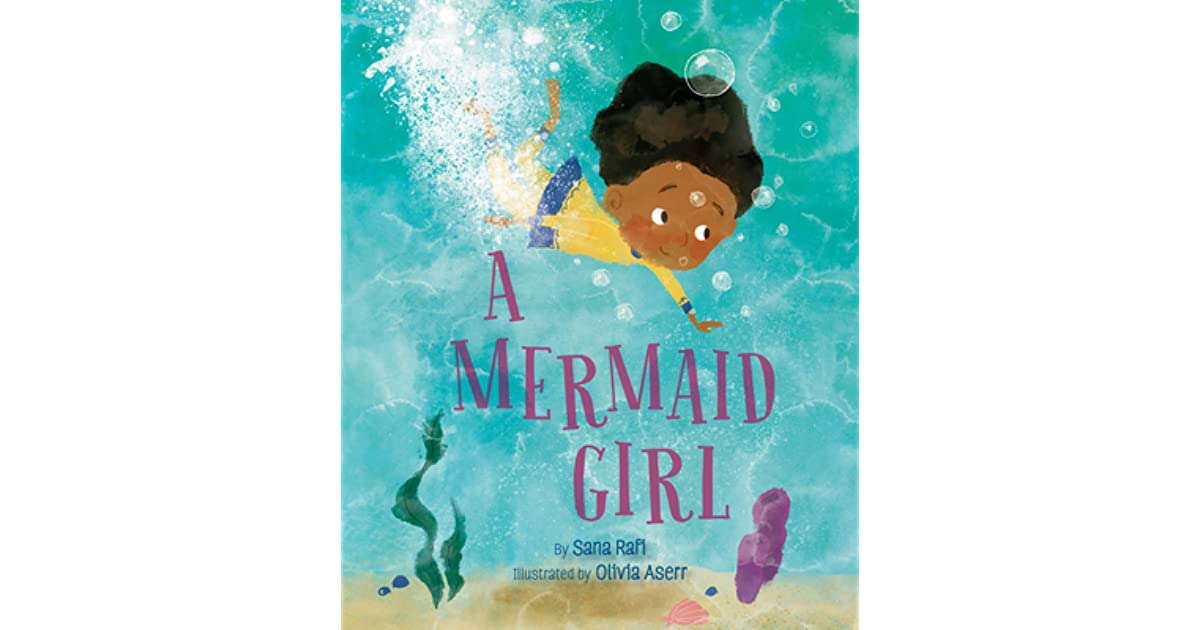
A Mermaid Girl by Sana Rafi illustrated by Olivia Aserr

Standard
A Mermaid Girl by Sana Rafi illustrated by Olivia Aserr

mermaid girl

I honestly don’t know how I feel about this book.  I have read it and reread it and thought about it and read it again, and ignored it and read it again, and alas I have no idea.  I really am having a hard time articulating my thoughts on this 40 page children’s book.  I think part of the problem is that I’m reading it shortly after reading another “religiously inclined” clothing inspired picture book for the same target demographic and I’m having a hard time not comparing them.  When I intentionally start to write a review that doesn’t compare them, I am cognizant that my readers probably will and the review spirals.  So I’m going to establish what I love about this book, and then highlight why I’m torn and leave it to you all to draw your own conclusions and opinions.  InshaAllah this will not be the new norm, I will not make a habit of straddling the fence, but for this book, I think it is the only way.

img_2174

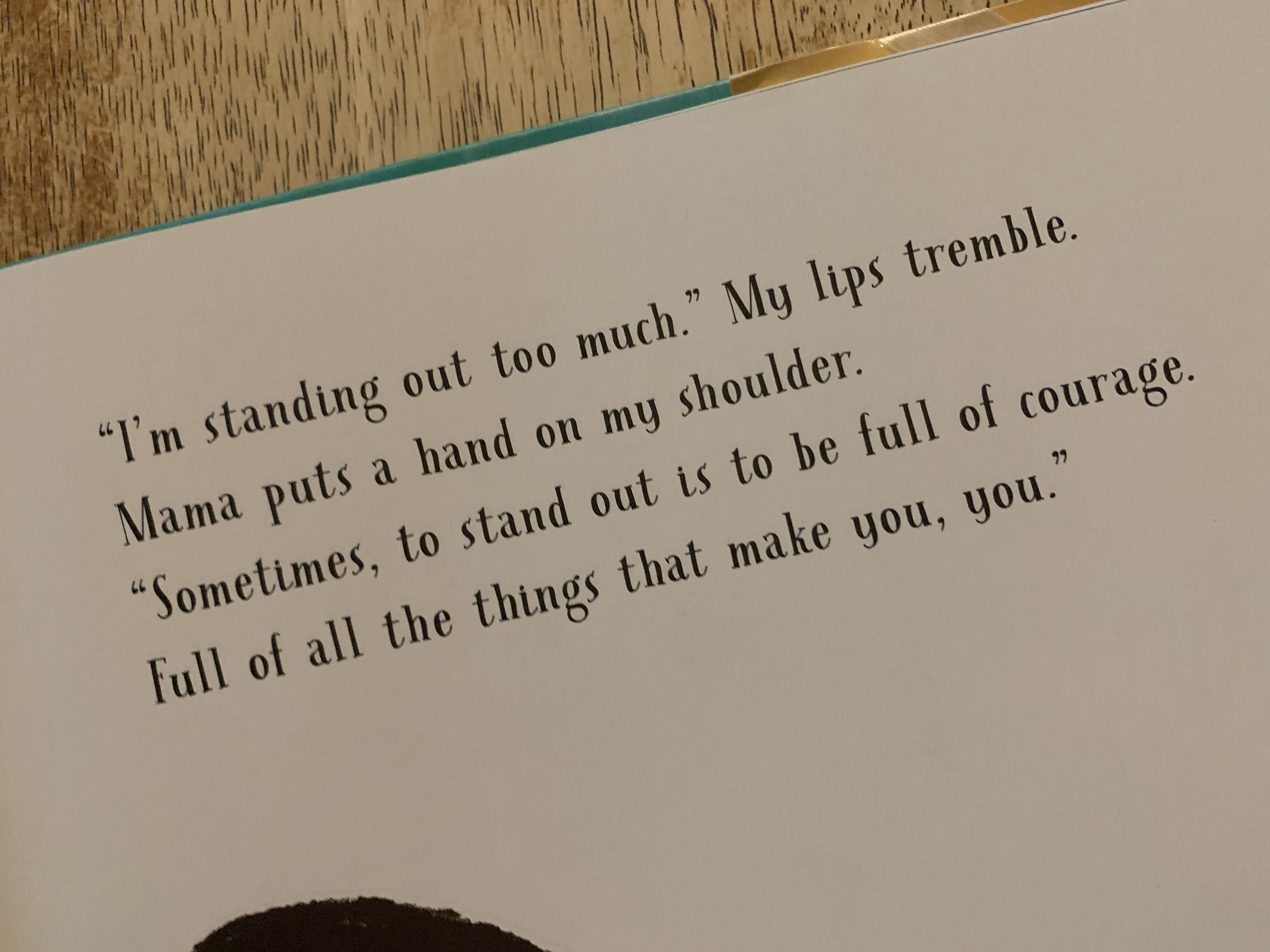
I absolutely love the illustrations.  The warmth and joy the pictures portray are endearing and smile inducing.  I love the mother and daughter relationship and how feelings are not dismissed or belittled.  The mom connects the little girl to a legacy of strength and conveys her confidence, that the little girl is similarly brave, not just when things are hard, but especially when they are.  The little girl is shown to “feel” confident and joy in her clothing, not just “look” pretty, which is messaging that I love.  It is never too early to show that how one feels is more important than how one looks.  This depth, is not examined, but by simply using the words “When I put it on, I feel like a dainty seahorse,” rather than saying, “I look like a dainty seahorse,” the priority is not lost on the reader.  I like that the character has growth and challenges and has to reaffirm her position and as a result raises herself and those around her as well.

img_2175

So why some confusion you ask.  Well- the word burkini is used to explain the little girl’s new swimsuit.  Burkini traditionally is a Muslim implied modest swimsuit, derived from combining the words burka and bikini.  That said, anyone of any faith can order a burkini online and their faith is not a factor.  The little girl is young and doesn’t wear hijab, her hair is not covered.  The mother and the ancestors pictured wear hijab, but Islam or Muslim is never in the text.  Part of me likes this, people wear modest swimwear for a lot of reasons: comfort, religion, sun protection, personal preference.  Similarly for head coverings in a pool some people where them for hair preservation, modesty, hijab, aerodynamics, speed, preference, comfort, etc..  Unlike hijab which is in the Quran, birkini is not an “Islamic requirement.”  No one is forcing you to swim, no one is forcing you to wear this brand or that style if you choose to swim.  Covering and wearing modest clothing is a must on Muslim women, covering the awrah is required after puberty.  I both like that the little girl is covering up and wish that it said why she is, but also appreciate that it is left open.  I like that you should be able to wear whatever you want and be comfortable with it.  I like that you don’t have to conform, and you can be you and whether that comes from a religious rationale or a fashion one or a health one or a comfort one, it doesn’t matter, don’t police what women wear.  But the implied illustrated framing is Islamic and the link is not there in the text.  See why my thoughts are scattered.

img_2176

Similarly, the term “mermaid” is gender specific.  But colloquially it is often used to just describe someone with a human top half and fist tail.  So, isn’t “mermaid girl” redundant? At the end when male presenting Sam asks if he can be a Mermaid girl too is it implying gender neutrality? Is it like female kids saying they want to be a girl policeman or a lady firefighter?  Does it matter?

img_2177

The story starts with Heba and her mother looking at photographs of past generations on their wall remarking how they are all mermaid girls.  Heba has gotten a new swimsuit, and her and mama are going to match in their new burkinis.  When they get to the pool however, all the excitement is pushed back on when her friends ask her if she can swim in that, and they tell her it doesn’t look like a real swimsuit. Heba sticks up for herself, but when she looks around, she sees, they are right, she doesn’t look like everyone else.  Mama reminds her of those before her and reassures her that she is not alone. She rejoins her friends, doing all the things she wants to do, and by the end they too want to be mermaid girls.

img_2178

There is music depicted and women in one and two piece swimsuits.  As someone who wore modest swimwear my whole life, this book had a lot of mirroring of summers arguing with life guards, showing up with other Muslims at public pools to rude comments and aggressive stares, and swimming all over the world to people asking where they could get a suit like mine as well.  Definitely normalizing swimwear that looks like a burkini is a great concept to see in a book.

I do wish there was backmatter.  Perhaps giving voice to the many reasons women should be free to wear what they want at all times, but how particularly in water activities it has become a political point of judgement and policing.  Perhaps something about how this little girl is wearing it for religion and modesty, but that people everywhere wear things for lots of reasons.  I like the ambiguity, but also wish their was more of a connection to Islam/Muslims.  I leave it to you to make your own decisions.  I found my copy at my local library, it is mainstream published and can be purchased here as well.
Birmingham Boy by Kate Rafiq

Standard
Birmingham Boy by Kate Rafiq

birminghamboy

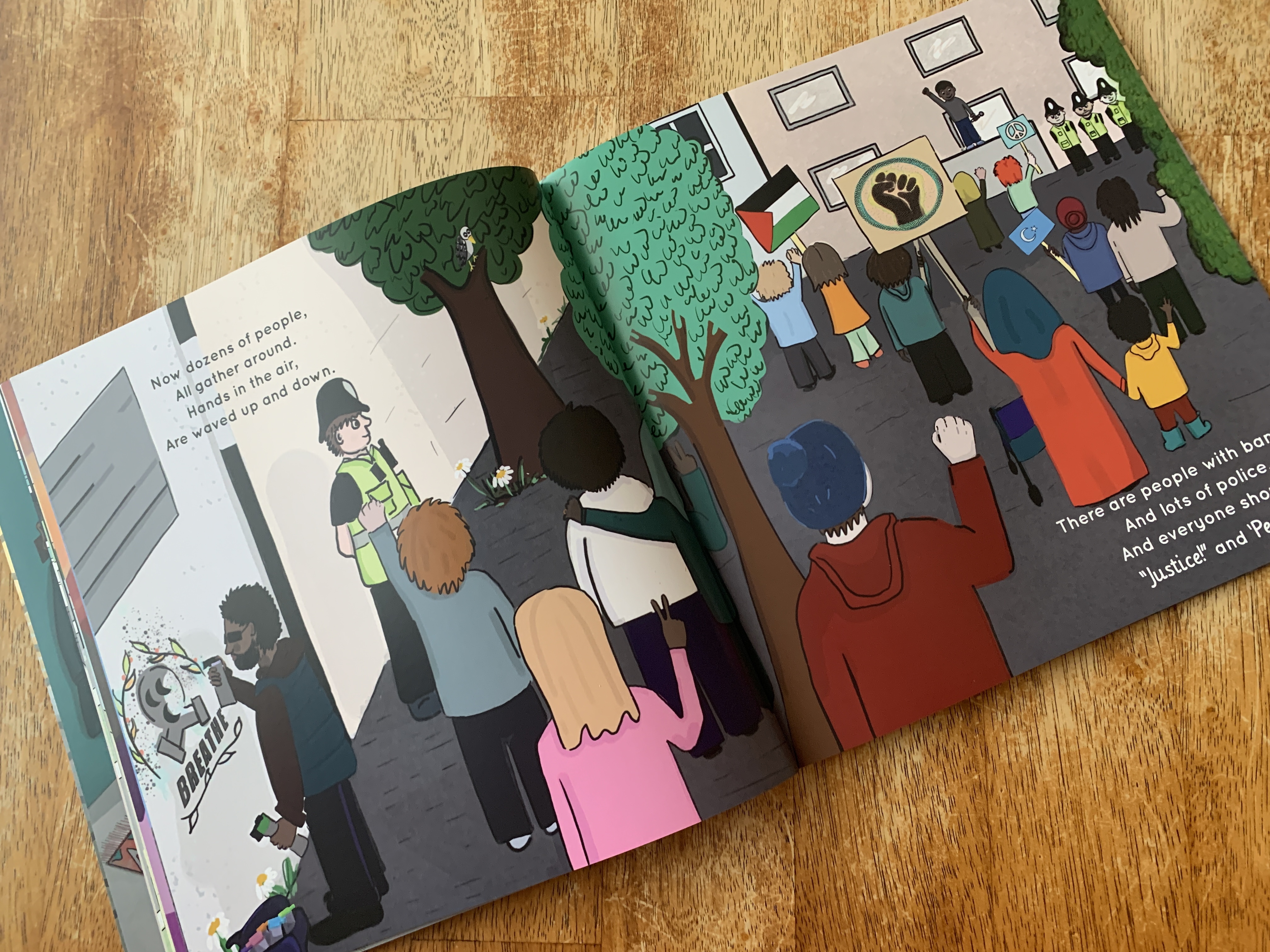
This 36 page ‘day-in-the-life-of’ book, follows a young boy and his mom on a day out and about in his city of Birmingham, England. Told in rhyme a few Urdu words are sprinkled in as general city observations are made, fun is had, and kindness is shown. The book touches on homelessness and protests, and the illustrations take the story deeper and show support for Black Lives Matter and Palestine, multiple hijab wearing women (#muslimsintheillustrations) throughout the city (including a burkini swimming mama), storefront signs acknowledging a diverse community, street artists, and different races, religions, and cultures everywhere.

img_6412

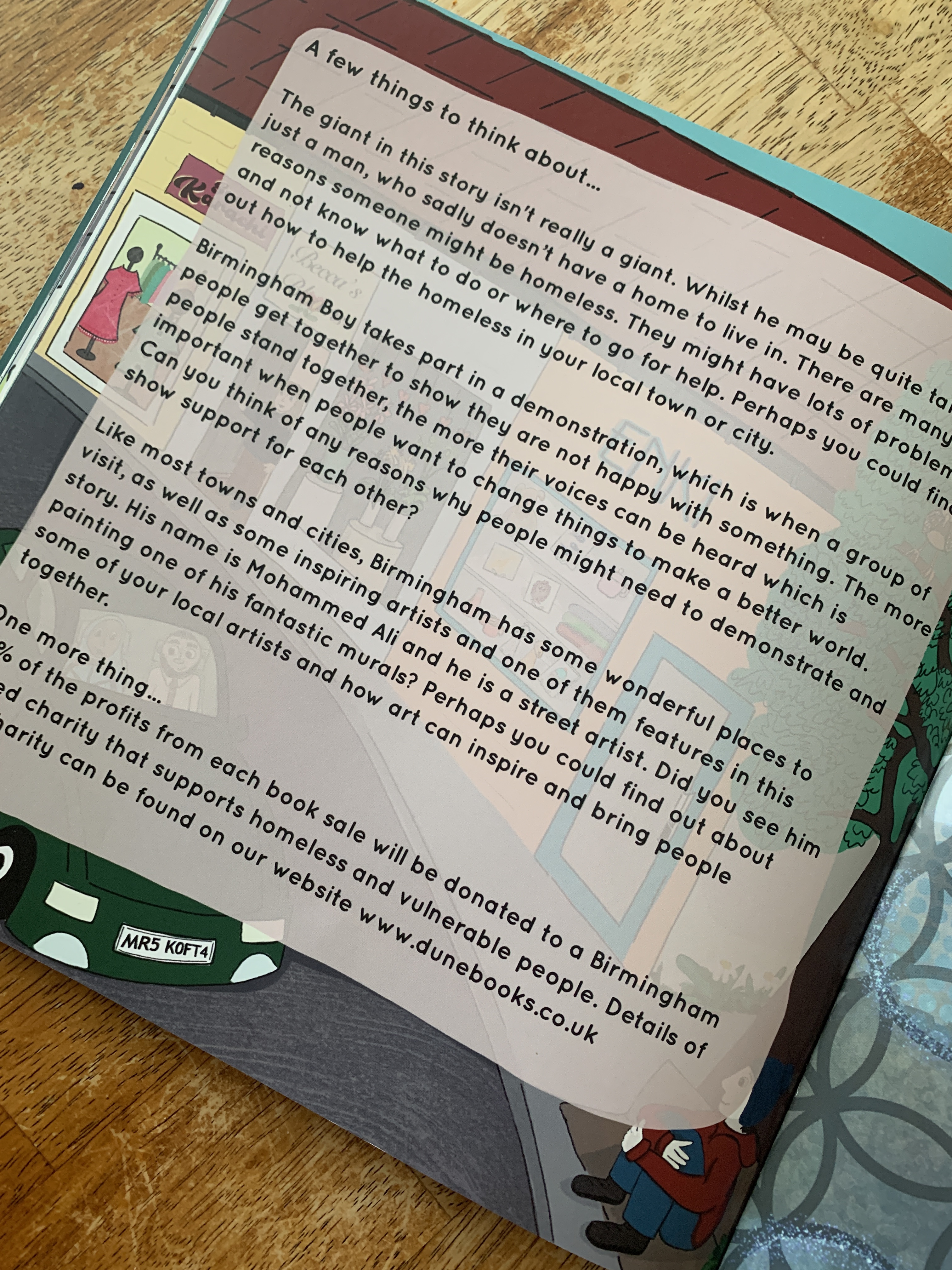
The book starts off with Birmingham Boy waking up, based on the Arabic signage in his room, I’d guess his name is Zakariya, everything is quiet and still- except for a giant that he sees outside his window.   He refers to the homeless man throughout the story as a giant, it doesn’t seem to be a negative description, nor is the boy scared, he shares food with him at one point, it is just what he refers to him as. 

img_6413

He then heads downstairs for breakfast of toast and dudhu (milk), before getting in a pram and heading out in the town.  They go past the deli and the flower show, and the giant on his cardboard mat.  They see someone getting their hair cut at the barbershop and they arrive at the swimming pool.

img_6414

The mom and son swim and play and Birmingham boy takes a nap in his stroller as his mom and he head off to their next location.  He wakes up to the sounds of the masjid and sees his mom praying.  He plays and then joins her in salat.

img_6415

After the masjid it is off to a cafe for cakes and tea, which they share with the giant, before they head off to a rally for justice and peace.  The book carries on in this sweet style of visiting places and interacting with the community until ending with a bath and dinner and getting tucked in to bed for the night.

img_6416

Being American and living in Birmingham, Alabama, my kids and I also learned about the sights of a different Birmingham and they got to learn some British words such as pram and wellies.  I loved the inclusion of Islam in their daily life and the joyful illustrations.

Unsettled by Reem Faruqi

Standard
Unsettled by Reem Faruqi

img_7503

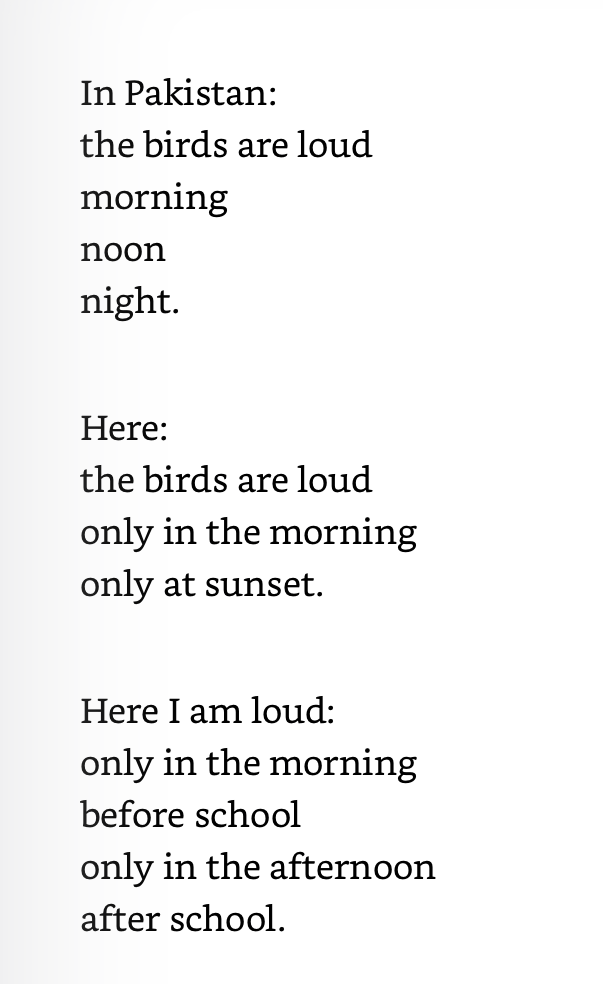
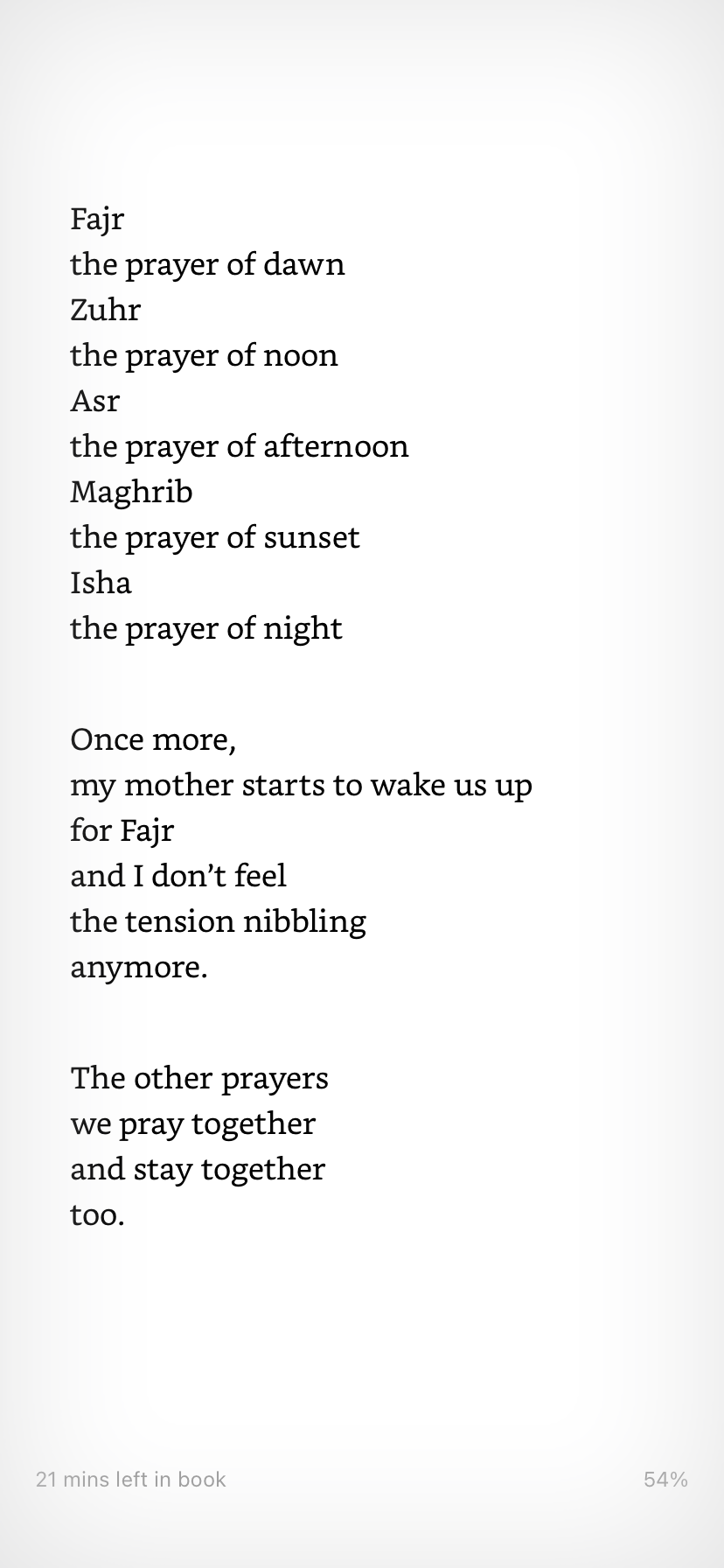
This book is a great OWN voice, middle grade coming of age book that rings with truth and hope in its poetic lines that sweep you up and keep you cheering.  Over 352 pages the author’s semi-autobiographic story of coming to Peachtree City, Georgia from Karachi, Pakistan beautifully unfolds.  I absolutely loved this book and the way it is told, in verse.  The details, often small, ring with such sincerity that even those that have never moved to a new country, or been to a new school will feel for young Nurah Haqq and be inspired by her success, touched by her hardships, and disappointed in her mistakes.

img_7544

SYNOPSIS:

Nurah’s best day is spent on the beach with her best friend Asna, playing in the warm waves and riding camels.  However it ends up also being her worst day, when she returns home to her father’s news that they are moving to America.  Strong, confident Nurah who spends time with her grandparents, swimming with her older brother Owais, and excelling at math in school is reluctantly leaving it all behind to start anew.

When they arrive in Georgia the family of four settles in a hotel until they find a house.  Everything is different and new, and the transition with no friends and family difficult for the entire family.  The way words are pronounced, the way the air feels and the birds chirp all make Nurah long for home.  When they find a swimming pool at the rec center, things start to slowly change.  Owais was a medal winner in Karachi, and will be one here too, people start admiring him, and Nurah tries to bask in his light.

School starts and math is a relief, but people are white, so white, and a boy reaches out to shake her hand.  She feels betrayed that she has been told the schools in America are better, and lunchtime, with no one to sit by is a huge stress.  She questions her clothing, her appearance, and the weather.
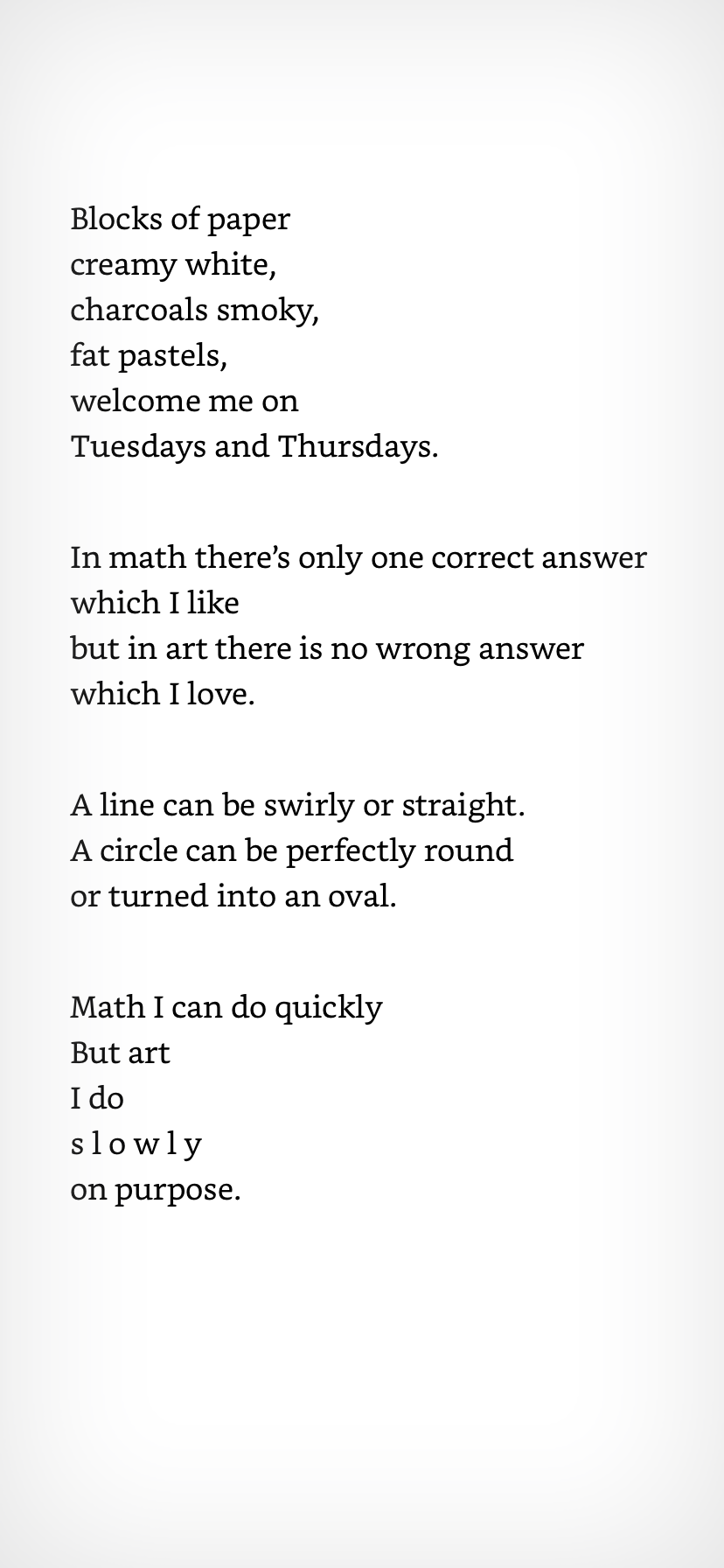
Her and Owais try out for the swim team and make it, and Nurah makes her first friend, Stahr. Stahr lives a few houses down from their new house and when Nurah’s mom has a miscarriage, it is Stahr’s mom who comes to show support and give comfort.  The support is reciprocated when Stahr and her mom need help escaping from her abusive father.
As Nurah works to win swimming races and be more like her brother, she works to find her voice and use it to defend others and herself.  A terrorist attack committed by someone claiming to be Muslim sets the family up to be targets.  In a moment of jealousy, Nurah doesn’t intervene to help her brother and the consequences are huge.

img_7502

WHY I LIKE IT:

I love the details and how they are articulated.  I related to so much of Nurah’s feeling and impressions, that I reached out to the author and found her to be just as endearing as her character.  The feeling of being different when swimming because of your decision to be modest, the role of food to comfort you and make you feel at home, the older brother that you so desperately want to resemble and be like: All of it hit close to home for me.  I love how religion and culture are so much a part of the story and about the character’s identity, not to be made preachy, just to understand her and her experiences.  She goes to the masjid, she prays, she starts to wear hijab. I love how she finds her voice and defends those that can’t, but that her path is not easy.  She makes mistakes and she has to challenge herself to do what is right.  The backdrop is always trying to “settle” in a new place, but the story has it’s own plot points that are interesting and simply made more impactful by Nurah’s unique perspective.

There are lots of little climaxes and victories for Nurah that show her to be well-rounded and relatable.  You cheer for her early on and enjoy the journey.  The only slight hiccup I felt was the name confusion of her Nana and Nani (Nana), it is explained, but it was a little rocky for me, it might be based on a real thing in her family, but once that is resolved, the book flows beautifully and smoothly.

img_7545

FLAGS:

Nothing a 3rd/4th grader would find alarming, but none-the-less:

Crushes: Nurah has a crush on a boy at school when he shakes her hand and picks her for a lab partner, but she moves on from him while still maintaining a crush on her brother’s friend Junaid.  Nothing happens, she just thinks they are cute.

Miscarriage: Her mother has a miscarriage and it details a blighted ovum and the mental strain on the mom and family in the aftermath.

Abuse: Stahr’s father is abusive

Hate: There are bullies, discrimination, physical violence.

TOOLS FOR LEADING THE DISCUSSION:

The book is a little below level for my middle school book club, but I think it it was on a bookshelf and a middle schooler picked it up, they wouldn’t set it down until they were done reading it.

Yusra Swims by Julie Abery illustrated by Sally Deng

Standard
Yusra Swims by Julie Abery illustrated by Sally Deng

yusra

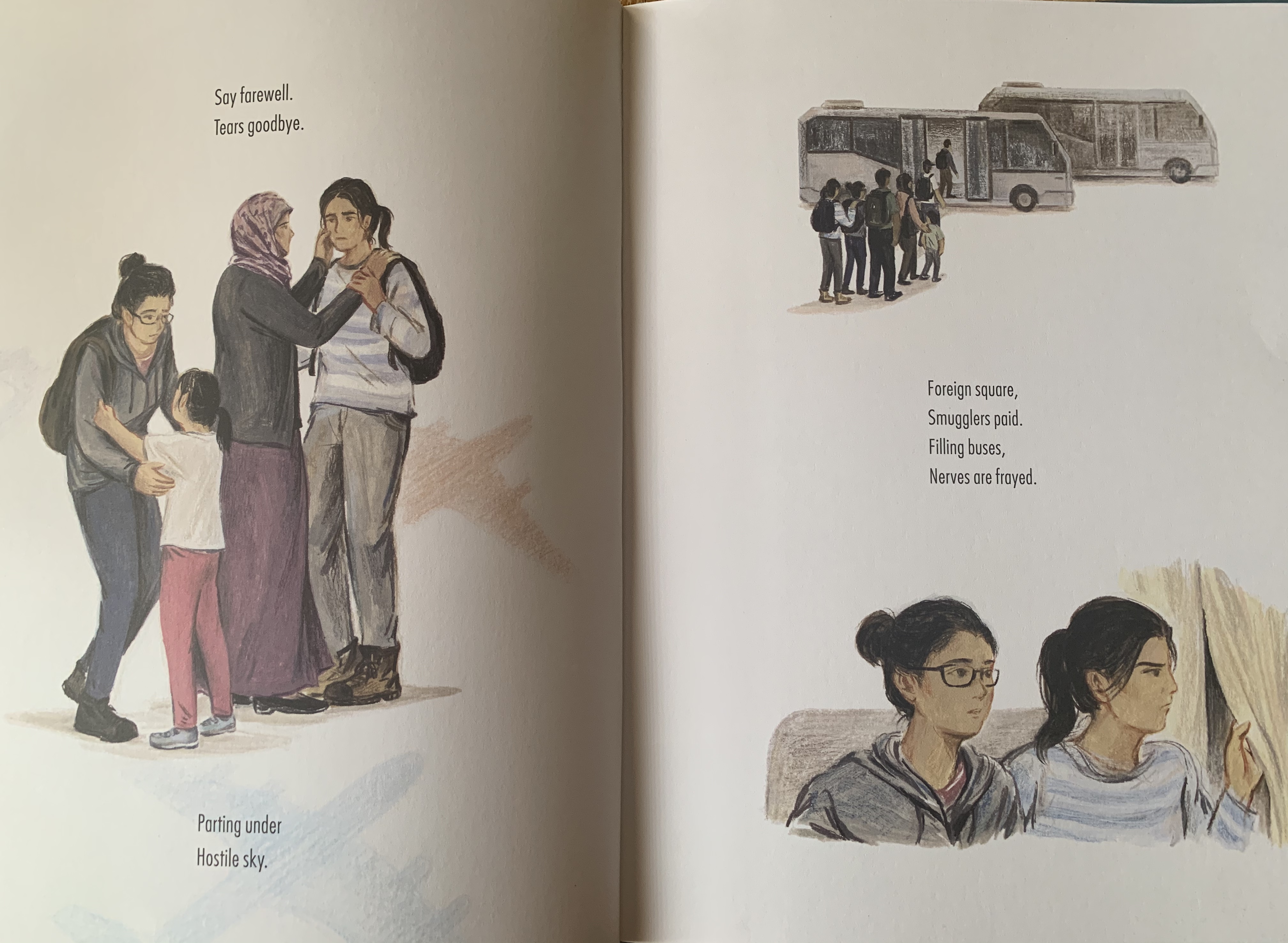
This 32 page biography told in sparse rhyme about Yusra Mardini is powerful in its minimal text and realistic illustrations.  Children as young as six could easily read it, but I think older kids will be more moved by the story of a 17 year old girls Olympic swimming dreams being derailed by war, and the difficult journey her and her sister took to escape.  With no more than 10 words on each two page spread, the vocabulary is more suited to perhaps third grade and up.

Yusra lives in Syria and dreams of the Olympics.  She trains even as conflict grows in the country.  When it gets bad, she has to flee, her father can only afford to send her and her sister.  Smugglers are paid and they leave.  They take on the open sea, and her and her sister steer the boat through the water when the engines stall.  Once they reach land, and pray, they are stared at.  A kind stranger offers her shoes. They continue on land by foot, bus and train.  They finally reach Berlin.

Once settled, she resumes her training, and a fact page at the end shares how the International Olympic Committee invited her in 2016 to join the Refugee Olympic Team and compete in Rio de Janeiro.  And thus she achieved her dream and was able to swim in the Olympics.

83175260-2878-4DDF-AA9F-3618FEEF41A5

There is nothing religious in the book, except when she is leaving and is hugging a woman in hijab.  Presumably it is her mother, and thus I’m assuming that she too is Muslim. When you google it some articles say she grew up in a muslim family while others say she is Christian, so I really have no idea.

DCAB592B-C32C-4FDB-AF1D-8CF13F36F164