Tag Archives: Racism

Kicked Out by A.M. Dassu

Standard
Kicked Out by A.M. Dassu

81h06Amch6L._AC_UF1000,1000_QL80_

The first few chapters of this 336 page middle grade book were rough. It is a stand-alone companion novel, and I have read the previous works, so I don’t know if my expectation of myself to know the characters being introduced, was additionally muddled because the memories were faint, or as I actually suspect, the writing at the beginning is just weak. Like really weak, but I’m stubborn, and I kept reading, and I was rewarded, alhumdulillah. The book found its voice, its pacing, its heart, its relatability, its layers and I am so glad that I didn’t dnf it. The characters, their community, their tenacity, the exploration of family really stays on level with providing the reader insight and messaging to make them reflect on their own lives, without feeling preached to. The focus of football (soccer) keeps the book light and hopeful, while the difficult themes of deportation, Islamophobia, refugees, theft, absent parents, self doubt, forgiveness and second chances with adults, thread in and out. Many of the characters are Muslim, halal food is normalized as is saying salam, it isn’t focused on Islam but the kids make duas before they start a sting operation and when life changes are presented, also they consider Qadr of Allah when things occur. It feels authentic, and Muslim kids will enjoy that the focus isn’t a religious or cultural identity crisis, but just part of who they are as they take on this next chapter of their lives, non Muslims will feel the same.

SYNOPSIS:
Ali, Mark, and Sami are living it up since Mark’s mom won the lottery and they move in to a mansion with a pool. Sami’s brother Aadam starts doing the lawns to help pay for his lawyer fees to appeal his deportation, and things are looking up, expect for Mark’s mom’s new boyfriend though, he seems to be a bit of a racist. It all comes pouring down when Aadam is accused of stealing money, the boys are no longer allowed at the house, and Mark is prevented from hang out with his friends. Ali and Sami are not about to take this treatment without a fight, they have an idea to raise some money for Aadam with a charity football match, and Mark knows his mom is being influenced by her boyfriend and doesn’t abandon his friends. Ali though, is preoccupied, his absent father shows back up, and his step-brother has just been enrolled in their school. It is a lot but together Ali, Sami, and Mark support each other, stand up for what they believe in, and find ways to make sure they and Aadam are not “kicked out.”

WHY I LIKE IT:
I love the commentary on refugees, that it isn’t a political issue, but a human one. The exploration of found family and born family, and giving family second chances impressed me in a middle grade book. I also liked the kids hyping up the community and getting creative to solve a problem, rather than wait for the adults to step in. Whether it was to raise money for legal fees, or solve a mystery and clear someone’s name, these kids really have each other’s backs while dealing with a lot of heavy stresses. They mess up and make mistakes, but the book spending time to show them come back from them is a level of emotional intelligence and maturity that I think readers will benefit from.

I was thrown at a passage that mentioned that Ali can’t go to the mosque because he doesn’t have his dad around. Which made no sense to me as the kid goes to restaurants, parks, stores, on buses, on his bike alone throughout the book. Alhumdulillah, I have wiser folks I can ask concerns to, and my Lit Sister Zainab explained that in fact in the UK some masjids don’t allow women all the time and kids are not encouraged to come unsupervised, so if that stands out to you as well for being completely off, recognize it doesn’t mean it is wrong, like I did.

Truly the book is terrible at the beginning. The barrage of character names, the unlikability of Ali because of how he treats his brother, and the stress of how winning the lottery has made Mark’s life better, is all over the place. I must have read the first three chapters at least four times, before I just decided to plow through and see if the pieces fell in to place, which alhumdulillah, they did.

FLAGS:
Lying, stereotypes, racism, Islamophobia, accusations, theft, lottery, Mark has a crush on Grace, but it is subtle, anger, jealousy.

SPOILER: Ali’s dad was in love with a lady before he married Ali’s mom. His parent’s had him marry Ali’s mom to tame their “wild son” and at some point in the marriage, the dad had a nikkah with the first lady and eventually left Ali, his mom, and two siblings for his other family. The focus is how Ali feels about having his dad leave their family, being jealous of his step brother, and dealing with his return. It doesn’t make it a religious issue or judge if this was permissible, it really stays focused on the parent children relationship and the emotions involved in the leaving, not staying in touch, and the returning. I think middle grade can handle it.

Call Me Al by Wali Shah and Eric Walters

Standard
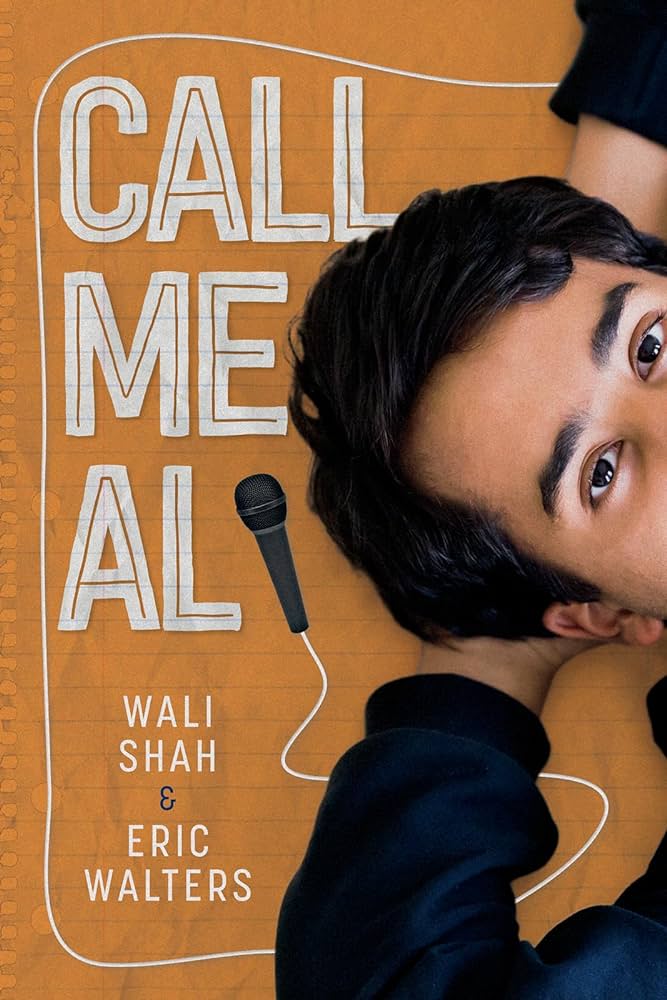
Call Me Al by Wali Shah and Eric Walters

albook

I feel like I should have really liked this 264 page book: OWN voice, Muslim, MG, Pakistani, author is poet laureate for the City of Mississauga, Ontario, co authored by a prolific YA writer, but it unfortunately reads inconsistent and unpolished.  The characters at the beginning and their relationships with one another don’t read consistent with who they are in the middle.  Sure the character arcs from the middle to the end are nice, but it feels really disjointed from the first quarter of the book.  There are parts that feel so rushed, and other parts that are heavy handed with the preaching and the moral lessoning that I found myself skimming whole pages.  He says his family isn’t that “religious,” but Islam is centered with quotes from “the Prophet” (no salawat given, only a few times Prophet Muhammad is mentioned to identify which Prophet is being quoted) and “Imam Ali” (who the protagonist is named after), yet Al telling a girl he likes her is no problem at all.  He fasts because he has to, but tells his younger brother it is ok to sneak food, and the grandfather gives a whole speech on how the purpose of fasting is to feel empathy for the poor (face palm, in case you don’t know, it is a commandment of Allah swt).  I really struggled with how “Whites” are seen as opposites to “Muslims,” there is some push back with quotes from Malcom X on his hajj experience, but I didn’t feel like the character really ever accepted that Islam is a religion for all people, and White is a skin color.  Honestly the book reads like an early 2000 memoir.  I know it is fiction, but the cultural be-a-doctor-nothing-else-matters-stereotypes, and Islamophobic talking points that feel performative for a Western gaze, combine with a very unlikable arrogant protagonist, and result in a book that was difficult to connect with and get through.

SYNOPSIS:
Al, short for Ali does everything perfect, he has perfect grades, always listens to his parents, and respects the rules.  The book opens with him sneaking off campus with friends for lunch at the mall where he is caught by his grandfather, who seems incredibly strict, but later is the soft spot in a firm family.  His parents have moved to Canada from Pakistan, his mom used to be a teacher, but now takes care of their apartment building, his father was a physician and now drives a taxi.  It is non negotiable that Al will be a physician when he grows up.  The middle child of all brothers, his older brother Sam, short for Osama, has set the bar very high with his valedictorian status in high school, scholarships to start college, and student of the year award in middle school.  Al is in 8th grade and is expected to follow in his footsteps.  When Al’s crush on Melissa results in him writing a poem about her, he realizes he likes the written word to express himself.  His father thinks poetry is a waste of time. With a teacher that encourages creative writing, Islamophobia and hate crimes hitting close to home, and Al coming of age, the story focuses on Al’s 8th grade year as he discovers his own identity, with some help from his friends and the month of Ramadan.

WHY I LIKE IT:

I like that his friends really pushed back on him to own some of his internalized Islamophobia.  Zach is probably the most fleshed out character, and his humor, his teacher crush, his ability to apologize and make things right, is really the heart of the book.  It contrasts so greatly to how I feel about Al.  By the end he was ok, but at the beginning, his arrogance is obnoxious. I get that he is bright and a hard worker, but, yikes, he needs some humbleness.  The supporting characters are rather flat.  Al’s crush Melissa is shallow and only desired for her appearance, Dad is strict and demanding, not in an abusive way, but in a cold undeveloped way, mom is idyllic and supportive, and Ms. McIntosh is the driving motivator for Al. The other characters do little to flesh out the main players which is unfortunate.  I think some depth would have shown Al more rounded. His so called friends don’t know he is Muslim or what he eats, but they are friends, not just classmates, seems off and lacking.  The grandfather gives all the teachable moments, he starts off stern, and then is not, and the transition is jarring.  He speaks in quotes and lessons, and if it were quirky, it might help the flow of the book, but he really is the Islamic conscience of the book so to speak, but we know so little about him and his relationship with Al.

I didn’t like how fasting and Ramadan were presented. Al is embarrassed by fasting and being different.  I like that it says the family goes to the mosque, not sure why masjid wasn’t used, but there are no Muslim friends and no praying, so it has no real impact, which furthers the feeling that it is performative.  Al doesn’t seem to consider faith or culture until others question him about it, which is a missed opportunity to give Muslim kids a mirror to see themselves in the characters.  There are chapters of the book that really are wonderfully written, they just are sadly too far and few between.

FLAGS:

Crushes, Islamophobia, physical and verbal assault, racism, classism, bullying, lying, sneaking out, discussion of partition violence including great grandfather being killed. The book though, aside from the crush thread at the start and end, is quite clean, and the crush is pretty innocent.

TOOLS FOR LEADING THE DISCUSSION:
I wouldn’t seek out this book for a classroom shelf, but if it was in the library I would leave it.  I don’t think most kids would pick it up and make it past the first 25 pages though, Al is really unlikeable at the start.

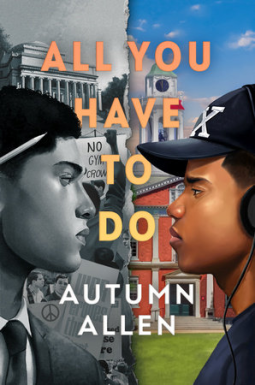
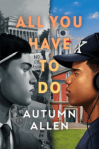
All You Have To Do by Autumn Allen

Standard
All You Have To Do by Autumn Allen

all you have

This historical fiction YA book was hard to put down.  While being invested in the characters and learning about the historical climate from an intimate account, I could feel my mind growing and my understanding deepening. The phenomenal writing quality, and the connection between the two fictional characters from two different times rooted in reality, allowed this thought provoking book to burrow into my mind, and makes me suggest it to high school English teachers to read with their students for a novel study.  Add in that the author is Muslim and that there is inclusion of side Muslim characters, makes me really really love this 432 page book.

SYNOPSIS:

Told from two perspectives: Gibran is a high school senior in 1995 at a prestigious New England, majority white prep school.  Being aware of the efforts his mother has made for him to have the opportunities he does, the incredibly bright boy isn’t content to sit back and let injustices go unchecked.  As he understands his position in his school, and perhaps in the world, he pushes to change how the system views him and on the cusp of the Million Man March he starts to get restless when others don’t support his efforts.

Kevin is at Columbia University in New York City in the wake of the Martin Luther King, Jr.’s assassination.  While the country pays service to the civil rights leader Kevin is witnessing the injustices at Columbia, and begins to question what his enrollment at the institution means and the hypocrisy it supports.  He also reflects back on choices his own family has made and what he would like his future to look like when opportunities to protest arise.

Kevin is Gibran’s uncle and their parallels show how little has changed in America.  The fears of the family, the institutionalized racism, the helplessness of a broken system.  The desire for two young men coming of age to decide for themselves where they belong, who they are, and what they are capable of in a world that wants to take that freedom away from them.

WHY I LIKE IT:

The power of this book is incredible, truly.  I really don’t have words.  I do have words about the side Muslim characters though.  Gibran’s sister is a hijab wearing convert and is respected and accepted by the family.  Kevin’s cousin and activist is also a convert and a powerful influence on the main character.  There are mentions of Muslims praying, and salams are given.  The book was beneficial to read, the Muslim characters and knowing that the author is Muslim, and reading the phrase, “In the Name of God the Most Gracious, the Most Merciful” before the dedication was just extra amplification of voices that this story brought to light.

FLAGS:

Racism, violence, police violence, incarceration, hatred, drugs, alcohol, sneaking out, partying, lying, stealing, segregation, oppression, language.  The reality of the situations discussed is not PG, but the book does not sensationalize anything for the sake of shock, it is rooted in reality and a YA audience will grasp that.

TOOLS FOR LEADING THE DISCUSSION:

Teachers, librarians, parents, teens: read this book.  Think about what you are reading, discuss what happened, what you understand, and how it makes you feel.  Preorder/order here

Messenger: The Legend of Muhammad Ali by Marc Bernardin illustrated by Ron Salas

Standard
Messenger: The Legend of Muhammad Ali by Marc Bernardin illustrated by Ron Salas

img_9626

I’m always curious how books about Muhammad Ali will present his “Islam” and this 240 page graphic novel was no exception.  I was a little hesitant with the title, and with the foreword establishing that this book is akin to the heroic poems of Odysseus and Gilgamesh, and that “inspired by truth, and truth itself, aren’t the same thing.”  I did appreciate that it says if you are going to take a test on Muhammad Ali and this is your only source, you will fail.  It seems to recognize that Ali means a lot of very different things, to different people and this book at times is true and at times just feels true.  Broken into 12 chapters, 12 rounds, the author offers sources in the back, but leaves wiggle room for creative liberty.  I think if you are familiar with Ali’s life the book doesn’t provide anything shocking and you will enjoy seeing it play out in graphic novel form. If you aren’t familiar with him, the book is a little too choppy to paint a comprehensive biography and you will be confused and need outside clarification at times. I looked into the book before diving in, and many reviews say that the story makes his life accessible to middle grade and middle schoolers, the publisher says 10th-12th grade, and I think with the panel of a prostitute trying to talk to him, alcohol being offered to him, the recreation of him being positioned as a saint being martyred for a magazine cover shoot, comments about being with a lot of women, and some of the politics, the book is best suited for high schoolers.  

SYNOPSIS:

Framed around the lighting of the Olympic torch in 1996 the book then goes back and fills in the gaps on some of the big events of Muhammad Ali’s life:

Round One: Schwinn. 1954. Having his bike stolen and being introduced to boxing.

Round Two: Olympian. 1960. Winning Olympic gold.

Round Three: Church. 1961. Meeting Malcolm X.

Round Four: Sonny Liston. 1964. The fight.

Round Five: Media. 1967. Interview with Howard Cosell.

Round Six: Martyr. 1968. Esquire cover shoot.

Round Seven: Defendant. 1971. Draft evasion charges and fight with Joe Frazier.

Round Eight: Candle. 1974. Meeting a child with leukemia.

Round Nine: Rumble. 1974. Rumble in the Jungle.

Round Ten: Patient. 1980. Early signs.

Round Eleven: Shepherd. 1990. Iraq hostage negotiations with Saddam Hussein.

Round Twelve: Survivor. 1996. Lighting the Olympic torch.

WHY I LIKE IT:

It does articulate that he parted ways with Nation of Islam in chapter 11, Elijah Muhammad and Nation of Islam is pretty prominent in the book up until then, and then in Iraq it does show him praying salat, mentioning the blessings of Allah swt in freeing the hostages, and noting he is going as the most recognizable Muslim American.  I always enjoy reading about Ali and Cosell’s relationship, so I particularly enjoyed those scenes and like the premise of the book established, who knows if they are true, but they feel true and in many ways make Ali seem almost fictious with his equal parts arrogance, humility, humor, and insight.  I had to do a bit of outside reading about the Esquire cover shoot, and the Iraq hostage situation, the book did not seem to make it clear, and got me to thinking perhaps some of the other chapters only seemed clear because I had read about those incidents before.  

Normally I like books to be sourced and a book that is biographical to be accurate, but I almost wanted this book to just be extravagant.  To have fun with the persona of Ali and make him into something of legend that the foreword seemed to hint at.  What I thought was going to make him even more so “the greatest” seemed to just provide a safety net of protection to imagine what was going on in Ali’s head during the 12 rounds highlighted.

FLAGS:

There are some offers of alcohol which he refuses, some pointed political positions, a prostitute in a hallway invites him for free, he refuses. He recreates a martyr scene even once he established he was Muslim and wasn’t ok with it, but a phone call to Elijah Muhammad’s son, made it ok because it was for money, there is a lot to unpack there for kids.  He makes a comment about being with a lot of women at one point, not in your face, but in a graphic novel, to dedicate a panel to it, makes it stand out.  Racism, hate, bigotry, prejudice.

TOOLS FOR LEADING THE DISCUSSION:

I am a bit on the fence with this book.  I think it would work for a high school book club, but with a lot of context.  If you are discussing Ali, this would be a suitable supplement in a high school classroom.  If you are an English teacher talking about Homer and heroic poetry, I think this would be a great contemporary example. I don’t know that I would stop mature middle schoolers from reading it, but I don’t know that I would be suggesting it either.

If the book seems like a good fit for you, you can order it here.

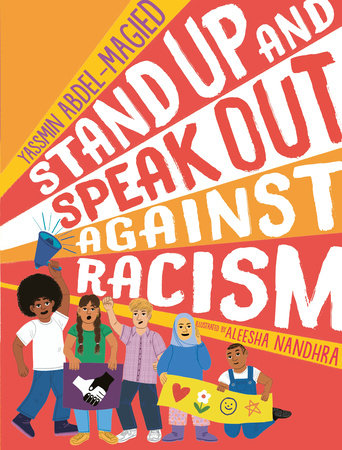
Stand Up and Speak Out Against Racism by Yassmin Abdel-Magied illustrated by Aleesha Nandhra 

Standard
Stand Up and Speak Out Against Racism by Yassmin Abdel-Magied illustrated by Aleesha Nandhra 

stand

The very first page of this practical Muslim authored, visible Muslim featured, how-to book draws you in with the author’s conversational tone and approach.  She presents life as being a mountain we all are born to climb and articulates that we are all given different tools to do so.  The book sets out to understand how race and racism affect the climb, how we can make it more fair, and uses questions from kids in the UK as the general organization of the 128 page book for middle grade readers and up.  As a Black Sudanese born, Australian raised, immigrant London woman who speaks Arabic, is Muslim, has authored five books, is an engineer and social justice advocate, she acknowledges privilege, and injects plenty of InshaAllahs, Alhumdulillahs, and global perspective to racism, its history, and what we can do to stand up and speak out about it.  I do wish the book was sourced, but the first person perspective, and her own intersectional identities, carry confidence and OWN voice power in making the world a better place for all.

SYNOPSIS:
The book starts with a section about how racism started, then moves into what racism looks like today and how it shows up and affects us all.  It then concludes with a focus on the action of standing up and speaking up.  The book spends time reassuring the reader that the contents might create strong emotions and to breathe acknowledge your feelings and find a safe way to express them. Chapter 6 discusses religions, even though the book is about race and says it does so because it is the same social construct of grouping a very diverse group together because of something “other” that they share.  It spends time on anti-Semitism, and Islamophobia.  The book doesn’t have to be read cover to cover, it can be read in sections, in any order, there is also a glossary and index at the back to find particular topics to look at.

WHY I LIKE IT:
As an American, I love that the book is global in focus and shows the effects of colonization and attitudes, and thus realities.  I also like that it takes time to discuss internalized racism, as well as interpersonal, institutionalized, and systemic.  Pointing out schools and how many of your teachers or principals look like you, really drives the points home.  I love that there is a whole page on hijab and truly that you see the author regularly bringing in Islam to the conversation which is great.  The action steps of what to do if you see racism, what to do if it is aimed at you, are well presented in metaphors that are easy for kids to see why the course of action suggested is doable, logical, and important.  It doesn’t shy away from acknowledging that pushing back on racism escalates the situation, and encourages individuals to be safe and do what they can. There are pull-out boxes, comic strip scenarios, bolded and bulleted text, and colorful engaging illustrations and infographics that connect with 9 year old and up readers independently or in small groups.

FLAGS:

The book discusses an emotional topic, but I don’t think there are any particular flags to be noted for 4th grade and up  There are important conversations to be had based on what is shared, but nothing is overly graphic or sensationalized.

TOOLS FOR LEADING THE DISCUSSION:

I think this book would be great to share with students regularly and often.  It should be on library and classroom shelves and should be used in small groups, large groups, and one-on-one.  The variety of methods that the information are conveyed make a useful tool when concerns arise, and a great reflective piece to encourage children to think deep, better themselves, and be aware at all times about the privilege and effects of their thoughts and actions.

Available for preorder on Kindle here https://amzn.to/3PH98u2

We’re in this Together (Young Reader’s Edition of We Are Not Here to be Bystanders) by Linda Sarsour

Standard
We’re in this Together (Young Reader’s Edition of We Are Not Here to be Bystanders) by Linda Sarsour

linda

I don’t have strong feelings one way or another about Linda Sarsour, so I read the book primarily to see what the messaging would be from a well-known Muslim activist to a mainstream audience, and I must say I was pleasantly surprised.  This YA adaptation of her adult book weaves together personal experiences with larger pushes for justice reform. It is not all memoir, there are historical blurbs, educational backstories, and centering of Palestinian occupation and Islamic tenants.  I feared that the book would be entirely self-promoting and it wasn’t, it shows her as a person, and her struggles, but the spotlight is bigger than her, as she talks about the efforts and accomplishments of others in promoting police reform, social change, elevating women’s voices, and working with Black Lives Matter.  The 229 page book is sourced and reads easily.  I think ages 13 and up will benefit from seeing the intersectionality of many current social struggles sprinkled in with historical landmarks that they have learned about in school, told through the lens of a personal, relatable Muslim, Palestinian, American voice.

SYNOPSIS:

The book starts with the Women’s March as the culmination of her status and then takes the reader back to show the pivotal moments that got her to that stage: the immigration of her parents to America, her childhood, her family’s bodega, trips to Palestine and finding her voice.  The book shows her in various stages of her life while showing what is currently happening regarding police brutality, national politics, and relatable historical movements.  It shares close relationships she has had professionally, as well as mentions her getting married, becoming a mother, and the loss of a close family member and mentor.

WHY I LIKE IT:

I was happy to see how much Islam and culture shaped her activism and identity, as both are generously sprinkled in, and are unapologetically presented.  The book is a memoir and many characters are introduced and shown to enhance her understanding or presenting her with opportunities,  yet I don’t feel I really got to “know” her or any of them.  The book is centered more on events and how she lent her voice in this arena or that.  I still don’t know that I have much of an opinion on her personally or on her work, or even felt motivated to take action because of her enthusiasm, but the book was an easy read, it was informative and reflective.

FLAGS:

Racism, oppression, murder, police brutality, car accidents, hate crimes, death, assault, systemic racism, slurs, misogyny, occupation, hate.

TOOLS FOR LEADING THE DISCUSSION:

I probably wouldn’t read this book in a book club setting, but I think it would be a good addition to a school or library shelf.  I think you could require it in a history or civics or current events class and readers would find it compelling and relatable and be able to add their own life experiences to any discussions that would follow. It shows that the struggle in history books for justice and equality is not over, it is still ongoing and still very very real with horrific consequences.

Rebel of Fire and Flight by Aneesa Marufu

Standard
Rebel of Fire and Flight by Aneesa Marufu

rebel

I struggled with this 384 page young adult fantasy.  It skirts and plays with Islamic doctrine as the characters and plot points dance with fantasy and fiction; and because I never felt that the author was completely in control of the story and where it was going, I could never relax and be swept away.  The author identifies as Muslim and in the backmatter addresses how experiences with Islamophobia influenced her writing, yet I don’t know why jinn and hijab were in the book when fictionalized creatures and cultural dress would have sufficed.  Clearly the character on the cover is in hijab, the names of half the characters are Muslamic, the culture is very desi, the broad concepts of jinn, the ghaib, sihr, Prophet Sulaiman, call to prayer, are all Islamically rooted, but characters go to worship at temples, jinn and jinniya eat corpses and are described so often as looking like smoke.  There is no clear identifier that these characters are in fact Muslim, it is simply hinted at, which makes the fictional parts seem like extensions of religious doctrine and ultimately made me uncomfortable with much of the story.  It also makes me think readers will not know where the lines are, if my brain was muddled, I can’t imagine a  young teen reading it and keeping it clear.  There is a few rushed romantic scenes of kissing, there is a trans character who’s gender identity and born gender is a significant plot line in the story, and there is a lot of oppression, racism, death, abuse, misogyny and fear.  It is a dark read that metaphorically takes real societal concepts and sets them in shades of gray with the added use of fantasy. There are a lot of layers in the story, and while it wasn’t poorly written, there were definitely places it needed to be better.  I really didn’t like any of the characters, I didn’t understand their motives, their relationships, their drives, the commentary on occupiers and rebels was weak as was the push back on misogyny after the first few chapters.  I didn’t feel a love of hot air balloons or feel that the battle scenes accounted for many of the characters that would suddenly be missing from the scenes.  I think the dual perspectives kept the intensity of the climaxes at bay and halted the rising action.  Too many misses for me to recommend this standalone book, but if you’ve read it and can talk me through it, I’m willing to listen.

SYNOPSIS:

In a land where girls are running out of time to be arranged in marriage at 17 and transportation is done in hot air balloons, there are two groups of citizens: the darker Ghadaean’s are the rulers and the lighter skinned hāri are oppressed.  The book establishes this power dynamic early on in a quick synopsis: the hāri came from the Himala mountain range to trade to Ghadaea, but their greed and lust for power drove them to try and seize the land.  They failed, and now 90 years later the hāri are punished for the mistakes of their grandfathers (4%).  Both groups fear sihr and jinn.  Everyone is vegetarian because jinn are attracted to rotting corpses, animal and human, and thus anything dead is quickly burned.  When a radical hāri group, the Hāreef, is formed with a new leader, sihr and jinn are no longer enemies but tools to rebel against the racist oppression, and assist in the war to change the balance of power.  

Khadija is 16 and with her mother and younger brother deceased at the hands of some hāri, her older sister married and off in a balloon, her father is desperate to get her married.  Most females are not allowed to read, nor are they even allowed out of the house alone.  The fear of the jinn is weaponized to keep them in, and misogyny prevents from proving themselves.  While out meeting with a suitor, Khadija in a burst of desperation leaves her father and jumps in to an escaping balloon.  Khadija does not know how to fly a balloon, having never even ridden in one, but when it lands in different town she meets Jacob.

Jacob is hāri and the second of the dual perspectives telling the story, he is orphaned and is unique in that he is an apprentice of a glass blowing Ghadaean.  He meets Khadija and offers her food, and in the span of a few hours she saves him and he saves her and both seem to have a dead glass blower on their hands.  Add this to his growing rift with his best friend William, who has joined the Hāreef, and is now dead, and you have Khadija and Jacob escaping in a balloon, not trusting each other nor knowing who and what they support.

From here on the two’s friendship and motives wax and wane as they are drawn in to battle together, and against each other.  Neither are “good” or “bad” nor are their decisions always clear, but they will be forced none-the-less to figure out what they want and what they stand for as peri’s are tortured, nawab’s are killed, jinnya queens are called upon, wishes are granted and a group of hāri and Ghadeans known as the Wazeem offer a unified collective.  Unfortunately, change and power never come easy and when a dead son is brought back as an ifrit and an ancient princess in the jinn world is ready to battle, all the shades of gray that exist in politics, revolution, rebellions, families, hate, racism, gender identities, and control all come spilling out from balloon baskets and the ghaib. 

WHY I LIKE IT:

I honestly kept reading to see how the author was going to bring it to a conclusion and wrap up all the loose threads.  And while the book lagged at times, she definitely got it concluded.  Aside from the religious signaling, but never owning identity problems, I struggled with the writing too.  The hāri Jacob doesn’t read like a little brother, he and Khadija read the same age, and so his importance in the Hāreef seems an ill fit.  Plus he is very duplicitous and I get that that is part of the story, but I never liked him so it just got annoying how many second, third, fourth chances he got, and I mean, why would anyone care? 

Khadija seems like she is going to battle misogyny early on, I hate that marriage and arranged marriage is equated to oppression, but the not being allowed out and not being educated seems to fizzle in the middle and then come out a bit in the final scene.  I hoped it would have been commented on in every new city they arrived at.  The set up was there, but because it wasn’t, it made it seem more of a shortsightedness of her own father, and not a larger problem when strong women existed elsewhere.  This also reinforced a “brown Muslim” man stereotype that is never pushed back on.  

The racism, power struggle oppression is more consistent, but with the foundation that the hāri came and tried to take over nearly  90 years ago makes it hard to feel too bad for them.  They tried to occupy and now are enslaved.  Neither is ideal, but why didn’t they just go back? We aren’t talking more than one generation, it is the “crimes of their grandfathers,” they had a home, they were kicked out, they should leave.  Yes, I know they are human and racism is wrong, my point is a literary one, that the foundation should have been stronger, more detailed.

The love interest I also felt was lacking, Darian comes out of nowhere, they are in love, he gives her his heart so he is saved, I didn’t feel the tension, I didn’t get it, not at all.  It was forced and cheesy and I just know he kept getting hurt, they would kiss, and then he was back to getting hurt or possessed or something, had no personality what so ever.

The seal of Prophet Sulaiman and the hundreds of pieces of it didn’t sit right with me, nor the jinns being smoky and eating corpses.  I truly don’t understand why very real Islamic concepts were brought in and twisted.  Why not just create your own characters and say they were loosely inspired.  I felt like the religious rep and OWN voice kept one foot in the religious inspired world and one in the fantasy is fiction so I can do what I want, and it didn’t work for me.  I think it crossed in to being disrespectful, and had the author not identified herself as Muslim, I would have been furious as the book reads like an outsider who doesn’t get that jinn are real, Prophet Sulaiman was real, sihr is real, the ghaib is real.  It really needed some some clarification on where the story existed and where the religion or religious inspiration started and stopped.

The trans character is worth highlighting because it does touch into Islamic rulings regarding hijab, even though we don’t know if Anam or any of the characters are Muslim. Anam is born a male, but leaves her family of exorcists and is a leader of the Wazeem as a female. She presents as a female, but when she enters a room where numerous Wazeem women are changing many hide, draw their hijabs, make horrified gestures etc., it has to be explained to Khadija why this is.  It does not bother Khadija. Story wise it is a critical point because the Jinniya Queen Mardzma is the queen of female warriors and it is unknown if Anam would be seen as female or male. When Anam went from being an exorcist to the greatest human warrior present is beyond me, but there was a lot of assumptions you had to accept while reading.

FLAGS:

Death, erroneous religious rep, kissing, murder, killing, lying, torturing, threat of sexual assault, murder, coming back from the dead, oppression, racism, trans, misogyny, abuse, hetero relationships, stealing.

TOOLS FOR LEADING THE DISCUSSION:

I would not shelve this book in an Islamic school library or classroom, nor would I use it as a book club selection.  Although if my local public library or some adult Muslims read it and were planning to discuss, I would join to hear their thoughts about it.  I would not be able to lead, but I would enjoy picking it apart with others.

The book releases shortly, just because it didn’t work for me, if you think it sounds like something you would like, you can preorder and purchase it HERE.

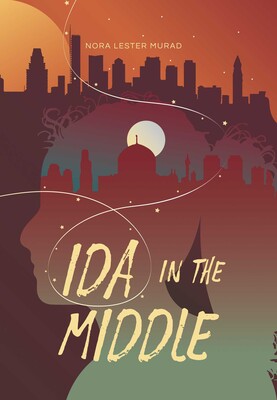
Ida in the Middle by Nora Lester Murad

Standard
Ida in the Middle by Nora Lester Murad

ida-in-the-middle-9781623718060_lg

Ideal for middle school readers (upper mg/lower ya), this magical realism book takes readers from middle school in American to a Palestinian village outside of Jerusalem through the consumption of some magical olives.  Written by a Jewish author married to a Palestinian Muslim who raised their three daughters in Palestine, the book features a lot of Islam, but is Palestinian centered in its insight, critique, culture, and dreams.  Over 224 pages, Ida starts to find where she fits in both in understanding her self within her family, her place in America, her passion in life, and what it means to be Palestinian.  The story is important, and is told in a way that will encourage readers to learn more about the occupation.  Nuances are shown in characters and groups, but the line that the occupation is oppressive is never compromised.  I appreciate that the author writes from her own experiences and openly acknowledges that she is not trying to take away from Palestinian born and raised OWN voice stories, but she is an advocate, she has raised her children and lived in the West Bank, and her characters reflect a sense of intimate knowledge, love, and appreciation.  Even with Ida having to decide to stay in America or Palestine, the two countries are not pitted against each other or seen as black or white, as to which is better or worse, the middle is where much of the story takes place, and appreciating your culture no matter how much others are trying to erase your existence, is always stressed.

SYNOPSIS:

Ida is the middle child of her Palestinian immigrant family and isn’t artistic like her younger sister, a ballet dancer like her older sister, or a soccer player like her father.  She wishes she was invisible.  Especially when her classmates turn on her every time there are conflicts in the middle east.  When it seems that everyone wants to diminish her heritage, she finds herself at a new school, unsure of where she fits in.  With anti Palestinian attitudes and Islamophobic people, Ida just wants to go unnoticed, unfortunately middle school requires a passion project to be presented and Ida has no idea what her passions are, and how she will face the crowds.

One day when looking for a snack she finds a jar of olives stuffed in a cupboard- olives brought by a family friend from her now deceased aunt in Busala, one bite and she is magically transported to the familial village.  It is an alternate reality of what life would be if her parents never came to America.  Not only is she in a country she has never seen before, meeting family members she has never met before, but even her own parents and sisters are somehow different.  She enjoys the warmth, the communal activities, the extended family.  Her mom in hijab, the athan being heard, the men all going for jummah, but then they sit down for a meal and the same olives are served and Ida accidently takes a bite and is whisked back home.

Once home, she longs for so much of Palestinian life, but relishes in the convenience and ease of America as well.  Her passion project still looms and she finds herself hoping to escape it by going back to Palestine.  When she finds herself back near Jerusalem she ventures out with her Aunt, who isn’t dead in this reality, and learns more about the occupation and oppression, and how the families interact with the various Israelis: some sympathetic to Palestinians, some actively working to help Palestinians, and some settlers- forcefully killing and bulldozing Palestinian homes.

When Israeli military troops enter their village, the families meet to discuss the best course of action, the families do not agree, there is no clear way to prepare, there is no guarantee of survival.  Ida starts to find her voice, and when the soldiers enter, Ida finds herself rushing out to help a small boy. Guns, demolition, rocks, tear gas, fear, so much fear, what can one person do? What can one village do?  What will Ida do?

WHY I LIKE IT:

The book is relatable and moving, not just for those with a tie or interest in Palestine.  It is a coming of age story that shows a girl grappling with forces so much bigger than herself, while at the same time dealing with homework and friends and stereotypes.  Ida has a lot to figure out and the book doesn’t sugar coat a happy ending, it simply provides a moving story based on reality, through a character whose quirks and personality you find yourself rooting for.

I love the presence of Islam and the way it is apart of Ida and her surroundings, even though she makes it clear early on that her family is not religious.  The Quran is mentioned, the athan, various salat, hijab, Hajj, Ayatul Kursi, Ramadan, Eid, wasting food as being haram.  In Boston her friend knows she doesn’t eat pork, she went to Sunday school to learn Arabic at the mosque when she was younger.  It doesn’t gush with Islam, but it is present, for example Ida’s sister and her joke about a good Palestinian girl shouldn’t have a boyfriend, it isn’t tied to their religion. The story is a Palestinian one, and as someone who is not Palestinian, the images, the foods, the smells, the love all seemed to embrace everything I’ve ever heard Palestinian friends talk about, and it feels like a warm hug to read the effects being in Palestine has on Ida.

I love that the author is upfront about her perspective, and I love that she is putting this story out there.  The writing is sufficient: I was invested in the story, and it was an easy read. I don’t know that I’ll remember it months from now for it’s imagery or power, but I’m certain I’ll remember the commentary about life under occupation and the struggle to not be erased by a world that doesn’t seem to care about the settlers still taking Palestinian homes and their way of life away by force.

FLAGS:

Fear, crushes, death, injuries, loss, magic, bullying, racism, Islamophobia, guns, physical assault, threat of force, destruction.

TOOLS FOR LEADING THE DISCUSSION:

Our school is majority Palestinian.  Years ago when we read Where the Streets Had a Name, I learned so much about the students, their families, their own experience living under oppression, that I can’t wait to present this book with the middle schoolers and take notes on their thoughts.  I would not lead the discussion, I would let them, their voices will not be erased by me.

Preorder available here: Amazon

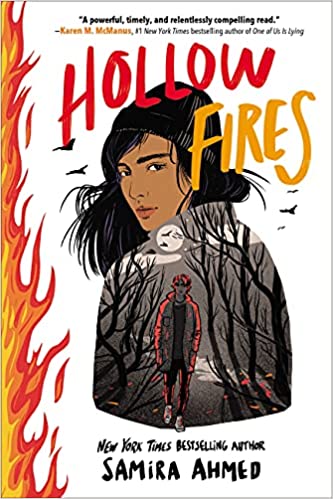
Hollow Fires by Samira Ahmed

Standard
Hollow Fires by Samira Ahmed

hollow fires

Every YA Samira Ahmed review I have written I remark at how amazing the premise is, how flat the characters are, and how forced the romance feels.  I am so happy that I did not dismiss this book, and when I return this copy to the library, I will be eagerly awaiting the purchased one to arrive so as to be placed on my book shelf.  There is connection to the protagonist, she is even likeable, the brief flirty romance is natural and not heavy handed, and the only thing better than the premise is the contemporary commentary.  The multiple writing styles, lyrical voices, and thriller/mystery elements make this 404 page teen book hard to put down.  Islam is present in different forms in different characters. There are very gentle elements of faith that really contrast the chaos of the plot and radiate peace: fajr salat, wanting a janazah, identifying as Muslim.  And while the book says 7th grade and up, I think it is more suited for high school readers.  There are strong themes of islamophobia, media, and privilege, there is killing, murder, a gay Muslim, a ghost, assault, language, planning to go to a school dance, racism, vandalism, misogyny, Halloween, relationships, hate crimes, and abuse of power, to name a few reasons that I think older readers (and adults) will appreciate and understand more deeply than most middle schoolers, how remarkable this book truly is.

SYNOPSIS:

Safiya is in her senior year at her elite private school, she’s a scholarship kid, and her passion is journalism.  As the editor of the paper she is unafraid to challenge the principal and spur others to action.  When a fellow Muslim kid, Jawad, at a nearby local school gets arrested for bringing a makerspace jetpack to school, it bothers her.  When Jawad goes missing, and events at school and in the community start putting Muslims and other minorities on edge, Safiya finds herself collecting bread crumbs and getting closer to the truth.  Throw in vandalism to her parents Desi store, smoke bombs in the bathrooms, swastikas graffitied at school, and a dead boy whispering to her and you have yourself an action packed thriller that hits close to home.  When the circumstances of how Jawad’s body are found and the clues start to fall in place, Safiya and readers will find themselves rushing against the clock.  Her to safety, and readers to see if their suspensions are correct.

WHY I LIKE IT:

I love, love, love how each chapter starts with a fact, or a lie, or an alternate fact, or truth, I keep rereading them. They are so clever, and thought provoking as the short lines stare at you in black and white and get under your skin.

I don’t think the book explains if a ghost in Islamic doctrine would be possible, but I do like that the book on more than one occasions tries to explore it.  I think for me acknowledging that it doesn’t fit, but that jinn exist and that maybe it just is what it is allowed me to overlook it and read the story for what it is.  I appreciate that the author gave the characters presence of mind to try and view it through an Islamic perspective and see answers that way, even if it did come up short.

I love the parents in the book, all of them. There is no oppression or force or lack of understanding, from the parents which was a nice break from the normal YA Muslim family dynamic presentation.  As a result perhaps, Safiya has never gone to a school dance, but when asked to Winter Formal she doesn’t have any religious or cultural hesitation in agreeing to go.  Part of me wishes it would have crossed her mind, but I think the other part wins out- that for her it is a non issue and that her view and practice of Islam is just different than mine and that is ok.  I think part of the reason I am ok with it is because there is no overly forced make-out sessions or drawn out angsty scenes.  There is a kiss on the cheek and one on the forehead, a tiny bit of snuggling, and maybe a handhold.  Suffice it to say it isn’t overboard and extreme, it never says that Safiya prays, she notes her parents do, but it seems she goes to the mosque, she identifies as Muslim and she is unapologetic, so by moving the choice to her to go or not go to a dance allows Islam to stay Islam and her actions to stay her actions.  A subtle difference I’m sure for most, but for me a very powerful one in a book that is about more than Islam’s view of premarital relationships.  I think it is also promising in that it shows how far literature has come that these nuances can exist without being overly explained or made into black and white issues.

In a similar vein is how the three Muslim characters are presented.  At one point it says they all go to different mosques because of geography or ethnicity, but to them they are just Muslim.  This includes Usman a kufi wearing Shia Hazara from Afghanistan who is always crushing on his tennis partner, or some other guy.  There is nothing more said about it, and the book carries on.

The style of the writing between the alternating voices of Safiya and Jawad are nice, but I particularly liked the inclusion of the interviews, articles, excerpts, and court transcripts.  The change of pace made it feel like it was more than a fictionalized story about the characters at hand, and a societal trend that is impactful to us all.  Which of course is a theme of the book, and was a nice way to show and convey that sentiment without having to say it over and over again to be heard.

FLAGS:

Copy and pasted from above:  There are strong themes of islamophobia, media, and privilege, there is killing, murder, attempted murder, a gay Muslim, a ghost, assault, language, planning to go to a school dance, racism, vandalism, misogyny, Halloween, relationships, hate crimes, and abuse of power. The hand of Fatima symbol is apparent in the marketing of the book, it isn’t a huge part of the story itself.  It is a key chain that was given to a character and then passed on with a message that it will keep you safe.  Clearly it doesn’t keep you safe and the irony and the passing of it from one character to another (I’m really trying not to spoil anything, can you tell) is the only significance it has on the story.

TOOLS FOR LEADING THE DISCUSSION:

I have already told my daughter she needs to read the book this summer after finals (she is 15), and while I would love to do this as a high school book club book, I don’t know that the ease of going to a dance, the normative presentation of a gay Muslim, and the ghost as a main character would be widely accepted at an Islamic school.  I think I will suggest it to high schoolers that I know, and would do so confidently as the writing, overall messaging, and critique on the media and privilege are so well executed in a compelling story, but I think the flags might keep me from “teaching” the book or shelving it in the school library.

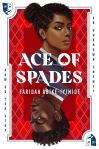
Ace of Spades by Faridah Àbíké-Íyímídé

Standard
Ace of Spades by Faridah Àbíké-Íyímídé

spades

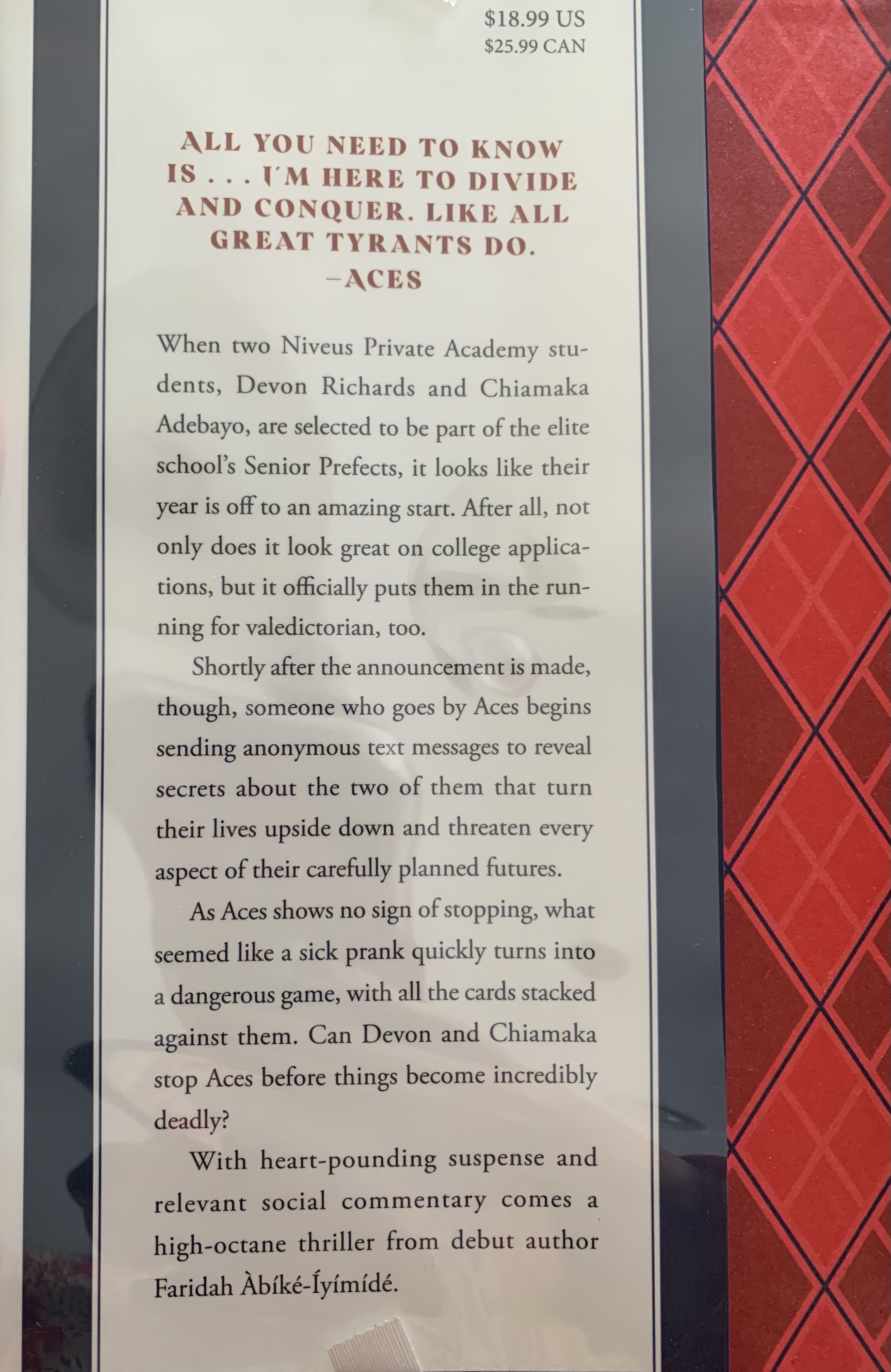
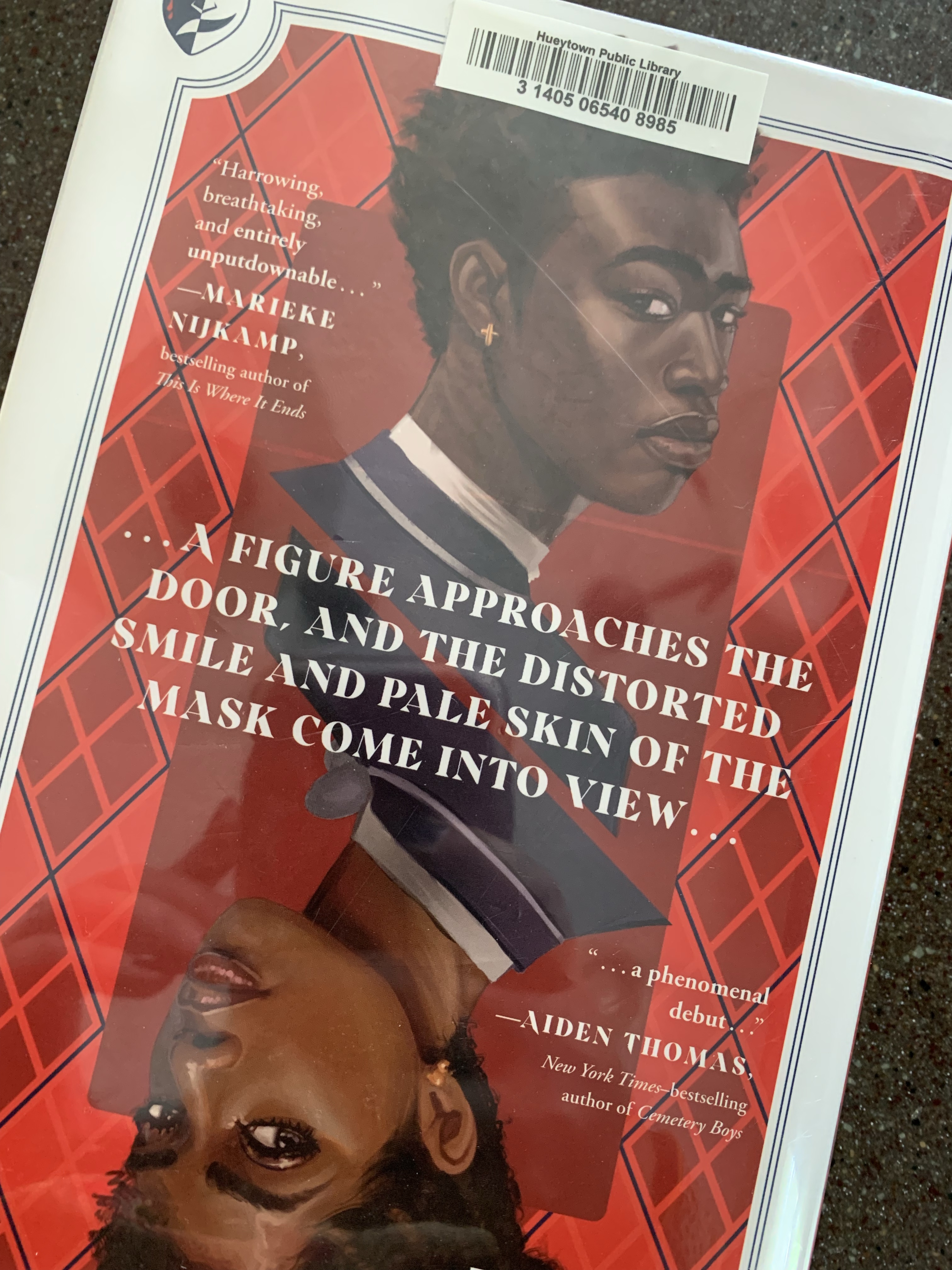
I had heard about this 420 page YA thriller and how it was written by a Muslim student at University and the seven figure book deal that she earned. It is constantly described as a combination of Gossip Girl and Get Out, having never seen either of those, I relied on the back of the book and the inside flap to see if it was something I would like to read and suggest my young teenage daughter, (and followers to read). Based on the suspense teasing and plot involving racism, I figured a contemporary YA book set in high school would have some relationship, sexuality, language and drugs, so at the last minute I decided to read it first. Alhumdulillah, I’m glad I did. The book has sex and relationships and sensual encounters between gay, queer, lesbian, bisexual, and heterosexual characters on EVERY SINGLE PAGE. I considered stopping, it was a over the top, forced, and honestly a little hard to read at times, but I continued because the commentary on racism and suspense storyline was well done that I was genuinely curious to see the climax and resolution. I write this review as a heads-up and to opine on the lack of mention of the amount of romance and sex in the book and in its blurbs. As a reader and someone who recommends books to people a lot, knowing what the majority of the book is about is helpful. To completely not mention something that is such a huge part of the book is frustrating, and so I’m writing this up more as an FYI, than a thorough and in-depth review. There are no Muslim characters, and the only mention of religion is a side character reading the Bible. Coming from an Islamic School Librarian standpoint, without exception this book would be considered inappropriate.

SYNOPSIS:

The book is told in two alternating personalities, Devon and Chiamaka. Two senior black students at a prestigious private high school. The only two black students. Chiamaka is the top of the school hierarchy, head prefect, planning on Yale for pre-med and the girl everyone wants to be. Devon is a scholarship student who plays music and dreams of Julliard. He flies under the radar and has one friend. When the book opens both are named Senior Prefects at the opening assembly of the school year, and no one is more surprised than Devon. The glory of such an honor is short lived however, as anonymous texts start popping up exposing secrets about the two. The two characters have skeletons they would rather not have exposed, and even though they barely know each other, they eventually resolve they must work together to figure out who is out to destroy them.

WHY I LIKE IT:

I like that the whodunit aspect really had me on my toes. I honestly, however, didn’t like either of the characters at all. The book has a lot going on, aside from the texts and secrets being exposed, that I wish would have gotten more page time. The two characters have very different, but very impactful home lives. Devon’s father is absent and it is learned he was executed on death row, his mom works three jobs, he has younger brothers and they struggle financial so that he has a chance at education. He lives in a tough neighborhood and runs drugs to help out with money. He hooks up with multiple guys in the book, and tries to keep it a secret so that he doesn’t get further harassed by the neighborhood guys, but it seems everyone knows he is gay even before the texts start coming. Chiamaka is Nigerian from her mom and Italian from her father. Her father’s family doesn’t accept her and her mom because of their skin color, so they no longer go to Italy to visit. Both parents are physicians and are never around. Chiamaka has no friends, picks boyfriends to further her power agenda, and spent her entire junior year having sex with her best friend, Jamie, with the hopes that he likes her too. She eventually realizes she likes a girl and hooks up with her. By-and-large for both main characters, only their sexual relationships are really explored, and most of them are brief. Thus it kind of limits the relatability to the characters in other facets of their lives. Not that people and characters have to be like-able, but they have a lot of layers, and it would have been nice to get to know them better as people, not just as shell minority representatives in a system built for them to fail.

Only a few side characters are developed, presumably just enough to make them suspect, but to drop information like one of them getting incarcerated and not explored, one diagnosed with diabetes and told without prompting and then dismissed, makes it feel like a lot is crammed in for no real purpose. As a debut novel by a young author, the writing is obviously amazing. I just didn’t connect to the characters, and the parts of the book I did like were overpowered by parts that I felt were overly forced. I will definitely read anything she writes in the future, although I will definitely research the books more thoroughly know what I’m getting in to.

FLAGS:

There is violence, sex (hetero, gay, and lesbian), cursing, drinking, drug use, drug selling, romance, kissing, hit-and-run, conspiracy, making out, drug dealing, physical beatings, passing out drunk, drunk driving, lying, cheating, racism, bigotry, hate speech, gaslighting, privilege, death, gun violence, destruction, murder, attempted murder, crude language, assault, blackmail, misogyny, homophobia, voyeurism, institutionalized racism, and probably more. Mature content.

TOOLS FOR LEADING THE DISCUSSION:

There is no way I would suggest, recommend, or encourage this book to Islamic School high schoolers.