Tag Archives: Muslim Family

A Letter to the Beloved: Dear Prophet Muhammad (saw) by Jenny Molendyk Divleli illustrated by Rumeysa Abis

Standard
A Letter to the Beloved: Dear Prophet Muhammad (saw) by Jenny Molendyk Divleli illustrated by Rumeysa Abis

img_5332-1

I was a little skeptical about a 32 page rhyming letter to our beloved Rasullah, illustrated in book format, but it is cute and it won me over.  The rhythm keeps the rhyme from feeling too forced and allows for some forgiveness when it misses the mark, it also makes the book appeal to a wider audience. Even my preschooler could sit through it pretty well.  The book being the letter without any stilted framing, has a lovely authentic voice of a young boy, also named Muhammad, asking the Prophet (saw) questions and chatting in a very stream of conscience sort of way. It blends facts that the young boy knows with his stresses and asking the Prophet for advice.  The font is meant to look like a child wrote it, but it is a little cumbersome for children to read, and even adults (me) during read alouds.  I do wish the book was sourced, nothing really seemed wrong, but having it sourced or approved by a scholar is just a reassurance to the reader, and in my view a responsibility of the author.  The only line I didn’t like was near the end, when the boy hopes “that you will remember me, from this letter I am writing you.”  I feel like it will confuse kids, is the letter being sent? How would he know you when you’ve never met? What will be done with the letter once written? The illustrations are hit or miss, some are absolutely lovely, others a bit off, for example a music book on top of a picture of Masjid an Nabawi and the Kaaba, some also easier for small groups to see than others.  For kids there really aren’t a lot of books about Prophet Muhammad saw that are not textbook like in their portrayal, so I like the approach this takes, I just wish a few things were tweaked.

The book dives right in, with Muhamad introducing himself to our Prophet, he writes that he was named after him, and all about his family.  He then starts to tell what he knows about Prophet Muhammad, and questions he would like to ask.  Its a one sided discussion about siblings, smiles, appearances, kindness, and generosity.

The little boy then wants to know about Buraq, splitting the moon, talking to angels, standing out numbered at Badr.  It then turns to food and the little boy wondering about if RasulAllah would like mustard and relish, and burgers.  

img_5336-1

He imagines the Prophet visiting and leading his family in prayer and the scent that would then linger.  The boy hopes to meet him in Jannah, and promises to do his best to follow Allah’s decree. He signs off and sends salawat upon the Prophet. There is then a place for readers to write their own letters to the Prophet.  

Sam(ira)’s (Worst) Best Summer by Nina Hamza

Standard
Sam(ira)’s (Worst) Best Summer by Nina Hamza

img_5254-1

The first 15% of this 336 page book were rough, the internalized Islamophobia/othering, the excessive discussion of Halloween and being toilet papered, but then I don’t know, something suddenly changed, and I was hooked.  There really is no plot, the reader just spends the summer with Samira, the highs the lows, you see it all through her tween eyes, which worked great for me because I truly loved her voice.  Her dry witty humor, the short choppy chapters, once the forced Islamic rep faded (I know, the irony is not lost on me), the book was hard to put down.  It has Muslamic flags: music is a HUGE part of the book, there is lying, mention of beer, parties with boys, Halloween, dancing, bullying, racism, ageism, Islamophobia, stereotypes, but it also has a lot of heart, finding yourself and voice, amazing sibling support, community, a super grandma, a little brother who is on the spectrum and absolutely a star who holds his own. It is very idyllic even for middle grade, but I think if you are ok with the aforementioned flags and have a middle grader trying to find their place or has had some friend trouble, this book will resonate and be well loved.

SYNOPSIS:
Sam/Sammy/Samira is wrapping up a school year that did not go as planned even though she found she loved being a photographer for the yearbook. She had a huge falling out with her best friend Keira, and she cannot wait for a summer of never leaving her room.  Her parents and older sister are heading to India, leaving her with her little brother Imran, and Umma, their Grandma who came from India to watch them. The end of school culminates with the yearbooks being delayed, her house being toilet papered, the talent show performance that she quit- being completely changed and incredibly racist, Keira spreading lies, and a new girl moving in to the neighborhood.  It is a lot for Samira, and summer is just getting started.  Umma knows the whole neighborhood before the week is out, and starts building a community that rallies around the three of them.  Samira becomes a roadie for a band, Imran gets an old artist to teach him to paint, parties are planned, voices are found, friendships are established, and videos are made celebrating the success and obstacles of it all.  Every time they call the rest of the family in India, even the reader realizes just how much they all have grown.

WHY I LIKE IT:

I just love Samira, she is relatable, funny, and you just cheer for her. I wish her lens though was Islamic.  She doesn’t wear a swimsuit because she misread the dress code, but had no Islamic perspective hesitation of going to a swimming party with boys.  She gets blamed for sneaking beer to a gathering and it says she doesn’t drink, but doesn’t stress, that it would be a huge, huge deal Islamically, not just because she is underage.  Music and dancing aren’t even blips on the radar. Umma prays, Sammy finds it annoying that her prayers seem to take longer when Sammy is waiting for her.  Once it mentions that Sammy was told to pray, but it never shows her praying.  Islam seems very forced, just enough for the character to mention Islamophobia in other instances where the label creates stress for the family.

The character development of Imran and Umma, even though they don’t change at all, has depth and grounds the story. I read a digital copy that doesn’t have any backmatter, but I do hope that the autistic rep is accurate.  Imran’s perspective and heart are so engaging and his and Samira’s relationship is very tender.  There is no pity, or looking down, he legit is fully fleshed out and awesome.  Umma is incredible too, her magic network of getting things done really is a super power.  She connects with people, has a huge heart, and picks her battles.  I wish I could take an internship from Umma.

I can’t figure out if the resolution to the “climax” is intentionally understated because Samira has moved on and grown, and having a big explosion doesn’t fit her character, or if it was just not written strong enough.  That is why I put climax in quotations, because there really isn’t a lead up, or rising action, it is a progression, but it is like the rest of the smaller ups and downs, it is just a stress of the day-to-day living of the protagonist.  The other thread of the “climax” being Alice’s grandma coming home from the hospital, really just seemed weak.  She should have come to the party in her wheelchair, I really didn’t get why it centered the party for being for her, but then let her leave.

I like that Keira wasn’t given redeeming qualities, and her treatment of Samira was never justified.  Often the bullies are shown to have hard lives, which is fine, but sometimes they are just mean.  Samira really takes the high road in handling Keira and what she wants their interactions to look like in the future, which is much better messaging than most books about bullies contain, and I really appreciate that.  

FLAGS:

Bullying, racism, stereotypes, lying, Islamophobia, agism, mocking, teasing, music, dancing, vandalism, mention of Halloween and beer.

TOOLS FOR LEADING THE DISCUSSION: It wouldn’t be possible to do this as a book club selection in an Islamic school because of the music element, but depending on the school, it might still be ok to shelve in classrooms and the library.

Sami’s Special Gift: An Eid al-Adha Story by M.O. Yuksel illustrated by Huseyin Sonmezay

Standard
Sami’s Special Gift: An Eid al-Adha Story by M.O. Yuksel illustrated by Huseyin Sonmezay

img_5215-1

This sweet 32 page story, blends themes of loss, grief, giving, homelessness, Islam, Eid al Adha, and joy with simple early reader level text and beautiful illustrations. The book never gets preachy and doesn’t other, making it a great addition to all shelves, everywhere. There is information about Eid al Adha and what a homeless shelter is in the backmatter along with a glossary that explains, Islamic and Turkish terms.

Sami loves Eid and celebrating at the carnival with Dede, his grandfather, but this year, Dede is not there, and Sami is sad. When a package from Nene arrives from Turkiye with Dede’s favorite sheep decorated Eid tie for Sami, things start to look up. Sami never wants to take it off, and even wears it over his new Eid clothes as they head to the mosque for prayers. After salat and before the carnival, the family visits a local butcher and picks up meat to take to the homeless shelter.

Sami has never been to a homeless shelter and has only heard of his parents going and helping there. He asks his parents about it on their way and once they arrive heads off to play ball with a boy, as his sister shares her doll with a little girl. When it is time to leave for the carnival, Sami imagines what the his life would be like if he lost his home and belongings, and makes a decision, knowing exactly what his Dede would do.

img_5218-1

I love how the book weaves in information about Islam by having the family praying, listening to the imam, wearing new clothes, and giving in charity, without pulling out of the story. Same for the Turkish cultural inclusions of food and words. I also like that in the illustrations the mom wears hijab when out of the house, but not inside. It all comes together smoothly and is unapologetic, even while handling the sadness of his grandfather no longer being with him, the empathy at the homeless shelter, and joy at the carnival.

My only concern is when it says both in the text and in the backmatter that meat is given: one third to friends, one third to family and one third to the poor. I don’t know that it is wrong, but to clarify you keep one third for yourself (and family), and distribute one third to friends, and one third to the poor. Additionally, I also know a lot of people might not love the illustration style, but the picture of them in the mosque, won me over.

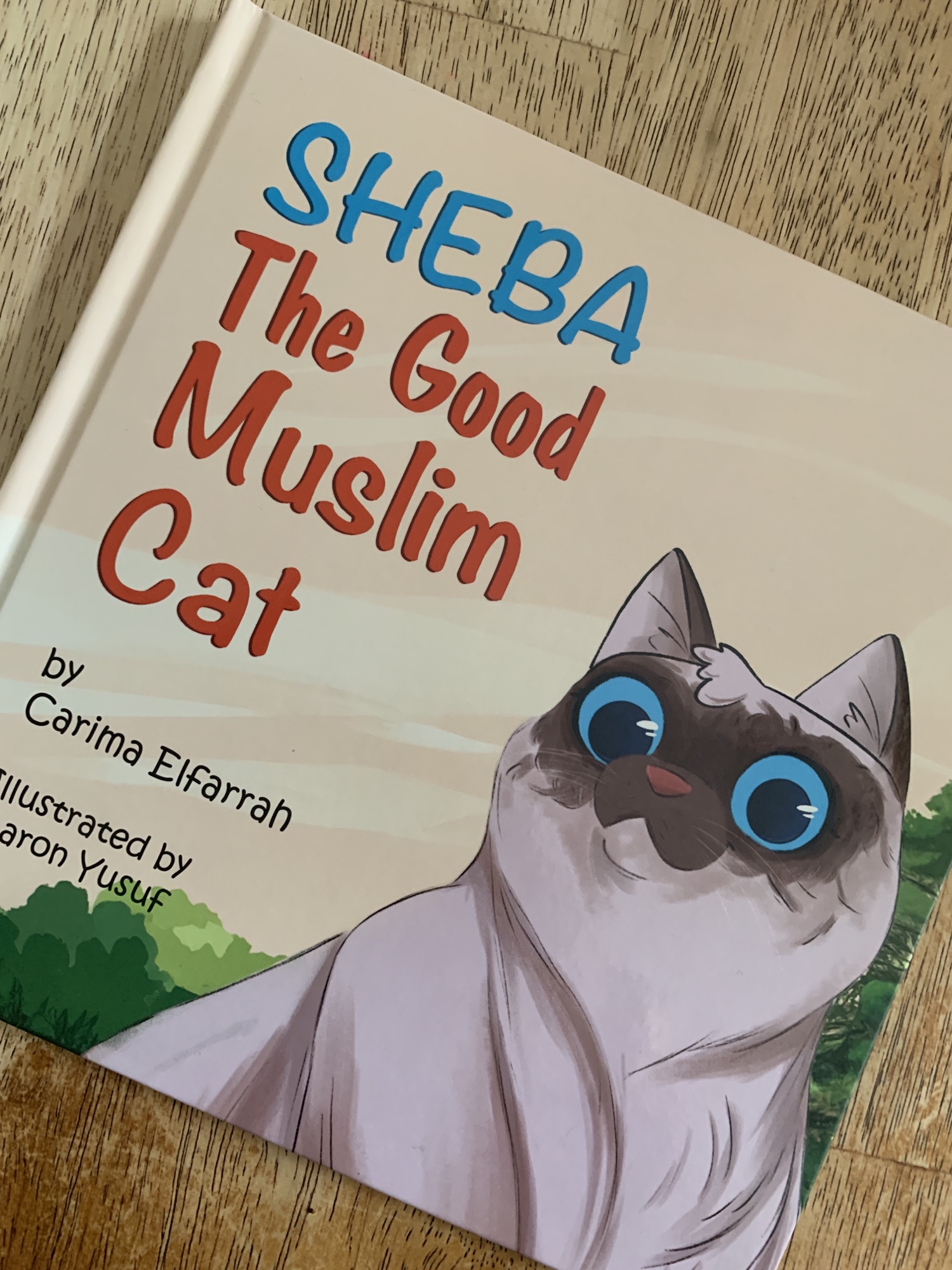
Sheba: The Good Muslim Cat by Carima Elfarrah illustrated by Aaron Yusuf

Standard
Sheba: The Good Muslim Cat by Carima Elfarrah illustrated by Aaron Yusuf

img_4999-1

I was really looking forward to this book about Muslims and cats.  Every masjid seems to have cats all over the world, and while feline friends often sneak into Islamic fiction books about other things, I liked the idea of giving a cat the spotlight.  Alas, the rhyming text, the examples given, the inspiration shared in the backmatter, the angel imagery, and the ambitious glossary made this small 8×8 inch 32 page picture book rather off putting and ultimately forgettable unfortunately. The cat remains at the family home, and basically just hangs out with the family when they read Quran, pray, get up for fajr, and the cat is patient when waiting for food or water.  Sure it makes it a nice cat, but with a title implying this cat is a “Good Muslim,” I really expected more.  I appreciate the hadith at the end, but it is not sourced, and the cat with a halo and wings signals Christian imagery, that doesn’t align with the tone of the book.  Additionally, the idea of the book comes from a story of a Syrian scholar who had a conversation with a cat. I’m not saying it did or did not happen, but it seems a little bit of a stretch for my cynical brain.  The book reads for toddler and preschool Muslims, but the glossary reads copy and pasted from Wikipedia for non Muslim adults.  The small size makes the book impossible for group story times, and it can be hard to read at times because the text often runs over the pictures making it hard to see.  Ultimately though, while my toddler enjoyed it well enough the first time, he has not asked for the book again despite it sitting on my side table for weeks, which is probably more insightful than my review.

The book starts with a young boy introducing his family cat, Sheba, who has sapphire eyes. The family is Muslim and the boy is confident his cat is too because she hangs around his dad when he reads Quran, she comes running when salah time comes, she plays with the imam (the dad) after the last salaam, and she waits patiently for food and water when her bowls are empty.  She cries at fajr to wake the boy up and he hopes that on the day of judgement she will attest to the good the family did for her.

The backmatter includes the story of Shiekh Shukari, a scholar in Damascus that spoke to a cat, then a two page spread glossary, and author and illustrator bios. The illustrations aren’t particularly spectacular, the boy at the beginning seems much older on some of the pages compared to others, although his clothes stay the same.  I didn’t like the angel imagery, perhaps I’m erroneous, but none-the-less it felt off to me.

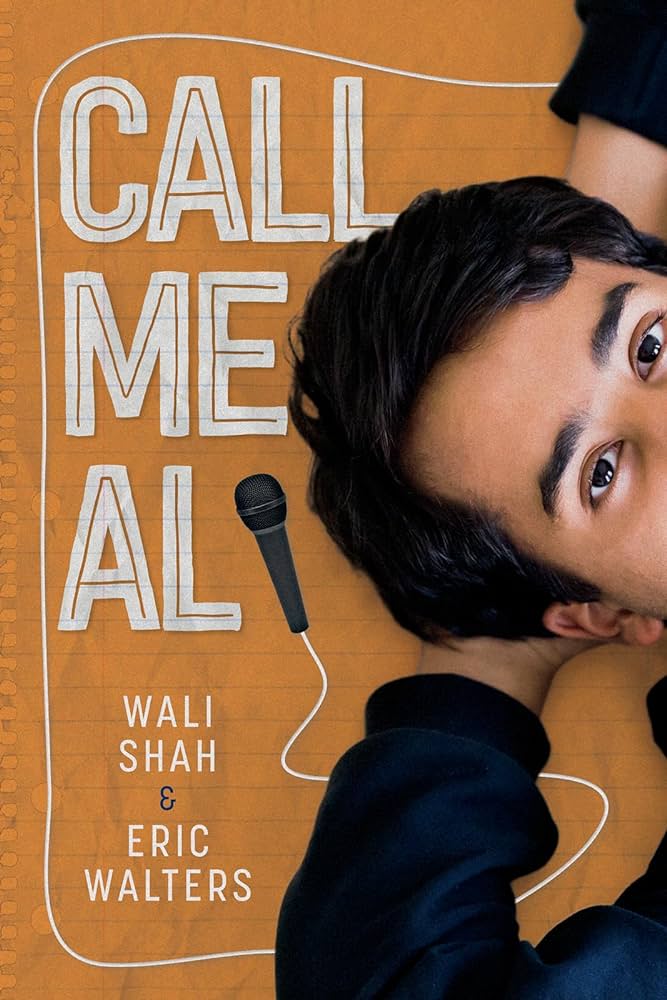
Call Me Al by Wali Shah and Eric Walters

Standard
Call Me Al by Wali Shah and Eric Walters

albook

I feel like I should have really liked this 264 page book: OWN voice, Muslim, MG, Pakistani, author is poet laureate for the City of Mississauga, Ontario, co authored by a prolific YA writer, but it unfortunately reads inconsistent and unpolished.  The characters at the beginning and their relationships with one another don’t read consistent with who they are in the middle.  Sure the character arcs from the middle to the end are nice, but it feels really disjointed from the first quarter of the book.  There are parts that feel so rushed, and other parts that are heavy handed with the preaching and the moral lessoning that I found myself skimming whole pages.  He says his family isn’t that “religious,” but Islam is centered with quotes from “the Prophet” (no salawat given, only a few times Prophet Muhammad is mentioned to identify which Prophet is being quoted) and “Imam Ali” (who the protagonist is named after), yet Al telling a girl he likes her is no problem at all.  He fasts because he has to, but tells his younger brother it is ok to sneak food, and the grandfather gives a whole speech on how the purpose of fasting is to feel empathy for the poor (face palm, in case you don’t know, it is a commandment of Allah swt).  I really struggled with how “Whites” are seen as opposites to “Muslims,” there is some push back with quotes from Malcom X on his hajj experience, but I didn’t feel like the character really ever accepted that Islam is a religion for all people, and White is a skin color.  Honestly the book reads like an early 2000 memoir.  I know it is fiction, but the cultural be-a-doctor-nothing-else-matters-stereotypes, and Islamophobic talking points that feel performative for a Western gaze, combine with a very unlikable arrogant protagonist, and result in a book that was difficult to connect with and get through.

SYNOPSIS:
Al, short for Ali does everything perfect, he has perfect grades, always listens to his parents, and respects the rules.  The book opens with him sneaking off campus with friends for lunch at the mall where he is caught by his grandfather, who seems incredibly strict, but later is the soft spot in a firm family.  His parents have moved to Canada from Pakistan, his mom used to be a teacher, but now takes care of their apartment building, his father was a physician and now drives a taxi.  It is non negotiable that Al will be a physician when he grows up.  The middle child of all brothers, his older brother Sam, short for Osama, has set the bar very high with his valedictorian status in high school, scholarships to start college, and student of the year award in middle school.  Al is in 8th grade and is expected to follow in his footsteps.  When Al’s crush on Melissa results in him writing a poem about her, he realizes he likes the written word to express himself.  His father thinks poetry is a waste of time. With a teacher that encourages creative writing, Islamophobia and hate crimes hitting close to home, and Al coming of age, the story focuses on Al’s 8th grade year as he discovers his own identity, with some help from his friends and the month of Ramadan.

WHY I LIKE IT:

I like that his friends really pushed back on him to own some of his internalized Islamophobia.  Zach is probably the most fleshed out character, and his humor, his teacher crush, his ability to apologize and make things right, is really the heart of the book.  It contrasts so greatly to how I feel about Al.  By the end he was ok, but at the beginning, his arrogance is obnoxious. I get that he is bright and a hard worker, but, yikes, he needs some humbleness.  The supporting characters are rather flat.  Al’s crush Melissa is shallow and only desired for her appearance, Dad is strict and demanding, not in an abusive way, but in a cold undeveloped way, mom is idyllic and supportive, and Ms. McIntosh is the driving motivator for Al. The other characters do little to flesh out the main players which is unfortunate.  I think some depth would have shown Al more rounded. His so called friends don’t know he is Muslim or what he eats, but they are friends, not just classmates, seems off and lacking.  The grandfather gives all the teachable moments, he starts off stern, and then is not, and the transition is jarring.  He speaks in quotes and lessons, and if it were quirky, it might help the flow of the book, but he really is the Islamic conscience of the book so to speak, but we know so little about him and his relationship with Al.

I didn’t like how fasting and Ramadan were presented. Al is embarrassed by fasting and being different.  I like that it says the family goes to the mosque, not sure why masjid wasn’t used, but there are no Muslim friends and no praying, so it has no real impact, which furthers the feeling that it is performative.  Al doesn’t seem to consider faith or culture until others question him about it, which is a missed opportunity to give Muslim kids a mirror to see themselves in the characters.  There are chapters of the book that really are wonderfully written, they just are sadly too far and few between.

FLAGS:

Crushes, Islamophobia, physical and verbal assault, racism, classism, bullying, lying, sneaking out, discussion of partition violence including great grandfather being killed. The book though, aside from the crush thread at the start and end, is quite clean, and the crush is pretty innocent.

TOOLS FOR LEADING THE DISCUSSION:
I wouldn’t seek out this book for a classroom shelf, but if it was in the library I would leave it.  I don’t think most kids would pick it up and make it past the first 25 pages though, Al is really unlikeable at the start.

Idrees and the New Old Shoes by Hoda Elmasry illustrated by Tiemoko Sylla

Standard
Idrees and the New Old Shoes by Hoda Elmasry illustrated by Tiemoko Sylla

img_4191-1

This sweet 28 page book keeps the text to a minimum while showing a boy with a lot of heart doing what he knows is right, even when he knows he will be laughed at.  I really love how the story draws readers in and conveys a lot, without over explaining.  Ages preschool and up will understand that Idrees wants new shoes, but second hand shoes are what are available.  That he wants to prove how fast he is at school, but that being a good neighbor is the right thing to do.  Based on the illustrations, the family is Muslim, mom wears hijab when out, but not at home, but there is nothing in the text that articulates the family’s faith.  The author is Muslim and the book is published by Ruqaya’s Bookshelf.

Idrees can’t wait for his new shoes so that he can beat Harris and be the fastest runner at Barton Elementary.  When mama comes home, she has shoes, but they are not new, they are hand-me-downs from the neighbor Mrs. Freeman.  Things are not the same as last year for Idrees and his mom, but with help from the neighbors they get by.  They also look out for Mrs. Freeman who is always forgetting something or another it seems.

Idrees doesn’t think he can beat Harris with these old shoes, and dreads being teased, but with some prodding from mama he tries on the shoes and heads out the door.  He gets to school in record time and things are looking up.  Harris has jokes when he sees the outdated sneakers, but Idrees is confident he can win the race.  When Mrs. Freeman shows up lost though, somehow the race just seem that important.

The book is available here at Crescent Moon Store where my initials ISL will save you 10% at checkout.

Idrees and the New Old Shoes

Kareem Between By Shifa Saltagi Safadi

Standard
Kareem Between By Shifa Saltagi Safadi

img_3395-1

It doesn’t matter how many Word documents you read, Goggle docs you add comments to, and screen shots you revise; to hold a physical book in your hands that you have been blessed to observe from the sidelines through numerous revisions, is mind blowing.  Reading the final version from page 1 to page 324, plus the backmatter, has left me at a loss for words with tears streaming down my cheeks. I truly cannot imagine the book any other way. All past drafts and storylines, were just stepping stones to get the book to this version, and as a fan of literature my whole life, to see this metamorphosis in real time has added to my respect and admiration of authors.  Enough about me though, this review is of the middle grade novel in verse that tells the story of Syrian American Kareem, a loveable boy caught in between choices, siblings, friends, labels, and global acts beyond his control.  He makes mistakes, he tries to make things right, and at the center of it all is his Islamic identity, love of football, and genuinely good heart.  I am biased in that I have self appointed Kareem as my nephew, but even after dozens of readings, I was moved to tears three times during the course of this reading.  I made my teens read the book and they loved it, and like them, we hope we get more Kareem in the future.

img_3541-1

SYNOPSIS:

Kareem loves football, particularly the Bears, and dreams of seeing his Arabic name on an American jersey one day in the NFL.  Unfortunately, he hasn’t made the school team, his best and only friend Adam has moved away, and the coach’s son is offering to talk to his dad for Kareem in exchange for some school help.  Add in a new Syrian kid at school, his mom going to Syria to take care of his grandfather, and the fruition of Executive Order 13769 aka the Muslim Ban, and seventh grade has Kareem scrambling on every down to say the least.

img_3543-1

WHY I LOVE IT:

The football framing, the literary inclusions, the Arabic, the Islam, all combine with such tangible heart to create a seamless read both as a compelling story and as an example of literary craft.  The language is on point and intentional, that even if you don’t know the character or novel referenced, the Arabic words included, or football terminology used, you will be invested in the characters and plot, and find yourself cheering for Kareem.  Often debut authors show promise, but their stories have plot holes, or pacing issues, or inconsistencies, that is not the case with this book.  The crumbs are there that tie everything together, the depth of the characters’ personalities reveal how developed they are, and the timeline keeps the book moving forward.  There are no dry or slow spots in the entire novel, it is easily read in one sitting as you find yourself nervous for Kareem, and curious how it will resolve.

Boys and girls, Muslims and non Muslims, Arabs and non Arabs, all will find themselves drawn to this book, and thinking about the characters, particularly Kareem, long after the final page is read.

img_3544-1

FLAGS:

Some stress and anxiety with missing parents.  Death, bullying, cheating, fighting, lying, racism.

img_3540-1

TOOLS FOR LEADING THE DISCUSSION:

The book is a solid middle grade, but the quality of writing and engaging plot makes it work for a middle school book club read as well.  I cannot wait to share this book widely.

Preorders speak volumes and I truly hope if you are able that you will preorder a copy, you can do so here.  Requesting your local public library to shelve the book is also a tremendous help to signal to publishers what type of stories and OWN voice authentic representation consumers will support.

Mimi & Unicorn Get to Know Allah by Zanib Mian illustrated by Laila Ramadhani

Standard
Mimi & Unicorn Get to Know Allah by Zanib Mian illustrated by Laila Ramadhani

img_3480-1

Creating understanding and love of Allah swt is perhaps the most important type of Islamic fiction book available for young children, so I love that we have options to choose from. The framing of this book is nothing new, a child asking various people about Allah swt to learn about Him, is found in numerous books.  But, this 32 page book is particularly engaging because of the large brightly illustrated pages, and the author’s signature style of conveying facts in a simple relatable manner.  The comic relief of the unicorn and the adorable protagonist are great, and the added layer of it being checked by two named scholars really make this one of the best in a very populated category.

The book starts with Mimi wondering about Allah swt after hearing people say things such as, “Allah will take care of it,” and “Allah knows.”  She asks her imaginary friend, Unicorn, but she doesn’t know either, so they head off to ask different family members.

img_3484-1

Summaya, Mimi’s big sister tells her that  “if you know Allah, you love Him, and He loves you.” It is followed up with details that Allah swt knows us, because he made us. From Nana, Mimi and Unicorn learn that Allah swt is One, and he explains why we don’t know what he looks like.  From Nani we learn that “Allah swt has no beginning and no ending.” Baba explains that we turn to Allah swt when we need help, Unicorn wonders if we need a phone or Imam to do that. Finally she talks to her Mama who explains trusting Allah’s plan.

Each stop is beautifully articulated and examples are given, resulting in a Mimi who’s heart becomes light and warm, and who works to know more about Allah swt every single day.

The backmatter includes notes from the author and illustrator and various bookish people sharing their early understanding of Allah swt and his attributes.

img_3487-1

The book is available from muslimchildrensbooks.co.uk in the UK and here from Crescent Moon Store in the USA (she ships globally)

Any Way You Look by Maleeha Siddiqui

Standard
Any Way You Look by Maleeha Siddiqui

img_3416-1

If you feel that hijab is like salat and that it should be done no matter what, even if you are being forced, your heart is not in it, or you are doing it to appease someone other than Allah swt, than this book might not be for you.  I am not a scholar, I should not be giving anyone Islamic advice or suggestions, but after sitting with this book, having read all 250 pages in one go, this is the crux that I have come up with regarding who will be the target Muslim audience for the book.  The Islam flows and the central Islamic message is the importance of one’s relationship with Allah swt.  So whether the fictional characters are wearing hijab, considering hijab, removing hijab, I was not overly bothered, they were still praying, going to the masjid, attending halaqas, and spending time thinking about their relationship with Allah swt at present, and what they hope it will be in the future.  The niqabi mother never forces her view on her daughters, the book does not get preachy, nor does it only show one perspective, as a result the reader is allowed to appreciate the other themes of the book and the impeccable writing.  That being said, did I wish there was more sitting on the prayer rug conversing with Allah swt about what to do? Yes.  Do I wish that everyone’s hijab journey, both real and fictitious, was easy? Yes. Do I wish we lived in a world that women were respected no matter how they dressed? Absolutely.  This book is middle grade and it takes on numerous sensitive topics, and in my very biased opinion does an incredible job.  The book contains sexual harassment, judgement, peer pressure, stereotypes, gender roles, bullying and so much more.  I truly couldn’t put the book down, the tears of being seen kicked off the book, and then tears of strength concluded the book.  Muslim and non Muslim readers alike, will be better for reading this unapologetic, OWN voice book.

SYNOPSIS:

Ainy’s life is busy: school is wrapping up, summer plans with her best friend Safiya are being made, the family has moved into the basement of her crush Izyaan’s house, her father is in Pakistan caring for an ill grandma, and Amma’s clothing store, Naseerah’s Almari, is getting busy.  Ainy begs to work at the shop as Bajjo takes on a second job to help the family make ends meet, and when her Amma finally agrees, Quratulain’s best laid plans to learn how to be a designer, and have the best summer ever, are about to be challenged.

Before she can design, she has to learn how the shop works, the frustration and time involved make her unable to fulfill her plans with Safiya causing a widening rift with the life long friends.  Bajjo who has always been Ainy’s role model starts shutting her out, and Izyaan’s cousin Yasir seems to be everywhere Ainy is. She is not comfortable with him showing up at her work, bumping in to her all over town, messaging her at night, and while she knows he is in the wrong, she starts to wonder if it is a result of something she has done.  With no one to talk to, Ainy is left to handle the Yasir problem on her own, and the relentless anxiety, isolation, and fear begin to change Ainy and everyone is too busy to notice until all the threads combine: a big wedding order from Yassir’s mom, hijabs being taken off and put on, and Ainy taking a stand.

WHY I LIKE IT:

The book hits close to some events I have experienced in my life, to the point that I had to check if the book had the typical disclaimer that the characters are a work of fiction and any resemblance is coincidental.  The characters feel that real, and their emotions that relatable, that even at my old age, I was moved, invested, and unable to look away.

I love that the author provides a lot of perspectives about hijab, but does not make a heavy handed judgement, the title of the book hints that women should be respected, and valued, no matter how they dress, and the mom in the book does a great job of setting that tone as she asks her clients how they feel in different clothes, as she models how her daughter’s choice to wear or not wear hijab is a reflection of their relationship with Allah swt, as her decision to wear niqab is hers.

There is no internalized Islamophobia, no othering, no watering down.  The book is solid and I think even if you don’t agree with the choices the characters make, the writing is strong enough that you can see why the characters do what they do for them.

My only real critique is the cover.  I don’t know why, but I don’t love it.  It doesn’t scream fashion and Islam, and the strength of the writing, the characters, and their summer together deserve a better visual representation, sorry.

FLAGS:

Triggers for those who’ve experienced unwanted attention and sexual harassment. Does have boys and girls being friends, crushes mentioned, hijab, backbiting, bullying, stereotypes, peer pressure.

TOOLS FOR LEADING THE DISCUSSION:

While I can see why some people would not “approve” of the book, and some will love the book, I think in an environment of discussion and someone qualified (not me) to guide young readers, this book would be an incredibly empowering, book to think about, enjoy, and relate to in an Islamic school book club setting.

Please consider preordering/ordering this book.  It is available here on Amazon.

Until You Find the Sun by Maryam Hassan illustrated by Anna Wilson

Standard
Until You Find the Sun by Maryam Hassan illustrated by Anna Wilson

I don’t know that this book is particularly unique or mind blowing, but I read a digital copy a few weeks ago and was surprised when some tears fell, I read it when I got the physical copy to my kids and my throat caught again, and here I am writing this review and feeling all vulnerable.  It is as if I too am a little girl in a new place missing her grandfather on the other side of the world, which clearly I’m not.  The book is sweet, and moving, and I find myself emotionally invested every time I read through the 32 pages and get lost in the large sweeping illustrations.  The book is not Islamic, there are a few hijabis in the background and text that articulates friends saying salaam before the girl moves.  Additionally, the main character’s name is Aminah, and the author is of Pakistani decent, and has a Muslim sounding name.  The story though, at its core is universal, heartfelt, reassuring, hopeful, and lovely to share in all spaces. It begs to be read aloud and holds the attention of toddlers to early elementary aged children.

The book starts with a happy little Aminah in a bright sparkly environment of sunshine, mangoes, and salaams.  Every night she listens to Da’s stories of adventure as she snuggles next to her grandfather.  One day she finds out they are moving, going on an adventure.  Only Da won’t be joining them and Aminah is devastated.

The new home is gray, and cold, and no adventure at all.  She wants to go back, but Da reassures her during their nightly conversations that things will get better.  And sure enough, with a bit of bright yellow inspiration, she starts to discover the adventures awaiting in her new home.

Kids will find the end hopeful and resolved, but I somehow found it a little bittersweet.  Da loves his grand daughter and wants her happy, but the adult me, realizes their relationship will never be the same, and Da will miss her in many ways, alone, as she embarks on her own life.  I know I’m projecting, but the ability to see both perspectives adds a nice layer to the book.

The book is available here from Amazon and will be in local libraries in June 2024.