Tag Archives: Historical Fiction

Zeyna Lost and Found by Shafaq Khan

Standard
Zeyna Lost and Found by Shafaq Khan

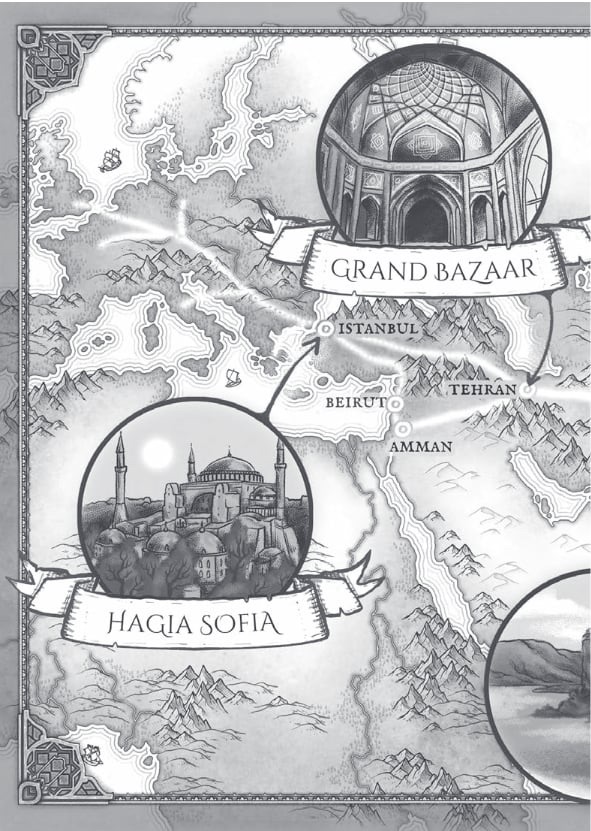
I think I needed this 336 page middle grade book that gets parents out of the way and lets a trio of kids  hop from country to country to solve a mystery, track down the bad guys and save the day. Set in the 1970s in the UK and on the Hippie Trail between Lahore, Pakistan and Istanbul, Turkey, the book is a fast paced read with humor, heart, and adventure.  I absolutely love Zeyna’s snark and voice, and her relationship with her brother and cousin, ground the story and make you cheer for them even when their antics are incredibly dangerous and improbable.  As an Islamic school librarian, my one critique with the book is that I wish there was more/any Islam. I, at one point considered that they are not Muslim, and I’m not sure what the author identifies as, but she does thank “Al-Barr, for all that is good” in the acknowledgements, and Zeyna does mention an Eid party in passing, so while I’m still on the fence, I’m going to assume they are all Muslim.  Major beats in the plot are meeting at both the Badshahi and Blue Mosque, but none of the characters ever pray, or mention the names of prayers when the athan is heard.  When they see women in burkas and chadors, Zeyna stares, not connecting the clothing to hijab, that one would hope she would know. There is only one salaam in the whole book, and the story is predominately set in Pakistan, Afghanistan, Iran, and Turkey. Granted I am sensitive, but it almost feels like a deliberate exclusion to the point of going out of the way to not let those details be present.  There are plenty of Urdu and Punjabi words and titles and cultural commentary, so it doesn’t seem that the author was concerned about watering down authenticity, a theme of the book infact is finding your place and accepting yourself.  All that aside I really enjoyed pickpocketing, imaginative, determined, sarcastic, loyal detective Zeyna, and I think kids will join me in hoping this is the first in a series.
SYNOPSIS:
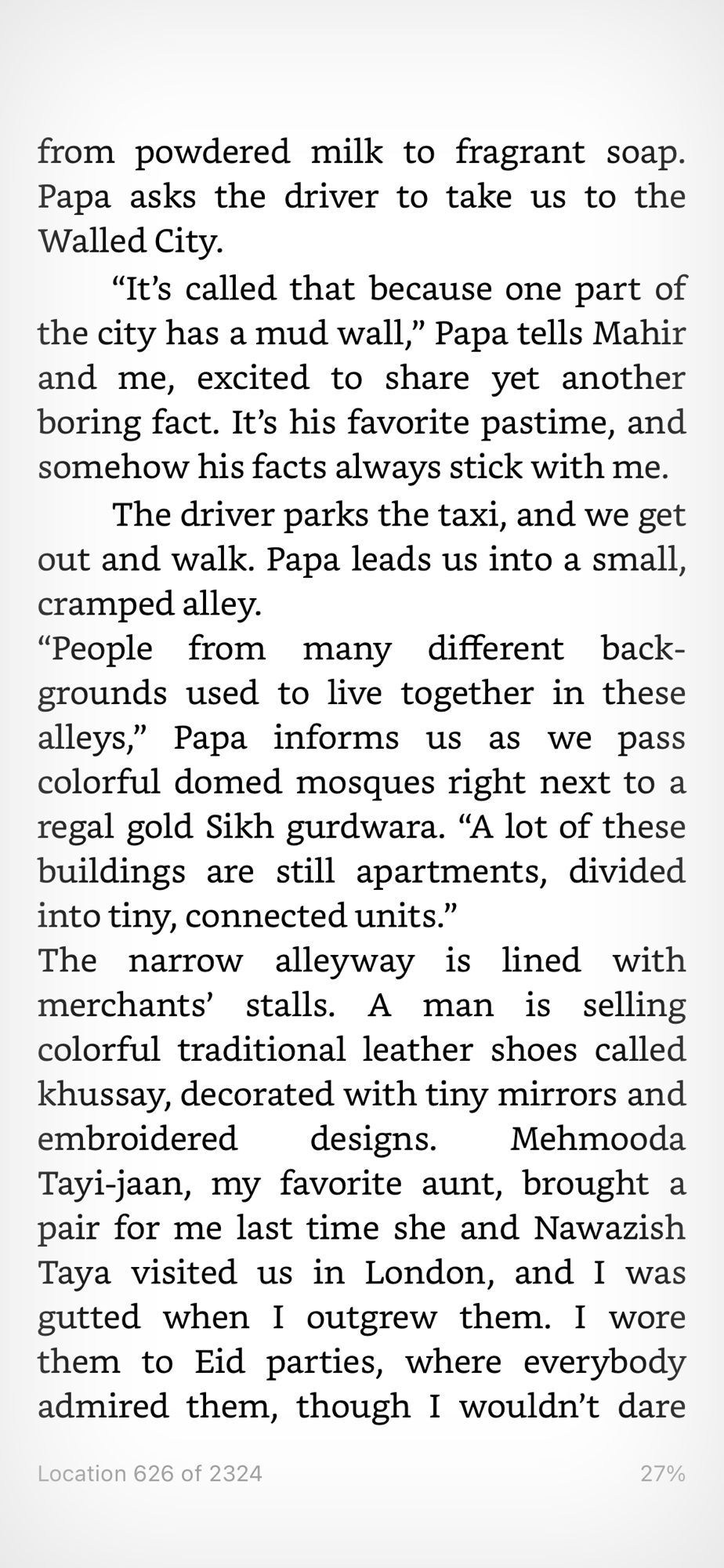
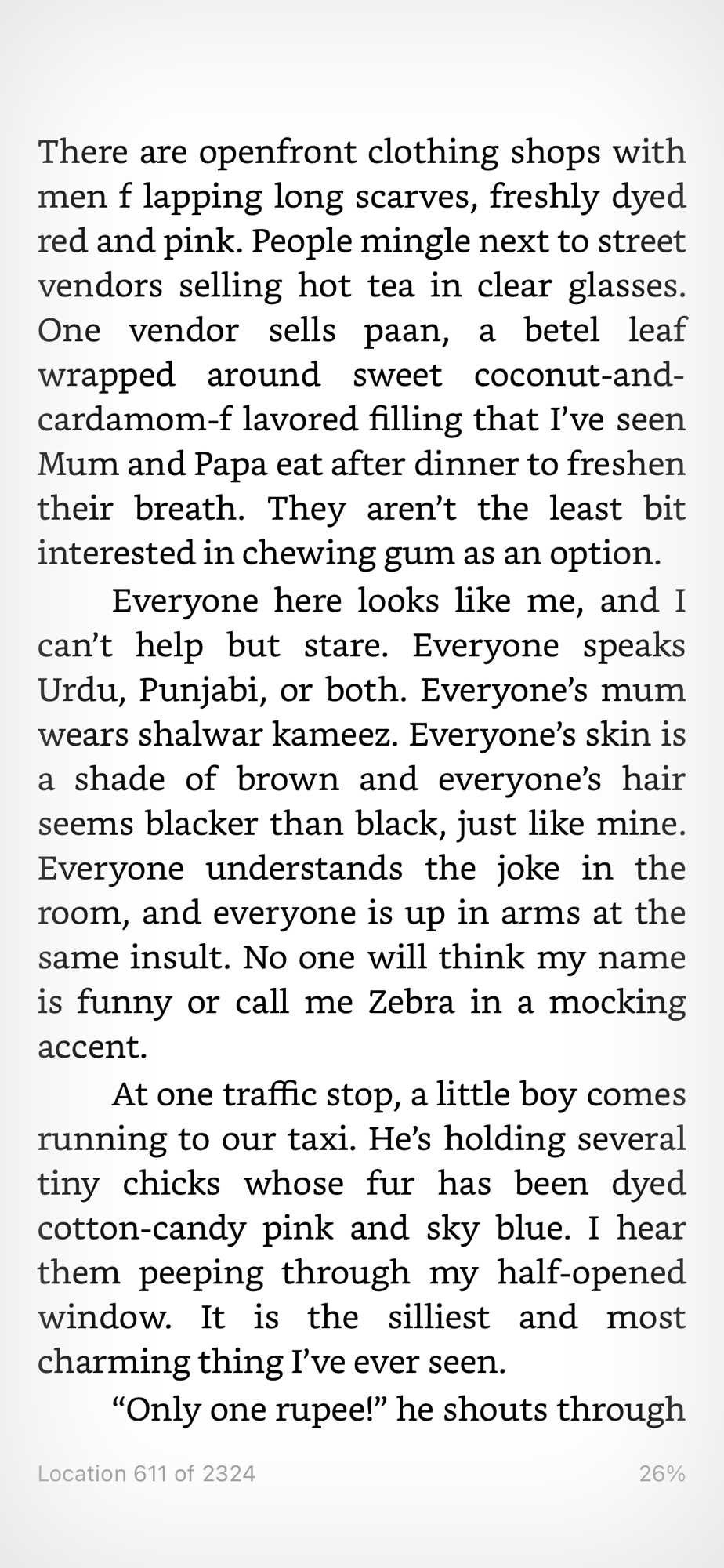
Zeyna is 12, and likes to imagine she is a detective on a case, sneaking and snooping, and roping her inventing younger brother Mahir to be her Watson. The city is on edge with the theft of the Shirin Jewel, a large Persian ruby, a case involving the 15, that Zeyna would love to solve.  When she sees a man with knife in London, who later seems to be following her and her mum, and then drops a paper with their street name on it, Zeyna is convinced this her chance to prove her self. A sudden trip to Pakistan though dampens her mood as the clues to the case will be left in the UK. She doesn’t stay down long though, as her parents start acting peculiar in Lahore, meeting with strange people, lying about why they suddenly made the trip at all, and when the police show up at the familial home to arrest her parents, they all discover that her parents have vanished.  Zeyna realizes her parents and the events in London are tied to the missing ruby, and with the help of Mahir and their cousin Amina they set off to solve the case and find her parents.
WHY I LIKE IT:
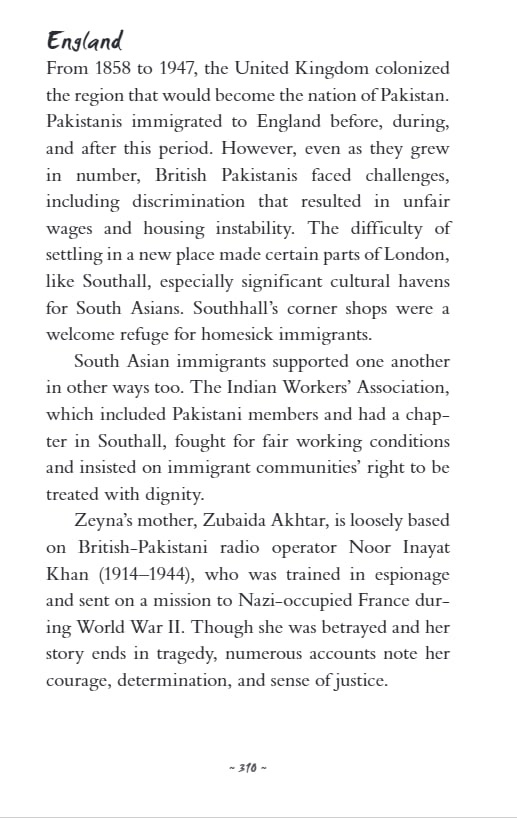
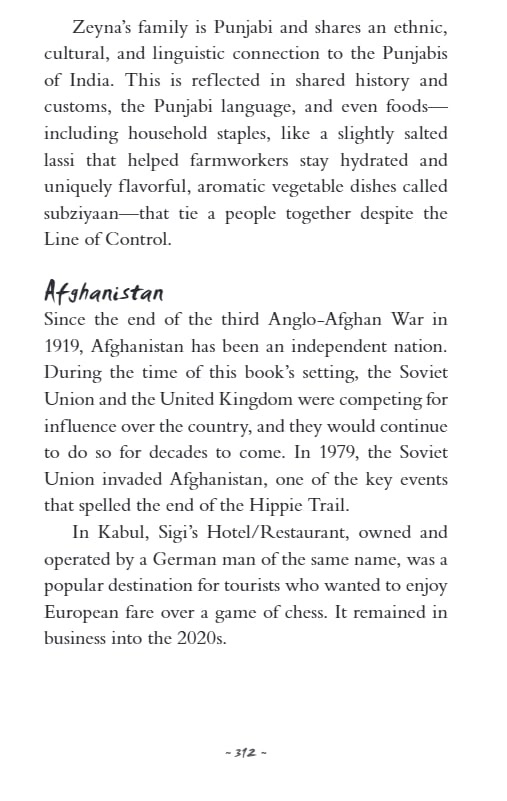
It’s hard to review a book like this without giving the twists and climax and resolution away, but more than once I gasped in delight when something happened on the page, and it crystalized where the book was going in my head.  Sure there were some particularly outlandish connections and a few plot holes, I even Googled when fax machines were invented, but I had a blast reading the book.  I loved the historical backmatter discussing the events in post partition Pakistan, a year before Bangladesh was independent, Soviet Union and UK competing over influence in Afghanistan, the discontent voices in Iran toward the shah, and the role of the Pudding House for messages in Turkey.  There are also discussion questions, a glossary, acknowledgements, and about the author at the end.

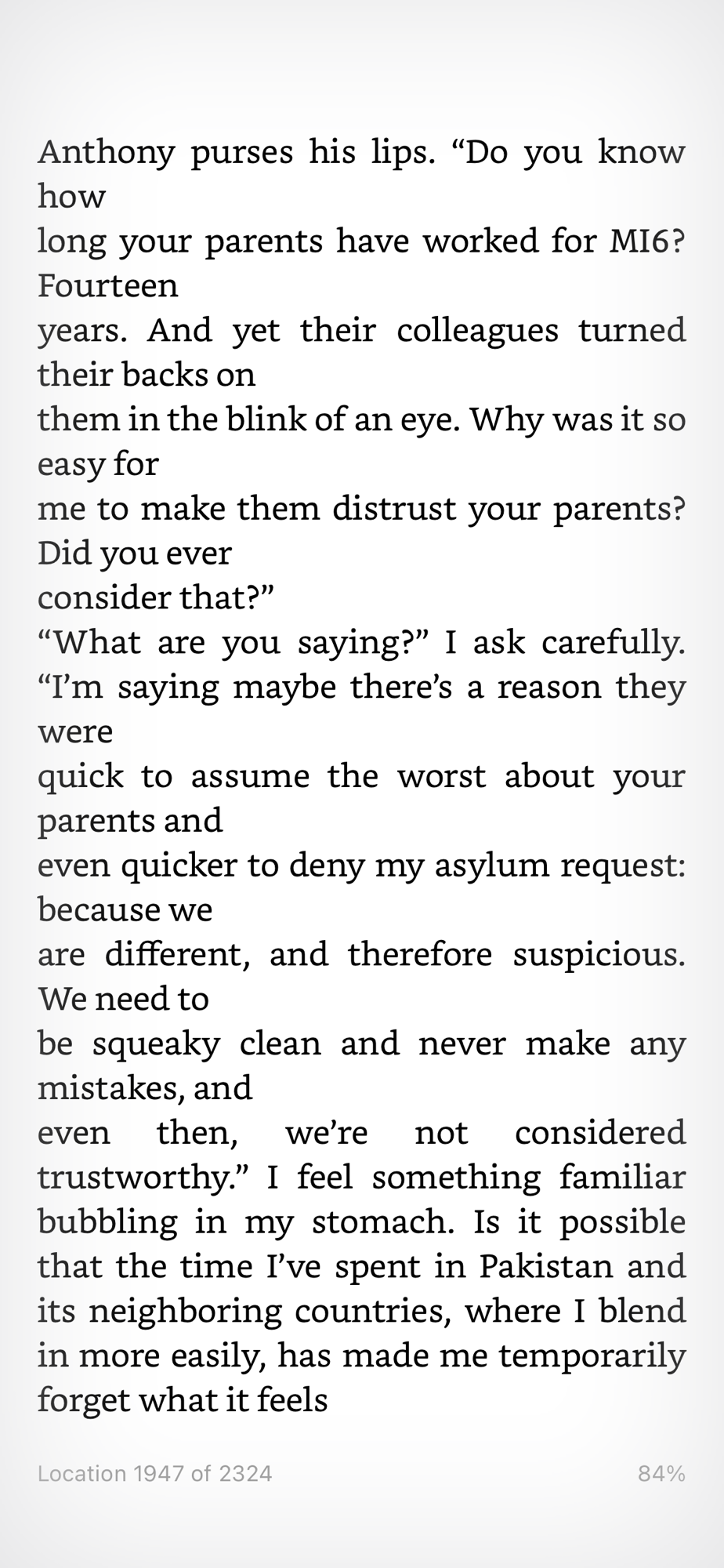
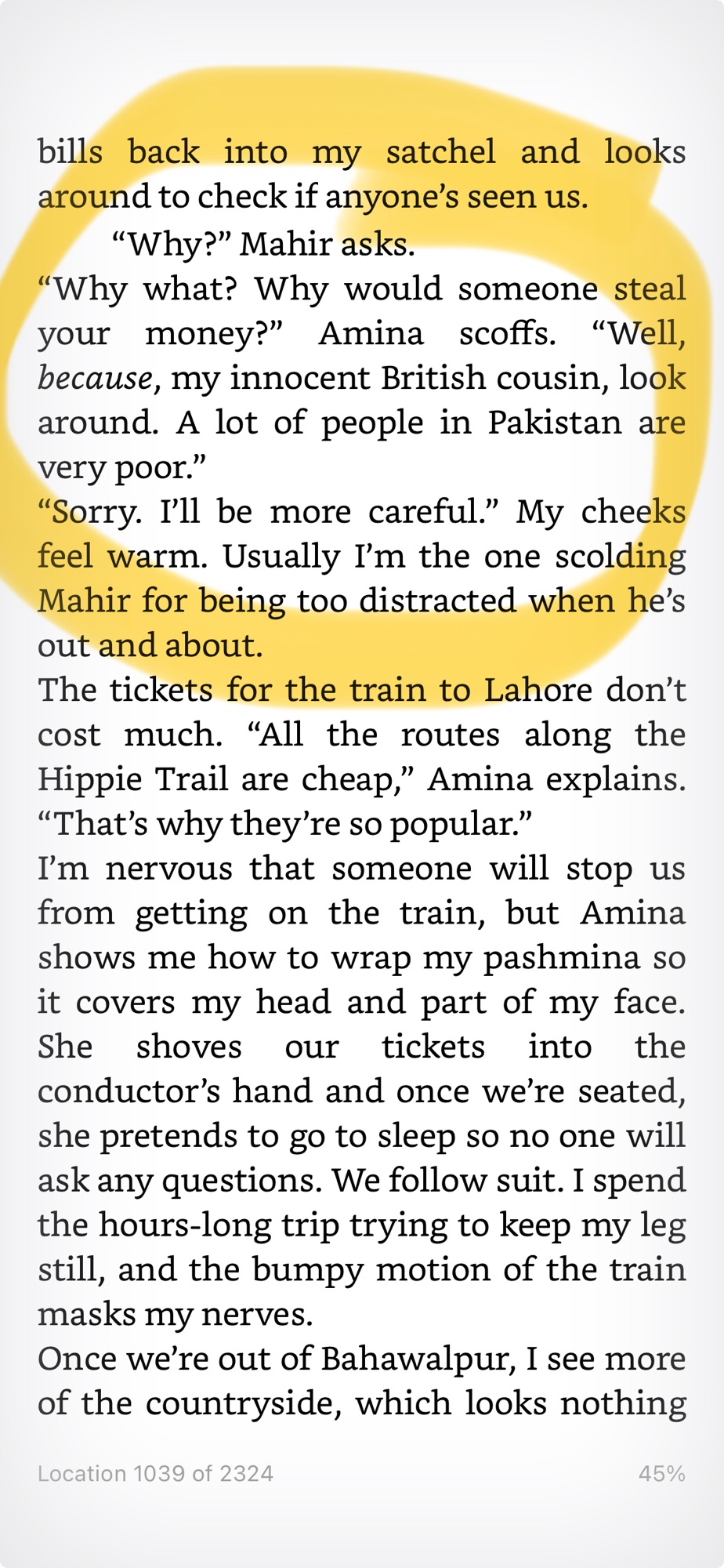
One tiny concern was the assumption that money could be stolen because the people around them are poor, it is just one paragraph, it isn’t a constant in the book, but it struck me as odd and stereotypical, and really not needed.

FLAGS:

Lying, stealing,  deception, pretending to be someone you are not, breaking and entering, eavesdropping, snooping, its a heist book!
TOOLS FOR LEADING THE DISCUSSION:
This would be an awesome book club book or novel study read, I can’t wait for it to be released in a few weeks so that I can have my kids read it.

Vultures in the House of Silence by A.R. Latif

Standard
Vultures in the House of Silence by A.R. Latif

img_7966-1

This 312 page richly imagined Islamic fantasy is both engaging and compelling.  It is too advanced for me to review as it weaves a complex tale based on history, religion, fantasy, and imagination.  I do know that it was for the most part well written, I have some issue when the character’s diction would include words that felt too contemporary slang, but it didn’t happen too often.  The pacing though, unfortunately for me, was definitely off.  Undoubtedly the author has tremendous skill.  The emotional pulls, the world building, the consistent cliffhangers at the end of each chapter, kept me curious to see what would unfold.  The story beats just dragged more often than they should have for no clear reason in developing the plot, defining character arcs, or adding to the rising action.  I don’t think I ever stopped reading at the end of a chapter, those hooks were well placed, but when I stopped in the middle of the chapter, it often took four or five days for me to be motivated enough to open the book back up.  I truly think it just needs a good editor to help cut certain scenes, and smooth out the tempo.  The idea and layers are great, and if I, as someone who struggles with middle grade fantasy, couldn’t walk away from this YA/Adultish read, I’m sure lovers of fantasy, jinn, monsters, Islamic history, found family, gray characters and action, will find this book an enjoyable read, even the slow parts, that  I struggled with.  So no this is not a negative review,  I am hopeful my teenagers will read it and enjoy it, I just really hope the author will consider working with an editor to elevate the text as it truly has potential.

SYNOPSIS:

I don’t know that I can retell the story, it has a lot going on and I’ll probably inadvertently spoil something, so here is the summary from the back of the book:

“A boy wakes up surrounded by corpses. Unable to move, he is assaulted by vultures who stop pecking at him only when he speaks. To survive this nightmarish ordeal, he tells them the story of how he ended up on their menu…

What follows is the wild tale of the young gardener Khurafa, coping with the aftermath of the Mongol invasion of Baghdad and the death of his parents amidst the bloodshed. After a vivid dream and several supernatural encounters, he becomes convinced that an ancient group of nine sorcerers called the Servants are bent on world domination. Accompanied by his scholarly mentor Shaykh Nariman, and the sly, uncannily perceptive Zakiyya, he seeks saintly help against the Servants, but finds mostly monsters instead.”

WHY I LIKE IT:

I love the opening, it really grabs you, the emotion of Khurafa and the loss of his parents and his predicament with the vultures connects you to him and his vulnerabilities.  The twists are also well developed and keep the book interesting.  I feel like the end needed more, and the middle needed less.  SPOILERS: I didn’t get the cat, or the going from village to village.  All the names, and all the drama at each village, dragged for me.

It appears the book is meant to be a series, so I wonder if many of the characters that died will return, but I feel like the final battle was a little disappointing, and anti-climatic.  All the build up and then it went so quick.  I appreciated the full circle on the House of Silence, and the answering of some of the questions, but for all the emotion  at the start, the end didn’t mirror that in the cathartic way I hoped it would.

I say all this with full acknowledgement that I am not drawn to fantasy, I am not well versed in Islamic history, and it is absolutely possible, that I just don’t get it. In brief, I am not the target audience.

TOOLS FOR LEADING THE DISCUSSION:

I think this book could be a good book club selection, with some motivation to get to the end, I think readers will be happy that they did, and I would imagine they would be willing to read the next book in the series. For many I would imagine it would be the first Islamic fantasy they will have read that has the layers, richness, and intrigue that this book does, and inspire them.

The Djinn’s Apple by Djamila Morani translated by Sawad Hussain

Standard
The Djinn’s Apple by Djamila Morani translated by Sawad Hussain

img_4352-1

This short, 160 page YA book is really quite gripping. Admittedly, during the first third of the book, which is primarily world building, I had no idea what was really going on, but I was intrigued and by the half way mark, I was so invested, I truly could not put the book down. I received an early digital copy so I am not sure if the grammar errors, typos, and lacking punctuation is because it had not been through line edits yet, or a result of translation oversights, none-the-less I thoroughly enjoyed this book and read it in a single sitting. I wish this book was 500 pages long, with details about the time and environment, and build up to the conclusion, and angst to the romance, but it is not there, it is short, and rushed, and I don’t really know how to review it, because to point out all that is wrong, doesn’t convey all that was right. I am a self appointed reviewer, so I’m going to break my own standards and just copy and paste the teasing blurb, I can’t say it better, you are welcome: “Historical fiction meets crime fiction in The Djinn’s Apple , an award-winning YA murder mystery set in the Abbasid period—the golden age of Baghdad. A ruthless murder. A magical herb. A mysterious manuscript. When Nardeen’s home is stormed by angry men frantically in search of something—or someone—she is the only one who manages to escape. And after the rest of her family is left behind and murdered, Nardeen sets out on an unyielding mission to bring her family’s killers to justice, regardless of the cost…”

SYNOPSIS:

See above, I know my standards are slacking, but that blurb is what helped guide me when I got lost a little lost with the words on the pages.

WHY I LIKE IT:

I love the map and in this case the glossary and backmatter really helped me to understand the setting because the text assumes the reader knows about Harun Al-Rashid, the Golden Age of Baghdad, and the Abassids. I appreciated the Reader’s Guide and further information about the Bimaristan, as well.

I like that it showed the family as being practicing Muslims, them being accused of being infidel Zoroastrian, and the adopted father and teacher being Jewish, it added a layer that entices the reader to reconsider stereotypes and look further into the society. The book doesn’t offer much commentary about it, but does highlight the different religious groups and show them interacting.

The book really pulls you in and considering that I was lost and there were grammar errors and typos, really speaks to the story and heart of the writing. I am glad I read it, it will stay with me, and I may not be able to pass an AR test on it, but I do plan to get a physical copy for the library and for myself, so that I can read it again.

FLAGS:

Murder, plotting, revenge, poison, romantic feelings.

TOOLS FOR LEADING THE DISCUSSION:
I need to read the book again, but yes, it would be awesome as a book club selection for Middle School or even High School to discuss, pick apart, analyze, research, and enjoy.

The Magical Moroccan Rug by Naveed Mir illustrated by Anisa Mohammad

Standard
The Magical Moroccan Rug by Naveed Mir illustrated by Anisa Mohammad

img_4186-1

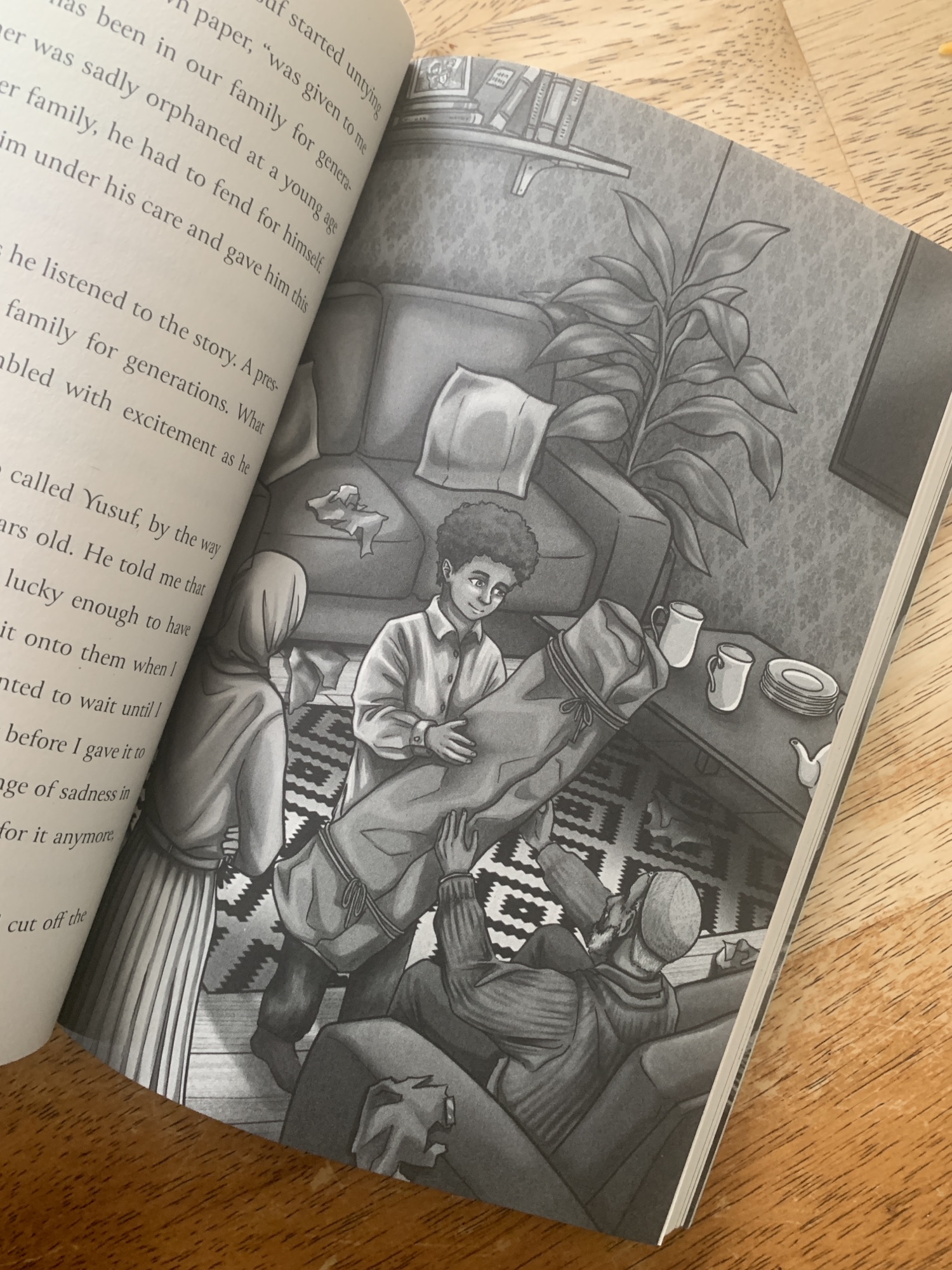
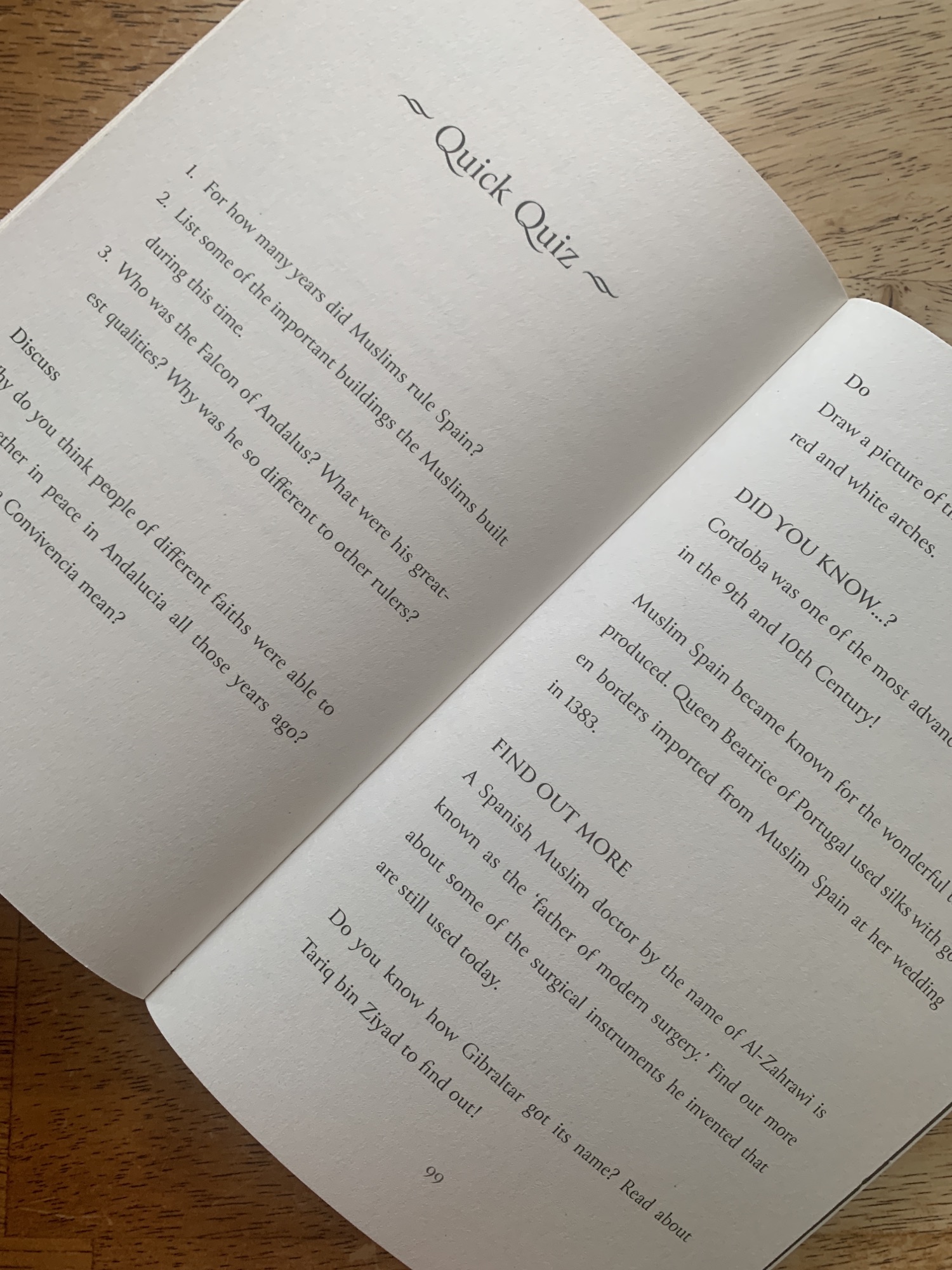
I really like the premise of the book, a Muslim Magic Tree House so to speak, two kids that magically go back in time, in this case to Andalucía. At times the book did make me smile, but really it feels like a missed opportunity.  The writing needs tightening, it feels early reader at 94 pages long with a few full page illustrations, but the vocabulary and text filled pages support the suggested reading level of middle grade.  It takes way too long to build up to the “action,” and when it gets to the plot it doesn’t seem to know what to do with itself.  It is a lot of walking this way only to turn around and walk back for no development, character growth, or enriching reason.  As an adult I had to force myself to keep reading, my eight year old who loves Magic Tree House books had basic foundational questions and couldn’t’ get past page 24.  Honestly it just needed some proof reading and some trimming, which is why I found it so frustrating; it really had so much potential.  Example, if the little boy is so excited to see his grandfather after 8 years, why didn’t he go with his dad to the airport, why did his elderly tired grandfather immediately go to a community event after arriving in the UK from Morocco, why wouldn’t Yusuf go with his beloved grandfather to the masjid.  And this is all within the first few pages.  If the logic isn’t there for the mundane set-up, it is hard to get on board for the fantasy aspect of a flying carpet going back in time.  The historical figures are introduced in passing and don’t leave much of an impression, so yes it is good to give readers a bit of information on people they may not have heard of before, but it doesn’t give them enough connection to make them memorable.  The backmatter sadly is not more information about the three historical figures presented: Abdur Rahman (The Falcon of Andalus), Lubna of Cordoba, and Abbas Ibn Firnas, it is a glossary and a Quick Quiz.  The answers to the quiz are not provided, there are additional facts shared but no sources given, and there is urging to find out more about Muslim Spain, but no directions, links, or book suggestions are provided.  The publisher should have proofed the book, it reads like a pitch, maybe a first draft, and our children and their purchasing adults deserve better.  We have growing options of stories with historical Islamic OWN voice framing, and unfortunately this book had a lot of potential, a few pages of interest, but not ultimately enough intrigue to win me, or my kids over.

img_4187-1

SYNOPSIS:

Yusuf and his friend Jack live in the same neighborhood, but don’t go to the same school.  They spend a lot of time together though, and have known each other since they were babies.  When Yusuf’s grandfather comes to visit from Morocco, he brings an old carpet and gifts it to his 10 year old grandson.  Unsure what to do with it, Yusuf puts it in his room, and feigns gratitude.  With a history project looming, and a dislike for historical study, Yusuf and Jack find themselves heading on a magic carpet ride into the past.

They arrive in Cordoba in 856 CE, disoriented and dizzy, Omar, their guide, greets them, walks them through the mosque answers one question then walks them back to the carpet to take them to a different time, 786 CE and they see diverse people living together peacefully.  They first observe “one of the greatest rulers that Andalus ever had,” The Falcon of Andalus, aka Abdur Rahman.  He is a humble leader that freely interacts with his subjects.  They then head to the 10th century to see Lubna with a crowd of scholars in Cordoba  learning from her in the library.

When Yusuf remembers his history project about flight, Umar guides them to 875 CE with a pit stop in CE 852 to see Abbas Ibn Firnas take flight, well fail and then eventually take flight in 875.  The boys then say their goodbyes and are whisked away home. Where they can’t believe what transpired, and are determined to figure out how to make it happen again.

img_4188-1

WHY I LIKE IT:

I like the concept, and that Jack is not Muslim, and Yusuf is unapologetically Muslim.  Seeing the two interact is enjoyable and both good modeling, and mirroring.  The heart of the book is truly not bad, it is the tangents that get long winded for no advancement of the story that take away from the flow.  As stated above the relationship between Yusuf and his grandfather doesn’t align with what is said and what is shown.  The end suffers the same lack of editing.  How can grandpa and Yusuf live in the same home, but they can never find a moment to talk.  Nothing is gained by delaying their conversation, so why delay it, and go on and on about delaying it?

If the point is to share not just with Yusuf and Jack about key historical figures, but with also the reader.  Then there needs to be more interaction with the characters, not just watching them from afar.  Interact with other observers or students or colleagues, convey information from a “personal level” not just drop a snippet here or there from what feels like a vague Wikipedia page.  If the book is not sourced, why not take some fictional liberties and flesh out Abbas, Lubna and Abdur Rahman, so that they are remembered. Include more information about the three real characters in the backmatter, reinforce the idea that a magic carpet is not real, but these remarkable people were, and they changed the world.

I don’t know that kids will have issues with how the carpet worked, but because the set up was so weak, I had a hard time going along with any of it.  I wanted to know why it had to be a grandson, not a son or daughter, how grandpa or his grandpa figured that out when it wasn’t a relative that gave the first Yusuf the carpet, but a storyteller.  How Umar knew to look for them at that moment.  Why did they go to 856 CE and then go to 786 CE why couldn’t they just meet Umar on the first stop? Seems unnecessarily dragged out, for no reason.  When was grandpa’s last trip? Could you get stuck out of your time? If no one can see or feel the rug, why do they keep hiding it? Can people see and hear them, or only their guide?

I like that Yusuf prays and Jack knows that Yusuf prays, and what a mosque is.   I didn’t like that they hear the athan, and went with everyone to pray, but then just left without praying.  The book seemed to do that a few times.  Have the kids walk through a crowd presumably toward something or for some purpose only to turn around and return to the place of origin having gained nothing, learned nothing, or seen anything, again just drags the book out and frustrates readers.

There really is not conflict in the book, no climax either, there is no really stress about getting back, stress about figuring out how to go on the next adventure, it is there, but not heightened, and it is unfortunate, because the book really could be adventure filled, and it just isn’t.

img_4189-1

FLAGS:
None

img_4190-1

TOOLS FOR LEADING THE DISCUSSION:
If you are learning about Abbas Ibn Firnas, or Lubna, or The Falcon of Andalus or Spain, and have access to supplemental material, the book has value.  I don’t know that if a kid picked it up off the shelf even with interest in history, that they would finish reading the book.  It doesn’t provide a solid feeling of learning or understanding about the time and place and people seen in the time travels, nor is it action packed on its own.  So if you can motivate a child to read it and then look further into it, the book would help connect the past as being interesting and engaging, but on its own, the book does not achieve that.

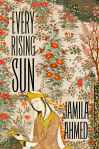
Every Rising Sun by Jamilya Ahmed

Standard
Every Rising Sun by Jamilya Ahmed

The lush writing and ever present threads of Islam captivated me from the first page of this Shaherazade retelling.  I truly could hear my own voice in my head reading each word, and falling into the masterful story-telling of the protagonist/author.  With about a third of the book left though, I was sadly stopped abruptly in my tracks.  I found myself annoyed by Shaherazade, and having to convince myself that even though this is an adult read, she is very much coming of age and finding herself, only she doesn’t evolve and grow, and doesn’t have a character arc, and by the end I felt deflated.  Is the book good? Yes.  Would I recommend it to readers 18 and up that enjoy OWN voice, strong female, historical fiction? Absolutely.  But I find myself frustrated, because when the book was good, it was so good, but as the end drew closer, I realized there were holes, big ones, that could so easily have been fixed.  The author has the skill, the knowledge, all the tools, but alas, I didn’t appreciate Dunyazade because she is largely absent.  I didn’t know the interworking of her assistants and friends so I didn’t care about them, side characters were so painfully underdeveloped. And with 50 pages left, I was for the first time perhaps ever, glad that the narrative moved from showing to telling (I know, who am I even). I needed the articulation to connect the dots particularly of Shahryar and Shaherazade’s relationship.  The 423 page book could have, and should have, been a hundred pages longer to not feel so rushed at the end, and there should have been a map.  The book has adult themes but they are handled in almost a YA manner.  The beheadings, affairs, wedding nights, battles, war, are not detailed, but rather identified and moved on from even though they are so central to the plot.

SYNOPSIS:

In twelfth-century Persia the daughter of the Malik’s adviser stumbles on the Khatoon and her lover, she anonymously alerts the King to the affair and the beheading of wives begins.  To keep the country from revolting at their mad king, Shaherazade offers to become his next wife, to assuage her guilt for what she set in motion, on the hope that her storytelling will keep her alive come morning.  Life doesn’t pause however, as Shaherazade spins her tales, but rather amplifies.  She accompanies her husband, Malik Shahryar as they join Saladin in the Third Crusade.  The caravan, the journey, the battles, the romance, all bring the climax of returning home to a Kirman under siege will test Shaherazade’s story-telling abilities to the brink and with it the Seljuk Empire.

WHY I LIKE IT:
The prose is on point, time stood still while getting lost in a world of history, imagination, and the author’s skill.  The constant presence of Islam in the characters life was incredible. It was not established and then left to the side: the times are marked by prayers, the athan is ever-present, the duas are heartfelt.  Yes the characters drink wine, and sleep around, but they also fast and treat their prisoners of war with compassion.

I really struggled with how little I cared about people dying, there should have been more connection and more emotion for the side characters, and as the story progressed, I became increasingly irritated that I wasn’t forced to care about them, to know them, to appreciate what they meant to Shaherazade.

I also felt that the majority of the story took place over one year.  How do you forget that you are telling stories to save your life and (SPOILER) start sneaking around with some other guy.  You have a guard detail that follows you everywhere, you are in a caravan and you live in a tent, everyone knows everything!  Shaherazade is also clueless a lot of the times asking soft questions and then told how intelligent she is and allowed to plot and scheme with various rulers.  I love that she has a voice, she isn’t silenced, that she is never apologetic for being opinionated and her very presence is never a kindness, she takes up space and doesn’t look back, but the inconsistencies in her judgement needed some smoothing out.  Show her understanding grow, and increase her intellect to wisdom, don’t have her charming and manipulating leaders one minute and then being so naive the next.  She should have been so much smarter by the end of the book than she was shown to be in her personal dealings.  Her political knowledge was strong, and she was a force, and that level of insight into her own life would have been a character arc to see.

The book is adult, but it almost reads YA and I’m not sure why, it is sourced, the historical presence is exciting, the words and flavors intoxicating.  I normally love when the characters are shown and the reader doesn’t have to be told things, but the only reason I finished to the end was honestly because I got some telling.  I was relieved to hear from Shahryar what he knew, what he felt, what he could own up to.  Perhaps had there been more showing of the intricacies of palace life with the side characters the book would not have gotten to that point, but the lush writing could only carry the book so far.

FLAGS:

Relationships. sex, kissing, fornication, killing, beheading, lying, hangings, war, battle, drinking wine, scheming, kidnapping, attempted rape, it is Adult, but nothing is overly detailed or glamorized.

TOOLS FOR LEADING THE DISCUSSION:

I would love to chat about this book, I think I could be swayed to love it, or play the devils advocate and argue for the sake of arguing.  Being how highly recommended this book came to me from a dear friend, I’m ready to battle and anxious to discuss!

I got my copy from the library, but can be purchased here.

Book One: Thunderbird by Sonia Nimr translated by M. Lynx Qualey

Standard
Book One: Thunderbird by Sonia Nimr translated by M. Lynx Qualey

img_7178

My public library had this book and so I picked it up seeing that it was Palestinian authored fantasy, and I am always on the lookout to support OWN voice Palestinian stories.  The book cover is gorgeous, the inside text unfortunately is tiny making this middle school aged book only 110 pages.  It is translated from Arabic and published by a university, so my expectations were pretty meager which assisted in me being fully swept away by the story at hand.  Sure the book has a few glitches in point of view,  often it feels a bit abrupt and djinn stories are a dime a dozen, but what elevated this book and made it stand out was the Palestinian history interwoven into the plot: snippets about the Mamluk soldiers and Ottomans, the Ayyubid rulers and walls around Jerusalem.  There isn’t enough history touched upon in my opinion, but I look forward to see, now that the world building is established, if the rest of the series will highlight the historical thread.  I have no idea if the characters or author are Muslim, there are references to praying and hearing the athan, but they could just be cultural.  There is magic, fantasy, djinn, prophecies, and reading of tea leaves, as well as fighting, assault, and talk of oppression under Israeli rule.  I’d assume it is advanced Middle Grade or lower YA, but to me it seems 11 and up would enjoy the quick fast paced read.

img_7175

SYNOPSIS:

Noor’s parents are dead, and she lives with a grandmother who loves her, and an uncle and his family who don’t.  When her grandma dies, Noor is alone and with things combusting in to flames around her and no one left to defend her claims that it wasn’t her, Noor is trying to piece together a ring left to her, her mother’s research, and her flame creation abilities.  Her search leads her to a colleague of her mother’s and an old archaeological site.  While staying with an aunt in Jericho over the holidays, a mysterious cat guides her to the same archeological site where the cat reveals that she is really a djinn.  The barrier between the seen and unseen world is failing, and Noor is prophesized to be the only one that can ensure it doesn’t happen.  With a trait of the mythical phoenix Noor must find ways to travel in time and retrieve a feather before the bird is reborn.  Along the way she will have the help of the djinn and of her doppelgänger from that time period.

img_7176

WHY I LIKE IT:

The story is clever, fast paced, and the character endearing.  I wish the details were fleshed out and of course I wish there was more history when she travels back in time.  The climaxes are quick builds and even quicker resolutions, but despite all the flaws I really enjoyed the story and look forward to the rest of the series.  The book ends on a cliff hanger that feels rather abrupt, but being it is clearly established as book one in a trilogy, I don’t think readers will be too upset at the sudden end.

img_7177

FLAGS:

Magic, time travel, prophesies, fortune telling, assault, oppression, fighting, loss, arson, arguing, djinn, fighting

TOOLS FOR LEADING THE DISCUSSION:

The book probably is too short for a book club read, but I think a teacher could definitely use it as a reference in story writing, historical fiction fantasy, culture inclusion lessons.  If you wanted to use the book, you’d be able to find plenty to draw on for teachable moments in literature, history, and writing style.  There would also be a lot to discuss in terms of occupation, myth, legend, and culture.

If your library doesn’t have it you can find it on Amazon

An Andalus Adventure by S.N. Jalali

Standard
An Andalus Adventure by S.N. Jalali

andalus

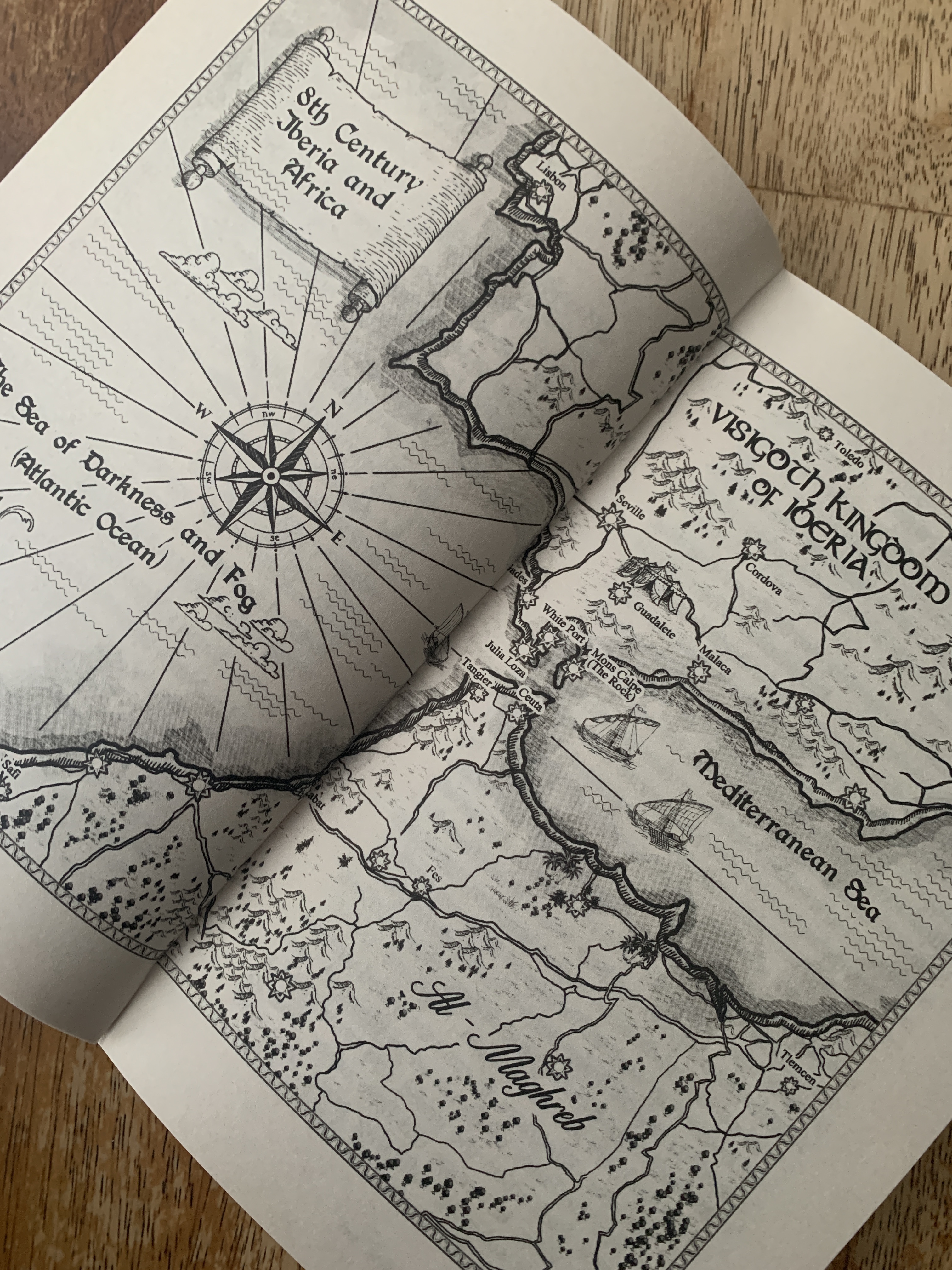
I truly am glad I read this book. I love historical fiction, visiting Spain is on my bucket list, this book has a map, details about what is historical what is fiction, has Islam woven in to the heart and soul of the story and characters, and yet it was a hard read.  The first few pages grip you, the last 50 bring it all together, but the middle 250 were hit and miss in this lower YA/upper MG book.  I honestly had to force myself to keep reading.  My teen and tween son couldn’t get past 38 pages or so, and I’ve asked around and no one I know that started the book, finished it.  I think ultimately there are just too many characters, too many points of view, that even though the history is rich, the literary points all in order, their isn’t enough character connection to hold the readers through the wandering details.  This author’s style is a bit more slow, but I think in the House of Ibn Kathir series, the setting of being in school and having friend problems is relatable to readers; boarding horses on to a boat, deciding to wage war, and going in to battle are not familiar concepts, and without the emotional connection it loses momentum.  The climax is nice but ultimately rather lackluster, and the beauty of characters taking shahada, Jews being freed, Solomon’s table, an old lady with a premonition, and a character dying are just not enough to keep the story in reader’s hands, unfortunately. 

img_4397

SYNOPSIS:

The summary might make the book seem fast paced, and while it does constantly move forward to a clear destination, it isn’t a “buckle your seatbelt and hang on” type of story.  The setting is Northern Africa and the Iberian Peninsula in 711 CE, 92 years after the Hijrah.  The book opens with two young siblings Ben and Bella, overlooking the coast, dreading their lives under Visigoth oppression, and hiding their Jewish culture and faith.  It then jumps to the Governor of Ceuta, Count Julian (Ilyan), awaiting to meet with Umayyad leader Tariq ibn-Ziyad.  He is hoping to rescue his daughter from the court of King Roderick and convince the Muslim General to enter Iberia, restore the rightful king, and free the people essentially.  Add in voices from Qasim, a young Berber, and Jacob a captured Iberian, and the stage is set to get everything in order to cross the straights, survey the enemy, take on the King, and introduce Islam to the new land.

WHY I LIKE IT:

I absolutely love the Islam and the history and the fictional liberties.  I love that the book is clean, although, I do wonder if more information about Lady Florinda would have helped the reader understand her father’s desperation, I do understand the vagueness, but it is a glaring omission that keeps the reader curious.  Ultimately I wanted more backstory.  The little given about the characters was engaging.  I loved the teasing about being a shepherd, Jacob coming to love Islam, Bella not wanting to marry, but it seemed to always stop short of sweeping me away.  I didn’t cry (SPOILER) when Hisham died, I barely knew him.  I didn’t feel the urgency to hide and escape from Leander’s proposal.  It set up to add depth regarding Old Mother Magda, the Cave of Secrets, and the unverified death of the king, but after being stated it was never mentioned again or resolved for any real purpose. 

All that aside, I think the book has value, it is just really dry in spots, a lot of spots, and given the vocabulary, the changing narrators, the choppiness between chapters, and the history, it is hard to keep reading or be anxious to pick up once you have put it down.  So with all that in mind, I think the book would be great to use in a classroom setting.  You could read a chapter Monday, and then pick it back up on Thursday and not worry that no one remembers anything because it is focusing on new characters anyway.  In a middle school, or upper elementary the book would be a great crossover between History, English, and Islam classes. The book would naturally lend itself to the students keeping character journals, the supplements and backmatter would allow for references and insight in to real history, and I think the book would do really well in this set up to connect with the audience. 

The Epilogue was nice, but a little disjointed.  I appreciated the updates on the characters and it showing Muslims and people of other faiths coexisting and being accepting even within families, but the connection to the story was a little lost.  Similarly, I love that it mentioned  Abbas Ibn Firnas, but I don’t know that most kids know enough about him to know what is being hinted at and what the outcome was of his flight at the end.

FLAGS:

Death, war, battles, killing, nothing graphic, very tame, not graphic or detailed gore.

TOOLS FOR LEADING THE DISCUSSION:

I don’t know that I could get middle school students to read the book for a book club, it would have to be motivated by a grade to get through it in a classroom setting I’m afraid.  See above to read my thoughts on how to present it.

I purchased my book on Amazon and will receive a few pennies if you decide to purchase a copy using this link.

The Moon from Dehradun: A Story of Partition by Shirin Shamsi illustrated by Tarun Lak

Standard
The Moon from Dehradun: A Story of Partition by Shirin Shamsi illustrated by Tarun Lak

partition

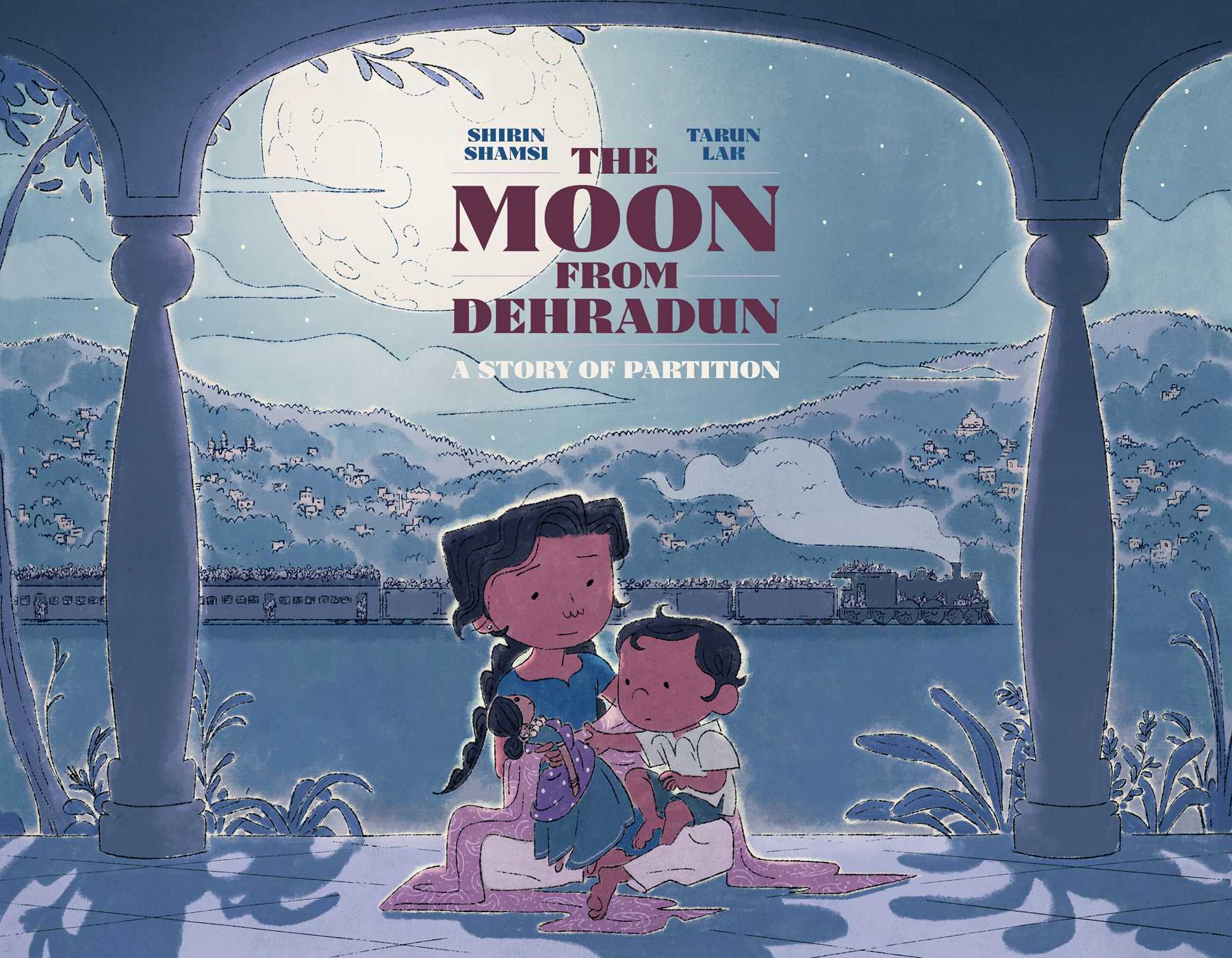
I’ve read this book numerous times: sometimes for the text, sometimes for the tone, sometimes to slowly immerse myself in the pictures. I know the basics of my own family’s journey to Pakistan, and this book added to that understanding. I like that it forced me to slow down and to really appreciate what partition was for both sides, from a child’s perspective. Pakistan and India gained freedom from British rule 75 years ago. Nearly every Pakistani or Indian you know today, has a parent or grandparent that lived through it. It is not history from long ago, it is still very much with us, and no I’m not talking about the lingering effects of colonization, I’m talking family stories, and loss of property and wealth, memories of the journey, the terror, the fear, the relief, the determination. This book is one story, perhaps the first mainstream published in the west, of one family’s experience. There could be a thousand more books and they would all be different, all powerful, all reflective. I love that this book is Pakistani authored, Indian illustrated, I love that it offers pages with no words at all. I love that a child’s perspective for such a monumental event is told for other children. There is a lot there for desi readers to unpack, and consider, there is also a lot there for non desi’s to be made aware of, and I hope that you will seek out this book no matter who you are, and share it.

img_3563

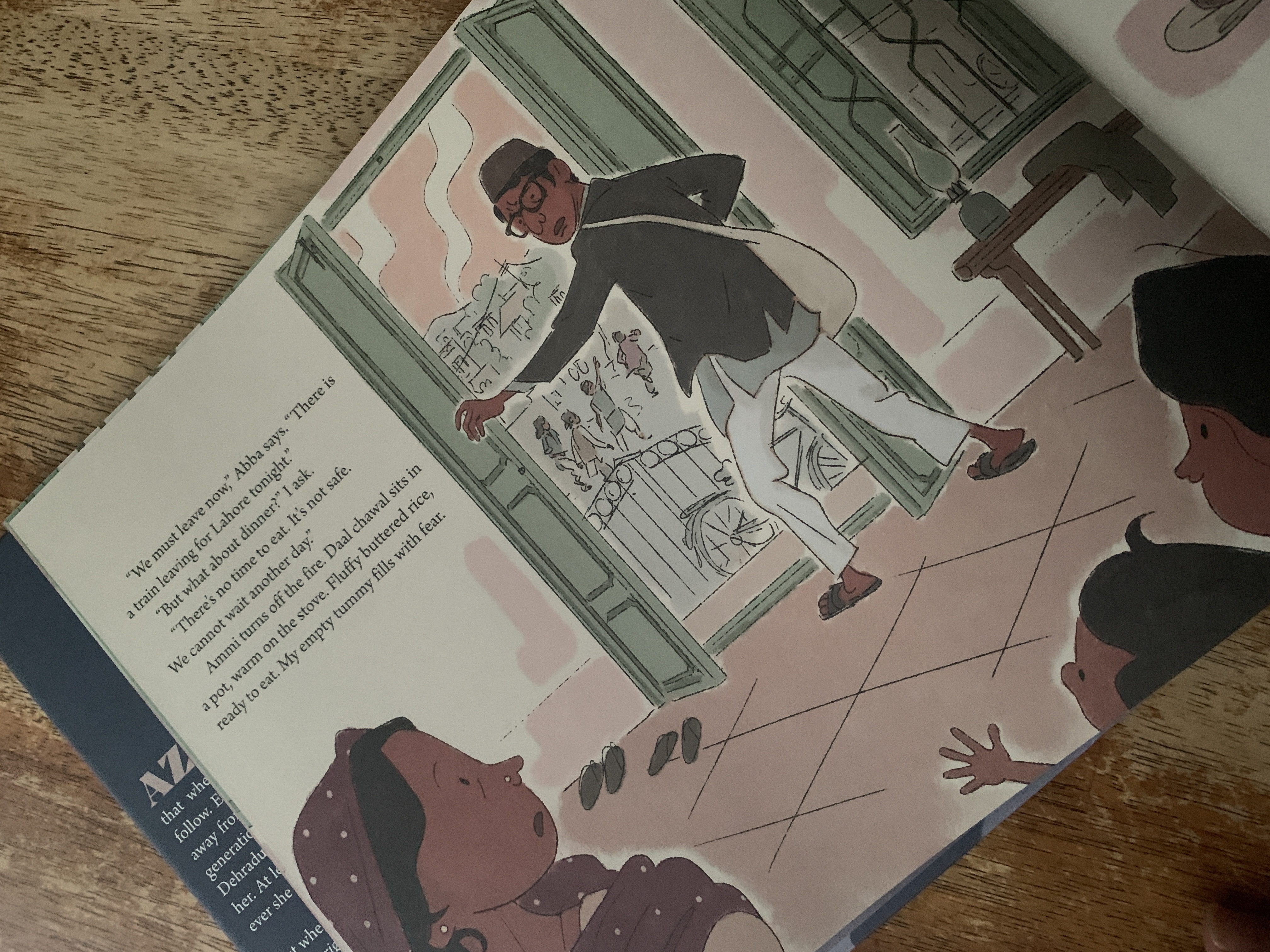
The book starts with excitement from Azra about an upcoming train ride, even though her family has lived in Dehradun, at the base of the Himalayas, for generations. Suddenly though there is yelling outside because people are afraid, and her Abba runs in saying they have to leave now. Ammi, Abba, Azra, and the baby “Chotu,” rush out the door, leaving the cooking dinner still on the stove. When they get to the train, Azra realizes she has left her beloved doll, Gurya behind. They cannot go back for her.

img_3564

Azra blames Chotu, for making her forget her doll, for taking her parent’s attention, yet as the days and nights on the train reveal tired people, sad faces, and fear, Azra finds comfort in her little brother’s embrace.

img_3568

When they arrive in Lahore, they are met with food, and shelter. They are given a house that looks like the owners left in the same manner that they had to flee. There are balls of dough with a rolling pin, laundry strewn about, and even a doll left abandoned under a bed.

img_3565

The book concludes with a map, a glossary, and an informative author’s note addressing pre-partition, partition, and the author’s own family story. There is hardship and frantic upheaval, but peace and welcome too. The illustrations illuminate the text and show the powerful emotion when words sometime simply don’t exist.

img_3566

The book is not political or even religious. There is an Indian flag when they leave and a Pakistani flag when they enter, there are sounds of athan, and packing of a rehl, and a comparison to Eid, and the doll at the end has a bindi on her forehead. The book does not make one side out to be in the right or in the wrong, if you do not know that partition of the subcontinent was a mass migration based on religion and the chaos further exacerbated by the British, this book will not spell it out for you.

img_3567

I preordered mine here and it can now be purchased from all major book sellers.

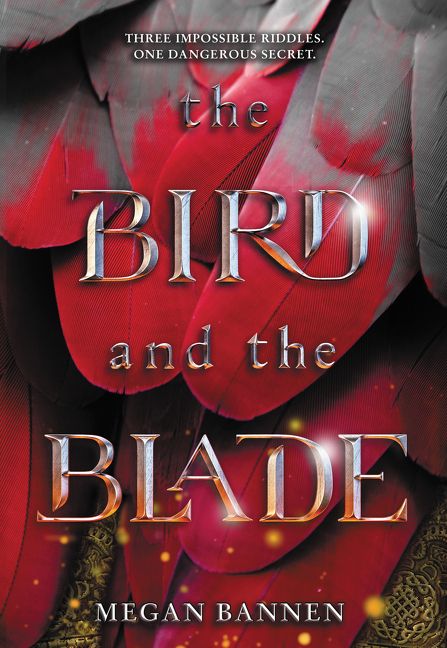
The Bird and the Blade by Megan Bannen

Standard
The Bird and the Blade by Megan Bannen

bird

I didn’t know what to expect as I opened this 416 page book: it was recommended to me, my library had it, and I wanted a break from reading on a screen, so I dived in.  The map, the character list, and the setting of 13th century Mongol empire had me bracing for a complex read. I gave myself a goal of a few chapters to see if I could connect, but by page 20 I was completely absorbed and not to be disturbed.  The character driven plot is written in a rather contemporary manner, although the setting is historical fiction (with a lot of noted liberties) it reads really quickly and easily.  It is definitely 16 and up, romantic YA and has triggers of suicide, murder, drowning, death, war, abuse, misogyny.  While reading it, there often felt like there were holes in the plot as the story builds on itself in quiet layers- the story is fairly linear just broken up and rearranged in time, but the informatio

n shared is gently teased out, and nearly every hole filled by the final page.  I think if someone told me about the book in detail, I would not have read it.  There are many things that I feel like I shouldn’t like about it, but truth be told, I enjoyed the story.  The tokenish Islam found a way to convince me it was done intentionally, the (few) main characters present held my intention at all times, the backmatter detailing the research and liberties just all combined masterfully, that I feel compelled to share the story on my platforms even though the Islamic rep is only slightly more that the YA equivalent of a #muslimsintheillustrations tag.

I tried really hard not to include spoilers, so forgive some of the vague sentiments.

SYNOPSIS:

The story without any spoilers is quite simple- a slave girl, Jinghua, is mourning her dead brother and comes across Prince Khalaf, son of Timur, the ruler of the Kipchak Khanate, while working in the family’s service.  Shocked by his kindness, and persona, she falls hopelessly in love with him and when his family is exiled she decides to stay with the prince and the khan rather than flee.  They journey together and their feelings grow.  To save his family’s rule, however, Prince Khalaf decides to attempt to wed the daughter of the the Great Khan.  Princess Turandokht is exceptionally beautiful, wise, and powerful.  She refuses to wed and has set up a test for any prince wishing to try and marry her.  She has three riddles, each one to be answered in seven minutes, anyone who answers wrong is immediately put to death.  Numerous suitors have been killed.  When Khalaf sneaks off in the night to test his wits, the story of how how intertwined Jinghua and Khalaf’s stories are comes to light before the final riddle is answered.

WHY I LIKE IT:

It is not OWN voice, it is researched and based on a tale from The Thousand and One Days, but having very little to no knowledge of Mongol history (I’ve read the book Ghenghis Khan and the Making of the Modern World years ago, but that is about it), and have never seen or read the opera, poetry, or stories that this tale has presented as, I have nothing to compare it to. The book does not need knowledge of the story or time frame to make sense, but the backmatter is well done and makes the process of the story more fulfilling.

For the majority of the book, Islam and the khan and prince being Muslim is just a label occasionally remarked upon when the khan praises the Eternal Blue Sky, instead of Allah swt, and that is about all.  In fact Allah swt I don’t think is ever mentioned in the book.  Based on the information in the back about Mongol’s and a few dialogues in the book it seems that many practices were a hodgepodge of many faiths and traditions, especially by leaders to unite their subjects.  A few ayats from the Quran are mentioned as are some hadiths loosely, which are sourced at the end.  Khalaf gets drunk, and acknowledges that it is haram, and sleeps next to Jinghua for warmth which he also notes is haram.  It mentions a few times that he prays.  There is a weird emphasis on his turban, but it could be culturally Muslim (?), so I let it slide.

The first person voice really sets a good pace for the story, and all of its twists and turns, but does make the love, crush, infatuation theme seem very naïve in the beginning, with more telling than showing.  I think it is accurate for Jinghua, but does require the reader to just accept it and keep reading.  It seems at times she is also rather helpless and so desperate to be seen that the stereotype is a bit cringe, particularly at the end.  I get that appearance and women’s worth is tied to the time and setting, but it still doesn’t completely absolve how triggering the main character’s portrayal can be.

Jinghua’s religious beliefs of the Song Dynasty made me understand the offerings made to her ancestors and the ghost of her slain brother to be religious in context, not literary fantasy.  Many places have labeled this a fantasy romance book, but I don’t know that the world building was fantasy as much as it was historical reimagining.  Either way, there are ancestral ghosts that the main character dreams about and often sees, the epilogue pushes this element, but in my mind still adheres to the same point of ghosts and ancestors being a religious thread.

A found the fear of water story detail a little forced as she was not scared of water when washing out the bloody clothing in the river alone, but then was terrified to stand near a river.  Perhaps a minor detail, but one that I noticed none the less.

My favorite character is the the cantankerous old goat, I’m not going to say much about him other than if at first you hate him, stick around, he might win you over.

FLAGS:

There are multiple suicides and it is glorified, seen as a mercy, and shown as an act of desperation.  There is cruelty and classism along with misogyny and reducing a woman to her appearance.  There is talk of penises and them being seen when urinating, as well as one scene of an erection being felt.  There is killing, war, battle. murder, death, that is fairly detailed.  There is language and crudeness.  There is talk of rape, and affairs, and fornicating.  There are a few kisses, one while a character is drunk, one forced upon a nonconsenting woman. Jinghua disguises herself as a boy. There are theological concepts present and ghosts.  Alcohol and wine are consumed. Nothing is over the top or overly stressed to the point of being obnoxious, but it is present and older YA readers can probably handle it.
TOOLS FOR LEADING THE DISCUSSION:

I would love to discuss with readers, but not my students, I don’t think it would work for an Islamic school book club selection.  The “Muslim” character gets drunk, kisses two different women, has an alter to honor the dead, places offerings of wine.

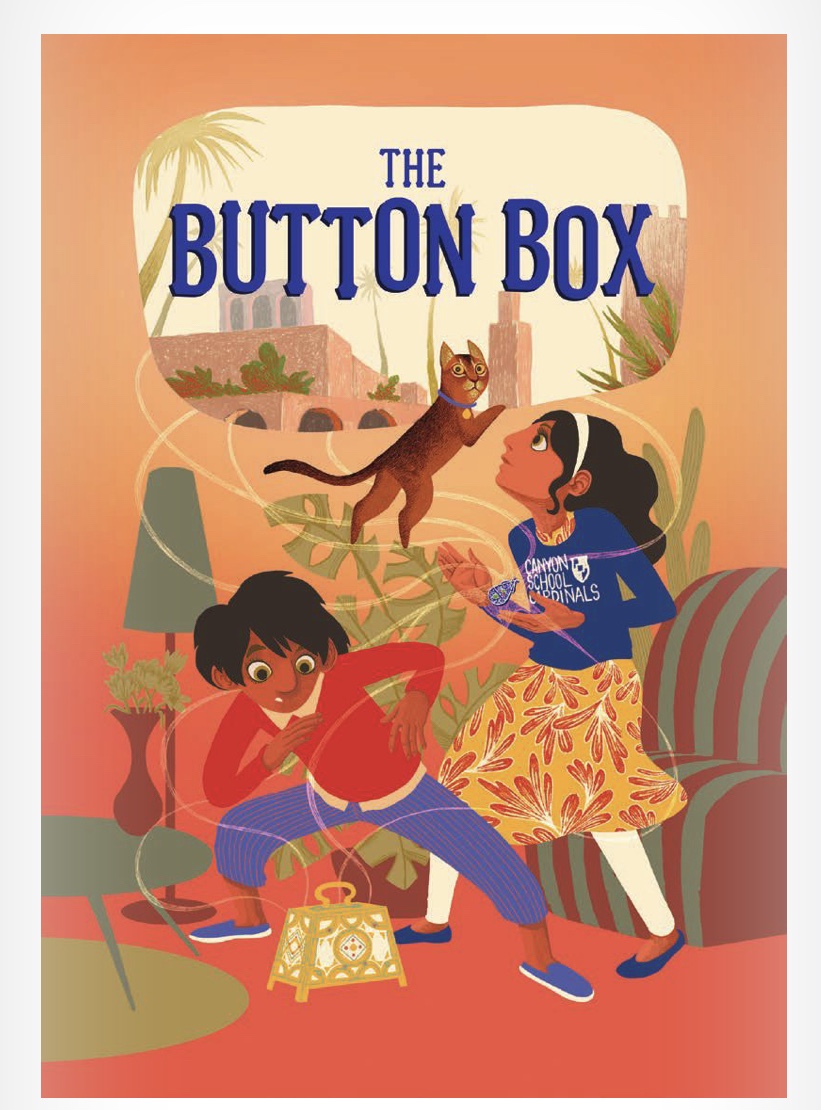
The Button Box by Bridget Hodder & Fawzia Gilani-Williams

Standard
The Button Box by Bridget Hodder & Fawzia Gilani-Williams

img_8336

This 152 page book reads like a historical fiction interfaith Magic Treehouse for middle grades tale, and I thoroughly enjoyed it! I learned about Sephardic Jews, the language of Ladino, Prince Abdur Rahman, and a tiny bit about the Abbasids overthrowing the Ummayads.  I love that it starts with a map and ends with sources, facts about what information is real in the book and what is fiction, and a bit about Muslims and Jews and how to be an ally if you witness prejudice.  The book is co-authored, and in many ways the Jewish narrative does take the majority of the focus, but the Islamic phrases sprinkled in, the Islam practiced by a major character, and the setting, allow for both religions to shine and combine to make a compelling magical time traveling story for third graders (and their parents) and up.

SYNOPSIS:

Cousins Ava and Nadeem are in fifth grade and spend their afternoons afterschool with their Granny Buena.  Granny and Ava are Jewish and Nadeem is Muslim, though they believe differently, they always seem to find more that is the same, and respect is always given.  When they face bullying at school Granny Buena pulls out a crystal box full of buttons and tells the children, and the cat Sheba a tale about their ancestor Ester ibn Evram.  When she stops the story short, the two kids exam the button closer and find themselves back in time tasked with saving Prince Abdur Rahman and getting him from Africa to Spain.  They aren’t sure if that will be enough to get them back to their own time though, but they don’t have time to overthink it because if they fail, the Golden Age of Islam won’t happen, peace won’t come to Muslims, Jews, and Christians in the region, and their Jewish ancestors may face the backlash of helping the Muslim escape.  Along the way, they learn about their own family traditions, beliefs, and gain wisdom to handle their bullying problem at school.

WHY I LIIKE IT:

I love that I learned so much, and from what I could Google and ask about from those more knowledgeable, the facts about the time period and cultures all seem to check out.  Only one passage comparing Jewish belief and the text of the Quran is phrased oddly in my opinion, the rest of the Islamic sprinkling is well done.  There are numerous bismillahs, mashaAllahs, stopping for salat, quoting of the Quran and more.  The narrative is primarily Jewish, but the setting Islamic with athans being called and Salams being given.  The book does have a lot of Jewish detail, but I don’t think it was preachy, and the further uniqueness of Ladino words and culture I think would appeal to all readers no matter how familiar or unfamiliar they are with the two religions.

There are some questions that as an adult reader I wanted to know more about: how Nadeem and his mom are practicing Muslims in a strong Jewish family, how making sure history happened as it happened the first time sent the two kids back…then why were they sent there at all, is there going to be more button adventures, were their two cats or was it the same cat?   Honestly, a lot of the more obvious fantasy plot holes were accounted for and done quickly and simply: how their clothes changed but the button remained, how they could speak the language, how confused their aunt would be when her real niece and nephew arrived, etc.. The writing quality kept it all clear for the reader, and did so without the pacing of the story suffering.

FLAGS:

Near death experience, magic, mention of killing, fear, deception, bullying, fighting, physical altercation, misogynistic assumptions.

TOOLS FOR LEADING THE DISCUSSION:

This would be a great story to share if I return to the classroom. The history, the religions, the storytelling would provide so much to connect to and learn about.  As a book club selection though, it would be too young for our middle school readers and ultimately too short.  I would consider it for a read a loud with fourth and fifth grade.

To Purchase: Here is the Amazon link: https://amzn.to/3D9LyxI