Tag Archives: funny

The Misadventures of Mina Mahmood: School Trip by Farhana Islam illustrated by Simran Diamond Singh

Standard
The Misadventures of Mina Mahmood: School Trip by Farhana Islam illustrated by Simran Diamond Singh

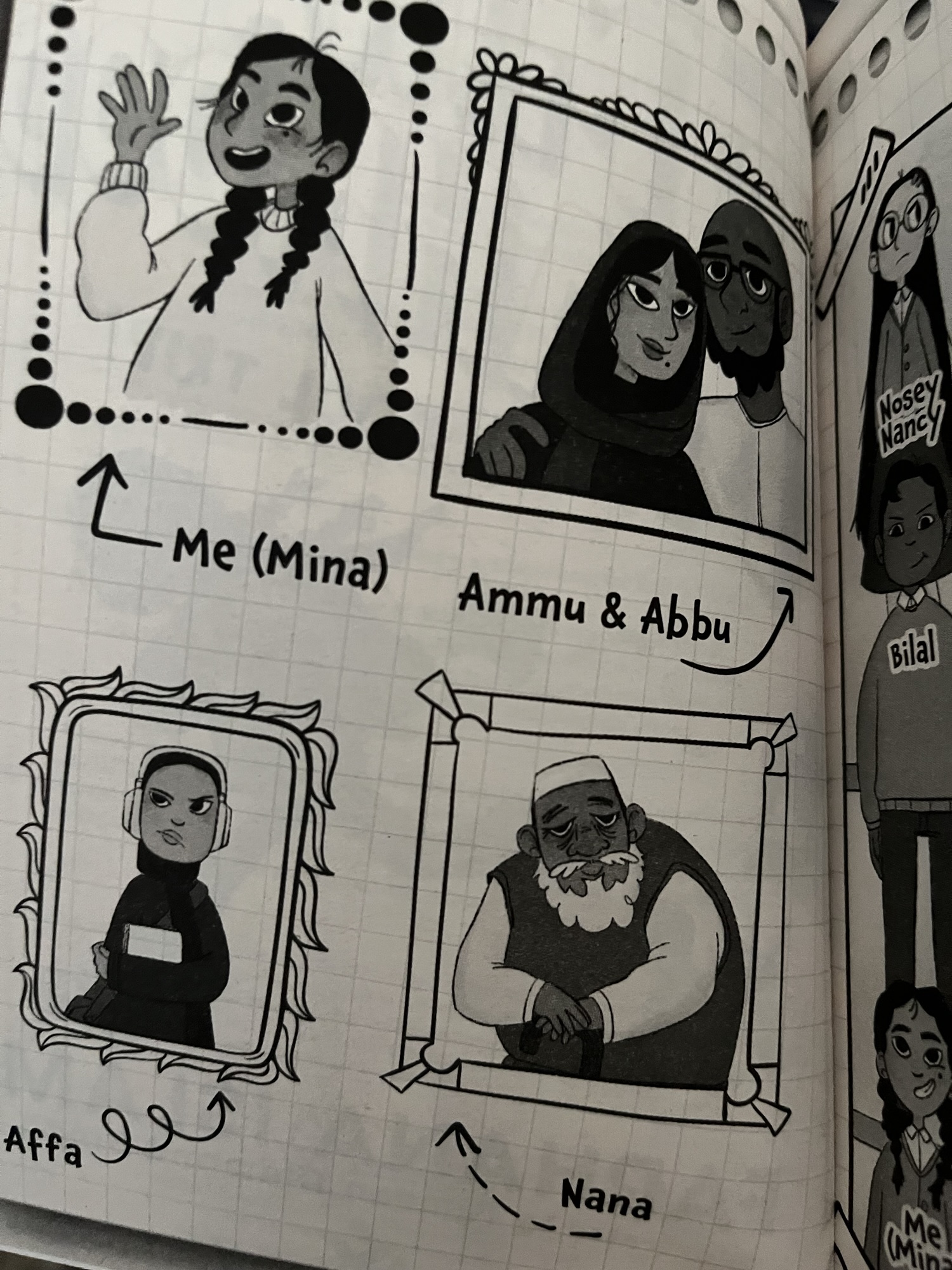
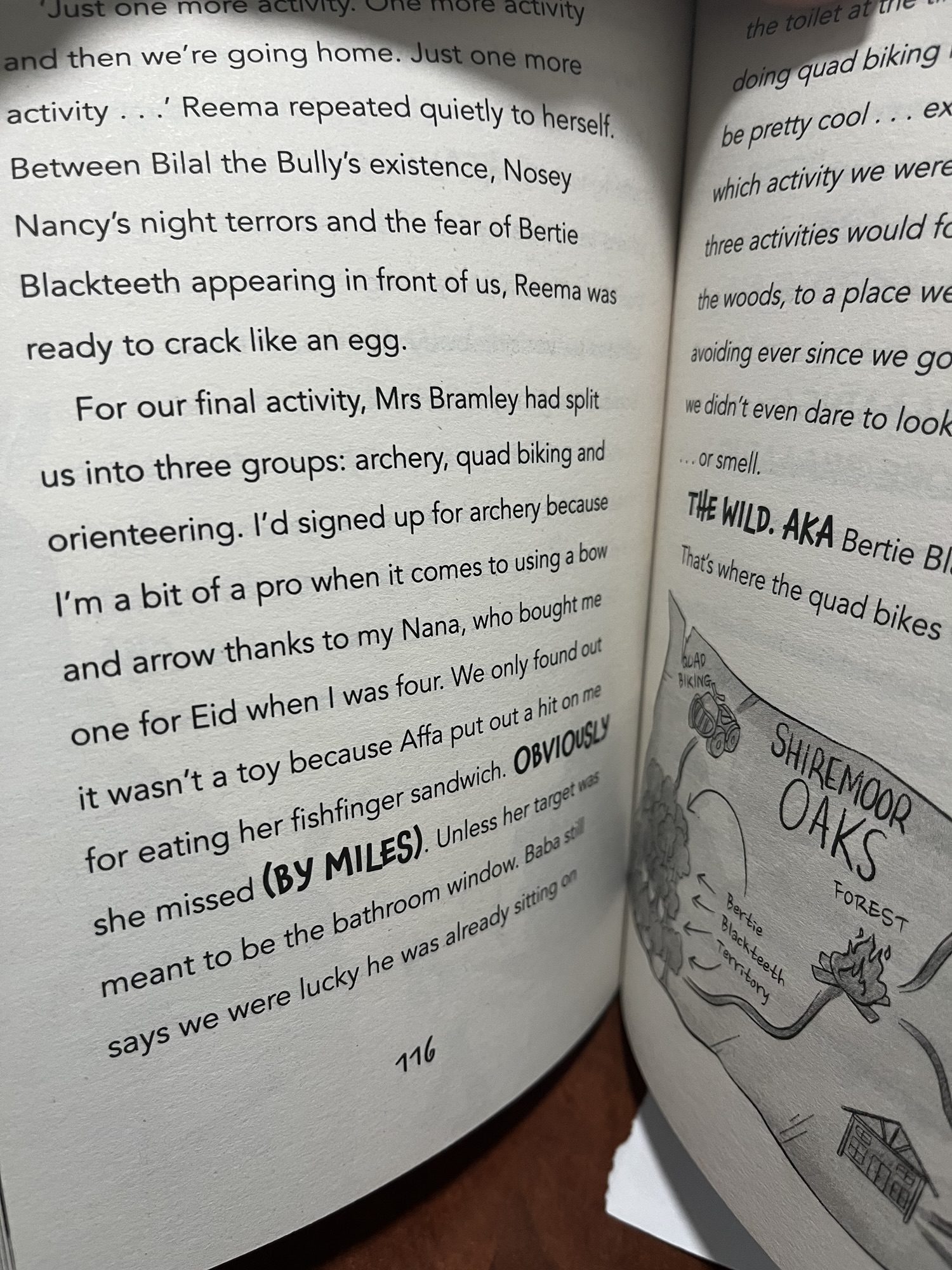
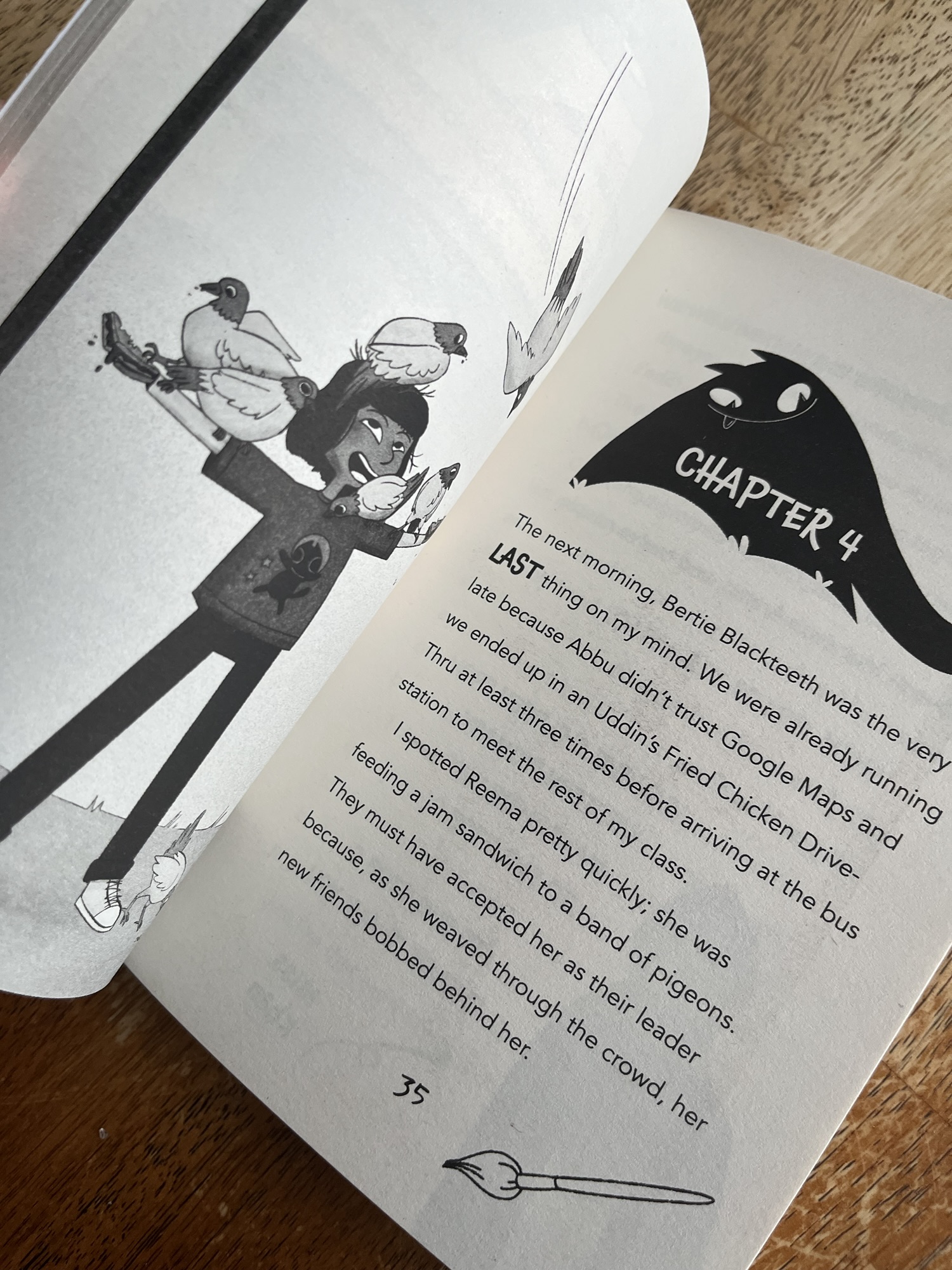
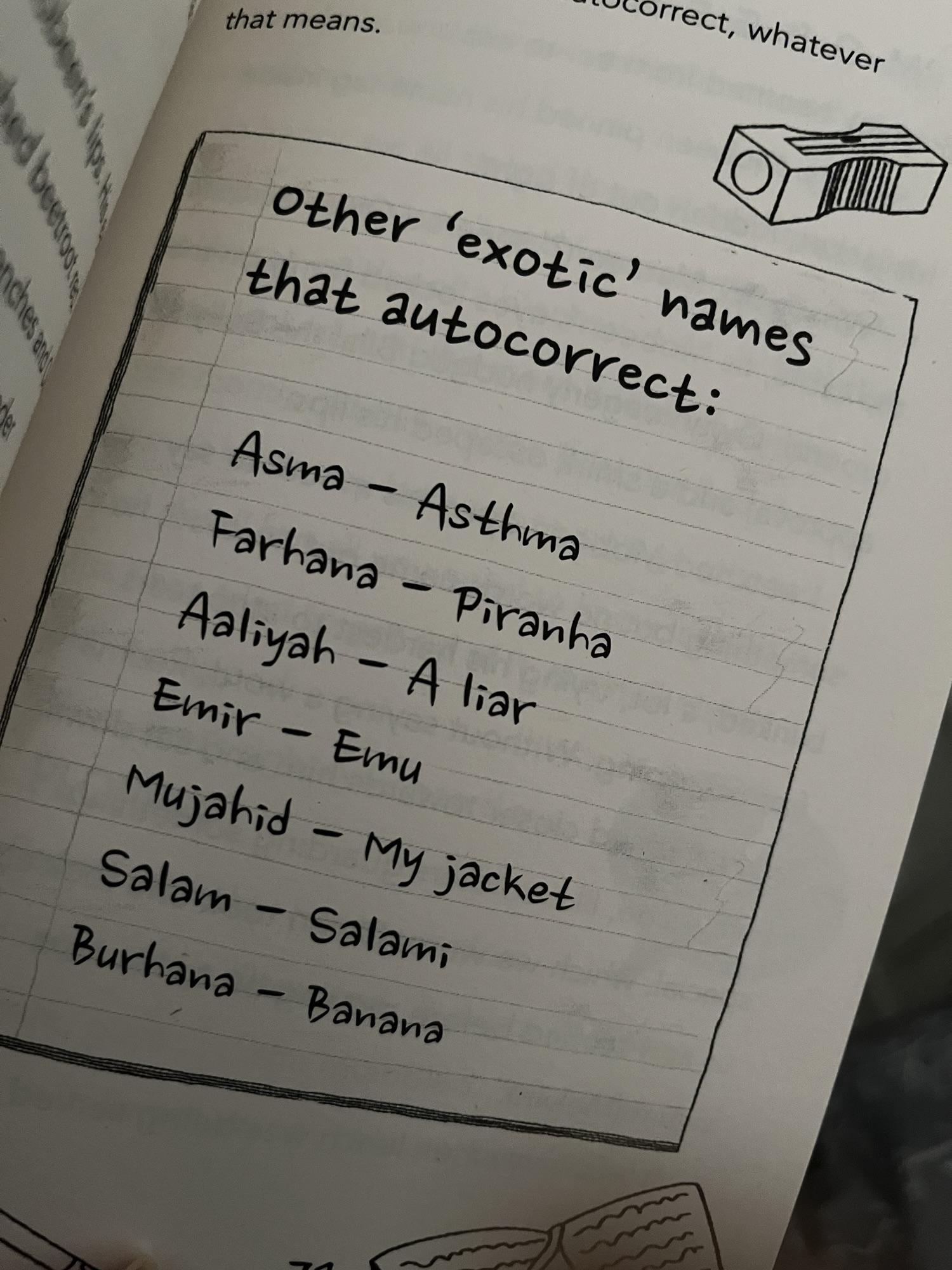
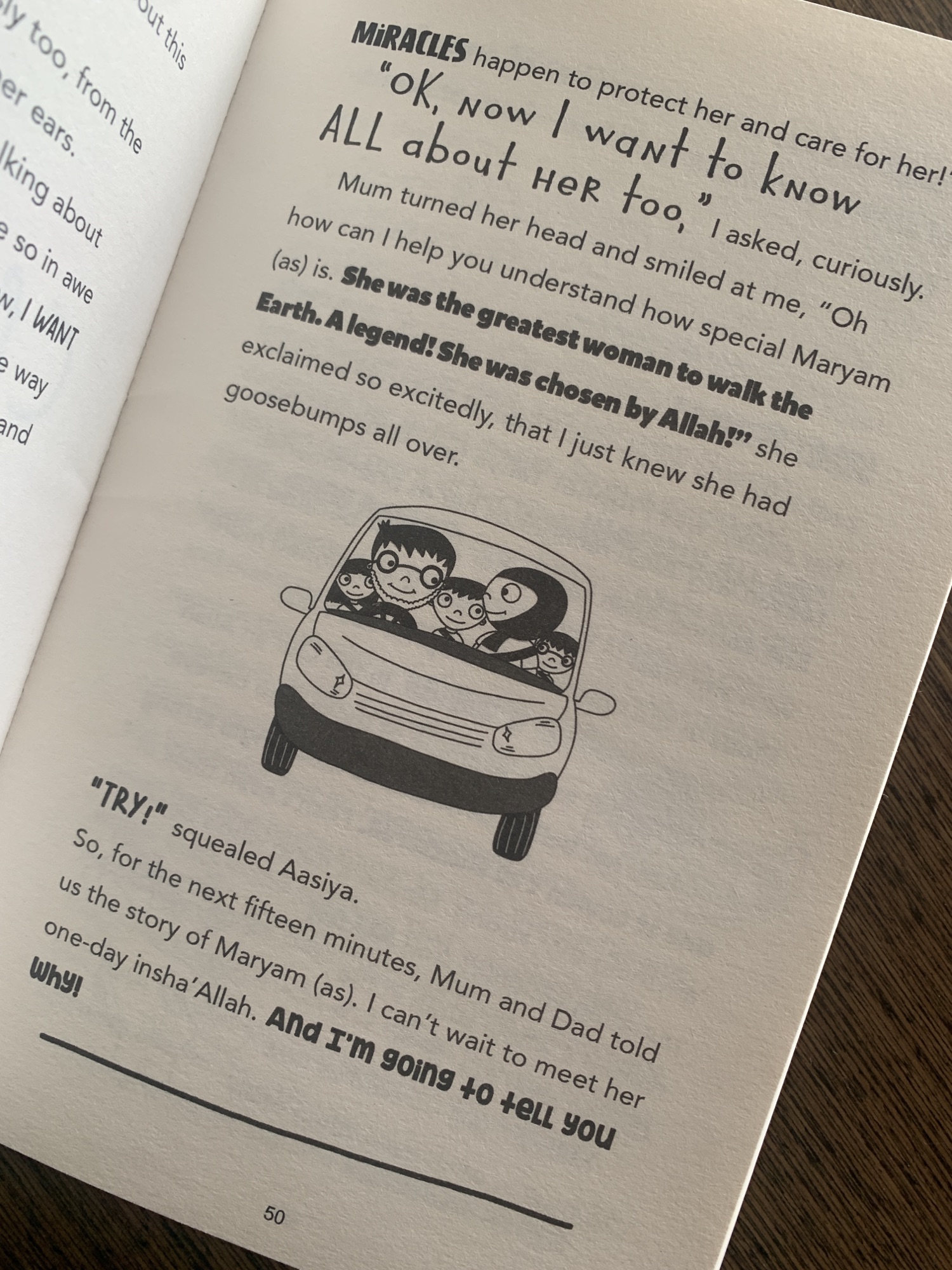
The illustrations in this book, by a Muslim author featuring Muslim characters, are impressively fun and complimentary to the story.  Yes, the 184 page book is highly illustrated.  The publisher says it is MG, and I can see that based on the length, but I think it is a solid second grade to fourth grade read.  The storyline is singular and surface level, and the scary silly bits are just meant to be funny and not taken too seriously.  I enjoyed the book, the normalizing of the Muslim kids in a non Muslim setting just living their life, and the main character’s voice had me smiling throughout.  A school camping trip is overshadowed by bullies and then consumed by the ever growing out of control scary story of Bertie Blackteeth.  An epic laser tag battle, quad adventures, and the comical banter of Mina and her friends, Mobeen and Reema, make for a light engaging read.  Sensitive kids might find the fright to be too much, but I think most will finish and be glad to learn there are more books to come in the series.

SYNOPSIS:

Mina Mahmood and her friends are ecstatic, it is finally their turn to head off on the annual camping trip to Shiremoor Oaks.  A weekend of laser tag, orienteering, archery, and quad biking without adults, well teachers, but no parents.  All Mina has to do before the fun begins is get through a family dinner with Auntie Selma and her cousins.  Mina doesn’t believe anything her cousin Abbas says, so when he mentions he went camping in school to Shiremoor Oaks and heard about a girl, Bertie Blackteeth who vanished there, Mina pays him no mind.  When her older sister Affa, also mentions that she heard the story, Mina starts to wonder if there could be some truth.  The next morning on the bus, when Bilal the Bully and his minions Owen and Brodie are also talking about Bertie Blackteeth and her need for a new body, Mina and the rest of the class are properly spooked. The fear hangs over all the activities, ruins the midnight snack extravaganza, and makes this a camping trip they will never forget.

WHY I LIKE IT:
I enjoy when Muslim kids drop mention of Eid and Ayatul Kursi in their adventures. When a character wears hijab, but she is the teacher, so the book isn’t about her identity, it is just a part of who she is.  I also really like when books are funny, characters are snarky, there is a plot, a climax and a resolution.  The book doesn’t have layers and heavy themes, sure you could discuss bullying, and fear and friendship.  At times Mina is tasked with saving Mobeen and other times advised to sacrifice him.  But considering he feels to young to be a father if the spider that just landed on him lays eggs in his eyebrows, it is probably best to just enjoy the story for what it is and not look to make it more.

FLAGS:
Could be a little scary, it is a little imaginative in the lies and embellishments of Bertie Blackteeth.  Bully and dealing with bullies.

TOOLS FOR LEADING THE DISCUSSION:
I handed it to my 10 year old and said enjoy, not much more than that is needed. A fun addition to elementary shelves, and one that will be picked up often.

Zeyna Lost and Found by Shafaq Khan

Standard
Zeyna Lost and Found by Shafaq Khan

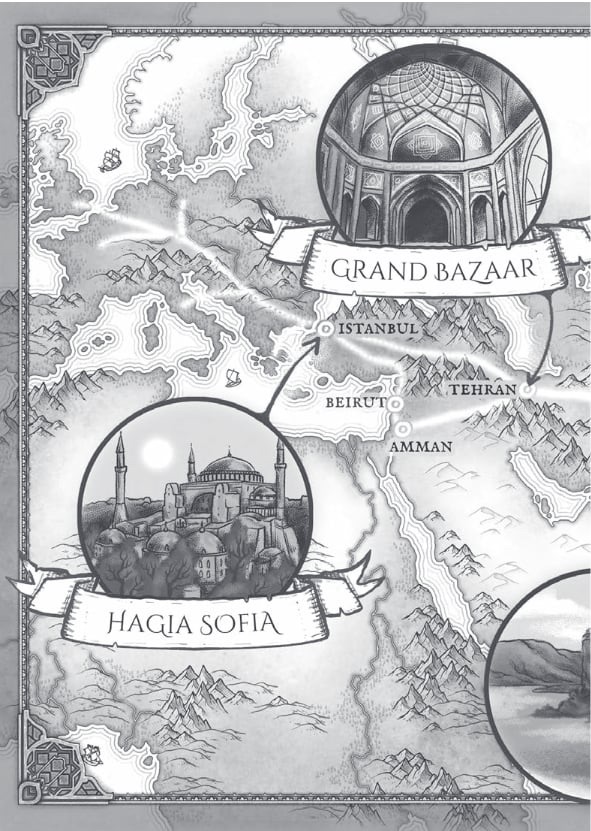
I think I needed this 336 page middle grade book that gets parents out of the way and lets a trio of kids  hop from country to country to solve a mystery, track down the bad guys and save the day. Set in the 1970s in the UK and on the Hippie Trail between Lahore, Pakistan and Istanbul, Turkey, the book is a fast paced read with humor, heart, and adventure.  I absolutely love Zeyna’s snark and voice, and her relationship with her brother and cousin, ground the story and make you cheer for them even when their antics are incredibly dangerous and improbable.  As an Islamic school librarian, my one critique with the book is that I wish there was more/any Islam. I, at one point considered that they are not Muslim, and I’m not sure what the author identifies as, but she does thank “Al-Barr, for all that is good” in the acknowledgements, and Zeyna does mention an Eid party in passing, so while I’m still on the fence, I’m going to assume they are all Muslim.  Major beats in the plot are meeting at both the Badshahi and Blue Mosque, but none of the characters ever pray, or mention the names of prayers when the athan is heard.  When they see women in burkas and chadors, Zeyna stares, not connecting the clothing to hijab, that one would hope she would know. There is only one salaam in the whole book, and the story is predominately set in Pakistan, Afghanistan, Iran, and Turkey. Granted I am sensitive, but it almost feels like a deliberate exclusion to the point of going out of the way to not let those details be present.  There are plenty of Urdu and Punjabi words and titles and cultural commentary, so it doesn’t seem that the author was concerned about watering down authenticity, a theme of the book infact is finding your place and accepting yourself.  All that aside I really enjoyed pickpocketing, imaginative, determined, sarcastic, loyal detective Zeyna, and I think kids will join me in hoping this is the first in a series.

SYNOPSIS:
Zeyna is 12, and likes to imagine she is a detective on a case, sneaking and snooping, and roping her inventing younger brother Mahir to be her Watson. The city is on edge with the theft of the Shirin Jewel, a large Persian ruby, a case involving the 15, that Zeyna would love to solve.  When she sees a man with knife in London, who later seems to be following her and her mum, and then drops a paper with their street name on it, Zeyna is convinced this her chance to prove her self. A sudden trip to Pakistan though dampens her mood as the clues to the case will be left in the UK. She doesn’t stay down long though, as her parents start acting peculiar in Lahore, meeting with strange people, lying about why they suddenly made the trip at all, and when the police show up at the familial home to arrest her parents, they all discover that her parents have vanished.  Zeyna realizes her parents and the events in London are tied to the missing ruby, and with the help of Mahir and their cousin Amina they set off to solve the case and find her parents.

WHY I LIKE IT:
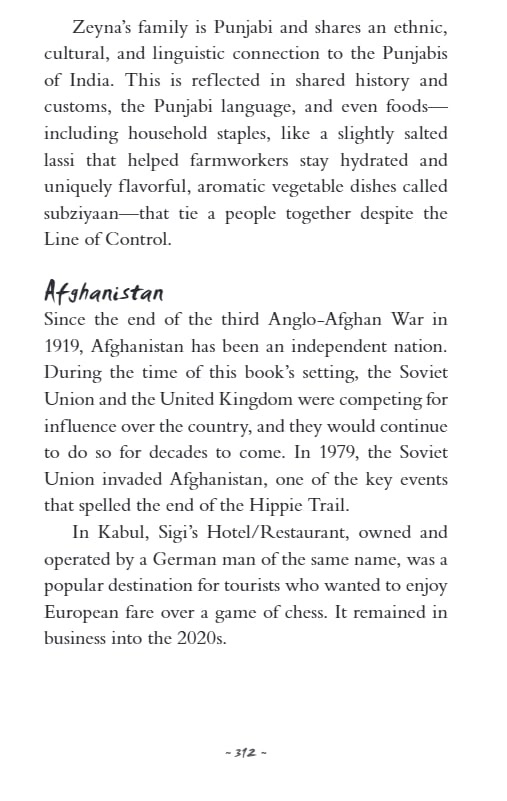
It’s hard to review a book like this without giving the twists and climax and resolution away, but more than once I gasped in delight when something happened on the page, and it crystalized where the book was going in my head.  Sure there were some particularly outlandish connections and a few plot holes, I even Googled when fax machines were invented, but I had a blast reading the book.  I loved the historical backmatter discussing the events in post partition Pakistan, a year before Bangladesh was independent, Soviet Union and UK competing over influence in Afghanistan, the discontent voices in Iran toward the shah, and the role of the Pudding House for messages in Turkey.  There are also discussion questions, a glossary, acknowledgements, and about the author at the end.

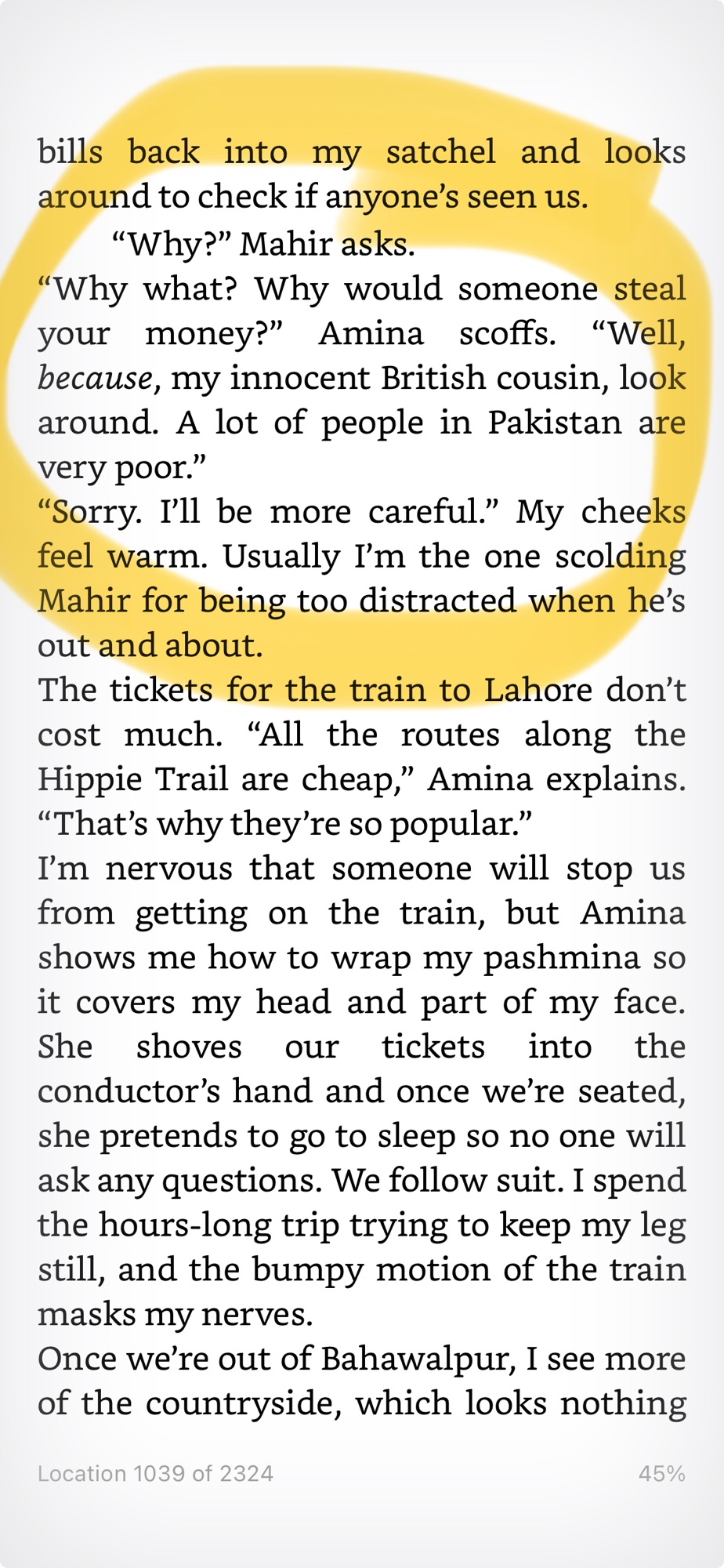
One tiny concern was the assumption that money could be stolen because the people around them are poor, it is just one paragraph, it isn’t a constant in the book, but it struck me as odd and stereotypical, and really not needed.

FLAGS:

Lying, stealing,  deception, pretending to be someone you are not, breaking and entering, eavesdropping, snooping, its a heist book!

TOOLS FOR LEADING THE DISCUSSION:
This would be an awesome book club book or novel study read, I can’t wait for it to be released in a few weeks so that I can have my kids read it.

Huda F Wants to Know? by Huda Fahmy

Standard
Huda F Wants to Know? by Huda Fahmy

Huda Fahmy books always make me laugh, but this is the first one that made me cry. Centering mental health and her parents divorce, we see Huda grappling with change, loss, anger, and resolve in a raw vulnerable way. While ever hopeful, and at times comical, the book is also incredibly moving and insightful.  Whether as part of the Huda F series or her two graphic novels prior, her autobiographic books always tackle heavy topics in a joyful, hilarious, honest way that appeal to girls and boys from middle school and up.  I know at 263 pages, this book is a YA read, but in my house my kids (daughter and sons) have loved reading her perspective about hijab, arranged marriages, identity, and sibling relationships. The unapologetic Muslim authenticity is unparalleled, and that non Muslims champion her books as well, truly shows the value of good story telling, and gives me hope in an often bleak world. Huda’s books are staples: new books are anxiously awaited, previous books are regularly reread, and Huda F Wants to Know? continues in that tradition.  This book isn’t just fun, it is important- it normalizes mental health, empowers families shaken up by change, and makes us all feel seen and less alone. SubhanAllah.

The book starts with Huda’s plan for her junior year in high school, her friend Nabz and her are determined to buckle down and get scholarships.  When Huda’s parents call a family meeting, she thinks she just might be getting a car, but instead she and her sisters learn, their parents are getting a divorce. The book then rewinds to show a little lead up before Huda’s world shatters, and junior year’s blue print is tossed aside.  We see her going to the masjid for weekly halaqas where Sr Amal discusses topics like societal pressures, family expectations, gender bias in education, and other relevant topics.  At one such gathering, Dr Haifa came to talk about mental health.  We also see her crushing on a boy at school, fighting with her mom and sisters, and the girls going on a road trip to a Muslim convention.

Every storyline, every twist, every page really, has Islam woven in.  It is the way the characters see themselves, see their world, handle stresses, find peace.  Mental health is not separate from the hadith and sunnah, it is blended and approached in a holistic manner.  Divorce is understood Islamically, and the clarity in which it is articulated will, I imagine, be so reassuring for Muslims who have gone through it, and seen others go through it.  Just as my boys years ago read That Can Be Arranged, and became incredibly curious about marriage in Islam, I have no doubt that this book, will also be a powerful conversation starter for so many.  I don’t know if that is part of why Huda write, but it definitely is a result of her books.  I wish I could ask her, I’d also want to know how she decides what to share of her own life, where the line of reality and fiction for her is and how she sets and maintains those boundaries? I also desperately would like to ask her if she plans to write forever, because the world benefits from her books, needs her books, I know I do.  No pressure or anything.

 There are resources for mental health at the back of the book, some even specifically for Muslims. Please preorder this book and/or request it at your local public library as a show of support, it releases in April.

Almost Sunset by Wahab Algarmi

Standard
Almost Sunset by Wahab Algarmi

At 224 pages, this middle grade graphic novel has a whole lot of heart. Seventh grade is not easy for anyone, and Hassan is balancing school, grades, soccer, fasting, and taraweeh every night, while dealing with friends, video games, cousins, and falling asleep in class. I love that this OWN voice book really centers Islam. It doesn’t shy away from showing the stresses that the character and presumably the readers of immigrant kids in public schools might encounter, right alongside stresses with Muslim cousins and friends at the masjid trying to pressure you to do something you don’t want to do.  And as in any coming of age story, young Hassan does not want any special treatment or parents to get involved. SPOILER: Hassan does hide his faith and that he is fasting for Ramadan at school, he also does make mistakes, notably among them is when he breaks his fast in what he is told is a loophole of sorts, but by the end he grows and trusts and realizes he doesn’t have to do it all, all the time, and that he isn’t alone. The book is not heavy, but it has layers that serve as relatable mirrors and windows for kids who are going to thoroughly enjoy this richly illustrated book.

SYNOPSIS:

The story starts with seventh grader, Hassan dreaming about food, drooling on his arm, and then being woken up by his teacher, again.  It is Ramadan and Hassan is fasting, going to taraweeh at night, trying to keep up with school and soccer, and on top of it all, he doesn’t want anyone to know.  He also doesn’t have the latest version of the popular video game that all his friends have, and he has to explain to his childhood friend Rosie why it is no longer appropriate for them to hang out together.  Nights and weekends with family and at the masjid should be a reprieve, but somehow even there he is the odd one out, opting to pray instead of play, and being unsure if closing your eyes while sneaking food really prevents Allah swt from seeing you eating like his cousins claim.  Threaded through it all are soccer practices, games, and falling grades that are going to get him tossed off the team, making this a Ramadan to remember.

WHY I LOVE IT:

Wahoo, some Yemeni representation, I loved the flashback/dream longing for Yemen.  I like that Hassan isn’t expecting adults or others to speak for him, and his heart is really in the right place.  I did feel a bit of a disconnect though when his friends knew he fasted the previous year, why he wouldn’t just explain it was time again for him to do so. Increasingly even the most isolated western cities are aware of Ramadan, so I didn’t feel that hesitation for Hassan to own it, even when a friend explicitly asks.  SPOILER, On a similar thread, his soccer coach is Muslim and their isn’t a huge sigh of relief and immediate kinship when the information is revealed.  If Hassan really feels he is shouldering it alone, why wouldn’t this empower him to step into himself so to speak.  I also didn’t understand why the end of the season pizza party wouldn’t have just been at iftar time. The book really had a chance to model how others can support their Muslim friends, and moving a food based celebration a few hours is an easy accommodation, but the Muslim coach didn’t even do it, so why would non Muslims.  

When Hassan does sneak food during his fast, he gets away with it, but it doesn’t sit right with him and I think it is powerfully done, him coming clean also is not punished as it really is something between Hassan and Allah swt and I love how it is left to that.  Regardless of if you feel it is required of a 7th grade boy or not, the ownership of faith I feel is more important than the getting in trouble by your parents in this case.

FLAGS:

Lying, failing grades, sneaks food during fasting, boy girl friendship, hints at internalized Islamophobia.

TOOLS FOR LEADING THE DISCUSSION:

I wouldn’t do this as a book club, but would absolutely have it on shelves for kids to easily access, and I would absolutely discuss with them, what their takeaways were.

MetalGhost: Kashif and the Echoes from a Past Life by Ali Mohammad Rizwan

Standard
MetalGhost: Kashif and the Echoes from a Past Life by Ali Mohammad Rizwan

img_8377-1

This 350 page YA book (14/15+) does not hit the ground running, but once it finds its stride, it is a lot of fun.  I handed the book to my son, who loves Islamic fiction, and at 30 pages he brought it back saying it was terrible. I upped the ante and bribed him with goalie gear to read to 100 pages, but he couldn’t stop, he finished the book, and returned the favor by encouraging me to move it to the top of my TBR pile.  Like him, I truly wanted to dnf it early on. There are too many names, too many line edit errors (mistakes, repetitive phrases, adverbs), and a little too many forced cheesy (halal) romance scenes. And then the writing gets a little better, the plot strengthens, the Islam is more than just the character’s religion, but something that actively engage with, humor is woven in, twists develop, emotional threads are pulled, and you find yourself absorbed and invested in the story.  The writing at the end unravels as well, it feels  forced, much like the beginning, but perhaps that is the vigilante/superhero genre’s norm to get readers to pick up the next book in the series for answers and clarity. I’m glad the book was nominated for the Muslim Book Awards, I may not have heard about it otherwise, and I love that my son, who is currently re-reading it, found a book that is relevant, appealing, and has an Islamic heart.  Think a mix of Batman and Green Arrow, with a splash of Ironman all wrapped up in a thobe, and being advised by his mother and the local imam to go pray.

SYNOPSIS:

Life is going pretty well for Kashif Razvi, he is about to marry his longtime crush, with both families’ blessings and excitement, he is busy at work but enjoys it, and he hangs out in his free time with his tech friend Samir, developing robotic and cutting edge devices, but then everything falls apart.  When his father dies because of a mysterious power outage in the ICU, Kashif can’t let it go, and starts looking for answers.  He comes up empty following the legal, traditional routes and decides to take matters into his own hands.  He throws on a suit designed by Samir and takes to the streets as MetalGhost, becoming the city’s new hope.  He follows leads to avenge his loss, uncovers corrupt police, cracks down on human trafficking, and seeks to set right other ails of the city.  No matter the crime, a few names always seem to be in the mix, and as the city starts to fall apart, copycat vigilantes start popping up, and MetalGhost finds it won’t be as easy as he thought to hang up his thobe and leave his crime fighting life behind.

WHY I LIKE IT:

Everyone wants a Muslim super hero, but usually they come across as overly juvenile, or their faith and culture performative. This book finds a nice balance of action, contemporary relevance and Islam. The structure feels formulaic, but it works as it seems to track with superhero movies.  You get the emotional tragedy, then the plot, then the resolution. The middle of the story flows and draws in seerah, sahaba inspiration, humor, and action.  The beginning and the end, though are just really stilted.  I’m not going to spoil anything, but the end was not as strong as it should have been, the reveals and twists were not articulated well and they should have been, they were so shocking.  The numerous names and characters at the beginning really need to be edited and simplified, they linger in the middle, but honestly the reader stops caring and just reads for the plot, hoping that it will get sorted.

FLAGS:

I love that the relationship beats are halal, there are a few tinges that might lean into the line, but are gray at most.  There is killing, death, torture, human trafficking, crime, lying, vigilantism.  For teens it is fine.

TOOLS FOR LEADING THE DISCUSSION:

My son and I have chatted about the book, but I think to take to a larger group, I really would want it to have another round of edits.  The idea of the story is wonderful, and to read by yourself I think it excels at what it is.  But to have teens, sitting around picking it apart to discuss and reflect on, will need the writing to be cleaner and stronger.

Eliyas Explains Phenomenal Women in Islam by Zanib Mian illustrated by Daniel Hills

Standard
Eliyas Explains Phenomenal Women in Islam by Zanib Mian illustrated by Daniel Hills

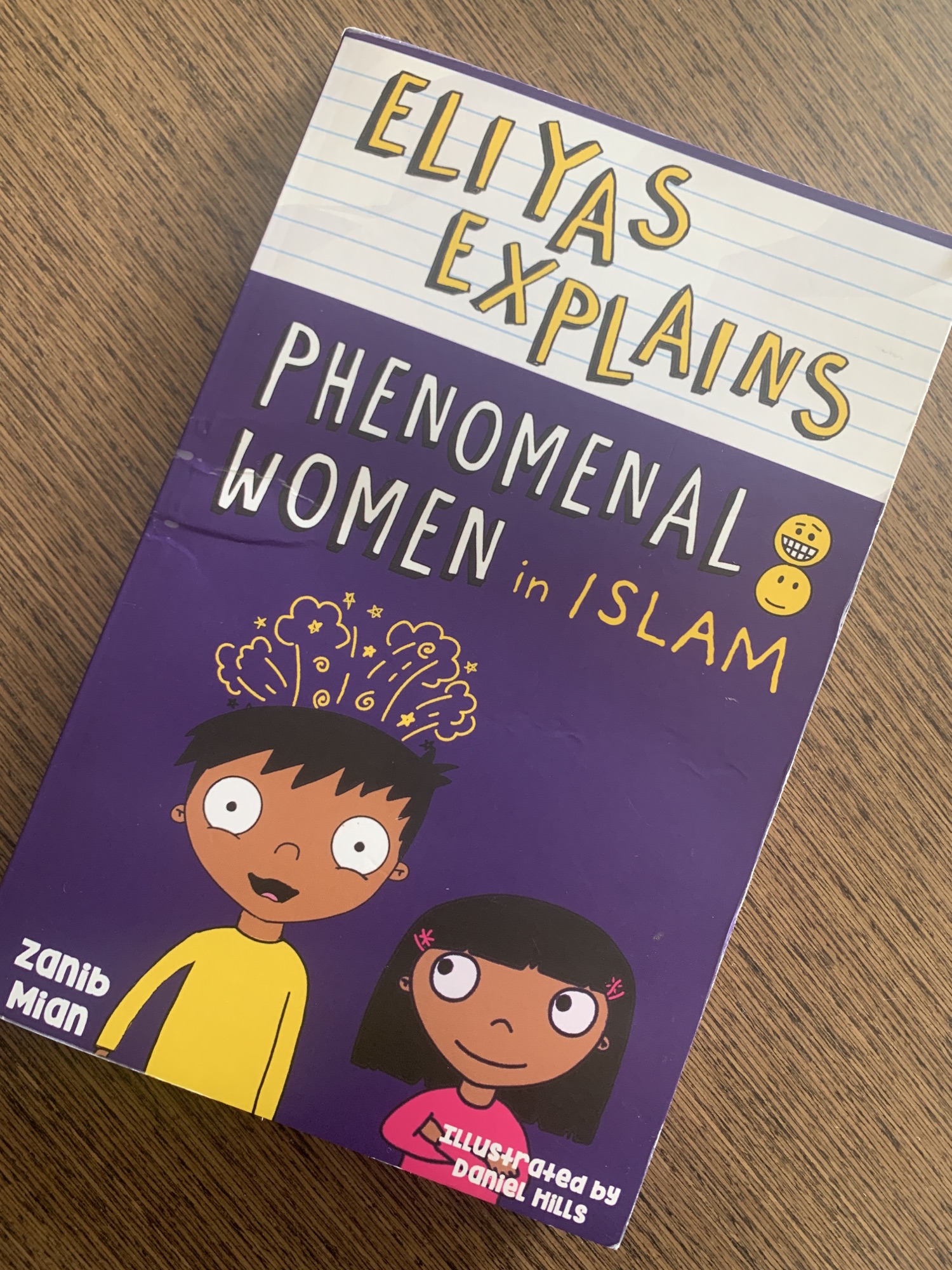
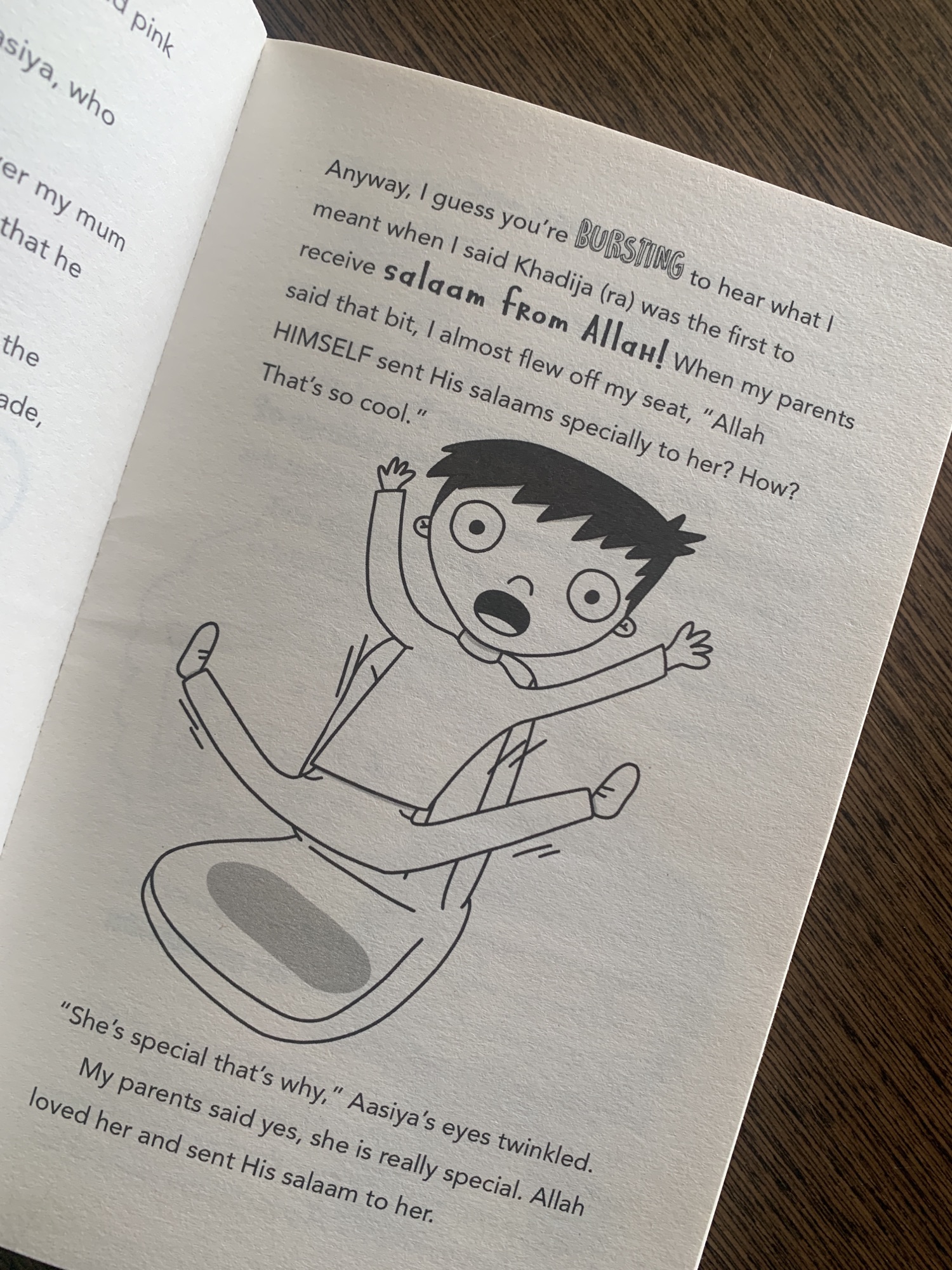
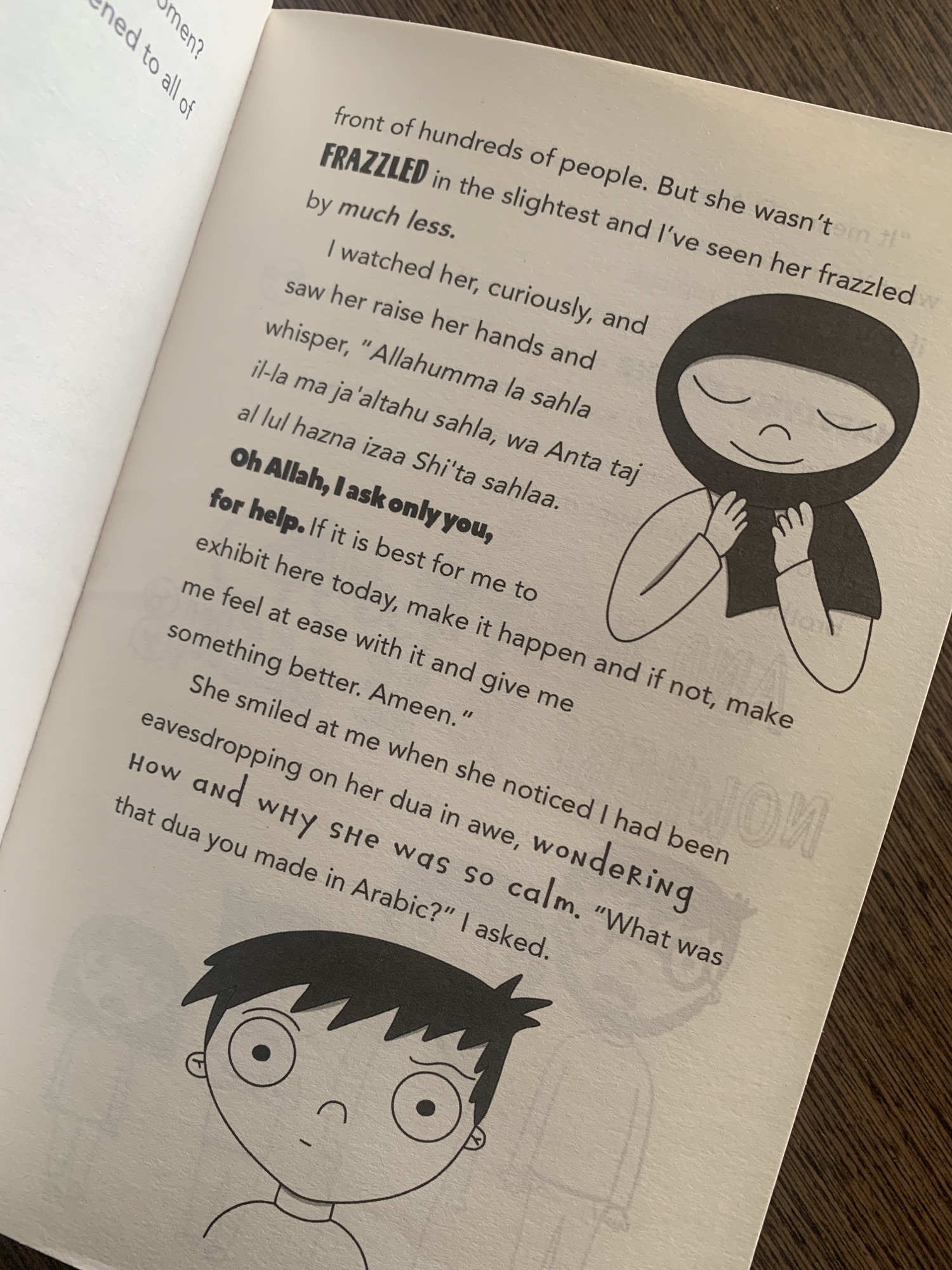
Another wonderful Eliyas Explains book that targets elementary readers with a relatable, funny, likeable voice that weaves in information, heart, faith, and humor in a way that makes them favorites at my house, even after my children have aged out of the target demographic. I particularly enjoyed this 106 page focus on women in Islam, because like the others in the series it is sourced, illustrated, and engaging, but I felt the cover story linking the facts was also compelling. I genuinely didn’t know what the family was going to do about the expo mix-up, and was invested in not just the Islamic role-modeling of how the family would handle the set back, and what historical woman it would be connected to, but also what they were going to do with all the Qur’an Match games, and I assure you, I didn’t see the resolution coming, or the twists that followed.  I always appreciate that the author’s books don’t talk down to the readers and with the information contained, I think both children hearing the stories for the first time or those that know them well, benefit.  The way they are presented serves as a reminder for some or a tease for others to go learn more.  Alhumdulillah for this series and this book that highlights Khadija (ra), Fatima (ra), Aisha (ra), Maryam (as), Hajar (as), and Aasiya. As prices for goods continue to soar, this reasonably priced book should be an auto buy for us all.

SYNOPSIS:

Eliyas and his family are heading to an expo to set up their booth and help their Mum sell her Qur’an Match game.  Mum is a little nervous and the road trip is the perfect setting to talk about phenomenal women in Islam to give her confidence and the kids some teachable moments.  The kids are wowed by the business savvy and status of Khadija bint Khuwaylid (ra), and they want to hear about the other  women promised jannah.  Little sister Aasiya is particularly interested in who she was named after.  Once they get to the expo though, things are not as expected.  The organizers have no record of the stall reservation, tickets are sold out, and Yusuf goes missing.  Alhumdulillah, Mum stays level headed and the family trusts Allah swt to provide them with something better.  The remainder of the book is the family taking what comes at them and making the best of each situation as they make their way home, share more stories, and enjoy each adventure as it comes.

WHY I LIKE IT:
I love the subject and how it is presented.  I always appreciate the sourcing given at the beginning so that the stress of accuracy is abated. The writing quality allows you to be sitting right there with Eliyas in the car taking it all in.  I know that many Eliyas books have workbook style prompts at the end, but I was glad this particular one is just a straight story read.  The illustrations as always are comical, and I can’t wait to see what is up next in the series.

FLAGS:

None

TOOLS FOR LEADING THE DISUSSION:

My kids read it and we talked and laughed, and I recommend it and the whole series for 2nd-4th grade classrooms to have for kids to read, enjoy and learn from, alhumdulillah.
The Thirty Before Thirty List by Tasneem Abdur-Rashid

Standard
The Thirty Before Thirty List by Tasneem Abdur-Rashid

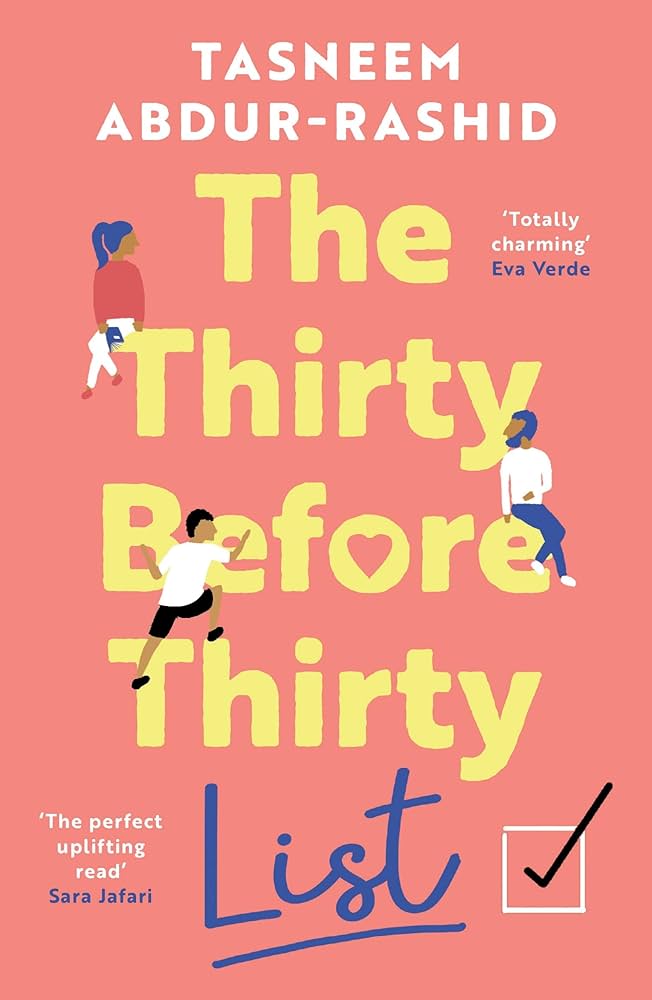
This is the second book I’ve read by the author and while I didn’t do a full review of the first (Finding Mr Perfectly Fine), I am going to do a full review of this one, because the book might not be “halal, halal” or intentionally Islam centered, but with a robust Muslim cast it stays impressively clean and there is a lot of Islam present.  I’m glad I bought a physical copy so my nieces or my daughter can pick it up and enjoy Rana’s growth and antics.  The book is nearly 400 pages long, but they fly by, and if you are 16 and up looking for a rom com style escape book this will fit the bill.  The only thing that really gave me pause is an early label the protagonist slaps on her self as “not being a devout Muslim.”  I get the point is to not let the stereotype of an arranged marriage and strict brown parents overshadow the initial impression of the book, but the author is a better writer than that early statement indicates.  As the story progresses you see her Islam IS very much part of her identity, her environment, her outlook, and the author shows it in relatable nuanced ways that the early “telling” was not needed.  Yes, the book has the protagonist and a different boy or two alone at times, and there is some hand holding and a few hugs, but the intention is always to find a spouse, and religious lines are usually clearly on the character’s radar.  There is some talk about mortgages, and a side Muslim character that has a girlfriend he keeps secret as they go on holiday together, but again, nothing obscene, or defensive, just realistic actions from contemporary characters viewing things their own way and doing the best they can.

SYNOPSIS:

Maya’s life is pretty predictable, she lives at home, goes to work, hangs out with her childhood friend on the weekend, and dodges any attempts to be set up for marriage.  Then one day on the tube a mysterious stranger, Noah, his leather bound notebook, and everyone else in her life moving forward, prompts her to open the notebook and copy his 30 before 30 list.  Adapting what doesn’t make sense at all for her life, she never peeks ahead, but rather takes one adventure at a time.  When people from different circles in her life start interacting, and Noah reenters her life, Maya will have decisions to make and a new list to commit to, her own.

WHY I LIKE IT:

I needed a diversion, I was going to be spending a few consecutive days in waiting rooms at hospitals and knew I’d need something light, easy to read, pause, and return to, and something to make me smile.  Maya is likeable, and her family and friends relatable.  Her Bangladeshi and British culture add depth and I was genuinely surprised and appreciative with how much Islam managed to find its way in to the plot and character arcs.

FLAGS:

Relationships outside of marriage, nude model, lying, hugs, hand holding.

TOOLS FOR LEADING THE DISCUSSION:

This would make a great adult, college, or even 12th grade book club selection, for just a fun book to laugh about and enjoy with friends.  It isn’t that deep, but there are threads that will hit, and to chat about it will bring friends closer together.

Growing Giddo’s Hair by Sumayyah Hussein illustrated by Milton Bazerque

Standard
Growing Giddo’s Hair by Sumayyah Hussein illustrated by Milton Bazerque

The latest batch of Ruqaya’s Bookshelf books have arrived at my house, and this was the first book my youngest picked to have read to him.  The book is silly, over the top and an easy read. The little boy shows initiative and creativity in trying to surprise his grandfather by sneakily applying hair regrowing serum on his Gido’s bald head.  It, as expected, causes a bit of mayhem, but I think 4-8 year olds will recognize the comedic intent of it all, as the love Nuh has for his Gido comes through the silliness.  I was a little surprised that it centered a birthday, it isn’t just the setting, it is the  main foundation of the book, and I was also a little surprised that the Muslim authored, Muslim published book, contained no Islam in the text.  The only featured Islam was the mom in hijab in the illustrations.

The book starts with Nuh trying to figure out what to get for his grandfather who is turning 70 in a week.  He contemplates a 70 layer cake with candles, 70 pairs of shoes, even a 70 flower bouquet, but nothing seems right until he stumbles on a picture of his grandfather years ago, when he had hair!  Later that night he sees a TV commercial for hair growth gel, and Nuh knows just what to get and can’t wait for the surprise.  Once it arrives, the biggest obstacle is getting it on Gido’s head without him noticing.  But Gido doesn’t stay still and the hair product has unintended results as it doesn’t just grow on one’s head.

The book in all its silliness, does offer a few “teachable moments” if desired: false advertising, lying, sneaking your parent’s credit card, etc..  My kindergartner thought it was silly, and enjoyed the illustrations.  For the most part so did I, although, the page of the razor shaving the hair on the tongue definitely makes me squirm and my tongue itch…yeah, my son found that pretty funny as well.

More Hands by Jenny Molendyk Divleli illustrated by Ekinsu Kocaturk

Standard
More Hands by Jenny Molendyk Divleli illustrated by Ekinsu Kocaturk
img_6180-1

This 32 page picture book blends food and the concept that teamwork makes things better, when a young boy asks his grandfather why his pishmaniyah is so delicious, and Grandpa Yahya offers to share his secret ingredient. The book is a fun bedtime or story time read as the more hands needed builds and builds. As someone though who has now read the book over a dozen times, I do wish there was more backmatter. I would love a recipe for the cotton candy type sweet, maybe some history of what pishmaniyah is (I had to Google it), and how it is traditionally prepared. The text dances around the pages, and the fun illustrations will appeal to children and help explain the process. There is a “bismillah” in the book and it mentions “baraqah” on the back cover, athere are also a few hijabis in the illustrations, but the book is universal for all readers toddler and up.


The book jumps right in with Sami asking his grandfather about his pishmaniyah. It is unclear if grandpa was planning to make it, or if it was a question out of the blue, but either way, Grandpa Yahya offers to share the secret ingredient. The ingredients are pulled out, and then more hands are needed, and then more and more and more. Once the whole family, and neighbors, and their kids are all involved it is time to eat and enjoy the dessert together.


As an adult I wonder what would have happened if so many people were not available to help, and did they wash their hands, and how big is their house, but kids won’t care, kids will just think it is funny. And that is ok too, books that show family, community, and teamwork with humor are always great additions to share with our littles.

img_6185-1

Awe-Samosas! by Marzieh Abbas illustrated by Bhagya Madanasighe

Standard
Awe-Samosas! by Marzieh Abbas illustrated by Bhagya Madanasighe

img_4196-1

I was really enjoying this book about a determined young girl and her dad making samosas for friends, missing Dadijan, adapting and problem solving, an encouraging Urdu speaking parrot, a reference to Ramadan, and incredible illustrations… and then I froze.  On page 32 of the 40 page book it says the word “pepperoni” clearly affirming that the Muslim girl who’s dupatta wearing Dadijan wakes up at fajr to call her, has made pepperoni pizza samosas for her friends.  Perhaps I’m over reacting, it is one word, but I truly cannot get past it.  The first time I recall asserting myself as Muslim was in preschool making pizzas and me telling my teacher at three and half years old that I cannot eat pepperoni.  Sure as a middle aged adult, I know you can get beef or turkey or faux pepperoni, but the standard is pork, and this book does not clarify that it is not pork.  The word is intentional, the story would be exactly the same if it were just a cheesy pizza samosa, yet it articulates it as a peperoni pizza samosa. And I truly cannot fathom why.  Classrooms and libraries will shelve this book, teachers and librarians will read this book, little Muslim kids that look like Noor, are going to shrink when they get to that line: either they will question if we can have pepperoni (why else was it in Noor’s home), or have to now convince adults and classmates that the book is wrong in addition to explaining that Muslims do not eat pork, a big task for the intended audience of preschool to third grade.  If you omit that one word, the book is wonderful, layered, joyful, and a lot of fun.

Noor’s friends are coming over, two girls and a boy, for the first time and Noor wants to make samosas to eat with them.  It is too early to call Dadijaan in Pakistan, and Noor thinks she remembers how to make them.  Abbu offers to order pizza, but Noor is determined, even when she discovers they don’t have the necessary ingredients.  She puts on Dadijaan’s kitchen dupatta, and with her parrot, Mithoo, encouraging her every time she gets stuck with “Sab theek hai. Sab theek Hoga! Everything’s great, everything’s going to be okay!” Noor heads to plan B, Awe-Samosas, samosas with unique fillings.

img_4197-1

Noor gets Abbu onboard and helping and when her friends arrive, the turmeric colored pastries are ready for eating.  Some are apple-cinnamon filled, and remind Kaitlin of her grandma’s Fourth of July apple-pie, some are stuffed with honey and pistachio like baklava according to Layla, and Jonathan finds the cheesy peperoni samosa genius.  When Dadijaan sees the pictures Abbu has sent at fajr, she calls and praises Noor with the friends hoping to have another samosa party when she is visiting next.

The book concludes with Dadijaan’s Special Samosa Recipe, and a Glossary.  The book is widely available, including here on Amazon.

img_4200-1