Tag Archives: friendship

Yusuf Azeem is Not a Hero by Saadia Faruqi

Standard
Yusuf Azeem is Not a  Hero by Saadia Faruqi

yusufazeem

It is hard to believe that it has been 20 years since the tragedy of September 11, and this 368 page upper middle grades novel is very relatable to kids about to experience the anniversary and to us adults that were in high school/college when the event occurred. The book is very contemporary mentioning Covid-19 and grappling with the effects of the attacks, the war, the Patriot Act, and Islamophobia, both at the time of the terrorist attacks and now, 20 years later. The characters are unapologetically Muslim, and doctrine, practice, culture, and rebellion are all included in a book that takes a bit of time to get going, but then holds you close and makes the characters feel like old friends who sat around the table telling you their story. The middle school characters present in a lot of shades of gray as they learn about themselves, their place, and begin to understand those around them. There isn’t really a lot of resolution in the book, it is more a snap shot of life and the stresses that Muslim communities in the US feel and have felt for the last two decades. Possible concerns: a group of Muslim kids dress as Santa Clause as they sneak out to trick-or-treat, the kids discuss eating halal or not and just not telling their parents as well as discussing the requirements and purpose of hijab, an Uncle has a girlfriend and is off to meet her parents, and a Muslim boy wears an earring. All pretty tame, and really pretty judgement free, alhumdulillah.

SYNOPSIS:

Yusuf Azeem is excited to be starting middle school, but when he swings open his brand new locker and finds a note saying, “You suck,” he is rattled. Surely the note was not meant for him, he doesn’t have any enemies. He is the son of the beloved owner of the local dollar store in tiny Frey, Texas. He loves robotics and dreams of being on the middle school robotics team and winning the Texas Robotics Competition. But the next day there is a note again. Best friend Danial is convinced middle school is going to be awful, but ever optimistic Yusuf is not ready to concede, although he really doesn’t want to be a hero either. However, with the 20th anniversary of September 11th approaching, and the appearance of a group calling themselves The Patriot Sons, life is getting very tense for the Muslim families, and their friends, in this small Southern Town.

Yusuf and his friends gather at robotics club and at the Mosque the parents are building themselves. They sort through their differences, they work on their friendships and they start to find their own thoughts and opinions. Along the way Yusuf is given his uncle’s diary that was written during the 9/11 attacks and the first hand account allows Yusuf to broaden his view of this historical event, combined with him understanding his Sunday school lessons and seeing himself and others bullied, really forces Yusuf to decide who he wants to be, and if in fact he can avoid being a hero.

On the surface there is discussion of xenophobia, being a Muslim in America, and interfaith cooperation, but there is also some very frightening and real-life based inspiration of vandalism, and imprisonment of a child that play heavily on the storyline.

WHY I LIKE IT:

I love the relationship of Yusuf and his much younger sister. She is in awe of her big brother, and he is absolutely adorable with her, whether it is babysitting her dollies or programming her unicorn games, it is precious. I also love the diversity within the Muslim families in Frey. There are hijabis and non hijabis, halal only and eat outside meat folk, there are very chill and very nosey aunties, but they all stick together, there aren’t that many of them and I love it. Similarly, the non Muslim side characters also are not a monolith, they grow and change and have their own lines that need to be drawn within families. The town rallies and the robot thread is strong, but I didn’t feel like the book had a storyline and plot and resolution, it just kind of shows the characters, and gives a glimpse in to their lives, so I was left with a lot of questions: how was the little sister’s health, what happened to the Patriot Sons, did the mayor finally stand up to them, did the uncle get married, where was Cameron’s mom, did Jared’s mom stay home or did she just get a leave for Thanksgiving, did Jared’s grandma ever get involved?

The character I struggled the most with was the mom. She is an American born daughter of immigrants, she lived through the attacks in America, she is competent and articulate, but I feel like she doesn’t quite radiate the strength I wanted her to have. I wanted to love her, and I wanted to be inspired by her and her frustrations, but she seemed to just fade in most instances. The dad is a bit underdeveloped too, he has a shop, but few customers, I’m kind of worried about the financial security of the family, and then takes weird gifts to the neighboring church on Christmas Eve.

I didn’t understand why so many people didn’t want to talk about their 9/11 experience. I get that everyone deals and views things differently, but I have never really found people hesitant to talk about the attacks and the aftermath. I was at the University of Utah studying Mass Communication on that day, I’ve interviewed a lot of people over the years regarding what they experienced, and talked to my kids and had others talk to my kids, no one has ever once shown hesitancy, so I initially struggled with the premise that Yusuf didn’t know what he wasn’t supposed to forget and why his family kept trying to avoid talking about the changes of life before and life after.

The book does a good job of articulating how painful the loss of life was for all of humanity and showing that Muslims were both grieving the deaths and destruction, while also having to defend their separation from those that committed the atrocities.

I do love that Sunday school lessons, and elder advice, and khutbahs are a part of the tools given to Yusuf to sort through his world and decision making processes. I like that he pushes back and doesn’t just accept everything thrown at him. Even the nosey harsh aunties he finds connection with and tries to see their experiences, it really is impressive.

FLAGS:

It talks about the death tolls and the gut wrenching loss of life. There is also bullying, and false imprisonment, and a crime with a gun that is mentioned. There is a hijab pulled off, vandalism of a Muslim owned store, there are threats and pushing. Yusuf’s uncle is out of town and his mom and grandma are bickering that he is meeting his girlfriend’s parents, so it isn’t clear if it is all arranged, or everyone is on board or if it is something more or less than what it is. Cameron has an earring. Danial doesn’t eat outside meat, but really wants too. The kids don’t lie necessarily, but they sneak out in Santa Clause costumes to trick or treat on Halloween after commenting that they shouldn’t and don’t celebrate the holiday. Yusuf’s dad knows Christmas carols and discusses his favorites at interfaith exchanges, the highly religious, “Silent Night” is among them. A cat also goes missing, an incident from the diary, and then is placed on the doorstep dead.

TOOLS FOR LEADING THE DISCUSSION:

I think, like with other 9/11 books I’ve done as book club selections, just sharing my experience and asking any other teachers to chime in with theirs is enough to take fiction out from the pages and make it real for the kids. They then ask questions, connect it to the text and to their history lessons and the story resonates with the historical event. I think this book could work for a middle school book club and provide a lot, aside from the Islamophobia to discuss, I think it would in fact be a great book to start the school year off with to get to know the kids and how they view the world.

A Sweet Meeting on Mimouna Night by Allison Ofanansky illustrated by Rotem Teplow

Standard
A Sweet Meeting on Mimouna Night by Allison Ofanansky illustrated by Rotem Teplow

img_0532

A story about the Morrocan Jewish holiday, Mimouna, that marks the end of Passover introduces readers to a small but growing Jewish celebration from Northern Africa.  Stemming from the historical fact of Jews often borrowing flour from their Muslim neighbors to make the traditional Maufletot, thin pancakes, after a week of not eating flour.  The story focuses on a Jewish girl and a Muslim girl meeting each other, celebrating with each other, and finding similarities between Ramadan and Mimouna.  Over 36 pages, kindergarten to second grade readers will get an introduction to two different faith holidays and see that friendship and kindness are possible everywhere.

img_0526

It is the last day of Passover in Fes and Miriam is tired of eating quickly baked unleavened matzah crackers, she is ready for the sweet dough pancakes of Mimouna, and she is willing to help her mom make them.  But before Passover, all flour was removed from the home, and she asks her mother where they can get flour tonight before the  party.

Mom and Miriam begin to walk.  They leave the part of town that Miriam is familiar with and Miriam sees a building with a dome and minarets.  “What is that?” she asks.  Her mother replies, “It is a mosque, where our Muslim neighbors pray.”

img_0529

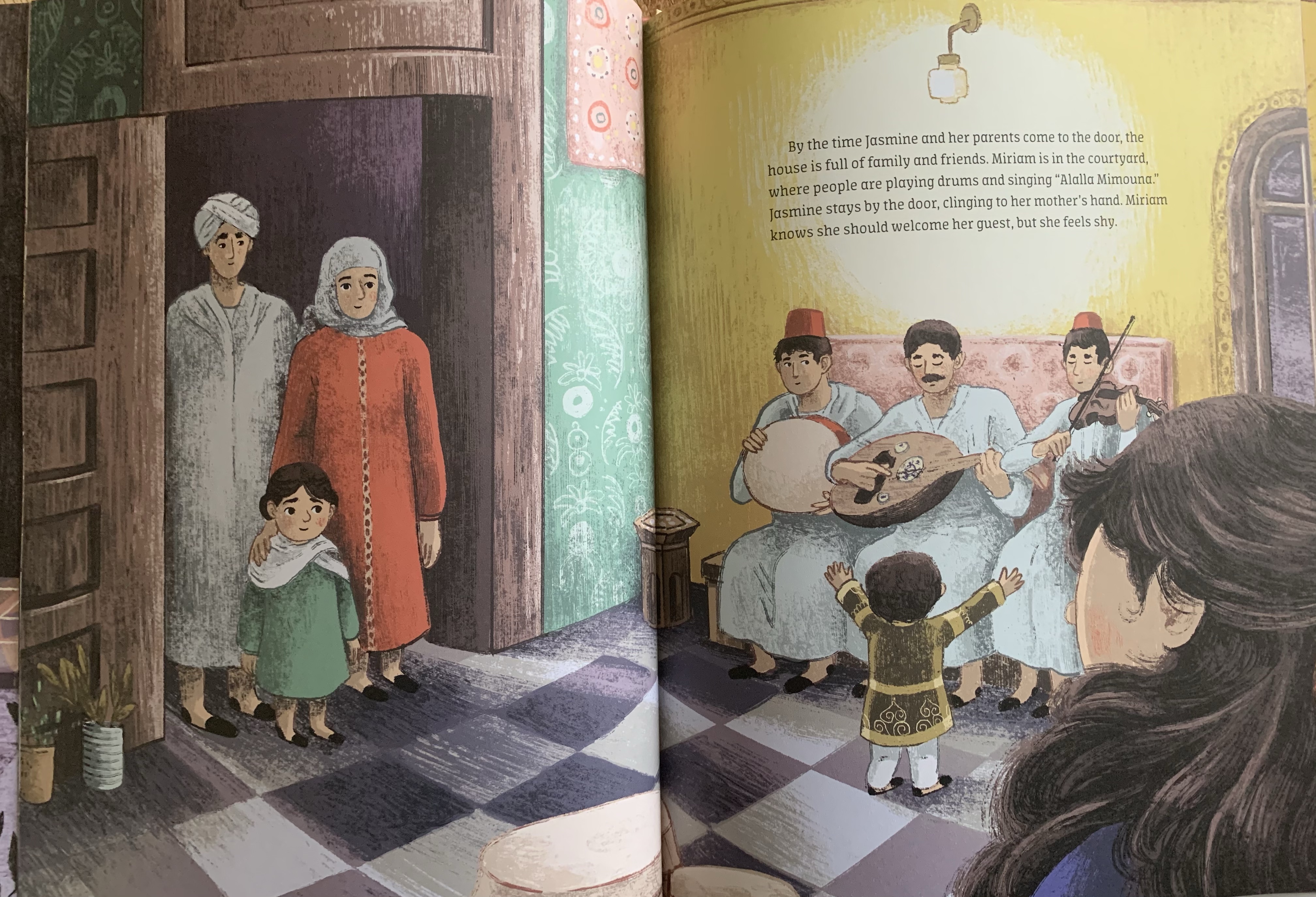
They then enter a courtyard where a woman and her daughter about the same age as Miriam appear and invite them in for tea.  The two women say salaam and kiss each other’s cheeks.  Miriam’s mom gives the other lady a jar of fig jam and invites her and her family to come to the house to celebrate Mimouna with them. When the women are done drinking tea, Jasmine is asked to go to the store room for two bags of flour and Miriam is sent to help.  Jasmine is told one bag is for them, and one is for their guests.  The two shy girls go get the flour, and when Miriam trips, Jasmine catches the bag just in time.

img_0525

On the way home, Miriam has so many questions about the lady and how her mother knows her and how come they don’t have a jasmine vine. But, when they get home there is a lot of work to be done before the guests start to arrive.

By the time Jasmine and her parents come the house is full and music is being played and songs are being song.  The first plate of maufletot goes to Miriam’s grandfather, and when she trips and they go flying it is Jasmine who catches them.  The girls giggle and Miriam teaches Jasmine to play the song, “Alalla Mimouna” on her tambourine.

img_0524

The party moves from house to house and at one home green wheat is dipped in milk and sprinkled over everyone’s head as a blessing for the upcoming year.  By the time the girls get back home they are tired, and as they share one last pancake, Jasmine tells Miriam about the nightly feasts of Ramadan after a day of fasting.  She invites Miriam to join them, and Mariam is excited, but Mariam’s mom explains that they are moving to Jerusalem.

img_0527

The following year on Mimouna Night, Mariam heads to the store to buy flour, but thinks of her friend Jasmine back in Morocco as she smells the jasmine growing in her home, and wonders if her friend is also thinking about her.

img_0528

The author is an Amerian Israeli, and I was nervous that there would be political overtones, but she deliberately wanted to avoid that and focus instead on presenting this little known Jewish holiday in an interfaith manner.  There is an info section at the end of the book explaining Mimouna and a recipe for moufletot.  In author interviews you can read more about how the story came to be, and what her hopes were in telling it: https://jewishbooksforkids.com/2021/03/14/interview-with-allison-ofanansky-author-of-a-sweet-meeting-on-mimouna-night/

World in Between: Based on a True Refugee Story by Kenan Trebinčević and Susan Shapiro

Standard

world in between

I’ve read a lot of refugee stories over the years about people leaving a variety of countries, and while each one, no matter the quality of writing, is heartbreaking and important, this middle grades 384 page historical fiction/ fictionalized biography account stands out because it is written so incredibly well.  The story shows young Kenan’s life before the Balkan War in Bosnia, a year of the war, life in Vienna, and then in the USA.  The book is personable, relatable, and informative.  I had a very hard time putting it down despite knowing that the main character, the author, obviously survived; as the story is engaging and powerful and doesn’t rely on the horrific war to carry the character building and story arcs alone.  The character identifies as Muslim, but doesn’t actively practice or know much about Islam, sports and art are highlighted as universal activities that bridge cultures, language, and foster respect.  The book mentions drinking, kissing, hints at a crush, and features bullying, death, killing, and torture.  Suitable for mature fourth graders and up.

SYNOPSIS:

Kenan has a good life in Brčko, Yugoslavia, he is good at soccer, is an amazing artist, has a bunch of friends, a teacher he likes, loving extended family, his father owns a popular gym, and his mom is an office manager, sure his older brother picks on him sometimes and he gets called, “Bugs Bunny” because of his large protruding teeth, but when it all comes crashing down because of his religion, he is at a loss as to why it suddenly matters.  While neighbors and classmates start sneaking off in the night fearing that the Serbs are going to kill all the Muslims and Catholics, Kenan’s dad holds out hope that he is well loved by everyone at his gym, no matter their religion.  But the family waits too long to leave, and friends, neighbors, classmates, and teachers quickly turn in to enemies.  Kenan’s buddies threaten and abuse him, his favorite teacher holds him at gun point, and neighbors shoot holes in their water cans.  The family ultimately has to hunker down in their apartment without much water, food, and electricity.  They get to Kenan’s aunt’s house in a safe zone, but the men have to register and his father and brother are taken to a concentration camp.  Somehow they get released, but the family’s troubles are just beginning.  Along the way they will be betrayed by people they thought they could trust and helped by people that they thought hated them- no matter the country, no matter people’s religion.  The family will get to Austria and to Kenan’s uncle, but even being away from war doesn’t give them peace.  They don’t speak the language, they can’t work, they must take charity.  Eventually they find themselves in Connecticut, and while some American’s make their difficult lives even worse, some prove to be absolute angels to a family that is trying to make a life in a new country while the war wages on back home.

WHY I LIKE IT:

I love that stories about the Balkan War are becoming more and more available, it is long overdue, and I’m glad that through literature, authentic voices are keeping the memory of the horrific acts from being forgotten.  The story is compelling, a few threads I wanted resolved that weren’t (more information on his grandma, his uncle in Vienna, his aunt that they left behind), but the narrative is rich and does a great job staying relevant to its target audience and not overwhelming the reader with politics or sensationalized emotions.  The rawness of the experience being processed by the 11 year old protagonist is impactful enough and doesn’t need to be exaggerated.  The book is not depressing, in fact there is a lot of joy and hope and kindness.  

I love that Kenan acknowledges that he has been to the mosque once with his uncle, that they don’t fast in Ramadan, but they do celebrate Eid.  It hints that at times they may drink, but they are good about not eating pork, although they eat jell-o. In shop class in the United States his first project is a replica of the mosque in their neighborhood.  Their names are known to be Muslim in Bosnia, and that is enough for them to endure the ethnic cleansing, belief or adherence, is not a factor.

I love that sports and art are universal.  Math is too, but Kenan isn’t good at math.  He wins accolades in each country for his drawings, and gets respect from classmates for his athletic ability.  Not speaking the language is hard, but being able to prove yourself in other ways is a salvation for Kenan.  He is on teams, he goes to the World Cup, he gets in fights, he is honored in the newspaper.  Life in general grounds him, yet soccer and drawing give him a release to excel in.

I love the diversity of everyone in each country.  Heroes are seen in immigrants, minorities, Americans, a Methodist preacher, an Israeli bus driver, a Serb bus driver, a Serb soldier and his family, a .  There are awful immigrants, and white Americans, and Serbs- it really shows that some people are just good and kind, and some people are not, it isn’t linked to any faith or country or culture or neighborhood or skin tone.  I was surprised that at no point were their other Muslims.   We got to know so many wonderful Bosnians in the 90s as our family helped them get settled, that I was really hoping there would be some in Connecticut working with the churches that helped settle Kenan and his family.  That isn’t a critique of the book, though, just my disappointment in my fellow Muslim-Americans for not stepping up enough in real life to make the literary cut, I suppose.

FLAGS:

Violence, torture, death, bullying, killing, shooting, hints at sexual assault, physical assault, ethnic cleansing, genocide, war.  It mentions that Kenan’s brother got to kiss a girl and have a drink, but nothing more detailed than that.  Kenan has a crush on a girl, but it manifests periodically as him just wondering if she survived and is ok.

TOOLS FOR LEADING THE DISCUSSION:

This book is on a short list for me to use next year for middle school book club.  It is a little below grade level for my group, but book club is supposed to be fun and not a burden, so I think it will be perfect.  The kids are going to absolutely love Kenan.  He is so relatable and personable, that I don’t think any supplemental questions or discussion points will be needed.  Kids will have lots of thoughts about Islam in Bosnia, friends turn enemies, restarting in new countries again and again, anger at people that didn’t step up, glee when people did, jealousy when he gets to go to a World Cup game, and hopefully empathy for so many who’s world changed so quickly.  The biggest takeaways will be how it didn’t take much to help, and I hope all readers will recognize that we can be kind and we can help and we can respect and care enough to truly help others.  

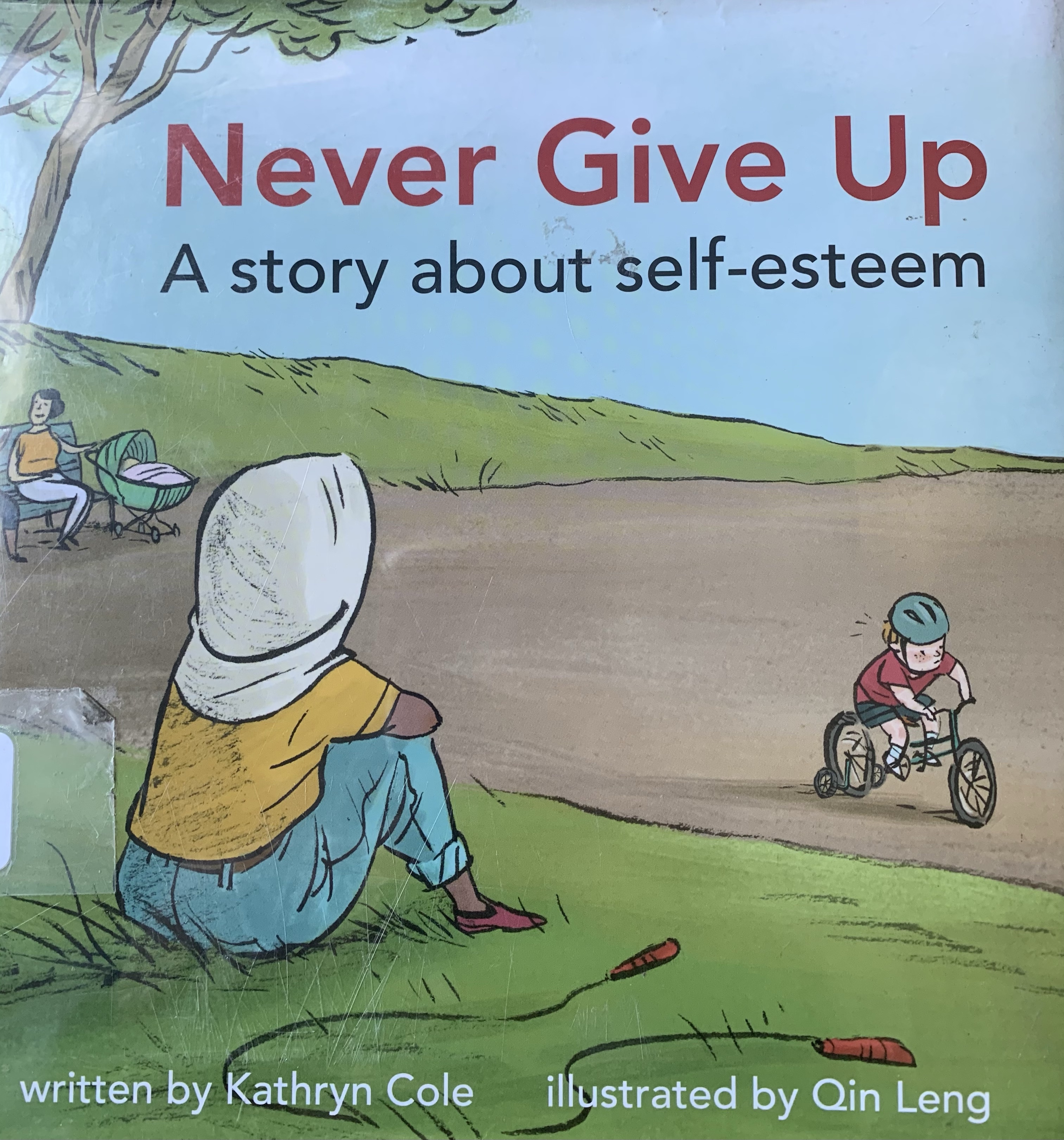
Never Give Up: A Story about Self-Esteem by Kathryn Cole illustrated by Qin Leng

Standard
Never Give Up: A Story about Self-Esteem by Kathryn Cole illustrated by Qin Leng

img_9838

This first through third grade teaching series highlights different life lessons and concepts and features diverse characters. I reviewed a book in the series earlier with a Muslim character, not realizing that there was also one with Nadia in the lead. The 24 pages show her in hijab both at the park and at home although she wears short sleeves and is much younger than puberty, when covering becomes required. Neither the author, nor the illustrator seem to be Muslim, and religion is not present in the book, other than Nadia’s scarf. It is worth mentioning that Nadia crosses her fingers and makes a wish that her plan works, something most Muslims would say inshaAllah for and possibly want to be made aware of in a book like this. Overall the message is strong, and would be a great book to read and discuss with a child, Nadia and her friend Shaun have noteworthy traits that we can all learn from.

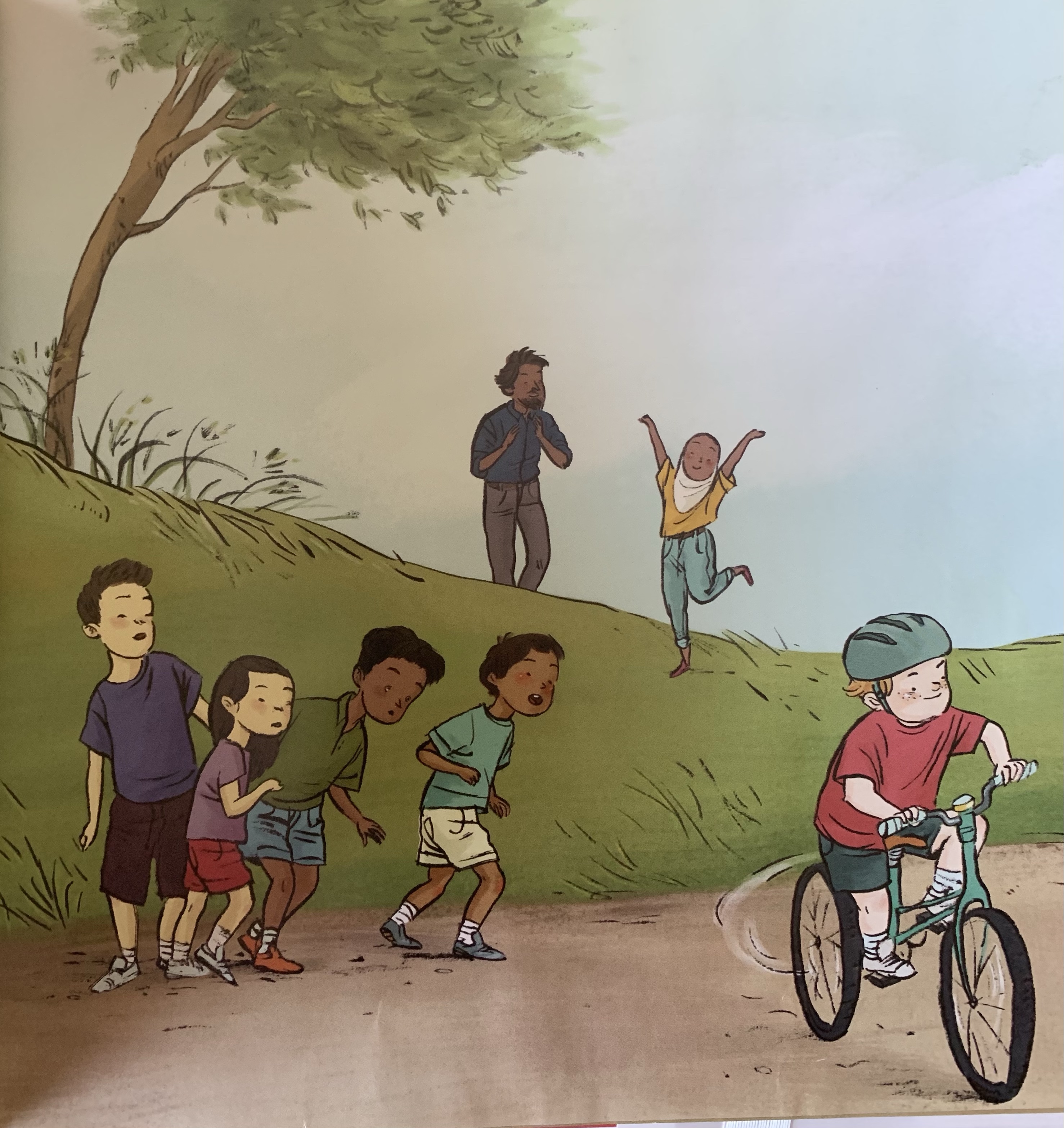
Nadia is heading to the park to practice jumping with her new rope. She stops when she sees her friend Shaun riding his bike with training wheels. She has been riding on two wheels for a while, and even on training wheels Shaun is struggling. Kamal, Joseph, Lin, and William start teasing Shaun, and Nadia is upset, but not brave enough to do anything about it.

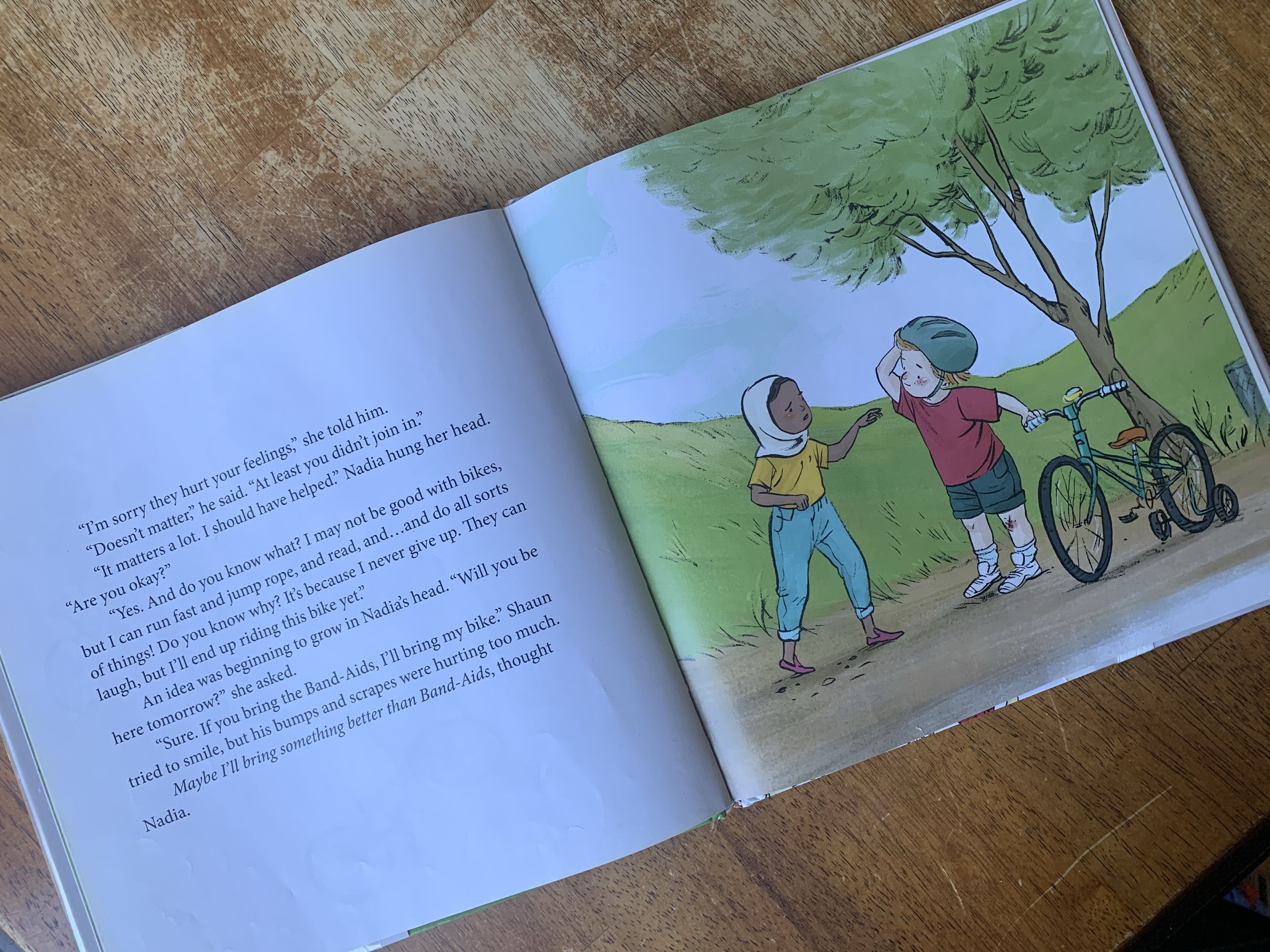
After crashing a few times, the crowd grows tired of laughing at Shaun and Nadia goes down the hill to check on him. She apologizes that the other kids were teasing him, he takes it in stride and thanks her for not joining in. He also lists off things he is good at. He is determined, and Nadia has an idea. The two agree to meet back at the park the next day.

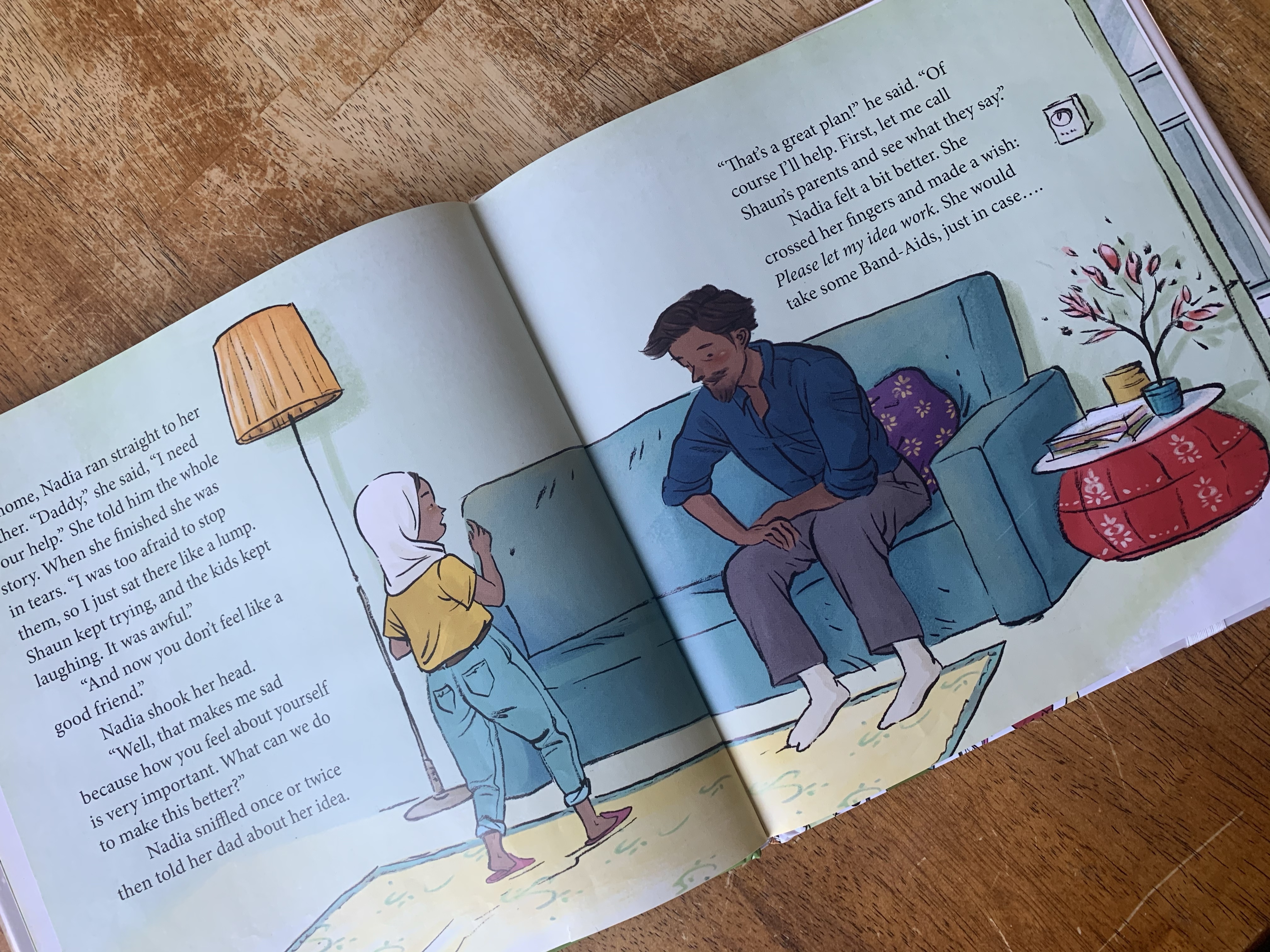
Nadia is upset when she gets home. She tells her dad the whole story and how she wishes she was a better friend. She then talks to her dad about her plan, and gets him to agree to help, her dad checks it off with Shaun’s parents and the next day they all meet at the park to take off the training wheels and teach Shaun how to ride with two wheels.

After multiple attempts and lots of cheering, Shaun is riding his two wheeler. He didn’t give up! Now it is Nadia and her dad’s turn to try jump roping, and after some struggles, it is the kids cheering on Nadia’s dad and encouraging him to try again.

The end of the book has Tips for Grown-Ups about how to develop and support children’s self-esteem.

Enduring Freedom by Jawad Arash and Trent Reedy

Standard
Enduring Freedom by Jawad Arash and Trent Reedy

enduring freedom

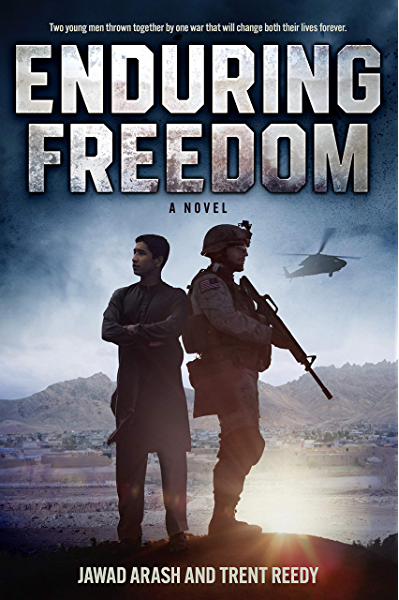
This isn’t the type of book I am naturally drawn to, and had it not been offered to me as an arc, I didn’t even request it, I probably would not have read it.  So, to say that this young adult OWN voice 246 page post 9/11 war story had a lot to overcome for me personally, is putting it mildly.  I gave in and decided to read it for the simple fact that I was curious to see what the narrative is in today’s literature, as we approach the 20 year anniversary of the attacks on US soil.  The afterward is very clear that the agenda of the two authors, one an Afghan and the other a US veteran, was to show a personal view of growth and assumptions on both sides and how the future of Afghanistan needs to be rooted in education and stability.  I think the book accomplished its goals, and made very clear how the terrorists first victims were their own people, and that extreme ideologies of the Taliban were and are still not reflective of the larger population.  The pacing of the dual narratives, however, was a bit off to me, and I really felt that some of the major plot points didn’t get explored in a meaningful way, that they were simply glossed over and brushed aside to keep the book inline with the authors’ objectives.  The book is not overly political, and the Muslim characters are religious and knowledgeable, but for a book that talked about how even in war the people, the soldiers, are the story, I wanted to see more internal wresting with choices and their outcomes, then what was offered.

SYNOPSIS:

The book is told in alternating view points, one is that of Baheer an Afghan boy living with his large extended family in Kabul next to a Taliban compound.  The family is religious, Baheer’s grandfather, Baba Jan, is well read in poetry and religious text and often quotes the Quran by ayat and surah number.  The family sells carpets, and often hides the latest movies or news recordings in the rolls, so that they can be brought home, the blackout shades pulled and the tapes enjoyed.  They are fearful of being harassed for not having long enough beards, shaved heads, turbans and the like. Baheer and his brother Rahim do not enjoy school with the strict and abusive teachers.  The talibs seem to touch them inappropriately and scold them harshly.  Their older sister is not allowed to attend school and never has even though the family used to live in Pakistan where the boys enjoyed school. It doesn’t explain why they were there or why they returned.  One uncle is assaulted by the Taliban and soon after, a news clip showing the attacks on 9/11 is secretly watched by the family.  As a result they decide to move to Farah, in Western Afghanistan where Baba Jan has family and property, to be away from the impending US attacks and Taliban assaults.

Joe Killian is the other voice.  When the book starts he is sitting in class, his senior year, when news about the attacks on the World Trade Center starts to break.  He had joined the national guard that summer for the college money, and as his classmates sit glued to the televisions in Iowa, he is nervous that he is about to be called up to war.  He doesn’t get called up that day, he graduates, and is studying journalism in college when the call finally comes.  He is preparing for combat, but when he is deployed and discovers it is a reconstruction mission he is angry and annoyed.  A year of helping what he terms barbarians, is not what he signed up for.

The majority of the book reads like a ‘day in the life’ of each of these two voices, as they adapt to life in Farah, as they deal with each other’s presence and as their friendship forces their assumptions to change.  The interactions between Joe and Baheer show the power in getting to know someone to alter perceptions, and the threat of the Taliban on both the average citizen and the US forces on the ground as a unifying enemy to allow the friendship to grow.

The book concludes when Joe’s year of deployment is up, but really the authors’ notes at the end are a better conclusion to the real life friendship and growth of the two authors that resulted in the writing of the book

WHY I LIKE IT:

I love that the family sees the planes hitting the towers and is mortified at the brazen destruction and loss of life.  They immediately start praying for the victims even as they realize they will be the recipients of the backlash. I like that it highlights where practicing Muslims and extremists differ, by having the Quran quoted and explained as opposed to the rhetoric the Taliban is spouting.  Baba Jan’s manner for speaking the ayats is a bit awkward in that most people don’t in daily conversation source and reference their dialogues, but it does grow on you.  I think the book is very simplistic in making the Taliban to unequivocally be the ‘bad guys’ without any context of how they gained traction. It talks about the Soviets, but I think it will leave the readers wondering where this group came from and why the Afghan people allowed it. Unfortunately, there are a lot of nuances and complexities that are overlooked by such a simple narrative, and allow for an inaccurate picture to be formed.

I like that Baheer pushes back on Joe who thinks America is perfect and that Afghanistan is less than, by pointing out the flaws in American society as well as his own.  I was ok with Baheer pushing the cultural limits to talk to a girl, it was innocent and I think understandable. My biggest concern is that I really felt that there needed to be more space on the page dedicated to understanding the repercussions of him being an informant to the Americans, and his brother passing on information to the Talibs.  People were taken in to custody and injured and killed as a result of these boys’ actions and to just chalk it up to something to be forgiven, was not enough for me.  I wanted them to hash it out and wallow in their choices, not forgive and move on so quickly.  I also wanted to know more about their reconstruction efforts.  It seemed rather minimal: relocating explosives, helping a burn victim, sending supplies to a school, I think in a year, that there would be more mixing with the people than the book would suggest.  And finally, I felt like the sister not getting to go to school was handled as an obligation to address, not that any insight or understanding was really given to such a hot button issue.

The book is really slow and dragging at parts, I couldn’t tell you about any of the dozen or so soldiers that are mentioned, I don’t even recall any of their names. I think the book has a lot of potential, and perhaps it does shine in showing the effects of war and terrorism on the Afghan people.  It held my attention while actively reading it, but I just as easily could have put it down and forgotten about it if I wasn’t under obligation to offer an opinion in exchange for an early copy.

FLAGS:

There is language, stereotypes, physical abuse, sexual misconduct, death, killing, violence, acts of war, bloodshed, a crush. Upper middle school and high school can handle it.

TOOLS FOR LEADING THE DISCUSSION:

I don’t think I’d select this book as a book club selection because I’m not sure what would be gained from the book.  The characters assumptions are challenged and evolve, but I think most minorities know that, getting to know someone is often the best way to have their image changed.  I think the book still functions to make Americans feel better about  invading Afghanistan, rather than have us question what the long term affects of our involvement have been.

The Girl Who Stole an Elephant by Nizrana Farook

Standard
The Girl Who Stole an Elephant by Nizrana Farook

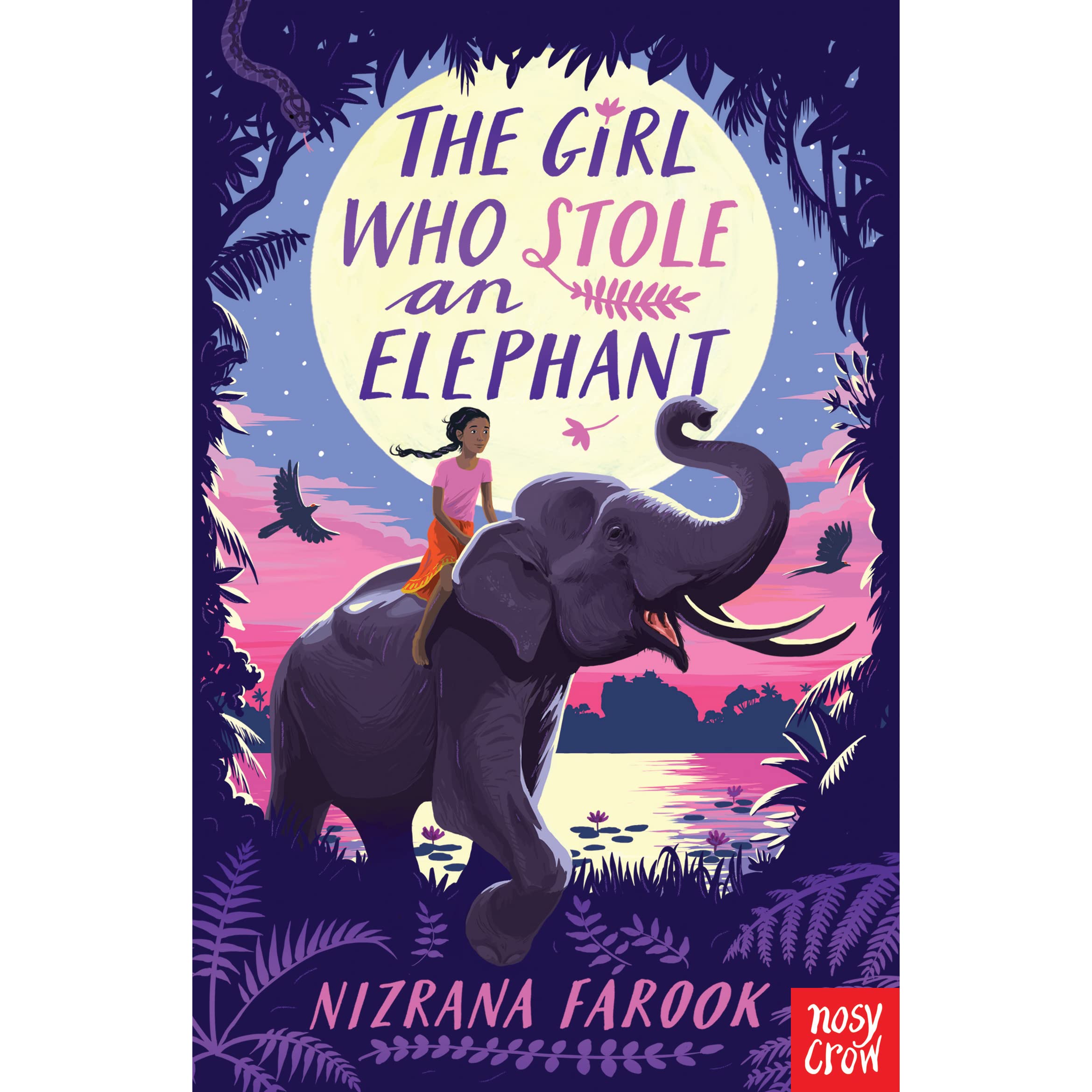
elephantI have to admit this 240 page middle grade OWN voice book had me invested and glued to the pages.  I was swept away to Sri Lanka and in disbelief at the boldness, cleverness, and spunkiness of the Robin Hood-esque 12-year-old protagonist.  I could not put it down as my head worked over time to figure out how this trio of children, one being a Muslim girl, was going to get out of the heap of trouble they had caused.  Yes, admittedly it wraps up a bit too quickly and simply, the main character Chaya doesn’t learn her lesson and is a terrible friend, and there isn’t a good moral of lying and stealing being bad.  But all that aside, the book is a fun adventure that while written pretty straightforward and clearly, is rich in adventure, culture, and excitement for second to fourth grade readers (and 40 year old moms that love strong girls).

SYNOPSIS:

Chaya is the daughter of a tribal representative, whose mother has passed away.  She goes to school, attends the temple once a week to learn Sanskrit, and at dawn is known to steal things to give to those in need.  At night time, people are on guard, expecting trouble, but dawn seems to be the perfect time to take what she needs from people that won’t even notice.  The book starts out with her stealing jewels from the Queen with the hopes of helping a friend who was bitten by a crocodile get medical help in the next town over.  The people in Sarendib have an unjust king, and stealing from his wife to help take care of people that need assistant is a job Chaya takes seriously.  Her heart is in the right place, but when a guard sees her she stops to visit a friend who works in a wood shop to hide the jewels until the heat dies down.  The box they hide the stolen goods in is purchased by a young Muslim girl, and now Chaya has to steal them back from her to get them to people that are in need.

The chain of events is just getting started, and when the jewels are discovered the wood working Neel takes the blame and is imprisoned, and the new girl in town, Nour, is determined to help free Neel from prison and save the villagers from being tormented by the royal guards.  Chaya devises a plan to free Neel from the palace dungeons, but nothing ever quite goes to plan and all the prisoners are freed.   As she runs to escape her own doom, she steals an elephant to get away, the king’s elephant.

The entire story is a series of follies and at each turn the children have really good intentions, they just keep snowballing into situations beyond their control with the stakes constantly multiplying.  I really don’t want to give it away, but they might just bring down a monarchy as they tromp through the jungle on an elephant, accidentally burn down villages, and find that even though Nour is a wealthy meat eater, they can in fact be friends.

WHY I LIKE IT:

I love that the story is outrageous, yet grounded.  I was sucked in from the first few short chapters and didn’t look back.  Chaya is oh so plucky and her fallibility and flaws make her so endearing.  She is a bit of a mean girl to Nour, but I think she shows growth.  The slight raised eyebrow regarding her, is that she didn’t learn some grand lesson, and in fact is possibly emboldened by her thieving and getting away with it.  There probably should have been some humbling at the end, but she is bold and outspoken, and not one for regrets.  I absolutely love the letter she left her father owning up to her role in the whole hullaballoo, and as an afterthought acknowledging that she skipped two days of school.  She is a cheeky one, but her heart is huge and she has her own sense of integrity that is unwavering.

I like that Nour is acknowledged as being Muslim, eating meat, and going to mosques before she moved.  It doesn’t articulate that Chaya doesn’t like her for her faith, but it isn’t helping the two girls befriend each other either.  I love the elephant, and the plants, and fruits, and animals that bring the story to life.

FLAGS:

Lying and stealing. Some destruction of property.

TOOLS FOR LEADING THE DISCUSSION:

I can’t see me doing this as a book club selection, it is just too young of a target audience, but it would be a blast to read aloud to a second or third grade class, or to assign in a classroom setting.  The chapters are really short that early chapter readers will feel accomplished when they complete the book, and the subject matter will compel them to keep turning the pages to find out what happens next.

Piece by Piece: The Story of Nisrin’s Hijab by Priya Huq

Standard
Piece by Piece: The Story of Nisrin’s Hijab by Priya Huq

piece by

At 224 pages, this graphic novel tells an important OWN voice story in beautiful and powerful illustrations, but despite reading it multiple times, I ultimately found the pacing off, the narrative and plot holes quite large, and the conclusion too forced.  It claims to be for middle grades which would explain the happy ending, but the assault, trauma, mental health, Bengali history, language, and protagonists age (13), make it more suited for upper middle school readers.  I read a digital ARC in predominately black and white images, so I’m hopeful that part of the problem is on me, and that I simply missed or misunderstood parts that seemed to jump around and assume, or that because it was an uncorrected proof, some revisions are still to come.

piece by1

SYNOPSIS:

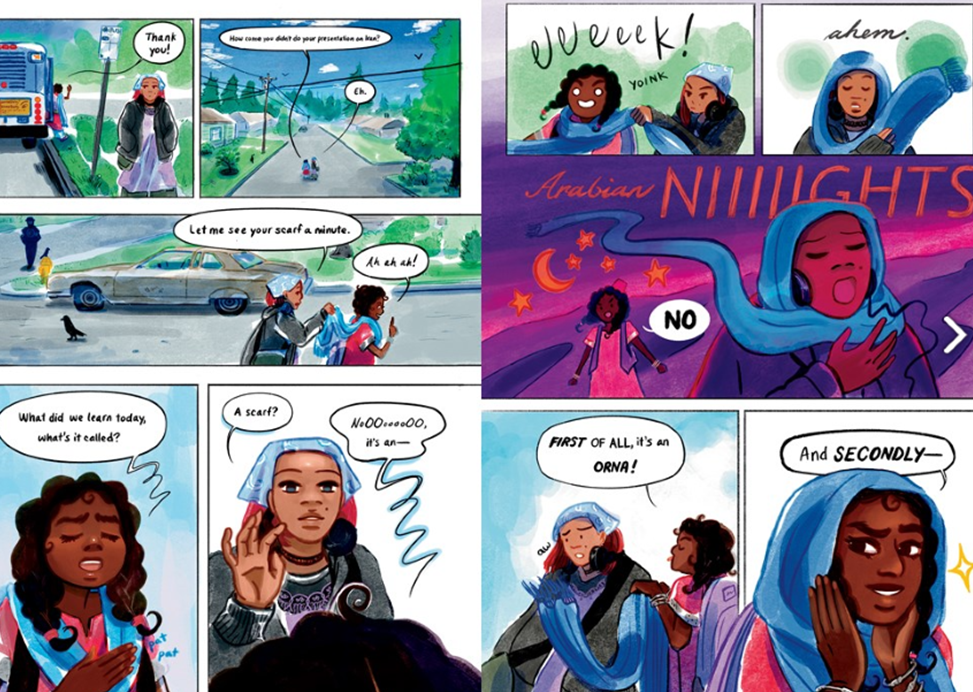
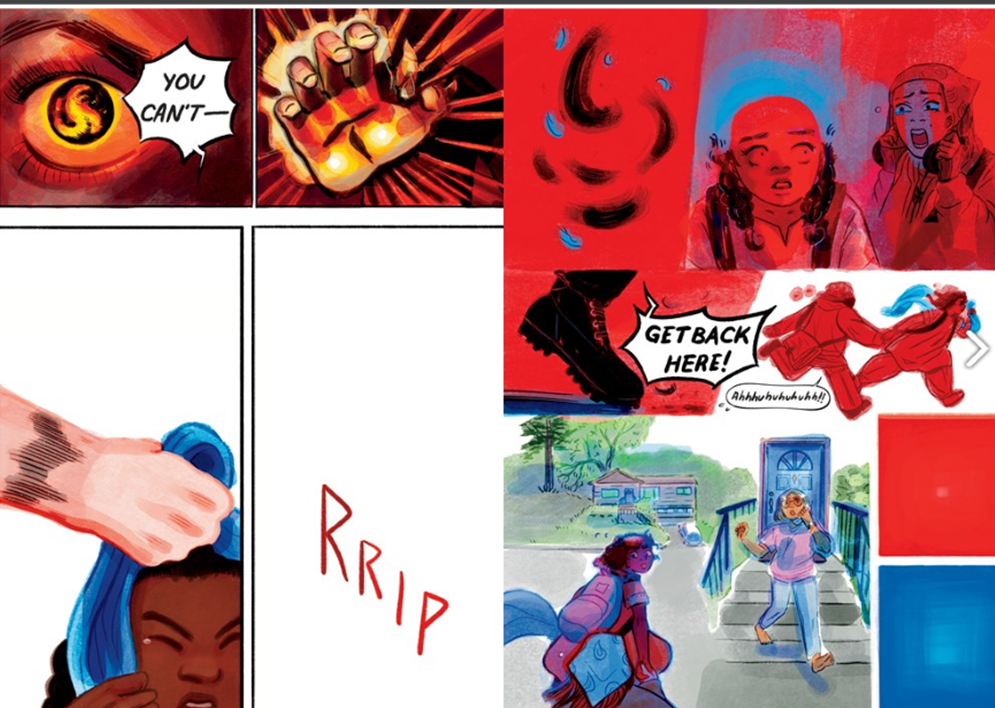
Nisrin is 13 and lives in Oregon with her mother, and maternal grandparents.  Her mom travels a lot and she seems to spend most of her time with her loving Nani, grandmother.  The story opens with Nisrin in 8th grade giving a presentation about her Bangladeshi heritage to her school.  On the way home with a friend, Firuzeh, she is still wearing the cultural clothing and they are playing around with the scarf, when they are violently attacked and the scarf is ripped off of Nisrin’s head.  Her hair is pulled out in the process and the two girls are taken to the hospital and when released maintain professional counseling to process and deal with the assault.  Nisrin fears leaving her house and is increasingly isolated within her home.

pice by 2

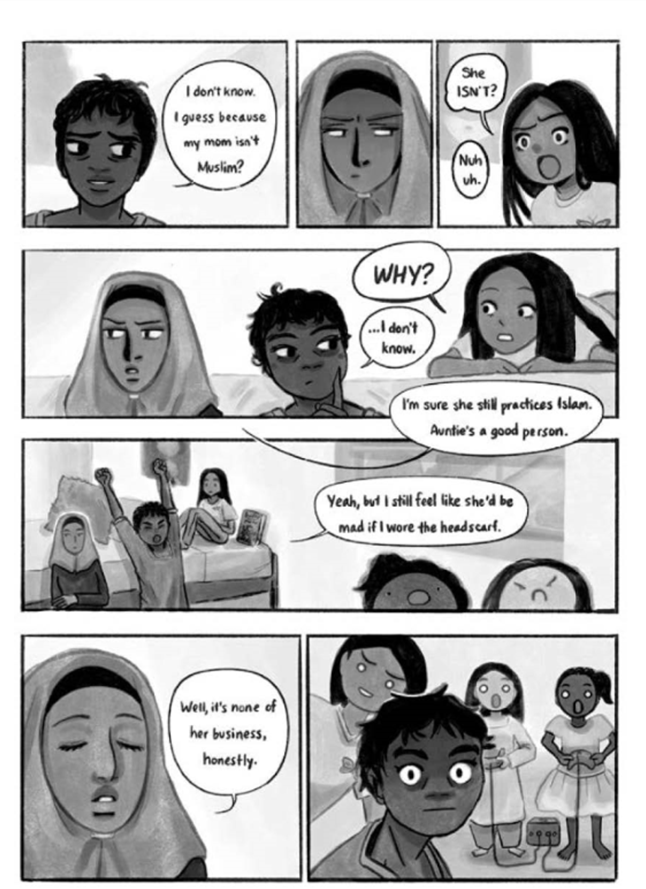
Over the summer we see her and her Nani go over to some cousin’s house where Nasrin is gawked at with her short hair and everyone is unsure how to act around her.  She joins some cousins playing video games where she asks about a cousin in hijab who says that it is essentially her choice between her and Allah (swt), that it isn’t any one else’s business.  A younger cousin tells that she plans to start hijab soon and is surprised to learn that Nisrin’s mom is not Muslim.

As summer comes to an end, Nisrin will be starting high school and exits her room the night before wearing a hijab, or in Bengali, an orna.  Her family freaks out, her Nana, maternal grandfather, is furious claiming that she should have been raised better, and Nisrin is scooted off to her room by her Nani, so that her mom and grandfather can argue.

piece by 3

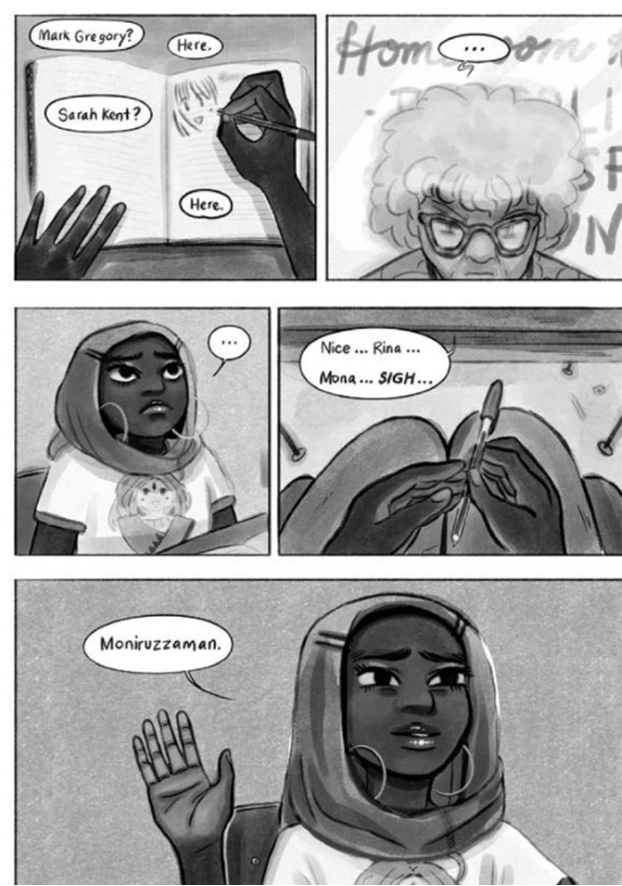
On the first day of school, Nisrin tries to talk to Firuzeh, but once again things are awkward between the two girls.  A teacher refuses to try and say Nisrin’s name and becomes angry and aggressive, and at PE she is called a slut and asked if she will be beat for showing her legs.  Nisrin goes home to research Islam and hijab, but everything is so angry and opinion based that she is more confused than when she started.

The next day she meets a nice girl, Veronica, and the two work on an assignment in class and then have lunch together.  Veronica suggests that Nisrin learns about Islam like she would a school assignment and go research it at the library.  Later at home, Nisrin starts to understand what her grandparents and mother saw and endured in the war of 1971 when Bangladesh became independent from Pakistan.  Her mom and Nana argue over what was seen and Nisrin starts to find her voice in her family.

Nani takes Nisrin shopping for long sleeved clothes and scarves, things are worked out with Firuzeh and Nisrin’s family accepts that Nisrin is not asking permission to wear her scarf, but is hoping they will accept it.

piece by 4

WHY I LIKE IT:

The book is such a flip on the over-used-stereotype that Muslim girls are forced to wear hijab, in truth many are encouraged not to.  At one point Nisrin says, “If I can’t be safe…then can’t I at least be proud.”  She was attacked for just playing with a scarf and putting it on her head, so she reasons, that there is not safety from racism and hate, she might as well be proud of who she is.  I also love the strength in the idea that she doesn’t need anyone’s permission, it is her faith, her head, her choice.

There is a lot of good in the book, but I struggled understanding quite a bit of it.  It mentions that she was at Texas and she loved it, but there was bullying? No idea what it was in reference to or what purpose it served.  At the beginning the two girls seem like they have been friends for a while, but yet Nisrin warns Firuzeh that her Nani will force her to eat.  Nisrin seems to really love her sleep overs, and I don’t know if it is just to show at the end the healing by coming full circle, but it seems a bit juvenile to be that excited about it to me.

The family dynamic and history, left me very confused.  Nisrin doesn’t know her cousin wears hijab, and is confused that her aunt doesn’t.  Nor do her cousins know that Nisrin’s mom isn’t Muslim?  These cousins call Nisrin’s Nani, Dadi, and since there is no father in the picture it is obvious to even none desi folk that these cousins are related through the mom’s family and the cousins father, so why when Nisrin decides to wear hijab is the maternal side so upset? Why does Nasrin’s mom ask if her cousins have put her up to it? Ok if the mom isn’t religious, but does she actively practice another faith? Why in one of the portraits on the wall does the woman seem to have a bindhi? The Bangladesh independence admittedly is something I should know more about, but I don’t, and this book, didn’t really fill me in.  How is the grandfather both siding? He doesn’t like invader nationalism, but I still don’t completely understand why he left, and what that solved.

The pacing and tone at times are off too me too.   I didn’t feel the strain on Nisrin and Firuzeh’s relationship, the text suggests that they are and were best friends, but when Veronica asks if Nisrin’s stress is in part to the cute girl she was staring down, I was curious too if there was more to their relationship.  A lot seems to happen between the attack and Nisrin starting to wear hijab and I wish we were allowed inside Nisrin’s head to know how she feels about her mom, her nana, starting high school, her attack, her desire to wear hijab, it seems a bit rushed.  Which is odd since, the story spends a few pages detailing when Nisrin feels like everyone hates her after Nani picks her up on the first day of school and Nani points out that not everyone hates her, the squirrels don’t, and the dogs don’t, etc..  It seems really childish for the incredible ordeal she has been through.

I like the informative section at the end about Bangledesh. I wish the book would have shared some of what Nisrin learned about Islam in her own research, she goes to the mosque, but doesn’t detail if she plans to pray regularly, fast, etc..

piece by 5

FLAGS:
Language, violence, war imagery, rape mentioned, physical assault. Use of the word slut.

piece by 6

TOOLS FOR LEADING THE DISCUSSION:

I don’t know that this would work for a middle school book club at an Islamic School, graphic novels are often to quick of reads, but I have a few friends from Bangladesh and I really want them, and their daughters, to read it and clue me in to what I am missing, their view of independence and their impression of the book.

An Emotion of Great Delight by Tahereh Mafi

Standard
An Emotion of Great Delight by Tahereh Mafi

emotion

This 256 page YA OWN voice book is a real and raw look at a character and the many layers of life weighing down on her.  At the center of it all is a strong Muslim teen dealing with post 9/11 bigotry, the shattering of her family, toxic friendships, and a broken heart.  It is a love story, but it is so much more, as the protagonist’s voice draws you in to her crumbling world from the very first page and has you begging for more when the last page is read.  So often in Muslim-lead-mainstream-romance-themed novels, I want there to be introspection at the choices that the character is making and the internal processing of navigating their wants with their beliefs, and this book surprisingly does it.  There are some kissing scenes, cigarette smoking, cosmo magazine headlines, and waiting for her father to die, but not without introspection. Shadi reflects on her smoking quite often, she questions the repercussions of her actions, and she analyzes her father’s faith and approach to Islam as she forges her own relationship with the deen.  There is mention of a Muslim character drinking, doing drugs, hooking up, and it mentions he had condoms in his car, just those exact phrases, nothing is detailed or glorified, just stated.  There are also threads of mental health, self harm, death, and grief.  The characters are genuinely Muslim and some of their experiences are universal, and some specific to the faith, culture, and time.  Muslims and non Muslims will enjoy the book, and I would imagine relate to different things, but find it overall memorable and lingering.  For my Islamic school teens, I’d suggest this book for 17/18 year olds to early twenties.  It isn’t that they haven’t read more graphic books, but to be honest, Shadi has a lot going on, and if being close to Ali can lighten her load and help her find hope and joy, I’m all for it.  I know it is “haram,” but it is fiction, and it will have readers rooting for them to be together, not a message you may want to pass on to your younger teens.  As the author says in her forward, “we, too, contain multitudes.”

SYNOPSIS:

The layout of the book bounces between December 2003 and the year before.  In a previous time, Shadi’s life was easier, her brother was alive, she had a best friend, her Iranian immigrant Muslim family may have had stresses and issues, but they were a family. In 2003, Shadi is largely forgotten by her parents, her brother is dead, her father is close to death, her mother is self harming, her older sister preoccupied, and as a high school student Shadi is both falling and being crushed by her heavy backpack both metaphorically and literally.

The story opens with Shadi being approached by a police officer wondering why she is laying in the sun, he thinks she is praying, and she doesn’t have the energy to be angry by this assumption, she is exhausted, and doesn’t want to cause any waves that might get back to her fragile mother and cause any more stress than necessary.  So she drags herself up, and begins the walk to her college level math class miles away.  The sun is short lived and the rain begins to pour, she knows no one will come to pick her up.  Her parents have long ago stop being present in her life.  She once had a best friend, but that relationship, as toxic as it was, also has ceased to exist.  So she walks, and she is drenched, and she falls, so she is now soaking wet and bloody.  A car slows down to presumably offer her a ride, but then he speeds off drenching her in a tidal-wave.  The scene is set for the tone of the book. Shadi is drowning, we don’t know all the reasons why, they unfold slowly, but we know that it is going to get worse, her phone is nearly dead and her sister has just called to let Shadi know her mother is in the hospital.

I don’t want to detail my summary as I often do, because the way the story unfolds, would really make any additional information given act as a spoiler.  The book is short and a fast read, but along the way the introspection to the chaos that is Shadi’s life, makes it impossible to put the book down.  Shadi will have to confront her crumbling life and find away to reach toward hope.  She will have to keep walking to avoid drowning and along the way cling to the few precious things that give her joy: an emotion of great delight.

WHY I LIKE IT:

I really enjoyed this book.  I loved the Islam and real approach to her volunteering at the mosque and calling out racism within the community and diving deep in to understanding is Islam more than just rules and toeing the line.  It was a great mirror for so many nuances in real life, that I will probably re-read the book again in the near future, to enjoy it all.  I absolutely love the unpacking of the toxic friendship.  When women tear each other down under the guise of caring it is brutal, and the acceptance and growth that Shadi is struggling with in regards to her best friend of six years, Zahra. who is also Ali’s sister, is a reminder that sometimes walking away is the only choice.  

The two criticisms I have of the book are: one-that the book is too short, I wanted, no, I needed more.  And two I didn’t understand why Ali’s family and Shadi’s family were no longer close.  I get that Shadi cut Ali out of her life and Zahra and Shadi had a break, but Ali/Zahra’s family still care for Shadi and she for them, so what happened between the parents? It seems that the death of a child would draw the friends out and make them protective, not push them to being aloof.  It seemed off to me and major plot hole.

FLAGS:

As I mentioned above: kissing, smoking, drugs, hooking up, referencing condoms, cosmo headlines, self harming, grief, death, alcohol.

TOOLS FOR LEADING THE DISCUSSION:

I don’t think even high school could do this as a book club selection, because you really want to ship Shadi and Ali.  If you had like an MSA book club then I think this would be a great choice.  I would love to hear teens’/young adults’ thoughts about Shadi’s view of religion, her fathers approach, and how they view passing the deen on to their children.  I think it offer great role-play scenarios in empathy and how you’d react in real life to finding your mother struggling, your best friend taking off her hijab and being so jealous of you, the bullying, the assumptions, understanding your father and where to assign the blame for such a traumatic event that claimed your brother’s life.  There is so much to discuss, and I hope at some point I find the right forum to chat about this book and listen to other’s perspectives about it.

Elisha the Eid Fairy by Daisy Meadows (Rainbow Magic)

Standard
Elisha the Eid Fairy by Daisy Meadows (Rainbow Magic)

img_9867

If you are familiar with the Rainbow Magic fairy books, you know they are never ending, there are currently 228 titles in the collection that cover beginning readers, early chapter books, and longer solo chapter books.  They cover seasons, colors, flowers, jewels, musical instruments, pets, friends, holidays, etc., and now festivals.  They may not be the most intellectually stimulating, but they serve a purpose in getting young readers confident and engaged.  My daughter loved them in first and second grade and when this book was delivered a few days ago, she was so excited to see a Muslim fairy.  She is 14.  Representation will always matter, even when the story is a bit hokey and random, to see yourself in a beloved series, has power.  Yes, the story is predictable in the 80 drawing filled pages, but for first and second graders it is fun.  Elisha wears western clothes with her hijab, has a magical Pelita lamp that brings Eid joy to the human world, and hosts feasts with international foods.  Yes, the fairy is Muslim and Eid joy after Ramadan comes from an oil lamp apparently, it is a stretch, and if you are not comfortable with this imaginative representation of Eid joy coming from a magical creature’s enchanted item, then please don’t waste your time.  If your kids already read books about fairies, this book might be of great delight to them, and be a great conversation starter for you to have about what really makes Eid a joyous time.

img_9869

SYNOPSIS:

Jack Frost is still determined in this the third book in the four part festival series, to cancel Eid, Diwali, Hanukkah and Buddha Day to create his own Frost Day.  With the sighting of the new moon, in this book Eid is under attack.  Humans Rachel and Kirsty are summoned to help find Elisha the Eid Fairy’s magical Pelita lamp.  But, Elisha goes missing and the girls arrive on Festival Island to find goblins destroying the Eid decorations.  The fairyies divide up and Rachel and Kirsty in their fairy form are off to find Elisha, while the other fairies handle the goblins.  They find her in a tower surrounded by a hail storm, the can’t get her out unless they find her wand.  Once they find her wand they have to find her magical item.  The goblins have it and are trying to teach it to make Frost Day treats instead of the kleichas and baklava and turkish delight that it keeps creating.  With quick thinking, and an impromptu dance lesson, the lamp is recovered, Eid joy is saved, and the girls return to the human world, knowing that one more festival will need saving in the near future.

img_9870

WHY I LIKE IT:

First of all, I didn’t know what a pelita lamp or kleichas were, so I did learn something once I Googled it, but I’m not entirely convinced that a pelita lamp (sometimes it is capitalized and sometimes it isn’t) is critical to the celebration of Eid.  Aside from the religious uncomfortableness of attributing Eid joy to a magical creature and her enchanted item, the concept of the lamp seems a bit weak.  I like that information about Ramadan is included and Eid Mubarak is mentioned a few times, but a little bit more about a lamp or lantern perhaps as a cultural relic, would have really made more sense even in this fragile framework.  

I like that multiple cultures are represented in the concept of Eid and Elisha, she isn’t boxed in to one culture, she is universal.  The themes of team work and friendship are always present in these books which is a great way to show respect for multiple religions and festivals.  Jack Frost at times seems to be a good villain, but more in theory than in reality.  His spell that the fairies are trying to break:  “Ignore Eid and Buddha Day, Make Diwali go away.  Scrap Hanukkah and make them see- They should be celebrating me!  I’ll steal ideas and spoil their fun. My Frost Day plans have just begun.  Bring gifts and sweets to celebrate The many reasons I’m so great!” spells out his plans and make him the right amount of scary for early readers.

img_9874

FLAGS:

The premise of where Eid joy comes from.  The goblins say “shut up” at one point.

img_9871

TOOLS FOR LEADING THE DISCUSSION:

It is a little young for a book club selection, but if you have Rainbow Magic books on your shelf, you should definitely have this one too.


Sadiq and the Ramadan Gift by Siman Nuurali illustrated by Anjan Sarkar

Standard
Sadiq and the Ramadan Gift by Siman Nuurali illustrated by Anjan Sarkar

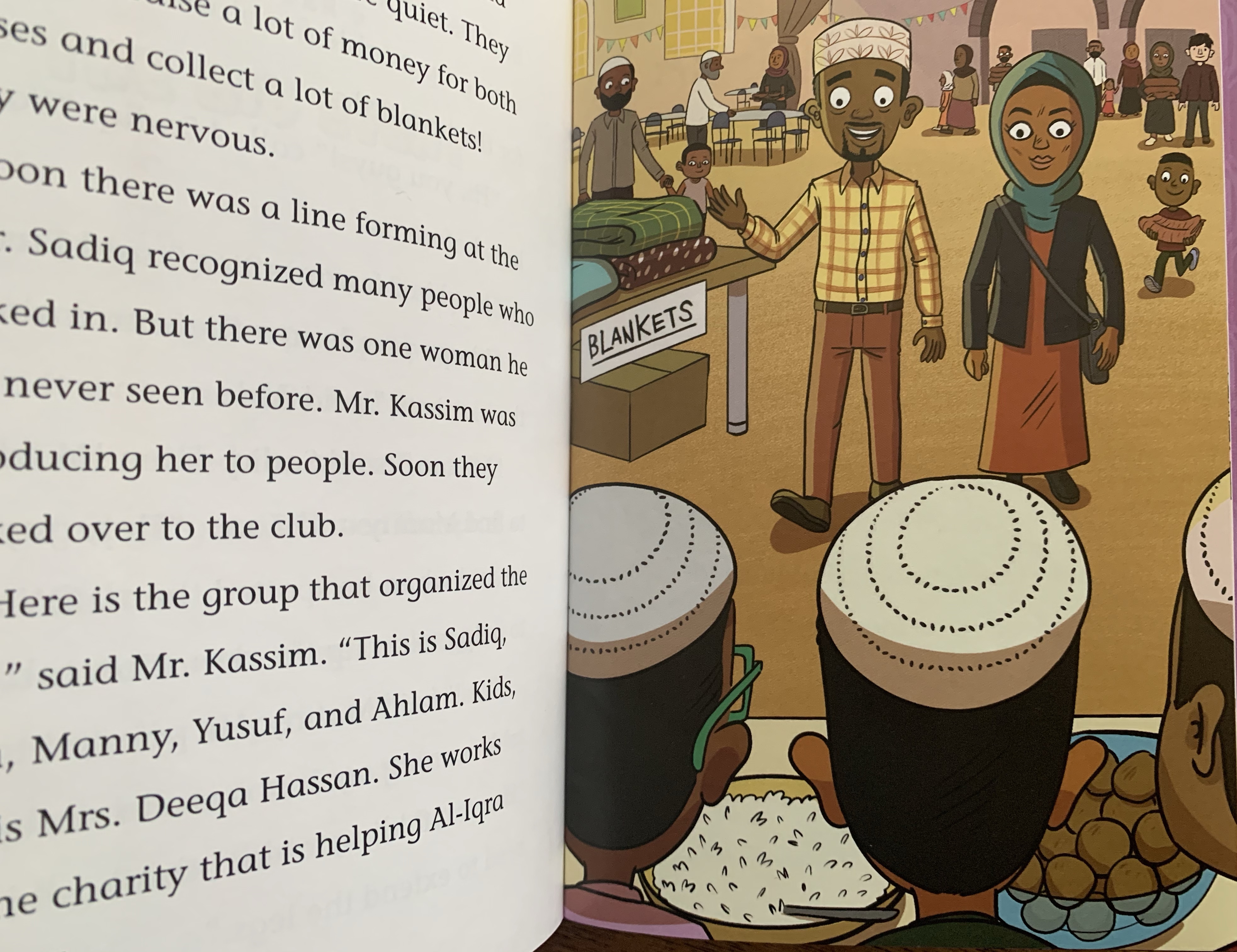
img_8554This 65 page early chapter book in the Sadiq Series does a great job of introducing Ramadan, giving a glimpse of Somali culture, and conveying a relatable and engaging story about friends with a lesson/reminder about the values of communication.  A group of boys hosting a fundraising iftar to help a school in Somalia have to figure out the logistics, the marketing, the cooking, and the execution, as they become socially aware and active in helping meet the needs of their community, both locally and afar.  This OWN voice tale doesn’t shy away from authentically drawing on religion and culture to make characters and a plot that all readers can enjoy.  The book is not preachy, but the characters know who they are in their manners, dress, speech, and environment.  A great book any time of year for first grade and up.

img_8555

SYNOPSIS:

With Ramadan starting in a few days, Sadiq and his friends at the Dugsi are reviewing the importance and values of Ramadan.  This year the masjid is raising money for a school in Somali and the students are encouraged to help, as sadaqah, or charity, is especially important during Ramadan.  The boys decide to host a fundraising iftar at the masjid and with parental help to coordinate with the Imam, the kids have to figure out how to get enough food, get the word out, get set up to take donations and more.  They make flyers, set up a website and shoot a small video.  The once excited Zaza, however, is no longer very enthusiastic in the Money Makers Club and Sadiq can’t figure out why, but with so much to do and little time to get it done, more friends and family are brought in to help, and things continue on.  When Zaza tries to tell Sadiq he wants to do his own fundraiser, Sadiq doesn’t want to listen.  I’m not going to spoil if the two friends work it out and how they handle the two ideas, but it is a good lesson in friendship, communication, and charity, Alhumdulillah.

img_8556

WHY I LIKE IT:

I love that the story starts with information about Somalia and words in Somali as well as a picture of the family.  There are activities and questions at the end as well as a glossary of religious, cultural, and English vocabulary words. The book doesn’t assume that the reader knows anything about Islam or Somalia, nor does it assumer that the readers don’t.  It strikes a balance of not talking down to the reader or getting too wordy.  It simply provides the information needed if you are curious, but allows the story and the boys dilemma to take center stage.  The whole series is remarkable in showing diversity and relatability with good quality story telling.  I think this is the only book in the series that has a religious theme, I could be mistaken.  The illustrations show the boys in kufis and the women in hijab.

img_8557

FLAGS:

None

img_8558

TOOLS FOR LEADING THE DISCUSSION:

Every elementary school library and every first through third grade classroom library should have this series.  I know my public library has it, and the copies I get from there seem to be worn and loved.  The age is too young for a book club, but would be great in small groups or for outside reading with the short chapters and engaging illustrations.