Tag Archives: Food

More Hands by Jenny Molendyk Divleli illustrated by Ekinsu Kocaturk

Standard
More Hands by Jenny Molendyk Divleli illustrated by Ekinsu Kocaturk
img_6180-1

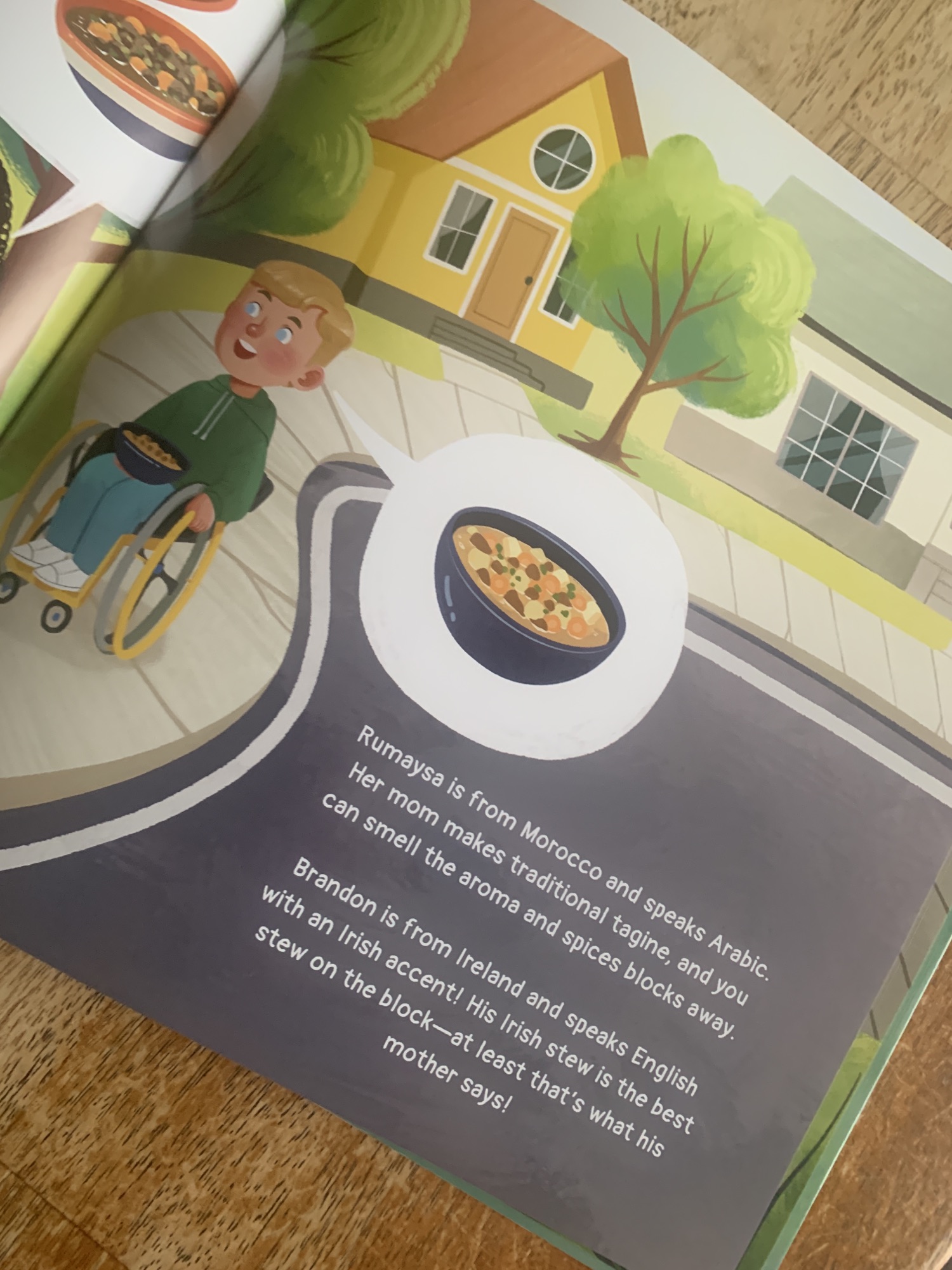
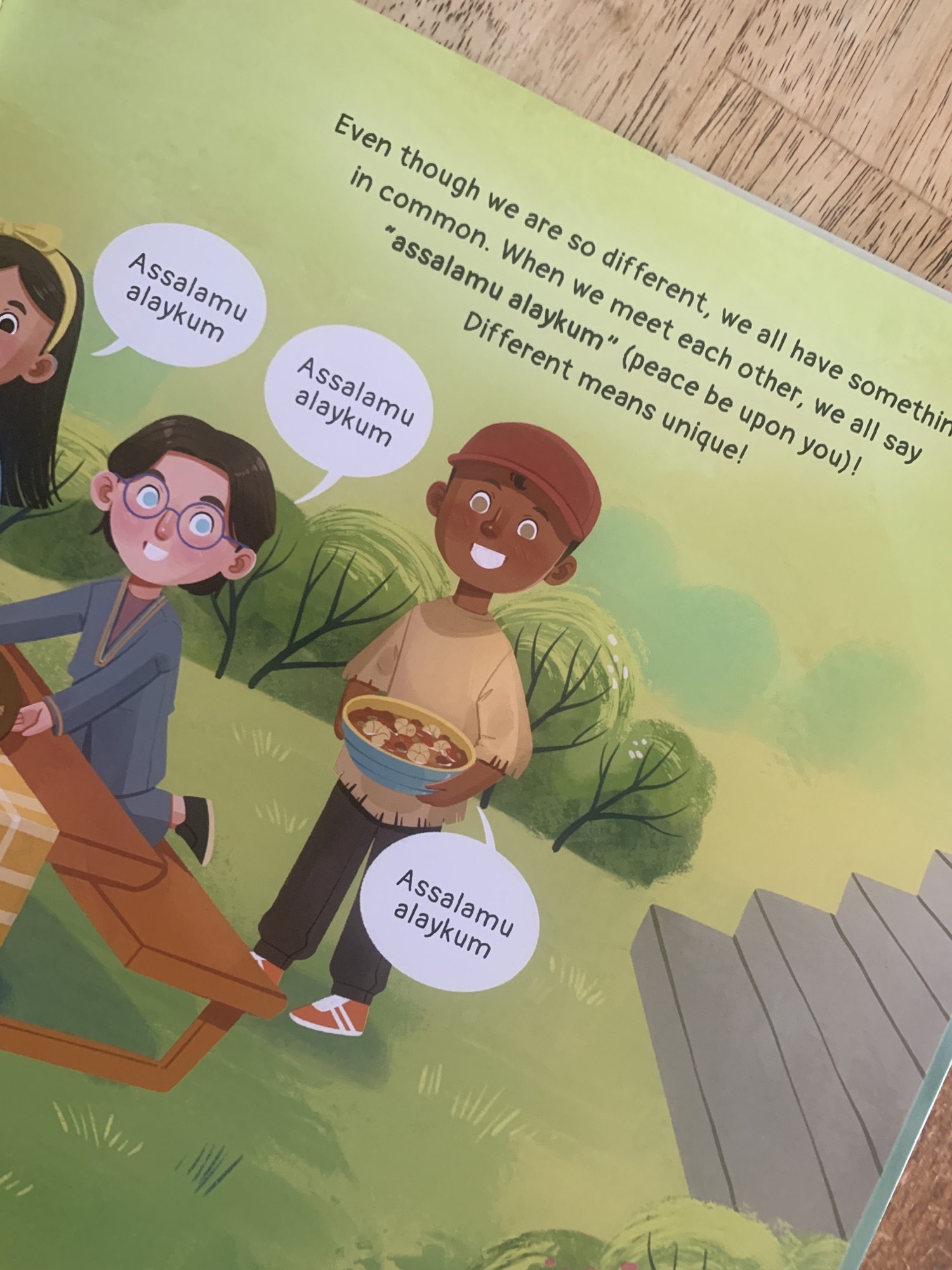
This 32 page picture book blends food and the concept that teamwork makes things better, when a young boy asks his grandfather why his pishmaniyah is so delicious, and Grandpa Yahya offers to share his secret ingredient. The book is a fun bedtime or story time read as the more hands needed builds and builds. As someone though who has now read the book over a dozen times, I do wish there was more backmatter. I would love a recipe for the cotton candy type sweet, maybe some history of what pishmaniyah is (I had to Google it), and how it is traditionally prepared. The text dances around the pages, and the fun illustrations will appeal to children and help explain the process. There is a “bismillah” in the book and it mentions “baraqah” on the back cover, athere are also a few hijabis in the illustrations, but the book is universal for all readers toddler and up.


The book jumps right in with Sami asking his grandfather about his pishmaniyah. It is unclear if grandpa was planning to make it, or if it was a question out of the blue, but either way, Grandpa Yahya offers to share the secret ingredient. The ingredients are pulled out, and then more hands are needed, and then more and more and more. Once the whole family, and neighbors, and their kids are all involved it is time to eat and enjoy the dessert together.


As an adult I wonder what would have happened if so many people were not available to help, and did they wash their hands, and how big is their house, but kids won’t care, kids will just think it is funny. And that is ok too, books that show family, community, and teamwork with humor are always great additions to share with our littles.

img_6185-1

Birthday Kunafa by Rifk Ebeid illustrated by Noor Alshalabi

Standard
Birthday Kunafa by Rifk Ebeid illustrated by Noor Alshalabi

img_4902-1

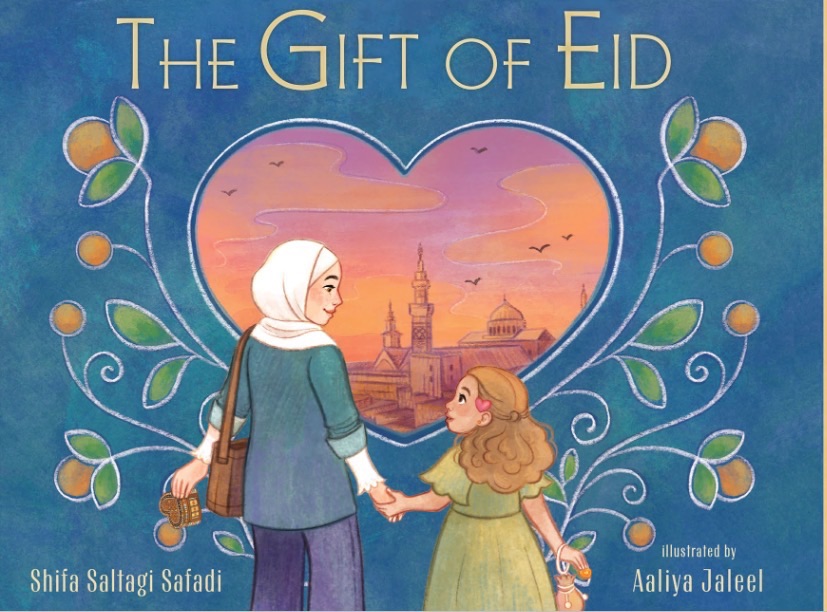
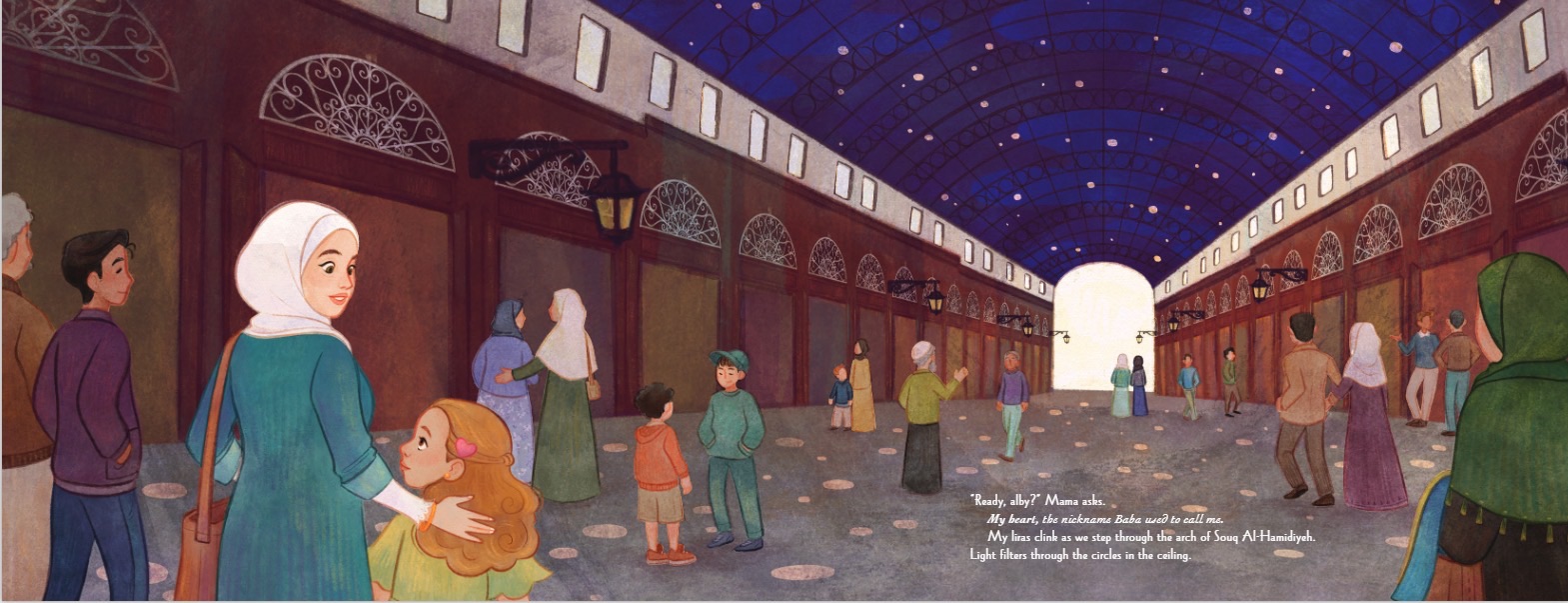
This 50 page wordless picture book allows readers to make up their own words to describe the progression of what is shown in the illustrations. With no right or wrong, the backmatter helps give context and points out key images that allow the story to resonate on multiple levels.  On the surface it is a birthday girl who is upset she cannot have kunafa, but when you truly look at the pictures, and see what is preventing her from moving from Jerusalem to Nablus, the reader is shown, she is not just a child wanting something she can’t have, but that she is being denied basic rights by an occupying force.  I love that the little girl represents so much more than just herself, and that her determination to cross checkpoints, is not just about acquiring dessert.  The book starts with a little girl on her birthday that could represent a little girl with her friends and family anywhere, but as the pages are turned you witness how beautiful Palestinian joy is, how much we take for granted the freedom to move, and how desperately we need to stand up for a free Palestine.  With no words, Islamic representation is limited to two hijabis in the illustrations.  The author and illustrator are Muslim. The book centers a birthday, there is dancing dabkah and an oud shown leaning up against a wall.

So often when thinking about Palestine, not just since October, we all find ourselves speechless.  There are no words, only tears when watching the news, reading headlines, or scrolling, and I find it incredibly timely for a wordless picture book about Palestine to be published.  There are a few labels so to speak throughout the book that I didn’t particularly find necessary, but they do not distract from the story, so they didn’t bother me.  I like that the book showed restraint in terms of the oppression that could have been shown.  It allows for the story of the little girl and her family to maintain the narrative.

The story that I understood the images to be telling is that it is a little girl’s birthday, the family is having a party, they have a birthday cake, but she wants kunafa, she tries to get some and along the way sees joy everywhere, until the checkpoints turn the images gray, and prevent her from moving forward.  So mama and her problem solve, they try and make their own, but it is not the same, so they devise a plan, and they try again.  They do not give up. There is no giving up.

The backmatter provides a recipe for kunafa, a two page spread about “Why Wordless Picture Books,” another spread about “Context Matters” giving information about Zionism and Palestinian resistance.  It is then followed by four pages entitled “Did You See?” where symbols are shown that appear in the pages and described.  Warning there are numerous sweet and savory foods shown, and it will make you very hungry.

The book is available here from Crescent Moon or here from Amazon.

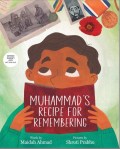
Muhammad’s Recipe for Remembering By Maidah Ahmad illustrated by Shruti Prabhu

Standard
Muhammad’s Recipe for Remembering By Maidah Ahmad illustrated by Shruti Prabhu

img_4274-1

I feel like the idea and heart of this 40 page picture book is decent, but the story, presentation and takeaway are just really poorly executed.  The pitch is a Muslim Desi kid feeling left out when all his friends are rehearsing for the upcoming veterans assembly because he doesn’t have anything to share.  He then starts asking his family, and the Muslims and non Muslims hanging out at the mosque to find out about Muslim and Indian involvement in the World Wars.  A rarely explored topic, considering in the West WWI and WWII are taught from a Western centric perspective, no doubt.  Unfortunately, most early elementary readers, the book’s target audience is 4-7, have limited knowledge of the World Wars, let alone about the subcontinents own politics and that they were occupied themselves under colonial rule at the time, and this book does nothing to explain any of it.  The inconsistencies, plot holes, vocabulary and ultimate lack of sharing a single story from a descendant of someone who fought, make the book rather pointless and forgettable.  Truly the take away is that there were Muslims among the Indian army, they made roti and prayed.  No real idea what they experienced, saw, endured, or gained in return for being forced to fight for Britain on the global stage.

img_4275-2-1

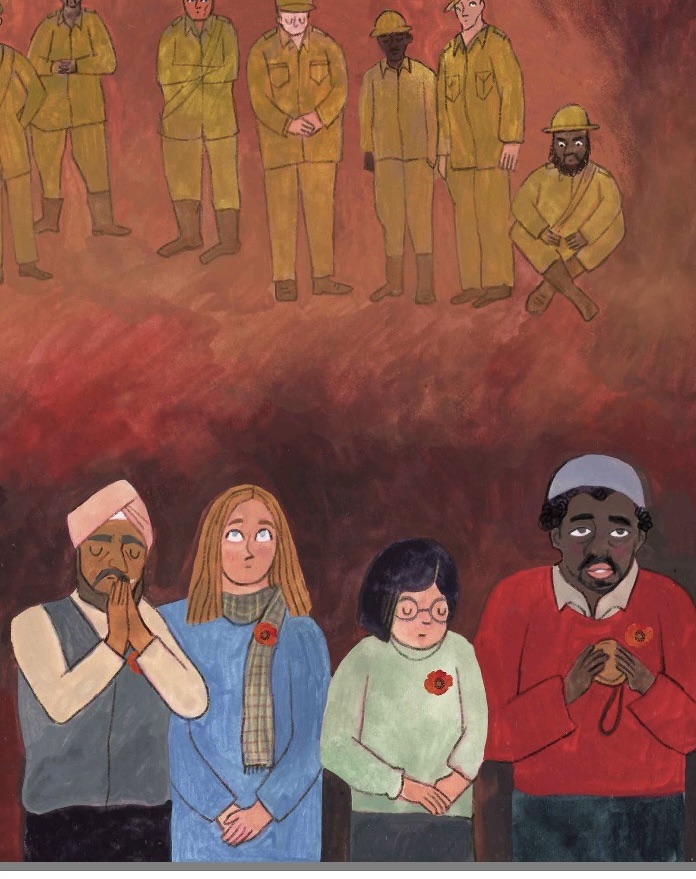
The book starts with Muhammad listening in to his classmates talk about their family members that are veterans and him feeling left out.  At recess they don’t let him battle in the reenactments and instead make him be the cook. When he gets home his dad is making rotis and Muhammad asks his dad if they have veterans in their family, they then go ask his grandfather if his great great grandfather fought in either World Wars.  Dada jaan recalls that “they sent my grandfather to France in World War One.”  But he never spoke about it except to mention that they shared rotis.  He suggests they go to the mosque the next night as that is where, “a kaleidoscope of people gather.” He learns from a Sikh uncle in a turban that whole villages went to fight and from Imam Rafiq that the soldiers fasted in Ramadan, prayed, and celebrated Eid.  No one has any visible tokens of their family’s service as they were lost over time.  Determined not to let the stories be lost, Muhammad shares roti at the assembly.

img_4277-1

Ok, buckle up, I have a lot to point out, but first the positive.  I like that the dad makes rotis.  Mom isn’t in the book, but there are a lot of pictures of a lady hanging on the walls of the house, so possibly she has passed and dad has to cook, no matter, it is nice seeing a Desi dad in the kitchen.  I also like that the mosque is central to the story, I wish it was called a masjid, and that it was explained why people that are not Muslim are hanging out there.  Brown people are generally lumped together and this seems to reinforce that stereotype, which makes me less than thrilled.  It seems like a social environment with ping pong tables and snacks happening, so why not say it is a social hall at the masjid where people of all faiths often gather.  A “kaleidoscope of people” does not explain people of different religions at a mosque to most four year olds.  The book claims the assembly is honoring veterans, so why is Muhammad only curious about WWI and WWII is never explained.  He is teased and forced to be the cook by his friends, with a very negative connotations and depiction in the illustration, but that notion is never pushed back upon, and is actually heightened with rotis being the thread that ties the entire book together.  A missed opportunity to be sure.

img_4279-1

I really struggle with the reality that the majority of Indians were forced to fight, and the book keeps it vague in the text with lines such as “joined the war effort,” and “they sent..” who is they? It sounds nice that Muhammad doesn’t want the stories, like the artifacts to be lost, but WHAT STORIES? If the book is about remembering, and stories are to be shared at the assembly, I feel short changed that the reader doesn’t get a single story about a Muslim or Indian that fought in one of the World Wars.  Isn’t that the point of the book? Yes the book has sources at the end, but it is fictionalized, make up a story, give the reader and Muhammad something to take pride in, to understand through, to imagine, what it was like for his great great grandfather.
img_4280-1

I struggled with the illustrations as well, Imam Rafiq looks off in the final image, I don’t get why Dada jaans memories seem to be on the TV either.  I also didn’t understand why rotis were the thread, but then it is paratha at breakfast that gives the idea, and who really is constantly spreading ghee on paratha or roti let alone at war, or at recess.

img_4278-1

War is not a trivial matter, and I kind of feel like this book reduced it to food, and allowed some racism, classism, and  Islamophobia, to go unchecked along the way.  I like that the backmatter has a recipe and an author’s note, but colonialism, service, war, are all heavy topics that are hard to bring down to an early elementary level picture book, and sadly this book is unable to connect and inform readers about this time in history.

The Great Henna Party by Humera Malik illustrated by Sonali Zohra

Standard
The Great Henna Party by Humera Malik illustrated by Sonali Zohra

img_3465-1

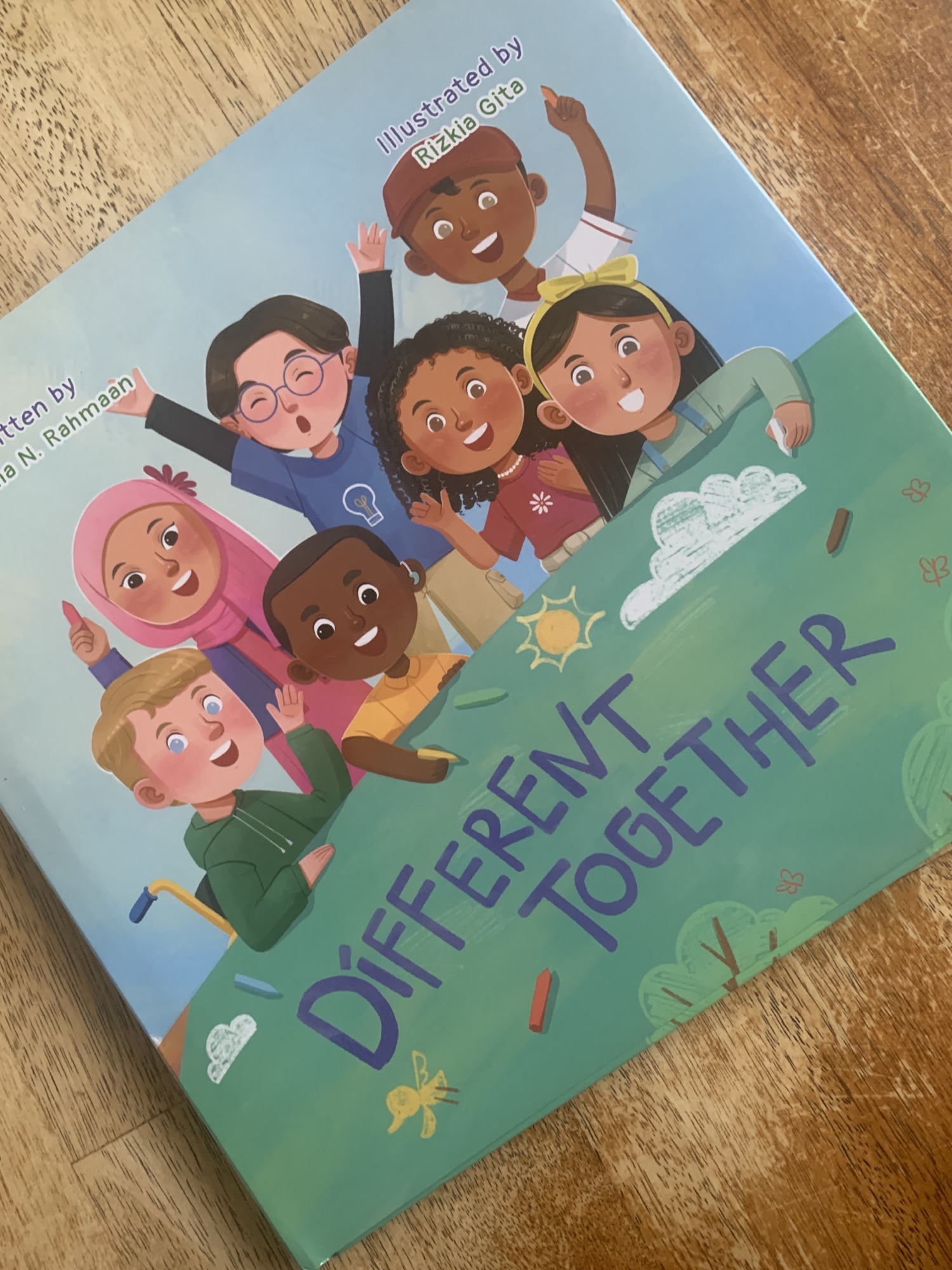
This 32 page story shares a desi family at a henna party before a wedding.  There is nothing Islamic in this book by a Muslim author, it is simply cultural.  The story on its own is fine.  It is sweet and joy filled, as a girl tries to decide who’s name to have hidden in her henna design.  I do wonder though, if the book is meant to be a window into desi culture, why the Urdu word “mehndi” isn’t used instead of henna.  It mentions it in the backmatter, that mehndi is the Urdu word, but it seems a little inauthentic and western gaze presenting throughout the story, and honestly I really struggled to get past it.

img_3466-1

The book starts with Noor entering the henna party, the night before her cousins wedding, to sing with the ladies of the family and have their hands painted.  Her mother asks her if she knows about the name game, where the bride hides the grooms name on her hands, and if he finds it, he wins, and if he does not, the bride wins. Noor asks if she can hide someone’s name and her mom says yes, just tell the artist.

img_3467-1

She watches her dad setting up decorations and wonders if she should have his name hidden.  She then sees her Mama playing the dholki and singing and wonders if she should hide her mother’s name.  She continues through various family members before making her decision.  Along the way the reader learns about the music, the food, the clothes, and how the paste dries and leaves a color.

img_3468-1

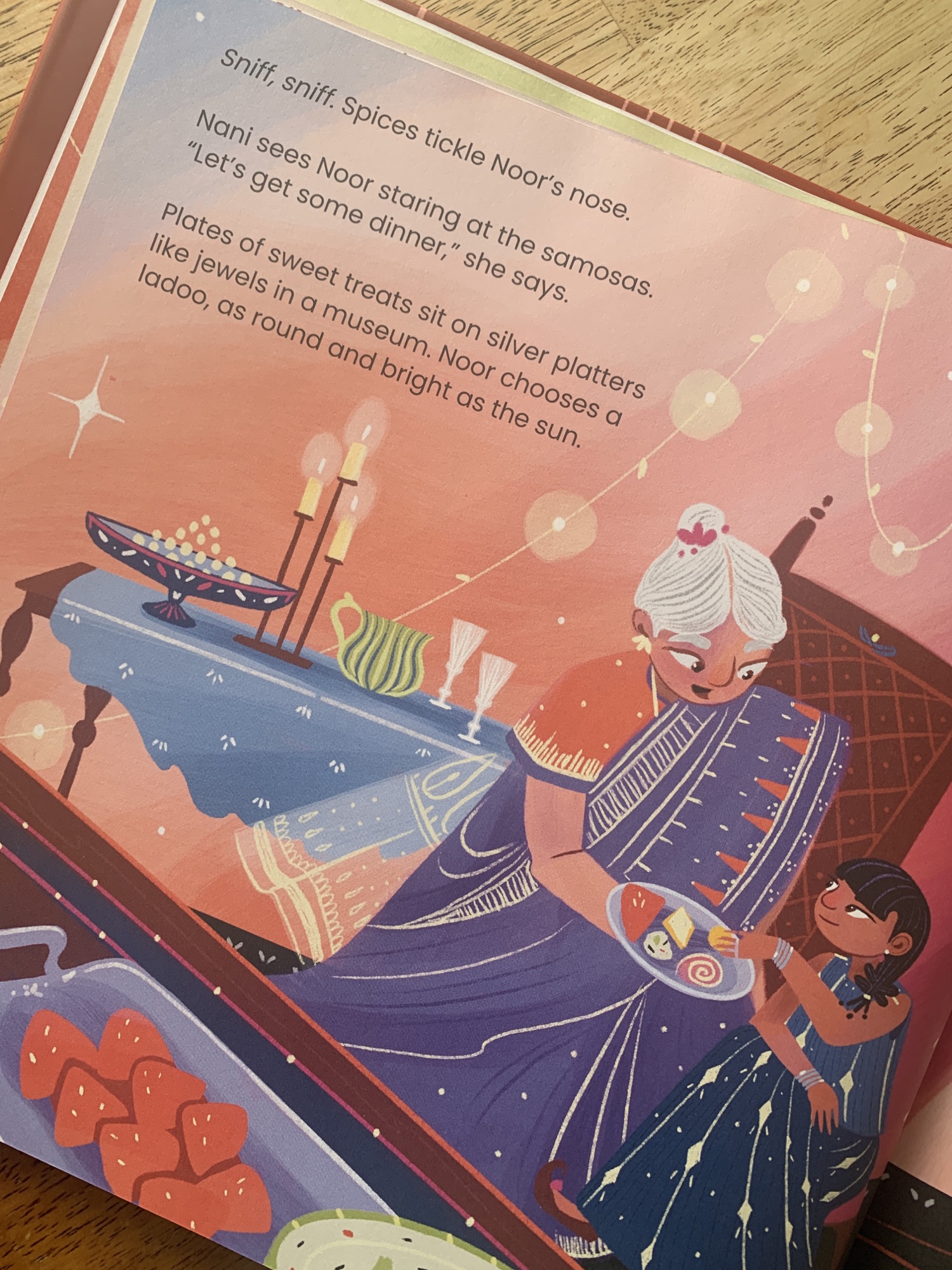
The page on food starts with spices, then talks of samosa and then they are eating ladoo, and while I’m glad there is not a glossary, I don’t know that the lacking context clues make any of those scrumptious foods known. I do like that her grandfather helped her pick out her lehenga, and her father is shown decorating to show full family involvement.

Ultimately, though I think the tricky thing about cultural weddings, is that every family has their own traditions, and while in a desi wedding some things might be widespread, when presenting them to readers outside your culture, it is hard to know how they will be perceived.  I almost feel like this book makes it seem that every family hides names in the mehndi as a staple of the festivities. And based on other reviews I’ve read, people seem to feel that this is insightful into the culture, or that hiding and finding names has more weight, a stress even, than just being fun.

img_3469-1

I could be over thinking it, but it feels like even the backmatter is trying to cast a wide net over every religion and culture that uses henna and ends up being oddly vague in this specific example.  Like I said the book is adequate, I like that the little protagonist Noor, loves so many people and solves her dilemma on her own, it has plot, and conflict and resolution, it just seems to lack the exciting tone and thus fails in immersing the reader into the henna party.

Noura’s Crescent Moon by Zainab Khan illustrated by Nabila Adani

Standard
Noura’s Crescent Moon by Zainab Khan illustrated by Nabila Adani

img_3075-1

I know, I know, another Ramadan book about the moon and a little girl’s first fast, but this one is slightly different.  The moon they are searching for is the Eid moon and the focus is on whether they will see it and Eid will begin, or if there is one more day of fasting.  The story itself would not make sense if it wasn’t Ramadan and the characters Muslim, but the story only subtly sprinkles in bits of Islam, the backmatter though, is where the Islam really shines.  The tone of the book with the lyrical text and full color illustrations is very relatable to Muslims that both want to see the moon and celebrate, while at the same time being sad the the blessed month of Ramadan is over.  It comes from a Desi centric approach to the foods, and traditions, but their aren’t a lot of Urdu words used either, and those that are, are defined at the end.  The book works for Muslims and non Muslims, and would benefit both groups with a bit of discussion. Overall, not a particularly memorable book, but one that stands out for focusing on the tradition of looking for the moon and being together as a family.

I love that the notes at the end do mention that Muslims fast to “show love and obedience for the Creator,” under the Ramadan header.  The other backmatter headings are Eid ul-Fitr, Suhoor, Iftar, Chaand Raath, Pakora, Gulab Jamun, Sheer Khurma, and The Islamic Calendar and the New Moon.  A lot of space is dedicated to food, explaining those mentioned in the story.  It gets it right that Muslims begin fasting at dawn, it shows mom not wearing hijab at home, but wearing it when they go out, yet, it doesn’t just say the maghrib athan it refers to it as the “call for the twilight prayer.”  And it doesn’t mention or show them praying, which would have been a nice inclusion.

img_3080-1

The book starts with Noura playing outside and her tummy rumbling on this 29th day of Ramadan, and her first fast.  Mama, Papa and Noura all help make and pack up iftar, as they get ready to go look for the Eid moon.

img_3079-1

Before they go, Mama shows Noura her new dress, and they add some henna cones to the items they are taking, they then set out to the countryside.  All along, Noura is hoping to see the moon and her parents are reminding her how rare it is to see it.

When they get to the hill there are other families already there, and Noura has done it, completed her first fast.  Unfortunately the moon is not there as hoped, or is it?

img_3078-1

I wish some duaas or Islamic expressions, and salat would have made it into the book, but the large hardback size makes this a good book to read at story times, and a nice way to explain why we don’t know when we will miss school to celebrate Eid, or how many days we will fast.

The Ramadan Cookbook: 80 Delicious Recipes Perfect for Ramadan, Eid, and Celebrating throughout the Year by Anisa Karolia

Standard
The Ramadan Cookbook: 80 Delicious Recipes Perfect for Ramadan, Eid, and Celebrating throughout the Year by Anisa Karolia

img_3081-1

Another surprising library find, this 2023 published cookbook shares meals for all the time, but organizes them with Ramadan in mind.  Unlike many online recipe pages, there is not a lot of backstory about the culture behind the recipes, or how the author has made them her own, it really is pretty direct and to the point.  The author is Desi, and the bulk of the recipes Indian, but it isn’t all of them.  I found myself flipping through the pages hoping to be inspired, but sadly most of the recipes were fairly basic.  That isn’t too say they are not good, I have not tried them, but being of Pakistani decent and that I have been cooking multiple meals a day for too many years to count, I didn’t feel compelled to check the kitchen for ingredients.  I think a big part of it is, I need pictures of the food to spark interest, and not every page had images of the food.  I think the book is fun to look through, maybe remind you of something you tried once and enjoyed, or give you ideas of something you and your family might like to try.  I would say it is for beginner cooks, but without step-by-step directions, you have to have some basic skills, perhaps it is more a family friendly cook book as she makes comments of what her children like, or dishes them come together quickly and easily.

Clearly I am not a foodie, or a cookbook reviewer, I was just excited to see a Ramadan cookbook available at the library and wanted to share.  The author shares her thoughts on Ramadan, and interjects some thoughts on the section pages. Apparently she is a famous blogger, so if you follow the author and there is something I should try, please let me know.

The Ramadan Drummer by Sahtinay Abaza illustrated by Dinara Mirtalipova

Standard
The Ramadan Drummer by Sahtinay Abaza illustrated by Dinara Mirtalipova

img_3025-1

This book reads very much like an early work in progress.  It doesn’t seem to know if it wants to be a book about foods and hunger in Ramadan, or about a Ramadan drummer waking people up for suhoor, or being a fantasy where you can hear people’s thoughts in your dreams and when you awaken you can get blessings for being kind.  Sure maybe it could be all of the above, unfortunately as written, it falls short in being much of a cohesive story at all.  Many of the details have no baring on the plot, the transitions from food, and fasting and pants feeling tight to dreaming about the Ramadan drummer that he heard about once in passing, is very abrupt and none of the children I read it to ages four to eight could sit through it. With no Islamic centering it is never clear other than to “think of the poor,” why this small child is fasting, and who is going to be doing the rewarding for kindness in Ramadan.  For Muslim and non Muslim kids alike, this book will not make much sense, I’m afraid, nor be memorable, even if they can get through it. The idea of a Ramadan Drummer appears in a lot of books, and perhaps this fantasy reinterpretation could have been fun, but with the lack of Islamic content, a clear story line, and the focus being on hunger, the book doesn’t do much for me.

img_3026-1

The book starts out with Adam being hungry, his stomach is a wild beast, roaring and grumbling for food.  He is told fasting helps people think of the poor, but he can’t “think on an angry stomach.”  The next two pages are about food, then his aunt and uncle come over, wishing everyone a “blessed Ramadan,” and then they break their fast. No Salams are given, iftar is not named, but they mention a Ramadan drummer. Adam is eating so much his pants are tight, they then pull out dessert.  That night he can hardly fall asleep because he ate more cookies than he should.  The lack of self control is an odd thing to stress without any insight into moderation, especially in Ramadan when controlling the nafs is such a present test.

img_3027-1

That night he dreams he meets the Ramadan drummer, they listen to the wants and thoughts of the neighbors, he wakes up in the morning to pancakes and then he responds to what he learned in his dream.  It is sweet that he spreads kindness to the neighbors, with the Ramadan drummer only having to tell him, “during Ramadan, every act of kindness is reward tenfold.”  I have no idea if Adam is already kind and this was just extra motivation, it never says who will be doing the rewarding, I wish it shared what was being chanted to wake people up, and I wondered if this is going to be an every night occurrence, but alas there are no answers.

img_3028-1

The book ends with Adam still hungry, but his heart being full whereas his stomach is not.  There is then a lengthy Author’s Note that mentions “Muslims will not eat or drink from sunrise to sunset,” clearly getting the start time wrong.  Throughout the text it says “before sunrise” leaving the time a bit vague, but not wrong.  The Illustrator’s Note calls a Mullah, a Muslim priest, which struck me as odd.

It seems so odd to have a Ramadan book void of even basic religious mentions. Why would you stress about getting up, let alone getting up on time, if there are no rules and requirements to your fast. The whole reason for the fast is an act of worship, how the worship is done matters. By removing religion: the lack of salams, prayer, duas, connection to Allah, etc., it makes fasting seem like an act in isolation and it makes it just about food, which shortchanges the month of Mercy. Ramadan is joyful, it is so much more than a month of just being hungry.

Under the Sana’a Skyline by Salwa Mawari illustrated by Mary Charara

Standard
Under the Sana’a Skyline by Salwa Mawari illustrated by Mary Charara

img_2034-1

For the last 100 days it seems the only time I truly smile is when I see images of Yemen standing with Palestine.  It is impressive, so very inspiring, and equally humbling as well.  Sadly, there are not many children’s books celebrating Yemeni culture, heritage and joy available to us in the west.  This book published in 2022 is set in the war, with memories of easier times peeking through.  When Belquis is assigned to write an inspirational story about Yemen for a global contest, she is at a loss of what to write about as she is surrounded by “bombings, fighting, blockades, loss, and poverty.” This 38 page picture book is text heavy, admittedly it isn’t particularly literary or memorable, but it shows a culture and traditions that need to be shared with our children.  The media and talking points dismiss the rich history of the countries we are attacking in attempts to dehumanize those affected.  This book does not get political or even name the sides in the conflict, it simple shows a girl and her sister rediscovering their city, their history, and their peoples’ kindness and generosity.  I hope more books about Yemen will enter the marketplace, and I pray for the bombings to stop.

img_2035-1

Set in Old Sana’a Belquis dreams of being a writer, but when assigned to write about something “inspirational” she is at a loss. Her geddah encourages her saying that “Some of the most inspirational stories arise from hardship.” Her father encourages her, and her younger sister Saba, to go to the roof and look out from a “bird’s-eye-view.” At maghrib time as they listen to the athan from the Great Mosque they look out at the 2,500 year old city and the qamariyat sparkling in the changing sunlight, but don’t feel inspired.

img_2036-1

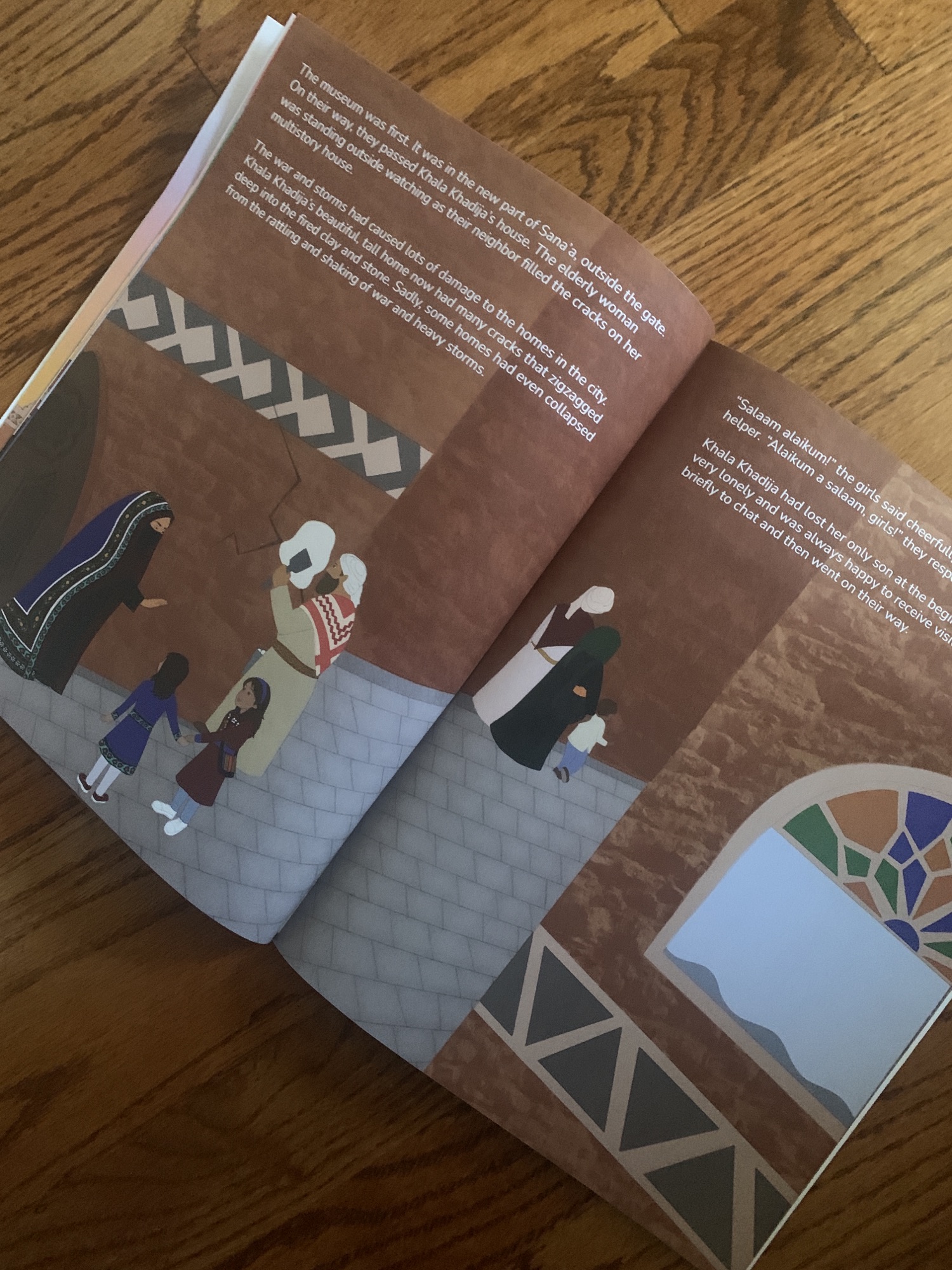
Beliquis briefly laments the looming deadline and the lack of sabaya to eat, but decides to go story hunting by taking Saba and rediscovering their ancient city.  They pass Khala Khadija’s crumbling house as they head to the museum where they are reminded about the Queen of Sheba, Yemen’s original name Arabia Felix, and Queen Arwa.

img_2037-1

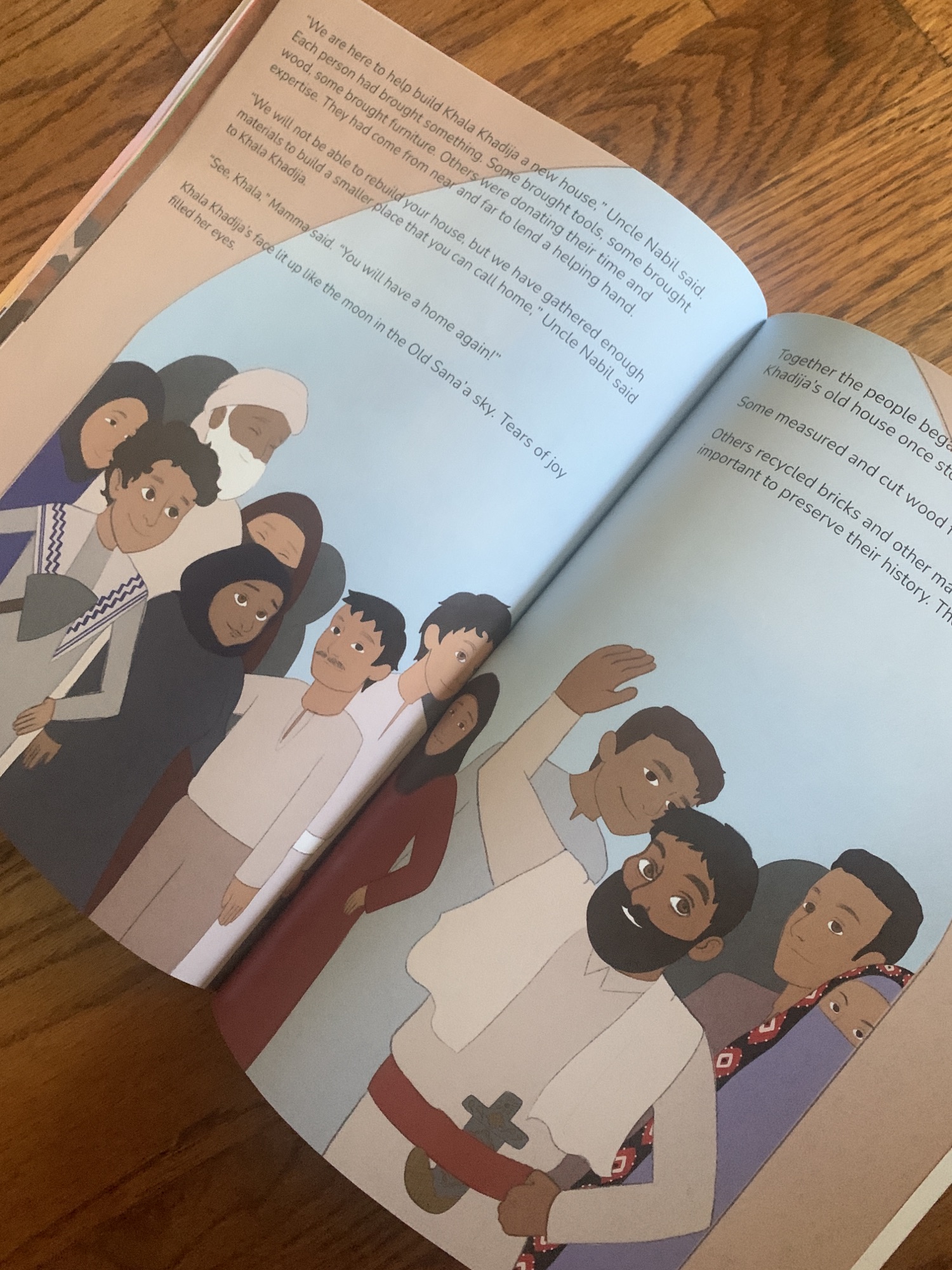
As they leave the museum and head to Souk al-Milh they pass lines of people looking for handouts of food and waiting in line for fuel. When the war started, the tourists stopped coming, so the girls are free to browse, and end up using their pocket money to buy bakhoor for their mother before heading back home.  Heavy hearts make them wish they had instead given that money to a hungry family, and when the cracks from the weather and bombs destroy Khala Khadija’s house completely, the girls, their family, and their entire neighborhood will show the inspiring generosity and spirit of the Yemeni people.

img_2038-1

As always, with most every book I read,  I wish there was a map, and while there is a glossary, I wish there was a more robust backmatter section with actual photographs of the many places, foods, items mentioned in the story. This book is important, seek it out, urge your libraries to shelve it. Learn about Yemen, make duas for the people suffering, hurting, and standing up for the oppressed, ameen.

The Unlovable Alina Butt by Ambreen Butt-Hussain

Standard
The Unlovable Alina Butt by Ambreen Butt-Hussain

img_9079

This middle grade book in many ways reads like a memoir, it isn’t, it is OWN voice fiction, but the chapters often come across like short stories with their own climax or punchline.  The lacking continuity of smaller threads being resolved means if you put the book down, you aren’t necessarily itching to pick it back up to see what happens next.  There isn’t a larger pressing conflict driving much of the book, yes the girl is bullied, but by one kid, and she has a great group of friends and a supportive family, so the intensity is just not present.  I do like the growth of the character toward self-acceptance, but I don’t know that the target audience will get the 90s references of Spice Girls,  CDs, lava lamps, and gel pens.  The book hits most of the stereotypical immigrant tropes of feeling othered by one’s name, clothes, food, and while she works through them to deal with the bully and find her own confidence, she unfortunately never deals with her internalized Islamophobia, which is disappointing.  She puts Islam on her parents as something they practice, and only begrudgingly seems to acknowledge she too is Muslim when she doesn’t eat pizza with non halal meat.  She is embarrassed when her friends see Islamic calligraphy at her house, hear the athan, she doesn’t reply to her parents salaams, she calls her mother “the most devout in our family” as the reason she has to wear tights under her skirt: she only seems to ok with being Muslim when outsiders give their approval.  The book for me is mediocre, nothing to rush out and buy, nor anything to pull from shelves.  I’ll send my copy to the Islamic school library shelves as the book is fairly clean: a few giggles about naked statues at the museum and very lightly hinted at boy/girl crushes. The older sister deals with a boy who wants to date her and harasses her to the point of affecting her personality, but I think if a 10 or 11 year old picked up the book and read it, they would be ok to see the characters finding their voice, good friends, and sibling support.

SYNOPSIS:

Eleven year old Alina Butt is in her fourth school in three years since arriving in England from Pakistan.  She never fits in, and never has friends, but she is determined that if she can keep her last name a secret, she might have a chance.  One the third day of 6th grade though, her last name becomes known and Adam Atkins has his eyes set on giving her a hard time.  With encouragement from her older sister and love from her baby brother, Alina puts herself out there to make friends and when the teacher assigns her a new group, she finds herself among three girls happy to welcome her in.  The new group also puts her sitting across from Adam, but at least now she doesn’t have to face him alone.

At home, she navigates life as an immigrant trying to blend her worlds.  Her loving family lives above the grocery store they own and face Islamophobia and settling in together as they each have to find their strength and voice and resilience to drive, stand up to harassment, and for Alina, to love herself.  Alina gets the courage to try out for the school play, but when she lands the part of Gus in Cinderella, she has to dig deep to be happy for her friend, forgive a bully, and step in to the spotlight.

WHY I LIKE IT:

Alina is likeable enough, and I love that she grows to love herself too, I’m not sure she was ever unlovable though as the title suggests.  I don’t like that potentially really big plot points are mentioned and then abandoned.  She cuts her bangs way too short, her mom says something and no one else ever mentions it, and she never brings it up again.  Her dad is so sick he leaves the truck on the side of the road and sleeps and the mom takes care of everything, and what was wrong with the dad is never revisited.  These are just two examples of rising action that present that they are going to be important that are seemingly undermined by the lack of follow through.

I love that she finds a way to stand up to the bully and she even helps her sister deal with the boy antagonizing her.  It is strong and resonates with the reader, but it should also be noted that as soon as she has friends, they are gossiping and being rude to Adam too.  I’m not saying it isn’t warranted, and he definitely is worse, but if she is modeling behavior she should perhaps at least feel bad teasing him even before she knows that he has a bit of a rocky home life.  Plus he is one kid with two stereotypical sidekicks, yeah he is annoying and mean, but she has friends and family and teachers that are completely on her side too.  And Adam bullies her about her name, but no one else even acknowledges it or asks her about it.

I didn’t quite get the schooling, but it is probably because I am American.  She is in middle school, but she has one teacher all day and they play on the soccer fields at break and her kg aged brother does field day with her?   The 90s references were fine for me, but I don’t know that the target audience will get some of them, and it might be a little annoying to get through for younger readers.

Ultimately, the way Islam was presented was really disappointing.  It feels like we should be past the internalized othering of our faith.  The culture was worked through and appreciated internally for Alina, but for some reason, religion was only ok when the outside influences deemed it acceptable, and I’m not sure that in 2023 this angle of narrative is doing anyone any favors.  She loves her mom, and part of the character arc is seeing and appreciating her mother’s strength, but very early on mom is labeled as “devout” even though they are all Muslim.  And this self othering to be the reason her mom is keeping her from dressing like everyone else left a bitter taste in my mouth.  Never once does it feel that Alina has a connection to Allah swt, no matter what she is going through there is no bismillah, or prayer, or dua to ask for help, and strength, or show appreciation.  I absolutely get that not every story will have that, but the way Islam is presented as something foreign and never circled back on or portrayed as something that she embodies, makes all the mentions of faith seem deliberately othering, and as a Muslim book reviewer, I feel it is an important point to mention about this book. I wonder if it was intentional or an oversight sensitivity reading would have helped resolve.

FLAGS:

Birthdays, music, bullying, harassment, teasing, othering, mention of naked statues, some sneaking and dishonesty.

TOOLS FOR LEADING THE DISCUSSION:

I wouldn’t use this as a book club selection, and as stated above I wouldn’t rush out to buy the book to shelve at home, in a class or school library, but if it found its way to the shelves I would not remove it.  The book has heart, I just feel like along the way the messaging of finding your voice and putting yourself out there to make friends, the book also hints that the Quran on your walls, modesty, the athaan, eating halal, are all things that are weird, unless your friends think it is cool, then it is ok- and that is not messaging I would really want to spread.

A Bit of Earth by Karuna Riazi

Standard
A Bit of Earth by Karuna Riazi

earth

This Secret Garden retelling mixes the heart of the original with a dash of modernity, the flavor of desi culture, and the lyricism of a good writer.  Over 368 pages the slow plot but rich imagery will draw readers in, hold their attention, and leave them thinking about the characters they have been fortunate to spend time with on Long Island.  Islam is practiced and normalized and naturally woven into the Muslim characters’ daily lives without othering or over explaining.  I did struggle a bit trying to keep the relationships of who was supposed to be caring for the protagonist at various points since her parent’s died clear, but once I abandoned stressing about it I was able to be swept away.  I recently reread The Secret Garden with my own children and the original is not plot heavy, nor action packed, but I watched as my own children were drawn to the slower, more grounded (pun intended) nuanced tale, and I think this book, in the same vein, will find its way in to the hearts of middle grade readers.  The book is clean, there is a possible crush hinted very slightly at the end, periods are also endured, and I do have reservations of the terrible marital relationship between Mr. and Mrs. Clayborne, but it establishes that change will occur, so at least it isn’t normalized.  There are sprinkles of magic implied regarding the house, but it is always framed without clarity and in a subtle way to set the tone and the emotions the characters are feeling more than centralizing something rooted (see I did it again) in fantasy.

SYNOPSIS:

The book updates and mirrors the original fairly well with an obstinate orphan arriving at a sprawling house, finding a prickly boy, and setting off to form a tentative toleration of one another with friendly neighbor kids in a garden that is unquestionably off limits.

Maria Latif arrives from Pakistan against her will to be taken in by a distant relative (I’m not sure how she is related), but Asra has been called away and she is forced to stay with Lyndsay, the new wife of Mr. Clayborne.  The first wife was a friend of Maria’s family, but Lyndsay is just as emotionally overwhelmed and lost as the child in her charge.  With Mr. Clayborne away on businesses, his mother Charlotte keeps them all on edge.  When Colin Clayborne is expelled and returns home, more tension erupts and the two children find themselves in an off limits garden trying to make the most of a difficult situation.

WHY I LIKE IT:

I love the mix of poetry and standard novel format.  It is beautifully written and clearly the author does a remarkable job of making her very unlikeable characters worm their way in to the reader’s heart.  Both Maria and Colin are thorny and difficult, stubborn and rude, but you seriously cheer for them, and I did shed a few tears at the end.  With the author’s writing ability apparent, I’m still not sure why the foundation of the relationships and getting Maria to the Clayborne home is so cumbersome.  It is too muddled and it drags the book down every time it is revisited.  The Dadi having the aunt’s phone number was too easy, the inconsistency of the neighbors having no relationship to the Clayborne’s for so long and Lyndsay not even pausing to think another Bangladeshi family living a few houses down might be my husband’s first wife’s friends, seems inconsistent.  Honestly Lyndsey in general needed to read like a competent woman struggling, not a teenager in over her head. I disliked her and Mr. Clayborne’s relationship and I would hate to think any reader would find it ok or normal.

I love the Islam and how it presents when the character has to pray, she goes and prays, it is part of the story and it is seamless.  I don’t think the culture is handled quite as well.  Lyndsay is a foot writer who is always cooking, yet knows nothing of desi foods? If Colin’s mom is desi, wouldn’t she at some point tried to cook familiar foods for him.  Half the neighborhood is Bangledeshi, so it seems everyone has a parent or step parent or distant relative that is desi and I loved the normalizing, but it seemed a bit assuming.  I don’t think kids will wish it was more clear, but as an adult reading it, I felt like it needed to be interjected more without explanation, or if left as is, adding some context. I also wanted to know what Maria’s parents did and a little introspection from Maria.  Again as an adult I see how her anger and grief changes how she remembers them, but from them always being away, to such soft poignant memories at the end, I think kids will need a little hand holding to understand the grief process and her understanding of them.  As it is, they just seem terrible and then all of the sudden great, and the pacing gets thrown off in the process.

FLAGS:

It seems to hint at the end that Maria might have a bit of a crush on Colin, I honestly thought up until a single line that they were making a chosen family with the people who cared for them, but that line seemed to suggest it might be more of a romantic feeling than friend or brotherly.  I read an early copy, so this is subject to change.

Maria gets her period and it is detailed what she is feeling.  I think boys and girls can and should read it.  It is presented on age and appropriately: cramps, achy, dry about blood leakage, having it start young like her mother, etc..

Implied magic (possibly), music and musical instruments being played, milaad, lying, sneaking, being kicked out of school for physical assault, close male and female friendships, ADHD stigma.

TOOLS FOR LEADING THE DISCUSSION

I think this book would work in a classroom and would appeal to readers in an Islamic or public library.  I would consider it for a middle school book club, I think readers will connect and feel empathy for Maria, Colin, and Lyndsay and be better for it.

I preordered my copy HERE and I hope you will do the same