Category Archives: YA FICTION

Towers Falling by Jewell Parker Rhodes

Standard
Towers Falling by Jewell Parker Rhodes

towers falling


I realize the inherent difficulty of writing books for middle grades about the events of September 11, 2001: the author lived through it, the readers did not.  Yet, it seems like at some point a book regarding it, will just feel right, and I don’t think for this age group, I’ve found it yet.  This AR 3.3, 228 page book is a quick read, and while some of the characters have spunk and personality, a few of the storylines seem incredibly forced and the overall timeline and holes in the story will be ultimately disappointing for most readers.

SYNOPSIS:

Deja is starting a new school now that her family has gotten a room at a homeless shelter.  Immediately her fifth grade classmates are given an assignment about home, with the end goal that eventually this project will transform in to being about the change of New York’s skyline fifteen years ago.  The details regarding the attacks of September 11, are not given forthright and as Deja knows nothing about the attacks, and the fall of the towers, her inability to get answers adds to her frustration at home and school.

Deja is angry as she bares a lot on her young shoulders.  Her dad can’t hold a job, and his moods and ill health put caring for her younger siblings on her.  Her mom works as a waitress and is always tired.  They lost their house, lived in their car for a while, and now occupy one room in a shelter.  Deja refuses to lie about her home life and thus her aggressive attitude is always on guard.  Another new kid, Ben, joins the class and he and Turkish American popular girl, Sabeen, all quickly become really good friends.  Each have something brewing beneath the surface that they are dealing with, but their friendship helps them cope and bonds them together.

As the trio of kids work on their projects together, Ben finally shows Deja online footage of the attacks and clues her in to what everyone else in their Brooklyn class seems to know and has failed to tell her.  Deja links her father’s declining health to that fateful morning and decides she needs to go to Ground Zero and get some answers.

She doesn’t really get answers, but at least it is the catalyst for an overdue conversation with her and her father, and hopefully a start on the road to healing the family rifts.

WHY I LIKE IT:

Much like the book Nine, Ten there seems to be the token Muslim girl in the story to offer her perspective on the Islamaphobia that occurred after the attacks.  In this case Sabeen doesn’t detail anything specific happening to her, other than a clerk at a store telling her to go back to Saudi and her uncle getting screened regularly at the airport.  Of all the characters I feel like Sabeen gets the short end of the stick.  She is incredibly flat, stereotyped and undeveloped.  Her family is Turkish, she is wealthy, her mom wears niqab and they are all overly kind and sweet, which is great, but when Deja goes over for lunch, they ask her if she prays, which seemed so random and off to me.  A lot of the basics about the character the author got right, she says that the terrorists were Muslim, but they weren’t, sharing a sentiment many of us Muslims feel. She wears hijab, and takes it off when she gets home.  I don’t like that the mom speaks English, Arabic and Turkish, but is first introduced having Sabeen translate for her with another parent.  Seems incredibly pretentious and misleading.  Ultimately her storyline is just overly forced.  She has to leave Ben’s house when they talk about September 11, because she is so affected by it.  She wasn’t even alive when it happened, and I get that when it is discussed us Muslims are on guard, but the author makes it seem like it is her whole world and influences everything around her.  If you live in New York, especially, I’d imagine at some point you’ve had to come to terms with it, no?

That’s why I also struggled with Deja’s dad.  He is so debilitated by the events of 9/11 he can’t function, yet they happened 15 years ago, presumably before he met Deja’s mom and they started a family.  So, really she fell in love with him in his current condition and thought having three kids with him was a good idea? He was fine and then wasn’t? For 15 years he hasn’t been able to get some sort of help for his PTSD type symptoms?  Seems like a stretch in the timeline, and one that is hard to excuse even for 3rd and 4th graders.

I really like how Deja’s homelessness is brought out and hopefully readers can learn some empathy from her.  Unfortunately the entire 5th grade class is so idyllic that I don’t know that most if any kids reading the book will relate to such a well behaved, so accepting, forgiving and generous group of kids. I mean yeah that’s the goal, but its way too overdone.  Ben, Sabeen, and Deja are best friends after the first meeting even though Deja is rude, mean, and doesn’t like them.  I’m not even sure what Ben and Sabeen get out of being friends with Deja?  Deja undoubtedly benefits from them, but there aren’t a lot of compelling reasons given why they’d be so drawn to her.

And finally, I struggled with the theme of how being “American” united them all.  It makes sense when discussing it as a class, that it doesn’t matter their color, income, life experience, whether they were immigrants or born in America, but the concept comes up again at a critical point when Ben and Deja are on the subway and seems so misplaced to me.  On the subway there would be plenty of tourists and visitors, that wouldn’t be American, no?

FLAGS:

The book is clean, it does mention some drunk people at the shelter, but nothing specific, just in passing.

TOOLS FOR LEADING THE DISCUSSION:

I wouldn’t do this as a book club selection because the target age is lower than who I meet with.  But, even despite some of my criticisms I’d recommend this book be in classrooms and school libraries as it does offer up a perspective on historical fiction that hopefully could lead to a slightly deeper understanding of the events at a young age.



The Sign of the Scorpion by Farah Zaman

Standard
The Sign of the Scorpion by Farah Zaman

scorpion

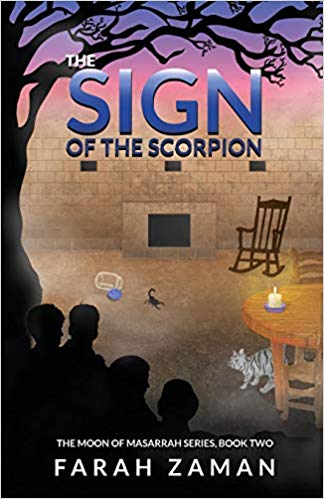
This is the second book in the Moon of Masarrah series, but can be read as a stand alone book if you are looking for a linear story with fast paced action, intense twists, decently developed characters and quality writing that brings the sleuthing of Muslim characters to life.  At 229 pages including the glossary, the book reads to me as a middle grades book, but the last 50 pages place a lot of emphasis on accusations of a character molesting servants in the castle and another character having an affair, which might be more appropriate for older readers.  Perhaps middle school readers would be a better target audience, but I’m waiting to hear back from the author regarding who she had in mind when she wrote it.  The author said she wrote it for Young Adult, ages 12 and up in mind.

SYNOPSIS:

Brother and sister, Adam and Layla are reunited with their friends, siblings, Zaid and Zahra after last summers intense adventure involving a diamond.  This summer as a result, they are the honored guests of Shaykh Sulaiman at his dessert home, Dukhan Castle. They arrive to find out that the Shaykh is bedridden from a stroke after learning his son has died.  With a house full of relatives with reasons to want their claim to the Shaykh’s fortune, the four teenagers start putting odd occurrences of a ghoul in white, a hooded horseman, a gypsy woman’s tale, and the idea that there has been foul play, together to try and arrive at the truth of what is going on.  As they piece more and more together about the tutor, the cousin, the fiance, the grandson, and a mysterious mole-man following them, they themselves get tangled in the sinister plot of revenge and must keep an eye out to figure out who the scorpion, Al-Aqrab, is before one of them ends up dead.

WHY I LIKE IT:

Set in a fictious land, the detail is the perfect balance between setting a stage and over describing it.  The book did not drag for me at any place, nor did I find myself confused about what was going on and why.  Granted I probably could not tell Adam apart from Zaid and Layla from Zahra, but the book is about their adventure and figuring out whats going on, not about their relationships or back story.  And with the focus on all the possible perpetrators and their motives taking center stage, having four people gathering clues makes the information come easier and smoother.

All the characters are Muslim.  Some of the women cover and some do not, some stop to pray and make regular references to Islamic hadith or Quranic Ayats, and some are suspects.  For example when they are exploring the dungeons beneath the castle, they liken the caves to the Sleepers in the Cave mentioned in Surah Kahf.  The book never gets anywhere near preachy, nor do the few references ever get annoying, they just flesh out that the characters are Muslim, and thus they see the world through that lens.

FLAGS:

The book has murder, lying, deception, all the ingredients for a good who done it.  And while the details are all clean regarding how the four teens interact with the opposite genders, the climax of the book is the coming to light of allegations of molestation and a failed marriage is attributed to a presumed affair.  No definition of the words is given, and I reread many of the passages and I don’t know that there is even enough context clues to decipher what the word molest means in the text.  Most kids however, could easily ask Siri or Hey Google or whatnot and may have more questions about what it means to sexually assault a person, specifically a woman or child, and why someone would do it.  I leave that for parents to decide at what age those in their charge can grasp such a word and concept.

TOOLS FOR LEADING THE DISCUSSION:

I’m torn on teaching the book as the linear telling might not appeal to older kids, but the motive and revenge isn’t appropriate for younger kids.  I think if used to discuss broader issues the book could be really powerful, and not just a fun read.  I could see discussing with 9th graders or so the seriousness of false accusations, drawing on the Me Too movement and how sexual crimes and transgressions should be handled and treated.  I think the book could be a springboard for those discussions and seeing the effects of believing or not believing, and perhaps suspending judgement until research can be done.  In the case of the book, it would not have been difficult to pursue the allegations, while protecting any potential victims.


NOTE:

The first book in the series, The Moon of Masarrah, was originally published under the title, The Treasure at Bayan Bluffs, some changes have been made in the new printing, so while I don’t normally review second books in a series, I felt this book might bring attention to the new title of the first book and drum up interest for the upcoming third book in the series.  No, I don’t benefit in any way and I purchase my copies just like you, the stories are just really well done and I want readers to give them a try.  Happy Reading!

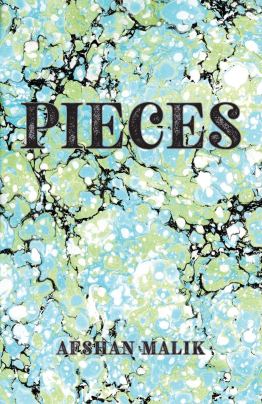
Piece by Afshan Malik

Standard
Piece by Afshan Malik

Pieces.jpg

This 168 page young adult book from Daybreak Press focuses on a small Muslim family in Texas, that has their own stresses and interpersonal relationships, but are thrown in to a whirlwind when the father of the family returns home from a medical mission to Syria and finds himself in the psych ward broken and troubled.  The effects each of the character’s struggles have on them as well as those they care about, makes for a haunting yet relatable read for fourteen year olds and up.

SYNOPSIS:

The Jamal family is made up of Hannah and her older high school aged sister Noreen and their physician parents Dahlia and Adam.  Hannah runs track and is more introverted in handling friends and her father’s life altering condition.  Noreen on the other hand is ultra organized and rational in her approach to life, much more like her OB mother.  To cope with the stress of her father’s return she commits herself to more clubs at school and staring at her phone.

Hannah doesn’t seem to have a lot of friends, and when the track team understands that Hannah’s dad is dead and Hannah doesn’t correct them until later, her comfortable acquaintances turn on her and she will have to learn to stand up for herself and use her voice in the course of the book.  Noreen’s character arc is a bit more dramatic as her involvement in yearbook club brings new people in to her life, mainly a boy, who might not be as a genuine in his goals as she is, and thus their climax results in a trip to the police station.  Dahlia has a close friend, and Adam has a few as well, but the story really stays pretty streamline in exploring the relationships of the family and how little things and big things affect them all.

WHY I LIKE IT:

I love that the book takes on a serious issue like PTSD and is framed in such reality.  The scene where the dad blurs his past memories with the current real happenings, is done very well.  It conveys how fractured his brain is while showing the stress his situation lends to the mood of the home is powerful. There is also a very real situation of attempted physical and sexual assault that occurs when Noreen finds herself in a position with a male classmate who attempts to take advantage of her.  The book holds back in details, and she is able to defend herself, keeping the book clean, while still implying what his intent was, and how fortunate she is to get away.

More superficially, but also more relatable is the girls bickering and fighting and pushing each other’s buttons, and the mom trying to help, but is alas is frequently at a loss at what to do with them.  The situations the girls face at school are probable and relatable that I think a lot of middle school and high school readers will see themselves trying to balance extra curricular activities, friends, finding a quite place to pray and keeping their hijabs coordinating.  The family is Muslim and they dress the part, talk the talk, and pray together regularly.  Islam is very present, but not preachy, it is just what the characters believe and what they use to shape their view of many of the tests they are facing.

There are a few hiccups that are worth noting, but don’t overly deter for my appreciation of the story.  I struggled with the writing style in the first few chapters.  It took a bit to feel a connection to the characters and get what was going on sorted out.  It is written in 3rd person omniscient (I believe, it’s been a while) with each chapter more or less focusing on one of the four main characters.  As a result a handful of times the narrative gets awkward in explaining what one of the characters is doing or thinking, because the focus is on someone else, or the timeline overlaps a bit.  It doesn’t happen an awful lot, but the book is under 200 pages, so it is annoying that it happens at all, let alone more than once.

Story wise the characters seem oddly isolated.  The book tells us how small the town is, and shows us how everyone knows the parents regularly, the girls seem to be pretty lonely.  There isn’t any warmth from the schools or neighbors in helping them deal with their dad coming home so wounded.  In a town they have lived in for so long, this seems off to me.  Also if the town is so small, and the family so religious, there is an imam who visits once, you’d think there would be more of an Islamic community presence for the mom and girls to find support from.

FLAGS:

There is violence in the remembering of what happened in Syria.  There is some Islamaphobic talk as Hannah endures some verbal bullying and the attempted physical and sexual assault on Noreen.

TOOLS FOR LEADING THE DISCUSSION:

I would consider this as a possible middle school book club choice.   It tackless some big things, and uses Islamic boundaries to talk about mental illness and sexual violence which is a huge plus when addressing our youth.  Noreen isn’t in a relationship or even overtly infatuated with the guy who puts her in a compromising situation.  But even if she was doing something “wrong” what he did is not ok, and the fact that the authorities believe her, and she plans to discuss it with her mom, and she is not further victimized by speaking out, is something our kids need to see and understand.

There are discussion questions at the end and I think males and females will benefit from reading and discussing this book.  Unfortunately, and possibly the only other disappointment in the book is the price.  Nearly twenty bucks for a short YA paperback book makes it hard to buy classroom sets for such activities, and I’m sure will even keep the avid reader debating whether they should purchase it or not.


Jasmine Falling by Shereen Malherbe

Standard
Jasmine Falling by Shereen Malherbe

jasmine

This 184 page book about a girl figuring out her past, to accept her present, and plot her future. is not marketed, or perhaps even written as a YA novel, but I’m reviewing it because while the protagonist is in her 20s the book could be enjoyable to ages 15 or so and up, if they are willing to stop trying to understand a lot about the book and are content to just go along for the heartfelt ride.

SYNOPSIS:

Jasmine is half Palestinian and half British and when her wealthy mother passes but stipulates to claim her inheritance Jasmine must find her father, the book leaves England and heads to Palestine.  To further complicate things she has only 10 days to find a father who has been missing for years, in a land she has only visited once before many years ago.

Once in Palestine, the story takes her from one city to the next and one village to another with pit stops at various historical sites along the way.   With lots of fragmented memories, the shadow world of Jinns, and a race against time and around the obstacles of the occupation, Jasmine rediscovers Islam, her family history, and the fears that haunt her.  She also meets Josh, a character of questionable allegiances, motives, and background himself, that constantly finds himself able to help Jasmine and possibly himself.

From Jericho and Jerusalem and Batien, Jasmine hears stories about her father from people that know her family,  as she pieces it all together and reunites with her family members, she understands her past and works to determine what path her future should take.

WHY I LIKE IT:

I love the backdrop of Palestine and the history and the richness of culture that is brought to light in a surprisingly non political way.  The interaction of the different faiths among the villagers and the love of the land is truly palpable.

The part I struggled with was the holes in the story telling, for each page that brought Jasmine closer to answering her one question of where her father is, the reader was given 27 new ones that would never be answered.  Where did the wealth come from, how did Jasmine’s parents meet, what were the circumstances that made Jasmine’s dad leave, who is Richard, who was Ali, how old is Jasmine, why are there so many Jinns every where, why is there secret passages in the mountain, how come she trusted Josh, how could Josh get from one city to another in record time, why did the soldiers at the check points know of her family and specifically her father, and most importantly why every time she meets someone that knows her family, why does she run away.   It is incredibly frustrating that every time the story hints at what makes her father so famous, or sought after or memorable, or hint at why he disappeared, something interrupts them and the reader is left in the dark, only to have the book end and no really understanding conveyed.

I get why the story is told in pieces, but really the story is confusing in how it is told, and it doesn’t need to be.  The author can write and the last 50 pages are really great.  For as confused as I was so often, I kept reading because the story is good.  There is just a tad too much with diving in to the past to understand the present, the supernatural of the jinn, the reemergence of faded memories and dreams, the political climate, the letters from World War II, that the character dynamics are lost until the end.  I care about Jasmine and am curious about Josh, but a little more detail to the relationships the two main characters have with all the other minor characters that they encounter would really make the story soar, and clarify so much.

One thing I didn’t love was the presentation of Jinns, I know it is to add cultural richness and a bit of muddled confusion, but really the story I think is strong enough without the supernatural and character building could have benefited in its place. I also really, really, really wished there was a map and an afterward telling what parts about Palestine and history and the Holy Cities is fact, for those of us that have never been.

FLAGS:

Jasmine attempts suicide, jumping out a window.  Jasmine also gets drunk a few times in the book before deciding to stop drinking as she doesn’t like who she is when she does.  There is some violence and killing talked about but not overtly detailed.

TOOLS FOR LEADING THE DISCUSSION:

I don’t think I would do this as a book club book, but I definitely would encourage those with connections to Palestine to read the book.  And I am really hoping that someone, anyone, that has read the book will chat about it with me.  For all the questions I have, I’m optimistic that I just missed the answers and that they were in fact there.


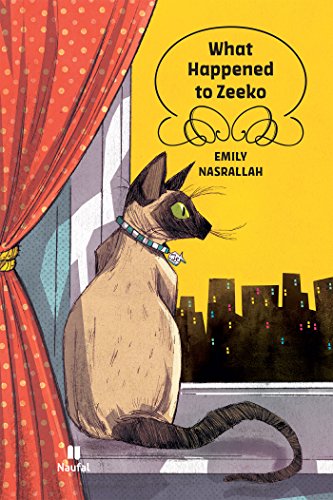
What Happened to Zeeko by Emily Nasrallah illustrated by Maha Nasrallah Kays

Standard
What Happened to Zeeko by Emily Nasrallah illustrated by Maha Nasrallah Kays

zeeko

Told from a cat’s perspective about living through parts of the 1982 war in Beirut, this translated from Arabic young adult book is 121 pages.  It reads to me more like a middle grades book, and while the story is fairly monotone and anticlimactic, I find myself oddly thinking about it and wondering about everyday events from different perspectives.

SYNOPSIS:

Zeeka as a young kitten is taken from his cat family and placed with a new human owner, Muna, a young girl who loves and cares, and seemingly understands her new furry friend.  The relationship between Muna and Zeeko is really the crux of the book as they get to know one another, trust one another, vacation in the mountains together and then seek refuge in the basement shelter of their building when the shelling starts and the bombs destroy the neighborhood.  

Through the relationship details, the reader learns a lot about what kind of person Muna is and why Zeeka is willing to perform a heroic act to try and help her escape the danger, while sacrificing his own comfort.  

WHY I LIKE IT:

I don’t know that I loved the book, but it was a quick read that I don’t regret spending time with.  It is translated from Arabic, so there are some hiccups, but nothing that impairs the story continuity or comprehension.  It almost starts out like an early chapter book with each chapter being two pages long.  But then all of a sudden a neighborhood cat is murdered by a group of naughty boys, and you realize that it is not for younger children. 

How the book handles war however, is very removed and not really detailed at all.  Much like The Cat at the Wall for about the same age group, the use of an animal to simplify the absurdity and details of war is used to show a different perspective, however, in this book there is no information given about the war.  The reader is never told who is fighting, why they are fighting, what sparked the fighting, nothing.  All we know is that there is fighting.  

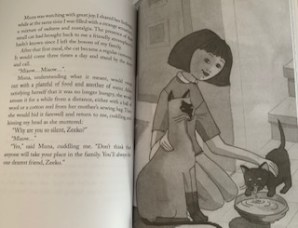
There is no mention of religion in the book, and I have no idea of the author’s faith, there really isn’t much culture in the book either. I didn’t learn much about Lebanon or the food or traditions.  I got the book from www. crescentmoonstore.com/ so I thought to review it as it seems available on Islamic websites.  Every dozen pages or so there are illustrations and sometimes there is a blank page before each new chapter and sometimes not.  There is a table of contents at the end of the book.

IMG_5938.jpg

FLAGS:

Murder of a cat, violence in general in terms of bombing and micro level of bullying and threatening.  

TOOLS FOR LEADING THE DISCUSSION:

I wouldn’t do this as a book club book, but I think if you are looking to learn more about Lebanon or point of view this book would have a lot of potential with guidance.  From a literary creative writing perspective the book would be a great tool to present complex events in simplified ways, it also would be a great read to get students to just look at things from different points of view.  If you have students that love cats and can handle the war aspects, this book would be fun for them.  In a social studies class if you are discussing affects of war or learning about Beirut in the 80’s the students will be able to fill in the gaps historically and politically.

IMG_5937.jpg


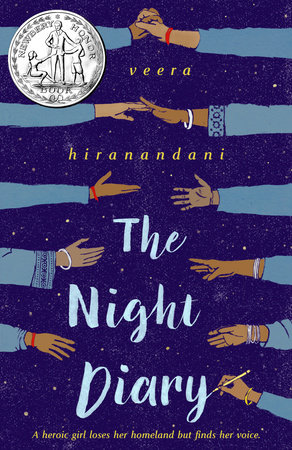
The Night Diary by Veera Hiranandani

Standard
The Night Diary by Veera Hiranandani

night diary

I was curious to see how partition would be presented in this book by an Indian Hindu author featuring characters who are half Hindu and half Muslim relocating to Hindu India.  Told in journal entries written by 12 year old Nisha to her deceased Muslim mother, the 264 page AR 4.5 book is wonderfully done, extremely compelling, and about so much more than the politics that birthed India and Pakistan.

SYNOPSIS:

Nisha and her twin brother Amil are opposites, yet they complete each other and care for each other in such a tangible and heart swelling way, that you can’t cheer for one while not rooting for the other one to find success and their place in the world as well.  As the twins turn 12 and Nisha is gifted with a journal from the families beloved cook Kazi, India and Pakistan too are about to come to fruition and Nisha’s journal entries detail her understanding of the larger events around her as well as her own struggles to come in to her own.

For Nisha words do not come easily.  She excels at school and loves to cook, but talking to people, or making friends eludes her and her longing for her deceased mother, make her a quiet reflective child.   She observes and  takes in so much around her, internalizes it, ruminates on it, and pieces it back together in a gifted way when she writes, that reading her entries, and the voice the author creates for her, is really amazing and fluid.  You feel like you really know Nisha and what makes her tick, what she fears, and how she thinks, you also get emotional attached to her and her world and find yourself surprised at how invested you are in not only her family’s successful migration across the new border, but also in her finding her voice and the confidence to use it.

Amil’s voice comes through Nisha, but her love for him and the way his strengths are her weaknesses and vice versa allows insight into the other family dynamics and attitudes to the two children.  Amil is an amazing artist, that suffers from dyslexia and does poorly in school.  He is weak and wiry, but fast, and he can talk and charm and ask all the questions that Nisha wants asked but can’t find the words for.  He and their physician father are rarely on good terms, as he isn’t the ideal strong boy with a medical degree in his future.

When it is decided that the family must leave their city where Muslims and Hindus and Sikhs live together and journey into Hindu India, the twins, their father, and their father’s mother, Dadi, must rely on each other to survive the riots and violence of the mass migration.  Nisha must also survive the understanding that with a Hindu father and Muslim mother there is so much about her own place in the world she doesn’t understand, and thus the journey is both an internal and external one, that will change Nisha forever.

WHY I LIKE IT:

I love that the protagonists voice is so steady and believable.  I truly fell in love with Nisha and felt her pain, happiness, anguish and overall got emotional for her, it was a rollercoaster.  The author does an amazing job of painting the politics of Jinnah, Nehru, Gandhi and Mountbatten in broad strokes, but believable ones to the understanding of a 12 year old.  She sees that one India held people of all faiths and that this breaking up of everything is leading to violence, upheaval, and horrors previously unimaginable.  She doesn’t understand why people had issues with her mother being of one faith and her father another, she loves her Muslim cook and loves listening to him pray five times a day as her paternal grandmother sings Hindu prayers in the other room.  She is both Hindu and Muslim and doesn’t see the contradiction within herself, suspending the reader’s own opinions on partition (if they have them), because how she sees it, does make sense for the story’s narrative.  The author takes Gandhi’s side of non violence and staying together, but balances very well and very intentionally that atrocities and humanity was seen from people of various faiths and political persuasions.  The role of British colonization and freedom from it, is slightly glossed over to the point of disservice, but again, being the target age of the reader and the age of the characters, I’m willing to over look it.  Families with Indian and Pakistani heritage will want to take the lacking information and help their children to fill in the blanks.

I love that the backdrop is the action of the story, but the relationship between the characters is truly the heart.  A lot of growth and compassion is conveyed very succinctly and powerfully.  Nisha wants so desperately to speak, but can’t, and her internal struggle and the pain she feels when she can’t speak up to help and participate in the world around her is gut wrenching.  As she confides in her diary, you realize that kids understand so much more than we adults often give them credit for.  The lesson is not lost on me.  I initially thought a book steeped in subcontinent history, with religious conflict and foreign words, wouldn’t appeal to a western elementary aged readers, after reading it, however, I now think this heartwarming story should be thrust upon them all.

FLAGS:

There is violence and death.  Not sensationalized, but detailed enough to set the tone of how serious the journeys were between the two countries when British rule stopped  There is some bullying and mention of the father smoking socially with friends.

TOOLS FOR LEADING THE DISCUSSION:

There is an Author’s Note, and a glossary at the back, and the inside covers have maps showing the journey the characters take.  I would absolutely do this as a Book Club selection for upper elementary, and will consider it even for middle school.  A lot of tools for teaching the book are available online, here are just a few:

Educator’s Guide: https://www.penguin.com/wp-content/uploads/2018/02/The-Night-Diary_Educator-GuideWEB.pdf

Children’s Discussion Questions: https://www.readbrightly.com/brightlys-book-club-for-kids-the-night-diary/

Classroom Bookshelf: http://www.theclassroombookshelf.com/2018/06/the-night-diary/


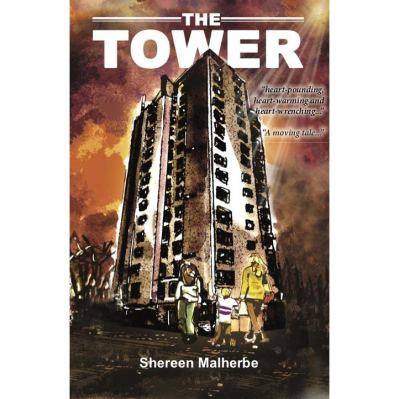
The Tower by Shereen Malherbe

Standard
The Tower by Shereen Malherbe

the tower

At 246 pages I’m not sure if this book would be classified as Young Adult, but I think it could be, as its message, focus and presentation makes it a valuable thought provoking read.  And the cleanliness of everything being resolved so neatly might almost be too coincidental for older, more jaded readers, where I personally wasn’t too bothered by how much emotional action was packed in to the book and how quickly it was resolved as the characters were compelling and the pacing made it an enjoyable quick read.

SYNOPSIS:

The story follows two women, Reem and Leah as their very different worlds and circumstances come together when they move in to the same apartment building.

Reem is a Syrian refugee whose past is presented in bits and pieces as her fragmented memories surface in the story.  She is searching for her 10 year old brother Adar, as well as trying to create a future for her self in London.

Leah has recently lost her husband, left her training as a doctor, and is trying to make a life for her and her son, Elijah, away from her parents’ shadow of expectation and demands.

When the two ladies meet, neither is completely settled or functioning, yet the desperation each is feeling causes Reem to ask for Leah’s help, and Leah agreeing.  The two become friends as they share parts of their world with one another and slowly start to heal.

Then Reem’s secret pregnancy comes to light, her abusive husband finds her, Leah’s posh friends abandon her, and their apartment building, the tower, catches fire.  Granted it doesn’t all happen that quick and there are lots of details that make their pasts, their friendship, and their goals for the future believable and inspiring, as well as making the pain for those lost in the fire emotionally wrenching.

As the two women once again try and survive hardship, this time together, they make progress before a terrorist attack on the mosque again sets them back.  Through all these major plot points details about how Reem got to England, and the atrocities she suffered that her mind blocked out are made clear.  Additionally, more about Leah and her families involvement in the tower fire and their friends’ involvement in human trafficking all tie the lose ends up. In the final pages there is hope and resilience and respect from the reader for the brave characters brought to life and their determination to persevere.

WHY I LIKE IT:

I love that it is a very personal, character driven story about a horrific fire, reminiscent of the Grenfell fire which claimed the lives of over 70 people.  I also absolutely love how Islam is presented.  The Muslim characters are tangibly real.  Reem wants to fast because it is Ramadan, but has the excuse that she is pregnant, but tries anyway.  She prays, she covers, she meets a Muslim that doesn’t cover, but they pray together at the mosque later and become great friends.  Leah is interested in Islam and asks questions and when she cooks for her Muslim friends she gets halal meat.  There is an amazingly helpful character Mo in the story who Leah is crushing on, but he refuses to be alone with her, or touch her, and when she tells him of her feelings, he says that everything she likes isn’t him it is his religion.  Leah and Reem discuss how the sunnah’s of the Prophet influence Mo and his brother and it is quite detailed.  Quranic ayats are quoted in character’s dialogues in natural presentations, not preachy or misplaced.  It hints at the end, when Leah has joined Doctors Without Borders and is in the Middle East that perhaps she has taken shahada, but it isn’t a plot point and isn’t mentioned explicitly.

My biggest complaint about the book is the random foreshadowing that pulls out from the story to hint that something more is going to happen between certain characters or be of more importance later.  I think it happened three times, and each time completely unnecessary. The story and characters and writing are clear and done well enough that needing the hint sells it all short and it wasn’t just annoying and irritating, it really kind of made me mad.  Here I was feeling an attachment for a character or what they were experiencing only to be reminded that there will be more, rather than letting me go along for the ride with the character.

I also was bothered by the font and spacing.  It is really tight on the pages, but with big margins, that a little breathing room would have been nice.  So, much happens in the book, that I wanted to be able to relish in each event and often I felt the presentation made it rushed and I found myself skimming, more than I would have liked.  I would have also liked to know what parts, if any, were based on or inspired by real events: the tower fire, human trafficking, stealing organs, artifacts coming out of Syria, refugee treatment in London, etc.

FLAGS:

There are memories of war and dead bodies.  The stealing of organs and dumping of bodies into the ocean.  There is a lot of death after the fire and after the shooting at the mosque.  There is a lot of blood, a terrorist act, a baby being delivered, a drunk man at a party.  Nothing is overly sensationalized, but it is a gripping book with some intense moments.

TOOLS FOR LEADING THE DISCUSSION:

I don’t know if middle school can handle the book, the characters are older, so it won’t resonate with them like a traditional YA book would, but I’m tempted to have my almost 13 year old read it so we can discuss.  I will most definitely suggest it to the high school book club adviser as there is a ton to discuss and relate to in this action packed book.

Author’s website and Q and A: https://shereenmalherbe.com/


We Hunt the Flame by Hafsah Faizal

Standard
We Hunt the Flame by Hafsah Faizal

we hunt the flame.jpg

A mature upper middle school/high school aged fantasy romance, written by a nikabi and filled with ancient Arab imagery and Arabic words.  Story-wise it read to me like a mashup of Hunger Games and Ember in the Ashes, and while the overall story is good, the first 60 pages of world building were utterly confusing to me.  I told myself I would read at least 100 pages and then decide if I wanted to continue, luckily before I hit 100 pages I found a glossary of terms, characters, and places online, and the story moved from world building to character development and I enjoyed the rest of the ride.

SYNOPSIS:

In a world that is slowly being taken over by the dark magic that is the Arz, a deadly forest that surrounds the country of Arawiya, one girl in one of the five Caliphates, Zafira, dares to venture into the darkness to hunt game and prevent her people from starving.  Unfortunately the Caliph of her state looks down upon women and this regular heroic act must be done with her impersonating a man and keeping her efforts as covert as possible.  Life for Zafira is hard as she not only juggles this masquerade, but her father has recently been killed, her mother is mentally absent, her best friend is getting married, the Arz is growing, and the people around her are starving.

In more or less alternating chapters we also learn of Nasir, the ‘Prince of Death’ who is an assassin for the Sultan who has also now taken over as Caliph of Sarasin.  Forced to kill innocent people by his heartless father, Nasir also is mourning the loss of his mother,  as he tries to earn his father’s approval and find some validation for his current life.

The two characters come together when an immortal witch summons Zafira to retrieve a magic book from a cursed island beyond the Arz and Naisr’s father sends him to intercept her.  The majority of the book takes place on the island of Sharr, an island that is not only a location, but a living consuming character, and involves a variety of other enchanted beings from the various states.  An immortal Safin, Benyamin, one of nine elites, Kafirah, and Altair, a general from Sarasin that weaves them altogether and complicates everything.   This group, the zumra, must work together to save Arawiya, while constantly evaluating how much they can trust one another, as well as themselves.

WHY I LIKE IT:

I love the detail and was pleasantly surprised with the pacing.  The chapters are short and kept the plot from dragging for 471 pages.  Having read it and enjoyed it, I don’t know that I can properly discuss it though.  There are things that I just accepted and moved on with without pondering over, because I don’t know if I understood it well enough to even ask the question aloud.  That being said, I feel like I got the story and I understood where the characters were coming from and I closed the book feeling satisfied and willing to read the next one in the series.  The characters grow and develop and they have a satisfying arc without being overly cliche or predictable.  I think Nasir grows much more than Zafira and knowing that the next book is more focused on him, intrigues me.  Altair is by far the most fascinating character and I hope to see more of him as well.

There is a map at the beginning of the book that I referenced A LOT, and truly I have no idea why the glossary and character list was not included in the book, as it is desperately needed. There are a lot of Arabic words and I would like to get an Arabic speaker’s perspective on how knowing what the terms meant affected the story comprehension. 

I like that Zafira has to find confidence in shedding her cloak and stepping in to herself, but I felt it told it more than it showed.  Some of the states are governed by women, the founders are women, that I didn’t feel her fear in hiding her gender.  Similarly, I wanted more information on who/what exactly the Lion of the Night was/is and where the affinities come from.  Perhaps minor points, but details that kept me from immersing myself in this fantastical land and kept me feeling like an outsider peering in and trying to connect with events just out of reach.

FLAGS:

There is a lot of killing, and some of it gruesome.  There is abuse and details of branding and a tongue being cut out.  There is alluding of sexual acts but nothing defined, random comments between characters and implications of girls in a room in the morning.  There is kissing and an intense makeout session that is used to achieve a battle goal, but it is detailed and the characters reflect on how it made them feel in terms of desire, longing, wanting, etc.  So, while it is there, it is there for a purpose other than titillation, that is why I think mature middle school could handle it.  There is a scene in a bar, but none of the main characters drink.  There is some language, albeit not in English.

TOOLS FOR LEADING THE DISCUSSION:

I don’t think I could do this with 6th graders in my middle school book club, but I will definitely suggest it for the high school one.  I think there are a lot of ways things can be interpreted and because it is a fantasy there is no right or wrong which would make the discussion fascinating.  The romance I think makes the book lean to being more female oriented, but I think there is enough action that boys will also enjoy it overall as well.

Book Website: https://www.wehunttheflame.com/

The book just came out, so I’m sure in the next few weeks and months there will be more tools, more interviews, and more details of what is to come in the series.


Other Words for Home by Jasmine Warga

Standard
Other Words for Home by Jasmine Warga

other words for home.jpg

Three hundred and forty pages written in verse that beautifully consume you and leave you emotionally changed and vulnerable and humbled all at once.  The book claims it is for middle grades, but I think middle school will appreciate it more, and I sincerely hope everyone of all ages will take a couple of hours to fall under the spell that is woven to tell a story of a refugee leaving home and starting anew in America.

SYNOPSIS:

Jude is a 12 year old girl living on the beach in Syria, watching American movies with her friends and hanging out at her dad’s store.  With an older brother and a little sister on the way, life as told from her own perspective is pretty good.  Until it is not.  Until the crimes they only hear about happening in Aleppo and Damascus start to hit closer to home.  Until her brother starts sneaking out to meetings with other youth hoping to change the politics of their country.  Until a raid almost catches Jude and her brother and her parent’s decide it is time for Jude and her mother to journey to America, for a little while, to visit her mom’s brother and deliver the baby.

America is not like it is in the 90’s movies that Jude loves: Pretty Woman, Legally Blond, Miss Congeniality.  Her American aunt and her Uncle that seems to have forgotten his Syrian upbringing, are gracious and welcoming and their daughter, Sarah, who is less than a year older than Jude waxes and wanes in her approach to her cousin.  Adjusting to school, life without baba and her brother, and all the other adaptations that moving to a new country entail are brought to life through Jude’s eyes and understanding of the world around her.  As she comes of age and decides to wear hijab, as Islamaphobia shakes her sense of justice, and her little sister is born, the reader sees her grow and change and mature and find themselves hoping that she will soar.

WHY I LIKE IT:

I love that the style of the story telling somehow gives life to so much.  With verse some things are highlighted in detail and other things skimmed over and yet at the end, not only do you feel like you understand Jude, but a lot of the side characters as well, which caught me off guard.  Truly the writing is strong and deliberate.  A lot of the politics and war crimes occurring in Syria are not detailed, and I have to assume that is because the point of view is a 12 year old girl that is blissfully in her own world.  I imagine this is also why the target audience is listed as 8-12 year olds, because it simplifies a truly horrific situation.  Also because despite moments of raw vulnerability, the book stays pretty optimistic and hopeful.  

I like that the characters are Muslim, and that the mom scolds her brother for not going to the mosque.  The book does talk about Jude’s period starting and thus Jude starting to wear hijab, which is one of the reasons I feel like early middle school might be a bit more appropriate age group.  There isn’t too much talk about faith and Islamic beliefs, but a few tidbits are sprinkled in, prayer, not eating pork, modesty.  The book is not gender exclusive, but I think girls will gravitate much more to Jude’s perspective, experiences and voice.

The only thing I found a bit off is that the book takes place in modern time, present day, yet none of them have cell phones or social media.  Jude Skypes her dad, yet writes letters to her friend back in Syria and is distraught when they don’t have a forwarding address to send them to after her friend also leaves home.  It seems that social media, email, a cell phone number, something would be available for them to all keep in touch.

FLAGS:

There is mention of Jude and her friends having to sneak in to see Pretty Woman because Julia Roberts is a prostitute, and mention of blood between one’s legs and periods starting.  The book otherwise is pretty clean.  It hints at her kind of crushing on a boy that is in the play with her, but nothing more than friendship is explored.  Violence mentioned is minimal and language is clean even when dealing with hate crimes in America.

TOOLS FOR LEADING THE DISCUSSION:

There is a good chance that next year the students joining the middle school book club will be all girls, so if that is the case and the school counselor feels all the girls can handle the puberty aspects mentioned I would totally do this book.  The book reads very quick and might be a good way to get new kid to give a book club a try as well.

Author’s website: http://jasminewarga.com/about

Q & A with the Author: https://www.publishersweekly.com/pw/by-topic/childrens/childrens-authors/article/80127-q-a-with-jasmine-warga.html

Interview with the Author: https://www.hbook.com/2019/04/authors-illustrators/publishers-previews/spring-2019-publishers-preview-five-questions-for-jasmine-warga/


Mosque by David Macaulay

Standard
Mosque by David Macaulay

mosque1

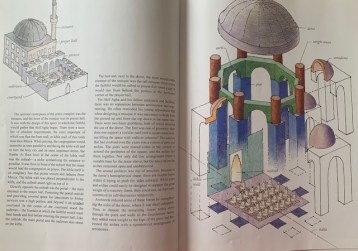
This 96 page “picture book” written on an AR 8.4 is not for everyone, but for those interested in architecture or structural engineering, or 16th Century Ottoman culture, or even Turkey in general, this book is fascinating, beautiful and most of all informative.  It first caught my attention when I was planning a story time to remind children of how they ought to behave in a mosque, needless to say it didn’t fit the occasion, but this fictionalized account of how a typical Ottoman mosque would have been built and why was perfect for my 7th grade daughter who loves legos and design and has been to Turkey.

IMG_4394

SYNOPSIS:

The story starts with a wealthy Turk realizing his own mortality and wanting to follow his Islamic faith in giving back his wealth and providing for his community before he passes.  Thus he commissions the building of a mosque, madrese (religious school and library), an imaret (a soup kitchen for preparation and serving of food), hamam (public bath) and a cesme (a public fresh drinking water fountain).  

From there the book details how the foundation to the minarets are designed, crafted, erected and used.  Explaining how domes are supported to how stones are laid and stained glass windows constructed, so many details are illuminated and kept simple at the same time. 

Aside from the physical construction of the buildings, it really is incredibly remarkable and gives insights into how Islam shaped cultures, and similarly how Mosques became integral  parts of societies.

IMG_4393

WHY I LIKE IT:

The book is fact and historically based with a fictionalized story layered on top to move the information along.  The pictures are detailed and informative with labels and descriptions that make the technical jargon of the text visually understood.

If one has ever been to the Blue Mosque, even in its fiction, the book will explain the function and thought process behind the gardens and porticos and women’s spaces in a very satisfying manner.

I love that it mentions how even Jews and Christians contributed to building of such Mosques and how the all facets of the community took pride in the completed works.  I’m not sure why the author specified the blood of a ram being spread out, as it isn’t Islamic culture, but with my limited knowledge of 16th century Ottoman practices, I didn’t dwell on it too much.

IMG_4392

FLAGS:

Clean.

IMG_4391

TOOLS FOR LEADING THE DISCUSSION:

I feel like this book would be great in any middle school STEM class to just have to look at and thumb through, Muslim or not.  The author has written numerous books about different structures (Cathedral, Castle, City) and breaks down how they were constructed and why.  A great resource for anyone willing to ponder and marvel at the structures around them and take their understanding to the next level.

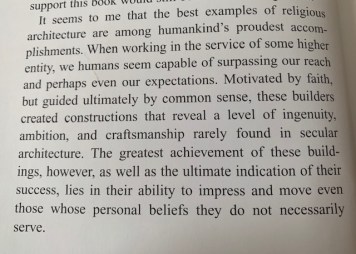
There is a Glossary at the end, and I really enjoyed the last paragraph of the Preface at the beginning:

IMG_4388

IMG_4390