Category Archives: Non Fiction

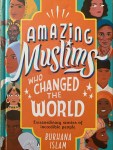
Amazing Muslims Who Changed the World: Extraordinary Stories of Incredible People by Burhana Islam illustrated by Reya Ahmed, Deema Alawa, Nabi H. Ali, Saffa Khan, Aaliya Jaleel and Aghnia Mardiyah

Standard
Amazing Muslims Who Changed the World: Extraordinary Stories of Incredible People by Burhana Islam illustrated by Reya Ahmed, Deema Alawa, Nabi H. Ali, Saffa Khan, Aaliya Jaleel and Aghnia Mardiyah

img_8359

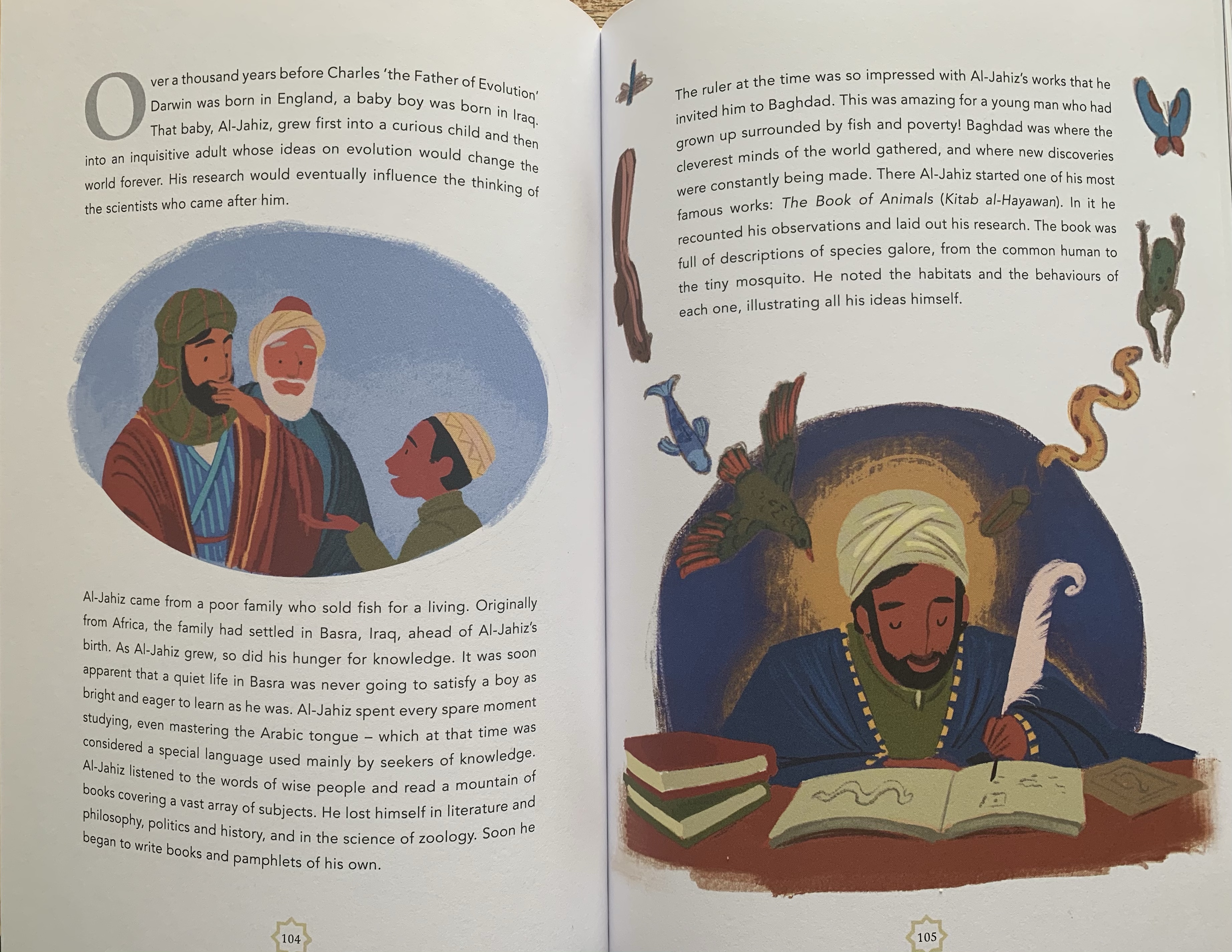
The 30 stories presented over 197 pages are inspiring, and this compilation so desperately overdue. The book is not chronological it is completely random, and at first I was confused, but as I made my way through the book, I actually grew to love not knowing who I would be reading about next.  Yes, there is a table of contents, but the point being that you don’t have to be born into royalty, or be a warrior, or have lived a long time ago to be amazing, you just have to follow your passion.  I learned so much about people I thought I knew about, and was tickled to learn about people I have never heard of: bakers, athletes, actors, educated slaves, architects, spies, singers, scientists and politicians.

img_8360

At the end of each six page illustrated blurb is an “Interesting Fact” and at the end of the entire book are some activities in the “Amazing Extras” section.  Readers can crack a code like Noor Inayat Khan who helped the Allies decode and send secret messages from France to Britain or write a poem like Rumi, a song like Yusuf Islam (Cat Stevens), draw a superhero like G. Willow Wilson, make a camera following the science of Hasan Ibn Al-Haytham, or color a picture of Muhammad Al-Idrisi.

img_8361

My favorite biographies were those that I knew little or nothing about before hand.  If I had to pick two favorite among all of those sections, I’d pick Khawlah bint Al-Azwar and Ayuba Suleiman Diallo.

img_8362

In 600 CE Arabia, Khawah, the masked knight, learned how to fight along side her brother and eventually served with Khalid ibn Waleed in battle.  It is said that she killed the Byzantine leader that captured her and then asked for her hand in marriage.

img_8365

Ayuba Suleiman Diallo in the 1700s in modern day Senegal was a highly educated man who was captured and forced in to slavery in Maryland, USA, interacted with James Oglethorpe, found himself being sent to England and with the help of a Thomas Bluett was able to be freed and eventually return home a free man. SubhanAllah!

img_8363

This book has it all: famous Muslim men, famous Muslim women, Black Muslims, Arab Muslims, European Muslims, American Muslims, Asian Muslims, African Muslims, Muslims who lived a long time ago, Muslims who are still alive all jumbled up and beautifully presented by a Muslim author and a handful of Muslim illustrators. This book is wonderful for 3rd graders to adults and would be a benefit on any book shelf.  It is worth noting there are no sources given, and doesn’t explain how the people were chosen to be included in the book.

Float Like A Butterfly by Ntozake Shange illustrated by Edel Rodriguez

Standard

img_8250

This 40 page biography beautifully presents major events of the famous boxer’s life without going in to much explanation. While it is an AR 4.7, it is still a picture book, and might work better for younger kids with some conversation and context, than for middle grade readers looking for anything in-depth about the beloved hero. While following his life, the reader sees him as a child growing up before he becomes famous, and sees that even after he retires, he is so much more than just a boxer, he is a compassionate leader, icon, and humanitarian.

img_8251

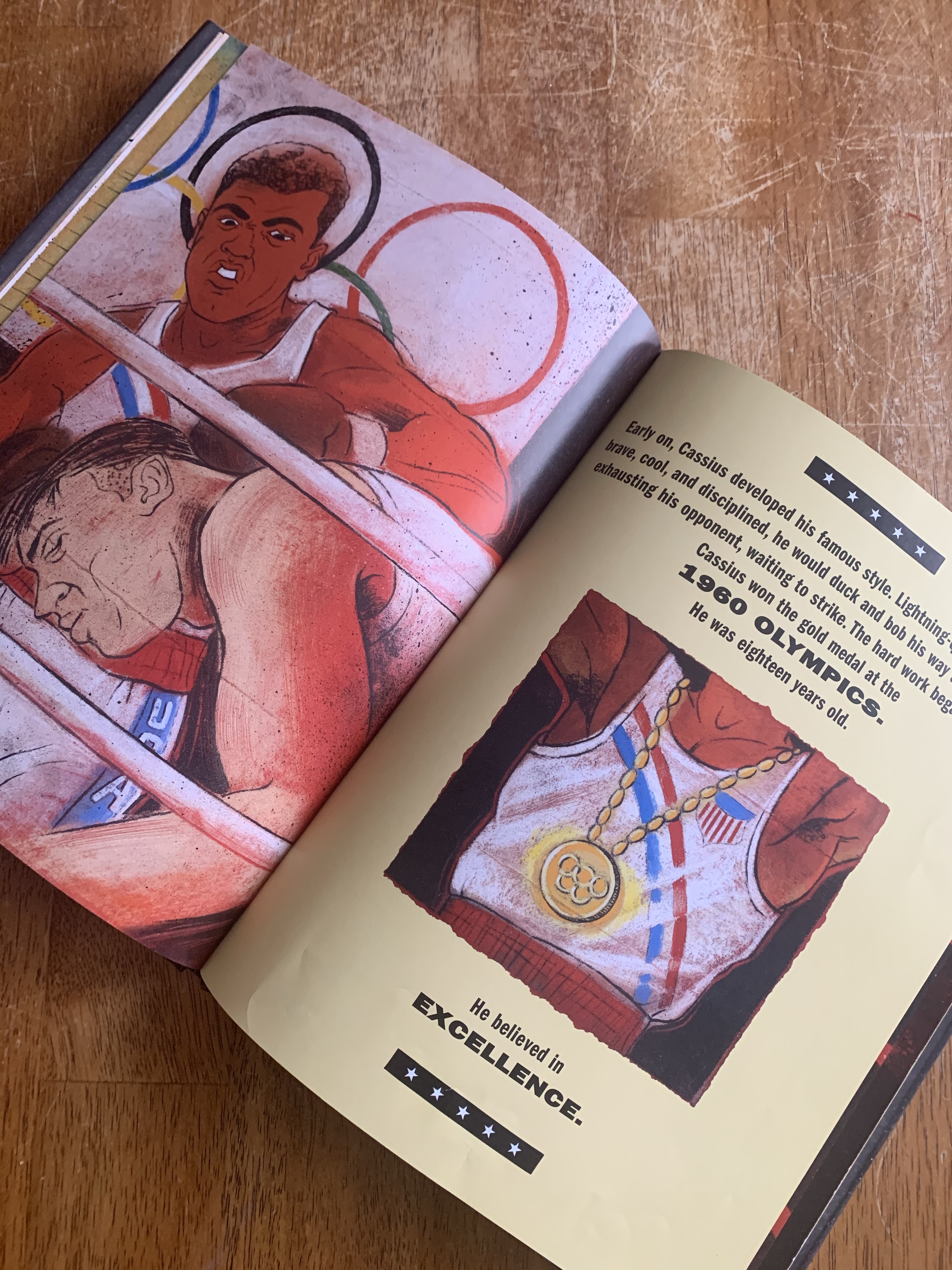
Born in Louisville, Kentucky in the Pre-Civil Rights South as Cassius Clay, he struggled to understand why there was only a white superman, and questioned if heaven was divided up by color and income like Smoketown.

img_8252

Cassius loved the power of words and would help his father make rhymes as a sign painter. When his bike gets stolen he is motivated to learn to fight so that nothing else is ever taken from him and his. He may not be the colored superman, but he is determined to be lightening fast and have fists that fly.

img_8253

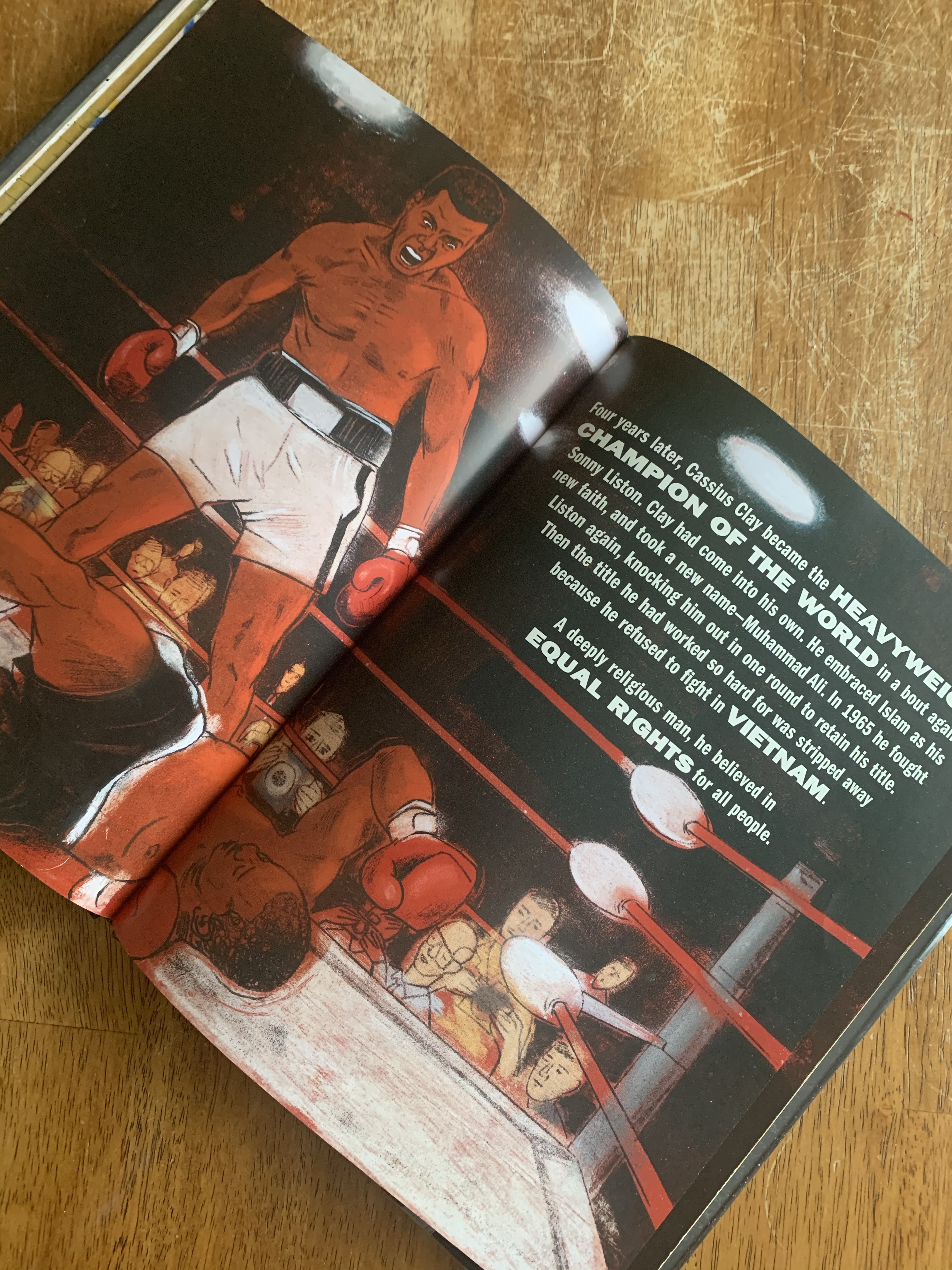
In 1960 at age 18 he won Olympic Gold. In 1964 he converted/reverted to Islam and changed his name to Muhammad Ali days after becoming the Heavyweight Champion of the World. His titles were stripped from him, however, when he refused to fight in Vietnam.

img_8254

Years later in 1971, the Supreme Court reversed his convictions for not fighting and in 1974 he reclaimed his title by beating George Foreman in “The Rumble in the Jungle.” In 1981 after winning, keeping and losing the title, Muhammad Ali retired from boxing for good.

img_8255

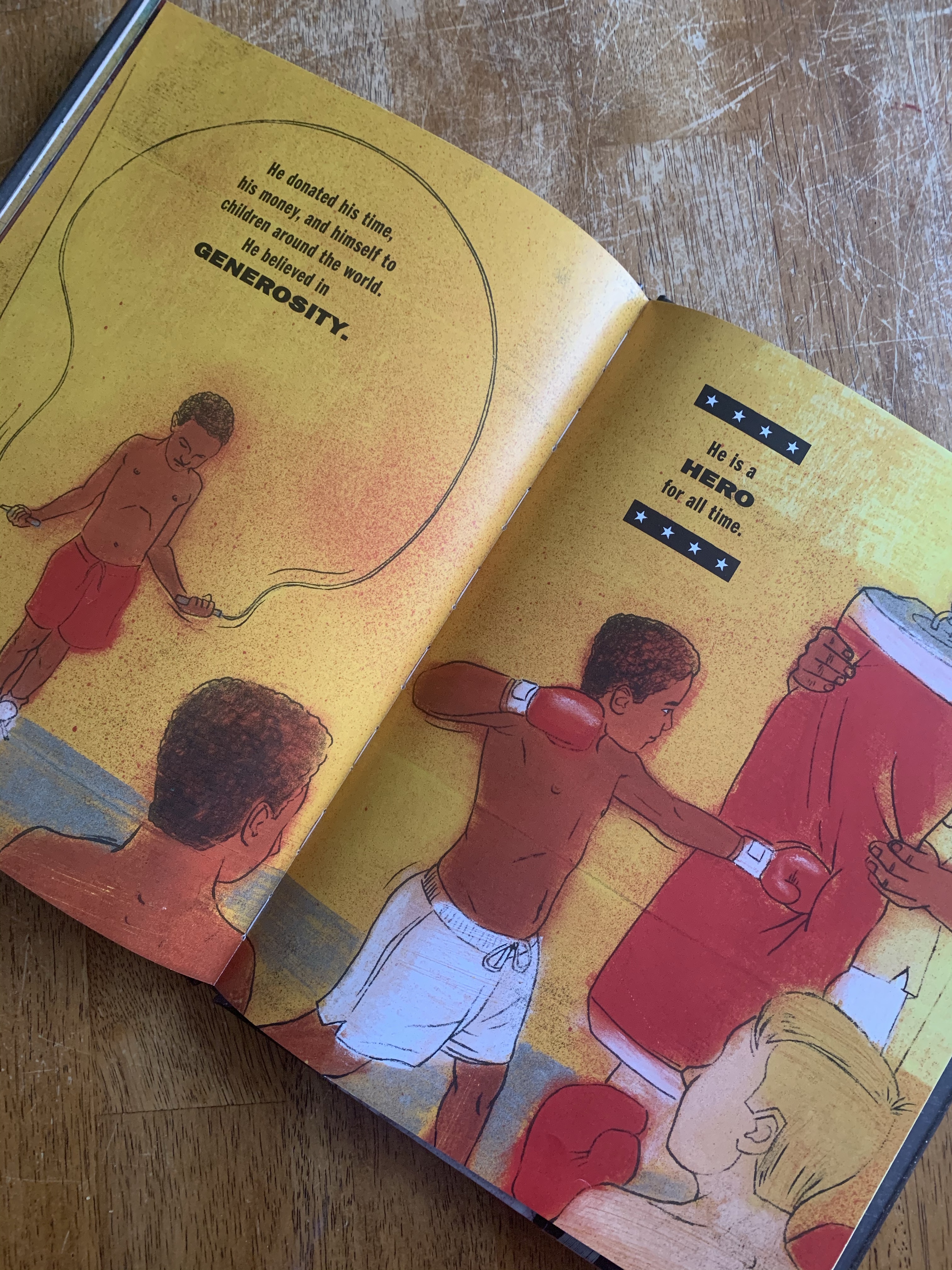
Muhammad Ali suffered from Parkinson’s disease but still donated his time, his money and himself. He believed in perseverance, and equality, and fought for what he believed in. He passed away in 2016 at the age of 74.

img_8256

This is an updated edition from the 2002 originally published book, it now includes his death. I wish it was more than a fleshed out timeline and showed him as a person, or what it was like to lose everything when standing up for something you believe in, or explained what some of his catch phrases meant, or really just as a more high energy celebration of his life.

img_8257

My First Book About Allah: Teachings for Toddlers and Young Children by Sara Khan illustrated by Ali Lodge

Standard
My First Book About Allah: Teachings for Toddlers and Young Children by Sara Khan illustrated by Ali Lodge

img_8046

This 26 page non fiction sturdy board book packs in a lot of information in a really simple way that will keep little one’s attention and hopefully encourage them to ask deeper questions as they grow.  The illustrations are soft and alternate between detailed familiar scenes and simple background style scenes that draw attention to the text on the page. It covers the Shahadah, who Allah (swt) is, it mentions that He has 99 names,  that He sent us the Quran and the final messenger is Prophet Muhammad (saw).  The book at times is wordy, and perhaps the vocabulary a bit above a toddlers level, but the flow is smooth and the tone is warm, inviting, and is requested often by my little ones. (It is reasonably priced by at small bookstores, and double the price on Amazon).

img_8047

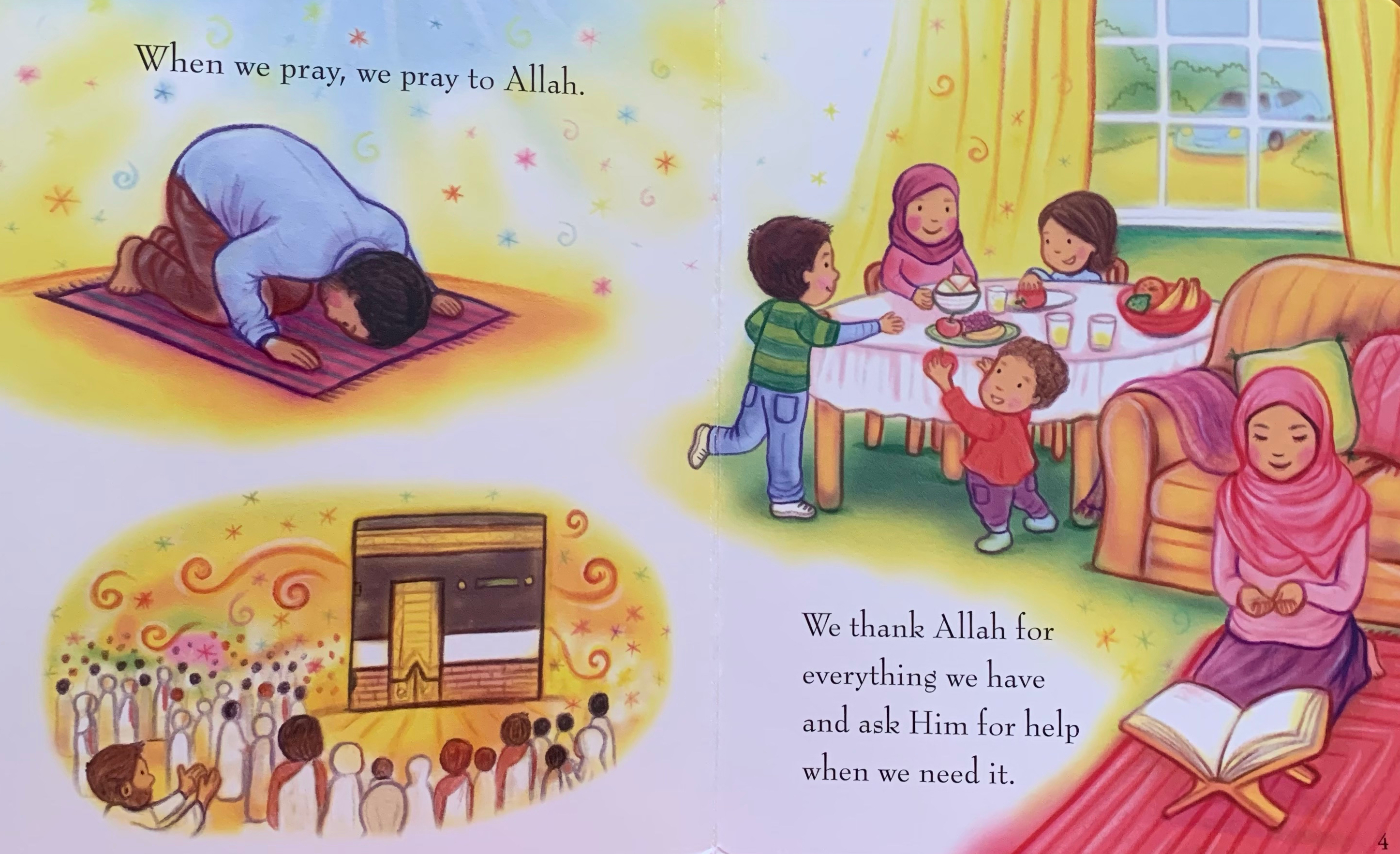
The book starts off by stating that Muslims believe that there is only one God and His name is Allah.  It shows it in Arabic as well on a very muted background.  The next page is much more lively with illustrations showing someone pray, a picture of the ka’aba, a family eating, and a mother reading Quran and making dua.

img_8048

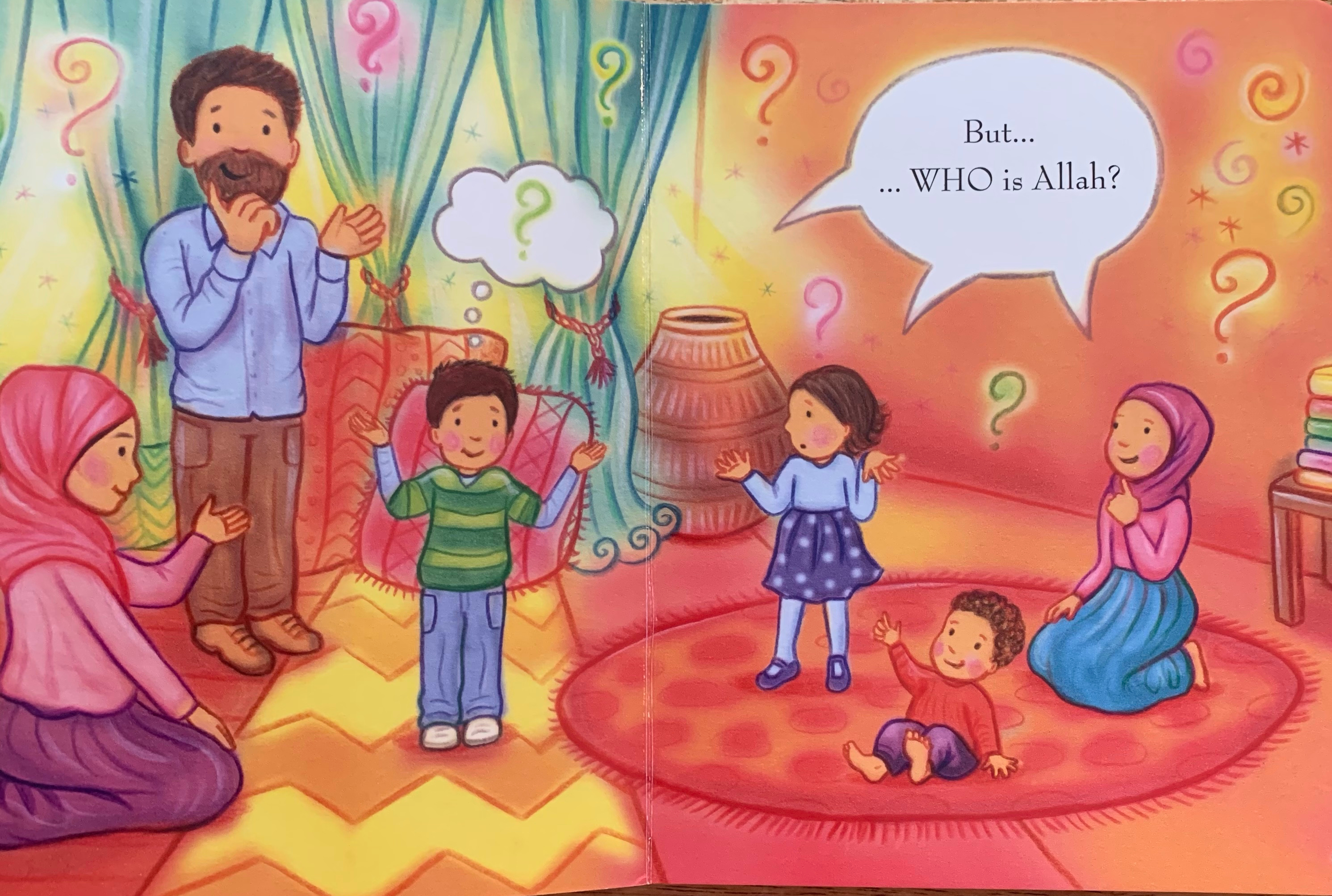
The family is then depicted gathered together with the little children asking “WHO is Allah?” and the book dedicating the next few pages to explaining that Allah swt, is the One who made everything and has power over all. He makes the sun rise and set and everything in the heavens and the earth belong to Him.

img_8049

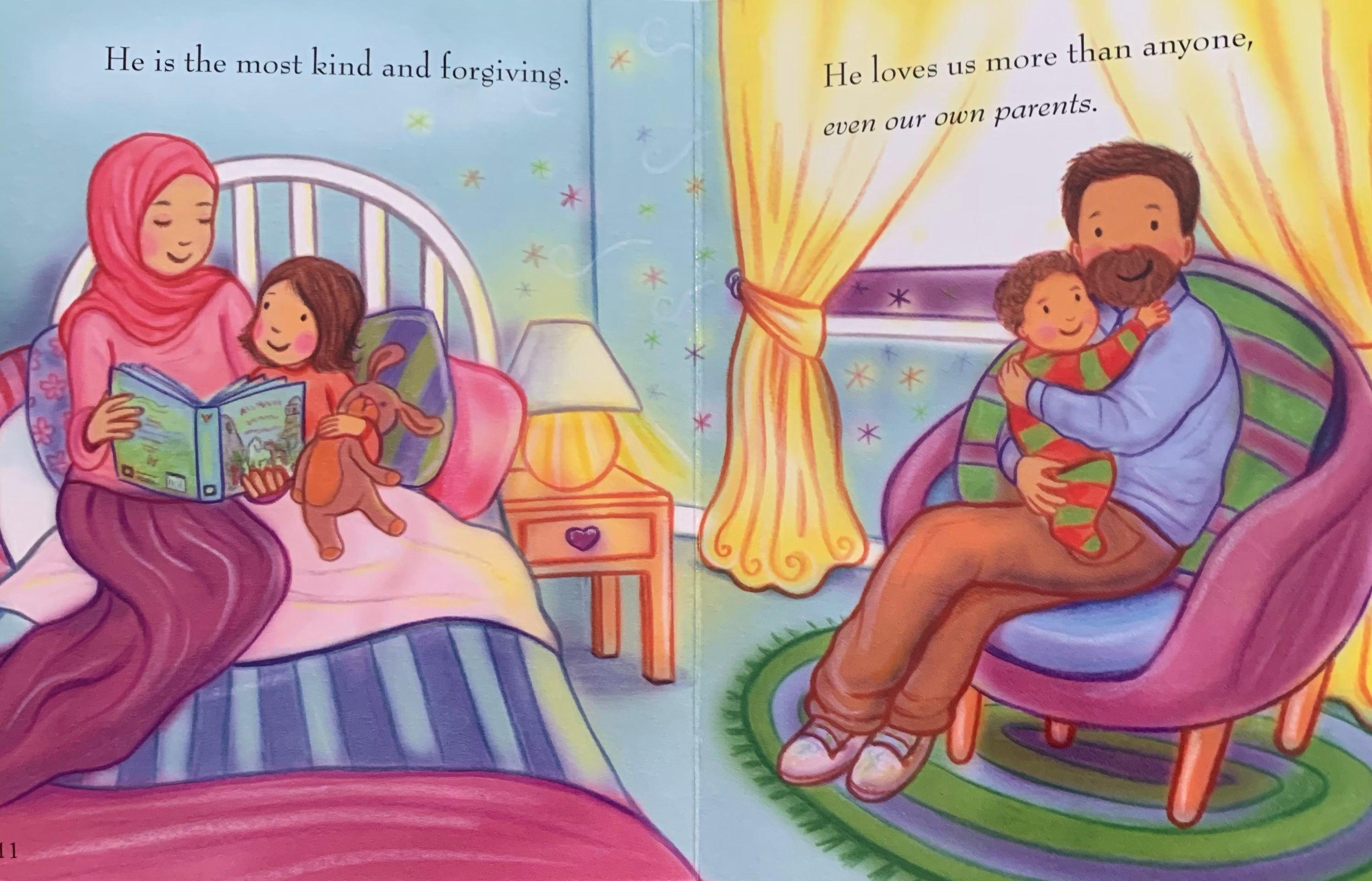
The book explains that Allah even loves us more than our own parents before explaining that Allah has 99 names and Ar-Rahman and Ar-Rahim are the ones we hear the most.  The background has many of the names of Allah written in Arabic.

img_8050

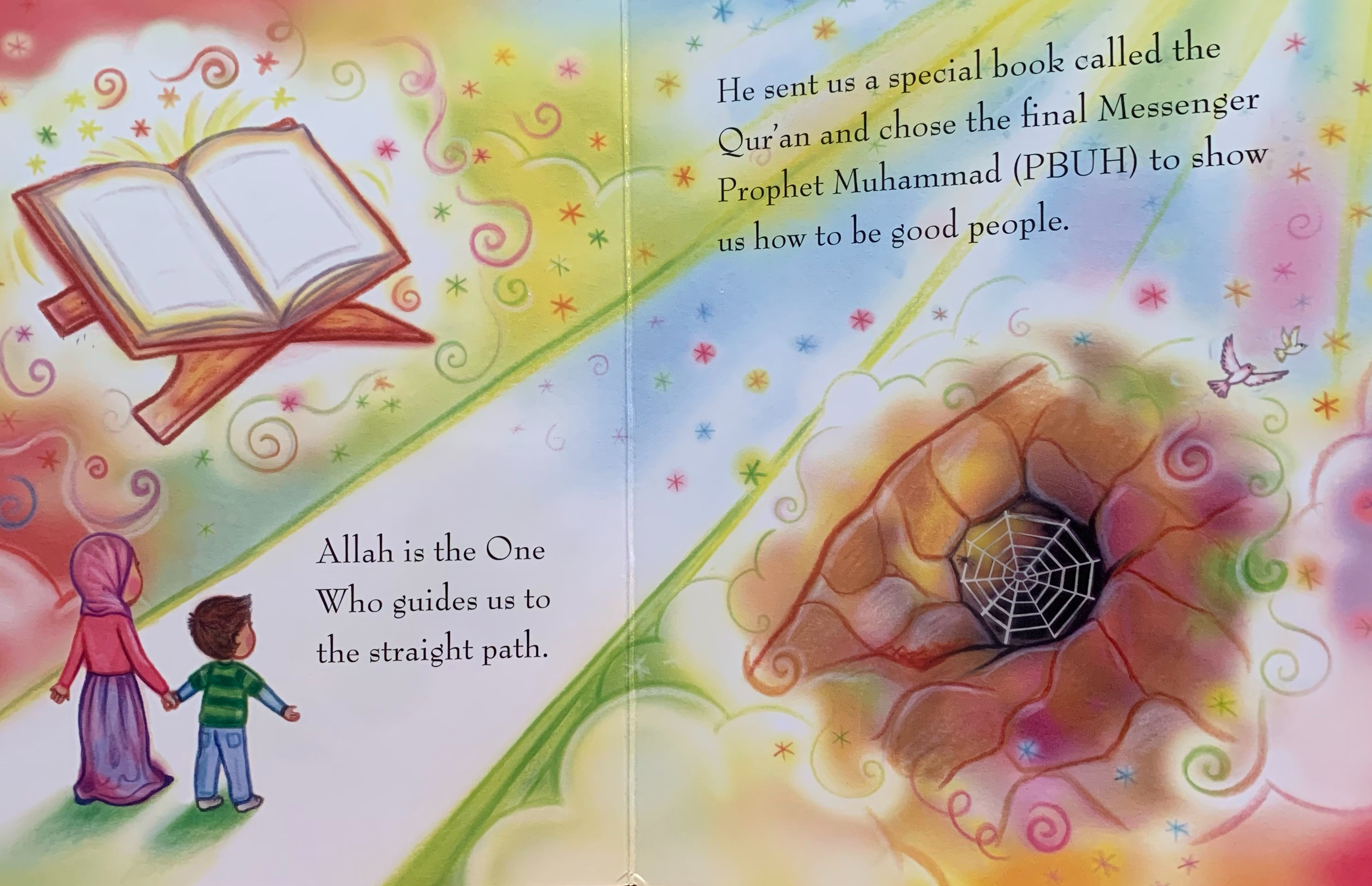
The family prays knowing Allah is All Hearing and All Seeing.  An illustration of a cave with a bird and spiderweb accompany the page that tells us that He sent us the Qur’an and Prophet Muhammad (saw) to show us how to live. InshaAllah if we do as we are supposed to, we are promised paradise and Allah never breaks His promise.

img_8051

The book concludes with Facts about Allah and Questions about Allah (swt). The pages are glossy and 6 x 8 in size.

img_8053

Fatima Al-Fihri by Aaliyah Tar Mahomed illustrated by Winda Lee

Standard
Fatima Al-Fihri by Aaliyah Tar Mahomed illustrated by Winda Lee

img_7927

This adorable simple nonfiction highlight of the founder of the world’s first university still existing, The University of Al-Qarawiyyin, is perfect for preschool/kindergarteners and up.  The brightly illustrated, large minimal text passages spread out over 16 glossy pages breathes life in to a remarkable character and celebrates an accomplishment that every one should be familiar with and inspired by, inshaAllah.

img_7928

The story starts by establishing little Fatima’s love of learning.  She learns from books, her family and from the people in her city.  When her family moves from Tunisia to Fez in Morocco, Fatima is excited to learn new things.

img_7929

Every day she goes to the mosque to read and meet new people. Her father supports her, and when he passes away she is left with his wealth.  She decides to use the money to rebuild the mosque.

img_7930

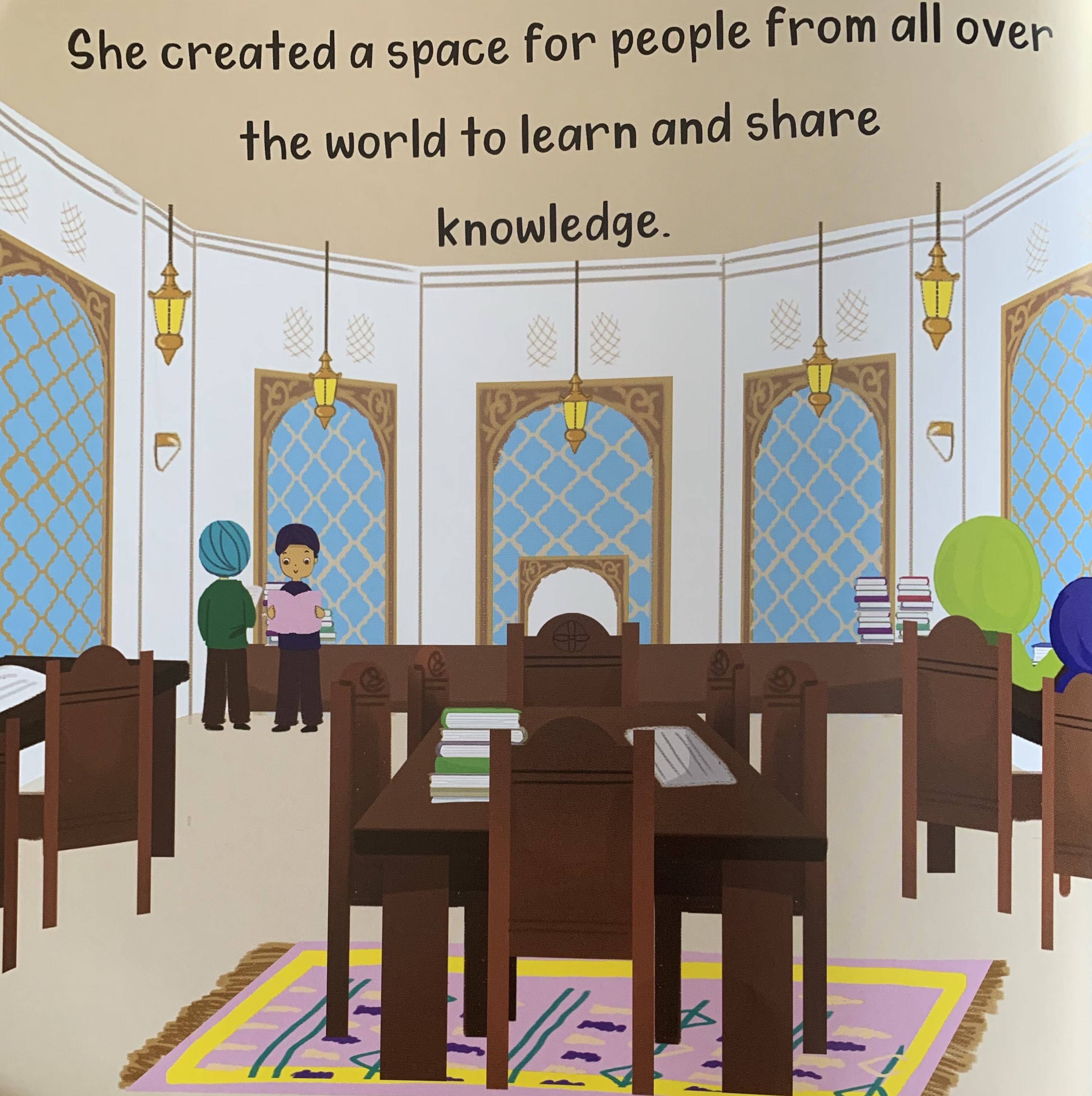
She recalls that ‘iqra’ is not just about gaining knowledge, but is also sharing what you have learned with others.  She purchases the land around the mosque and builds a university.   It is documented as being the first institution to issue educational degrees.

img_7931

I wish the story was slightly more fleshed out with detailing more about her family and her influences, about her overcoming some obstacles and even how long she lived for.  I know the target audience has a short attention span, but a few details even little ones can relate to will connect them to such an important figure and inspire the readers to dream big and make a difference.

img_7932

This book is the first in the WomanKind series.   A new series to tell stories about Muslim women who made history.

img_7933

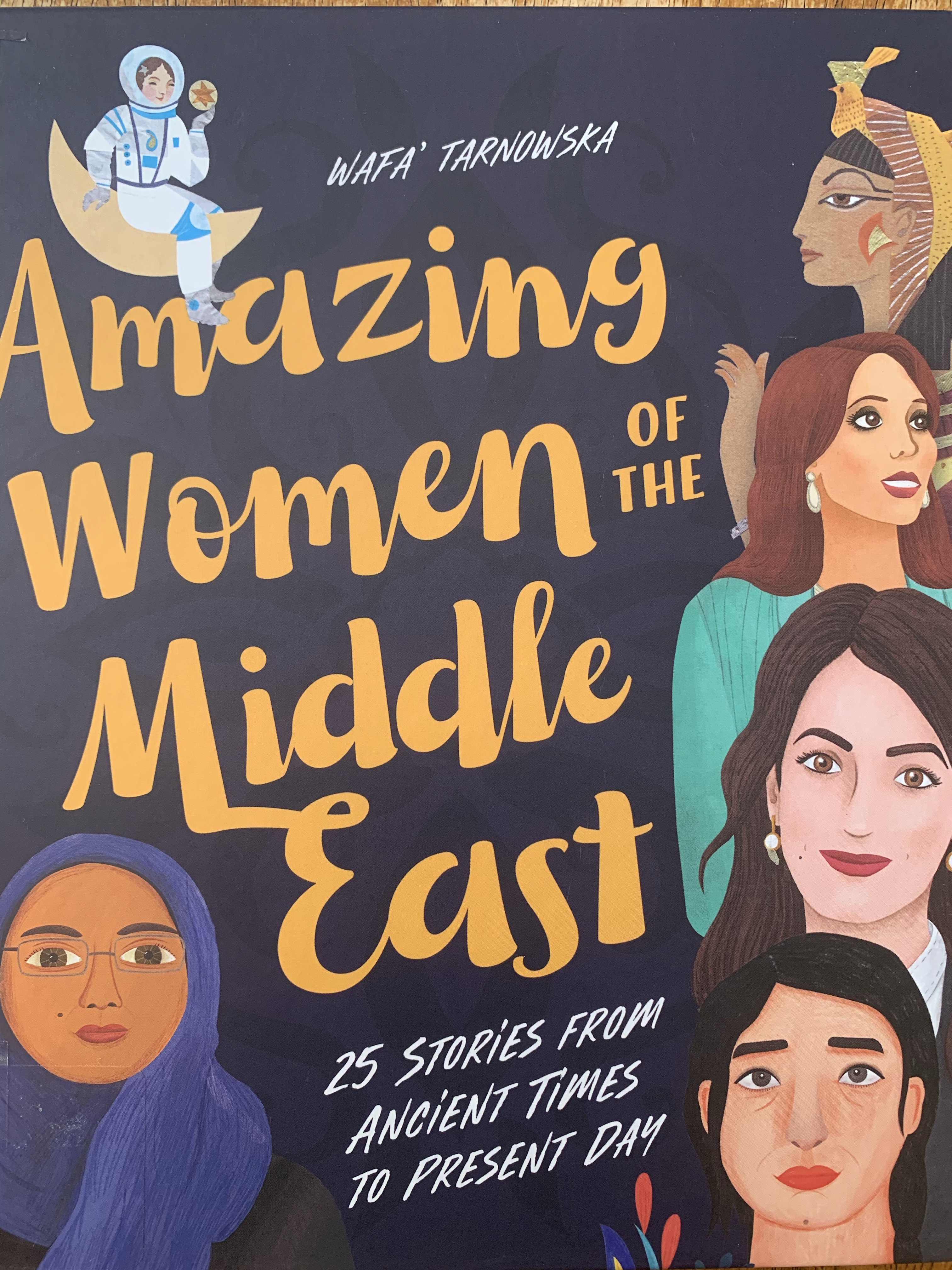
Amazing Women of the Middle East: 25 Stories from Ancient Times to Present Day by Wafa’ Tarnowska

Standard
Amazing Women of the Middle East: 25 Stories from Ancient Times to Present Day by Wafa’ Tarnowska

img_7464A nonfiction picture book for teens that features amazing women from ancient times to the present day.  Many of the women featured are Muslim and each entry receives a teasing summation page with a full page portrait from one of five international artists before a two page, more in-depth biography is presented.  The 112 pages feature an introduction, and a map to start the book off, and acknowledgements and a glossary at the end.  There are large time gaps that I wish would have been commented on, the geographical pool includes India which surprised me, and in one of the entries the way hijab is discussed seemed judgmental to me, but other than that the stories are absolutely remarkable.  There are amazing women in every culture and throughout all time periods, but to see one that highlights a region that is stereotypically oppressive to women is a sight for sore eyes.  I learned so much and marveled at the intellect, bravery and determination shown from being rulers of empires to intellectuals to scientists and artists everything in between.

The book starts with Nefertiti born in 1370 BCE and concludes with Zahra Lari, a hijab wearing ice skater from the United Arab Emirates born in 1995.  There are “celebrities” such as Amal Clooney, Fairuz, Cleopatra, Sheherazade and many that might not be as well known.

I particularly enjoyed learning about Zenobia the 3rd century warrior queen who conquered a third of the Roman empire in just five years.  Sufi mystic and poet Rabi’a al Adawiyya and her devotion to Allah swt.  Eqyptian Shajarat al-Durr who was nicknamed Queen of the Muslims in the 13th century.  And Hurrem Sultan from the Ottoman Empire.

Not every one featured was a ruler or married to one, and not are so far in the past, which in many ways gives the collection it’s charm.  Somayya Jabarti was the first female editor-in-chief in Saudi Arabia in 2014 and  Maha al Balushi is the first Omani woman to fly professionally for her country’s airline in 2010, examples of two women presented that cracked the glass ceiling by following their own dreams.

It is great to learn about the strength of the women from the past and see how to add to the legacy.  The book is a great reference, as well as a source of inspiration for people of all backgrounds to enjoy and appreciate.  I found the book at my local public library in the YA/Teen nonfiction women section.

Baba, What Does My Name Mean? A Journey to Palestine by Rifk Ebeid illustrated by Lamaa Jawhari

Standard
Baba, What Does My Name Mean? A Journey to Palestine by Rifk Ebeid illustrated by Lamaa Jawhari

img_7233

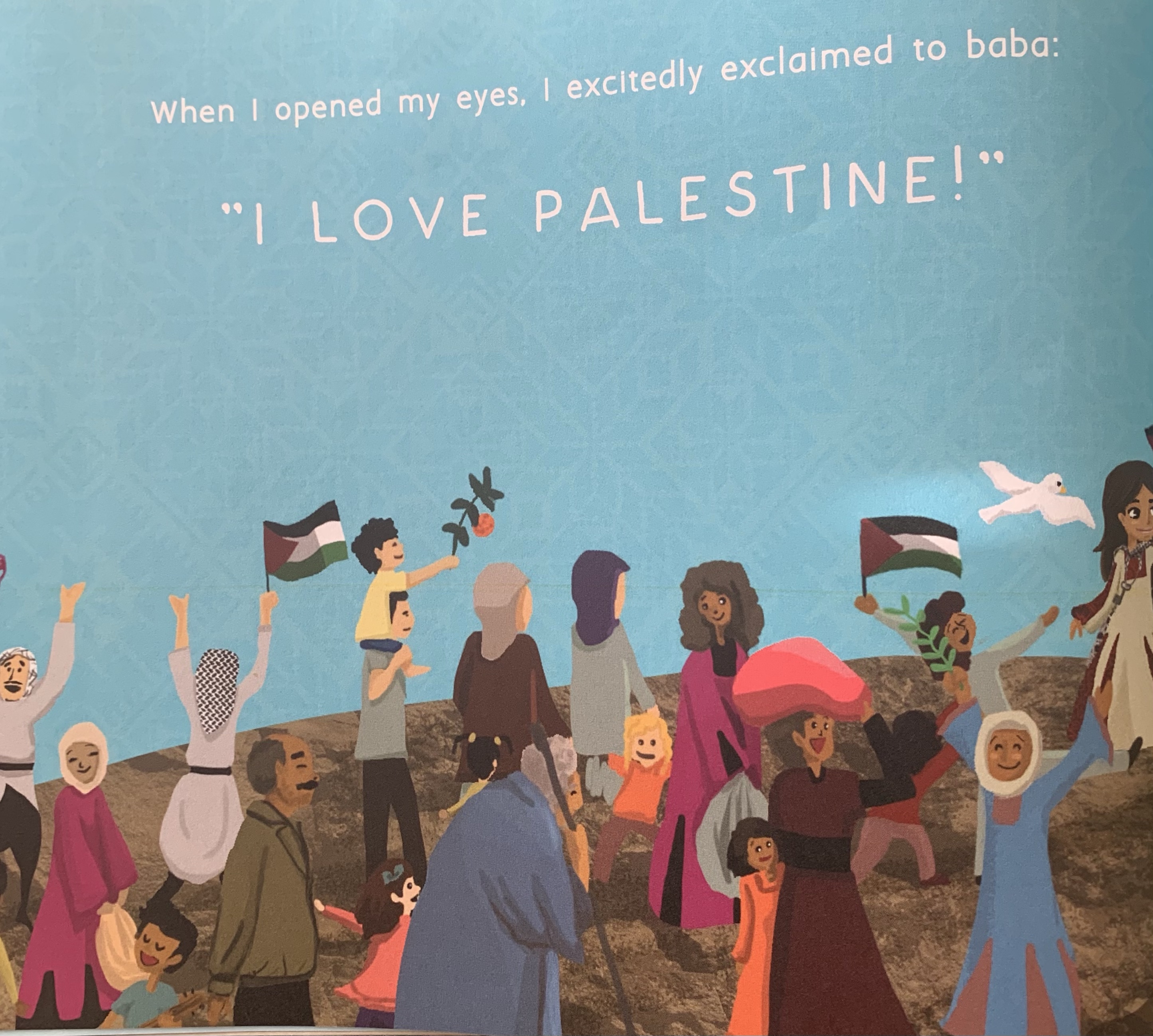
This lyrical journey through Palestine’s major cities, shares historical facts, geographical information, cultural richness, and love for a homeland that will inspire and educate all readers. There is a lot of information pressed in to 32 pages and at times the rhyming text, illustrations, and maps are powerful, and at other times overwhelming. The 8.5 x 11 horizontal paperback bound book needs to be bigger to hold all that the pages contain, and hard back to hold up to the details that need to be poured over to be appreciated. The content about the names and places in Palestine is priceless and well done, but I really wanted to love the book a bit more than I ended up feeling for it. I think trying to make it all rhyme was just a bit too much for my liking, but I would buy this book again in a heartbeat to share with my children. Even though we are not Palestinian, I think all Muslims have a piece of Palestine in our hearts and feel a deep need to celebrate the culture, fight for their freedom, and demand a quality of life that they are brutally being denied by their oppressors.

img_7234

The book starts out at bedtime with a little girl, Saamideh asking her baba what her name means. He explains to her that it means “one who is patient, persistent and one who perseveres.” She is named this because she is Palestinian, he explains and then he shows her the key to their ancestral home in Palestine. He asks her to close her eyes and imagine a white dove, named Salam, taking her on tonight’s journey.

img_7235

Salam and Samamidah prepare to journey across Palestine’s mountains, hills, deserts, and plains. They start in Areeha, one of the oldest cities in the world, and one one of the lowest points on Earth.

img_7236

They journey next to Al-Quds, the capital. They see the old city, Al-Aqsa, and more, before heading off to Nablus, Yafa, Haifa and the Akka. Learning about the cities, the food, and the history of each.

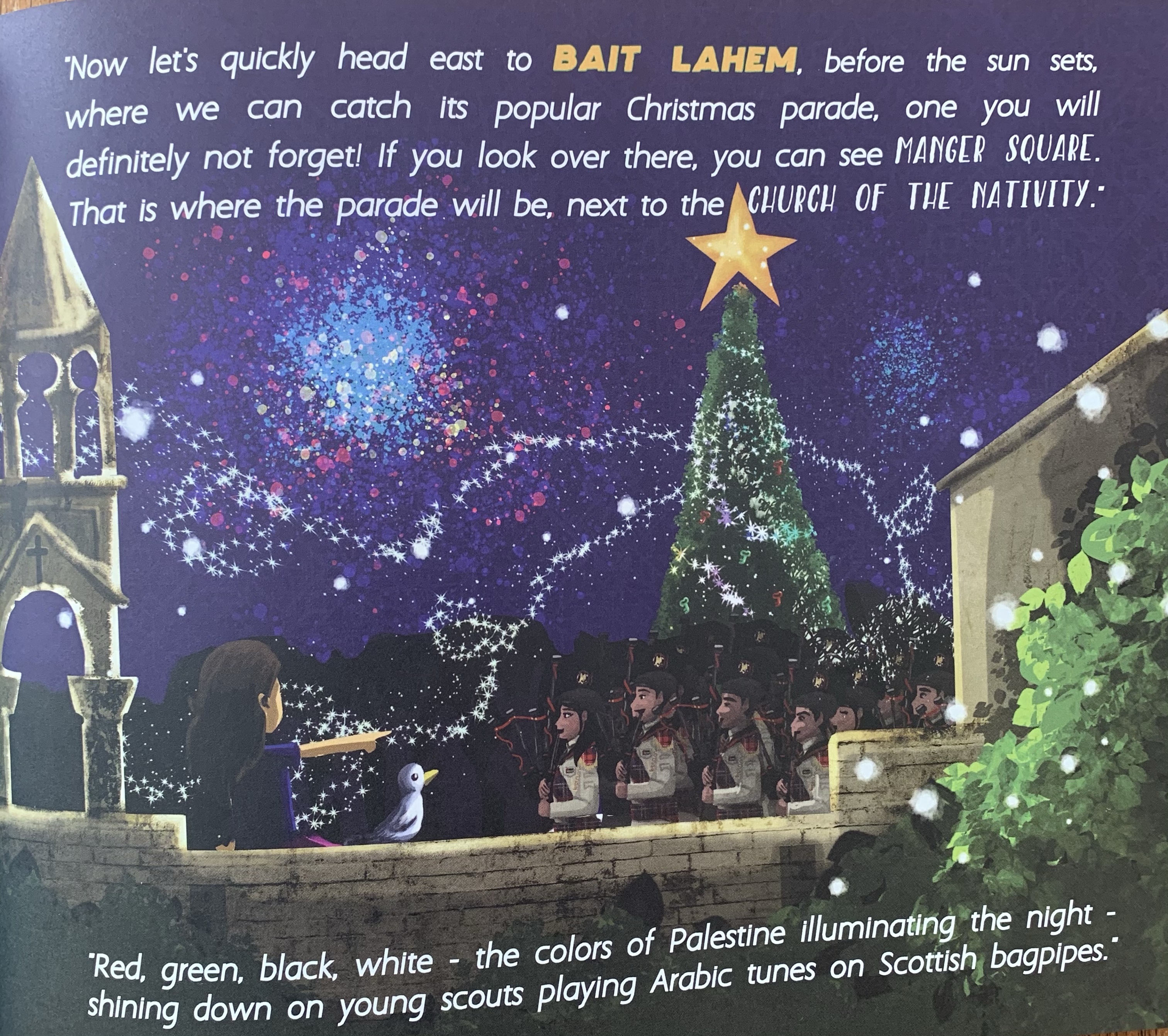
They learn about the dabkah, and the weaving in Gaza and head to Bait Lahem too. They learn about glass blowing in Al-Khalil at the Ibrabhimi Mosque, and finally they conclude their journey with the little girl dreaming of flying around the world to use her key and open people’s hearts and minds.

img_7239

She proudly exclaims her love of Palestine and her and her baba pray that one day they will be able to return. Saamidah then asks her baba why they are refugees, and he promises to save that conversation for tomorrow’s beditme story.

img_7240

The book concludes with a list of the city names in Arabic, trasliterated in English, and then the English names. It then has discussion questions at the end.

The book is not outwardly political, nor critical. It is a celebration of a people, a culture, and land. Happy Reading!

Eliyas Explains: Angels by Zanib Mian illustrated by Daniel Hills

Standard
Eliyas Explains: Angels by Zanib Mian illustrated by Daniel Hills

img_7130

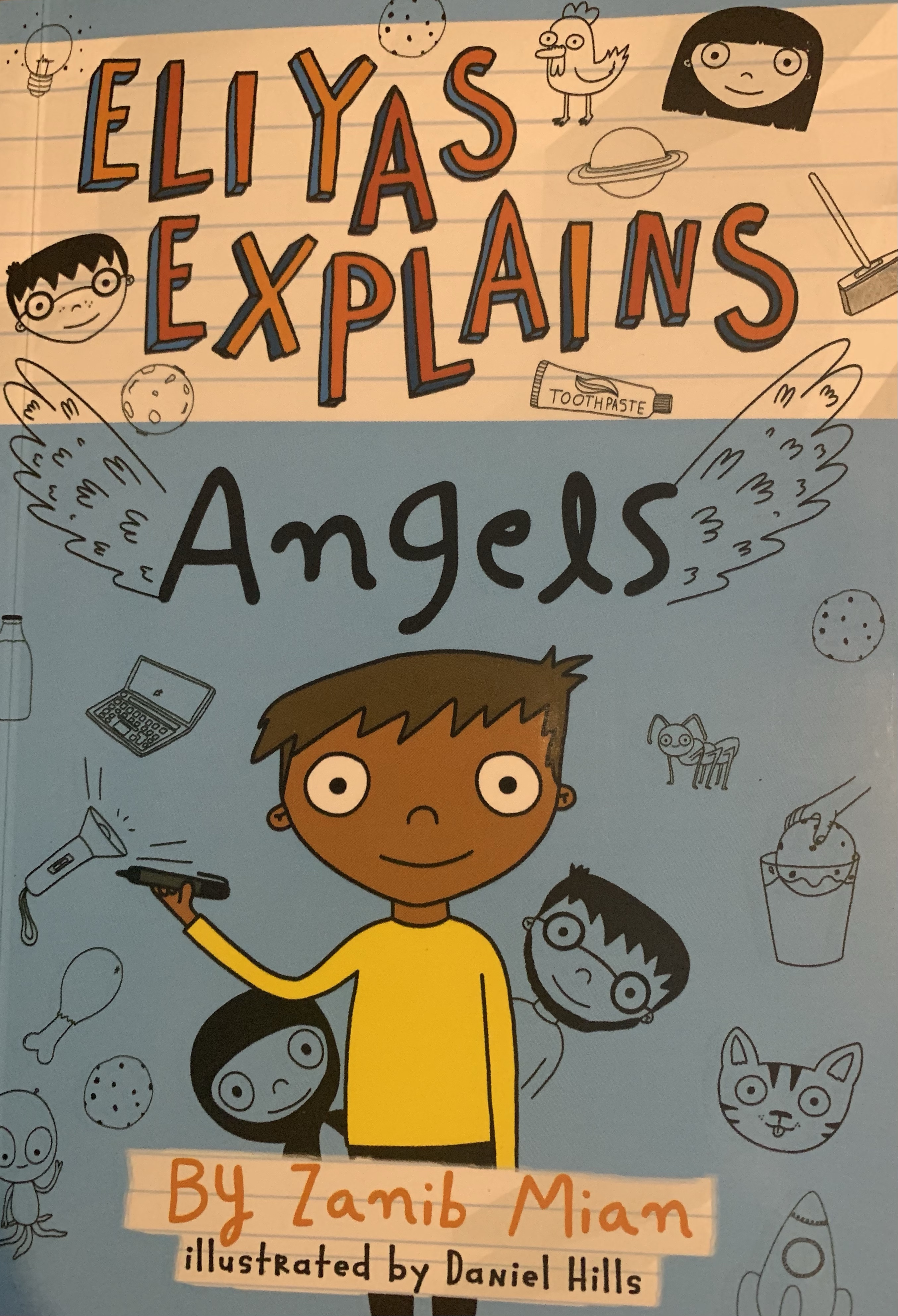
This last Ramadan I tried every day to listen to Sheikh Omar Suleiman’s Angels in your Presence series with my kids and discuss Angels with them.  I learned so much and got to wondering, why other than the 10 or 15 facts we all learn as children do we not talk about Angels more.  So when I saw the first in a new series by the absolutely fabulous Zanib Mian was about Angels I was so excited, then I forget to review it, and here we are.  The book embodies her sweet spot for personas as she writes as Eliyas, a little boy telling about what he knows about Angels with sincerity, clarity, excitement and humor.  Perfect for ages six and up, I think all children should spend a few minutes with this 81 page doodle filled book to remind us of Allah’s magnificence, Alhumdulillah.

img_7132

SYNOPSIS:

Eliyas starts the book by introducing himself and some things about him before diving in, or rather encouraging you to go put socks on so that what he is about to tell you can blow your socks off!  It starts off with him not being able to sleep so he sneaks out of bed to get cookies, because cookies solve everything, and then his dad joining him and them discussing aliens, which leads to outer space, and the knowledge of outer space being filled with angels.

Eliyas then learns about the number of wings the angels have, how strong the angels are, and some of the specific angels that do specific tasks ordered upon them by Allah swt.  The task of protecting us, appeals to Eliyas and the concept of angels the size of mountains praying with us, blows his mind.

We learn through Eliya’s dad about angels coming to Earth in human form and about angel Jibreel (as) specifically.  We also learn a dua to say when leaving the home so that the angels protecting you respond.

img_7131

WHY I LIKE IT:

I love the way that the information is presented.  It is a mix of fact and story and tied together with humor and relatability.  If you haven’t read Zanib Mian, please do, her Migo and Ali books, Hadith and Duas are all great Islamic resources, and her Planet Omar and Alien book are hilarious and warm.  I pray that the series continues, it really is a lot of fun.

img_7133

FLAGS:

None

img_7134

TOOLS FOR LEADING THE DISCUSSION:

I think this would be great to have a Sunday school class read and discuss or an Islam class offer up as extra credit.  It probably wouldn’t work as a book club selection, but it definitely has a ton of value in a classroom and in a home library.

That Can Be Arranged: A Muslim Love Story by Huda Fahmy

Standard
That Can Be Arranged: A Muslim Love Story by Huda Fahmy

arranged

I’m not entirely sure why I didn’t review and highlight the first book, “Yes, I’m Hot in This: The Hilarious Truth About Life in a Hijab” I really should have, so to cut to the chase if you don’t follow the author/illustrator on social media you really should and you should read both her books.  Both are for all ages and while meant for adults, teens and tweens love it as well, I should know I’ve purchased and gifted over a dozen of them. I find my kids thumbing through both books a lot: my (early) teen girl and my tween boys.  Part of is it because the comics are funny, relatable, but more importantly as I’m learning from my kids, because they are curious.  In this book particularly, it is a great example of how Muslim marriages can happen, sure my kids know how my husband and my marriage was “arranged,” but they are constantly surrounded by ideas of dating and crushes and even divorce that I never realized that a book like this, featuring Muslims, actually Islamically contextualizes some of their gleamed information.  The fact that the book is hilarious and clean and rings with such honesty, makes it easier for them to articulate their questions and removes some of the taboo as well.  So, buy it for yourself to enjoy and if you have kids 11 and up in your home, you are ok to let them read it too.

img_6586

SYNOPSIS:

It isn’t a chapter book, it is part comic book, part story, part info-graphic, and all biographical.  The book opens with an ayat about spouses from the Quran and follows with an informative and funny message to the reader.  Seriously, I laughed as she explained about drawing herself with hijab in bed and noting that most people don’t read the notes to the reader at the beginning. There are also a list of helpful terms before the introduction begins.  Her story is broken up in to sections to pace and move the story along.  It starts with the ground work of expectations and cultural norms and then tells her story of how she eventually met and married her husband.  Not that it is straight forward, the book is 192 pages.  There is a decent amount of explaining Islam and the role culture plays in the many pitfalls and big decisions along the way.

img_6587-1

WHY I LOVE IT:

I think any female, born Muslim, over the age of 20 will relate to a lot in this, lots of others will as well, but that demographic specifically will find parts very reflective of their own experiences.  I love that it shows the banter between the protagonist and her mother, truly that to me was the heart of the story.  I love that it shows female empowerment and vulnerability at the same time within an Islamic context and unapologetically.  This book is by a Muslim for Muslims, but non Muslims will enjoy it as well.  It dispels and illustrates what an “arranged marriage” can mean for Muslims and shows that there is more than one way to understand the label.

I love the size of the book, the binding and the page quality.  I had no problems with “Yes, I’m Hot in This,” but after seeing the larger size of this book 7 x 8 and the thicker pages, I really preferred this presentation.

img_6589

FLAGS:

Clean

TOOLS FOR LEADING THE DISCUSSION:

Obviously not really a candidate for a book club, but I think teen girls would enjoy reading this and laughing about it with a group of friends.

img_6590

So fun and so good, alhumdulillah.

The Cat Man of Aleppo by Irene Latham and Karim Shamsi-Basha illustrated by Yujo Shimzu

Standard
The Cat Man of Aleppo by Irene Latham and Karim Shamsi-Basha illustrated by Yujo Shimzu

cat man

This 40 page true story about Mohammad Alaa Aljaleel of Aleppo aka the Cat Man shows how one person can make a difference even in the middle of a war.  The amount of text on the page, the topic covered, and the detailed illustrations will most appeal to second graders and up, but younger kids, particularly those that love animals, will enjoy the story as well.

D63A0C5F-727E-427A-AF82-31AAB49F8F51

Alaa loves his city: the markets, the foods, the people.  When war comes, he doesn’t flee, he keeps working as an ambulance driver.  He has a big heart.  His sees destroyed neighborhoods where everyone has left, except for the cats.  There is no one to feed them and give them water, and Alaa feels for them.

E286EEDD-0114-4A0C-A712-DC8F162F4AC6

After his shift he buys meat, and feeds over a dozen cats.  He does this everyday and soon a dozen turns in to fifty and he realizes that he can no longer care for the cats alone.  He needs a place for them.

43F2DBA2-9364-4107-93F2-983172AE9191

Word spreads and volunteers and donations start pouring in.  He purchases a building with a shaded courtyard and soon cats are everywhere.  When people leave Aleppo they bring their beloved cats to him, and even other animals start arriving.  Alaa even builds a playground for the children and digs a well so everyone can have fresh water.

ABA9B59B-43F3-4EEF-83AE-8CC8461D8CAA

The book is pretty straightforward and steady, it doesn’t have much emotion for such a powerful true story, but it will still hit the mark in inspiring children to show kindness and compassion for animals and others.

6B5F68B3-1DA4-4117-A66A-7210DACC468F

There are notes from each other and the illustrator at the end that share light on their connection to the story and the situation in Syria.  There is nothing religious in the book other than a few females in hijab.

Solar Story: How One Community Lives Alongside the World’s Biggest Solar Plant by Allan Drummond

Standard
Solar Story: How One Community Lives Alongside the World’s Biggest Solar Plant by Allan Drummond

Set in Morrocco, the fictionalized framing of a children’s story about solar energy and sustainability at the the world’s largest solar plant in Ghassate will appeal to curious children in kindergarten and up. Told through the every day life of Jasmine, a little girl living near the plant, the concepts are not technical, but give a broad overview allowing readers to understand how impressive solar energy is, as well as the disparity that exists in the world. Over 40 pages with factual sidebars and an author’s note at the end, children who enjoy the story and are curious about the reality of it all will find an easy opportunity to learn more.

Jasmine and her friend Nadia live in Morocco between the High Atlas mountains and the huge Sahara desert. It is always sunny where they live.

They talk a lot about making energy from sunshine as they watch trucks going and coming from the world’s largest solar plant. Their teacher likes to ask them about the big changes happening in their world.

As the villagers tend to their sheep and cows, they cook on open fires and bake bread in clay ovens all while keeping an eye on the workers making the largest solar tower in the world. Jasmine’s dad rides a mule to work and many classmates parents work at the state of the art plant. The contrast is obvious.

The next day at school Miss Abdellam the teacher asks the students about sustainability. And the book doesn’t define the concept right away. First the class goes on a field trip to the solar plant.

At the plant the size of 3,500 soccer fields they see the 660,000 mirrors that follow the sun like sunflowers and bounce the rays to the 800 ft tower. The tower gets to a thousand degrees on top and heats water whose steam powers turbines and is turned into electricity.

The kids go home to work on their sustainability homework. With no internet or computers even, they have to think for themselves. The remaining pages define and provide examples of how solar power is changing life for the villagers and improving life for people not just in Morrocco or Northern Africa but potentially the entire world.

I love that the concept of sustainability isn’t just a definition it shows how it is in every day things, and those every day things lead to big things that are both tangible and ideological. The author/illustrator acknowledges his own surprise and bias when he learned that the largest solar power plant was in Nothern Africa. I love that some of the females wear hijab, and some do not, and that the teacher and some of the parents at the solar plant are female. There is nothing religious even mentioned in the book, but the visibly Muslim characters are empowering and honest for a story about science and Morocco.