Category Archives: Muslim Character

Khalil and Mr. Hagerty and the Backyard Treasures by Trisha Springstubb illustrated by Elaheh Taherian

Standard
Khalil and Mr. Hagerty and the Backyard Treasures by Trisha Springstubb illustrated by Elaheh Taherian

khalil and mr hagerty

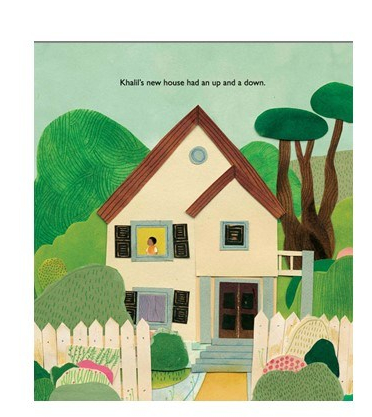
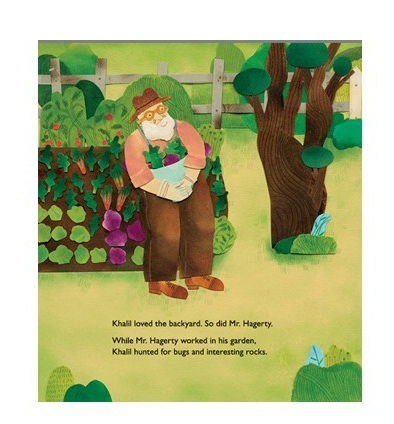
This 32 page book for ages 5-8 is a perfectly presented story about inter-generational and intercultural friendships.  Big on sentiment and heart while keeping the text short allows the compassion the two friends have for each other and their actions of showing how they feel toward one another speak volumes.  The illustrations appear to be cut paper and add to the thoughtfulness that the story presents.

Khalil and his family live upstairs and are noisy.  Mr. Hagerty is quiet and lives downstairs.  The two bond over their love of the back yard.  While Mr. Hagerty works in his garden, Khalil hunts for bugs and rocks and treasure.

khalid1

When Khalil doesn’t know a word, Mr. Hagerty teaches him.  When Mr. Hagerty can’t remember a word, Khalil helps him.khalid

That summer it is hot, really hot.  The carrots are all shriveled, and Khalil can’t dig the hard earth for treasures either. So the two decide to have “refreshments,” which means chocolate cake and milk.

khalid4

That night, the two friends separately plot to cheer the other up.  They put their plan in to action and, no I’m not going to spoil the sweet acts the two do for each other.  But it is clever and sweet and all the things that make a feel good story stick with you and remind you that age and culture and color are nothing when two people open their hearts to learn and grow.

khalil

There is no reason anyone casually reading the book would think that Khalil is a Muslim, and who knows maybe he isn’t, but the name Khalil caught my attention and the author’s dedication is to a Khalil, Muhammad, Fatima, and Adam.  So yes, I totally am claiming it.  Even if it isn’t, the old white man, and the young boy of color bonding is a great message in-and-of itself that we need to see more of in literature and real life.


Stuck in the Middle by Sumayyah Hussein illustrated by Diana Silkina

Standard
Stuck in the Middle by Sumayyah Hussein illustrated by Diana Silkina

middle

At 122 pages this early chapter book with frequent illustrations is a great book to share with 2nd-5th graders.  It is has a great message and lesson with lots for children to relate to with regards to life with siblings, getting frustrated, making mistakes and recovering.  The lesson is strong, but doesn’t become preachy as the protagonists voice rings true to her age.  Mistakes are made by many characters and situations are fleshed out so the reader can understand why things are done.   By showing that there isn’t one side to a story, and that knee jerk reactions are common, readers will get that ultimately we are still responsible for how we act, and learning from our transgressions is part of growing up.

5343F790-E06E-47DB-96D9-A85A7EAEFA9E

SYNOPSIS:

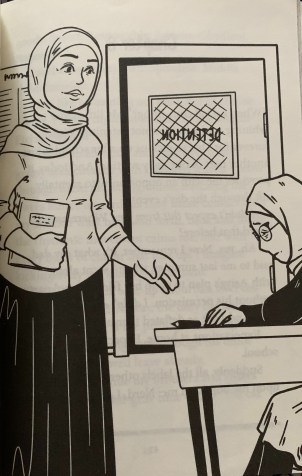
Salma is the middle child in a busy family, and very little is in her control.  When her frustration over her brother stealing a chocolate bar, causes her to lose her cool, and then she is forced to run errands with her family, homework doesn’t get done in time and she finds her self in detention.  Normally a very good student, teachers and other students are shocked that Salma is in trouble.  Things don’t improve when her brother steals her carrot cake the next day, and in a plot to get even, Salma ruins her brothers brand new PS4 controller.  She also turns a blind eye at school when she sees someone picking on him.

Doing her best to avoid being discovered as the culprit, or being in a position to see her brother being bullied, her guilt starts to get to her.  When an ambulance has to come to the school for a kid that got pushed and needs stitches, she realizes she has to make things right, even if that means getting in trouble.

7E60CD43-7DCB-41AE-BFF8-6CA415A5BDA2

WHY I LIKE IT:

I love that it is so relatable, honestly switch Salma with my middle son Haroon, and the 13 year old boy that doesn’t want to go out with the family, with my 13 year old daughter that doesn’t want to go out and we are looking in a mirror, haha.  The family is Muslim and they practice and let the religion shape their view of the world and how to function within it.  The girls wear hijab and use the hadith premise that they have to fix a bad deed with a good deed to provide the solution to the mistakes made earlier in the story.

AE60B7D6-48FA-4A46-A4E7-4F0BB40351AD

FLAGS:

None

46612FC3-B196-4A59-9BB8-AA54F7ADBD3F

TOOLS FOR LEADING THE DISCUSSION:

I already made my middle child read the book, and because of the length it wouldn’t lend itself to a book club, but I can see teachers having kids read it and then discussing, just like I am doing in my family.  It is sweet and well done and a great addition to your bookshelf.


Mad, Bad, and Dangerous to Know by Samira Ahmed

Standard
Mad, Bad, and Dangerous to Know by Samira Ahmed

mad bad

I really should give up reading Samira Ahmed books.  This is the third one I’ve read, and while she is definitely getting better, I still don’t know why her editors don’t fix her flat notes.  Like in Internment, the premise in this book is amazing, but other parts are just cringe-y and painful and really, really unnecessary.  My guess is, she would identify herself as a romance YA author, and yet consistently in her works, that is the most lacking part: the character building and forced romances.  The art history mystery, the inspiration and “real” life of the characters from the past, the setting of Paris in the summer, the fight for woman to be heard are all so well done and compelling and interesting that this romp that blurs fact and fiction might deserve a read, but you have to overlook the forced love triangle, excessive kissing, be willing to suspend reality regarding Alexandre Dumas, Eugène Delacroix, and Lord Byron, artifacts and sleuthing, but if you can do all that, this 337 page book for 9th grade and up, is definitely fun and hard to put down.

SYNOPSIS:
The protagonist is 17-year-old French-Indian-Muslim-American Khayyam, who is spending her summer in Paris with her professor parents like they do every year.  But this year is different as she is being ghosted by her boyfriend Zaid back in Chicago and has just been humiliated by her poor research attempts to link a missing painting from artist Delacroix to author Dumas in an entrance essay competition to her dream school.  Khayyam’s story is really just beginning though as she steps in dog crap and bumps into a descendent of Alexandre Dumas as she wipes it off.  A cute descendant, who shares the name with his distant grandfather, and viola’ the two of them are off on a whirlwind adventure of clues and attraction and mystery solving.

Khayyam’s story is interwoven and told between small glimpses of Leila’s story.  Leila is a Haseki, a chosen concubine of the Pasha in Ottoman Turkey, but the lover of Giaour and friend of the jin.  As we learn her story from 200 years earlier and her struggle to break free of her gilded cage in the harem, only to be defined by the artist and poets and author men around her, her story and Khayyams collide.

WHY I LIKE IT:

I know precious little of art history, I can name drop a few artists and paintings, but that is being generous, so the fact that I have no clue what is real and what is fake and what is possible, made this story all the more fun and engaging.  Yes, I researched, aka Googled, stuff as I read and am perfectly content to accept the fictional what ifs that the book offers.  I love how the art world and literary world are one in the book and that they inspired each other. The way the sleuthing, the finding of artifacts, and unraveling of it all is presented is indeed a romp.  Realistic? Not a chance, but fun.  I also love how both Khayyam and Leila had to define themselves and ultimately not do it in the reflection of a male.

The rest of the book, is a bit of a stretch.  Leila’s story naturally has holes in it as it is told in broken pieces, but Khayyam’s story does too.  I just didn’t care about her past boyfriend/ex-boyfriend/friend, whatever Zaid is or was, and clearly after moping about him for 300 pages and then not even giving him a proper goodbye, means that the author and character didn’t really care either, which made the already forced, cringe-y annoyingness all the more grating.  As for the relationship, the other piece in the triangle, with Alexandre, was fine in that there was angst, but they put it aside to solve the mystery, so it didn’t bother me too much.  Of course the fact that Khayyam is a practicing Muslim who seems to have no problems with boyfriends, and making out and that her parents don’t mind either, makes the faith aspect all the more befuddling.  I guess practicing might be a stretch, her mom and her go to Jummah prayer on Friday, thats about the extent, and she mentions she doesn’t drink.  Zaid, sets up a tutoring program at the masjid, but his instagram has him hanging all over girls too, so not sure why the characters are even Muslim.  I suppose it is good to have that diverse representation, but it doesn’t seem to make much necessary sense to the overall story.

FLAGS:

Implied concubine activities, with the Pasha and the lover.   Lots and lots and lots of kissing, nothing graphic, but annoying amounts of it being mentioned.

TOOLS FOR LEADING THE DISCUSSION:

I want someone to discuss it with me and point out where the facts end and the speculation starts and when the full on fiction takes over.  I don’t think I could use this book as a book club book because of the center stage of the haram romances in both Khayyam’s time and Leila’s.  But if you have read it, talk to me about it, I’m curious!

NPR’s Review: https://www.npr.org/2020/04/11/831873365/in-mad-bad-dangerous-romantic-sleuths-uncover-a-byronic-secret


Running Overload by Jake Maddox illustrated by Tina Francisco

Standard
Running Overload by Jake Maddox illustrated by Tina Francisco

5870B613-F406-493B-8203-FAB9869DE555

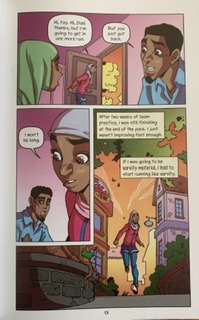
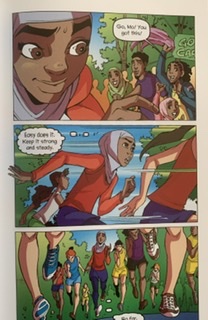
This 72  page graphic novel features a female Muslim protagonist trying to balance her desire to be a great cross country runner and the rest of her life.  Meant for 3rd graders, the lessons are applicable and relevant for readers in middle school as well.

6B290892-6842-45D4-88FE-7FE4D82BAEC6

SYNOPSIS:

Nimo Mohamed has made the varsity track team, and is determined to keep up with the older girls.  She is training too hard which her coaches and parents warn her against, but she doesn’t listen.  As a result she is lying to her family about what she is doing, her grades are suffering, and her body is exhausted to say the least.  After coming dead last in a meet, getting a D on an English test, and injuring her knee, the truth comes out and her dad has her quit the team.  Can she convince him to give her one more chance? Can she learn to pace herself?

253551C1-18E4-4A86-8BD2-315C79A685DA

WHY I LIKE IT:

There is nothing Islamic in the book except for the main character’s family.  The women wear hijab when out, not at home and they have Islamic sounding names.  I like that she is modestly dressed when she runs and that no one seems to care that she is Muslim.  This story is not about her faith, it is a universal story of balance, and the character highlighting the moral is Muslim.  Her parents are divorced, but are on the same page regarding her running and school balancing act, and they come together to support her.  I also like that the book is a sports book and has a female girl of color as the lead.  There is a lot of very intentional diversity in the book and it is refreshing to see.

There are questions at the end, and running vocabulary and tips for running as well.

B555F927-C2E0-433B-8F6B-ED1E58486CD3

FLAGS:

None

F050C711-00AF-4581-93AB-C0E440C1FDD8

TOOLS FOR LEADING THE DISCUSSION:

The book wouldn’t lend itself well to a book club, but would definitely provide one-on-one discussion opportunities.  The short linear story is all about imparting teachable moments on the reader, which isn’t a bad thing, but I think the real strength is that the book is one of a larger series that should really be in every classroom and library to show how balance and integrity and strength and diversity are values that we need to hear over and over, not just in one running book, but from a lot of different sources.


My First Muslim Potty Book by Yousfa Janjua illustrated by Golnar Servatian

Standard
My First Muslim Potty Book by Yousfa Janjua illustrated by Golnar Servatian

07041C66-B149-48A8-9CC7-B2752984EE68I’m not sure why this book is just coming out now and why I never realized how important it is.  It sounds silly, but we as Muslims are very precise about our bathroom habits and cleanliness and the fact that this is the first book to address it for children is actually, kind of surprising.  But Alhumdulillah, you only need one if it is done well, and over 16 pages of cute illustrated rhyme filled pages, istinja is explained and normalized.  The book is a great tool to use, not only, when potty training toddlers, but also for reviewing with your preschooler when they might be leaving home for the first time and/or seeing other people’s bathroom habits.

1539474F-D9B3-4803-9369-C42BDD28CA19

The book starts out with a thorough “Note to Parents” explaining istinja, tahara as well as giving parents some tips to handle potty training in general.  The book starts by noting how you started out as a baby and are now growing and part of the growth has you ready for big kid underwear.

A74AB75F-5449-414A-90F9-C80808740E2A

It talks about what it feels like when you need to go, and how when that feeling happens, you need to hurry to the bathroom.  If you hurry and still have an accident, we (the parents) will clean it up and not to worry.

F1F975D3-A359-4FB6-BFC7-4759105576F9

The book teaches that you enter with your left foot, and ask for help if you need it.  That you sit down to do your business because poop and pee are najis, impure. You then have to do istinja, which is like a germ fighting ninja!

EF818EB7-D841-4980-9EA3-C8611EDD61C3

It teaches the toddler to call for mom or dad to wash them with the lota or bidet or pot using their right hand to pour and their left to wash.  You then use toilet paper to dry.  After you flush, you wash your hands for 20 seconds, leave with your right foot and be done.

387407D6-0018-48DA-B178-68D305B53520

The book then has a glossary, some ayats of Quran and some Hadith as well as Duas relating to the bathroom.  The 8×8 hardback book is done really well and conveys the key points on a kid’s level, which is great.

FD85EF0C-098C-4AB4-B2AA-18970A399CB0

I love that the book uses Islamic Arabic words and shows a diverse family being patient and encouraging.  I am fine with the child illustrated as reading a book while on the toilet, but I think some parents might frown on that.  The book is meant for Muslim kids, and does a good job of showing the practicing family in the illustrations and in the text.

Thank you to Crescentmoonstore.com for their great price and service!


A Place at the Table by Saadia Faruqi and Laura Shovan

Standard
A Place at the Table by Saadia Faruqi and Laura Shovan

a lkace at the table

This fabulously fresh and honest book told in alternating OWN voices shows how two seemingly different 6th grade girls discover how much they have in common as they learn about themselves and their families along the way.  Sarah is a Muslim Pakistani-American, and Elizabeth is Jewish and has an English immigrant mom, the two come together over food, family stress, discrimination, and middle school social drama to form a solid friendship.  But fear not, it isn’t easy and the book will keep upper elementary/ early middle school girls hooked.  Not sure if boys will be as drawn to it, but if they can get over the brief mention of having a period, they too will enjoy the story.  The 336 page book shows how much we have in common, and how hard fitting in can be for everyone.

SYNOPSIS:

Sarah is starting a new school, a public one, having been at a small Islamic school prior to 6th grade.  She is not happy about it and to top it off, her mother is teaching an after-school cooking class at the school that she is required to attend.  Hoping to sit in the back drawing and go unnoticed, she finds she can’t sit quiet when her classmates start giving her mom a hard time.  Unaware of why she had to leave her previous school, and tired of her mom needing her help with her catering business, Sara also has to help her mom study for her citizenship test, handle two little brothers, deal with no friends at school and not being able to celebrate Halloween.

Elizabeth loves cooking. Her mother does not.   She is excited to learn Pakistani food at the cooking club even if her best friend thinks they shouldn’t be learning things from “them.” Elizabeth is admittedly nerdy, and struggling with a life-long friend finding others to spend time with, her life at home is difficult too.  Her dad is always traveling for work, and her mom is depressed with the recent passing of her mother in England, to the point of not really functioning.  With Elizabeth doing the cooking at home, and trying to get her mom to study for her citizenship test, Jewish holidays and obligations get neglected, and Elizabeth not knowing how to help her new Muslim friend handle racism,  is spiraling herself.

When the two girls decide to give each other a chance they find they might be able to be more than just cooking partners, but it seems like one of them always does something to mess it up.  Either saying something hurtful, getting defensive, or not sticking up for each other.   The girls get their mom’s together to study for their test, but it isn’t so easy for the girls, who are hesitant to trust one another.

An upcoming cooking competition, offers the girls a chance to make a cross cultural fusion dish that can wow the judges, help Sarah’s family’s financial situation, prove to the school that diversity is a good thing, and hopefully give the two girls a solid friendship.

WHY I LIKE IT:

I love how authentic it sounds and feels and how it doesn’t focus on boys or crushes, but on friendship between two girls at an awkward point in their lives and the family stresses they are experiencing.  The book is for all readers and does a great job of not going overboard with what the girls face.  I love how tolerant they have to learn to be with one another and that they have to learn to drop their defensive guards.

I read the book in two settings and didn’t want to put it down, it has enough pull that you really want to see where the book is going and are happy to overlook the slight repetitiveness of them stressing about the competition, but doing nothing but talking about the stress. Really the competition doesn’t even seem that important at the end, but considering everything going on, that to me is exactly as it should be.

I love the rich culture of Pakistan, England, Islam, and Judaism that seep in and never get preachy or dogmatic, but get celebrated and experienced.  This is why OWN voice books are so beautiful and powerful.  Admittedly, Elizabeth’s family is not super religious, but a few more similarities would have been nice.  Yes her brothers are eating pepperoni Hot Pockets, but a shout out about halal/kosher marshmallows would have really rung true for so many of us that stock up at Passover.

I also love how the side characters have substance and aren’t just used as a foil to show something about the main characters.  They get a little flesh on their own, and that enhances the richness of the story.  Seeing that they have their own struggles to overcome as well shows how none of us have it all together, and that we are all capable of improving ourselves.

FLAGS:

The girls meet during school hours when Elizabeth lies about her period starting to get out of class.  Sarah mentions that hers has already started.  Elizabeth mentions that her Jewish grandmother is visiting her son and his husband, nothing more is said, just that.  There are some derogatory things said about Sarah and being Muslim and Pakistani, but really mild.

TOOLS FOR LEADING THE DISCUSSION:

I want to find a way to do this book for a middle school book club.  I’ve already told my 13 year- old daughter it is required summer reading.  The Muslims have diversity within themselves, some wear hijab, Sarah does not.   The book is so relatable and the personas sound the age for their views and struggles and perspective.  The financial stress, the mental illness, the immigrant experience, the racism, the politics, are all wonderfully woven together, and the food, well, there is a reason I didn’t recommend this book at the beginning of Ramadan, you are welcome.  Happy Reading.


Our Superhero Edhi Baba written and illustrated by Maria Riaz

Standard
Our Superhero Edhi Baba written and illustrated by Maria Riaz

edhi

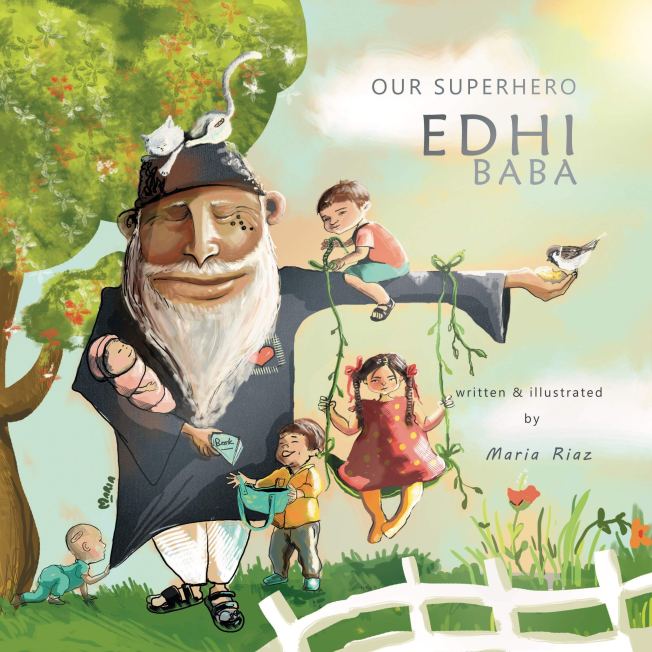
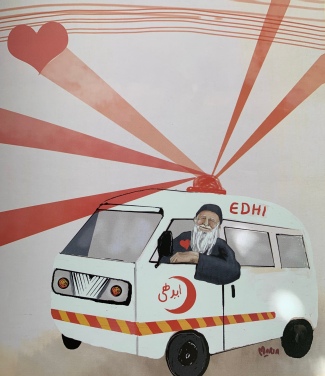
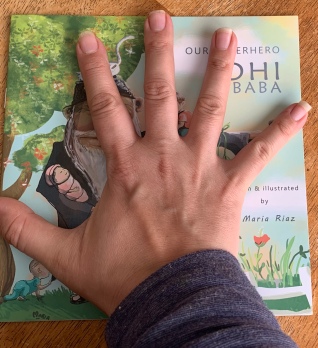
This is a hard review to write.  I have been trying to get this book in my hands since it was published and just could not.  I’d ask people to bring it from Pakistan, or try and order it on Amazon to find it out of stock.  And then finally I was fortunate that my cousin was able to purchase it for me, get it to my dad who was visiting Karachi, my dad then mailed it to me within the U.S. and voila a book that sells online for $15 (and is currently in stock) in my hand for RS 475 (less than $3), I mention this because if I had paid $15 for a 7×7 inch book that has only 16 pages, I’d be grumpy.  Having paid less than $3 (plus shipping) and involved multiple family members in the process, if I’m honest, I’m still a little disappointed with.

6A2DB5A1-8FE8-4608-8C3A-E81A352477EA

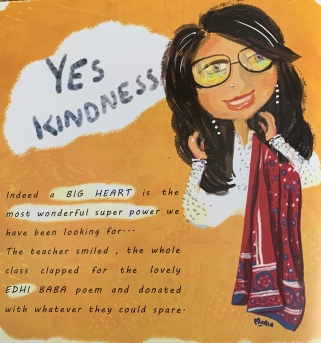
The book is beautifully illustrated, the author is the illustrator so why not make the book larger, so the illustrations could be appreciated?  The book is really short and very vague, even the note at the end could provide so much more about this national hero, his accomplishments, his struggles, his goals, his legacy.  And I’m not sure why it doesn’t.

7B314A2E-9BFA-4D25-A810-339E20A460AD

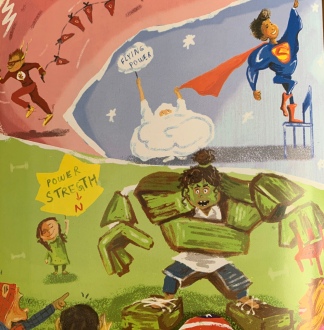
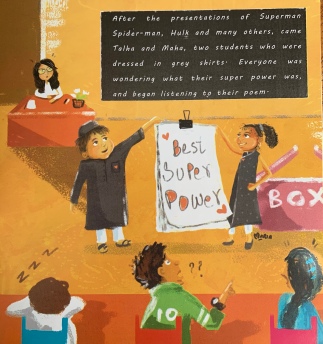
The book is framed with kids presenting superheroes in class: Superman, Hulk, Spiderman, etc., two kids wearing grey shirts and white pants start their presentation about Edhi.

B695DEF7-CC65-4623-817F-DCD780CA508B

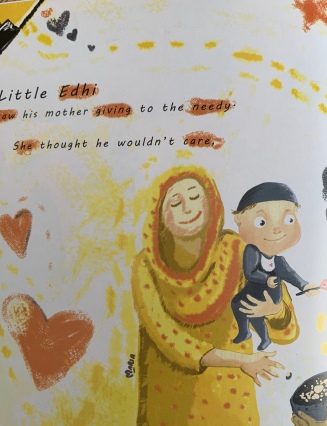
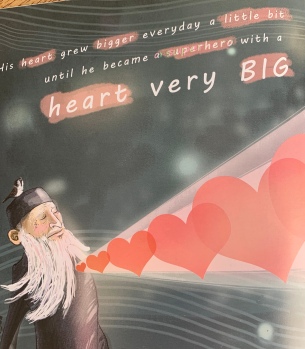
In rhyming lines the kids talk about how Edhi’s mother would give to the needy and how he continued this giving whatever he could spare from a young age.  How giving everyday made his heart grow big.  He gave to everyone and didn’t discriminate based on skin.  It mentions that he started an ambulance service and we should follow his plan of helping and donating.

A2DF1235-63EA-4FEF-8495-66B63AEFA578

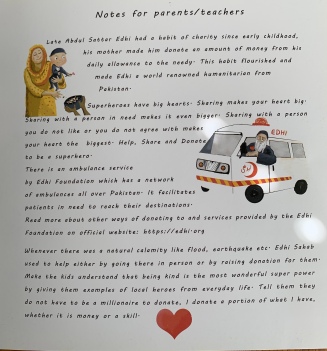
The note at the end talks about how to donate and how superheroes have big hearts and share not just with people they like, but even people they don’t like.  The author then says that she donates money and skill.

7E6B0C80-7C8B-44C5-846F-C0781DBC84DA

The writing is clear enough for the sparse words on the page.  I don’t want to critique a Pakistani writing rhymes in British English, because I speak one language, and clearly realize the beauty in being able to speak and write and convey in more than one language, but it is a bit awkward in parts.

F0FC330D-C20E-4957-9917-7C0551D0ED91

The idea of the book is beautiful.  Edhi was a humanitarian that needs recognition both within Pakistan and abroad.  But, I really wish this book had a bit more substance to it.  I think it can get a conversation going with little kids, but older kids will find it very generic, and unless a nearby adult can add to the story, it sadly won’t be remembered.

B33B93B2-BA26-4194-B1EF-F864E9B3112D

A portion of the book goes to support edhi.org, but it doesn’t specify how much.

(size reference):

97973BFE-6B49-478F-A110-B1C122ECAD9E

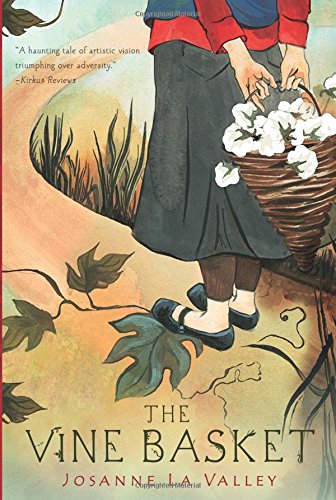
The Vine Basket by Josanne La Valley

Standard
The Vine Basket by Josanne La Valley

vine basket

While in the midst of moving from Knoxville to Birmingham nearly 4 years ago, a lady reached out to me telling me that a colleague of hers, also an author, was a follower and fan of my blog and had recently passed away, she asked if she could send me a copy of her friend’s books.  I agreed, not knowing what type of books the lady had written and didn’t think much of it.  In the chaos that is moving, I received the books and boxed them up and then unboxed them and vaguely remembered that they were about Muslims in China.  I put them in the to be read pile and just never got to them.  Then as the plight of the Uyghurs started to be known here in the US, something tickled my brain, but nothing came of it, until recently when I realized, a lady, a non Muslim years ago was trying to tell the Uyghur’s story, and had reached out to me, and I didn’t get it, and still wasn’t getting it.  So alas, I have now read the Vine Basket, and while it might not present Islam the way we are used to seeing it in life and in print, the characters do identify as Muslim and this middle grade book is a simply woven, beautiful story that gives voice to a population that is horrifically being silenced.  The AR 5.0, 252 page book is a quiet book that will stay with me: the drunken father, the threat of being sent to a factory, the loss of tradition;  I am so glad I read the book, and only wish I could reach out to the author to hear more about her knowledge of the region, of the people, of the culture that is being erased.

SYNOPSIS:

Mehrigul is 14, and since her older brother left, she has been forced to leave school to help her father sell goods in the marketplace.  More often than not though, it is solely Mehrigul’s responsibility as her father drinks and gambles away the meager earnings the family makes. Her mother, ashamed of the poverty the family endures along with some presumed mental illness and headaches, seeps further and further away from the reality of life and the chores that need to be done to ensure food and survival of the family.  Her younger sister is the only spark in a dreary and difficult life, and Mehrigul is determined that she should stay in school and be shielded from the darkness hanging over the family.

One day while in the market, an American woman approaches Mehrigul and asks to purchase a frivolous grape vine basket Mehrigul had made and hung to decorate the cart.  She offers her 100 yuan, more money than Mehrigul has ever seen, and asks her to make more baskets, and that she will be back in a month to purchase them. The basket serves no purpose like the willow baskets her grandfather weaves and despite the money, Mehrigul’s father is not happy.

Mehrigul is forbidden from making the baskets for the American, and the fact that she will even return is dismissed.  Her father grows increasingly cruel toward Mehrigul and keeps her busy to prevent her from making more.  Mehrigul seeks solace in her elderly infirm grandfather who tries to help her find inspiration and time to make her baskets as he sees in her a gift that has value in their old culture.  At one point as her father steals her baskets to take on a “religious” pilgrimage to the mountains.  And her planting crops in the fields leaves her hands cut and swollen, unable to make more with just days left before the American lady is due to return.

WHY I LIKE IT:

At first I was really uncomfortable with the idea of a white American savior coming to a dying oppressed culture to offer hope, until I read the afterwards and understood that much of the story was inspired by the author’s own experience and that she worked with Uyghur’s to get the story right.  The book reads like historical fiction which makes the day to day life of this modern book all the more heart breaking, it isn’t about the past it is the present, and life in East Turkestan is bleak.  I like the character of the father, he is an abusive mess, yet somehow it isn’t that easy to write him off, he has his own struggles and the depth of character I found in him, in a middle grades book, is haunting.  I also really like how Mehrigul’s story is so foreign to us here in America, yet her emotions and insights are universal and thus relatable.  She wants to find her place, and excel, and help her family, and she is scared, doesn’t know who to trust, and takes on more than most children any where should, but often are forced to do.

The characters identify as Muslim and as a people the Uyghurs are Muslim.  They say salam in the story, but only to the grandfather, and the girls all cover their hair with scarves.  The father obviously drinks and gambles, two practices, not permitted in Islam.  Mehrigul fastens a talisman and connects her prayers to it as a form of worship which I would imagine is cultural perhaps, and when things go awry she remarks she should have prayed to Allah swt.  The father goes on a pilgrimage to a mountain shrine, which again seems off from traditional Islam, but is presented in the book instead as odd because the father is not normally religious.  Islam is not a big part of the book, so it is hard to know if the representation of it are isolated to who the author met, or a larger norm of the community.  Considering how isolated and oppressed the Uyghurs are, I tried really hard to suspend judgement, or offer my privileged limited critique of the people.

FLAGS:

Drinking, gambling, abusive father, anger, lying, deception.

TOOLS FOR LEADING THE DISCUSSION:

I would consider this for a middle grades or even middle school book club, there is so much going on in China and in the erasing of Islam there that this book would supplement the news and few stories we are hearing.  It opens up the culture and gives it a face that is not political, but personal.  The faults of the father are not glorified at all, and the discussion about his desire to hold on to culture and fear about his daughter surpassing him would be fascinating to hear from people the protagonists age.

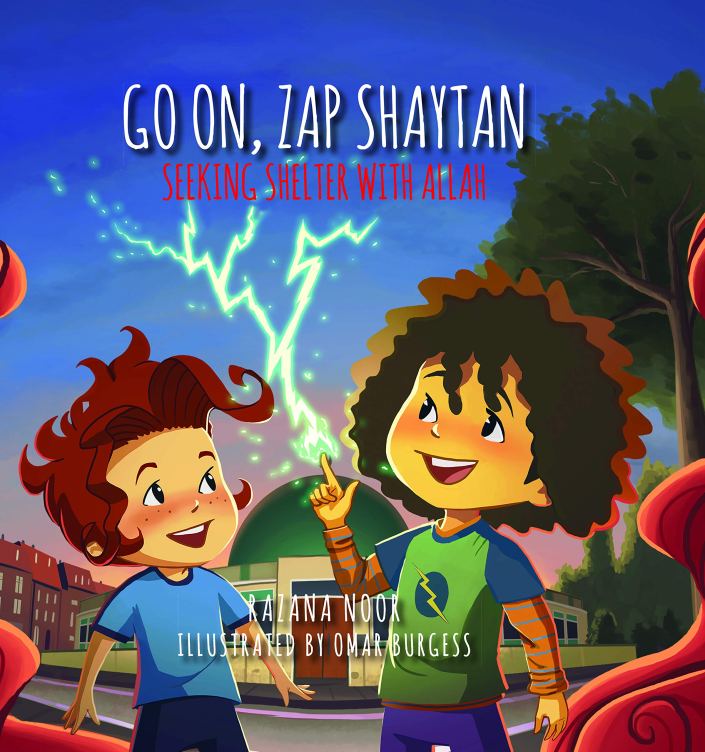
Go On, Zap Shaytan: Seeking Shelter with Allah by Razana Noor illustrated by Omar Burgess

Standard
Go On, Zap Shaytan: Seeking Shelter with Allah by Razana Noor illustrated by Omar Burgess

zap shaytan

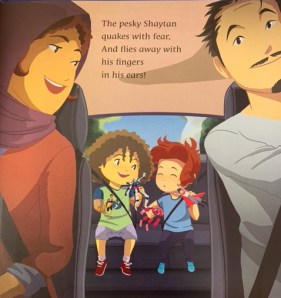
In rhyming couplets spread out over 32 pages with adorable illustrations, this book is a great introduction to the whispers of shaytan that encourage us to be naughty, and how to counter them without frightnening young listeners.  Meant for preschool age children and up, this is the second book by the author discussing an important religious concept in an easy to understand manner (the first book was about Kiraman Katibinthat empowers children to make great choices and find strength in doing so, even when mistakes are made.4CB95EFD-0B5A-4725-B110-4361E48CD9A4

The “Note to Parents” at the beginning provides great framework for the takeaway message of the book.  That yes, shaytan whispers to us and we will make mistakes, but the power is ours to overcome such temptations and inshaAllah do good.

F2A6447D-B135-462B-A488-69FAE830E3DA

The book starts out a bit shakey for me as the rhyming is a bit off on one page, and the blame for the little boy with the great hair’s naughtiness is blamed solely on shaytan.  As a former teacher, this is always a tricky concept when trying to teach children to take responsibility for their actions, but then knowing full well that shayateen are real too.

4DE197AE-7441-4994-BA67-422FE6C79D52

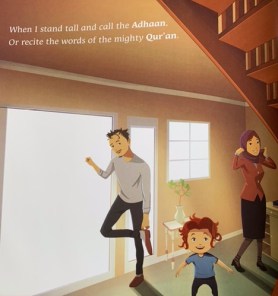
Once the flip side, of how to protect yourself from shaytan, starts: by saying aoudhu-billahi minashaytanir rajeem, bismillah, salam, reading Quran, calling athan, etc.. the book flows really well.

CC847284-C10B-499A-881C-742DF1C0956C

I love how much information is conveyed about the jinn and their purpose and how they cower and put their fingers in their ears to not hear the praise of Allah swt.

424EFA9E-0755-4E84-A179-CEE46F4EE2ED

There is a glossary for the Arabic words and Islamic references, some kids might need some additional understanding about jin and responsibiltiy, but a solid book that I have read over 20 times to my 4 year old in the last week, alhumdulillah.

74D999B3-5CCC-4426-977F-43FF55EE2383

Thank you again to Crescent Moon Storefor their incredibly quick fullfillment of the order.

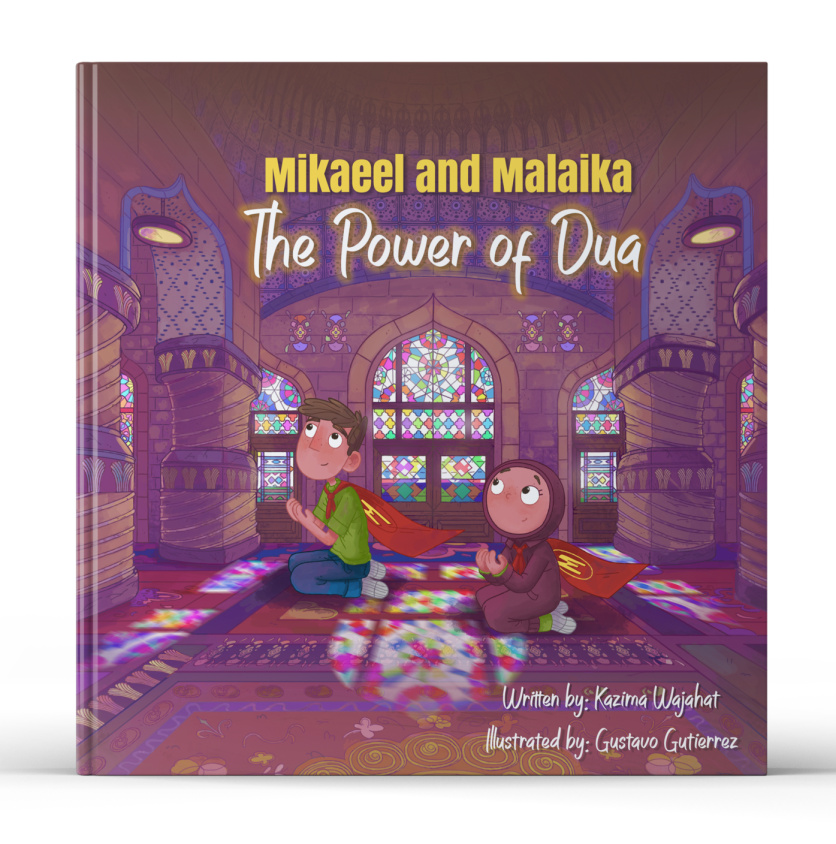
Mikaeel and Malaika: The Power of Dua by Kazima Wajahat illustrated by Gustavo Gutierrez

Standard
Mikaeel and Malaika: The Power of Dua by Kazima Wajahat illustrated by Gustavo Gutierrez

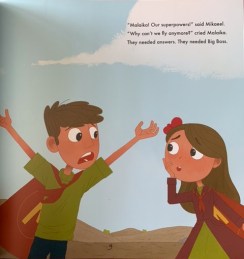
power of duaMikaeel and Malaika are back in this 32 page hardback book that explores why duas sometime seem not to come true.  Done in a hilarious manner that brings in riddles and problem solving elements, it is perfect for 6-8 year olds.  Younger children will enjoy the beautiful illustrations and silliness, and older children (and parents) will thoroughly enjoy Big Boss’s play on words and the illustrations showing his parenting style.  I’ve read the book multiple times to myself, my toddler, and even my older kids; each time surpressing a smile and enjoying the message lovingly and entertainingly conveyed: “rewards are best when the time is right.”
A8CB8717-C5BF-43A7-9A6D-AF90A8915A89

The book starts out with a problem to be solved, a mystery: who took the shoes from the masjid.  I know such a real world problem in a picture book, but fear not, super hero siblings Mikaeel and Malaika are on it.  There is just one problem, their super powers are gone.

04419E7B-4F57-4ACB-91CE-06F246F1C205

They head to Big Boss, aka their father, to find out what happened to their powers, only to learn they were part of a “14 day free trial” and their superjet? It was sold on Spamazon. At a loss of what to do, Big Boss reminds them that they have one super power left, the power of dua.

EA088D63-50D9-400D-A80D-A0C70FF1BF6A

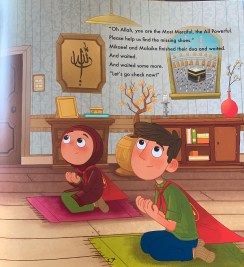
The kids run to pray and then they wait.  When they can wait no longer, they go to see if the shoes have been returned, but…they haven’t. Big Boss gives them some sage rhyming explanaition that they don’t understand, but try to unravel in an apple orchard.  When that doesn’t work, he gives them more advice and they follow it up in a butterfly garden. With no answer insight, Mikaeel gets frusterated and wants to know why his dua won’t come true.

FE59775D-8071-4E5E-87FD-16CE71F341D5

Finally understanding that Allah (swt) does things at the perfect time and only at the perfect time, the children change their dua and the shoes are found, and the lesson learned and shared.

E5E3FE5E-EAA4-4B55-B192-BF82D8C69BA6

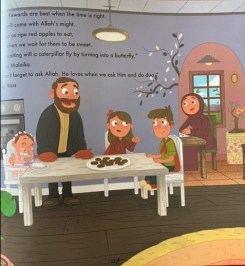
I love Big Boss, and this book makes it much more clear than in Mikaeel and Malaika: The Quest for Love, that his advice and riddles are in rhyme, but that the rest of the text is not.  I love that he is a hands on parent changing diapers, cooking, and guiding his kids. His steralizing of an infintile waste unit, and skimming a superhero manual are awesome and silly.

The book is about Muslim children, for Muslim children, but I think any child would enjoy the story to learn what Muslims believe, and any religious child who believes that there is one creator would be able to relate to the story as well.

671A295E-6B03-40AC-9172-C3F8085E7A73

The book ends with an ayat from the Qur’an in English promising that Allah swt answers the prayers of the supplicants.  InshaAllah there will be more Mikaeel and Malaika adventures, and more of Big Boss and Super Agent M.O.M., too.