Category Archives: Kg-2nd

Hana’s Hundreds of Hijabs by Razeena Omar Gutta illustrated by Manal Mirza 

Standard
Hana’s Hundreds of Hijabs by Razeena Omar Gutta illustrated by Manal Mirza 

img_1826

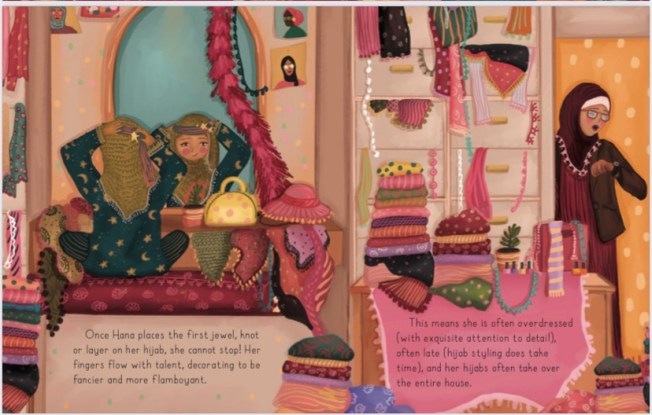
I love the idea of this book and I can see me reading it at story time to KG-2nd graders with great success. The illustrations are rich and detailed, the over the top bedazzling is fun and extra, the plot however, is non existent, surface level at best, the Islamic representation incredibly shallow, and the inconsistencies puzzling.  I’ve read this book a lot of times trying to articulate why it just rubs me the wrong way, and I think it is because it really reduces hijab to a fashion piece.  You can change the word “hijab” to hat or t-shirt or sock and the story would be EXACTLY the same. There is no connecting hijab to Islam, no showing or telling why a woman would even where it.  It presents hijab as being a costume or a decoration.  If you don’t read the author’s note at the end, you would have no idea that hijab is an obligation on Muslim women.  Even at story time in an Islamic school I don’t know that the author’s note will make the case clear enough, and I do plan to discuss with the classes how important it is to realize that hijab means something and is an act of worship and faith, and not something frivolous.  The 24 page book is cute, no doubt, but I wish it had just a bit more substance.

img_1827

A few other readers have shared that they found the story “offensive” and “triggering” for the main character’s judgmental and snooty attitude of criticizing others’ fashion sense.  As someone who doesn’t care much what I wear, I didn’t feel attacked, but their points are valid, so I share them. Hijab is incredibly personal and many women struggle with dressing for the sake of Allah swt with the messaging all around and pressures to compromise in one way or another, and this book for some could definitely add fuel to the fire of telling a woman how to dress.

img_1828

My plot concerns mainly pivot around Hana’s mom.  Why is the mom presented as irritated at the beginning and then so supportive at the end, what changed? Why doesn’t the mom remind her daughter about why one wears hijab when given the chance?  At least add the word “Muslim” in the above page between “strong” and “women.” I know the book is supposed to be fun and surface level, but connecting hijab to Islam isn’t preachy, it is logical. It is a key piece to the premise of the story.  Also, how does offering her services of styling solve the problem- wouldn’t it in fact make it worse?

img_1829

The fun illustrations and the extreme decorations really could have made the book a little girl favorite, but as it is, I don’t know that it will be requested more than once, or lend itself to being remembered once story time is over.  It draws on Fancy Nancy extremes, and thinking outside the box, but because of the faith based article at the core, it seems to miss the importance and true beauty that hijab represents.  I think Muslims will pick it up and be excited on first glance, but be left wondering what the point was, and non Muslims will probably be left with more questions than answers.

Lina, the Tree and the Woodcutter by Eman Salem

Standard
Lina, the Tree and the Woodcutter by Eman Salem

lina

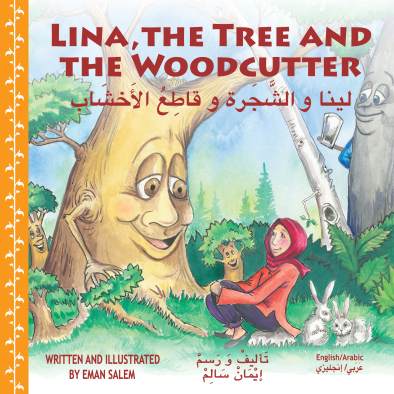
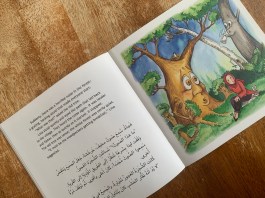
I’ve enjoyed another book in this bilingual series, Little Tree Goes for Hajj,  and was excited to see little tree all grown up and the focus of a book on the environment.  The 22 pages in Arabic and English start out promising, setting the stage, establishing the familiar characters, discussing caring for trees and not harming them for no purpose, but then the book just kind of ends.  It is wordy, the English anyway, I cannot comment on the Arabic, but it is sweet and warm in its own Islamic fiction way.  I didn’t feel like a glossary was needed, it mentions Allah in the text and seems meant for Muslims, so why the definitions of Allah, Hajj, and Mecca are included is a bit odd especially when it uses Christianity and Judaism in the explanation of the oneness of Allah.

img_9825

Little tree is now an old tree and was a friend of Lina’s grandfather, they had traveled to hajj together.  As they sit chatting, they hear a horrible noise and discover it is a woodcutter chopping down a tree.  When the young man stumbles upon the talking tree and Lina they question his motives.

img_9826

He wasn’t chopping wood for fuel, or to build a home, he was just chopping it because he could.  Lina and the old tree explain what was lost with the destruction of the tree and teach him that Allah swt has made people the earth’s caretakers.  The woodcutter learns from his mistakes and apologizes.

I wish the book maybe would have made a stronger point that trees take a while to grow and that sorry is well and good, but not enough to restore what was lost.  I like that the woodcutter wants to learn more, but a few lines detailing what he learns or that he came every day to sit with them or some sort of ending would have been nice.

Let’s Think about Allah’s Great Garden by Ali Gator

Standard
Let’s Think about Allah’s Great Garden by Ali Gator

allah's garden

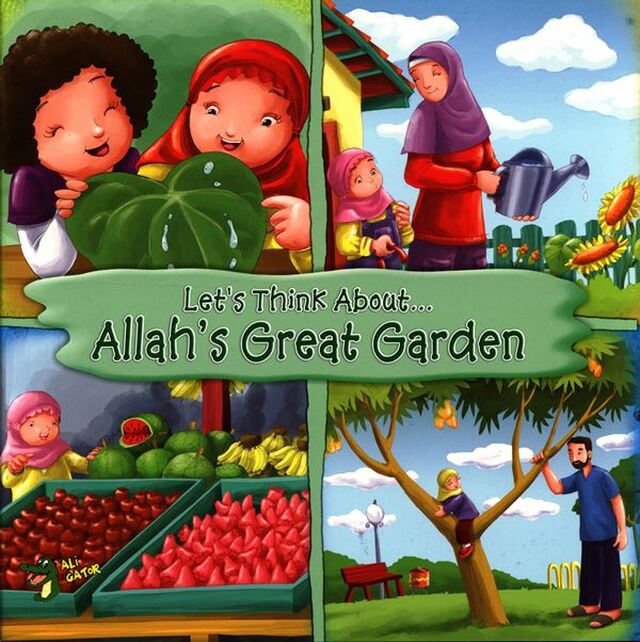
At 22 pages this book’s title aptly describes the contents within: at times factual, sometimes breaking down the fourth wall and asking readers to do something engaging, at times fictionalized, and often meandering and reflective.  The book is all over the place and only cohesive in theme.  It has sat on my shelf untouched by my children for quite a while, but when I needed options for the library during Earth Day, this book did a great job in facilitating discussion with pre k to 1st grade.  It isn’t a story time book so to speak, but it gets kids thinking and can be tailored to their level of discussion.  I don’t think that is how the book was intended, and as it is written it is rather unimpressive, but when pulled apart it did serve a very specific purpose.

img_9837

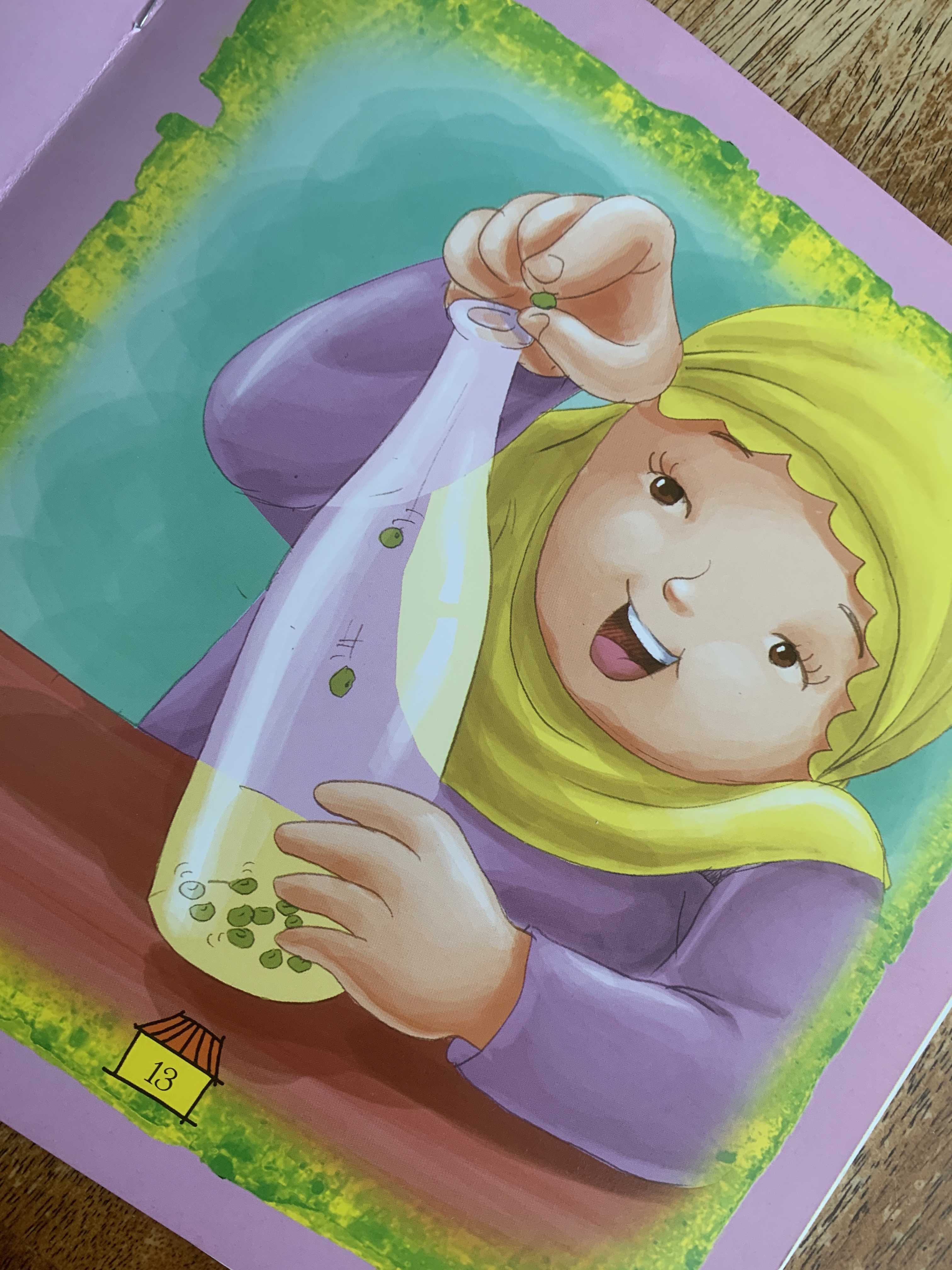
The book starts out with a few lines about Allah’s blessings of all things particularly trees and plants and gardens.  I wasn’t sure if it was trying to rhyme or not, but I think the first lines are just incidental rhyme as the flow and words quickly unravel. It talks of climbing trees and the narrator’s father telling him to be careful. It then discusses watermelons and how they grow in the ground, not on a tree and asks readers if they can see the watermelon seeds in the illustrations.
img_9836

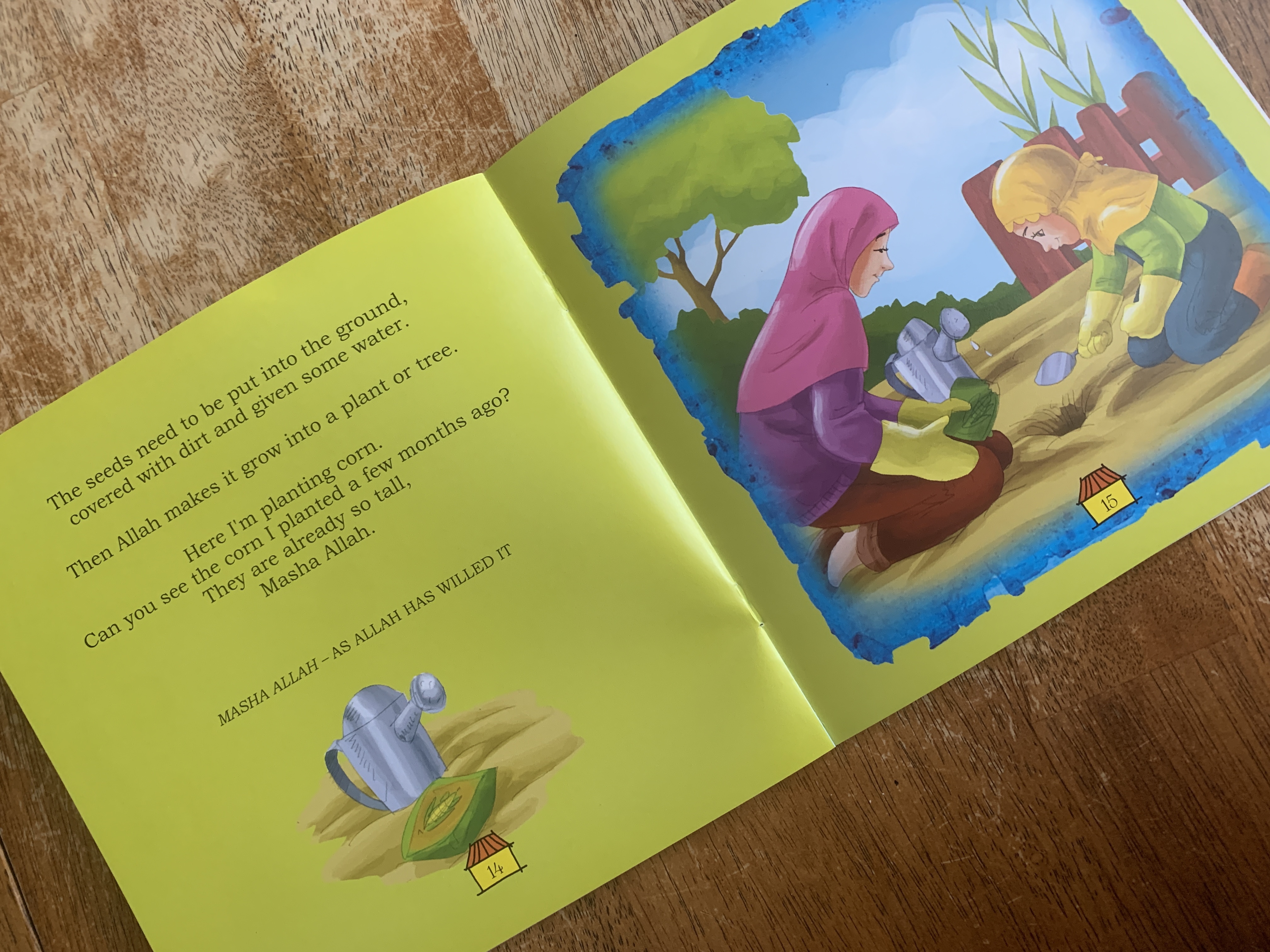
The book focuses on the life cycle of plants: seeds, flowers, trees. Drawing on that information it then shows the little girl collecting seeds to plant.  It then talks about the planting process and the needs all growing things have to prosper if Allah so wills it.

img_9838

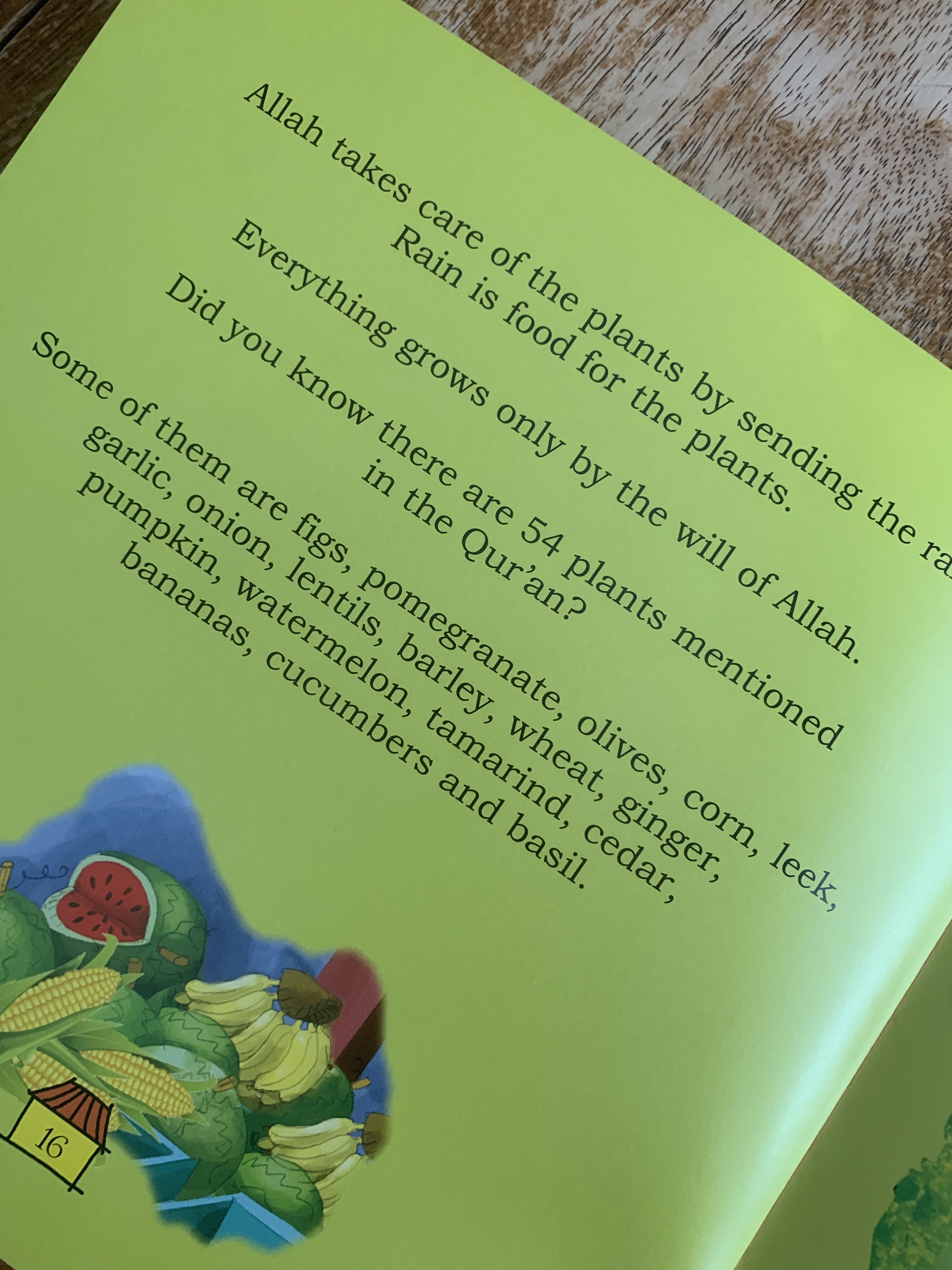
Then the book gets interesting and starts to discuss the plants mentioned in the Qur’an before returning back to the half hearted narrative remarking on how the flowers complement the color of their house.

img_9839

The story seems to then end, but it isn’t denoted that the remaining pages are factual or set aside as back matter, it just pivots and begins discussing rain in Surah an-Nahl, Trees in Paradise as mentioned in Qur’an and Hadith, and then again, but this time in table form, the fruits and vegetables mentioned in the Qur’an, and highlighting dates specifically.

img_9841

The book is all over the place, and I doubt it will be read again until next year.  There are a few other books that have come out about his topic, and I plan to look in to them to see if they work better for story time readings and child engagement.

A Bear for Bimi by Jane Breskin Zalben illustrated by Yevgenia Nayberg

Standard
A Bear for Bimi by Jane Breskin Zalben illustrated by Yevgenia Nayberg

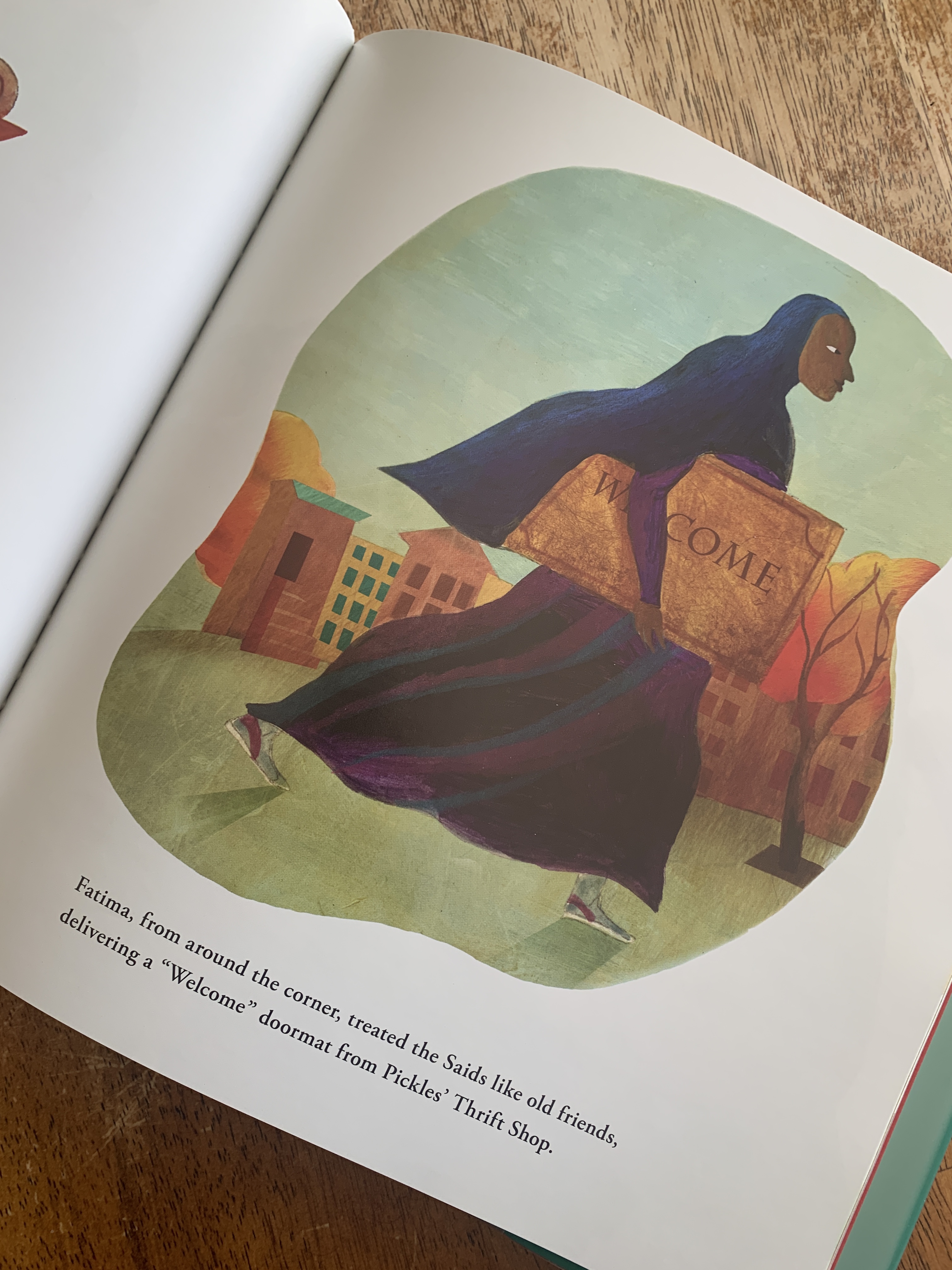
This 40 page picture book for preschool and up does a decent job of highlighting how many of us have immigrants in our family history who have relocated much like the immigrants today. The story focuses on Evie and her family welcoming a Muslim family to the neighborhood.  Some are excited to help, including a Muslim neighbor, others are not so welcoming.  The book shows some of the obstacles an immigrant might face, ways someone already established can help, and just how to be a good neighbor- all on a simple pre-schoolr to first grade level.  For little kids it is a good story to start a discussion, and for slightly older kids it is nice to see Islamic names in the text, smiling hijabis in the illustrations, and different characters to identify with.

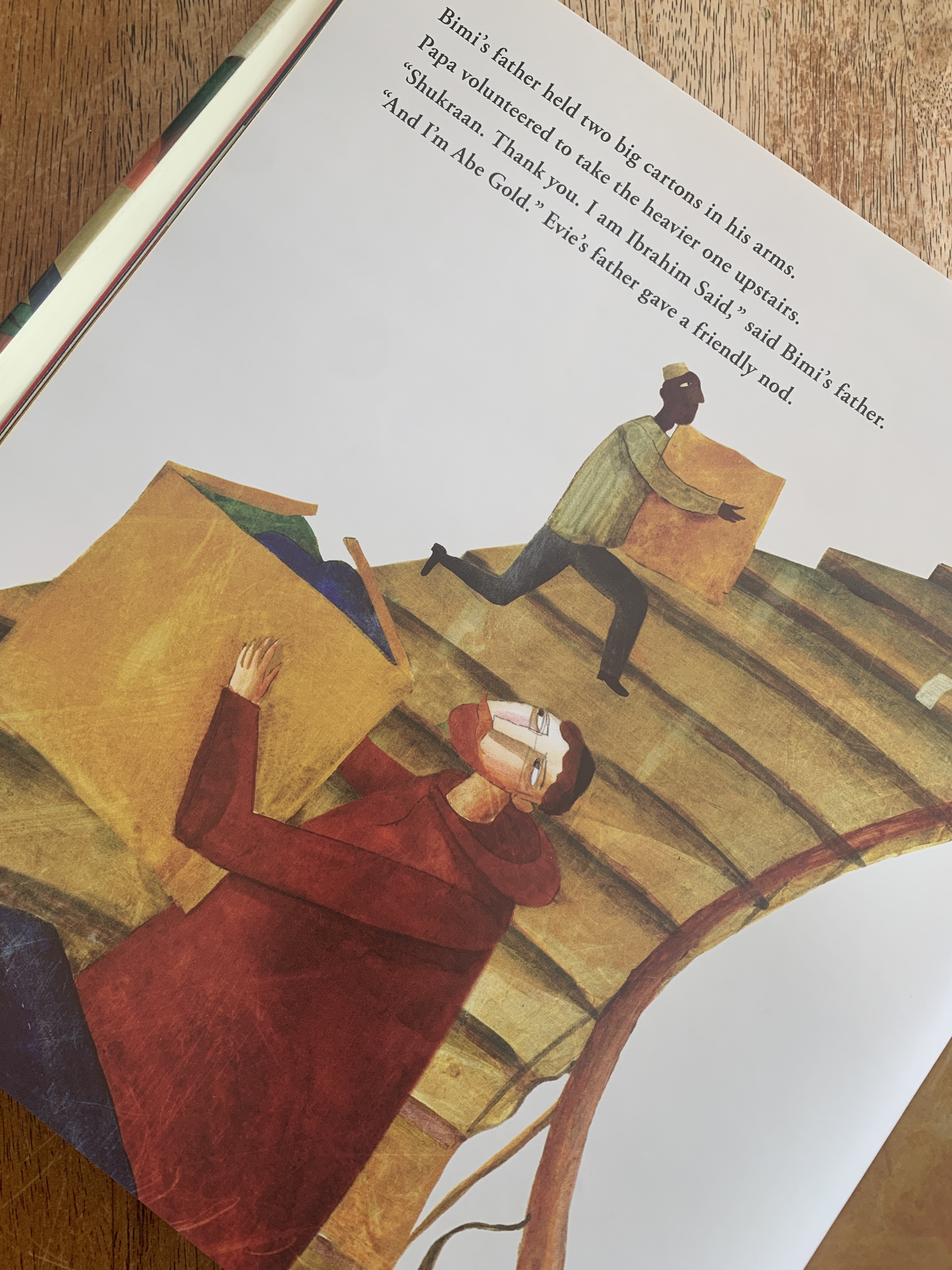
Evie’s parents tell her that a family from far away is moving in next door, she asks if they are coming like her grandparents did, and indeed they are.  When they arrive Evie runs out to introduce herself to Bimi. Evie’s parents help the Said family move in.  But one neighbor, Mrs. Monroe just glares out the window.

Bimi asks his parents about Mrs. Monroe and Evie asks hers.  Bimi’s parents tell him that some people are scared of people that seem different, and Evie’s parents wish Mrs. Monroe would remember what it was like when she first came to America.

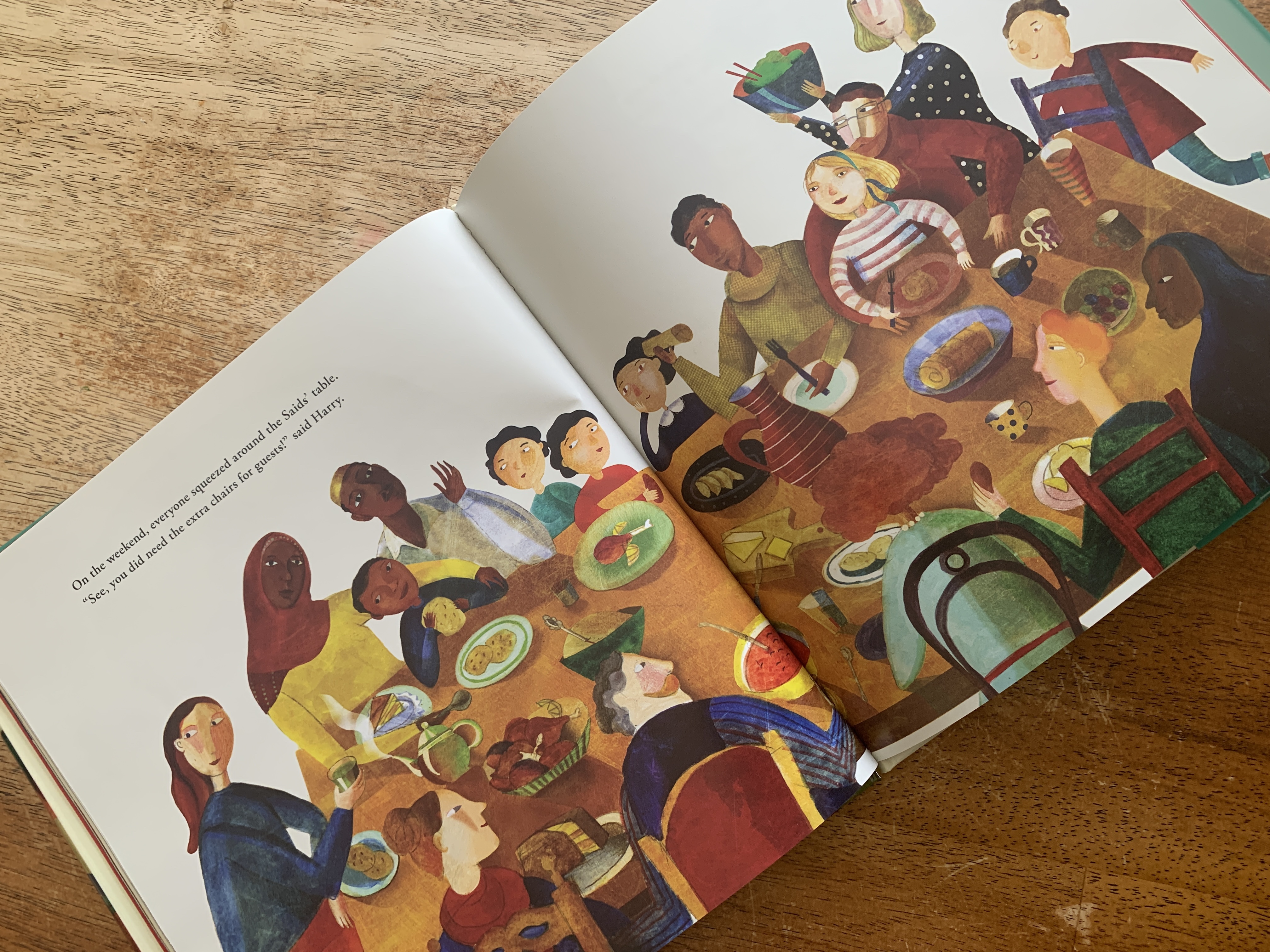
That night Evie has an idea to help furnish Bimi’s house.  The whole neighborhood helps out, including Fatima who lives around the corner.   After getting the apartment set up, they all share a meal, everyone that is, except Mrs. Monroe.

When the kids go out to play, Mrs. Monroe’s shopping bag spills, and Bimi helps her and Mrs. Said invites her in.  Later Evie gifts Bimi her teddy bear and Bimi gives Evie a stone from his grandma’s garden.  Evie asks him what he will name the bear, and when he says Evie, the reader knows the two are friends, and Bimi is “home.”

The book isn’t exciting, emotional, or particularly memorable, but there is value in it and I appreciate the Islamic representation.

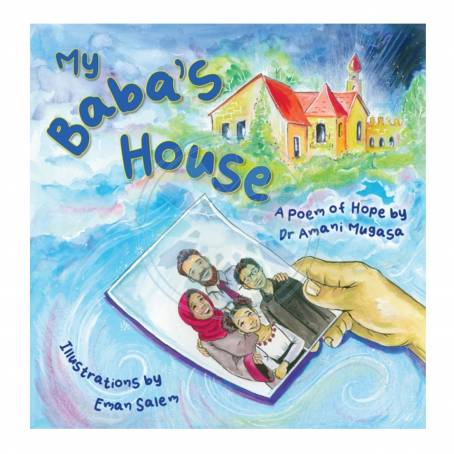
My Baba’s House: A Poem of Hope by Dr. Amani Mugasa illustrated by Eman Salem

Standard
My Baba’s House: A Poem of Hope by Dr. Amani Mugasa illustrated by Eman Salem

my babas house

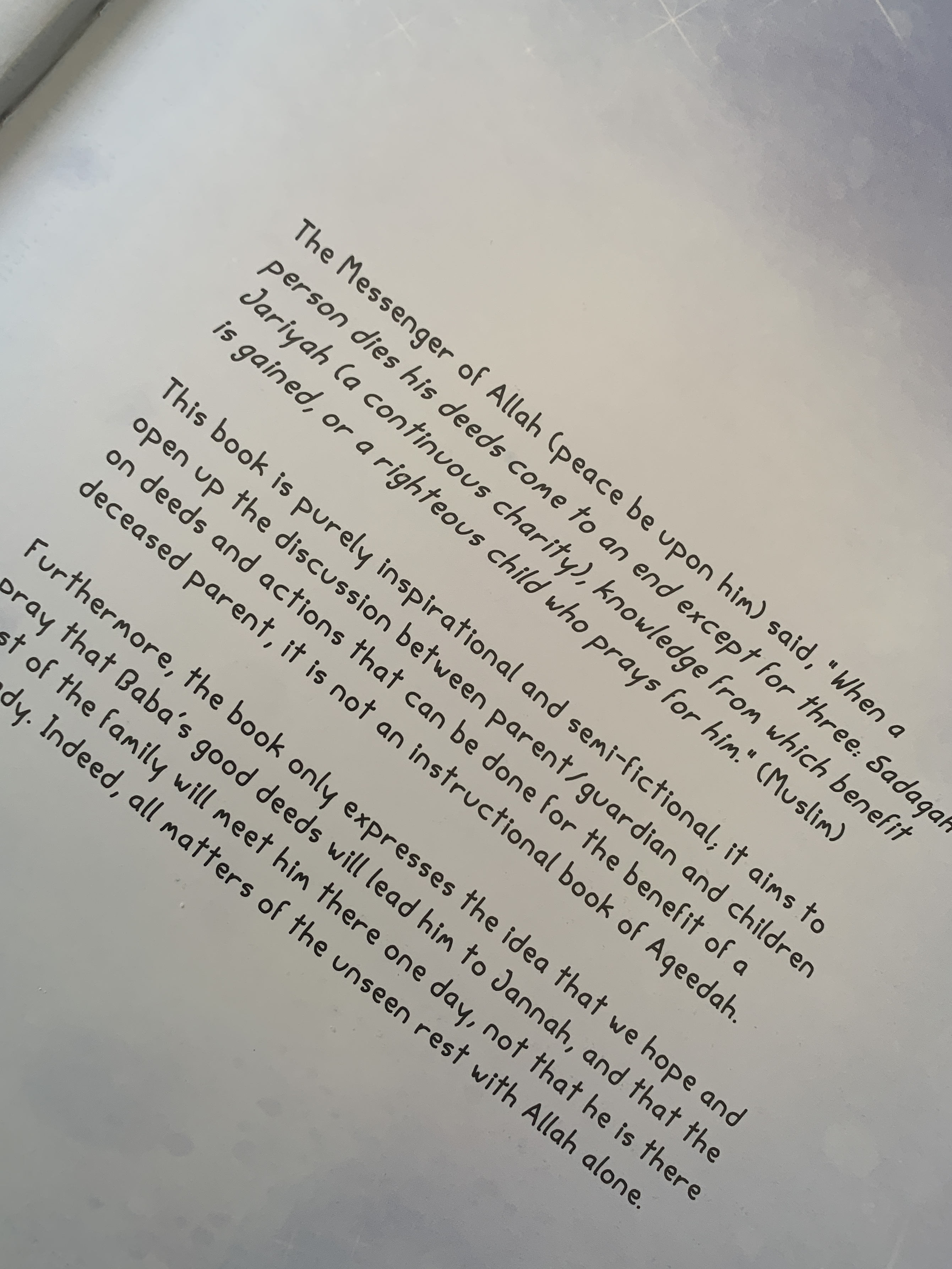
I wanted to love this Islamic centered children’s book about grief, but I found it a bit problematic and misleading.  I am by no means an expert in Islamic matters of death or in psychological bereavement, but the note at the beginning of the book- if I wasn’t already going to look at it critically- really raised some warning flags.  It says that the book is not an instructional book on Aqeedah, that even though the title and whole story is about a house being built that “the book only expresses the idea that we hope and pray that Baba’s good deeds will lead him to Jannah, that that the rest of the family will meet him there one day, not that he is there already.” So, before you even start the story, it seems that the disclaimer is making it clear that this book is not religiously accurate, and that it is just meant to soothe and provided hope.  After taking all that in to consideration, and reading the 26 pages of text over a dozen times, I think I finally pinpointed why the book further reads problematic for me.  It is the repeating phrase, “Your Baba has been building a beautiful house for you,”  because he hasn’t right? He has built a house for himself through his good deeds in this duniya, he benefited HIS parents by being a righteous Muslim.  The words “for you” completely take the book in my head from being a slight suspension of timing where the deceased are, in to be misleading.  So if the book is not accurately framed and only to be taken as something “to open the discussion,” what is the point? Why fill it with Islamic references and concepts, if they will then have to be clarified, corrected, and re taught?  Sigh, I’m happy to listen to those that want to change my mind, truly I am.

img_9013

The rhyming book starts out with a mom and two kids being consoled by the text that their Baba has been building a house for them with Allah’s help.  That it is amongst the flowers, made with Allah’s powers. That with every good deed he did, their Baba becomes a builder, that there are pure rivers and trees, and that the house is hidden through Allah’s gate.

img_9014

To find their Baba’s house they will walk with Prophets, and see ripe fruits, and smell sweet musk.  There will be rivers of milk and he will carry them above his head.  The illustrations on this page are a little off in my opinion the shadows of a person elevating and even the girl looks a little concerned.

img_9015

I like that the next spread addresses that only Allah knows when the day will come that we reunite. And then the next pages tell how the children can help decorate their Baba’s house by calling adhaan, reading Qur’an, being kind, giving charity, and making duas.

img_9016

The book concludes with encouraging patience and finding reassurance in knowing we belong to Allah and to Him we return.

With the exception of the one page, the illustrations are adequate and show a mixed racial family.  The rhyming lines are rather weak, and ultimately there are just better books out there about grief that don’t have to be so qualified for accuracy.

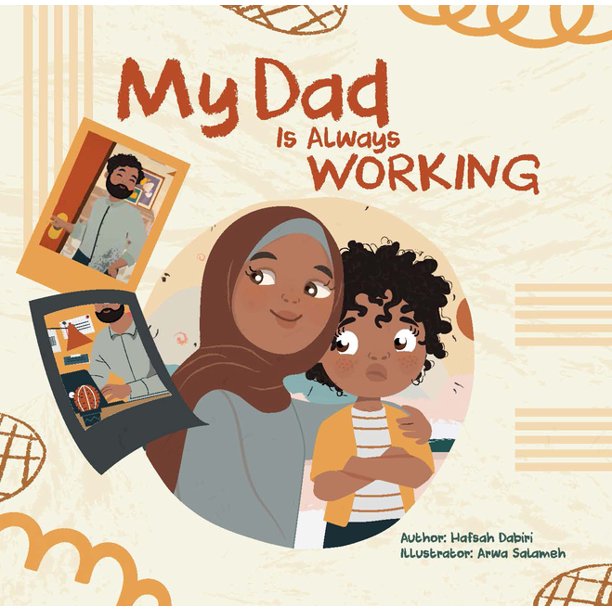
My Dad is Always Working by Hafsah Dabiri illustrated by Arwa Salameh

Standard
My Dad is Always Working by Hafsah Dabiri illustrated by Arwa Salameh

This sweet 26 page story addresses a universal feeling with Islamic flavor.  The Black Muslim family in the illustrations is adorable, the sprinkling in of Islamic terms is lovely, and the concept of dad working unseen for the benefit of his child is touching, (I hope a Mom book is forthcoming).  The text size changing for no reason bothered me though, as did some of the wordiness and possible contradictions.  Ultimately the story will resonate with many children and mirror a common feeling that is not often addressed for young children, and I’m glad I have it on my bookshelf.

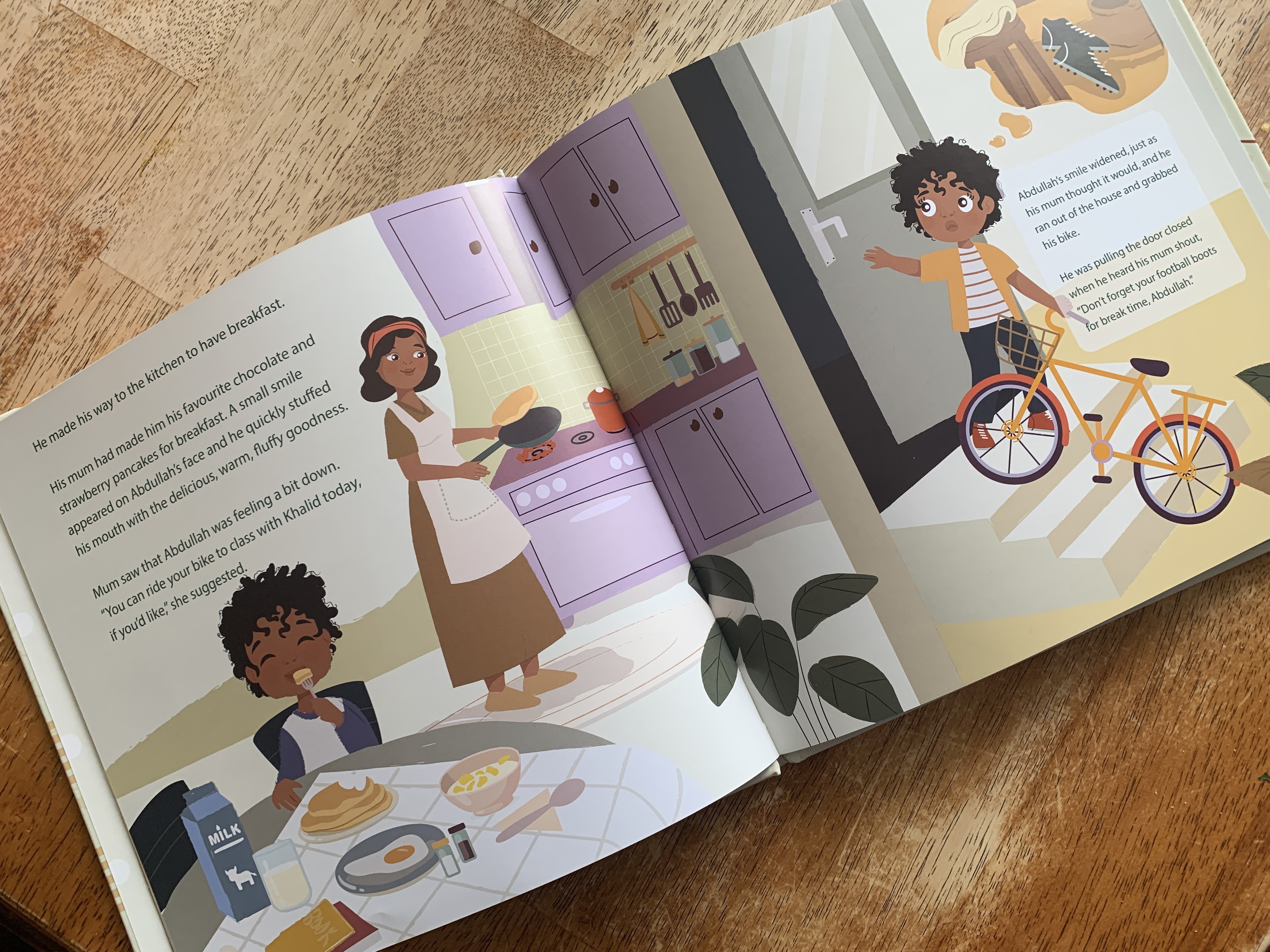
The book starts with Abdullah waking up for class and noticing his clothes laid out on his bed, and his dad with a dirty shirt rushing off to work.  He misses his dad and muses that his dad is “always working,” As he eats his favorite strawberry and chocolate pancakes.  He then jumps on his bike with his clean cleats and heads off to Sunday class with his friend Khalid.

In class they learn about “JazakhAllah Khair,” and homework is to make a card for a person who deserves our thanks.  When Abdullah’s mom, not dad, picks him up he decides to make a card for his mom who has woken him up, set out his clothes, made him breakfast and picked him up for class.

At dinner however, when he discusses class with his mom and the homework the mualimah has assigned, Abdullah’s mom shares with him all that his dad has done and Abdullah reconsiders why his dad is “always working.”

I don’t quite get why the next night when dad is cooking the food is burned, nor am I sure why it said Arabic school, when it seems it is Islamic school, or why he rode his bike to class but then his mom picks him up.  I do like that in the praising of the dad, the mom is not diminished, but rather both are elevated.  An important book, but as I often say, I just wish it was edited better, or more.   It has a lot of potential, the story idea is great, but the writing isn’t polished and it makes it hard to share repeatedly or with a wider audience because of it.

Purchased at Crescent Moon Store also available on Amazon

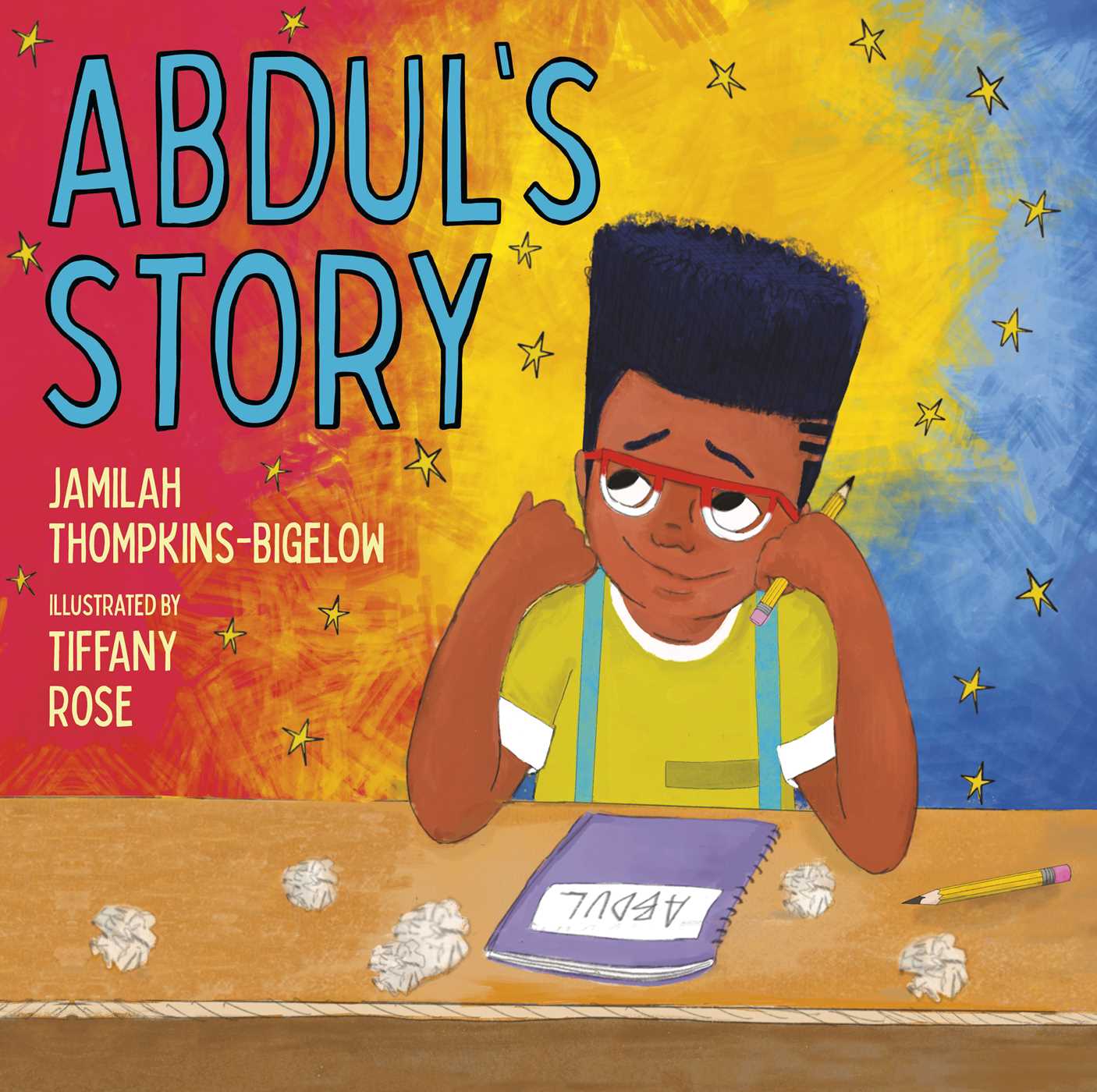
Abdul’s Story by Jamilah Thompkins-Bigelow illustrated by Tiffany Rose

Standard
Abdul’s Story by Jamilah Thompkins-Bigelow illustrated by Tiffany Rose

abduls story

I really don’t know what more you could want from a 40 page brightly illustrated picture book for ages 5 and up.  I felt seen, I got a little emotional, I was inspired, I smiled, I felt compassion and empathy, hope and nervousness.  I was reminded of the power of role models, of getting down on a child’s level, literally.  I was reassured that we all make mistakes, learn differently, and can still thrive. Suffice it to say the book is moving.  The OWN voice lyricism will resonate with children of all colors, but that the messaging is from a Black Muslim boy and is so unapologetic and proud and beautiful, makes the emotions Abdul feels palpable.  Every classroom bookshelf needs this book, every child needs to hear it, read it, and explore the layers contained within.  Alhumdulillah.

img_8766

The book starts out with absolute joy.  Abdul loves to tell stories.  Writing stories, however, is something else.  The letters are tricky, they get turned around, they aren’t straight and crisp like the one’s the barber cuts.   His pages don’t look like the neat lines of his classmates.

He decides that maybe his stories aren’t for books.  It isn’t like he even sees stories like his in books:  stories about the people and places that he knows.

img_8767

Then one day a visitor comes to class, Mr. Muhammad, and he is a writer.  He encourages the children to, “write new stories with new superheroes.”  Abdul tries, but he keeps making mistakes, and then he has to erase, and before long his paper is covered in smudges and holes.

img_8768

Mr. Muhammad encourages Abdul to keep trying and fix the messes later, Abdul has an idea, and with a “bismillah,” he gives it another go.  There is no perfection, there is just determination.  The struggles, success, and support of his peers and Mr. Muhammad, just might change Abdul’s mind about his stories.

img_8769

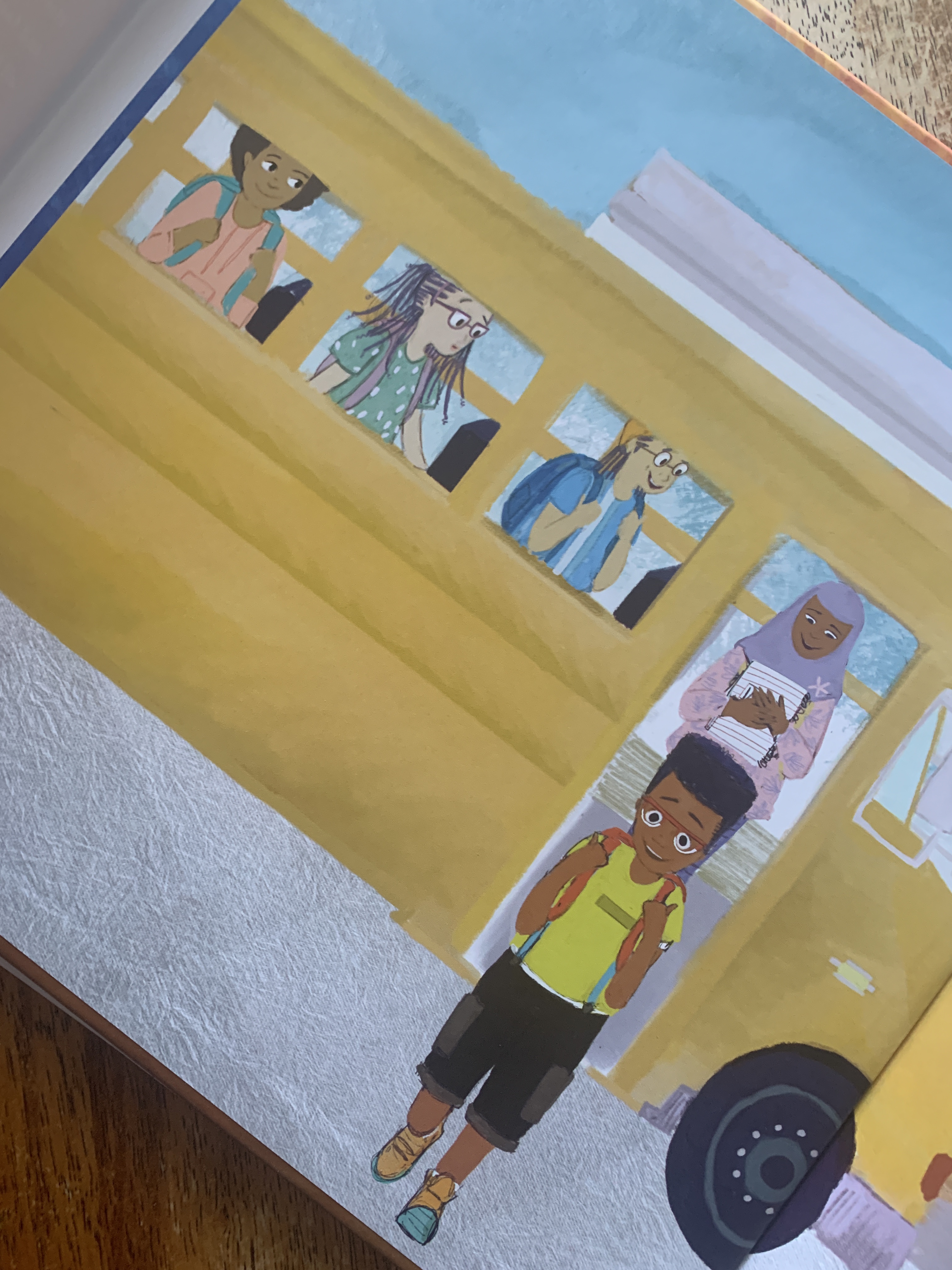
I love that the book is Black centered and Muslim centered.  There is praying salat, mention of bean pies, a classmate in hijab, and saying of Bismillah.  I’ve read the book seven or so times and it has yet to get old.  The characters burst with personality, even the side ones, that I’m positive it will be a favorite at story time and bedtime alike.

img_8770

Can be purchased at Crescent Moon Store or Amazon

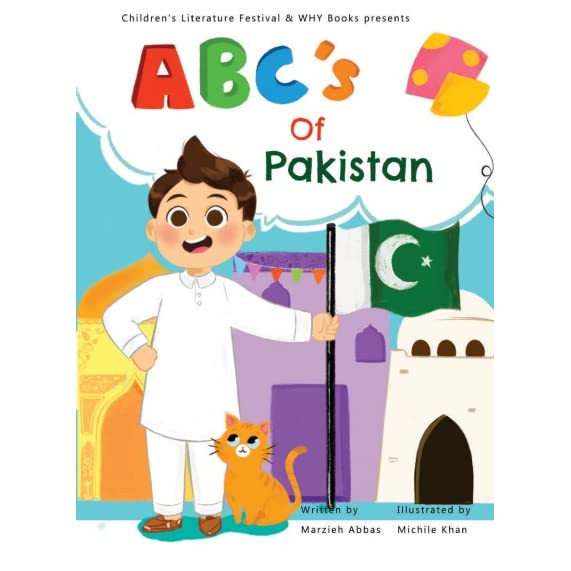
ABC’s of Pakistan by Marzieh Abbas illustrated by Michile Khan

Standard
ABC’s of Pakistan by Marzieh Abbas illustrated by Michile Khan

abcs of Pakistan

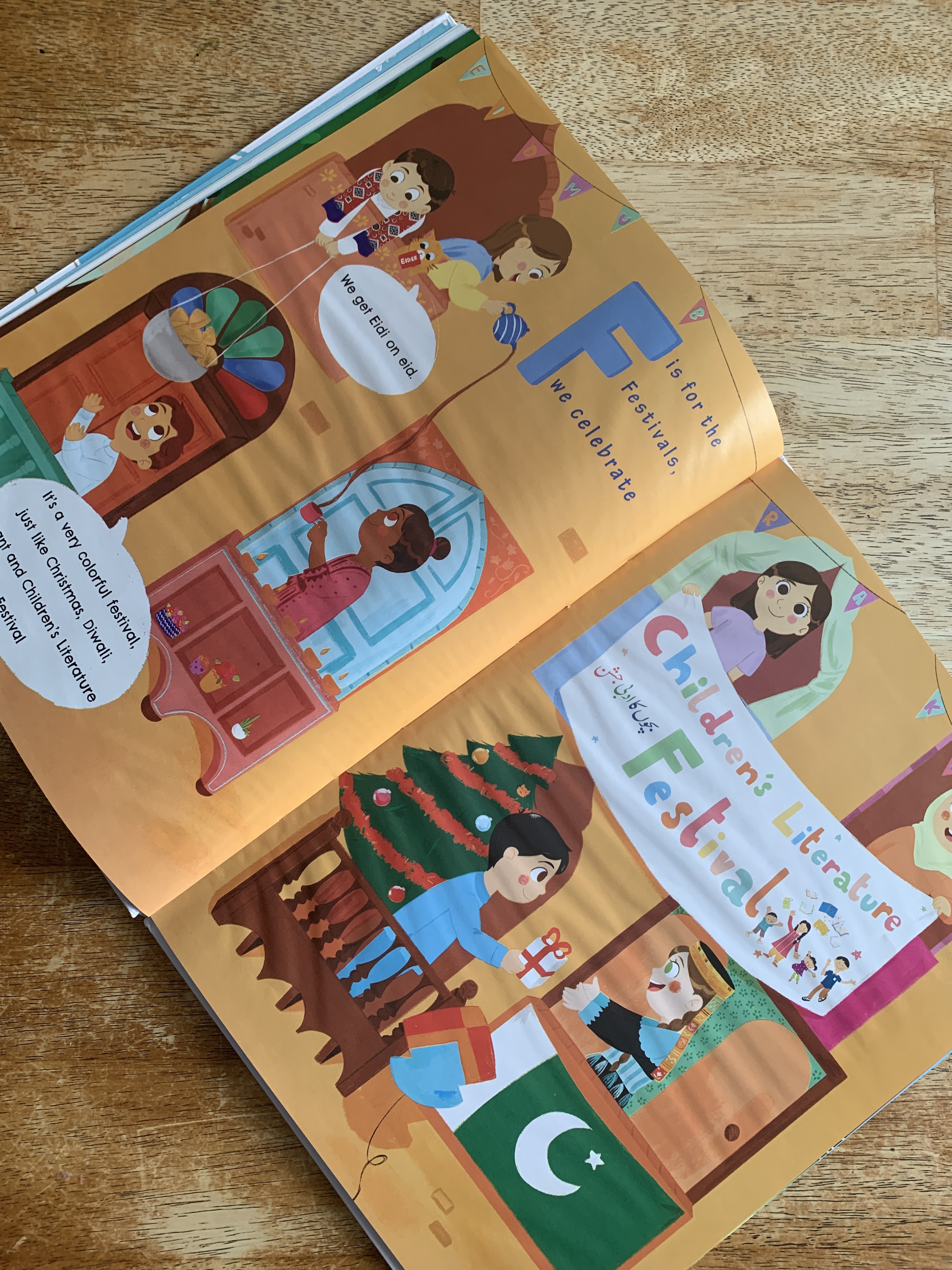
I absolutely love this ABC book, it truly does Pakistan proud and I’m thrilled that I could obtain it, it wasn’t easy, sorry not sure where you can get it in the USA, and it isn’t available even at Liberty Books in Karachi, but if you can find it, grab a copy, or two because it really is a well done tour of the country.  My only suggestions would be thicker pages, the hardback 8.5 x 11 binding is nice, but the pages seem to have curled in the transporting from overseas.  Also, some pages have a large A or E, but others such as the words for B, C, D, are just all flowing story style over a two page spread.  I don’t mind one way or another, but I do side with consistency, either have the letter on all pages singled out, or on none.  The effort to string the pages together makes it read very much like a story, and I appreciate that it features little snippets of fact and history in talking bubbles throughout.

img_7514

Little Hassan and his cat Makhan introduce themselves and then take you on a tourney of Pakistan.  Included are landmarks, handicrafts, foods, famous people, festivals, sports, and more.  It concludes with a reminder to carry facemasks and hand sanitizers, which might date the book a little in the future, it was published in 2020.

img_7517

The book works for non Pakistani’s to learn, especially those of us with children that have not been to the “homeland,” as well as for Pakistanis in Pakistan to feel proud of their culture, history, tradition, and landmarks.  There are beautiful masjids and the azaan mentioned and hijab wearing and non wearing women, as well as famous men and women included.  It is inclusive on the F for festivals page where it mentions Eid, Basant, Christmas, Diwali, and Children’s Literature Festival.

img_7516

Enjoyable text and illustrations alike. InshaAllah, will be more readily available if we can convince the author and illustrator and publisher that there is demand, I hope, hint hint.  Happy Reading!

The Clever Wife: A Kyrgyz Folktale by Rukhsana Khan illustrated by Ayesha Gamiet

Standard
The Clever Wife: A Kyrgyz Folktale by Rukhsana Khan illustrated by Ayesha Gamiet

the clever wife

It has been nearly 10 years since a new Rukhsana Khan book has been published, and alhumdulillah, she is back with a delightful folktale.  This story starts off like many popular fairy tales, but it doesn’t simply end with a wedding and living happily ever after.  The story is just getting started, once the clever Danyshman and Khan Bolotbek start their lives together.  Over 40 richly illustrated pages brimming with character, culture, and hints of what might happen, the ending will sweep readers aged 5 and up into smiles and giggles and leave them begging to hear the story again and again.

img_7220

When the old Khan is on his deathbed, he leaves the future rule to be decided upon by his beloved white falcon.  The bird lands on the shoulder of a young shepherd and the subjects begrudgingly accept him as their leader.  As his kindness and compassion over the years wins the people over, their only concern is that he hasn’t yet taken a wife.

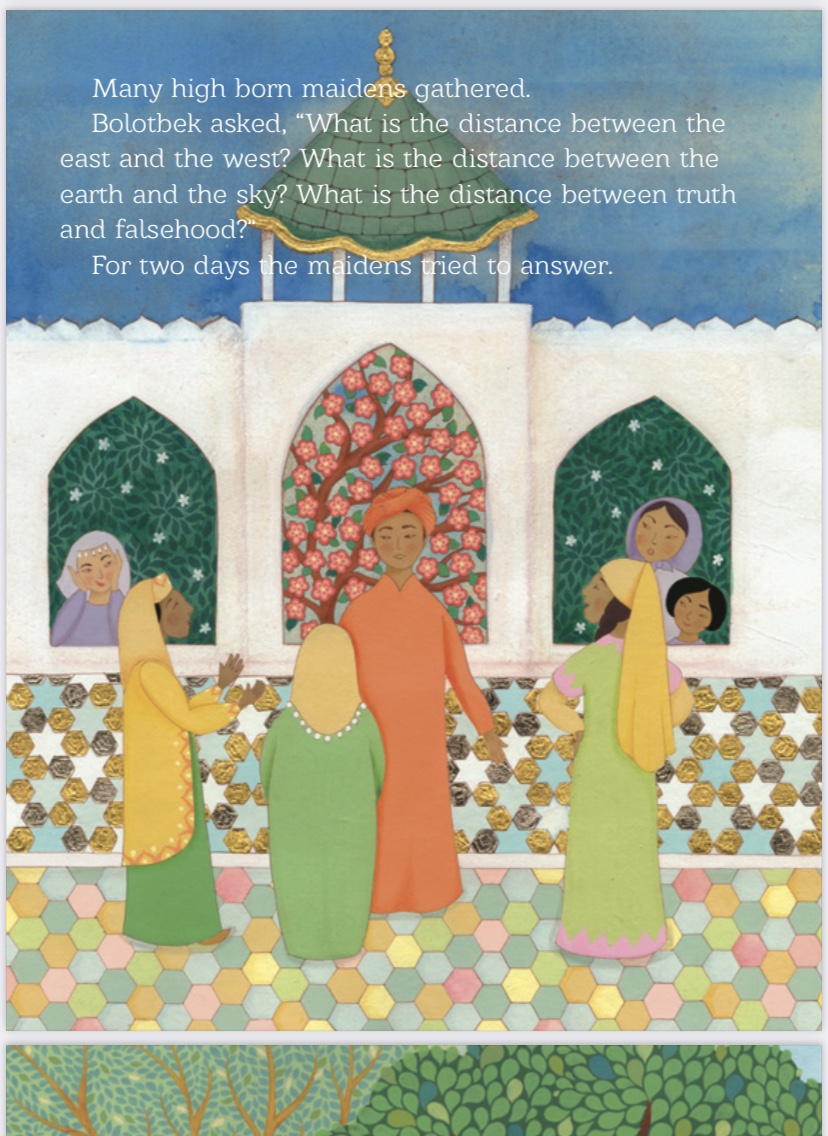
So, many high born maidens gather and try and solve the questions Khan Bolotbek sets before them.  When one poor maiden learns what is happening and accompanies them, they are surprised with her clever answers, and the khan asks her to marry him.

img_7223

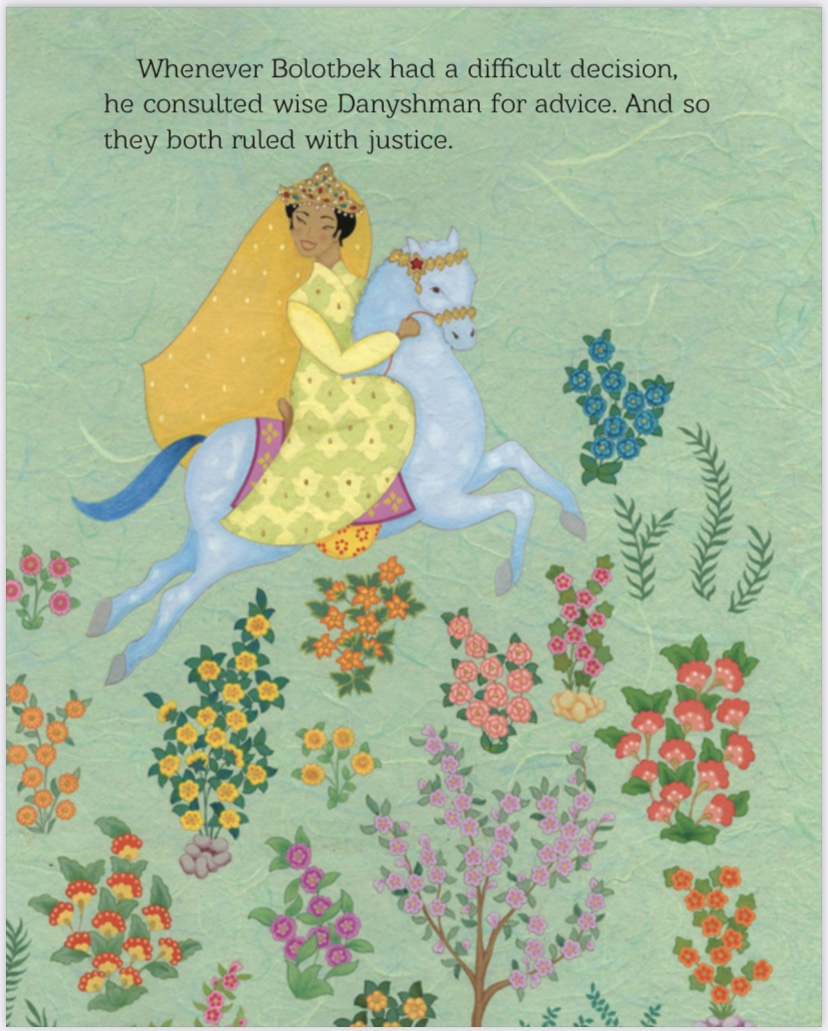
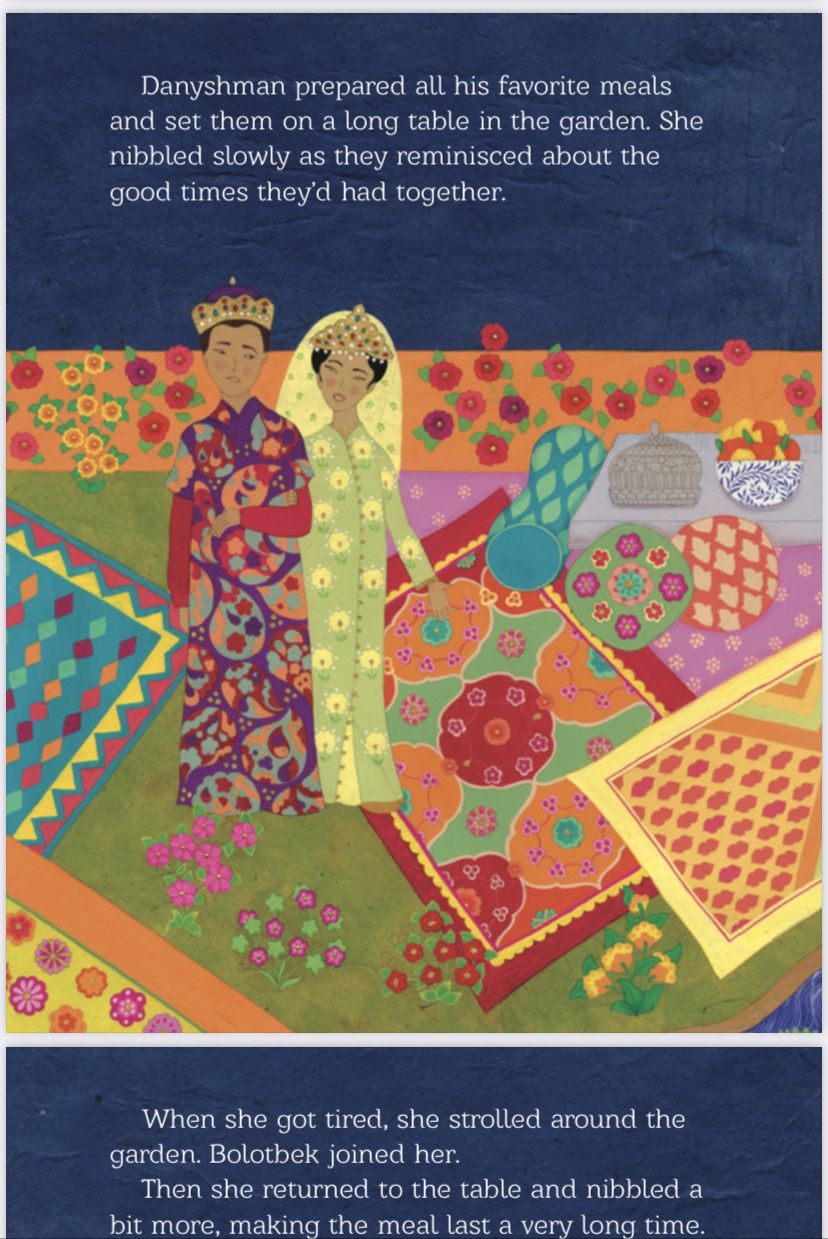
The khan discusses and consults with Danyshman and they essentially rule together.  There is just one promise the khan asked of his bride, and that is to “not share her wisdom with anyone, but him.”  The story continues, but with a clever wife being held to that promise, it is only a matter of time before her wisdom is shared, and it will take true cleverness for her not to lose everything as a result.

I love the strength of Danyshman, the levelheadedness of both her and the khan in ruling, and in remembering their humble roots.  The story is timeless, and this retelling ensures that more families with be familiar with this tale from Kyrgyzstan.

img_7222

The Katha Chest by Radhiah Chowdhury illustrated by Lavanya Naidu

Standard
The Katha Chest by Radhiah Chowdhury illustrated by Lavanya Naidu

katha

This 40 page picture book for preschoolers and up shows connection to family, memories, and Bangladeshi culture as a little girl explores the quilts made from her Maa and aunts’ worn out saris.  This book has been on my radar for a while and while there is nothing wrong with the slow and thoughtful story, it didn’t sweep me up in a hug and wow me, as I had hoped it would.  The illustrations are as critical as the words in conveying the message, and the illustrations are indeed beautiful, I guess I just needed more.  More connection to the emotion the little girl was feeling recalling the strong women in her life, more impact to the fact that her Nanu is no longer with them, and more understanding about the history of Bangladesh that seems to shape the memories.  I worry that most readers simply won’t get anything other than the surface level of the book, which is ok, the memories woven through generations manifesting in quilts, is tangible and perhaps enough.  I feel like, however, the framing of the story and the textless illustration pages attempted to add more layers to the story, and I think to anyone not Bangladeshi, those layers might not be understood.  I wish their was an afterward with notes about the pictured references, inclusion of such backmatter would really open the book up to a wider audience, and give the book discussion and staying power in my opinion.  If you are Bangladeshi this book will be a treasure I’m sure, and I’d love to hear your thoughts on it.

img_7721

Asiya loves going to her Nanu’s house, there are treasures there.  Her favorite treasure is the katha chest.  An old trunk full of the quilts made from the old worn out saris of her Nanu, Maa, and khalas. She snuggles in their warmth and listens to the stories they tell. Stories of hardship, joy, skills learned, moves made, loss, death, love and family.

img_7720

Boro Khala’s looks like Khalu’s medal, from a sad time when he was away.  Mejo Khala bright oranges and yellow like her fingers.  Shejo Khala’s is stiff and neat, she is never messy.  Choto Khala’s has a white streak like the white saris she wears since Khalu died.  Maa’s katha is patchworked and different than the others, and Nanu’s is paper thin and smells of tea, old books, porcelain and wood.

img_7718

There is an author’s note and illustrator’s note detailing the construction and value of kathas, but nothing about Bangladeshi wars, wearing white after a husband’s death, or the textile skills and artistry shown.  The book would read well with context or activities about family heirlooms, connections, and traditions.

img_7719