

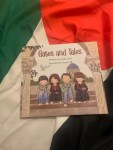
I really like the premise of the book, a Muslim Magic Tree House so to speak, two kids that magically go back in time, in this case to Andalucía. At times the book did make me smile, but really it feels like a missed opportunity. The writing needs tightening, it feels early reader at 94 pages long with a few full page illustrations, but the vocabulary and text filled pages support the suggested reading level of middle grade. It takes way too long to build up to the “action,” and when it gets to the plot it doesn’t seem to know what to do with itself. It is a lot of walking this way only to turn around and walk back for no development, character growth, or enriching reason. As an adult I had to force myself to keep reading, my eight year old who loves Magic Tree House books had basic foundational questions and couldn’t’ get past page 24. Honestly it just needed some proof reading and some trimming, which is why I found it so frustrating; it really had so much potential. Example, if the little boy is so excited to see his grandfather after 8 years, why didn’t he go with his dad to the airport, why did his elderly tired grandfather immediately go to a community event after arriving in the UK from Morocco, why wouldn’t Yusuf go with his beloved grandfather to the masjid. And this is all within the first few pages. If the logic isn’t there for the mundane set-up, it is hard to get on board for the fantasy aspect of a flying carpet going back in time. The historical figures are introduced in passing and don’t leave much of an impression, so yes it is good to give readers a bit of information on people they may not have heard of before, but it doesn’t give them enough connection to make them memorable. The backmatter sadly is not more information about the three historical figures presented: Abdur Rahman (The Falcon of Andalus), Lubna of Cordoba, and Abbas Ibn Firnas, it is a glossary and a Quick Quiz. The answers to the quiz are not provided, there are additional facts shared but no sources given, and there is urging to find out more about Muslim Spain, but no directions, links, or book suggestions are provided. The publisher should have proofed the book, it reads like a pitch, maybe a first draft, and our children and their purchasing adults deserve better. We have growing options of stories with historical Islamic OWN voice framing, and unfortunately this book had a lot of potential, a few pages of interest, but not ultimately enough intrigue to win me, or my kids over.

SYNOPSIS:
Yusuf and his friend Jack live in the same neighborhood, but don’t go to the same school. They spend a lot of time together though, and have known each other since they were babies. When Yusuf’s grandfather comes to visit from Morocco, he brings an old carpet and gifts it to his 10 year old grandson. Unsure what to do with it, Yusuf puts it in his room, and feigns gratitude. With a history project looming, and a dislike for historical study, Yusuf and Jack find themselves heading on a magic carpet ride into the past.
They arrive in Cordoba in 856 CE, disoriented and dizzy, Omar, their guide, greets them, walks them through the mosque answers one question then walks them back to the carpet to take them to a different time, 786 CE and they see diverse people living together peacefully. They first observe “one of the greatest rulers that Andalus ever had,” The Falcon of Andalus, aka Abdur Rahman. He is a humble leader that freely interacts with his subjects. They then head to the 10th century to see Lubna with a crowd of scholars in Cordoba learning from her in the library.
When Yusuf remembers his history project about flight, Umar guides them to 875 CE with a pit stop in CE 852 to see Abbas Ibn Firnas take flight, well fail and then eventually take flight in 875. The boys then say their goodbyes and are whisked away home. Where they can’t believe what transpired, and are determined to figure out how to make it happen again.

WHY I LIKE IT:
I like the concept, and that Jack is not Muslim, and Yusuf is unapologetically Muslim. Seeing the two interact is enjoyable and both good modeling, and mirroring. The heart of the book is truly not bad, it is the tangents that get long winded for no advancement of the story that take away from the flow. As stated above the relationship between Yusuf and his grandfather doesn’t align with what is said and what is shown. The end suffers the same lack of editing. How can grandpa and Yusuf live in the same home, but they can never find a moment to talk. Nothing is gained by delaying their conversation, so why delay it, and go on and on about delaying it?
If the point is to share not just with Yusuf and Jack about key historical figures, but with also the reader. Then there needs to be more interaction with the characters, not just watching them from afar. Interact with other observers or students or colleagues, convey information from a “personal level” not just drop a snippet here or there from what feels like a vague Wikipedia page. If the book is not sourced, why not take some fictional liberties and flesh out Abbas, Lubna and Abdur Rahman, so that they are remembered. Include more information about the three real characters in the backmatter, reinforce the idea that a magic carpet is not real, but these remarkable people were, and they changed the world.
I don’t know that kids will have issues with how the carpet worked, but because the set up was so weak, I had a hard time going along with any of it. I wanted to know why it had to be a grandson, not a son or daughter, how grandpa or his grandpa figured that out when it wasn’t a relative that gave the first Yusuf the carpet, but a storyteller. How Umar knew to look for them at that moment. Why did they go to 856 CE and then go to 786 CE why couldn’t they just meet Umar on the first stop? Seems unnecessarily dragged out, for no reason. When was grandpa’s last trip? Could you get stuck out of your time? If no one can see or feel the rug, why do they keep hiding it? Can people see and hear them, or only their guide?
I like that Yusuf prays and Jack knows that Yusuf prays, and what a mosque is. I didn’t like that they hear the athan, and went with everyone to pray, but then just left without praying. The book seemed to do that a few times. Have the kids walk through a crowd presumably toward something or for some purpose only to turn around and return to the place of origin having gained nothing, learned nothing, or seen anything, again just drags the book out and frustrates readers.
There really is not conflict in the book, no climax either, there is no really stress about getting back, stress about figuring out how to go on the next adventure, it is there, but not heightened, and it is unfortunate, because the book really could be adventure filled, and it just isn’t.

FLAGS:
None

TOOLS FOR LEADING THE DISCUSSION:
If you are learning about Abbas Ibn Firnas, or Lubna, or The Falcon of Andalus or Spain, and have access to supplemental material, the book has value. I don’t know that if a kid picked it up off the shelf even with interest in history, that they would finish reading the book. It doesn’t provide a solid feeling of learning or understanding about the time and place and people seen in the time travels, nor is it action packed on its own. So if you can motivate a child to read it and then look further into it, the book would help connect the past as being interesting and engaging, but on its own, the book does not achieve that.









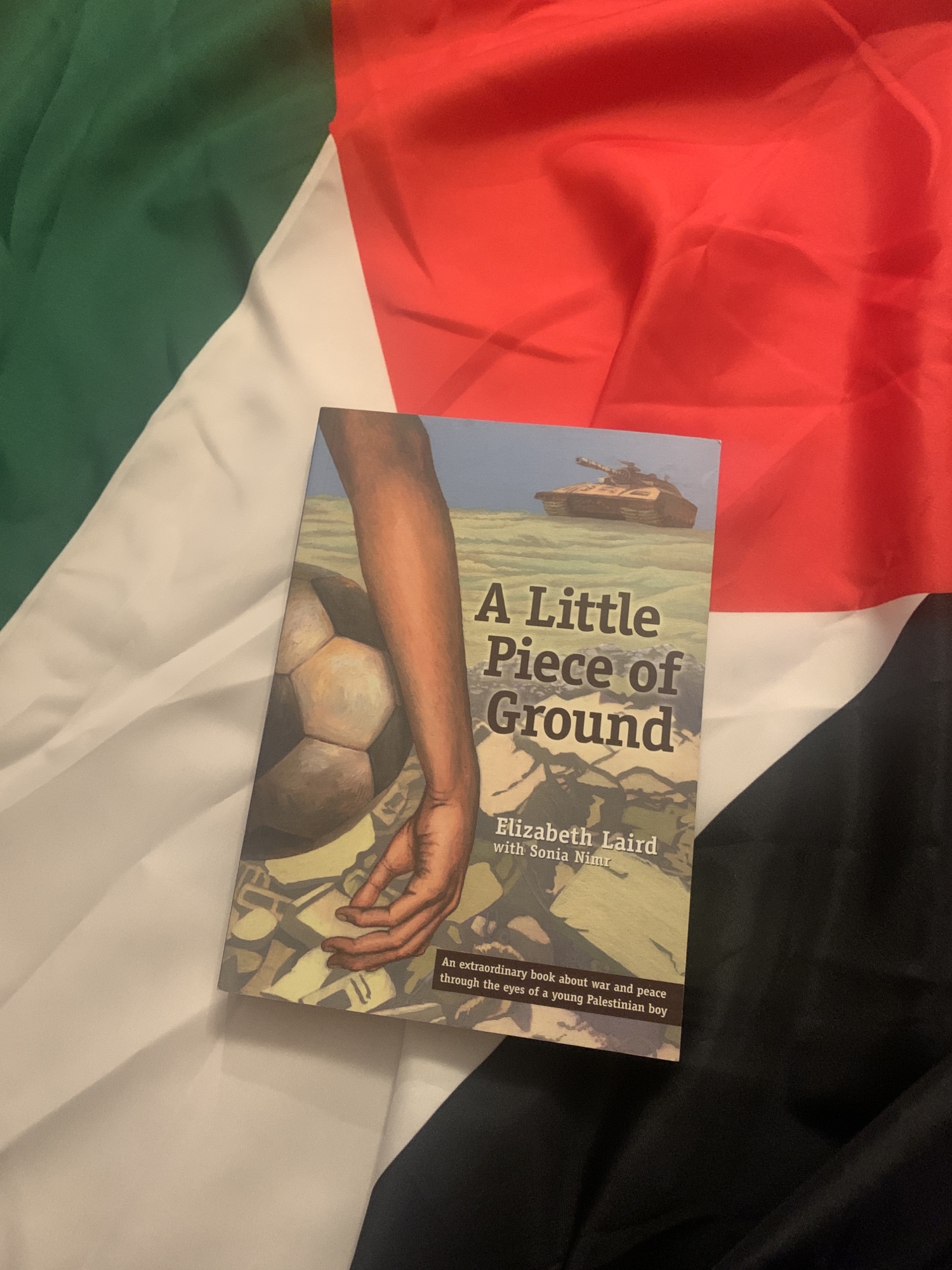 There are so few Palestinian middle grade books, so on that premise alone this 216 page book has a lot of value. Because I am not Palestinian, I do not live, nor have I ever lived under occupation, I can argue some of the concerns from a point of privilege, and I acknowledge that is not my right. I have been asked numerous times about this book and how it frames the suicide bombing mentioned in the text and blurbed about on the back of the book. It honestly is not a large part of the story, that being said, in my outside privileged view, I do not know that a 10 year old in the west will have context to understand the act of this level of desperation from the oppression and humiliation mentioned in the book. This is why I have held off my review. The truth does not need to be defended or explained, and I fear my reservations will be taken as such, which is not my intention. Would I let me 8 year old read this, yes, but we will read it together and discuss. My children are aware of what is going on in Palestine, but Karim, the 12-year-old protagonist supports the bomber, and that notion is not clearly pushed back on. With discussion, absolutely, I think readers, will truly get Karim’s perspective that something has to be done to change the status quo. The fear when Karim is alone and the target of soldiers, the settlers forcibly seizing the family land, the humiliation of strip searching men at checkpoints, the curfews, and constant fear of attack and imprisonment are all presented through the main character’s eyes, and would also do better with some discussion, so that empathy and duas and action can result. But, the commentary as to the suicide bombing are minimal, there is even a prank package bombing that is presented as rebellion by a side character, and I would worry how a young child, without guidance, would internalize it. Additionally, this is yet another difficult book for me to review, primarily because it was first published in 2003, and because I don’t know how much comes from a western gaze and how much the Palestinian voice played into it. Islam is clear on the prohibition of suicide. In the early 2000 the news out of Israel was often about such attacks, but as an outsider, I honestly do not know if it was simply Israeli propaganda and stereotypes amplifying the idea as part of their public relations strategy or reality, seeing as now that Palestinians have direct outlets to share their daily life under an oppressive occupation, there is rarely talk of suicide bombing attacks. The author states on her website:






 Islamic School Librarian