Loujain Dreams of Sunflowers by Uma Mishra-Newbery and Lina Al-Hathloul illustrated by Rebecca Green

Standard
Loujain Dreams of Sunflowers by Uma Mishra-Newbery and Lina Al-Hathloul illustrated by Rebecca Green

loujain

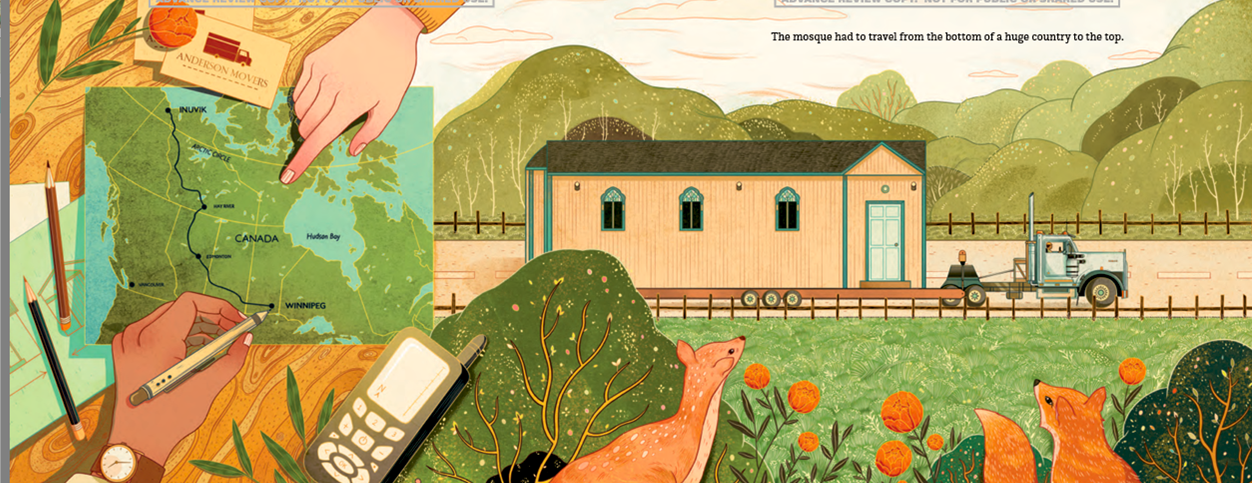
This 40 page early elementary book based on the efforts of the real life woman, Loujain AlHathloul, and her work to change the laws regarding women driving in Saudi Arabia, had a lot of promise.  Unfortunately, the symbolism connecting flying and driving, just didn’t work for me.  No one can flap their arms and fly, so to demand gender equality for an unrealistic action, is a big stretch that ultimately stretches itself too thin.  There is nothing Islamic, except women wearing a hijab in a few illustrations, or even Saudi specific in the book.  It talks of the desert, but the country is unnamed.   Overall, I just had so many questions such as: if she was flying before sunrise- how was she not seen returning from the sunflower patch, can women then never leave an area, are there ways they can fly as passengers, are there other modes of transportation, at what age are children allowed to fly, and so many more, that they prevented me from being inspired by the story.

loujain1

The book starts with Loujain believing in her self and knowing that one day she will fly.  She dreams of a place of a million sunflowers, a picture her dad has given her inspires her to seek out bright colors, capture them on film, and hang them in her room.

loujain2

In the morning her father straps on his wings, and flies off.  Loujain is not allowed to fly because she is a girl.  Her family tells her that one day she will.  When she tells the kids at school, they laugh at her.  When she pushes her dad to teach her, her mother advocates that he should.

loujain3

Loujain and her father practice flying before the sun rises, and finally they make the long journey to see the sunflowers.  Her father takes a picture of Loujain, and it appears the next day in the newspaper.  Other girls are inspired and begin to demand the right to fly too.

loujain4

I love the mom in the book, and her encouraging of Loujain’s dad to teach her.  She asks him, “if you don’t support her, who will?” I don’t know why the mom isn’t wearing a hijab on the last page though.  It seems like there is a subtle message there about hijab being legally required as well.
loujain5

The book is a reach, and for me it didn’t connect or leave an impression.  The information about the prison sentence and push back to achieve the legal change was far more interesting and memorable, but only a few paragraphs long at the end.

Girls Who Code by Stacia Deutsch and Michelle Schusterman

Standard
Girls Who Code by Stacia Deutsch and Michelle Schusterman

I sadly think that it is safe to say that whenever you see a book that features a cast of characters meant to include multiple minority groups, certain representation is going to read more generic and formulaic than others.  Translation: just because you see a hijabi on the cover, do not rush out to obtain, purchase, and read the entire series.  Chances are if a scarf wearing Muslim is being featured, the details will be simplistic, the rep mediocre, and the OWN voice emotion lacking.  Also know, that other minority groups will have similarly been included for their surface level representation and not necessarily for any real depth.  This includes the boxes to be checked for Black, Hispanic, Asian, and LGBTQ+ storylines, characters, and/or side references.  This is a sweeping generalization, and inshaAllah when I am proven wrong, I will happily point those books out too.  This series hopes to appeal to middle grade female readers (AR 4.0-4.6) with an emphasis on coding, but not so much on how it is done or how they learn it, but how it helps them in their other passions and dramas.  I read books two and four, since the Muslim character is not introduced until book two and I wanted to see how she is developed as the series advances.  Each book is told from a different girl’s perspective so it is assumed that book five, could be Leila’s, but honestly with the focus on crushes, dances, and relationships, I won’t be sticking around to find out.

SYNOPSIS:

BOOK 2: TEAM BFF: RACE TO THE FINISH! is told from Sophia’s perspective.  She is hispanic, has lots of little sisters, loves sports and has a lot of responsibility.  The original four girls reach out to Leila, a new girl from Pakistan to join their coding team and even end up naming their robot Zahira.  When Soph is forced to take care of her siblings instead of go to the hackathon, she will have to learn to ask for help and lean on others when she can’t do everything herself.  It also means she will have to take charge with the upcoming dance and ask Sammy out herself.

BOOK 4: SPOTLIGHT ON CODING CLUB:  The school is doing a new virtual format for the talent show and that means that the coding club has to design a website, an app, and collect all the data.  They don’t have much time, and with everyone’s time stretched thin with other obligations, Erin keeps volunteering to do more.  Her hope is that if she is so busy she can’t think, her anxiety won’t flare up  and she won’t stress too much about her dad who is deployed on a secret mission.  When their teacher announces that she is leaving, the group seems to be falling apart as well, and something will have to give.

WHY I LIKE IT:

The first two books are written by one author, and then three is written by someone else, as is book four.  The writing quality of book four is much better, and the insight in to mental illness, divorced parents, a parent actively deployed, and being stretched too thin, will resonate a lot stronger with readers, than the more whiney presentation of the second book.  Each book seems to also present with a new crush storyline: in the second book it is Sophia recognizing changing feelings for a friend, and in book four it is a lesbian crush that has the side characters angsty.  I wish more about the girls as individuals was stressed rather than having them all be defined by their hundreds of hobbies and extracurriculars.  I was exhausted just imagining all the places they have to be in a week and the frantic pace they must keep to ensure they get there. I get that the demographic is probably giggly over crushes, but honestly they seem so forced and unnecessary in books that already have a lot of moving parts.

FLAGS:

Lying, crushes (gay and straight), anxiety triggers, stress.

TOOLS FOR LEADING THE DISCUSSION:
I don’t know that I would even shelve these in an Islamic School, the idea is good, the execution not so much.

Sway with Me by Syed M. Masood

Standard
Sway with Me by Syed M. Masood

sway

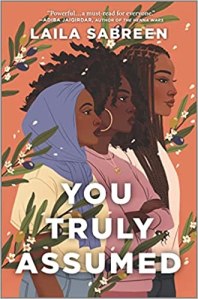
This author won me over with More Than Just a Pretty Face, and his ability to celebrate and show flaws within our desi cultures while simultaneously presenting relatable Islamic experiences in a romantic comedy.   I have been yet to determine if this YA/Teen 328 page book follows in those footsteps, or cuts a little too critically and close on the Islamic presentation.  Undoubtedly the story is hard to put down, culture and Islam are present, but I don’t know what the lingering taste of Islam would be for a non-Muslim reading the book.  Would they see the faith separate from those that practice or actively don’t practice, would Muslim readers?  Literature is quickly showing how Muslims are not a monolith, but I worry that that nuance might be lost in this particular book, and the takeaway would be far more stereotype affirming, than critically thought provoking.  The packaging of the story is memorable characters and quality writing, even if the plot and purpose is a little shaky at times.  I admit for as much as I crave discussions on representation and twists and defined characters, this book has me at a bit of a loss on how to feel about the book overall.  I think it is possibly the first time I just haven’t seen myself and my experiences mirrored at all in a book with this much Islamic content. As a reviewer it makes me feel useless, but as an American born Muslim, I kind of love the uneasiness and challenge that my head is trying to wrap itself around.  The references, the language, lust, plentiful innuendos and physical abuse make the book a solid high school and up read.

SYNOPSIS:
Arsalan lives with his 100 year old Nana in Sacremento.  His mother has passed away, and his father is out of the picture in Arizona as he attempts sobriety.  Homeschooled and isolated from other kids, technology, and the world around him, he suddenly finds himself in a public high school trying to make his way.  Afraid that when his Nana passes he is going to be all alone in the world, he reaches out to the stepdaughter, Beenish, of the community match maker to see if she can help him with an arranged marriage.  She agrees on one condition, he dances with her at an upcoming competition.  He agrees, but first a makeover is required and before you know it a romance is blooming.  Awkward and formal and ever the gentleman, Arsalan uncovers that there is no competition, the dancing is required to break up Beenish’s sister’s wedding.  The girls’ biological mother was a dancer and the shame it brought on them all as it destroyed her career, her marriage, and the family has made her daughters the black sheep of the family and community.  The stepmom wants to get them out of the house as soon as possible and thus dancing of any kind is forbidden at Qirat’s upcoming nuptials.  Beenish despises the groom and hopes her dancing will not only remind the family that the mom has been banned from attending the wedding, but also hopefully prevent the wedding from taking place.  As the story moves forward with learning to dance, relationships must be reconciled, friendships developed, and growing pains felt, with some sass from Nana at every turn, more than one character will have to learn to make hard decisions and accept the outcomes that result.

WHY I LIKE IT:

Right from the start Arsalan makes it known that he is not a practicing Muslim, that he is “nominally one.”  His Nana has raised him to be a skeptic, his abusive father would beat him when feeling religious and guilty for his alcohol consumption, and his deceased mother was more spiritual than disciplined.  So, for the next few chapters, whenever Islam was mentioned I would snap a picture.  Twenty pages later and dozens of pictures of text made me stop and realize that this coming of age book is not a story about Islam, but rather the characters are dealing with their own identities and Islam just happens to be present, for all of them.  Arsalan remarks how our roots shape us as he quotes hadith, ok paraphrases them, and discusses sahaba, eventually having to accept that knowledge and wisdom and truth must be recognized, even when it comes from a source that he doesn’t favor.  Similarly, the most presenting tough guy, music and sports and appearance obsessed character is always hanging around the mosque, at the MSA, and encouraging Arsalan to come and pray.  The love interest calls out Muslims for their fake religiosity saying that her stepmom wears it as a fancy dress, she owns it, but takes it off when she wants.  Her father came to Islam late, and is relatively strict and conservative as a result, she is Muslim, but more culturally as she doesn’t seem to have sorted it out herself.  The characters dance, which involves touching and immodest clothing, at the end they do kiss.  There is language which is noted as being course and vulgar, and there really is no “model Muslim” or any characters that want to be.  So, similarly there are no haram police commenting when the characters, as individuals seemingly step out of line.  The sister character is quote unquote religious, but I don’t know if she covers, she doesn’t seem to be representative of anyone other than herself and she has her own cultural family issues, so her Islam is just stated, but not explored.  Some only eat halal, that gets included but not really opined on.   It really is the first time I feel like I’ve read so many Muslim characters in one place that represent only themselves, which is very much real life, but also a shift in Muslim rep in literature.

The story has some foundational issues which made me laugh when reading the author’s note that says he, “writes in the dark.”  Meaning he doesn’t know where he is going until he gets there.  I think it might show in this book more than he realizes. Aiza Aunty is shamed as scandalous because of her dancing in Lollywood (Pakistan’s version of Bollywood, which is India’s version of Hollywood) films.  She apparently got her sari a bit too wet in a waterfall scene, and it was too much shame to rebound from.  So why did that ruin her life? I mean any production has rehearsals, and blocking, and post editing, and retakes, why does one scene seem to fall squarely on her shoulders, every single decision maker along the way passed it through.  I’m not buying it.  I also don’t buy the whole wedding is hanging on a single thread of dancing, it tries really hard to make it make sense, and by the end the reader really is just prepared to go along with it, but holding auditions, not planning to tell Qirat, really is expecting the reader to suspend reality just a tad more than the genre should be asking one to do.

The book is smart and it expects the reader to be smart.  The references the character’s personas and need to be seen and loved is not always spelled out, it has to be pieced together and I love it.  The Thanksgiving scene, the misfit members of each family coming together and bonding with Nana and Arasalan is sweet, but actually really sad, and I love that it doesn’t say it, it shows it.

Of all the characters I love Diamond the most, I just wish we knew more about what motivates him.  He reads too nice and too puppy doggish and I wish we got just a bit more to see why he is the way he is.  Truly all the characters are memorable, and I’m pretty sure they will stay with me for a while.

FLAGS:

There is kissing, romance, crude language, lots of sexual innuendos, physical violence, physical abuse, child abuse, death, shaming, manipulation, alcohol addiction, religious zealousness, dancing, intimate dancing, body objectification, music, singing.

TOOLS FOR LEADING THE DISCUSSION:

I could never teach this book, but please, please, please, read it and help me to understand how I feel about it.

Pizza in his Pocket: Learning to be Thankful to Allah by Jawaad Abdul Rahman illustrated by Natalia Scabuso and Johera Mansura

Standard
Pizza in his Pocket: Learning to be Thankful to Allah by Jawaad Abdul Rahman illustrated by Natalia Scabuso and Johera Mansura

pizza in his pocket

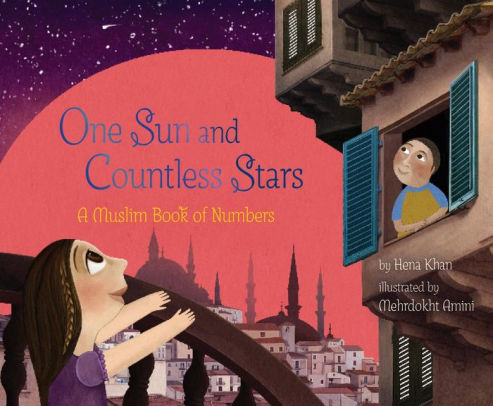
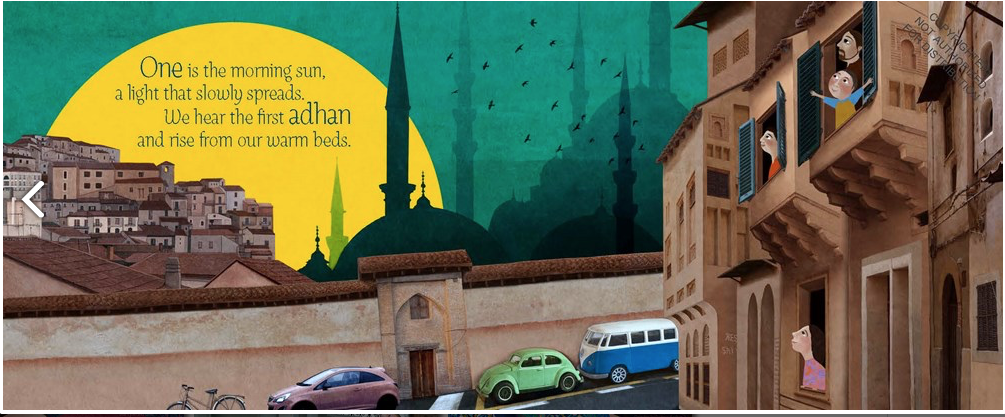
I didn’t think the old version was falling short, but I had to have the new one, because well, I’m a mom.  And sometimes songs that have stood the test of time really do translate perfectly to story books that are engaging, memorable, and so fun.  I can’t get through it without singing it, but the new pictures do force me to slow down and look at the maps and the points of interest that have been included.  Ages two and up will love the book, older kids will enjoy the nostalgia, parents will beam at the words getting stuck in everyone’s head and the lessons making their way in to real actions.

img_4980

The new book is slightly different than the original, but more inline with the online videos by Zain Bhikha and his son.  The back of the book has an ayat from surah Al-An’am and reinforces that while the song is fun, the foundation of not wasting and sharing with the poor is an important part of Islam.

A great book to read over-and-over again and one that is universal enough to be shared with Muslim and non Muslim children alike.

Room for Everyone by Naaz Khan illustrated by Merce’ Lopez

Standard
Room for Everyone by Naaz Khan illustrated by Merce’ Lopez

room for everyone

I started to read this book to myself, abruptly stopped, gathered my children around, and began again aloud.  This 40 page early elementary picture book isn’t just counting up and down with silly scenarios and outrageous details, it is familiarity with a culture often not represented with universal humor, appeal, and anticipation. This rhyming book begs to be shared: one-on-one, at story time, or in a classroom.  There is so much joy and connection that I’m ready to felt-board the story, march into my kid’s school and demand an audience.  I found mine at the library, but I think I am going to order it because it definitely deserves a place on the bookshelf to be read again and again.

Musa and Dada get in a daladala and are off to the crystal blue waters of Zanzibar.  But it is hotter than peppers out and the kind driver is offering everyone a ride.  First is the old man with his seatless bike, then it is two little goats and their herder, next is vendors with their three baskets of fruits.  Each time Musa cries and protests that there is not room for anyone else, let alone their stuff.  Yet when everyone wiggles and scoots and smooshes, there seems to be room for everyone.  This continues until there are ten scuba divers joining the smelly fish and stinky chickens, umbrellas and milk pails.

Alhumdulillah, they reach the beach.  Then one by one they all get out at Nungwi beach.  Giggles and wiggles and Musa and Dada are off the minibus and swimming in the cool waters. Alhumdulillah indeed.  The book concludes with a glossary and an author’s note.

“Find me on Twinkl’s list of best children’s books of 2021!” 

Golden Girl by Reem Faruqi

Standard
Golden Girl by Reem Faruqi

golden

I began reading this book not having any idea what it was about. All I knew, or all I cared to know, was that the incredibly amazingly talented Reem Faruqi wrote it, so I wanted to read it. While I know it will be hard for most to avoid knowing the plot, I think it was a blessing that I was able to be swept away so completely and so fully in a story that is wonderful and memorable, and truly sets a higher standard for the way that a story can be told. Faruqi’s voice and authenticity had me in tears. I didn’t even realize my eyes were dripping until my son asked me if I was ok. It wasn’t the plot that had my emotions spilling over, sure it helped, but it was the storytelling, the hadith and deen and snapshot of a life so unlike my own that simultaneously is exactly my own that a physical reaction emerged. It is the power of OWN voice storytelling. It is the power of brilliant writing. It is not just a book about a Muslim character, this book blurs the lines for me between Islamic fiction and fiction with Muslim characters. Middle school readers (mature middle grade readers) will enjoy the book, older readers will enjoy and appreciate the 336 page story told in verse. You can pre-order the book and I hope you will, it helps convey the message to publishers that this book is highly anticipated and that we need voices like this. Additionally, Goodreads currently is hosting a giveaway, you can head there to try and win a free copy.

(If you don’t want to know what the story is about, maybe skip the next section.)

SYNOPSIS:

Aafiyah’s name means well-being, protection, health, money, happiness, everything good, but Aafiyah has secrets too. She is privileged and loved, and she knows it, but sometimes when she sees something she likes she accidentally borrows it. Sometimes it isn’t an accident. Sometimes she doesn’t just borrow. Much of her life is wonderful, a best friend that lives next door, doting parents, tennis, vacations, trips to Pakistan to visit grandparents, and a love of “weird but true facts.” So what happens when all that changes. When her grandfather gets sick and the family wants to bring him to America for treatment, when Aafiyah’s dad gets detained and imprisoned on the way home, and Aafiyah’s secret may be a way to help her family?

WHY I LIKE LOVE IT:

I absolutely love that the characters are so well rounded and developed. Yes, Muslims have vices, and even young practicing Muslims have tests and struggles. The bar has been raised, we aren’t just a monolith, and our only struggles aren’t girl/boy issues, alcohol, not being oppressed and getting an education, we are complex people, we are human. The bulk of the story is Aafiyah growing up: her responsibility within her family, her changing body and appearance, her friendships, her responsibility for her actions, her desire to want to help and improve and step in to her own. I love that all these layers of life somehow are explored in such sparse lines. It doesn’t drag, but it gives the necessary pauses to involve the reader in her logic and view of the world. Aafiyahs’ kleptomaniac tendencies, her father being detained, her grandfather’s illness. they all move the story along, but they are foils for a much more intimate character story. A story that is surprisingly funny and light and impossible to put down.

I absolutely love how Islam is woven in, how she exudes Islam in all that she is, because she is a Muslim completely, the good and the bad. The guilt she feels, the desperation to be forgiven, the knowing that Allah swt sees all. The book is never even close to being preachy, but she proudly owns her identity and the details of her faith are not watered down, or even justified, it is who she is and it isn’t up for debate.

Culture is presented unapologetically as well. She is critical of things she sees in Pakistan, and similarly celebrates and admires good things about Pakistan and Pakistani culture. The book does not seem to have an agenda in presenting Muslims or Pakistan as good or bad, just as Aafiyah sees them. Which isn’t revolutionary on the surface, but it really is refreshing because it highlights how many books simply don’t. It makes the contrast painfully obvious between books that are shy about certain things, when they have their characters deflect and disassociate from certain “realities” and books that confidently uphold their identity and demand that the reader steps up and truly see the characters and their experiences.

There is a beautiful and raw author’s note at the end that shares some of the inspiration for the threads of the book, a glossary, a recipe for Aloo Gosht and resources for help with kleptomania.

FLAGS:

Stealing, lying, chatter about crushes, music, dancing. Being attractive and the reactions that it gets is woven through out.

TOOLS FOR LEADING THE DISCUSSION:

If I have a majority girl group, I will teach this. It isn’t a girl only book, but I think some of the more subtle themes would need a safer girl space to discuss.

Be Patient, Abdul by Dolores Sandoval

Standard
Be Patient, Abdul by Dolores Sandoval

I share this book from 1996 to show how far we have come in telling our own stories with accuracy and emotion, as well as to celebrate those that featured Muslims in a positive, unapologetic light when there wasn’t a standard yet established. It is easy to harp on the negative, but truly the only way forward is demanding better of ourselves and of our representation. The book is disjointed-pulling in random details to focus on, and is very text heavy, slow, and dry. It does feature a Muslim family, though, and shows both Abdul (albeit in his underclothes) and his father praying salat. The text even mentions thanking Allah (swt). I honestly have been searching for past Islamic representation or mention in mainstream juvenile fiction, it fascinates me to see where the seeds first were planted: Sport by Louise Fitzhugh (1980) has a one line mention of a character being Muslim, Kiss the Dust by Elizabeth Laird (1991), Habibi by Naomi Shihab Nye (1997), Ruhksana Khan’s The Roses in My Carpets by a Muslim about Muslims(1998), The Hundredth Name (1995) by Shulamith Oppenheim.

Abdul is a seven-year-old little boy in Freetown, Sierre Leone. He sells oranges so that he can pay for school. School is not free, and selling oranges requires a lot of patience to save up enough to return to the classroom. One day he returns having not sold any, and his grandmother reminds him to be patient and to try a new market. His mother tells him to take his little sister Maryama with him. She is five and slows him down.

img_4810

In the evening Abdul’s father prays in their yard and then tells them about an upcoming parade to celebrate the anniversary of their country’s independence. Abdul’s mom will be in the parade. After more days of low and no sales, Abdul worries that school is a faraway dream. Maryama however, sells some oranges for him and he dares to hope he can sell a lot at the stadium and during the parade.

img_4811

Momma is marching in the parade, the family watches her. Abdul gets tired of waiting for her afterward and walks him. His dad has a good day of driving his taxi for people trying to get to the stadium and home from it. At the end of the day, they count up their money and there is enough for Abdul to return to school.

img_4813

The final page shows Abdul praying and thanking Allah for the oranges to sell, the taxi passengers and for patience. I have no idea why he is wearing an undershirt and underwear while he prayers, clearly his awrah is not covered, nor does it radiate reverence.

img_4814

The point of the book is to humanize another culture and perhaps make western children appreciative of their life, the ability to attend school, and not having to work from such a young age. The book I checked out from the library, doesn’t show that anyone in 1997 until today, or at least whenever the library switched from the stamped dates to electronic ones, ever checked out the book. And while yes it offers very little to the catalogue of memorable books of our time, it does show the early indications of our presence in literature.

img_4812

Pepperoni, Pitches (and Other Problems) by Shifa Saltagi Safadi illustrated by Upit Dyoni

Standard
Pepperoni, Pitches (and Other Problems) by Shifa Saltagi Safadi illustrated by Upit Dyoni

pitches

I absolutely love how smart this book is, and how it allows for elementary aged readers to feel that “aha moment” when they read it, get it, and realize that they need to remember the lessons because it could happen to them.  The illustrations are an added bonus and are perfectly aligned with the tone and text of the story.  My only issue, is the title.  Pitches reads as a euphemism for another word and since the book involves girl drama, teasing, and misunderstandings, it really is hard to not have that thought zap your brain when you see the title.  Perhaps if the “and Other Problems” would have used a bigger font on the word “Problems” the alliteration would have been more obvious, and hidden the word “Pitches” a bit.  If I’m alone in this, I apologize to the author and publisher, (I’ve mentioned my concern to them), but for others that saw the word and questioned the content, rest assured it is about baseball and the book doesn’t have even a speck of questionable content.

img_4682

Amira is at a new school, and luckily it is Tuesday, Pizza Tuesday to be exact, and she can’t wait to dive into a cheesy slice.  Unfortunately, Olivia takes the last cheese piece and when Amira asks if she will let her have it, Olivia says she had it first.  Stuck with an egg salad sandwich that smells, Amira sits alone and broods.

In gym they are playing baseball, but no one knows how good Amira is, and she is picked last.  When Amira is up to bat, Olivia is the pitcher and her pitches are terrible.  Amira still mad about lunch and afraid that the others will blame her for not hitting the unhitable balls, shouts, “you’re supposed to aim at my bat.”  Everyone laughs, but Olivia runs off clearly upset.  The new pitcher sends a decent throw and Amira hits a home run.  The captain of the team praises her, and Amira is hopeful she’ll have someone to sit with her at lunch.  After class, Amira sees Olivia crying in the bathroom and no one asking her if she is ok, Amira doesn’t feel so well, and doesn’t ask either. On the bus ride home Amira is greeted with cheers for her home run, but Elena the captain, isn’t among them.

img_4683

The next day is picture day, and Amira trips and rips her shirt.  Everyone laughs, Elena says, “it was an ugly shirt anyways.”  Only one person offers her help.  Could Amira have misread the whole class dynamics?  How should she move forward?

Sorry, I’m not going to spoil the ending, but the message about owning up to your choices is stressed, along with making kind decisions, and sometimes needing to take a step back and understand things from someone else’s perspective.

img_4684

Like nearly all Ruqaya’s Bookshelf books, the story is universal, but the characters, illustrations, and point of view is a relatable Muslim one that allows our young Muslim readers to feel seen and celebrated.  The reliable large glossy pages make the book a great deal for your money and is available on the publisher’s website: http://www.ruqayasbookshelf or from my favorite bookstore http://www.crescentmoonstore.com

img_4685

Could Be Anything! by Eman Mouneimne El Ayoubi illustrated by Victoria Romanenkova

Standard
Could Be Anything! by Eman Mouneimne El Ayoubi illustrated by Victoria Romanenkova

mariam

This is not normally a book I would review because it will read like paid endorsement, which it is not.  It is a 32 page personalizable book, that I’m highlighting because it exemplifies a concept of Islamic literature, that is often lacking.  We have numerous books teaching Islamic concepts to toddlers and preschoolers, but forget to teach the secular concepts through an Islamic lens.  We often have a bookshelf of Islamic books that include learning to say Alhumdulillah, and the names of Allah swt; and a bookshelf of non Islamic books that features stories about dinosaurs, monster trucks, and being silly.  This book reminded me of how important it is to have books that do both.  Not to necessarily preach, or even teach, just to merge the two shelves and present a singular framework of Islam, a way of life, not just a religion to our youngest believers.

Sure the name and customizable appearance is fun, but deeper than that, learning about different careers knowing that Allah swt created all of us to do so many worthwhile jobs is a great lesson to be sharing.  The larger concept of teaching Qadr to our children is only presented on the back cover of the book and can be implemented by using the parent guide at the end of the story.

img_4967

The book starts with asking what you want to be when you grow up and informing the child that Allah swt has a plan for us all.  Each page after then mentions the child’s name, introduces a career, and ties back to that Allah swt has written, or decreed something for us.

img_4968

The highlighted careers vary from being a parent, to an astronaut.  A teacher to a chef, a mechanic to a dentist.  There is no priority, nor opinion on one career or job or hobby being more important or more valuable than another.

img_4970

The pages are bright and colorful and the paperback book thick and sturdy.  I did struggle with the word “could,” and often would self edit as I read and would change it to, “Ayub ‘can’ be anything.” I’m not sure why the diction is what it is, but it reads incorrect to me.

img_4969

The World is Your Masjid written and illustrated by Kate Rafiq illustrated by

Standard
The World is Your Masjid written and illustrated by Kate Rafiq illustrated by

masjid

This 30 page preschool to early elementary aged book is a simple rhyming book that reaffirms all the places we can pray and touches on those that we shouldn’t.  The engaging illustrations and relatable scenarios make the book a great choice for bedtime stories and small group readings.  

Screen Shot 2021-11-17 at 11.33.41 AM 1

The book starts out with a hadith, “The entire earth is a masjid (place for prayer), except the graveyard and the washroom” (Tirmidhi-317) and points out that one must pray five times a day. Screen Shot 2021-11-17 at 11.37.00 AM

It establishes that if you pray it a mosque you can follow the imam, but not to worry if you cannot, because you can pray (nearly) anywhere: a field in the rain, school, a train, a garden, a shed, even when sick you can pray in your bed.

Screen Shot 2021-11-17 at 11.36.46 AM

It then also turns to places you shouldn’t and can’t pray and sources a hadith about not praying where there are faces and statues that might distract you (Bukhari 374). The bathroom and graveyard are also included.  

Screen Shot 2021-11-17 at 11.35.05 AM

As an after thought, and for added laughs it reminds little readers to not pray in dangerous spots as well.

Screen Shot 2021-11-17 at 11.35.12 AM

Overall, I enjoyed the book and can see it pairing with In My Mosque to help create the foundation of a storytime theme about prayer and mosques.  The fact that it takes it a step further and doesn’t just list all the places serious and crazy that you can pray, elevates the book from being mediocre to being memorable and I appreciate that.  I also appreciate the Islamic sourcing, truly something that is required to show accuracy even in the “simplest” of all books.

Screen Shot 2021-11-17 at 11.35.30 AM