Tag Archives: wedding

Always Be My Bibi by Priyanka Taslim

Standard
Always Be My Bibi by Priyanka Taslim

I had pretty low expectations going into this 368 page YA romcom- as often YA is really “adult” and if the characters/author are Muslim in a “romance” it tends to become a heavy handed rebellion against Islamic principles. So imagine my surprise when the book really is meant for teenage readers. The protagonist loves her culture, and it is established really early on that they are Muslim, but aren’t religious.  Sure as an “Islamic School Librarian,” I wish the characters practiced Islam, and that the the kissing and hugging was labeled as haram, but for the fictional story on the page, that is cultural based, it is a delightfully chaotic and fun read.  Note, the kissing and haramness occurs when they are “sneaking out,” and reads as if they are sneaking out from parental rules, not Islamic ones, as they do not view the world through an Islamic lens.  The protagonist’s sister is presented as religious in that she wears hijab, and left a prestigious private school to attend a local Islamic one, but it is not a major plot point, and if anything shows that Islam is not a monolith or something forced, really though it just shows how different the siblings are.  Does that mean the writing is some literary genius? No, not really, but it is a quick light summer read that I enjoyed. The main character, Habiba, aka Bibi, reads as a Bangladeshi Cher from Clueless through and through, and while at the start it was a bit annoying, I ultimately found her endearing by the end.  There are plot holes, but I didn’t care too much given the quick pace and the nature of the book. The ending though, was drawn out and too long, and the book could have been easily 50 pages shorter. All in all it was fun to be transported to a tea estate in Bangladeshi for a wedding, and I wouldn’t have a problem with 15 – 16 year olds or so reading the book.

SYNOPSIS:

Bibi is in hot water with her father for sneaking off to prom with a boy, the deal has always been no dating until her older, perfect, law school bound, sister Halima gets married.  And her punishment for the summer is working at the family restaurant, one of the many Royal Fried Chicken locations in the chain they started that makes her family, chicken royalty. When hijab wearing, no haram dating Halima springs on her family that she is getting married, the family all heads to Bangladesh for the summer to get to know the groom’s family on the massive tea estate, and celebrate the wedding. Oh and Bibi’s punishment will be transferred from working fast food, to working in the fields under her new brother-in-law to be’s grumpy, serious, younger brother, Sohel.  Bibi also holds her father to his end of the deal and when the big book of biodatas arrives, she is ready to have her chaperoned dates as promised.

As the prickly family of inlaws look down on Bibi and her family, Bibi and surprisingly, Sohel join forces to break the pair up. As the book unfolds their mission changes, the bio data book causes drama, old flames are sought after, and the wedding takes some surprising turns.

WHY I LIKE IT:

As I write this, I’m rolling my eyes at the fact that I really did read it in two sittings and was amused. Bibi is spoiled and clueless and yet does have a good heart.  As with most romantically inclined books, a whole lot of suspension of reality takes place and side characters are not fully fleshed out.  Halima and Sunny met in college, and there families are from the same part of Sylhet, infact Baba worked on the Rahman’s tea estate before coming to America.  The grandma is woefully underdeveloped, I get that she is a side character but the girls spend so little time with this woman they love so dearly is a blaring hole. I really didn’t get some of the scenes after the midpoint, they felt like filler and they felt forced: friends coming from America, the bachelorette party turned amusement park trip, Sohel not sticking up for Bibi, the half hearted love triangle, and the Bibi Baba multiple rehashings.

I did like that the title of the book though comes from something Baba says to Bibi, and not from a love interest, that made me smile. And I liked that the “dates” were supervised, it is vague if the dates in America would have been, or if once Halima was married she would have been allowed to “date” with a western definition, but I kind of liked that it wasn’t defined.

FLAGS:

Disrespect, sneaking out, kissing, hugging, close boy girl friendships, sneaking out, language.

TOOLS FOR LEADING THE DISCUSSION:
Definitely not a book to spotlight as a book club selection, but one that I would have on the shelf and not mind older high schoolers reading.

Lulu in the Spotlight: A South Asian Wedding Story by Natasha Khan Kazi

Standard
Lulu in the Spotlight: A South Asian Wedding Story by Natasha Khan Kazi

This adorable 40 page culture focused picture book explores a Desi tradition with layers of competition, frustration, mystery, problem solving, kindness, and joy woven in.  Lulu likes the groom and his family, but at her cousin Amirah’s wedding, the games are about to begin, and she has a plan to win the money for team bride, and prove she is old enough to share in the spotlight. Each of the traditional teasing games though find Lulu pushed aside, until the joota chupai, where the shoes go missing.  With Nani’s encouragement to stay true to herself, Lulu gets a chance to shine by doing it her way, and bringing the families together. There are a few visible hijabis in the illustrations of this Muslim author/illustrated book and the backmatter really makes the traditional references accessible to all readers.  As a Pakistani American, my children haven’t attended cultural weddings with all the traditions, fun, and games, and this book is already a favorite in discussing what this family does, where our families might do it a bit different, and how they can twist it to fit an upcoming wedding we have this summer.  The bright large pages, add to the text and illustrations truly conveying the excitement, emotions, and colors of South Asian weddings.  By focusing on one tradition, and not trying to include everything about the multiday affairs, the book stays on message and maintains an in the moment tone, keeping the readers engaged, well done.

The book opens at the mehndi ceremony of Lulu’s cousin, and while the dances are taking place, Lulu is scheming.  She knows the next day there will be chances to make some prize money from blocking the groom and stealing his shoes, and she is determined to capitalize. Normally it is just the bride’s side against the groom’s side, but Lulu has to battle her own cousins for a role in the games.  Tarek says she is too little.  Zara is clever at negotiating, and Farah is athletic and gets places fast.  In the past, Lulu hasn’t been included, but this time, this wedding, she is ready.

On the groom’s side it is Kamal, Sameer’s little brother that serves as Lulu’s biggest competition, and who trips her as she heads for the shoes. Frustration and sadness have damped the festivities for Lulu, yet she still is helpful and kind.  With the games wrapping up, a dejected Lulu finds solace in her grandmother’s lap.  When Nani shares why the shoe stealing tradition still is carried out, Lulu knows just what to do to find the spotlight her way.


The Great Henna Party by Humera Malik illustrated by Sonali Zohra

Standard
The Great Henna Party by Humera Malik illustrated by Sonali Zohra

img_3465-1

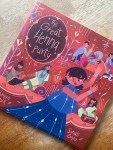
This 32 page story shares a desi family at a henna party before a wedding.  There is nothing Islamic in this book by a Muslim author, it is simply cultural.  The story on its own is fine.  It is sweet and joy filled, as a girl tries to decide who’s name to have hidden in her henna design.  I do wonder though, if the book is meant to be a window into desi culture, why the Urdu word “mehndi” isn’t used instead of henna.  It mentions it in the backmatter, that mehndi is the Urdu word, but it seems a little inauthentic and western gaze presenting throughout the story, and honestly I really struggled to get past it.
img_3466-1

The book starts with Noor entering the henna party, the night before her cousins wedding, to sing with the ladies of the family and have their hands painted.  Her mother asks her if she knows about the name game, where the bride hides the grooms name on her hands, and if he finds it, he wins, and if he does not, the bride wins. Noor asks if she can hide someone’s name and her mom says yes, just tell the artist.

img_3467-1

She watches her dad setting up decorations and wonders if she should have his name hidden.  She then sees her Mama playing the dholki and singing and wonders if she should hide her mother’s name.  She continues through various family members before making her decision.  Along the way the reader learns about the music, the food, the clothes, and how the paste dries and leaves a color.

img_3468-1

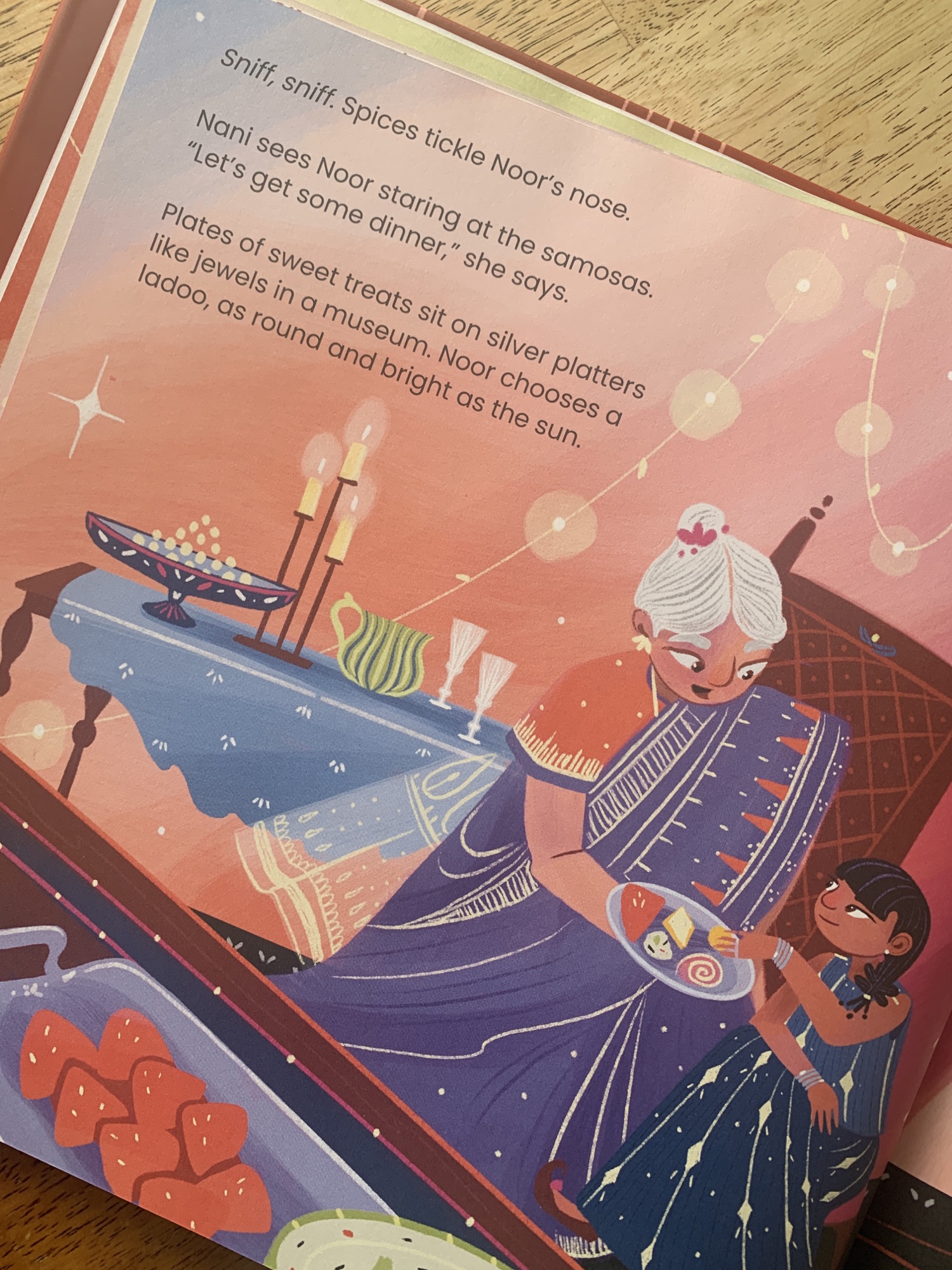
The page on food starts with spices, then talks of samosa and then they are eating ladoo, and while I’m glad there is not a glossary, I don’t know that the lacking context clues make any of those scrumptious foods known. I do like that her grandfather helped her pick out her lehenga, and her father is shown decorating to show full family involvement.

Ultimately, though I think the tricky thing about cultural weddings, is that every family has their own traditions, and while in a desi wedding some things might be widespread, when presenting them to readers outside your culture, it is hard to know how they will be perceived.  I almost feel like this book makes it seem that every family hides names in the mehndi as a staple of the festivities. And based on other reviews I’ve read, people seem to feel that this is insightful into the culture, or that hiding and finding names has more weight, a stress even, than just being fun.

img_3469-1

I could be over thinking it, but it feels like even the backmatter is trying to cast a wide net over every religion and culture that uses henna and ends up being oddly vague in this specific example.  Like I said the book is adequate, I like that the little protagonist Noor, loves so many people and solves her dilemma on her own, it has plot, and conflict and resolution, it just seems to lack the exciting tone and thus fails in immersing the reader into the henna party.

Courting Samira by Amal Awad

Standard
Courting Samira by Amal Awad

img_2245-1

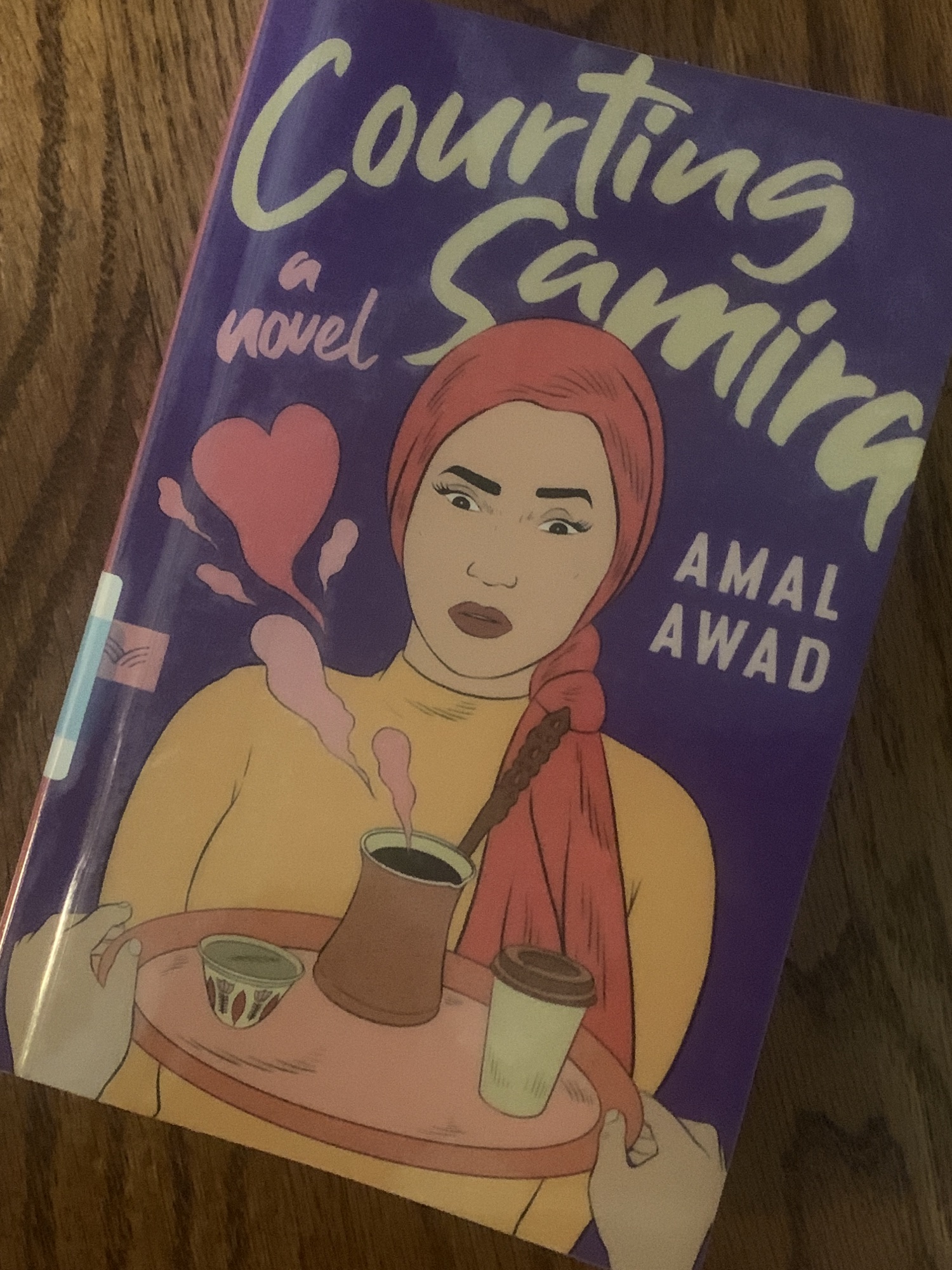
Authored by a Palestinian-Australian and featuring a protagonist of the same background, this adult rom-com, is pretty halal all things considered.  The book is not preachy, hijab and not drinking alcohol are all discussed as being religious decisions, but there is no insight as to how or why they are part of Islam, they just are, and because the characters are Muslim that is what they do.  I found myself reading while cooking, which means I was invested enough to keep reading, but if I missed a line or two, to pull something out of the oven, I didn’t need to go back and find my exact spot.  It reads a lot like a Confessions of a Shopaholic or Bridget Jones Diary, Islamically it is on par with a Hana Khan Carries On or Finding Mr Perfectly Fine, where the characters are Muslim and that sets parameters, their culture adds the flavor, and the love triangle and writing adds the plot, yeah it is tropey, but most people wouldn’t be picking this up for literary insights, it is meant to be fun, and it is.  Three things bothered me with this book that gets a lot right. One, the cover, I find it ugly, additionally it mentions multiple times in the book that her eyes are blue, clearly on the cover they are brown.  Second, the labeling of “moderate,” “conservative,” “liberal,” and “fundy” Muslims.  There isn’t internalized Islamophobia, every one of the main side characters practices Islam in their way, the other characters accept it, and the stereotyping that the religious one is mean or critical is not present at all (alhumdulillah), the labels just bother me.  Finally the kiss at the end before marriage, they are engaged, and it probably is still better than many YA Muslamic romances out there, but as an Islamic school librarian, I have to mention it.

SYNOPSIS:
Samira works at a Bridal magazine, writing on occasion, but mostly getting coffee.  The book opens with her mid door-knock, looking at the manga hair of a yet another prospective husband, come to drink coffee and eat biscuits with his parents to meet her and hers in another meeting that will end with no match made.  Her parents don’t force her, she plays along willingly, venting to her cousin Lara who refuses to humor her parents, and her co-worker Cate who’s own dating dramas show Samira she isn’t really missing out.  When evil cousin Zahra is suddenly getting engaged, Samira is sucked in to familial obligations and involvement.  Menem, a guy she met at a team building activity, works near her, and they keep meeting, the icing on the cake is that his brother is Zahra’s groom. As things start to heat up with Menem, old family friend Hakeem starts acting weird, and Samira finds herself caught in a love triangle.

WHY I LIKE IT:

There are a lot of tropes of being 27 and unmarried, being a disappointment for having a liberal arts degree and the like, but at least there are not mean parents, forced religiosity, or the what will everyone say storylines present. A lot of the fun is found in the references to pop culture, that surprisingly didn’t bother me.  I was, however, annoyed when suddenly 80 pages in the fourth wall was broken.  It broke the tone, but it didn’t become a regular things, so I carried on.  A side character asks if Samira’s actions are Muslim or Arab and I like that, that distinction is presented.  I wish there was more culture, Samira is Palestinian, Menem is Lebanese, but there isn’t a lot of cultural sprinklings throughout that are specific to the two cultures. There are also a lacking of salams/assalamualaikums in their daily interactions.  It does mention Samira praying quite frequently, which I most definitely appreciated though.

Plot and character development was decent for the genre.  The pacing makes this book a quick read, I read it in two days (while cooking).  I never quite felt a connection to Lara, or rather why Samira and her were so close other than for a lack of options.  She just kind of annoyed me throughout, and never seemed to be a great friend (cousin).  A few times the book would seem to hint at something and nothing would come from it, take Zahra touching her stomach while picking out ice cream, or why Hakeem says he knows Samira can’t call her brother when she has car trouble.

FLAGS:

A kiss, a few hugs, hints at haram acts in earlier days, alcohol, music, belly dancing, texting, emailing, chatting freely with opposite gender.

TOOLS FOR LEADING THE DISCUSSION:

I wouldn’t use this as a book club book, but I would be ok having it on the library shelf for high schoolers.

Three Holidays and a Wedding by Uzma Jalaluddin and Marissa Stapley

Standard
Three Holidays and a Wedding by Uzma Jalaluddin and Marissa Stapley

3 holidays

I don’t think I have ever sat down and watched a complete Hallmark Channel holiday movie, but I know the stereotypes and I’ve caught enough scenes while hanging out with my grandma to know that reality has to be suspended, there will be a happy ending, and the snow and small town charm is going to be laid on pretty heavy as the wholesome romance plays out.  This book is the literary equivalent of such a movie. So with that in mind, there are somethings I will concede can be overlooked, but religiously there are some things that need to be noted (see below).  I also have to admit that I couldn’t put the book down and read the entire 384 page Adult book in two sittings. The book is told in alternating perspectives: Maryam and Anna.  Maryam and her family are Muslim, the book takes place in 2000 when Ramadan/Eid, Christmas and Hanukkah all took place within days of each other.  Anna celebrates Christmas, but grew up celebrating Hanukkah too.  Even if a romance that has Muslims ok with adopting “Christmas-y” celebrations during the last ten nights of Ramadan no less. is not a book that appeals to you, it is worth noting that this book does an incredible job of not becoming performative.  There is no internalized Islamophobia, self-othering, no over explaining, convincing, justifying or religious or cultural identity crisis. For a book co authored by a Muslim and a non Muslim and traditionally published, I am excited for the precedence this book sets.

SYNOPSIS:

Anna is in a perfect relationship, with the perfect guy, and accidently sees the perfect ring in her boyfriend’s luggage.  With Christmas plans in Toronto to meet Nicks wealthy parents, it is clear that the perfect proposal is also going to happen.  But Anna is not perfect, and who she seems to be to Nick is not who she is or wants to be.  It feels so fake.  With separate flights from Denver to Toronto, getting redirected and stranded in Snow Falls, Ontario gives her the pause she needs to decide what she wants.  She meets Josh, someone in town visiting, which complicates things, and she sorts through her grief of loosing her father and the speed in which her ex step mother moved on, all why becoming good friends with Maryam and her family in this idyllic town that she doesn’t want to leave.

Maryam is the oldest daughter who shoulders the expectation so that her younger sister can live her best life.  She became a pharmacist to carry on the family business, so Saima could be a physician with Doctors Without Borders.  Now Saima has decided that she wants a wedding in Ramadan and Maryam has to plan it. The flight being diverted and the wedding party being stuck in Snow Falls has long ago crush Saif and Maryam sorting through their past and a possible future together.  

The two protagonists, their past, future, love interests are all multiplied by a town full of love and holiday activities, a wedding that might be missed, a Holiday Hoopla show, a movie being filmed, fasting in Ramadan, and wise old Dadu, a former Bollywood director guiding the characters to a happy ending.

WHY I LIKE IT:

The book is an easy read, it really is a guilty pleasure escape from reality and that it comes from a place of- we are Muslim, we fast, we pray, we don’t/shouldn’t date without marriage in mind, and everyone in the book already knows all this makes you feel ok about indulging.  It even has a thread of analyzing parental expectation and peeling back some of the assumptions regarding the disconnect worked in throughout the story.  
It took a few chapters for me to stop fighting and accept that the snow is so bad that the airport is closed, but every store, restaurant, and the roads in the town are open.  That the phones are out, no one has a charger, but the payphone works and food can be ordered and delivered.  That Anna is strolling around in a cocktail dress and can find a sweater, but she can’t find pants, and holiday gifts for everyone were not a problem to obtain.  The book notes the idyllic diversity and amazing payphone, but you really just have to let it go if you are to enjoy the book.

Some things I couldn’t let go though are the Islamic religious portrayals.  The characters note that a wedding in Ramadan is a terrible idea, but for as authentic as the waking up for suhoor and fajr are every day and iftar is every evening, the Muslim wedding party spend the last 10 days and nights of Ramadan watching Bollywood movies, dancing at a music filled mehndi party, planning and performing in an interfaith holiday show, and listening to Christmas music.  I know Ramadan staples of reading Quran, doing thikr, and praying, don’t fit the genre, but there are enough people to make jammat, one night it mentions they go to the musallah for taraweeh salat, but I really wish it was every night, and that more traditional Ramadan foundations were shared.  I did love that why Dadu couldn’t fast was explored, and that when Saima was stressed she went to the musallah, but really Bollywood marathons and parties in Ramadan are uncomfortable even in fiction.

FLAGS:

For Adults and New Adults the book is remarkably clean.  The romance is tame even for YA, the characters are all adults and it is more the Ramadan non worship and Christmas normalization that is more flag worthy to me if a Muslim teen were to read it, than the relationships.  So take what you will from the flags: Anna and Nick seem to live together at the beginning, Anna and Josh hold hands, kiss.  Maryam and Saif hold hands and hug.  Saima and Miraj hug.  There are some other hetero couples that kiss. Mention of Maryam’s prior relationship features her husbands infidelity, and Saif admits to having a girlfriend.  There are a few LGBTQ+ couples in the town that own stores and the inn, but don’t seem to be Muslim, and their relationships are not significant plot points.   Muslims joining in Christmas activities. Alcohol and a pub are mentioned, but Anna partakes, no Muslim characters.
TOOLS FOR LEADING THE DISCUSSION:

I don’t think I could do this as an Islamic school book club choice for middle or high school.  But I do want to gush about it with my Lit Sisters.  You can preorder it here https://amzn.to/3L7K9wQ

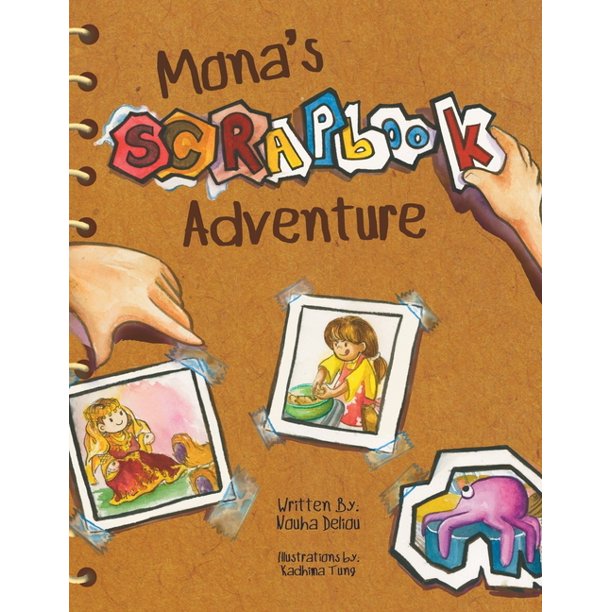
Mona’s Scrapbook Adventure by Nouha Deliou illustrated by Kadhima Tung

Standard
Mona’s Scrapbook Adventure by Nouha Deliou illustrated by Kadhima Tung

mona

Algerian culture, as far as I’ve seen, is incredibly underrepresented in western literature and not represented at all in children’s books.  I love that this author, who felt the same- did something about it.  This 40 page colorful story incorporates Algerian traditions and culture with universal themes of sibling love, wedding excitement, and being sad about change.  The OWN voice warmth shows Muslim characters in America holding to traditions and making new ones.  The book is long, but is not text heavy.  For toddlers and preschoolers up to second grade, I can see readers enjoying the detailed descriptions of the dresses and foods, and feeling the feelings of little Mona as her beloved older sister prepares for her wedding and ultimately leaving with her husband.

img_2564

The book starts on the morning of the big day, Layla’s engagement.  Mama explains to Mona that the Imam will do the kitab and that her older sister is excited because she has known Ahmed since school and likes him a lot.  Once dressed Mona watches Layla get ready in traditional Algerian clothes.

img_2565

When Ahmed and his family arrive, he and Layla announce that after the wedding they will be moving from New York to Arizona.  Mona is devastated, as the women start to zaghreet in celebration. She wonders if she can go with them, but decides she can’t leave her parents.  Later that night, Layla and Mona chat and decide that Mona will help plan for the wedding and they will make a scrapbook.

img_2566

Over the next few months, clothes are bought, cakes are tasted, flowers are decided upon, and Arayech is made.  The night of the henna is fun, but then it is the wedding, and then time for Layla and Ahmed to go. Happy tears and promises to always be connected conclude the story before a scrapbook page for the readers is revealed to make their own designs.  That is followed by a glossary, and information about the author and illustrator.

img_2567

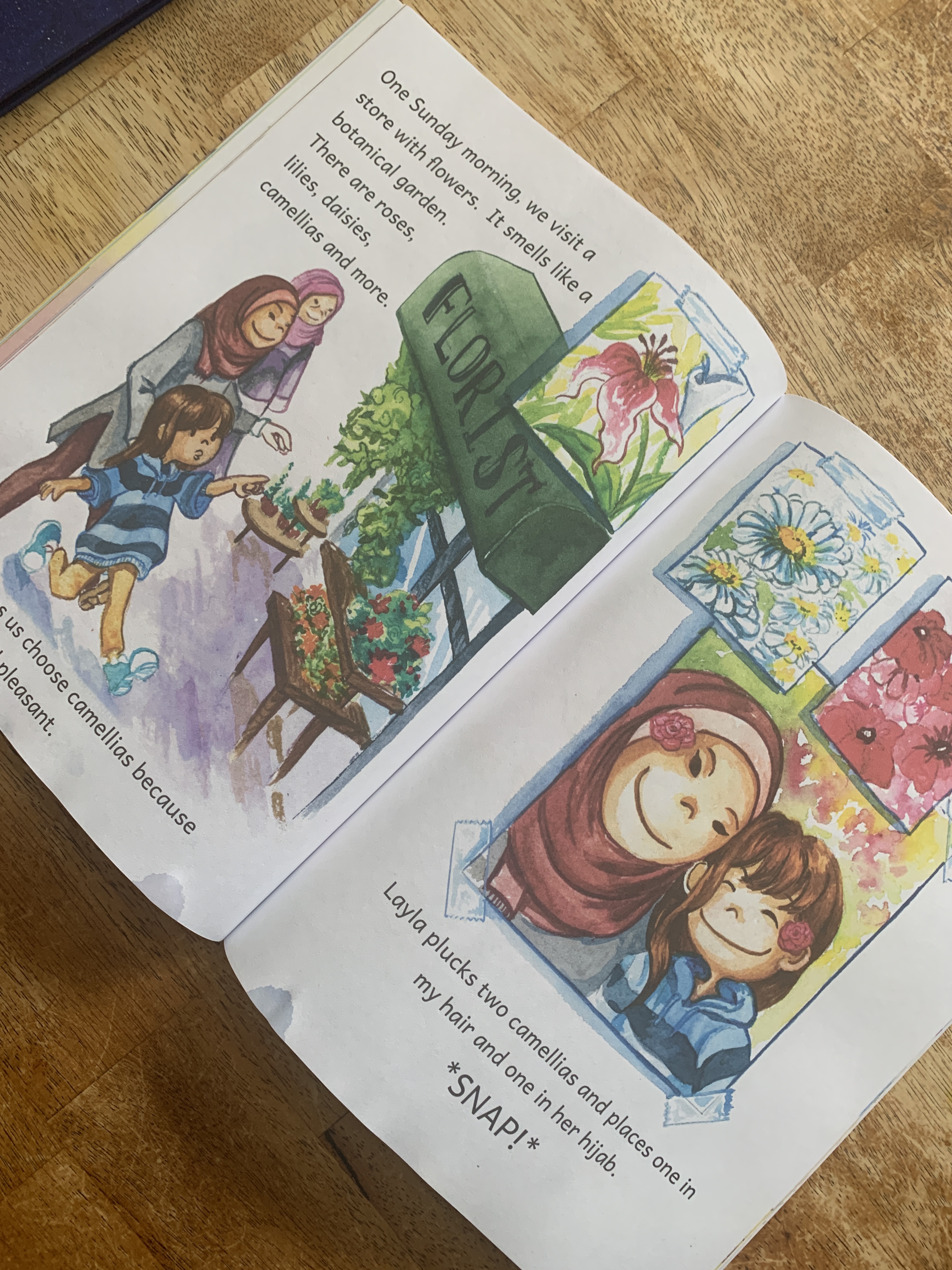
I love the detail about the different cultural and regional Algerian dresses in the illustrations, the Algerian traditions shared through the text, and the connection between the two sisters. The book is available in hard back or paper back and I got mine from Crescent Moon Store  

https://crescentmoonstore.com/products/monas-scrapbook-adventure?sca_ref=1601585.fIPhoqtScY

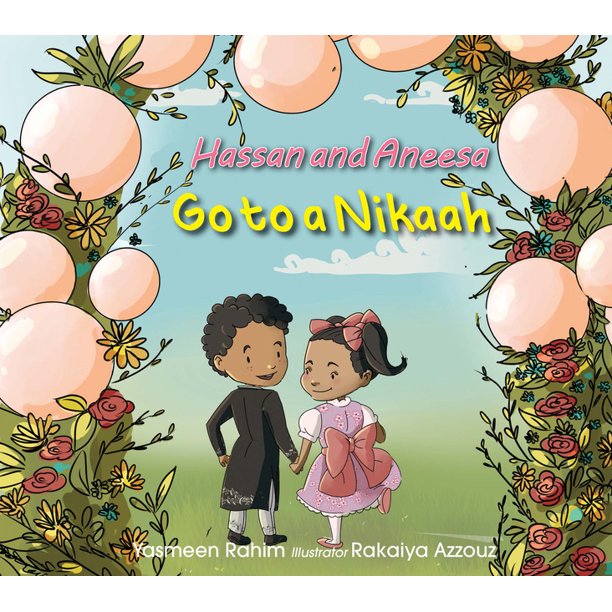
Hassan and Aneesa Go To a Nikaah by Yasmeen Rahim illustrated by Rakaiya Azzouz

Standard
Hassan and Aneesa Go To a Nikaah by Yasmeen Rahim illustrated by Rakaiya Azzouz

hassan and aneesa

The latest installment in the Hassan and Aneesa series caught my attention because there just aren’t a lot of books about an Islamic marriage process (it is Desi tinged).  Cultural weddings you often see, but despite the misleading title of them just attending a Nikaah, they actually walk the reader through the steps from wanting to get married, to getting to know someone, praying Salatul-Istikhara,  agreeing on a mahr, signing contracts, and a walima.  The idea and premise is brilliant and greatly needed, the finished product, not so much.  Somehow I had forgotten how tiny in size the books in the series are (6.5×7.5), making it all visually cluttered and the text often hard to see over the illustrations.  And while I love how the concepts and terms are defined, the point of view of having it witnessed and detailed by the brother sister duo is often awkward and wordy.  I wish the author would have ditched the familiar characters, and just written a book about the marriage process for kids.  The vacillating between a fictionalized story, factual requirements, kids witnessing their parents helping their cousin get married, makes for a tangled book that fails to connect to readers seven and up, let alone two and up like the book claims. If you’re kids are asking about how Muslims marry or seem curious about a halal way it can be done, I suppose this book would provide a way to understand some of the key facets in broad strokes, but it needs editing, and more space to show joy and excitement in a book about families and a couple coming together.

img_9813

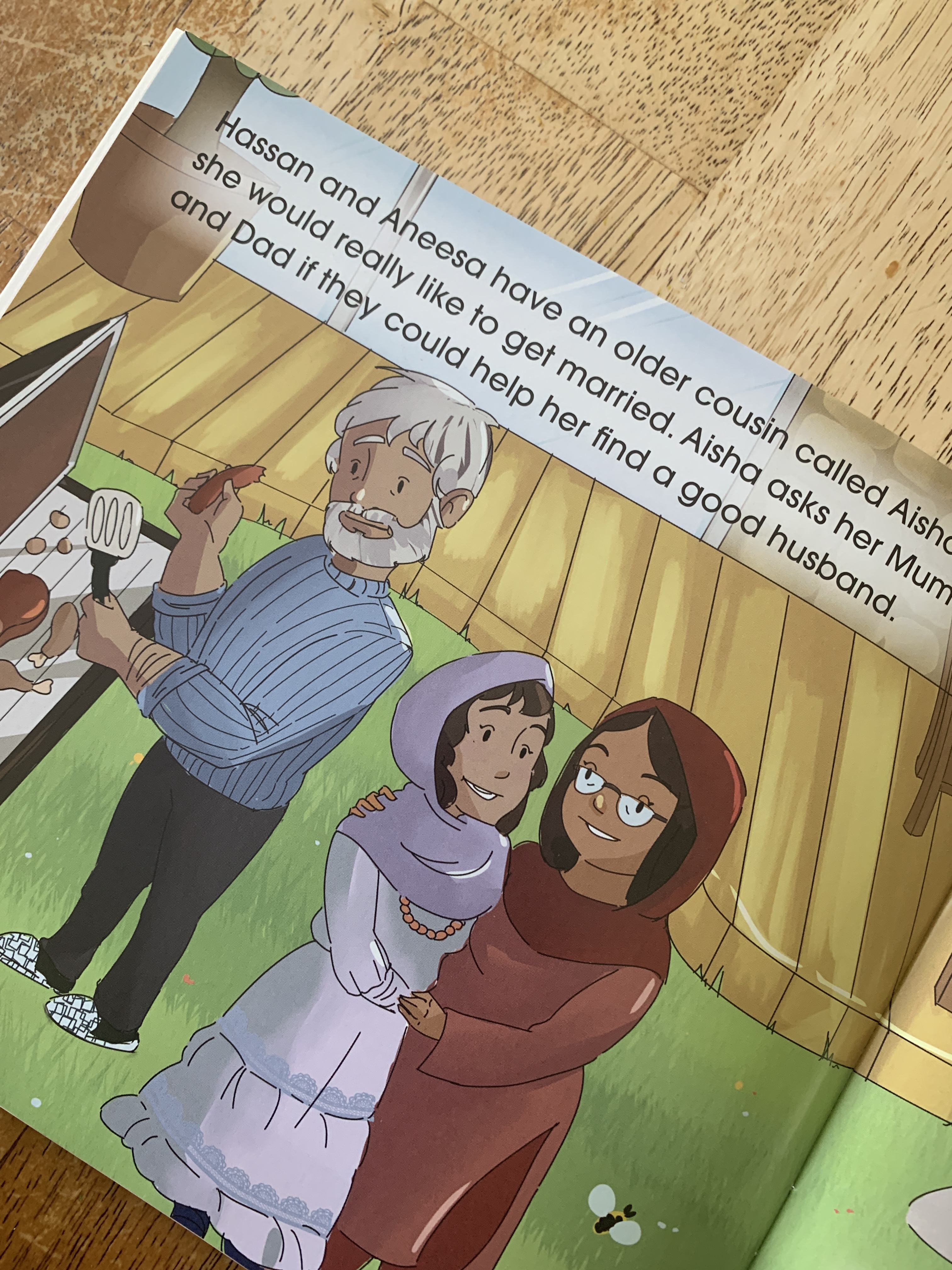
The very first page set the tone for me, the overly dressed girl at a barbecue and the way her name seems to be so formally introduced.  Perhaps it is a difference of culture, but the book never bounced back from the heavy handed tone.  Aisha wants to get married and asks her parents to help her find someone.  They ask her what she is looking for and she tells them.  I like what she includes kindness, love of Allah, funny, etc.  I wish it would have suggested that she had given it a lot of thought before answering though.

img_9814

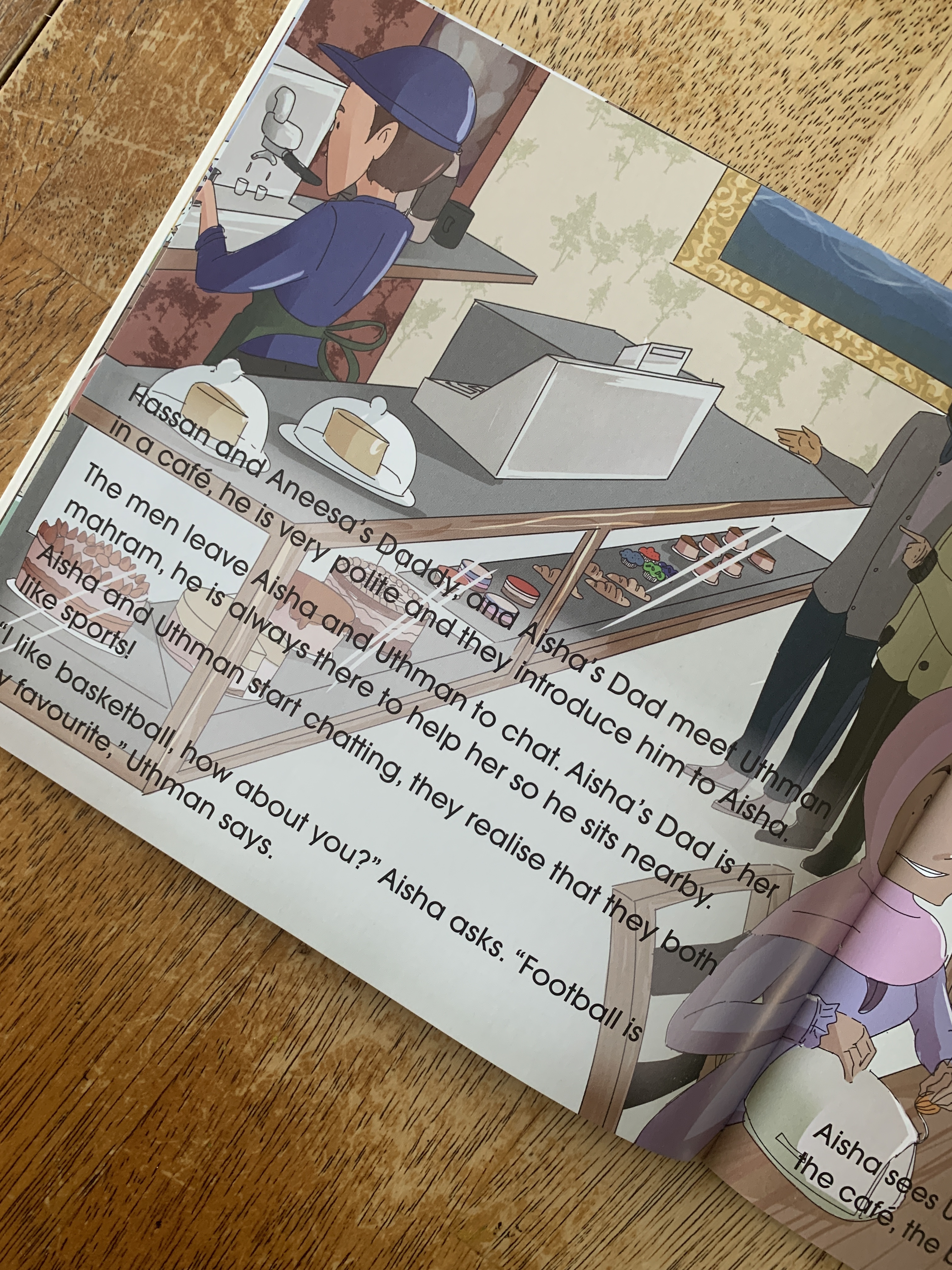
Aneesa and Hassan’s mom and their aunt are discussing Aisha’s want to marry at their painting class and a friend over hears and suggests her son Uthman.  The families agree to have the two meet in a cafe with Aneesa and Hassan’s dad and uncle so that her mahram is nearby.  Uthman and Aisha both enjoy sports and Uthman interacts with a baby at another table impressing Aisha.  They both pray istikhara and decide that the families should all meet.

img_9815

It is then time to pick out a dress and hand out invitations, which at least involves Hassan and Aneesa, but the pages are so cringe and awkward from the phrasing, to the structure of the concepts.  The spread is disjointed and you’ll catch yourself shaking your head and making a face every time you read it.

Mehndi is next and I’m not sure why it focuses on Aneesa not sitting still and looking sad when her design is ruined.  It seems like an odd inclusion in what should be a joyous book.  Hassan is entrusted with gift to hold on to by Uthman for Aisha, and the Imam gives a khutbah about marriage.

Contracts are then signed with Aisha her wali, uthman and the imam and each party is asked if they agree.  They have already decided on the mahr and then Hassan hands over the gift.  The walima feast is delicious and the reader is encouraged to go back and find the cat in the illustrations.

As for illustrations I do like that the main females are shown out of hijab at home, and in hijab while out.  At the wedding there are different shades of brown, different loves of covering and not covering, there is a guest in a wheel chair and the couple and their families seem happy.  I found it odd that it says they are in love, since there isn’t a lot of emotion mentioned before the last page and I wish the text on numerous pages wasn’t mixed in with the pictures.

The book concludes with a glossary of terms.

Misfits in Love by S.K. Ali

Standard
Misfits in Love by S.K. Ali

misfit

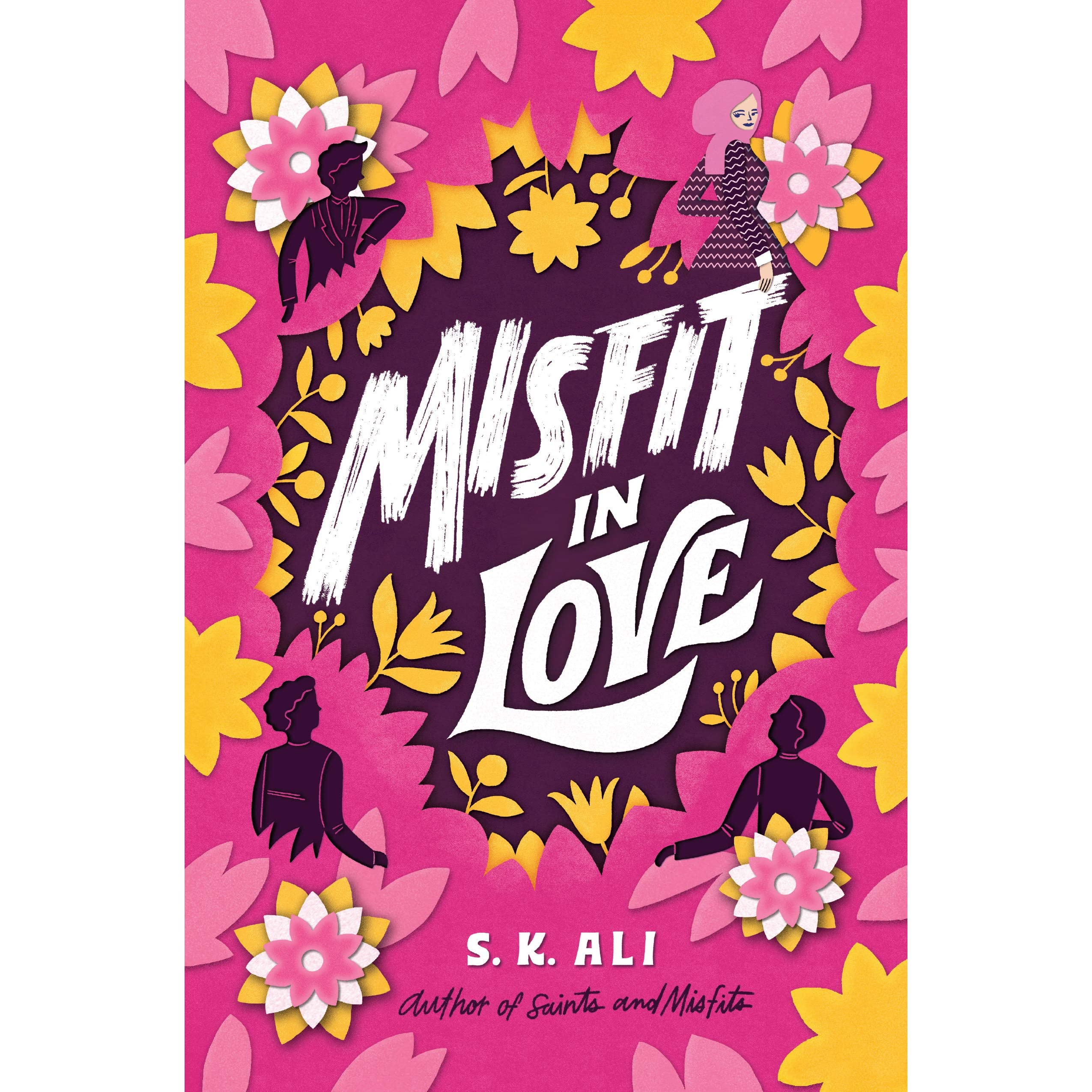
I reread my review of Saints and Misfits before diving in to this sequel that can also work as a stand alone, and imagine my absolute delight when all the things I wanted more of: Muhammed and Sarah, the mom, Jeremy, etc., were explored in this wonderful high school and up, 320 page, romantic comedy story.  The romance stays halal and the comedy light, but seamlessly interwoven into a weekend wedding are very serious notions of racism and prejudice within the Muslim community.  The writing is flawless as I tried to tell the summary to my daughter I realized just how many characters there are in the book, yet while reading, I never once was confused about who someone was or how they fit in to the family, it really is quite remarkable how real and personal the characters all become.  In many ways the story is uniquely an American-Muslim (arguably) one with characters that are half this culture, a quarter that, wearing cultural clothes to coordinate with friends, mutli lingual, multi ethnic, and yet all coming together as friends and family.  We, nor are the characters perfect, but that our weakness is explored in fiction so that we all might benefit in reality, is truly remarkable.  I honestly couldn’t put it down, and my teen and tween children may or may not have had to figure out their own meals, as I hid in the corner to devour this book in a single day. I regret nothing.

SYNOPSIS:

Janna Yusuf has just graduated high school and has been spending the last few weeks at her father’s sprawling house on a lake to help with wedding preparations for her beloved older brother.  What started out with plans to be a small nikkah between Muhammad and Sara, has quickly snowballed into a “wedding” with a few hundred guests and an ever evolving color scheme.  With extended family and friends pouring in over the three days, Janna is anxious to see Nuah and finally tell him that she is ready to return his feelings, reunite with her mom after being apart for weeks, and see who her best friend Tats is bringing as her plus one.  But, Nuah is acting weird, her mom seems to be considering remarrying, and her father is revealing himself to be racist.  There is a lot going on, and in between wedding preparations, possible crushes, family drama, prejudice overtones, and a curious ice cream man, Janna is having an unforgettable weekend.

Janna and Muhammad are close, they are the children of an Indian American non practicing father and an Egyptian American religious mother.  Their parents have been divorced for a while, and their dad and his Greek wife Linda have two little boys and are hosting everyone and the wedding.  The heart of the story is Janna as she thinks she is ready to pursue something halal with Nuah, but is slightly intrigued by Sara’s cousin Haytham and very perplexed by her mother’s potential future new husband’s nephew Layth. Being it is a wedding, and many people are staying at her father’s house and many more at the hotel in town with their own families.  Jana is trying to figure stuff out about Nuah while hanging out with Nuah’s older pregnant sister.  She is constantly thrown together with Layth as she meets his Uncle Bilal, her mom’s college friend that has proposed to her, and who’s own daughters are friends of Sarahs.  Yeah, there is a lot of overlap, a lot.  It’s like real life. As attractions wax and wane in such a short time, it is the relationship Janna has with her own family and the contentment she must find within herself that ultimately matter most.

WHY I LIKE IT:

I love how authentic the story and its characters are.  I come from a small family, but a very close friend has a huge family, and this just reminded me of going to her family events and finding how interconnected and small the world really is.  I absolutely love Janna, she is Muslim by choice through-and-through and is genuine in her understanding and actions that, while the book is meant for Muslims and nonMuslims, she really sets the standard of how fictitious characters can positively affect their readers.  The only slightly forced thread for me was Janna suddenly loving animals and being ready to head to Peru.  I get that she was crushing, but it seemed a little too over the top for an otherwise very plausible plot.

The best part of the book, in my opinion is that it isn’t all fluff and fun, there are some very real issues that get spotlighted.  Like in Saints and Misfits where Janna is sexually assaulted by a seemingly devout, religious, well liked male, this story addresses racism and prejudice within the Islamic community.  Janna’s dad always felt treated as less than by Janna’s mom’s family for not being Arab.  He flat out warns Janna about her feelings for Nuah because he is Black.  Sarah’s Aunt is offended that the mendhi is more Desi than Arab.  The issues aren’t just pointed out, they require active acknowledgement and action.  The author’s note at the end, even discusses the significance and weight of such views at the end.

FLAGS:

There are mentions of the sexual assault that happened to Janna in the first book.  There is mention of periods, a possible affair, racism, and a character who drove while drunk and killed his son as a result.

TOOLS FOR LEADING THE DISCUSSION:

I don’t know that this book would be a great fit for a school book club, but I think a group of high school or college aged girls would thoroughly enjoy reading this and discussing it, and I would totally invite myself to their gathering to do so.