Tag Archives: ramadan

Our Neighborhood: Radiant Ramadan by Marzieh Abbas illustrated by Anoosha Syed

Standard
Our Neighborhood: Radiant Ramadan by Marzieh Abbas illustrated by Anoosha Syed

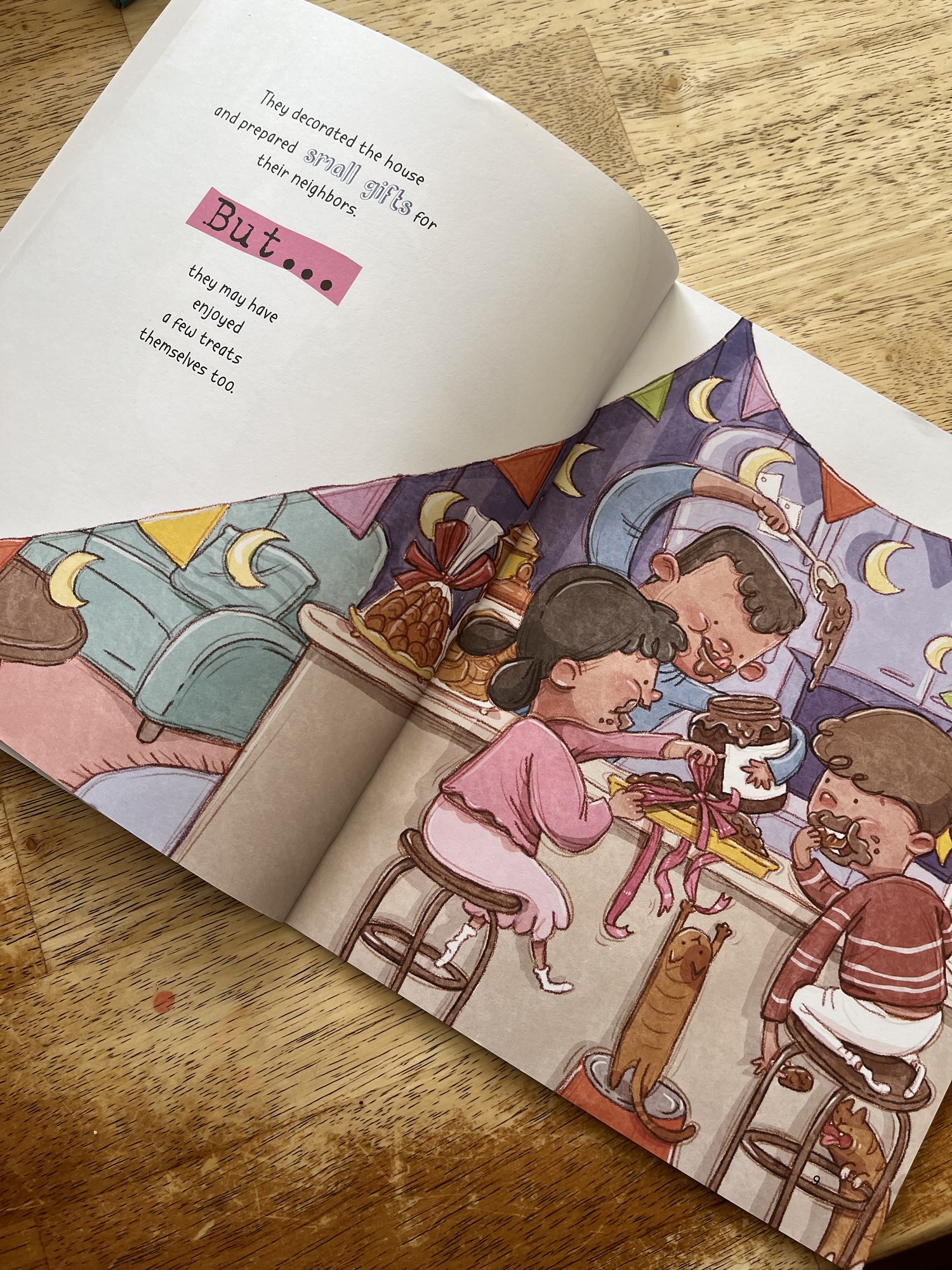
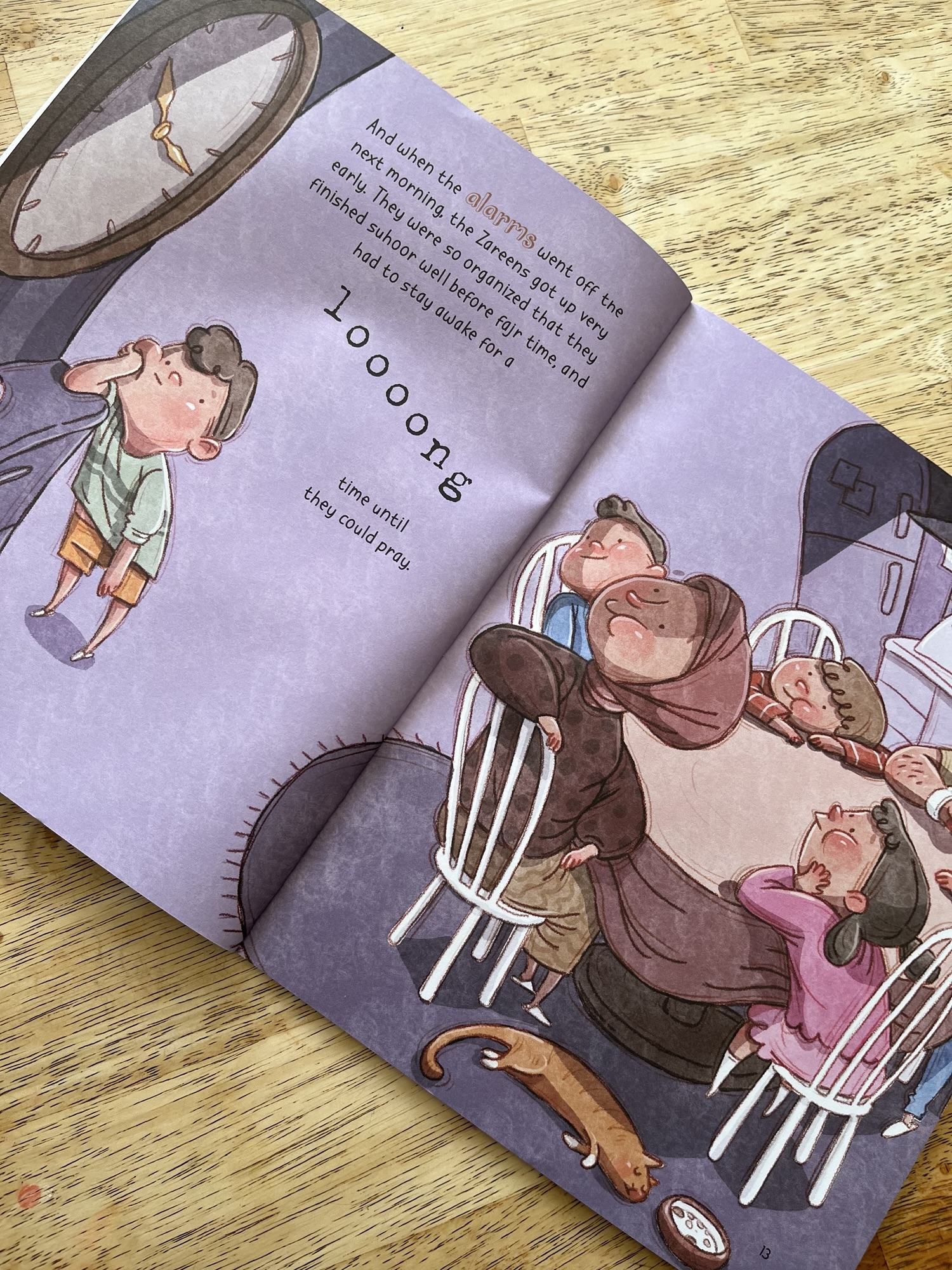
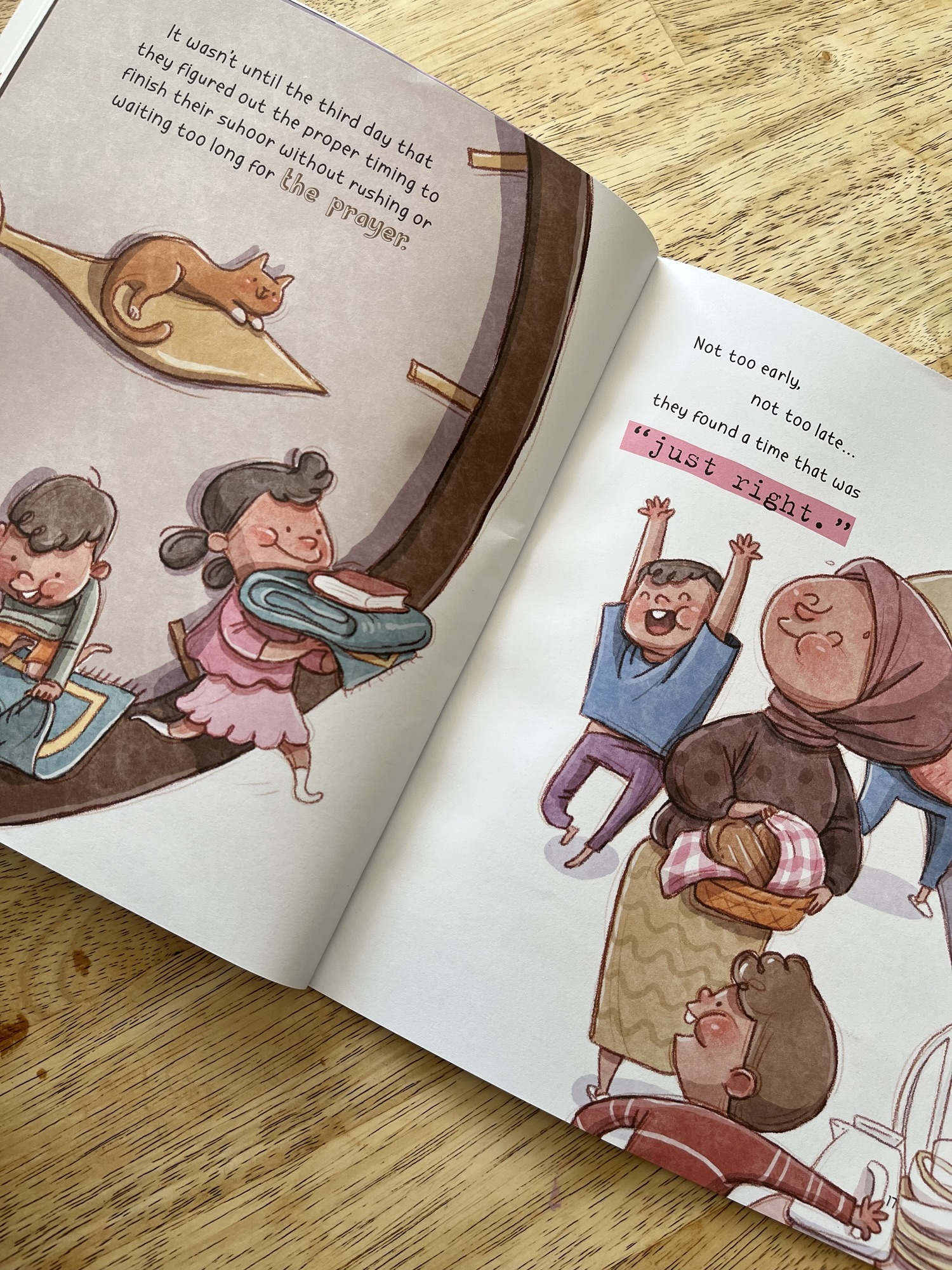
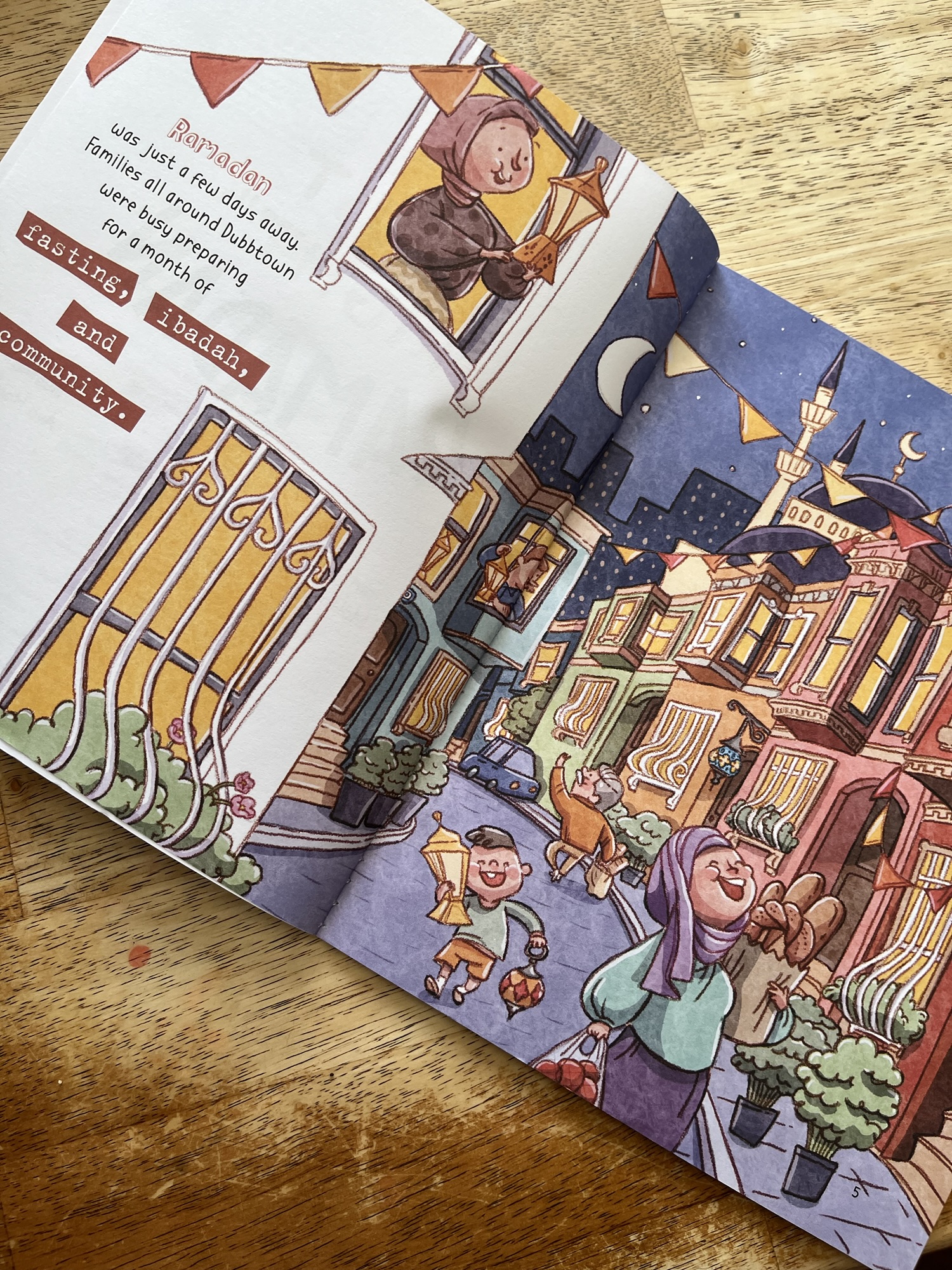
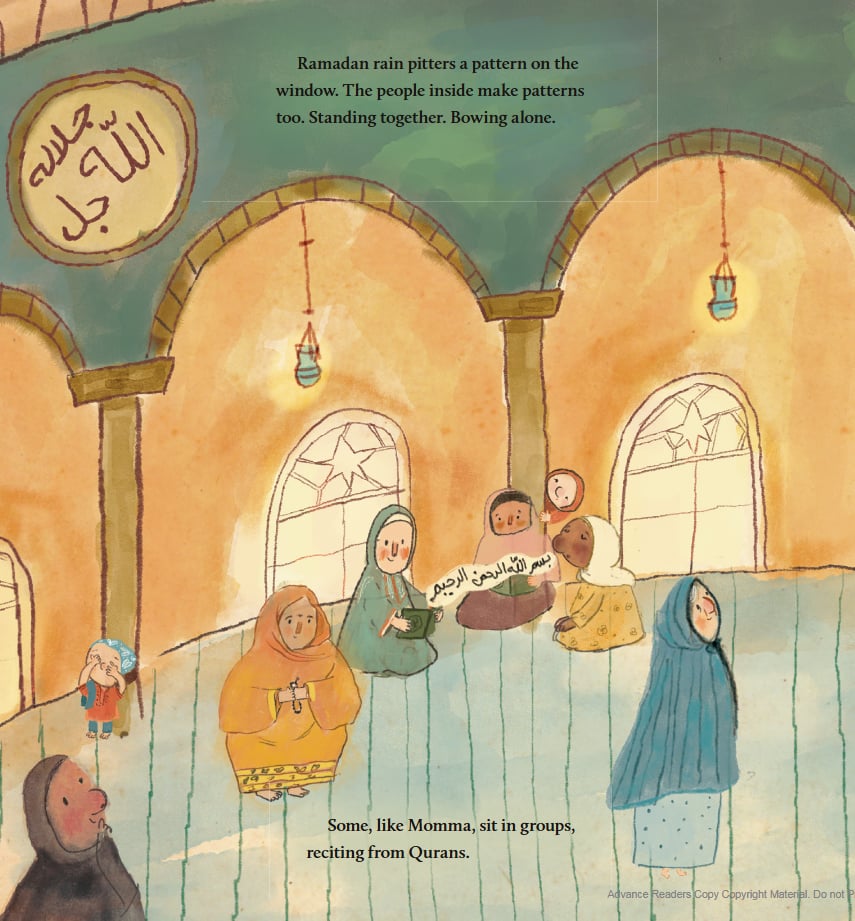
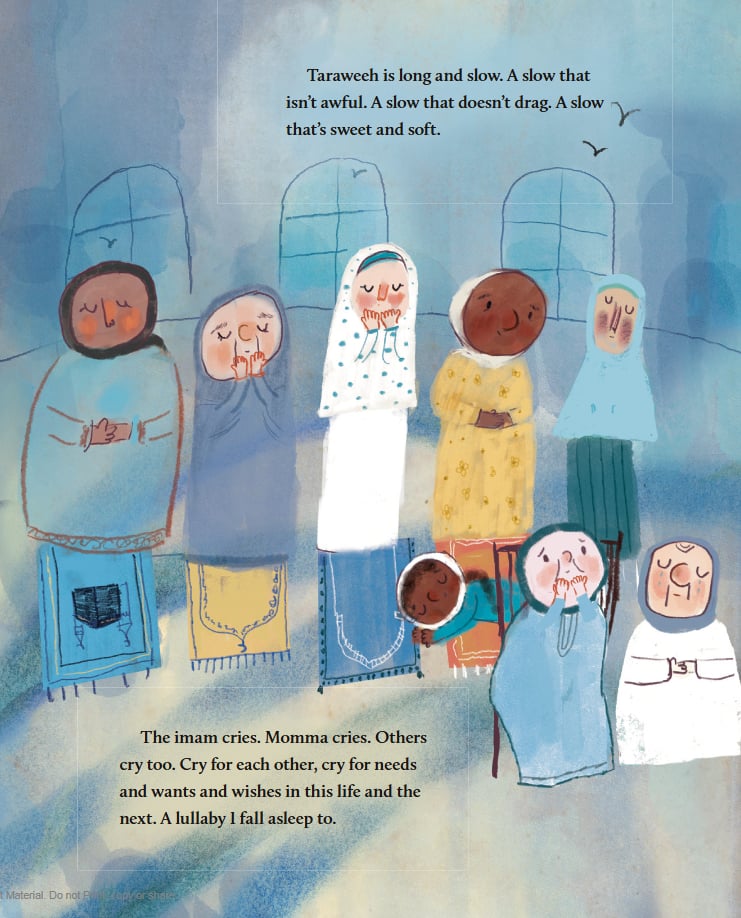
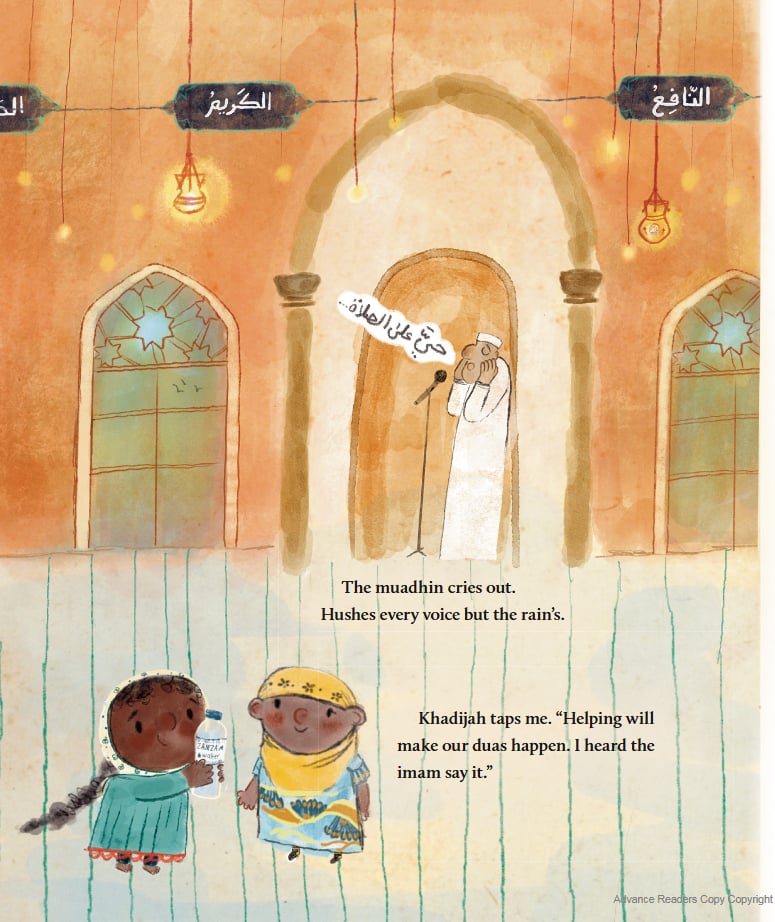
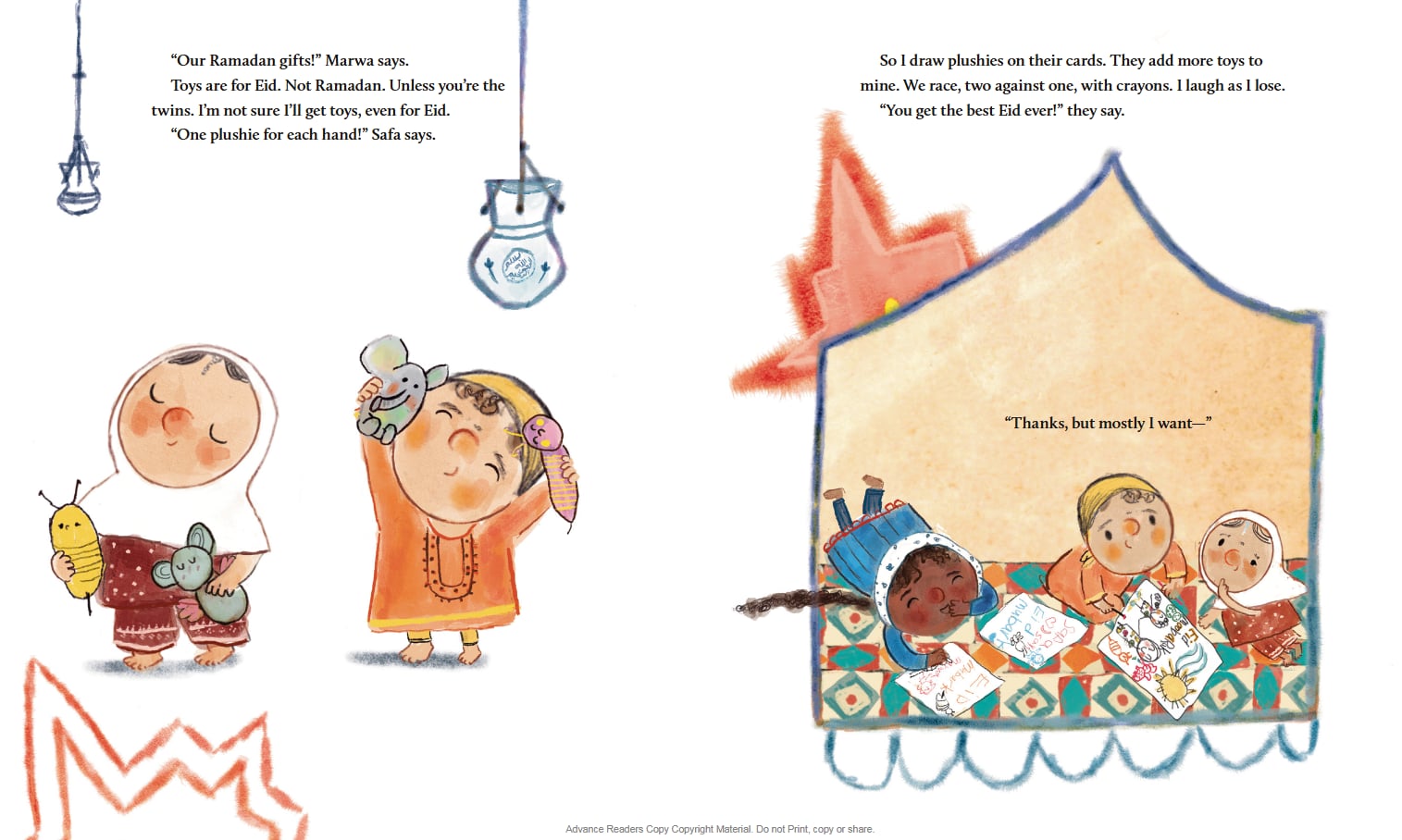
This adorable 26 page board book rounds out the Celebrating Islam representation in the Our Neighborhood Series and the simply rhyming words do an excellent job of conveying the joy, worship, togetherness, and daily aspects of the glorious month. Some of the lines feel a bit forced, but I really enjoyed the size and tone of the book. The illustrations are equally well done with a keffiyeh shown on a drummer, different skin tones on the characters, and smiles throughout. It is perhaps worth noting that the prayer page does seem to have the Shia rock that is used, I missed it initially thinking it was just a design on the prayer mat, but it is hard to unsee once it is pointed out. The other Islamic books in the series by the same author and illustrator are Friday Fun and Excited for Eid.

Ramadan Reflections: A Guided Journal by Aliyah Umm Raiyaan

Standard
Ramadan Reflections: A Guided Journal by Aliyah Umm Raiyaan

I had started this book on the first day of Ramadan thinking I could double up some days and finish it early with enough time to offer up a review for those wanting to know if they should acquire the book  and take advantage of it during the blessed month.  But alas, here I am nearly 10 days post Eid, finally finishing, and getting around to sharing my thoughts.  The 277 page book spans 30 days, it is divided into three parts, with each chapter/day covering a theme with the author’s personal connection, outside sourcing illuminating the thought, then moving on to a section entitled, “Let Your Heart Ponder,” followed by a “Dua Invitation” and then a few pages of guided journaling prompts, questions, and considerations.  I did not write in the book, I struggle to mark up pages since leaving school, and even annotate by taking pictures and attaching notes on my phone.  But even not using the journal as intended, the book requires you to slow down, to savor the reflections and insights, and put them in to practice.  To read it in one sitting, or to rush the chapters would not accomplish for the reader what the book sets out to do.  Even the chapters that did not directly resonate with me, I found still offered nuggets of empathy, or consideration, and the short chapter style allows it to not be a burden to spend time with.  The days that hit me the hardest, that taught me something, or reminded me of something long forgotten, or inspired me to be better, more intentional, more forgiving, more present, I look forward to discovering again and again in future Ramadan rereadings.  That isn’t to say that this book can only be read in Ramadan, or that next Ramadan chapters that I found unremarkable, won’t suddenly hit different, but there are some chapters that felt rather repetitive and memoir style anecdotes that were not developed enough to reach the reader beyond surface level understanding.  Had the whole book been like that, perhaps I wouldn’t remark on it as the Islam centered hadith, ayats, and quotes are consistently strong, but when the author’s personal reflections on her own life, and those close to her, were more deeply explored, a deeper resonance to the theme of the chapter emerged.  Perhaps because I read more fiction, but when character development, so to speak, was present, the connection to the message, and the empathy to others and one’s self bloomed very naturally, and thus those chapters became more memorable.  

I felt the latter half of the book was stronger than the beginning, perhaps intentional as the end of Ramadan draws near and our hearts desperate to cling to the closeness of Allah swt.  I love the thorough glossary at the end, I believe it is the same one in the author’s second book, “The Power of Dua” and it is such a benefit to truly understanding the words used that non Arabic speakers might think they know, but can benefit from having clearly articulated. 

It is never fair to compare books, but having read the author’s two books nearly together, I anxiously await and sincerely hope that there is a third.  I read them out of order, and the second is definitely stronger, but I struggled with the “memoir” style in both.  Reflections was the author’s own story, and Power of Dua was other people’s stories, and both felt forced and distracting for me more often than not.  I hope if there is a third book, that disconnect can be resolved and the author’s commentary and Islamic references in her signature palatable style can be expressed without being contingent upon a story that the reader may or may not relate too, or more personal info will be shared so that if the reader can empathize more readily.  The repetition of hearing the name Solace UK and that she started a charity from scratch, started to feel almost promotional, as I still am not sure, two books later, what the day to day work of the charity is, or what topics Honest Tea Talk seeks out to cover, only that they are constantly name dropped.  I would love to know who the author studied with and where.  The little snippets make the reader wanting to Google, but I think it distracts from the connection to the words in the moment.

Overall a solid addition to spend time with in Ramadan, or any time, and to reference when the heart needs to feel connections.  The writing makes for an easy read, the duas and parts to ponder allow you to put in to practice the teachings immediately, alhumdulillah.


The Best Eid Ever by Sufiya Ahmed illustrated by Hazem Asif

Standard
The Best Eid Ever by Sufiya Ahmed illustrated by Hazem Asif

This book blends some facts about Ramadan and Eid with cultural practices, showing a day in the life of a family celebrating, and a sprinkling of a story line to keep elementary aged kids invested. The back of the book labels it as an introduction to Ramadan and Eid and I think that is a pretty solid summary.  Aisha is eight, and apparently too young to fast from sunrise to sunset.  I wonder if she is old enough to fast from dawn to sunset as Islamically prescribed? Yes, I’m petty, but it is wrong to say sunrise to sunset, and I’m not backing down. This year her aunt, Chachi Amal has made a scavenger hunt for her and her brother to find their Eid presents, but first there is henna to apply, decorations to hang up, Eid prayers to attend, desserts to be shared with neighbors, and lunch to be had, before the three question scavenger hunt can commence, and presents can be located.  The backmatter has information about Ramadan, Muslims, Eid, and a glossary.  The book would work well for a generic class or library story time. I don’t imagine Muslim kids will find it particularly memorable and ask for it more than once.  It is a Desi family, with the Chachi being Libyan and sharing desserts. hinting at the diversity of Muslims, and I can see kids wanting parents to hide their gifts and make a scavenger hunt, which is sweet and a nice idea to build on.

The book starts with Aisha looking outside to see if the moon can be spotted and Eid determined.  Samir and Dad come in and say that the mosque has declared Eid tomorrow.  Eid is Aisha’s favorite festival, she loves Ramadan, eating iftar with her fasting family, and she loves dates. This year her Chachi has hidden their gifts and made a scavenger hunt for the kids to follow.

Aisha can’t wait, but her Mom says they have other traditions first, and Aisha has henna painted on her hands.  They have to dry for at least two hours, so she watches a show while Dad and Samir decorate.  Then it is time for bed, and the scavenger hunt will have to wait.

Early in the morning is no time for a scavenger hunt, Mom is in the kitchen and they have to get to Eid prayers. After salat, and wishing everyone Eid Mubarak, Aisha is ready for the clues, but her and Samir are sent to deliver sweets to the neighbors.  When they return home, they can’t get to presents because it is lunch time. Finally, the scavenger hunt begins, the clues are solved, the presents found, and the day “the Best Eid Ever.”

I purchased this book from Crescent Moon Store, code ISL will save you 10%.

Amal Noor: Mission: Fasting for the First Time by Merve Ozcan translated by Muhammad Izzaddin Seif

Standard
Amal Noor: Mission: Fasting for the First Time by Merve Ozcan translated by Muhammad Izzaddin Seif

Any one who has followed my reviews for very long, knows I really dislike “first fast stories,” so when this one came recommended as being different, and funny, I was hesitant to give it a try, but I caved and purchased it.  And well, it definitely is different in that it is not a picture book, the protagonist knows what fasting and Ramadan are, and she doesn’t just stumble upon her family being up at sahoor one random day, Alhamdulillah. The funny though, well, it just feels really forced, and I can’t tell if it is part “lost in translation” or if  having read early chapter books that have literary value made this one seem, thrown together.  By the end it had a bit of heart, but getting through 93 highly illustrated pages, took a lot of effort.  Amal is obnoxious, doesn’t read her age, and doesn’t have any character growth by the end. If your child likes it, there isn’t anything “wrong” with it, it reads like an attempted imitation of Planet Omar with an annoying Clementine, Junie B. Jones type personality.  The character breaks the fourth wall speaking to the reader, and labels nearly everyone in unequivocal extremes: her mother is the most perfect, the most beautiful, etc., and accomplishing the first fast doesn’t seem to change her at all, despite all the buildup.

SYNOPSIS:

The book starts with Amal proclaiming that she is going to fast the next day, she has tried before but continually fails.  She tells everyone she knows, not just her family, but neighbors, the imam, everyone, and she imagines that it will be a defining day of life before and life after.  Her confidence and arrogance, is put to the test though when she actually has to do it.  At seven-years-old she has done a lot, she runs a charity out of the mosque, she sells items and used goods, and she wanders around independently. Fasting though has alluded her, as has praying more than a couple of rakats of taraweeh, but she is eating and drinking in anticipation of tomorrow, and determined to be successful.

WHY I LIKE IT:

I do like that she messes up and gets through it, I wish though she would have been determined to have a second fast and a third fast, the idea of the first fast being a one and done still doesn’t sit right with me, when Ramadan is a whole month of fasting.  I liked that nothing was overly explained, it is a book by a Muslim for Muslims, and presumably you know what is going on, but I do wish there would have been a little information threaded in about fasting not just being about food.  Amal and her brother Obaid tease and prank each other and with no reminder about being nice being a part of Ramadan included, it seemed like a missed opportunity.  I also thought she was mean to her grandma.  I did like the full circle of her realizing other neighborhood kids her age fasted their first fast without telling anyone, or everyone. But ultimately the book is just not the level of quality that books today have risen too.  If I read this book a few years ago, I might be a lot kinder or happier with my purchase, but even traditionally published books today by Muslim authors have a lot of normalized Islam, that this didn’t feel like it brought anything new to the shelf, and what it brought was not that well done.

FLAGS:

Mean, bragging

TOOLS FOR LEADING THE DISCUSSION:

Since I have the book, I’ll shelve it, but the small 8 x 5 inch size might mean it gets lost fairly easy, and had I not already purchased it, I’d probably not rush out to get it.

First Festivals: Ramadan: A Lift the Flap Book illustrated by Junissa Bianda

Standard
First Festivals: Ramadan: A Lift the Flap Book illustrated by Junissa Bianda

I was pleasantly surprised by the cuteness of this little (7.5 x 7.5) 12 page lift the flap Ramadan board book I got at the library. Written by committee (Ladybird Books) and part of a series, I didn’t really expect much, but the illustrations are adorable, and the salat flap made me smile. The text is simple and informative, fitting for the target demographic covering that Ramadan is a special time for Muslims to grow closer to Allah, do more good deeds, fast, fast, pray, and celebrate after prayers at the mosque with a feast.  It is positioned to teach non Muslims about Islam, so the “Muslims do, or say, or believe” framing, can inherently feel a bit othering, but being the tone of the book is to educate, I think it can easily be reworded for Muslim homes to benefit and enjoy.

The book starts with a two page spread of a family in a living room and text that identifies that “a new moon has appeared” and Ramadan is here.  The flap lifts the curtain to reveal a crescent.  It states that Ramadan is a special time for Muslims and that we grow closer to God, articulating that we call God, Allah (swt).

The remaining spreads feature diverse characters, various colors, mobility, hijab wearing and not, and cover fasting, suhoor, iftar, eating dates, praying tarawih and then celebrating Eid at the end of the month.  Flaps lift to show inside a mosque, praying and making dua, opening gifts, visiting neighbors, and eating.  The book concludes with Ramadan over and Muslims remembering what the special month taught them. Overall it does a good job of balancing, fasting, praying, and being together, not over emphasizing food, or commercializing the holy month at the expense of showing faith practices.

Maymoona’s Moon: A Special Eid Story by Razeena Omar Gutta illustrated by Zayneb Haleem

Standard
Maymoona’s Moon: A Special Eid Story by Razeena Omar Gutta illustrated by Zayneb Haleem

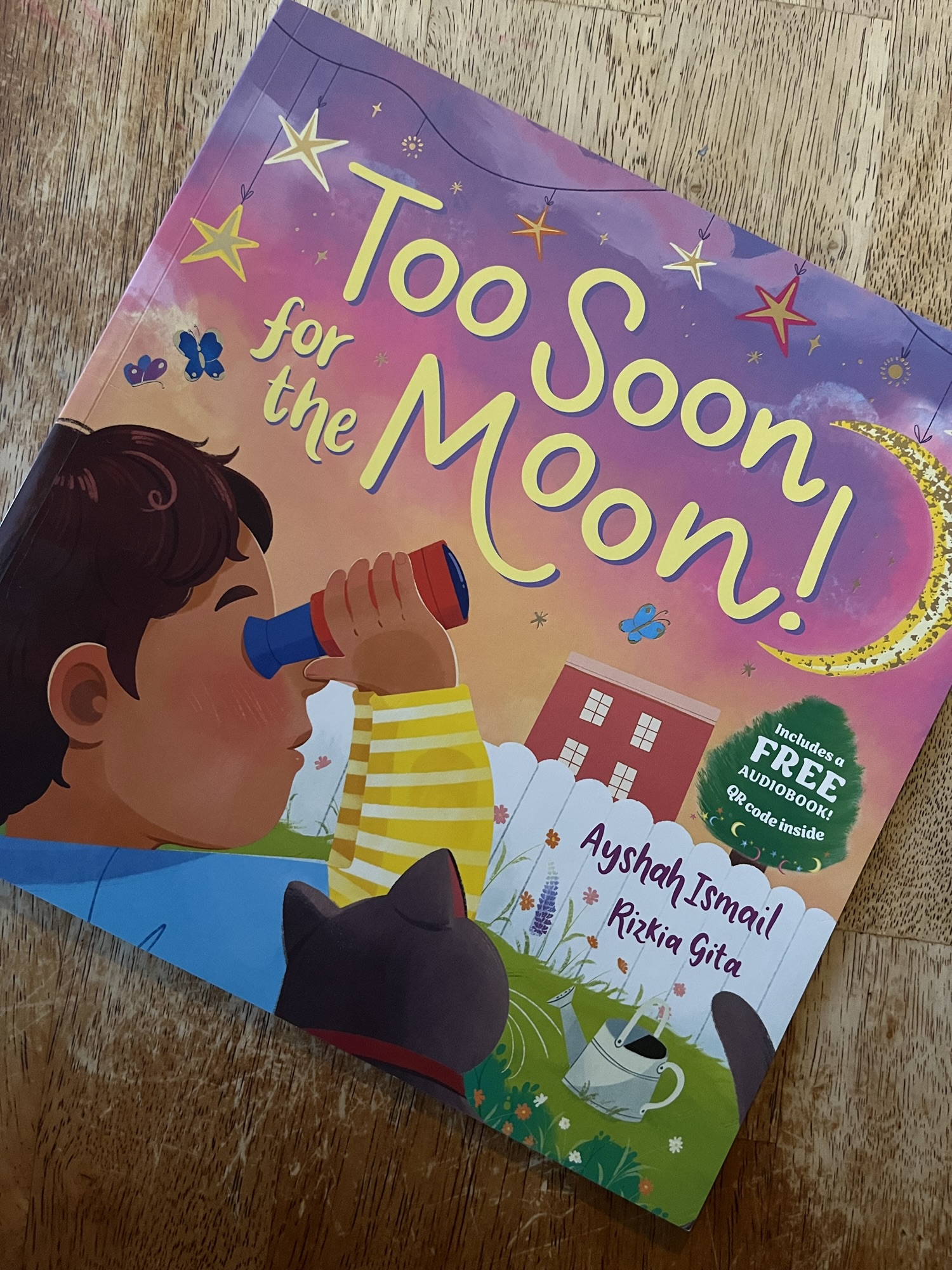
I love the illustrations of this book and have been trying to get it since it released in Australia to no avail, it finally is being released here in America and the 32 page hardback book is so cute to look through.  The story is, well, sigh.  It isn’t bad or wrong, but for a religious centered book, it has no Islam, no Eid feels, no faithful reliance.  Rather than using religion to bring the sighting of the moon to little Muslims and non Muslims, and blending it with the protagonists desire to be an astronaut as the framing of the story, it just focuses on the celestial intrigue.  “Cosmic compasses,” “galactic goggles,” and a cheering squad are needed for “Operation Galaxy Gaze,” there are no “Bismillahs” or “Alhumdulillahs” when looking for the moon, and ultimately seeing it.  Again, it isn’t wrong, it just seems a little unfortunate.  This book will be read in Islamic and public schools, libraries, and everywhere else children, preschool to early elementary, gather with hopes of hearing a Ramadan or Eid story.  I’m just fairly confident, none will leave knowing what Eid is, or why it is important to Muslims.  They will get that Maymoona loves the stars, there is an “inshaAllah” when she dreams of being an astronaut some day, but even the backmatter entitled, “Why is Seeing the Moon so Important for Eid?” focuses on just that, the seeing of the moon, not the month of Ramadan ending and Eid joy prevailing.  I know I’m harsh when it comes to Islamic rep, this one just skirted the line of telling us about searching for the moon, leaving Ramadan behind, and the excitement of Eid, when it so easily could have shown us, and left a lasting impression long after the book closed.

The book starts with the sights and sounds of Eid approaching. There is only one thing left to do and that is something Maymoona takes very seriously, looking for the moon.  It is the most exciting part of Eid for her, as she dreams of being a future astronaut.  She assembles her team to plot and plan, her gear to give her the best chance of success, and she squashes her nerves and makes her ascent to the best vantage point.  And then she waits, patiently to see if the wind will move the clouds, if her dreams of landing on the moon will come to fruition, if tomorrow will be Eid.

The large 8.5 x 11 pages with a matte finish make this book easy to share in small groups or at bedtime, and really let the pictures charm the audience on each and every spread.

Eid for Nylah by Nizrana Farook illustrated by Zelma Firdauzia

Standard
Eid for Nylah by Nizrana Farook illustrated by Zelma Firdauzia

I have read this book dozens of times and I honestly don’t know how I feel about it. If you remove the title and second to last page and just READ the words, the book could be about any holiday that you might clean and decorate for, that would involve giving gifts, putting on henna, wearing new clothes, praying, and sharing food at. The illustrations imply that it is a Muslim holiday with about half the women in the pictures wearing hijab, and a few decor items that say Eid Mubarak in English and Arabic, but readers that are unaware or unfamiliar might not grasp that it is faith based at all, and the Author’s Note mentions, but doesn’t detail much about the religious significance either. During one reading, I felt it also could almost seem like a mystery, that the title just happens to ruin. The cat Nylah goes to different houses on the street seeing and hearing the tidying and banner hanging and gift wrapping occurring, but doesn’t know why no one has time for her, until the big reveal that it is Eid. I think for little non reading kids that actually might be my approach, to share the book without the title and back blurb and see if they can figure out why everyone is too busy to play with Nylah.  I don’t know that it is tokenism, or that Islam is left out to make the book palatable for the Western gaze, I could be wrong though, I really just think this is the author’s style.  Having read her chapter books that always center animals, feature community, and include Muslim names, I think this is just an extension of her lyrical writing in her debut picture book. The book would work for either Eid, but the backmatter is the author’s reflection on Ramadan and Eid al Fitr.  I know I’m the minority that struggles with Islamic holiday books that leave out the Islam, so for those of you that do not find it disappointing, the book is sweet.  Nylah is a cat that is welcome and known to the entire neighborhood, to come and go as she pleases, the age engaging illustrations complimented by the cadence and rhythm of the structure, lines, and diction are easy to read aloud to groups of all sizes, and hold the attention of 3 year old children and up.
The book starts with a family “wiping and scrubbing, tidying and sorting, everything in sight.”  When no one has time to play with Nylah, she heads outside under the crescent moon, and goes next door to Bilal’s house, where he and his family are decorating.  When she tries to play with the ribbon, she is once again told they are too busy to play, so she slips into Reem’s house where they are doing henna.  This continues from one house to another until the next morning when her family all dressed wakes her up to go to the park with them for prayers and Nylah realizes it is Eid.  Now the children are not too busy and everyone plays with Nylah.

Yeah, I know, taking a cat to Eid prayers sounds wild to me too, kids love imagining though what chaos might ensue.  There is enough hinted at that Muslim families can find the clues and make the book more religious or holiday centered, but I wish it showed the cat seeing praying or reading Quran, hearing the athan or thikr, or something that would ground the book in Islam, but alas, it does not.

The book concludes with an Author’s Note and scanable QR Code for a free audio reading.

Join Us for Ramadan by Sana A. Faqir illustrated by Amna Asif

Standard
Join Us for Ramadan by Sana A. Faqir illustrated by Amna Asif

This 18 page chunky board book is about 7.5 x 7.5 inches and a little over an inch thick.  Each spread features interactive touch, feel, lift, slide, and rotate features that keep little toddler hands engaged, while the text shares Ramadan basics. Interestingly enough though, the back says it is not for 0-3 year olds, presumably because parts could tear and be choking hazards, but making it unusable for the demographic(?).

It starts with a slider that reveals the Ramadan moon and encourages readers to find the moon in the sky. The next spread has you lifting a cover to see what Mummy has made for suhoor.  The prayer mat is then pulled out, The Qur’an opened, Sadaqah collected, dates and chocolate rotated, masjid doors opened, and once again the moon slides into view to know it is time for Eid.  

The illustrations are cute, the manipulatives are clever and not repetitive, but the flaps on any of the lift the flap reveals are incredibly thin, and the outer strip that holds the entire book is similarly skimpy and I don’t know how long it will hold up with regular use considering the thickness of the actual pages.  

Ramadan on Rahma Road: A Recipe Storybook by Razeena Omar Gutta recipes by Faaiza Osman illustrated by Atieh Sohrabi

Standard
Ramadan on Rahma Road: A Recipe Storybook by Razeena Omar Gutta recipes by Faaiza Osman illustrated by Atieh Sohrabi


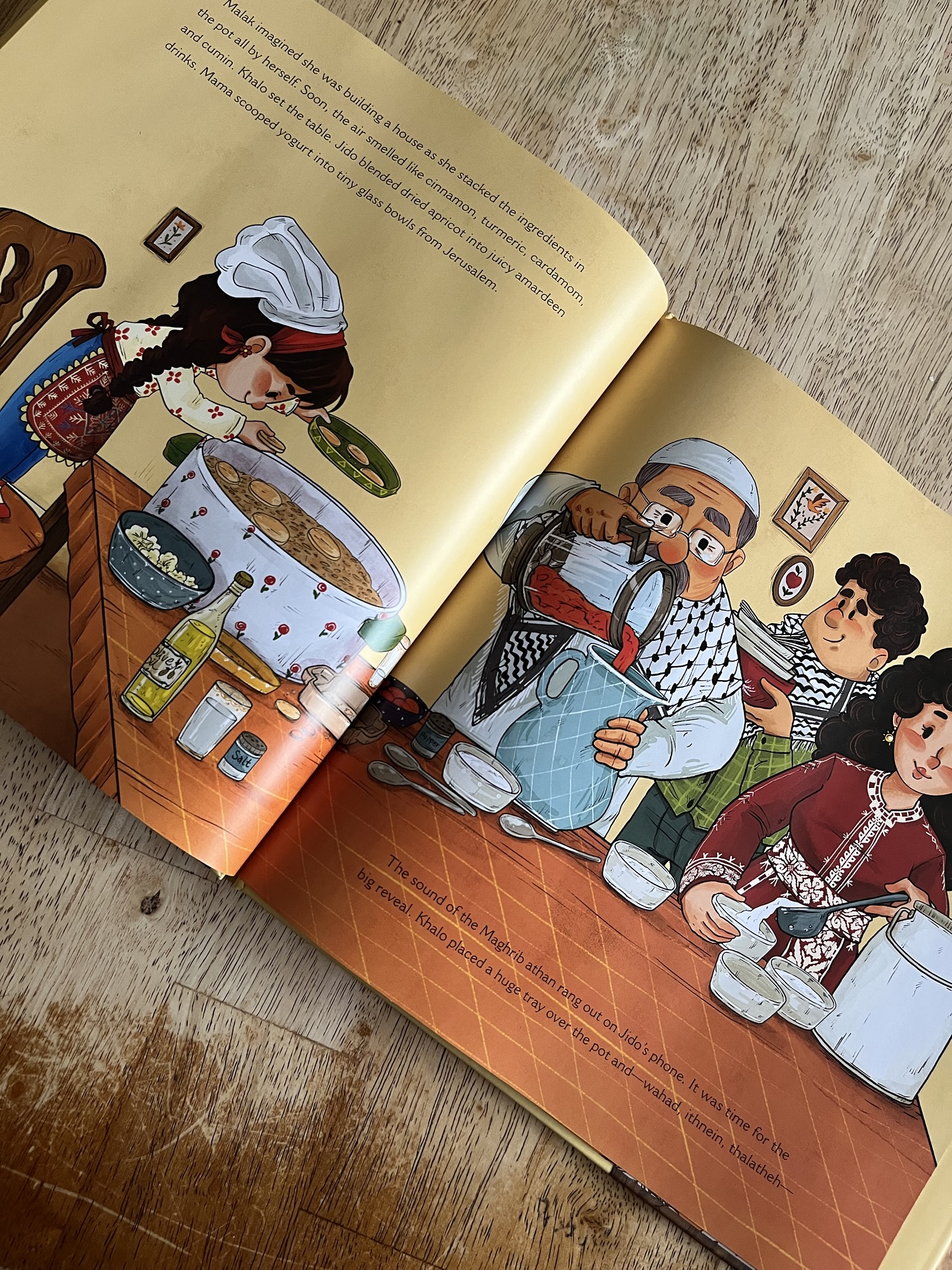
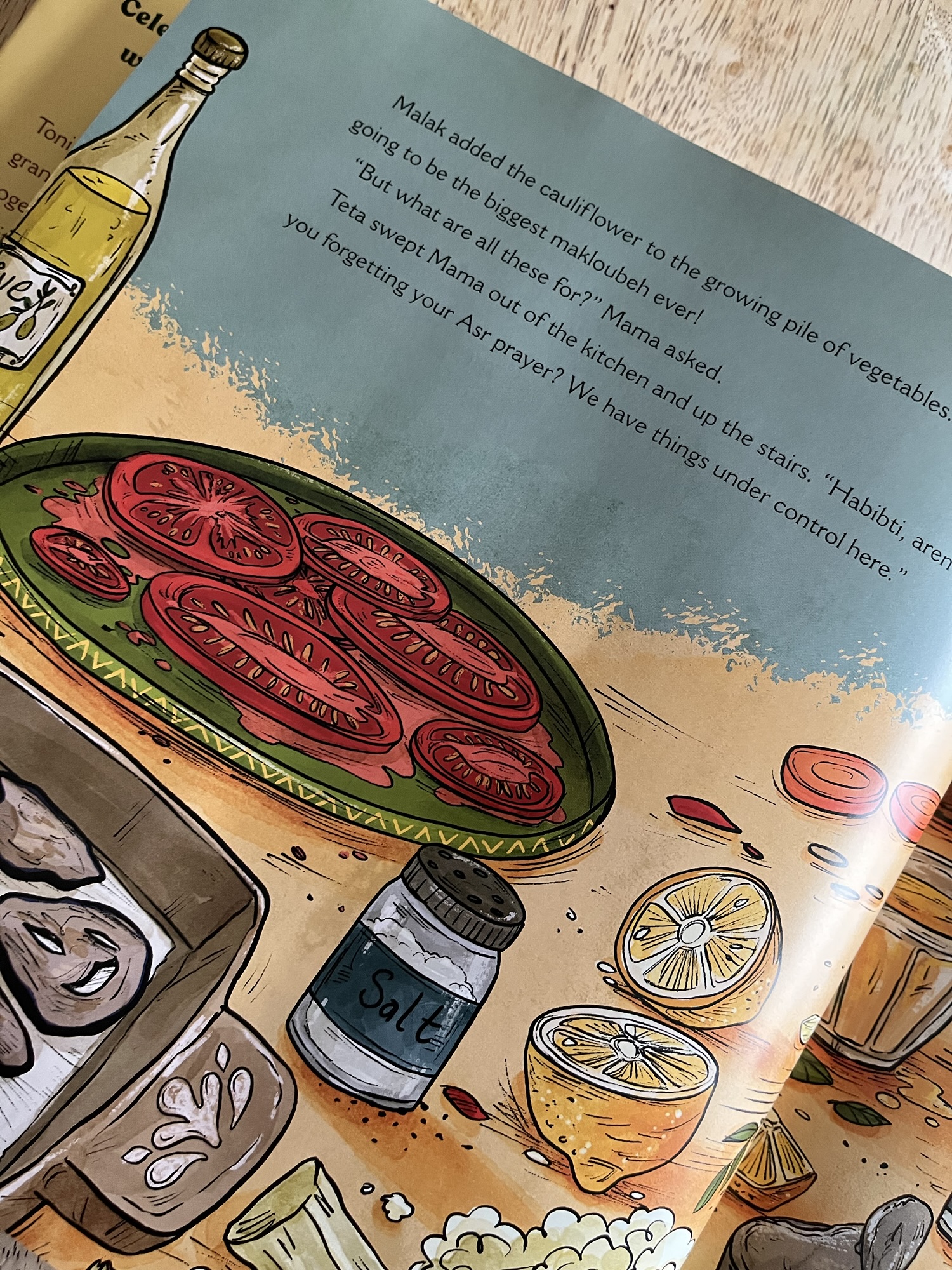
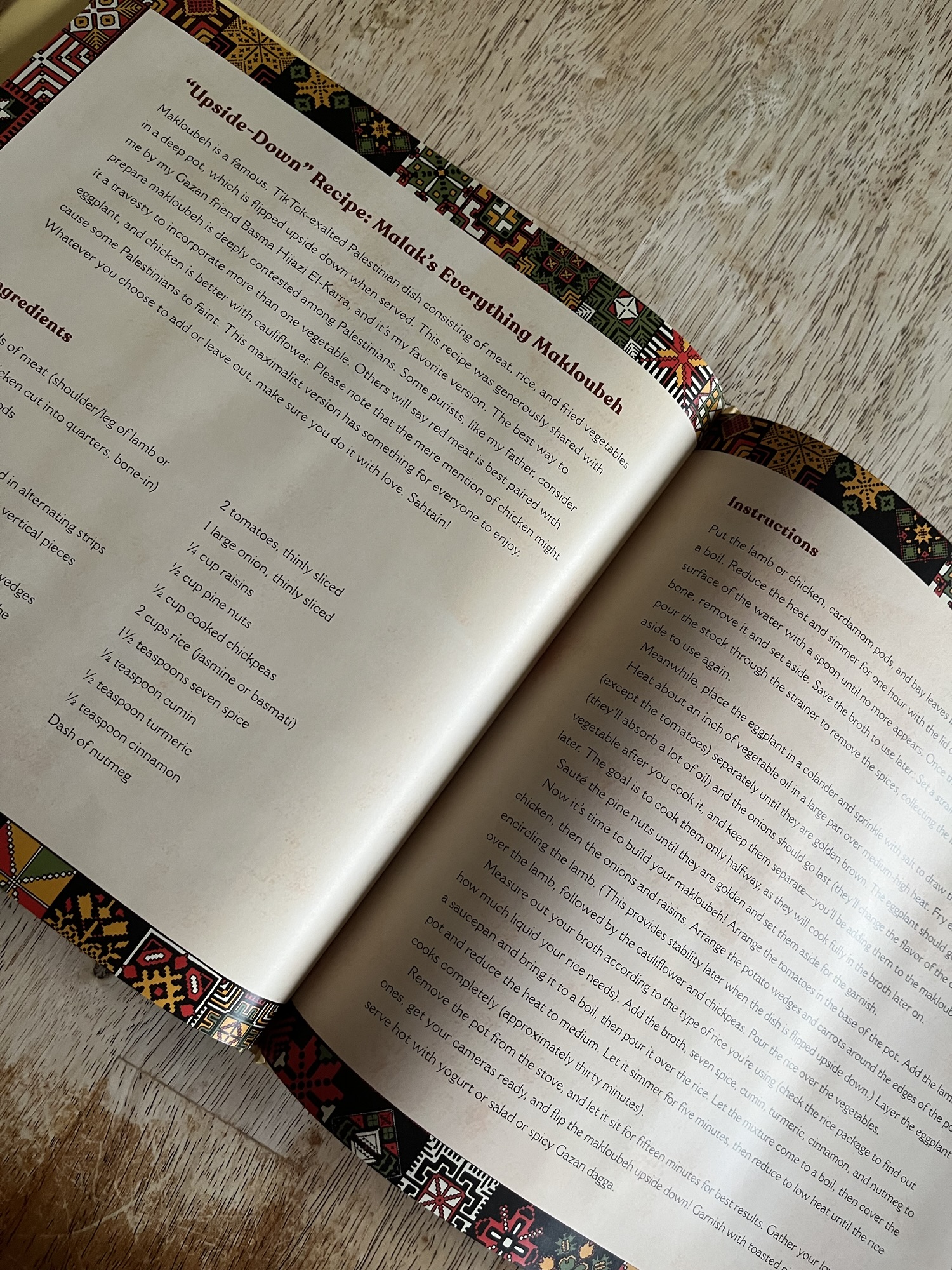
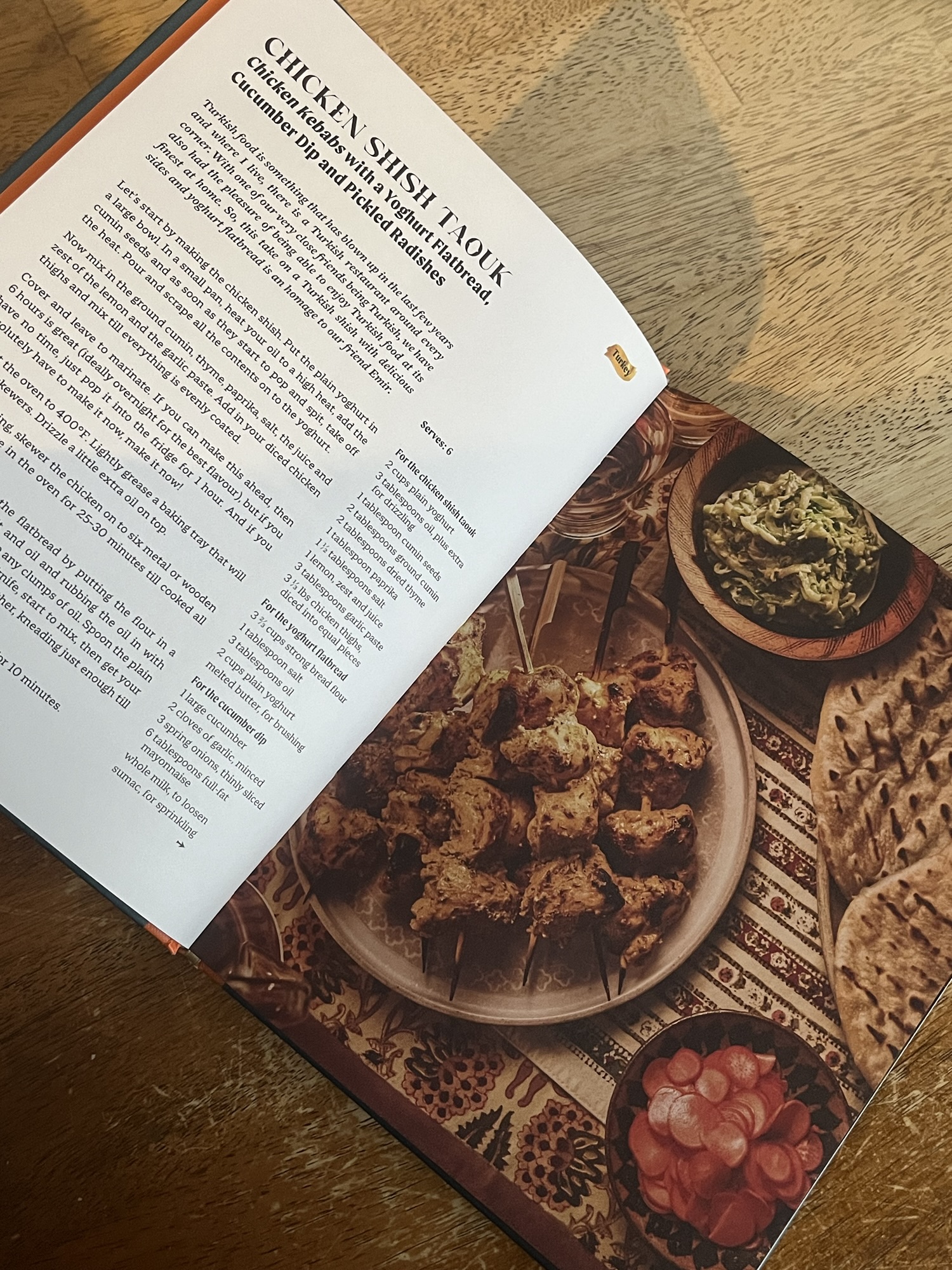
I would not know where to shelve this 40 page in a library, it has beautiful pictures, it is informative, resourceful, useful, and interesting- I’ve only delayed sharing it because I really have had to think, how best to use this book to its maximum potential, to make it truly effective. It is formatted externally as a picture book, but it reads much like an chapter book anthology with the stories connected by the road the diverse folks live on, Rahma Road, all coming together for a communal iftar, with some fasting and some not.  The spreads feature vignettes on the left of what each house is making, including tidbits of culture, facts about Ramadan, insights about method or ingredients, with the facing page being the recipe.  The book is incredibly meticulous and intentional in appealing to Muslims and non Muslims alike, as well as a variety of ages.  It works as a book for Muslims to see themselves in, non Muslims to get a peek at iftaar excitement through, messages about community and diversity celebrated, foodies to see new recipes that they can try, cultures to explore through food and native words, a story framing to feel connection, I really could go on and on with the layers and inclusions this book provides, alhumdulillah.  I think the best way to use and share the book is going to be for me to read it with my 5 and 9 year old children a week or so before Ramadan.  Where I can read the story portion, getting us excited for Ramadan, slipping in some reminders, appreciating Islam’s global presence, and then talking about the recipes so that they can pick dishes to try in Ramadan and add needed ingredients to the shopping list (I wish I made the effort to be this organized all year long).  I then will plan to leave the book out and have my teens flip through to find any recipes that they think sound good and will commit to making.  The book would work all year long, but as a new release, I’m sharing my plan with hopes that it can help your family as well. 

The book contains 25 globally inspired recipes, featuring 11 with accompanying stories.  I absolutely love that at the bottom of the recipes are page numbers for additional items that would pair nicely, or be condiments or beverages or desserts for the dish.  This allows easy personalization, fusion meals, and more importantly a way for different age groups to be able to help each other in the preparation.  Maybe koshari is a bit advanced for your kid, but the mint lemonade paired with it might be something they can tackle a bit more independently. 

The framing of everyone on the road coming together book ends with the neighbors sharing a meal at the end,  I love the backmatter explaining Ramdan, about the recipes, even about Rahma Road.  The message to the reader and the naming of consultants really is a credit to the time and effort put into this book.

A few of the dishes and countries featured are: Atayef from Palestine, African American Sweet Potato Pie, Nigerian Puff Puff, Japanese Temaki Sushi, Morrocan Harira, Uyghur Lamp Stir-Fry, Guatemalan Dobiadas, Turkish Chicken Gozleme, Malaysian Teh Tarik, Australian Mini Strawberry Pavlovas, South African Bunny Chow, Mexican Elotes  .I can’t wait to report back if my plan was successful, if the dishes prepared were a hit, and ideas for further maximizing the use of the contents it contains.

Almost Sunset by Wahab Algarmi

Standard
Almost Sunset by Wahab Algarmi

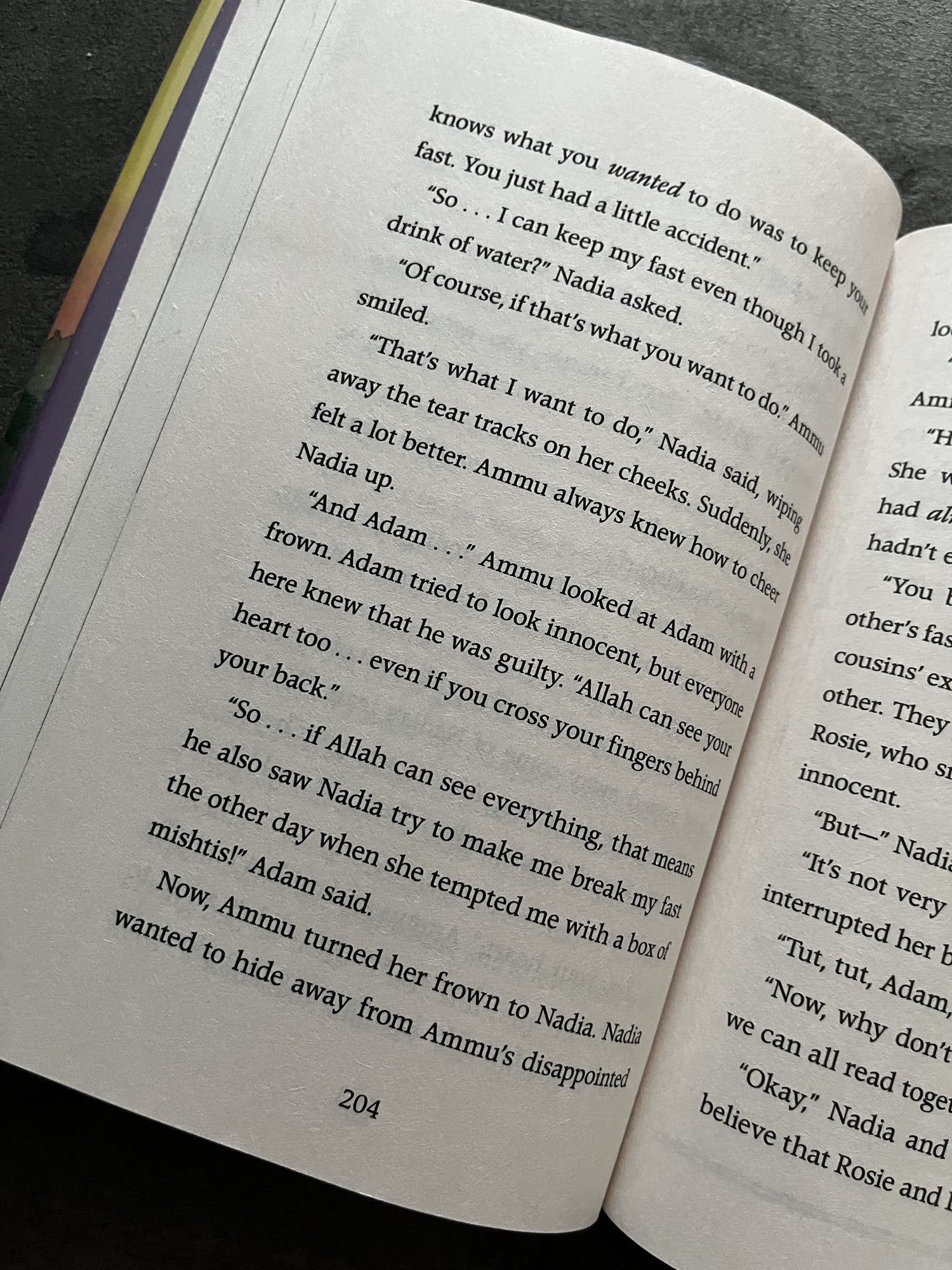
At 224 pages, this middle grade graphic novel has a whole lot of heart. Seventh grade is not easy for anyone, and Hassan is balancing school, grades, soccer, fasting, and taraweeh every night, while dealing with friends, video games, cousins, and falling asleep in class. I love that this OWN voice book really centers Islam. It doesn’t shy away from showing the stresses that the character and presumably the readers of immigrant kids in public schools might encounter, right alongside stresses with Muslim cousins and friends at the masjid trying to pressure you to do something you don’t want to do.  And as in any coming of age story, young Hassan does not want any special treatment or parents to get involved. SPOILER: Hassan does hide his faith and that he is fasting for Ramadan at school, he also does make mistakes, notably among them is when he breaks his fast in what he is told is a loophole of sorts, but by the end he grows and trusts and realizes he doesn’t have to do it all, all the time, and that he isn’t alone. The book is not heavy, but it has layers that serve as relatable mirrors and windows for kids who are going to thoroughly enjoy this richly illustrated book.

SYNOPSIS:

The story starts with seventh grader, Hassan dreaming about food, drooling on his arm, and then being woken up by his teacher, again.  It is Ramadan and Hassan is fasting, going to taraweeh at night, trying to keep up with school and soccer, and on top of it all, he doesn’t want anyone to know.  He also doesn’t have the latest version of the popular video game that all his friends have, and he has to explain to his childhood friend Rosie why it is no longer appropriate for them to hang out together.  Nights and weekends with family and at the masjid should be a reprieve, but somehow even there he is the odd one out, opting to pray instead of play, and being unsure if closing your eyes while sneaking food really prevents Allah swt from seeing you eating like his cousins claim.  Threaded through it all are soccer practices, games, and falling grades that are going to get him tossed off the team, making this a Ramadan to remember.

WHY I LOVE IT:

Wahoo, some Yemeni representation, I loved the flashback/dream longing for Yemen.  I like that Hassan isn’t expecting adults or others to speak for him, and his heart is really in the right place.  I did feel a bit of a disconnect though when his friends knew he fasted the previous year, why he wouldn’t just explain it was time again for him to do so. Increasingly even the most isolated western cities are aware of Ramadan, so I didn’t feel that hesitation for Hassan to own it, even when a friend explicitly asks.  SPOILER, On a similar thread, his soccer coach is Muslim and their isn’t a huge sigh of relief and immediate kinship when the information is revealed.  If Hassan really feels he is shouldering it alone, why wouldn’t this empower him to step into himself so to speak.  I also didn’t understand why the end of the season pizza party wouldn’t have just been at iftar time. The book really had a chance to model how others can support their Muslim friends, and moving a food based celebration a few hours is an easy accommodation, but the Muslim coach didn’t even do it, so why would non Muslims.  

When Hassan does sneak food during his fast, he gets away with it, but it doesn’t sit right with him and I think it is powerfully done, him coming clean also is not punished as it really is something between Hassan and Allah swt and I love how it is left to that.  Regardless of if you feel it is required of a 7th grade boy or not, the ownership of faith I feel is more important than the getting in trouble by your parents in this case.
FLAGS:

Lying, failing grades, sneaks food during fasting, boy girl friendship, hints at internalized Islamophobia.

TOOLS FOR LEADING THE DISCUSSION:

I wouldn’t do this as a book club, but would absolutely have it on shelves for kids to easily access, and I would absolutely discuss with them, what their takeaways were.