Tag Archives: Palestine

Colours of Al Quds by Jenny Molendyk Divleli illustrated by Merve Ozcan

Standard
Colours of Al Quds by Jenny Molendyk Divleli illustrated by Merve Ozcan

img_0810-1

I have not posted a review since the latest genocidal escalation in Gaza, my heart just cannot carry on as before, but I keep being asked about Palestinian books that I have featured in videos, but not reviewed, so here we are.  This rhyming book is not OWN voice, but I think these days we are all Palestinian, and the tone of this book is accurately love, and beauty, and strength.  It is based around colors with beautiful illustrations for each two page spread focusing on one color.  Meant for toddlers and preschoolers this book works well in small groups and story times alike.

The book starts with an introduction to the narrator, Iman, from the land of Falasteen.  The first page spread talks about olive trees and the color green, then the blue of Dome of the Rock, orange of Quds Ka’ak and brown dates.  Over 32 pates, it also presents the keffiyeh, Masjid al Aqsa, knafeh, kaftan, keys, and Masjid al Qibly. The picture glossary at the end focuses on the Palestinian points, not the colors, keeping the focus on Al Quds.

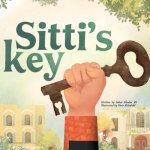
Sitti’s Key by Sahar Khader Ali illustrated by Noor Alshalabi

Standard
Sitti’s Key by Sahar Khader Ali illustrated by Noor Alshalabi

sitti key

I try and buy, read, and review every children’s book about Palestine that is published, it is the least I can do.  I also try not to compare them to each other as they present different aspects of oppression, perspectives of strength, examples of joy, and messages of hope, even among many similar themes of food, keys, traditions, and culture.  I really appreciate that this book though is incredibly blunt.  It isn’t lyrical, it isn’t poetic, and as Israel is bombing Jenin as I write this I’m glad it doesn’t mince words about the Nakba. I do think caregivers though, should probably read it first as it might be a little triggering for sensitive children.  The story is OWN voice and probably best suited for middle elementary aged children.  It is perhaps also worth noting that the book could be seen as making Jews synonymous with Zionists.  The characters are Muslim, Islamic phrases and Arabic terms are sprinkled throughout, and even despite the pain the family has endured, the book stays hopeful and proud.

Sitti is coming and Amal is excited, it has been two years since she last saw her.  She loves how excited her mom and grandma are to unpack gifts of olive oil, dates, and zataar from friends.  Amal isn’t sure what to do with the “old lady thoub” she has been gifted, but she smiles in appreciation none-the-less.  When Sitti pulls out an old key, Amal starts to ask her about it, but her mother shuffles her off to bed.

The next day at school, Amal has to work on a presentation about “culture,” but there are no Palestinian books in her school library, so she just watches the other kids.  At home they eat and listen to Sitti’s stories of long ago in Haifa, and Amal asks her why she left Palestine.  Despite her mother trying to redirect, Sitti says it is time she knew about the Nakba.

Sitti tells about living on the land for generations and how the Jews believed the land belonged to them.  In 1948 the British decided Palestine would be the homeland for the Jews.  Armed men came and arrested anyone who tried to stay in their homes. Sitti’s brother was handcuffed and never seen again.  The family grabbed what they could including the key to their home as they made their way to a refugee camp in Lebanon.  They stayed for three years, before making their way to America.

When Sitti concludes her story she hands the key to Amal and her hope that she will return to their home inshaAllah.  Feeling the pride and warmth of home, Amal has a determination to reclaim her heritage and share her “culture” with her classmates.

The illustrations are sweet, the mom and Sitti wear hijab even in the home, and the inshaAllahs and salams come naturally. The book does not stop to define zataar or marimya, which helps the flow. I also like how it shows that there aren’t books about Palestine in the school library, it is strong and important detail.  I don’t understand where Sitti is coming from though, it would seem Palestine as she is bringing gifts from friends, but in the story it says after Lebanon they made their way to America, so I’m not sure where Sitti lives, and how the logistics of the family work to be honest.  I also kind of wish there was a  recipe for zataar in the book and lyrics with translation for the song the family sings.

Book is available on Kindle or can be ordered from www.littlehibba.com

These Olive Trees: A Palestinian Family’s Story by Aya Ghanameh

Standard
These Olive Trees: A Palestinian Family’s Story by Aya Ghanameh

these olive

This stunningly illustrated OWN voice Palestinian book for early elementary kids is an important story and I love that it is coming out to the world, but I do have some issues with the literary aspects and target demographic.  The story bounces around from being factual about the brining and curing process of turning the bitter olives into numerous things, to Oraib’s present life in the refugee camp, to memories of the family’s life in Al Tira.  When war once again drives the family from their home in the Balata refugee camp, Oraib, plants seeds and vows to return one day to harvest the fruit.  The language at times is very mature and complicated for ages 5-8, I felt uncomfortable with the family moving being attributed to war and not occupation, and at one point it clearly articulates there are many olive trees located outside the camp and that they are leaving the seeds that would be later planted, so why is the climax her asking the earth permission to plant one more and for the sky to water and care for it until she can return? The backmatter allows the book to be used to spread awareness about Palestine and the process of harvesting olives, but the illustrations will appeal to younger readers, and the concepts contained seem more geared for slightly older ones.  There is nothing religious in the book, there is depiction of the Dome of the Rock in an illustration and I believe the author/illustrator identify as Muslim.

img_8540

The writing style of the book is fairly surface level with concepts not fleshed out to allow difficult concepts to reach younger readers.  When describing the taste of the fresh olives, Oraib wonders if long ago people were, “pleasantly surprised by its acidity.”  No insight into what that acidity tastes like, or bitterness, or what curing and brining means.  Often the paragraphs seem long winded and repetitive, adding very little to advance the story.

img_8541

There is little lyricism in the text, and the first time some tries to peek out, the metaphor is quickly abandoned, and it is notable that it doesn’t return.  The occasional enjoying of the bitter fresh olives is juxtaposed with the surprising joy occasionally found in the camp, it seems that with the uprooting of the family once again at the end, this thread would have been a natural inclusion to reinforce the patience for something better to occur.

img_8544

The dramatization of asking the earth and sky when planting a seed upon their departure, didn’t make much sense to me.  It is noted there are olive trees already there, the illustrations show the ground littered with seeds that were to be planted had they stayed, so why not have the little girl pocket some of the seeds to take with her wherever they go.  That is after all what the mother is doing at the beginning.  Why not have the little girl invest in the cause herself and share in that ownership that they will always endure and prosper. The personification of the earth, sky and rain also doesn’t seem to fit the flow of the story, so much is internal observation and reflection of the main character, that this seems like an attempt to bring it back to a child’s level that instead just reads disjointed.

img_8545

I might have missed something as I am not Palestinian, but the book to look at is incredibly beautiful, I just don’t think it will be read and remembered by young children.  One of my first thoughts when reading it was that it was an early draft, but it is to be published soon and this review is based on the most recent version sent to me. I also wondered in the back of my mind if the book was allowed to be used to check a box, and wasn’t given the editing and polishing that it deserved on purpose.  It depresses me to even think that, and I guess I’ll never know, but I would love to hear your thoughts, and I do hope you will request your local libraires to shelve the book as a show of support to authentic Palestinian voices.

img_8546

Eleven Words for Love: A Journey Through Arabic Expressions of Love by Randa Abdel-Fatteh illustrated by Maxine Beneba Clarke

Standard
Eleven Words for Love: A Journey Through Arabic Expressions of Love by Randa Abdel-Fatteh illustrated by Maxine Beneba Clarke

img_7491

It has been a long time since I took Arabic in college, so I read the book, then read it again, then wrote down all the Arabic words and realized that there are 11 words in addition to “al Hob” the word for love, and that al Hob is mentioned three times in the manner of a poetic refrain.  I also didn’t grasp the first time that the book is a journey of a refugee family and the types of love are them in different phases of their journey.  Once I got it, I’m not sure how I missed it, but I think the layers that the book allows for actually widens the appeal to a larger audience.  I know for many Muslims seeing a 40 page picture book about love will raise some eye brows and wonder about what relationships are shown.  There are a few phrases that imply romantic love most illustrated abstractly, one shows a bride and groom on their wedding day (al-Ishq), there are also an elderly hetero couple in front of the Dome of the Rock (Showq). The story follows one family and their suitcase is rainbow colored and when depicting loving one’s neighbors (al-Mahabba), there are rainbow stripes on the fence, if a rainbow means or doesn’t mean something to you I simply share what is there. There is friendship love (al-Wud) and familial relationship love, and love from pets (al- Walaa’) and love felt for those gone too soon (al-Haneen).  The Arabic script for each word of love and the lyrical English string together the concept of different forms of love with the illustrations telling the story.  There is nothing particularly Islamic in the book, but there are visible Muslims in the illustrations and the masjid in Palestine.

I’m obviously not an Arab speaker, so if I misunderstood a term, forgive me, I don’t want to list all the terms, because that would give away too much of the book, but as a non Arab the book is heartfelt and moving and I’m sure for Arab speakers the feelings would be amplified.

The book was released in Australia in 2022 you can purchase it from Book Depository and will be released in America in 2023, you can preorder it here.

Book One: Thunderbird by Sonia Nimr translated by M. Lynx Qualey

Standard
Book One: Thunderbird by Sonia Nimr translated by M. Lynx Qualey

img_7178

My public library had this book and so I picked it up seeing that it was Palestinian authored fantasy, and I am always on the lookout to support OWN voice Palestinian stories.  The book cover is gorgeous, the inside text unfortunately is tiny making this middle school aged book only 110 pages.  It is translated from Arabic and published by a university, so my expectations were pretty meager which assisted in me being fully swept away by the story at hand.  Sure the book has a few glitches in point of view,  often it feels a bit abrupt and djinn stories are a dime a dozen, but what elevated this book and made it stand out was the Palestinian history interwoven into the plot: snippets about the Mamluk soldiers and Ottomans, the Ayyubid rulers and walls around Jerusalem.  There isn’t enough history touched upon in my opinion, but I look forward to see, now that the world building is established, if the rest of the series will highlight the historical thread.  I have no idea if the characters or author are Muslim, there are references to praying and hearing the athan, but they could just be cultural.  There is magic, fantasy, djinn, prophecies, and reading of tea leaves, as well as fighting, assault, and talk of oppression under Israeli rule.  I’d assume it is advanced Middle Grade or lower YA, but to me it seems 11 and up would enjoy the quick fast paced read.

img_7175

SYNOPSIS:

Noor’s parents are dead, and she lives with a grandmother who loves her, and an uncle and his family who don’t.  When her grandma dies, Noor is alone and with things combusting in to flames around her and no one left to defend her claims that it wasn’t her, Noor is trying to piece together a ring left to her, her mother’s research, and her flame creation abilities.  Her search leads her to a colleague of her mother’s and an old archaeological site.  While staying with an aunt in Jericho over the holidays, a mysterious cat guides her to the same archeological site where the cat reveals that she is really a djinn.  The barrier between the seen and unseen world is failing, and Noor is prophesized to be the only one that can ensure it doesn’t happen.  With a trait of the mythical phoenix Noor must find ways to travel in time and retrieve a feather before the bird is reborn.  Along the way she will have the help of the djinn and of her doppelgänger from that time period.

img_7176

WHY I LIKE IT:

The story is clever, fast paced, and the character endearing.  I wish the details were fleshed out and of course I wish there was more history when she travels back in time.  The climaxes are quick builds and even quicker resolutions, but despite all the flaws I really enjoyed the story and look forward to the rest of the series.  The book ends on a cliff hanger that feels rather abrupt, but being it is clearly established as book one in a trilogy, I don’t think readers will be too upset at the sudden end.

img_7177

FLAGS:

Magic, time travel, prophesies, fortune telling, assault, oppression, fighting, loss, arson, arguing, djinn, fighting

TOOLS FOR LEADING THE DISCUSSION:

The book probably is too short for a book club read, but I think a teacher could definitely use it as a reference in story writing, historical fiction fantasy, culture inclusion lessons.  If you wanted to use the book, you’d be able to find plenty to draw on for teachable moments in literature, history, and writing style.  There would also be a lot to discuss in terms of occupation, myth, legend, and culture.

If your library doesn’t have it you can find it on Amazon

We’re in this Together (Young Reader’s Edition of We Are Not Here to be Bystanders) by Linda Sarsour

Standard
We’re in this Together (Young Reader’s Edition of We Are Not Here to be Bystanders) by Linda Sarsour

linda

I don’t have strong feelings one way or another about Linda Sarsour, so I read the book primarily to see what the messaging would be from a well-known Muslim activist to a mainstream audience, and I must say I was pleasantly surprised.  This YA adaptation of her adult book weaves together personal experiences with larger pushes for justice reform. It is not all memoir, there are historical blurbs, educational backstories, and centering of Palestinian occupation and Islamic tenants.  I feared that the book would be entirely self-promoting and it wasn’t, it shows her as a person, and her struggles, but the spotlight is bigger than her, as she talks about the efforts and accomplishments of others in promoting police reform, social change, elevating women’s voices, and working with Black Lives Matter.  The 229 page book is sourced and reads easily.  I think ages 13 and up will benefit from seeing the intersectionality of many current social struggles sprinkled in with historical landmarks that they have learned about in school, told through the lens of a personal, relatable Muslim, Palestinian, American voice.

SYNOPSIS:

The book starts with the Women’s March as the culmination of her status and then takes the reader back to show the pivotal moments that got her to that stage: the immigration of her parents to America, her childhood, her family’s bodega, trips to Palestine and finding her voice.  The book shows her in various stages of her life while showing what is currently happening regarding police brutality, national politics, and relatable historical movements.  It shares close relationships she has had professionally, as well as mentions her getting married, becoming a mother, and the loss of a close family member and mentor.

WHY I LIKE IT:

I was happy to see how much Islam and culture shaped her activism and identity, as both are generously sprinkled in, and are unapologetically presented.  The book is a memoir and many characters are introduced and shown to enhance her understanding or presenting her with opportunities,  yet I don’t feel I really got to “know” her or any of them.  The book is centered more on events and how she lent her voice in this arena or that.  I still don’t know that I have much of an opinion on her personally or on her work, or even felt motivated to take action because of her enthusiasm, but the book was an easy read, it was informative and reflective.

FLAGS:

Racism, oppression, murder, police brutality, car accidents, hate crimes, death, assault, systemic racism, slurs, misogyny, occupation, hate.

TOOLS FOR LEADING THE DISCUSSION:

I probably wouldn’t read this book in a book club setting, but I think it would be a good addition to a school or library shelf.  I think you could require it in a history or civics or current events class and readers would find it compelling and relatable and be able to add their own life experiences to any discussions that would follow. It shows that the struggle in history books for justice and equality is not over, it is still ongoing and still very very real with horrific consequences.

Salim’s Soccer Ball: A Story of Palestinian Resilience by Tala El-fahmawi illustrated by Naveen Abu Saleem

Standard
Salim’s Soccer Ball: A Story of Palestinian Resilience by Tala El-fahmawi illustrated by Naveen Abu Saleem

salim

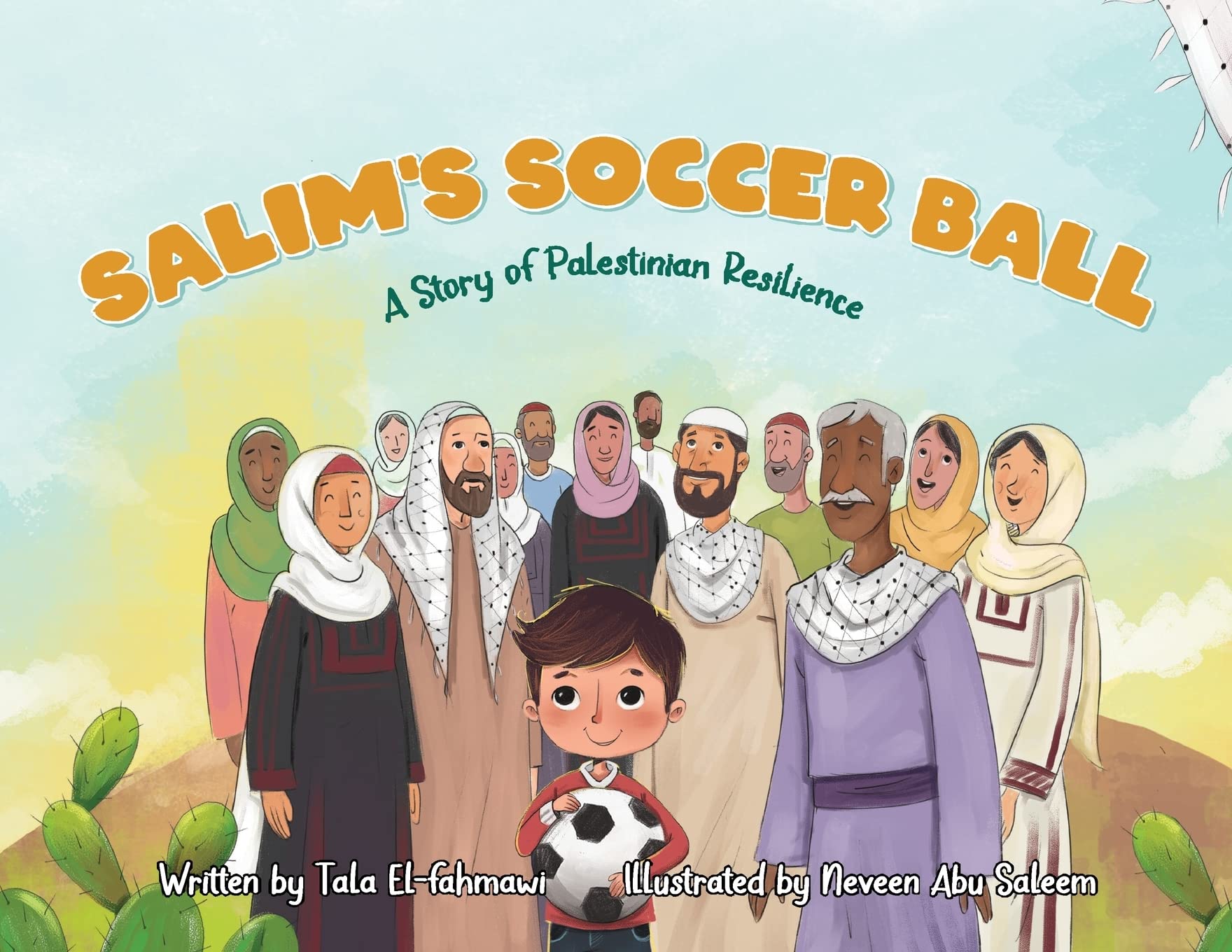
This 58 page rhyming picture book weaves together a tale of a little boy and his lost soccer ball, with larger issues of community, oppression, and perspective for the youngest of readers to older children too.  I am noted to be skeptical of rhyming books, but the large font, the sweeping pictures, and the dropping of occupation, struggle, and resilience really make this book a treat. Add in discussion questions and an author’s note and you have a solid book that deserves space on home, library, and classroom shelves.  My only wish, was that the book was hardback.  The horizontal layout with a soft cover make the book difficult to read during story times as the pages flop back.  The book is long, but the text on most spreads is minimal and while I could not identify the author’s religious identity, their are numerous hijab wearing #muslimsintheillustrations as Salim journey’s around his neighborhood and into his grand father’s memories.

Salim wakes up, brushes his teeth, and is out the door to play soccer with his best friend Qusai, but the ball goes flying and Salim can’t find it. He starts walking down the hill and it seems to have disappeared.

img_5055

He asks the fisherman, Abu Zaid, if he has seen it, and he hasn’t, but he offers to help.  They then go and ask the seamstress, she hasn’t either, but she puts down her tatreez, offers reassurance, and offers to help.  As they head out they bump in to Dr. Bassam.  “‘I will help you look,’ the kindly man said. “I can fix broken bones with very few supplies.  A lack of resources has made me clever and wise. Resilience and courage are plentiful here. We will find your ball. Salim, no need to fear.'”

img_5054

The searching continues, with a small break for khanfeh, and then Qusai is found, and so is the ball.  Like so many joyful items, the barbed wire of the apartheid wall has destroyed the soccer ball. Upset, Abu Omar, calls out to Salim, and his grandpa embraces and consoles the young boy recalling a donkey with wonky ears and life on the farm.  With resilience and joy Salim heads home to a community surprise and a hopeful future inshaAllah.

img_5053

The book concludes with five discussion questions that connect Salim’s experience to universal experiences of people everywhere.  It is followed by factual and personal author’s note about Palestine and the book.  

img_5056

There is nothing religious aside from the hijabs worn, Dome of the Rock, Masjid al Aqsa, and Church of The Holy Sepulcher in the backgrounds of a few images.  I purchased my copy from Amazon HERE and can also be purchased through Shop Palestine HERE.

img_5057


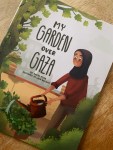
My Garden Over Gaza by Sarah Musa illustrated by Saffia Bazlamit

Standard
My Garden Over Gaza by Sarah Musa illustrated by Saffia Bazlamit

This book is hard to read, it hurts the heart, it doesn’t let you claim ignorance regarding the plight of Palestinians, and it shows cruelty,  a specific inexcusable cruelty, in a children’s book that will haunt you and infuriate you for weeks and months, if not indefinitely.  I’ve read a number of Palestine set books, but this one, in its simplicity, leaves me raw.  A child with a rooftop garden that helps feed her family is deliberately targeted by Israeli drones and destroyed.  This isn’t science fiction or dystopian, this is based on real acts.  The book itself threads in themes of hope, of not giving up, of remembering strength of a lost parent, of vowing to move forwards, but the catalyst for it all is not happenstance, and while the details of the occupation and oppression are not stressed and articulated, they are referenced and skillfully present to be discussed with children on their level with the included backmatter at the end.  This book is powerful and should be required reading. It is a difficult read and it has flags, but it is also a glimpse of the reality of our world, and the manner in which this book is told allows for the discussion to taken place with middle grade readers and up. The book is not text heavy, but the nature of the content makes me suggest it for mature children.
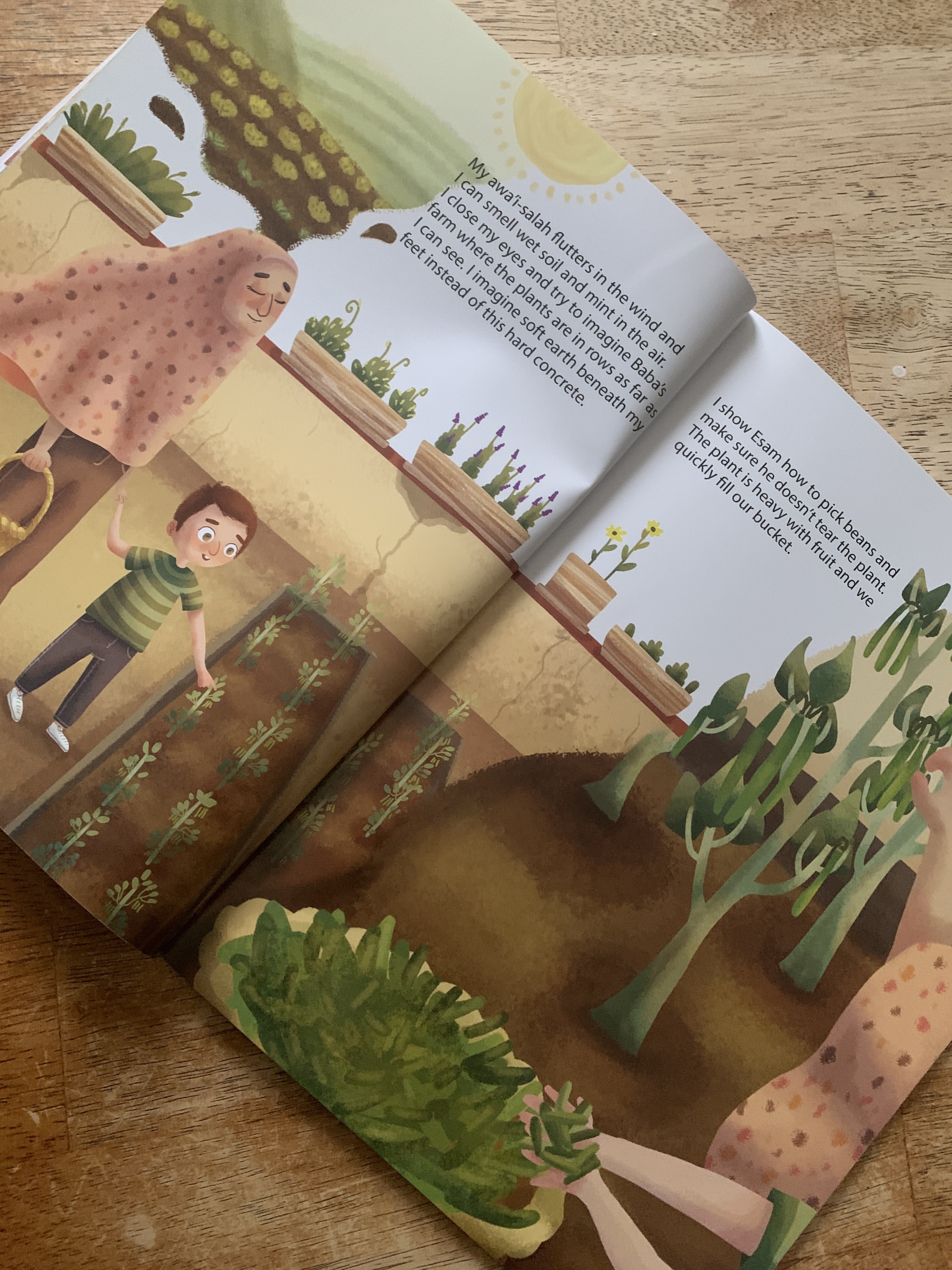
Noura, a young girl, is in her home in Gaza when drones are seen just out the window and she quickly pulls her little brother Esam away to safety.  To distract him she tells him about their father and his farm that he used to have in Umm An-Naser.  She explains how the wall cut them off from their land and when the drone noises fade, she takes him up to her rooftop garden to pick green beans.  Their mama works downstairs as a seamstress, and while they wish they had meat, the garden helps them have fresh vegetables.

The next day after Noura gets her little brother ready for the day they head to the roof, but drones arrive and start spraying chemicals on the growing plants, killing them, and sending Noura gasping to breathe.  She tries to cover the plants and swing a shovel at the drone, but it does little to save any of the food and Noura is devastated.

Noura’s mama reassures her daughter that the food can be regrown, but she is irreplaceable, as Noura goes to scrub the chemicals from her skin.  The frustration is real, but determination prevails as the family cleans the garden and begins again, just as their father did.

The last two page spread of the book is a basic map, general touchstones of the situation in Palestine, and the very real drones that fly in to Gaza to surveil, attack, and spray herbicides on crops. You can purchase a copy on the publisher’s website or HERE at Crescent Moon Store.

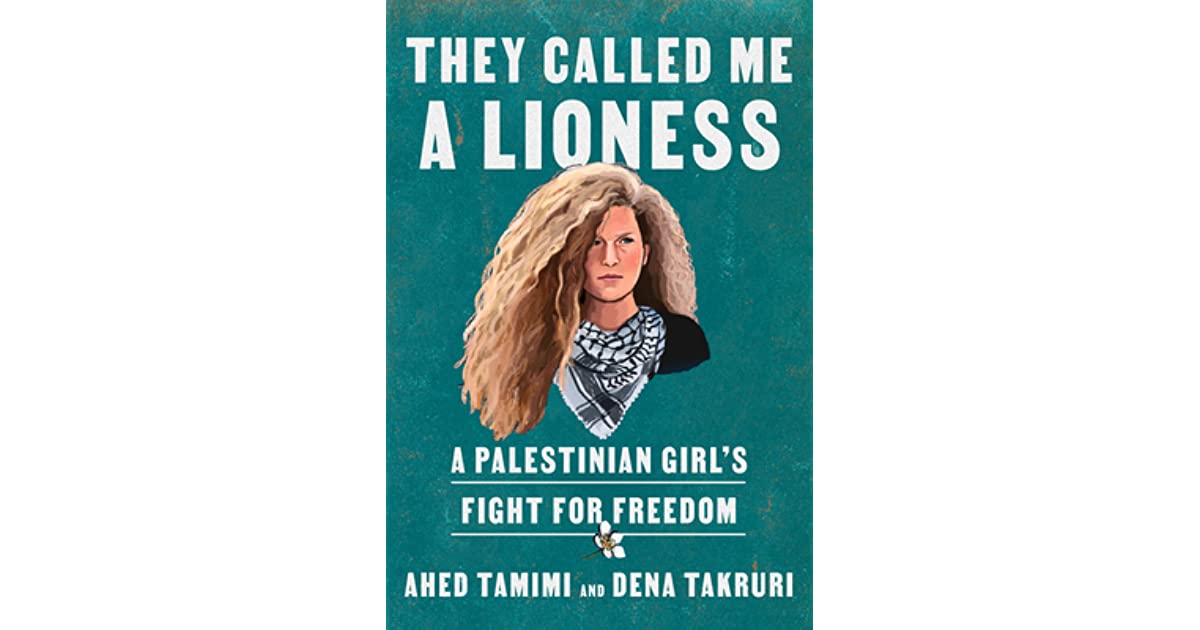
They Called Me a Lioness: A Palestinian Girl’s Fight for Freedom by Ahed Tamimi and Dena Takruri

Standard
They Called Me a Lioness: A Palestinian Girl’s Fight for Freedom by Ahed Tamimi and Dena Takruri

lioness

The writing style makes this book easy reading, but the content contained is absolutely horrific, heart breaking, and hard to truly comprehend.  If this was fiction it would be overkill, barbaric, cruel; the fact that it is factual, current, and ongoing is inexcusable.  There is no humanely possible way that we can still be ignorant or apathetic to the plight of the Palestinians.  It is an occupation.  It is apartheid.  It is oppression.  I often don’t review adult non fiction, but because this is ongoing and we have the power to do something, BDS, I’m reviewing this book.  The book describes torture, death, abuse, cruelty, you name it, but I think mature young adult readers can and should read it, along with every adult. A history of major events in Palestine interwoven with Ahed Tamimi’s own experiences in the last few years, she was 16 when imprisoned, so the recent past, as lived by her and understood by her, is powerful, moving, and inspiring.

SYNOPSIS:

The book shares a lot of facts, but because the facts are contextualized you feel yourself absorbed by what it means to have your land taken, your home bulldozed.  It isn’t just statistics of growing settlements, it is being cutoff from the Mediterranean Sea that you can see from the hills in your village, but cannot access because of checkpoints and armed guards, and walls.  It is understanding why throwing a rock, or slapping and kicking are a form of defiance, not terrorism.  It is truly seeing the situation from someone living it every day.  There is nothing for me to critique or opine about in her story, nor in the book and presentation. It is hard to read, it is harder yet to know that it still persists.

WHY I LIKE IT:

I love that I sobbed and clenched my fist and Googled again what companies and organizations to Boycott, Divest and Sanction (BDS).  That is what the book is asking those of us who support the Palestinian cause to do.  She says they don’t want our pity, they want our action.  They want us to look at South Africa and realize the power of economic efforts by the global community on an issue. They want us to be educated about what they endure and educate others.  They want us to help stop the erasure of Palestine and Palestinians.  I’m so grateful that the book pointed out the direction we should take, a bleeding heart is not enough.

I love that Ahed owns her own learning and growth as she got to know Israeli Jews sympathetic to the right of Palestinians, that protested with her and her village, that fought the legal battles using their privilege to help the oppressed. I love that the book is personal and that she doesn’t apologies, that she addresses the criticisms against her, that she calls on her own people to unify, and that she is so so fierce. 

I can’t imagine what her life is like, and it is truly humbling to imagine yourself in her shoes, in her mother’s shoes, her father’s.  It isn’t a life anyone would chose, it isn’t a spotlight you would want.  No parent would willingly push their child to this, so that she at such a young age had to endure and become what she is today, is humbling.   

Islam is not a big part of the book, but Ramadan, and jummah prayers, janaza and praying salat are occasionally included.  

FLAGS:

Death, fear, torture, killing, murder, oppression, loss, hate, racism, everything you can imagine and then some.  There is also mention of two men having sex and a man stripping, while on prison to court transport.

TOOLS FOR LEADING THE DISCUSSION:

I would love to attend a book club or panel discussion by Palestinians in the community using the book as a starting point for telling their own stories.  I think a high school book club could handle the book, but nothing younger than that. Please purchase a book, check it out from your library, request your library to shelve it, and spread the word about this memoir that is both personal and informative.


Ida in the Middle by Nora Lester Murad

Standard
Ida in the Middle by Nora Lester Murad

ida-in-the-middle-9781623718060_lg

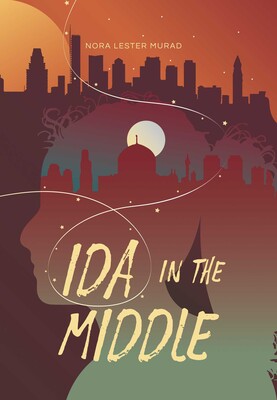
Ideal for middle school readers (upper mg/lower ya), this magical realism book takes readers from middle school in American to a Palestinian village outside of Jerusalem through the consumption of some magical olives.  Written by a Jewish author married to a Palestinian Muslim who raised their three daughters in Palestine, the book features a lot of Islam, but is Palestinian centered in its insight, critique, culture, and dreams.  Over 224 pages, Ida starts to find where she fits in both in understanding her self within her family, her place in America, her passion in life, and what it means to be Palestinian.  The story is important, and is told in a way that will encourage readers to learn more about the occupation.  Nuances are shown in characters and groups, but the line that the occupation is oppressive is never compromised.  I appreciate that the author writes from her own experiences and openly acknowledges that she is not trying to take away from Palestinian born and raised OWN voice stories, but she is an advocate, she has raised her children and lived in the West Bank, and her characters reflect a sense of intimate knowledge, love, and appreciation.  Even with Ida having to decide to stay in America or Palestine, the two countries are not pitted against each other or seen as black or white, as to which is better or worse, the middle is where much of the story takes place, and appreciating your culture no matter how much others are trying to erase your existence, is always stressed.

SYNOPSIS:

Ida is the middle child of her Palestinian immigrant family and isn’t artistic like her younger sister, a ballet dancer like her older sister, or a soccer player like her father.  She wishes she was invisible.  Especially when her classmates turn on her every time there are conflicts in the middle east.  When it seems that everyone wants to diminish her heritage, she finds herself at a new school, unsure of where she fits in.  With anti Palestinian attitudes and Islamophobic people, Ida just wants to go unnoticed, unfortunately middle school requires a passion project to be presented and Ida has no idea what her passions are, and how she will face the crowds.

One day when looking for a snack she finds a jar of olives stuffed in a cupboard- olives brought by a family friend from her now deceased aunt in Busala, one bite and she is magically transported to the familial village.  It is an alternate reality of what life would be if her parents never came to America.  Not only is she in a country she has never seen before, meeting family members she has never met before, but even her own parents and sisters are somehow different.  She enjoys the warmth, the communal activities, the extended family.  Her mom in hijab, the athan being heard, the men all going for jummah, but then they sit down for a meal and the same olives are served and Ida accidently takes a bite and is whisked back home.

Once home, she longs for so much of Palestinian life, but relishes in the convenience and ease of America as well.  Her passion project still looms and she finds herself hoping to escape it by going back to Palestine.  When she finds herself back near Jerusalem she ventures out with her Aunt, who isn’t dead in this reality, and learns more about the occupation and oppression, and how the families interact with the various Israelis: some sympathetic to Palestinians, some actively working to help Palestinians, and some settlers- forcefully killing and bulldozing Palestinian homes.

When Israeli military troops enter their village, the families meet to discuss the best course of action, the families do not agree, there is no clear way to prepare, there is no guarantee of survival.  Ida starts to find her voice, and when the soldiers enter, Ida finds herself rushing out to help a small boy. Guns, demolition, rocks, tear gas, fear, so much fear, what can one person do? What can one village do?  What will Ida do?

WHY I LIKE IT:

The book is relatable and moving, not just for those with a tie or interest in Palestine.  It is a coming of age story that shows a girl grappling with forces so much bigger than herself, while at the same time dealing with homework and friends and stereotypes.  Ida has a lot to figure out and the book doesn’t sugar coat a happy ending, it simply provides a moving story based on reality, through a character whose quirks and personality you find yourself rooting for.

I love the presence of Islam and the way it is apart of Ida and her surroundings, even though she makes it clear early on that her family is not religious.  The Quran is mentioned, the athan, various salat, hijab, Hajj, Ayatul Kursi, Ramadan, Eid, wasting food as being haram.  In Boston her friend knows she doesn’t eat pork, she went to Sunday school to learn Arabic at the mosque when she was younger.  It doesn’t gush with Islam, but it is present, for example Ida’s sister and her joke about a good Palestinian girl shouldn’t have a boyfriend, it isn’t tied to their religion. The story is a Palestinian one, and as someone who is not Palestinian, the images, the foods, the smells, the love all seemed to embrace everything I’ve ever heard Palestinian friends talk about, and it feels like a warm hug to read the effects being in Palestine has on Ida.

I love that the author is upfront about her perspective, and I love that she is putting this story out there.  The writing is sufficient: I was invested in the story, and it was an easy read. I don’t know that I’ll remember it months from now for it’s imagery or power, but I’m certain I’ll remember the commentary about life under occupation and the struggle to not be erased by a world that doesn’t seem to care about the settlers still taking Palestinian homes and their way of life away by force.

FLAGS:

Fear, crushes, death, injuries, loss, magic, bullying, racism, Islamophobia, guns, physical assault, threat of force, destruction.

TOOLS FOR LEADING THE DISCUSSION:

Our school is majority Palestinian.  Years ago when we read Where the Streets Had a Name, I learned so much about the students, their families, their own experience living under oppression, that I can’t wait to present this book with the middle schoolers and take notes on their thoughts.  I would not lead the discussion, I would let them, their voices will not be erased by me.

Preorder available here: Amazon