Tag Archives: OWN Voice

The Slightest Green by Sahar Mustafah

Standard
The Slightest Green by Sahar Mustafah

This adult multi generational novel weaves a narrative that will stay with the readers for the warmth and depth it explores of a fictional family that over the course of 248 pages becomes very real, and in many ways familiar through its personal focus. The book is deliberately slow as it glides through different members of the family, their backstories and different points in time. The prose highlights the plight of Palestinians but not in a didactic or call to action sort of way. The characters and their stories, and their trauma and dreams are very tied to Palestine and the occupation, but the focus on the individual and the ripple effects is what will linger. I do not know when the book was written, (it is published in November 2025) as I read a digital arc which had very minimal backmatter, but this book is set before the recent genocide and is all the more important for today’s readers in pushing back against attempted erasure of Palestinian voice, culture, and history.

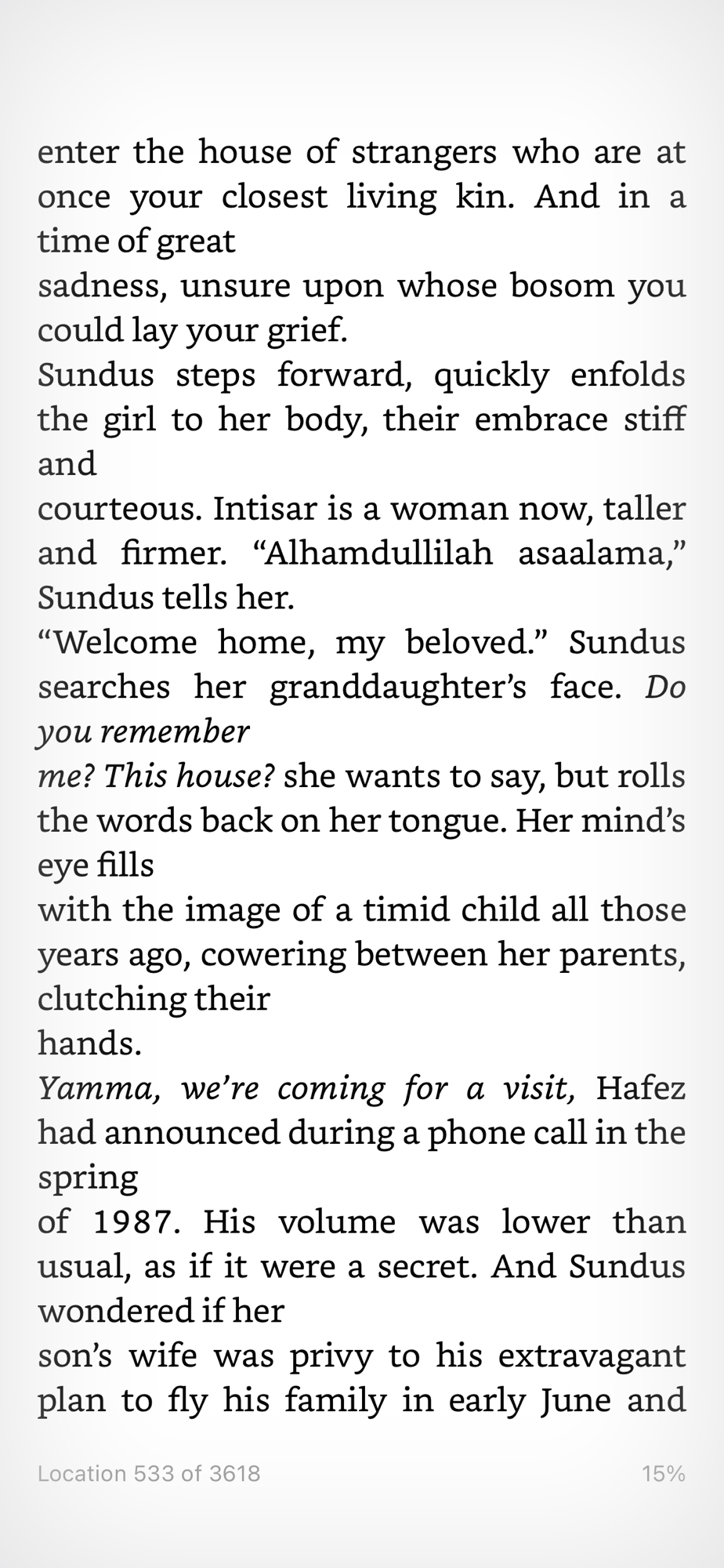
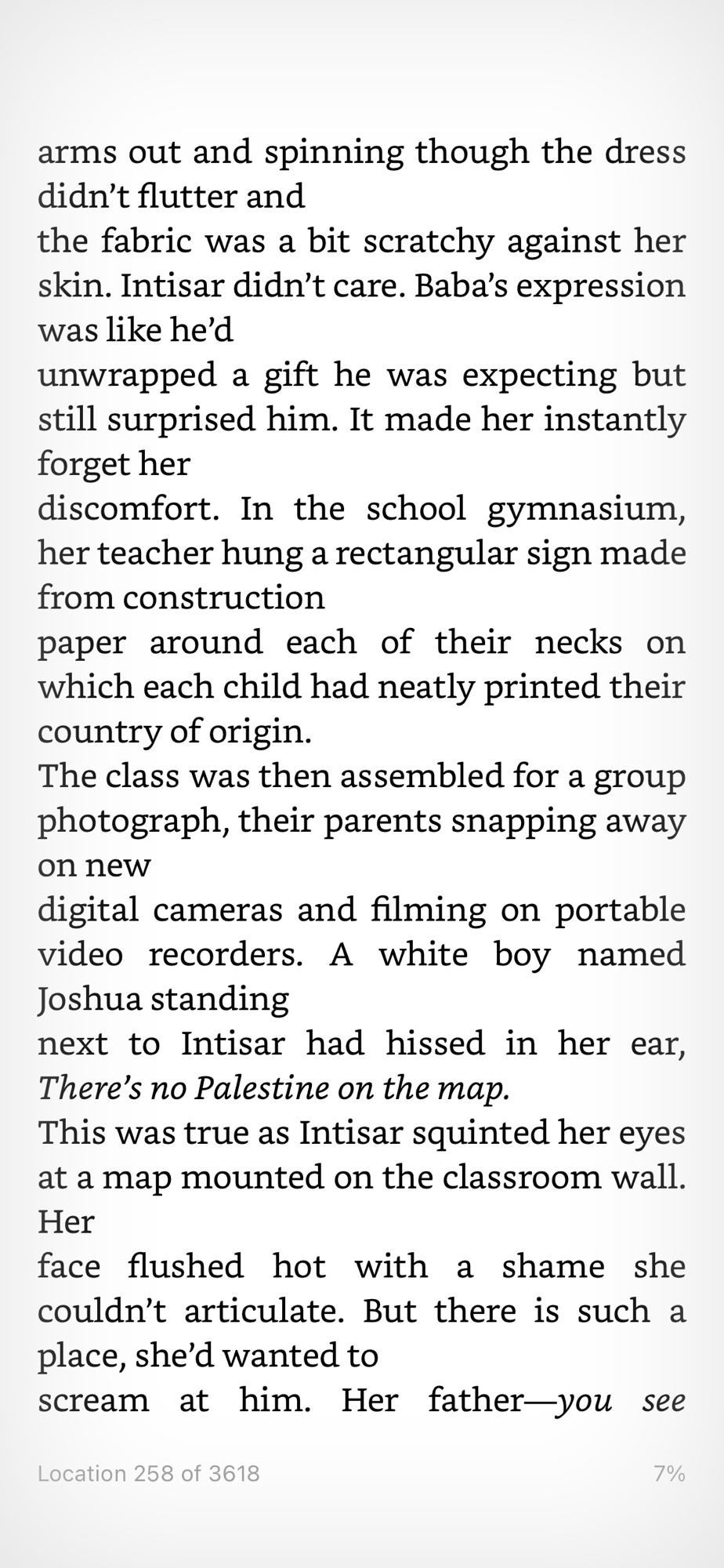
Intisar is a nurse in Chicago, the only daughter of divorced parents. She lives with her mother and has not seen her father in over 20 years. Not since he left the family to return to his home in Palestine, join the resistance and after a fateful mission is forced to serve a life sentence in Gahana Prison. When he is released to live his final days before he succumbs to cancer, Intisar heads overseas to see him one last time. Her grandmother Sundus additionally needs Intisar, the only heir, to fight for her to keep her land and home, a task that Intisar is not willing to pursue. As family history is shared, daily atrocities witnessed, Intisar starts to see herself differently, and considers if she could feel at home in her father’s homeland.

Again I read an arc, but there are a few sentences that really have me hoping line edits will still occur before the final version. The book is adult, it has a Muslim drinking and serving alcohol, there is assault, sexual and physical mentioned, and yet I didn’t feel like it was sensationalized, actually felt that the author was deliberately holding back to keep the story about the family and not the larger issues. Their is quite a bit of Islam, not from every character, but it is woven in and not an identity issue. Actually one line used frequently is my only real gripe with the book. “Pray to the Prophet,” is regularly said by a few characters, so I though perhaps it is something unique to them, up until about the midpoint, where many characters start to say it and I don’t like it. It makes it clear other places that Allah swt is One and who we pray to, it has the shahada in English and verses from the Quran, so I’m guessing it is a colloquialism perhaps, or maybe a poor translation, I honestly don’t know, but it bothered me, so I am sharing.

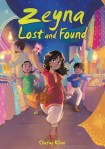
Zeyna Lost and Found by Shafaq Khan

Standard
Zeyna Lost and Found by Shafaq Khan

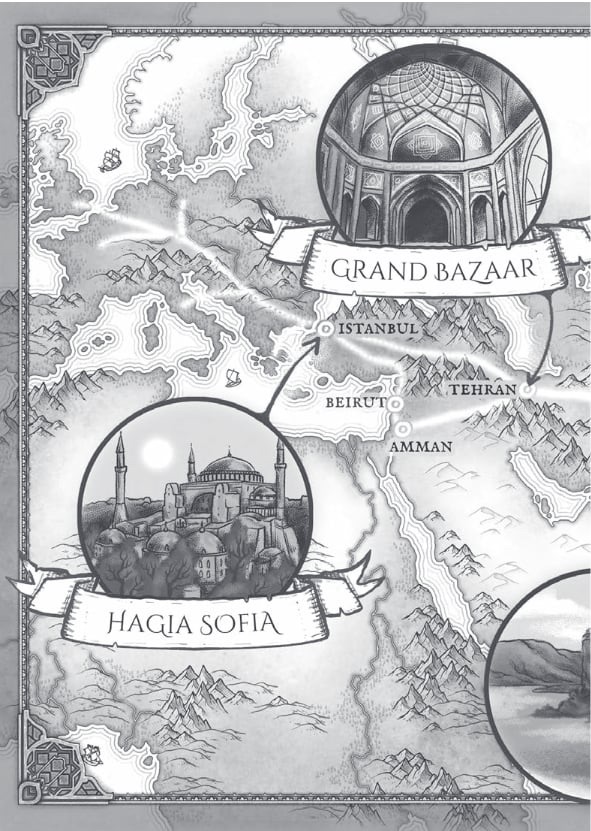
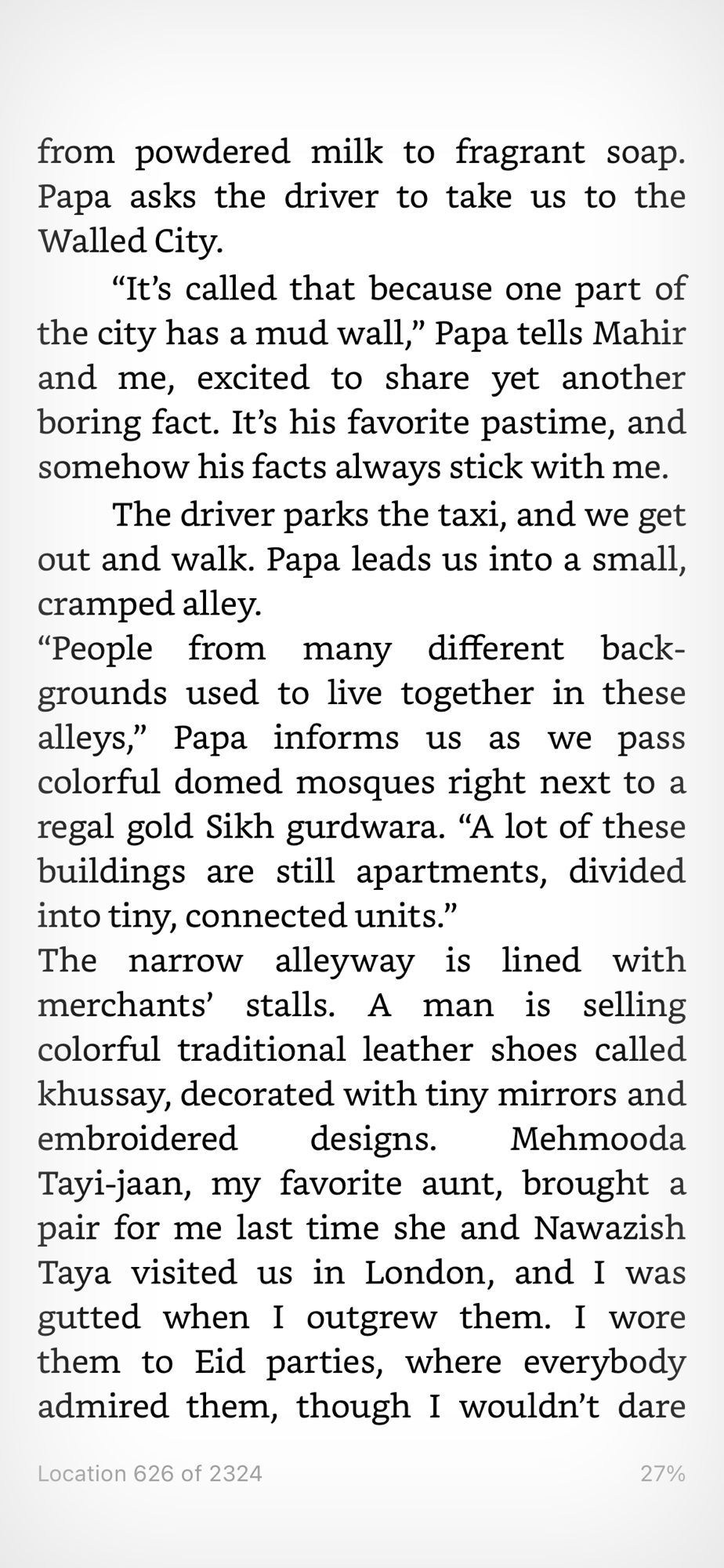
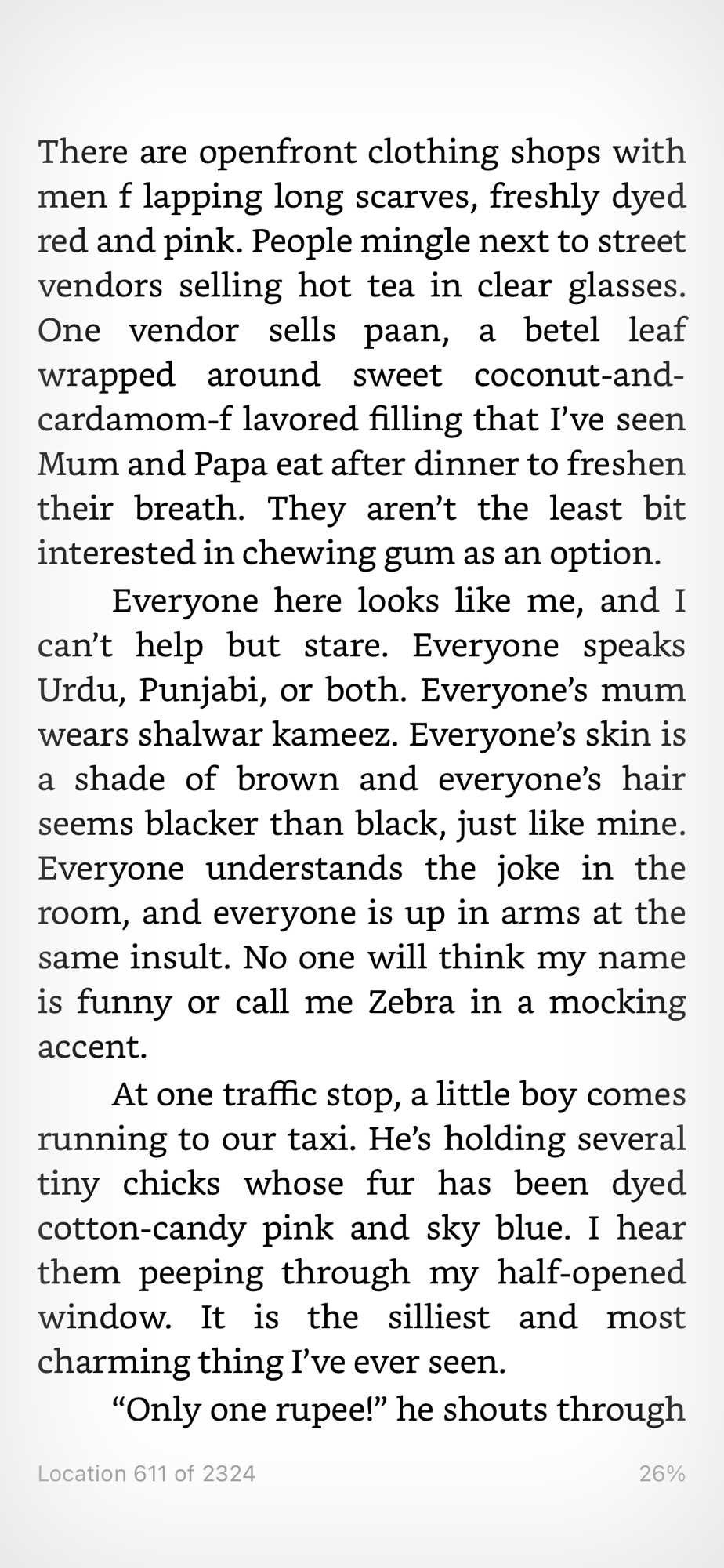
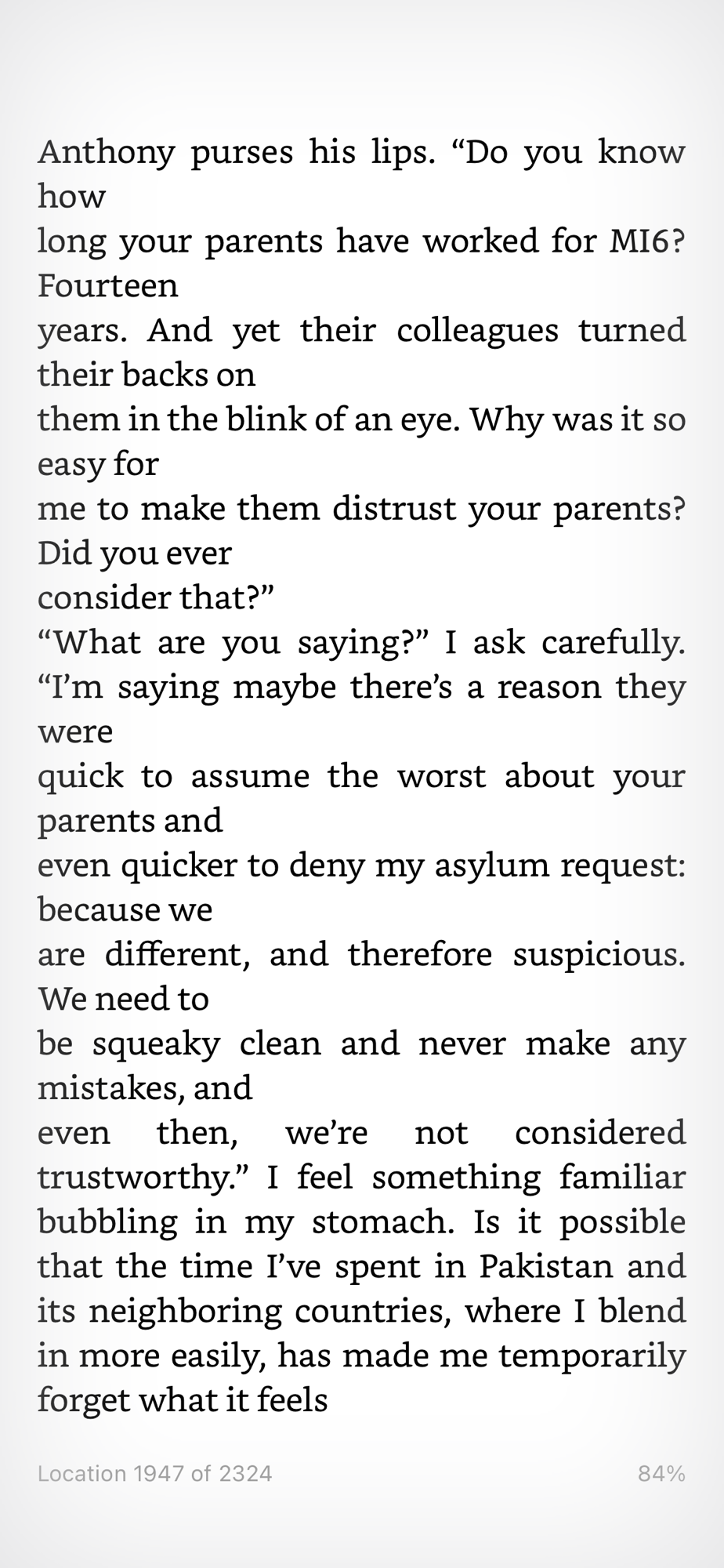
I think I needed this 336 page middle grade book that gets parents out of the way and lets a trio of kids  hop from country to country to solve a mystery, track down the bad guys and save the day. Set in the 1970s in the UK and on the Hippie Trail between Lahore, Pakistan and Istanbul, Turkey, the book is a fast paced read with humor, heart, and adventure.  I absolutely love Zeyna’s snark and voice, and her relationship with her brother and cousin, ground the story and make you cheer for them even when their antics are incredibly dangerous and improbable.  As an Islamic school librarian, my one critique with the book is that I wish there was more/any Islam. I, at one point considered that they are not Muslim, and I’m not sure what the author identifies as, but she does thank “Al-Barr, for all that is good” in the acknowledgements, and Zeyna does mention an Eid party in passing, so while I’m still on the fence, I’m going to assume they are all Muslim.  Major beats in the plot are meeting at both the Badshahi and Blue Mosque, but none of the characters ever pray, or mention the names of prayers when the athan is heard.  When they see women in burkas and chadors, Zeyna stares, not connecting the clothing to hijab, that one would hope she would know. There is only one salaam in the whole book, and the story is predominately set in Pakistan, Afghanistan, Iran, and Turkey. Granted I am sensitive, but it almost feels like a deliberate exclusion to the point of going out of the way to not let those details be present.  There are plenty of Urdu and Punjabi words and titles and cultural commentary, so it doesn’t seem that the author was concerned about watering down authenticity, a theme of the book infact is finding your place and accepting yourself.  All that aside I really enjoyed pickpocketing, imaginative, determined, sarcastic, loyal detective Zeyna, and I think kids will join me in hoping this is the first in a series.

SYNOPSIS:
Zeyna is 12, and likes to imagine she is a detective on a case, sneaking and snooping, and roping her inventing younger brother Mahir to be her Watson. The city is on edge with the theft of the Shirin Jewel, a large Persian ruby, a case involving the 15, that Zeyna would love to solve.  When she sees a man with knife in London, who later seems to be following her and her mum, and then drops a paper with their street name on it, Zeyna is convinced this her chance to prove her self. A sudden trip to Pakistan though dampens her mood as the clues to the case will be left in the UK. She doesn’t stay down long though, as her parents start acting peculiar in Lahore, meeting with strange people, lying about why they suddenly made the trip at all, and when the police show up at the familial home to arrest her parents, they all discover that her parents have vanished.  Zeyna realizes her parents and the events in London are tied to the missing ruby, and with the help of Mahir and their cousin Amina they set off to solve the case and find her parents.

WHY I LIKE IT:
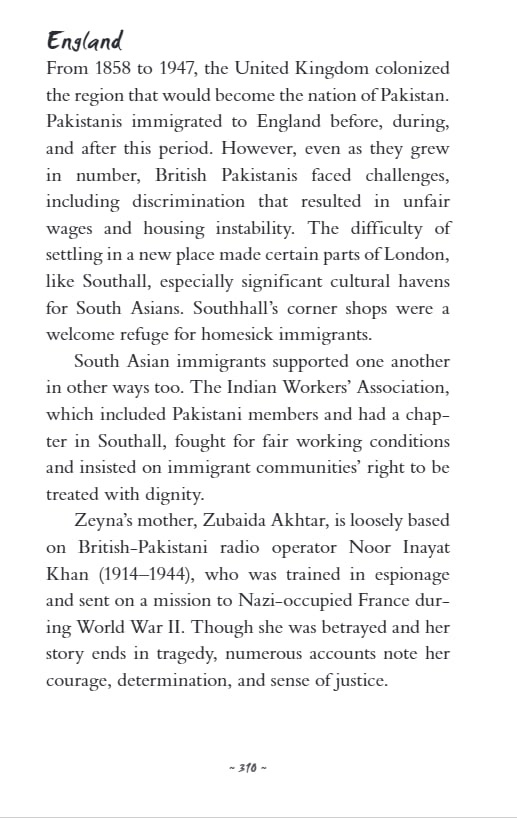
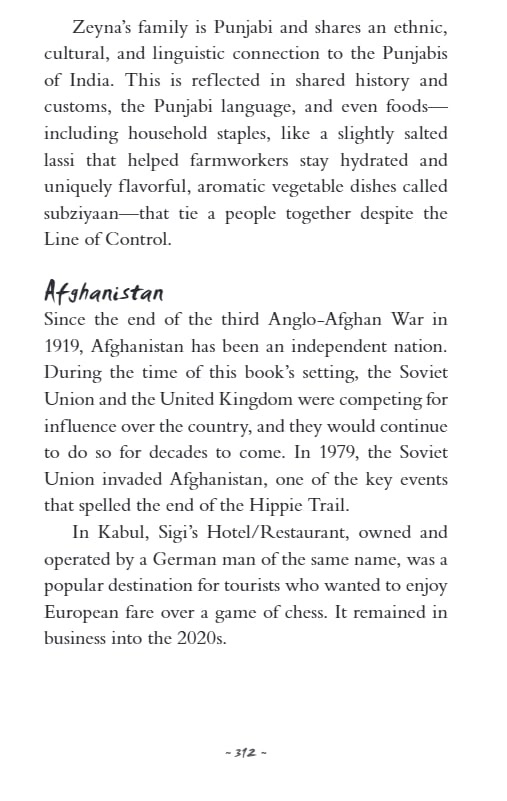
It’s hard to review a book like this without giving the twists and climax and resolution away, but more than once I gasped in delight when something happened on the page, and it crystalized where the book was going in my head.  Sure there were some particularly outlandish connections and a few plot holes, I even Googled when fax machines were invented, but I had a blast reading the book.  I loved the historical backmatter discussing the events in post partition Pakistan, a year before Bangladesh was independent, Soviet Union and UK competing over influence in Afghanistan, the discontent voices in Iran toward the shah, and the role of the Pudding House for messages in Turkey.  There are also discussion questions, a glossary, acknowledgements, and about the author at the end.

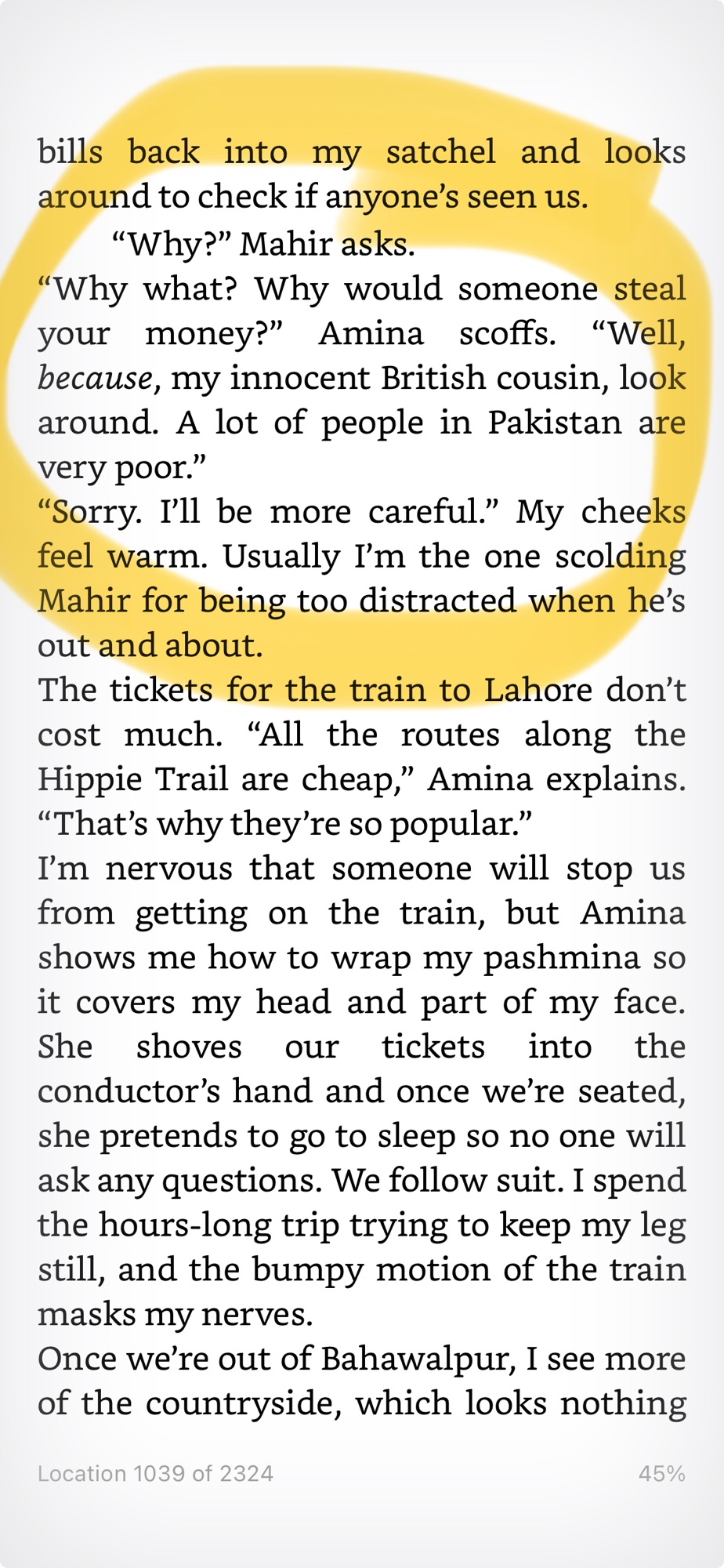
One tiny concern was the assumption that money could be stolen because the people around them are poor, it is just one paragraph, it isn’t a constant in the book, but it struck me as odd and stereotypical, and really not needed.

FLAGS:

Lying, stealing,  deception, pretending to be someone you are not, breaking and entering, eavesdropping, snooping, its a heist book!

TOOLS FOR LEADING THE DISCUSSION:
This would be an awesome book club book or novel study read, I can’t wait for it to be released in a few weeks so that I can have my kids read it.

Aarzu All Around by Marzieh Abbas

Standard
Aarzu All Around by Marzieh Abbas

I was hesitant starting this 384 page middle grade novel in verse, because the stereotype of having to disguise yourself as a boy to make things happen, seems like a western performative troupe that reinforces stereotypes, and has been done a fair amount in literature.  Pushing down my disdain, I opened the book to numerous pages of cricket terminology and rules, which further served as a barrier.  I do not understand the info dumping, literally, at the start of the book, and to top it all off it is not needed.  The book is blurbed as being a cricket loving, girl dressing as a boy in a patriarchal society, but really those are the most forced aspects of the all over the place narrative.  Cricket is underdeveloped and her actually playing is very minimal and lacking. Aarzu disguising herself as a boy is a blip that she admits to a few pages after she gets the job, and thus the story that remains is an orphaned girl with a mean uncle trying to find a way to help pay for her younger sister’s medical bills. Which isn’t a bad story it is all just so very disjointed.  And the verse is not written well, there are no beats or flow, it just seems to be a few decent poems in a sea of jumbled ones.  About 40% when the Islam starts to shine, I felt a brief connection to the book and the characters, but the loose threads and telling over showing, found skimming the pages to find out if the sister survived, if Aarzu got in trouble, and how cricket fit into it all.  The weak climax and sloppy resolution, combined with the premise, marketing, and info dumping, makes me recognize that I am not the target audience as a cynical Pakistani American reader, but truly makes me wonder who is.  I don’t know that the words on the page or the story at hand are going to resonate with middle graders.  I appreciate that Islam and culture are separated, that the mean uncle is confined to him and him alone, not a label on Pakistani men, but it feels like the editor took a day off or didn’t want to help the author make the story cohesive, which is unfortunate.

SYNOPSIS:

Aarzu and her younger sister have come to live with her poor maternal aunt’s family in Karachi after her parents are killed in an earthquake.  She is treated like a servant by the family, not allowed to watch cricket let alone play, and her government public school is hardly a challenge.  When Sukoon’s kidney failure worsens and dialysis is needed, as they wait for a kidney transplant match, Aarzu decides to find a way to make money.  She starts frying onions and selling them at the local market, the labor intensive and odorous job helps, but not enough.  When a nearby bungalow preparing for a wedding, needs laborers, her friend Nazia encourages her to cut her hair to look like a boy and apply.  Lying to her aunt about where she is, she spends her time after school getting to know the kids that live at the bungalow, confessing that she is a girl, and playing cricket.  The money helps her sister and things are starting to look up, until the truth comes out, Sakoons health worsens, finances at home hit rock bottom, and friendships frazzle.  Luckily though SPOILER the wealthy family likes her and solves all her problems and bribes the right people for her to make the cricket team.

WHY I LIKED IT:

Some parts, mostly the Islam, really spoke to me. I love that distinctions were made between religion and culture, that she taught the wealthy girl how to pray, that Aarzu is Muslim and loves her faith and relies on her relationship to Allah swt in handling every aspect of her life. The rep feels real and sincere and while it made me force a friend to read the book, it also highlighted how weak the other aspects were.  We, the reader, see so little of what Aarzu’s world is, we are just told. There are no flashbacks to her life with her parents juxtaposing her current situation that would have connected us to her.  The poverty, the mean uncle, the cricket, the sick sibling, they all just seem like plot points, not pieces to this girl. She compartmentalizes them in a way that make it hard for the reader to see the overlap, or that she is keeping all of these parts close to her heart at all times.

The resolution was disappointing, it felt half hearted. Why have wealthy saviorism? Dreams coming true from bribery? It took the grit out, and made the messaging fall less on hard work and perseverance, and more on, don’t be poor.

I did appreciate the kidney disease representation, having seen a loved one endure failure and daily dialysis, I appreciated the mention of dietary changes, and swelling, and lethargy, it was well done.  I wish the emotional impact, though not just the sibling love, but the fear of demise, could have come through stronger.

FLAGS:
Lying, physical abuse, theft, fear, illness

TOOLS FOR LEADING THE DISCUSSION:
I don’t know of a kid I would recommend the book to, but I would shelve it, let nine and up read it, and happily discuss with whoever wants to chat about it.

Mustafa’s Mithai by Sana Rafi illustrated by Nabi H. Ali

Standard
Mustafa’s Mithai by Sana Rafi illustrated by Nabi H. Ali

On the surface this 32 page OWN voice authored and illustrated book is absolutely adorable, a little boy who wants to share mithai’s with his friends and saves a gulab jamun for himself. As a mother of a child named Mustafa, who didn’t have a wedding cake a hundred years ago but flew in gulab jamuns from out of state, this book should be close to my heart, except the story makes no sense. The cultural rep is great, it isn’t religious, but mentions eid, shows Nani in a hijab, and the word Allah in Arabic appears in one of the illustrations on a wall decoration, but take that all away, and the story doesn’t add up.  The first few spreads establish how sad Mustafa is because he can’t eat his beloved mithai as all the holidays, birthdays, and Eid have passed, and mithai is only eaten in celebration.  This is particularly devastating since they have a huge box of leftover mithai. No idea why such a forced build up, but the take away would suggest that wasting leftovers is better, which makes no sense. No worries, Ammi says every day is a celebration, but Mustafa doesn’t acknowledge or build off of what his mother tells him, sticking with his original assessment he decides to have his non Desi friends over for a party to eat the leftovers. Ok, I’ll play along, maybe just the framing is awkward. Nope, after a pizza dinner he picks out a different mithai for each of his friends…and starts with Falooda, a jelly and ice cream drink! Mithai means sweets, so technically it could be a mithai, even if not commonly referred to as one, but surely not a left over one what would still be good, and definitely not one from the box. Another assigned sweet for a friend, is kulfi.  Kulfi is a frozen dessert akin to ice cream, and often served on a stick.  Again, no way it is from the leftover box and not really in the same classification of ladoo, chum-chum, jalebi, and rasmalai.  The illustration shows an apple in the leftover box, and the author’s note seems to suggest a more generalized use of the term, “mithai,” but craft wise, why have the boy build up the framing of when a cultural food genre is consumed, only to walk it back and have it contradict? Why have foods that wouldn’t be leftovers served? I know, I’ll be the minority and I’m over thinking it, but why go through all the effort of trying to be a window to a culture and its foods, having it beautifully bound and illustrated, only to skimp on the actual story part?

The book as stated above, starts with Mustafa wanting mithai, and being sad that nani and nana have left, eid and Baba’s birthday are over, and sweets are only eaten in celebration. Mustafa decides to have some friends over in celebration to eat the left overs and Ammi says “Mithai is always sweetest when shared.”

The kids all arrive and when they look in the big pink box they aren’t sure what they are looking at, Mustafa explains the variations and his friends are at a loss at what to pick.  To solve the dilemma Mustafa offers to match everyone up with a mithai after playing and dinner.

One by one he assigns a sweet to a friend, saving a gulab jamun for himself.  They all want more, and in round two the emboldened guest pick their own making sweet memories indeed. The backmatter is the author’s note explaining mithai, where they come from, the prevalence of dairy, and the role sweets have in Desi culture.

The City of Jasmine by Nadine Presley illustrated by Heather Brockman Lee

Standard
The City of Jasmine by Nadine Presley illustrated by Heather Brockman Lee

With a release date of May 6, I really wanted to wait to post a review because the images are gorgeous in the electronic version, and I can only imagine how moving and captive they will be presented in a physical format, but alas I know the importance of presales and am sharing to hopefully encourage you to preorder and/or request from your library, this gorgeous 40 page OWN voice book.  A love letter to Damascus, and the sights, sounds, smells, taste, and feelings that the author remembers despite the mountains and oceans that now separate her, are lyrically shared with readers on a journey through the city. The ethereal lilting of words draw readers of all backgrounds in, and the complimentary gorgeous illustrations convey a palpable sense of beauty, love, and memories of home.  Even on a screen, they force you to get lost in their beauty. The cadence of the words allow natural pauses that tug on your eyes and draw them toward something in the images not seen before, forcing the readers and listeners alike to hesitate before turning the page.

The book starts with a little girl telling where she comes from, “the City of Jasmine,” “the Umayyad Mosque,” “Ghouta,” “Damascus,” “Qasioun,” “Qala’at Dimashq,” headers for spreads rich with poetry, wonder, and longing.

Neighborhoods of diverse families gathering, and sharing the foods that bring people together, and quiet bookshops that facilitate travel through time. Family memories built around orchards and fountains and laughter and love.  So far away from the author now, the memories are not lost, they can be touched when the scent of jasmine is “breathed in, and breathed out.”

The book concludes with an author’s note and a glossary.  Those of us who are not Syrian, and who have never been, after spending time with this book will undoubtedly be tempted to add Damascus to our bucket list of travel plans, and inshaAllah as the country rebuilds such trips will come to fruition.

Everything Grows in Jiddo’s Garden by Jenan A. Matari illustrated by Aya Ghanameh

Standard
Everything Grows in Jiddo’s Garden by Jenan A. Matari illustrated by Aya Ghanameh

This sweetly illustrated 32 page rhyming book starts off introducing a little girl living in one place, and having a home in Palestine that she has never been to, but loves.  The book then becomes pretty universal with her and her grandfather talking about what grows, his “green thumb superpowers,” and the magic of planting small trees that change and produce. The pages then add in more Arabic words of what is grown, and then when Jiddo is drying his eyes recounting why he had to flee his home and his roots, I too, found I was emotionally invested in light of everything current and past, and the simple words weaving a heartfelt story of family, connection, and home. I do wish that there was some Islam in the text or illustrations: a dua, a plea to Allah swt, a hijab on a main character not just on background memories, but there is not. There is also nothing overtly political or named in the text. The backmatter does discuss the Nakba without naming names and highlights the author’s inspiration, but inshaAllah nothing that will get the book banned or kept off shelves. The rhyme and cadence are pretty good, it doesn’t feel overly forced, but when reading aloud in a group, as always, I suggest practicing a few times to make the flow consistent.

The book starts with a beautiful spread of a mother and daughter looking through a photo album, and imaging going to Palestine one day, the subsequent pages show how Jiddo’s garden helps bring Palestine to them. The “sour green janarek plums,” “crunchy green khiyar,” and “plump red bandora.” Mama makes warak enab and Teta sings for more.

One day the little girl wonders how her Jiddo learned to grow everything and he shares that he learned from his father how to care for the land.  She then wants to know why they left Palestine, and he says, “our land was taken from us…and our family had to flee.” The hope is to return, the illustrations show the key to their occupied home being held on to, and reinforces the symbolism that Palestinians are like seeds that will flourish wherever they are, reaching toward the light.

The book contains a glossary with words written in English and in Arabic script, and an author’s note in the backmatter with presumably personal photographs of the author and her family.  I read a digital ARC and look forward to release day for my preorder to arrive.

Say Something, Poupeh Babaee!: A Graphic Novel by Haleh Massey illustrated by Ghazal Qadri

Standard
Say Something, Poupeh Babaee!: A Graphic Novel by Haleh Massey illustrated by Ghazal Qadri

I had planned to just flip through this 176 page middle grade graphic novel to see primarily if there was any Islam mentioned, and if so, to see how it was framed. The blurb makes it clear it is culturally Iranian immigrant in focus, and set during the Muslim ban.  The heightened intrigue is that it isn’t just metaphorically about finding your voice, the character is labeled as having selective mutism and the author who is a clinical psychologist truly has her protagonist voiceless in nearly every setting for the majority of the book. The bright illustrations, and easy read though, had me reading the book front to back and finding that Islam is by-and large-not present. The flashbacks to her life in Iran show her wearing a scarf, and praying, and the memories are warm and inviting, with no internalized Islamophobia or political commentary, or Islamic practices at all following Poupeh to America. In fact when sought after news is finally heard the family exclaims, “it’s a Christmas miracle.”  It is hinted that the female cousin has a girlfriend, and the book features a lot of stereotypes about aggressive men, name mispronunciation, bullying for ethnic foods, and anti immigrant ideologies.  On the plus size it normalizes therapists, shows character arcs for the main and minor characters, and shows that inability to speak, doesn’t mean someone doesn’t understand.  While the book was better than I thought it would be in many ways, it ultimately didn’t have a climax, all the build up for two questions, really fell flat for me.  I also felt like while the Muslim ban was a fairly unique premise (shout out to Kareem Between!) all the other tropes are overly done, and render the book forgettable even though the format of a graphic novel should make it a standout.

SYNOPSIS:

Poupeh Babaee has come to America from Iran alone, her parents were held up settling their affairs, and they didn’t want her to miss more school, so she is sent ahead to stay with her aunt, uncle, and cousin. She understands English, but when she messes up the national anthem on her first day of school and is teased, she simply stops talking, not even to correct when everyone starts calling her “poopy baby.”  When the Muslim ban blocks travel for her parents to come, the fate of her family rests on being able to plead their case in an immigration interview. Yes, she is 10 and will be asked two questions to determine if her parents are terrorists or not.  There is teasing, tension with the cousin she has to share a room with, and a sympathetic therapist that flesh out the story of trying to get Poupeh to say something.

WHY I LIKE IT:

I like many of the pieces, and I like the format, but I really felt that the build up to the interview, the pressure she was under, was not warranted by the interview itself.  Had some commentary existed about the brevity of the interview or the chaos of America’s immigration policies perhaps it would have been worth the anticipation.  As written though, it felt rushed.  Same for the portrayal of the men in the story: from Poupeh’s own father, her uncle, to Trevor’s dad, all are aggressive, and I’m glad her own father apologizes, but again, it felt rushed and anti-climatic.  I don’t expect literary masterpieces from most mg graphic novels, but some of the “meanness” seemed abrupt for shock value, and made the cousin, the dad, the uncle read very inconsistent.  I had hoped a therapist author would have brought not just a storyline of mental health, in this case, selective mutism, but some nuance to the immigrant experience, moving beyond food, clothes, and names.  Speaking of names, I googled what Poupeh’s name means in English, and it really should have been in the book, or at least the backmatter.

FLAGS:

Stereotypes, racism, hate speech, hints and relationships, mental health, anger, homesick, bullying,

TOOLS FOR LEADING THE DISCUSSION:

The level and format would not make it a good choice for a book club read.  I probably would not unshelve this book, but I wouldn’t seek it out either.

Amar’s Fajr Reward by Amire Hoxha illustrated by Hilmy An Nabhany

Standard
Amar’s Fajr Reward by Amire Hoxha illustrated by Hilmy An Nabhany

As Muslim authored stories are increasingly more available, certain cultural Muslim stories continue to be limited or none existent. Since 2021, when four of us reviewers created the Muslim Book Reviewers and Muslim Book Awards space, we have constantly been encouraging Amire to work on her dream of being an author, and write a joyful Muslim Kosavar book. Through Ruqaya’s Bookshelf, her dream has become a reality, Alhumdulillah, in the form of this 32 page, 8.5 by 11, full color books for early elementary readers. In all my years of reviewing I have not ready many Kosavar books, and of those few, none have been OWN voice, and all have focused on the war.  Enter Amar’s Fajr Reward, a simple story of a boy and his Gjyshi, going for fajr at the masjid, finding the door locked, and the obstacles, determination, and results that transpire, not just for Amar but his grandfather as well.

The book starts with Gyjishi splashing water on Amar to wake him up for Fajr, while reminding him that “Prayer is better than sleep.”  Grandpa’s quick steps and a sleepy little boy, keep Amar hustling after his Gyjishi only to arrive at the masjid and find the door locked.  

Gyshi cannot be deterred by his grandson wanting to go home and pray, or a locked door and decides to jump the fence, something he has done in the past.  Calamity strikes, when he falls and hurts his foot and it is up to Amar to help.  But he can neither scale the wall or find anyone to help.  When the muadhin finally runs up the street Fajr can be made, Gjyshi can be assisted, and changes can be made so that hopefully getting locked out doesn’t happen again.

I love that there are pronunciation tips on the cover page of Gjyshi, grandfather, and Axhi, uncle, but I do wish there was some backmatter showcasing Muslims in Kosovo.  Are Muslim communities spread out in large diverse areas, or do they tend to have neighborhoods that are tied together by faith? As a place not often seen or heard about, a little layering of details would have deepened the story.  Especially, if the reasons are cultural or societal explaining why people don’t wake up until the athan is called, but were annoyed that Amar was knocking on the doors at that time, or maybe why the didn’t just pray outside the masjid, calling the athan and waking up the regulars that attend. Also about why the key to the masjid is “special.” Are places of worship regulated or only allowed to be open at certain times?  I also wish it would have given a little build up about Amar and this particular day. At the start he wants to pray at home as it seems like that is his norm, and Gjyshi going to the masjid seems to be the grandfather’s norm, so was this something special, a right of passage, are kids not typically seen in masjids is he visiting his grandfather? 

The book is sweet and warm, with a lot of heart and I love that it takes place in a masjid and threads in that salah is better than sleep, and that praying in congregation is 27 times the reward.  I also love that the author fulfilled her dream inspired by her own grandfather, and inshaAllah she will continue to write and bring Kosovar stories to our bookshelves, ameen.

The Donkey who Carried the War on her Back by Hooda Al Shawa illustrated by Sienny Septibella

Standard
The Donkey who Carried the War on her Back by Hooda Al Shawa illustrated by Sienny Septibella

This 44 page story told from Zahra’s perspective, a donkey in Gaza, juxtaposes her life and what she sees before the bombardment of Gaza with after, and the determination and hope that drives her and her owner Sami to help. I love that it shows the daily joy, beauty and the resilience in the face of attempted erasure. By using the donkey as the protagonist, the book is able to explain and show realities in a manner that remains simplified, removed, apolitical, but informative none-the-less, for young children. The book was created with the collaboration of the Tamer Institute for Community Education who’s vision is, “Towards a Free and Safe Palestinian Learning Society,” so, I’m not sure that my opinion counts for anything, but I do worry that the “telling” comes with the words the donkey hears of “sanctions, closures, embargoes, blockade,” but the “showing” comes when “one day, a war came to my city.” It feels like it could be interpreted that life was fine and then one day it wasn’t, and yes, the backmatter defines the words, but it doesn’t “show” the donkey at checkpoints, or show any previous destruction, or struggles.  Presumably the book wants to show the joy and beauty of Gaza to humanize a population that the global media is endlessly working to dehumanize, but the framing and the memorability paints a picture that to my acknowledged outsider, non Palestinian heart, feels dismissive of years of oppression, and aligns with the erroneous narrative that it started in October 2023. That isn’t to say the story is not important,  I think that with guided conversation and contemplation, the book will show children what Gaza looked like before the attacks by the occupation, the importance of pack animals such as donkeys, and why the people of Gaza dream of freedom.

The book starts with Zahra the donkey standing on green grass with buildings and the ocean in the background, acknowledging that Gaza is not an “ordinary city.”  She hears words in the market place that the greengrocers call out “sanctions,” “closures” “embargoes, “blockade,” and hears that the people cannot travel or leave, “that life is difficult and RESTRICTED!” But despite that, she enjoys carrying things in her wooden cart as she makes deliveries, food, solar panels, strawberries, stopping with Sami to get ice cream.

Then when the war hits, the city is turned to rubble, and people must live in tents. Zahra and Sami’s daily routine changes, they transport ration supplies, serve as an ambulance, transporting families to refugee camps, and the border with Egypt to try and leave. The sounds of crying are devastating, but she also hears laughter, and music, and stories from the hakawati.

I like that what they deliver is defined to explain what she is carrying “mahshi kousa,” although it seems like a translation error perhaps and should be “kousa mahshi” with the noun coming first, but again, what do I know. It appears the author is Palestinian Kuwaiti, but there is no mention in the text of the book about any religion, or indication online of the author or illustrator’s faith identity,  I share this not for its Islamic rep, but for solidarity and awareness.  There are visible Muslims in the illustrations.

Huda F Wants to Know? by Huda Fahmy

Standard
Huda F Wants to Know? by Huda Fahmy

Huda Fahmy books always make me laugh, but this is the first one that made me cry. Centering mental health and her parents divorce, we see Huda grappling with change, loss, anger, and resolve in a raw vulnerable way. While ever hopeful, and at times comical, the book is also incredibly moving and insightful.  Whether as part of the Huda F series or her two graphic novels prior, her autobiographic books always tackle heavy topics in a joyful, hilarious, honest way that appeal to girls and boys from middle school and up.  I know at 263 pages, this book is a YA read, but in my house my kids (daughter and sons) have loved reading her perspective about hijab, arranged marriages, identity, and sibling relationships. The unapologetic Muslim authenticity is unparalleled, and that non Muslims champion her books as well, truly shows the value of good story telling, and gives me hope in an often bleak world. Huda’s books are staples: new books are anxiously awaited, previous books are regularly reread, and Huda F Wants to Know? continues in that tradition.  This book isn’t just fun, it is important- it normalizes mental health, empowers families shaken up by change, and makes us all feel seen and less alone. SubhanAllah.

The book starts with Huda’s plan for her junior year in high school, her friend Nabz and her are determined to buckle down and get scholarships.  When Huda’s parents call a family meeting, she thinks she just might be getting a car, but instead she and her sisters learn, their parents are getting a divorce. The book then rewinds to show a little lead up before Huda’s world shatters, and junior year’s blue print is tossed aside.  We see her going to the masjid for weekly halaqas where Sr Amal discusses topics like societal pressures, family expectations, gender bias in education, and other relevant topics.  At one such gathering, Dr Haifa came to talk about mental health.  We also see her crushing on a boy at school, fighting with her mom and sisters, and the girls going on a road trip to a Muslim convention.

Every storyline, every twist, every page really, has Islam woven in.  It is the way the characters see themselves, see their world, handle stresses, find peace.  Mental health is not separate from the hadith and sunnah, it is blended and approached in a holistic manner.  Divorce is understood Islamically, and the clarity in which it is articulated will, I imagine, be so reassuring for Muslims who have gone through it, and seen others go through it.  Just as my boys years ago read That Can Be Arranged, and became incredibly curious about marriage in Islam, I have no doubt that this book, will also be a powerful conversation starter for so many.  I don’t know if that is part of why Huda write, but it definitely is a result of her books.  I wish I could ask her, I’d also want to know how she decides what to share of her own life, where the line of reality and fiction for her is and how she sets and maintains those boundaries? I also desperately would like to ask her if she plans to write forever, because the world benefits from her books, needs her books, I know I do.  No pressure or anything.

 There are resources for mental health at the back of the book, some even specifically for Muslims. Please preorder this book and/or request it at your local public library as a show of support, it releases in April.