Tag Archives: life

Other Words for Home by Jasmine Warga

Standard
Other Words for Home by Jasmine Warga

other words for home.jpg

Three hundred and forty pages written in verse that beautifully consume you and leave you emotionally changed and vulnerable and humbled all at once.  The book claims it is for middle grades, but I think middle school will appreciate it more, and I sincerely hope everyone of all ages will take a couple of hours to fall under the spell that is woven to tell a story of a refugee leaving home and starting anew in America.

SYNOPSIS:

Jude is a 12 year old girl living on the beach in Syria, watching American movies with her friends and hanging out at her dad’s store.  With an older brother and a little sister on the way, life as told from her own perspective is pretty good.  Until it is not.  Until the crimes they only hear about happening in Aleppo and Damascus start to hit closer to home.  Until her brother starts sneaking out to meetings with other youth hoping to change the politics of their country.  Until a raid almost catches Jude and her brother and her parent’s decide it is time for Jude and her mother to journey to America, for a little while, to visit her mom’s brother and deliver the baby.

America is not like it is in the 90’s movies that Jude loves: Pretty Woman, Legally Blond, Miss Congeniality.  Her American aunt and her Uncle that seems to have forgotten his Syrian upbringing, are gracious and welcoming and their daughter, Sarah, who is less than a year older than Jude waxes and wanes in her approach to her cousin.  Adjusting to school, life without baba and her brother, and all the other adaptations that moving to a new country entail are brought to life through Jude’s eyes and understanding of the world around her.  As she comes of age and decides to wear hijab, as Islamaphobia shakes her sense of justice, and her little sister is born, the reader sees her grow and change and mature and find themselves hoping that she will soar.

WHY I LIKE IT:

I love that the style of the story telling somehow gives life to so much.  With verse some things are highlighted in detail and other things skimmed over and yet at the end, not only do you feel like you understand Jude, but a lot of the side characters as well, which caught me off guard.  Truly the writing is strong and deliberate.  A lot of the politics and war crimes occurring in Syria are not detailed, and I have to assume that is because the point of view is a 12 year old girl that is blissfully in her own world.  I imagine this is also why the target audience is listed as 8-12 year olds, because it simplifies a truly horrific situation.  Also because despite moments of raw vulnerability, the book stays pretty optimistic and hopeful.  

I like that the characters are Muslim, and that the mom scolds her brother for not going to the mosque.  The book does talk about Jude’s period starting and thus Jude starting to wear hijab, which is one of the reasons I feel like early middle school might be a bit more appropriate age group.  There isn’t too much talk about faith and Islamic beliefs, but a few tidbits are sprinkled in, prayer, not eating pork, modesty.  The book is not gender exclusive, but I think girls will gravitate much more to Jude’s perspective, experiences and voice.

The only thing I found a bit off is that the book takes place in modern time, present day, yet none of them have cell phones or social media.  Jude Skypes her dad, yet writes letters to her friend back in Syria and is distraught when they don’t have a forwarding address to send them to after her friend also leaves home.  It seems that social media, email, a cell phone number, something would be available for them to all keep in touch.

FLAGS:

There is mention of Jude and her friends having to sneak in to see Pretty Woman because Julia Roberts is a prostitute, and mention of blood between one’s legs and periods starting.  The book otherwise is pretty clean.  It hints at her kind of crushing on a boy that is in the play with her, but nothing more than friendship is explored.  Violence mentioned is minimal and language is clean even when dealing with hate crimes in America.

TOOLS FOR LEADING THE DISCUSSION:

There is a good chance that next year the students joining the middle school book club will be all girls, so if that is the case and the school counselor feels all the girls can handle the puberty aspects mentioned I would totally do this book.  The book reads very quick and might be a good way to get new kid to give a book club a try as well.

Author’s website: http://jasminewarga.com/about

Q & A with the Author: https://www.publishersweekly.com/pw/by-topic/childrens/childrens-authors/article/80127-q-a-with-jasmine-warga.html

Interview with the Author: https://www.hbook.com/2019/04/authors-illustrators/publishers-previews/spring-2019-publishers-preview-five-questions-for-jasmine-warga/


Musa & Friends Do Ramadan by Zanib Mian illustrated by Daniel Hills

Standard
Musa & Friends Do Ramadan by Zanib Mian illustrated by Daniel Hills

musa ramadan

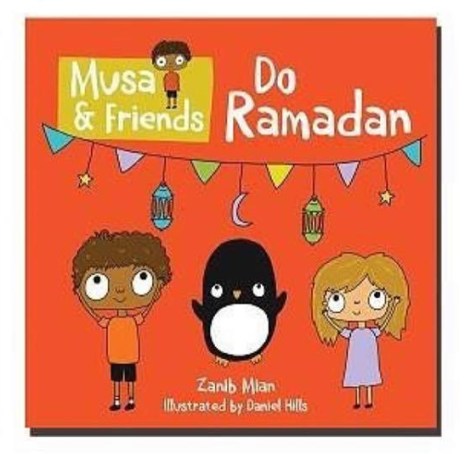
Zanib Mian has really set the standard for quality affordable children’s Islamic books title after title.  So, I really was on pins and needles waiting for these Musa & Friends board books, and then I got one (thank you Crescent Moon Store) and part of me is really disappointed, and part of me is wondering what I’m missing.

They are at cheapest $8 a book, and there are 8 pages.  Yes, the binding and page thickness is awesome, and the 5.5 square size is adorable in a toddler’s hands, but I guess I wanted more.  More pages, more feeling or tone of Ramadan, a little more substance.

IMG_4711

The illustrations are super fun and Zanib Mian has a history of writing toddler and preschool appropriate books, so needless to say I was surprised that I didn’t love this book.  Granted I’ve only seen the Ramadan book, and maybe the others in the series are much more satisfying, or maybe when you have all four together, they round each other out, which I’m really hoping is the case.

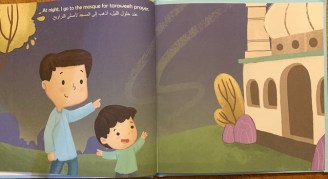
The text amount per page is great for littles, but the content is rather random in my opinion. They little diverse family and their penguin love Ramadan, they go to the masjid for taraweeh, they wake up for suhoor, they read Quran, they give money to the poor, they eat too much iftar and they love eid.

IMG_4712

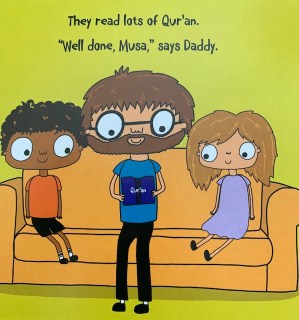
The book is meant for Muslim children as no details are given about what iftar or suhoor mean or that Ramadan involves fasting.  The illustrations won’t help much either in explaining the terms or even teaching concepts as the page on giving to charity has Musa and Penguin putting money in a jar, Musa’s dad is reading Quran, even though the text says, “Well done, Musa,” and even the penguin says “Gobble, gobble, gobble,” when eating(?).

IMG_4713

The books are cute and if you aren’t overly critical and you receive the book as a gift you will probably be very happy.  I just expected more and after the smallness of size of “A Young Muslim’s Mindful Book of Wellbeing” combined with the shortness of these books, I won’t just blindly order a bunch of Muslim Children’s Books without considering if they are worth it anymore, which makes me sad.


I Love Ramadan by Taymaa Salhah

Standard
I Love Ramadan by Taymaa Salhah

IMG_3901

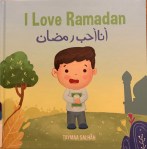
There is nothing wrong with this dual language book, but there it isn’t anything to get excited about based on the story alone, either.  If you are looking for a basic book with both English and Arabic telling what a little boy does in Ramadan, not elaborating on any reasons why he does them, then this book will adequately suffice.

IMG_3903

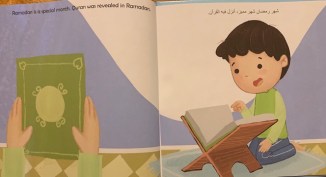
The book is just linear facts, I wouldn’t even say that it is information driven, as there isn’t really even a story, it is just a few simple sentences on each of the 20 pages of a boy telling in first person what he is doing.   “I finish my meal before athan alfajr and fast until sunset” it says on one page.   “When I hear athan almaghreb, I recite dua and break my fast with my family” it reads two pages later.  It does not define athan or almaghreb nor does it specify the dua.

IMG_3904

The book is on the dry side, but I would image the simplicity in the Arabic, might be what would appeal to parents looking for their kids to read and understand both languages independently.  I don’t speak Arabic so I’m unable to comment on the grammar complexities or smoothness.

IMG_3905

The illustrations are sufficient, again nothing super exciting or noticeably off about them.  The book is short, hardbound (8.5 x 8.5) and honestly, rather unremarkable or memorable, unfortunately.

IMG_3906

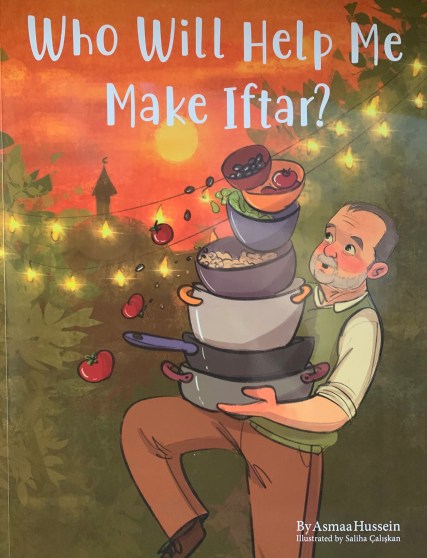
Who Will Help Me Make Iftar by Asmaa Hussein illustrated by Saliha Caliskan

Standard
Who Will Help Me Make Iftar by Asmaa Hussein illustrated by Saliha Caliskan

IMG_3796

This sweet story shows how even when people refuse to help, we should treat them with kindness, as our actions should be to please Allah alone, and inshaAllah in real life, much like in the story, people will fix their ways and offer their help in return.  This new story reads very much like the old(er) favorite Nabeel’s New Pants, where everyone is too busy to help, but then come around to realizing that helping one another is a way to show people we care.  This 32 page 8.5 x 11 soft back story is well bound with large glossy pages and clear text.  The story works well for ages 4 and up, as they will understand the moral message and inshaAllah feel inspired to find ways to help as well.  

IMG_3797

It is a 40 year tradition that Mustafa Amce and his wife Ayse Teyze feed iftar to their friends and families on the first day of Ramadan.  This year, however, Ayse is not well and Mustafa is confident he can enlist the help of neighbors and family to help him keep the tradition alive. 

IMG_3798

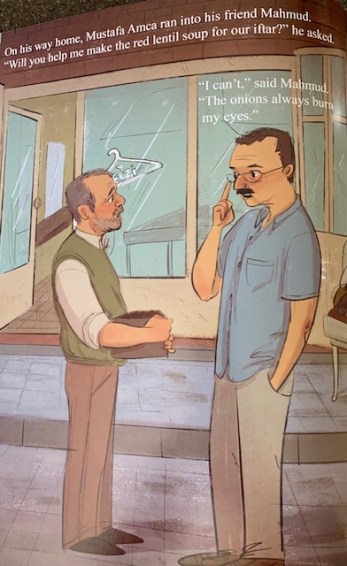
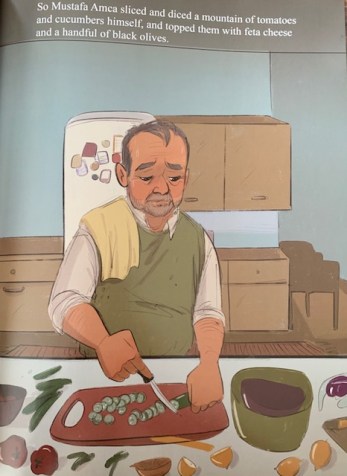
Unfortunately, everyone has an excuse.  His daughter is tired, his grand daughter is too busy with her video games and his neighbor doesn’t want to get his new shirt dirty.  Their sad reasons don’t stop old Mustafa Amce, and he makes the salad, and cooks the rice and beef by himself.

IMG_3799

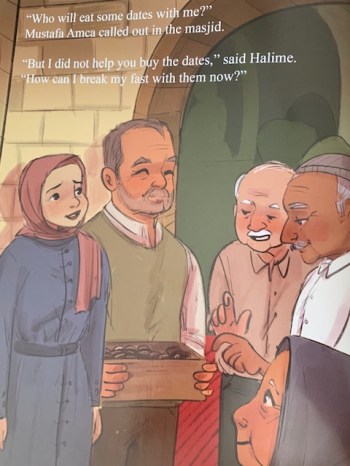
When iftar time arrives, he offers sweet dates to those at the masjid and invites everyone to come to his courtyard to break their fasts together.  All those that had early refused to assist him feel incredibly guilty and don’t want to take advantage of a lovely meal. Mustafa reminds them that, “God loves those who are generous especially to their families, neighbors, and guests.  and I always want Got to love me.” So they join in the delicious meal.

IMG_3800

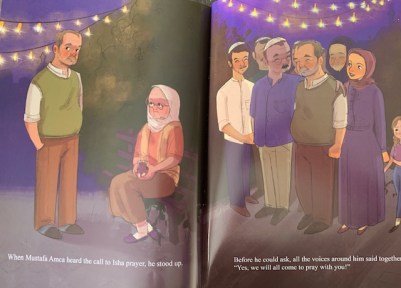
After food Ayse Teyze shows that while she might be ill, she can still save the day when her husband realizes he has forgotten to prepare dessert.  The guests then offer to wash the dishes and sweep the floor and take the leftovers to the poor.  And best of all when the athan for isha prayer calls out they all without prompting stand to join Mustafa Amce in praying salat together.

IMG_3801

The names are Turkish with a pronunciation guide at the end, as well as a paragraph about Ramadan.  The book would work for non Muslims and Muslims alike as the story is set in Ramadan, but more about coming together to help out.  The illustrations are large and detailed and descriptive.  You see the warmth between Mustafa and his wife as well as the apologetic feelings from those that were unwilling to help. 

IMG_3803

Bashirah and the Amazing Bean Pie by Ameenah Muhammad-Diggins illustrated by Amir Doumy

Standard
Bashirah and the Amazing Bean Pie by Ameenah Muhammad-Diggins illustrated by Amir Doumy

bashirah

Oh, how glorious to learn something new while having things you know presented so well at the same time.  In 42 pages the reader will feel all the excitement of Eid (it doesn’t specify which one, nor does it really matter), sharing your culture with your classmates, participating in a family tradition, cooking with your grandfather, sharing with neighbors, and learning some life lessons about diversity from the Quran.  Ages 5 and up will enjoy the story and seeing Eid being celebrated, and older kids that know about Eid will love learning about bean pies and appreciate the African American Muslim culture, if they don’t already know about it, and those that do will hopefully feel proud to see it represented.  The best part is that there is a recipe at the end, that I can’t wait to try.

IMG_3237

It is the end of the school day and the teacher is reminding the students that Monday is Culture Day and they need to bring a dish to share, over the weekend it is also Eid.  Bashirah is excited that this is the first year she will get to make her own bean Pie with her Pop-pop who is going to teach her the family recipe.

IMG_3238

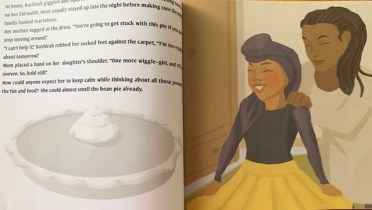
At home Bashirah can’t stay still as her mom puts on the finishing touches of her Eid outfit, she is so excited for all the fun about to happen.

IMG_3239

Early the next morning the family all heads out to the Masjid for Eid Salat in their beautiful clothes.

IMG_3240

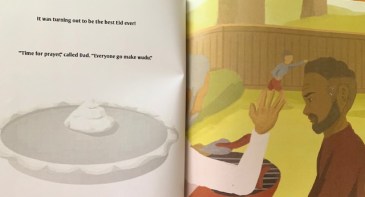
After prayers its cooking and eating time as Bashirah and Pop-pop make the pies and enjoy a big meal as a family.  Three generations make salat together, food is taken to the neighbors, and then the big reveal.  All the desserts, including Bashirah’s are served, and alhumdulillah it is delicious!

IMG_3241

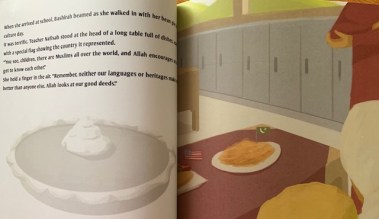
Back at school on Monday the teacher reminds them all that, “neither our languages or heritages make us better than anyone else.  Allah looks at our good deeds.” She quotes Surah Hujurat, ayat 13 “Oh, mankind indeed we have made you into nations and tribes, that you may know one another.  Indeed the noblest of you in the sight of Allah (swt) is the best in conduct.” And they all dive in to the delicious desserts including Bashirah’s wonderful pie.

IMG_3243

My only criticisms of the book are the margins and the amount of text on the pages.  I have a hard time reading the book aloud to small groups as the margins are so small and run in to the binding.  Also, some pages have one sentence on them, some have nearly a half a page of text.  This disparity can be off putting at the start of the book to appeal to younger listeners and early readers.

IMG_3244

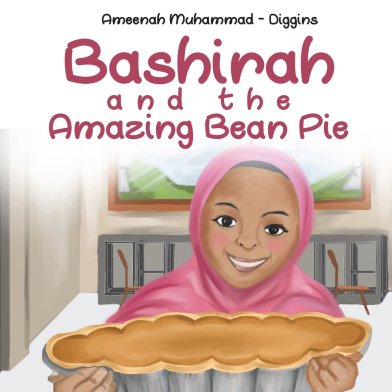
The illustrations are warm watercolor complimentary pictures.  There is nothing wrong with them, but I wish they were just a tad more defined and vibrant like the picture on the cover.  I love the warmth they radiate, but a little more detail would give the listeners something more to look at on the text heavy pages.

IMG_3242

All in all a great book that I am glad I own and can share with my own children and those in my community, now if I can convince someone to make me a bean pie I’ll really be set, alhumdulillah!


The House of Ibn Kathir: The Competition Begins by S.N. Jalali

Standard
The House of Ibn Kathir: The Competition Begins by S.N. Jalali

IMG_3210

At 254 pages this boarding school story beautifully blends Islamic information, mystery, and compelling characters embarking on a new stage of their lives.  I was pleasantly surprised at how easy and engaging this book for upper elementary aged children reads and would strongly recommend it for grades 3-5.

SYNOPSIS:

Eleven year old Yusif is about to begin his first year at the prestigious Dar Al Ilm Academy a few hours away from his family, friends, and home.  Nervous to be on his own, he is excited to be giving his dream of memorizing the Quran the chance to become a reality.  When he arrives at the old mansion turned beautiful campus, he is paired up with Reda, a student to help him get situated and before you know it the two are fast friends.  When they get put in the same house, Ibn Kathir, with Warsoma and Daud, the four friends embark on a year of adventure and bonding as well as growth and learning.  Along the way they learn some Islamic history, they understand important hadith and Quranic Ayats and are challenged to live according to the sunnah even when tempers and frustrations abound.  When items start to go missing the boys and their house will have to keep their cool, not accuse anyone, but figure out what is going on all at the same time.  When the culprits are uncovered, they will be further tested to hold a grudge, offer forgiveness, or even extend an invitation to friendship. 

IMG_3211

WHY I LIKE IT:

This idyllic story and predictable mystery will appeal to impressionable readers that can’t see what is coming and can still be inspired by the beauty of such a protected environment.  The window might be small for such readers, but well worth the attempt as the book is well written and the characters well developed.  The boys are diverse and kind and helpful and all the things we want our children to be, especially when they are away from us.  Each character has their strengths and weaknesses and the friends accept them and celebrate one another rather than try and force them to change. The four houses and the characters vying for year captain and having fun along the way reminds me of a Harry Potter spinoff, but alas I think that is just my ignorance of the British school system.  I love that the four houses and their namesakes are detailed at the end as well as there being a glossary of terms.  There are illustrations every chapter or so that are appealing and offer a nice visual of the boys’ world.  The text, line spacing, chapter breaks and all are perfect for the demographic and while the fictional story is solid, I am happy to report I learned a number of things as well. 

IMG_3212

FLAGS:

None, alhumduillah

TOOLS FOR LEADING THE DISCUSSION: 

I can’t find much on the author or even on any future books, which is unfortunate because I think it would be great for an elementary book club selection, and I may read it to my 4th and 5th grade Lunch Bunch group after we finish The Great Race to Sycamore Street.  I think it should be in Islamic School Libraries and classrooms as its cover will hold its own and compel kids to pick it up off the shelf.

Book trailer: http://www.ibnkathir.co.uk/trailerfullhd.html

Book website:http://www.ibnkathir.co.uk/index.html


Mustafa and Arwa go on a Ramadan Adventure by Mekram Mohammad

Standard
Mustafa and Arwa go on a Ramadan Adventure by Mekram Mohammad

IMG_3184

Ramadan is two months away and this little book is a great way to introduce and stir up excitement for little Muslim toddlers and preschoolers. It could work for non Muslims, but the general overview given would need some details and explanations, and this book seems more geared to introduce excitement and a few key concepts for the blessed month.

IMG_3190

In 27 rhyming pages the brother sister duo explore some of the feelings of the month, activities that make the month special and what to expect at suhur, iftar, and taraweeh at night.  

IMG_3185

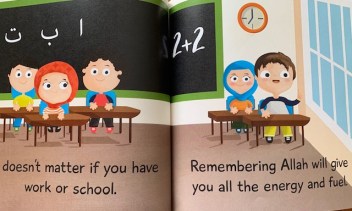
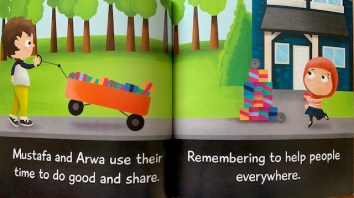
I like that it makes it clear that you don’t eat one bite, that you fast even if you are at work or school, that you use your time to do good and help people, and that you ask Allah for paradise.  

IMG_3188

The end is Eid and while the text presents some great general info, the illustrations are what really give the minimal clear text life.  Seeing the kids giving presents to people and looking for the moon and enjoying iftar together with smiling faces, show kids the warmth of Ramadan.  

IMG_3186

The book doesn’t have a story, it just talks about Ramadan, but the tone in this book and in Mustafa and Arwa go on a Prayer Adventure is very fun and light.  It doesn’t get into rules or articulate what little kids are expected or required to do, or even why Muslims do it, it just gives them some knowledge and some emotion to create the feeling of it being a grand adventure.

IMG_3189

The book is paperback 8.5 x 8.5 and the thickness, sheen and quality of the pages makes it durable and enjoyable to read at story time (in small groups) and bedtime alike.  This book most likely will be on repeat in the weeks leading up to Ramadan and then referenced throughout the month to remind children about what they are seeing and experiencing.  

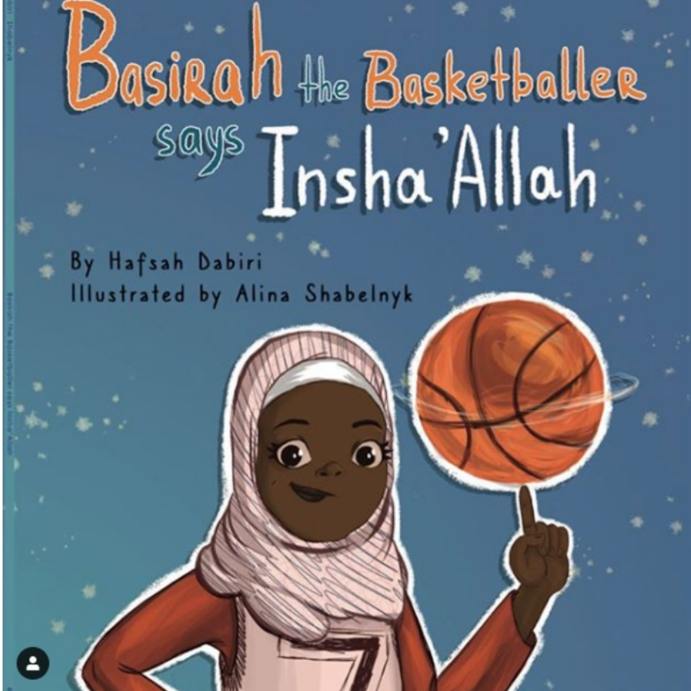
Basirah the Basketballer says Insha’Allah by Hafsah Dabiri illustrated by Alina Shabelnyk

Standard
Basirah the Basketballer says Insha’Allah by Hafsah Dabiri illustrated by Alina Shabelnyk

basket.jpg

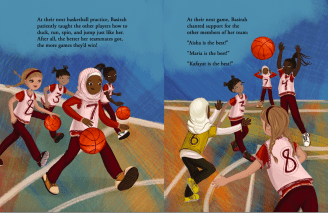
Another sports book starring a smart girl with a supportive father, seems like a trend, and I like it.  The book is relatable to ages 5 and up whether they play basketball or not, and will remind even slightly older children how “insha’Allah” really works.  It features a girl, but boys will gain a lot from the book as the lessons are for us all.

basirah1

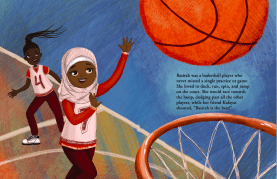
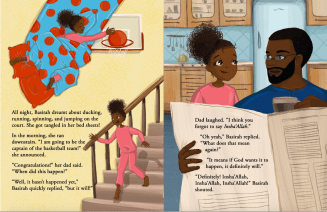
Basirah loves basketball and with supportive teammates and mad skills, she should be a shoo-in for team captain.  But when her dad reminds her that if it hasn’t happened yet she needs to say insha’Allah, she realizes the power of leaving things to God.  

Testing out her new knowledge of asking God to make happen things she really, really wants, over many of the 30 pages in the story, makes the climax that much stronger and her dad’s wisdom that much more memorable. I’m trying not to spoil the story, even though it is a children’s picture book, it isn’t without a bit of tension and resolution that really makes the book shine.

basirah2

This book can be taken at face value with a little bit of a lesson for little ones, or a lot deeper for more reflective readers.  Understanding that things we ask God for often come or don’t come to test us, is a lesson we all need. I hope if read with an adult, the adult will also push the listener to consider why we should do things in the first place, what are intentions are, as Basirah leaves the door open for that discussion at the end, but doesn’t quite articulate it for independent readers.

basirah3

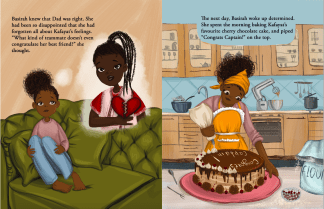
I love that at home Basirah is not covered, but is when she is out.  I love that her school is diverse with students of different colors and head coverings and that her coach is female and a muhajaba as well.  I love that Basirah and her father seem incredibly close, and that she listens to him, and he to her, before lessons are espoused and course of action plotted.  The book is not preachy, but lessons are there and the reader will get “it” right along with Basirah allowing her strength to radiate off the page and inshaAllah empower the reader as well.

basirah4

I find it interesting that the book doesn’t mention Allah and uses the word God, given that the phrase the book focuses around is insha’Allah.  I would imagine the intended audience is Muslim, but there is not specific mention of Islam.  It would work for non Muslims, but I think they would wonder why she says such a phrase and where it comes from.

basirah5

Basirah is presumably in middle school, as she has multiple classes and can bake a cake independently, her age seems a bit fluid, but many 11-14 year olds do tend to be independent in some areas and rather clueless in others, so while I did notice that she seems very naive in knowing what insha’Allah means and how it works in some parts of the story and very mature, and hijab wearing, and willing to grow from her situation in others, I’ve concluded it is plausible.

The book is 8.5 x 11 vertical, well bound, shiny glossy full color pages with clear and easily readable font.  The sentence length and amount of text on the page is not too overwhelming and the spacing keeps it inviting for new fluent readers.  

I love that Ruqaya’s Bookshelf (https://ruqayasbookshelf.com/) has new books out, three to be exact.  Whether the stories work or don’t work for you, I think their presentation and quality, give the books a longevity and find themselves being pulled out for different kids, at different times, when different lessons are needed.  They are well packaged in terms of illustrations and colors and size for the most part, and when I hear they are publishing new stories, I find myself ordering them without even reading the content synopsis.  Thank you for helping get these stories out, may Allah swt reward you!


Purity & Prayer: A Rhyming Picture Book of Sacred Rulings by Ameena Bint Abdir Rahman illustrated by Reyhana Ismail

Standard

IMG_2921

This book is definitely non fiction, and I’m reviewing it because I figure some of you like me, have looked at it online and wondered how it can do everything it claims.  The book is 50 pages, fully illustrated (with faces), meant for children before the age of accountability, written in rhyme about fiqh (wudu and salah) according to the Hanafi madhab, and everything is scholar supervised and checked.  I’ve read it a few times now, and yeah, it does all it claims to, and is a great tool and resource, and book to have around for kids of all ages, plus I think they’ll really enjoy it.

IMG_2922

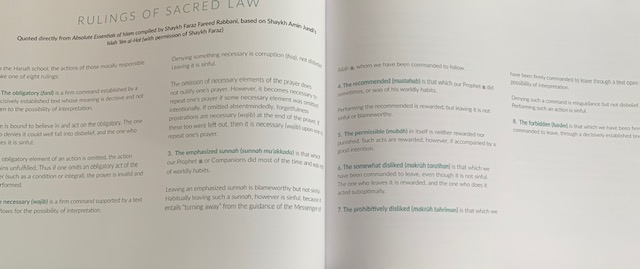
The book has a lot of information and disclaimers about how the author wrote the book and verified the information, there is a dua, preface, and Author’s Note at the beginning, and Rulings of Sacred Law by Shaykh Faraz Fareed Rabbani, an Appendix, References, Glossary of Arabic Terms, messages from the Fiqh Teachers, Author, and Illustrator at the end.

IMG_2925

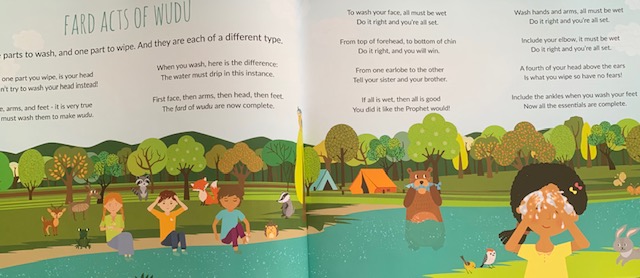
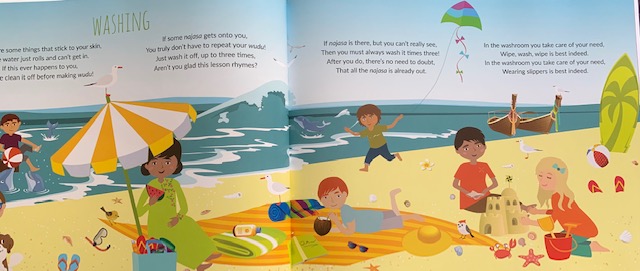
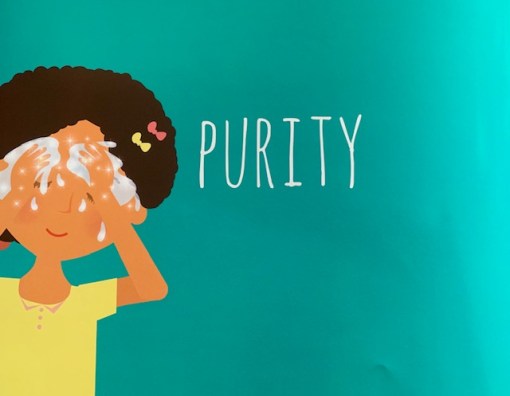
The 8.5 x 11 hard bound horizontal glossy book is divided into sections.  The first section is Du’a and Salah, followed by Purity which covers things like fard parts of wudu, what breaks wudu, etc..  The next section is Prayer and covers the fard conditions and integrals within prayer, wajib things you say, how you recite, postures, what breaks your salah, and incorporated in to the sections are what would need to be redone to make your salah valid.

IMG_2923

Each subheading is a two page spread with a title and either rhyming couplets or quatrains to convey the information.  While naturally at some parts the rhyme is incredibly forced, but because I found myself learning things, I wasn’t as bothered by it as I thought I would.  The repetition sometimes got jarring, but again, because the complex facts are being brought down to a child’s level ,and yet isn’t belittling, I’m willing to overlook a lot. 

I like that it isn’t just facts, the Appendix is there for that, but also similes and metaphors that will help put the concept in perspective.  Du’as can be made at any time like making a call to Allah.  Prayer is like visiting a friend, you have to go at the time you were invited, dressed nicely, wear appropriate clothing.  

IMG_2924

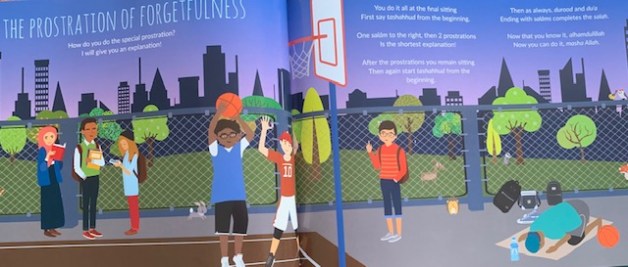
The breakdown of when you have to repeat the whole salah, or do a special prostration is incredibly helpful.  As is knowing what laughter breaks wudu and what breaks wudu and salah.  It is so great that children will see how detailed our religion is, and how everything has an explanation.  Yes, you shouldn’t laugh while praying, but clearly it happens, so when it does this is what you do.  The approach makes the book grow with children as their knowledge and awareness increases.

IMG_2926

I hope to read a two page spread each night with my kids, and have them discuss.  My kids range in age from 3-12 and while my 3 year old won’t add a lot, he will be entertained by the rhyme, fascinated by the pictures, and be included in the early introduction to fiqh.  InshaAllah the older kids will learn or review something and know how to find such knowledge if they have questions in the future.

IMG_2927

Undoubtedly, such a book, was a huge undertaking, may Allah swt reward all those involved, I was pleasantly surprised and greatly impressed at how the book reads, presents the information, and still connects to younger children, mashaAllah.


The Weight of Our Sky by Hanna Alkaf

Standard
The Weight of Our Sky by Hanna Alkaf

sky.jpg

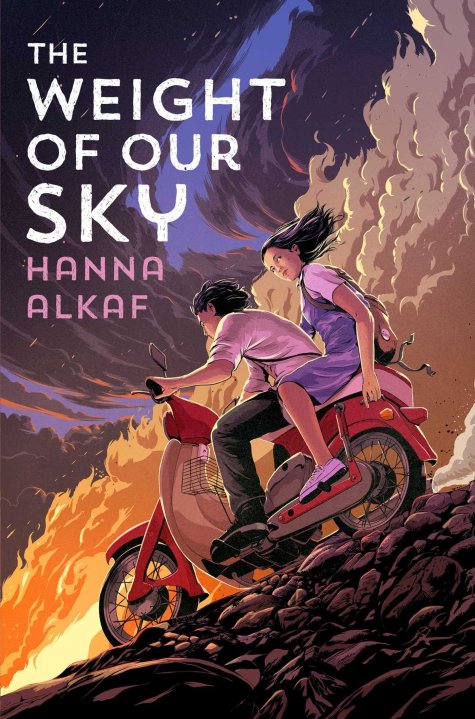
This brand new middle school read is like a quick picture of a young girl’s life.  You get to know her as she is, you briefly meet those around her, you see a week or so of her life and then the book ends and you aren’t the same.  You wonder about her, you worry about her, and you find yourself wanting to reach out to those that maybe remind you of her.  Truly a wonderful book of 277 hard-to-put-down-pages that give insight into Malaysia in 1969, OCD, and the beauty of people willing to show their humanity in dire circumstances. My only concern is that I don’t know that there is anything relevant to the typical target audience western reader that would compel them to pick up the book and see it through.  All the reviews online that praise it seem to be from people older than the YA demographic.  Yes, I really enjoyed the book, but I know who the Beatles are, who Paul Newman is, I am a Muslim, I recently went to Kuala Lumpur, Malaysia and saw the diversity of religions and culture, I know people struggling with mental illness to the point of disability and the exhaustion that ensues; yet I don’t know if I could convince my 12 year old daughter to read it.  If I forced her, I don’t know that she would find the book as beautiful and powerful as I do.  I think a lot of it, she simply wouldn’t get, and even less of it she would relate to.  I probably will force her to read it at some point, and I’ll happily revise this review and swallow my assumption about what the youth these days can handle and identify with, but until then, please let me know if you are in the YA demographic and what you thought of the book. Thanks.

SYNOPSIS:

Melati is a 16 year old Malay girl in 1969, living with her mother, a nurse.  Her father, a police officer, has recently died, and with his loss, she has become crippled by OCD and the fear that her mother too, will die.  Counting numbers move from consoling her and keeping the horrific thoughts at bay, to becoming almost like an incantation that must be performed nearly constantly to keep her mother safe.  As race riots between the Chinese and ethnic Malays engulf the city one fateful afternoon when Melati and her best friend Safiyah are at the movie theater after class, watching the latest Paul Newman movie, the reader is shown how even in calm situations, keeping the OCD from consuming her is a full time job.  With no knowledge of treating and even diagnosing mental health, Melati tries to hide her visions and ticks from those around her as it has alienated extended family, and worries her mother.  The conclusion instead is that she is being haunted by a djinn and thus her mother takes her to different imams and healers, to no avail, and knowing that the common treatment at the time is to have those suffering carted off to an asylum and experimented on, something Melati’s mom, Salmah vows never to let happen, Melati suffers alone.

Once the movie ends, gangs enter the theater and Saf and Melati are separated.  Melati is saved by a stranger, a Chinese lady named Auntie Bee, and Saf is left at the hands of a Chinese gang.  Violence erupts, lasting for days, and curfews prevent Melati from searching for her mother.  While Auntie Bee and her family care for her and take in other neighbors, it is made clear that tensions between the two ethnic groups are high and have been for some time, but that good people exist on both sides too.  People who see people as people not just their culture. 

It is a YA book, so there is a little suspension of reality to reunite a number of the characters and give them the happiest ending such a gritty book can muster, but the author does warn the reader before the story begins that this book has violence and anxiety triggers, and death, she actually urges those that will be inversely affect by such things, to not read her book.  And it makes sense, it is graphic at times, and characters also die, and the tone is powerful, and the OCD is intense.

WHY I LIKE IT:

I love that the book embraces all its themes wholeheartedly, there is no happy ending, or magic cure for Melati’s illness, within one family there is racial tension and beautiful examples of selflessness, that two people can save each other but not like each other, and that families can be really disappointing.  At times the presence of the djinn is so annoying that the reader feels how crippling it must be to Melati, as it cripples the story as well, the balance is perfect though, it doesn’t drag the book to the point of wanting to put it down, if anything it makes you cheer harder when her little victories take place.  

I like that there isn’t a huge sappy reunion, because the danger is still going on and the characters presence of mind to the tasks still at hand is actually a subtle, yet powerful nod to the hope that Melati and her mom will be ok.  Can you tell I’m trying not to spoil too much, just suffice it to say, the women in this book are strong and determined and inspiring.

I like that Islam is present and that Melati has to grapple at times with her faith to find where it lies and how she accepts some of the events that have taken place, and the djinn fighting to consumer her. In many teens it is a right of passage, but for her it is amplified by the horrors she has lived through and seen and her own mental state.  Clearly the author is Malay and Muslim as she sprinkles words and phrases and traditions seamlessly into  the narrative that makes it flow with authenticity and vibrance.

I wish at times we knew more about the history of what lead up to the violence, or maybe even more about some of the characters, but alas I think this is Melati’s story and those that have turned their back on her and her mom really don’t deserve the ink needed to share their roles.  Some details about the resolution of the riots or how the country came back together might be nice, but a quick Google search can quell any curiosities.  I appreciate that the writing is smooth and intentional and well crafted and not a distraction to the internal turmoil and story being conveyed.

FLAGS:

Violence, racial tension, graphic death, anxiety triggers.  Melati and Vincent hold hands, it is a bit fuzzy if it is out of reassurance or something more.  There isn’t explicit sexual violence, but Melati does see a soldier pressing his body against a school girl who is of a similar age to her.  

TOOLS FOR LEADING THE DISCUSSION:

I want to do this as a book club, but I don’t know that the students will read it voluntarily.  I may have to bribe them and get permission from the school counselor.  I think they would benefit immensely from the insight in to mental illness and feel comfortable talking about their understanding of it, being it is presented in a fictional format.  I think the violence, because it is rooted in history can be understood and be discussed.  

Interview with the author: http://richincolor.com/2019/02/interview-with-hanna-alkaf-the-weight-of-our-sky/
Author’s website: https://hannaalkaf.com/the-weight-of-our-sky-2/