Tag Archives: friends

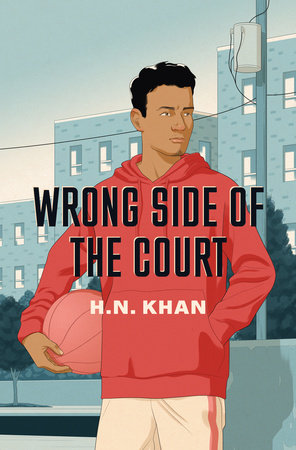
Wrong Side of the Court by H.N. Khan

Standard
Wrong Side of the Court by H.N. Khan

court

I don’t know what it is about male protagonist sports novels, but they often seem to be overly crass and crude.  Perhaps that is the real life environment that inspires such writings, or perhaps it is just male voiced YA books, but in this one in particular it seemed to stand out because the storytelling by-and-large is really enjoyable, it just has a lot of flags, A LOT.  Beside the language, sexual innuendos, drug use, violence and romance, it also has a few religious and cultural concerns that are possibly just specific to the niche that I review for, but did have me shaking my head out of confusion and sighing in disappointment. To its credit there is a decent amount of Islam featured, some male friendships that are quite heartwarming, and some emotional depth that presents really well.  The 312 page book is marketed to readers 12 and up, but there is no way I would encourage the book for anyone that young, Muslim or not.  For Muslim youth specifically I would say 17 plus.

SYNOPSIS:

The book is told from the perspective of fifteen year old Fawad who lives in Regent Park with his mom and sister.  He dreams of being the first Pakistani NBA player and the linear story bounces in time at the start and he sometimes even speaks to the reader, but the story is all his.  Regent park is a poor part of town pressed right up against a wealthy part of Toronto and the neighborhood is rough.  Fawad is a good kid: he doesn’t go out much after dark since his father died, he helps his mom, doesn’t run with a gang, he gets good grades, loves basketball, and doesn’t have a girlfriend, not yet anyway.  The story starts with him reliving the final minutes of a summer league basketball game where he opted to pass out of fear of the ever looming threat of Omar, rather than take the shot himself.  Omar ends up missing and they lose, oh yeah and Omar is the imam’s son.  Under the protection of Abshir, Fawad’s friend Yousuf’s older brother: Omar, Yousuf, and Arif have someone looking out for them on the streets.  Arif has some help from the Bengali crew, and Yousuf is Somali, but there are not enough Pakistani’s to make a stand or demand respect when out and about.  When Abshir gets murdered, Yousuf retreats into himself his music and smoking joints, Arif keeps his playboy ways to take his mind off things when he isn’t reciting Quran beautifully in classes at the masjid, and Fawad makes the high school basketball team and finds a girlfriend. Things with Omar physically escalate as well, while things at home have his mom putting in to action plans for Fawad to marry his cousin in Pakistan.

WHY I LIKE IT:

I really like that Islam and culture are presented powerfully with OWN voice strength and detail.  Things are not defined or over explained and if you don’t know what haram or Ramadan or an imam are, figure it out.  I rarely find myself wishing the ending of books were different.  You hear a lot about that in movies, that they didn’t screen well or something, and so the ending was changed, and that is how I feel about this book.  *SPOILERS* Fawad and Omar should not have resolved their issues so easily, it was more than a respect thing, there was blood and hospitalizations.  We never even knew why they had issues in the first place. Arif and Nermin should not have hooked up. The whole book she comes across as the strong Muslim hijabi that blurs the lines by side hugging her guy friends, but not being ok with it, then she shows up to a dance, and then hooks up with Arif, didn’t like that at all.  I get the mixed signals of Fawad having a girlfriend from his mom, and while he seems to be connected to the mosque it never shares that he understands Islam more than just I have to do this and I can’t do this, but I didn’t like him going back to Ashley and wanted him to choose his own self-worth and respect over accepting her apology and going back to her.  I do not understand why Fawad waited so long to tell his mother about Nusrat. It was nothing that would upset his mom, I don’t get why he dragged it out.  I do love that the cousins were friends or friendly, but were fronting to their parents, but it was unnecessarily dragged out, and the more it got dragged out, the more complicated and intertwined it got with Fawad having a girlfriend.

I did not get the mom and sister relationship at all.  The mom seems to have just given up on her, but they seem to spend a lot of time together, so that was a disconnect for me.  At first I kind of liked the twist on the stereotype that the boy was not allowed freedoms to go out, but the sister was, but it kind of unraveled in the logic department.  I am desi, (half anyway) and the stereotype is that the boys are earning before they get married.  So to be arranging Fawad’s wedding at age 15 is bonkers.  To be arranging anybody’s wedding at that age is, but it is so contrary to custom, that I couldn’t even ignore it and move on, it was constantly blocking the story from being smooth.  The mom’s rationale is that she wants a daughter-in-law to take care of her.  Again kind of bogus, but maybe there is some truth there, unfortunately there is the big gaping hole that she, the mom, doesn’t take care of her in-laws, so why the difference of expectation.  Suffice it to say the mom and sister are both road bumps in the story for me.

I was impressed at how much basketball play-by-play was in the book and how it didn’t get boring.  I love that there were plenty of male role models in the community and that the three boys really looked out for each other, supported each other, were connected to each other’s families, etc..  I didn’t like the abusive religious imam trope.  I’m glad that Omar’s dad wasn’t blind to his son, but to be abusive was uncalled for.

I don’t know why Nermin is called, “Arabic,” at one point, that is clearly erroneous and I wish that the condom talk and sexual innuendos were greatly reduced.  There isn’t a lot of resolution regarding who killed Abshir, if Fawad caused any permanent damage by playing, or what the future holds for any of the characters and their relationships, but it was a quick read and held my intention and I did quite enjoy the writing.

FLAGS:
Lying, violence, murder, physical assault, kissing, making out, talk of arousal, talk of condoms and sex and getting physical.  Drugs and alcohol and addiction.  Child abuse, theft, stealing, threats.

TOOLS FOR LEADING THE DISCUSSION:

There is no way I could teach this to middle school or high school in an Islamic school.

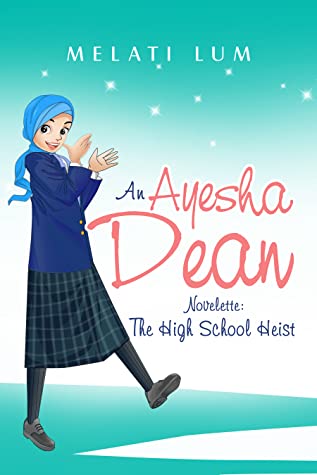
An Ayesha Dean Novelette: The High School Heist by Melati Lum

Standard
An Ayesha Dean Novelette: The High School Heist by Melati Lum

ayesha deen mg

If you are a long time fan of Ayesha Dean and you have been waiting for some children in your life to grow up just a little, so you can share the strong Muslim detective books with them, you are in for treat.  This book is a short novelette for middle grade readers!  It isn’t a prequel detailing her personal backstory, but it does show how she got her first taste of sleuthing at age 13.  If you are new to the series: the book like all the others is Islam centered, fast paced, authentically voiced, and an overall fun read.  Unique to this book is that it is for ages 8 and up, and takes place in Ayesha’s home country of Australia.

SYNOPSIS:

Ayesha is at a new school, she has recently started wearing hijab and she just wants to settle in to it all with friends Jess and Sara.  Things have been going missing from year eight lockers, but it isn’t until Ayesha is a victim does the concern really hit home.  Add to that getting paired with the jerk Dylan Wyley for a project in Indonesian class, and Ayesha is not having a good day.  When she senses some suspicious activity, she is on the case: ready to get her stolen book back, take down a bully, put her Tae Kwon Do training to use, and make it to the library to pray her salat on time.

WHY I LIKE IT:

I really enjoyed the relatable voice of young Ayesha, having read all of the other books in the series, it was sweet to get a peek of her in her younger school days.  I love how much Islam is in the book, and not in a preachy way, but rather in a ‘I’m Muslim and this is how I see the world and this is what I do’ sort of way. I’m not going to lie though, I wanted more backstory on how she became friends with Jess and Sara, how she settled in to living with Uncle Day when her parents died, and all the backstory four books solving crimes around the world just couldn’t get to.  But I fully realize, that is just something I may never get (hint, hint) and will have to be content with the fast paced, culture and Islam rich stories that we thankfully get.  I’m not complaining, I just get overly invested.

To all my arrogant ignorant readers out there, that like me, might be a bit confused about Australian schooling and culture- I embarrassed and humbled myself and annoyed the ever gracious author to learn more about Ayesha’s world.  In Australia the lockers are located in the students’ homeroom classrooms (tute rooms), hence they don’t often padlock them.  High school refers to ages 12-17, and sometimes 11th and 12th grade are called senior school, and “How did you go” is a phrase in Australian English.  See, aren’t you glad I asked, now we know, and can widen our view together.

The only thing that I think I would have liked to see would have been a bit of pause before Ayesha got into a fight.  It is high energy, and she does it to help someone, but I feel like at 13 years old, in a book for 8 year olds, and as someone familiar with Tae Kwon Do, it should have been more articulated that she was nervous to engage in a physical altercation, and was only doing it because she could not diffuse the situation, get the victim away, and thus had to step in.  I recognize that pulling out of the scene might have made it lose momentum, but I felt a little off celebrating a school fight without that pause of introspection.

FLAGS:

Fighting, stealing, bullying, Islamohobia, racism, bigotry.

TOOLS FOR LEADING THE DISCUSSION:
The book is short and for a younger age than I meet with, but I look forward to purchasing the book on February 20, 2022 to have available in the school library for anyone to pick up and read, inshaAllah.

The Unexpected Friend: A Rohingya Children’s Story by Raya Rashna Rahman illustrated by Inshra Sakhawat Russell

Standard
The Unexpected Friend: A Rohingya Children’s Story by Raya Rashna Rahman illustrated by Inshra Sakhawat Russell

friend

I have mixed feelings about this book. On the surface I am thrilled that there is a story highlighting the plight of the Rohingya for children and that it includes some character depth and relatability to global readers. On the flip side, the book is very vague and could be any refugee in any camp and is not Rohingya specific. Additionally, I feel that it is too idyllic. I am no expert by any means, I wouldn’t even say that I am well-versed, but the book paints an impression of a thriving organized camp with medical help, orderly food lines and a vibrant school. Yes, it talks about the lines being long, and naturally if you are out collecting firewood, it is a bit rugged, but I don’t know that the lasting impression is a humanitarian crises. I understand that in a 36 page, kindergarten to 2nd grade book, political complexities and horrors are not a natural platform, but I worry that the aim of bringing attention to the situation will miss its mark by not capturing its truth more clearly.

img_5377

Faisal has just finished his afternoon prayer and while outside the mosque he hears a faint chirping and discovers a small bird with a hurt wing.  He and his friend Rahim take the bird to the learning center to be cared for while the boys head to the forest to collect firewood.

img_5378

The forest can be dangerous, but in order to cook, they must have wood to burn.  While in the forest, the boys encounter an elephant and remark on how they are depleting the animals’ natural habitat.  When leaving Faisal trips and falls, scattering his collected firewood and breaking his arm.

img_5379

Rahim offers to share his firewood with Faisal and the two head back to camp to get Faisal to the doctor.    Like the bird, who’s wing has been bandaged, Faisal now too has a hurt appendage.  The two spend every minute together for weeks, and when both have healed, Faisal admits he doesn’t want to let the bird free. He knows it is the right thing to do and alas allows the bird to go.

img_5380

The book has an afterword regarding Cox’s Bazar and information about the author and Save the Children Foundation.

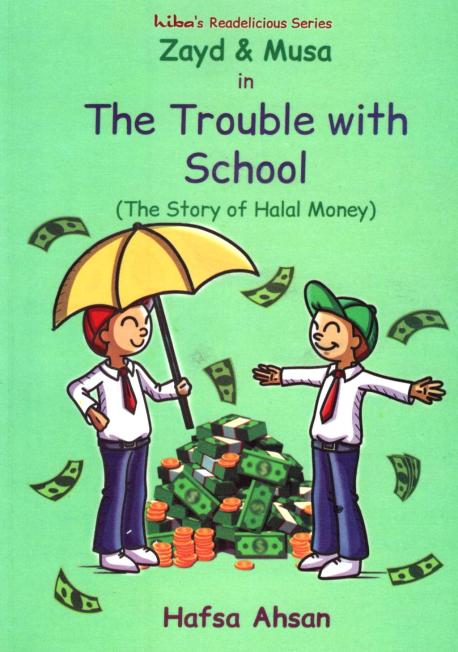
Zayd & Musa in The Trouble with School (The Story of Halal Money) by Hafsa Ahsan illustrated by Yusra bint Absar Kazmi and Urooj Khan

Standard
Zayd & Musa in The Trouble with School (The Story of Halal Money) by Hafsa Ahsan illustrated by Yusra bint Absar Kazmi and Urooj Khan

money

This delightful 70 page early chapter book is filled with humor, Islam, and a sweet story that ties it all together.  The book definitely has a teaching agenda, but it carries it with hilarious banter and relatable examples, all while covering a topic not often discussed in children’s books: money.  The book has a few grammar, vocabulary, and consistency concerns, but they are easy to overlook for readers 2nd grade and up.

SYNOPSIS:

Twins Zayd and Musa are very, very different.  Both boys enjoy cricket, but Zayd is more focused and enjoys homework, whereas Musa tends to daydream and often says something funny, but unintentionally.  When Musa makes the case in Science class that food, water, shelter, and money are all needed to survive, the class finds him hysterical.

Musa knows not to argue, his teacher is his elder and he knows he should have taqwa and be respectful, but he doesn’t give up on his idea either.  When the boys’ mom talks about halal money and gives them Islamic references for how money should be handled, Musa has a great idea: kids should be paid to go to school.

Once again, the whole school finds him funny, but Saeed Uncle, a neighbor who helps feed the poor at a roadside stand, doesn’t dismiss Musa’s idea and tells him, in some places kids are paid. And offers to take him and show him.

With references to sahabas who had great wealth and examples of how wealth can be used for good, Musa and Zayd learn numerous lessons, and share them with those around them, in a fun, engaging manner.

WHY I LIKE IT:

I get that the book is preachy, but in my mind, it is a story built around a teaching concept, so it doesn’t bother me.  I love the jokes and the tone.  At times the book is written quite formally, but being the author lives in Karachi, Pakistan, I assume that part of it, is just different standards.  I appreciate the Quran Circle table that lists where the Quran mentions wealth and the glossary.  I didn’t quite get all of the random facts included throughout, as some were about money, others about school, but I think kids will enjoy them none-the-less.  The illustrations are enjoyable, the text bubbles often hilarious (once again, a few I didn’t get).

I liked that it mentioned not drawing faces, and not going somewhere alone with someone you aren’t close with.  It is said in passing, but I love that those little nuggets exist in a book that is about something more, but normalizes and takes advantage of the opportunity to remind children of basic safety and Islamic concepts.

There are some awkward tense changes, and a few gaps in the story, but overall, I really enjoyed it and need to find the first one in the series.

FLAGS:

None

TOOLS TO LEAD THE DISCUSSION:
This would be a great book to use in a middle grades Islam class as a starting point to having students research the Quran and Sunnah to find information on a topic.  The humor will keep kids engaged, and the concept is an important one.  I plan to make all my kids read it, so that we can discuss as a family, and benefit from the lessons presented.

Huda F Are You? by Huda Fahmy

Standard
Huda F Are You? by Huda Fahmy

huda f

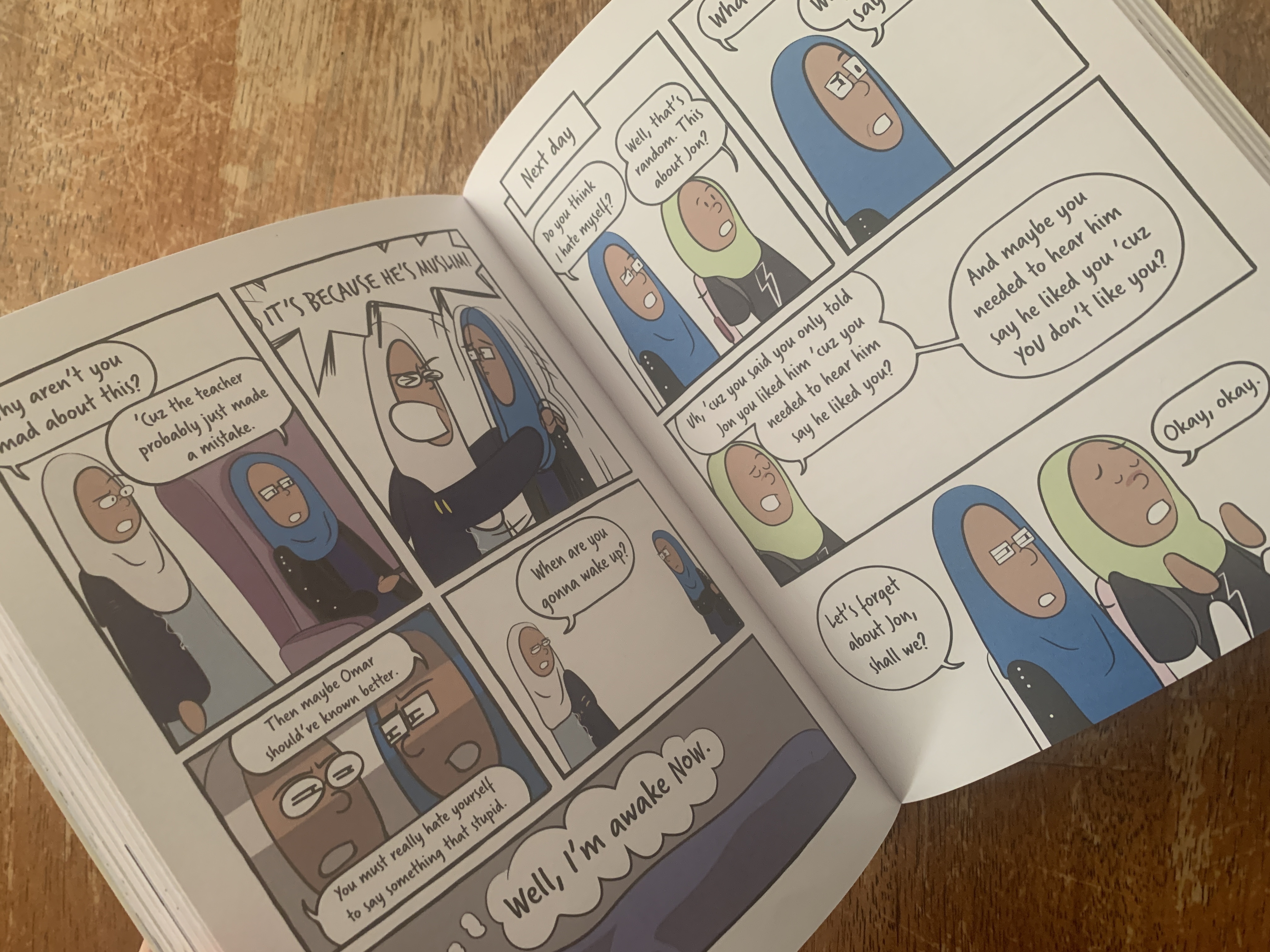
I think everyone has heard about this book by now and how fabulously fun, real, and relevant Huda’s life  is for so many.  I am happy to jump on the praising bandwagon, as this teen/YA 192 page graphic novel really is a great OWN voice unapologetically Islamic mainstream tale.  It does mention periods, relationships, hate crimes, and finding yourself, so probably 14 or 15 year olds and up.  My middle school boys read it, so it isn’t that it is inappropriate, just the target audience is more teen girl.  I know a lot of people, including Huda’s mom according to the inscription, have issues with the title, but I think it is brilliant.  She takes ownership of her name and it isn’t just for shock value, the book is about figuring out who you are, how you feel about Islam, establishing your friend circle, and growing and learning along the way.  My public library has it, as do major outlets, so what are you waiting for, go read, laugh, and feel seen.

img_5036

SYNOPSIS:

Huda has just moved to a new school and she is no longer the only hijabi.  She has moved to Dearborn, Michigan and there are A LOT of Muslims.  She is no longer defined by the cloth on her head, she has to figure out who she is.  Who she really is.  And sometimes the best way to do that, is to figure out who you are not.  

Huda tries different clubs, and different circles of friends, both at school and at the masjid.  Along the way she learns how much she craves approval and who is always in her corner.  When a kid at school is targeted for being Muslim, Huda will have to see how much internal hate she carries as well.  Her clothes change, her outlook changes, she tries new things, and she grows, all while the laughs help the story bounce from one serious topic to the next without coming across as arrogant or stereotypical.  This is Huda’s story and we are just along for the ride.

img_5035

WHY I LIKE IT:

I love that there is nothing to critique, it reads autobiographical even if parts are exaggerated or only based loosely in reality.  By being so real, and so well done, you are excited when you see yourself staring back, but you feel like you’re a friend learning about Huda even when you can’t relate exactly. Her comics online and her previous two books are all amazing, and I love that she is continually creating new material for us all to enjoy and benefit from.

img_5037

FLAGS:

She tells a boy she likes him that she doesn’t really like.  Periods are referenced and blood and a pad are shown, not graphic and gross, but the sentiment is there.  Discrimination is present, as is Islamophobia and stereotypes.

TOOLS FOR LEADING THE DISCUSSION:

Just keep the book out and around: it will be picked up, read, and mentioned, no tools needed.

Omar Rising by Aisha Saeed

Standard
Omar Rising by Aisha Saeed

omar rising

This middle grades 224 page read is quick and memorable.  The story is set in Pakistan and the characters are probably Muslim, but there is no religion mentioned until nearly the end, and even then only in passing.  The only culture specific references are the characters’ names, social etiquettes, and the foods mentioned.  By and large, the story is universal and could take place anywhere, and probably does take place everywhere.  While I wish it would have had more cultural and religious references, it is an OWN voice story after all, the book is enjoyable, the characters endearing, and I think young readers will benefit from spending the school year with Omar, seeing classism up close, and cheering for an unjust school system to be challenged.

SYNOPSIS:

Omar is the son of a servant and when he earns a scholarship to a prestiges boy’s school for seventh grade, the entire village is bursting with pride.  When he gets there though, it is hard, really hard.  The scholarship kids aren’t allowed to participate in any extra curriculars, they have to do service hours, and they have to maintain the ridiculously high A plus grade average or be expelled.  It seems that that headmaster is out to get the scholarship kids, and Omar in particular.  As the scholarship students struggle to stay afloat, Omar has to determine if it is all worth it. He spends all his time studying, even when he goes home to visit his mother, and while he doesn’t want to let the village down, he is struggling to find the optimism to keep fighting for his place.  When Omar learns that the system is designed to make the scholarship kids fail, and that those that are kicked out are called “ghost boys,” he has to decide to how hard to push himself and ultimately how hard to push to break down the system that treats him and those like him like second class citizens.  Luckily, Omar has some supportive teachers, some loyal friends, and a whole lot of determination.

WHY I LIKE IT:

I love that the story is universal, it is at times a much tamer version of the YA book Ace of Spades which also explores second class citizens in posh private schools as a theme, and at times I even felt some Dead Poet’s Society vibes.  The cultural setting and names however, to me is a mixed bag.  I’m glad that it didn’t become another story about problems in another country with judgmental overtones, but at the same time, to be so void of cultural references seemed too far of an extreme in the other direction to make the story feel real richness and authenticity.  I love that the story isn’t about bullying and that a number of characters have depth.  I was genuinely confused for a large portion of the book about what the orientation in the summer entailed.  It was clarified much too late that it was a weekend, but I was at a loss trying to figure out how he knew some of the campus, some of the other scholarship kids, had a roommate, yet knew so little of the school and what it would be like.  I am not sure why that information was delayed, but seeing as I read an arc, I hope it is clarified in the final copy.

FLAGS:

Omar and a girl are friends, they hug at the end, but it seems rather innocent, and more sibling like as they were raised together.  

TOOLS FOR LEADING THE DISCUSSION:

This would be a good book on a shelf, and would possibly work as a read aloud to grades four or five.


Turning Back to Allah: Sulaiman’s Caving Calamity by Aliya Vaughan illustrated by Rakaiya Azzouz

Standard
Turning Back to Allah: Sulaiman’s Caving Calamity by Aliya Vaughan illustrated by Rakaiya Azzouz

turning back to Allah

Good early elementary books can be tricky: the voice needs to read authentic, the lessons not preachy, and the scenarios relatable, all while not talking down to the reader or talking above their comprehension.  As fabulous middle grade books seem to be popping up at record speed, I find myself reading the same old books with my fourth child who is six.  Alhumdulillah, this book was nominated in the Muslim Bookstagram Awards 2021 competition and I was able to purchase and receive it quickly from Noura at Crescent Moon Store.  My son can read it, although because of the British terminology, he did better when I read it to him, none-the-less, he could explain it, he genuinely understood and related to the main character, and was emotionally connected to the outcome of the story.  The 49 page, color illustrated story is perfect for independent readers first or second grade and up.  The book also contains comprehension questions, etiquettes for du’a, a list of times and places when du’as are answered, and evidence for the story from hadith.  Additionally there are ayats from the Quran at the beginning and end of this well sourced book, alhumdulillah.

img_4985

SYNOPSIS:

Sulaiman is getting ready for an overnight scout trip in some caves.  He is nervous having been stuck in his apartment elevators the summer before and being lost at a park with his family.  His stress has him being mean to his little sister, and his dad tries to mediate, but you can sense that their normal bickering is heightened because this is going to be hard for Sulaiman.  The scouts meet up to board their mini bus and Sulaiman is acting weird, he wants to sit by the window, he wants to read signs, finally he tells Jacob about his worries and the two boys agree to stick together like glue while they are in the caves.  Foreshadowing is set, and when Sulaiman’s batteries roll away and he stops to retrieve them he gets separated from the group and he will have to rely on his faith in Allah swt to feel less alone and brave what is to come.

img_4984

WHY I LIKE IT:

I love that when Sulaiman is arguing with his sister he doesn’t have hadith quoted at him.  Sure it is ideal, but really, as parents we just want the bickering to stop most times and our kids to be nice.  It is often easier to instill morals and lessons in calm times, not in the middle of an emotional kerfuffle.  At the same time, when he is scared, he falls back on the lessons he has been taught from the Quran and sunnah.  I love how it reads realistic.  We want our kids to turn to Allah swt for all things, but sometimes to teach that we encourage them to seek Allah swt in times of happiness and times of hardship.  Sulaiman is scared, really scared, and he turns to Allah swt, and it is heartfelt and emotional.

I’m embarrassed to say, but I was a little confused by the being lost in a park prior story thread.  It either needed more detail, or maybe just more context, but I thought it was the same park they are heading to with scouts, then realized it was a completely separate park and incident, so I would like a bit more framing of that story line.  Also the stress of being stranded in the elevator, doesn’t directly connect to the rest of the story, perhaps bringing up some claustrophobia fears would have helped tie it all together.  As it is, it just seems that Sulaiman seems to be tested a lot and rather traumatically.

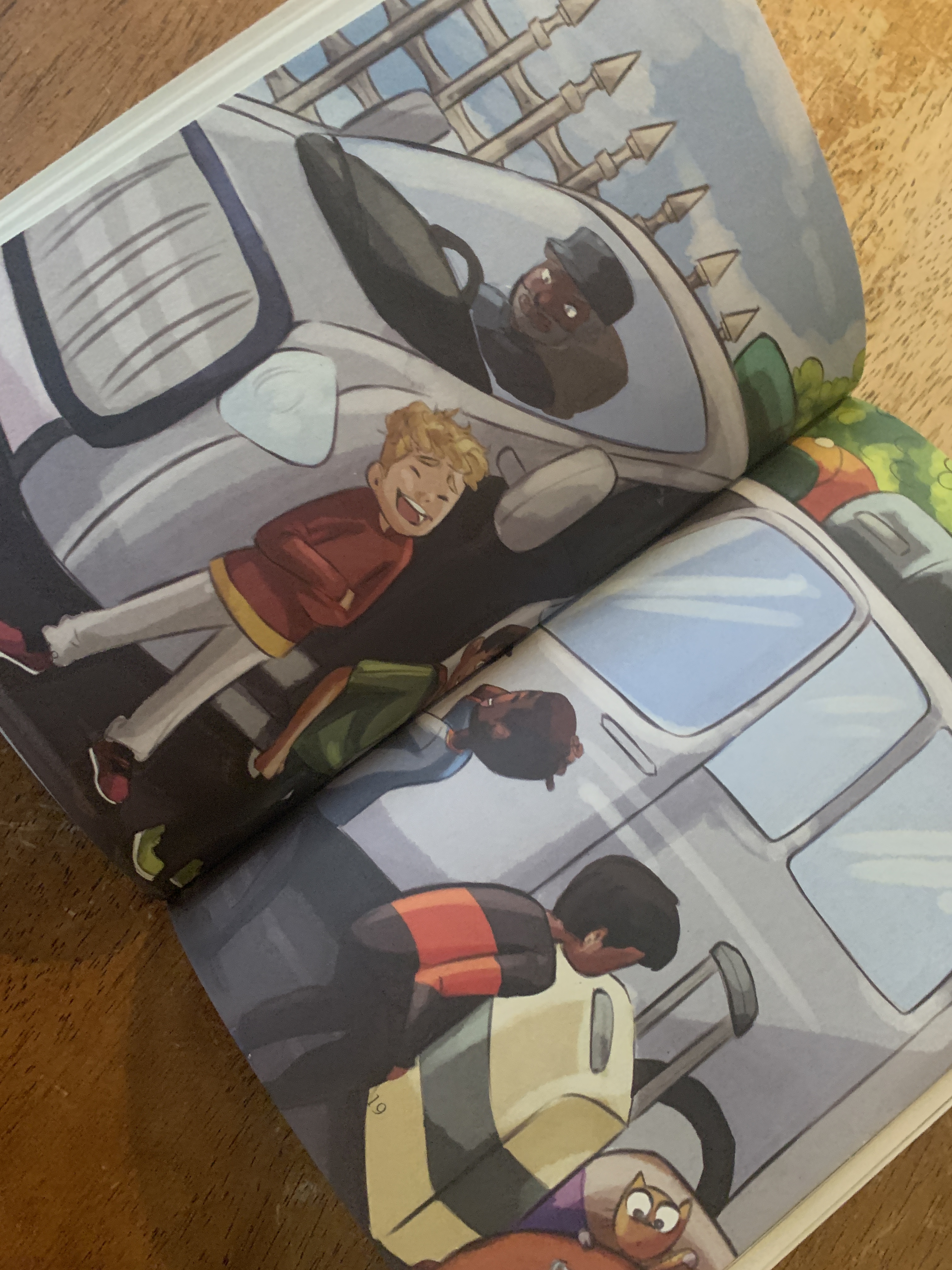
The illustrations being in full color and full page are a welcome surprise in the book.  However, there is one two-page illustration that shows the kids laughing before boarding the minibus, but it isn’t derived directly from the text, and I initially thought Sulaiman was being laughed at for his fears.  I went back, and it doesn’t seem that is the case, but I wonder if I was the only one confused by that illustration.

All-in-all the book physically is appealing to children with the open font, colorful pictures, size, and length.  The story is relevant, and the islamic tie-ins powerful, alhumdulillah.

FLAGS:

Some teasing, possible bullying among siblings.  Some scary moments mentioned and explored: being stuck in an elevator, lost in a park, left alone in a cave.

img_4984

TOOLS FOR LEADING THE DISCUSSION:

This would be a fun read aloud in a second grade class.

Golden Girl by Reem Faruqi

Standard
Golden Girl by Reem Faruqi

golden

I began reading this book not having any idea what it was about. All I knew, or all I cared to know, was that the incredibly amazingly talented Reem Faruqi wrote it, so I wanted to read it. While I know it will be hard for most to avoid knowing the plot, I think it was a blessing that I was able to be swept away so completely and so fully in a story that is wonderful and memorable, and truly sets a higher standard for the way that a story can be told. Faruqi’s voice and authenticity had me in tears. I didn’t even realize my eyes were dripping until my son asked me if I was ok. It wasn’t the plot that had my emotions spilling over, sure it helped, but it was the storytelling, the hadith and deen and snapshot of a life so unlike my own that simultaneously is exactly my own that a physical reaction emerged. It is the power of OWN voice storytelling. It is the power of brilliant writing. It is not just a book about a Muslim character, this book blurs the lines for me between Islamic fiction and fiction with Muslim characters. Middle school readers (mature middle grade readers) will enjoy the book, older readers will enjoy and appreciate the 336 page story told in verse. You can pre-order the book and I hope you will, it helps convey the message to publishers that this book is highly anticipated and that we need voices like this. Additionally, Goodreads currently is hosting a giveaway, you can head there to try and win a free copy.

(If you don’t want to know what the story is about, maybe skip the next section.)

SYNOPSIS:

Aafiyah’s name means well-being, protection, health, money, happiness, everything good, but Aafiyah has secrets too. She is privileged and loved, and she knows it, but sometimes when she sees something she likes she accidentally borrows it. Sometimes it isn’t an accident. Sometimes she doesn’t just borrow. Much of her life is wonderful, a best friend that lives next door, doting parents, tennis, vacations, trips to Pakistan to visit grandparents, and a love of “weird but true facts.” So what happens when all that changes. When her grandfather gets sick and the family wants to bring him to America for treatment, when Aafiyah’s dad gets detained and imprisoned on the way home, and Aafiyah’s secret may be a way to help her family?

WHY I LIKE LOVE IT:

I absolutely love that the characters are so well rounded and developed. Yes, Muslims have vices, and even young practicing Muslims have tests and struggles. The bar has been raised, we aren’t just a monolith, and our only struggles aren’t girl/boy issues, alcohol, not being oppressed and getting an education, we are complex people, we are human. The bulk of the story is Aafiyah growing up: her responsibility within her family, her changing body and appearance, her friendships, her responsibility for her actions, her desire to want to help and improve and step in to her own. I love that all these layers of life somehow are explored in such sparse lines. It doesn’t drag, but it gives the necessary pauses to involve the reader in her logic and view of the world. Aafiyahs’ kleptomaniac tendencies, her father being detained, her grandfather’s illness. they all move the story along, but they are foils for a much more intimate character story. A story that is surprisingly funny and light and impossible to put down.

I absolutely love how Islam is woven in, how she exudes Islam in all that she is, because she is a Muslim completely, the good and the bad. The guilt she feels, the desperation to be forgiven, the knowing that Allah swt sees all. The book is never even close to being preachy, but she proudly owns her identity and the details of her faith are not watered down, or even justified, it is who she is and it isn’t up for debate.

Culture is presented unapologetically as well. She is critical of things she sees in Pakistan, and similarly celebrates and admires good things about Pakistan and Pakistani culture. The book does not seem to have an agenda in presenting Muslims or Pakistan as good or bad, just as Aafiyah sees them. Which isn’t revolutionary on the surface, but it really is refreshing because it highlights how many books simply don’t. It makes the contrast painfully obvious between books that are shy about certain things, when they have their characters deflect and disassociate from certain “realities” and books that confidently uphold their identity and demand that the reader steps up and truly see the characters and their experiences.

There is a beautiful and raw author’s note at the end that shares some of the inspiration for the threads of the book, a glossary, a recipe for Aloo Gosht and resources for help with kleptomania.

FLAGS:

Stealing, lying, chatter about crushes, music, dancing. Being attractive and the reactions that it gets is woven through out.

TOOLS FOR LEADING THE DISCUSSION:

If I have a majority girl group, I will teach this. It isn’t a girl only book, but I think some of the more subtle themes would need a safer girl space to discuss.

Daring Dreamers Club: Piper Cooks Up a Plan by Erin Sodenburg illustrated by Anoosha Syed

Standard
Daring Dreamers Club: Piper Cooks Up a Plan by Erin Sodenburg illustrated by Anoosha Syed

piper

This is book two in the series, I couldn’t get the first book from the library, and I wasn’t willing to wait for the one that focuses on Muslim character, Zahra’s story to be published, it could be a few years.  At 224 pages this middle grades book is fairly formulaic with five diverse girls becoming friends, each book featuring one girl’s story with the others serving as supporting characters, and with the tie-in to Disney Princesses, I really didn’t expect much. Imagine my surprise when I found myself enjoying the characters and their lessons and struggles, sigh.  The book is sweet, the characters like-able, and the author really doesn’t try and force all the characters into every scene.  The book focuses on Piper and the other girls add to her story where it helps, they don’t all have equal time and it doesn’t get confusing because of it.  You can even read the books out of order.  Zahra wears hijab and her Islam is mentioned in a journal entry where she discusses the five pillars, the importance of charity, and getting dirty looks.  There is nothing preachy, but none of the other character’s are defined by their faith and I truly don’t know if I’m bothered by the singling out of Islam being her identity or flattered by it.

img_4279

SYNOPSIS:

Five girls are grouped together at school in an advisory class to help prepare them for middle school: Milla, Piper, Ruby, Mariana, and Zahra.  Their advisor loves Disney Princesses and in their weekly journal entries has them write about their assigned Princesses as they explore their similarities and how they would tackle challenges, face fears, and the like.  The girls are diverse in family dynamics, race, religion, ability, etc.  Milla is African American with two moms and food allergies.  Zahra is good at art, Muslim, and likes to sew.  Ruby is a twin, her parents are divorced and she is great at sports.  Mariana is hispanic, and is an amazing swimmer.  Piper is Jewish, has dyslexia and loves to cook.  In the book she is struggling with school, while she excels in her food science creations.  She gets accepted to appear in a kids cooking show competition, but will need the help of her Daring Dreamer friends to prepare for the challenges about to be thrown at her during the competition, and to help her from falling behind in school.

Each girl has their journal entry presented in the book which helps to understand more about the different girls, as well as a little bit of introspection to the events happening in the larger story.

WHY I LIKE IT:

I like that the characters are really supportive, and the lessons aren’t so on the nose.  Piper isn’t just told that she doesn’t have to win the competition to have value, you feel it long before she accepts it herself.  Her personality really comes through and it isn’t for attention or for sympathy, she helps a competitor, there is no giant round of applause or moral reflection, she just helps.  I love that even though the story is Piper’s and her dream, there are larger issues woven in and felt, not necessarily preached. Piper is the middle child and feels she has to prove herself, she remarks on how being pulled out of class in early elementary school to get help has made it hard for her to ask for academic help now, the role of confidence and how charity and giving back is important, even while her own family’s financial situation isn’t clear.  I like the role of Piper’s siblings, they are quirky, but loving, and they work through their annoyances to help each other.  It is heartwarming.

I have my own mixed feelings about Disney Princesses, as a child of the 80’s, the 90’s brought all the glory of Jasmine, and Ariel, and Belle, and Mulan, and my friends and I definitely identified with different characters.  I may or may not have tied my hijab up many a days and claimed that I was Mulan in high school, but somehow with my own daughter I didn’t really bring the Princesses in to her day-to-day existence, I don’t think she has even seen all the movies, we read books (we didn’t even have a tv when she was little), she’s 14 now.  It had become too commercialized, I worried about the messaging more.  This book reminded me of what my friends and I as older “kids” channeled the Disney Princesses to be.  It wasn’t all about pink and sparkles, it was battling the bad guy, hanging on to your dreams, and persevering when things were tough.  This book channels those thoughts, it isn’t in your face Disney, it is more muted, and I appreciate that.  It is a solid middle grade read and I think an enjoyable one at that.

img_4283

FLAGS:

In this particular installment, there are no crushes, no holidays, no music, one character has two moms, but in this book, I don’t know that a casual reader would pick up on it. It says “Moms” once, it might be a bigger deal in the story that focuses on Milla, but I haven’t read it to comment.  There is lying and Piper tries to justify it, but I think it is clear and has its own resolution.

img_4284

TOOLS FOR LEADING THE DISCUSSION:

It is much too young for a middle school book club, but I think because it is such an easy engaging read, that in a home, or classroom, the book would be appealing to 3rd graders and up.

The author’s website: https://www.erinsoderberg.com/daring-dreamers-club.html

img_4280

There was an Old Auntie who Swallowed a Samosa by Asmaa Hussein illustrated by Milton Bazerque

Standard
There was an Old Auntie who Swallowed a Samosa by Asmaa Hussein illustrated by Milton Bazerque

samosa

I feel like such a broken record of late (and in the future), of my reviews of books published by Ruqaya’s Bookshelf; the stories are WONDERFUL, but I really struggle with the titles.  I truly thought this was a cultural/religious version of the classic, I Know an Old Lady who Swallowed a Fly.  But it isn’t.  It is an original clever, laugh-out-loud hysterical story for preschool to early elementary.  And one that parents and caregivers will not dread reading over and over again with the well done rhyme, expressive illustrations, a silly conclusion, religious framework, and universal appeal.  The book is on point, the title and cover illustration, sadly for me are not, and don’t, in my opinion, do the story justice.

img_4190

Auntie Sophie is making samosas with some peppers she grew herself.  Under the close company of her kitty, we learn how the Scotch bonnets were grown and cared for.  The doorbell rings and Auntie Eynara has arrived with her beautiful cake to take to the masjid for iftaar.  

img_4191

Auntie Sophie  hurries and fries her samosas and the ladies head up the hill to the only mosque in town.  Everyone breaks their fasts with a date, but Auntie Sophia dives in to her samosas.  When the imam’s mic crackles, she swallows the samosa whole and something is terribly wrong.  Her belly is on fire and jelly nor garlic knots nor mint lemonade not rice can cool it down.

img_4193

Just when she thinks she is ready to pray, it starts up again, and having eaten everyone’s dinner, Auntie Sophia is getting very tired. As she rolls out the door and down the hill to her house, she figures out what happened to her delicious samosa filling, and calls to have pizza and halal hot wings delivered to the mosque.  She also pledges to grow flowers next year instead!

img_4192

Kids will love the book as it is outrageous, while at the same time being so relatable.  The mosque, iftar, eating something spicy, the book is a favorite at our house for both the two and six year old and the horizontal 8.5 x11 orientation, keep eyes glued to the pages, while the rhyming lines move the story along.  I enjoy being able to talk about the peppers and different foods and smell of garlic with my kids after the 17th reading or so, and I love the diversity of the characters at the mosque.