Tag Archives: canada

Detective Aunty by Uzma Jalaluddin

Standard
Detective Aunty by Uzma Jalaluddin

The author may have returned to her fictional Golden Crescent neighborhood, but with her best writing yet, the focus is not romance like in her earlier books, it is a murder mystery.  If you think of it, who better to solve a mystery than an unassuming Desi Aunty with a knack for observations, getting people to talk, and prying into other people’s business? I say it with love, this book was such a fun read, I’m sure I should have paid more attention to craft and arcs and writing style, but honestly I devoured the 336 pages in two settings, and genuinely hope that Kausar is just getting started. The adult read isn’t salacious, it does feature a murder, some marital dramas, crime, fraud and the like, I think mature teens that aren’t bothered by a grandmother protagonist will enjoy the read. The first chapter is a bit dry and feels like an info dump, luckily it isn’t a long chapter and I ultimately, appreciated it getting the stage set and then slipping out of the way so the story could get good. The telling and not showing takes a while to flesh out, the author does a good job of threading it through, and by the mid point you really get a feel for the characters and appreciate the early statements that set the tone, and the book’s ability to tie up nearly every thread it presents.  There isn’t a ton of Islam, many of the characters are Muslim; the traditions and cultural expectations are plot beats in the story, even if the action and expectations are not overtly seen through an Islamic lens or with Islamic boundaries.  

SYNOPSIS:

Kausar Khan has always noticed things around her, and when needed, used those observations to position certain outcomes.  When she gets a call from her daughter in Toronto that she needs her mom to come help with the kids as he is wanted for murder, Kausar Khan leaves North Bay and returns to a city filled with memories of tragedy to try and help.  Sana asks her mom not to get involved and to just help with the cooking, cleaning, and childcare, but old friends, new secrets, and the high stakes of a murder are not going to keep this Aunty from unraveling the truth.

WHY I LIKE IT:

I love the concept, the execution, and that it didn’t unravel at the end.  I read the last few pages with the same intensity as the climax, trying to figure out whodunit.  The play on traditions and stereotypes to lure suspects in, and the wit and charm of using the religion and culture to advance the plot were flawless.  Sure, I wish the characters threw in some commentary on men and women being alone together not being ok, or some Islamic insight into marriages and rights.  It seemed intentionally lacking, and that is unfortunate. I also felt the thread with the son coming from the UK was painfully underdeveloped, the heart of the book though was strong.  And I loved the side commentary on marriage and women’s roles.  It was insightful and added depth, it didn’t come across as angry or like the author had an axe to grind, which was refreshing.  

FLAGS: 
Murder, affairs, fraud, pyramid schemes, theft, racism, gentrification.

TOOLS FOR LEADING THE DISCUSSION:
The book won’t work for a school book club, but is a perfect summer read to giggle about and chat about with friends.

The Last Resort by Sumayyah Hussein illustrated by Rania Hasan

Standard
The Last Resort by Sumayyah Hussein illustrated by Rania Hasan

Once I got over my disappointment that the no parking sign on the bottom left of the cover was a deer and not a unicorn (clearly it is a deer, no shade to the illustrator), the 149 page early chapter book with illustrations was a decent read.  The messaging about family time was a little didactic, but the twist of having the child want it, opens it up to be both reflective for kids also craving family routine, and those that don’t appreciate what they have.  I do wish that the climax of the “noise” was amplified and built upon to add some urgency and tension. And the resolution a little more explained as I don’t know that most target readers will quite grasp what was going on in the resolution.  I know I would probably complain if it was over explained, but here we are.  The book is not preachy in its portrayal of faith, the family is Muslim and they pray and worship as part of their daily routine. The text and spacing, along with the full page black and white illustrations that present once nearly every chapter, make the book accessible and inviting for 2nd and 3rd graders.  I know I sound like a broken record, but the book really just needed a bit more polishing to truly shine, it isn’t a bad read, but based on my own kids interaction with the book, once they put it down, they forgot about it, and just weren’t motivated to pick it back up.

SYNOPSIS:

Mahmoud’s family has recently moved to Edmonton, and everyone is busy.  It is summer vacation and he is already bored. When he finds out his one friend is going away all summer, he devises a plan to force his family to come together. He finds a hotel near Banff, marks the calendar, and hopes for the best.  The family comes together, but the hotel has broken beds, toilets that don’t flush, roaches in the kitchen, and an elevator that they are told is out of order, but is still in use.  The family starts to turn on Mahmoud, but when he explains how everyone is too busy to spend together, they decide to make the best of the situation.  Weird noises and details that don’t add up, send Mahmoud exploring and ultimately make it a vacation to remember.

WHY I LIKE IT:

The story is sweet, and I am always a sucker for kids that solve problems. I hope that one day, self sufficiency in fictional characters will rub off on readers, but alas it hasn’t happened to mine yet.  The book is fine, the pieces are there, the writing is decent, it just needs a bolt of energy to make this a book that kids really would gravitate to and read over and over again.

FLAGS:

None: maybe a little anxiety and gross factors, and a kid books a hotel without permission.

TOOLS FOR LEADING THE DISCUSSION:

The book should be on shelves in libraries (I wish Ruqaya’s Bookshelf Books were in public libraries), but definitely in school libraries, classrooms, and homes. I don’t think it has enough to discuss in a book club setting as it is a simple linear story with only one plot line. SPOILER kids may need a bit of help understanding what a front is and what was being done with the animals, and why a hotel in Canada outside of a National Park all came together to make it an ideal criminal headquarters for such activities.

Game Changers: Stories of Hijabi Athletes from around the World by Charlene Smith illustrated by Natalya Tariq

Standard
Game Changers: Stories of Hijabi Athletes from around the World by Charlene Smith illustrated by Natalya Tariq

This 80 page compilation of hijabi athletes from around the world focuses on 13 women that the author interviewed first hand.  Featuring athletes, sports and even countries that might be relatively unfamiliar to the targeted middle grade audience, the book will appeal to both boys and girls, Muslims and non Muslims.  Many included were the first to play with hijab, or the first female to play in their country, but each journey and experience is unique.  Each hijabi athelete and their sport is introduced to the reader over four pages with beautiful artwork, and pulled quotes.  A common issue I have with these types of books is wondering how those featured were chosen, and while this book doesn’t articulate it clearly, at least it sets some parameters in the forward and introduction, that for me at least, allowed me to appreciate the book that much more.  The book ends with four pages of “More Hijabi Athletes” that could have been included, as well as information on perseverance, hijab, modest sportswear, a glossary, resources, index, and acknowledgements.  There are real photographs included at he beginning and end of the book of various featured athlete in action. 


I can’t really review this non fiction book in my normal style, so I will simply say that the writing is clear and easy, at times details seemed overly vague, but to keep the continuity of the tone, and the reader engaged, I understand why specifics perhaps were not included.  In the first feature, I wish the infamous photograph would have been shared so the reader could see for themselves what the text was discussing.  Overall, this resource to inspire our Muslim girls is much needed and beautifully done.  I absolutely love the artwork. LOVE IT. The women are beautiful, strong, and the artwork conveys that for each of the 13 athletes.

The athletes featured:

Egyptian beach volleyball player Doaa Elghobashy
UAE hockey player Fatima Al Ali
Basketball player Fitriya Muhamed
Afghani soccer player Hajar Abulfazl
Syrian-American runner Rahaf Khatib
Basketball Player Kiandra Browne
Pakistani weightlifter Kulsoom Abdullah
Parkour Sara Mudallal
Downhill Mountain Bike Racer Sumayyah Green 
Iranian Triathlete Shirin Gerami
Kenyan Archer Shehzana Anwar
Wrestler Latifah McBryde
Skateboarder Nadeen Alhamad


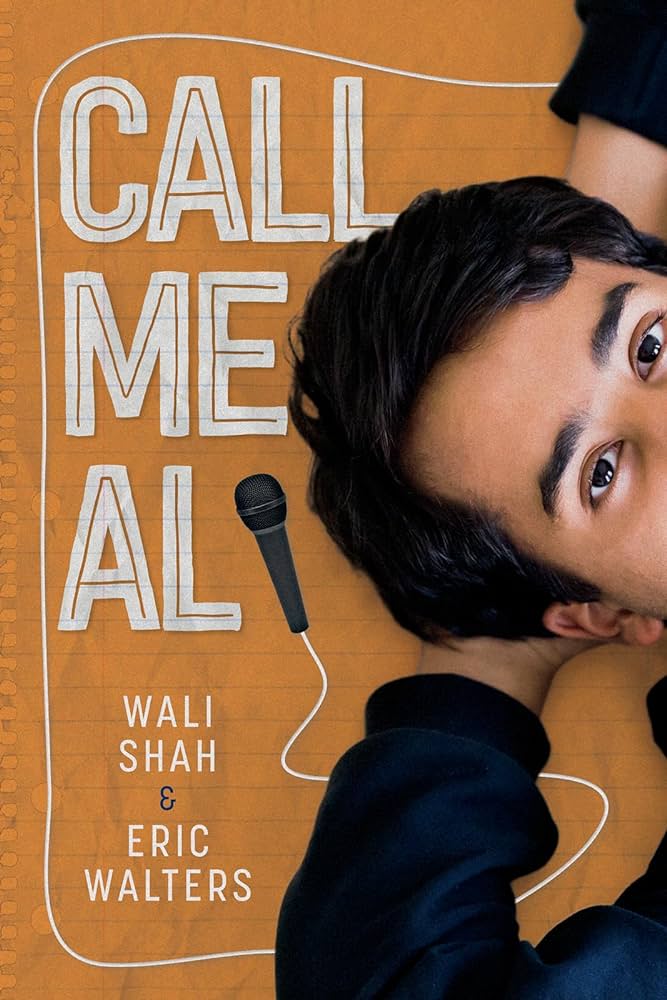
Call Me Al by Wali Shah and Eric Walters

Standard
Call Me Al by Wali Shah and Eric Walters

albook

I feel like I should have really liked this 264 page book: OWN voice, Muslim, MG, Pakistani, author is poet laureate for the City of Mississauga, Ontario, co authored by a prolific YA writer, but it unfortunately reads inconsistent and unpolished.  The characters at the beginning and their relationships with one another don’t read consistent with who they are in the middle.  Sure the character arcs from the middle to the end are nice, but it feels really disjointed from the first quarter of the book.  There are parts that feel so rushed, and other parts that are heavy handed with the preaching and the moral lessoning that I found myself skimming whole pages.  He says his family isn’t that “religious,” but Islam is centered with quotes from “the Prophet” (no salawat given, only a few times Prophet Muhammad is mentioned to identify which Prophet is being quoted) and “Imam Ali” (who the protagonist is named after), yet Al telling a girl he likes her is no problem at all.  He fasts because he has to, but tells his younger brother it is ok to sneak food, and the grandfather gives a whole speech on how the purpose of fasting is to feel empathy for the poor (face palm, in case you don’t know, it is a commandment of Allah swt).  I really struggled with how “Whites” are seen as opposites to “Muslims,” there is some push back with quotes from Malcom X on his hajj experience, but I didn’t feel like the character really ever accepted that Islam is a religion for all people, and White is a skin color.  Honestly the book reads like an early 2000 memoir.  I know it is fiction, but the cultural be-a-doctor-nothing-else-matters-stereotypes, and Islamophobic talking points that feel performative for a Western gaze, combine with a very unlikable arrogant protagonist, and result in a book that was difficult to connect with and get through.

SYNOPSIS:
Al, short for Ali does everything perfect, he has perfect grades, always listens to his parents, and respects the rules.  The book opens with him sneaking off campus with friends for lunch at the mall where he is caught by his grandfather, who seems incredibly strict, but later is the soft spot in a firm family.  His parents have moved to Canada from Pakistan, his mom used to be a teacher, but now takes care of their apartment building, his father was a physician and now drives a taxi.  It is non negotiable that Al will be a physician when he grows up.  The middle child of all brothers, his older brother Sam, short for Osama, has set the bar very high with his valedictorian status in high school, scholarships to start college, and student of the year award in middle school.  Al is in 8th grade and is expected to follow in his footsteps.  When Al’s crush on Melissa results in him writing a poem about her, he realizes he likes the written word to express himself.  His father thinks poetry is a waste of time. With a teacher that encourages creative writing, Islamophobia and hate crimes hitting close to home, and Al coming of age, the story focuses on Al’s 8th grade year as he discovers his own identity, with some help from his friends and the month of Ramadan.

WHY I LIKE IT:

I like that his friends really pushed back on him to own some of his internalized Islamophobia.  Zach is probably the most fleshed out character, and his humor, his teacher crush, his ability to apologize and make things right, is really the heart of the book.  It contrasts so greatly to how I feel about Al.  By the end he was ok, but at the beginning, his arrogance is obnoxious. I get that he is bright and a hard worker, but, yikes, he needs some humbleness.  The supporting characters are rather flat.  Al’s crush Melissa is shallow and only desired for her appearance, Dad is strict and demanding, not in an abusive way, but in a cold undeveloped way, mom is idyllic and supportive, and Ms. McIntosh is the driving motivator for Al. The other characters do little to flesh out the main players which is unfortunate.  I think some depth would have shown Al more rounded. His so called friends don’t know he is Muslim or what he eats, but they are friends, not just classmates, seems off and lacking.  The grandfather gives all the teachable moments, he starts off stern, and then is not, and the transition is jarring.  He speaks in quotes and lessons, and if it were quirky, it might help the flow of the book, but he really is the Islamic conscience of the book so to speak, but we know so little about him and his relationship with Al.

I didn’t like how fasting and Ramadan were presented. Al is embarrassed by fasting and being different.  I like that it says the family goes to the mosque, not sure why masjid wasn’t used, but there are no Muslim friends and no praying, so it has no real impact, which furthers the feeling that it is performative.  Al doesn’t seem to consider faith or culture until others question him about it, which is a missed opportunity to give Muslim kids a mirror to see themselves in the characters.  There are chapters of the book that really are wonderfully written, they just are sadly too far and few between.

FLAGS:

Crushes, Islamophobia, physical and verbal assault, racism, classism, bullying, lying, sneaking out, discussion of partition violence including great grandfather being killed. The book though, aside from the crush thread at the start and end, is quite clean, and the crush is pretty innocent.

TOOLS FOR LEADING THE DISCUSSION:
I wouldn’t seek out this book for a classroom shelf, but if it was in the library I would leave it.  I don’t think most kids would pick it up and make it past the first 25 pages though, Al is really unlikeable at the start.

If You See a Bluebird by Bahram Rahman illustrated by Gabrielle Grimard

Standard
If You See a Bluebird by Bahram Rahman illustrated by Gabrielle Grimard

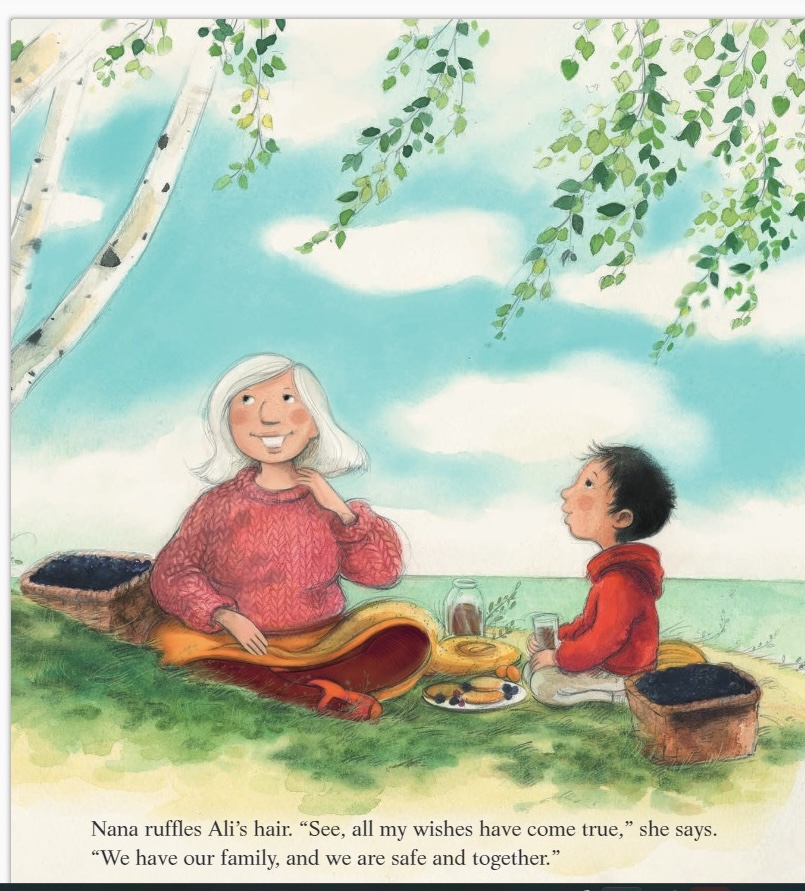
This cultural picture book shows life of an Afghan family before fleeing the country and after.  In the flashbacks the women are wearing hijab, now in the west they are not.  I debated if I should do a complete review or just a Muslim in the illustration tag, and ultimately decided to do a review so that I might document what I fear is a new trend.  In the last ten years most Afghan books addressed international involvement, the Taliban, and refugees, but seemed to still feature Islam and the characters as Muslim.  This book carries the refugee theme, but Islam is seen in the “before” illustrations only.  Another recently published book, The Carpet: An Afghan Family Story, similarly contained no Islam, but interestingly also kept it out of the illustrations.  Realistically, I know that two books don’t make a trend, but with the change of politics in Afghanistan, I think the OWN voice narratives are important to watch and be aware of.  In the past an Afghan book would be conflated with also being an Islamic rep book, and I don’t know if that will continue to be the case.  I also don’t know what the take away impression would be upon a kid if they were to pick the book off the shelf.  Would they find the head coverings in the unsafe country and the lack of hijabs in the safe country as a message about Islam, would they understand the politics, would they even notice?  The sweet story of a boy picking berries with his grandma involves music, wishing on birds, and reflecting on the violence that forced them to leave Afghanistan.

The book starts with Ali and his Nana waking up early to pick blackberries.  They don’t want to wake his exhausted parents, and quietly pack a lunch and get on their bikes and head out.  The blackberries are not as sweet as the mulberries he remembers from Afghanistan.  Suddenly he misses home.

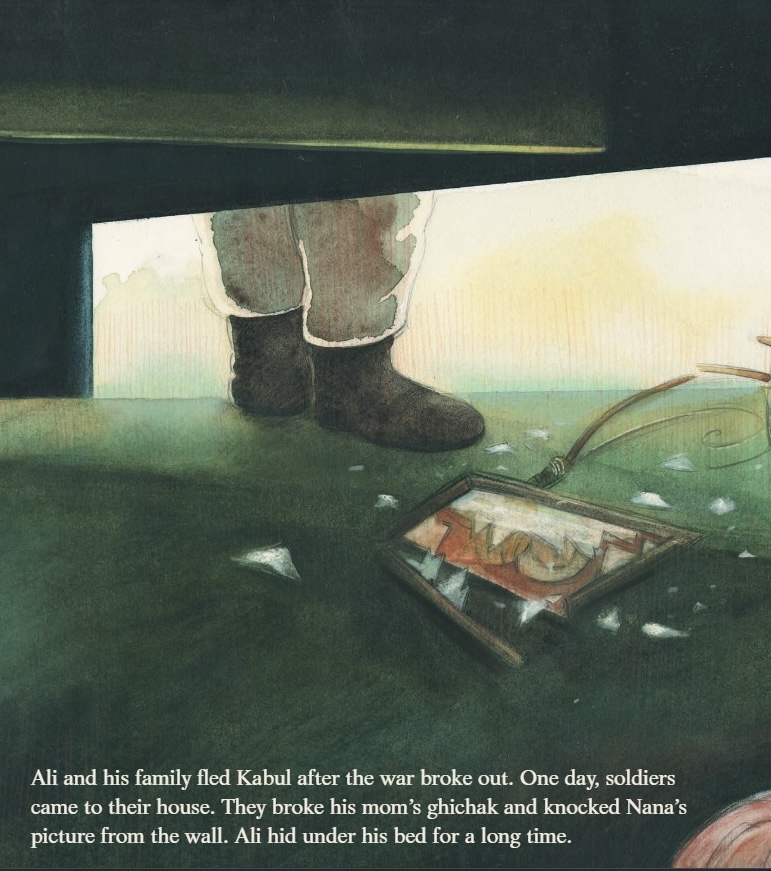
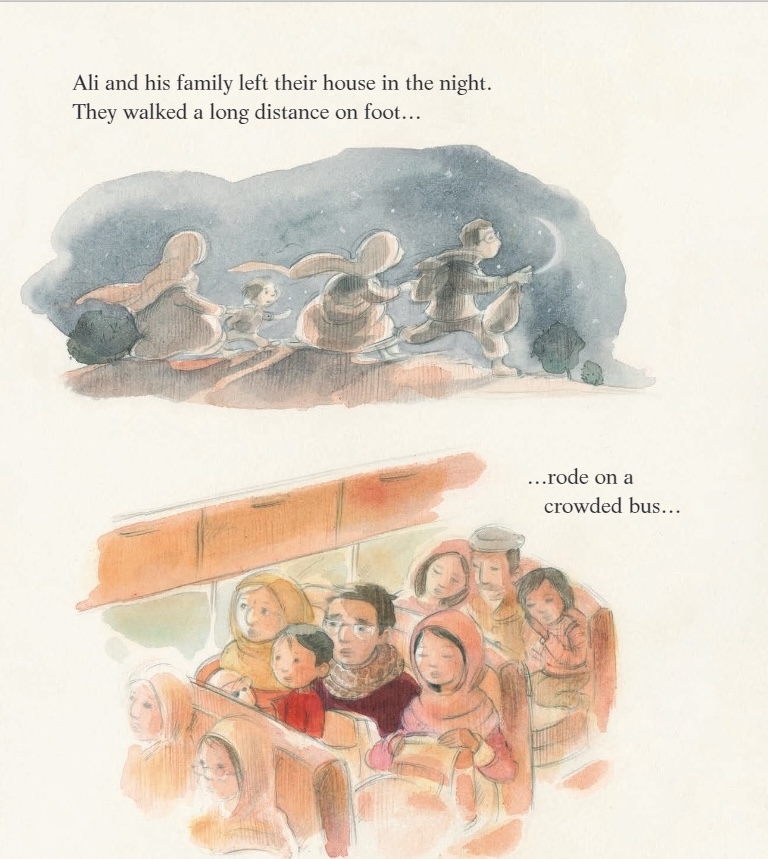
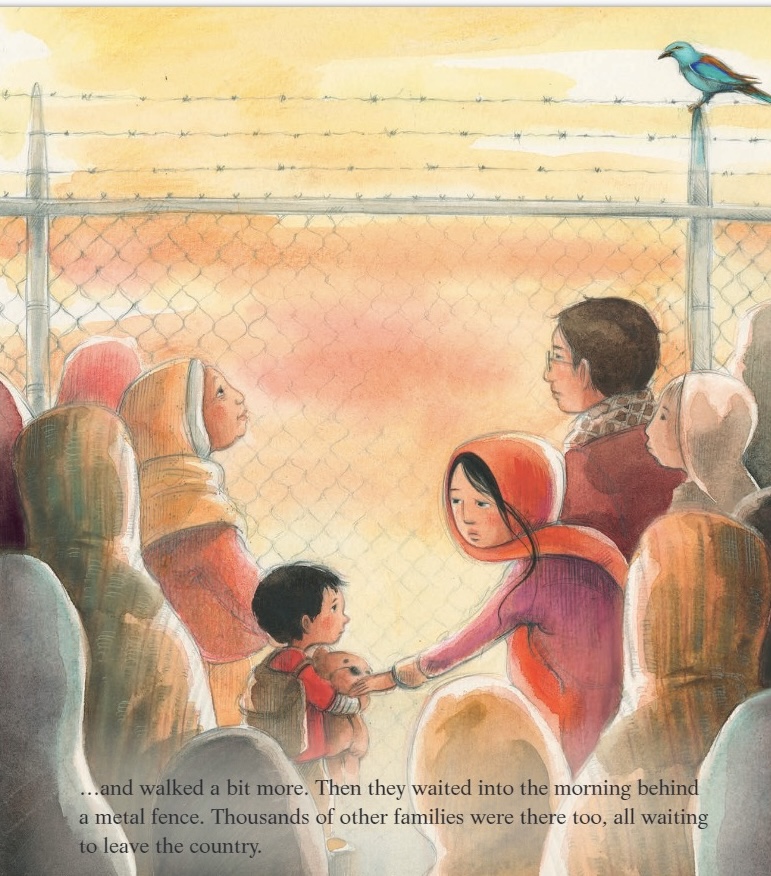
The family left Kabul after soldiers came to their house and they knew it wasn’t safe anymore.  He couldn’t bring both of his stuffies and the family left on foot at night.  They rode a bus and waited behind a fence before they boarded a plane.


Back in the present the two eat their picnic, when a bluebird arrives, Nana tells Ali to make a wish before it flies away.  Nana says all her wishes have come true: the family is safe and together.  Ali is whisked back to sitting beneath the mulberry tree with his parents laughing and his toys around, he wishes for home.  Nana explains that home is not a place, it is the love you have.  The book concludes with Ali appreciating his loving family and his new “home.”

Three Holidays and a Wedding by Uzma Jalaluddin and Marissa Stapley

Standard
Three Holidays and a Wedding by Uzma Jalaluddin and Marissa Stapley

3 holidays

I don’t think I have ever sat down and watched a complete Hallmark Channel holiday movie, but I know the stereotypes and I’ve caught enough scenes while hanging out with my grandma to know that reality has to be suspended, there will be a happy ending, and the snow and small town charm is going to be laid on pretty heavy as the wholesome romance plays out.  This book is the literary equivalent of such a movie. So with that in mind, there are somethings I will concede can be overlooked, but religiously there are some things that need to be noted (see below).  I also have to admit that I couldn’t put the book down and read the entire 384 page Adult book in two sittings. The book is told in alternating perspectives: Maryam and Anna.  Maryam and her family are Muslim, the book takes place in 2000 when Ramadan/Eid, Christmas and Hanukkah all took place within days of each other.  Anna celebrates Christmas, but grew up celebrating Hanukkah too.  Even if a romance that has Muslims ok with adopting “Christmas-y” celebrations during the last ten nights of Ramadan no less. is not a book that appeals to you, it is worth noting that this book does an incredible job of not becoming performative.  There is no internalized Islamophobia, self-othering, no over explaining, convincing, justifying or religious or cultural identity crisis. For a book co authored by a Muslim and a non Muslim and traditionally published, I am excited for the precedence this book sets.

SYNOPSIS:

Anna is in a perfect relationship, with the perfect guy, and accidently sees the perfect ring in her boyfriend’s luggage.  With Christmas plans in Toronto to meet Nicks wealthy parents, it is clear that the perfect proposal is also going to happen.  But Anna is not perfect, and who she seems to be to Nick is not who she is or wants to be.  It feels so fake.  With separate flights from Denver to Toronto, getting redirected and stranded in Snow Falls, Ontario gives her the pause she needs to decide what she wants.  She meets Josh, someone in town visiting, which complicates things, and she sorts through her grief of loosing her father and the speed in which her ex step mother moved on, all why becoming good friends with Maryam and her family in this idyllic town that she doesn’t want to leave.

Maryam is the oldest daughter who shoulders the expectation so that her younger sister can live her best life.  She became a pharmacist to carry on the family business, so Saima could be a physician with Doctors Without Borders.  Now Saima has decided that she wants a wedding in Ramadan and Maryam has to plan it. The flight being diverted and the wedding party being stuck in Snow Falls has long ago crush Saif and Maryam sorting through their past and a possible future together.  

The two protagonists, their past, future, love interests are all multiplied by a town full of love and holiday activities, a wedding that might be missed, a Holiday Hoopla show, a movie being filmed, fasting in Ramadan, and wise old Dadu, a former Bollywood director guiding the characters to a happy ending.

WHY I LIKE IT:

The book is an easy read, it really is a guilty pleasure escape from reality and that it comes from a place of- we are Muslim, we fast, we pray, we don’t/shouldn’t date without marriage in mind, and everyone in the book already knows all this makes you feel ok about indulging.  It even has a thread of analyzing parental expectation and peeling back some of the assumptions regarding the disconnect worked in throughout the story.  

It took a few chapters for me to stop fighting and accept that the snow is so bad that the airport is closed, but every store, restaurant, and the roads in the town are open.  That the phones are out, no one has a charger, but the payphone works and food can be ordered and delivered.  That Anna is strolling around in a cocktail dress and can find a sweater, but she can’t find pants, and holiday gifts for everyone were not a problem to obtain.  The book notes the idyllic diversity and amazing payphone, but you really just have to let it go if you are to enjoy the book.

Some things I couldn’t let go though are the Islamic religious portrayals.  The characters note that a wedding in Ramadan is a terrible idea, but for as authentic as the waking up for suhoor and fajr are every day and iftar is every evening, the Muslim wedding party spend the last 10 days and nights of Ramadan watching Bollywood movies, dancing at a music filled mehndi party, planning and performing in an interfaith holiday show, and listening to Christmas music.  I know Ramadan staples of reading Quran, doing thikr, and praying, don’t fit the genre, but there are enough people to make jammat, one night it mentions they go to the musallah for taraweeh salat, but I really wish it was every night, and that more traditional Ramadan foundations were shared.  I did love that why Dadu couldn’t fast was explored, and that when Saima was stressed she went to the musallah, but really Bollywood marathons and parties in Ramadan are uncomfortable even in fiction.

FLAGS:

For Adults and New Adults the book is remarkably clean.  The romance is tame even for YA, the characters are all adults and it is more the Ramadan non worship and Christmas normalization that is more flag worthy to me if a Muslim teen were to read it, than the relationships.  So take what you will from the flags: Anna and Nick seem to live together at the beginning, Anna and Josh hold hands, kiss.  Maryam and Saif hold hands and hug.  Saima and Miraj hug.  There are some other hetero couples that kiss. Mention of Maryam’s prior relationship features her husbands infidelity, and Saif admits to having a girlfriend.  There are a few LGBTQ+ couples in the town that own stores and the inn, but don’t seem to be Muslim, and their relationships are not significant plot points.   Muslims joining in Christmas activities. Alcohol and a pub are mentioned, but Anna partakes, no Muslim characters.

TOOLS FOR LEADING THE DISCUSSION:

I don’t think I could do this as an Islamic school book club choice for middle or high school.  But I do want to gush about it with my Lit Sisters.  You can preorder it here https://amzn.to/3L7K9wQ

Much Ado About Nada by Uzma Jalaluddin

Standard
Much Ado About Nada by Uzma Jalaluddin

much

I get teased a lot by my Lit Sisters for enjoying Hana Khan Carries On so much, so I’m writing this review to convince them why I think this is Uzma Jalaluddin’s best book yet, and why they should preorder here and dive in ASAP! First note that is an adult read, it is not targeted to teens, the protagonist for the majority of the book is nearly 30 years old. It is a romance, it is not a hundred percent halal, but it is definitely halal-ish, and if you feel like you reach a point where it absolutely isn’t, please keep reading (you might be surprised).  The book for being what I thought would be an empty calorie rom-com guilty pleasure snack, tells the story of Nada in spiraling layers that keep the reader hooked.  Just when you think it is predictable and tropey, the next layer peels back a twist and depth that kept me ignoring my kids and glued to the pages for two days straight.  I furiously scribbled notes writing down “haram” deal breakers and most by the end where crossed off, so no this is not Islamic fiction, but there is no internalized Islamophobia, there is no liberal agenda, the author knows the lines and is abiding by them and occasionally breaking them in a fictional entertainment world for Muslim and non Muslim readers alike.  I hate to compare, but in many ways it reads like an adult S.K. Ali book.  There is social commentary on Islamic communities from a place of love and practice from the inside, there are relatable characters, there is humor, there is love, laughter, and warmth. On occasion there is skirting of the halal/haram line a bit here and there, and sure males and females are a little too friendly at times, but it isn’t the oppressive parents and identity crisis, it is joy. Muslim reality and stress, with true mirroring joy as well.

So why am I reviewing this book here? Simple so you can enjoy it.  So often I feel like reviewers particularly, but casual readers as well, become nervous while reading, that the book is going to take a turn and become haram or preachy that we can’t just get lost in the story.  So my gift to you, is that if you enjoy rom-coms and don’t usually go for “Muslamic” ones because of apprehension, you can dive in and enjoy this.  You can laugh when they ask for a doctor at an Islamic convention, you can roll your eyes when hijabi’s bring extra scarves to throw on the stage of the band (there is a guitar player, but mostly daf and vocals), you can be upset at the slight physical touching (keep reading), and you can nod along with the commentary on divorce, misogyny, wheelchair access, and mental health, but you can also just cheer for the protagonist to find her way to happiness and love too.

SYNOPSIS: (Will be brief because other wise there will be too many spoilers, and because of how the book is told, you don’t want spoilers, trust me, you want to enjoy)

The book opens with Nada trying to hide from both her mom who wants discuss her future and her best friend Haleema who is determined to have a girls weekend with her bestie at the Deen & Duniya Islamic conference in Toronto.  Cornered she finds herself at the conference organized by Haleema’s soon to be inlaws and face to face with a variety of characters from her past including past victims of her bullying, past love interest, past business partners, past camp roommates, college friends, startup mentors, and others- it is a very popular and large conference

Yep, that is all you are getting.

WHY I LIKE IT:

Again, to avoid spoilers I’m going to simply point out a few plot concerns I had with the book, because it is who I am, and I need to get them off my chest.

In some of the flashback scenes Nada’s voice reads the same as it does in the present.  Her articulation of Baz’s potential as a daf player at 11 years old is very mature and insightful and not realistic at all that she can opine on his skill and the role his hand size have on his mastery at that moment of the instrument.  She would probably just think, yeah he is good, or wow, he isn’t bad.

I found it odd that Marya’s husband had opinions on Nada’s makeup, it seemed a bit forward.  Also they were in line, then they left, the pacing of the scene was a little off, I read an arc, but I’m hoping it is cleaned up a bit, because it is an important scene.

Haleema is Nada’s college friend, but toward the end in college flashbacks she really disappears, and it was noticeable, because the reader is constantly told Haleema and Nada were good college friends, but never shown.  So in those scenes to not have her there, without note, is suspect.  Nada really isn’t a good friend to here either, at any stage of life save the conclusion, I’m not sure why Haleema does so much for her honestly.

There is a wedding scene without a wali, and there should be a comment as to why the wedding is performed without the religiously mandated staple or how they are getting around it.  It reads off for a book that gets so many details correct.  I am hoping that the final has it corrected! PLEASE!!!!!!

Also for a different wedding Sufyan is noted to have got an invite to help serve chai, but he is the groom’s cousin’s son, introduced earlier as a nephew, before the cultural chain of relation is given, so why wouldn’t he be at the wedding?

FLAGS:

Music, female and male close friendships, sneaking around, bullying, talk of sex, sex, kissing, talk of pregnancy, lying, stealing, theft, there might be a curse word or two, sorry, not sure.  For an adult book it is clean, these days for a YA book it would be considered remarkably clean.

TOOLS FOR LEADING THE DISCUSSION:

I wouldn’t suggest it for a school library or high school book club, but I wouldn’t put up much of a fight if it was on the shelf or schedule.

Crescent Moon Friends by Wadia Samadi & Mo Duffy Cobb illustrated by Lisa Lypowy

Standard
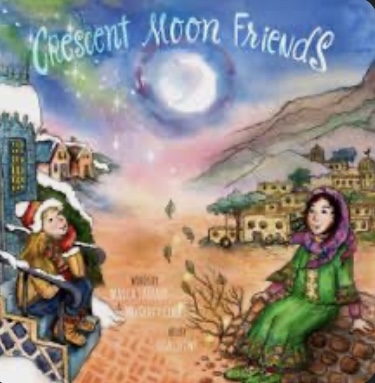
Crescent Moon Friends by Wadia Samadi & Mo Duffy Cobb illustrated by Lisa Lypowy

img_6247

This 32 page book does not read like a new release, it looks like something you would have found in the early 2000s when the recent war in Afghanistan started and books about refugees from the region were popping up.  Admittedly back then, I probably would have been more forgiving that the smiling illustrations showed Islam in action and two characters from different cultures coming together through dialogue, respect, acceptance, and fun, but for reasons I’ll articulate, this book reads very superficial, dismissive and erroneous at times.  I am not Canadian or Afghani, I am a neighbor to both as a Pakistani American, and the book is OWN voice, so if I am just being overly picky, or sensitive, and am wrong, I am happy to acknowledge it, but before you push back, please read the entire review.

The description of the book says:

Crescent Moon Friends introduces the reader to two best friends Amelia and Aisha. While the pair is from Canada and Afghanistan, the girls reconcile their differences through exploration of the values they share. This book initiates a family conversation about Islam, explores tradition and language, and brings the girls closer together as a result. It is our hope that the book will be used as a teaching tool to help children understand the cultural backgrounds of others, and to create a warm environment for refugees resettling in Atlantic Canada from the Middle East.

This picture book is for both non- Muslims who are living in the West, and Muslims who are living outside their home countries. The focus of the book is on tradition, not religion, it also captures the significance of Islam. This is a valuable title for library and classroom use.

So first of all, I feel like the foundation of the book is othering Islam in making it seem that this book is an introduction of Islam to non Muslim with the premise being that Islam is what, a foreign religion? Numerous Canadians are both Afghani and Muslim in 2022, before I even began the book I was already fearing the framing.  Then it identifies Afghanistan as the Middle East, which just made me really question the accuracy.  Somehow after that first paragraph, the book then tries to say that the book is not about religion, but traditions.  While part of me appreciates that distinction, the second part of the sentence saying that it wants to capture the significance of Islam really shows the poor focus of the book.

Let me pause here though and answer a question I’m sure many of you are wondering, “why review a book that is not well written, and is not widely promoted or known about.” The answer is simple, a book such as this may not sell in big numbers and be regularly seen online and in stores, but they often do find their way into libraries and classrooms.  They are often shelved to fill “diversity” or “inclusion” quotas and thus their messaging does often reach our children.  I also highlight books like this, not just to pick on this particular book, but to show that OWN voices doesn’t make something automatically correct.  If this is the author’s own experience or is a memoir, there is some leeway, but saying that Afghanistan is in the Middle East or that Salam is Dari, not Arabic, or that it is “naan tandori” instead of “tandoori naan,” just makes the book seem inauthentic.  Often publishers, editors, agents perhaps don’t want to push back and appear uncultured or racist, so they don’t question details, is the only thing I can think of as to why this trend continues to perpetuate.  Which is also why the importance of having a piece sensitivity read cannot be overlooked, even when the author is writing about their own religion or culture. Yes, I too am only one person saying I have issues, but beta and sensitivity readers such as @muslimbookreviewers are four people and we discuss based on what we know and between the four of us there are a lot of singular specialties and a lot of  overlapping expertise that really help books get it right. Sorry for my rant, back to the book at hand…

The book starts with the white Canadian girl camping with her family and wondering what the upcoming school year will bring.  The text says. “she loved to look at the crescent moon.”  Already the writing is clearly weak, who loves to look at a particular phase of the moon, does she not like the waxing gibbous or whole moon? The next spread introduces Aisha, she is standing in the foreground with a mosque behind her and the text says she loves the moon too.  “There was a crescent moon on top of the mosque where her family went to pray.” Aisha has her hair loosely covered, and immediately we are connecting Aisha to her faith and to Amelia through their love of the crescent moon.  Interestingly, Aisha who would presumably love the crescent as it symbols holidays and month changes in the lunar calendar is presented as liking the moon because of it decoration aesthetic. It is where her family went to pray, sure it reminds her of home, but chances are she didn’t often go to the masjid as culturally most women don’t, so I’m not sure that this spread really has any accuracy or value, it just sounds good…if that.

The next spread is the first day of 6th grade with the teacher introducing a new friend to the class.  If it is the first day of school, aren’t they all new to the class? Aisha recalls that she left Afghanistan because there was a war in her country and school wasn’t safe, if she is twelve or thirteen, I’m not sure what caused the change in real life for the war timeline being referenced.  On a more relatable note it mentions that she missed swinging in her grandfather’s garden with cousins as well.

The next page showing the girls being silly with pencils to look like a bunny and walrus is sweet.  It shows language isn’t necessary, that silliness is universal and it is cute.  The girls then show how they share things unique to their culture with one another.  Aisha teaches her how to say Salam, hello in Dari, how to dance the Attan, about Eid, the most important Muslim holiday, and about a game with stones called anjaaq panjaaq.  But this is wrong, Salam is Arabic, Eid is Arabic for festival or holiday so what Eid is the book referring to? Also why not tell how to play the game, or how to do the dance or how Eid is celebrated? If the book is to build cultural (or religious) bridges, thus far I’ve only learned how to stick pencils in my mouth to look like a walrus or behind my head to look like a rabbit.

It is then Amelia’s turn to share Canadian culture and the book picks: ghosts, goblins, Santa Clause and the Easter Bunny.  I find this a bit offensive on Canadians’ behalf, really their holidays are what make them who they are?  Later we will learn that Amelia is not religious, yet the symbols for religious holidays of Easter and Christmas are what are being presented.  Additionally, the holidays mentioned are not even unique to Canada: Christmas, Halloween, and Easter, are the same in America at the very least.

The next spread shows their moms becoming friends and the girls playing in Aisha’s mom’s scarves, hijabs, shoes and make-up.  I find the joy sweet, but I wonder if the book as stated in the details by the author/publisher is to help refugees- is this a bit misleading- that they are settled and have an abundance of clothing accurate?  Often refugees need assistance, will a book like this send the wrong message about helping those fleeing war get established, by not just avoiding talking about need, but celebrating surplus?

Aisha is then shown helping Amelia with math and when Aisha needs help with a Halloween costume, Amelia is there.  The book really is doubling down on the importance of Halloween to Canadian culture, which again feels off.  But also most Muslims don’t celebrate pagan holidays, so I’m not sure I like the positioning that it is cultural to celebrate and that to be Canadian one must engage in the rituals.  Whether you see it as pagan or just assimilation, either way it doesn’t sit right for a book aimed at finding common ground between diverse individuals.  Math is neutral and universal, why not have Amelia help Aisha with something also less controversial?
img_6242

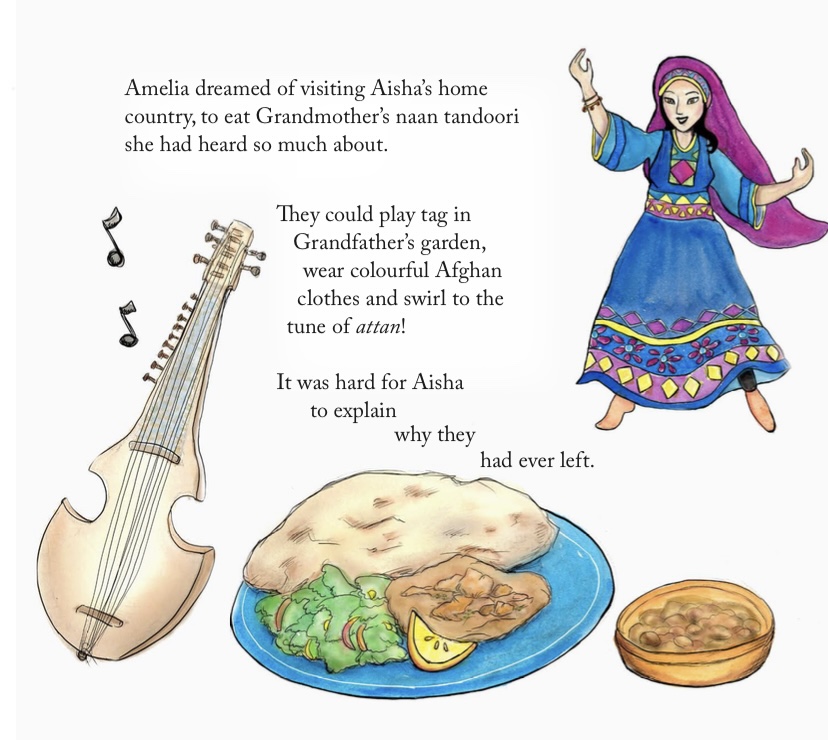
The next spread shows Aisha missing Afghanistan, and Amelia being a supportive friend and wanting to visit Afghanistan too.  Unfortunately, once again the weak writing has her sounding like an adult missing the laughter in the air and hope and flowers, not a kid talking.  When Amelia joins in, naan tandori is mentioned, which is backward, if it is the same as in Urdu it should be tandoori naan.  She also wishes they could wear colorful Afghani clothes and dance the Attan, which are two acts not limited to Afghanistan.  They can put on traditionally clothing and dance in Canada.

The story then takes a huge pivot and shows Aisha and her mom praying with the very vague text of her mom “described her way of life, Islam as the peace in her heart, and said turning to Allah in prayer would keep Aisha happy.”  The text seems misplaced and the messaging completely pointless, why not frame it as what Aisha believes or what her faith teaches her? It almost comes across as her mom forcing the belief on her and this being the first Aisha has heard about it.  The next page is set up the same, but shows Amelia’s faith to be kindness and compassion while they sit in nature.  I think the intent was to be positive, but when you have two people representing entire populations, all sorts of stereotypes come in to play that either have to be so general as to be accurate or more specific to the two characters at hand.  In this case I feel the takeaway is that holidays define Canadians, even religious holidays, but they are fine to participate in because Amelia is not part of organized religion.

Thus the next spread of Aisha’s family celebrating Christmas with Amelia makes sense in the story, but I find alarming because it normalizes abandoning your own religious convictions and adopting another faiths in order to fit in and assimilate.  Imagine a teacher reading this book to a first grade class and little Muslim children who demand that Christmas and Easter stay out of public schools are hearing messaging normalizing the holidays for people of all faiths.  Imagine a recent immigrant or refugee further feeling pressured to adopt these practices because they want to be seen as “good citizens” or be accepted by the larger community.  The contrast of Aisha’s family celebrating Christmas is Amelia helping make star and moon shaped cookies for Eid.

The story comes back to the girls love of the moon, one as a dreamer, the other as a scientist.  It tells of other firsts Aisha experiences and Amelia learning about Aisha and her faith.  I’m not sure what a genie lamp has to do with Islam, but it is in the illustration with a hamsa hand, a book, a tasbih, and a crescent with a minaret coming out.

Aisha then starts to wear hijab and Amelia learns how to wear one too. No details about what or why hijab is worn or given, and in the illustrations it doesn’t completely cover anyone’s hair. The girls ski together and drink hot chocolate and living in Canada allows Aisha “to be the girl she was meant to be.”  I’m not sure what that means, but that seems to be the resolution to the book before it circle backs to the mom and concludes.

I think on the very surface the book is a nice idea, but the conflation of what it means to be Canadian with observance of holidays and the lacking details of what it means to be Muslim Afghani make the book miss so much and ultimately do more harm than good if shared.

Grandpa Ali and Friends Volume 1 By Yasin Osman

Standard
Grandpa Ali and Friends Volume 1 By Yasin Osman

grandpa Ali

This 46 page comic strip compilation follows the intergenerational Somali-Canadian members of a family. With crossword puzzles, word searches, advice, and graphs sprinkled in-the book at times was laugh-out-loud funny, heartwarming, ironic, and honestly, there were things that I didn’t quite understand-and those perhaps were my favorite parts.  The book features Muslims and immigrants and life in the west, and those I could relate to, but I am not Somali, and there aren’t a lot of Somali books available, so I loved the opportunity to see the culture and humor and themes that a book written authentically chose to highlight.  The book is not a graphic novel, the characters and their situations are not a cohesive narrative, so if I didn’t understand a particular joke, it didn’t linger or carry over.  By the time the book was done a sense of love, community, and joy left me waiting for the next installment and a desire to read more voices that are not easily found in Muslamic YA literature.

The humor is at times culture and experience specific, and I feel honored almost to witness a book for a particular group by a member of that group and thus don’t feel a need to “review” the book in my typical fashion.  I simply wish to highlight that it exists, share some inside pictures, and hopefully send some support its way. You can purchase it on Amazon.

Happy Reading y’all.

The Secret Diary of Mona Hasan by Salma Hussain

Standard
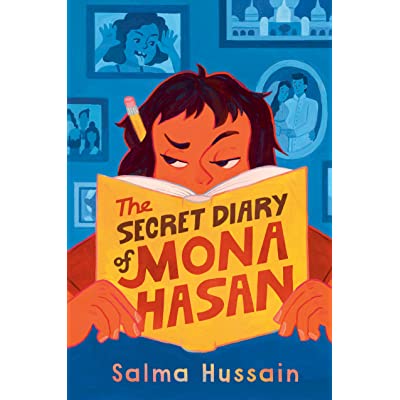
The Secret Diary of Mona Hasan by Salma Hussain

mona

I really don’t know how to review this book. Is it funny and engaging, yes at times, but I am a 41 year old, and I can attribute it (hopefully/possibly) to satire, hubris, character voice, and commentary, except it isn’t written for me, it is written for 10-14 year olds.   There is no way would I put this in the hands of a fourth grader, let alone a high schooler.  The book starts on New Year’s eve with a “Muslim” family drinking alcohol, later the 11 year old drinks to get brave enough to meet up with her boyfriend (he wanted to wait until after Ramadan), after a bad haircut she starts wearing hijab and later takes it off, her period starts and she is baffled at which hole it comes out of, she is no longer allowed to be alone in a room with a boy because that is how babies are made, but it is ok to go to a school dance and kiss them, women are rather useless, old people (31 year olds and up)  should know their place and act their age, dark skin is bad, chests need to be big, slut is both something you are and something you can do,  Aisha (RA)’s age of marriage is criticized as is Khadeeja (RA)’s, no one is as good at her, Ramadan is annoying because she has to hide when she eats in public for a whole month, Friday prayers even though they rush through them limit their fun time, the Tablighi Jamaat have to be lied to and hidden from, her mom is pregnant months after coming out of her bedroom smiling, her father claims he will only ever enter a mosque horizontally, you can see the list goes on and on.  Yet at the same time, there are true moments of strength, such as when she fights back against the creepy sexual assault vibes from “uncle annoying” and then protects her sister when her parents dismiss it, when she sticks up to a bully to protect her gay friend in Canada, the dad getting caught one day praying salat, the love of family felt despite her perceived privilege while visiting Pakistan, her constant reference to Allah swt as she asks Him and tries to understand the world around her, and her terrible, terrible poetry.  The diary style is both brilliant in trying to show the world through Mona’s eyes, and irritating as NONE of the aforementioned concerns are given any context, explanation, reflection, anything.  The thoughts pour out of her head, onto the paper, and the reader is left to figure out if this is how things are, is this her naïve view, is she commenting on society, is the author, is this fact, is it satire, is it someone with an axe to grind on culture and religion, is it showing the ridiculousness of so many stereotypes? And to be honest, I have no idea.  Which is why I can’t say that the book is good or bad, I think it is well written, my problem with it is, I don’t know who it is written for.  I think it would be very damaging to young children, the vulgarity, misogyny, racism, arrogance, will hurt both those that see parts of themselves in Mona and those that read it and assume too much about what Mona represents.

SYNOPSIS:

Mona is an 11 year old girl, and this is her diary.  She is arrogant and opinionated, but she grows and mellows as her view of the world moves from privilege in Dubai to immigrant in Canada with a bit of an awakening in Pakistan in between.  It is her view of her life, her place in the world, and the greater society around her.  It is an easy read on the surface of her living through the war without getting any days off of school, friends, maturation, first loves, hoping for a bigger chest, pulling a fire alarm to get time with a boyfriend, feminism, and the annoyance of being better than everyone else in everything she does.  There are side characters that flit in and out and family members that shape her, but the point of view is uniquely hers in all matters regarding leaving the Middle East as a Pakistani living there, spending time with her mother and father’s families in Pakistan and the rift her parents’ love marriage caused on their acceptance of her, their move to Canada to start a more peaceful life that ends up being grueling and difficult and through it all threads of Islam, fitting in, and growing up.  It is a snapshot of so much that the reader is left to connect the pieces, assign them value, and understand the larger message, if one exists.

WHY I LIKE IT:

I still don’t know if I like it or dislike it.  I dislike it for kids.  I like it for adults as a light over the top snarky read, but I think my opening paragraph is sufficient and the 296 page book doesn’t need my concerns and praises rehashed here.

FLAGS:

Misogyny, anti Islam, sexism, racism, ageism, lying, vulgarity, cursing, crude talk, lying, disrespect, lack of religious respect, kissing, sexual assault (attempt), deceit, pulling a fire alarm, physical fighting/assault, family trauma, arrogance, pettiness, stereotypes, bullying, sexual innuendos,

TOOLS FOR LEADING THE DISCUSSION:

I have suggested a few ADULT friends read the book so we can chat, but no kiddos, no teens, no early twenties, old ladies (31 plus according to the main character)!