Category Archives: YA FICTION

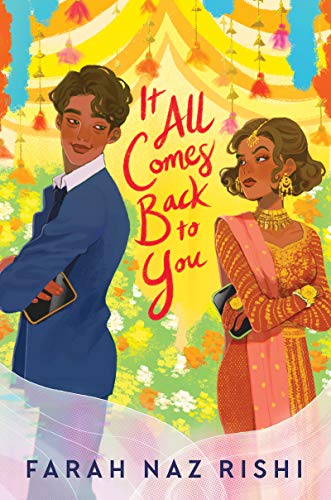
It All Comes Back to You by Farah Naz Rishi

Standard
It All Comes Back to You by Farah Naz Rishi

it all comes back to you

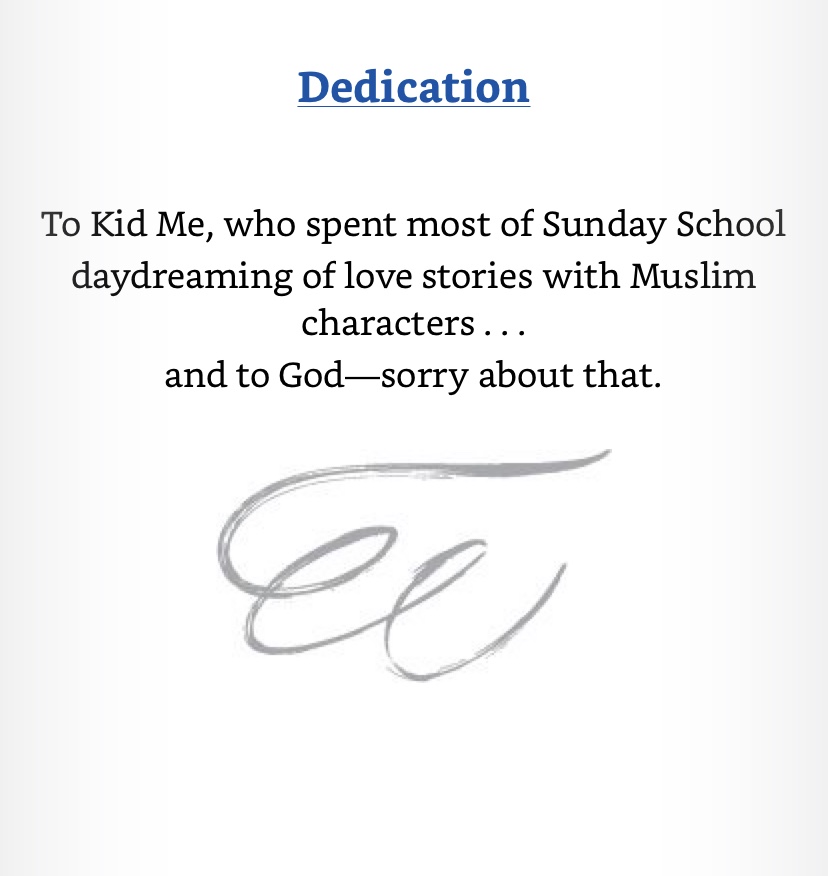
Sometimes you just want a light fun, empty-calorie read, and in that regard I feel like this book really delivered.  The characters are in college, and yet it is published by HarperCollins Children, so I wasn’t entirely sure what to expect, which perhaps added to the lack of expectation and increased forgiveness.  It reads very much like a Bollywood movie, there is dancing, angst, romance, redemption, culture, religion, and a sense that a certain arbitrary line of it all won’t be crossed to earn the book an R rating, and will keep it safe for Muslim high school teens.   I think the book is fine for Muslim’s in 10th/11th grade and will be enjoyed by those in college (and up) as well.  Over 429 pages the highly predictable tropes find their footing in their unique religious and cultural framing.  The plot is perhaps a bit on the nose and overly serendipitous, but individually the characters show range and complexities that will resonate with readers.  They have all made good and bad choices and continue to do so, but the big ones are largely in the past, and what we, the readers, get to see in many ways is them reaching for forgiveness in a contemporary whirlwind culmination of a wedding, overcoming addiction, a past felony, secrets, ex-significant others, familial expectations, loss, change, and school.  The book is not preachy, although there is a like-able imam as a side character and he gets some advice in.  The Muslim characters grapple with their faith as they would their culture; picking and choosing what to practice, but never really escaping it or wanting to completely abandon it either, it is just who they are and part of their identity. I enjoyed the book, reading it in two sittings and not feeling guilty that I lost sleep doing so, but like most rom-coms, the specifics and characters will blur over time.  It has a lot of similarities with Hana Khan Carries On, while not having quite the religious adherance of S.K. Ali’s characters or rawness of Tahira Mafi’s.  One thing that is uniquely it’s own, however, is the author’s beginning dedication, I don’t think I have ever read one quite so perfect, memorable, and possibly guilt causing.  I laughed out loud!

img_3576

SYNOPSIS:

Kiran’s mom passed away a year ago from ALS, and with her older sister Amira in law school at the time, she dealt with her mother’s illness and passing, largely alone as she additionally had just been ghosted by her first and only boyfriend, Deen.  Now that her sister is about to graduate, and Kiran is about to start university, they can finally be roommates and reunite the family.  Except, Amira has met someone, Faisal.  Someone who was there for her when her mom died, and they are planning to move across the country to California in a few months.  Devastated Kiran forces herself to be happy for her beloved older sister, until she finds out that Faisal is Deen’s older brother, and there are some gaping holes in his past.  With her sisters future on the line, promises to her deceased mother haunting her, and a serious lack of communication abilities (more on that later), she is determined to uncover the truth about Faisal and maybe even Deen in the process.

Alternating point-of-view chapters give Deen a chance to provide his side to the story: the reason he had to disappear from Kiran’s life, what happened to his brother, and the unreasonableness of his family.  As he struggles with his own conscious and stumbles around unsure of his own potential and worth, Deen comes across as selfish and arrogant, but ultimately only cares about his brother and making things up to him.  He is determined that Deen deserves to be happy and he is committed to keeping Kiran from destroying it.

In typical desi fashion, appearances matter and while all the behind the scenes sleuthing, plotting, and fighting is taking place, on the surface, wedding plans are being made and dances choreographed.

The book includes pages of texts from three years ago between Deen and Kiran as they meet at Sunday school and sneak behind the mosque.  There are also gaming dialogues between two anonymous fantasy characters that it is pretty obvious are Kiran and Deen.  The reveal isn’t a shock to the readers, only the characters, and proves a nice way to see redeeming traits in characters who’s present real actions aren’t exactly endearing.

WHY I LIKE IT:

The OWN voice representation of Desi culture and Islam is not in addition to the story, it is woven in to the characters and the plot.  The characters are largely liberal as the families are chill with dating, mixed gender hand shaking and dancing, and what not, but their Muslim upbringing is almost always close by.  The characters say “astagfirulllah” after kissing, they acknowledge that some of the Muslims drink and some have left that lifestyle, they miss visiting the mosque, they recognize that they aren’t praying, etc., while many flags are present, they really aren’t sensationalized or given more than a single word in print.  It strikes a pretty solid balance of showing where some thoughts or values come from, and where personal individuality takes over.  I don’t think Muslims will be offended, nor non Muslims confused.

The biggest issue I had with the characters is that it really could have been resolved, all of it, with a few decent sit down conversations.  Kiran and Amira, for example, are terrible at communicating and it blows this whole thing into a ginormous mess.  Sure, there is no book if there is no drama, but they never fix this.  So many lessons are acknowledged and the character arcs are shown or hinted at, this one, not so much, if at all.  They didn’t talk when their mom was sick, when she died, about what they were going through, about their dad, about their future plans, about the wedding, about the concerns with Faisal, about Kiran and Deen having a past, about moving to California,…the list really is exhaustive, and it doesn’t seem to show that they acknowledge their role in escalating everything and vowing to be better.  Sigh.

I read a digital ARC and it had a few spelling errors, it broke down the fourth wall in one paragraph, and I’m hoping the final copy will have resolved these issues.  It mentions that typically the bride and/or her family pay for the wedding in Islam, and this is erroneous, culturally possibly: the brides family would cover the nikkah and ruhksuti, with the groom covering the walima, but to put it on religion is just incorrect.

FLAGS:

Deen talks about “knowing women,” but it isn’t explored, and the groom is teased that he will be loosing his virginity card.   The kisses aren’t usually described, it is just conveyed as something that happened.  There is a bit of detail in the chemistry felt in the dances, but in true Bollywood fashion, they stop short of kissing. There is a stripper called to the bachelor party, but the characters are appalled and she is immediately escorted out. A religious character accidentally drinks alcohol and blacks out.  There is profanity, not excessive, but conversationally.  There is talk and repercussions of addiction to prescription drugs, a felony crime committed and punished for, deceit, lying, bullying, and physical altercations briefly recalled.  There are parties attended, alcohol consumed,and  at one point a female forcefully kisses an unconsenting male.

TOOLS FOR LEADING THE DISCUSSION:

I’ve gone back and forth with suggesting to the high school book club advisor to consider this book.  I think the right group of readers could really opine on the characters actions from the shy Faisal with a huge forgiving enduring heart to the nosey obnoxious Mona Khala, but there are some potential flags that might ultimately keep this book from being entirely Islamic School appropriate even for the highest grades.  Ahh, I’ll keep you posted on what I decide.

Zara Hossain is Here by Sabina Khan

Standard
Zara Hossain is Here by Sabina Khan

zara

After reading a few chapters of this book, I really had no intention of finishing it, knowing that my review highlighting the main character’s bisexual identity and romance would draw critiques from both people that don’t want to see Muslim character’s identifying as any of the LGBTQ+ labels and those angered by my mentioning of them as potential flags.  Alas, I did finish the book, and I am reviewing it because as a (former) Islamic School Librarian, I would want to know how much romance is in any book that I would shelve or recommend, and this book particularly gives no insight about any romance in the blurb on the inside flap.  The author’s first book was very clearly about being a queer Muslim, but this YA short 244 page book focuses a lot on Zara’s relationships, her parents support and acceptance of her being bisexual, and her new romance with a girl.  The book is not graphic or even overly steamy, but the blurb suggests the book is only about immigration, hate crimes, and bullying.   So, I write this review to give a heads up to parents, like me, that might see this book on the library shelf or if like the author’s first book, which was picked up by Scholastic, in a school book fair, and not realize that there is a fair amount of discussion about her sexuality and how it is perceived in the Pakistani and Islamic culture, as well as how she doesn’t see the need to fast in Ramadan or pray five times a day, but still identifies as Muslim.  All that aside, I also didn’t love how the book was written, it is a lot of telling and not showing, I feel like the mom is painfully underdeveloped and flat, and the story threads don’t weave together consistently;  it reads scattered.  The book is pretty short for YA and with so many heavy themes, it ultimately can’t spend much time exploring any of them particularly well, a shame since the author in real life seems to have endured much of what she writes for her characters in regards to immigration status and citizenship.

img_2132

SYNOPSIS:

Zara Hossain is a senior at a Private Catholic school, in Texas, she has friends that have over the years become family as the parents too regularly get together.  Zara came to American when she was three.  Her family left Pakistan for more educational opportunities and after her father’s pediatric residency, he stayed on with a work permit and green card waiting for citizenship.  The process continues to drag on, and it isn’t finalized.

A boy at school, Tyler, is harassing Zara for being Muslim, an immigrant, and brown.  Her father wants to discuss it with the principal, her best friend Nick wants to beat him up, and her mother just worries.  When finally a meeting with the principal is set, Tyler’s father doesn’t show, and things escalate.  Zara’s locker is defaced with profanity, Tyler is suspended, and the Hossain’s house is vandalized.  When Zara’s dad, Iqbal, goes to talk to Tyler’s father, he is shot, by Tyler’s dad.  He ends up in a coma in the hospital.  During all this Zara is crushing and pursuing a relationship with Chloe, who has just come out to her parents.  Zara’s family is very accepting of Zara being bisexual, and take Chloe in when she needs a break from her conservative Christian family.

Tyler’s dad is well connected in Corpus Christi, and while Iqbal recovers, he is faced with trespassing charges.  Although trespassing is a misdemeanor, by pleading guilty and paying a $200 fine, a criminal record will further complicate their citizenship status, and where they call home.

WHY I LIKE IT:

I like that it shows how messed up legal immigration often is. Dr. Hossain is the victim, he is shot,  he is a vibrant member of his community, but is being forced to leave and uproot his family.  The issue however about trespassing isn’t ever completely clear, the reader is never given a play-by-play account of what happened that night.  I wish we were.  It would be nice to not leave that area gray.  Also a lot of what lead up to Tyler causing Zara so much trouble is rather glossed over.  I wanted to hate him and be angry with him, and then be forced to examine how much was his doing and how much was his father’s, but I never really felt that emotion until the book told me to be mad.

I vaguely recall from the book that she is in a religious high school, the inside flap when I took the picture (see above) seems to stress it more than the story does.  She does mention that they couldn’t start a Pride Club, but I wish she would have talked a bit about being Muslim in a Catholic school, or better yet, shown the reader.  She doesn’t come right out and say that all Muslims are different and this is her.  I wish she would have, instead she talks a lot about being annoyed at having to explain why she doesn’t pray and fast.  Yet she never tells the readers why she doesn’t.  She goes to mosques to counter Islamophobic protests, and talks of going to Sunday school to learn Arabic as a child, but she is very clear that she was encouraged to question religion and God, but not what she found or why she still identifies as Muslim if she doesn’t believe it.  I was curious if she doesn’t believe it actually, why fast at all? If she is still questioning, why not say that.  I really felt that Islam and being Muslim was just a box to be checked to justify the hate crime, but really, she could have just focused on the culture.  There are Urdu phrases, and lots of foods mentioned, she clearly loves Pakistan and talks highly of it and often points out the good and bad in both Pakistan and America.  Food is in the book a lot, and not just Desi food, frozen yogurt is a crutch for the story, and it gets a bit annoying.  I wish there was as much character development as there was food detail and banter.

I liked that her parents defend and stick up for their daughter.  Whether you accept the lifestyle of Zara and her family or not, it is wonderful to see families stick together.  The nosey aunty got put in her place and if you have ever had to deal with the stereotypical aunties or the threat of what everyone will say, you had to cheer for Zara’s parents.  I don’t care what your thoughts are about LGBTQ+, that scene was awesome.  Great job Iqbal and Nilufer.  It was one time that Nilufer got to shine, I really don’t get why Zara’s mom is relegated to the cooking, feeding, worrying stereotype for much of the book.  I lost track of the number of times the book says, “no need to worry your mother,” or something to that effect.  The lady clearly is loving and strong, but doesn’t get developed, and it is frustrating.

The ending is a bit abrupt, yes time is ticking, and whether to move to Pakistan or stay and fight the system is definitely not an easy decision, but how is Canada suddenly the magical answer? I assume for most it is enough, and being the OWN voice tale seems to be very close to reality in this regard, I have no room to roll my eyes, but Canada has civil rights issues with Muslims too, and this 2021 published book kind of made it seem like it is just the perfect answer to all their problems.

FLAGS:

Violence, bullying, Islamophobia, profanity, vandalism, crime, shooting, stereotypes, hate, lying, straight and lesbian romance, crushes, kissing.

TOOLS FOR LEADING THE DISCUSSION:

This book would not work for an Islamic School middle school book club selection.

The Wild Ones by Nafiza Azad

Standard
The Wild Ones by Nafiza Azad

wild ones

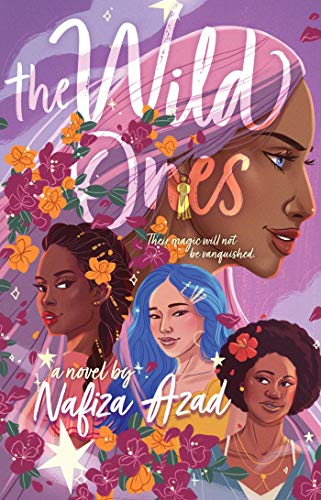
At times this 352 mature YA book was really hard to read for a variety of reasons: the subject matter, the writing style, the pacing of the story, and the numerous characters and inconsistencies.  At other times, the book was descriptive, and ethereal and hard to put down.  It took me over a month to finish the book because it really is all over the place and a lot of internal force and motivation was required to get through it, yet for all its flaws, I find my thoughts drifting back to it often.  The book contains a lot of violence against women, as that is the thread that brings this feminist group together.  There are hetero, lgbtq+, trans, and nonbinary individuals and relationships in the book, but they are not explicit, the rape, assault, suicide, prostitution, child trafficking and murder are more detailed.  The book takes place all over the world, and often mentions the athan being called or a mosque being passed.  Many characters have “Islamic” names, but there is no religion specifically practiced in this hijabi authored women powered tale.

SYNOPSIS:

The premise of the book is simple and straightforward.  A girl, the daughter of a prostitute, is betrayed by her mother when she is sent to a man.  As she runs through the city to escape, she crosses paths with a young boy who tosses her a box that contains stars.  A star embeds itself in her palm and allows her to enter a place called the “Between.”  The Between is a magical corridor made of magic that contains doors that lead to locations all over the world.  Once she enters she stops aging and is now made of magic.  She has the power to scream which can destroy other middle worlders and she can go invisible when around normal humans.  She travels the world finding other girls betrayed by those who had been entrusted to protect them, and offers them a star and a place in the Wild Ones.  This has been going on for centuries.  When the boy with the star eyes is in danger, he is reunited with the girl and her gang, and they pledge to protect him.

WHY I LIKE IT:

The concept of the book is pretty good, but the plot for more than half of the book it seems focuses on the girls constantly arriving in a new location, exchanging diamonds for local currency, finding food, and getting settled in, before doing it all over again.  It is repetitive and pointless.  Sure it is nice to read about exotic locations and savor local foods, but these girls live forever essentially and we learn so little about them or what it is they do.  Toward the middle of the book you start to see them helping other girls, but this should have been made clear much earlier on, I’m sure many people stopped reading before they saw how part of each girls’ healing involved helping others.  It is not developed or shown, which I think other than the two encounters detailed would have created some connection between the characters and the reader.

The cause of most of the confusion is that there are 11 Wild Ones, and you never really get to know any of them, the point of view switches between Paheli, and unknown speaker, and it has pages of prose from other Wild Ones that are neither explanatory of their life before or in relation to what they are currently experiencing. The fourth wall is broken periodically, but inconsistently.  So often, I just had no idea what was going on.

At times the characters speak like they are the teens that they are when they entered the Between, really noticeably and painfully, but they are decades old at the youngest, and centuries old for some of them.  Also, Taraana is presented as a young small boy that needs coddling a lot, although he too is centuries old, but then as the girls start protecting him, he suddenly is this incredibly handsome man in love with Paheli.  I get that their physical ages are suspended, so a relationship really might be possible and not creepy, but Taraana seemed to change, and it wasn’t explained.

The world building overall is weak, which is a shame, because it isn’t disjointed from the real world, it is just a slight addition to what the reader already knows.  If the Between is just hallways how is there a library? Can you live in the Between? Can all middle worlders access it? If so why aren’t the corridors crowded?

The pain of the girls, their rage, their ability to deal with their traumas in their own way and time, is very empowering.  I wish the sisterhood was more mutual than blindly following Paheli, like lost little children.  These girls/women can decide what to partake it, and leave the group if they want, so they are strong and capable, they just don’t seem to get to show it as they bounce around from place to place to place eating and doing what they are told.

The book almost seems to have been written in sections and then dropped in to place.  Much of the character information comes too late to make the story resonate.  Sure part of it is intentional to clarify and create “aha” moments, but it creates really boring stagnant chapters, when these girls should be fierce and powerful, not lounging and mundane.

There were a few spelling errors and grammar gaps, but I read an advanced readers copy, so I’m hopeful they will be resolved.

FLAGS:

Prostitution, rape, assault, suicide, death, murder, child trafficking, torture, drowning, infanticide, girl/boy kissing, girl/boy and girl/girl flirting. Many of the online reviews make it seem more lgbtq+ than I felt it was.  There are two lesbian characters that flirt and imply that their relationship will move forward, but within the Wild Ones they aren’t all hooking up.  Paheli and Taraana kiss, but nothing more graphic.

TOOLS FOR LEADING THE DISCUSSION:

I don’t think there is any way I could do this as a book club selection at an Islamic school, nor would I want to. The book has powerful commentary on the status and crimes against women the world over, and possibly older, say early 20 year olds, would benefit from reading and adding their voices to a dialogue regarding life experiences. But, the story line might be too simplistic for older readers to bond with, and the confusion and inconsistencies may not be worth the time needed to finish the book.

Here to Stay by Sara Farizan

Standard
Here to Stay by Sara Farizan

img_8899

I really thought this book was a middle school book when I picked it up: the cover illustration, the length (265 pages), the larger font and generous spacing, but then I started reading it and the first two chapters alone have cursing, underage drinking, mention of sex and making out, straight and lesbian couples, and bullying.  The main character’s voice was enjoyable enough and the writing smooth, so I kept reading, but ultimately, I don’t know that high schoolers will find the climax that griping, and it definitely isn’t for middle schoolers, so I’m not sure who the target audience is.  The character never identifies as Muslim, nor does he correct or clarify to the many people around him that assume he is Muslim.  His deceased father was Arab Christian and his mother, Iranian Muslim that doesn’t “speak to God much since (his) dad died,” yet he is the victim of Islamaphobia and bullied as being a terrorist.  Pork is put in his locker, a doctored image of him dressed as an extremist is emailed out to the entire school, but he never says I am Muslim or I am not Muslim.  Perhaps when dealing with ridiculous bullies it doesn’t matter, but even commenting on that would, for me, have given the book more purpose.  The book was a quick easy read, and I enjoyed the basketball aspects and a few of the characters, but the constant drinking, predictability, and lack of intensity renders the book rather forgettable.  I’m only reviewing it so that if other’s see it and assume it is a middle school sports book that they will be aware that it is for older readers, has a decent amount of gay and straight non graphic romance, a lot of alcohol use, and crude talk.

SYNOPSIS:

Bijan is on loan to the Varsity basketball team from JV and when the star player gets in foul trouble, he is put in.  Bijan is a decent player, and when his intensity brings the team within range of a win and his winning shot seals the victory, Bijan is no longer just another face in the crowd at his private school, he is getting a lot of attention.  Most of the attention is initially appreciated, parties, a chance to talk to his crush Elle, leniency in turning in assignments, but things quickly change when a manipulated image is sent out to the entire school community- students, teachers, faculty, alumni, board- showing Bijan as a terrorist.  Was he targeted because of his brown skin, his instant popularity, his volunteering with a committee to change the school mascot from the Gunners to something less violent? The school says they will try and find the culprit, but it doesn’t look hopeful and Bijan just wants it to all go away. 

Bijan’s new stardom has him hanging out with the Varsity team after games and suddenly interfering with their social life. Bijan gets in a fight with a teammate, breaks up a fight between a teammate and his girlfriend, and finds himself being teased for being Muslim and brown.  The school is predominately white and Bijan stands out.  He notes who says his name, and who conveniently avoids it.  Physical altercations elevate whenever alcohol is present, which is often, but no clear motive is established.   The students’ parents are involved in trying to force the school to be more proactive against bullying and the board, staff and students squabble over the mascot. When Drew’s girlfriend breaks up for him in favor of a girl, another email is sent out shaming the girls’ relationship. Bijan and friends figure out who is responsible and everyone concludes that the two emails were sent by the same person, but Bijan has his doubts. 

The school basketball team makes it into the New England tournament and with the team on the road, the alcohol and physical assaults on and off the court escalate. When the opposing team’s fans dress up in turbans and beards and chant USA, Bijan has had enough and refuses to play.  He confronts his coach about never saying his name, and when they return to school the culprit of the email and of the pork in the locker is identified.  Bijan gives a speech about not being a terrorist while internally thinking of parts of the Quran and stats that he could be sharing, but isn’t.  Spoiler: he also gets the girl.

WHY I LIKE IT:

I like that it isn’t a nerd to hero story that it so easily could have been.  Bijan is smart and clever and grounded.  He is a solid basketball player and has his flaws as well as his strengths.  It doesn’t seem that popularity has changed him, people are just now noticing him.  I enjoyed his wit and humor and friendship with Sean.  The commentary in Bijan’s head, voiced by NBA commentators, reflects what he feels and what he thinks, it is critical and entertaining and gives a great vehicle into conveying his thoughts.  

I felt a fair amount of the plot was predictable and obvious.  It was clear pretty quickly that Erin and Stephanie were in to each other, that Noah was jealous and capable of sabotage.  Drew had his own financial concerns, but seemed to obviously be the red herring to Jessica’s privilege.  Even the email and the taunting seemed fairly tame, Bijan himself didn’t seem that bothered by the email. Not saying it is ok, but in a book where the characters are drinking and filling lockers with meat, the severity wasn’t that gravitating.  And about the meat, I think it warranted more discussion.  Whether the pork offended him on a religious level or not, meat or food or anything of that magnitude stuffed into a gym locker is worthy of freaking out over.  

Bijan never says he is Muslim, he does remark that he doesn’t read Arabic or Farsi.  He doesn’t drink at the first few parties because he is terrified his mom will freak out.  He drinks at a later party.  At one party someone remarks that “Allah won’t mind,” and he doesn’t really respond.  His mom, it is hinted at, has been hung over before and may have drunk in high school and consumes wine at her book club.  When Bijan and Elle are figuring things out between them, she wonders if it is ok because of…and it kind of trails off to imply perhaps his religion, to which there really isn’t a response.

FLAGS:

Drinking alcohol, language, relationships (straight and lesbian), crude jokes and references.  There is kissing between a boy and a girl and two girls that is overheard by the main character.  Sex and making out are referenced but not detailed.

TOOLS FOR LEADING THE DISCUSSION:

I wouldn’t do this for a middle school book club or suggest it for the high schoolers.

Enduring Freedom by Jawad Arash and Trent Reedy

Standard
Enduring Freedom by Jawad Arash and Trent Reedy

enduring freedom

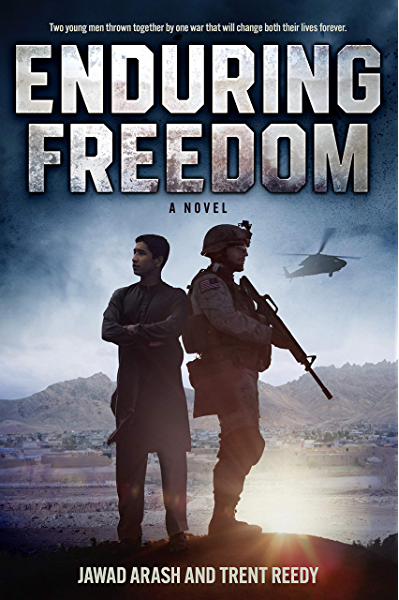
This isn’t the type of book I am naturally drawn to, and had it not been offered to me as an arc, I didn’t even request it, I probably would not have read it.  So, to say that this young adult OWN voice 246 page post 9/11 war story had a lot to overcome for me personally, is putting it mildly.  I gave in and decided to read it for the simple fact that I was curious to see what the narrative is in today’s literature, as we approach the 20 year anniversary of the attacks on US soil.  The afterward is very clear that the agenda of the two authors, one an Afghan and the other a US veteran, was to show a personal view of growth and assumptions on both sides and how the future of Afghanistan needs to be rooted in education and stability.  I think the book accomplished its goals, and made very clear how the terrorists first victims were their own people, and that extreme ideologies of the Taliban were and are still not reflective of the larger population.  The pacing of the dual narratives, however, was a bit off to me, and I really felt that some of the major plot points didn’t get explored in a meaningful way, that they were simply glossed over and brushed aside to keep the book inline with the authors’ objectives.  The book is not overly political, and the Muslim characters are religious and knowledgeable, but for a book that talked about how even in war the people, the soldiers, are the story, I wanted to see more internal wresting with choices and their outcomes, then what was offered.

SYNOPSIS:

The book is told in alternating view points, one is that of Baheer an Afghan boy living with his large extended family in Kabul next to a Taliban compound.  The family is religious, Baheer’s grandfather, Baba Jan, is well read in poetry and religious text and often quotes the Quran by ayat and surah number.  The family sells carpets, and often hides the latest movies or news recordings in the rolls, so that they can be brought home, the blackout shades pulled and the tapes enjoyed.  They are fearful of being harassed for not having long enough beards, shaved heads, turbans and the like. Baheer and his brother Rahim do not enjoy school with the strict and abusive teachers.  The talibs seem to touch them inappropriately and scold them harshly.  Their older sister is not allowed to attend school and never has even though the family used to live in Pakistan where the boys enjoyed school. It doesn’t explain why they were there or why they returned.  One uncle is assaulted by the Taliban and soon after, a news clip showing the attacks on 9/11 is secretly watched by the family.  As a result they decide to move to Farah, in Western Afghanistan where Baba Jan has family and property, to be away from the impending US attacks and Taliban assaults.

Joe Killian is the other voice.  When the book starts he is sitting in class, his senior year, when news about the attacks on the World Trade Center starts to break.  He had joined the national guard that summer for the college money, and as his classmates sit glued to the televisions in Iowa, he is nervous that he is about to be called up to war.  He doesn’t get called up that day, he graduates, and is studying journalism in college when the call finally comes.  He is preparing for combat, but when he is deployed and discovers it is a reconstruction mission he is angry and annoyed.  A year of helping what he terms barbarians, is not what he signed up for.

The majority of the book reads like a ‘day in the life’ of each of these two voices, as they adapt to life in Farah, as they deal with each other’s presence and as their friendship forces their assumptions to change.  The interactions between Joe and Baheer show the power in getting to know someone to alter perceptions, and the threat of the Taliban on both the average citizen and the US forces on the ground as a unifying enemy to allow the friendship to grow.

The book concludes when Joe’s year of deployment is up, but really the authors’ notes at the end are a better conclusion to the real life friendship and growth of the two authors that resulted in the writing of the book

WHY I LIKE IT:

I love that the family sees the planes hitting the towers and is mortified at the brazen destruction and loss of life.  They immediately start praying for the victims even as they realize they will be the recipients of the backlash. I like that it highlights where practicing Muslims and extremists differ, by having the Quran quoted and explained as opposed to the rhetoric the Taliban is spouting.  Baba Jan’s manner for speaking the ayats is a bit awkward in that most people don’t in daily conversation source and reference their dialogues, but it does grow on you.  I think the book is very simplistic in making the Taliban to unequivocally be the ‘bad guys’ without any context of how they gained traction. It talks about the Soviets, but I think it will leave the readers wondering where this group came from and why the Afghan people allowed it. Unfortunately, there are a lot of nuances and complexities that are overlooked by such a simple narrative, and allow for an inaccurate picture to be formed.

I like that Baheer pushes back on Joe who thinks America is perfect and that Afghanistan is less than, by pointing out the flaws in American society as well as his own.  I was ok with Baheer pushing the cultural limits to talk to a girl, it was innocent and I think understandable. My biggest concern is that I really felt that there needed to be more space on the page dedicated to understanding the repercussions of him being an informant to the Americans, and his brother passing on information to the Talibs.  People were taken in to custody and injured and killed as a result of these boys’ actions and to just chalk it up to something to be forgiven, was not enough for me.  I wanted them to hash it out and wallow in their choices, not forgive and move on so quickly.  I also wanted to know more about their reconstruction efforts.  It seemed rather minimal: relocating explosives, helping a burn victim, sending supplies to a school, I think in a year, that there would be more mixing with the people than the book would suggest.  And finally, I felt like the sister not getting to go to school was handled as an obligation to address, not that any insight or understanding was really given to such a hot button issue.

The book is really slow and dragging at parts, I couldn’t tell you about any of the dozen or so soldiers that are mentioned, I don’t even recall any of their names. I think the book has a lot of potential, and perhaps it does shine in showing the effects of war and terrorism on the Afghan people.  It held my attention while actively reading it, but I just as easily could have put it down and forgotten about it if I wasn’t under obligation to offer an opinion in exchange for an early copy.

FLAGS:

There is language, stereotypes, physical abuse, sexual misconduct, death, killing, violence, acts of war, bloodshed, a crush. Upper middle school and high school can handle it.

TOOLS FOR LEADING THE DISCUSSION:

I don’t think I’d select this book as a book club selection because I’m not sure what would be gained from the book.  The characters assumptions are challenged and evolve, but I think most minorities know that, getting to know someone is often the best way to have their image changed.  I think the book still functions to make Americans feel better about  invading Afghanistan, rather than have us question what the long term affects of our involvement have been.

An Emotion of Great Delight by Tahereh Mafi

Standard
An Emotion of Great Delight by Tahereh Mafi

emotion

This 256 page YA OWN voice book is a real and raw look at a character and the many layers of life weighing down on her.  At the center of it all is a strong Muslim teen dealing with post 9/11 bigotry, the shattering of her family, toxic friendships, and a broken heart.  It is a love story, but it is so much more, as the protagonist’s voice draws you in to her crumbling world from the very first page and has you begging for more when the last page is read.  So often in Muslim-lead-mainstream-romance-themed novels, I want there to be introspection at the choices that the character is making and the internal processing of navigating their wants with their beliefs, and this book surprisingly does it.  There are some kissing scenes, cigarette smoking, cosmo magazine headlines, and waiting for her father to die, but not without introspection. Shadi reflects on her smoking quite often, she questions the repercussions of her actions, and she analyzes her father’s faith and approach to Islam as she forges her own relationship with the deen.  There is mention of a Muslim character drinking, doing drugs, hooking up, and it mentions he had condoms in his car, just those exact phrases, nothing is detailed or glorified, just stated.  There are also threads of mental health, self harm, death, and grief.  The characters are genuinely Muslim and some of their experiences are universal, and some specific to the faith, culture, and time.  Muslims and non Muslims will enjoy the book, and I would imagine relate to different things, but find it overall memorable and lingering.  For my Islamic school teens, I’d suggest this book for 17/18 year olds to early twenties.  It isn’t that they haven’t read more graphic books, but to be honest, Shadi has a lot going on, and if being close to Ali can lighten her load and help her find hope and joy, I’m all for it.  I know it is “haram,” but it is fiction, and it will have readers rooting for them to be together, not a message you may want to pass on to your younger teens.  As the author says in her forward, “we, too, contain multitudes.”

SYNOPSIS:

The layout of the book bounces between December 2003 and the year before.  In a previous time, Shadi’s life was easier, her brother was alive, she had a best friend, her Iranian immigrant Muslim family may have had stresses and issues, but they were a family. In 2003, Shadi is largely forgotten by her parents, her brother is dead, her father is close to death, her mother is self harming, her older sister preoccupied, and as a high school student Shadi is both falling and being crushed by her heavy backpack both metaphorically and literally.

The story opens with Shadi being approached by a police officer wondering why she is laying in the sun, he thinks she is praying, and she doesn’t have the energy to be angry by this assumption, she is exhausted, and doesn’t want to cause any waves that might get back to her fragile mother and cause any more stress than necessary.  So she drags herself up, and begins the walk to her college level math class miles away.  The sun is short lived and the rain begins to pour, she knows no one will come to pick her up.  Her parents have long ago stop being present in her life.  She once had a best friend, but that relationship, as toxic as it was, also has ceased to exist.  So she walks, and she is drenched, and she falls, so she is now soaking wet and bloody.  A car slows down to presumably offer her a ride, but then he speeds off drenching her in a tidal-wave.  The scene is set for the tone of the book. Shadi is drowning, we don’t know all the reasons why, they unfold slowly, but we know that it is going to get worse, her phone is nearly dead and her sister has just called to let Shadi know her mother is in the hospital.

I don’t want to detail my summary as I often do, because the way the story unfolds, would really make any additional information given act as a spoiler.  The book is short and a fast read, but along the way the introspection to the chaos that is Shadi’s life, makes it impossible to put the book down.  Shadi will have to confront her crumbling life and find away to reach toward hope.  She will have to keep walking to avoid drowning and along the way cling to the few precious things that give her joy: an emotion of great delight.

WHY I LIKE IT:

I really enjoyed this book.  I loved the Islam and real approach to her volunteering at the mosque and calling out racism within the community and diving deep in to understanding is Islam more than just rules and toeing the line.  It was a great mirror for so many nuances in real life, that I will probably re-read the book again in the near future, to enjoy it all.  I absolutely love the unpacking of the toxic friendship.  When women tear each other down under the guise of caring it is brutal, and the acceptance and growth that Shadi is struggling with in regards to her best friend of six years, Zahra. who is also Ali’s sister, is a reminder that sometimes walking away is the only choice.  

The two criticisms I have of the book are: one-that the book is too short, I wanted, no, I needed more.  And two I didn’t understand why Ali’s family and Shadi’s family were no longer close.  I get that Shadi cut Ali out of her life and Zahra and Shadi had a break, but Ali/Zahra’s family still care for Shadi and she for them, so what happened between the parents? It seems that the death of a child would draw the friends out and make them protective, not push them to being aloof.  It seemed off to me and major plot hole.

FLAGS:

As I mentioned above: kissing, smoking, drugs, hooking up, referencing condoms, cosmo headlines, self harming, grief, death, alcohol.

TOOLS FOR LEADING THE DISCUSSION:

I don’t think even high school could do this as a book club selection, because you really want to ship Shadi and Ali.  If you had like an MSA book club then I think this would be a great choice.  I would love to hear teens’/young adults’ thoughts about Shadi’s view of religion, her fathers approach, and how they view passing the deen on to their children.  I think it offer great role-play scenarios in empathy and how you’d react in real life to finding your mother struggling, your best friend taking off her hijab and being so jealous of you, the bullying, the assumptions, understanding your father and where to assign the blame for such a traumatic event that claimed your brother’s life.  There is so much to discuss, and I hope at some point I find the right forum to chat about this book and listen to other’s perspectives about it.

This Is All Your Fault by Aminah Mae Safi

Standard
This Is All Your Fault by Aminah Mae Safi


img_8116I wanted to give the author another chance to win me over after really disliking her first book’s writing style and characters and while this book is an easier read, I was shocked when the Empire Records inspired story really crossed over to me to being almost plagiarism.  I was a huge fan of Empire Records as a teen in the 90s, and can quote the movie, recall with little effort when Rex Manning Day is (it was yesterday), and know what is going to  happen at 1:37 exactly, so I was really excited to see what this Muslim author did with her spin of turning a music store in to an idie bookstore and focusing the story on three high school females. I wasn’t expecting the spin to be so minor though, and to still find an AJ and a Warren in the character list, a girl shaving her head, an employee dance party on the roof, a scummy celebrity, a celebrity assistant hinted at romance, a character deciding that today is the day to tell her crush how she feels, you get the point, it is remarkably similar.  If you haven’t seen the PG 13 movie, the book isn’t terrible, but it is very scattered with three voices, a lot of side characters- often random, and unresolved story threads, the book takes place in one day after all, I don’t know that it is really worth the time to read it.  There is straight and LGBTQ+ romance and break ups mentioned, a kiss, alcohol, vape pens, marijuana, sexual assault, some violence (slapping), a theft, language and one character has Arab parents and mentions Middle Eastern poets as well as likens the book store connecting people to the concept of an Ummah in Islam.  I can’t think of a demographic that I’d really recommend the book to, nor do I think that I’d ever read it again, the author’s writing style for me improved slightly but the characters are forgettable and the story un original. In terms of appropriateness probably high school readers, 14 and up.

SYNOPSIS:

Eli is closing up Wild Nights Bookstore and Emporium and accidentally opens the manager’s computer and accidentally logs in to her accounts and accidentally learns from her emails that the book store is closing in less than two weeks.  He then sees that the bank account is still logged in and finds a petty-cash account that has $9,000 and decides that he for once in his life is going to try and help out the store and invest in something to grow the money and hopefully delay the closing.  Unfortunately he buys nine grand worth of Air Jordan knock-off shoes, and is unable to return them.  The next day when the entire staff rolls in to work, bits of the story come out, some know the store is closing, others are sensing something is amiss when boxes are being unloaded that don’t contain books, and to top it all off a famous author is doing a book signing later in the day.  

Each of the characters has something going on as well on this particular day, Rinn is going to tell AJ she loves him and use her influencer status to try and rally support for Wild Night,  Daniella is going to lift the veil on her secret poetry writing and share it, and Imogen is going to break up with her girlfriend of nine months and shave her head.  None of the girls like each other, and go out of their way to be down right nasty to one another, but eventually they come around, they support one another in the face of them losing their beloved store, and helping each other when one is sexually assaulted by the famous author.  Along the way the reader meets the quirky characters that come to the bookstore regularly, some that never leave, a manager who never seems to be there, and an owner with weird rules about technology in the store.  

The climax is the girls stepping in to their own and becoming vulnerable to who they are to one another, the world, and ultimately themselves.  The book store isn’t saved in it’s entirety, but it isn’t lost either and the direction forward looks infinitely more unified than the crazy day the they all just had.

WHY I LIKE IT:

I like that the wave of nostalgia that hit me as I recalled the regular watching and quoting of Empire Records from my younger days, but that really was about all the book gave me.  I wanted to love the girls coming together to save the day, but they were really crass and rough and while I’m glad they did get to a place of tolerance, the transition wasn’t cathartic because their original irritations with one another didn’t seem justified.  The lack of character connection made it hard to cheer for them when they broke free from what they perceived was holding them back as well.  For example, I wanted to be giddy with nerves when Daniella stepped on that stage, but the emotion just wasn’t there.  There was a lot of telling, not showing, and with three perspectives, it was just stretched too thin.

I kind of like that Islam and the concept of Ummah was referenced at the end, but really only someone like me looking for it and piecing together the poets she mentioned, her one parent being from Lebanon and the other coming to America after the six day war would even take that conversation as being in sync with the character.  She might not be Muslim, she is a lesbian has/had a girlfriend, and it is a non issue.  Religion is otherwise not mentioned in relation to her or any other character.  A French Tunisian customer calls her habibti and says ‘Handulullah.”  I probably am reading to much in to it, old habits die hard and even after writing over 500 reviews, I still get so excited to see someone in literature possibly identifying as Muslim.

One thing that really stood out to me as a hole in the story was that it never said what Danny’s plan was,  just kept hearing that it was a terrible, awful plan.  That bothered me. The pacing is also off, to have all this happen in one day you would think it was all happening so quick, but then there are really long winded tangents about cell phone cases and grape soda.  At times it is such a time crunch and at other times everyone is chilling on the roof or in the alleyway it is no surprise there is not enough business.

FLAGS:

Copied from above: There is straight and LGBTQ+ romance and break ups mentioned, kissing, alcohol consumption, a massive hangover, vape pens, marijuana, sexual assault, some violence (slapping), a theft, language. Nothing is really sensationalized though, the 

TOOLS FOR LEADING THE DISCUSSION:

Not even tempted to use this as a book club, or recommend others to do so.  There is no real literary or representation value, in my opinion.


Home is Not a Country by Safia Elhillo

Standard
Home is Not a Country by Safia Elhillo

home is not a country

This upper middle school/high school 224 page novel told in verse touches on familiar themes of finding yourself and wondering about what could have been, but is anything but predictable.  Through magical realism, religion, culture, and phenomenal imagery, this book is haunting and powerful as it sweeps you into the possible alternate reality of a young 14 year-old-girl yearning to be someone else, consumed by a life that could have been, desperate for the other half of her mirrored existence, and for a home that she does not know, but so desperately longs for.  As a Muslim child of an immigrant, the daughter of a single mother, and nearly invisible at school, readers will feel her story, more than know it, and find themselves in her own awakening.

SYNOPSIS:

Nima feels like she exists in pieces.  No one understands her and she doesn’t feel comfortable in her own skin.  At school she is invisible, she is foreign and teased for it.  She has one friend, Haitham who is always there for her at home, but just a familiar wave in public.  At home Nima enjoys old Arabic songs and movies, hobbies she is teased for at weekend Arabic school, her hardworking mother is graceful and beautiful, Nima is neither.  Her world is the aunties and family in her building, but her Arabic is weak and she doesn’t fit in anywhere.  Her father passed away before she was born in a country she has never known.  Her twin sister died before birth, one for each parent in each world.  Nima imagines if she wasn’t Nima, but Yasmeen instead.  If she was bright and loud and loved and confident. The name she was nearly given, an alternate life she has become obsessed with.

When Haitham and her get in a fight, when her mother removes her headscarf and the bullying intensifies, Haitham ends up in the hospital, assaulted, barely hanging on and Yasmeen appears to help a floundering Nima escape a meal she can’t afford, a man that intends to assault her, and a world where she might find answers. The two girls travel to the homeland in the photographs to understand their parents, to understand why their mother left and Nima to the realization that only one of the girls can truly exist.  

WHY I LIKE IT:

I love that I had no idea where the story was going and how much would be spelled out and how much would be left for the reader to interpret.  It affected me in a way that I wasn’t expecting and reminded me of the blurred lines of reality from books like Beloved (Toni Morrison) and Her Fearful Symmetry (Audrey Niffenegger).  I love that the Arabic script is present and often not translated.  The unapologetic connection to the character and author is powerful and beautiful to see in a deeply introspective book.  I enjoyed that the “country” wasn’t named as it added to the concept of not knowing you home, it was frustrating, but for all the right reasons.

There isn’t a lot of practiced Islam mentioned, she doesn’t talk about praying, but does talk about the athan and longing for it.  Her mother wears hijab, but takes it off and wears a hat instead. The daily life of living in two worlds is taken to mean something very literal and the journey to both worlds is remarkable and memorable.

FLAGS:
There is physical assault, theft, lying.  Nima has to escape a man that intends to rape her, his intention isn’t detailed, but Yasmeen helps her escape when he brings her to a hotel.  Haitham’s dad has an affair with his mom and she is pregnant with him when the story flips back to the past and the couple are not married.  There is singing and music and dancing throughout. I think 14 and 15 year olds will be able to grasp the intensity of such situations while also not being shocked by them.

TOOLS FOR LEADING THE DISCUSSION:

I am on the fence if I could do this as a middle school book club, I might suggest it to the high school advisor.  There is so much to unwrap in the lyrical text that will draw the students in and force them to reflect on their own impressions to understand Nima’s reality.  I think there would be so many conflicting thoughts that the discussion would be amazing.  

Here is a better synopsis than mine: https://www.npr.org/2021/03/04/973389493/home-is-not-a-country-imagines-the-lives-we-could-have-led

Q and A with the Author: https://thenerddaily.com/safia-elhillo-author-interview/


https://www.npr.org/2021/03/04/973389493/home-is-not-a-country-imagines-the-lives-we-could-have-led

Ayesha Dean- The Lisbon Lawbreaker by Melati Lum

Standard
Ayesha Dean- The Lisbon Lawbreaker by Melati Lum

img_8735

In this third Ayesha Dean book, that can be read as a stand alone, the Australian teen sleuth finds herself on the other side of the law in the beautiful city of Lisbon in Portugal.  Over 333 pages, she must understand what she is being accused of and figure out how to clear her name, all while marveling at the beautiful historic sites, diving into the delicious food, and looking fabulous while she does it all.  Middle grade to early middle school readers will enjoy the fast pace mystery that has history, crime, adventure, and friendship.  There, as always, is a twinge of romance, but it all stays halal as Ayesha is a proud and practicing strong Muslim young woman.

SYNOPSIS:

Ayesha Dean is now 18 and has just arrived in Lisbon for three months as part of an internship program to help little kids with their english.  This is her first international trip without her beloved Uncle Day and her two closest friends Jess and Sara.  Not to worry, there are a lot of young people participating in the internship program and she will be rooming with two girls, Mara and Aveline. Things start of routine enough as Ayesha gets to know the handsome and kind Raimy from America and tries to figure out why Aveline doesn’t seem to like her.  But on her way to the school she will be working at, she finds a wallet filled with money and no identification, just a phone number.  When she calls the number and a meeting is setup, the stage is set for a series of events that will include telling Raimy off for mansplaining things to her, a man murdered, a chase scene, a necklace stolen, no memory of it all, and Ayesha being arrested.

Knowing only a few people in the city, and having just met them at that, Ayesha makes bail by getting help from her friend’s Aunt in Spain who comes to provide Ayesha a place to stay as well. She has some time before her formal hearing, and Ayesha is determined to figure out what she is being accused of and how to clear her name.  With the help of Mara, Raimy, a young girl in the elementary school Ayesha was working at, and some chance encounters, Ayesha finds herself risking her own safety in an underground environmental gang ring. I won’t spoil all the ups and downs and ultimate ending, but Ayesha Dean’s tae kwon do, faith, and wits will all be used and the last page will definitely leave you wanting more.

WHY I LIKE IT:

I feel like the writing has finally found the perfect balance between description and action, the first chapter was a bit choppy, but once it hit its stride it was smooth.  I was intrigued by the historical detail that was all new to me, and am pondering how to convince the author to lead a tour group through all these places that Ayesha visits.  As always the descriptions of food and architecture and fashion are all so spot on that you feel like you are there.  I absolutely love that religion is so genuinely a part of Ayesha, but it is for her, she doesn’t do it for any one else.  She prays, she wears hijab, she doesn’t drink, she clarifies to Raimy what she can do, she acknowledges possible stereotypes and discrimination, but chooses to move forward and not get bogged down by it.  She is physically and mentally strong, but doesn’t come off as arrogant or judgmental or unrealistic.

I like the diverse characters in this book, and in all of them.  The multi ethnic protagonist has friends from all sorts of backgrounds and it is really refreshing and natural.

FLAGS:

There is murder, assault, crime, drinking and alcohol.  Nothing is glamorized or anything a third grader couldn’t probably handle.  There is a hint of possible romance, but nothing that crosses any lines or standards.

TOOLS FOR LEADING THE DISCUSSION:

I would consider this for a middle school book club if the majority of the participants are 6th graders as it would not have the same appeal to older 8th graders.  I think they would benefit the most and enjoy the strength and cleverness of such an inspiring lead.  Of the three books in the series, I think this one would work the best for insightful discussion and empathy.  It would great to hear them imagine themselves in her shoes: a foreign country, no family, no longtime friends, minimal language skills and accused of a serious crime. Oh I can’t wait to share this book with my reading friends!

Hana Khan Carries On by Uzma Jalaluddin

Standard
Hana Khan Carries On by Uzma Jalaluddin

hana khanTechnically this book is adult fiction because the protagonist is 24 years old, but the halal rom-com is so sweet and considering the YA options that exist in the same genre, I think high school juniors and senior would do better to dive in to this light, enjoyable, albeit predictable, read over so many of the other options out there.  I read the 368 page book in two days, I was hooked and impressed with the strength of all the female characters, the step away from all the stereotypical tropes and the smooth writing style.  The book is for everyone and while packaged as a light read, there are some themes of immigration, family, choice, and OWN voice realizations that are presented and explored in a thoughtful and impactful manner.

SYNOPSIS:

Hana Khan’s mother owns and operates Three Sisters Biriyani Poutine in Toronto, there are not three sisters, biriyani poutine is not on the menu and business is bad, really bad.  The 15 year old restaurant that Hana named when she was nine is struggling even though it is the only halal option in the close-knit, diverse, golden crescent community.  When news hits that a new upscale halal restaurant is opening a few doors down, Hana chooses to ignore that the business was struggling and instead blames the new proprietors.  They are wealthy, corporate and insufferable.  Well, the dad is anyway, the son Aydin, he isn’t so easily defined.

Hana balances shifts at the restaurant, her internship at Radio Toronto and her own anonymous brown girl podcast.  Hana, real name Hanaan, comes from a supportive and close family.  Her dad was injured in a serious car accident, her older sister is pregnant, and her cousin from India along with a cousin-aunt have just arrived under suspicious circumstances.

As the new restaurant gets closer to opening, Hana finds herself stooping to all new lows to sabotage their success.  Encouraged by an anonymous podcast listener who she has been chatting with for quite a while, and inspired by her rebel cousin-aunt, Hana is determined to secure a permanent job in radio, save her family restaurant, and destroy the competition.  But, an attack downtown draws attention to growing Islamophobia and forces Aydin and Hana to work together.

In a fictional story where everyone knows everyone both in India and Toronto, crazy family members are endearing and loyal, it is no surprise that the main characters are more connected than they think.  As Hana finds her strength to carry on amidst change, she also figures out what direction to focus her energy, her talents, and voice.

WHY I LIKE IT:

I absolutely love the writing.  I was invested in many of the characters, not just the protagonist, and absolutely cheered as she gave a nod to so many assumptions so that she could move past them: forced marriage, hijab, acceptable professions, inclusion, etc.. The family is all about choice and not getting hung up on stereotypes show the power that OWN voices have in telling stories that resonate with everyone.  The book is full of religion, from waking up for fajr, to listening to the khutbah at jumah, going to the masjid to find peace, and believing in destiny.  It is not a preachy book by any means, but the characters are Muslim inside and out.  The traditional family does not pressure Hana to get married, her sister’s marriage was a love one.  She is often alone with her male cousin or brother in law, or best friend Yusuf.  She knows who she is and her family trusts her.

I love the food, the insight of immigrants and family.  I was particularly moved by her articulation of being told by outsiders what it means to be Muslim in Canada, or an immigrant and then not being listened to when pushed back upon. Her challenging a teacher on what the fourth pillar of Islam is and not being heard, resonated profoundly.

Within the first 100 pages or so the reader figures out who everyone is and how they are connected, save one surprise, but it is like watching a favorite movie, you keep going because it is fun, and enjoyable and the point isn’t to figure it out, but to enjoy the ride.

FLAGS:

There are relationship threads, but nothing more detailed than a hand touch after a funeral.  Her best friend Yusuf marries their best friend Lily an Agnostic, knowing that both families are against it.  There is music and racist talk and vandalism.

TOOLS FOR LEADING THE DISCUSSION:

The high school book club usually tries to include a halal romance novel for the loyal participants that clamor for it in the group and I plan to suggest this one to them.  For as light and straightforward as the book is, there is a lot to discuss when the surface is peeled back.  There would be lot to explore from her podcast, internship experience, and her hate crime experience, that the romance part will be seen as simply a vessel to more profound issues to explore.